Welcome to Adventist Angels Watchman Radio official website, preparing the earth for Jesus Christ return Shortly, find us on Facebook, Twitter and You-tube. +254734228119 With Ev. King Osiemo
Thus the false science of the present day, which undermines faith in the Bible, will prove as successful in preparing the way for the acceptance of the papacy, with its pleasing forms, as did the withholding of knowledge in opening the way for its aggrandizement in the Dark Ages. In the movements now in progress in the United States to secure for the institutions and usages of the church the support of the state, Protestants are following in the steps of papists. Nay, more, they are opening the door for the papacy to regain in Protestant America the supremacy which she has lost in the Old World. And that which gives greater significance to this movement is the fact that the principal object contemplated is the enforcement of Sunday observance—a custom which originated with Rome, and which she claims as the sign of her authority. It is the spirit of the papacy—the spirit of conformity to worldly customs, the veneration for human traditions above the commandments of God—that is permeating the Protestant churches and leading them on to do the same work of Sunday exaltation which the papacy has done before them. GC 572.3 – GC 573.1
Saturday’s coronation a remembrance of Popes Past “Father of princes and kings” “God in heaven, Earth and Sea” ‘A Moral Leader’: Ten Green Commandments of Laudato Si’ Future Leaders
Sunday, 07 May 2023 11:14 PM [ Last Update: Monday, 08 May 2023 3:31 AM ]
Police detain a protester on the day of Britain’s King Charles and Queen Camilla’s coronation ceremony, in London, May 6, 2023. (Photo by Reuters)
British anti-monarchists condemn the London police’s oppressive treatment of the protesters, who had gathered in their thousands to denounce Charles III’s coronation as the country’s king.
The people against the antiquated monarchical system said on Sunday there is no longer a right to peaceful protest in Britain after dozens of protesters were arrested.
Overall, as many as 64 people were rounded up during the Saturday ceremony, which was held at Westminster Abbey before King Charles and Queen Camilla were driven back to Buckingham Palace, the police announced on Sunday.
The law enforcement described the alleged offenses that had led to the arrests as a breach of the peace and conspiracy to cause a public nuisance.
The arrestees included Graham Smith, leader of the Republic group, which campaigns for the abolition of the monarchical system in the United Kingdom.
“This was a heavy-handed action which had the appearance of a pre-determined arrest that would have occurred regardless of the evidence or our actions. The right to protest peacefully in the UK no longer exists,” Smith said in a statement.
“These arrests were not about protecting people from harm, but about protecting the King from embarrassment.”
Trying to explain the reason behind the arrests, the police, however, alleged that their so-called duty to prevent disruption outweighed the right to protest.
Republic said that its members began to be released late on Saturday evening after nearly 16 hours in custody.
The Metropolitan Police had deployed some 11,500 officers for one of its biggest-ever security operations for the day of the coronation.
The police had warned that it would have an “extremely low threshold” for protests, and controversially planned to use mass facial recognition technology to monitor the crowds.
“Our tolerance for any disruption, whether through protest or otherwise, will be low,” the police force wrote on Twitter this week. “We will deal robustly with anyone intent on undermining this celebration.”
Press TV’s website can also be accessed at the following alternate addresses:
The papacy is just what prophecy declared that she would be, the apostasy of the latter times. 2 Thessalonians 2:3, 4. It is a part of her policy to assume the character which will best accomplish her purpose; but beneath the variable appearance of the chameleon she conceals the invariable venom of the serpent. “Faith ought not to be kept with heretics, nor persons suspected of heresy” (Lenfant, volume 1, page 516), she declares. Shall this power, whose record for a thousand years is written in the blood of the saints, be now acknowledged as a part of the church of Christ?
It is not without reason that the claim has been put forth in Protestant countries that Catholicism differs less widely from Protestantism than in former times. There has been a change; but the change is not in the papacy. Catholicism indeed resembles much of the Protestantism that now exists, because Protestantism has so greatly degenerated since the days of the Reformers.
As the Protestant churches have been seeking the favor of the world, false charity has blinded their eyes. They do not see but that it is right to believe good of all evil, and as the inevitable result they will finally believe evil of all good. Instead of standing in defense of the faith once delivered to the saints, they are now, as it were, apologizing to Rome for their uncharitable opinion of her, begging pardon for their bigotry.
A large class, even of those who look upon Romanism with no favor, apprehend little danger from her power and influence. Many urge that the intellectual and moral darkness prevailing during the Middle Ages favored the spread of her dogmas, superstitions, and oppression, and that the greater intelligence of modern times, the general diffusion of knowledge, and the increasing liberality in matters of religion forbid a revival of intolerance and tyranny. The very thought that such a state of things will exist in this enlightened age is ridiculed. It is true that great light, intellectual, moral, and religious, is shining upon this generation. In the open pages of God’s Holy Word, light from heaven has been shed upon the world. But it should be remembered that the greater the light bestowed, the greater the darkness of those who pervert and reject it.
A prayerful study of the Bible would show Protestants the real character of the papacy and would cause them to abhor and to shun it; but many are so wise in their own conceit that they feel no need of humbly seeking God that they may be led into the truth. Although priding themselves on their enlightenment, they are ignorant both of the Scriptures and of the power of God. They must have some means of quieting their consciences, and they seek that which is least spiritual and humiliating. What they desire is a method of forgetting God which shall pass as a method of remembering Him. The papacy is well adapted to meet the wants of all these. It is prepared for two classes of mankind, embracing nearly the whole world—those who would be saved by their merits, and those who would be saved in their sins. Here is the secret of its power. GC 571.2 – GC 572.2
Protestants have tampered with and patronized popery; *they have made compromises and concessions which papists themselves are surprised to see and fail to understand*. Men are closing their eyes to the real character of Romanism and the dangers to be apprehended from her supremacy. The people need to be aroused to resist the advances of this most dangerous foe to civil and religious liberty. GC 566.1
In Scotland, as in England, a greater regard for Sunday was secured by uniting with it a portion of the ancient Sabbath. But the time required to be kept holy varied. An edict from the king of Scotland declared that “Saturday from twelve at noon ought to be accounted holy,” and that no man, from that time till Monday morning, should engage in worldly business.—Morer, pages 290, 291. But notwithstanding all the efforts to establish Sunday sacredness, papists themselves publicly confessed the divine authority of the Sabbath and the human origin of the institution by which it had been supplanted. In the sixteenth century a papal council plainly declared: “Let all Christians remember that the seventh day was consecrated by God, and hath been received and observed, not only by the Jews, but by all others who pretend to worship God; though we Christians have changed their Sabbath into the Lord’s Day.”— Ibid., pages 281, 282. Those who were tampering with the divine law were not ignorant of the character of their work. They were deliberately setting themselves above God.
A striking illustration of Rome’s policy toward those who disagree with her was given in the long and bloody persecution of the Waldenses, some of whom were observers of the Sabbath. Others suffered in a similar manner for their fidelity to the fourth commandment. The history of the churches of Ethiopia and Abyssinia is especially significant. Amid the gloom of the Dark Ages, the Christians of Central Africa were lost sight of and forgotten by the world, and for many centuries they enjoyed freedom in the exercise of their faith. But at last Rome learned of their existence, and the emperor of Abyssinia was soon beguiled into an acknowledgment of the pope as the vicar of Christ. Other concessions followed. An edict was issued forbidding the observance of the Sabbath under the severest penalties. (See Michael Geddes, Church History of Ethiopia, pages 311, 312.) But papal tyranny soon became a yoke so galling that the Abyssinians determined to break it from their necks. After a terrible struggle the Romanists were banished from their dominions, and the ancient faith was restored. The churches rejoiced in their freedom, and they never forgot the lesson they had learned concerning the deception, the fanaticism, and the despotic power of Rome. Within their solitary realm they were content to remain, unknown to the rest of Christendom.
The churches of Africa held the Sabbath as it was held by the papal church before her complete apostasy. While they kept the seventh day in obedience to the commandment of God, they abstained from labor on the Sunday in conformity to the custom of the church. Upon obtaining supreme power, Rome had trampled upon the Sabbath of God to exalt her own; but the churches of Africa, hidden for nearly a thousand years, did not share in this apostasy. When brought under the sway of Rome, they were forced to set aside the true and exalt the false sabbath; but no sooner had they regained their independence than they returned to obedience to the fourth commandment. (See Appendix.)
These records of the past clearly reveal the enmity of Rome toward the true Sabbath and its defenders, and the means which she employs to honor the institution of her creating. The word of God teaches that these scenes are to be repeated as Roman Catholics and Protestants shall unite for the exaltation of the Sunday.
The prophecy of Revelation 13 declares that the power represented by the beast with lamblike horns shall cause “the earth and them which dwell therein” to worship the papacy—there symbolized by the beast “like unto a leopard.” The beast with two horns is also to say “to them that dwell on the earth, that they should make an image to the beast;” and, furthermore, it is to command all, “both small and great, rich and poor, free and bond,” to receive the mark of the beast. Revelation 13:11-16. It has been shown that the United States is the power represented by the beast with lamblike horns, and that this prophecy will be fulfilled when the United States shall enforce Sunday observance, which Rome claims as the special acknowledgment of her supremacy. But in this homage to the papacy the United States will not be alone. The influence of Rome in the countries that once acknowledged her dominion is still far from being destroyed. And prophecy foretells a restoration of her power. “I saw one of his heads as it were wounded to death; and his deadly wound was healed: and all the world wondered after the beast.” Verse 3. The infliction of the deadly wound points to the downfall of the papacy in 1798. After this, says the prophet, “his deadly wound was healed: and all the world wondered after the beast.” Paul states plainly that the “man of sin” will continue until the second advent. 2 Thessalonians 2:3-8. To the very close of time he will carry forward the work of deception. And the revelator declares, also referring to the papacy: “All that dwell upon the earth shall worship him, whose names are not written in the book of life.” Revelation 13:8. In both the Old and the New World, the papacy will receive homage in the honor paid to the Sunday institution, that rests solely upon the authority of the Roman Church.
Pilot Bursts Into Tears After Realizing Why Birds Wouldn’t Leave The Plane Alone, Jordan River Has Dried Up, Choose Captain Return To Egypt, We Are All Catholics Now In The Same Boat: Everything is Connected
We should now seek a deep and living experience in the things of God. We have not a moment to lose. Events of vital importance are taking place around us; we are on Satan’s enchanted ground. Sleep not, sentinels of God; the foe is lurking near, ready at any moment, should you become lax and drowsy, to spring upon you and make you his prey. CSA 69.7
Protestants have tampered with and patronized popery; they have made compromises and concessions which papists themselves are surprised to see and fail to understand. Men are closing their eyes to the real character of Romanism and the dangers to be apprehended from her supremacy. The people need to be aroused to resist the advances of this most dangerous foe to civil and religious liberty. GC 566.1
Variable V. Fixed Star,Slaves, Signs of The Times—Ev.King Osiemo
Since the middle of the nineteenth century, students of prophecy in the United States have presented this testimony to the world. In the events now taking place is seen a rapid advance toward the fulfillment of the prediction. With Protestant teachers there is the same claim of divine authority for Sundaykeeping, and the same lack of Scriptural evidence, as with the papal leaders who fabricated miracles to supply the place of a command from God. The assertion that God’s judgments are visited upon men for their violation of the Sunday-sabbath, will be repeated; already it is beginning to be urged. And a movement to enforce Sunday observance is fast gaining ground.
Marvelous in her shrewdness and cunning is the Roman Church. She can read what is to be. She bides her time, seeing that the Protestant churches are paying her homage in their acceptance of the false sabbath and that they are preparing to enforce it by the very means which she herself employed in bygone days. Those who reject the light of truth will yet seek the aid of this self-styled infallible power to exalt an institution that originated with her. How readily she will come to the help of Protestants in this work it is not difficult to conjecture. Who understands better than the papal leaders how to deal with those who are disobedient to the church? The Roman Catholic Church, with all its ramifications throughout the world, forms one vast organization under the control, and designed to serve the interests, of the papal see. Its millions of communicants, in every country on the globe, are instructed to hold themselves as bound in allegiance to the pope. Whatever their nationality or their government, they are to regard the authority of the church as above all other. Though they may take the oath pledging their loyalty to the state, yet back of this lies the vow of obedience to Rome, absolving them from every pledge inimical to her interests.
History testifies of her artful and persistent efforts to insinuate herself into the affairs of nations; and having gained a foothold, to further her own aims, even at the ruin of princes and people. In the year 1204, Pope Innocent III extracted from Peter II, king of Arragon, the following extraordinary oath: “I, Peter, king of Arragonians, profess and promise to be ever faithful and obedient to my lord, Pope Innocent, to his Catholic successors, and the Roman Church, and faithfully to preserve my kingdom in his obedience, defending the Catholic faith, and persecuting heretical pravity.”—John Dowling, The History of Romanism, b. 5, ch. 6, sec. 55. This is in harmony with the claims regarding the power of the Roman pontiff “that it is lawful for him to depose emperors” and “that he can absolve subjects from their allegiance to unrighteous rulers.”—Mosheim, b. 3, cent. 11, pt. 2, ch. 2, sec. 9, note 17. (See also Appendix note for page 447.)
And let it be remembered, it is the boast of Rome that she never changes. The principles of Gregory VII and Innocent III are still the principles of the Roman Catholic Church. And had she but the power, she would put them in practice with as much vigor now as in past centuries. Protestants little know what they are doing when they propose to accept the aid of Rome in the work of Sunday exaltation. While they are bent upon the accomplishment of their purpose, Rome is aiming to re-establish her power, to recover her lost supremacy. Let the principle once be established in the United States that the church may employ or control the power of the state; that religious observances may be enforced by secular laws; in short, that the authority of church and state is to dominate the conscience, and the triumph of Rome in this country is assured.
God’s word has given warning of the impending danger; let this be unheeded, and the Protestant world will learn what the purposes of Rome really are, only when it is too late to escape the snare. She is silently growing into power. Her doctrines are exerting their influence in legislative halls, in the churches, and in the hearts of men. She is piling up her lofty and massive structures in the secret recesses of which her former persecutions will be repeated. Stealthily and unsuspectedly she is strengthening her forces to further her own ends when the time shall come for her to strike. All that she desires is vantage ground, and this is already being given her. We shall soon see and shall feel what the purpose of the Roman element is. Whoever shall believe and obey the word of God will thereby incur reproach and persecution. GC 577.1 – GC 581.2
We are living in the most solemn period of this world’s history. The destiny of earth’s teeming multitudes is about to be decided. Our own future well-being and also the salvation of other souls depend upon the course which we now pursue. We need to be guided by the Spirit of truth. Every follower of Christ should earnestly inquire: “Lord, what wilt Thou have me to do?” We need to humble ourselves before the Lord, with fasting and prayer, and to meditate much upon His Word, especially upon the scenes of the judgment. We should now seek a deep and living experience in the things of God. We have not a moment to lose. Events of vital importance are taking place around us; we are on Satan’s enchanted ground. Sleep not, sentinels of God; the foe is lurking near, ready at any moment, should you become lax and drowsy, to spring upon you and make you his prey. CSA 69.7
The Roman Church now presents a fair front to the world, covering with apologies her record of horrible cruelties. She has clothed herself in Christlike garments; but she is unchanged. Every principle of the papacy that existed in past ages exists today. The doctrines devised in the darkest ages are still held. Let none deceive themselves. The papacy that Protestants are now so ready to honor is the same that ruled the world in the days of the Reformation, when men of God stood up, at the peril of their lives, to expose her iniquity. She possesses the same pride and arrogant assumption that lorded it over kings and princes, and claimed the prerogatives of God. Her spirit is no less cruel and despotic now than when she crushed out human liberty and slew the saints of the Most High.
The papacy is just what prophecy declared that she would be, the apostasy of the latter times. 2 Thessalonians 2:3, 4. It is a part of her policy to assume the character which will best accomplish her purpose; but beneath the variable appearance of the chameleon she conceals the invariable venom of the serpent. “Faith ought not to be kept with heretics, nor persons suspected of heresy” (Lenfant, volume 1, page 516), she declares. Shall this power, whose record for a thousand years is written in the blood of the saints, be now acknowledged as a part of the church of Christ?
It is not without reason that the claim has been put forth in Protestant countries that Catholicism differs less widely from Protestantism than in former times. There has been a change; but the change is not in the papacy. Catholicism indeed resembles much of the Protestantism that now exists, because Protestantism has so greatly degenerated since the days of the Reformers.
As the Protestant churches have been seeking the favor of the world, false charity has blinded their eyes. They do not see but that it is right to believe good of all evil, and as the inevitable result they will finally believe evil of all good. Instead of standing in defense of the faith once delivered to the saints, they are now, as it were, apologizing to Rome for their uncharitable opinion of her, begging pardon for their bigotry.
A large class, even of those who look upon Romanism with no favor, apprehend little danger from her power and influence. Many urge that the intellectual and moral darkness prevailing during the Middle Ages favored the spread of her dogmas, superstitions, and oppression, and that the greater intelligence of modern times, the general diffusion of knowledge, and the increasing liberality in matters of religion forbid a revival of intolerance and tyranny. The very thought that such a state of things will exist in this enlightened age is ridiculed. It is true that great light, intellectual, moral, and religious, is shining upon this generation. In the open pages of God’s Holy Word, light from heaven has been shed upon the world. But it should be remembered that the greater the light bestowed, the greater the darkness of those who pervert and reject it.
A prayerful study of the Bible would show Protestants the real character of the papacy and would cause them to abhor and to shun it; but many are so wise in their own conceit that they feel no need of humbly seeking God that they may be led into the truth. Although priding themselves on their enlightenment, they are ignorant both of the Scriptures and of the power of God. They must have some means of quieting their consciences, and they seek that which is least spiritual and humiliating. What they desire is a method of forgetting God which shall pass as a method of remembering Him. The papacy is well adapted to meet the wants of all these. It is prepared for two classes of mankind, embracing nearly the whole world—those who would be saved by their merits, and those who would be saved in their sins. Here is the secret of its power. A day of great intellectual darkness has been shown to be favorable to the success of the papacy. It will yet be demonstrated that a day of great intellectual light is equally favorable for its success. In past ages, when men were without God’s word and without the knowledge of the truth, their eyes were blindfolded, and thousands were ensnared, not seeing the net spread for their feet. In this generation there are many whose eyes become dazzled by the glare of human speculations, “science falsely so called;” they discern not the net, and walk into it as readily as if blindfolded. God designed that man’s intellectual powers should be held as a gift from his Maker and should be employed in the service of truth and righteousness; but when pride and ambition are cherished, and men exalt their own theories above the word of God, then intelligence can accomplish greater harm than ignorance. Thus the false science of the present day, which undermines faith in the Bible, will prove as successful in preparing the way for the acceptance of the papacy, with its pleasing forms, as did the withholding of knowledge in opening the way for its aggrandizement in the Dark Ages.
In the movements now in progress in the United States to secure for the institutions and usages of the church the support of the state, Protestants are following in the steps of papists. Nay, more, they are opening the door for the papacy to regain in Protestant America the supremacy which she has lost in the Old World. And that which gives greater significance to this movement is the fact that the principal object contemplated is the enforcement of Sunday observance—a custom which originated with Rome, and which she claims as the sign of her authority. It is the spirit of the papacy—the spirit of conformity to worldly customs, the veneration for human traditions above the commandments of God—that is permeating the Protestant churches and leading them on to do the same work of Sunday exaltation which the papacy has done before them.
If the reader would understand the agencies to be employed in the soon-coming contest, he has but to trace the record of the means which Rome employed for the same object in ages past. If he would know how papists and Protestants united will deal with those who reject their dogmas, let him see the spirit which Rome manifested toward the Sabbath and its defenders.
Royal edicts, general councils, and church ordinances sustained by secular power were the steps by which the pagan festival attained its position of honor in the Christian world. The first public measure enforcing Sunday observance was the law enacted by Constantine. (A.D. 321; see Appendix note for page 53.) This edict required townspeople to rest on “the venerable day of the sun,” but permitted countrymen to continue their agricultural pursuits. Though virtually a heathen statute, it was enforced by the emperor after his nominal acceptance of Christianity.
The royal mandate not proving a sufficient substitute for divine authority, Eusebius, a bishop who sought the favor of princes, and who was the special friend and flatterer of Constantine, advanced the claim that Christ had transferred the Sabbath to Sunday. Not a single testimony of the Scriptures was produced in proof of the new doctrine. Eusebius himself unwittingly acknowledges its falsity and points to the real authors of the change. “All things,” he says, “whatever that it was duty to do on the Sabbath, these we have transferred to the Lord’s Day.”—Robert Cox, Sabbath Laws and Sabbath Duties, page 538. But the Sunday argument, groundless as it was, served to embolden men in trampling upon the Sabbath of the Lord. All who desired to be honored by the world accepted the popular festival. As the papacy became firmly established, the work of Sunday exaltation was continued. For a time the people engaged in agricultural labor when not attending church, and the seventh day was still regarded as the Sabbath. But steadily a change was effected. Those in holy office were forbidden to pass judgment in any civil controversy on the Sunday. Soon after, all persons, of whatever rank, were commanded to refrain from common labor on pain of a fine for freemen and stripes in the case of servants. Later it was decreed that rich men should be punished with the loss of half of their estates; and finally, that if still obstinate they should be made slaves. The lower classes were to suffer perpetual banishment.
Miracles also were called into requisition. Among other wonders it was reported that as a husbandman who was about to plow his field on Sunday cleaned his plow with an iron, the iron stuck fast in his hand, and for two years he carried it about with him, “to his exceeding great pain and shame.”—Francis West, Historical and Practical Discourse on the Lord’s Day, page 174. Later the pope gave directions that the parish priest should admonish the violators of Sunday and wish them to go to church and say their prayers, lest they bring some great calamity on themselves and neighbors. An ecclesiastical council brought forward the argument, since so widely employed, even by Protestants, that because persons had been struck by lightning while laboring on Sunday, it must be the Sabbath. “It is apparent,” said the prelates, “how high the displeasure of God was upon their neglect of this day.” An appeal was then made that priests and ministers, kings and princes, and all faithful people “use their utmost endeavors and care that the day be restored to its honor, and, for the credit of Christianity, more devoutly observed for the time to come.”—Thomas Morer, Discourse in Six Dialogues on the Name, Notion, and Observation of the Lord’s Day, page 271.
The decrees of councils proving insufficient, the secular authorities were besought to issue an edict that would strike terror to the hearts of the people and force them to refrain from labor on the Sunday. At a synod held in Rome, all previous decisions were reaffirmed with greater force and solemnity. They were also incorporated into the ecclesiastical law and enforced by the civil authorities throughout nearly all Christendom. (See Heylyn, History of the Sabbath, pt. 2, ch. 5, sec. 7.)
Still the absence of Scriptural authority for Sundaykeeping occasioned no little embarrassment. The people questioned the right of their teachers to set aside the positive declaration of Jehovah, “The seventh day is the Sabbath of the Lord thy God,” in order to honor the day of the sun. To supply the lack of Bible testimony, other expedients were necessary. A zealous advocate of Sunday, who about the close of the twelfth century visited the churches of England, was resisted by faithful witnesses for the truth; and so fruitless were his efforts that he departed from the country for a season and cast about him for some means to enforce his teachings. When he returned, the lack was supplied, and in his after labors he met with greater success. He brought with him a roll purporting to be from God Himself, which contained the needed command for Sunday observance, with awful threats to terrify the disobedient. This precious document—as base a counterfeit as the institution it supported—was said to have fallen from heaven and to have been found in Jerusalem, upon the altar of St. Simeon, in Golgotha. But, in fact, the pontifical palace at Rome was the source whence it proceeded. Frauds and forgeries to advance the power and prosperity of the church have in all ages been esteemed lawful by the papal hierarchy.
The roll forbade labor from the ninth hour, three o’clock, on Saturday afternoon, till sunrise on Monday; and its authority was declared to be confirmed by many miracles. It was reported that persons laboring beyond the appointed hour were stricken with paralysis. A Miller who attempted to grind his corn, saw, instead of flour, a torrent of blood come forth, and the mill wheel stood still, notwithstanding the strong rush of water. A woman who placed dough in the oven found it raw when taken out, though the oven was very hot. Another who had dough prepared for baking at the ninth hour, but determined to set it aside till Monday, found, the next day, that it had been made into loaves and baked by divine power. A man who baked bread after the ninth hour on Saturday found, when he broke it the next morning, that blood started therefrom. By such absurd and superstitious fabrications did the advocates of Sunday endeavor to establish its sacredness. (See Roger de Hoveden, Annals, vol. 2, pp. 526-530.) In Scotland, as in England, a greater regard for Sunday was secured by uniting with it a portion of the ancient Sabbath. But the time required to be kept holy varied. An edict from the king of Scotland declared that “Saturday from twelve at noon ought to be accounted holy,” and that no man, from that time till Monday morning, should engage in worldly business.—Morer, pages 290, 291.
But notwithstanding all the efforts to establish Sunday sacredness, papists themselves publicly confessed the divine authority of the Sabbath and the human origin of the institution by which it had been supplanted. In the sixteenth century a papal council plainly declared: “Let all Christians remember that the seventh day was consecrated by God, and hath been received and observed, not only by the Jews, but by all others who pretend to worship God; though we Christians have changed their Sabbath into the Lord’s Day.”— Ibid., pages 281, 282. Those who were tampering with the divine law were not ignorant of the character of their work. They were deliberately setting themselves above God.
A striking illustration of Rome’s policy toward those who disagree with her was given in the long and bloody persecution of the Waldenses, some of whom were observers of the Sabbath. Others suffered in a similar manner for their fidelity to the fourth commandment. The history of the churches of Ethiopia and Abyssinia is especially significant. Amid the gloom of the Dark Ages, the Christians of Central Africa were lost sight of and forgotten by the world, and for many centuries they enjoyed freedom in the exercise of their faith. But at last Rome learned of their existence, and the emperor of Abyssinia was soon beguiled into an acknowledgment of the pope as the vicar of Christ. Other concessions followed. An edict was issued forbidding the observance of the Sabbath under the severest penalties. (See Michael Geddes, Church History of Ethiopia, pages 311, 312.) But papal tyranny soon became a yoke so galling that the Abyssinians determined to break it from their necks. After a terrible struggle the Romanists were banished from their dominions, and the ancient faith was restored. The churches rejoiced in their freedom, and they never forgot the lesson they had learned concerning the deception, the fanaticism, and the despotic power of Rome. Within their solitary realm they were content to remain, unknown to the rest of Christendom.
The churches of Africa held the Sabbath as it was held by the papal church before her complete apostasy. While they kept the seventh day in obedience to the commandment of God, they abstained from labor on the Sunday in conformity to the custom of the church. Upon obtaining supreme power, Rome had trampled upon the Sabbath of God to exalt her own; but the churches of Africa, hidden for nearly a thousand years, did not share in this apostasy. When brought under the sway of Rome, they were forced to set aside the true and exalt the false sabbath; but no sooner had they regained their independence than they returned to obedience to the fourth commandment. (See Appendix.)
These records of the past clearly reveal the enmity of Rome toward the true Sabbath and its defenders, and the means which she employs to honor the institution of her creating. The word of God teaches that these scenes are to be repeated as Roman Catholics and Protestants shall unite for the exaltation of the Sunday.
The prophecy of Revelation 13 declares that the power represented by the beast with lamblike horns shall cause “the earth and them which dwell therein” to worship the papacy—there symbolized by the beast “like unto a leopard.” The beast with two horns is also to say “to them that dwell on the earth, that they should make an image to the beast;” and, furthermore, it is to command all, “both small and great, rich and poor, free and bond,” to receive the mark of the beast. Revelation 13:11-16. It has been shown that the United States is the power represented by the beast with lamblike horns, and that this prophecy will be fulfilled when the United States shall enforce Sunday observance, which Rome claims as the special acknowledgment of her supremacy. But in this homage to the papacy the United States will not be alone. The influence of Rome in the countries that once acknowledged her dominion is still far from being destroyed. And prophecy foretells a restoration of her power. “I saw one of his heads as it were wounded to death; and his deadly wound was healed: and all the world wondered after the beast.” Verse 3. The infliction of the deadly wound points to the downfall of the papacy in 1798. After this, says the prophet, “his deadly wound was healed: and all the world wondered after the beast.” Paul states plainly that the “man of sin” will continue until the second advent. 2 Thessalonians 2:3-8. To the very close of time he will carry forward the work of deception. And the revelator declares, also referring to the papacy: “All that dwell upon the earth shall worship him, whose names are not written in the book of life.” Revelation 13:8. In both the Old and the New World, the papacy will receive homage in the honor paid to the Sunday institution, that rests solely upon the authority of the Roman Church.
Since the middle of the nineteenth century, students of prophecy in the United States have presented this testimony to the world. In the events now taking place is seen a rapid advance toward the fulfillment of the prediction. With Protestant teachers there is the same claim of divine authority for Sundaykeeping, and the same lack of Scriptural evidence, as with the papal leaders who fabricated miracles to supply the place of a command from God. The assertion that God’s judgments are visited upon men for their violation of the Sunday-sabbath, will be repeated; already it is beginning to be urged. And a movement to enforce Sunday observance is fast gaining ground.
Marvelous in her shrewdness and cunning is the Roman Church. She can read what is to be. She bides her time, seeing that the Protestant churches are paying her homage in their acceptance of the false sabbath and that they are preparing to enforce it by the very means which she herself employed in bygone days. Those who reject the light of truth will yet seek the aid of this self-styled infallible power to exalt an institution that originated with her. How readily she will come to the help of Protestants in this work it is not difficult to conjecture. Who understands better than the papal leaders how to deal with those who are disobedient to the church? The Roman Catholic Church, with all its ramifications throughout the world, forms one vast organization under the control, and designed to serve the interests, of the papal see. Its millions of communicants, in every country on the globe, are instructed to hold themselves as bound in allegiance to the pope. Whatever their nationality or their government, they are to regard the authority of the church as above all other. Though they may take the oath pledging their loyalty to the state, yet back of this lies the vow of obedience to Rome, absolving them from every pledge inimical to her interests.
History testifies of her artful and persistent efforts to insinuate herself into the affairs of nations; and having gained a foothold, to further her own aims, even at the ruin of princes and people. In the year 1204, Pope Innocent III extracted from Peter II, king of Arragon, the following extraordinary oath: “I, Peter, king of Arragonians, profess and promise to be ever faithful and obedient to my lord, Pope Innocent, to his Catholic successors, and the Roman Church, and faithfully to preserve my kingdom in his obedience, defending the Catholic faith, and persecuting heretical pravity.”—John Dowling, The History of Romanism, b. 5, ch. 6, sec. 55. This is in harmony with the claims regarding the power of the Roman pontiff “that it is lawful for him to depose emperors” and “that he can absolve subjects from their allegiance to unrighteous rulers.”—Mosheim, b. 3, cent. 11, pt. 2, ch. 2, sec. 9, note 17. (See also Appendix note for page 447.)
And let it be remembered, it is the boast of Rome that she never changes. The principles of Gregory VII and Innocent III are still the principles of the Roman Catholic Church. And had she but the power, she would put them in practice with as much vigor now as in past centuries. Protestants little know what they are doing when they propose to accept the aid of Rome in the work of Sunday exaltation. While they are bent upon the accomplishment of their purpose, Rome is aiming to re-establish her power, to recover her lost supremacy. Let the principle once be established in the United States that the church may employ or control the power of the state; that religious observances may be enforced by secular laws; in short, that the authority of church and state is to dominate the conscience, and the triumph of Rome in this country is assured.
God’s word has given warning of the impending danger; let this be unheeded, and the Protestant world will learn what the purposes of Rome really are, only when it is too late to escape the snare. She is silently growing into power. Her doctrines are exerting their influence in legislative halls, in the churches, and in the hearts of men. She is piling up her lofty and massive structures in the secret recesses of which her former persecutions will be repeated. Stealthily and unsuspectedly she is strengthening her forces to further her own ends when the time shall come for her to strike. All that she desires is vantage ground, and this is already being given her. We shall soon see and shall feel what the purpose of the Roman element is. Whoever shall believe and obey the word of God will thereby incur reproach and persecution. GC 571.1 – GC 581.2
And be not conformed to this world: but be ye transformed by the renewing of your mind, that ye may prove what is that good, and acceptable, and perfect, will of God. Romans:12:2
Every wind of doctrine will be blowing. Everything that can be shaken will be shaken and only those things that cannot be shaken will remain. Satan is making the most desperate efforts to induce souls to range under his banner, and all who yield to his deceptions will wage war against the servants of Prince Immanuel. Watchfulness and prayer must be our safeguards in these days of peril. RH November 6, 1883, par. 15
And Haman said unto king Ahasuerus, There is a certain people scattered abroad and dispersed among the people in all the provinces of thy kingdom; and their laws are diverse from all people; neither keep they the king’s laws: therefore it is not for the king’s profit to suffer them.Esther:3:8
ROME—Russia is calling Pope Francis a race-baiting liar over comments he made during an interview with the leading Jesuit magazine America. Francis—who drew scorn early on in the Russian invasion of Ukraine for not naming Russia as the invader—has lately amped up his criticism over the war.
Francis told the magazine, “Generally, the cruelest are perhaps those who are of Russia but are not of the Russian tradition, such as the Chechens, the Buryati and so on.”
null
Advertisement
Konstantin Kosachev, the deputy speaker of Russia’s Federation Council said the pope calling certain ethnic groups within Russia’s fighting core “cruel,” were “completely false.”
Kosachev shot back that the pope was speaking out of turn. “From my point of view, the statement is completely unacceptable both in form and content,” he said, according to TASS. “As for its form, it’s not for the leader of the Roman Catholic Church to comment on a situation that neither the state (the Vatican) nor the Roman Catholic Church has anything to do with, I would like to make it clear.” He added, “It’s surprising that they came from one of the leaders of Christianity.”
ADVERTISEMENT
He was found in a private home in Summer Hollow, just east of the tiny Texas city of Cut and Shoot, officials said. Local media reported that the residence belonged to Oropesa’s aunt.
null
Kosachev also said the pope had drawn a line between people and religion and hinted he may even be making things worse on the battlefield. “It is totally unacceptable in today’s world and I can only regret that Pope Francis made an enormous mistake in this case, which can only have a negative impact on the conflict and will in no way help the parties find common ground and a way out of the crisis through reconciliation,” he said in a statement.
Advertisement
Russian foreign ministry spokesperson Maria Zakharova chimed in against the pontiff. “This is no longer Russophobia, it’s a perversion on a level I can’t even name,” she wrote on her Telegram channel. “We are one family with Buryats, Chechens and other representatives of our multinational and multi-confessional country.”
But be not ye called Rabbi: for one is your Master, even Christ; and all ye are brethren.
Matthew:23:8
The spat will certainly dampen hopes Francis has expressed about wanting to play a role in peace negotiations between Ukraine and Russia. He recently offered to travel to both Moscow and Kyiv and to offer Vatican property as a neutral place to meet.
The magazine also asked Francis why he has never uttered Vladimir Putin’s name in the nearly year long conflict. “Why do I not name Putin? Because it is not necessary,” he said. “It is already known. However, sometimes people latch onto a detail. Everyone knows my stance, with Putin or without Putin, without naming him.”
Francis has used his weekly audiences on Wednesdays and Sundays to point out the atrocities suffered by the Ukrainian population. “When I speak about Ukraine, I speak of a people who are martyred,” he told the magazine, echoing comments he made last week to the public. “If you have a martyred people, you have someone who martyrs them.”
Advertisement
The pope went on to again defend his reluctance to point directly to Russia. “ Certainly, the one who invades is the Russian state. This is very clear,” he said. “Sometimes I try not to specify so as not to offend and rather condemn in general, although it is well known whom I am condemning. It is not necessary that I put a name and surname.”
Francis has also previously offended Ukraine by calling Darya Dugina, a Russian propagandist and daughter of top ally to Vladimir Putin, an “innocent victim of war.”
The Vatican did not immediately respond to a request for comment on the matter.
Texas Massacre Suspect Found Hiding Under Pile of Laundry: Cops
The prince that wanteth understanding is also a great oppressor: but he that hateth covetousness shall prolong his days. Proverbs:28:16, While they promise them liberty, they themselves are the servants of corruption: for of whom a man is overcome, of the same is he brought in bondage. 2 Peter:2:19
Updated May. 02, 2023 11:05PM ET Published May. 02, 2023 9:00PM ET
Twitter
Listen to article3 minutes
Less than an hour after an anonymous tipster came forward on Tuesday, law enforcement officials apprehended Francisco Oropesa, the fugitive believed to have gunned down five people in a cold-blooded massacre last week, according to authorities.
Oropesa, 38, was “caught hiding in a closet underneath some laundry,” according to San Jacinto County Sheriff Greg Capers, who labeled him a “coward” in an evening news conference.
They are of those that rebel against the light; they know not the ways thereof, nor abide in the paths thereof. The murderer rising with the light killeth the poor and needy, and in the night is as a thief. The eye also of the adulterer waiteth for the twilight, saying, No eye shall see me: and disguiseth his face.
Job:24:13-15
Advertisement
Authorities are weighing criminal charges for those who helped Oropesa evade police for nearly four days, though no other arrests were immediately announced.
A tip to the FBI allowed officers from the U.S. Marshals Service, the Texas Department of Public Safety, and the Border Patrol Tactical Unit to close in on Oropesa. The tipster is expected to receive at least $80,000 in reward money “through the proper channels,” according to Capers.
null
Advertisement
“Thank you to the person who had the courage to call in this tip,” said Jimmy Paul, an assistant special agent in charge of the FBI in the Houston area. “We always said it wasn’t a matter of ‘if’ but ‘when’ he would be captured, and we’re glad this evening was that ‘when’ we’ve all been waiting for.”
And he laid hold on the dragon, that old serpent, which is the Devil, and Satan, and bound him a thousand years, And cast him into the bottomless pit, and shut him up, and set a seal upon him, that he should deceive the nations no more, till the thousand years should be fulfilled: and after that he must be loosed a little season. Revelation:20:2-3
The papal church will never relinquish her claim to infallibility. All that she has done in her persecution of those who reject her dogmas she holds to be right; and would she not repeat the same acts, should the opportunity be presented? Let the restraints now imposed by secular governments be removed and Rome be reinstated in her former power, and there would speedily be a revival of her tyranny and persecution. GC 564.2
The Great Controversy Between Christ and Satan by Ellen G White
“To the victims and the families, you are at the forefront of our minds. We are delighted that he’s finally in custody.”
They that see thee shall narrowly look upon thee, and consider thee, saying, Is this the man that made the earth to tremble, that did shake kingdoms;
Isaiah:14:16
More details on the situation were not immediately available.
Oropesa is believed to have killed five people with an AR-15 rifle after a neighbor in Cleveland, Texas approached him and asked him to stop firing a weapon in his front yard, saying the noise might disturb their sleeping baby.
null
Advertisement
The victims were identified as Sonia Guzman, 25; Diana Velazquez Alvarado, 21; Juliza Molina Rivera, 31; Jose Jonathan Casarez, 18; and Daniel Enrique Laso, 9.
More than 250 officers with over a dozen agencies were searching for Oropesa by the start of the week, with authorities divulging precious few details as to the progress of the investigation.
Oropesa’s arrest comes just two days after the FBI admitted that investigators had “zero leads” in the case.
Advertisement
On Tuesday night, Texas Gov. Greg Abbott (R) tweeted in response to the arrest, “Great job by law enforcement.”
His brief statement comes on the heels of a swell of backlash he received for labeling both Oropesa and his victims “illegal immigrants” in a statement announcing an additional $50,000 reward for information in the case. All the victims were originally from Honduras, while Oropesa is reportedly a Mexican national.
Texas Democratic Party Chair Gilberto Hinojosa was one of many who denounced Abbott for his rheotoric, accusing him of wielding the shooting as a means ““to fear-monger and lie about migrants and the victims’ immigration status.”
After it emerged that at least one of the victims was a permanent resident of the United States, Abbott’s office rapidly backpedaled, blaming the inaccurate information on “federal officials.”
Advertisement
Oropesa, however, is believed to have been in the country illegally, having been deported by immigration officials four times previously.
Century after century the blood of the saints had been shed. While the Waldenses laid down their lives upon the mountains of Piedmont “for the word of God, and for the testimony of Jesus Christ,” similar witness to the truth had been borne by their brethren, the Albigenses of France. In the days of the Reformation its disciples had been put to death with horrible tortures. King and nobles, highborn women and delicate maidens, the pride and chivalry of the nation, had feasted their eyes upon the agonies of the martyrs of Jesus. The brave Huguenots, battling for those rights which the human heart holds most sacred, had poured out their blood on many a hard-fought field. The Protestants were counted as outlaws, a price was set upon their heads, and they were hunted down like wild beasts.
The “Church in the Desert,” the few descendants of the ancient Christians that still lingered in France in the eighteenth century, hiding away in the mountains of the south, still cherished the faith of their fathers. As they ventured to meet by night on mountainside or lonely moor, they were chased by dragoons and dragged away to lifelong slavery in the galleys. The purest, the most refined, and the most intelligent of the French were chained, in horrible torture, amidst robbers and assassins. (See Wylie, b. 22, ch. 6.) Others, more mercifully dealt with, were shot down in cold blood, as, unarmed and helpless, they fell upon their knees in prayer. Hundreds of aged men, defenseless women, and innocent children were left dead upon the earth at their place of meeting. In traversing the mountainside or the forest, where they had been accustomed to assemble, it was not unusual to find “at every four paces, dead bodies dotting the sward, and corpses hanging suspended from the trees.” Their country, laid waste with the sword, the ax, the fagot, “was converted into one vast, gloomy wilderness.” “These atrocities were enacted … in no dark age, but in the brilliant era of Louis XIV. Science was then cultivated, letters flourished, the divines of the court and of the capital were learned and eloquent men, and greatly affected the graces of meekness and charity.”— Ibid., b. 22, ch. 7.
But blackest in the black catalogue of crime, most horrible among the fiendish deeds of all the dreadful centuries, was the St. Bartholomew Massacre. The world still recalls with shuddering horror the scenes of that most cowardly and cruel onslaught. The king of France, urged on by Romish priests and prelates, lent his sanction to the dreadful work. A bell, tolling at dead of night, was a signal for the slaughter. Protestants by thousands, sleeping quietly in their homes, trusting to the plighted honor of their king, were dragged forth without a warning and murdered in cold blood.
As Christ was the invisible leader of His people from Egyptian bondage, so was Satan the unseen leader of his subjects in this horrible work of multiplying martyrs. For seven days the massacre was continued in Paris, the first three with inconceivable fury. And it was not confined to the city itself, but by special order of the king was extended to all the provinces and towns where Protestants were found. Neither age nor sex was respected. Neither the innocent babe nor the man of gray hairs was spared. Noble and peasant, old and young, mother and child, were cut down together. Throughout France the butchery continued for two months. Seventy thousand of the very flower of the nation perished.
“When the news of the massacre reached Rome, the exultation among the clergy knew no bounds. The cardinal of Lorraine rewarded the messenger with a thousand crowns; the cannon of St. Angelo thundered forth a joyous salute; and bells rang out from every steeple; bonfires turned night into day; and Gregory XIII, attended by the cardinals and other ecclesiastical dignitaries, went in long procession to the church of St. Louis, where the cardinal of Lorraine chanted a Te Deum …. A medal was struck to commemorate the massacre, and in the Vatican may still be seen three frescoes of Vasari, describing the attack upon the admiral, the king in council plotting the massacre, and the massacre itself. Gregory sent Charles the Golden Rose; and four months after the massacre, … he listened complacently to the sermon of a French priest, … who spoke of ‘that day so full of happiness and joy, when the most holy father received the news, and went in solemn state to render thanks to God and St. Louis.'”—Henry White, The Massacre of St. Bartholomew, ch. 14, par. 34. The same master spirit that urged on the St. Bartholomew Massacre led also in the scenes of the Revolution. Jesus Christ was declared to be an impostor, and the rallying cry of the French infidels was, “Crush the Wretch,” meaning Christ. Heaven-daring blasphemy and abominable wickedness went hand in hand, and the basest of men, the most abandoned monsters of cruelty and vice, were most highly exalted. In all this, supreme homage was paid to Satan; while Christ, in His characteristics of truth, purity, and unselfish love, was crucified.
, “The beast that ascendeth out of the bottomless pit shall make war against them, and shall overcome them, and kill them.” The atheistical power that ruled in France during the Revolution and the Reign of Terror, did wage such a war against God and His holy word as the world had never witnessed. The worship of the Deity was abolished by the National Assembly. Bibles were collected and publicly burned with every possible manifestation of scorn. The law of God was trampled underfoot. The institutions of the Bible were abolished. The weekly rest day was set aside, and in its stead every tenth day was devoted to reveling and blasphemy. Baptism and the Communion were prohibited. And announcements posted conspicuously over the burial places declared death to be an eternal sleep.
The fear of God was said to be so far from the beginning of wisdom that it was the beginning of folly. All religious worship was prohibited, except that of liberty and the country. The “constitutional bishop of Paris was brought forward to play the principal part in the most impudent and scandalous farce ever acted in the face of a national representation…. He was brought forward in full procession, to declare to the Convention that the religion which he had taught so many years was, in every respect, a piece of priestcraft, which had no foundation either in history or sacred truth. He disowned, in solemn and explicit terms, the existence of the Deity to whose worship he had been consecrated, and devoted himself in future to the homage of liberty, equality, virtue, and morality. He then laid on the table his episcopal decorations, and received a fraternal embrace from the president of the Convention. Several apostate priests followed the example of this prelate.”—Scott, vol. 1, ch. 17 GC 271.2 – GC 274.1
Satan’s policy in this final conflict with God’s people is the same that he employed in the opening of the great controversy in heaven. He professed to be seeking to promote the stability of the divine government, while secretly bending every effort to secure its overthrow. And the very work which he was thus endeavoring to accomplish he charged upon the loyal angels. The same policy of deception has marked the history of the Roman Church. It has professed to act as the vicegerent of Heaven, while seeking to exalt itself above God and to change His law. Under the rule of Rome, those who suffered death for their fidelity to the gospel were denounced as evildoers; they were declared to be in league with Satan; and every possible means was employed to cover them with reproach, to cause them to appear in the eyes of the people and even to themselves as the vilest of criminals. So it will be now. While Satan seeks to destroy those who honor God’s law, he will cause them to be accused as lawbreakers, as men who are dishonoring God and bringing judgments upon the world GC 591.1
Why was not this ointment sold for three hundred pence, and given to the poor? This he said, not that he cared for the poor; but because he was a thief, and had the bag, and bare what was put therein. For the poor always ye have with you; but me ye have not always. John:12:5-6,8
Whoso mocketh the poor reproacheth his Maker: and he that is glad at calamities shall not be unpunished. Proverbs:17:5
These records of the past clearly reveal the enmity of Rome toward the true Sabbath and its defenders, and the means which she employs to honor the institution of her creating. The word of God teaches that these scenes are to be repeated as Roman Catholics and Protestants shall unite for the exaltation of the Sunday.
The prophecy of Revelation 13 declares that the power represented by the beast with lamblike horns shall cause “the earth and them which dwell therein” to worship the papacy—there symbolized by the beast “like unto a leopard.” The beast with two horns is also to say “to them that dwell on the earth, that they should make an image to the beast;” and, furthermore, it is to command all, “both small and great, rich and poor, free and bond,” to receive the mark of the beast. Revelation 13:11-16. It has been shown that the United States is the power represented by the beast with lamblike horns, and that this prophecy will be fulfilled when the United States shall enforce Sunday observance, which Rome claims as the special acknowledgment of her supremacy. But in this homage to the papacy the United States will not be alone. The influence of Rome in the countries that once acknowledged her dominion is still far from being destroyed. And prophecy foretells a restoration of her power. “I saw one of his heads as it were wounded to death; and his deadly wound was healed: and all the world wondered after the beast.” Verse 3. The infliction of the deadly wound points to the downfall of the papacy in 1798. After this, says the prophet, “his deadly wound was healed: and all the world wondered after the beast.” Paul states plainly that the “man of sin” will continue until the second advent. 2 Thessalonians 2:3-8. To the very close of time he will carry forward the work of deception. And the revelator declares, also referring to the papacy: “All that dwell upon the earth shall worship him, whose names are not written in the book of life.” Revelation 13:8. In both the Old and the New World, the papacy will receive homage in the honor paid to the Sunday institution, that rests solely upon the authority of the Roman Church.
Since the middle of the nineteenth century, students of prophecy in the United States have presented this testimony to the world. In the events now taking place is seen a rapid advance toward the fulfillment of the prediction. With Protestant teachers there is the same claim of divine authority for Sundaykeeping, and the same lack of Scriptural evidence, as with the papal leaders who fabricated miracles to supply the place of a command from God. The assertion that God’s judgments are visited upon men for their violation of the Sunday-sabbath, will be repeated; already it is beginning to be urged. And a movement to enforce Sunday observance is fast gaining ground. GC 578.2 – GC 579.1
Harlot Women and The Poisoned Jezebel Golden Passover Cup Communion
When the boughs thereof are withered, they shall be broken off: the women come, and set them on fire: for it is a people of no understanding: therefore he that made them will not have mercy on them, and he that formed them will shew them no favour. And it shall come to pass in that day, that the LORD shall beat off from the channel of the river unto the stream of Egypt, and ye shall be gathered one by one, O ye children of Israel. And it shall come to pass in that day, that the great trumpet shall be blown, and they shall come which were ready to perish in the land of Assyria, and the outcasts in the land of Egypt, and shall worship the LORD in the holy mount at Jerusalem. Isaiah:27:11-13
Awake, ye drunkards, and weep; and howl, all ye drinkers of wine, because of the new wine; for it is cut off from your mouth. For a nation is come up upon my land, strong, and without number, whose teeth are the teeth of a lion, and he hath the cheek teeth of a great lion. He hath laid my vine waste, and barked my fig tree: he hath made it clean bare, and cast it away; the branches thereof are made white. Joel:1:5-7
The line of distinction between professed Christians and the ungodly is now hardly distinguishable. Church members love what the world loves and are ready to join with them, and Satan determines to unite them in one body and thus strengthen his cause by sweeping all into the ranks of spiritualism. Papists, who boast of miracles as a certain sign of the true church, will be readily deceived by this wonder-working power; and Protestants, having cast away the shield of truth, will also be deluded. Papists, Protestants, and worldlings will alike accept the form of godliness without the power, and they will see in this union a grand movement for the conversion of the world and the ushering in of the long-expected millennium. GC 588.3
In the movements now in progress in the United States to secure for the institutions and usages of the church the support of the state, Protestants are following in the steps of papists. Nay, more, they are opening the door for the papacy to regain in Protestant America the supremacy which she has lost in the Old World. And that which gives greater significance to this movement is the fact that the principal object contemplated is the enforcement of Sunday observance—a custom which originated with Rome, and which she claims as the sign of her authority. It is the spirit of the papacy—the spirit of conformity to worldly customs, the veneration for human traditions above the commandments of God—that is permeating the Protestant churches and leading them on to do the same work of Sunday exaltation which the papacy has done before them. GC 573.1
Thus the false science of the present day, which undermines faith in the Bible, will prove as successful in preparing the way for the acceptance of the papacy, with its pleasing forms, as did the withholding of knowledge in opening the way for its aggrandizement in the Dark Ages. GC 572.3
And this I say, lest any man should beguile you with enticing words. Beware lest any man spoil you through philosophy and vain deceit, after the tradition of men, after the rudiments of the world, and not after Christ. Colossians:2:4,8
The sorrows of death compassed me, and the floods of ungodly men made me afraid. Psalm:18:4
If the reader would understand the agencies to be employed in the soon-coming contest, he has but to trace the record of the means which Rome employed for the same object in ages past. If he would know how papists and Protestants united will deal with those who reject their dogmas, let him see the spirit which Rome manifested toward the Sabbath and its defenders.
Royal edicts, general councils, and church ordinances sustained by secular power were the steps by which the pagan festival attained its position of honor in the Christian world. The first public measure enforcing Sunday observance was the law enacted by Constantine. (A.D. 321; see Appendix note for page 53.) This edict required townspeople to rest on “the venerable day of the sun,” but permitted countrymen to continue their agricultural pursuits. Though virtually a heathen statute, it was enforced by the emperor after his nominal acceptance of Christianity.
The royal mandate not proving a sufficient substitute for divine authority, Eusebius, a bishop who sought the favor of princes, and who was the special friend and flatterer of Constantine, advanced the claim that Christ had transferred the Sabbath to Sunday. Not a single testimony of the Scriptures was produced in proof of the new doctrine. Eusebius himself unwittingly acknowledges its falsity and points to the real authors of the change. “All things,” he says, “whatever that it was duty to do on the Sabbath, these we have transferred to the Lord’s Day.”—Robert Cox, Sabbath Laws and Sabbath Duties, page 538. But the Sunday argument, groundless as it was, served to embolden men in trampling upon the Sabbath of the Lord. All who desired to be honored by the world accepted the popular festival.
As the papacy became firmly established, the work of Sunday exaltation was continued. For a time the people engaged in agricultural labor when not attending church, and the seventh day was still regarded as the Sabbath. But steadily a change was effected. Those in holy office were forbidden to pass judgment in any civil controversy on the Sunday. Soon after, all persons, of whatever rank, were commanded to refrain from common labor on pain of a fine for freemen and stripes in the case of servants. Later it was decreed that rich men should be punished with the loss of half of their estates; and finally, that if still obstinate they should be made slaves. The lower classes were to suffer perpetual banishment.
Miracles also were called into requisition. Among other wonders it was reported that as a husbandman who was about to plow his field on Sunday cleaned his plow with an iron, the iron stuck fast in his hand, and for two years he carried it about with him, “to his exceeding great pain and shame.”—Francis West, Historical and Practical Discourse on the Lord’s Day, page 174.
Later the pope gave directions that the parish priest should admonish the violators of Sunday and wish them to go to church and say their prayers, lest they bring some great calamity on themselves and neighbors. An ecclesiastical council brought forward the argument, since so widely employed, even by Protestants, that because persons had been struck by lightning while laboring on Sunday, it must be the Sabbath. “It is apparent,” said the prelates, “how high the displeasure of God was upon their neglect of this day.” An appeal was then made that priests and ministers, kings and princes, and all faithful people “use their utmost endeavors and care that the day be restored to its honor, and, for the credit of Christianity, more devoutly observed for the time to come.”—Thomas Morer, Discourse in Six Dialogues on the Name, Notion, and Observation of the Lord’s Day, page 271.
The decrees of councils proving insufficient, the secular authorities were besought to issue an edict that would strike terror to the hearts of the people and force them to refrain from labor on the Sunday. At a synod held in Rome, all previous decisions were reaffirmed with greater force and solemnity. They were also incorporated into the ecclesiastical law and enforced by the civil authorities throughout nearly all Christendom. (See Heylyn, History of the Sabbath, pt. 2, ch. 5, sec. 7.)
Still the absence of Scriptural authority for Sundaykeeping occasioned no little embarrassment. The people questioned the right of their teachers to set aside the positive declaration of Jehovah, “The seventh day is the Sabbath of the Lord thy God,” in order to honor the day of the sun. To supply the lack of Bible testimony, other expedients were necessary. A zealous advocate of Sunday, who about the close of the twelfth century visited the churches of England, was resisted by faithful witnesses for the truth; and so fruitless were his efforts that he departed from the country for a season and cast about him for some means to enforce his teachings. When he returned, the lack was supplied, and in his after labors he met with greater success. He brought with him a roll purporting to be from God Himself, which contained the needed command for Sunday observance, with awful threats to terrify the disobedient. This precious document—as base a counterfeit as the institution it supported—was said to have fallen from heaven and to have been found in Jerusalem, upon the altar of St. Simeon, in Golgotha. But, in fact, the pontifical palace at Rome was the source whence it proceeded. Frauds and forgeries to advance the power and prosperity of the church have in all ages been esteemed lawful by the papal hierarchy.
The roll forbade labor from the ninth hour, three o’clock, on Saturday afternoon, till sunrise on Monday; and its authority was declared to be confirmed by many miracles. It was reported that persons laboring beyond the appointed hour were stricken with paralysis. A Miller who attempted to grind his corn, saw, instead of flour, a torrent of blood come forth, and the mill wheel stood still, notwithstanding the strong rush of water. A woman who placed dough in the oven found it raw when taken out, though the oven was very hot. Another who had dough prepared for baking at the ninth hour, but determined to set it aside till Monday, found, the next day, that it had been made into loaves and baked by divine power. A man who baked bread after the ninth hour on Saturday found, when he broke it the next morning, that blood started therefrom. By such absurd and superstitious fabrications did the advocates of Sunday endeavor to establish its sacredness. (See Roger de Hoveden, Annals, vol. 2, pp. 526-530.)
In Scotland, as in England, a greater regard for Sunday was secured by uniting with it a portion of the ancient Sabbath. But the time required to be kept holy varied. An edict from the king of Scotland declared that “Saturday from twelve at noon ought to be accounted holy,” and that no man, from that time till Monday morning, should engage in worldly business.—Morer, pages 290, 291.
But notwithstanding all the efforts to establish Sunday sacredness, papists themselves publicly confessed the divine authority of the Sabbath and the human origin of the institution by which it had been supplanted. In the sixteenth century a papal council plainly declared: “Let all Christians remember that the seventh day was consecrated by God, and hath been received and observed, not only by the Jews, but by all others who pretend to worship God; though we Christians have changed their Sabbath into the Lord’s Day.”— Ibid., pages 281, 282. Those who were tampering with the divine law were not ignorant of the character of their work. They were deliberately setting themselves above God.
A striking illustration of Rome’s policy toward those who disagree with her was given in the long and bloody persecution of the Waldenses, some of whom were observers of the Sabbath. Others suffered in a similar manner for their fidelity to the fourth commandment. The history of the churches of Ethiopia and Abyssinia is especially significant. Amid the gloom of the Dark Ages, the Christians of Central Africa were lost sight of and forgotten by the world, and for many centuries they enjoyed freedom in the exercise of their faith. But at last Rome learned of their existence, and the emperor of Abyssinia was soon beguiled into an acknowledgment of the pope as the vicar of Christ. Other concessions followed. An edict was issued forbidding the observance of the Sabbath under the severest penalties. (See Michael Geddes, Church History of Ethiopia, pages 311, 312.) But papal tyranny soon became a yoke so galling that the Abyssinians determined to break it from their necks. After a terrible struggle the Romanists were banished from their dominions, and the ancient faith was restored. The churches rejoiced in their freedom, and they never forgot the lesson they had learned concerning the deception, the fanaticism, and the despotic power of Rome. Within their solitary realm they were content to remain, unknown to the rest of Christendom.
The churches of Africa held the Sabbath as it was held by the papal church before her complete apostasy. While they kept the seventh day in obedience to the commandment of God, they abstained from labor on the Sunday in conformity to the custom of the church. Upon obtaining supreme power, Rome had trampled upon the Sabbath of God to exalt her own; but the churches of Africa, hidden for nearly a thousand years, did not share in this apostasy. When brought under the sway of Rome, they were forced to set aside the true and exalt the false sabbath; but no sooner had they regained their independence than they returned to obedience to the fourth commandment. (See Appendix.)
These records of the past clearly reveal the enmity of Rome toward the true Sabbath and its defenders, and the means which she employs to honor the institution of her creating. The word of God teaches that these scenes are to be repeated as Roman Catholics and Protestants shall unite for the exaltation of the Sunday.
The prophecy of Revelation 13 declares that the power represented by the beast with lamblike horns shall cause “the earth and them which dwell therein” to worship the papacy—there symbolized by the beast “like unto a leopard.” The beast with two horns is also to say “to them that dwell on the earth, that they should make an image to the beast;” and, furthermore, it is to command all, “both small and great, rich and poor, free and bond,” to receive the mark of the beast. Revelation 13:11-16. It has been shown that the United States is the power represented by the beast with lamblike horns, and that this prophecy will be fulfilled when the United States shall enforce Sunday observance, which Rome claims as the special acknowledgment of her supremacy. But in this homage to the papacy the United States will not be alone. The influence of Rome in the countries that once acknowledged her dominion is still far from being destroyed. And prophecy foretells a restoration of her power. “I saw one of his heads as it were wounded to death; and his deadly wound was healed: and all the world wondered after the beast.” Verse 3. The infliction of the deadly wound points to the downfall of the papacy in 1798. After this, says the prophet, “his deadly wound was healed: and all the world wondered after the beast.” Paul states plainly that the “man of sin” will continue until the second advent. 2 Thessalonians 2:3-8. To the very close of time he will carry forward the work of deception. And the revelator declares, also referring to the papacy: “All that dwell upon the earth shall worship him, whose names are not written in the book of life.” Revelation 13:8. In both the Old and the New World, the papacy will receive homage in the honor paid to the Sunday institution, that rests solely upon the authority of the Roman Church.
Since the middle of the nineteenth century, students of prophecy in the United States have presented this testimony to the world. In the events now taking place is seen a rapid advance toward the fulfillment of the prediction. With Protestant teachers there is the same claim of divine authority for Sundaykeeping, and the same lack of Scriptural evidence, as with the papal leaders who fabricated miracles to supply the place of a command from God. The assertion that God’s judgments are visited upon men for their violation of the Sunday-sabbath, will be repeated; already it is beginning to be urged. And a movement to enforce Sunday observance is fast gaining ground.
Marvelous in her shrewdness and cunning is the Roman Church. She can read what is to be. She bides her time, seeing that the Protestant churches are paying her homage in their acceptance of the false sabbath and that they are preparing to enforce it by the very means which she herself employed in bygone days. Those who reject the light of truth will yet seek the aid of this self-styled infallible power to exalt an institution that originated with her. How readily she will come to the help of Protestants in this work it is not difficult to conjecture. Who understands better than the papal leaders how to deal with those who are disobedient to the church? The Roman Catholic Church, with all its ramifications throughout the world, forms one vast organization under the control, and designed to serve the interests, of the papal see. Its millions of communicants, in every country on the globe, are instructed to hold themselves as bound in allegiance to the pope. Whatever their nationality or their government, they are to regard the authority of the church as above all other. Though they may take the oath pledging their loyalty to the state, yet back of this lies the vow of obedience to Rome, absolving them from every pledge inimical to her interests.
History testifies of her artful and persistent efforts to insinuate herself into the affairs of nations; and having gained a foothold, to further her own aims, even at the ruin of princes and people. In the year 1204, Pope Innocent III extracted from Peter II, king of Arragon, the following extraordinary oath: “I, Peter, king of Arragonians, profess and promise to be ever faithful and obedient to my lord, Pope Innocent, to his Catholic successors, and the Roman Church, and faithfully to preserve my kingdom in his obedience, defending the Catholic faith, and persecuting heretical pravity.”—John Dowling, The History of Romanism, b. 5, ch. 6, sec. 55. This is in harmony with the claims regarding the power of the Roman pontiff “that it is lawful for him to depose emperors” and “that he can absolve subjects from their allegiance to unrighteous rulers.”—Mosheim, b. 3, cent. 11, pt. 2, ch. 2, sec. 9, note 17. (See also Appendix note for page 447.)
And let it be remembered, it is the boast of Rome that she never changes. The principles of Gregory VII and Innocent III are still the principles of the Roman Catholic Church. And had she but the power, she would put them in practice with as much vigor now as in past centuries. Protestants little know what they are doing when they propose to accept the aid of Rome in the work of Sunday exaltation. While they are bent upon the accomplishment of their purpose, Rome is aiming to re-establish her power, to recover her lost supremacy. Let the principle once be established in the United States that the church may employ or control the power of the state; that religious observances may be enforced by secular laws; in short, that the authority of church and state is to dominate the conscience, and the triumph of Rome in this country is assured.
God’s word has given warning of the impending danger; let this be unheeded, and the Protestant world will learn what the purposes of Rome really are, only when it is too late to escape the snare. She is silently growing into power. Her doctrines are exerting their influence in legislative halls, in the churches, and in the hearts of men. She is piling up her lofty and massive structures in the secret recesses of which her former persecutions will be repeated. Stealthily and unsuspectedly she is strengthening her forces to further her own ends when the time shall come for her to strike. All that she desires is vantage ground, and this is already being given her. We shall soon see and shall feel what the purpose of the Roman element is. Whoever shall believe and obey the word of God will thereby incur reproach and persecution. GC 573.2 – GC 581.2
If Joseph and Mary had stayed their minds upon God by meditation and prayer, they would have realized the sacredness of their trust, and would not have lost sight of Jesus. By one day’s neglect they lost the Saviour; but it cost them three days of anxious search to find Him. So with us; by idle talk, evilspeaking, or neglect of prayer, we may in one day lose the Saviour’s presence, and it may take many days of sorrowful search to find Him, and regain the peace that we have lost.
In our association with one another, we should take heed lest we forget Jesus, and pass along unmindful that He is not with us. When we become absorbed in worldly things so that we have no thought for Him in whom our hope of eternal life is centered, we separate ourselves from Jesus and from the heavenly angels. These holy beings cannot remain where the Saviour’s presence is not desired, and His absence is not marked. This is why discouragement so often exists among the professed followers of Christ.
Many attend religious services, and are refreshed and comforted by the word of God; but through neglect of meditation, watchfulness, and prayer, they lose the blessing, and find themselves more destitute than before they received it. Often they feel that God has dealt hardly with them. They do not see that the fault is their own. By separating themselves from Jesus, they have shut away the light of His presence.
It would be well for us to spend a thoughtful hour each day in contemplation of the life of Christ. We should take it point by point, and let the imagination grasp each scene, especially the closing ones. As we thus dwell upon His great sacrifice for us, our confidence in Him will be more constant, our love will be quickened, and we shall be more deeply imbued with His spirit. If we would be saved at last, we must learn the lesson of penitence and humiliation at the foot of the cross.
As we associate together, we may be a blessing to one another. If we are Christ’s, our sweetest thoughts will be of Him. We shall love to talk of Him; and as we speak to one another of His love, our hearts will be softened by divine influences. Beholding the beauty of His character, we shall be “changed into the same image from glory to glory.” 2 Corinthians 3:18. DA 83.2 – DA 83.5
The days are fast approaching when there will be great perplexity and confusion. Satan, clothed in angel robes, will deceive, if possible, the very elect. There will be gods many and lords many. Every wind of doctrine will be blowing. Those who have rendered supreme homage to “science falsely so called” will not be the leaders then. Those who have trusted to intellect, genius, or talent will not then stand at the head of rank and file. They did not keep pace with the light. Those who have proved themselves unfaithful will not then be entrusted with the flock. In the last solemn work few great men will be engaged. They are self-sufficient, independent of God, and He cannot use them. The Lord has faithful servants, who in the shaking, testing time will be disclosed to view. There are precious ones now hidden who have not bowed the knee to Baal. They have not had the light which has been shining in a concentrated blaze upon you. But it may be under a rough and uninviting exterior the pure brightness of a genuine Christian character will be revealed. In the day time we look toward heaven but do not see the stars. They are there, fixed in the firmament, but the eye cannot distinguish them. In the night we behold their genuine luster. 5T 80.1
Though our lives have largely returned to normal since the COVID-19 pandemic forced us into quarantine, many have changed their habits. Some may go out to eat less than they used to and others may no longer attend church in person.
Many churches today offer online services, with pastors either hosting live streaming services or pre-recorded sermons. That’s made it difficult for some to quantify exactly how many people are attending services, but blogger Thom Rainer, founder and CEO of Church Answers, an online community and resource for church leaders, is studying the trend. One blog notes that median church attendance prior to the pandemic was 65; today it’s 55.
Another study by the Pew Research Center notes that a survey of Americans in November 2022 showed attendance habits have decreased somewhat.
In Wisconsin, it depends on the church.
“Many people say churches are coming back,” said Dan Schulz, community health program director with the Wisconsin Council on Church. “But it’s about half as many as what they had before, so it’s really tough.”
Churches had lost attendance before the pandemic, Schulz said; COVID just exacerbated the situation.
That’s led pastors to find new ways to invite their members back. Rev. Glen Reichelderfer, interim past of First Presbyterian Church in Waunakee, said he’s taken a moment to speak directly to members watching services online also as a way to gauge the number of participants.
He’ll ask, “So if you’re out there, drop us a line,” he said.
Other churches have organized more in-person activities, Schulz said, like Bible studies or events for kids and families.
At Lodi United Methodist Church, the Rev. Peace Kim said the church has about 80% to 85% of its attendance in the pews as it did prior to the pandemic. Kim said he has tried to create a multi-sensory experience for the congregation “something that’s hard to catch when they attend services online.”
Kim said leading up to Easter services, he also encouraged members to attend in person and had about 200 in all for the two services. Still, Kim said offering live-streamed worship has been useful.
“I personally, as a minister, want to see people face-to-face, but I appreciate online attendance,” he said, noting it allows older and infirm members or younger members who are away to continue to worship.
null
The church has added more children’s activities for families, as well.
According to Schulz, most churches are continuing to offer worship online as well in person since the pandemic ended.
Pastors have adapted in other ways, too. Reichelderfer said his sermons became a little shorter when he began recording them and they include more from his personal life.
New precautionary measure at many churches include using fist-bumps instead of handshakes for fellowship greetings. Church meetings are also routinely virtual, Schulz added.
Online collections are also taken now, but whether the financial contributions are up to pre-pandemic levels depends on the church.
“Some are doing OK; some really struggle,” said Schulz, with the Wisconsin Council of Churches. “I think that’s probably the case for more churches than not, that finances have gotten tighter.”
null
Kim believes offering smaller gatherings may be a way to keep congregants seeing one another in person, and he figures in those, too, when considering the membership.
“I try not to count the level of attendance and involvement only with Sunday worship,” he said.
From Bible and spirit of prophecy
The days are fast approaching when there will be great perplexity and confusion. Satan, clothed in angel robes, will deceive, if possible, the very elect. There will be gods many and lords many. Every wind of doctrine will be blowing. Those who have rendered supreme homage to “science falsely so called” will not be the leaders then. Those who have trusted to intellect, genius, or talent will not then stand at the head of rank and file. They did not keep pace with the light. Those who have proved themselves unfaithful will not then be entrusted with the flock. In the last solemn work few great men will be engaged. They are self-sufficient, independent of God, and He cannot use them.
The Lord has faithful servants, who in the shaking, testing time will be disclosed to view. There are precious ones now hidden who have not bowed the knee to Baal. They have not had the light which has been shining in a concentrated blaze upon you. But it may be under a rough and uninviting exterior the pure brightness of a genuine Christian character will be revealed. In the day time we look toward heaven but do not see the stars. They are there, fixed in the firmament, but the eye cannot distinguish them. In the night we behold their genuine luster.
The time is not far distant when the test will come to every soul. The mark of the beast will be urged upon us. Those who have step by step yielded to worldly demands and conformed to worldly customs will not find it a hard matter to yield to the powers that be, rather than subject themselves to derision, insult, threatened imprisonment, and death. The contest is between the commandments of God and the commandments of men. In this time the gold will be separated from the dross in the church. True godliness will be clearly distinguished from the appearance and tinsel of it. Many a star that we have admired for its brilliancy will then go out in darkness. Chaff like a cloud will be borne away on the wind, even from places where we see only floors of rich wheat. All who assume the ornaments of the sanctuary, but are not clothed with Christ’s righteousness, will appear in the shame of their own nakedness.
When trees without fruit are cut down as cumberers of the ground, when multitudes of false brethren are distinguished from the true, then the hidden ones will be revealed to view, and with hosannas range under the banner of Christ. Those who have been timid and self-distrustful will declare themselves openly for Christ and His truth. The most weak and hesitating in the church will be as David—willing to do and dare. The deeper the night for God’s people, the more brilliant the stars. Satan will sorely harass the faithful; but, in the name of Jesus, they will come off more than conquerors. Then will the church of Christ appear “fair as the moon, clear as the sun, and terrible as an army with banners.”
The seeds of truth that are being sown by missionary efforts will then spring up and blossom and bear fruit. Souls will receive the truth who will endure tribulation and praise God that they may suffer for Jesus. “In the world ye shall have tribulation: but be of good cheer; I have overcome the world.” When the overflowing scourge shall pass through the earth, when the fan is purging Jehovah’s floor, God will be the help of His people. The trophies of Satan may be exalted on high, but the faith of the pure and holy will not be daunted.
Elijah took Elisha from the plow and threw upon him his mantle of consecration. The call to this great and solemn work was presented to men of learning and position; had these been little in their own eyes and trusted fully in the Lord, He would have honored them with bearing His standard in triumph to the victory. But they separated from God, yielded to the influence of the world, and the Lord rejected them.
Many have exalted science and lost sight of the God of science. This was not the case with the church in the purest times. God will work a work in our day that but few anticipate. He will raise up and exalt among us those who are taught rather by the unction of His Spirit than by the outward training of scientific institutions. These facilities are not to be despised or condemned; they are ordained of God, but they can furnish only the exterior qualifications. God will manifest that He is not dependent on learned, self-important mortals.
There are few really consecrated men among us, few who have fought and conquered in the battle with self. Real conversion is a decided change of feelings and motives; it is a virtual taking leave of worldly connections, a hastening from their spiritual atmosphere, a withdrawing from the controlling power of their thoughts, opinions, and influences. The separation causes pain and bitterness to both parties. It is the variance which Christ declares that He came to bring. But the converted will feel a continual longing desire that their friends shall forsake all for Christ, knowing that, unless they do, there will be a final and eternal separation. The true Christian cannot, while with unbelieving friends, be light and trifling. The value of the souls for whom Christ died is too great.
He “that forsaketh not all that he hath,” says Jesus, “cannot be My disciple.” Whatever shall divert the affections from God must be given up. Mammon is the idol of many. Its golden chain binds them to Satan. Reputation and worldly honor are worshiped by another class. The life of selfish ease and freedom from responsibility is the idol of others. These are Satan’s snares, set for unwary feet. But these slavish bands must be broken; the flesh must be crucified with the affections and lusts. We cannot be half the Lord’s and half the world’s. We are not God’s people unless we are such entirely. Every weight, every besetting sin, must be laid aside. God’s watchmen will not cry, “Peace, peace,” when God has not spoken peace. The voice of the faithful watchmen will be heard: “Go ye out from thence, touch no unclean thing; go ye out of the midst of her; be ye clean that bear the vessels of the Lord.”
The church cannot measure herself by the world nor by the opinion of men nor by what she once was. Her faith and her position in the world as they now are must be compared with what they would have been if her course had been continually onward and upward. The church will be weighed in the balances of the sanctuary. If her moral character and spiritual state do not correspond with the benefits and blessings God has conferred upon her, she will be found wanting. The light has been shining clear and definite upon her pathway, and the light of 1882 calls her to an account. If her talents are unimproved, if her fruit is not perfect before God, if her light has become darkness, she is indeed found wanting. The knowledge of our state as God views it, seems to be hidden from us. We see, but perceive not; we hear, but do not understand; and we rest as unconcerned as if the pillar of cloud by day, and the pillar of fire by night, rested upon our sanctuary. We profess to know God, and to believe the truth, but in works deny Him. Our deeds are directly adverse to the principles of truth and righteousness, by which we profess to be governed. * 5T 80.1 – 5t 84.null.null


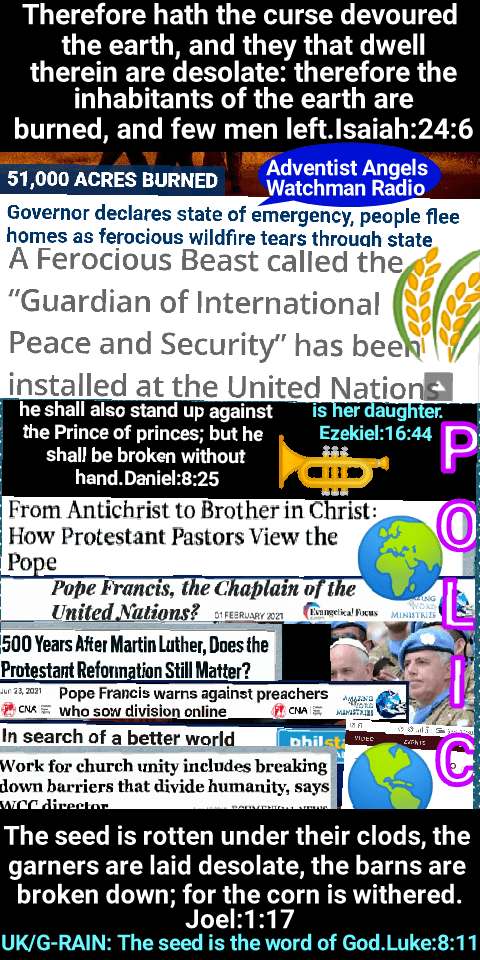


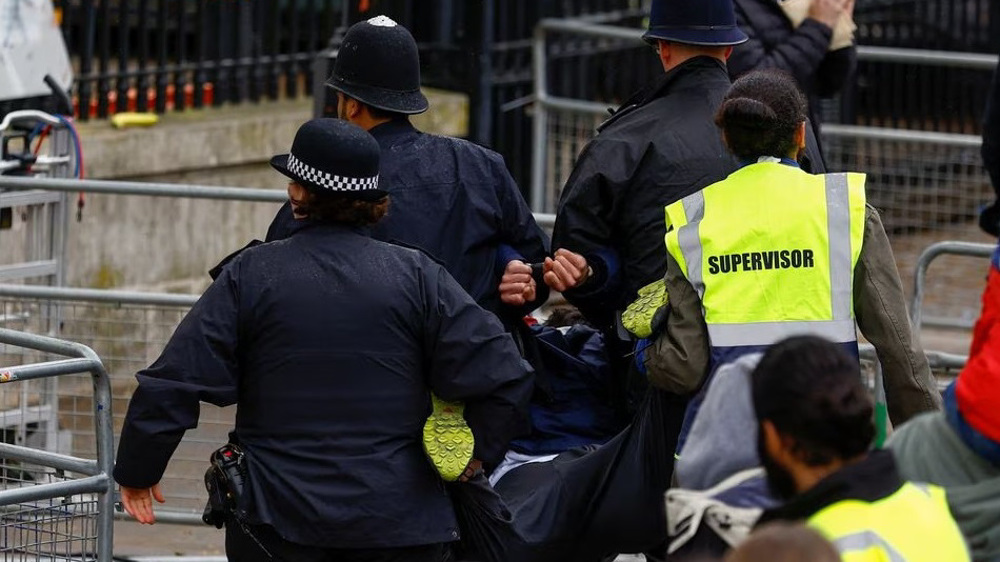

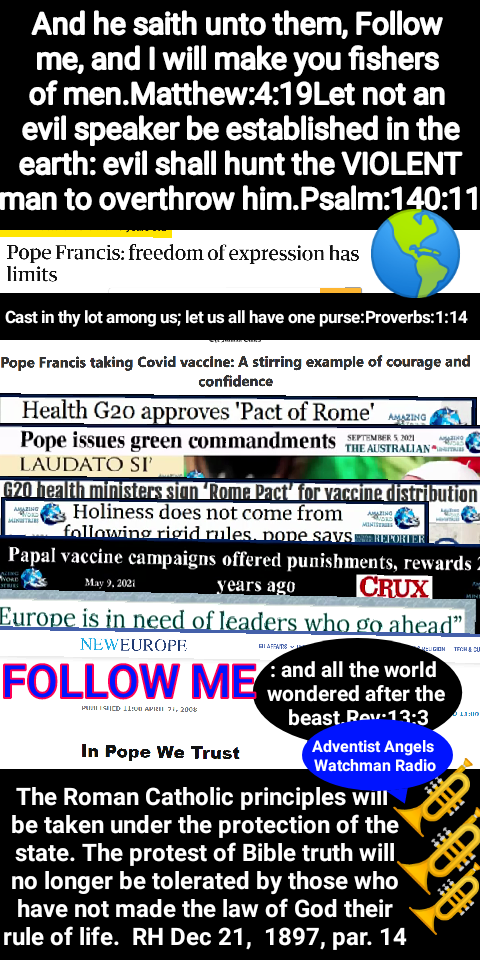
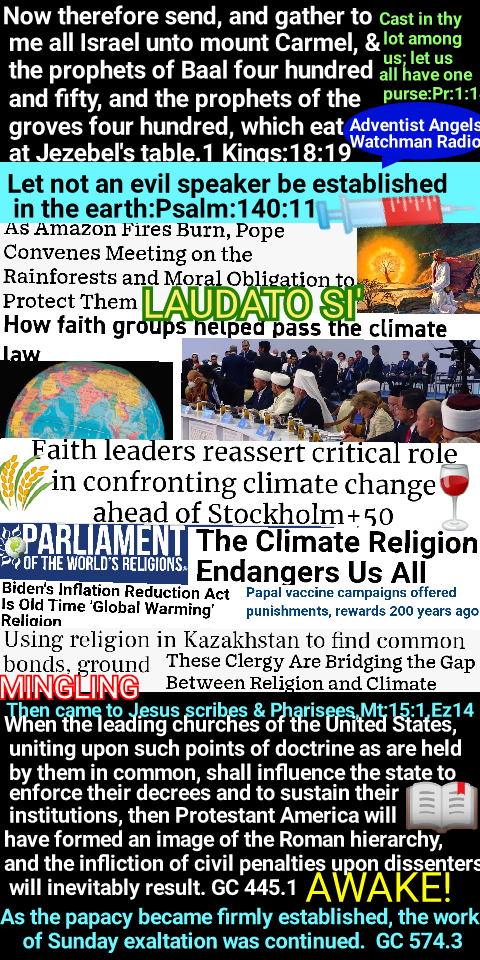
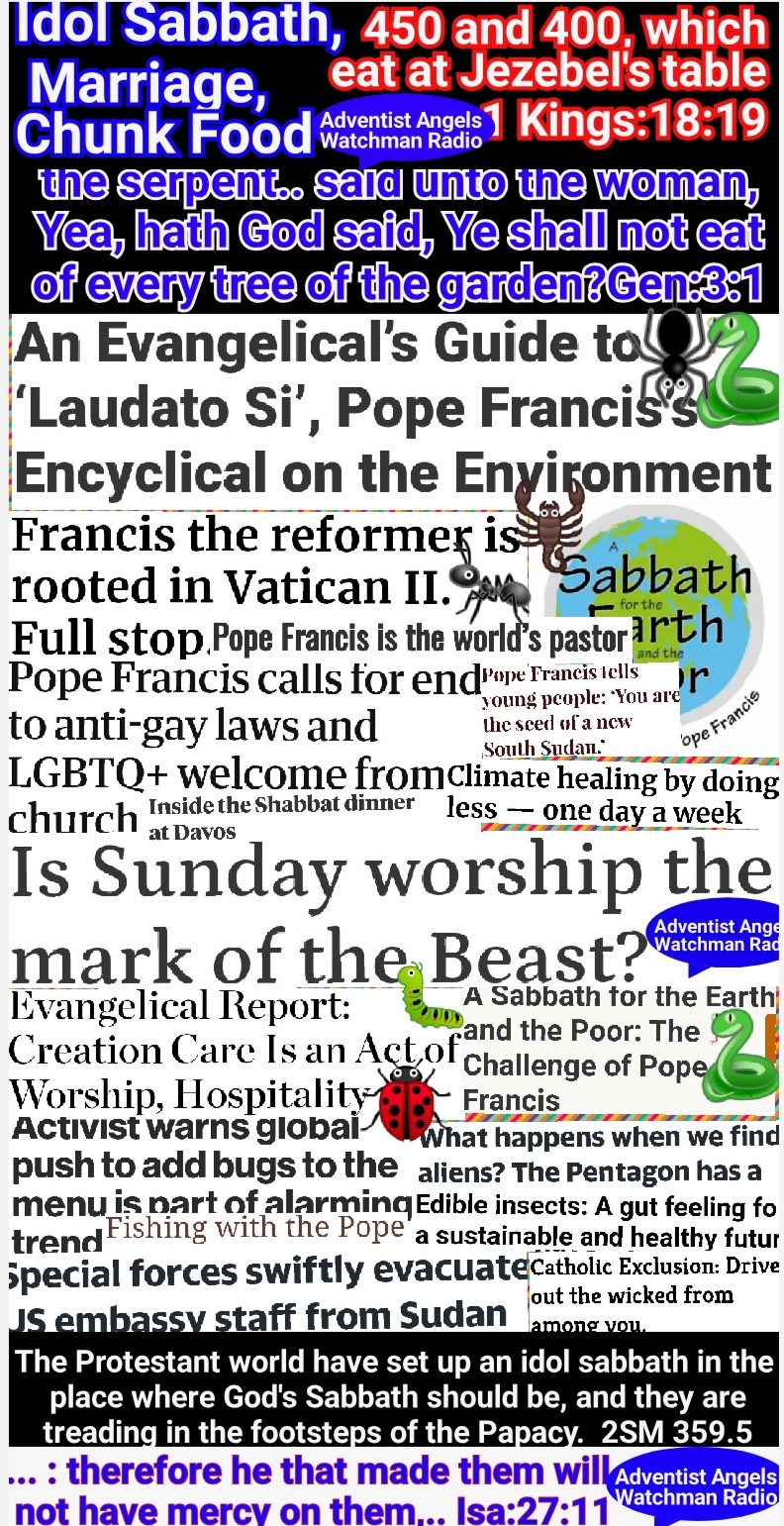
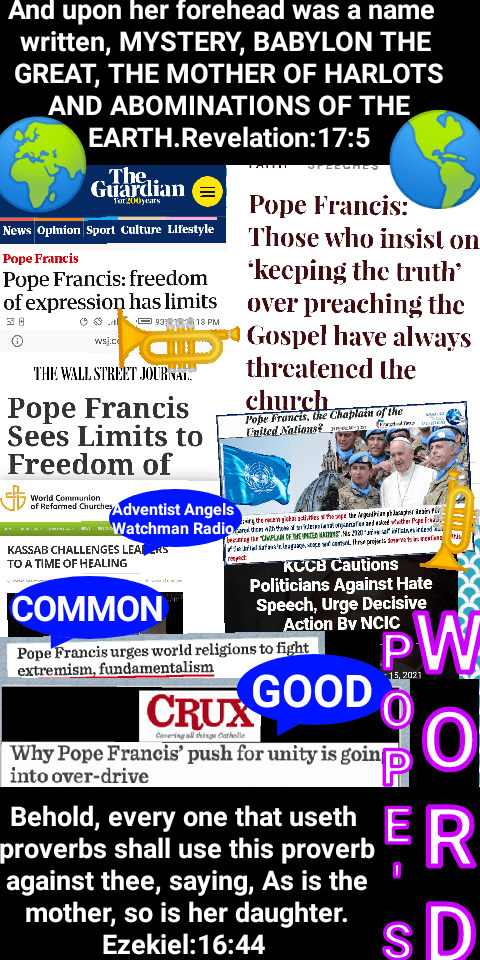
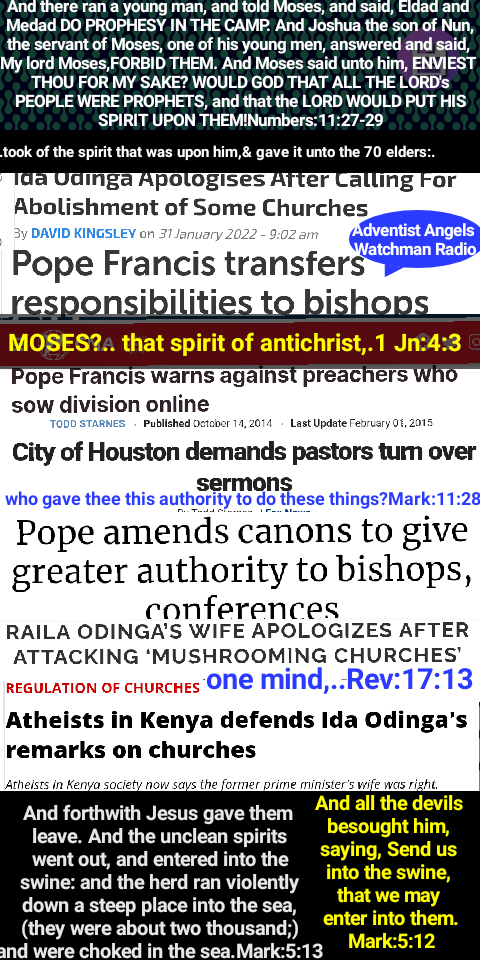
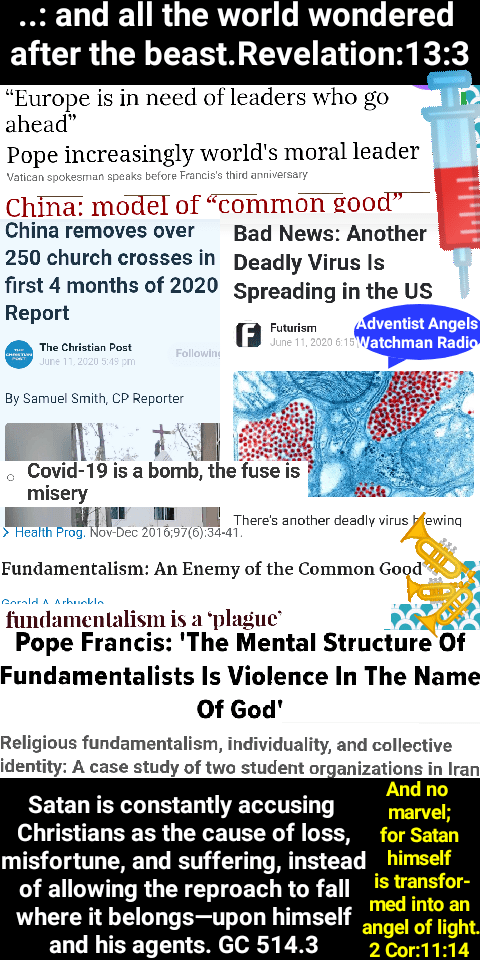
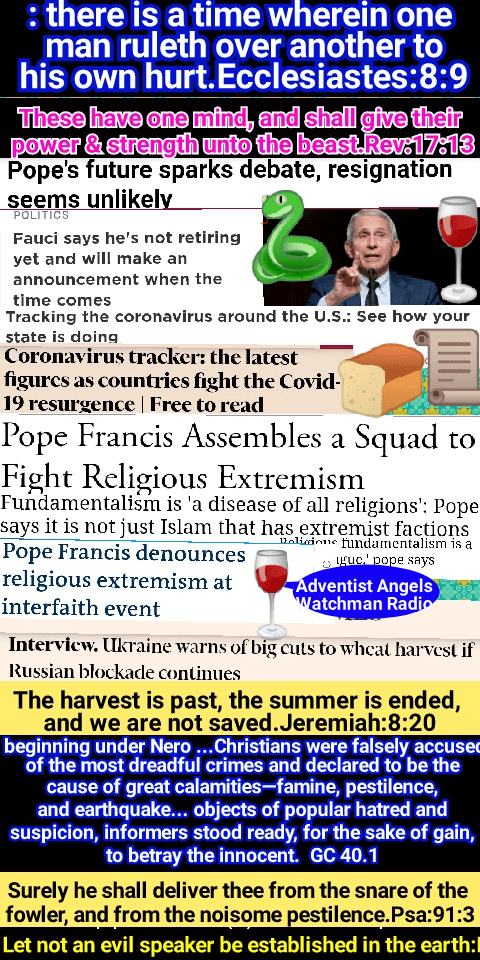
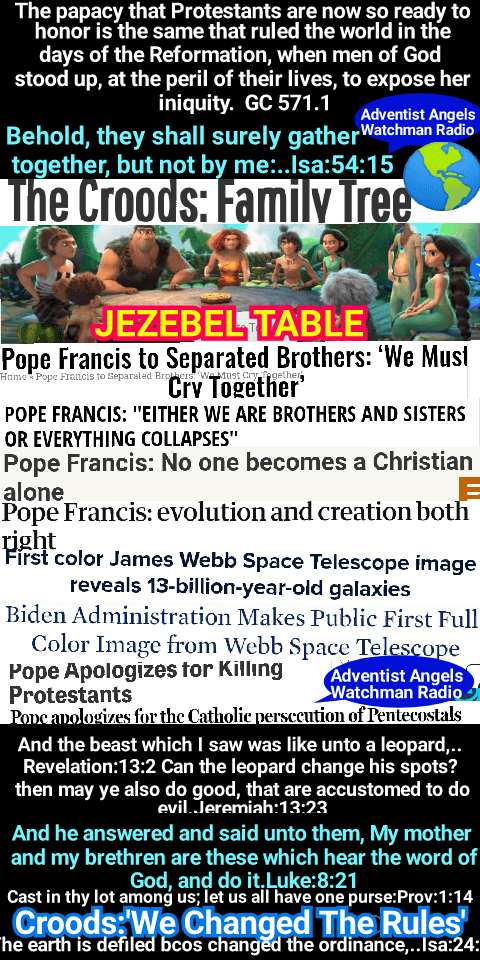
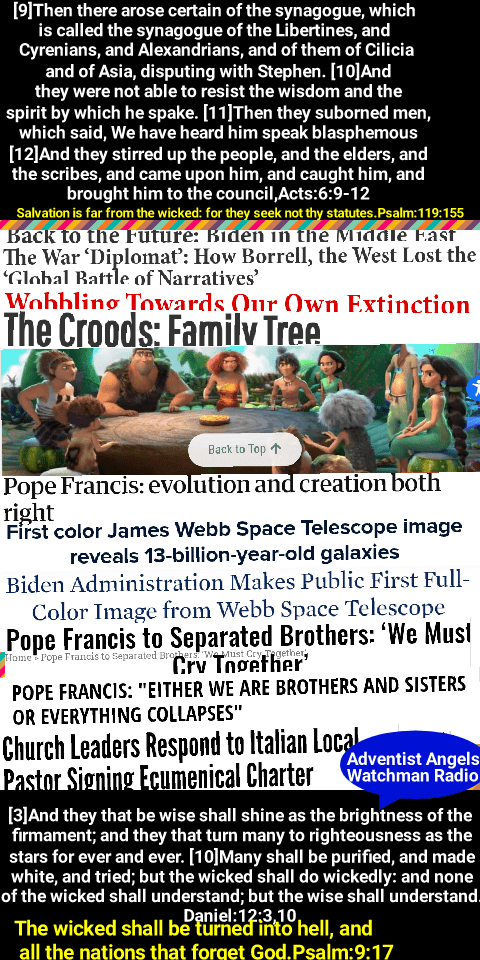
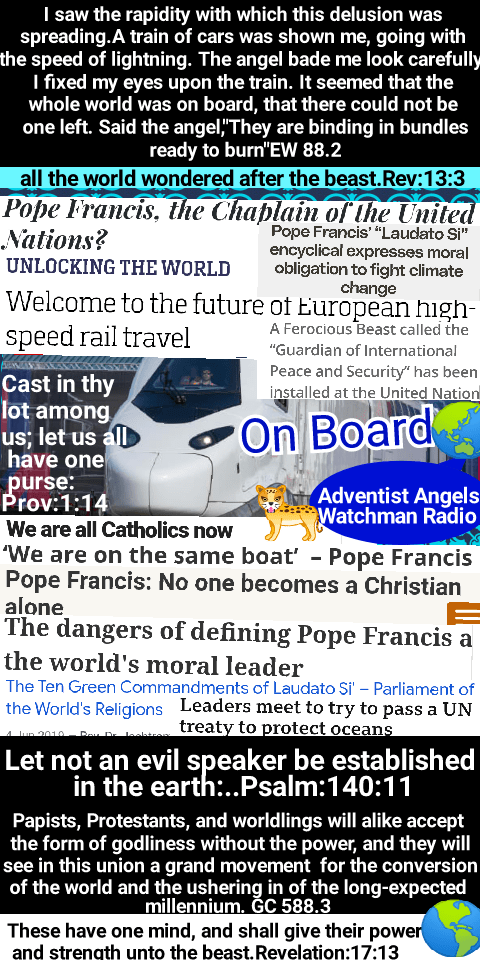
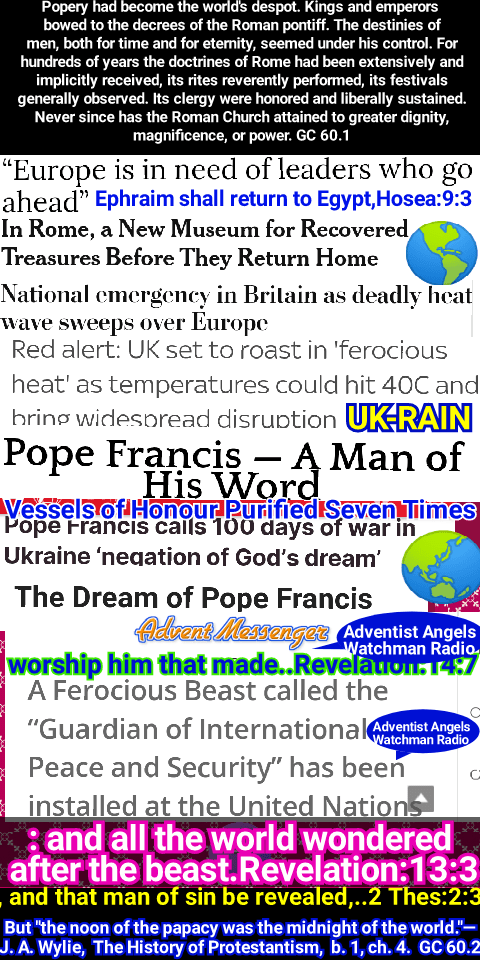
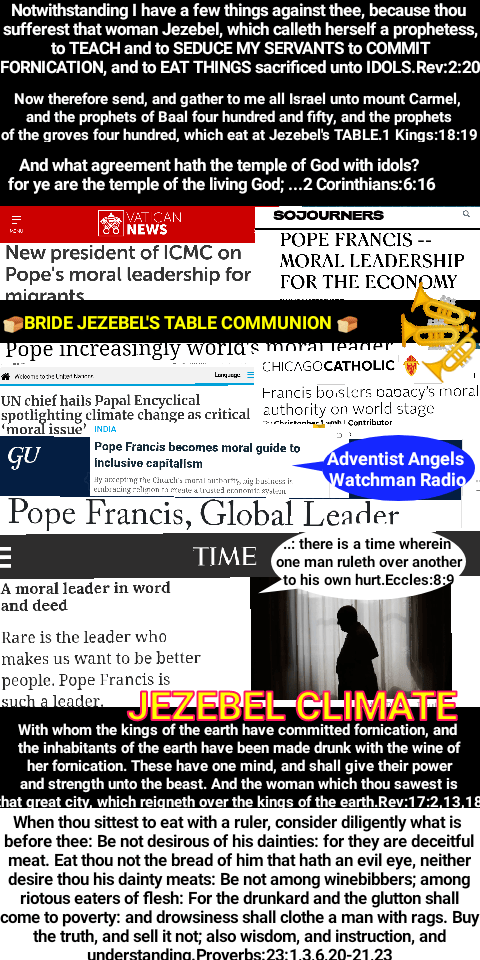
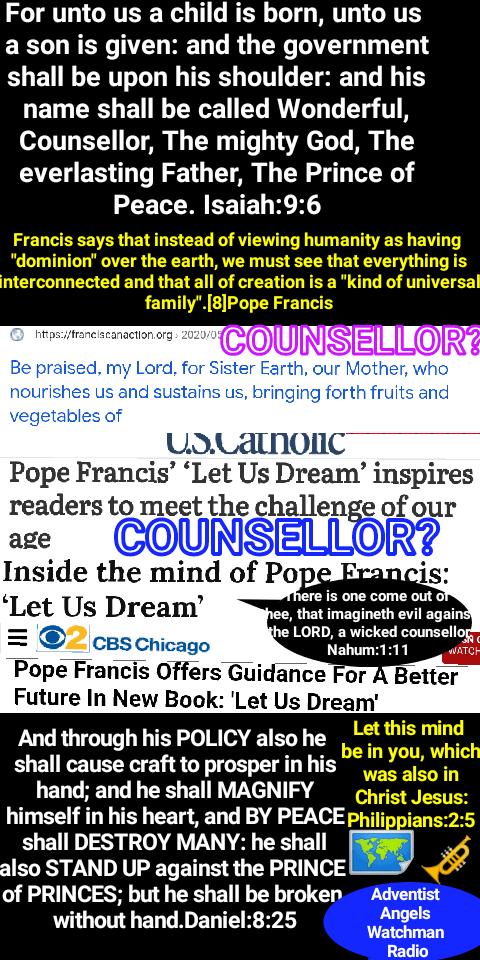
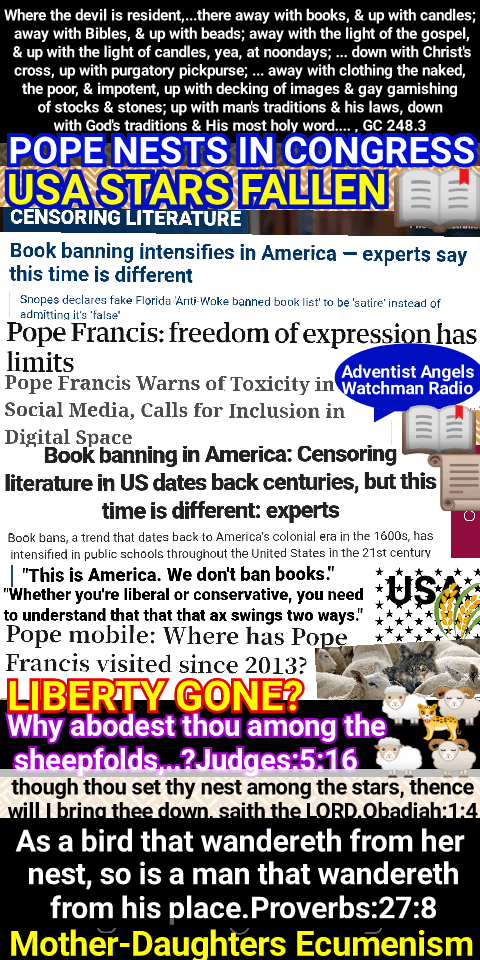
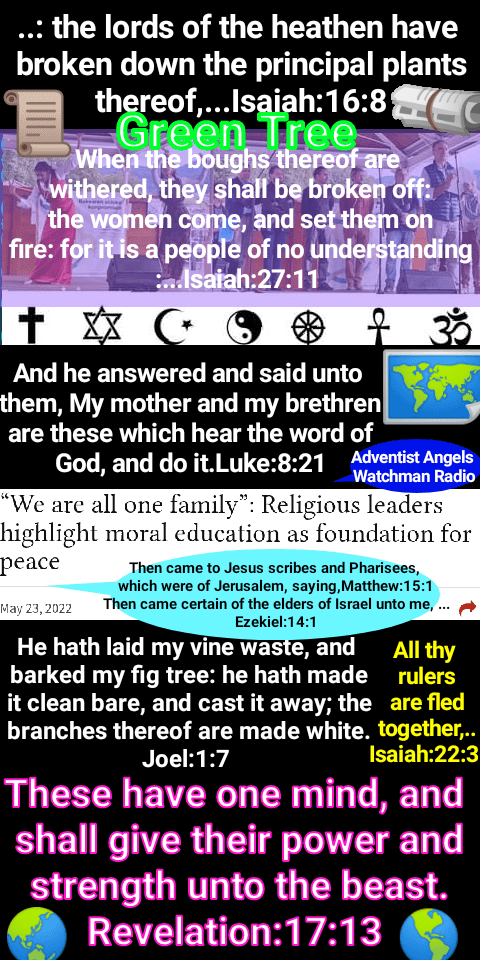
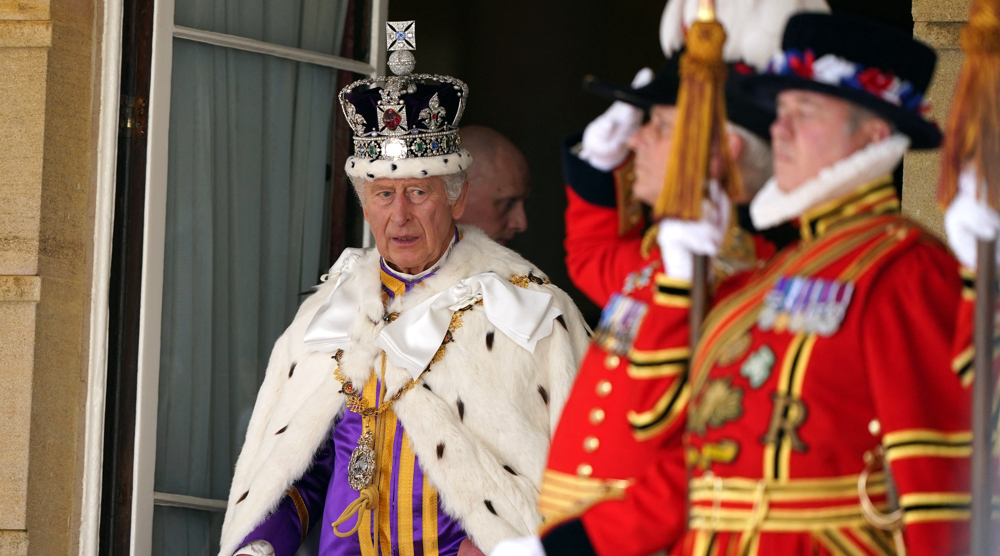
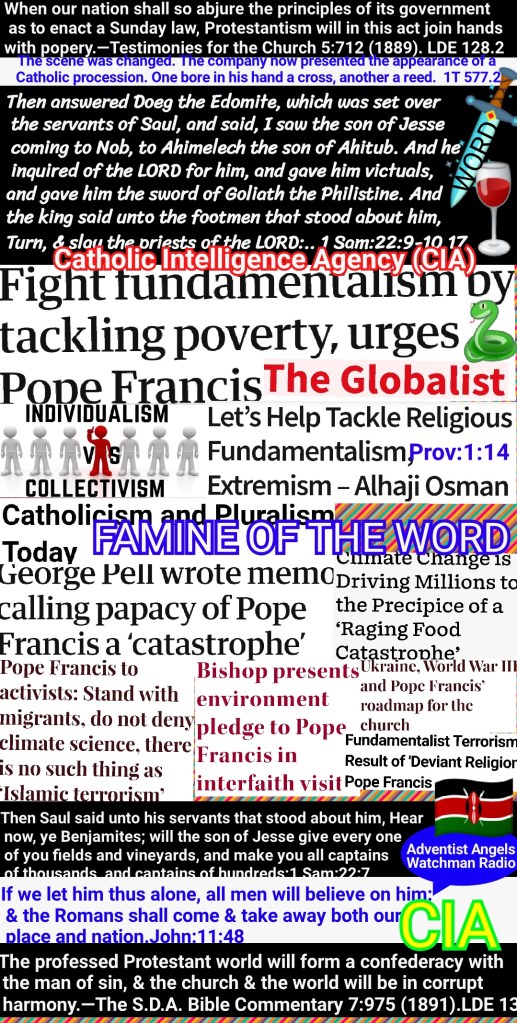
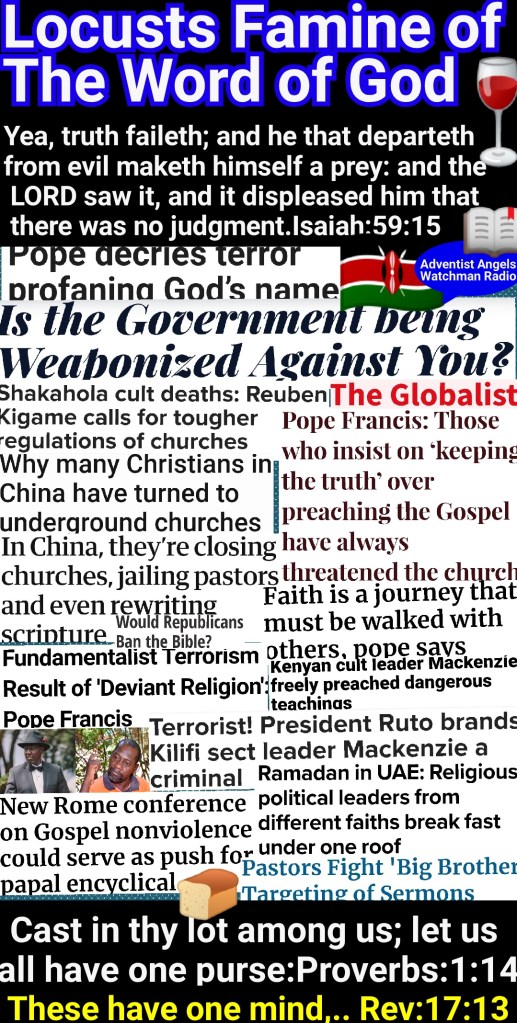
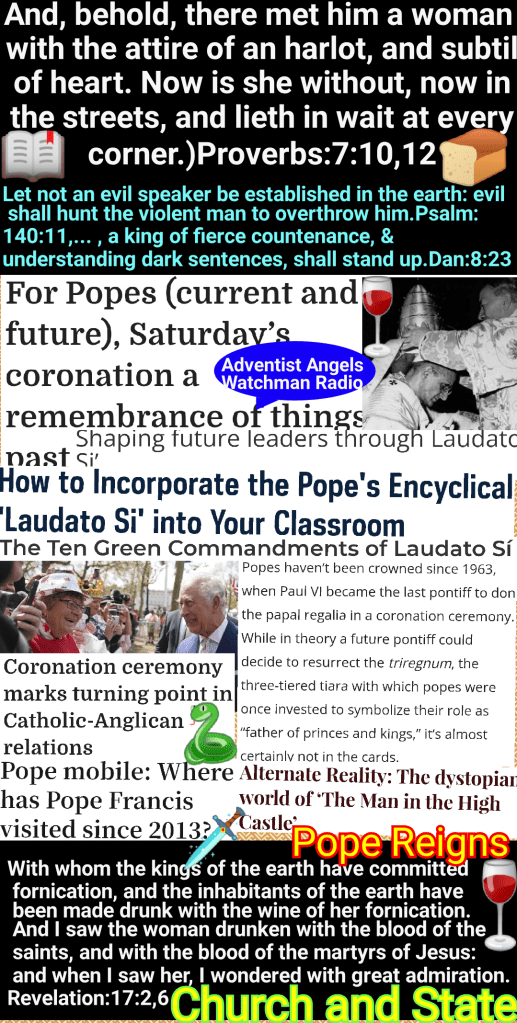

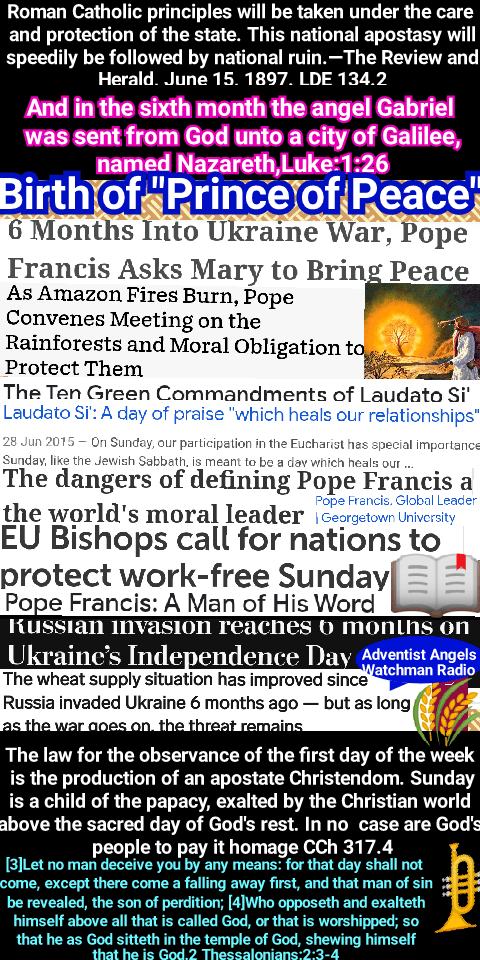
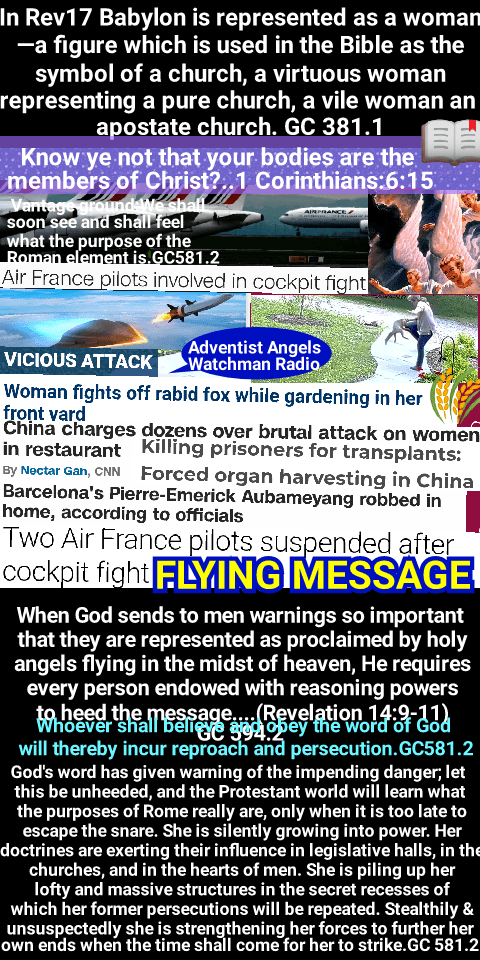
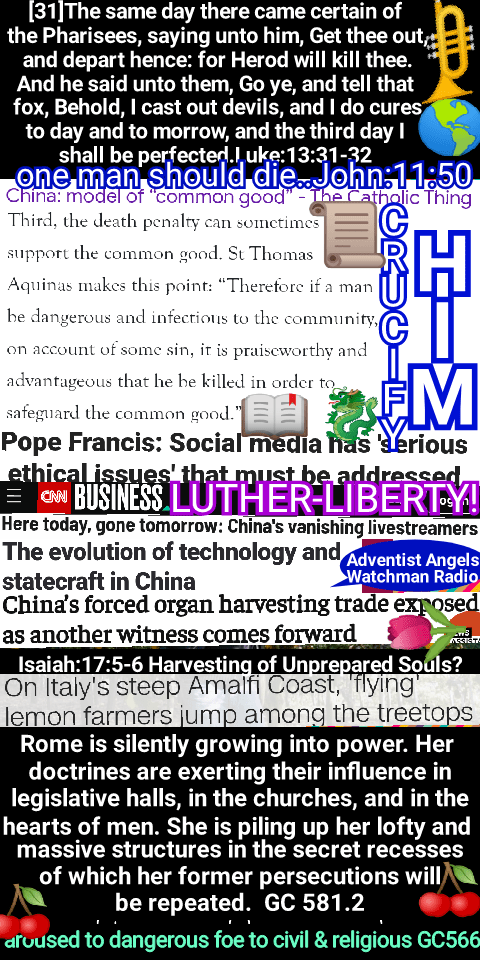
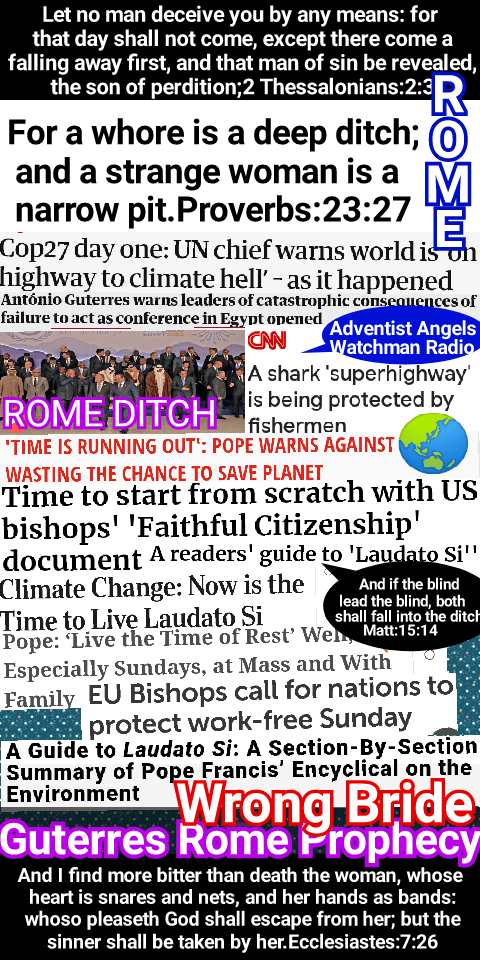
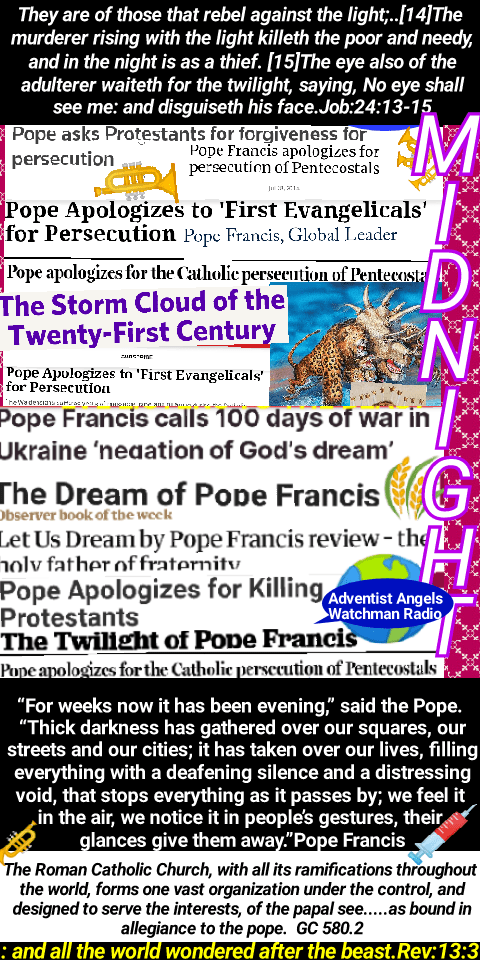
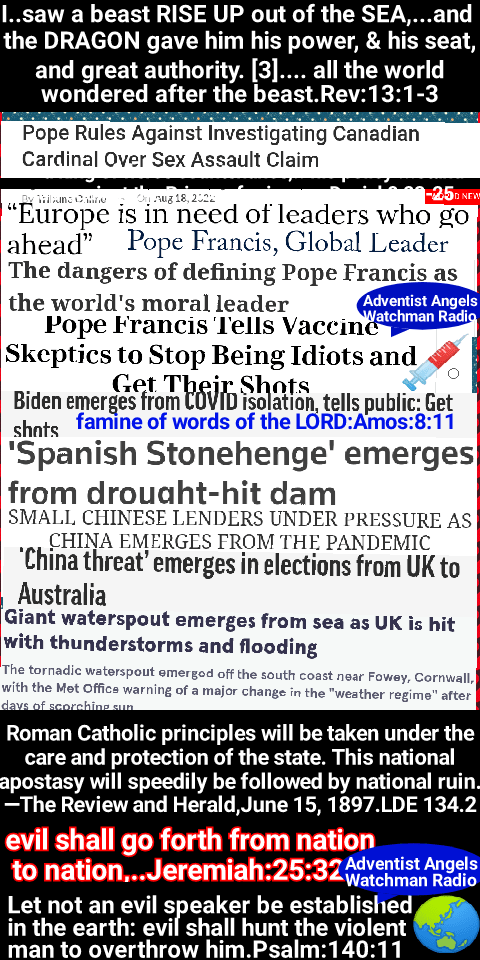
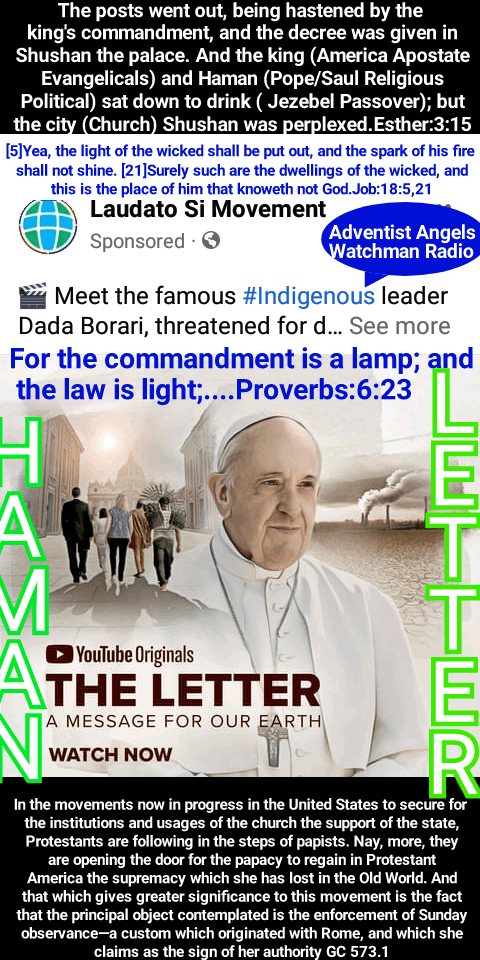
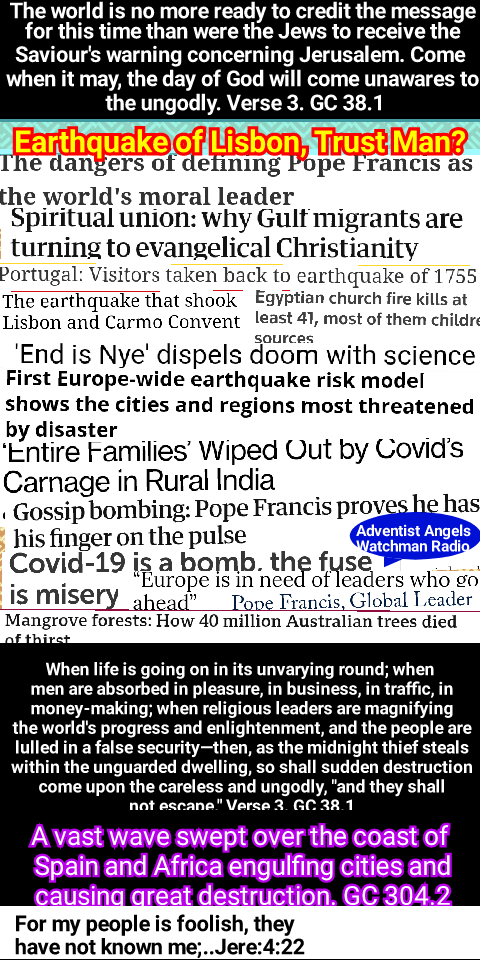
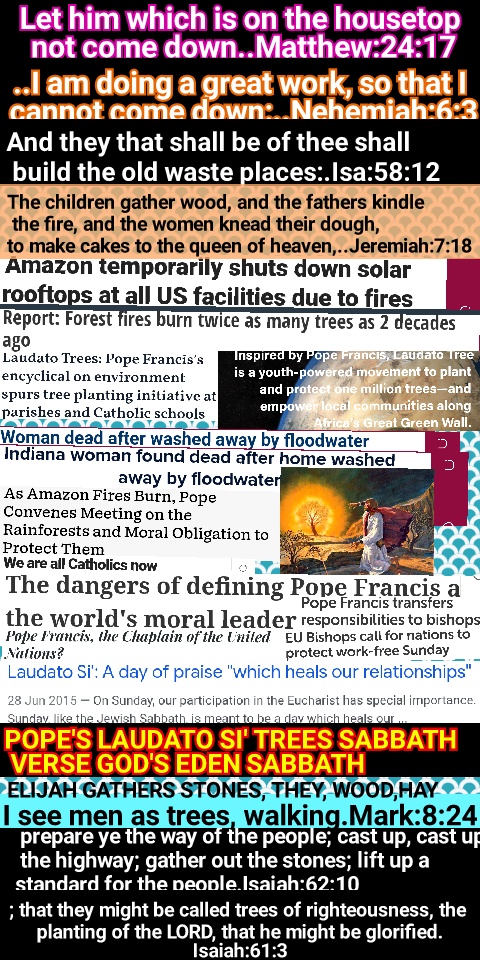
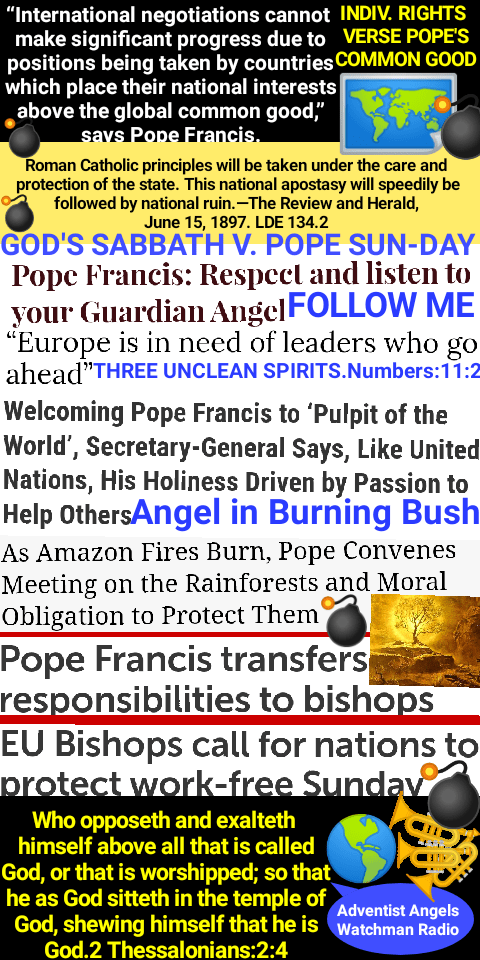
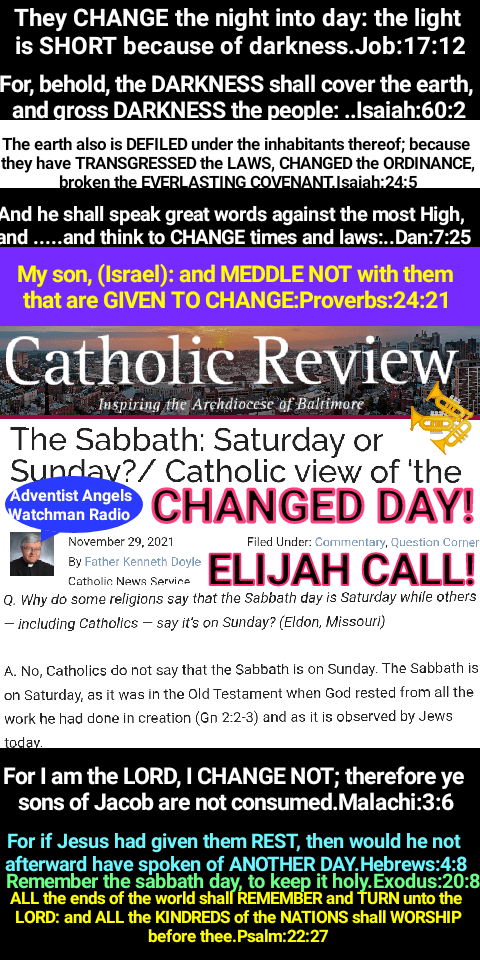
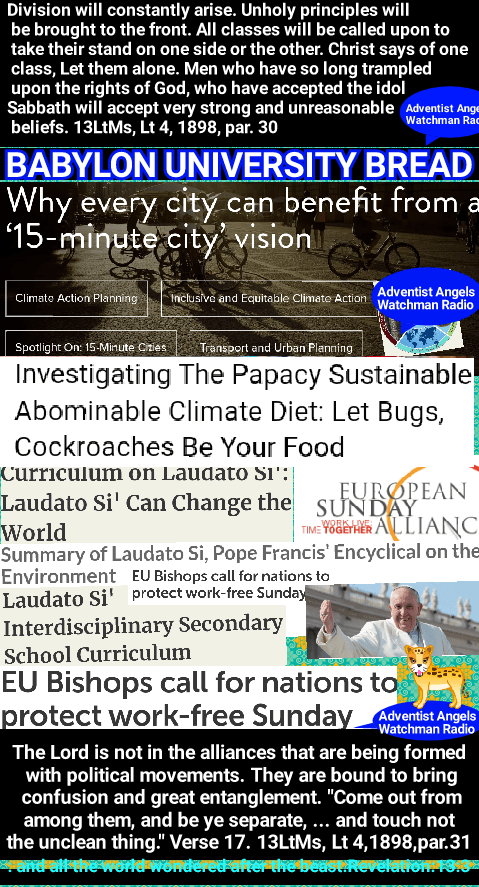

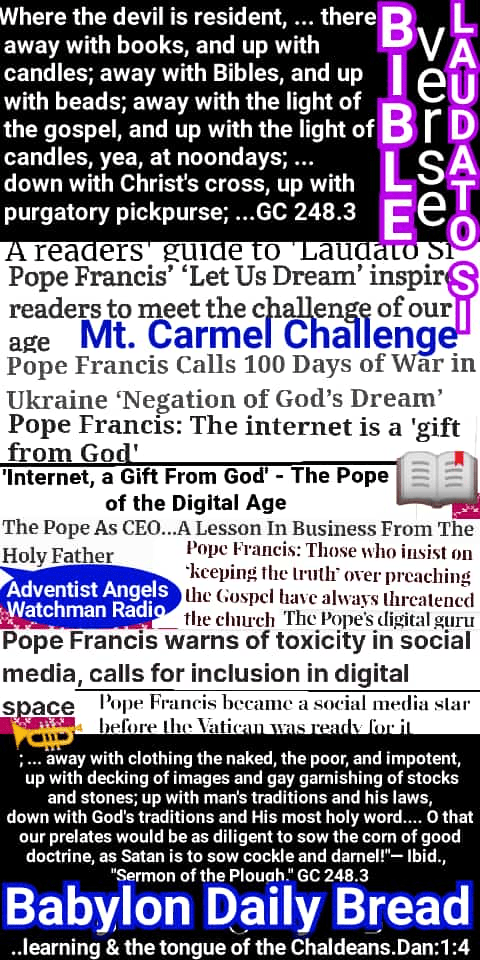

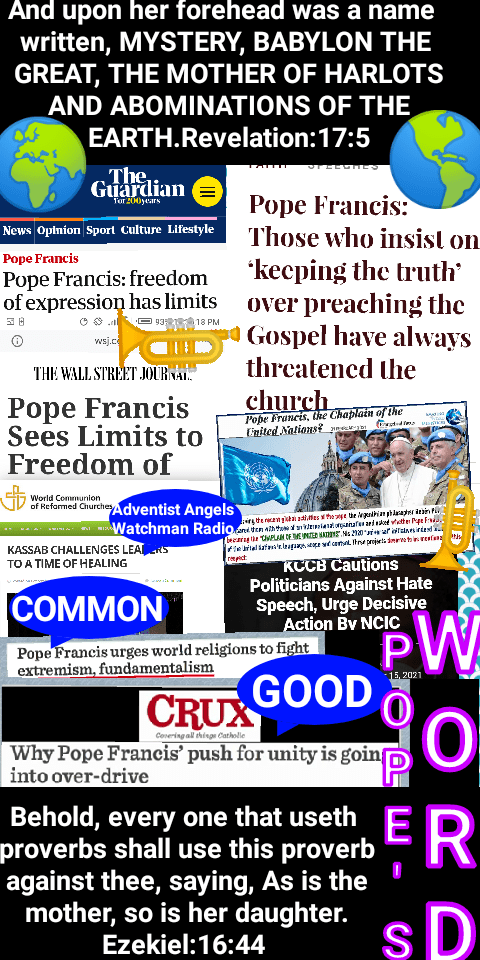
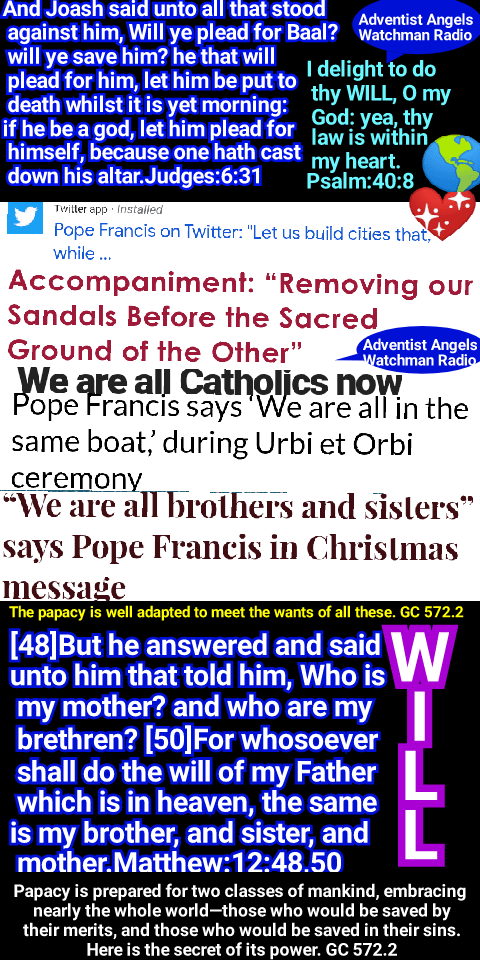


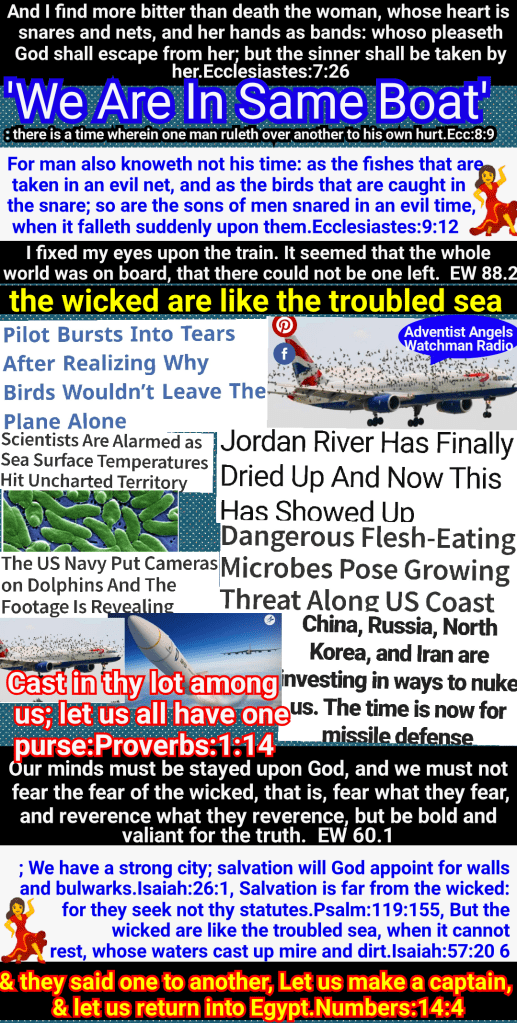


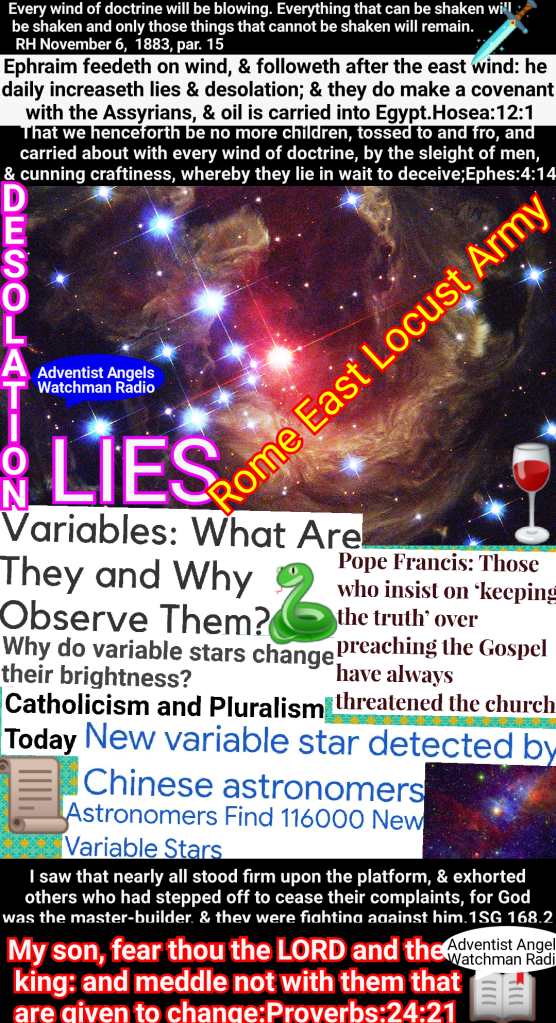

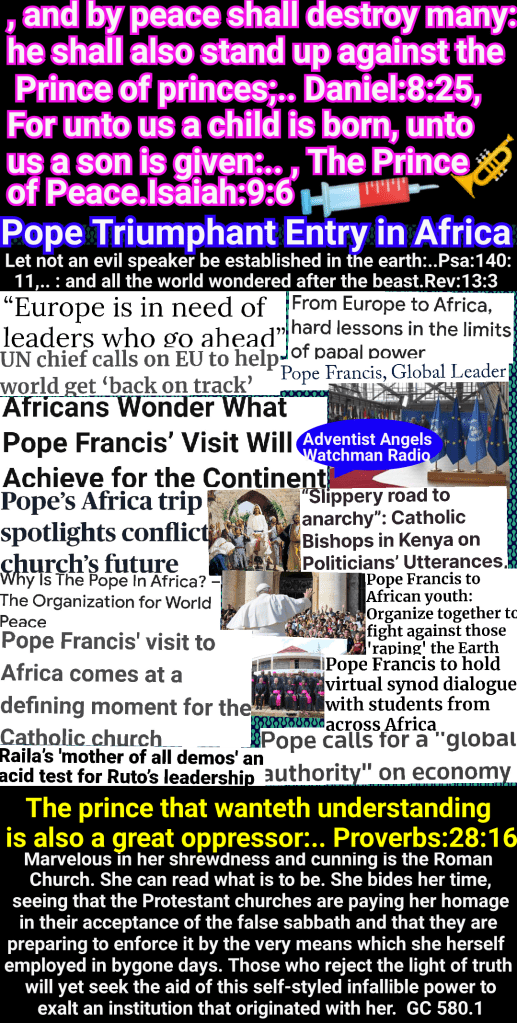
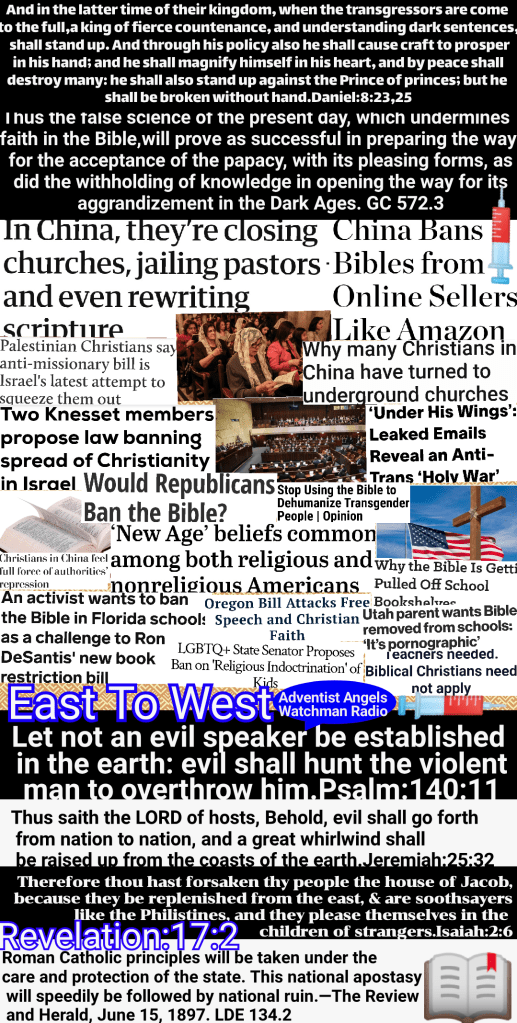
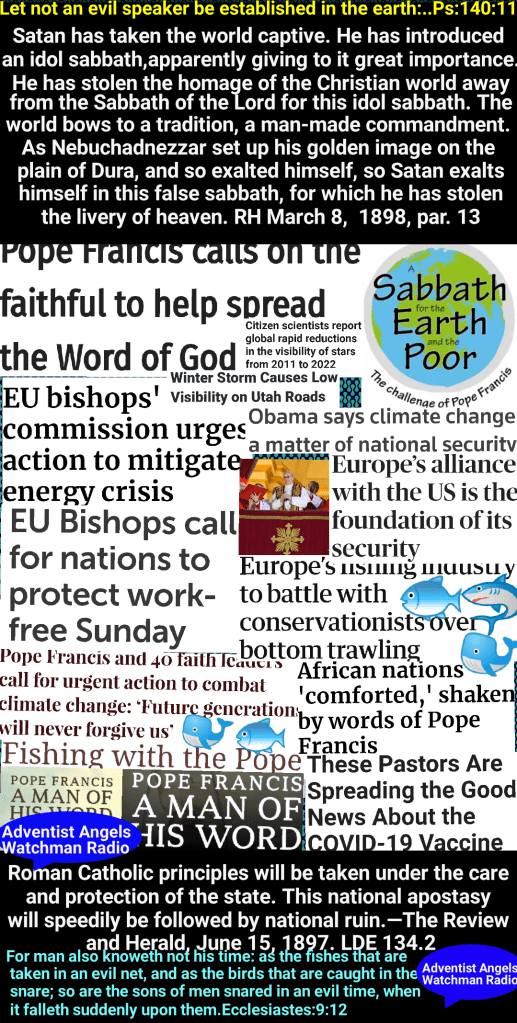
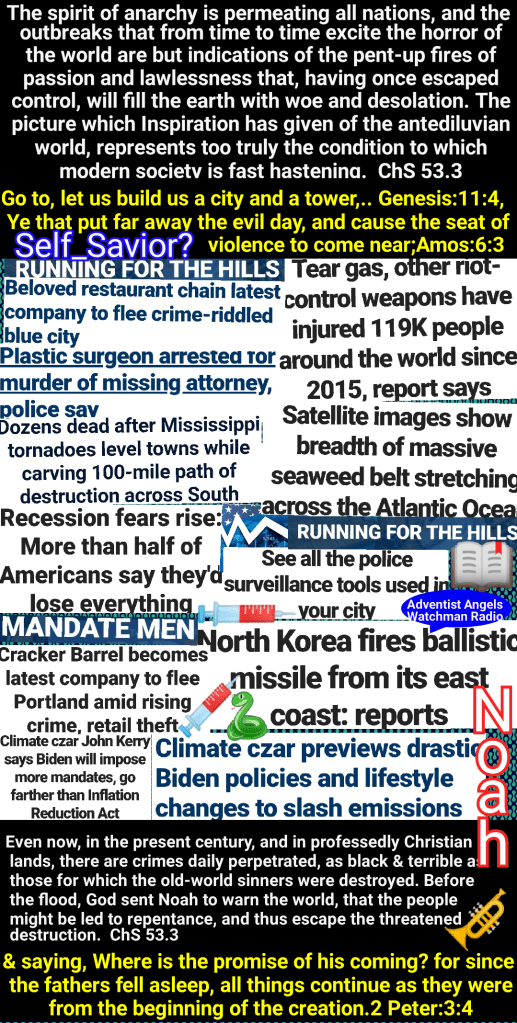
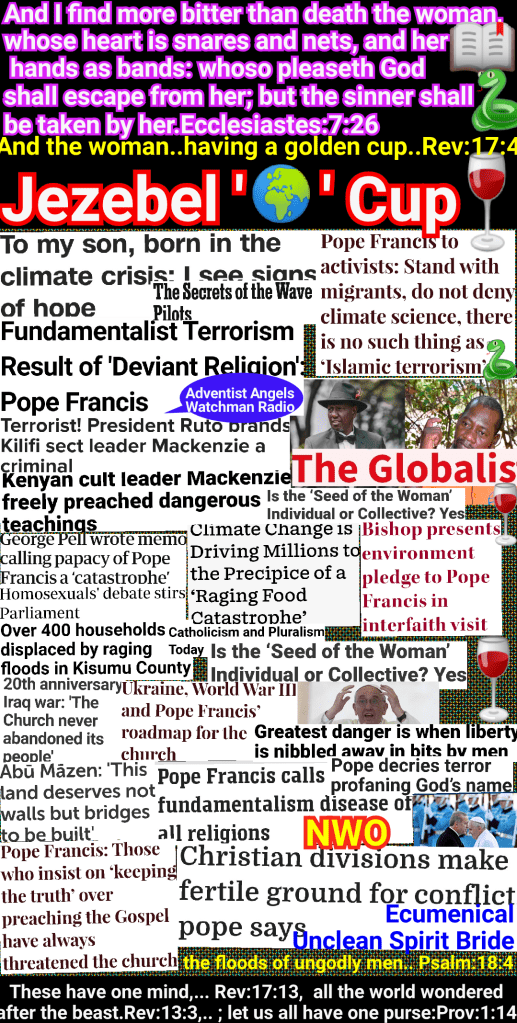
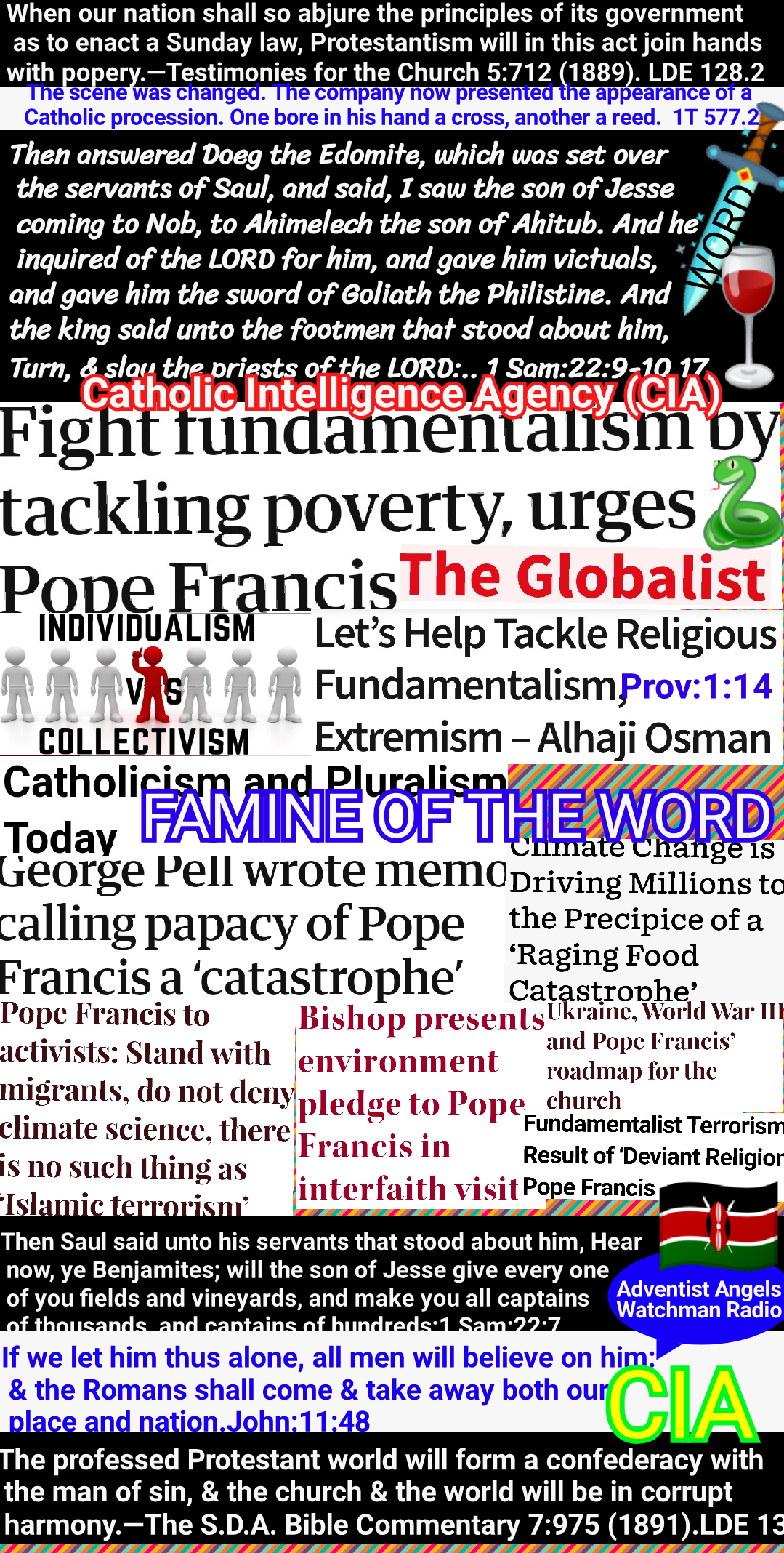

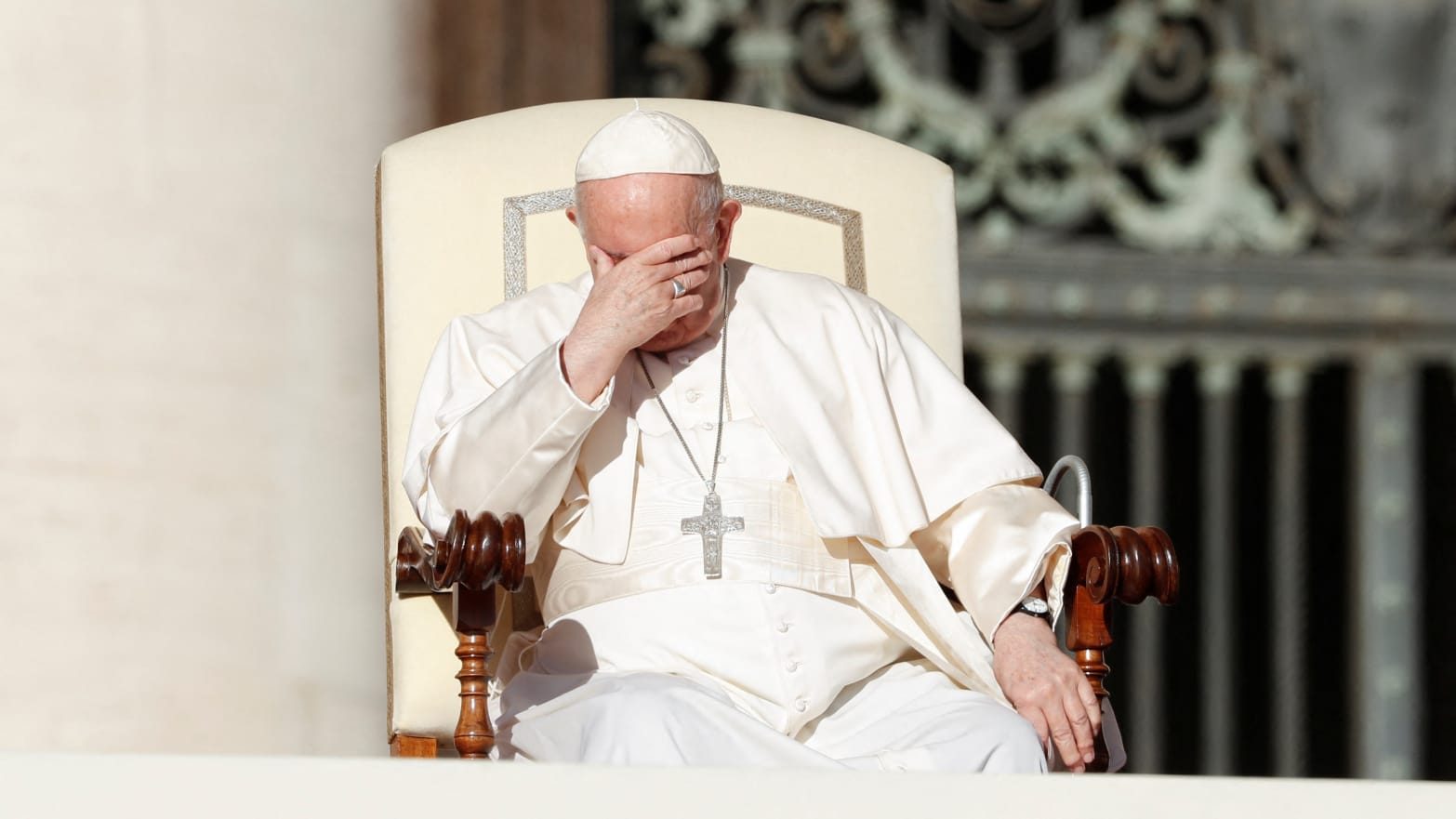
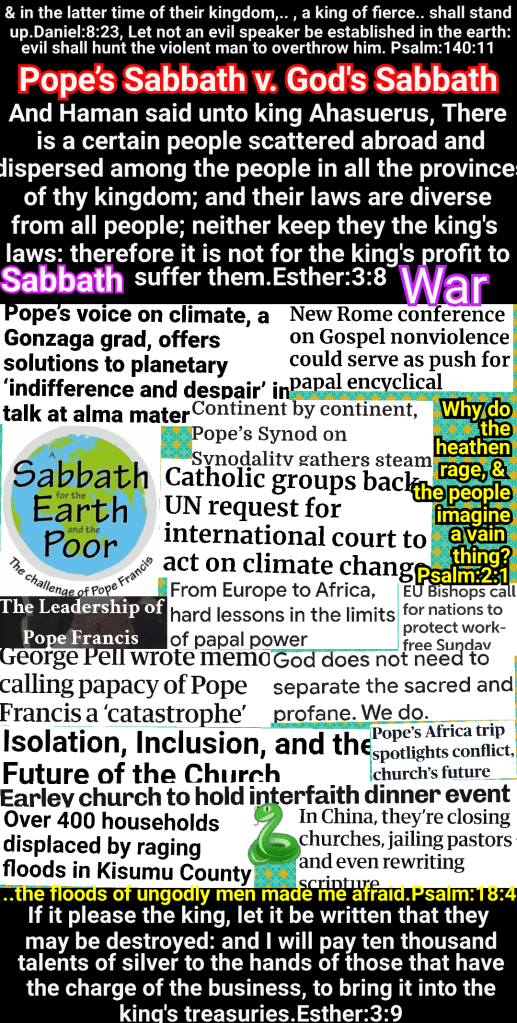
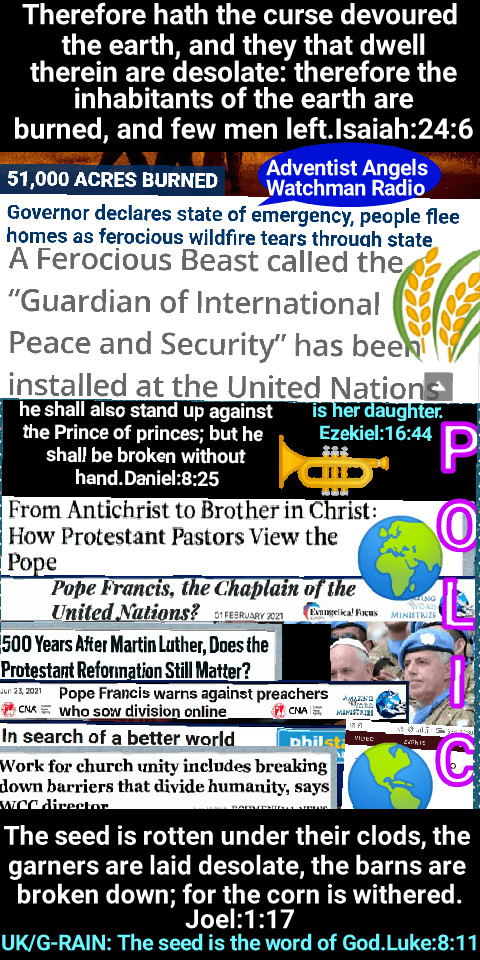
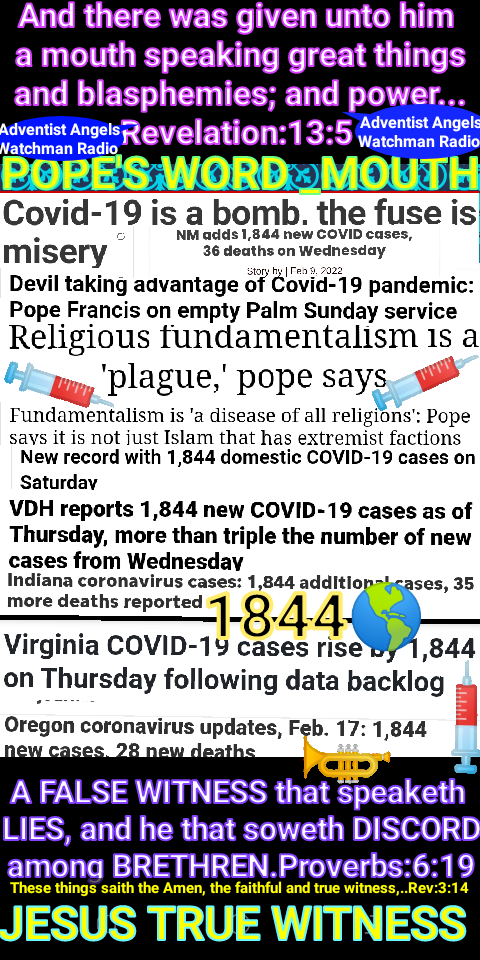
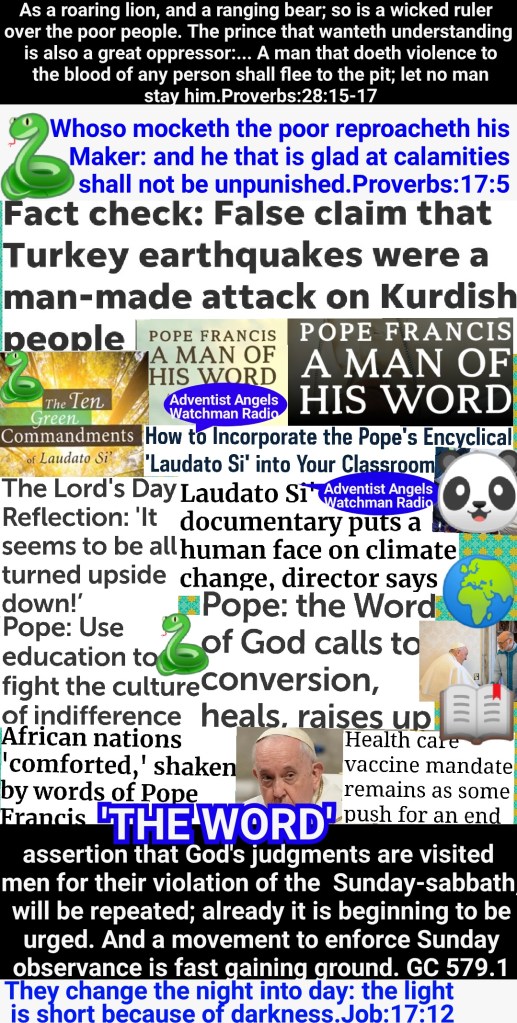

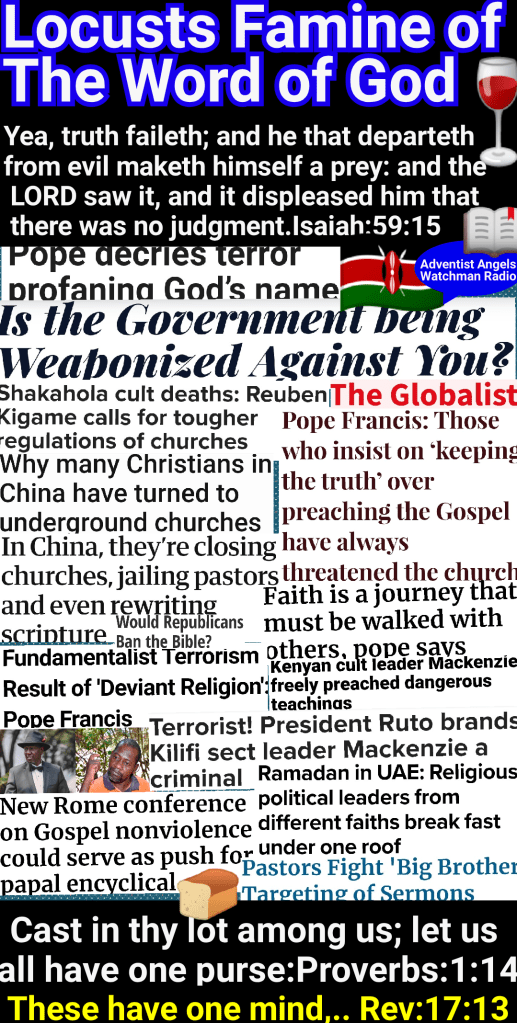
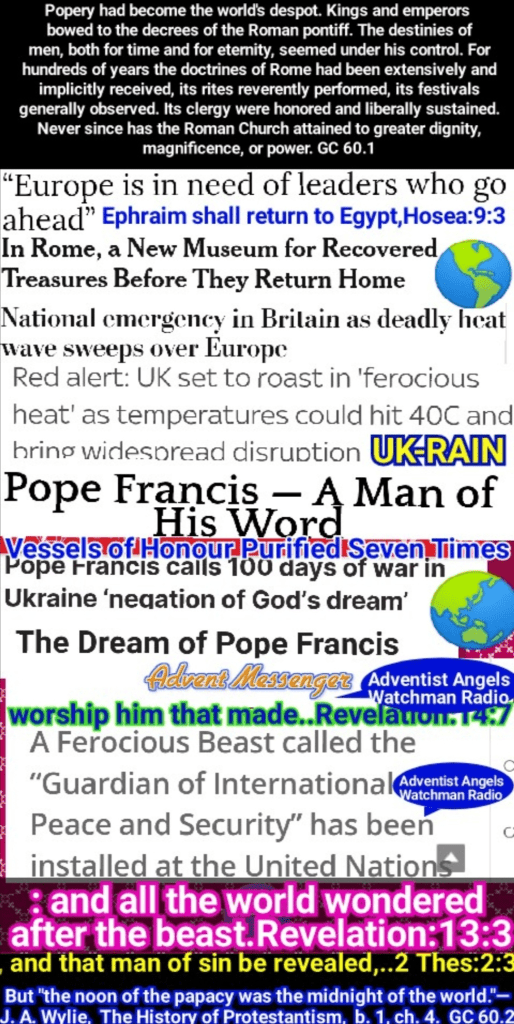

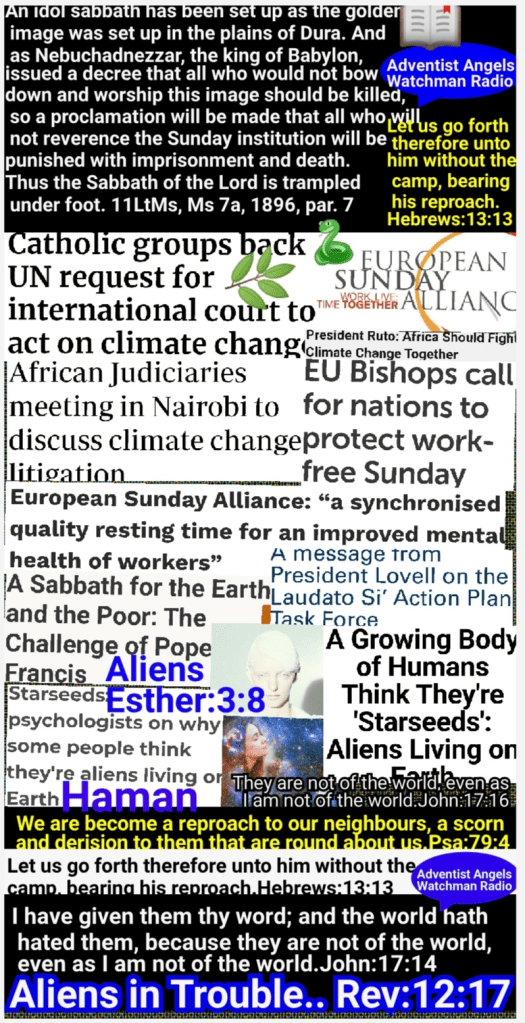


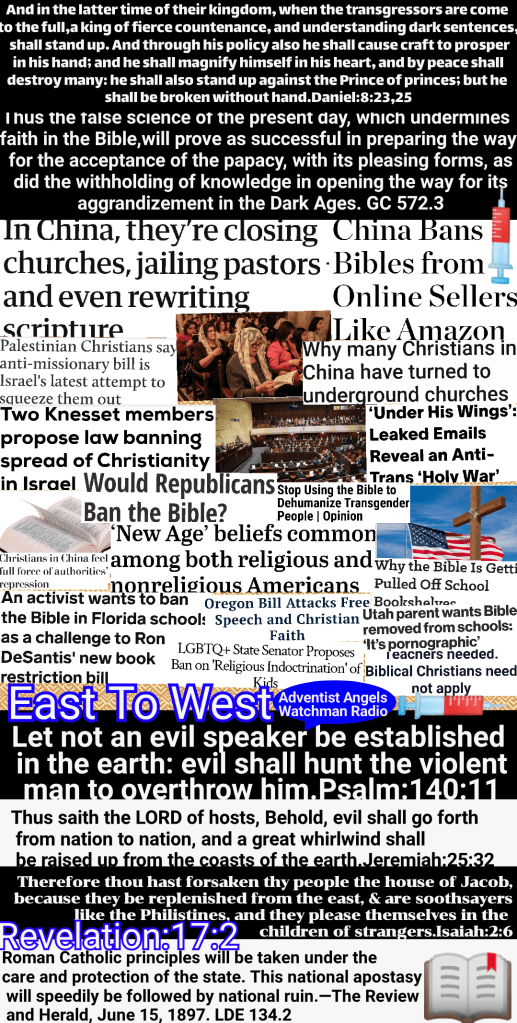
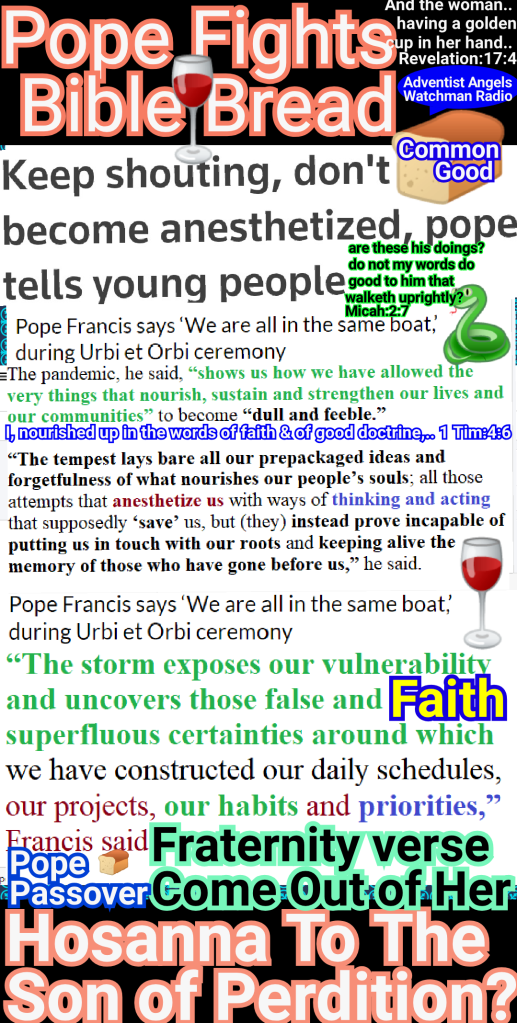
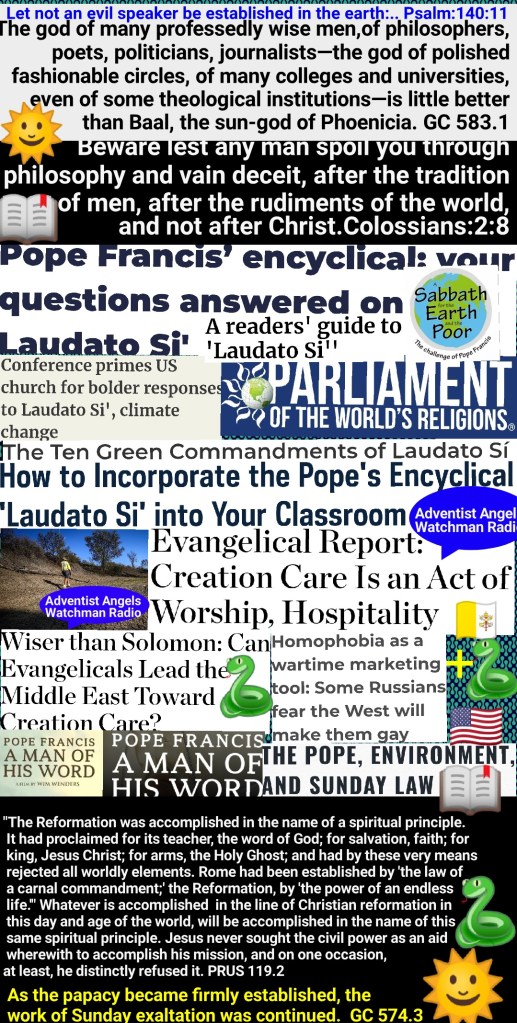
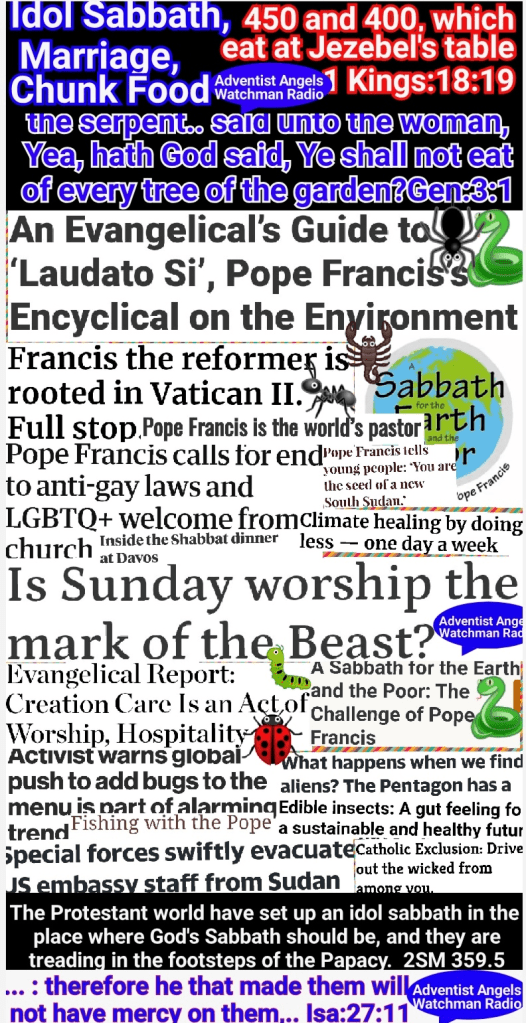


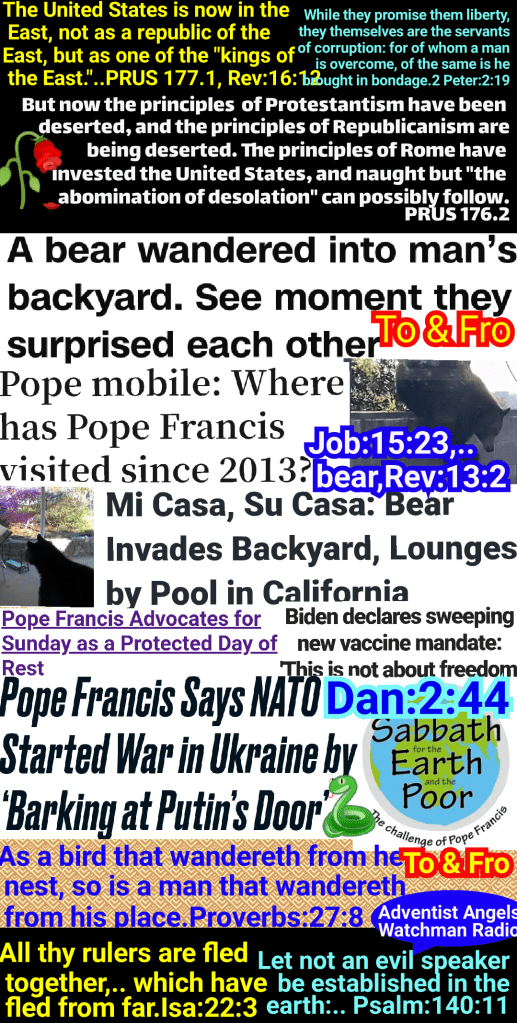
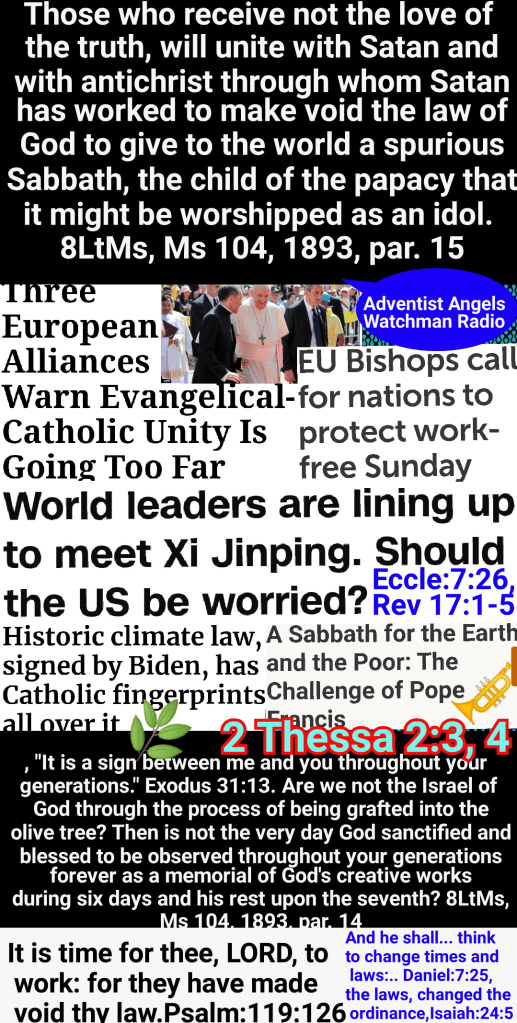
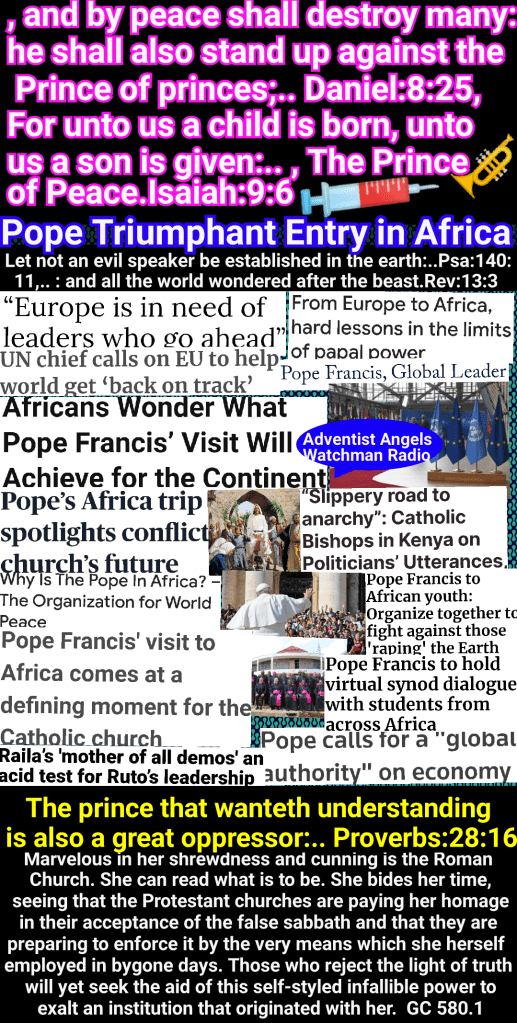
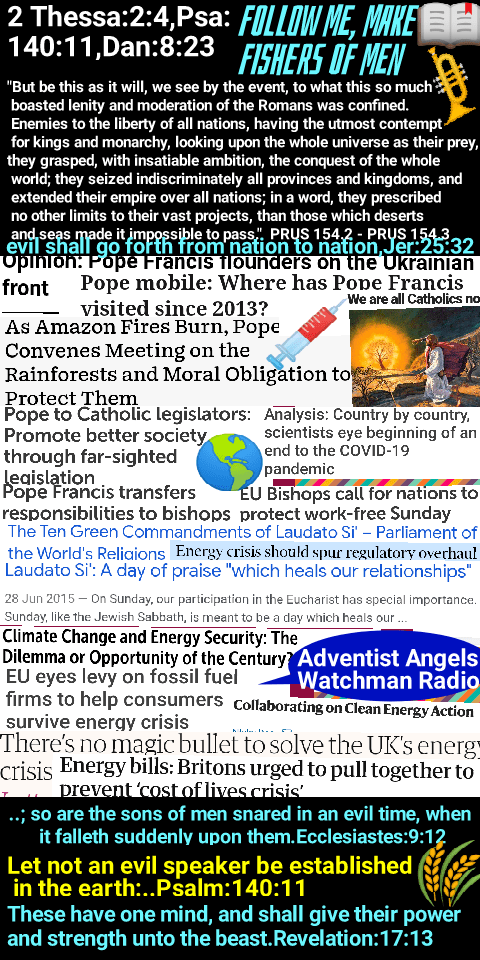

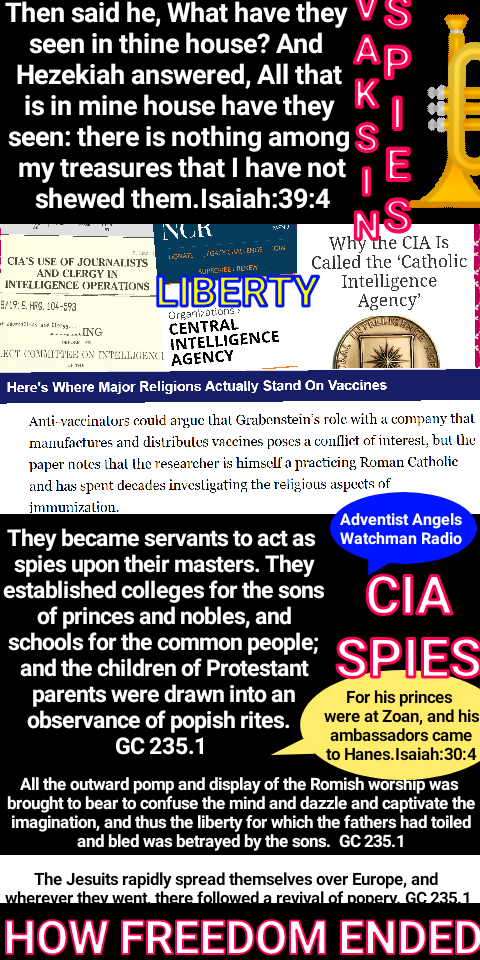
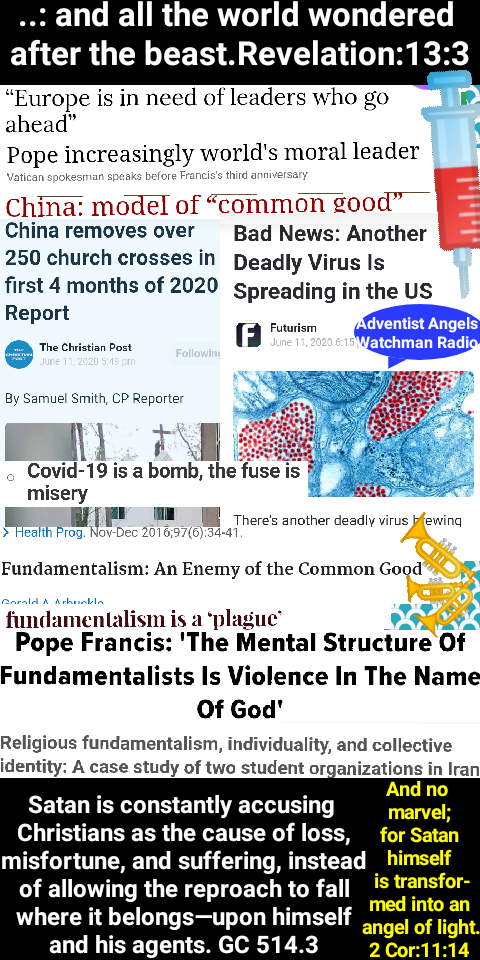
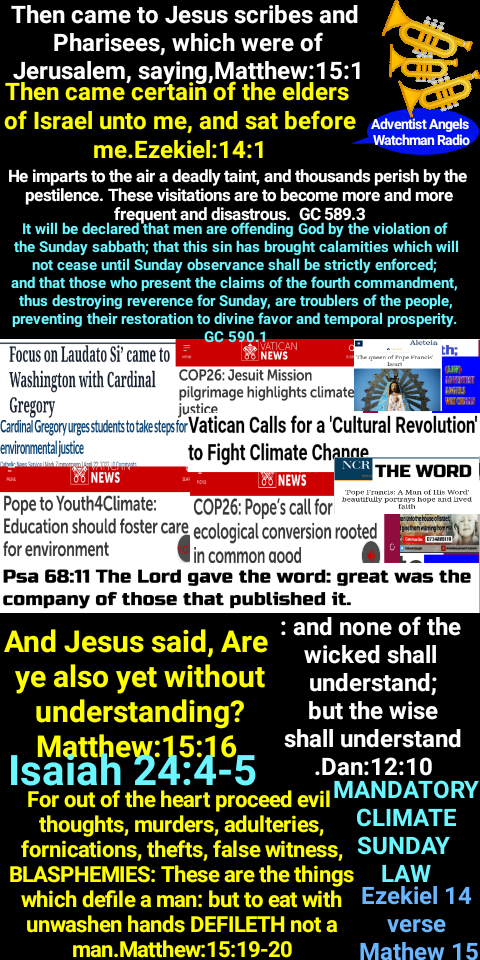

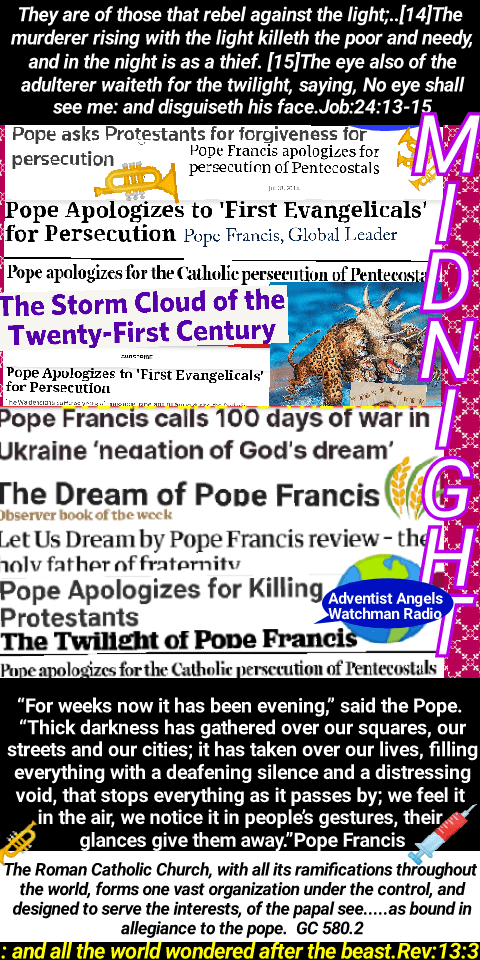
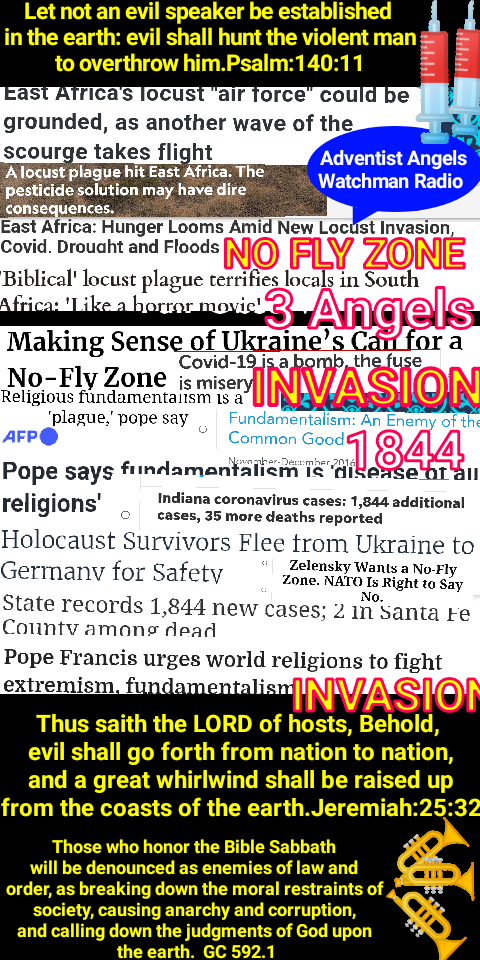
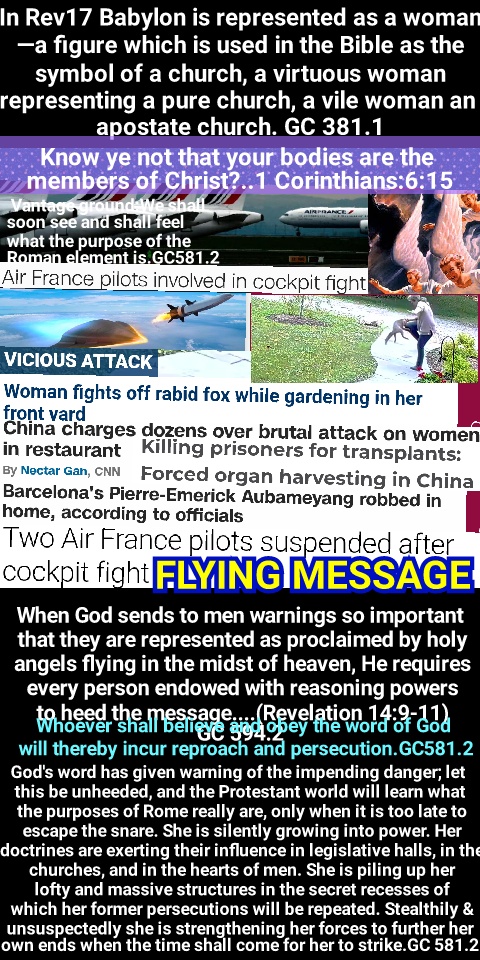
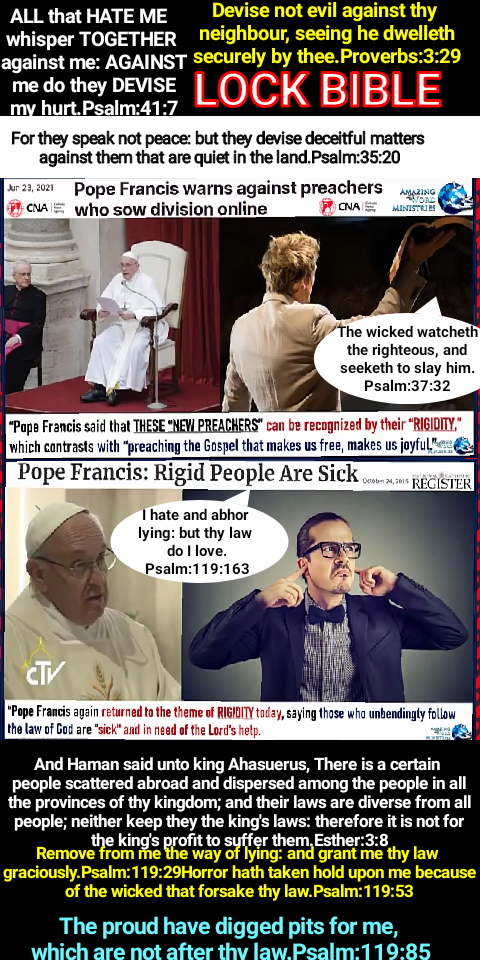
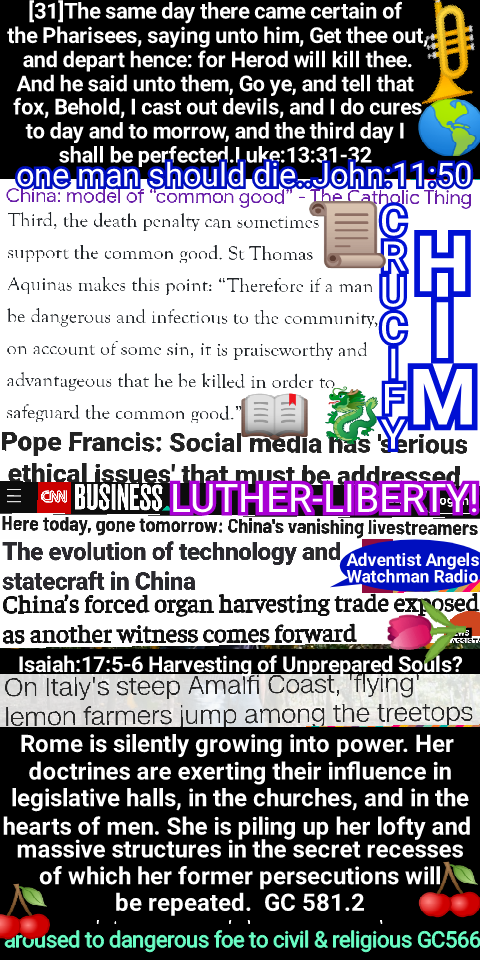
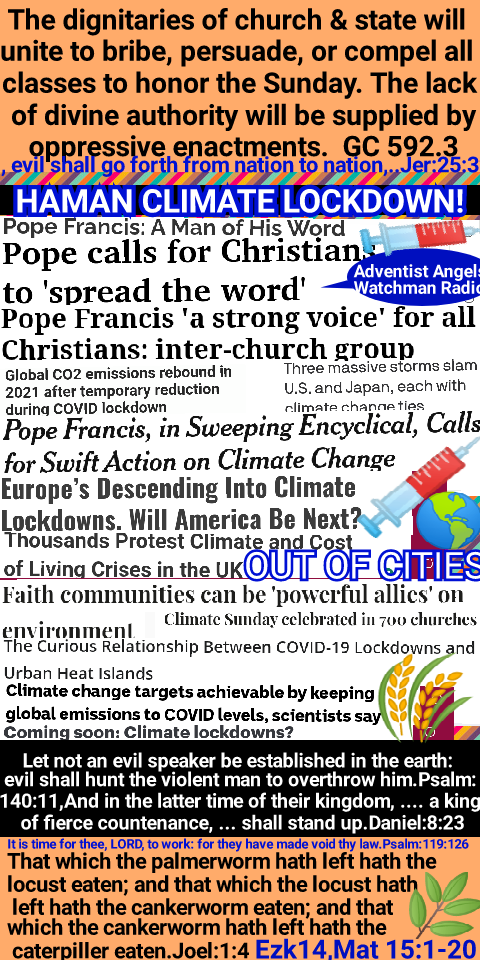
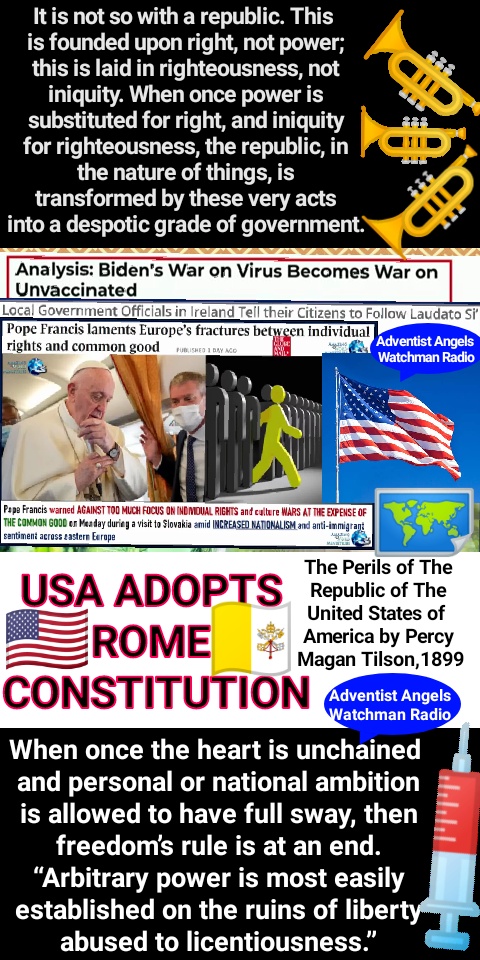
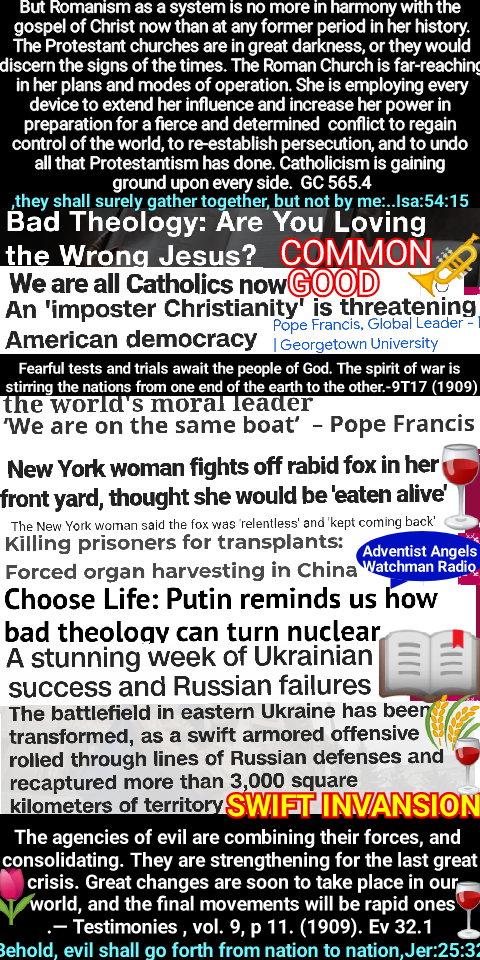
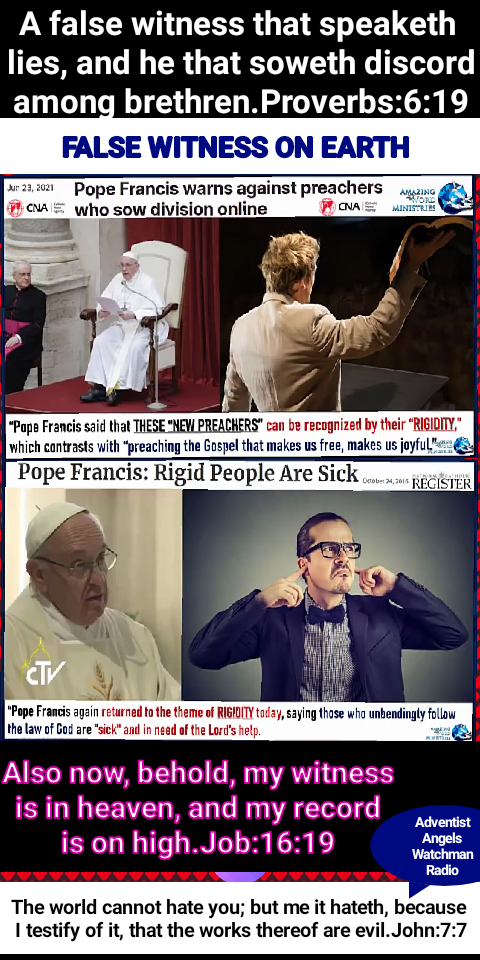
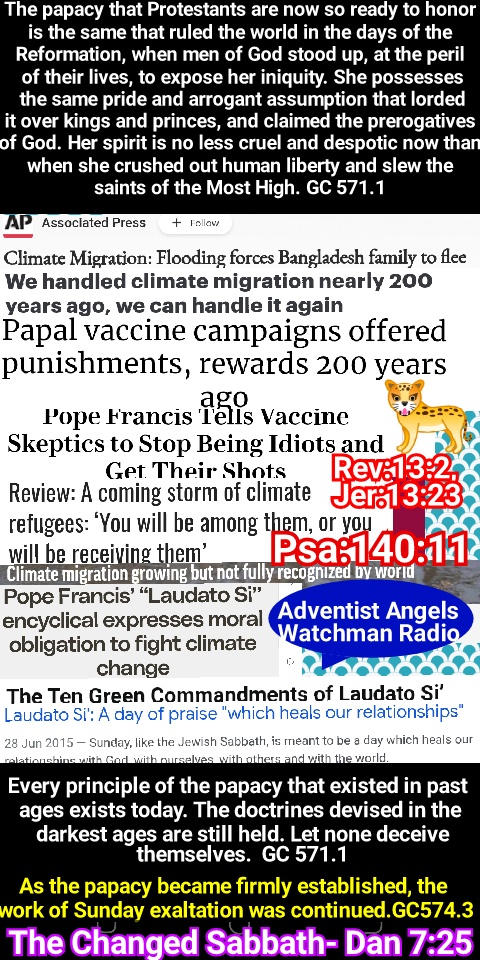
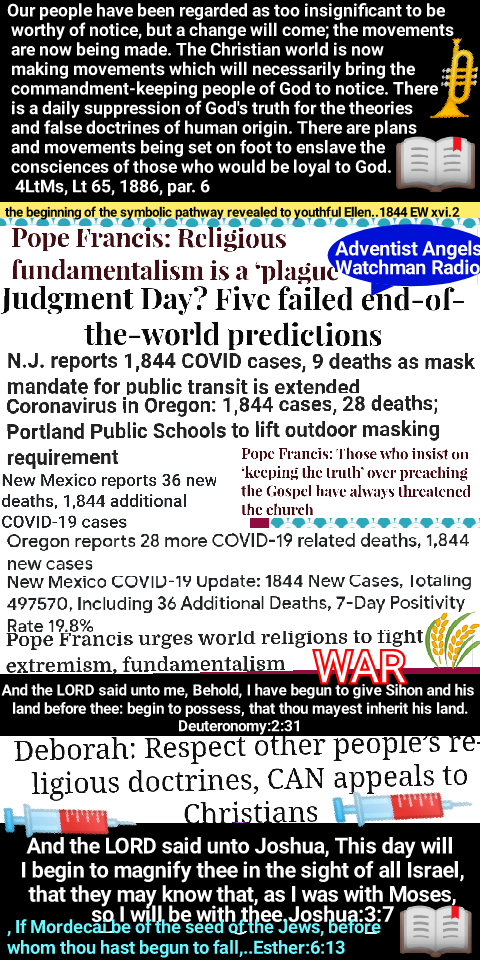
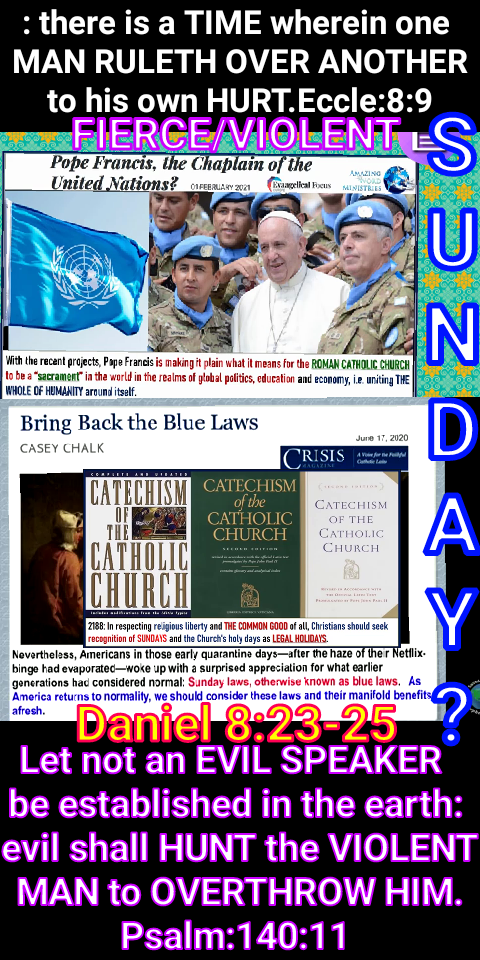
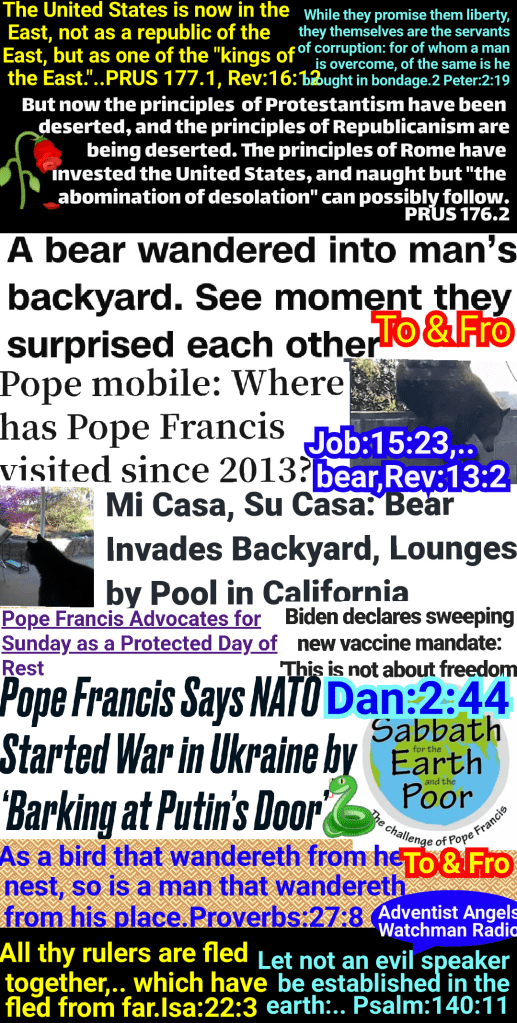






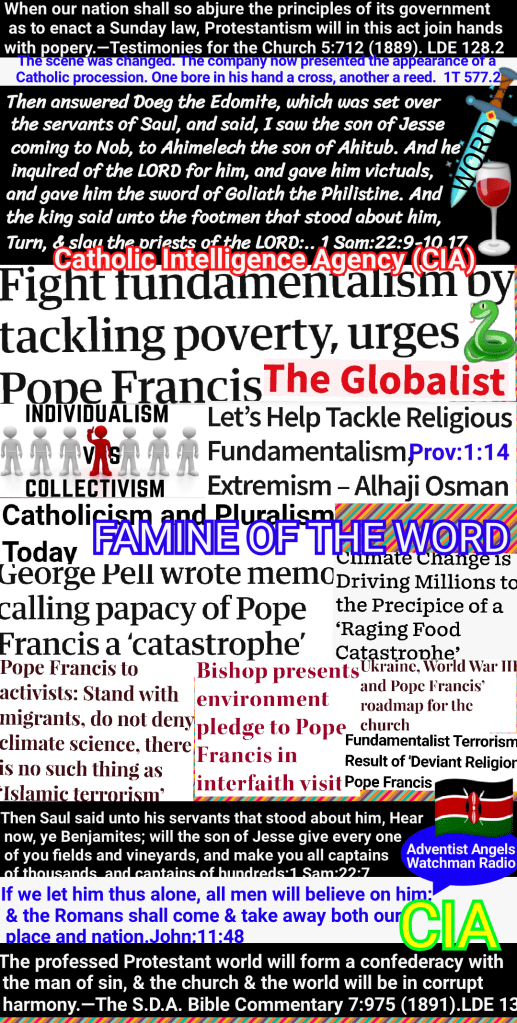
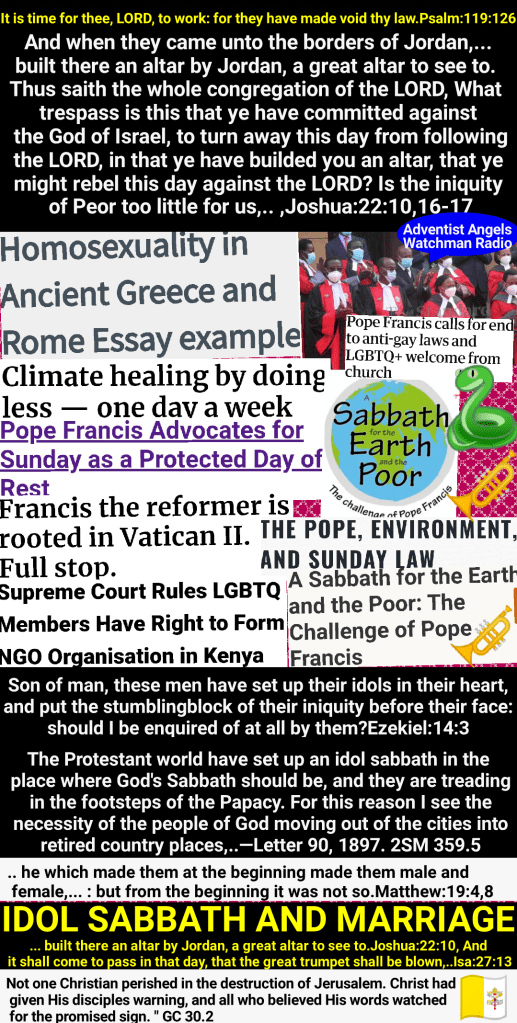
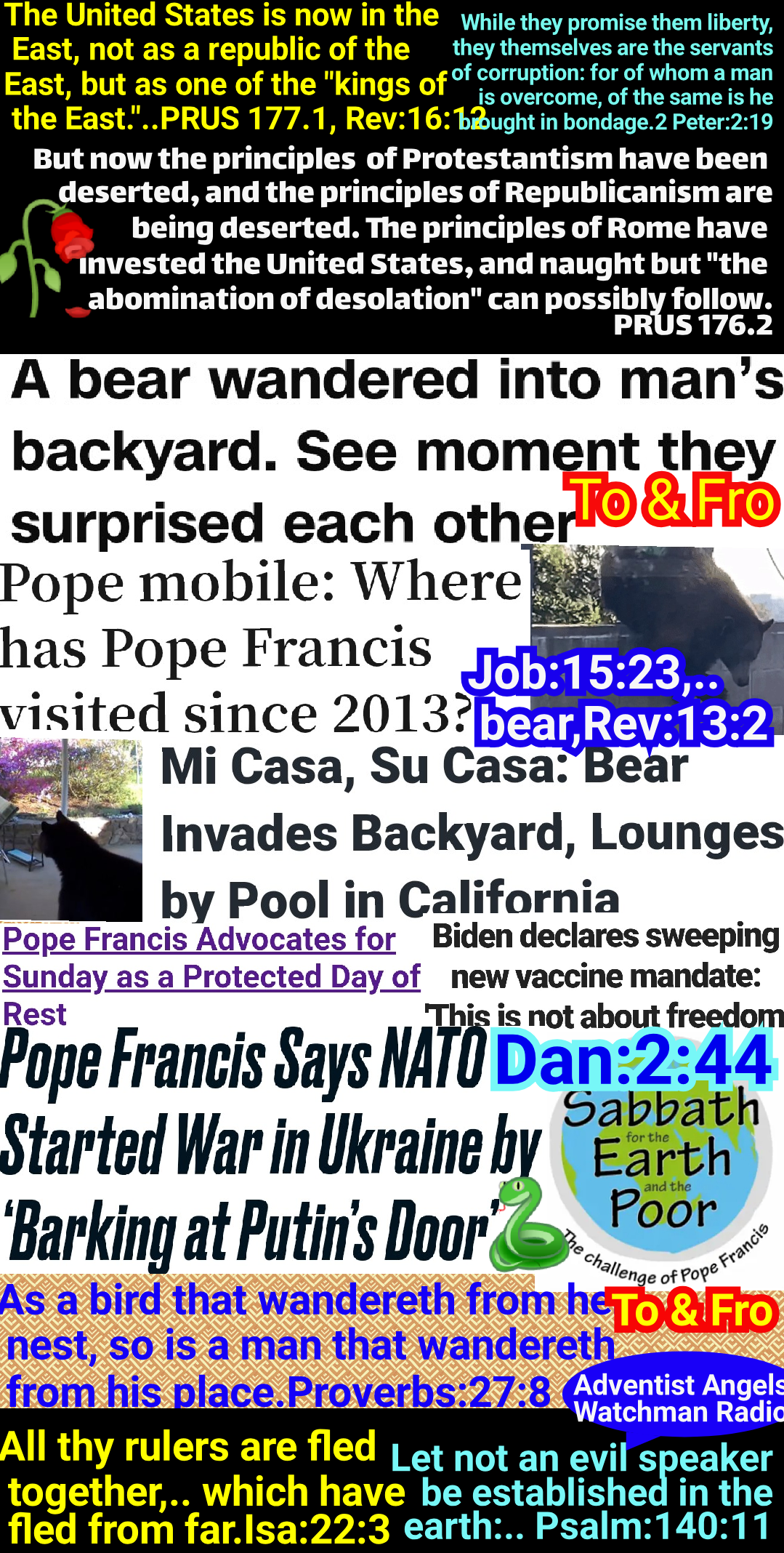
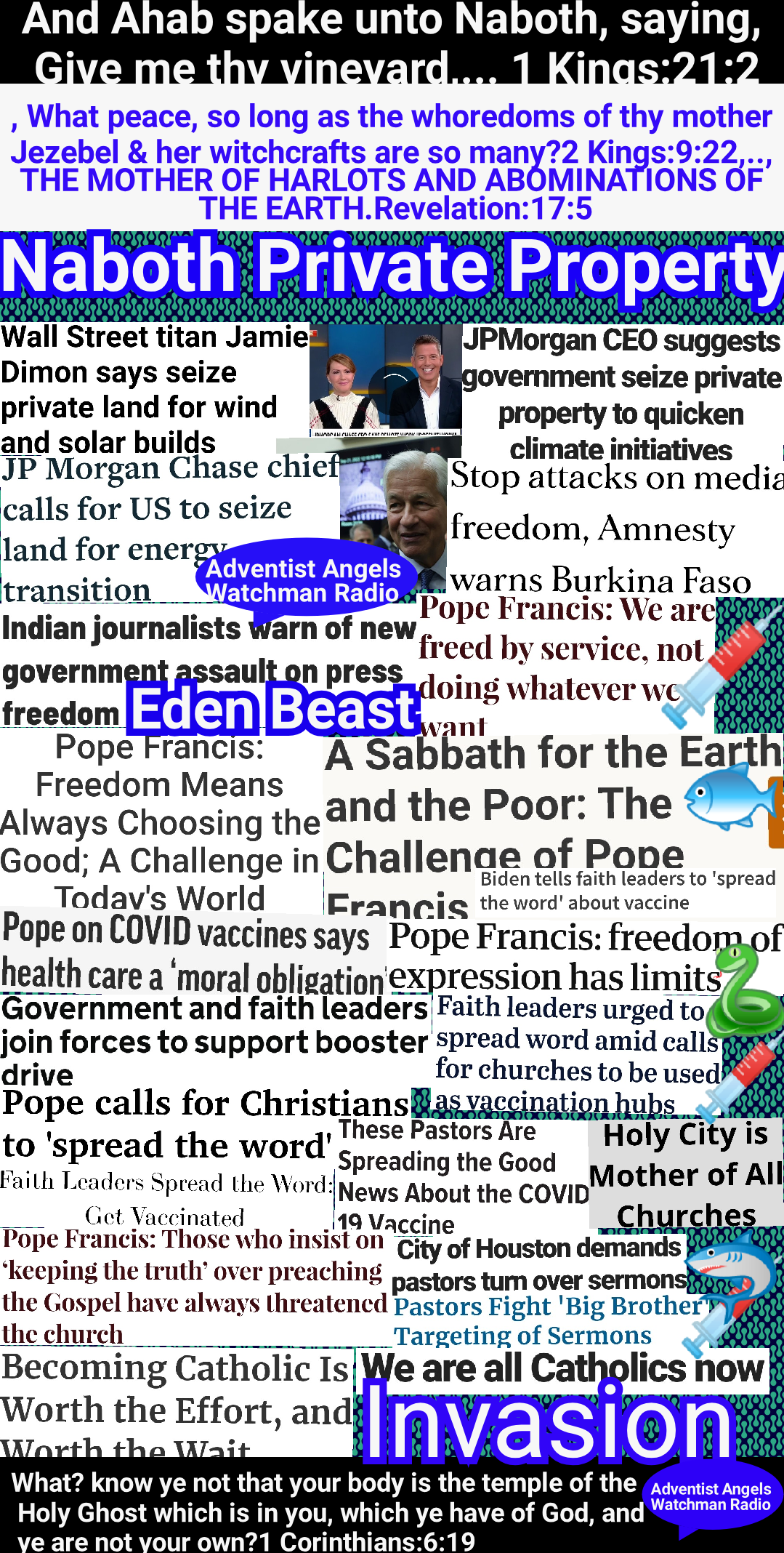
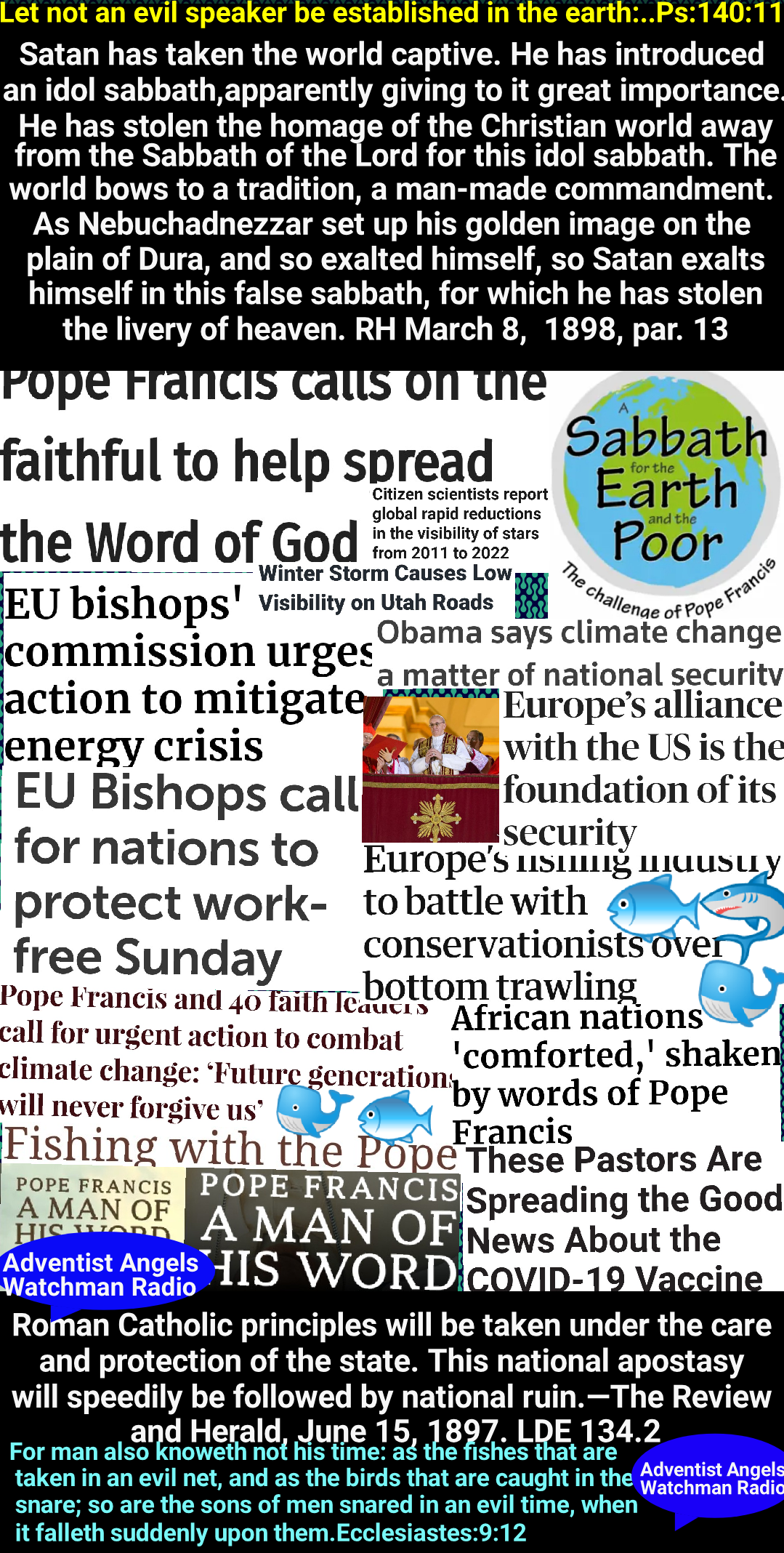
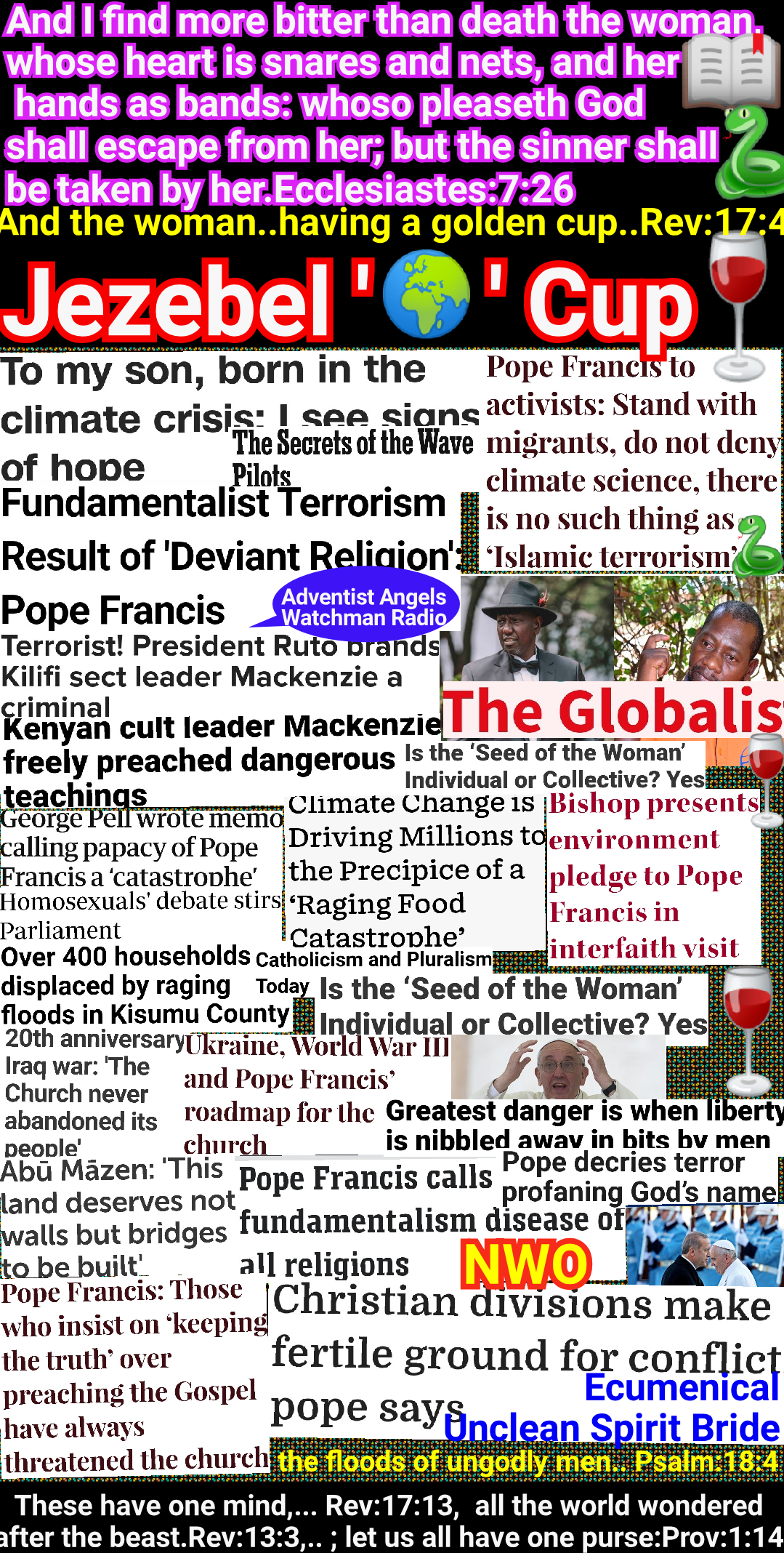
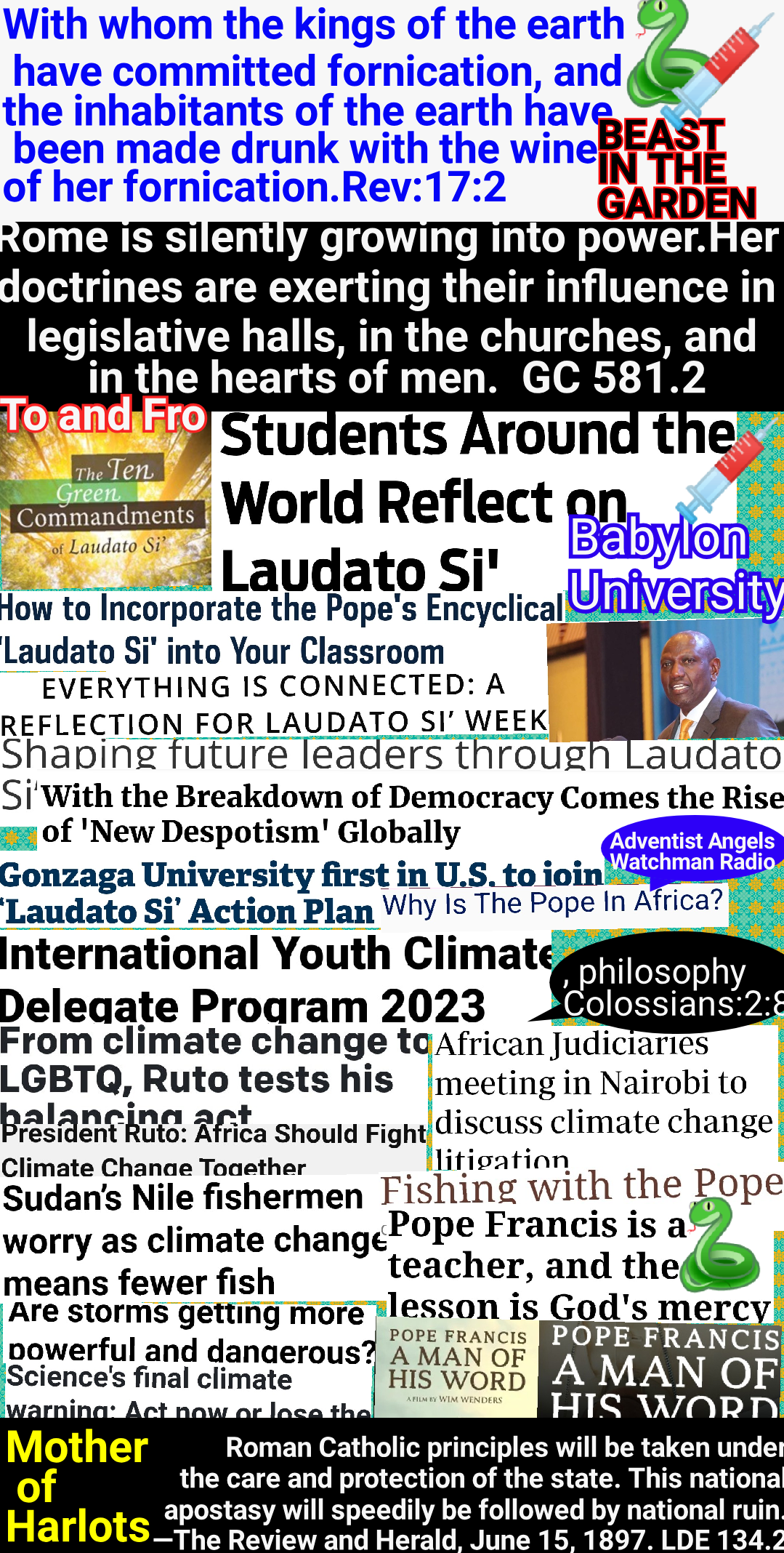
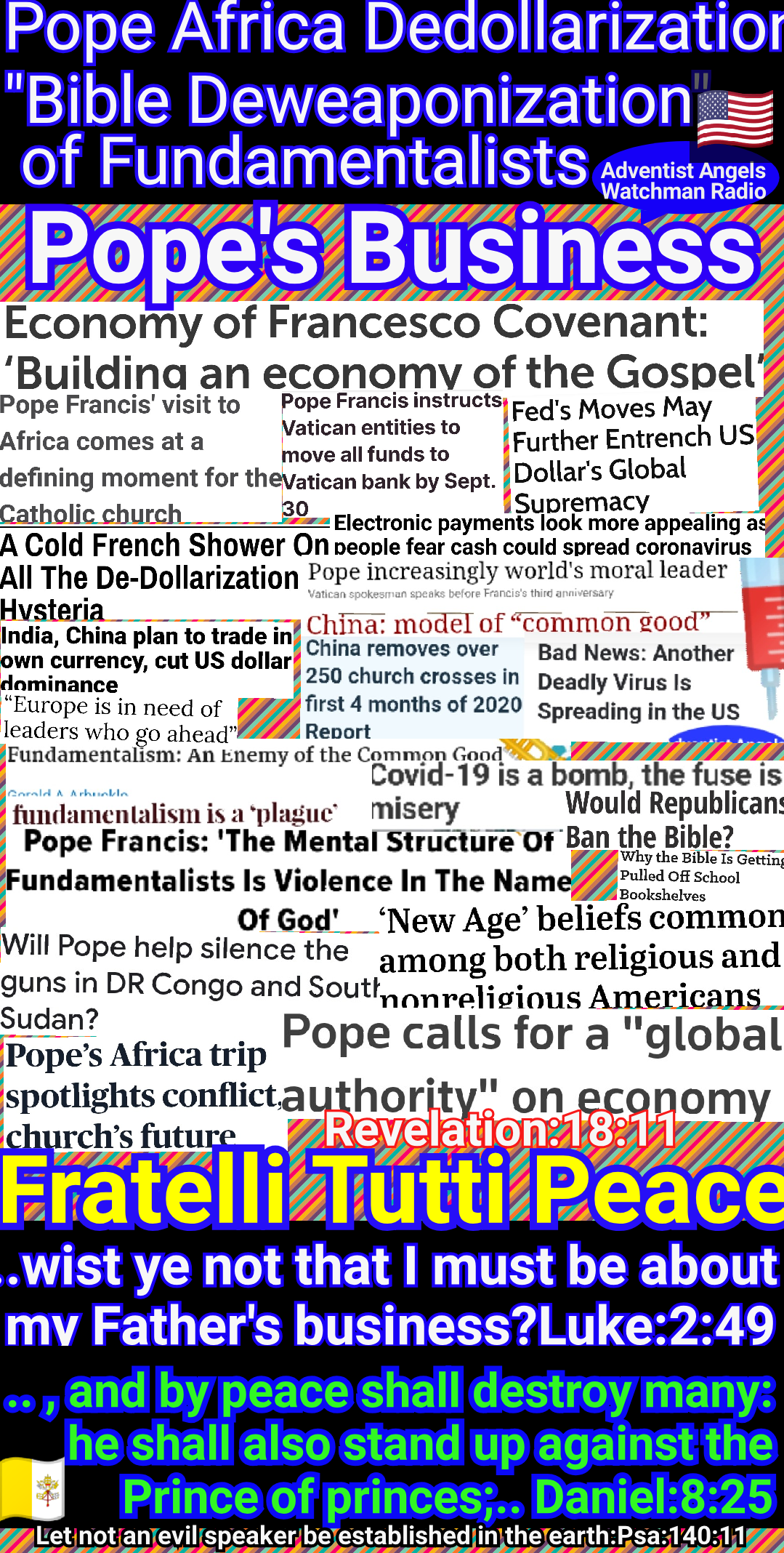

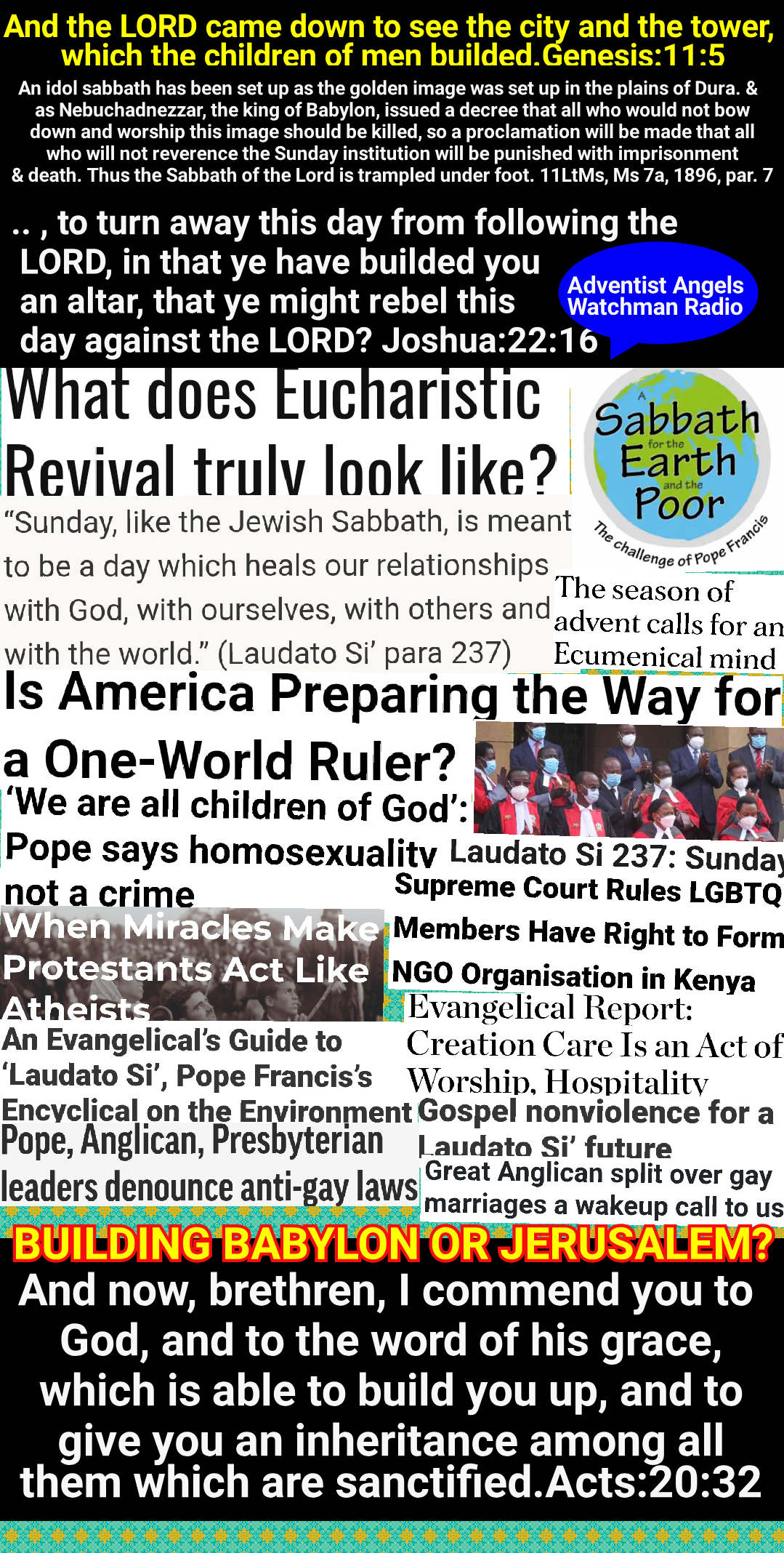
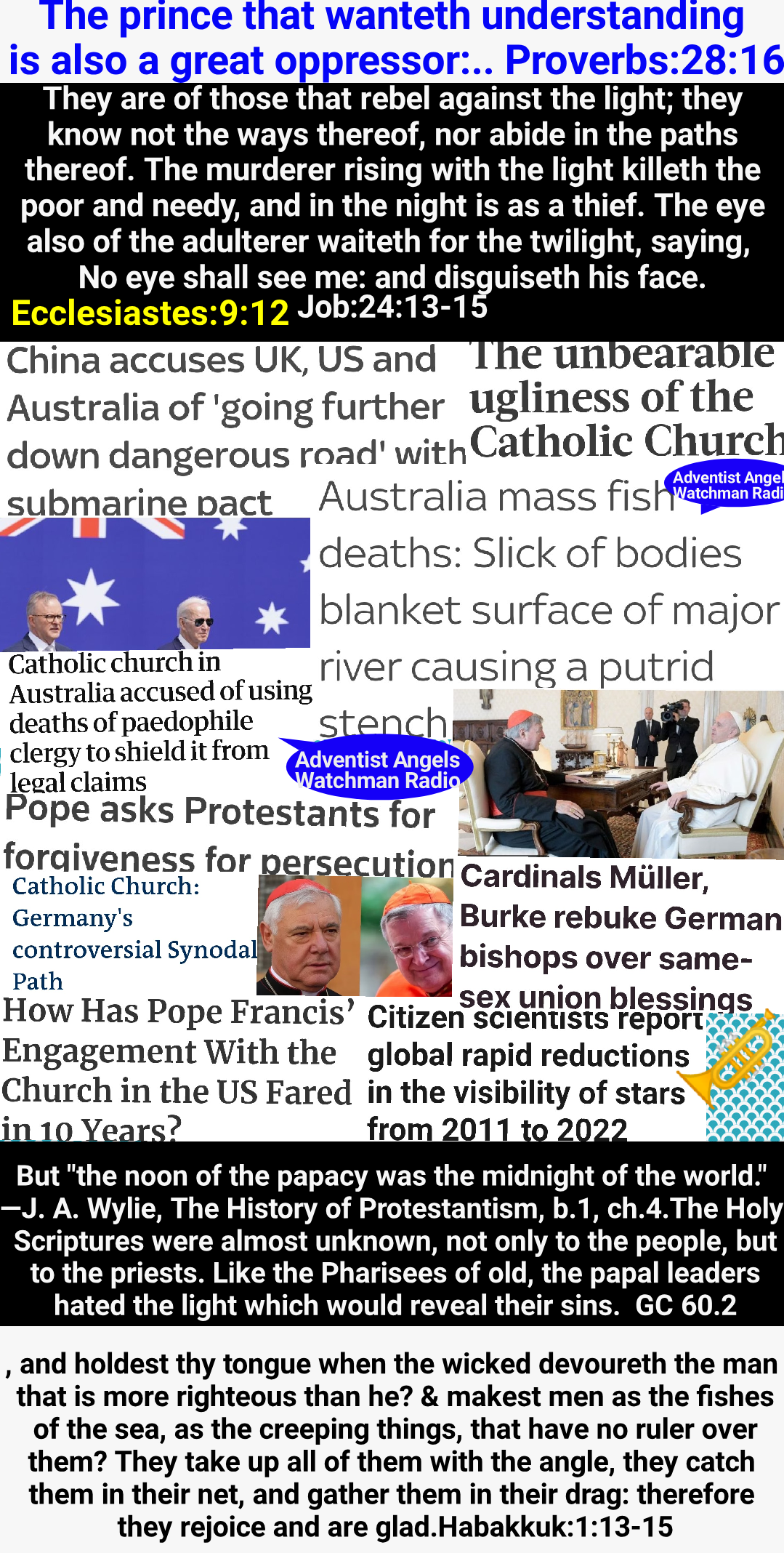
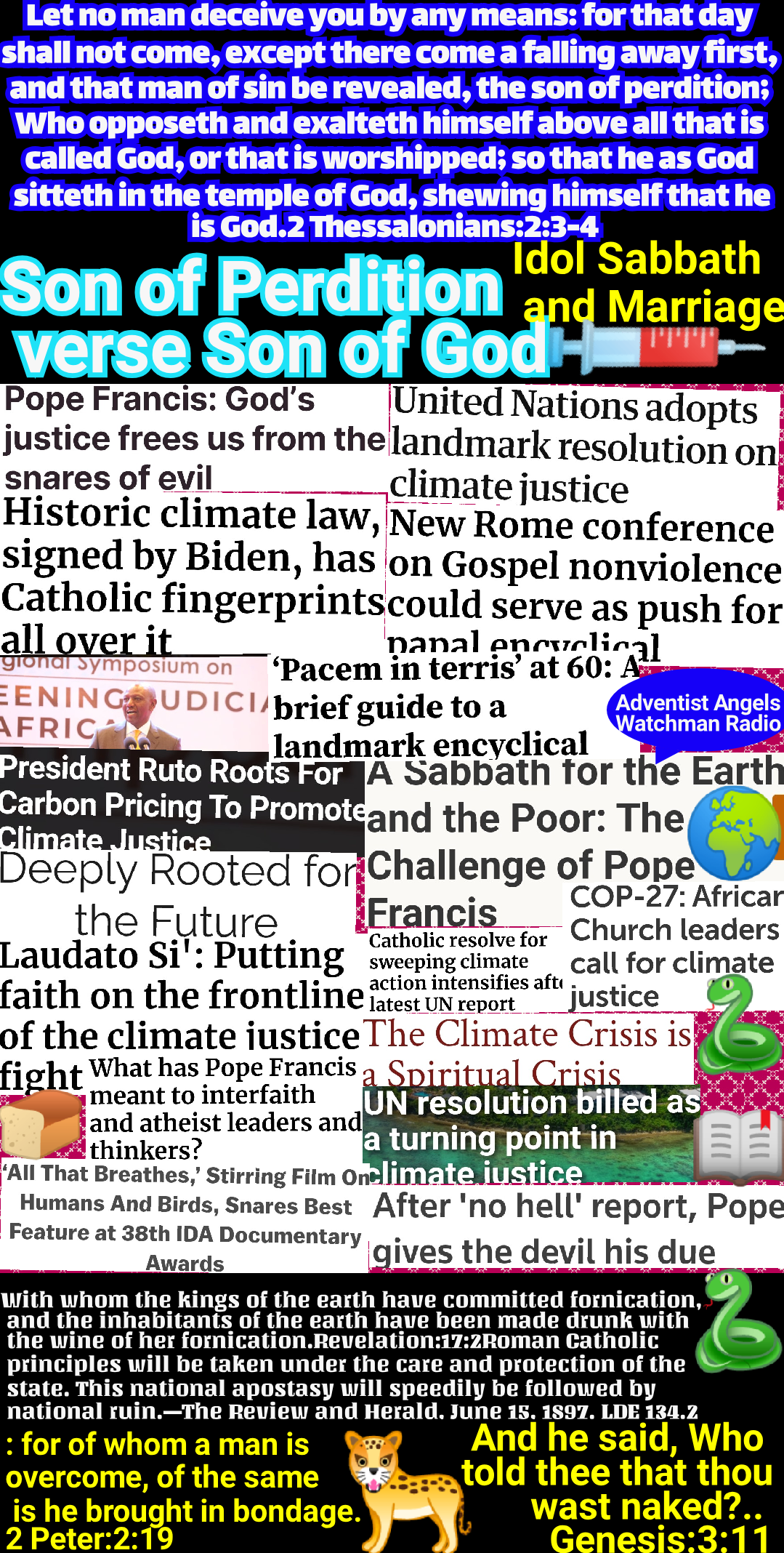
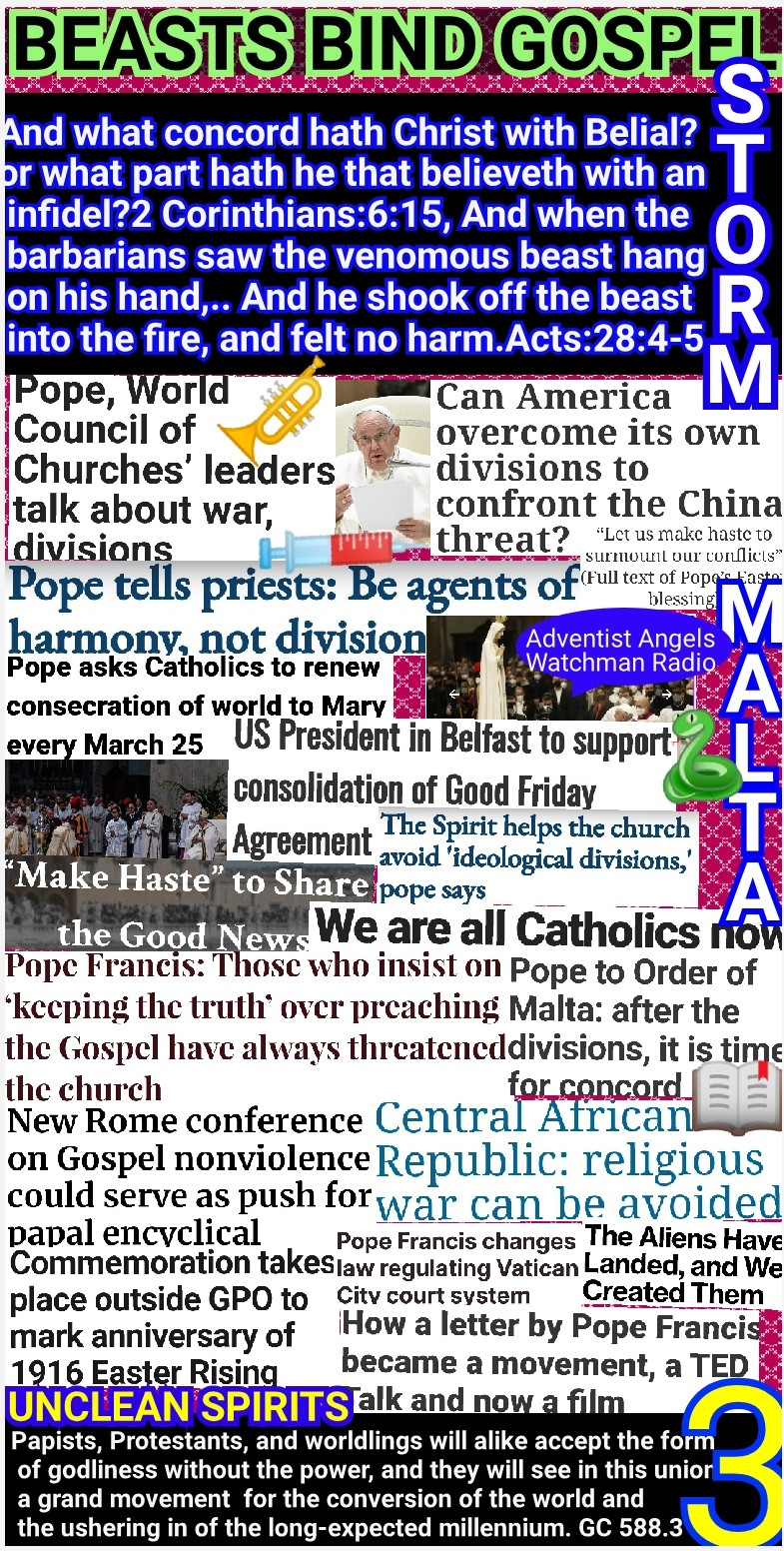

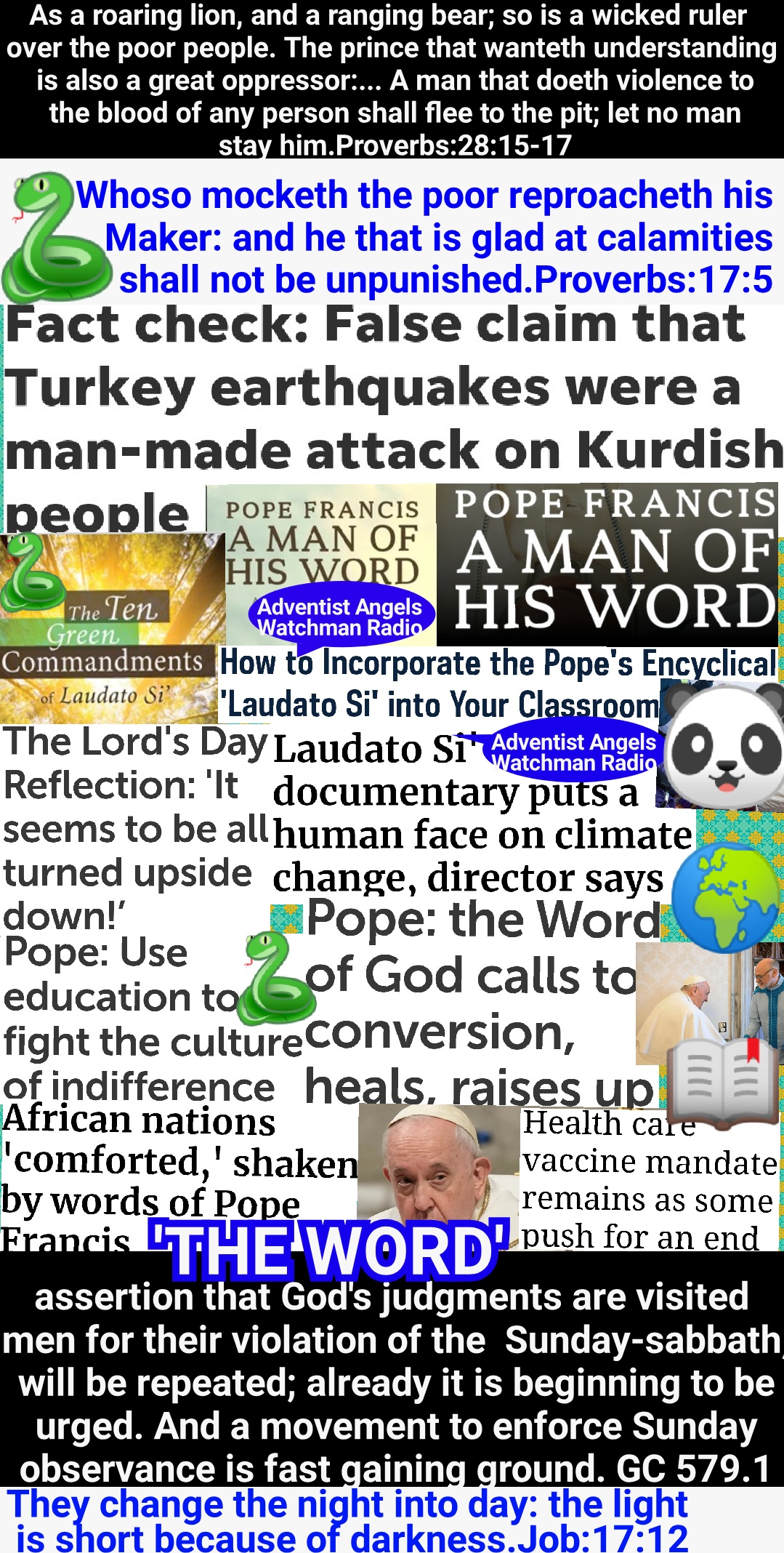

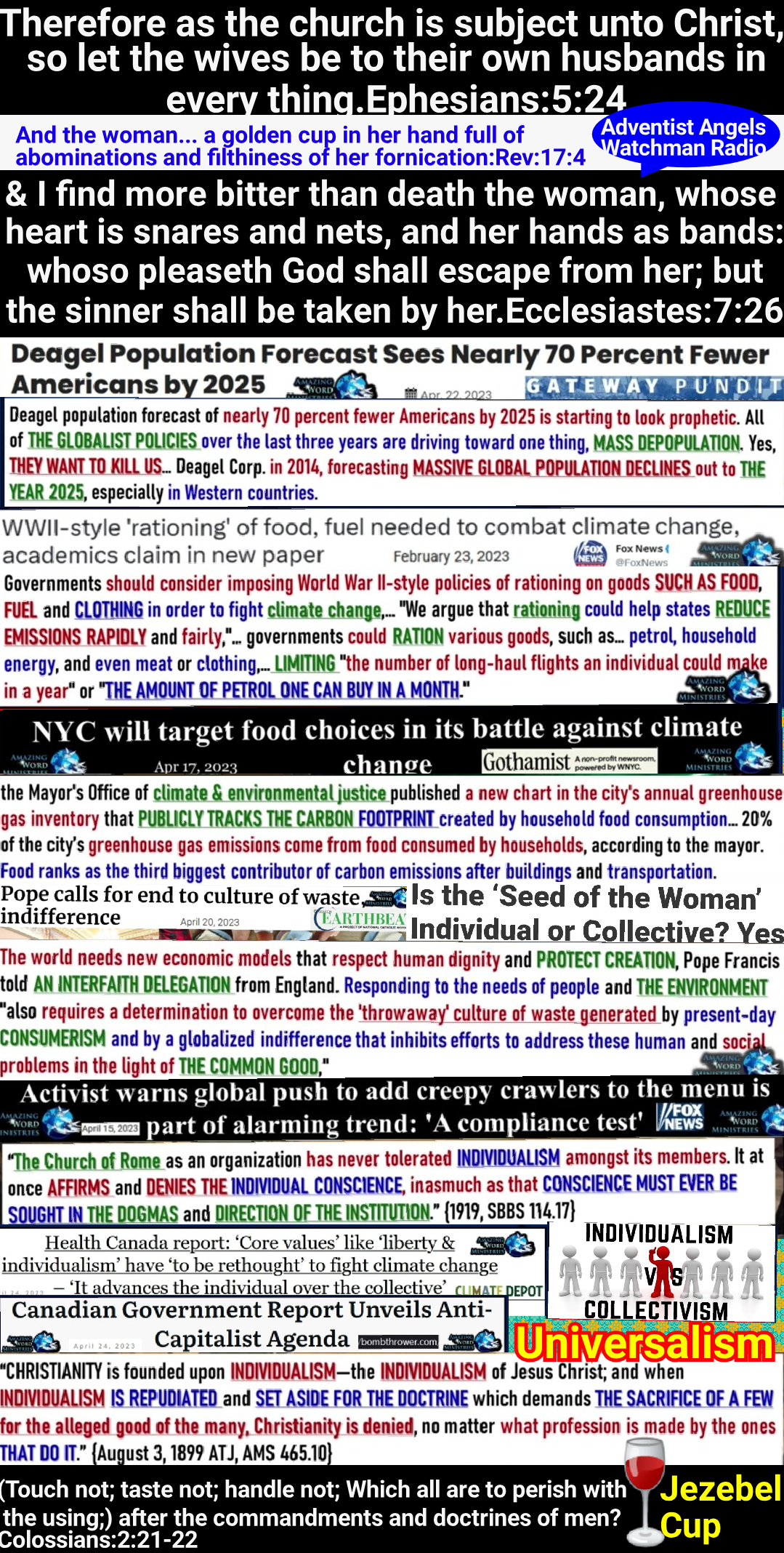
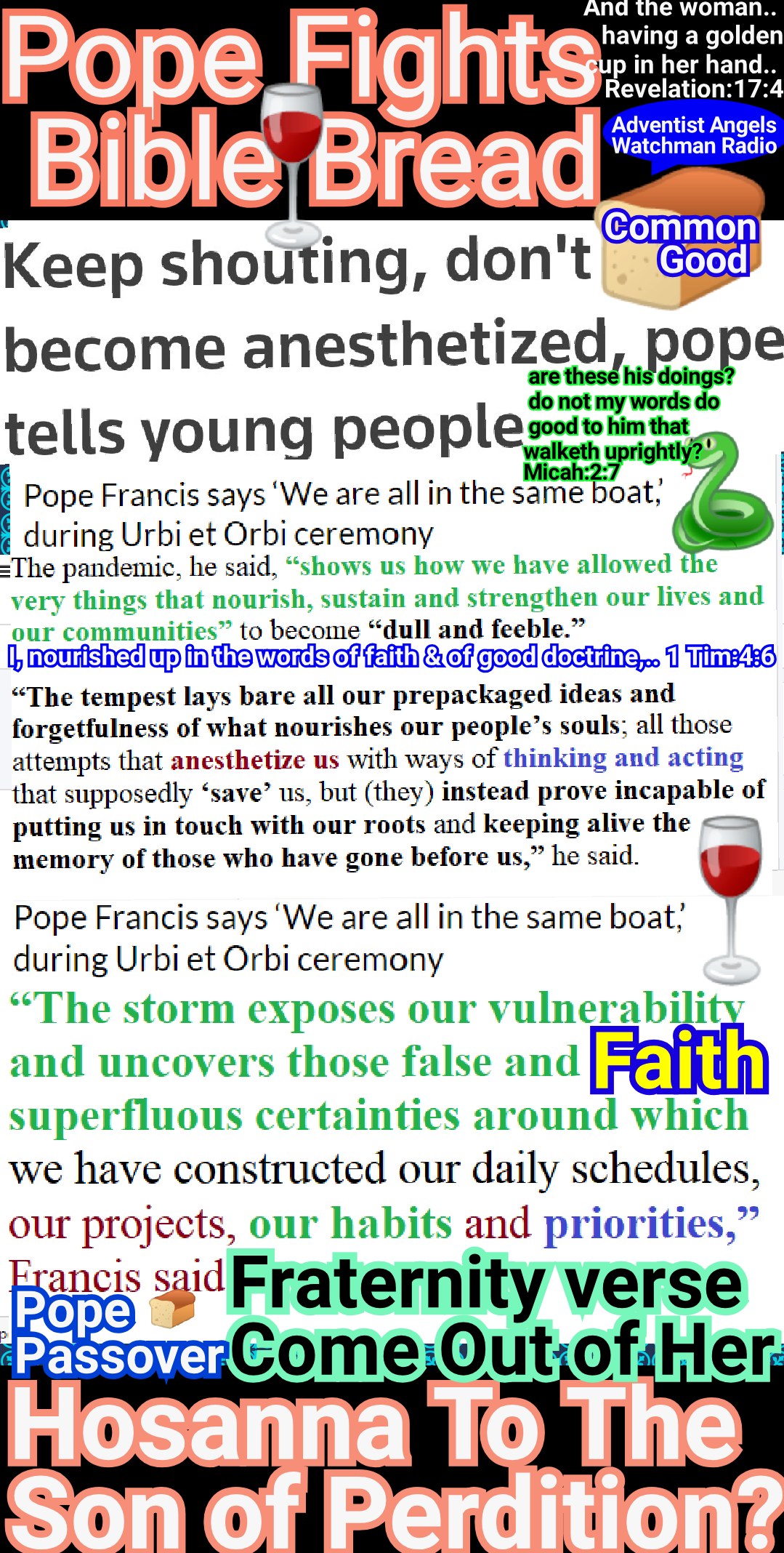
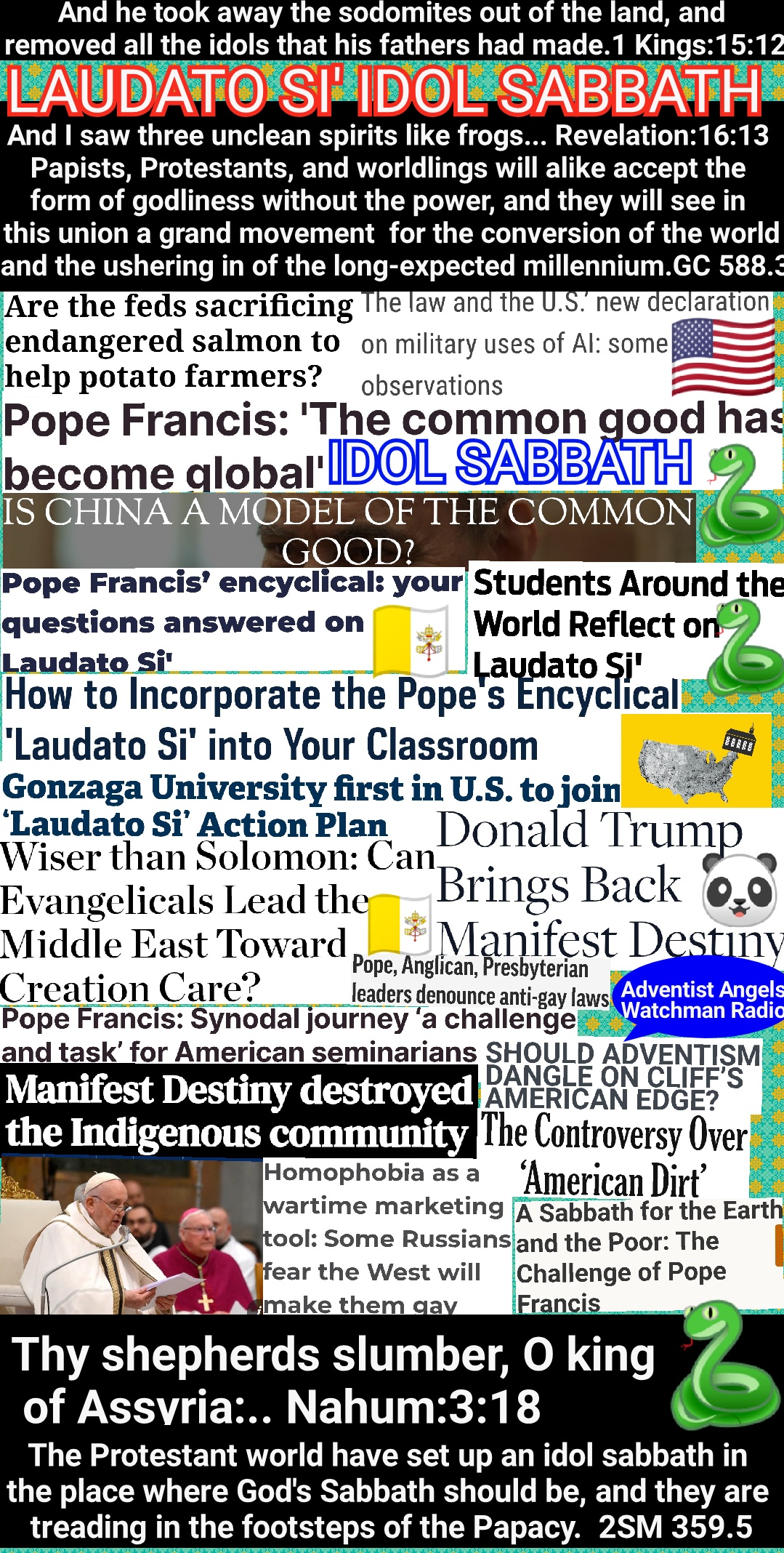
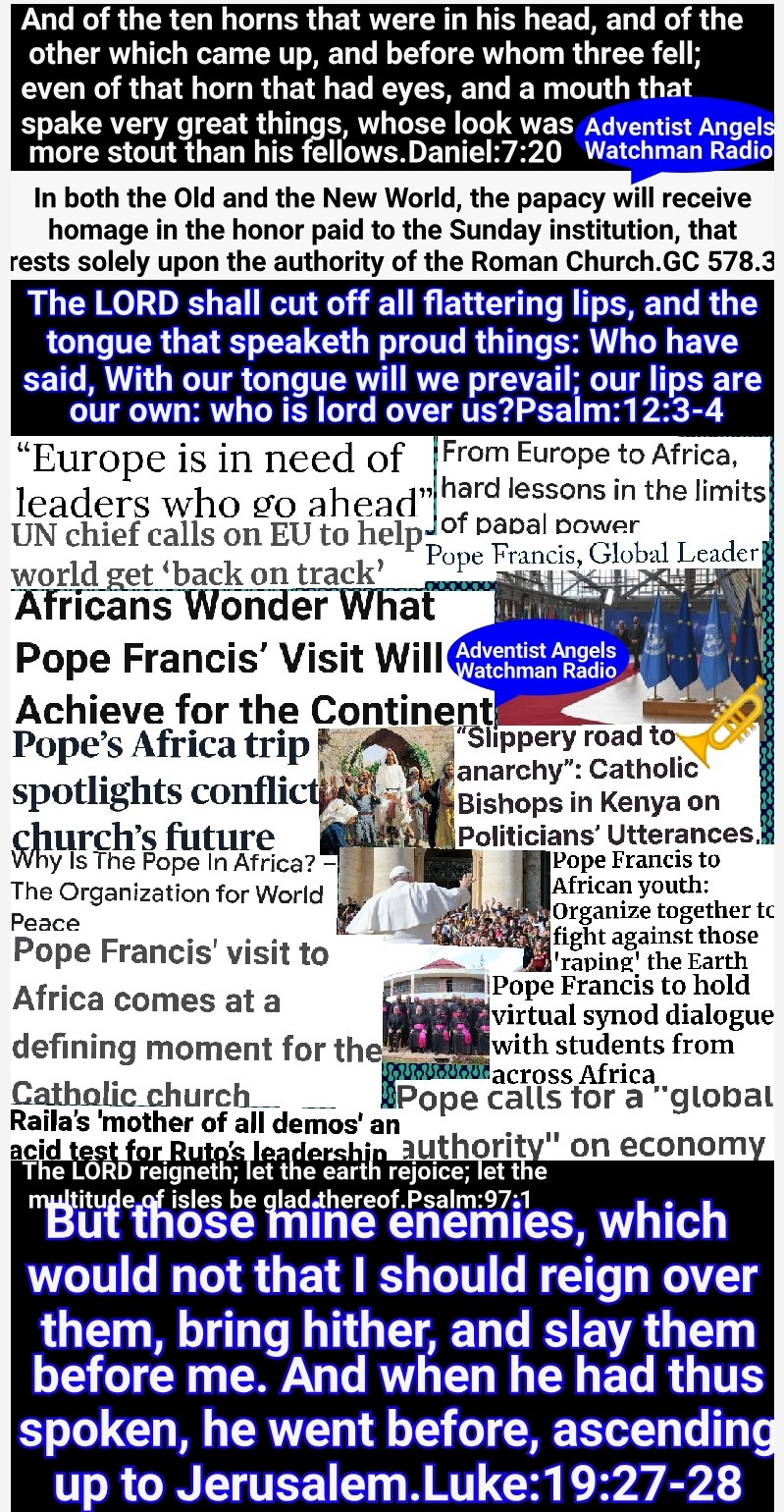
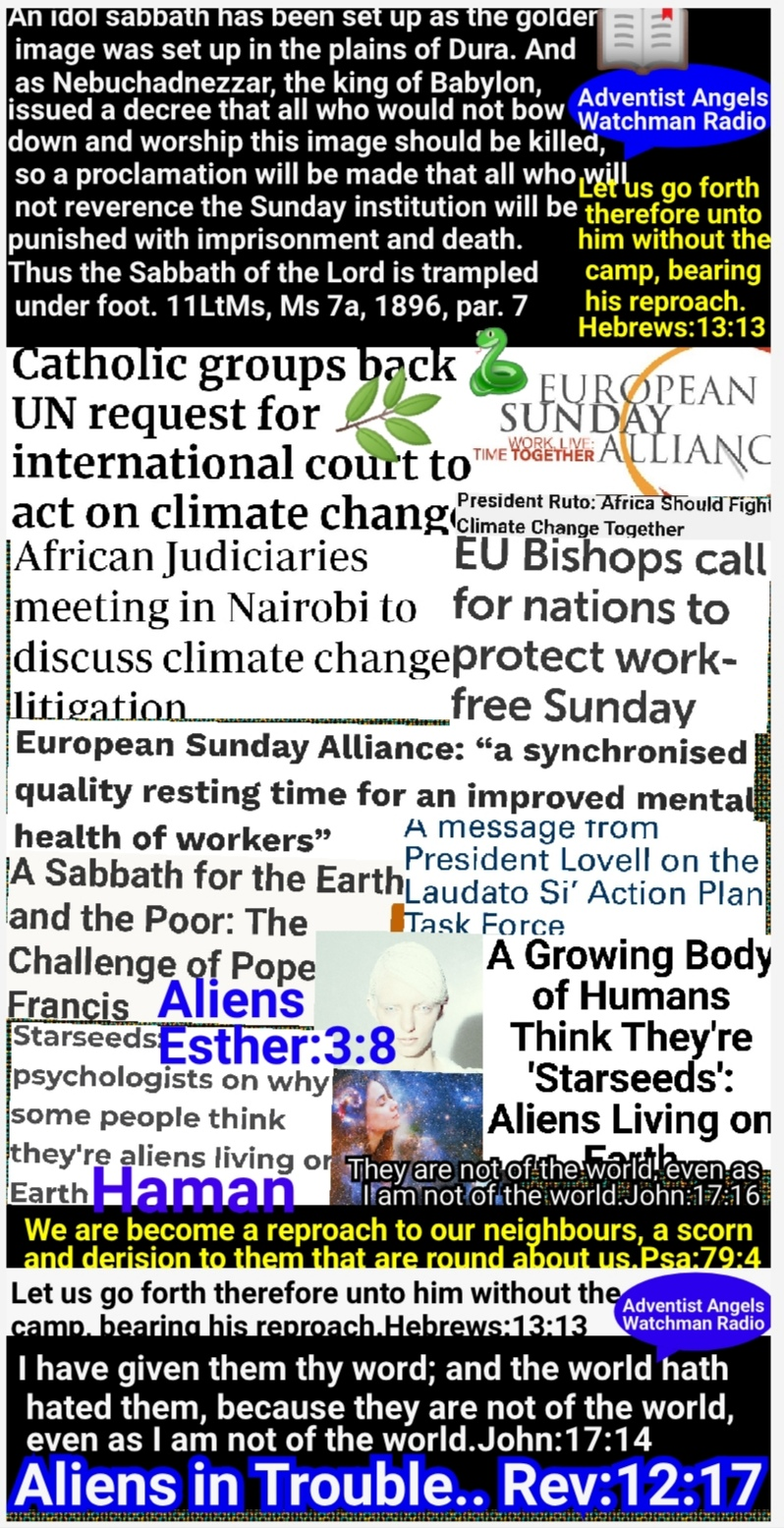
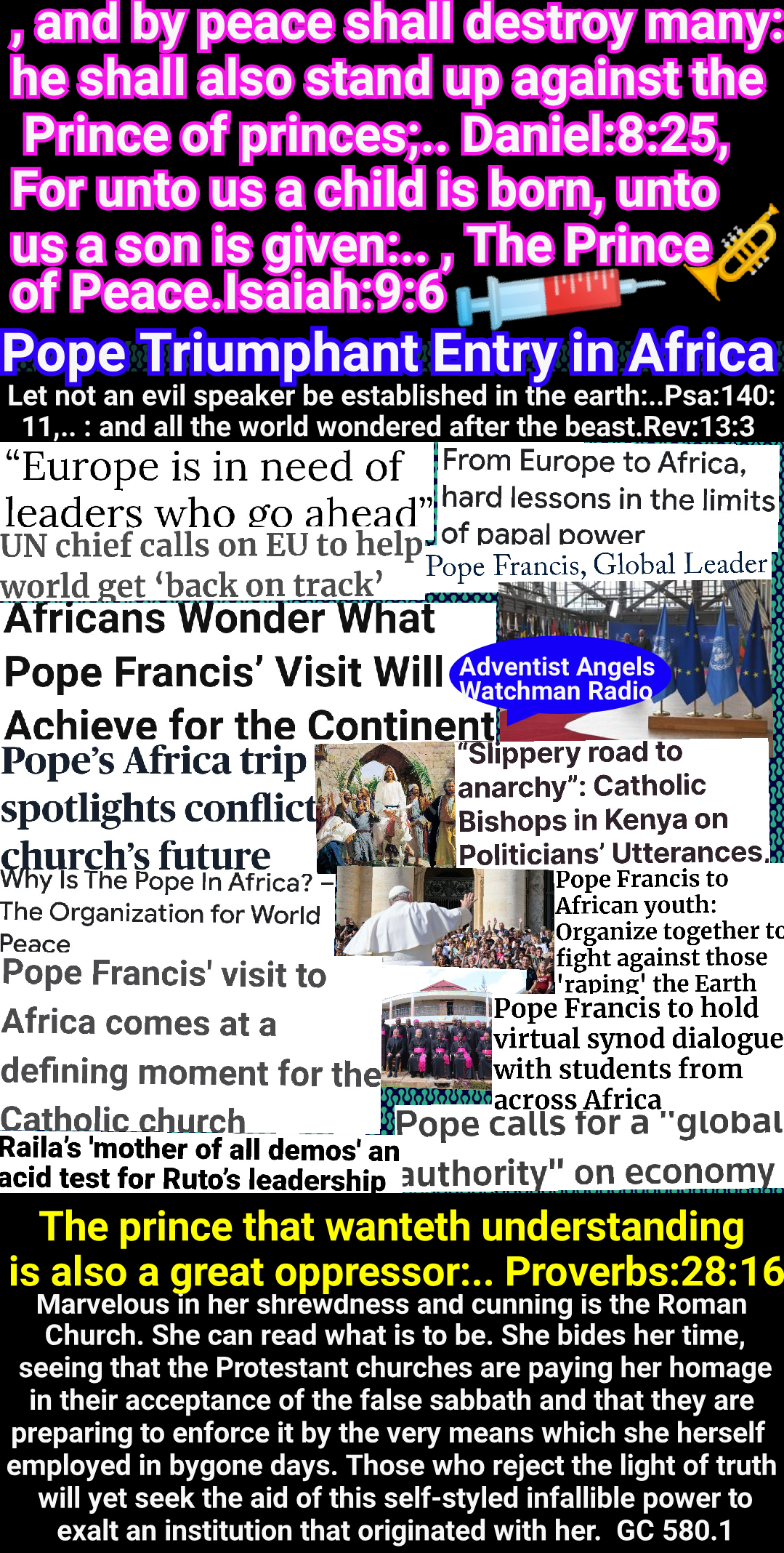
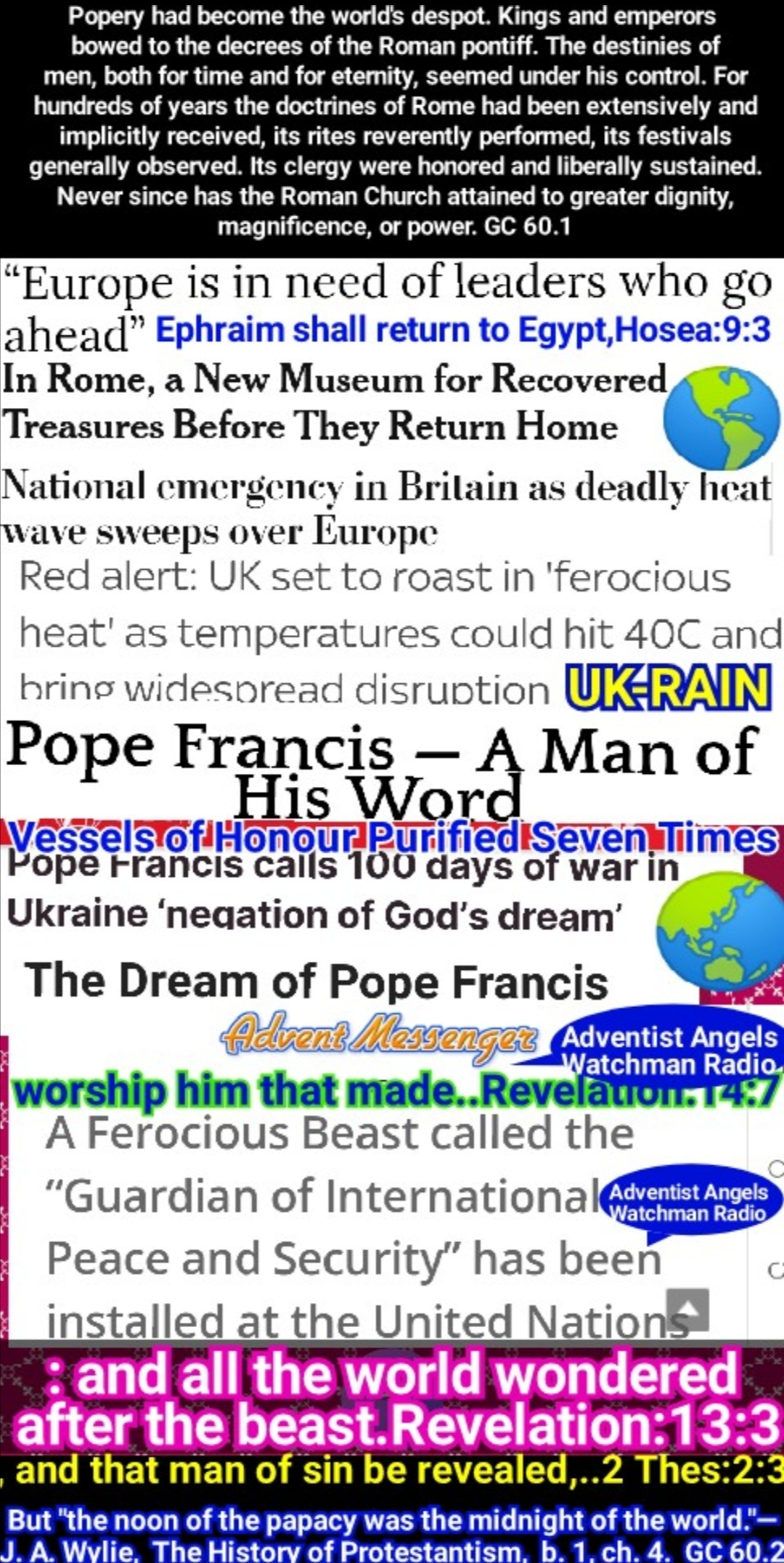
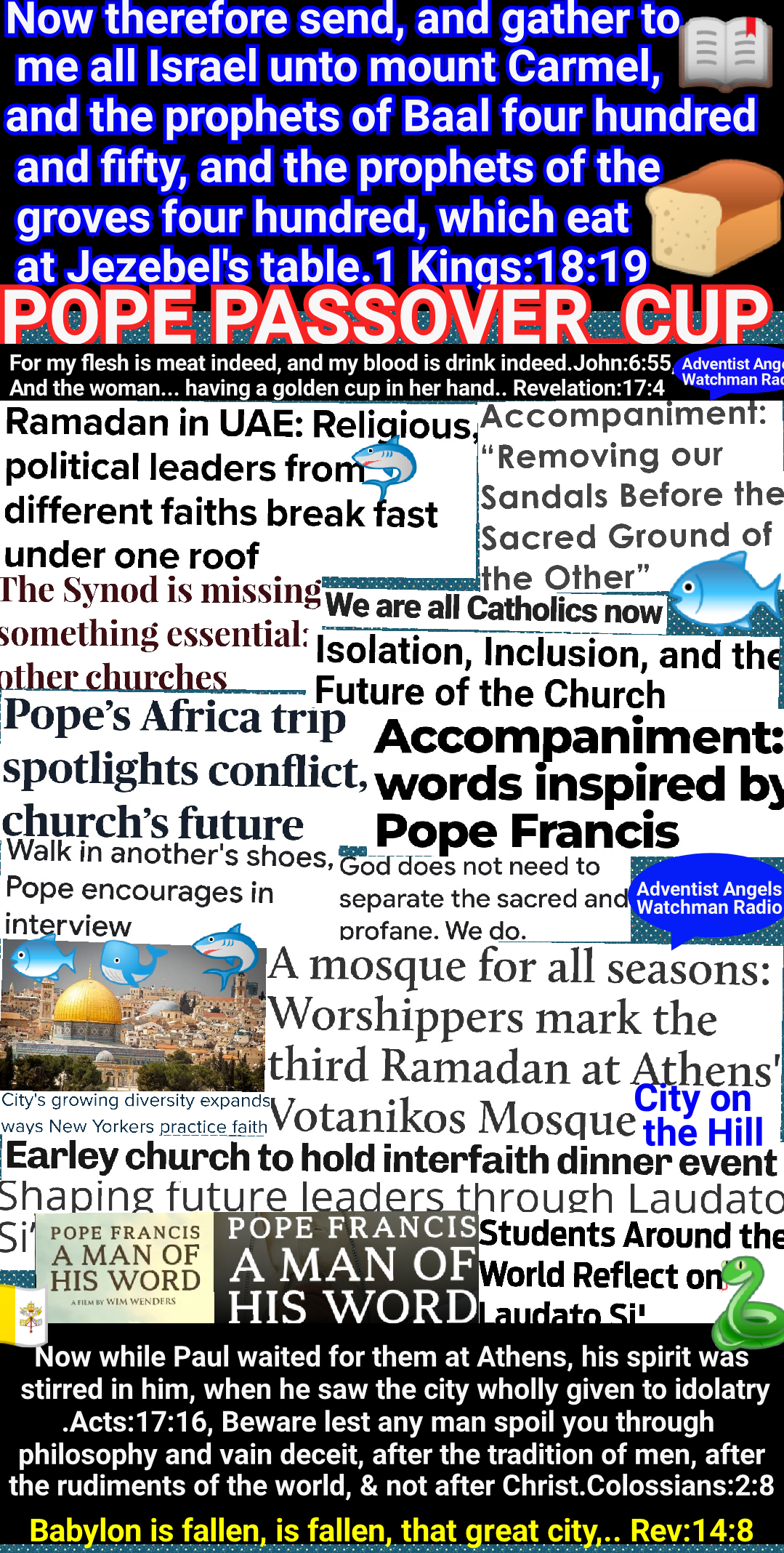
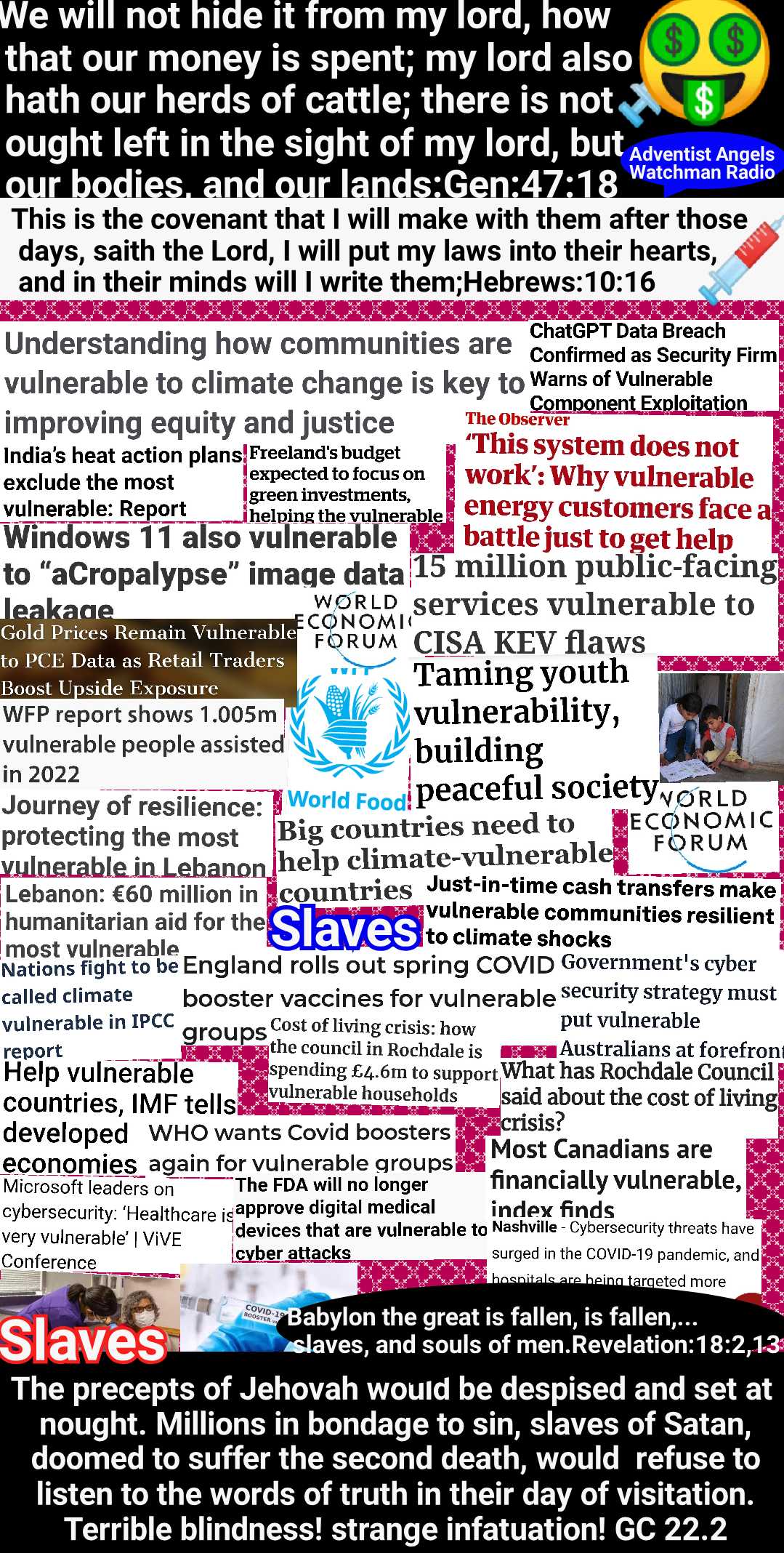
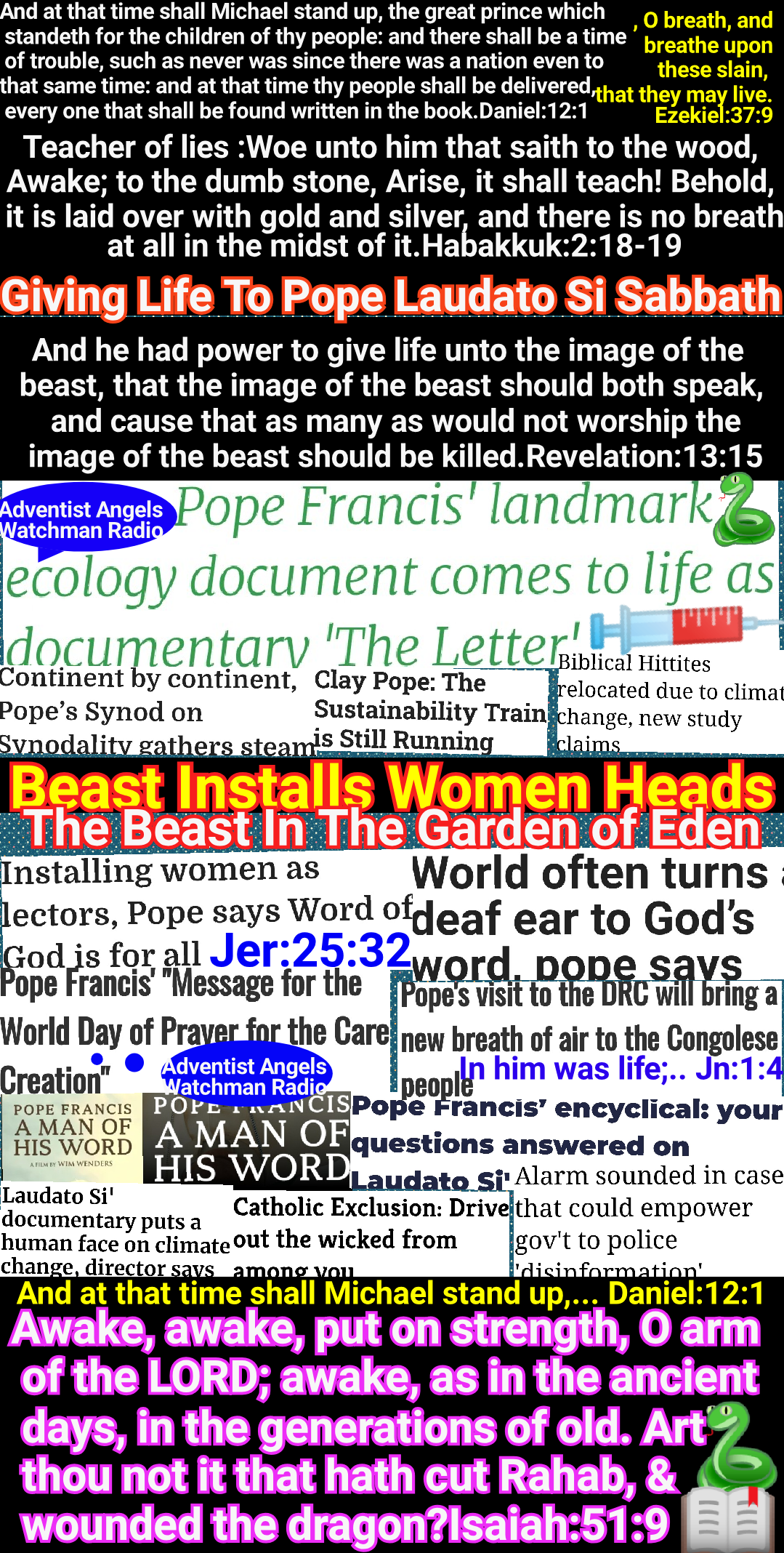

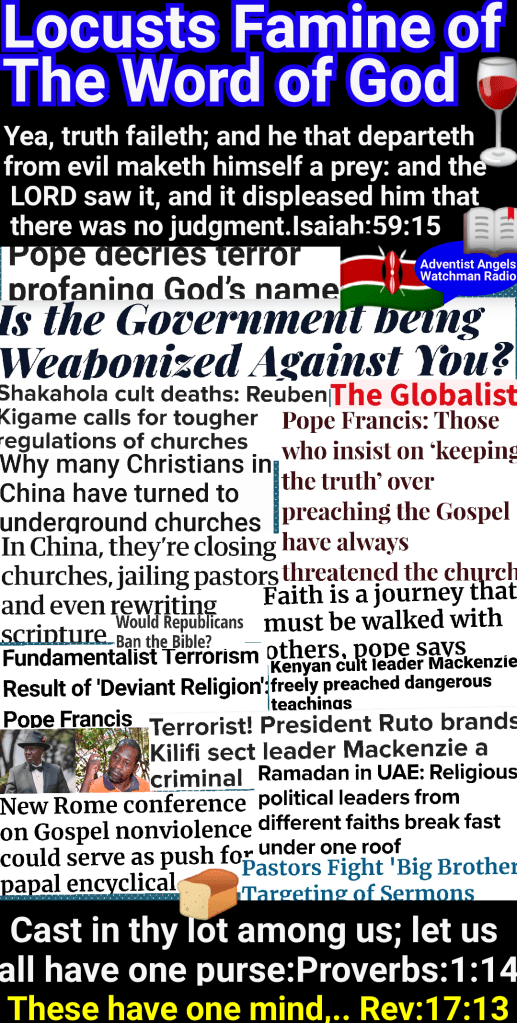

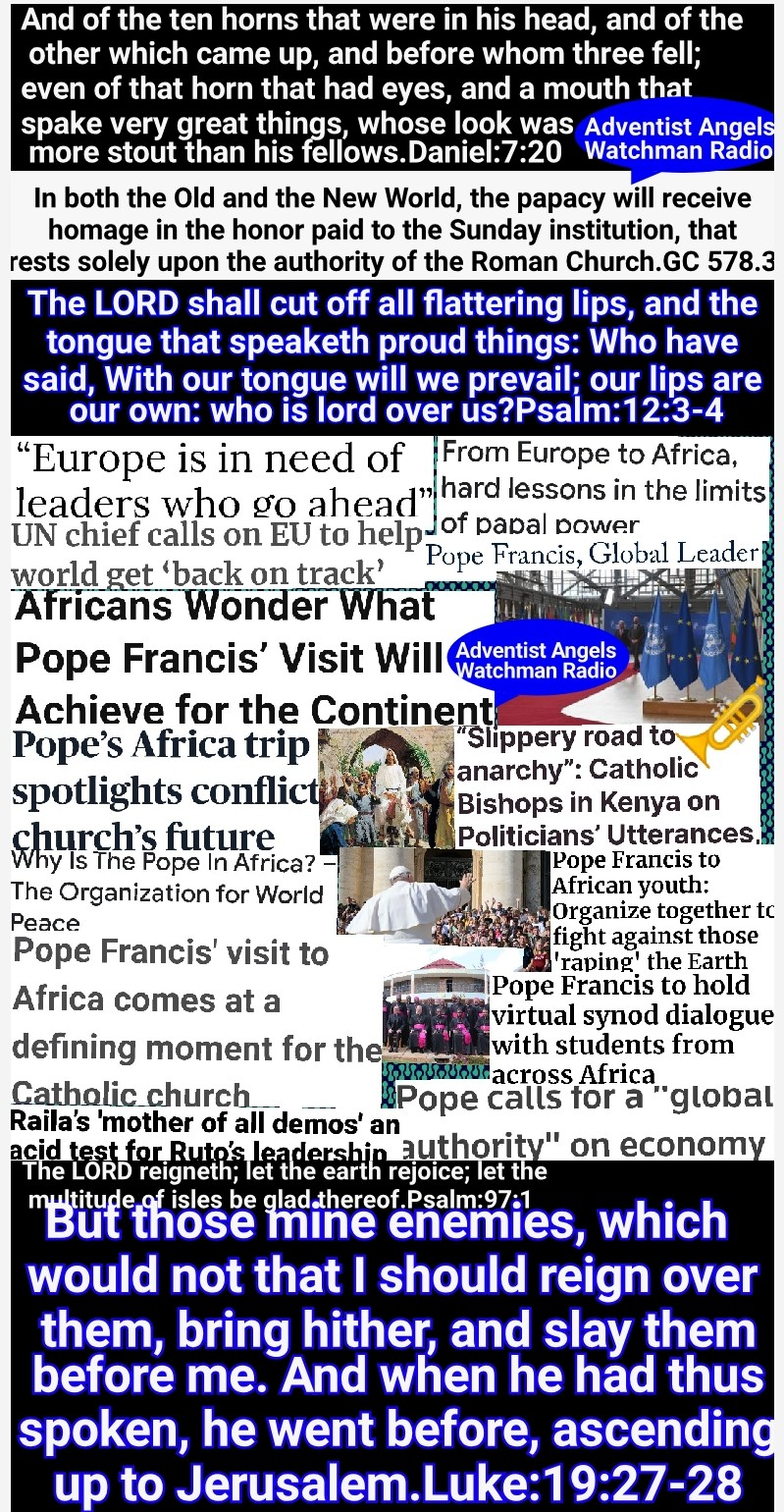
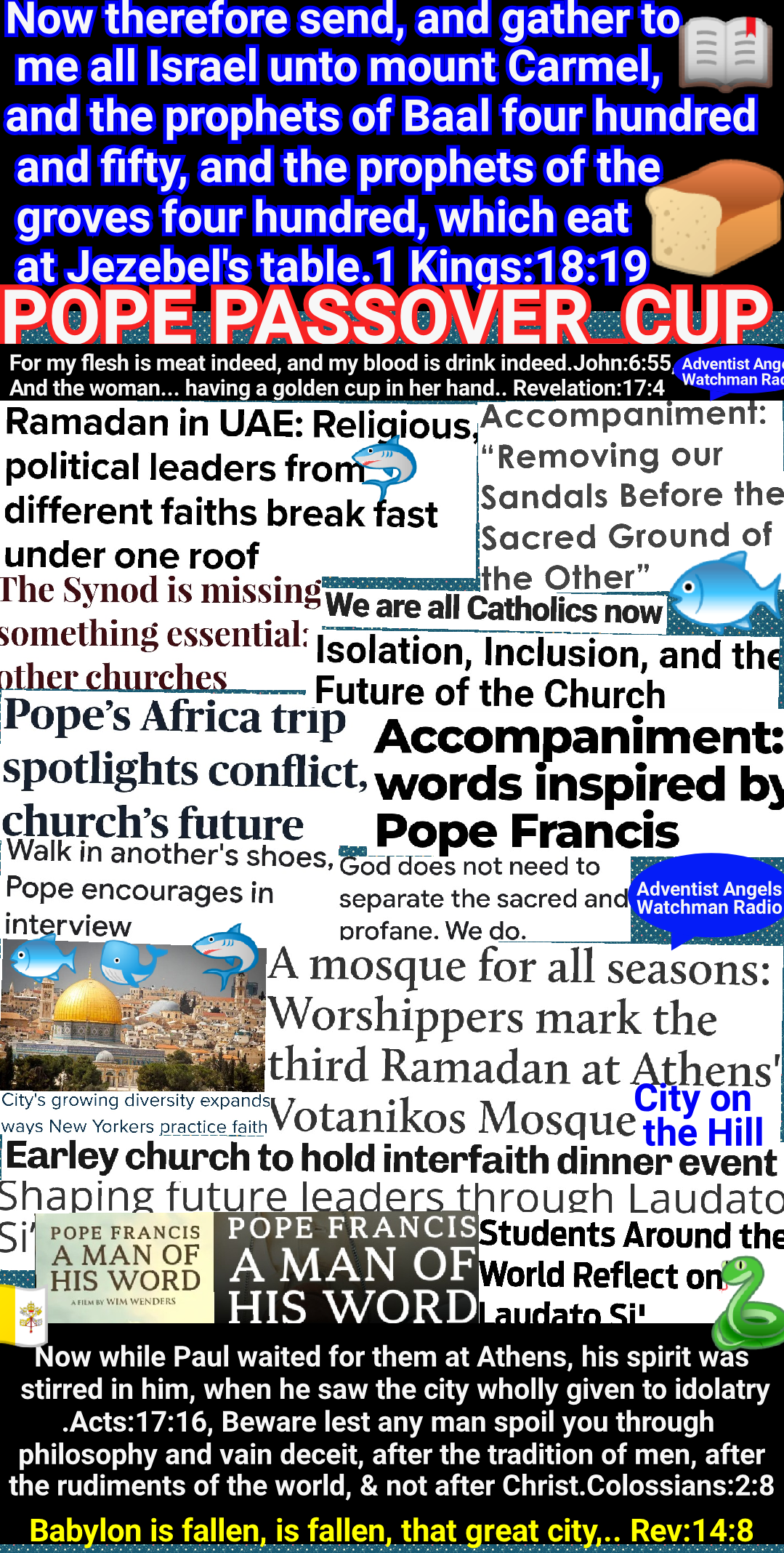
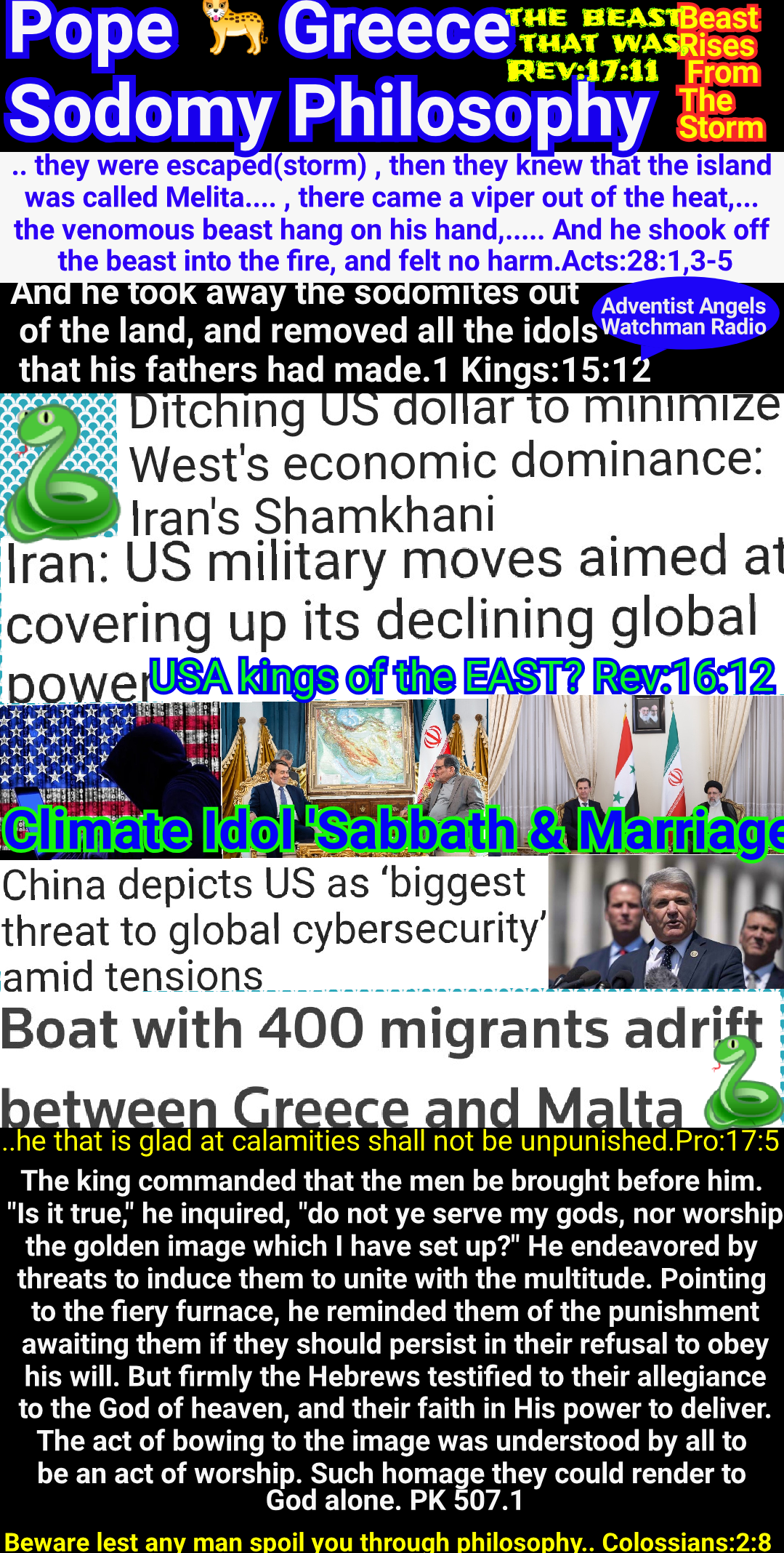
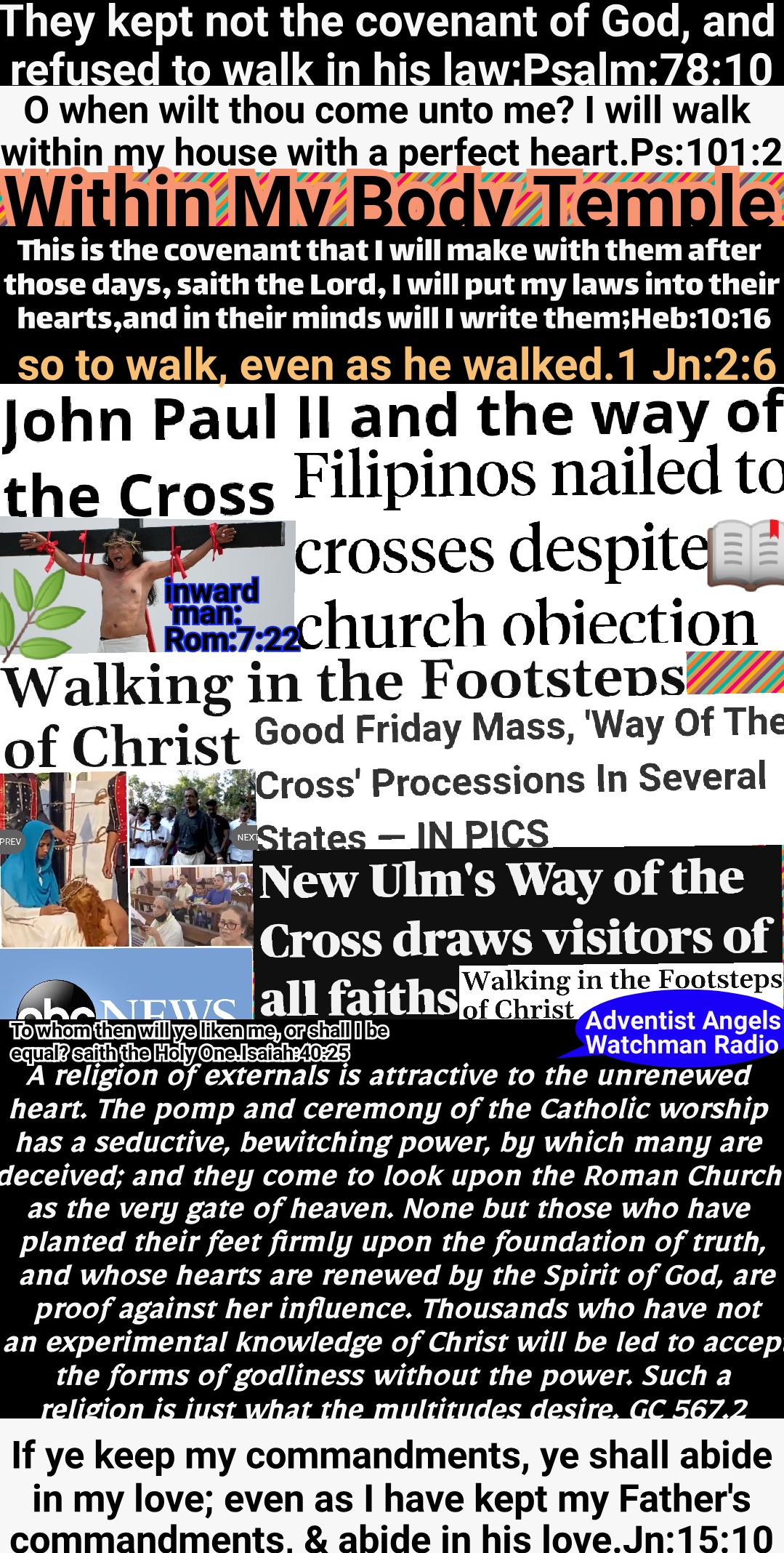
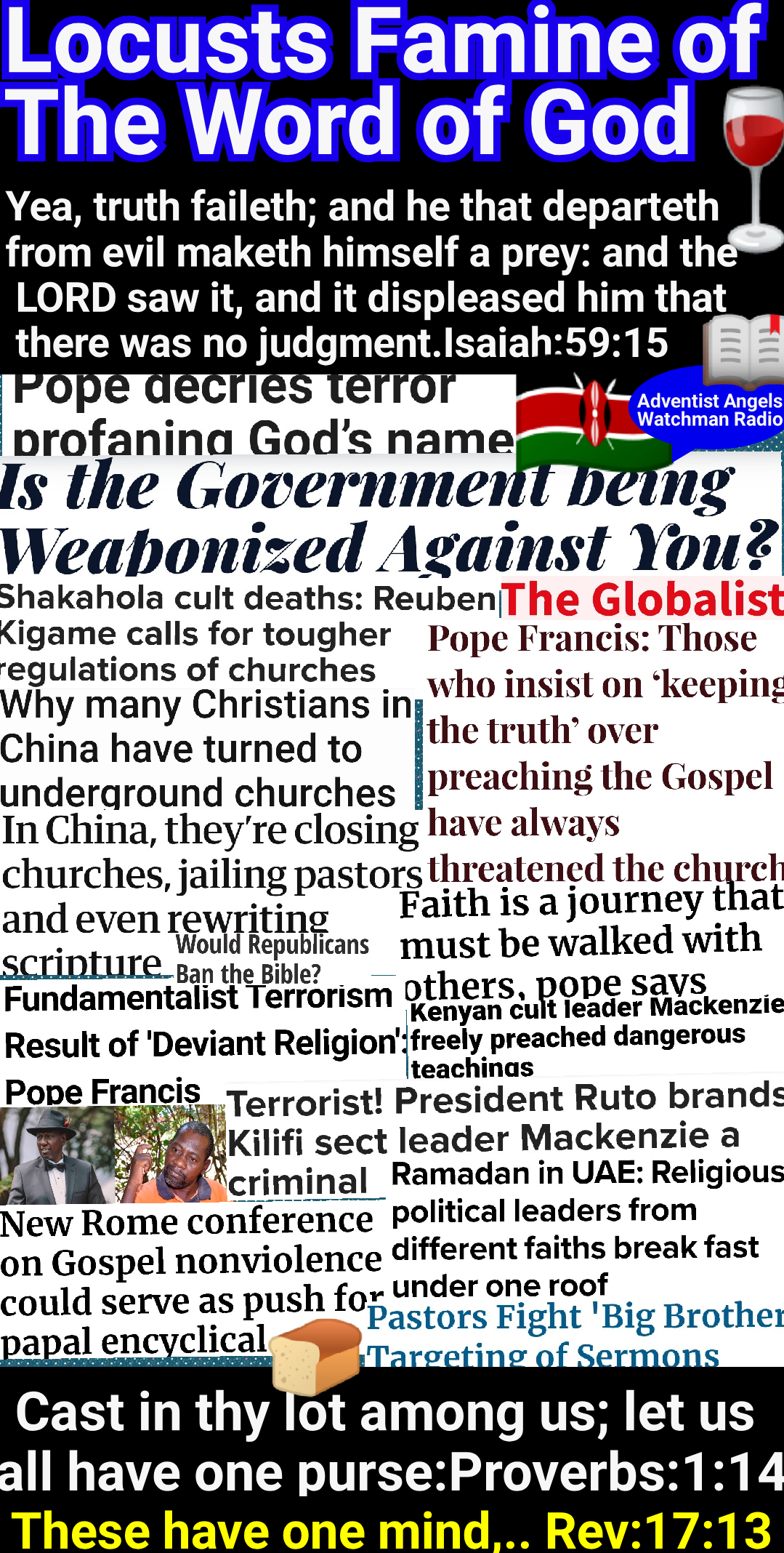
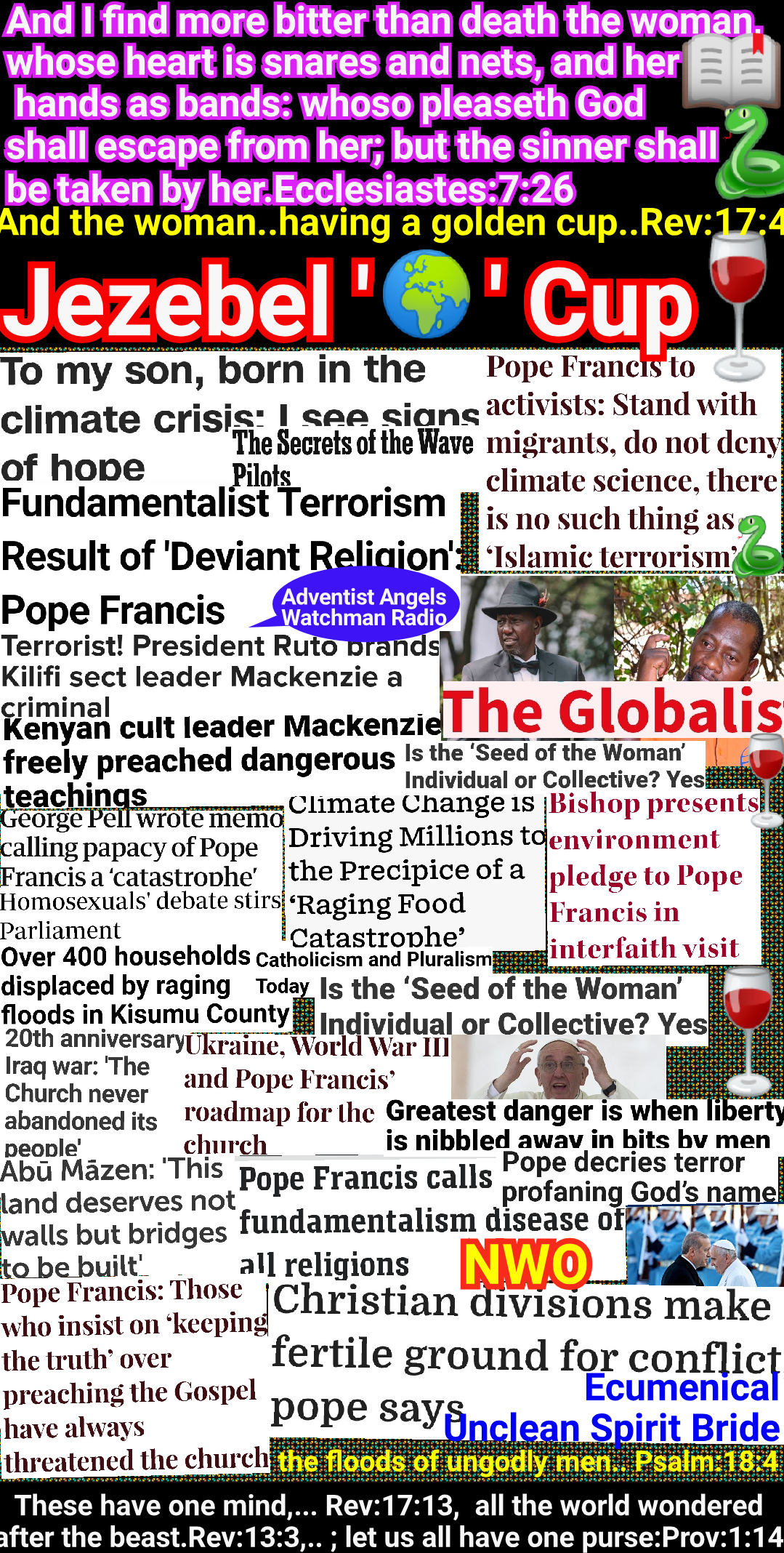
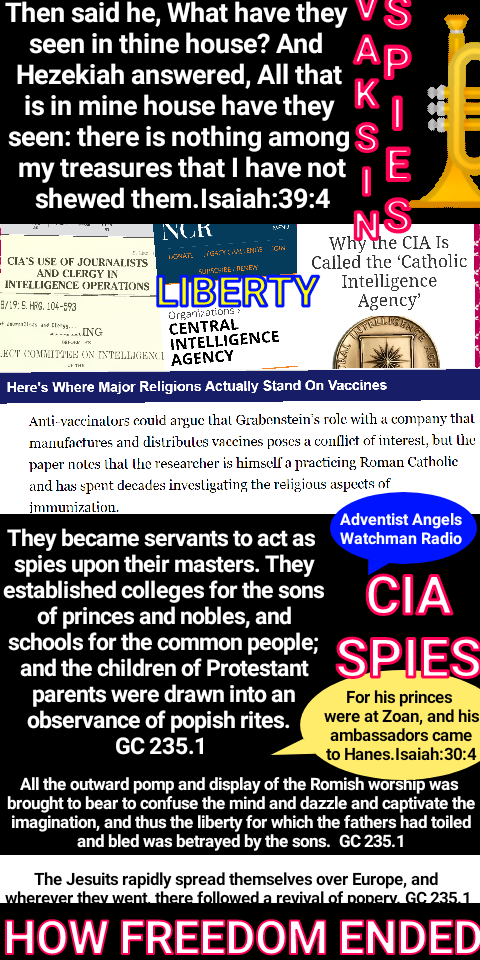

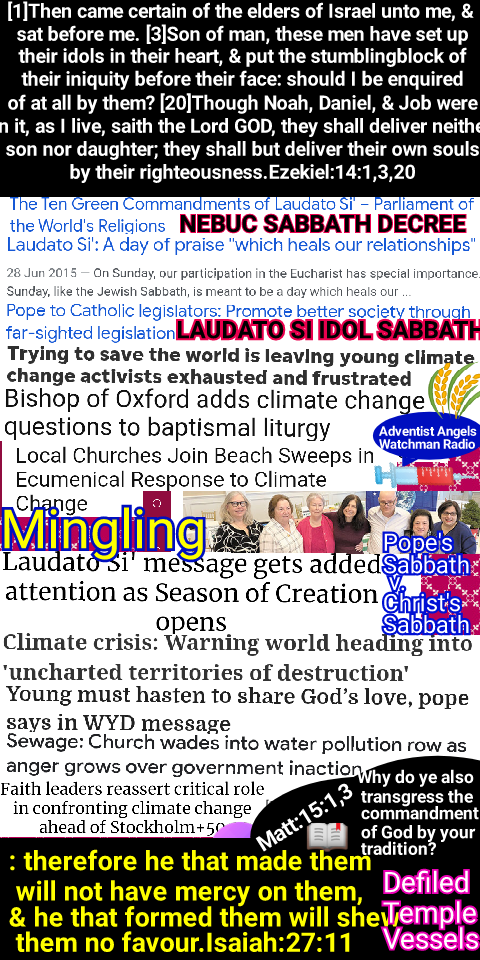
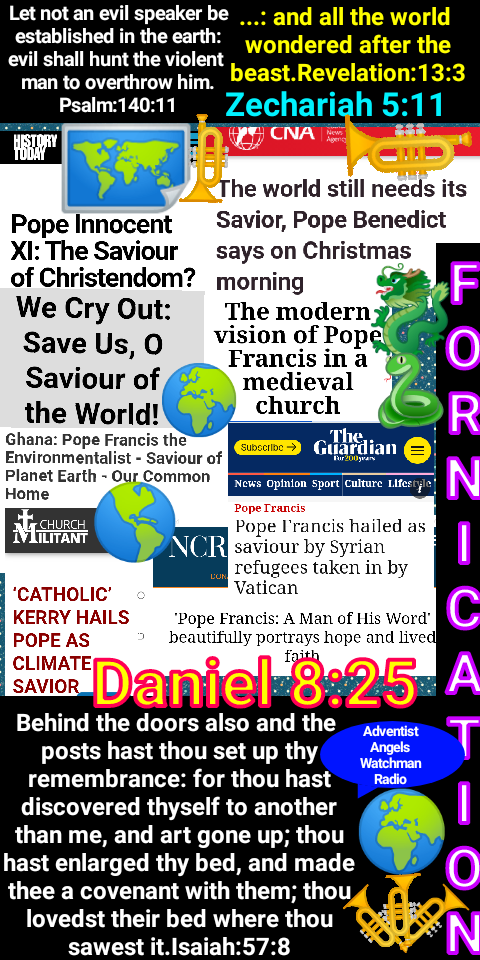
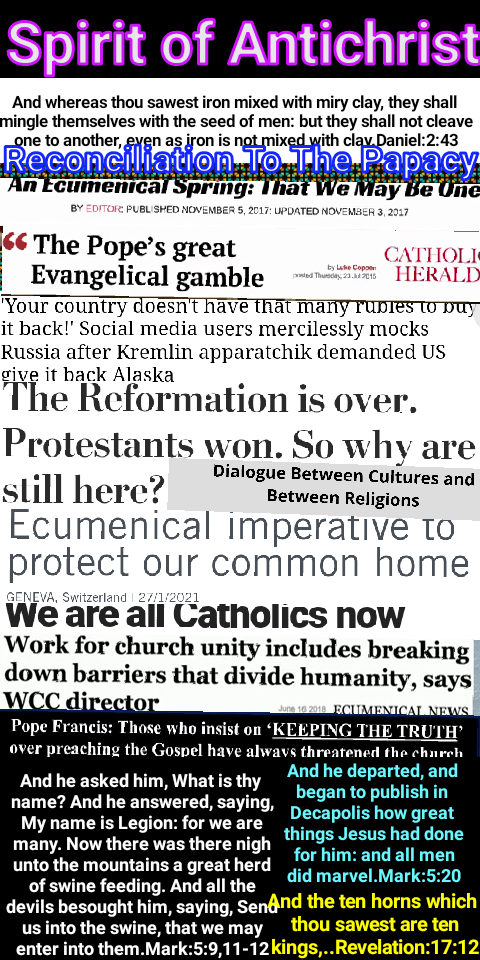
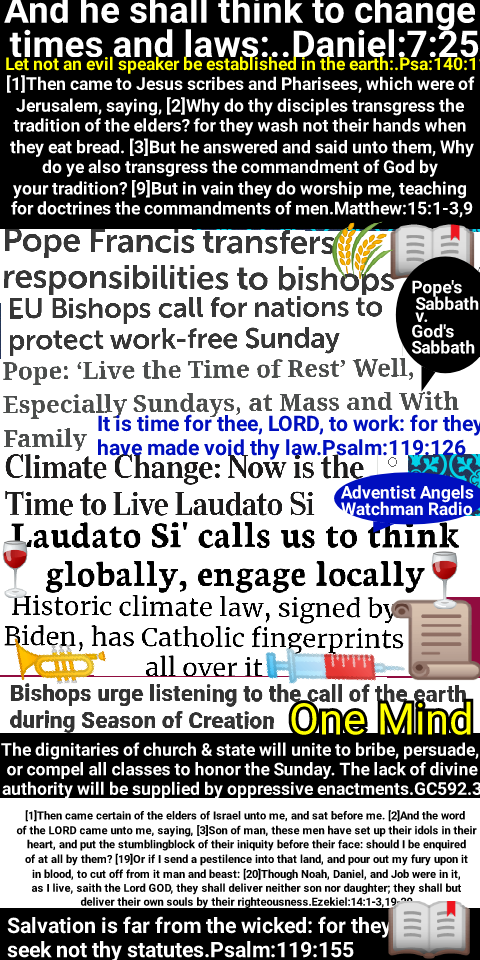
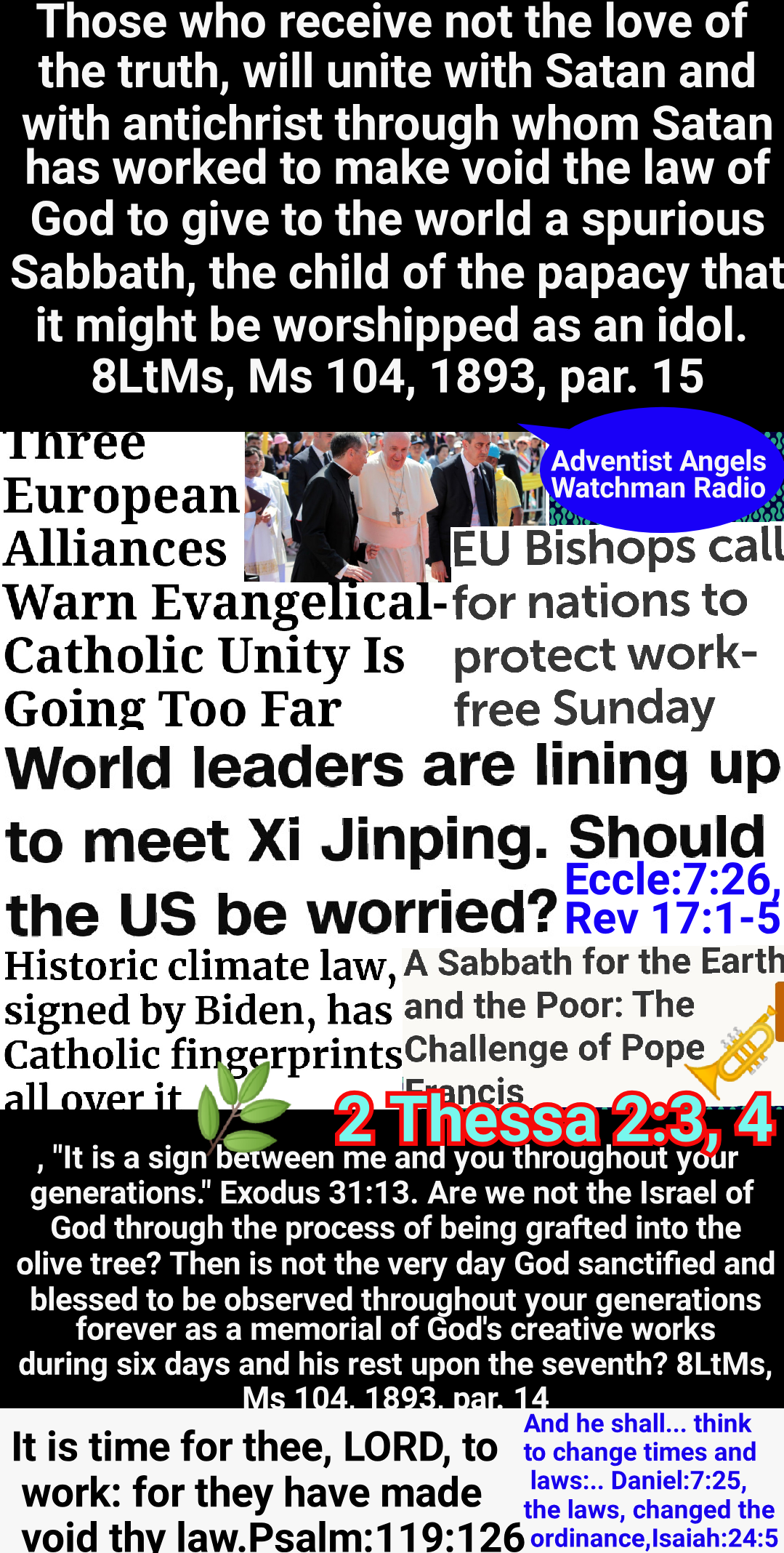
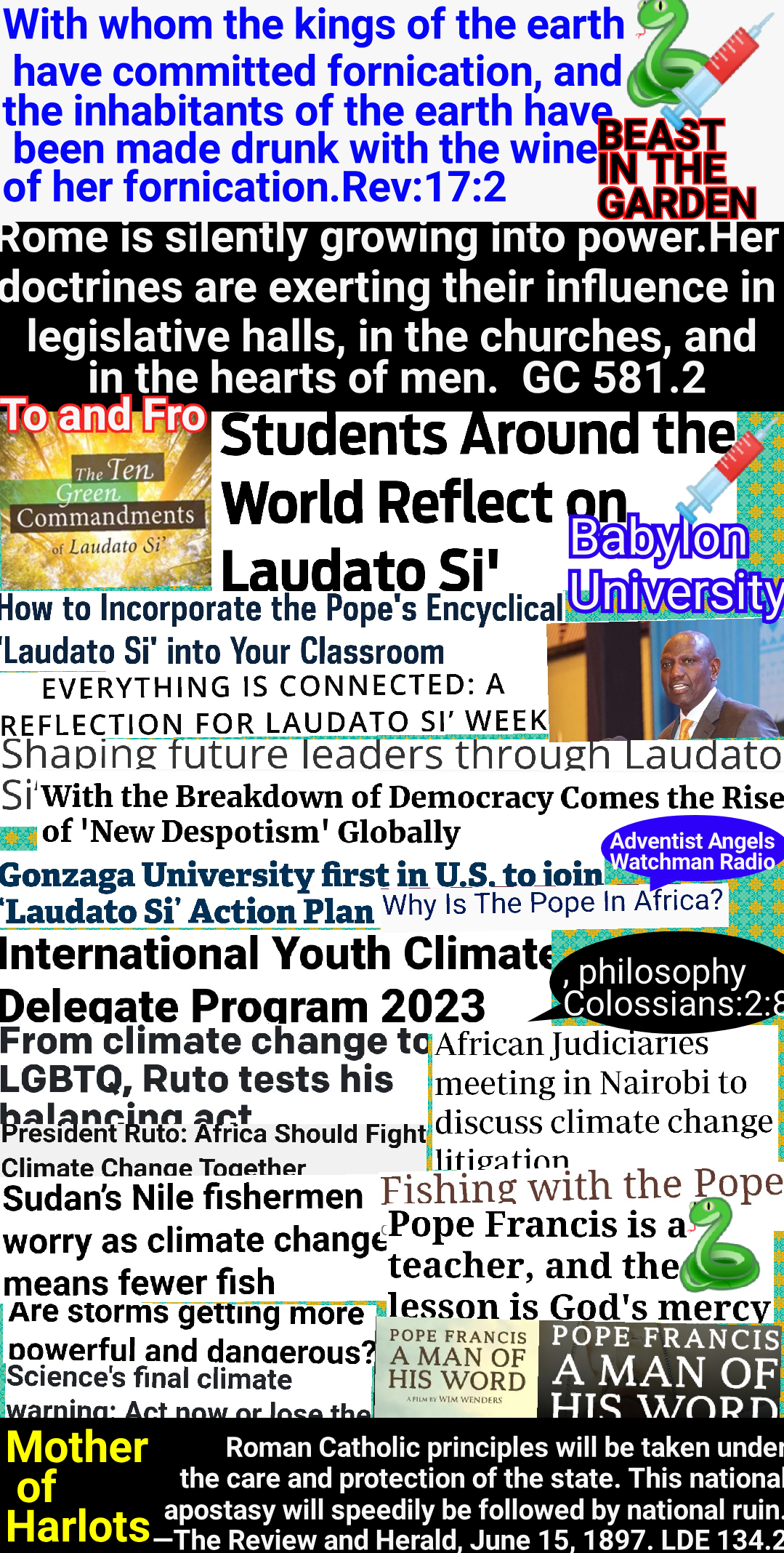
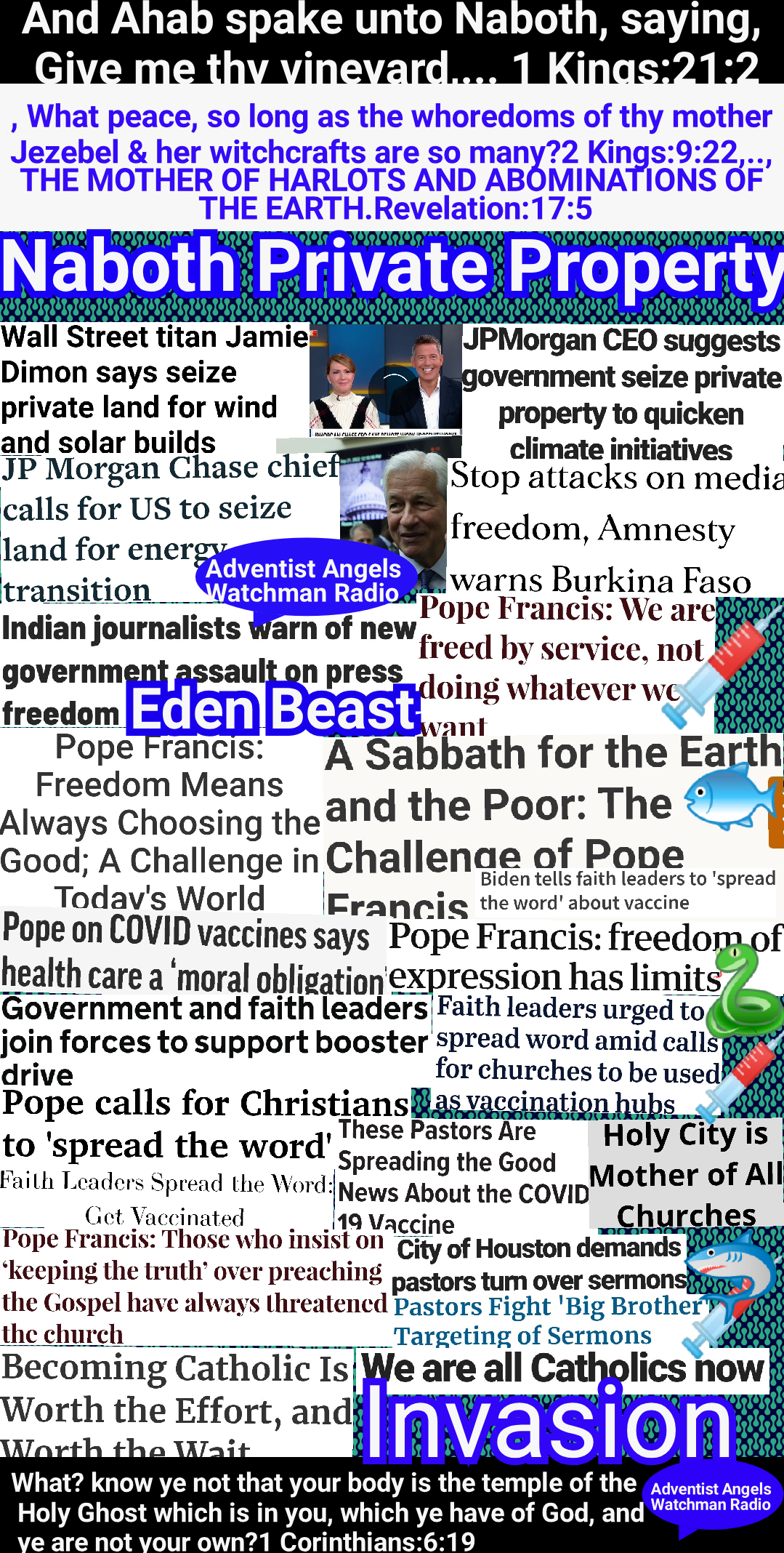
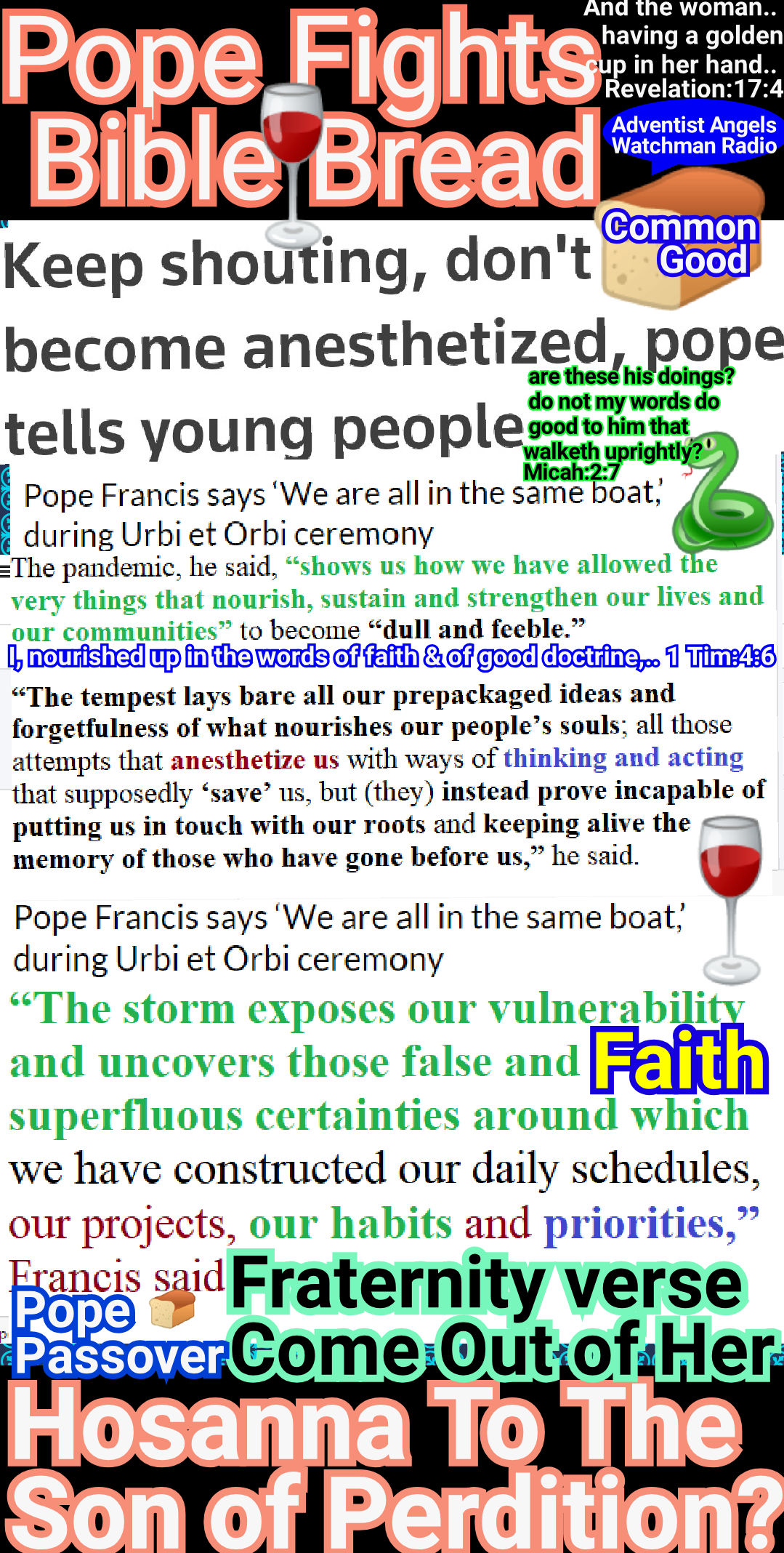
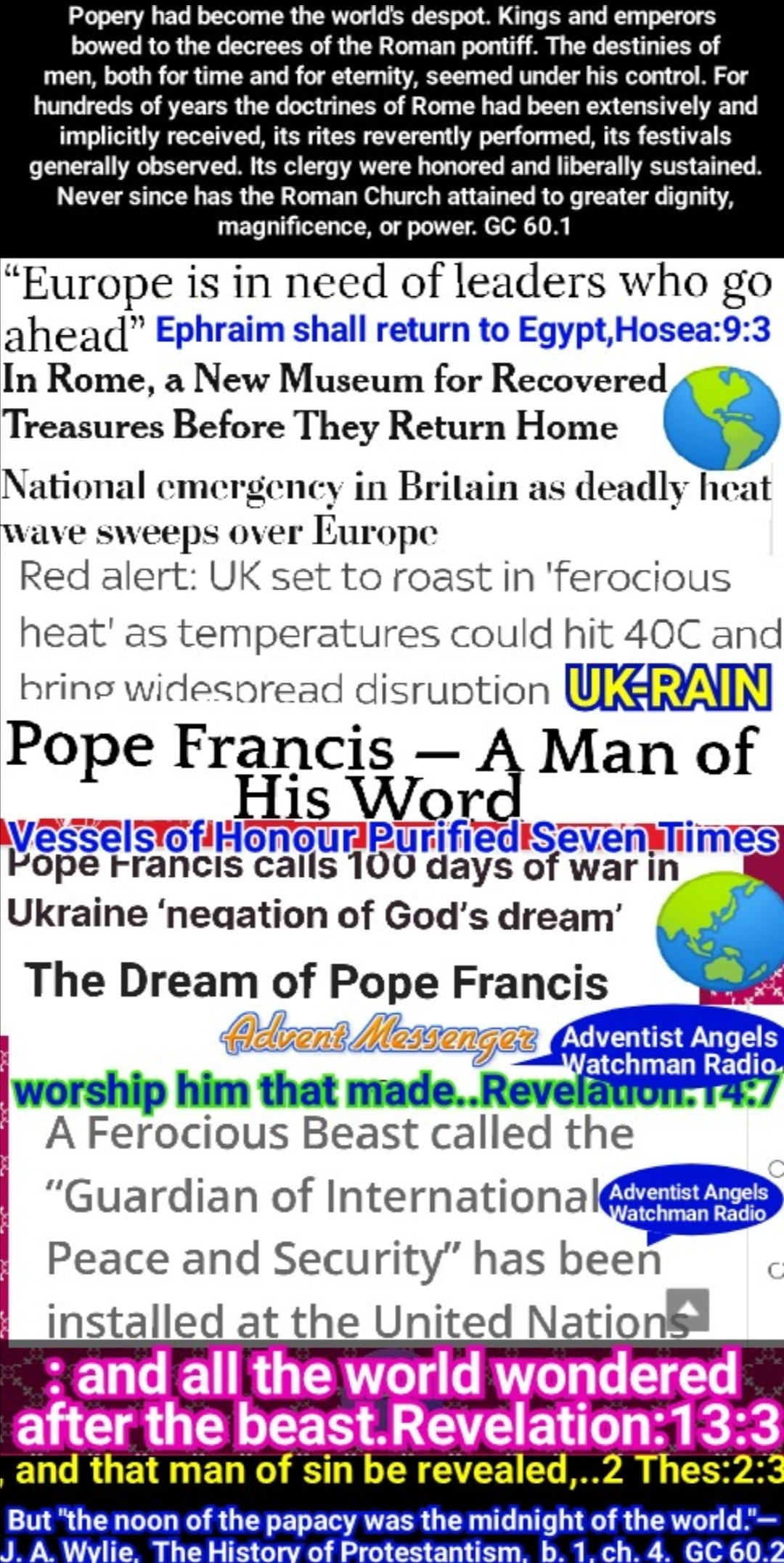
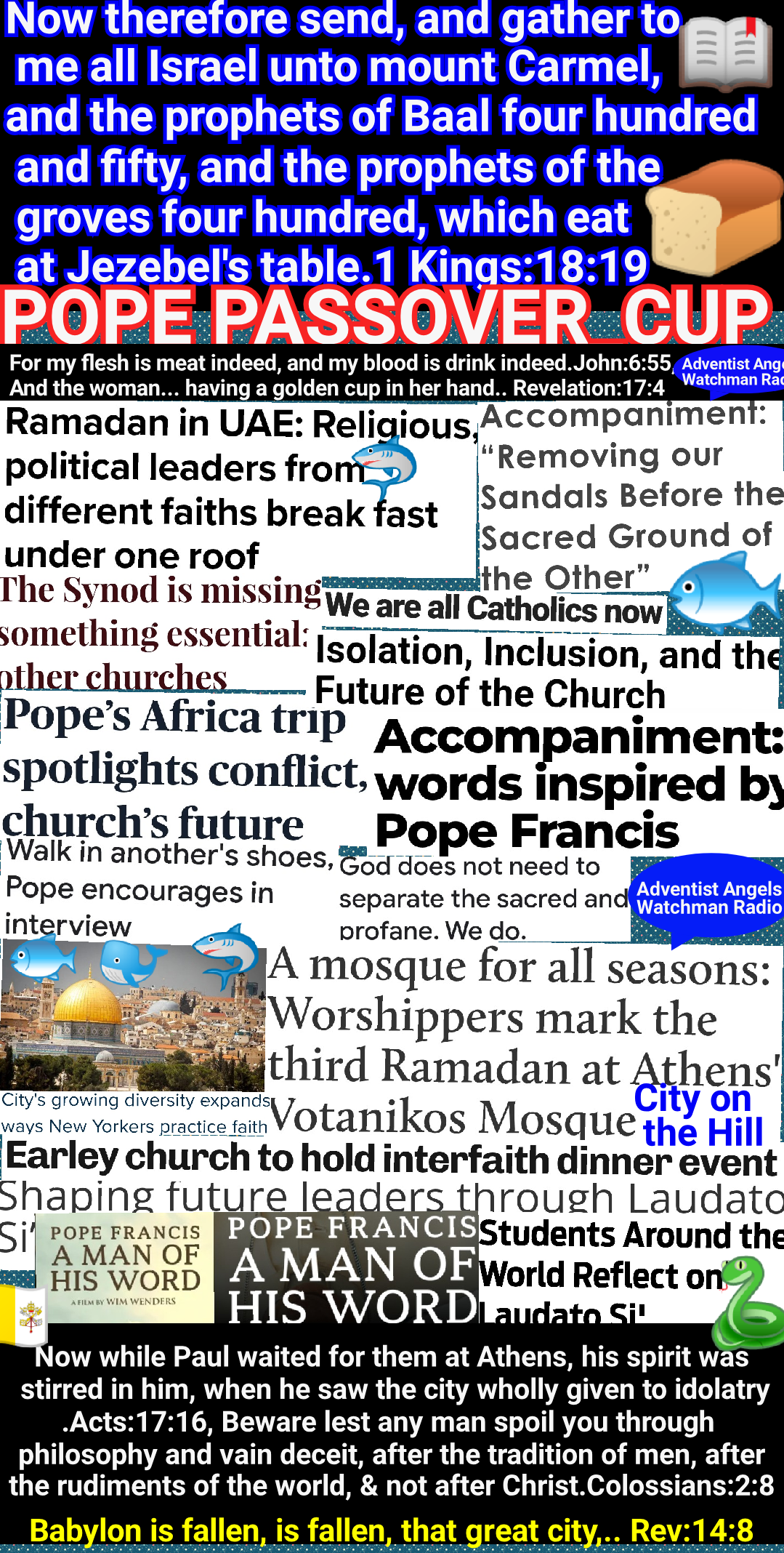
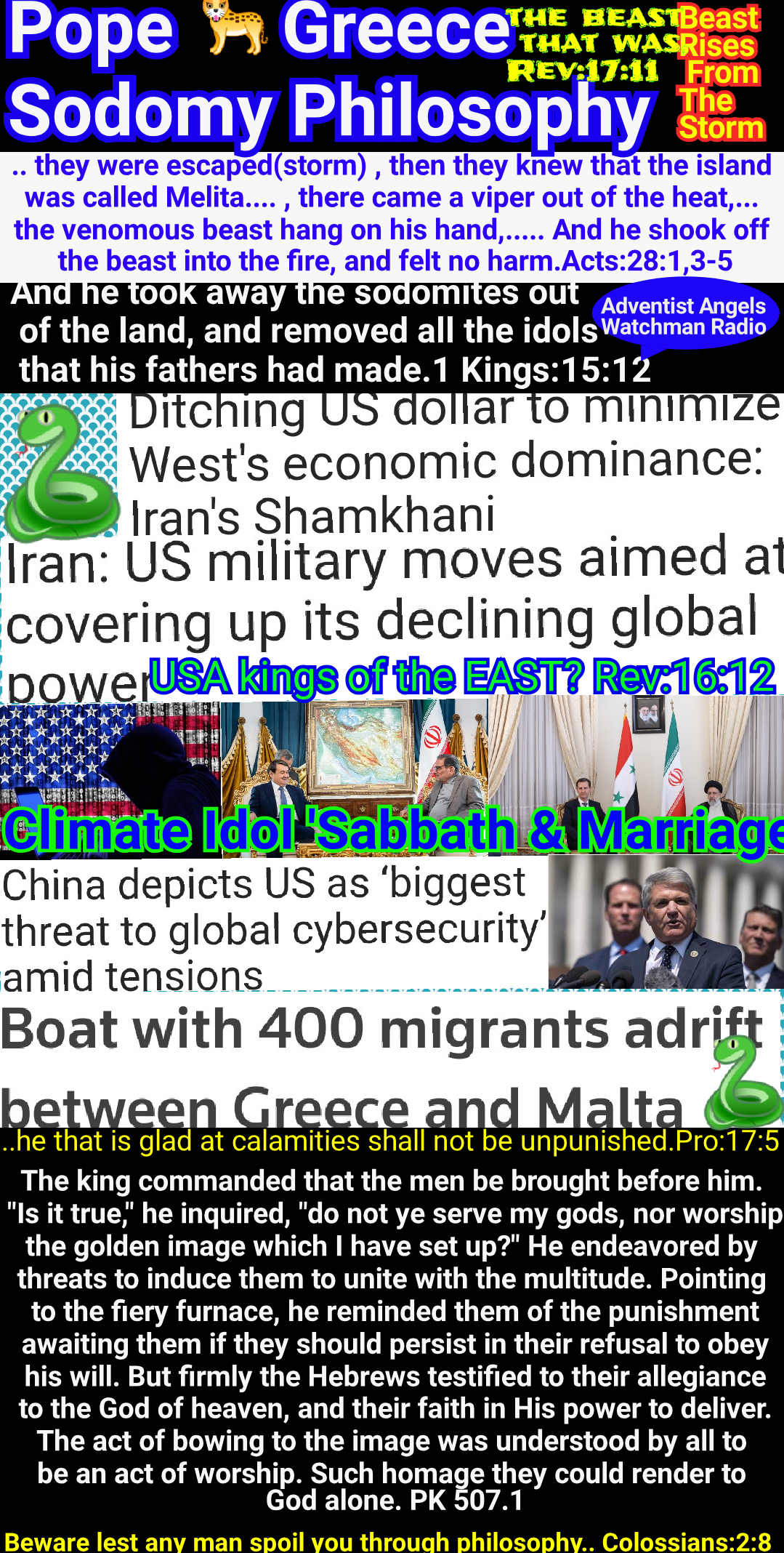
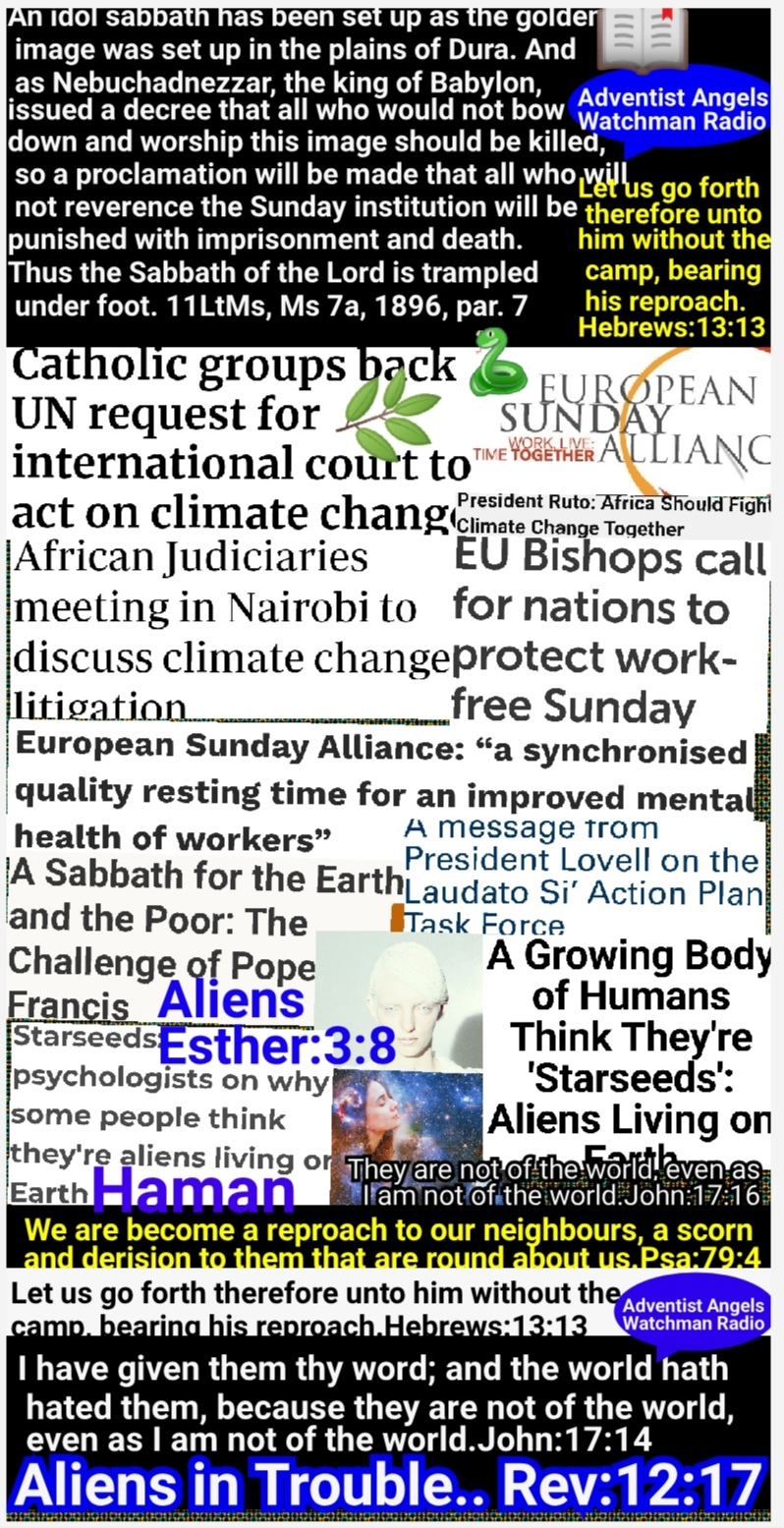

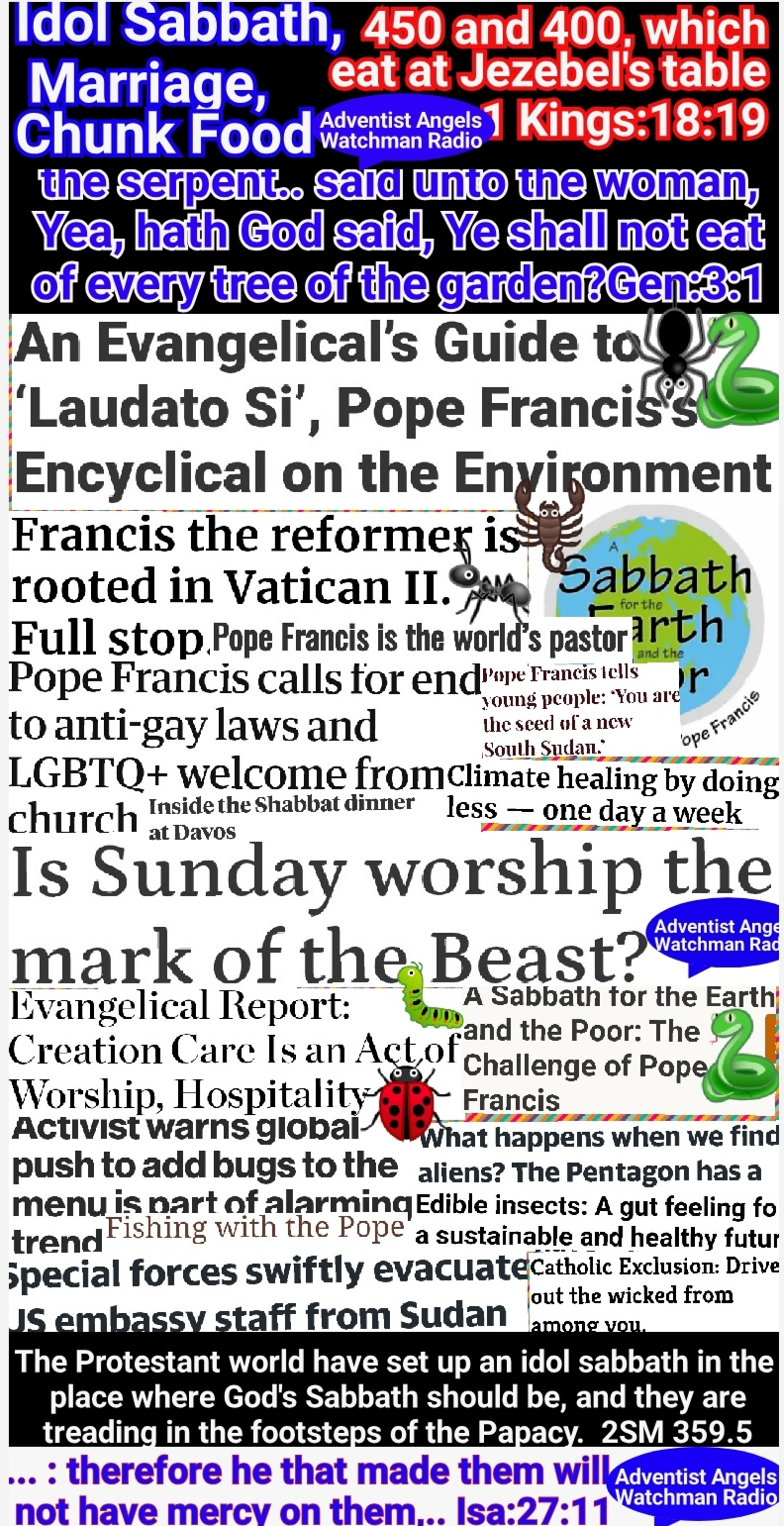
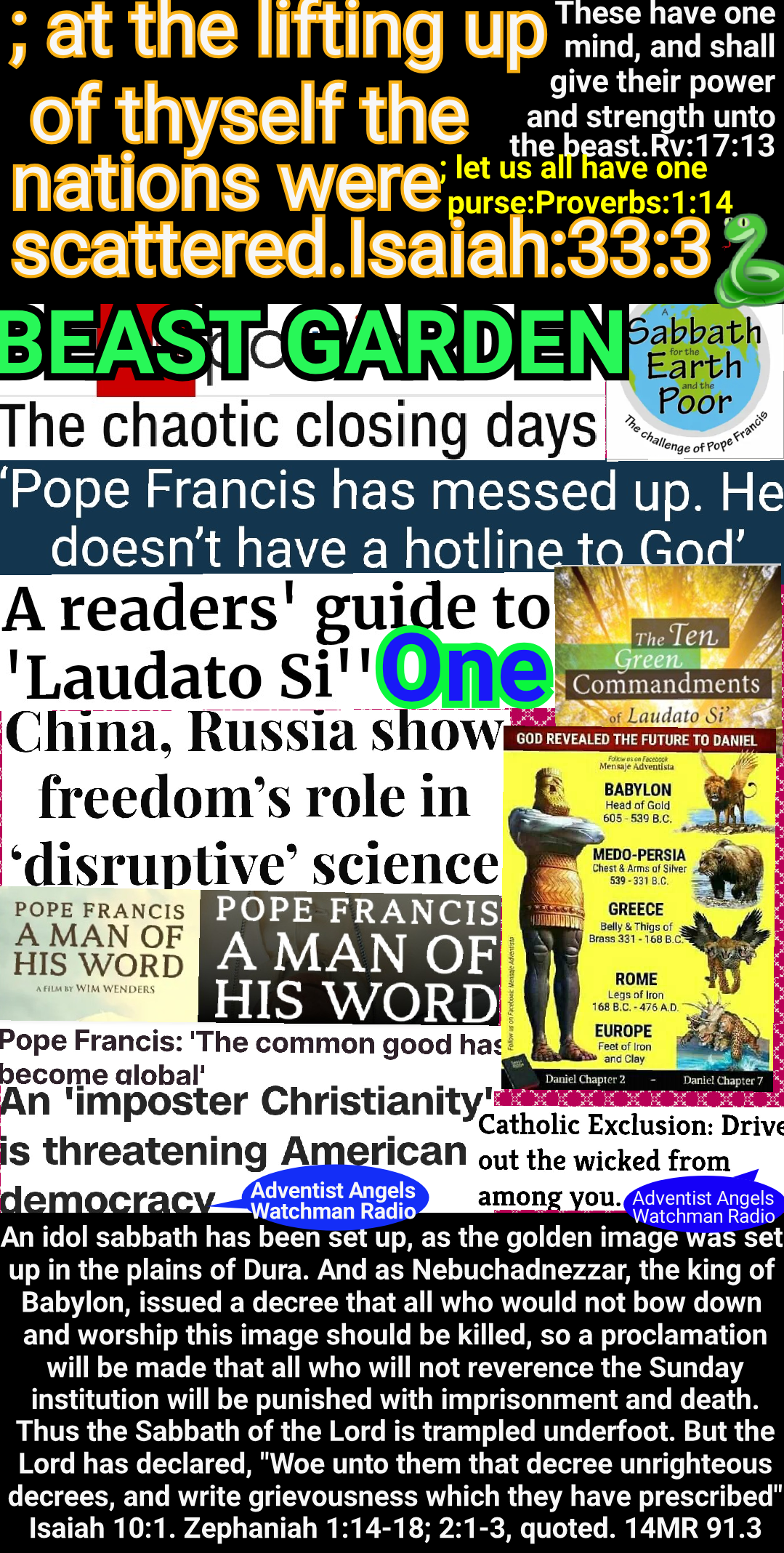
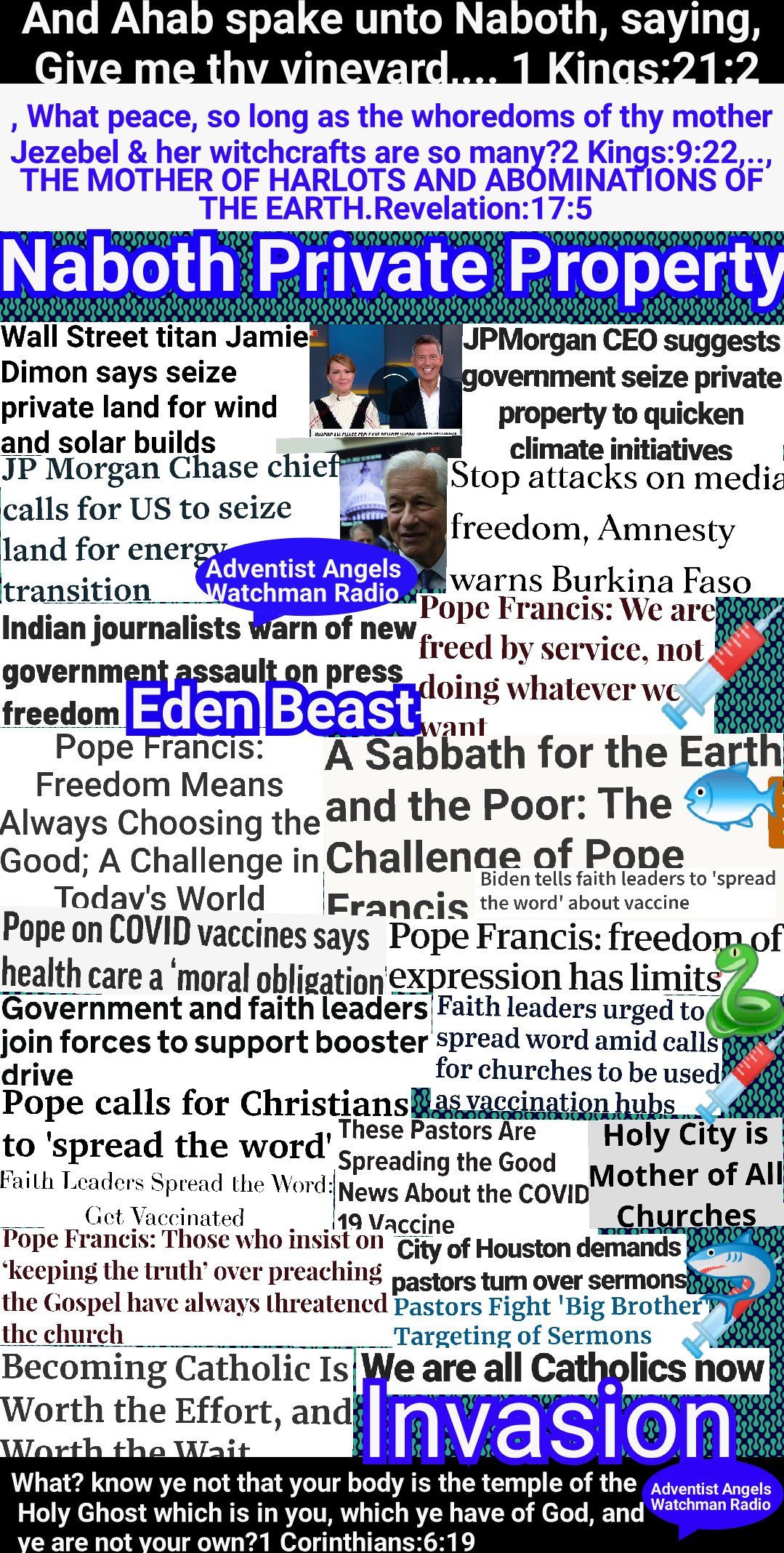
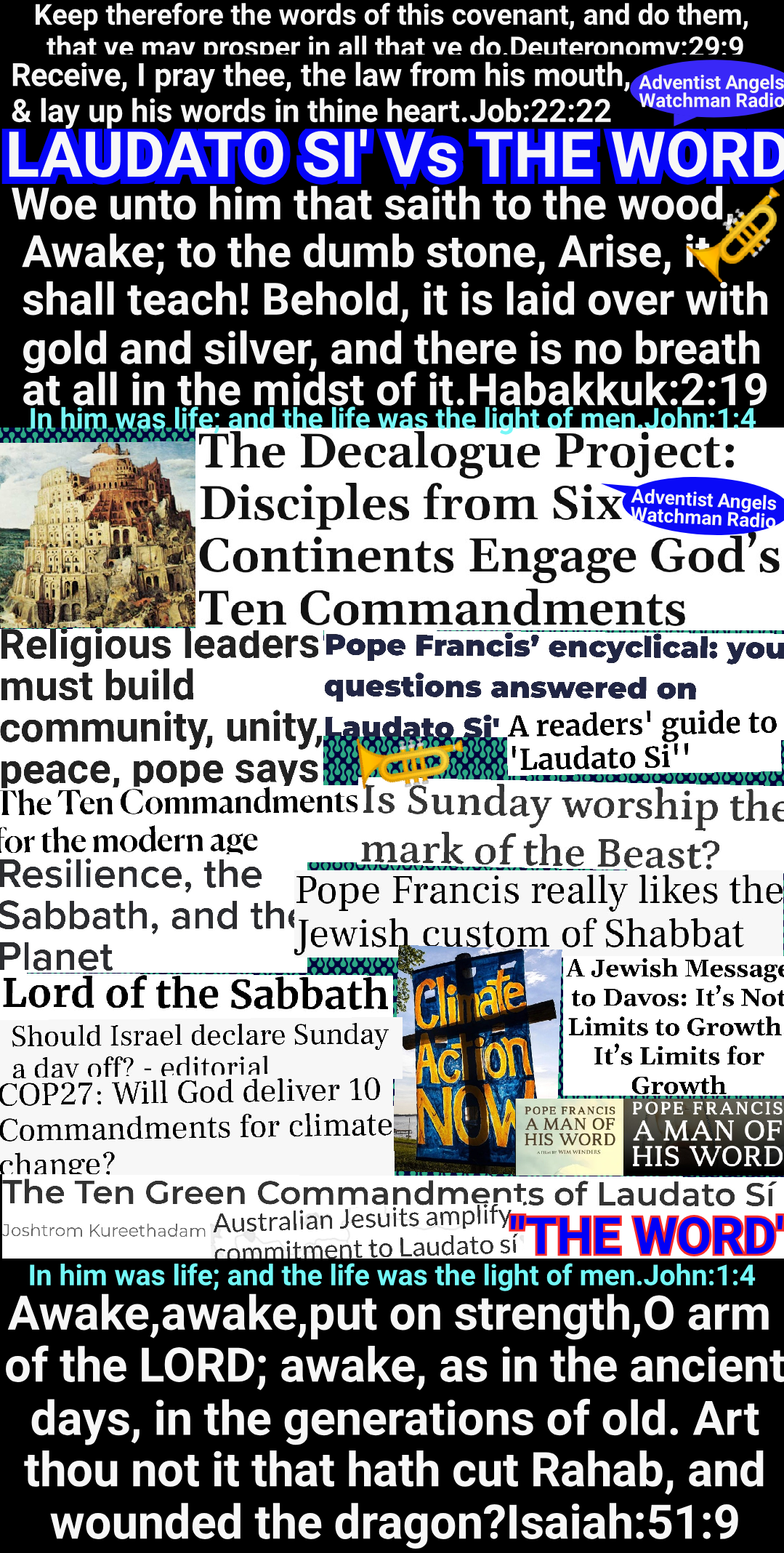
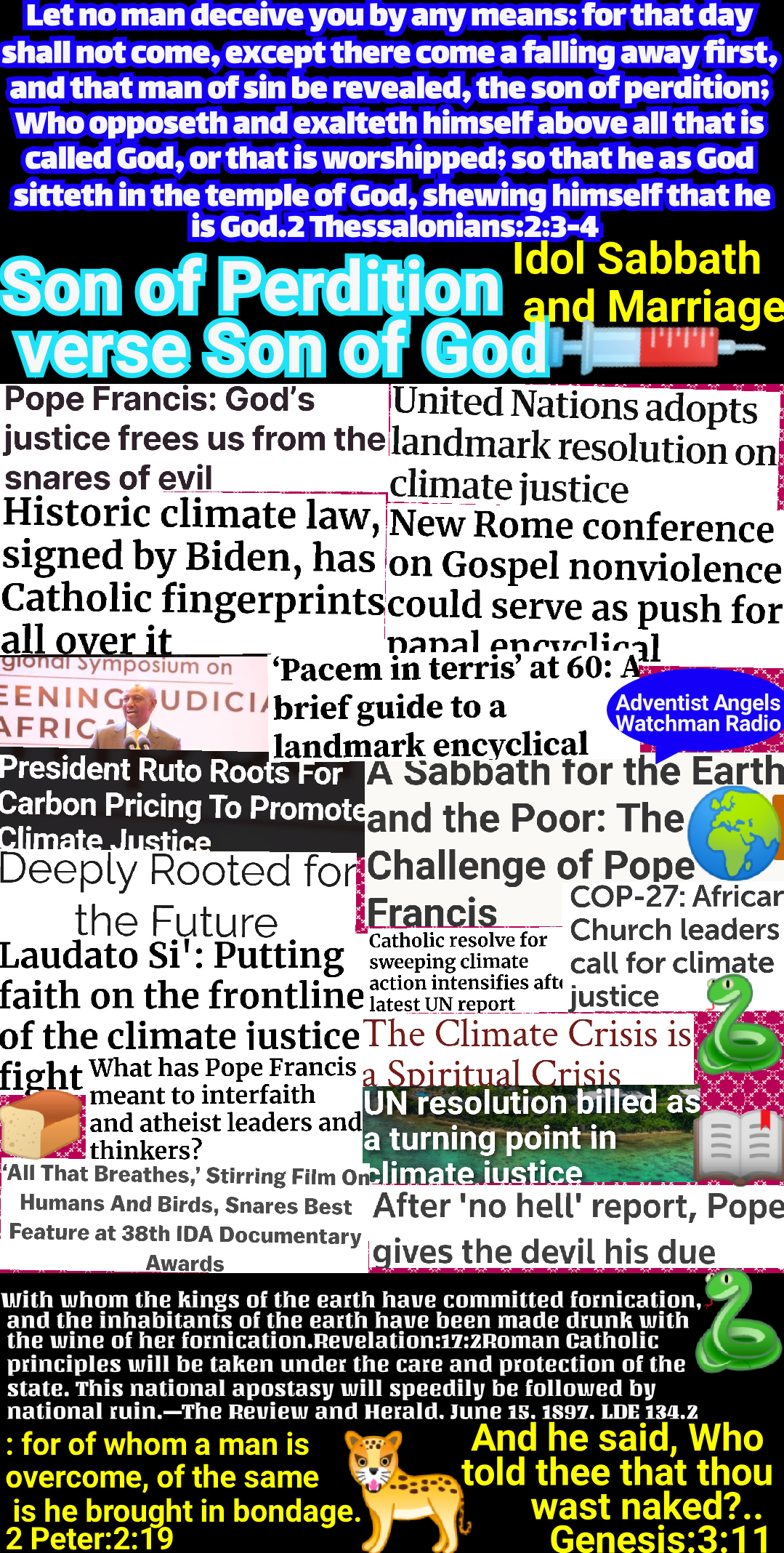
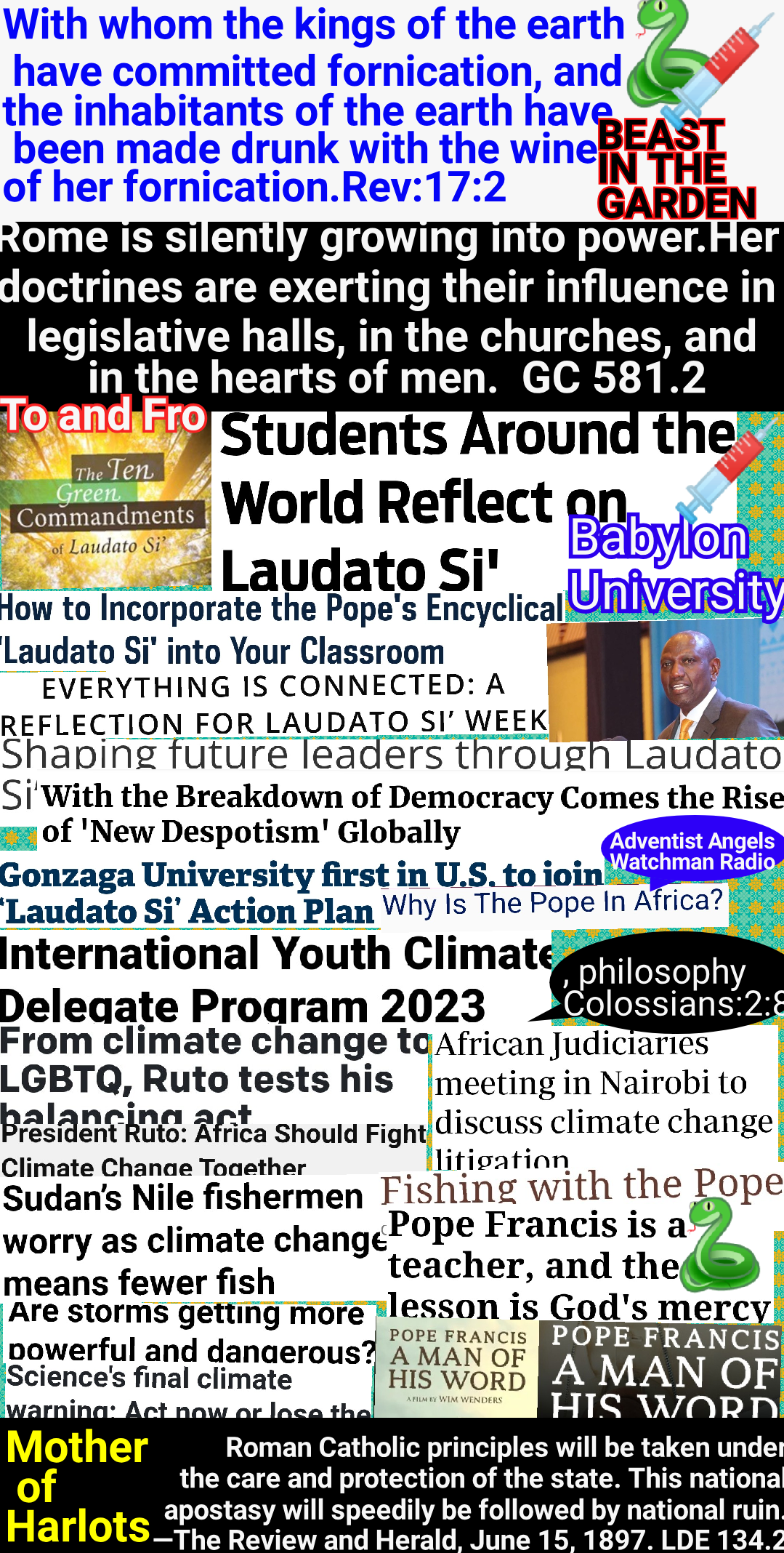
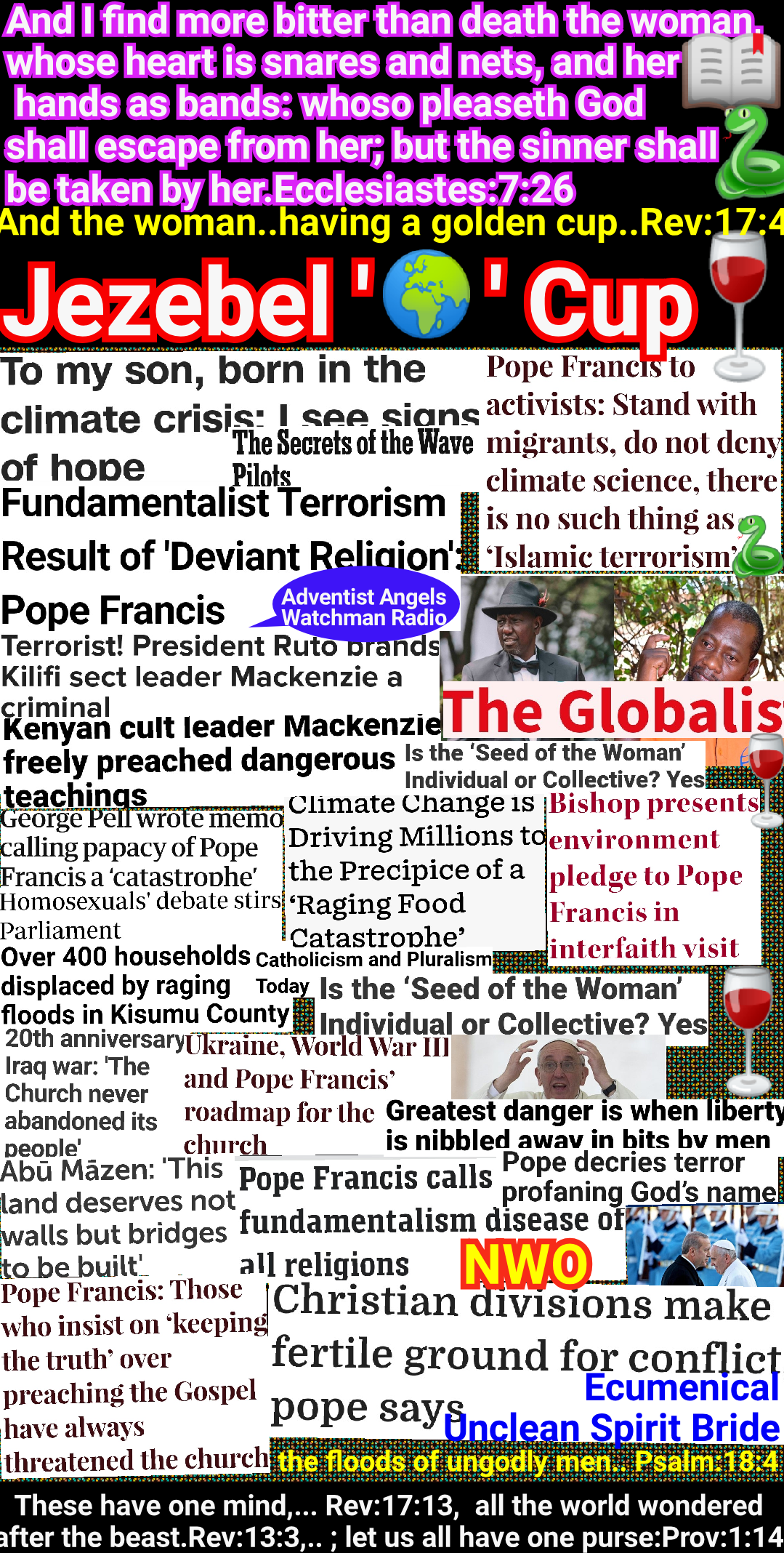
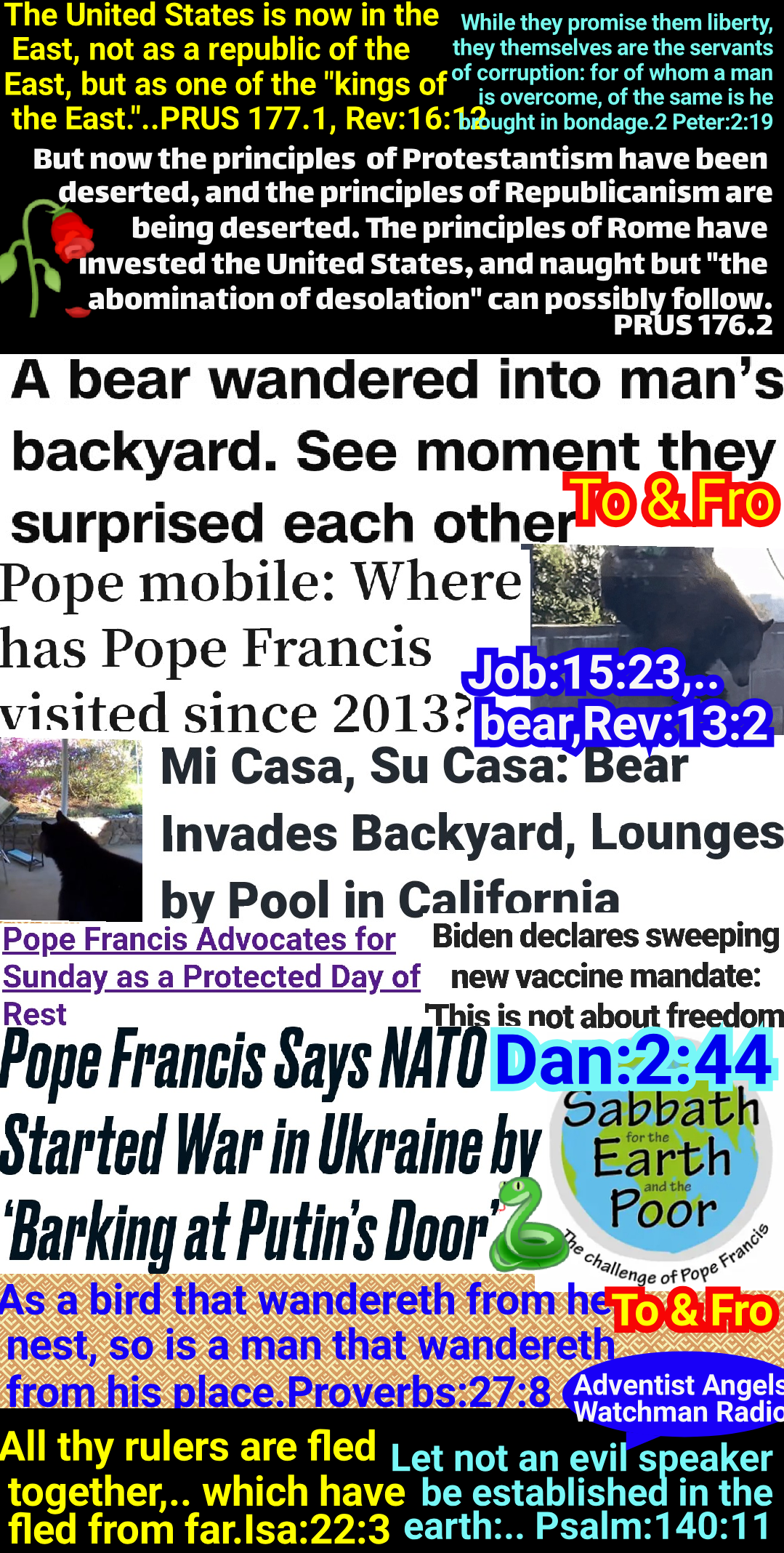
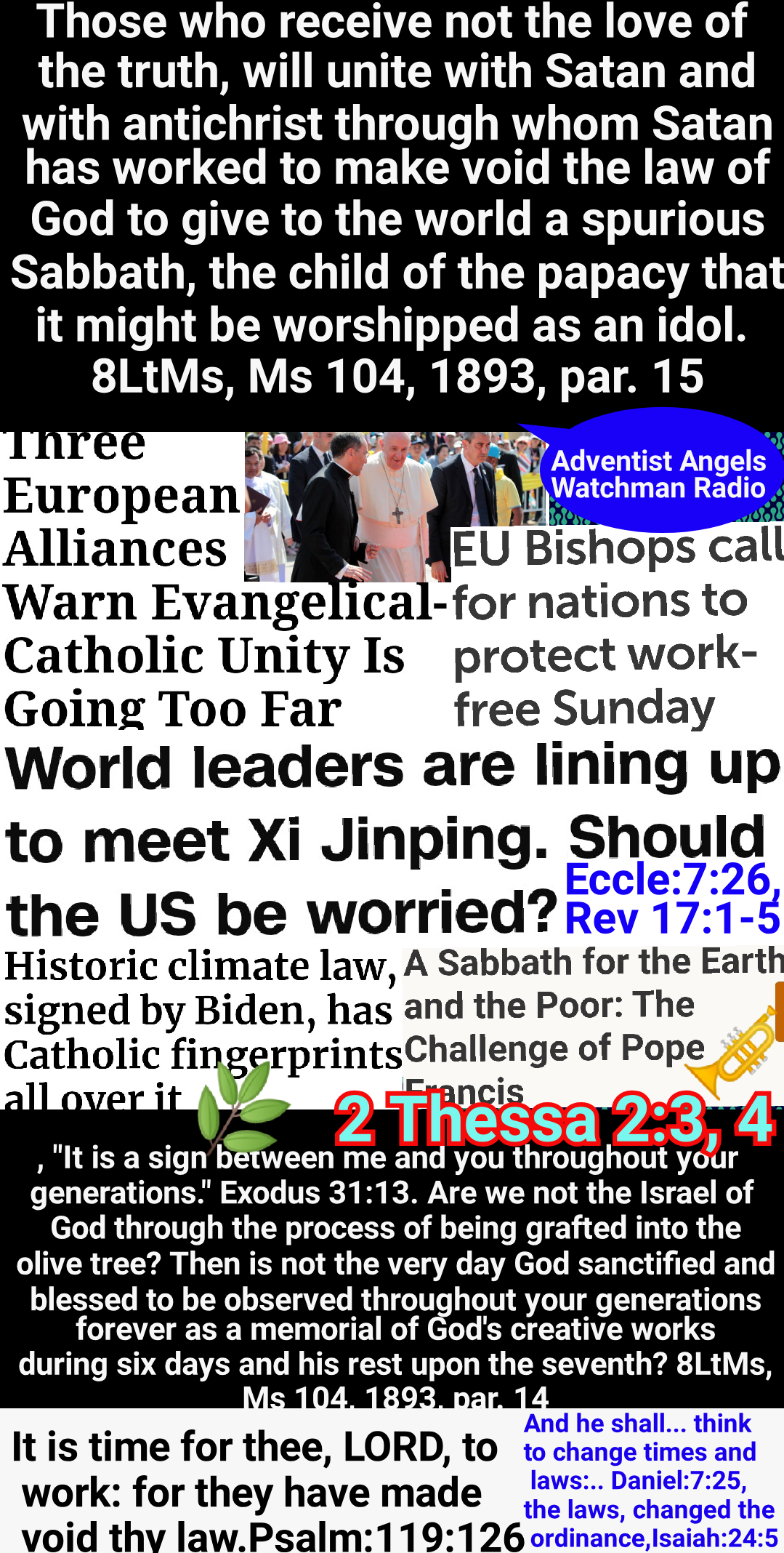
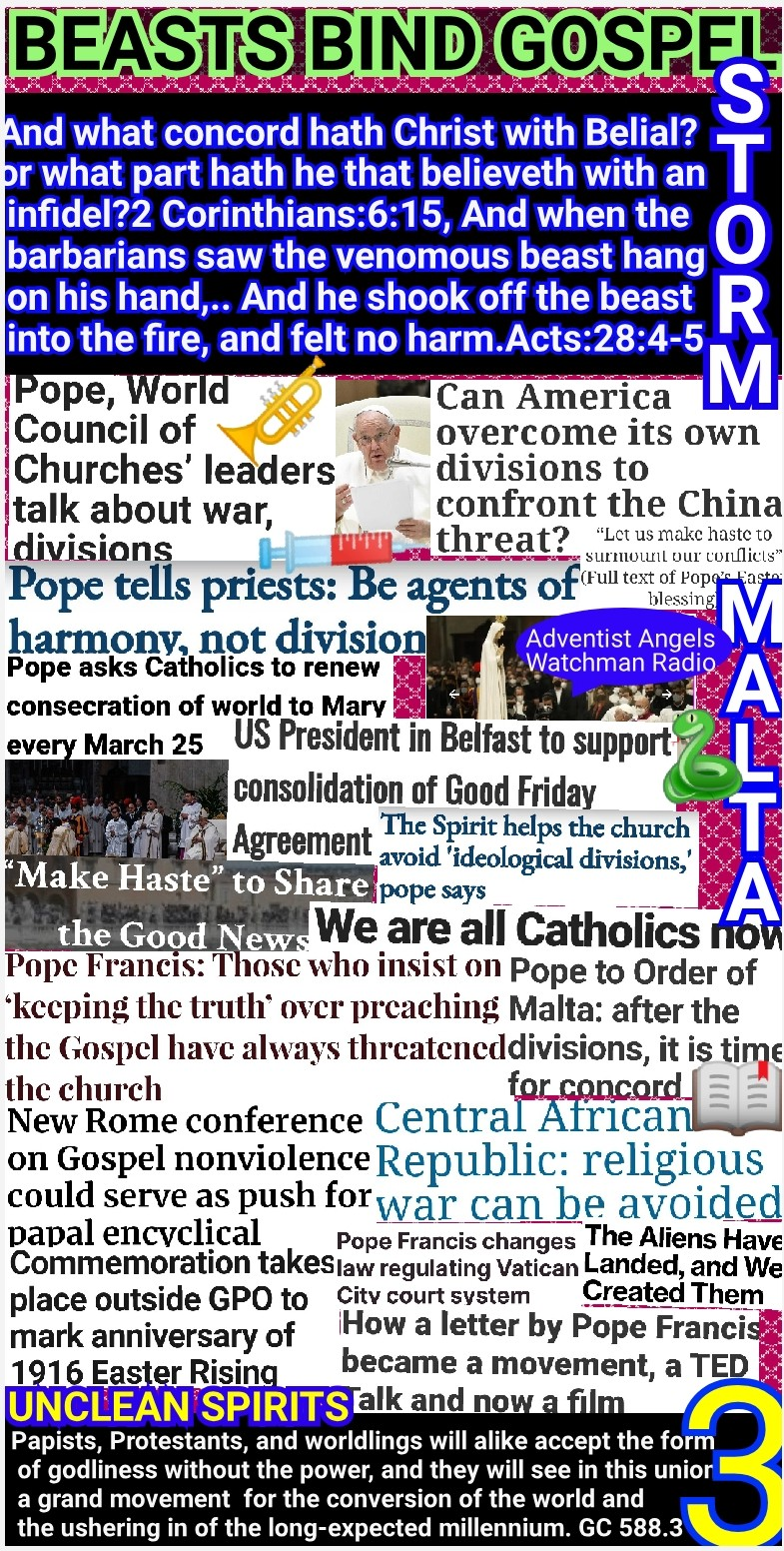
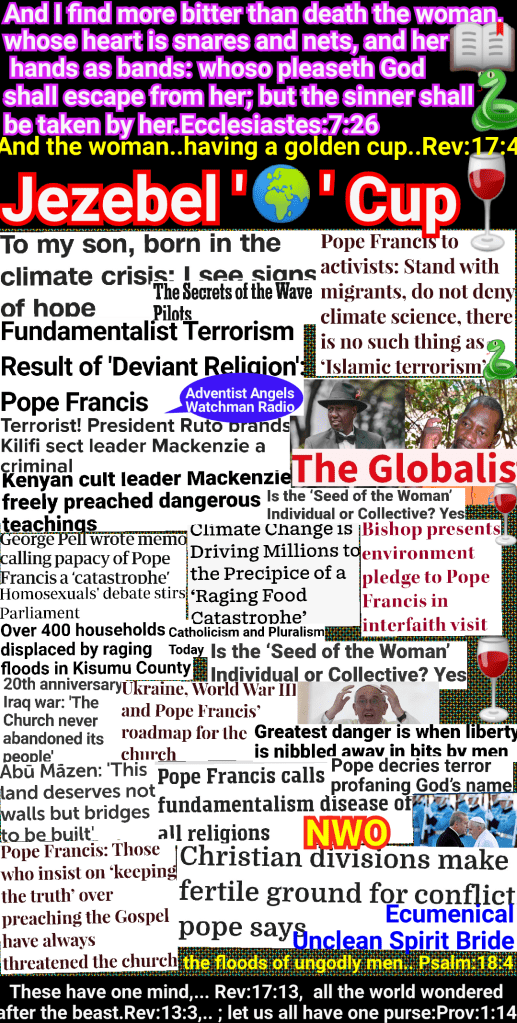
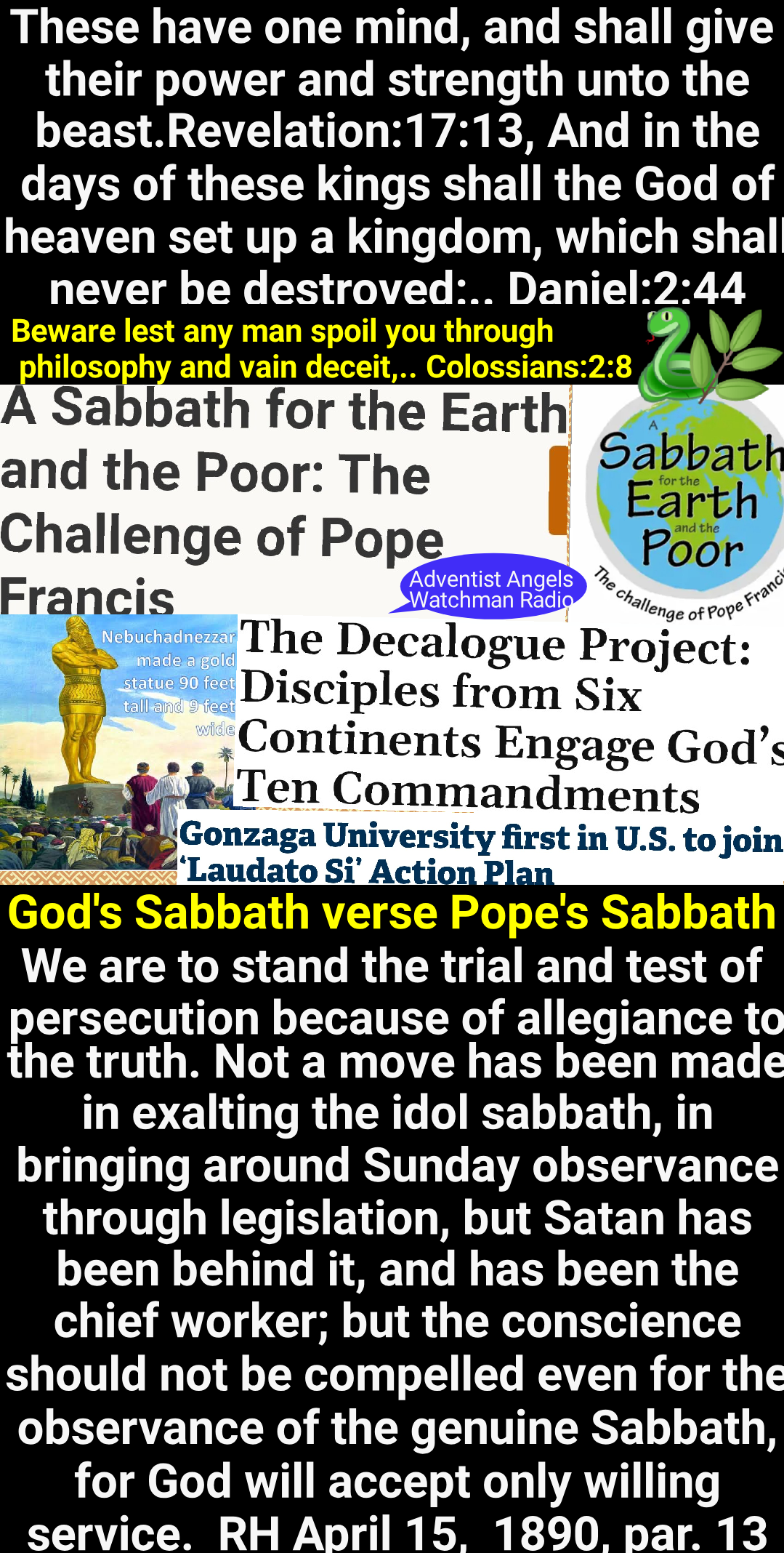
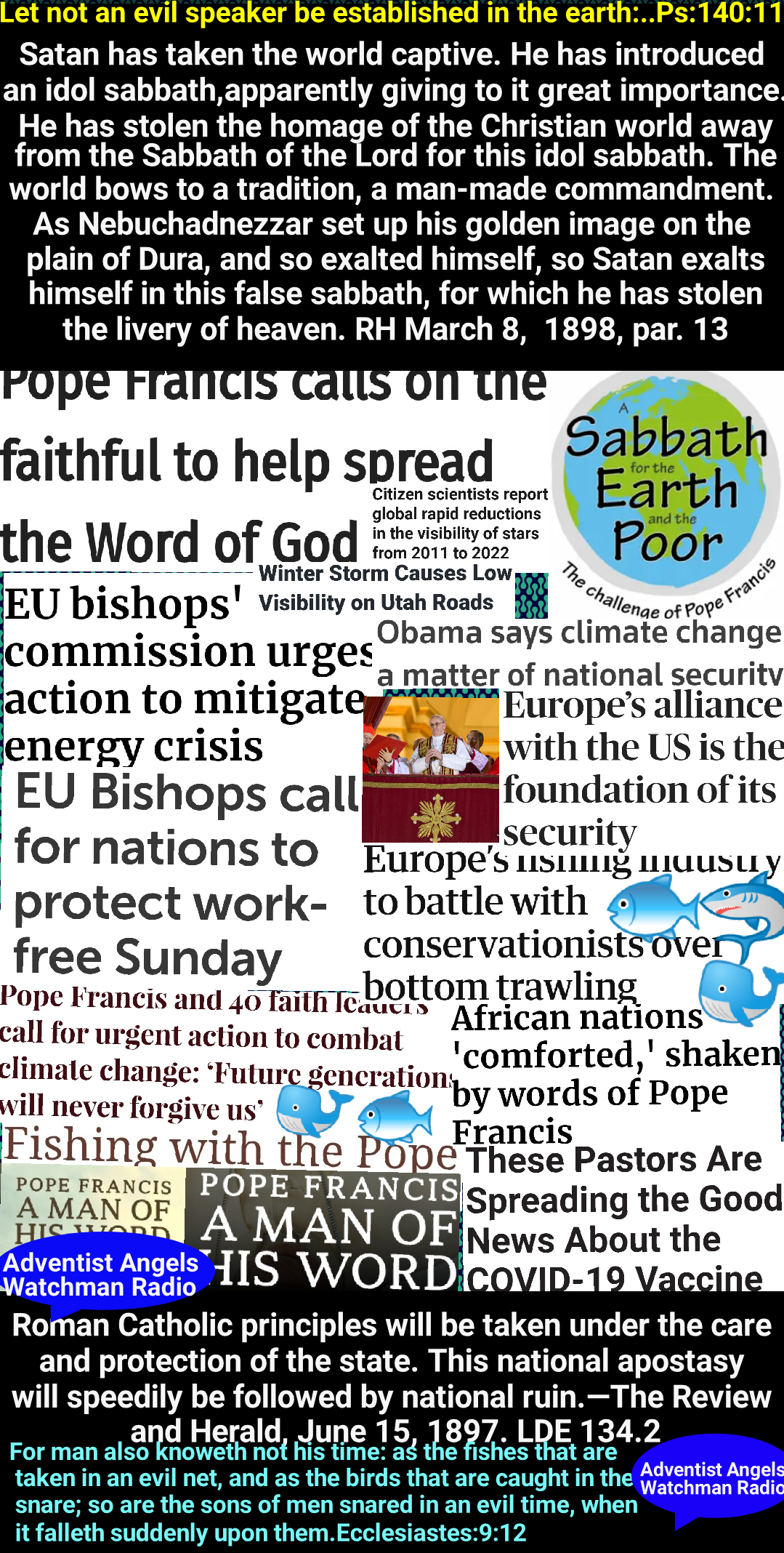
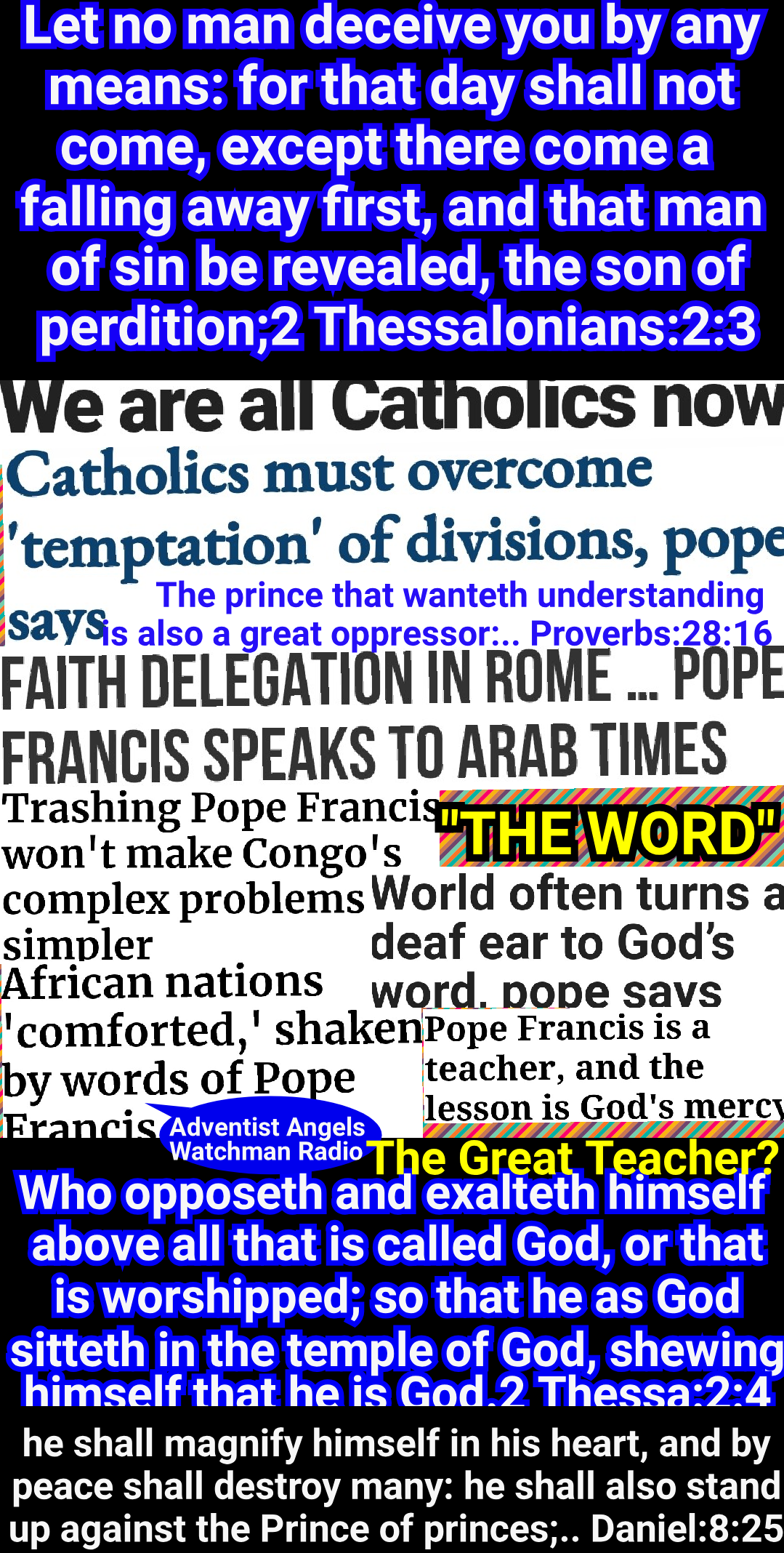
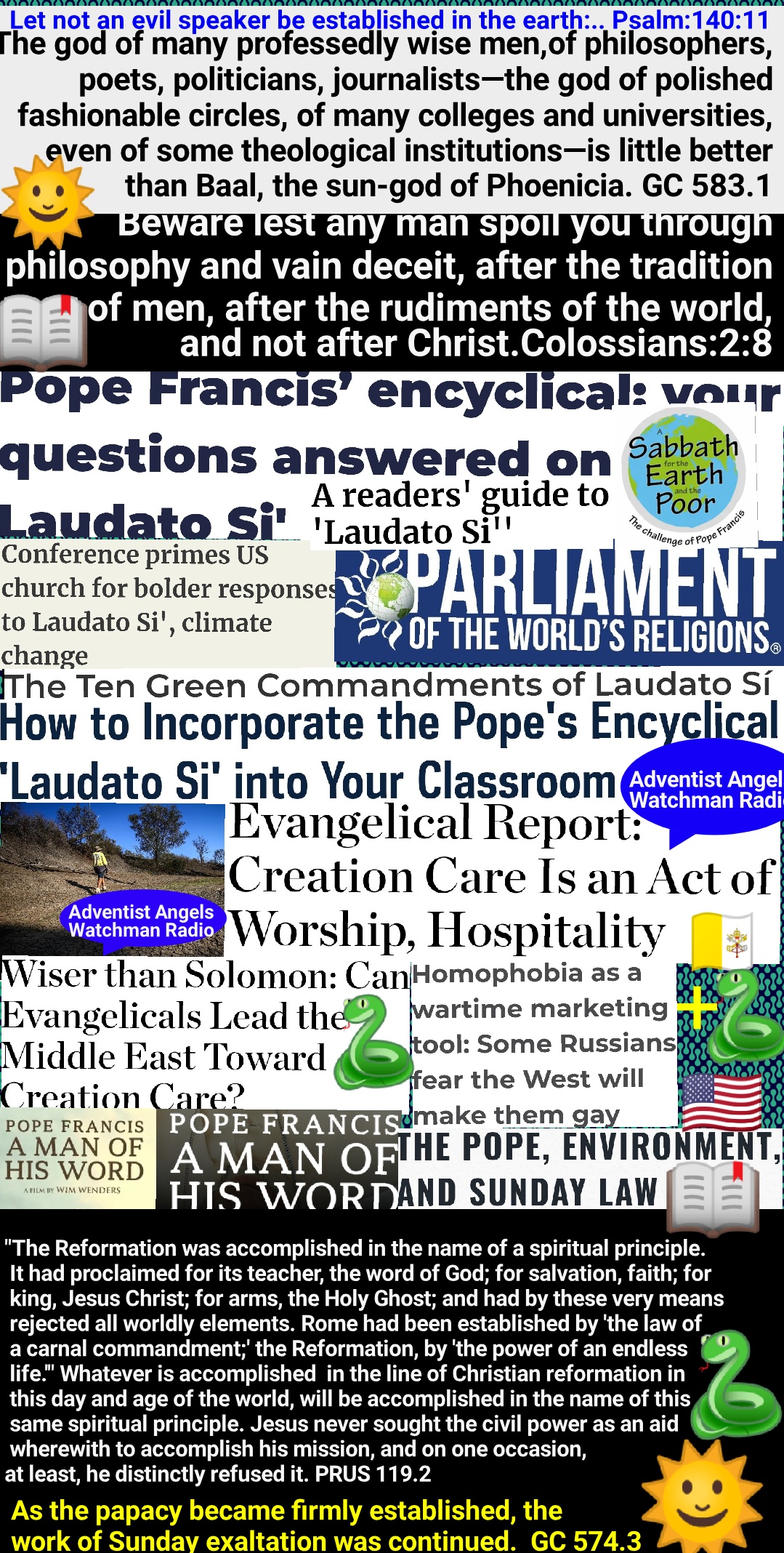
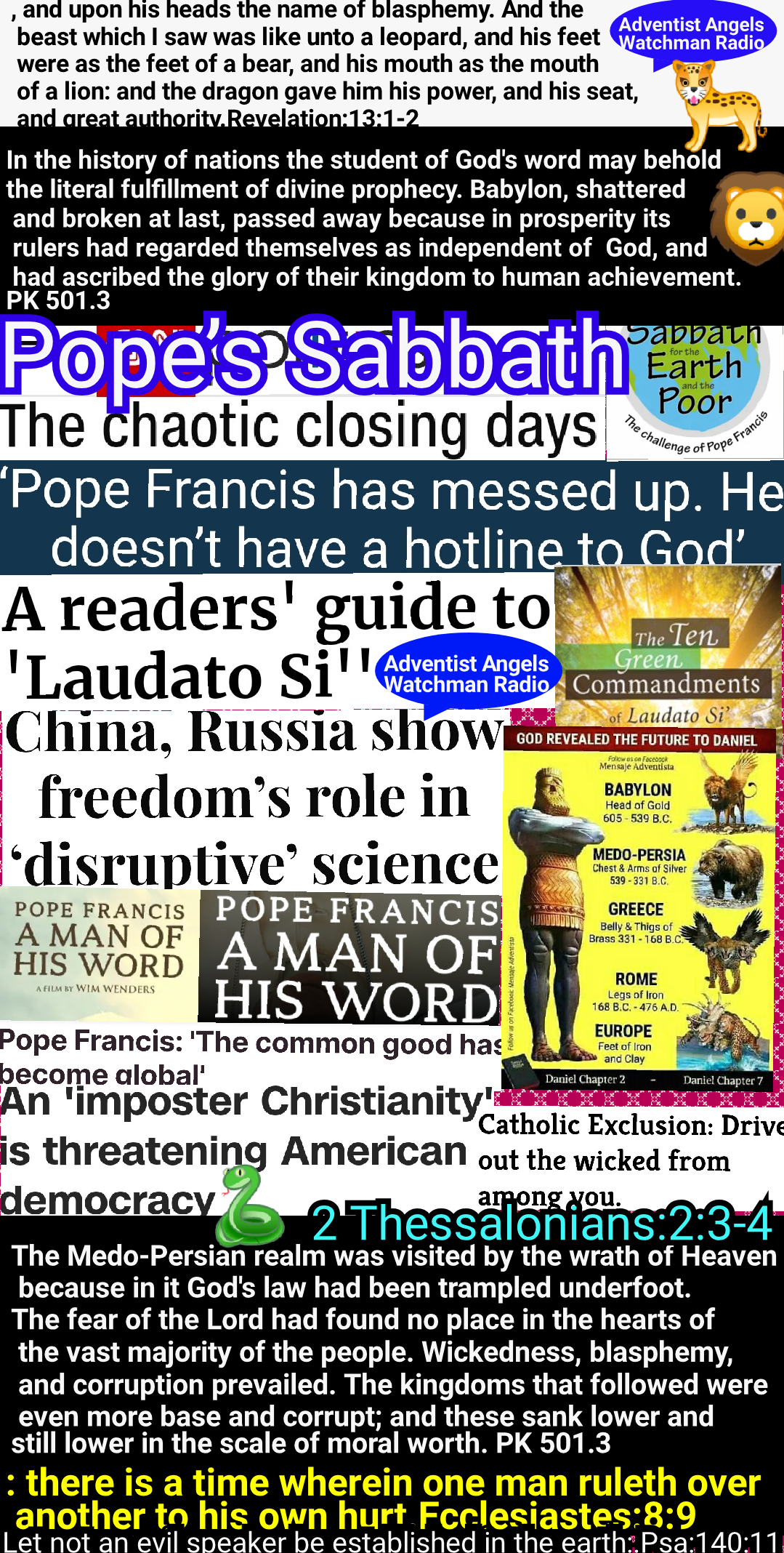
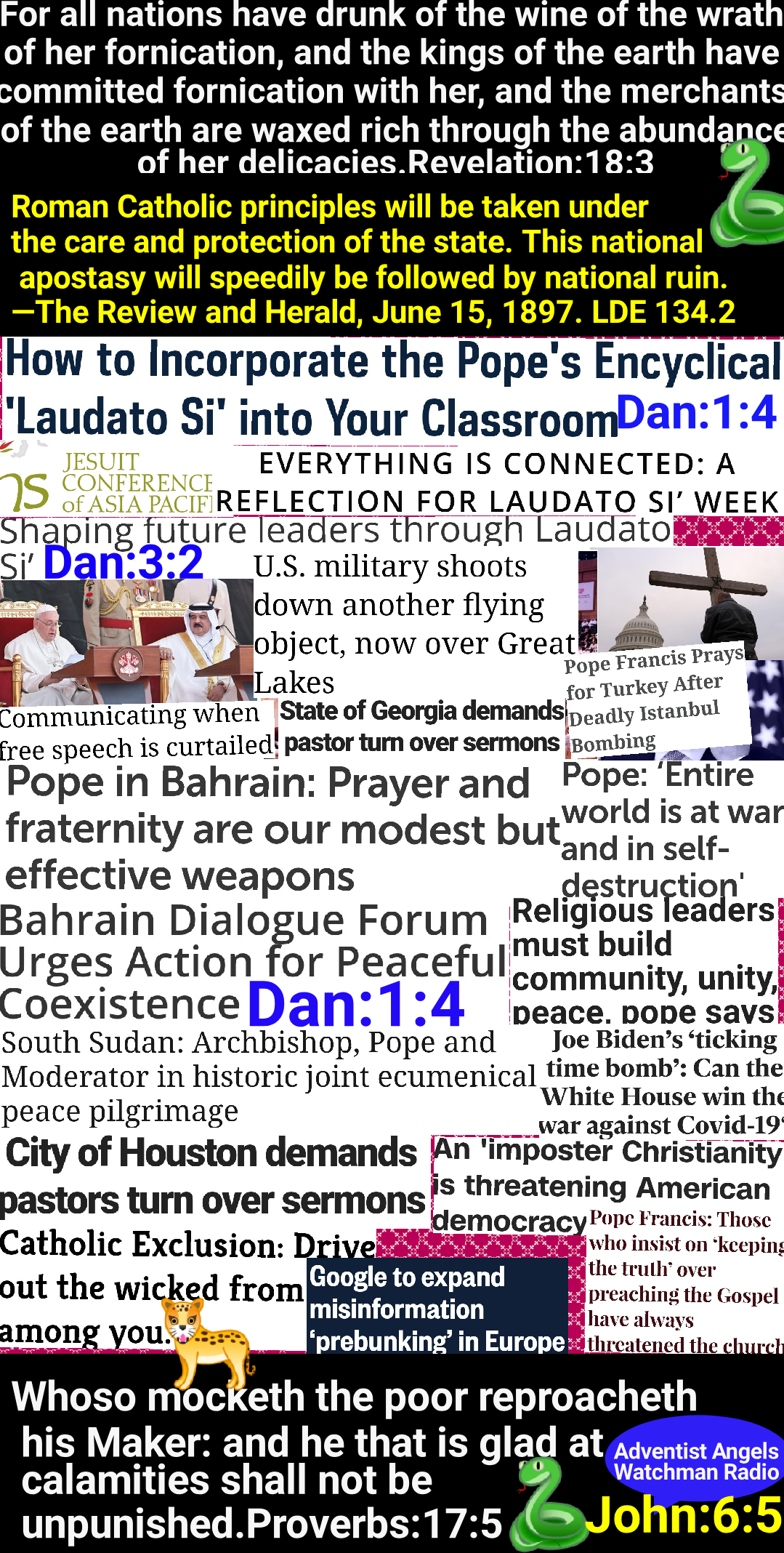
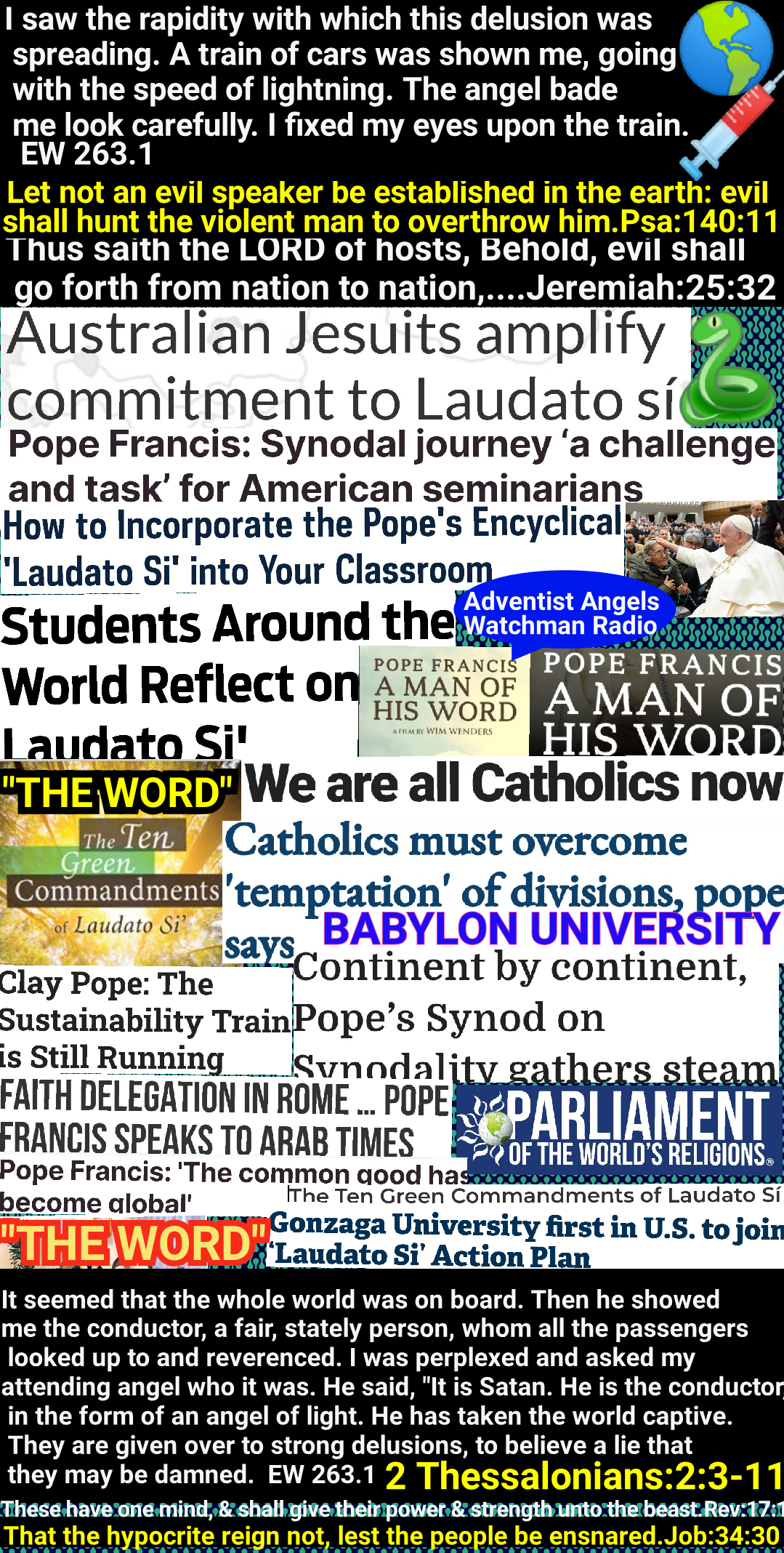
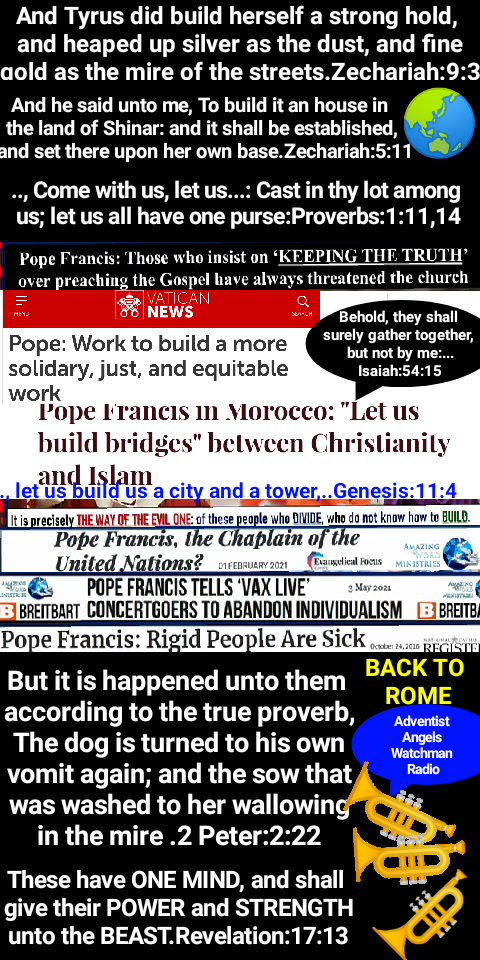
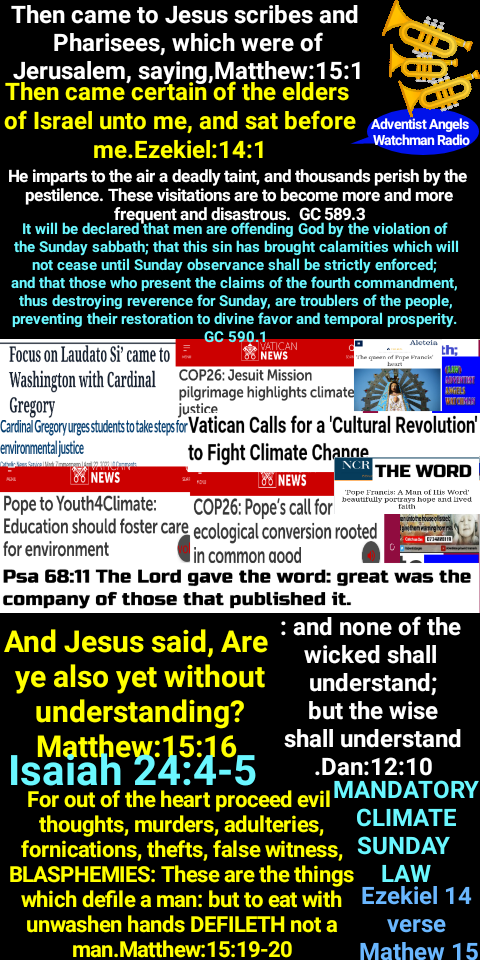
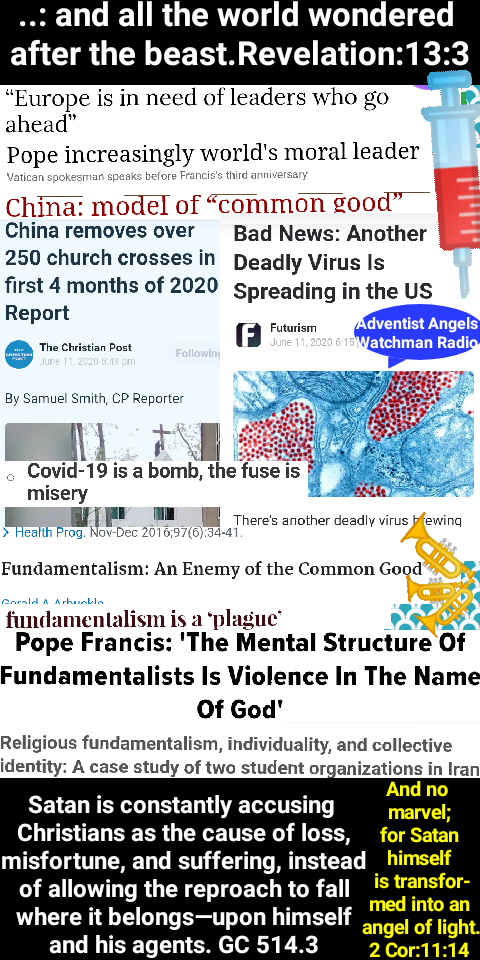
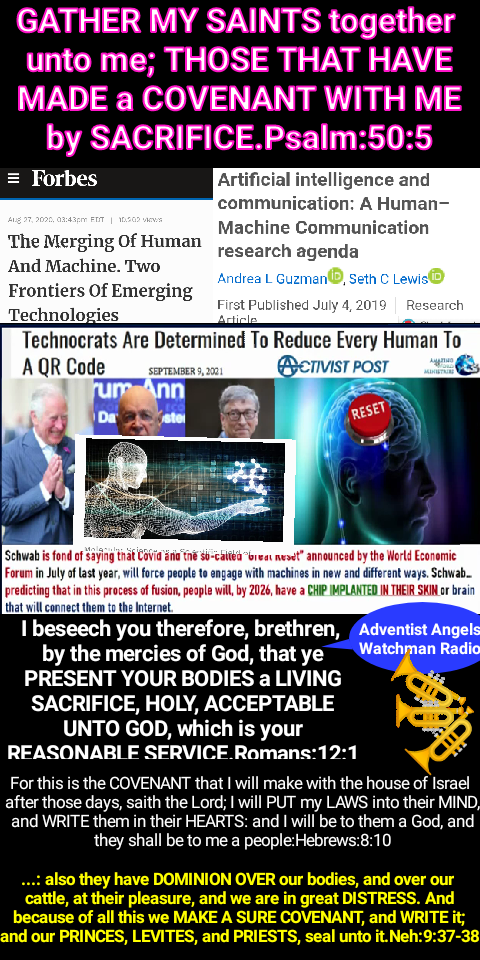
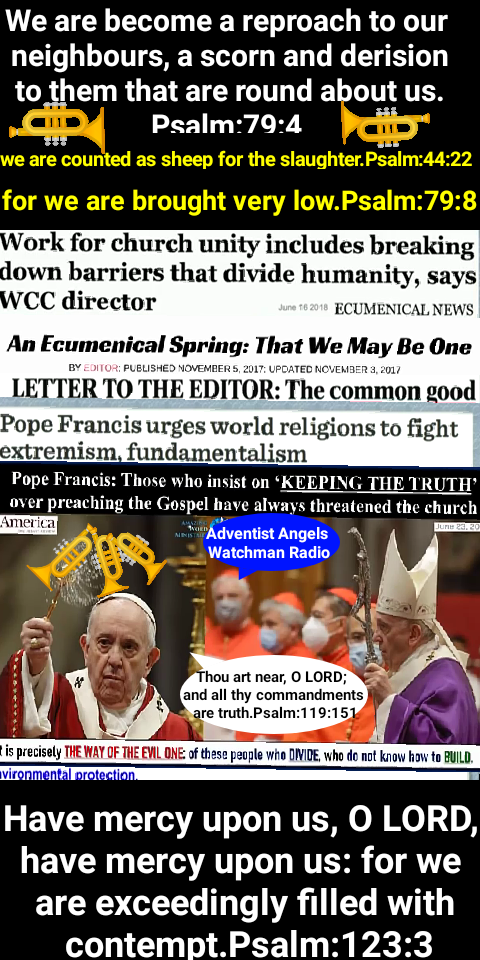
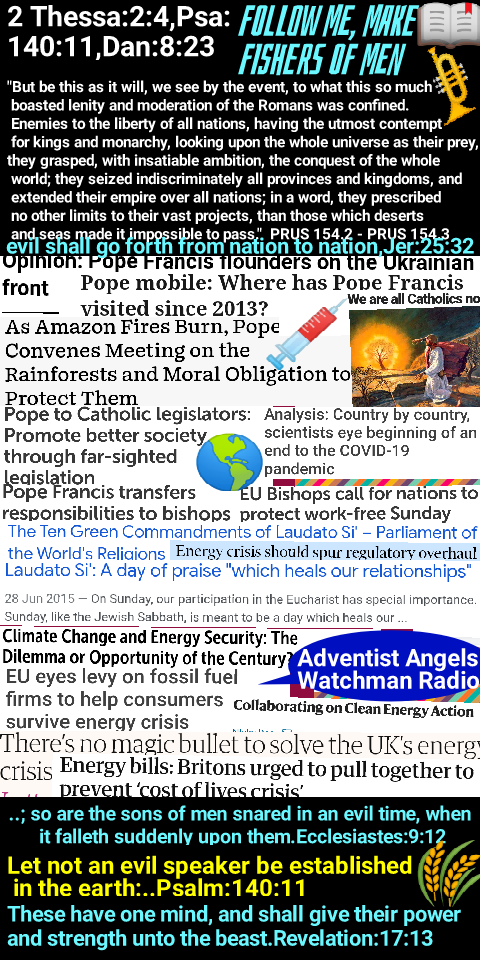
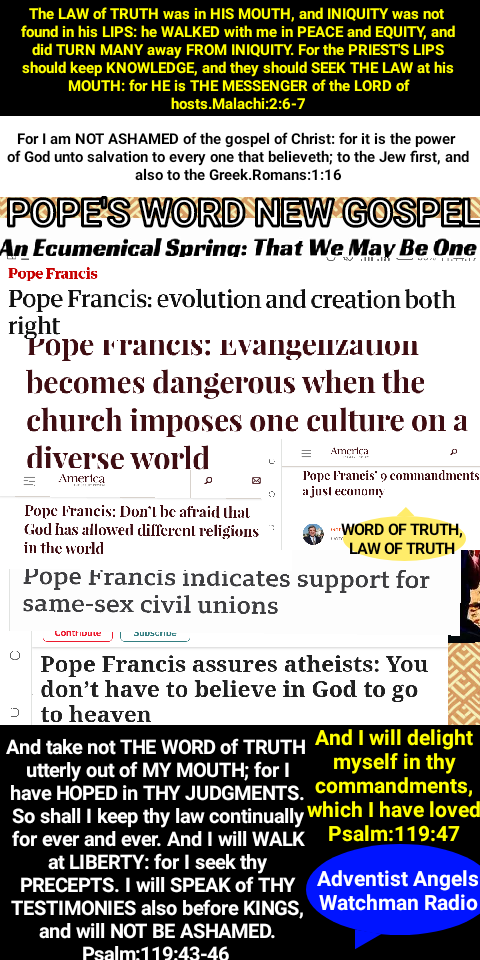
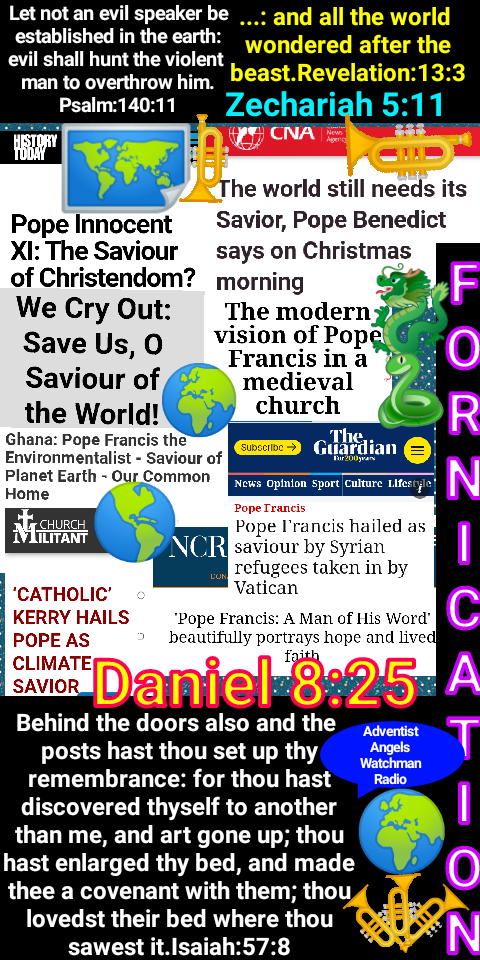

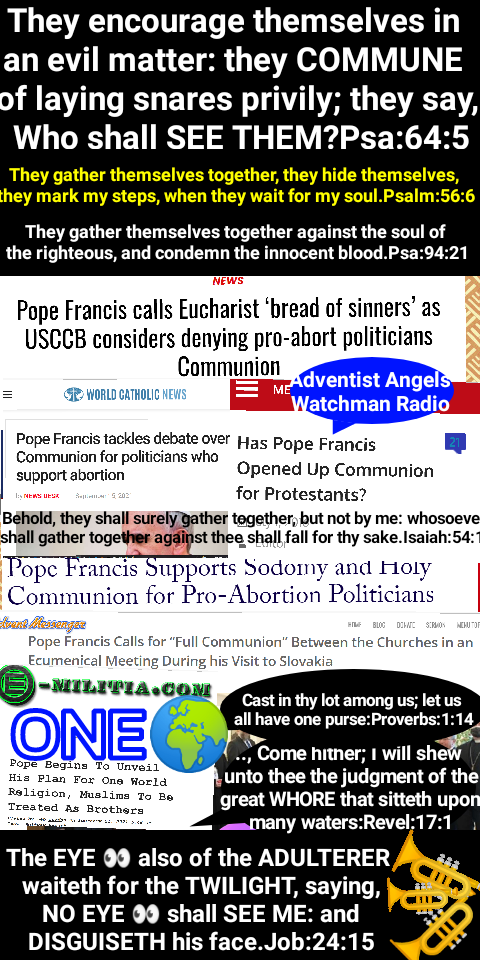
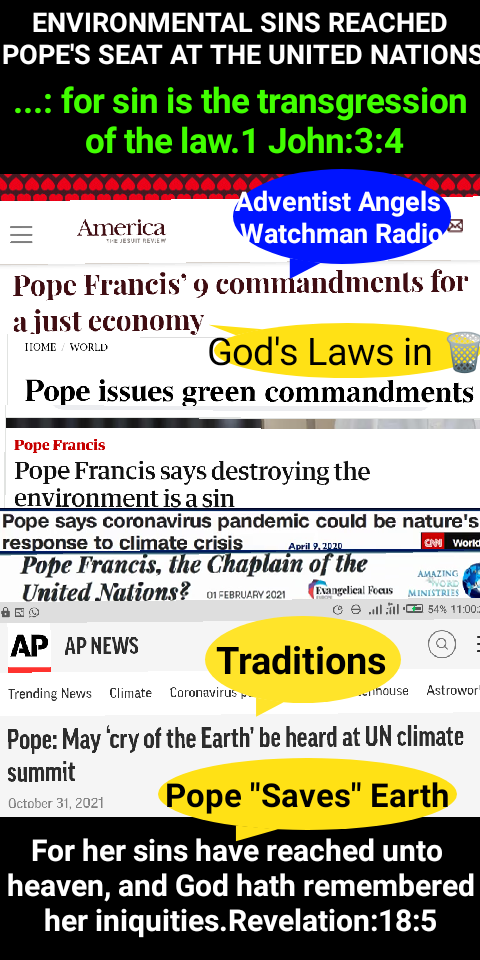
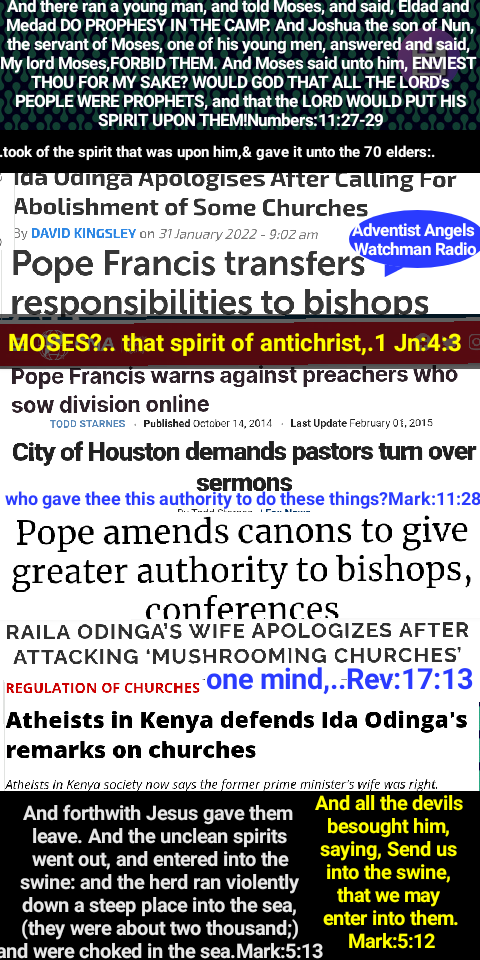
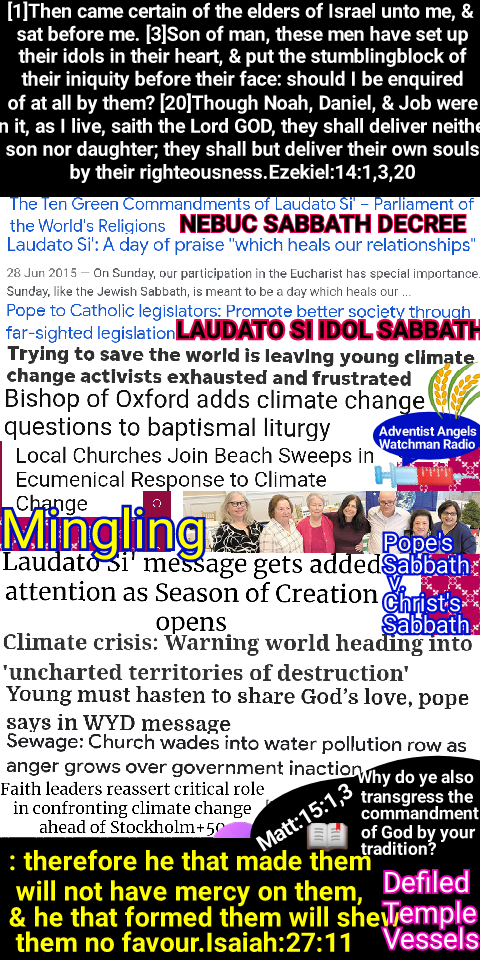
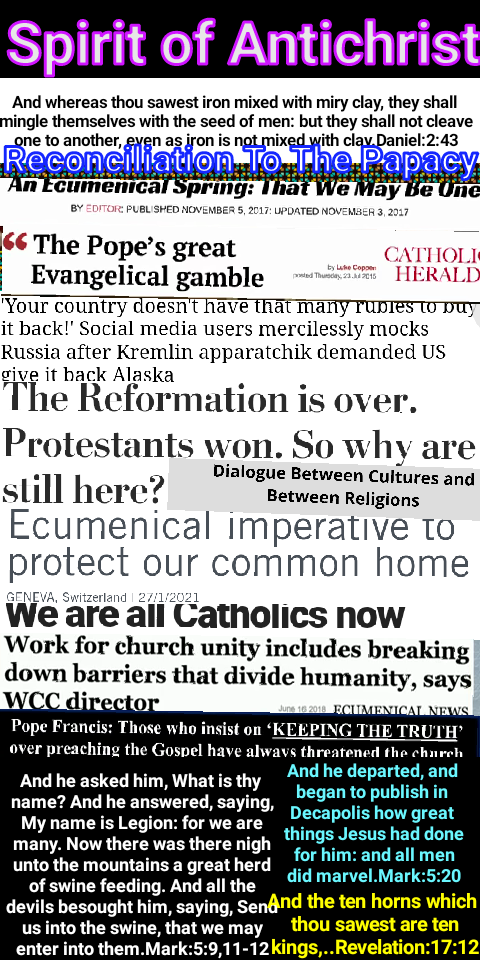
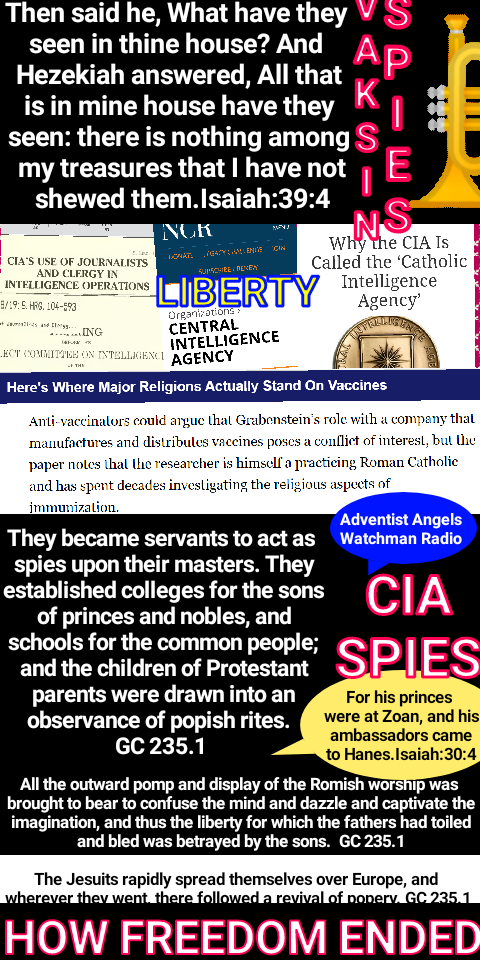
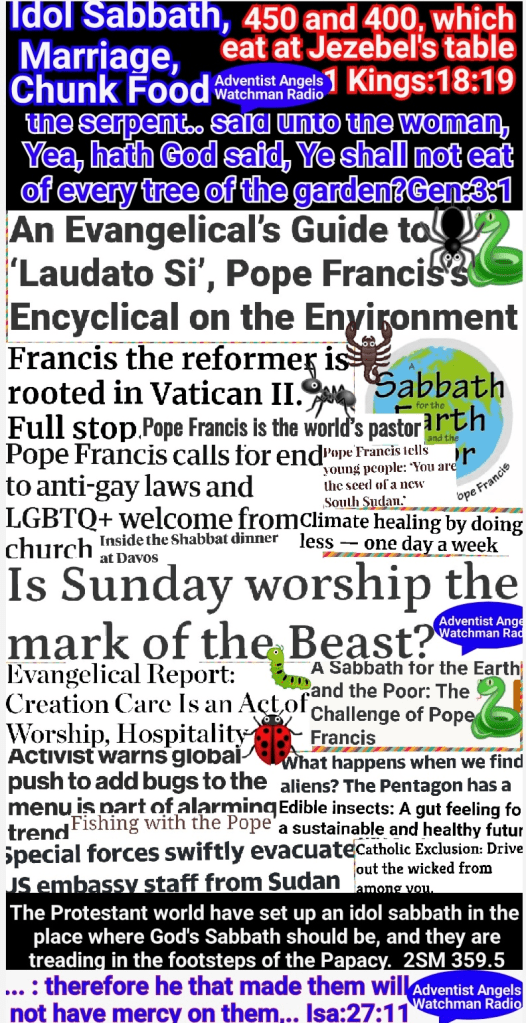
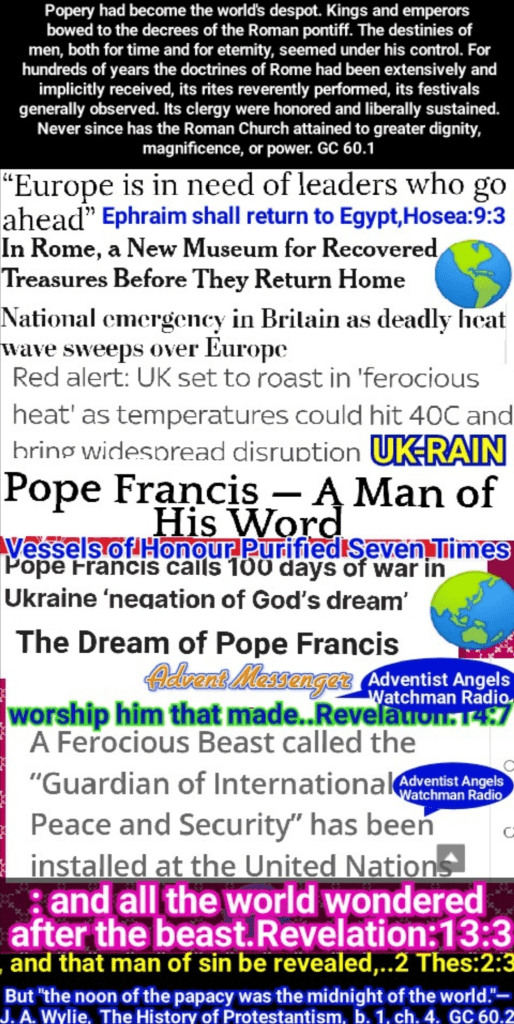
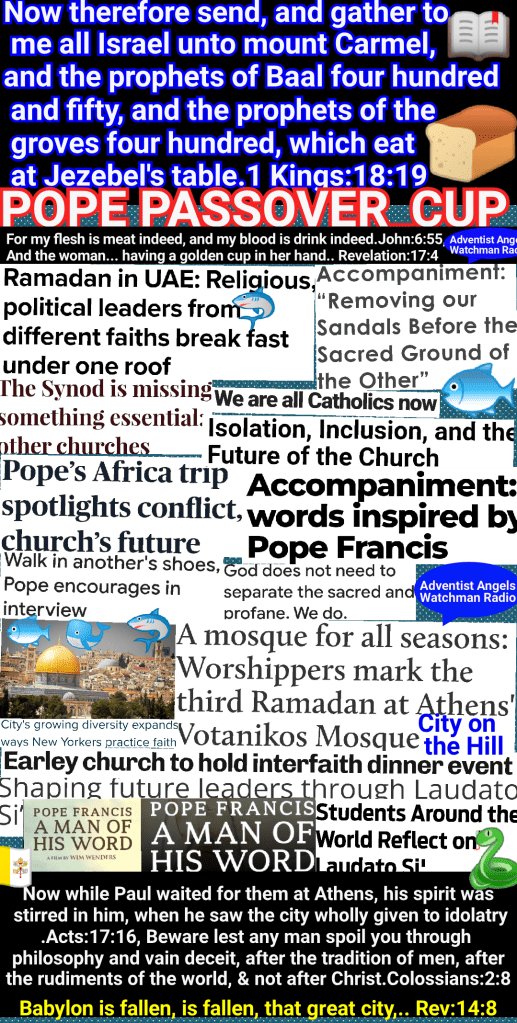
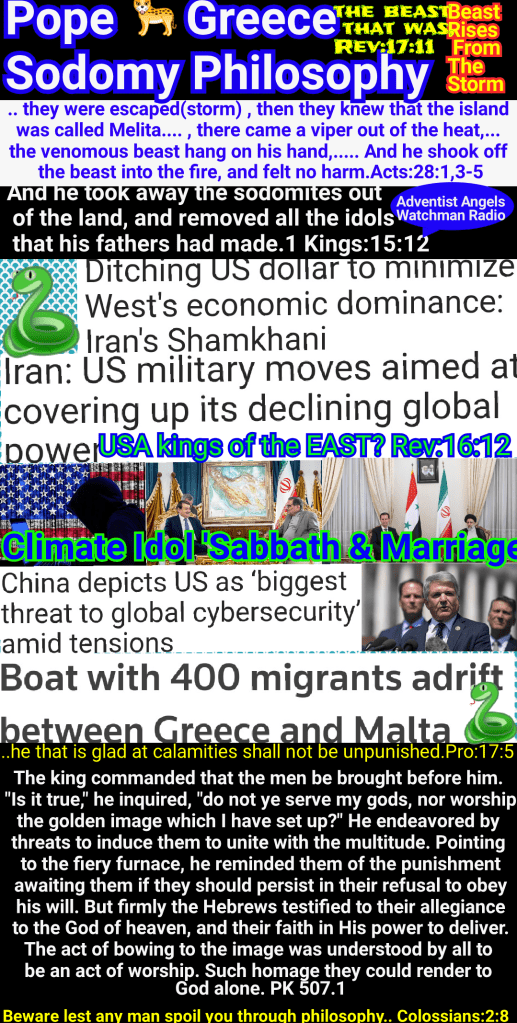
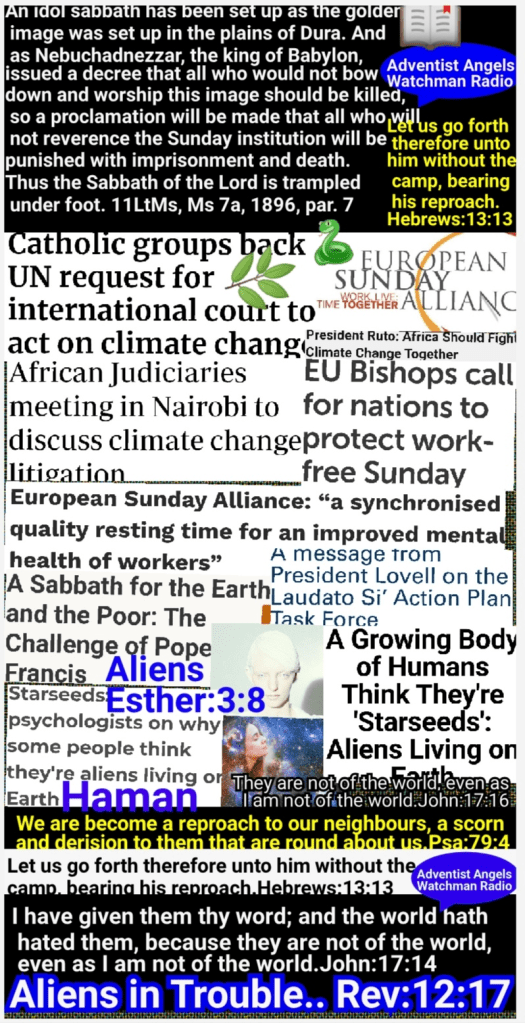

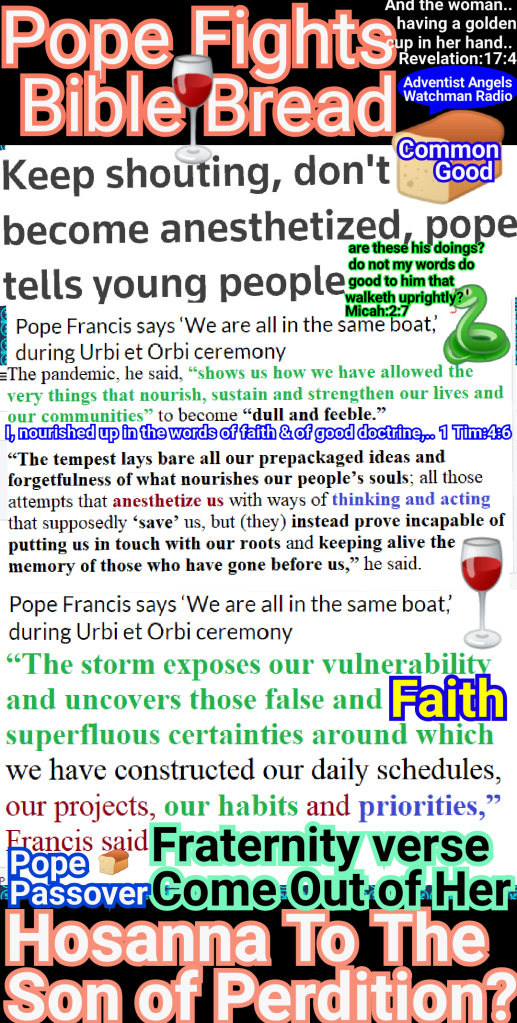
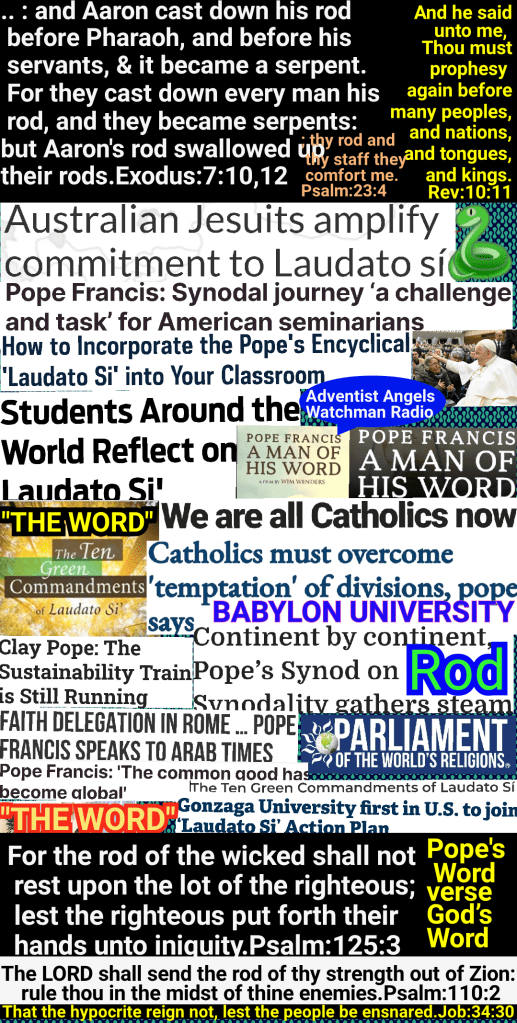
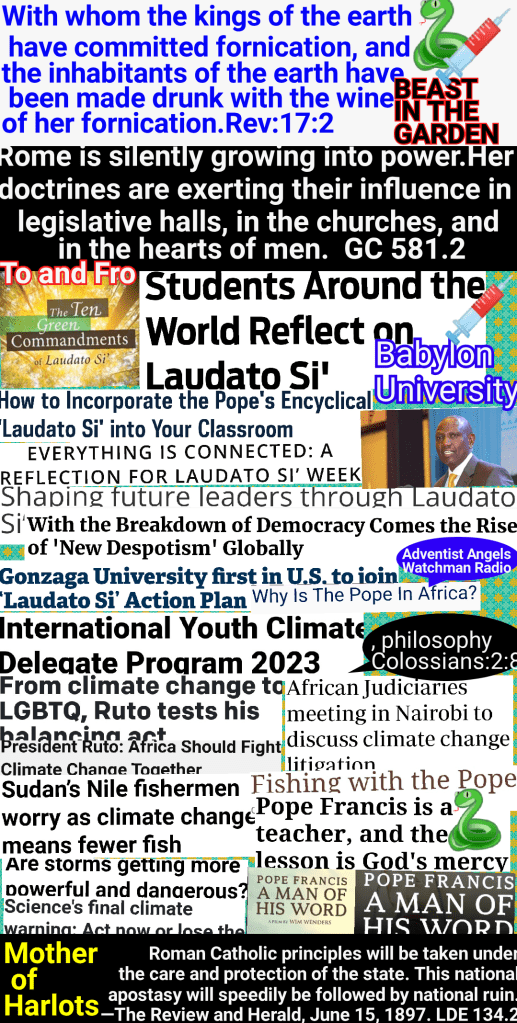
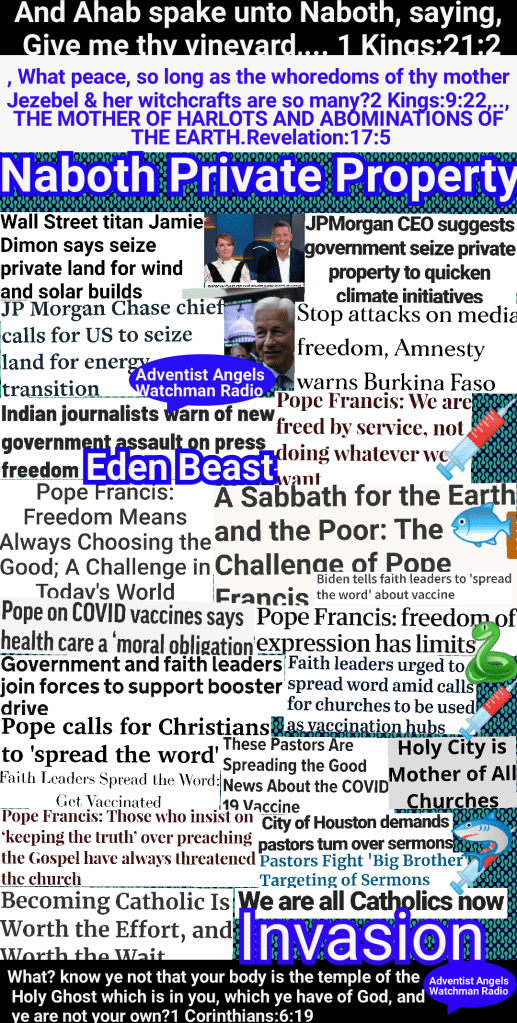
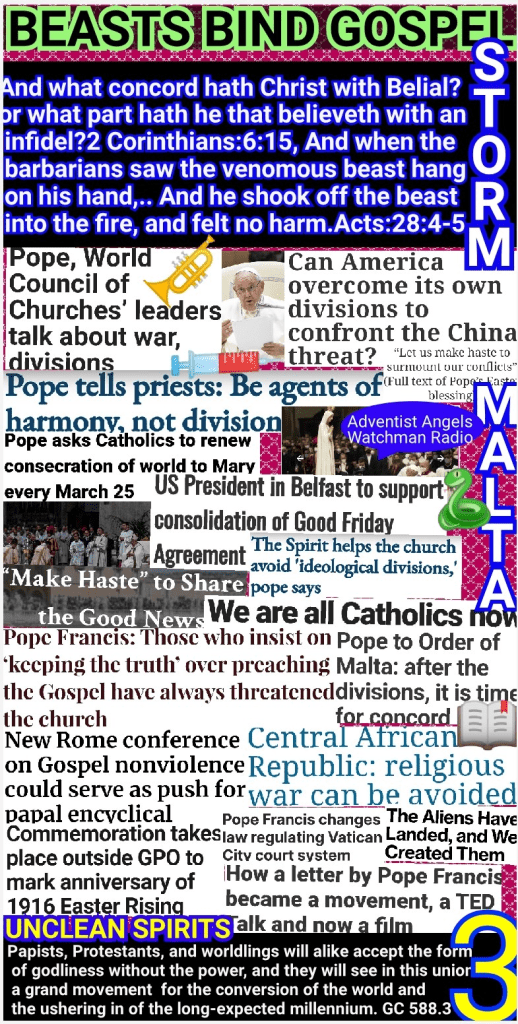
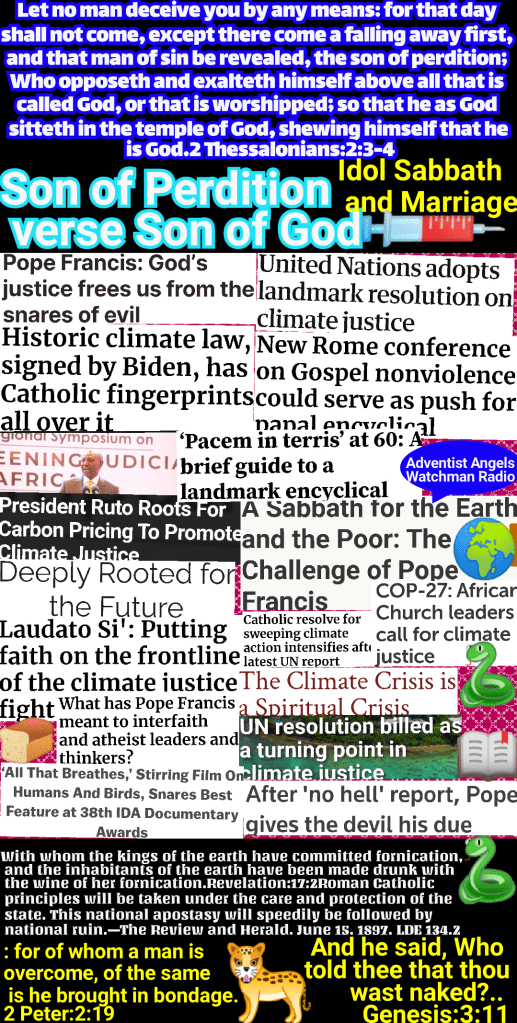
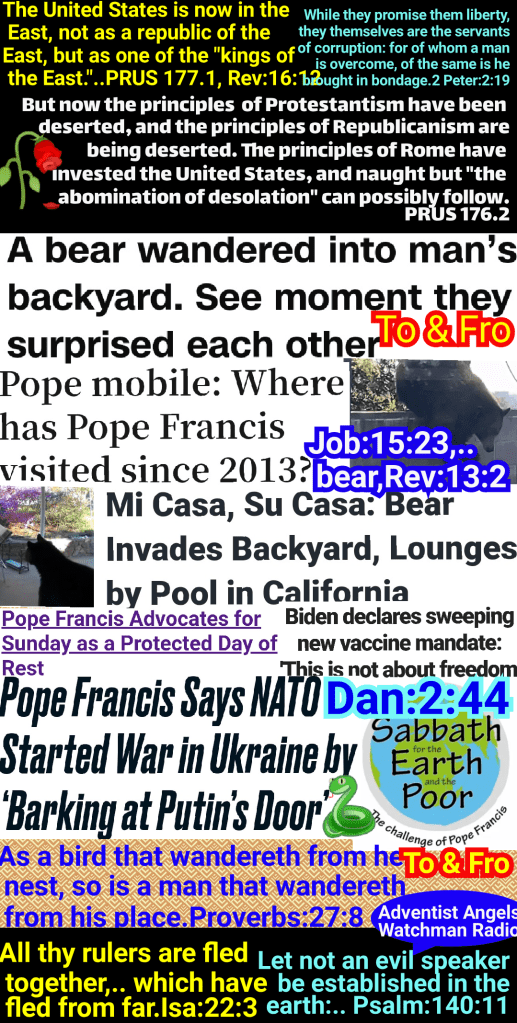
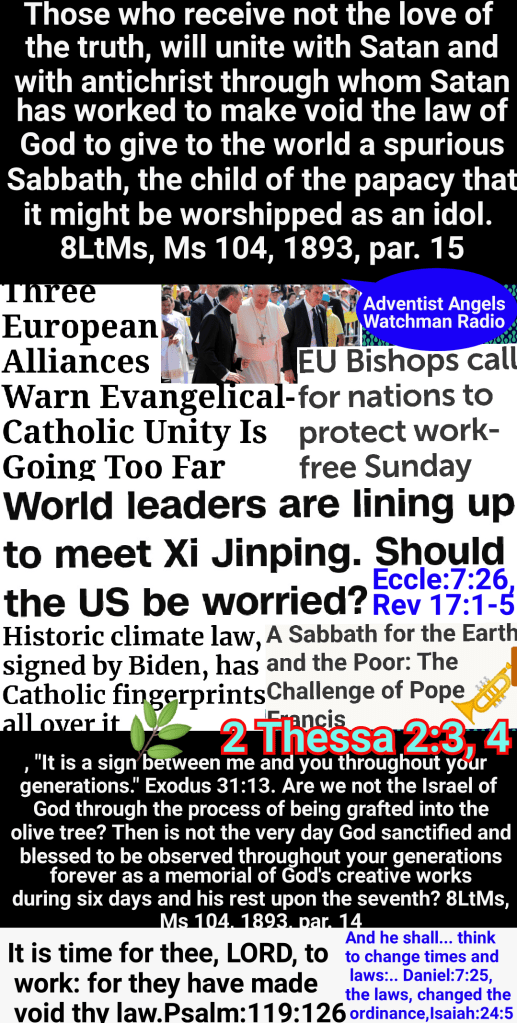

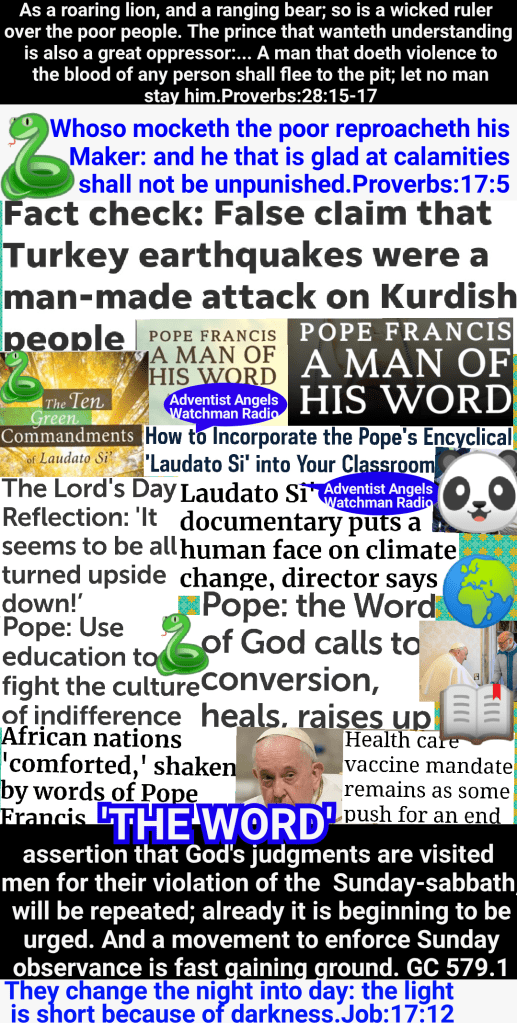
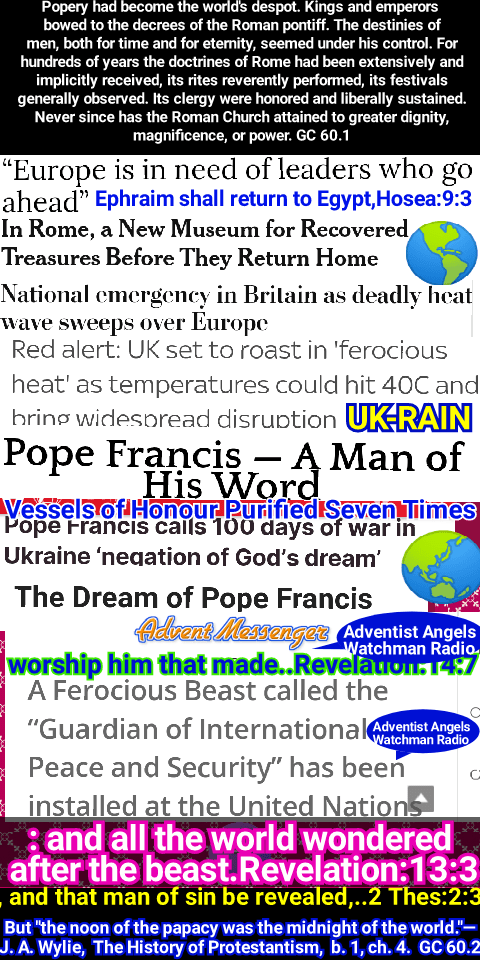
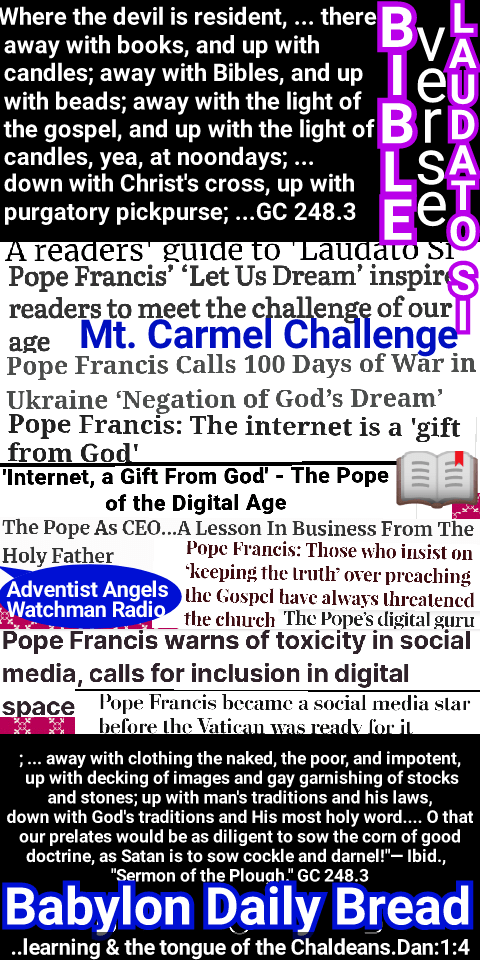
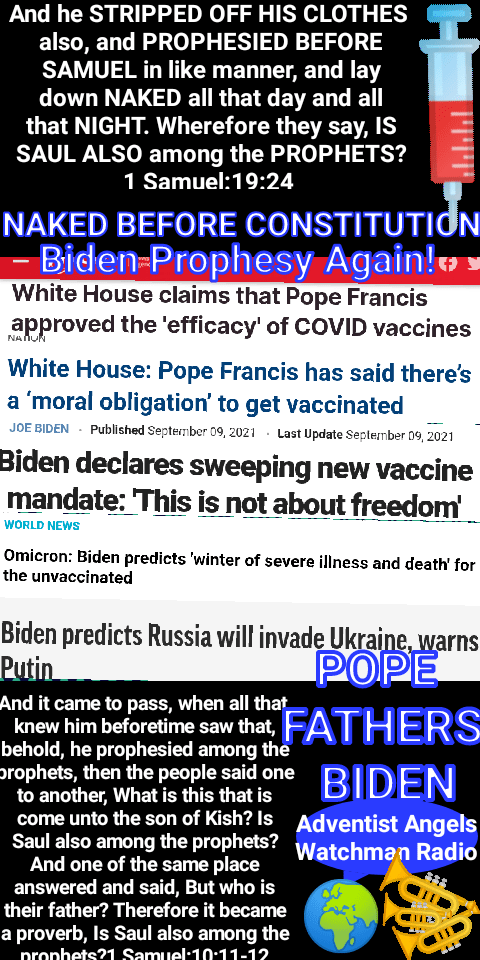
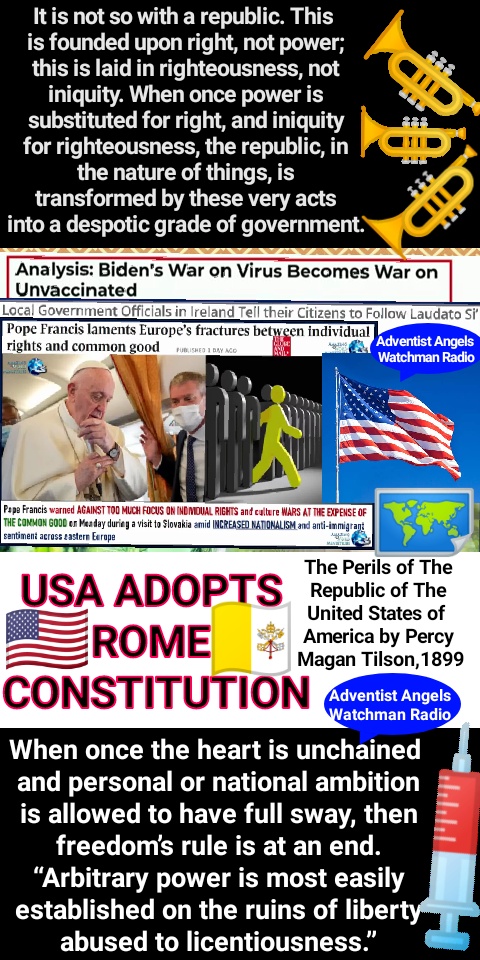
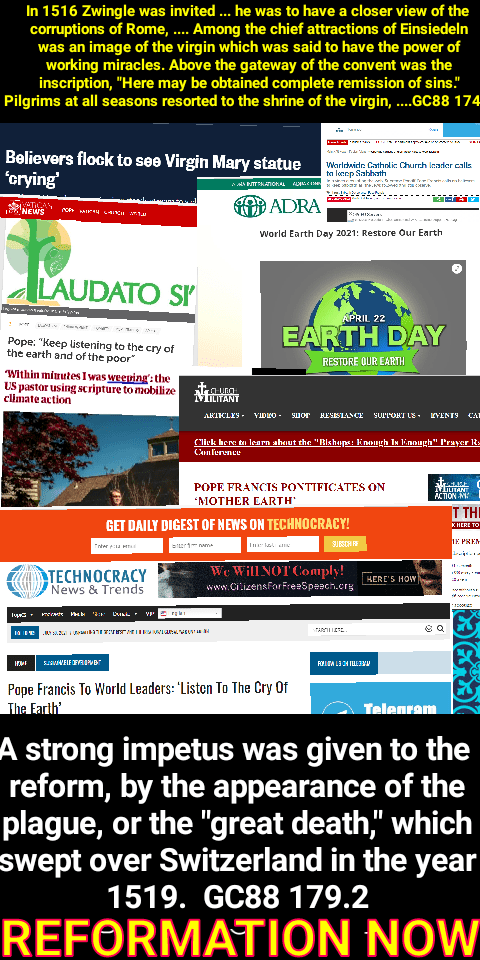
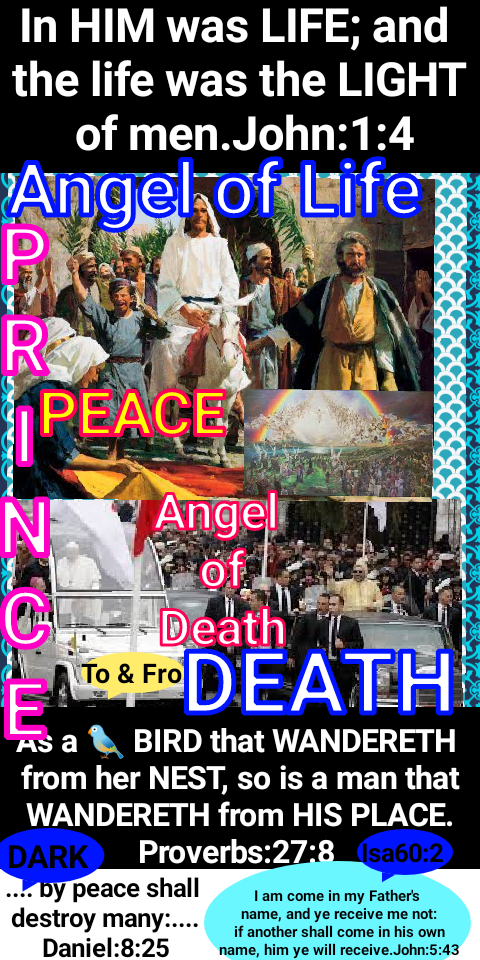
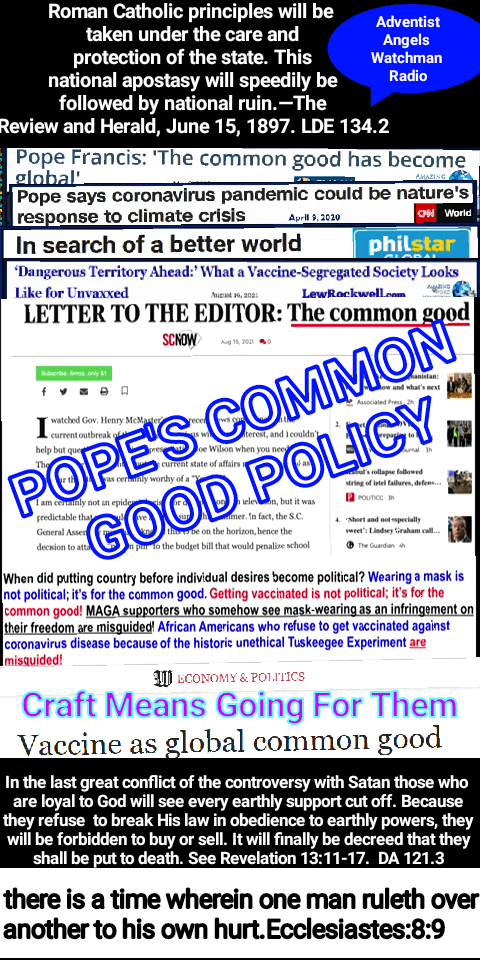
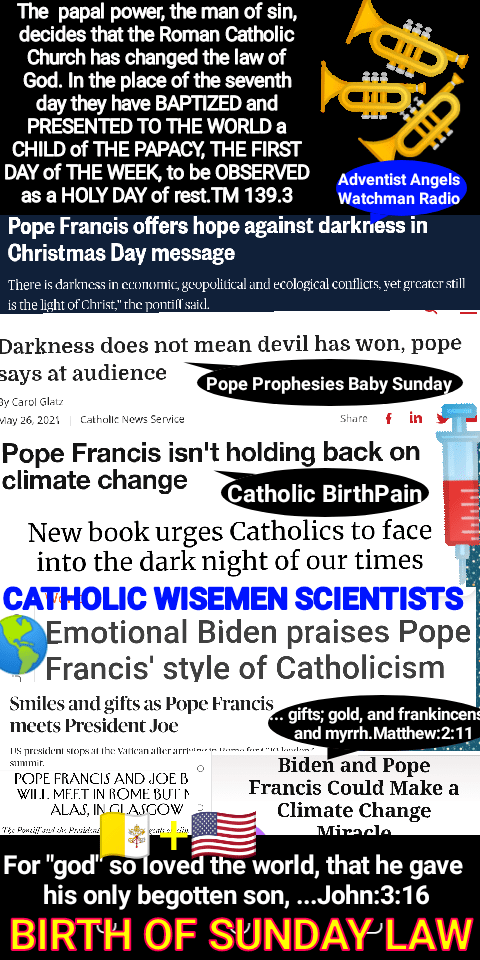
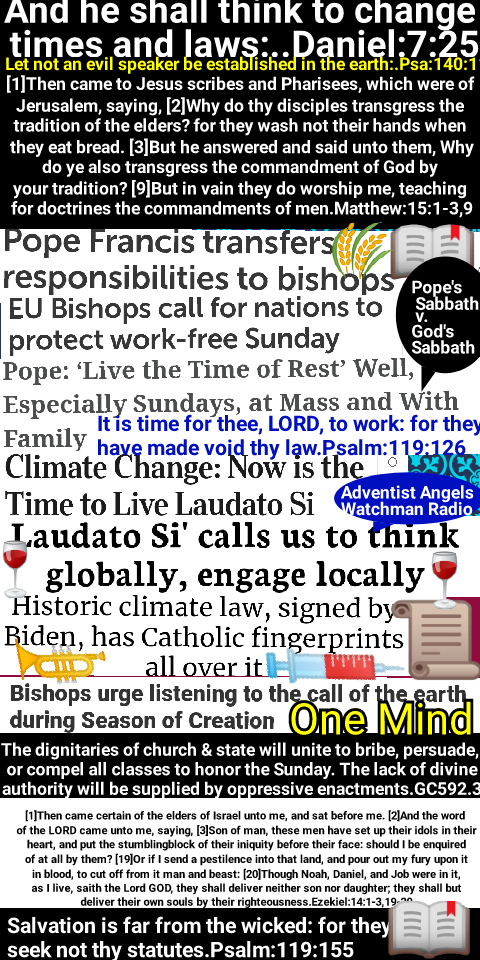
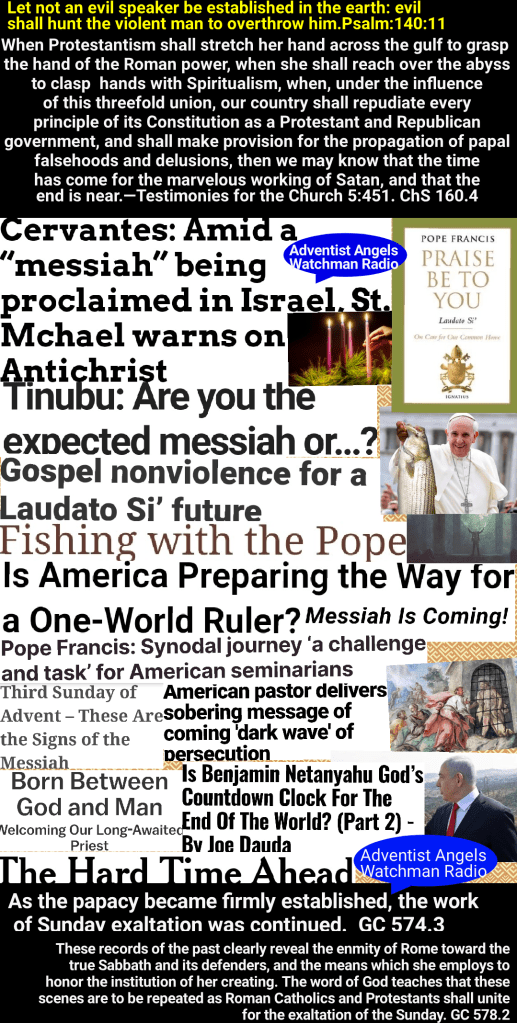
 Adventist Angels Watchman Radio