Welcome to Adventist Angels Watchman Radio official website, preparing the earth for Jesus Christ return Shortly, find us on Facebook, Twitter and You-tube. +254734228119 With Ev. King Osiemo
In his lab, Sinclair said his team has reset the cells in mice multiple times, showing that aging can be reversed more than once, and he is currently testing the genetic reset in primates. But decades could pass before any anti-aging clinical trials in humans begin, get analyzed and, if safe and successful, scaled to the mass needed for federal approval.
While appearing to the children of men as a great physician who can heal all their maladies, he will bring disease and disaster, until populous cities are reduced to ruin and desolation. Even now he is at work. In accidents and calamities by sea and by land, in great conflagrations, in fierce tornadoes and terrific hailstorms, in tempests, floods, cyclones, tidal waves, and earthquakes, in every place and in a thousand forms, Satan is exercising his power. He sweeps away the ripening harvest, and famine and distress follow. He imparts to the air a deadly taint, and thousands perish by the pestilence. These visitations are to become more and more frequent and disastrous. Destruction will be upon both man and beast. “The earth mourneth and fadeth away,” “the haughty people … do languish. The earth also is defiled under the inhabitants thereof; because they have transgressed the laws, changed the ordinance, broken the everlasting covenant.” Isaiah 24:4, 5. And then the great deceiver will persuade men that those who serve God are causing these evils. The class that have provoked the displeasure of Heaven will charge all their troubles upon those whose obedience to God’s commandments is a perpetual reproof to transgressors. It will be declared that men are offending God by the violation of the Sunday sabbath; that this sin has brought calamities which will not cease until Sunday observance shall be strictly enforced; and that those who present the claims of the fourth commandment, thus destroying reverence for Sunday, are troublers of the people, preventing their restoration to divine favor and temporal prosperity. Thus the accusation urged of old against the servant of God will be repeated and upon grounds equally well established: “And it came to pass, when Ahab saw Elijah, that Ahab said unto him, Art thou he that troubleth Israel? And he answered, I have not troubled Israel; but thou, and thy father’s house, in that ye have forsaken the commandments of the Lord, and thou hast followed Baalim.” 1 Kings 18:17, 18. As the wrath of the people shall be excited by false charges, they will pursue a course toward God’s ambassadors very similar to that which apostate Israel pursued toward Elijah. The miracle-working power manifested through spiritualism will exert its influence against those who choose to obey God rather than men. Communications from the spirits will declare that God has sent them to convince the rejecters of Sunday of their error, affirming that the laws of the land should be obeyed as the law of God. They will lament the great wickedness in the world and second the testimony of religious teachers that the degraded state of morals is caused by the desecration of Sunday. Great will be the indignation excited against all who refuse to accept their testimony. Satan’s policy in this final conflict with God’s people is the same that he employed in the opening of the great controversy in heaven. He professed to be seeking to promote the stability of the divine government, while secretly bending every effort to secure its overthrow. And the very work which he was thus endeavoring to accomplish he charged upon the loyal angels. The same policy of deception has marked the history of the Roman Church. It has professed to act as the vicegerent of Heaven, while seeking to exalt itself above God and to change His law. Under the rule of Rome, those who suffered death for their fidelity to the gospel were denounced as evildoers; they were declared to be in league with Satan; and every possible means was employed to cover them with reproach, to cause them to appear in the eyes of the people and even to themselves as the vilest of criminals. So it will be now. While Satan seeks to destroy those who honor God’s law, he will cause them to be accused as lawbreakers, as men who are dishonoring God and bringing judgments upon the world. God never forces the will or the conscience; but Satan’s constant resort—to gain control of those whom he cannot otherwise seduce—is compulsion by cruelty. Through fear or force he endeavors to rule the conscience and to secure homage to himself. To accomplish this, he works through both religious and secular authorities, moving them to the enforcement of human laws in defiance of the law of God. Those who honor the Bible Sabbath will be denounced as enemies of law and order, as breaking down the moral restraints of society, causing anarchy and corruption, and calling down the judgments of God upon the earth. Their conscientious scruples will be pronounced obstinacy, stubbornness, and contempt of authority. They will be accused of disaffection toward the government. Ministers who deny the obligation of the divine law will present from the pulpit the duty of yielding obedience to the civil authorities as ordained of God. In legislative halls and courts of justice, commandment keepers will be misrepresented and condemned. A false coloring will be given to their words; the worst construction will be put upon their motives. As the Protestant churches reject the clear, Scriptural arguments in defense of God’s law, they will long to silence those whose faith they cannot overthrow by the Bible. Though they blind their own eyes to the fact, they are now adopting a course which will lead to the persecution of those who conscientiously refuse to do what the rest of the Christian world are doing, and acknowledge the claims of the papal sabbath. The dignitaries of church and state will unite to bribe, persuade, or compel all classes to honor the Sunday. The lack of divine authority will be supplied by oppressive enactments. Political corruption is destroying love of justice and regard for truth; and even in free America, rulers and legislators, in order to secure public favor, will yield to the popular demand for a law enforcing Sunday observance. Liberty of conscience, which has cost so great a sacrifice, will no longer be respected. In the soon-coming conflict we shall see exemplified the prophet’s words: “The dragon was wroth with the woman, and went to make war with the remnant of her seed, which keep the commandments of God, and have the testimony of Jesus Christ.” Revelation 12:17. GC 589.3 – GC 592.3
The Great Controversy Between Christ and Satan by Ellen G White
In his lab, Sinclair said his team has reset the cells in mice multiple times, showing that aging can be reversed more than once, and he is currently testing the genetic reset in primates. But decades could pass before any anti-aging clinical trials in humans begin, get analyzed and, if safe and successful, scaled to the mass needed for federal approval.
In Boston labs, old, blind mice have regained their eyesight, developed smarter, younger brains and built healthier muscle and kidney tissue. On the flip side, young mice have prematurely aged, with devastating results to nearly every tissue in their bodies.
The experiments show aging is a reversible process, capable of being driven “forwards and backwards at will,” said anti-aging expert David Sinclair, a professor of genetics in the Blavatnik Institute at Harvard Medical School and codirector of the Paul F. Glenn Center for Biology of Aging Research.
Our bodies hold a backup copy of our youth that can be triggered to regenerate, said Sinclair, the senior author of a new paper showcasing the work of his lab and international scientists.
The combined experiments, published for the first time Thursday in the journal Cell, challenge the scientific belief aging is the result of genetic mutations that undermine our DNA, creating a junkyard of damaged cellular tissue that can lead to deterioration, disease and death.
“It’s not junk, it’s not damage that causes us to get old,” said Sinclair, who described the work last year at Life Itself, a health and wellness event presented in partnership with CNN.
“We believe it’s a loss of information — a loss in the cell’s ability to read its original DNA so it forgets how to function — in much the same way an old computer may develop corrupted software. I call it the information theory of aging.”
Jae-Hyun Yang, a genetics research fellow in the Sinclair Lab who coauthored the paper, said he expects the findings “will transform the way we view the process of aging and the way we approach the treatment of diseases associated with aging.”
Epigenetic changes control aging
While DNA can be viewed as the body’s hardware, the epigenome is the software. Epigenes are proteins and chemicals that sit like freckles on each gene, waiting to tell the gene “what to do, where to do it, and when to do it,” according to the National Human Genome Research Institute.
The epigenome literally turns genes on and off. That process can be triggered by pollution, environmental toxins and human behaviors such as smoking, eating an inflammatory diet or suffering a chronic lack of sleep. And just like a computer, the cellular process becomes corrupted as more DNA is broken or damaged, Sinclair said.
Ad feedback
“The cell panics, and proteins that normally would control the genes get distracted by having to go and repair the DNA,” he explained. “Then they don’t all find their way back to where they started, so over time it’s like a Ping-Pong match, where the balls end up all over the floor.”
These mice are from the same litter. The one at right has been genetically altered to be old.
In other words, the cellular pieces lose their way home, much like a person with Alzheimer’s.
“The astonishing finding is that there’s a backup copy of the software in the body that you can reset,” Sinclair said. “We’re showing why that software gets corrupted and how we can reboot the system by tapping into a reset switch that restores the cell’s ability to read the genome correctly again, as if it was young.”
Ad feedback
It doesn’t matter if the body is 50 or 75, healthy or wracked with disease, Sinclair said. Once that process has been triggered, “the body will then remember how to regenerate and will be young again, even if you’re already old and have an illness. Now, what that software is, we don’t know yet. At this point, we just know that we can flip the switch.”
Years of research
The hunt for the switch began when Sinclair was a graduate student, part of a team at the Massachusetts Institute of Technology that discovered the existence of genes to control aging in yeast. That gene exists in all creatures, so there should be a way to do the same in people, he surmised.
To test the theory, he began trying to fast-forward aging in mice without causing mutations or cancer.
“We started making that mouse when I was 39 years old. I’m now 53, and we’ve been studying that mouse ever since,” he said. “If the theory of information aging was wrong, then we would get either a dead mouse, a normal mouse, an aging mouse or a mouse that had cancer. We got aging.”
With the help of other scientists, Sinclair and his Harvard team have been able to age tissues in the brain, eyes, muscle, skin and kidneys of mice.
To do this, Sinclair’s team developed ICE, short for inducible changes to the epigenome. Instead of altering the coding sections of the mice’s DNA that can trigger mutations, ICE alters the way DNA is folded. The temporary, fast-healing cuts made by ICE mimic the daily damage from chemicals, sunlight and the like that contribute to aging.
ICE mice at one year looked and acted twice their age.
Becoming young again
Now it was time to reverse the process. Sinclair Lab geneticist Yuancheng Lu created a mixture of three of four “Yamanaka factors,” human adult skin cells that have been reprogrammed to behave like embryonic or pluripotent stem cells, capable of developing into any cell in the body.
The cocktail was injected into damaged retinal ganglion cells at the back of the eyes of blind mice and switched on by feedingmice antibiotics.
“The antibiotic is just a tool. It could be any chemical really, just a way to be sure the three genes are switched on,” Sinclair told CNN previously. “Normally they are only on in very young, developing embryos and then turn off as we age.”
The mice regained most of their eyesight.
Next, the team tackled brain, muscle and kidney cells, and restored those to much younger levels, according to the study.
“One of our breakthroughs was to realize that if you use this particular set of three pluripotent stem cells, the mice don’t go back to age zero, which would cause cancer or worse,” Sinclair said. “Instead, the cells go back to between 50% and 75% of the original age, and they stop and don’t get any younger, which is lucky. How the cells know to do that, we don’t yet understand.”
Today, Sinclair’s team is trying to find a way to deliver the genetic switch evenly to each cell, thus rejuvenating the entire mouse at once.
“Delivery is a technical hurdle, but other groups seem to have done well,” Sinclair said, pointing to two unpublished studies that appear to have overcome the problem.
“One uses the same system we developed to treat very old mice, the equivalent of an 80-year-old human. And they still got the mice to live longer, which is remarkable. So they’ve kind of beaten us to the punch in that experiment,” he said.
“But that says to me the rejuvenation is not just affecting a few organs, it’s able to rejuvenate the whole mouse because they’re living longer,” he added. “The results are a gift and confirmation of what our paper is saying.”
What’s next? Billions of dollars are being poured into anti-aging, funding all sorts of methods to turn back the clock.
In his lab, Sinclair said his team has reset the cells in mice multiple times, showing that aging can be reversed more than once, and he is currently testing the genetic reset in primates. But decades could pass before any anti-aging clinical trials in humans begin, get analyzed and, if safe and successful, scaled to the mass needed for federal approval.
But just as damaging factors can disrupt the epigenome, healthy behaviors can repair it, Sinclair said.
“We know this is probably true because people who have lived a healthy lifestyle have less biological age than those who have done the opposite,” he said.
His top tips? Focus on plants for food, eat less often,get sufficient sleep, lose your breath for 10 minutes three times a week by exercising to maintain your muscle mass, don’t sweat the small stuff and have a good social group.
“The message is every day counts,” Sinclair said. “How you live your life even when you’re in your teens and20s really matters, even decades later, because every day your clock is ticking.”
Satan delights in war, for it excites the worst passions of the soul and then sweeps into eternity its victims steeped in vice and blood. It is his object to incite the nations to war against one another, for he can thus divert the minds of the people from the work of preparation to stand in the day of God. GC 589.1
January 11, 2023 – 4:50
TEHRAN- Referring to the Charlie Hebdo case, Farhikhtegan wrote: Put yourself in the shoes of the architects of the chaos project. You’ve been trying for four months to say it’s done, in a few hours, a few days, a few months, etc. What do you do when nothing happens and your reader is angry? In order to calm it down, to relieve the feeling of great failure, insult is the easiest thing.
Persecution in its varied forms is the development of a principle which will exist as long as Satan exists and Christianity has vital power. No man can serve God without enlisting against himself the opposition of the hosts of darkness. Evil angels will assail him, alarmed that his influence is taking the prey from their hands. Evil men, rebuked by his example, will unite with them in seeking to separate him from God by alluring temptations. When these do not succeed, then a compelling power is employed to force the conscience. GC 610.2
The fact is that the Charlie Hebdo magazine project has no positive effect on the rioters inside Iran. The result of chaos in Iran is only to unite more people and Iran lovers. Like the effect of waving the separatist flag in Berlin.
Outside Iran’s borders, irrationality and satire definitely have no positive effect on intellectuals, academics, and true freedom seekers.
The only function of such an action is to resuscitate the dying opponents outside the country. A minimal result and of course with a high cost for Macron’s government.
Iran: Sanctions for defending the country
In response to Canada’s sanctions, the Iran newspaper says: “Canada has placed Iran newspaper on the sanctions list, considering its crime defending the Islamic Republic, supporting the IRGC Quds Force and resistance groups such as Lebanon’s Hezbollah.
There are a few things to say about it. First of all, Canada openly supported rioters in recent unrest and always tried to interfere in the chaos project against Iran.
The Bible declares that before the coming of the Lord there will exist a state of religious declension similar to that in the first centuries. “In the last days perilous times shall come. For men shall be lovers of their own selves, covetous, boasters, proud, blasphemers, disobedient to parents, unthankful, unholy, without natural affection, trucebreakers, false accusers, incontinent, fierce, despisers of those that are good, traitors, heady, high-minded, lovers of pleasures more than lovers of God; having a form of godliness, but denying the power thereof.” 2 Timothy 3:1-5. “Now the Spirit speaketh expressly, that in the latter times some shall depart from the faith, giving heed to seducing spirits, and doctrines of devils.” 1 Timothy 4:1. Satan will work “with all power and signs and lying wonders, and with all deceivableness of unrighteousness.” And all that “received not the love of the truth, that they might be saved,” will be left to accept “strong delusion, that they should believe a lie.” 2 Thessalonians 2:9-11. When this state of ungodliness shall be reached, the same results will follow as in the first centuries. The wide diversity of belief in the Protestant churches is regarded by many as decisive proof that no effort to secure a forced uniformity can ever be made. But there has been for years, in churches of the Protestant faith, a strong and growing sentiment in favor of a union based upon common points of doctrine. To secure such a union, the discussion of subjects upon which all were not agreed—however important they might be from a Bible standpoint—must necessarily be waived. Charles Beecher, in a sermon in the year 1846, declared that the ministry of “the evangelical Protestant denominations” is “not only formed all the way up under a tremendous pressure of merely human fear, but they live, and move, and breathe in a state of things radically corrupt, and appealing every hour to every baser element of their nature to hush up the truth, and bow the knee to the power of apostasy. Was not this the way things went with Rome? Are we not living her life over again? And what do we see just ahead? Another general council! A world’s convention! Evangelical alliance, and universal creed!”—Sermon on “The Bible a Sufficient Creed,” delivered at Fort Wayne, Indiana, Feb. 22, 1846. When this shall be gained, then, in the effort to secure complete uniformity, it will be only a step to the resort to force. When the leading churches of the United States, uniting upon such points of doctrine as are held by them in common, shall influence the state to enforce their decrees and to sustain their institutions, then Protestant America will have formed an image of the Roman hierarchy, and the infliction of civil penalties upon dissenters will inevitably result. The beast with two horns “causeth commands all, both small and great, rich and poor, free and bond, to receive a mark in their right hand, or in their foreheads: and that no man might buy or sell, save he that had the mark, or the name of the beast, or the number of his name.” Revelation 13:16, 17. The third angel’s warning is: “If any man worship the beast and his image, and receive his mark in his forehead, or in his hand, the same shall drink of the wine of the wrath of God.” “The beast” mentioned in this message, whose worship is enforced by the two-horned beast, is the first, or leopardlike beast of Revelation 13—the papacy. The “image to the beast” represents that form of apostate Protestantism which will be developed when the Protestant churches shall seek the aid of the civil power for the enforcement of their dogmas. GC 444.1 – GC 445.2
Now that the great conspiracy against Iran has failed and the U.S. and European countries are stuck in a deadlock, Ottawa has once again been assigned to cover up the failure of the chaos project in Iran with sanctions, but propaganda is not able to prevent the failure of America, Europe, and Canada in the face of Iran.
Canada has declared another case of the newspaper supporting the Islamic Republic and Quds Force, while we and all our colleagues at the newspaper are proud of it.
A country like Canada, where terrorists have always grown, should be angry with strong Iran and the powerful Quds Force, which thwarted the U.S. project in West Asia.
Satan’s Goal: Destroy All SabbathkeepersLDE 255
Says the great deceiver: … “Our principal concern is to silence this sect of Sabbathkeepers…. We will finally have a law to exterminate all who will not submit to our authority.”—Testimonies to Ministers and Gospel Workers, 472, 473 (1884).
It is the purpose of Satan to cause them to be blotted from the earth in order that his supremacy of the world may not be disputed.—Testimonies to Ministers and Gospel Workers, 37 (1893).
The remnant church will be brought into great trial and distress. Those who keep the commandments of God and the faith of Jesus will feel the ire of the dragon and his hosts. Satan numbers the world as his subjects. He has gained control of the apostate churches; but here is a little company that are resisting his supremacy. If he could blot them from the earth, his triumph would be complete. As he influenced the heathen nations to destroy Israel, so in the near future he will stir up the wicked powers of earth to destroy the people of God.—Testimonies for the Church 9:231 (1909). LDE 255 – LDE 256.1
Thirdly, the enemies of the Islamic Republic are confused and dizzy these days and they frustratingly are trying to give hope to a bunch of thugs like Reza Pahlavi, Masih Alinejad, and fake celebrities and run away from chaos out of frustration.”
Etemaad: Do principlists change their attitude to social issues?
Etemaad addressed the approach of the fundamentalists towards the hijab and wrote: Gholam Ali Haddad Adel’s “salutation” in a live television program to women “with incomplete hijab” who remained loyal to the Islamic Republic, is a unique act in the history of principlists and perhaps in the history of the Islamic Republic.
“Salam” (hello) to the attraction of women with incomplete hijab shows that for the first time that these women were officially recognized to be respected.
Also, “salaam” was a farewell to the views of principlists who either accepted women with “full hijab or considered them without hijab”.
“Haddad Adel’s salute has nothing to do with principlists in general, some of them think differently.”
Arman-e Emrooz: Temporary nuclear agreement is possible
Arman-e Emrooz writes about the possibility of a temporary agreement between Iran and the United States and quotes a foreign policy expert as saying: “Secret consultations have been conducted between Iran and the United States, and it seems that some countries are conveying the message between the two countries.”
Here is the secret of the movements made to oppose the men whom God sent with a message of blessing for His people. These men hated message was despised, as verily as Christ Himself was despised at His first advent. Men in responsible positions have manifested the very attributes that Satan has revealed. They have sought to rule minds, to bring their reason and their talents under human jurisdiction. There has been an effort to bring God’s servants under the control of men who have not the knowledge and wisdom of God, or an experience under the Holy Spirit’s guidance. Principles have been born that should never have seen the light of day. The illegitimate child should have been stifled as soon as it breathed the first breath of life. Finite men have been warring against God and the truth and the Lord’s chosen messengers, counterworking them by every means they dared to use. Please consider what virtue there can be in the wisdom and plans of those who have slighted God’s messages, and, like the scribes and Pharisees, have despised the very men whom God has used to present light and truth which His people needed. 11LtMs, Lt 83, 1896, par. 15 – 11LtMs, Lt 83, 1896, par. 16
It seems that the revival of the JCPOA is still the first scenario that will be affected by the developments in the coming days. The second scenario is a limited agreement between Iran and the United States; first, not to let tension between the parties escalate. Second, Iran does not develop its nuclear program, and the United States allows limited oil sales by Iran and reduces banking sanctions in return so that Iran receives the money from oil sales.
This limited agreement will probably be step by step so that both sides can build trust. It should be noted that the death of the JCPOA will never be announced because President Biden will be at the Oval Office until 2024 and does not want to take the path of war and tension.
Keyhan: Hijab flag of the revolution
On Hijab, Keyhan wrote: “Women and girls who think that the enemy spends so much to persuade girls with no hijab in our society through hundreds of satellite channels and Instagram and other social media applications, should ask themselves why the enemy is worried about only their hijab?
And then the great deceiver will persuade men that those who serve God are causing these evils. The class that have provoked the displeasure of Heaven will charge all their troubles upon those whose obedience to God’s commandments is a perpetual reproof to transgressors. It will be declared that men are offending God by the violation of the Sunday sabbath; that this sin has brought calamities which will not cease until Sunday observance shall be strictly enforced; and that those who present the claims of the fourth commandment, thus destroying reverence for Sunday, are troublers of the people, preventing their restoration to divine favor and temporal prosperity. Thus the accusation urged of old against the servant of God will be repeated and upon grounds equally well established: “And it came to pass, when Ahab saw Elijah, that Ahab said unto him, Art thou he that troubleth Israel? And he answered, I have not troubled Israel; but thou, and thy father’s house, in that ye have forsaken the commandments of the Lord, and thou hast followed Baalim.” 1 Kings 18:17, 18. As the wrath of the people shall be excited by false charges, they will pursue a course toward God’s ambassadors very similar to that which apostate Israel pursued toward Elijah. GC 590.1
They have to ask themselves why they, instead of concerning their education or strengthening the family and solving the marriage problem, insist only on not wearing hijab.
Even of late my people is risen up as an enemy: ye pull off the robe with the garment from them that pass by securely as men averse from war. The women of my people have ye cast out from their pleasant houses; from their children have ye taken away my glory for ever. Arise ye, and depart; for this is not your rest: because it is polluted, it shall destroy you, even with a sore destruction. If a man walking in the spirit and falsehood do lie, saying, I will prophesy unto thee of wine and of strong drink; he shall even be the prophet of this people. I will surely assemble, O Jacob, all of thee; I will surely gather the remnant of Israel; I will put them together as the sheep of Bozrah, as the flock in the midst of their fold: they shall make great noise by reason of the multitude of men. The breaker is come up before them: they have broken up, and have passed through the gate, and are gone out by it: and their king shall pass before them, and the LORD on the head of them. Micah:2:8-13
On the other hand, if they really believe in the freedom of dress, why is a girl with a hijab in France, which apparently sympathizes with Iranian girls and women, not allowed to study in universities and schools?
Is a girl with a hijab allowed to work in these anti-Iran satellite channels that believe in freedom of dress?
Therefore, the enemy and its media, want to destroy the Iranian Islamic culture and take revenge on the Islamic hijab as one of the most important symbols and flags of the Islamic Revolution.
Those who honor the Bible Sabbath will be denounced as enemies of law and order, as breaking down the moral restraints of society, causing anarchy and corruption, and calling down the judgments of God upon the earth. Their conscientious scruples will be pronounced obstinacy, stubbornness, and contempt of authority. They will be accused of disaffection toward the government. Ministers who deny the obligation of the divine law will present from the pulpit the duty of yielding obedience to the civil authorities as ordained of God. In legislative halls and courts of justice, commandment keepers will be misrepresented and condemned. A false coloring will be given to their words; the worst construction will be put upon their motives. As the Protestant churches reject the clear, Scriptural arguments in defense of God’s law, they will long to silence those whose faith they cannot overthrow by the Bible. Though they blind their own eyes to the fact, they are now adopting a course which will lead to the persecution of those who conscientiously refuse to do what the rest of the Christian world are doing, and acknowledge the claims of the papal sabbath. GC 592.1 – GC 592.2
Arman-e Melli: Reformists criticize government more
Arman-e Melli discusses the political approach of the reformers and advises them to critique the government more.
It says, “The reformists have to convey the difficulties that exist in the society to the statesmen”, and “the current situation can create risks for the country.”
Under the current situation, foreigners are trying to tighten the siege on Iran every day, it writes. Today, the situation is such that Iran’s enemies seek to isolate it from the world, it adds.
The reformers should express their point of view frankly since they have performed well in domestic and foreign policy and have not allowed the enemies to achieve their goals.
From this point of view, they should help the government with their criticisms of the existing situation, so that the government will “rectify some of its approaches and the country will find clam,” the paper writes.
The dignitaries of church and state will unite to bribe, persuade, or compel all classes to honor the Sunday. The lack of divine authority will be supplied by oppressive enactments. Political corruption is destroying love of justice and regard for truth; and even in free America, rulers and legislators, in order to secure public favor, will yield to the popular demand for a law enforcing Sunday observance. Liberty of conscience, which has cost so great a sacrifice, will no longer be respected. In the soon-coming conflict we shall see exemplified the prophet’s words: “The dragon was wroth with the woman, and went to make war with the remnant of her seed, which keep the commandments of God, and have the testimony of Jesus Christ.” Revelation 12:17. GC 592.3
The Roman Catholic Church, with all its ramifications throughout the world, forms one vast organization under the control, and designed to serve the interests, of the papal see. Its millions of communicants, in every country on the globe, are instructed to hold themselves as bound in allegiance to the pope. Whatever their nationality or their government, they are to regard the authority of the church as above all other. Though they may take the oath pledging their loyalty to the state, yet back of this lies the vow of obedience to Rome, absolving them from every pledge inimical to her interests. History testifies of her artful and persistent efforts to insinuate herself into the affairs of nations; and having gained a foothold, to further her own aims, even at the ruin of princes and people. GC 580.2 – GC 580.3
The Great Controversy Between Christ and Satan by Ellen G White
As our dependence on technology reshapes the moral imagination of our culture to see human beings as psychological wills that need not respect material limitations, so the old order that was built upon the vision of human beings as both body and soul will become increasingly implausible. The things that make Christianity stand out from the wider culture—belief in the incarnation, the resurrection, and embodied human nature as a real, universal thing with moral consequences—are antithetical to the terms of membership in the emerging world order.
Apocalyptic language is enjoying something of a vogue. We are constantly being told that we face an environmental apocalypse or that the polarization of our politics represents a cultural apocalypse. During the time of Covid, such language was common. We were living, so we were told, in an apocalyptic moment for the world at large.
Satan works through the elements also to garner his harvest of unprepared souls. He has studied the secrets of the laboratories of nature, and he uses all his power to control the elements as far as God allows. When he was suffered to afflict Job, how quickly flocks and herds, servants, houses, children, were swept away, one trouble succeeding another as in a moment. It is God that shields His creatures and hedges them in from the power of the destroyer. But the Christian world have shown contempt for the law of Jehovah; and the Lord will do just what He has declared that He would—He will withdraw His blessings from the earth and remove His protecting care from those who are rebelling against His law and teaching and forcing others to do the same. Satan has control of all whom God does not especially guard. He will favor and prosper some in order to further his own designs, and he will bring trouble upon others and lead men to believe that it is God who is afflicting them. GC 589.2
The term apocalypse has two meanings, both of which apply to our current times. First, there is its common use to designate the end of an era, or even the end of time itself, in some catastrophic and terrifying way. Certainly, as we look at the world today, we can see both nationally and internationally that an epoch is coming to an end—and in a way that is marked by turmoil and uncertainty. That epoch might be variously defined. The demise of the postwar liberal consensus, the end of the cultural domination of the West, the crumbling of the nation-state: all of these seem to signal that we stand on the verge of a major and traumatic transformation of the world order.
The present is a time of overwhelming interest to all living. Rulers and statesmen, men who occupy positions of trust and authority, thinking men and women of all classes, have their attention fixed upon the events taking place about us. They are watching the relations that exist among the nations. They observe the intensity that is taking possession of every earthly element and they recognize that something great and decisive is about to take place—that the world is on the verge of a stupendous crisis.—Prophets and Kings, 537 (c. 1914). The calamities by land and sea, the unsettled state of society, the alarms of war, are portentous. They forecast approaching events of the greatest magnitude. The agencies of evil are combining their forces and consolidating. They are strengthening for the last great crisis. Great changes are soon to take place in our world, and the final movements will be rapid ones.—Testimonies for the Church 9:11 (1909). LDE 11.1 – LDE 11.2
The second—and more strictly correct—meaning of the term, however, is that of revelation or unveiling, of bringing into the open deeper realities that have previously been hidden. The Apocalypse of St. John does describe the end of the world, but it is not called the Apocalypse for that reason. Rather, it has this title because John’s book purports to unveil what is really going on in history.
What I want to suggest is that the apocalypse we are undergoing in the first sense—that dramatic and catastrophic end of an era that is plunging many parts of our culture and our world into uncertainty, if not chaos—is also an apocalypse in the second sense. It is revealing things to us that have been true for a long time but whose significance we have largely missed. More specifically, I want to suggest that what is being revealed is the fact that we are in the midst of an anthropological crisis. This affects the politics of the public square most obviously, but because it raises questions about what it means to be human in the most basic sense, it poses challenges to all areas of our lives, including the relationship of the church to the wider society. At the center of this crisis lie the dramatic developments in technology that are transforming not simply the way we live but also the way we are—what and who we understand ourselves to be.
What We Are and Who We Are
Many current events provide evidence of this anthropological crisis. This may not be apparent from their immediate, particular, and disparate details, but certain underlying causes give these cases a deeper unity.
Consider the recent incidents, both in the United Kingdom and in the United States, when leading public figures—the Labour shadow minister for women and minorities and a now-confirmed Supreme Court Justice, respectively—were unable or unwilling to offer a definition of the term “woman.” While the question “What is a woman?” most directly addresses gender and its relationship to biological sex, the very fact that that question can be seriously asked points to a deeper issue: namely, that the question “What is a human?” no longer commands any strong consensus. This lack of consensus on what it means to be human underlies our most contentious points of political and social conflict.
Here, we must note something that distinguishes human beings from other animals: that we make a basic distinction between what we are and who we are. In our time, the who question dominates the question of what. On one level, this is entirely understandable. Other creatures operate on the basis of instinct—the bee makes a honeycomb, the fox kills chickens, the beaver builds a dam, and each does these things because they are hard-wired to do so. They have no choice. What they are is who they are. But human beings choose the activities in which they engage and how they engage in them.Whatweare—creatures with a certain common genome—is not who we are as people who freely form associations, participate in certain activities, and create culture. The problem is that we have allowed this “who” question to overwhelm and even detach itself from the “what” question.
As the Protestant churches reject the clear, Scriptural arguments in defense of God’s law, they will long to silence those whose faith they cannot overthrow by the Bible. Though they blind their own eyes to the fact, they are now adopting a course which will lead to the persecution of those who conscientiously refuse to do what the rest of the Christian world are doing, and acknowledge the claims of the papal sabbath. The dignitaries of church and state will unite to bribe, persuade, or compel all classes to honor the Sunday. The lack of divine authority will be supplied by oppressive enactments. Political corruption is destroying love of justice and regard for truth; and even in free America, rulers and legislators, in order to secure public favor, will yield to the popular demand for a law enforcing Sunday observance. Liberty of conscience, which has cost so great a sacrifice, will no longer be respected. In the soon-coming conflict we shall see exemplified the prophet’s words: “The dragon was wroth with the woman, and went to make war with the remnant of her seed, which keep the commandments of God, and have the testimony of Jesus Christ.” Revelation 12:17. GC 592.2 – GC 592.3
We see this most dramatically in debates about abortion. The discussion of abortion today is not really about when life begins. That this occurs at conception is not seriously disputed by leading thinkers on either side. What is disputed is personhood. Is the living being in the womb a person? If it is, then it enjoys the protection of law given to other, postnatal persons. If it is not, then it does not. With the advent of personhood theories such as those espoused by Peter Singer, the “who” question, the question of intentionality and choice, has decisively eclipsed the “what” question. According to Singer, a human person is one who has consciousness of past, present, and future and the ability to act with reference to that future—in other words, the actualized ability, not merely the innate potential, to be a “who.” In such an account, neither the baby in the womb nor the child until approximately aged two qualifies as a person. Nor do those in the later stages of dementia. The “what” is morally irrelevant.
This triumph of the “who” question has happened for at least two reasons. First, we now live in a world where the old cultural frameworks for framing and shaping our sense of self—of who we are—are rapidly disappearing.External structures of authority, such as the nation, church, and family, are becoming increasingly implausible. They are being supplanted by others, supremely by those enabled and constituted by technology. As this external framework for identity becomes more fluid and volatile, our sense of self and of the world become correspondingly less stable. Thus, the question of who we are as individuals becomes more and more complicated, and the question of what we are as a species seems less and less relevant.
Barnes and Frith, the faithful friends of Tyndale, arose to defend the truth. The Ridleys and Cranmer followed. These leaders in the English Reformation were men of learning, and most of them had been highly esteemed for zeal or piety in the Romish communion. Their opposition to the papacy was the result of their knowledge of the errors of the “holy see.” Their acquaintance with the mysteries of Babylon gave greater power to their testimonies against her. “Now I would ask a strange question,” said Latimer. “Who is the most diligent bishop and prelate in all England? … I see you listening and hearkening that I should name him…. I will tell you: it is the devil…. He is never out of his diocese; call for him when you will, he is ever at home; … he is ever at his plow…. Ye shall never find him idle, I warrant you…. Where the devil is resident, … there away with books, and up with candles; away with Bibles, and up with beads; away with the light of the gospel, and up with the light of candles, yea, at noondays; … down with Christ’s cross, up with purgatory pickpurse; … away with clothing the naked, the poor, and impotent, up with decking of images and gay garnishing of stocks and stones; up with man’s traditions and his laws, down with God’s traditions and His most holy word…. O that our prelates would be as diligent to sow the corn of good doctrine, as Satan is to sow cockle and darnel!”— Ibid., “Sermon of the Plough.” The grand principle maintained by these Reformers—the same that had been held by the Waldenses, by Wycliffe, by John Huss, by Luther, Zwingli, and those who united with them—was the infallible authority of the Holy Scriptures as a rule of faith and practice. They denied the right of popes, councils, Fathers, and kings, to control the conscience in matters of religion. The Bible was their authority, and by its teaching they tested all doctrines and all claims. Faith in God and His word sustained these holy men as they yielded up their lives at the stake. “Be of good comfort,” exclaimed Latimer to his fellow martyr as the flames were about to silence their voices, “we shall this day light such a candle, by God’s grace, in England, as I trust shall never be put out.”— Works of Hugh Latimer 1:8 . GC 248.2 – GC 249.1
We now live in a world where the old cultural frameworks for framing and shaping our sense of self—of who we are—are rapidly disappearing.
Away with the Bible up With Laudato Si’ Candle
Technological Man – abortion and Trans humanism
The significance of technology in this shift can be illustrated through some contemporary political issues. Again, take the transgender issue, which connects to two broader questions. First, there is the obvious one concerning the authority of physical, biological sex over identity: Does bodily sex have a foundational, non-negotiable, given role in who we are and how we relate to each other? Second, there is the broader philosophical question of the status and authority of the body in general for identity: Is the body of the essence of what it means to be human, or is it rather something extraneous to who I am, something that should be overcome or transcended by me in a quest to construct my own freely chosen identity?
Both questions served to locate transgenderism within the broader context of transhumanism, a collection of movements bound together by a desire to transcend the physical limitations of the human body. Some transhumanists are engaged in a quest to defeat mortality, others in attempts to break through the limitations of innate sex, intelligence, or any other human attribute that can be enhanced, overcome, or transformed. Transhumanism can only be imagined as a possibility in a world where technology makes such a vision plausible. In the specific case of transgenderism, only in a world where hormone therapy and elaborate surgical procedures are possible can I come to imagine that the sexed nature of my body is accidental to who I am and that it must therefore bow to my inner psychological convictions.
Then there is the modern tendency to see sexuality or sexual desire as the key to individual identity—something described by German philosopher Rüdiger Safranski as “our era’s most prominent fiction regarding the nature of truth.” Setting aside the specifically sexual dimension of such a way of constructing individual identity, to identify ourselves by desires of any kind is surely a remarkably subjective way of grounding who we are. By setting out my inner desires as definitive of who I am, I place all other anchors of identity, and indeed all relations with others, into a position of subordinate importance. Such a move speaks of a world where external identity markers are already too weak to give stability to a sense of self.
For I know that in me (that is, in my flesh,) dwelleth no good thing: for to will is present with me; but how to perform that which is good I find not. Romans:7:18
As to the specific issue of the sexualization of identity, as with transgenderism, this is only plausible if certain technologies exist. Traditionally, sex is behavior and has a social function in the bond of marriage and in procreation. For sexual desire to become identity, sex itself needs to be reconceptualized as something of primarily individual significance. That can only take place if it can be routinely detached from its social consequences. That, in turn, requires a world of antibiotics, contraceptives, and abortion. Indeed, such is the power of technology in shaping our moral imaginations that we now tend to think of the natural consequences of sexual activity as unnatural risks, as indicated by the routine use of the term “unwanted pregnancy” in the abortion debate.
It would be far more consistent for nations to abolish their statutes, and permit the people to do as they please, than for the Ruler of the universe to annul His law, and leave the world without a standard to condemn the guilty or justify the obedient. Would we know the result of making void the law of God? The experiment has been tried. Terrible were the scenes enacted in France when atheism became the controlling power. It was then demonstrated to the world that to throw off the restraints which God has imposed is to accept the rule of the cruelest of tyrants. When the standard of righteousness is set aside, the way is open for the prince of evil to establish his power in the earth. Wherever the divine precepts are rejected, sin ceases to appear sinful or righteousness desirable. Those who refuse to submit to the government of God are wholly unfitted to govern themselves. Through their pernicious teachings the spirit of insubordination is implanted in the hearts of children and youth, who are naturally impatient of control; and a lawless, licentious state of society results. While scoffing at the credulity of those who obey the requirements of God, the multitudes eagerly accept the delusions of Satan. They give the rein to lust and practice the sins which have called down judgments upon the heathen. Those who teach the people to regard lightly the commandments of God sow disobedience to reap disobedience. Let the restraint imposed by the divine law be wholly cast aside, and human laws would soon be disregarded. Because God forbids dishonest practices, coveting, lying, and defrauding, men are ready to trample upon His statutes as a hindrance to their worldly prosperity; but the results of banishing these precepts would be such as they do not anticipate. If the law were not binding, why should any fear to transgress? Property would no longer be safe. Men would obtain their neighbor’s possessions by violence, and the strongest would become richest. Life itself would not be respected. The marriage vow would no longer stand as a sacred bulwark to protect the family. He who had the power, would, if he desired, take his neighbor’s wife by violence. The fifth commandment would be set aside with the fourth. Children would not shrink from taking the life of their parents if by so doing they could obtain the desire of their corrupt hearts. The civilized world would become a horde of robbers and assassins; and peace, rest, and happiness would be banished from the earth. Already the doctrine that men are released from obedience to God’s requirements has weakened the force of moral obligation and opened the floodgates of iniquity upon the world. Lawlessness, dissipation, and corruption are sweeping in upon us like an overwhelming tide. In the family, Satan is at work. His banner waves, even in professedly Christian households. There is envy, evil surmising, hypocrisy, estrangement, emulation, strife, betrayal of sacred trusts, indulgence of lust. The whole system of religious principles and doctrines, which should form the foundation and framework of social life, seems to be a tottering mass, ready to fall to ruin. The vilest of criminals, when thrown into prison for their offenses, are often made the recipients of gifts and attentions as if they had attained an enviable distinction. Great publicity is given to their character and crimes. The press publishes the revolting details of vice, thus initiating others into the practice of fraud, robbery, and murder; and Satan exults in the success of his hellish schemes. The infatuation of vice, the wanton taking of life, the terrible increase of intemperance and iniquity of every order and degree, should arouse all who fear God, to inquire what can be done to stay the tide of evil. Courts of justice are corrupt. Rulers are actuated by desire for gain and love of sensual pleasure. Intemperance has beclouded the faculties of many so that Satan has almost complete control of them. Jurists are perverted, bribed, deluded. Drunkenness and revelry, passion, envy, dishonesty of every sort, are represented among those who administer the laws. “Justice standeth afar off: for truth is fallen in the street, and equity cannot enter.” Isaiah 59:14. The iniquity and spiritual darkness that prevailed under the supremacy of Rome were the inevitable result of her suppression of the Scriptures; but where is to be found the cause of the widespread infidelity, the rejection of the law of God, and the consequent corruption, under the full blaze of gospel light in an age of religious freedom? Now that Satan can no longer keep the world under his control by withholding the Scriptures, he resorts to other means to accomplish the same object. To destroy faith in the Bible serves his purpose as well as to destroy the Bible itself. By introducing the belief that God’s law is not binding, he as effectually leads men to transgress as if they were wholly ignorant of its precepts. And now, as in former ages, he has worked through the church to further his designs. The religious organizations of the day have refused to listen to unpopular truths plainly brought to view in the Scriptures, and in combating them they have adopted interpretations and taken positions which have sown broadcast the seeds of skepticism. Clinging to the papal error of natural immortality and man’s consciousness in death, they have rejected the only defense against the delusions of spiritualism. The doctrine of eternal torment has led many to disbelieve the Bible. And as the claims of the fourth commandment are urged upon the people, it is found that the observance of the seventh-day Sabbath is enjoined; and as the only way to free themselves from a duty which they are unwilling to perform, many popular teachers declare that the law of God is no longer binding. Thus they cast away the law and the Sabbath together. As the work of Sabbath reform extends, this rejection of the divine law to avoid the claims of the fourth commandment will become well-nigh universal. The teachings of religious leaders have opened the door to infidelity, to spiritualism, and to contempt for God’s holy law; and upon these leaders rests a fearful responsibility for the iniquity that exists in the Christian world GC 584.2 – GC 586.2
Space does not allow for detailed discussion of the family, but we should note that technology has transformed this, too, in a number of ways. Reproductive technology has broken the monopoly of natural male–female relationships as foundational to the family structure, with its dependences and obligations.Surrogacy and IVF have shifted the cultural and legal understanding of parenthood in a functional direction that downplays or even denies the significance of biological relationships. The work of a cyborg feminist such as Sophie Lewis, with her call for the abolition of the family, is only the most recent and most extreme example of such. The same basic principle is at play in the practice of egg and sperm donation and of surrogacy. With the emerging potential to produce children from stem cells, traditional biological structures are set to become even more equivocal. The family, rather like the nation and the physical body, looks set to be demolished and rebuilt along very different lines.
Surrogacy and IVF have shifted the cultural and legal understanding of parenthood in a functional direction that downplays or even denies the significance of biological relationships.
These examples reveal something important: technology is constitutive of reality, because it is the means by which reality is mediated to us. But technology’s complicating of the question of what it means to be human and of who we are is not restricted to matters of gender and sexuality. There are plenty of others. Our basic notions of time and space are intimately connected to technological developments. Cheap and efficient transport means that a distance that once required days, weeks, or months to traverse can now be done in hours. In industrial and post-industrial countries, seasons no longer dominate the rhythm of life. Diseases that were once thought to be death sentences can now be routinely treated with medication. Even our experience of our own bodies has been transformed through technology—from the workplace, where robotics has diminished the significance of raw physical strength, to Zoom, where instant visible communication is no longer a matter of physical proximity.
While appearing to the children of men as a great physician who can heal all their maladies, he will bring disease and disaster, until populous cities are reduced to ruin and desolation. Even now he is at work. In accidents and calamities by sea and by land, in great conflagrations, in fierce tornadoes and terrific hailstorms, in tempests, floods, cyclones, tidal waves, and earthquakes, in every place and in a thousand forms, Satan is exercising his power. He sweeps away the ripening harvest, and famine and distress follow. He imparts to the air a deadly taint, and thousands perish by the pestilence. These visitations are to become more and more frequent and disastrous. Destruction will be upon both man and beast. “The earth mourneth and fadeth away,” “the haughty people … do languish. The earth also is defiled under the inhabitants thereof; because they have transgressed the laws, changed the ordinance, broken the everlasting covenant.” Isaiah 24:4, 5. GC 589.3
In light of this, we might also note that technology actually tilts our imaginations toward thinking of the world in general as being merely raw material to do with as we wish, or, even more radically, as representing a set of problems to be overcome. As it seems to empower our raw wills, technology teaches us to see anything that impedes those wills as something to be overcome. And the more powerful technology becomes, the stronger such intuitions become. Again, the transformations of sex into recreation and gender into something we can create for ourselves are only two of the most politically charged examples. There are others. The shift in our understanding of medicine from being primarily reparative or restorative to something that improves on or even transcends natural limitations is another. That so many of us would now feel frustrated and less than fully ourselves if deprived of smartphones and internet access for even a relatively short period of time is also a function of this. Indeed, we are all cyborgs now. Mere physical, localized, limited bodies, without technological connectivity, are problematic and sources of alienation.
All of this points to the difficulty of answering the question of human nature. We can still give the biological answer, but that merely addresses the “what” aspect. The more important dimension of the question has always been preoccupied with the “who,” and that is now something to which no easy response can be given. Perhaps we might say that humans are those who choose, but that is not to say very much at all, raising as it does further questions concerning the freedom and range of our choices that are themselves functions of available technology. And is there any general “what” behind the individual “who” that makes these choices?
The Church and the New World Order
It has often been claimed that politics is downstream from culture. Perhaps we can rephrase that for today’s world by declaring that politics is now downstream from technology. The question of what it means to be human makes this clear. Identity politics has arisen, in part, because the old ways of grounding identity have been demolished or become too weak to fulfill their erstwhile role. And technology has unleashed a sense of power and of the plasticity of humanity that fills this void. Politics is now in chaos because modern technological society has no underlying anthropological consensus on which a polis can be built.
The old frameworks for modern political discourse—class divisions and national identity rooted in economic realities, solid space as defined by stable borders, and a shared national narrative—no longer apply. These larger identity markers have all been scrambled by technology. That we can now have protests in Bristol over police actions in Minneapolis, that we can have young people in Essex pledging allegiance to ISIS, something they only know from the internet: these are matters of political significance, indicating simultaneously the weakness of old identities and the rise of new ones. Both sides of that equation—the demolition of the old and the enabling of the new—are driven by technology. And today’s technology has detached the question of who we are from any agreed notion of what we are in a way unprecedented in human history. In such circumstances, the social fragmentation and political chaos we witness both domestically and on the international stage would seem to be entirely predictable.
Politics is now in chaos because modern technological society has no underlying anthropological consensus upon which a polis can be built.
Pope Francis A Man of His Words Gifts A COMMON GOOD Dream in Laudato Si’ and Fratelli Tutti
The breakdown of political discourse and the crisis of legitimacy that traditional democratic institutions now face is therefore apocalyptic, in that it has unveiled this underlying, technologically fueled anthropological chaos. The “who are we?” question—always important, given that we are intentional, not merely instinctive creatures—has become the only question, no longer anchored in commitment to a notion of universal human nature, with limitations, a moral structure, and some common goal or range of common goals. Without such a foundation, without answering the “what are we” question, how can we answer the “who” question in any stable or meaningful way? How can we build any stable or coherent society?
Covid restrictions highlighted this in a painful way. Virtual Man, who works through his laptop and can thus work anywhere in general and nowhere in particular, found such restrictions to be far more reasonable than Real Man, who has to go to work in a particular time and particular place because he works with material, not virtual, reality. That is not simply a vocational divide. I would suggest it is an anthropological divide. Real Man experiences the world—and his own sense of self—in a fundamentally different way from Virtual Man. This is reflected in so many of the conflicts now straining western democracy, from the French Yellow Jackets to the rise of working-class nationalism to the Canadian truck protests. In each case, we see what Mary Harrington has dubbed the clash of the Virtuals versus the Reals. Underneath that divide lies a conflict of anthropologies between a technologically liberated view of human beings as disembodied wills who can transcend the limitations of the materiality of the world and a belief that embodiment and place are critical to survival.
The Challenge Facing the Church
Clearly, this situation is leading to a significant reconfiguring of the nature of politics. But my primary interest here is not the specifically political aspects of this anthropological crisis. Rather, it is the challenge this crisis raises for the church in her relationship to society.
Here, it is useful to note the historical background to our religious situation. Europe lost its religious unity at the Reformation but retained its broad moral consensus, because the Christian idea of human nature as exceptional and as possessing a moral shape remained strong even after the attenuation and ultimate death of God at the Enlightenment. This had obvious political implications. We might say that even as Christian dogma and practice slowly ceased to set the terms of membership in the civic sphere, the morality Christianity had inspired remained central to public life. In the nineteenth century, this came under fierce intellectual challenge from various angles, most famously in the writings of Friedrich Nietzsche. Nietzsche had little impact in his lifetime, but the trajectory of his thought proved prescient. The intellectual assault on the idea of normative human nature continues to the present day in various theoretical disciplines, such as gender theory, queer theory, critical race theory, and so on. Such theories have potent analogues in the ways in which technology enables us to imagine the world. The net result is that the anthropological crisis articulated in social theory is now being enacted in social practice.
Pope Increasingly World’s Moral Leader
This anthropological crisis has many implications for the church, but the most obvious and immediate is this: as our dependence on technology reshapes the moral imagination of our culture to see human beings as psychological wills that need not respect material limitations, so the old order that was built on these limitations will become increasingly implausible. Furthermore, the terms of membership of the old order will come to appear antithetical to those of the emerging new order. This has significance for the political conflicts noted above, where those wishing to assert the importance of place will come to be seen as reactionary and backward. With no common ground, the political conflict will become even more acrimonious. But this situation also has implications for the church.
Under the old liberal order, the things that made Christianity stand out from the wider culture—belief in the Incarnation and the Resurrection, for example—could be safely confined to the private sphere and played no role in public life. Belief or denial of such things was not part of the conditions of membership in civil society. Under the new order, the things that make Christianity stand out from the wider culture—the moral shape of human nature, the authority of the body and of bodily reality for human community and well-being—stand in contradiction to the emerging philosophical assumptions of public life and its terms of membership.Christianity takes the material world very seriously and sees it as having an authoritative moral structure that limits how we should act. Most obviously, it sees human nature as a real, universal thing (Catholic Means Universalism)”, inextricably connected to our embodiment.From identity and sex to family and community, from the private sphere to the public square, this is foundational to Christian thinking. And in a world that wishes to assert the opposite, this means that the emerging terms of membership in civil society are increasingly those that will deny Christianity and Christians the possibility of full membership.
The agencies which will unite against truth and righteousness in this contest are now actively at work. God’s holy word, which has been handed down to us at such a cost of suffering and blood, is but little valued. The Bible is within the reach of all, but there are few who really accept it as the guide of life. Infidelity prevails to an alarming extent, not in the world merely, but in the church. Many have come to deny doctrines which are the very pillars of the Christian faith. The great facts of creation as presented by the inspired writers, the fall of man, the atonement, and the perpetuity of the law of God, are practically rejected, either wholly or in part, by a large share of the professedly Christian world. Thousands who pride themselves upon their wisdom and independence regard it as an evidence of weakness to place implicit confidence in the Bible; they think it a proof of superior talent and learning to cavil at the Scriptures and to spiritualize and explain away their most important truths. Many ministers are teaching their people, and many professors and teachers are instructing their students, that the law of God has been changed or abrogated; and those who regard its requirements as still valid, to be literally obeyed, are thought to be deserving only of ridicule or contempt GC 582.3
Under the new order, the things that make Christianity stand out from the wider culture—the moral shape of human nature, the authority of the body and of bodily reality for human community and well-being—stand in contradiction to the emerging philosophical assumptions of public life and its terms of membership.
Pope Common Good Evangelical Gamble
The Path Forward
Humanly speaking, the situation for the church is bleak. We need to understand that. The apocalypse that is identity politics reveals that the church’s answer to the question “What is a human?” is now considered not merely implausible but also immoral and politically unacceptable.
In rejecting the truth, men reject its Author. In trampling upon the law of God, they deny the authority of the Law-giver. It is as easy to make an idol of false doctrines and theories as to fashion an idol of wood or stone. By misrepresenting the attributes of God, Satan leads men to conceive of Him in a false character. With many, a philosophical idol is enthroned in the place of Jehovah; while the living God, as He is revealed in His word, in Christ, and in the works of creation, is worshiped by but few. Thousands deify nature while they deny the God of nature. Though in a different form, idolatry exists in the Christian world today as verily as it existed among ancient Israel in the days of Elijah. The god of many professedly wise men, of philosophers, poets, politicians, journalists—the god of polished fashionable circles, of many colleges and universities, even of some theological institutions—is little better than Baal, the sun-god of Phoenicia. No error accepted by the Christian world strikes more boldly against the authority of Heaven, none is more directly opposed to the dictates of reason, none is more pernicious in its results, than the modern doctrine, so rapidly gaining ground, that God’s law is no longer binding upon men. GC 583.1 – GC 584.1
At the same time, the world’s answers to that question—that being human means whatever you wish it to mean, or whatever technology allows you to imagine it means, or whatever the tastes of your society require it to mean—scarcely offer a stable foundation for our corporate existence. The church may be forced to society’s margins, but society itself has no center that can hold. The collapse of public discourse, the prevalence of anxiety and mental health issues, the disintegration of communities, the nihilism of affluent consumerist lives, the widespread loneliness and despair of young people, the scourge of rapid-onset gender dysphoria—each of these things and more indicate that a lack of consensus on what it means to be human has far-reaching and catastrophic effects for us all.
When the leading churches of the United States, uniting upon such points of doctrine as are held by them in common, shall influence the state to enforce their decrees and to sustain their institutions, then Protestant America will have formed an image of the Roman hierarchy, and the infliction of civil penalties upon dissenters will inevitably result. The beast with two horns “causeth commands all, both small and great, rich and poor, free and bond, to receive a mark in their right hand, or in their foreheads: and that no man might buy or sell, save he that had the mark, or the name of the beast, or the number of his name.” Revelation 13:16, 17. The third angel’s warning is: “If any man worship the beast and his image, and receive his mark in his forehead, or in his hand, the same shall drink of the wine of the wrath of God.” “The beast” mentioned in this message, whose worship is enforced by the two-horned beast, is the first, or leopardlike beast of Revelation 13—the papacy. The “image to the beast” represents that form of apostate Protestantism which will be developed when the Protestant churches shall seek the aid of the civil power for the enforcement of their dogmas. GC 445.1 – GC 445.2
Yet here, perhaps, is a glimmer of hope. The reason for this is something we all intuitively know: we human beings are not simply whoever we wish to be; we are not simply disembodied wills; on the contrary, we do have a nature—a “whatness”—that cannot be indefinitely denied with impunity. We are embodied, and those bodies involve biological limits (we all die, even if we choose to self-identify as immortal) and a moral framework—we never exist in isolation but always within a network of dependence and obligation. If the time of Covid revealed anything, it revealed that most human beings still have some intuition that embodiment, and the communities of obligation and dependence that are intrinsic to our embodiment, are of critical importance to what it means to be human.
The challenge for the church, embedded as she is in this technological age, is to embody that reality in her life. The path forward is to take our coming marginalization seriously, as an opportunity, not merely a setback: an opportunity to embody in our own lives and congregations what it means to be truly human.
This essay was adapted from a speech delivered at a banquet in London on November 9, 2022.
Carl R. Trueman is Professor of Biblical and Religious Studies at Grove City College, Pa, and a Senior Fellow at the Institute for Faith and Freedom. He writes regularly at First Things and is the author of numerous books, most recently The Rise and Triumph of the Modern Self: Cu… READ MORE
When the leading churches of the United States, uniting upon such points of doctrine as are held by them in common, shall influence the state to enforce their decrees and to sustain their institutions, then Protestant America will have formed an image of the Roman hierarchy, and the infliction of civil penalties upon dissenters will inevitably result. GC 445.1
DECEMBER 19, 2022
Dossier no. 59
Participants of a march and vigil organised by the Love Conquers Hate Christian Collective light candles during a prayer with believers of various faiths in Rio de Janeiro in 2018, ‘joined together for the same values: life, liberty and the defence of human dignity as Christ taught us’, they declared. Reference photograph by Gabriel Castilho
The Bible declares that before the coming of the Lord there will exist a state of religious declension similar to that in the first centuries. “In the last days perilous times shall come. For men shall be lovers of their own selves, covetous, boasters, proud, blasphemers, disobedient to parents, unthankful, unholy, without natural affection, trucebreakers, false accusers, incontinent, fierce, despisers of those that are good, traitors, heady, high-minded, lovers of pleasures more than lovers of God; having a form of godliness, but denying the power thereof.” 2 Timothy 3:1-5. “Now the Spirit speaketh expressly, that in the latter times some shall depart from the faith, giving heed to seducing spirits, and doctrines of devils.” 1 Timothy 4:1. Satan will work “with all power and signs and lying wonders, and with all deceivableness of unrighteousness.” And all that “received not the love of the truth, that they might be saved,” will be left to accept “strong delusion, that they should believe a lie.” 2 Thessalonians 2:9-11. When this state of ungodliness shall be reached, the same results will follow as in the first centuries. The wide diversity of belief in the Protestant churches is regarded by many as decisive proof that no effort to secure a forced uniformity can ever be made. But there has been for years, in churches of the Protestant faith, a strong and growing sentiment in favor of a union based upon common points of doctrine. To secure such a union, the discussion of subjects upon which all were not agreed—however important they might be from a Bible standpoint—must necessarily be waived. Charles Beecher, in a sermon in the year 1846, declared that the ministry of “the evangelical Protestant denominations” is “not only formed all the way up under a tremendous pressure of merely human fear, but they live, and move, and breathe in a state of things radically corrupt, and appealing every hour to every baser element of their nature to hush up the truth, and bow the knee to the power of apostasy. Was not this the way things went with Rome? Are we not living her life over again? And what do we see just ahead? Another general council! A world’s convention! Evangelical alliance, and universal creed!”—Sermon on “The Bible a Sufficient Creed,” delivered at Fort Wayne, Indiana, Feb. 22, 1846. When this shall be gained, then, in the effort to secure complete uniformity, it will be only a step to the resort to force. When the leading churches of the United States, uniting upon such points of doctrine as are held by them in common, shall influence the state to enforce their decrees and to sustain their institutions, then Protestant America will have formed an image of the Roman hierarchy, and the infliction of civil penalties upon dissenters will inevitably result. The beast with two horns “causeth commands all, both small and great, rich and poor, free and bond, to receive a mark in their right hand, or in their foreheads: and that no man might buy or sell, save he that had the mark, or the name of the beast, or the number of his name.” Revelation 13:16, 17. The third angel’s warning is: “If any man worship the beast and his image, and receive his mark in his forehead, or in his hand, the same shall drink of the wine of the wrath of God.” “The beast” mentioned in this message, whose worship is enforced by the two-horned beast, is the first, or leopardlike beast of Revelation 13—the papacy. The “image to the beast” represents that form of apostate Protestantism which will be developed when the Protestant churches shall seek the aid of the civil power for the enforcement of their dogmas. GC 444.1 – GC 445.2
The art in this dossier reimagines photographs that, as the authors write, ‘recover the voices and resistance, from the past and the present, that have confronted religious fundamentalism in Latin America’. These images recover the various spaces and ways in which Christianity is present in the lives of the Latin American people as a form of resistance.
Reference photograph: Sandinistas at the Walls of the National Guard Headquarters: ‘Molotov Man’, Estelí, Nicaragua, July 16th, 1979, by Susan Meiselas/Magnum Photos
‘Neither reason nor science can satisfy all the need of the infinite that exists in man’.
It is impossible to disconnect religion from the political projects of domination and liberation in Latin America. Since the era of colonisation, some movements have used religion to oppress, abuse, and enslave people, while others have used religion to organise and liberate them. Today, the advance of religion and religious rhetoric in institutional politics in Latin America has become a significant trend. An ever-greater number of believers, be they progressives or reactionaries, have worked to spread their beliefs, demands, and projects in daily religious life and in the public sphere.
The overwhelming majority of Latin Americans are Christian, including over 80% of the population across the region (Catholic and evangelical combined) and over 90% of the population in countries such as Bolivia, Ecuador, Paraguay, and Peru. All countries in the region have a population that is at least 50% Christian (with the exception of Uruguay, where the figure is 44%), and in many countries there is a shift from Catholicism to forms of Protestantism. Guatemala, Nicaragua, and Honduras have currently narrowed the gap between the number of Catholics and evangelicals; meanwhile, El Salvador, Brazil, Costa Rica, Panama, the Dominican Republic, and Bolivia all have populations that are at least 20% evangelical. This percentage is even higher in working-class areas.2
Habits and practices of faith are crucial to the everyday life of Latin America’s working class. Churches, temples, terreiros3 (yards), and prayer houses are part of the people’s culture; here, they find reception, a sense of community, and the possibility of collectively living out their spirituality. On a continent marked by the legacy of colonialism, social forms of all kinds – including religion – have provided refuge and the basis for resistance. Religion is not only intrinsic to people’s daily lives, but also to their struggles and revolutions.
However, since neoliberalism began to advance in Latin America, the right wing has grown in both political and social spheres. This process is reflected not only in the withdrawal of rights from the working class, but also in discourses that seek to weaken democratic institutions. Religious fundamentalism is an instrument used to maintain this neoliberal project by fixating on the idea that there is only a single, immutable, and unquestionable truth. In other words, it is anti-dialogical and anti-pluralistic and strongly idealises a past that never existed. This absolute and dogmatic ideology extends well beyond religion: it also shapes political, economic, and social life.
This dossier synthesises the research of the Tricontinental: Institute for Social Research (Brazil) working group on evangelism, politics, and grassroots organising. Examining the history of Christianity and growth of religious fundamentalism in Latin America, with Brazil as a primary case study, the text traces the development of religious fundamentalism from its origins up to its contemporary form and its insertion into regional politics, where it seeks to further misogynist, anti-communist, and anti-democratic agendas as well as imperialist projects on the continent. On the other hand, we also recover the voices and resistance, from the past and the present, that have confronted religious fundamentalism in Latin America. Inspired by the revolutionary practices of Latin America’s many martyrs and influenced by the teachings of the Colombian sociologist Orlando Fals Borda and Brazilian educator Paulo Freire, this dossier is based on interviews with working-class educators and with members of popular movements’ evangelical base.
Members of the Gullah community in Georgia (United States) participate in a ‘ring shout’ during a service in a ‘praise house’, ca. 1930s. Reference photograph: Doing the Ring Shout in Georgia, photographer unknown, sourced from the Lorenzo Dow Turner Papers, Anacostia Community Museum Archives, Smithsonian Institution.
Religious Fundamentalism and Its Origins
At the end of the nineteenth and the beginning of the twentieth centuries, Christian theology as a field of study was marked by various advances in thought and methods of investigation that were strongly influenced by the European Enlightenment of the seventeenth and eighteen centuries. These perspectives held practical implications; for example, the so-called Social Gospel sought to provide a theological response to the reality faced by the urban working class in large cities in the United States after the crisis and economic transformations of the War of Secession (1861–1865).4
With the advance of modern science and the development of scientific forms of reading (such as hermeneutics for Biblical study), it became necessary to ground the study of the Bible in its historical context and to interpret the mystical language it at times employs. The historical-critical method questioned the literal interpretation of the Bible and gave new meaning to the figure of Jesus and to biblical stories by emphasising their ethical and moral value rather than focusing on a metaphysical analysis. The movement that adopted this approach came to be known as liberal theology.
It was in this historical context, reacting to the new meanings that were being offered by liberal theology, that religious fundamentalism emerged in the form of conservative Protestant groups that opposed this new, scientific way of seeing the world. Beginning with the publication of twelve volumes entitled The Fundamentals: A Testimony to the Truth between 1910 and 1915, this movement argued that certain elements in the Christian faith were non-negotiable. This publication was financed by the Presbyterian billionaire Lyman Stewart, organised by the Reverend Reuben Archer Torreye, and distributed throughout the US and other English-speaking countries. Roughly three million copies were put into the hands of believers, theologians, and missionaries, free of cost.5
Religious fundamentalism was therefore born as an antagonistic reaction to science, humanism, and the values of modernity that emerged from the Enlightenment, which it saw as an enemy to be combatted. This project’s vision was closely linked to the idea of ‘Manifest Destiny’, which developed in the United States in the mid-nineteenth century and held that the conquest of the American West by US colonisers was God’s wish. This idea was taken up and adapted by the Christian right in the second half of the twentieth century, which used it to justify US imperialist action around the world, including in Latin America.
The US imperialist project is intimately linked to this fundamentalist religious vision, which asserts that believers have been sent by God to ‘civilise’ the ‘barbarians’. US Protestantism has been used as a religious justification for the country’s imperialist actions. It is not possible, in any analysis, to separate imperialism from religious fundamentalism, whose followers see their struggle as a war of good against evil that cuts across not only religion but also politics, military power, education, and the environment. As a result, the movement inserts itself into the world and into the daily lives of workers, actively positioning itself against its opponents in various contexts well beyond the religious realm. The Protestant maxim ‘convert the individual and society will change’ sheds light on this approach and the perceived importance of winning over new believers: no longer is it just individual sin that must be purged, but the sins of all nations.
But Rome had fixed her eyes on Britain, and resolved to bring it under her supremacy. In the sixth century her missionaries undertook the conversion of the heathen Saxons. They were received with favor by the proud barbarians, and they induced many thousands to profess the Romish faith. As the work progressed, the papal leaders and their converts encountered the primitive Christians. A striking contrast was presented. The latter were simple, humble, and Scriptural in character, doctrine, and manners, while the former manifested the superstition, pomp, and arrogance of popery. The emissary of Rome demanded that these Christian churches acknowledge the supremacy of the sovereign pontiff. The Britons meekly replied that they desired to love all men, but that the pope was not entitled to supremacy in the church, and they could render to him only that submission which was due to every follower of Christ. Repeated attempts were made to secure their allegiance to Rome; but these humble Christians, amazed at the pride displayed by her emissaries, steadfastly replied that they knew no other master than Christ. Now the true spirit of the papacy was revealed. Said the Romish leader: “If you will not receive brethren who bring you peace, you shall receive enemies who will bring you war. If you will not unite with us in showing the Saxons the way of life, you shall receive from them the stroke of death.”—J. H. Merle D’Aubigne, History of the Reformation of the Sixteenth Century, b. 17, ch. 2. These were no idle threats. War, intrigue, and deception were employed against these witnesses for a Bible faith, until the churches of Britain were destroyed, or forced to submit to the authority of the pope. GC 62.4
Furthermore, fundamentalists see the attainment of wealth as a Protestant duty, and their interpretation of the Bible asserts that faith and discipline will lead to prosperity for believers, above all financially. Poverty is therefore understood as a reflection of a lack of faith and lack of discipline.Prosperity theology, strongly associated with neo-Pentecostalism, has been intimately linked to conservative Protestantism since the start of the twentieth century.
However, to the Black, immigrant, and impoverished workers in the US who attended Protestant churches at the beginning of the twentieth century, this view would not have made sense. This ‘inadequacy’ of a Protestantism of wealth is at the root of Pentecostalism, whose origin lies in the Azusa Street Movement in 1906 in Los Angeles. According to the testimony of the Black preacher William J. Seymour, poor, Black, and immigrant followers had cathartic and spiritual experiences that incorporated their ‘Africanity’, or African identity, expressed through their bodies and their songs. This liturgical Africanity carried with it the legacy of rituals practiced by enslaved Africans: ring shouts, dances, clapping, speaking in tongues (glossolalia), and emotion that overflows in celebration and worship.
Pentecostalism, in its own way, dignified marginalised people who were experiencing socioeconomic and racial tensions during that period in the US and promoted gender equality in its leadership. Through the practice of faith, a collective identity was created that served as a means of dealing with certain forms of individual suffering: alcoholism, psychosocial anguishes, and violence and conflict in the home. Pentecostalism was born, therefore, as a form of resistance by Black people in the United States and a desire to live out their spirituality in dialogue with their ancestors, something that was not found in the discourse and liturgy of white Protestantism.
Pentecostal Protestants encountered difficulties practicing their faith in conventional, institutional forms, facing resistance from traditional fundamentalist US Protestantism. However, in the 1960s, fundamentalists became more similar to the Pentecostals in order to win back the influence that they had lost among working-class believers. This phenomenon cannot be understood without recognising the role played by the Baptist pastor Billy Graham in the late 1940s. Graham, a well-known pastor and preacher, held the conviction that ‘America’s destiny’ depended on the ability to convert individuals to a form of Christianity that followed a fundamentalist reading of the Bible. In an effort to reform early twentieth century fundamentalism, he created the Billy Graham Evangelistic Association, which had a strongly expansionist impulse, extensive financial support for campaigns in Latin America, and an alliance with dictatorships on the continent. This was accompanied by a popular and mass-oriented approach to anti-communism, attacking communists on the basis of moral concerns, defending the patriarchal family, and arguing that Christians should mobilise to further this objective. Graham became a personal advisor to US presidents such as Richard Nixon, Bill Clinton, and George W. Bush and was even offered the ambassadorship to Israel by former President Nixon.
Although religious fundamentalism was not born in Pentecostal churches, it is important to mention that, as much as the Pentecostal movement broke with some forms of oppression, the centrality of points considered to be traditional in the Christian faith were maintained and exploited in the course of time in this strategic link between fundamentalism and Pentecostalism. As such, fundamentalism, allied with an imperialist project, was able to take on a new religious form. The traditional Christian right saw in Pentecostalism a strategic opportunity, which it used to bring theological and expansionist elements to various parts of the Global South.
We can therefore conclude that one of the characteristics of fundamentalism is its reactionary character. However, to advance our understanding of new fundamentalist narratives that have emerged since the expansion of Pentecostalism, we must better understand the religious elements that began to take shape in Latin America during this period.
Liberation theologian Frei Betto and Cuban leader Fidel Castro during a twenty-three-hour interview in Havana later published in Betto’s book, Fidel and Religion: Conversations with Frei Betto, 1985. Reference photograph by Alex Castro, sourced from Frei Betto’s personal archive via Fidel and Religion, Fontonar Press.
Christianity and Politics in Latin America
A history of authoritarianism, colonialism, slavery, and imperialism, as well as animosity towards the emergence of revolutionary currents driven by the Cuban Revolution of 1959, paved the way for Latin American dictatorships to spread with force beginning in the 1960s. Meanwhile, a Christian movement mobilised against these forms of oppression on the continent, combining Marxist analytical tools with religious faith to shape a God of liberation. Emerging in the 1960s, liberation theology constructed an ideology and practice to guide the struggle of the poor and oppressed against injustice rooted in a reading of the Bible that emphasised a historical, emancipatory Jesus.
Liberation theology arose as a response from various popular organisations in a period when industrialisation was advancing throughout the region, peasant masses were being proletarianised, and structural social inequalities were deepening. We cannot understand the advance of grassroots work in Latin America without understanding the popular, revolutionary Christianity that took root there. Liberation theology’s new proposal for the Christian faith centred the poor and marginalised and was groundbreaking in its readings of the Bible. Its method is made up of three key components. First, reality: living amongst the people, learning what they know, and being one with them; second, the Bible: which it brings into dialogue with daily life, into reality and the search for answers; and third, community: sharing bread and life through the communitarian transformation of reality.
As Gustavo Gutiérrez, a founder of liberation theology, outlined, its new proposal became essential ‘to understand the mechanisms of oppression of the prevailing social order’ in order to carry out a ‘radical break from the current state of things, a profound transformation of the private property system [and] of the exploited class’s access to power, and a social revolution that would break this dependence and allow for the change to a new society, a socialist society’.6
Through liberation theology, faith and struggle have gone hand in hand in Latin America. Among the many examples of the close ties between resistance and Christianity on the continent are:
Nicaragua, where Christians, influenced by liberatory actions throughout the continent, were essential in the Sandinista Revolution and the struggle for national liberation.
El Salvador, where Christian movements on the continent inspired a greater commitment to the poor. In particular, it is important to mention the teachings of Father Rutilio Grande (1928–1977) and his methodology of a critical and popular reading of the Bible and the example of the Popular Revolutionary Bloc, led by the young Christian Juan Chacón (1952–1980).7
Colombia, where the Catholic priest, sociologist, and guerrilla Camilo Torres Restrepo (1929–1966) called for an ‘effective love’ for one’s neighbour and defied and condemned the Church, claiming that it had been corrupted by the powerful.
Brazil, where the pastoral work of Catholic and Lutheran churches was essential to the formation of the Landless Workers’ Movement (MST).8
There have also been a number of important Protestant figures in liberation theology. For example, Richard Shaull (1919–2002), known as the ‘theologian of the revolution’, was a US Presbyterian theologian who lived in Brazil for many decades, dedicated his studies to the dialogue between Christianity and Marxism, and brought together social issues and the evangelical faith. Rubem Alves (1933–2014), a student of Shaull’s, coined the term ‘liberation theology’ in his doctoral thesis.9In addition, figures such as the Mexican theologian and biblist Elsa Támez (1951– ), the Argentinian Marcella Althaus-Reid (1952–2009), and the Brazilian activist in the Pastoral Land Commission (Comissão Pastoral da Terra, or CPT) Nancy Cardoso (1959– ) have deepened our understanding of the body and sexuality through a feminist theology that critiqued liberation theology.
However, the way of being in the world advocated by liberation theology – actively and concretely participating in the struggles for justice – was unacceptable to the forces of imperialism and their allies. In liberation theology, they saw a threat to their interests and the established order, and so, they set out to destroy it.
Neighbourhood residents and other guests participate in a popular bible study in Petrolina, in the state of Pernambuco, 2019. Reference photograph sourced from the Popular Communication Centre
The Battle of Subjectivity
Across Latin America, the Christian conservative movement joined forces with the imperialist offensive against liberation theology. As Vijay Prashad, director of Tricontinental: Institute for Social Research, writes, ‘Protestant sects, particularly those with US roots […] preached the Gospel of individual enterprise, not social justice’.10The slogan haz patria, mata un cura – ‘be a patriot, kill a priest’ – was taken at its word in El Salvador, for example, while in Bolivia, the country’s intelligence services, together with the CIA, assembled dossiers on theologians of liberation in the 1970s.
US imperialist strategy took many forms, from supporting coups and dictatorships to intervening in elections and seeking to foment opposition to popular organisations. The US government sought closer relations with the Catholic Church in the 1980s as its head, Pope John Paul II, intervened in the Nicaraguan Revolution and criticised progressive priests. In their internal documents, the CIA emphasised the need to take this battle onto the field of subjectivity; that is, they sought to shape the way in which people constructed meaning of their lives in the wretched context of dependent capitalism.
In this context, the alliance between Pentecostalism and religious fundamentalism gave rise to what became known as neo-Pentecostalism, a faith that grew steadily in the 1980s and 1990s before rapidly expanding from the 2000s onwards. The boom of neo-Pentecostalism strengthened the advance of imperialism and neoliberalism through the faith’s various tendencies, namely the theology of domination and the prosperity gospel.
The theology of domination, or reconstructionism, emerged in the US in the 1970s and sought the reconstruction of theocracy, offering a Christian cosmology that would help evangelicals gain and hold power in the public sphere. This current is closely associated with the idea of ‘spiritual war’, a struggle against an enemy that can act in various areas of life. This idea was linked to a reading of the Old Testament which contended that Christians should no longer avoid the world – a theological given in earlier forms of Pentecostalism – and all the evil within it, such as sin and temptation; rather, they should exist in the world in an active sense, in a war against evil, including by occupying seats of power.
Meanwhile, the so-called prosperity gospel sees the accumulation of material goods as a sign of divine blessing. Although this thinking gained force among neo-Pentecostals, it is rooted in classical Protestantism, according to which glimpses of God’s blessings can also be reflected in the here and now, be it through financial prosperity, recompense for discipline and the Protestant work ethic, or other means.
The church’s fundamentalist ideas have resonated with a working class that has been put on the defensive by neoliberal assaults on livelihood and social life as well as by the fragmentation of working-class culture and revolutionary organisations. The process of deindustrialisation and the restructuring of the world of work, in which factories had provided workers with a space to organise collectively to improve their quality of life, caused many workers to lose not only their jobs, but also their space for sociability and collective struggle. The church responded to this need for socialisation by transforming collective questions into individual ones, promoting a new working-class identity which centred one’s status as a believer, and removing, from an economic and ideological point of view, the centrality of the organised proletariat as a revolutionary subject.
With the help of fundamentalist churches, which linked the idea of good luck to dedication and bad luck to a lack of faith, neoliberalism normalised poverty and attributed it to misfortune. The discrediting of the socialist vision of revolution as the means to overcome exploitation and oppression weakened the ability of the working class and peasantry to put economic and political questions at the centre of their analysis of the present. Instead, individualistic ideas of personal advancement and religious ideas of morality structured the thinking of many sections of the working class and peasantry. The Christian right took back religion as a means of domination, often making use of the left’s own methods to reach out to the working class and to carry out highly effective daily grassroots organising. Pentecostal and neo-Pentecostal evangelical churches responded to the people’s concrete daily needs by providing answers on a subjective and objective level to a considerable section of the working class through cathartic worship services, which offered celebrations, culture, and leisure in the peripheries and were often the only space for collective life.
Popular revivals are too often carried by appeals to the imagination, by exciting the emotions, by gratifying the love for what is new and startling. Converts thus gained have little desire to listen to Bible truth, little interest in the testimony of prophets and apostles. Unless a religious service has something of a sensational character, it has no attractions for them. A message which appeals to unimpassioned reason awakens no response. The plain warnings of God’s word, relating directly to their eternal interests, are unheeded. With every truly converted soul the relation to God and to eternal things will be the great topic of life. But where, in the popular churches of today, is the spirit of consecration to God? The converts do not renounce their pride and love of the world. They are no more willing to deny self, to take up the cross, and follow the meek and lowly Jesus, than before their conversion. Religion has become the sport of infidels and skeptics because so many who bear its name are ignorant of its principles. The power of godliness has well-nigh departed from many of the churches. Picnics, church theatricals, church fairs, fine houses, personal display, have banished thoughts of God. Lands and goods and worldly occupations engross the mind, and things of eternal interest receive hardly a passing notice. Notwithstanding the widespread declension of faith and piety, there are true followers of Christ in these churches. Before the final visitation of God’s judgments upon the earth there will be among the people of the Lord such a revival of primitive godliness as has not been witnessed since apostolic times. The Spirit and power of God will be poured out upon His children. At that time many will separate themselves from those churches in which the love of this world has supplanted love for God and His word. Many, both of ministers and people, will gladly accept those great truths which God has caused to be proclaimed at this time to prepare a people for the Lord’s second coming. The enemy of souls desires to hinder this work; and before the time for such a movement shall come, he will endeavor to prevent it by introducing a counterfeit. In those churches which he can bring under his deceptive power he will make it appear that God’s special blessing is poured out; there will be manifest what is thought to be great religious interest. Multitudes will exult that God is working marvelously for them, when the work is that of another spirit. Under a religious guise, Satan will seek to extend his influence over the Christian world. GC 463.2 – GC 464.1
Latin American Religious Fundamentalism
The rapid rise of neo-Pentecostalism in Latin America became evident both in the movement’s presence in the media and in its engagement in politics. Beginning in the 1980s, the old adage that ‘evangelicals don’t get involved in politics’ no longer rang true. In Brazil, this entry into politics can be summed up in the maxim ‘brothers vote for brothers’.Evangelical notions of the world and God began to change, which influenced how they engaged in institutional politics. As the years went by, religion gained force as a linguistic and political code or symbol.
The 2014 presidential election in Brazil demonstrated the extent to which political communication had become dressed in religious garb to further agendas such as defending Christian morality and the patriarchal conception of the family. Religion was also used as a tool in the impeachment of President Dilma Rousseff in the Chamber of Deputies in 2016. This was evidenced, for example, when Eduardo Cunha, then-president of the Chamber, a Pentecostal belonging to the Assembly of God church, and a key actor in the impeachment process, began the session by saying ‘This session is open under God’s protection’.Furthermore, a strong moral and religious message permeated the parliamentarians’ speeches during the impeachment vote, which were broadcast across the country. Although the evangelical section of Brazil’s Congress, which accounted for roughly 36% of all federal deputies in Congress at the time, did not have complete control over the process, its support for impeachment was fundamental, with 83.85% of the evangelical section voting in favour of Dilma’s removal from office.11According to research by Huffpost Brasil, there were 18 mentions in the Chamber of Deputies of the ‘crimes of responsibility’ that Dilma was alleged to have committed, while the 513 federal deputies mentioned the terms ‘family and children’ and ‘God’ a total of 270 and 75 times respectively.12
The grip of religious rhetoric on Latin American politics was evident once again in the 2019 coup against Evo Morales, when self-proclaimed interim President Jeanine Áñez marched into the presidential palace holding an oversized evangelical Bible above her head and declared, upon seizing power, that ‘the Bible has returned to the palace’. Áñez’s grand entrance was predated by her proclamation on Twitter just a few years earlier, ‘I dream of a Bolivia free of satanic indigenous rites. The city is not for Indians; let them go back to the highlands’, an assertion that guided the politics of the coup government and its massacre of Indigenous peoples.13
Although Protestantism in Latin America has been characterised by a strong anti-Catholic bias, evangelicals are by no means the only religious fundamentalists in the region. In recent decades, evangelicals and Catholics alike have adopted a political discourse saturated with religion and have pursued an extremely conservative agenda, mainly using the legal field to attack progressive causes, such as gender rights, and to weaken democracy. Additionally, their movement is backed by US investment in evangelical missions and projected across the continent.
In many of the revivals which have occurred during the last half century, the same influences have been at work, to a greater or less degree, that will be manifest in the more extensive movements of the future. There is an emotional excitement, a mingling of the true with the false, that is well adapted to mislead. Yet none need be deceived. In the light of God’s word it is not difficult to determine the nature of these movements. Wherever men neglect the testimony of the Bible, turning away from those plain, soul-testing truths which require self-denial and renunciation of the world, there we may be sure that God’s blessing is not bestowed. And by the rule which Christ Himself has given, “Ye shall know them by their fruits” (Matthew 7:16), it is evident that these movements are not the work of the Spirit of God. GC 464.2
The theologian and pastor Odja Barros performs Brazil’s first same-sex marriage in a Baptist church in the state of Alagoas, 2021. Reference photograph sourced from Odja Barros
Fundamentalist Causes
The so-called defence of morality is a key component of fundamentalist discourse, manifesting equally in the executive branch, the legislature, and the judiciary. ‘Gender ideology’ is also a major focus of religious fundamentalist discourse, initially emerging from a Catholic context but soon spreading widely across traditional and social media platforms and being absorbed by evangelical fundamentalist sectors. This term is used to condemn everything that is not cis-gender and heterosexual, based on the belief that a family is limited to the fruits of matrimonial relations between a man and a woman. Abortion is also seen as reprehensible, stemming from the view that only God has the power to take a life and thereby denying a woman’s right to make decisions concerning her own body. When their conservative perspective is questioned, fundamentalists label any criticism as ‘gender ideology’, a framing used to provoke moral panic.
The pro-patriarchal family discourse as a political-economic project has made major advances in Latin America. Fundamentalists also use the law and education to uphold a patriarchal and extremely unequal society.
Religious groups, hand in hand with Latin American conservative elites, have taken to the streets to decry the legalisation of abortion, taking on feminist movements that had advanced the discussion on women’s rights to make decisions about their bodies. The insertion of religious fundamentalism into legislative debates has played a decisive role in blocking progressive legal changes from being enacted on important issues in the fight against patriarchy.
In Brazil, it has been the Calvinists (traditional Protestants) who have most fervently fomented a fundamentalist discourse in Jair Bolsonaro’s government. They have occupied important ministries, such as Pastor André Mendonça in the Ministry of Justice, Pastor Milton Ribeiro in the Ministry of Education, and the Baptist pastor and Minister for Women, the Family, and Human Rights Damares Alves, a popular figure among evangelicals who has constructed a narrative centred on the gender-based oppression and violence she has suffered, has taken strong action against ‘gender ideology’ and sexual freedoms, and played an international role in opposing the legalisation of abortion.
Meanwhile, the Presbyterian pastor and former minister of education Milton Ribeiro has advocated for home-schooling, a call that was taken up by the government. The push for home-schooling is a common cause among conversative sectors in Brazil and the US alike that dates back to the 1960s and 1970s. Since the school is an essential space in Brazil, as in many countries, not only from the point of view of education, but also to protect many children from violence and hunger, the home-schooling agenda does not speak to the needs of the poorer strata of the working class. Meanwhile, to prevent the school from being a space to garner support for progressive causes or any outlook that proposes an alternative perspective on the working class’s lived reality, the Bolsonaro government adopted the ‘Schools Without Parties’ cause, which became a bill used to intimidate teachers to limit themselves to providing an allegedly ‘neutral’ education.
To understand our current moment, we must understand how the fundamentalist movement has operated strategically alongside the people at the grassroots level. Popular support for fundamentalism’s conservative agenda has been essential to legitimise this project in society; without daily activity in the churches, the institutional advance of this project would not have been possible.
The Evangelical Movement’s Ascent to Political Power in Brazil
A month before the 2016 coup against then-President Dilma Rousseff, Jair Bolsonaro, a declared Catholic, left the Progressive Party (PP) and joined the Social Christian Party (PSC). At the event confirming his membership, Bolsonaro was baptised – a symbolic ritual for evangelicals – by the president of the party, Pastor Everaldo Pereira of the Assembly of God Church. The baptism didn’t happen just anywhere; it took place in Israel, in the waters of the River Jordan, where the Bible states that Jesus was baptised. This led many to believe that Bolsonaro had converted to the evangelical faith, a strategic move to capture evangelicals’ imagination.
Moral panic, along with fake news, propelled Bolsonaro’s candidacy and his growing relevance to Christians in the 2018 presidential elections. Bolsonaro was able to construct a persona that resonated with evangelicals by presenting himself as an ‘authentic’ candidate who would defend the patriarchal family, who spoke freely and without a filter, who was not concerned with status, who had simple tastes and habits, and who represented something ‘new’, standing out in contrast to the years of the Workers’ Party (PT) government, which occupied the presidential office from 2003 to 2016 and which his campaign associated with ‘old, corrupt politics’. This strategy was ultimately successful, culminating in Bolsonaro’s victory in the 2018 elections, in which he received 71% of the evangelical electorate’s vote – a sector that represents 31% of Brazil’s population – despite the campaign’s violent, racist, and misogynistic discourse.14A number of factors were crucial in Bolsonaro’s election; along with his increased ties with the evangelical sector, which had come to occupy institutional spaces of power, his campaign was able to propagate powerful discourses and narratives related to family, morality, and so-called gender ideology.
Religious fundamentalism has entered the political sphere to affirm a capitalist model of society, which currently appears with a neofascist face. Fundamentalism, in alliance with the neoconservatism that has advanced in Latin America in recent years, centres a moral discourse that is based on the ‘traditional family’ and on reproductive issues. Furthermore, it has built a seemingly unshakeable base amongst the working class, which it has moved to support a project of which it is the main victim.
Bishop Sérgio Arthur Braschi of the Diocese of Ponta Grossa (in the state of Paraná) blesses food that Brazil’s Landless Workers’ Movement (MST) donated to 500 families in need, 2021. Reference photograph: Jade Azevedo (MST-Paraná)
Resistance and Future Horizons
‘Let us leave behind what divides us and search for what unites us’.
The working class lives its religious faith daily in individual rituals, in private conversations with God, in values, and in collective spaces of communion. It is in daily life that the working class is moving towards an evangelical identity centred on the concept of religious brotherhood rather than on a shared identity as workers. This change demonstrates the power of religion at the grassroots level, in which even everyday language is shifting to reflect the lexicon of a people that no longer organises itself exclusively through trade unions, social collectivities for struggle, and popular movements, but instead mainly in churches. No revolution is possible without a revolutionary subject; in the case of Latin America, it is not possible to advance towards any radical transformation of society without accounting for the strong influence of Christianity on the socialisation of the masses.
If evangelism has permeated the homes of working-class families, it is in the home, through recovering liberating theologies of struggle, that religious fundamentalism will be combatted and a new home built where faith is respected and even absorbed as a legitimate language of the working class. We must be open to a broader understanding of religion; as Fidel Castro taught us, ‘nothing can be more anti-Marxist than the petrification of ideas’.16It is in the Battle of Ideas and the Battle of Emotions, in profound and respectful dialogue with believers who have found in the Bible a possible path for survival in the face of so much adversity, that religious fundamentalism can be extinguished. It is important to note that the majority of the base of popular movements in Brazil are religious Christians committed to the struggle and to faith. The belief in God, the Bible, faith, and all aspects of religion must be understood as a way of seeking to understand the world; only in doing so can the possibility be created to build a new, liberatory language that unifies the working class behind a common, revolutionary project.
The Italian Marxist Antonio Gramsci’s writings on religion and Christianity, and in particular the role of the Catholic Church, help us go beyond a limited discussion about whether or not one should believe in God.17The task at hand is to understand religion and its power to move the people’s hearts and minds toward political action. Gramsci radicalised Marx’s maxim that ‘religion is the opium of the people’: since it is a tool to speak out against and resist the obstinate facts of life, such as hunger and illiteracy, it also provides the power to collectively create new ethical and moral values in the face of an oppressive reality. Religion has two contending faces: it is equally an alienating and transformative force.
Cuba has much to teach us when it comes to furthering a dialogue about the role of faith in building a revolution. In the early years following Cuba’s revolutionary triumph, many religious Cubans who remained on the island did not feel that they were part of the revolutionary process because of the state’s resistance to the churches, a product of a still-limited reading of the issue by European Marxism, and because of the US origins of the country’s evangelical churches. Though this resistance persisted through the 1970s, it gradually ceded way to a new perspective of joint action between the Church and State. The Cuban Revolution learned, over time, to welcome and incorporate elements of faith to fortify its struggle.
A Marxist perspective seeks out the counter-hegemonic currents that exist within the forces of religion. We know that believers are not simply passive followers; to the contrary, it is through their religion that they produce and reproduce worldviews, which are not without contradictions or reformulations. As Gramsci points out, ‘there is one Catholicism for the peasants, one for the petits-bourgeois and town workers, one for women, and one for intellectuals which is itself variegated and disconnected’18This is also the case with evangelicals – in discussing religion, we are discussing a multitude of realities that exist within a single faith. It is important not to generalise or homogenise evangelicals in Latin America as if they were all fundamentalists, or as if they were all manipulated. It is not enough for the left to repeat the anti-religious sentiment of some Western Marxist thinkers when it comes to religion in the Global South.
In order to strengthen resistance to religious fundamentalism and its misogynist and hateful discourse, it is essential to construct alternative conceptions and narratives that are meaningful to and that resonate with the working class and peasantry. This counter-hegemonic discourse and resistance can only advance by setting the languages of faith and struggle into dialectical relationship with one another. Fundamentalism has reacted to advances in the progressive camp and has effectively incorporated some of its components into their strategy. Similarly, the progressive camp must look at why this has been successful and extract meaningful lessons to strengthen projects that further the interests of the working class. This must be done through a lens that has been discarded by Marxism in recent decades: one that critiques anti-religious thought. This is the only way that Marxism will be able to undo the knots that religious fundamentalists have tied in popular discourse and to advance in spaces that are occupied by imperialism and its allies. This will be done not by starting from scratch, but by becoming familiar and dialoguing with religious believers who continue to resist and are often isolated from the popular Marxist camp. Reclaiming Latin America’s history of liberation theology and identifying and reaching out to the forms of resistance within the religious sphere is necessary to begin building indispensable bridges between faith and popular struggle.
In order to build progressive dreams and visions of the future, we must foster hope among the people that can be lived in their daily reality. We must also recover and translate our history and the struggle for social rights into popular organisation by creating spaces for education, culture, and community in which the people can gain better understandings of reality and engage in daily experiences of collective solidarity, leisure, and celebration. In these endeavours, it is important not to neglect or dismiss new or different ways of interpreting the world, such as through religion, but, rather, to foster open-minded and respectful dialogue between them to build unity around shared progressive values.
While there are no easy answers, a starting point is to understand the adversaries of the working class and how they act both on a macro and micro level. It is essential to create new mechanisms of dialogue and build a collective, counter-hegemonic project. Such a project will not advance without a deep understanding of what the working class desires and what moves it to act.
The Peruvian Marxist José Carlos Mariátegui, using Miguel de Unamuno’s concept of ‘agony’ (the inner suffering or struggle that humans face), spoke of the need to ‘re-enchant’ the working class; in other words, to overcome people’s disenchantment with life. Both revolutionary Marxists and revolutionary Christians were agonic souls, fighting for this re-enchantment.19This revolutionary agony, for Mariátegui, translates into overcoming the antagonism between faith and atheism by equating revolutionary emotion and religious emotion. In truth, what Mariátegui meant is that what moves us, as agonic beings, towards justice is more than what any institution can define: it is a deep feeling, a longing for something not yet real but which we seek to build as a vital necessity. Mariátegui broadens the customary way of talking about religion. He provokes us, arguing that a revolution is always religious – not that it has to do with institutional religion, but that it seeks to answer the deep feelings and longings that are not satisfied under capitalism.
More than 100,000 women from across Brazil participated in the March of Daisies (Marcha das Margaridas), a public action in the country’s capital, Brasilia, in 2019 demanding popular sovereignty, democracy, justice, equality, and an end to violence. Reference photograph by Natália Blanco (KOINONIA Ecunumical Presence and Service), sourced from the ACT Brazil Ecumenical Forum (FEACT)
2 Franco, ‘Um olhar contra-hegemônico e pluralista’, 11–46.
3 Translator’s note: Terreiros are places where rituals for Candomblé and other Afro-Brazilian religions take place.
4 The War of Secession, or the American Civil War, took place in the United States between the states of the North and those of the South from 1861 to 1865. This conflict began when the southern states seceded from the Union and formed the Confederate States of America. The War of Secession was motivated by the differences between the two groups regarding the abolition of slavery and the expansion of new territories that were being occupied to the west.
5 Sousa, ‘O Nascimento do Fundamentalismo Cristão nos Estados Unidos’, 103–116.
Balloussier, Anna Virginia. ‘Cara típica do evangélico brasileiro é feminina e negra, aponta Datafolha’ [The Typical Face of Brazilian Evangelicals Is Female and Black, Says Datafolha]. Folha de São Paulo, 13 January 2020.
Cunha, Christina Vital da, Paulo Victor Leite, Lopes, and Janayna Lui. Religião e política: medos sociais, extremismo religioso e as eleições de 2014 [Religion and Politics: Social Fears, Religious Extremism, and the 2014 Elections]. Rio de Janeiro: Fundação Heinrich Böll, 2017.
Dias, Lissânder. ‘31% são evangélicos no Brasil, diz Datafolha’ [31% of Brazilians Are Evangelicals, Says Datafolha]. Ultimato, 3 March 2020.
Franco, Clarissa de. ‘Um olhar contra-hegemônico e pluralista sobre o quadro religioso global desde as epistemologias do Sul’ [A Counter-hegemonic and Pluralistic Look at the Global Religious Picture from the Epistemologies of the South]. In Ribeiro, Claudio de Oliveira. Diversidade Religiosa e o princípio pluralista [Religious Diversity and the Pluralist Principle]. São Paulo: Editora Recriar, 2021, organised by Claudio de Oliveira Ribeiro. São Paulo: Editora Recriar, 2021, 11–46.
Gramsci, Antonio. Sotto la Mole (1914–1920) [Under the Mole (1914–1920)]. Torino: Einaudi, 1972.
Gramsci, Antonio. Quaderni del carcere [Prison Notebooks]. Curated by V. Gerratana. Torino: Einaudi, 1975.
Löwy, Michael. ‘Mística Revolucionária: José Carlos Mariátegui e a Religião’ [Revolutionary Mysticism: José Carlos Mariátegui and Religion]. Estudos Avançados 19, no. 55 (2005): 105–116.
Löwy, Michael. O que é cristianismo da libertação: religião e política na América Latina [What Is Liberation Christianity: Religion and Politics in Latin America]. São Paulo: Expressão Popular and Editora Fundação Perseu Abramo, 2016.
Mariátegui, José Carlos. ‘Man and Myth’. In José Carlos Mariátegui: An Anthology, edited and translated by Harry E. Vanden and Marc Becker. New York: Monthly Review Press, 2011.
Prashad, Vijay. ‘Bolivia Does Not Exist: The Forty-Sixth Newsletter (2019)’. Tricontinental: Institute for Social Research, 14 November 2019.
Prashad, Vijay. ‘Those Who Search for Dawn Don’t Fear the Night; Nor the Hand that Holds the Dagger: The Fifty-First Newsletter (2019)’. Tricontinental: Institute for Social Research, 19 December 2019..
Prashad, Vijay. Balas de Washington: uma História da CIA, Golpes e Assassinatos [Washington Bullets: A History of the CIA, Coups, and Assassinations]. São Paulo: Expressão Popular, 2020.
Rojas Barragán, Luz Ángela, and Nicolás Armando Herrera Farfán, eds. Camilo Torres Restrepo: Polifonías Del Amor Eficaz [Camilo Torres Restrepo: Polyphonies of Effective Love]. Buenos Aires: Editorial El Colectivo, 2018.
Semeraro, Giovanni. ‘Gramsci e a religião: uma leitura a partir da América Latina’ [Gramsci and Religion: A Latin American Reading]. O Social em Questão, 20, no. 39, (December 2017): 87–108.
Sousa, Rodrigo Farias de. ‘O Nascimento do Fundamentalismo Cristão nos Estados Unidos: das origens ao Caso Scopes’ [The Birth of Christian Fundamentalism in the United States: From its Origins to the Scopes Case]. In Fundamentalismo Religioso Cristão – Olhares Transdisciplinares [Christian Religious Fundamentalism – Transdisciplinary Views], organised by André Leonardo Chevitarese, Juliana Cavalcanti, Sergio Dusilek, and Tayná Louise de Maria. Rio de Janeiro: Kliné, 2021, 103–116.
Stedile, João Pedro and Bernardo Mançano Fernandes, Brava Gente – a trajetória do MST e a luta pela terra no Brasil [Brave People: The MST’s Trajectory and the Struggle for Land in Brazil]. São Paulo: Expressão Popular and Perseu Abramo, 2012.
This publication is issued under a Creative Commons Attribution-NonCommercial 4.0 International (CC BY-NC 4.0) license. The human-readable summary of the license is available at https://creativecommons.org/licenses/by-nc/4.0/.
Exclusive: The Dossier acquires confidential Davos attendees list
List includes the likes of FBI director Chris Wray, the CEOs of Amazon, BlackRock, and Pfizer, top officials at the Gates Foundation and in the Soros network, and the Publisher of The New York Times,
The Dossier has acquired a confidential list of every individual (excluding some government officials) who will be in attendance for the World Economic Forum’s (WEF) annual summit in Davos, Switzerland next week.
Then Nebuchadnezzar the king sent to gather together the princes, the governors, and the captains, the judges, the treasurers, the counsellors, the sheriffs, and all the rulers of the provinces, to come to the dedication of the image which Nebuchadnezzar the king had set up.Daniel:3:2
While appearing to the children of men as a great physician who can heal all their maladies, he will bring disease and disaster, until populous cities are reduced to ruin and desolation. Even now he is at work. In accidents and calamities by sea and by land, in great conflagrations, in fierce tornadoes and terrific hailstorms, in tempests, floods, cyclones, tidal waves, and earthquakes, in every place and in a thousand forms, Satan is exercising his power. He sweeps away the ripening harvest, and famine and distress follow. He imparts to the air a deadly taint, and thousands perish by the pestilence. These visitations are to become more and more frequent and disastrous. Destruction will be upon both man and beast. “The earth mourneth and fadeth away,” “the haughty people … do languish. The earth also is defiled under the inhabitants thereof; because they have transgressed the laws, changed the ordinance, broken the everlasting covenant.” Isaiah 24:4, 5. GC 589.3
And then the great deceiver will persuade men that those who serve God are causing these evils. The class that have provoked the displeasure of Heaven will charge all their troubles upon those whose obedience to God’s commandments is a perpetual reproof to transgressors. It will be declared that men are offending God by the violation of the Sunday sabbath; that this sin has brought calamities which will not cease until Sunday observance shall be strictly enforced; and that those who present the claims of the fourth commandment, thus destroying reverence for Sunday, are troublers of the people, preventing their restoration to divine favor and temporal prosperity. Thus the accusation urged of old against the servant of God will be repeated and upon grounds equally well established: “And it came to pass, when Ahab saw Elijah, that Ahab said unto him, Art thou he that troubleth Israel? And he answered, I have not troubled Israel; but thou, and thy father’s house, in that ye have forsaken the commandments of the Lord, and thou hast followed Baalim.” 1 Kings 18:17, 18. As the wrath of the people shall be excited by false charges, they will pursue a course toward God’s ambassadors very similar to that which apostate Israel pursued toward Elijah. The miracle-working power manifested through spiritualism will exert its influence against those who choose to obey God rather than men. Communications from the spirits will declare that God has sent them to convince the rejecters of Sunday of their error, affirming that the laws of the land should be obeyed as the law of God. They will lament the great wickedness in the world and second the testimony of religious teachers that the degraded state of morals is caused by the desecration of Sunday. Great will be the indignation excited against all who refuse to accept their testimony. Satan’s policy in this final conflict with God’s people is the same that he employed in the opening of the great controversy in heaven. He professed to be seeking to promote the stability of the divine government, while secretly bending every effort to secure its overthrow. And the very work which he was thus endeavoring to accomplish he charged upon the loyal angels. The same policy of deception has marked the history of the Roman Church. It has professed to act as the vicegerent of Heaven, while seeking to exalt itself above God and to change His law. Under the rule of Rome, those who suffered death for their fidelity to the gospel were denounced as evildoers; they were declared to be in league with Satan; and every possible means was employed to cover them with reproach, to cause them to appear in the eyes of the people and even to themselves as the vilest of criminals. So it will be now. While Satan seeks to destroy those who honor God’s law, he will cause them to be accused as lawbreakers, as men who are dishonoring God and bringing judgments upon the world. God never forces the will or the conscience; but Satan’s constant resort—to gain control of those whom he cannot otherwise seduce—is compulsion by cruelty. Through fear or force he endeavors to rule the conscience and to secure homage to himself. To accomplish this, he works through both religious and secular authorities, moving them to the enforcement of human laws in defiance of the law of God. Those who honor the Bible Sabbath will be denounced as enemies of law and order, as breaking down the moral restraints of society, causing anarchy and corruption, and calling down the judgments of God upon the earth. Their conscientious scruples will be pronounced obstinacy, stubbornness, and contempt of authority. They will be accused of disaffection toward the government. Ministers who deny the obligation of the divine law will present from the pulpit the duty of yielding obedience to the civil authorities as ordained of God. In legislative halls and courts of justice, commandment keepers will be misrepresented and condemned. A false coloring will be given to their words; the worst construction will be put upon their motives. As the Protestant churches reject the clear, Scriptural arguments in defense of God’s law, they will long to silence those whose faith they cannot overthrow by the Bible. Though they blind their own eyes to the fact, they are now adopting a course which will lead to the persecution of those who conscientiously refuse to do what the rest of the Christian world are doing, and acknowledge the claims of the papal sabbath. The dignitaries of church and state will unite to bribe, persuade, or compel all classes to honor the Sunday. The lack of divine authority will be supplied by oppressive enactments. Political corruption is destroying love of justice and regard for truth; and even in free America, rulers and legislators, in order to secure public favor, will yield to the popular demand for a law enforcing Sunday observance. Liberty of conscience, which has cost so great a sacrifice, will no longer be respected. In the soon-coming conflict we shall see exemplified the prophet’s words: “The dragon was wroth with the woman, and went to make war with the remnant of her seed, which keep the commandments of God, and have the testimony of Jesus Christ.” Revelation 12:17. GC 590.1 – GC 592.3
The Dossier is a reader-supported publication. To receive new posts and support my work, consider becoming a free or paid subscriber.Subscribe
The attendees list is a massive roster of some of the most influential and diabolical forces in the corporate, governmental and “non-profit” world. From the United States, this includes the likes of FBI director Chris Wray, the CEOs of Amazon, BlackRock, and Pfizer, top officials at the Gates Foundation and in the Soros network, and the Publisher of The New York Times, to name a few.
The World Economic Forum (WEF), through its annual Davos conference, acts as the go-to in person, invite-only, closed to ideological outsiders policy and ideas shop for the global ruling class.
The World Economic Forum is a fanatical political organization masquerading as a neutral entity, with specific policy goals that involve centralizing power into the possession of hand-picked global elites as the only means to save the earth from a claimed climate emergency.
GOVERNMENT PLAN TO KILL WITH COVID-19 VACCINE AIRED ON TV IN 2009
The WEF is the chief coalition builder for what amounts to a public-private fascist movement. Over the years, they’ve partnered with the most influential individuals in business, along with central bankers, governmental head honchos, and international organizations, in order to facilitate their top-down vision for technocratic tyranny, or what they call “stakeholder capitalism.” The WEF seeks to deliberately roll back human progress, innovation, and personal flourishing, under the guise of saving the planet from a so-called climate emergency.
For the past several weeks, The Dossier has been dedicating significant resources to reporting on the ins and outs of the upcoming Davos conference.
As a matter of public interest and legitimate journalistic reporting, The Dossier is publishing the entire document below, which we modified with the necessary redactions to protect personal information.
Thank you to the anonymous sleuths who assisted The Dossier in uncovering these documents.
The Roman Catholic Church, with all its ramifications throughout the world, forms one vast organization under the control, and designed to serve the interests, of the papal see. Its millions of communicants, in every country on the globe, are instructed to hold themselves as bound in allegiance to the pope. Whatever their nationality or their government, they are to regard the authority of the church as above all other. Though they may take the oath pledging their loyalty to the state, yet back of this lies the vow of obedience to Rome, absolving them from every pledge inimical to her interests. History testifies of her artful and persistent efforts to insinuate herself into the affairs of nations; and having gained a foothold, to further her own aims, even at the ruin of princes and people. GC 580.2 – GC 580.3
The Grand Master of the Equestrian Order of the Holy Sepulcher of Jerusalem, Cardinal Fernando Filoni, highlights the late Pope Emeritus’ ability to bring the Gospel of Christ to the modern world, citing his international bestselling “Jesus of Nazareth” trilogy.
By Debora Donnini and Lisa Zengarini
A former Apostolic Nuncio and presently Grand Master of the Equestrian Order of the Holy Sepulcher of Jerusalem, Cardinal Fernando Filoni was appointed by Benedict XVI first as Substitute for General Affairs of the Secretariat of State, and then as Prefect of the Congregation for the Evangelization of Peoples (now incorporated into the Dicastery for Evangelization), and was created cardinal by him in 2012. He therefore got to know the late Pope Emeritus very well.
Prefect of the Congregation for the Evangelization of Peoples: “Those who insist on keeping their truth have always threatened the” We Legion Church” Pope Francis
In a personal recollection of the late Pontiff, the Italian-born Cardinal describes him as a “prophet of our time”. Speaking with Vatican News’ Debora Donnini, he explains that like the prophets in the Bible, he was able to speak to us about God in our present world.
Who is this God He Presents?
“It seems to me that Benedict XVI was indeed a prophet of our time, because he felt the vocation of bringing the world, which was rapidly changing and was forgetting God, to meet His presence.”
In all their affliction he was afflicted, and the angel of his presence saved them: in his love and in his pity he redeemed them; and he bare them, and carried them all the days of old.Isaiah:63:9
Proclaiming the Gospel of Jesus to a “liquid” world
Cardinal Filoni recalls that Benedict XVI lived between two centuries – in the first of which he played a major role, first as an expert in the Second Vatican Council, then as Prefect of the Congregation for the Doctrine of the Faith, and close collaborator of Pope St. John Paul II.
Dangers of Defining Pope Francis as World Moral Leader!
He also notes that Joseph Ratzinger had to face the reality of a changing world which, as he repeated several times, was becoming “liquid”, and losing its “spiritual, moral, ethical references”. He, therefore, felt “this vocation to speak to us about God in this world of ours.”
In a way, Cardinal Filoni goes on to explain, his great ecclesiological foundation was the Second Vatican Council: “Culturally he was already formed as a theologian, but he matured with the experience of the Council,” he says. “During his life God allowed this providential encounter between the richness of his intellectual, theological, moral gifts, and the richness of being a pastor.”
And Simeon blessed them, and said unto Mary his mother, Behold, this child is set for the fall and rising again of many in Israel; and for a sign which shall be spoken against; Luke:2:34
For this cause I bow my knees unto the Father of our Lord Jesus Christ, Of whom the whole family in heaven and earth is named, That he would grant you, according to the riches of his glory, to be strengthened with might by his Spirit in the inner man;Ephesians:3:14-16
Faith and reason were pivotal themes of his theological reflection, at the heart of which was the “encounter with the living Christ”, source and culmination of the Revelation, recounted masterfully in his three volumes on “Jesus of Nazareth”.
By His humanity, Christ touched humanity; by His divinity, He lays hold upon the throne of God. As the Son of man, He gave us an example of obedience; as the Son of God, He gives us power to obey. It was Christ who from the bush on Mount Horeb spoke to Moses saying, “I AM THAT I AM…. Thus shalt thou say unto the children of Israel, I AM hath sent me unto you.” Exodus 3:14. This was the pledge of Israel’s deliverance. So when He came “in the likeness of men,” He declared Himself the I AM. The Child of Bethlehem, the meek and lowly Saviour, is God “manifest in the flesh.” 1 Timothy 3:16. And to us He says: “I AM the Good Shepherd.” “I AM the living Bread.” “I AM the Way, the Truth, and the Life.” “All power is given unto Me in heaven and in earth.” John 10:11; 6:51; 14:6; Matthew 28:18. I AM the assurance of every promise. I AM; be not afraid. “God with us” is the surety of our deliverance from sin, the assurance of our power to obey the law of heaven. DA 24.3
This theological masterpiece summarizing his thought, says Cardinal Filoni, is not a biography of Jesus, but rather “the encounter of today’s man with the Gospel and in the Gospel.”
“As in Jesus’ times, he wanted to proclaim the Kingdom of God. This was the aim of his theological vision throughout his 70 years of priestly, episcopal and papal life. Thus, the heart of that message was: ‘Jesus brings about the Kingdom of God’.”
“It was the year of the great storm, of the “June monsoon” as it was to become known, and of sudden heroes who thrust themselves into the swirling waters to aid others. It was a year that finally saw the gypsy moth’s demise and the return of the near-perfect summer greenery.”
At midnight on Sunday, the calendar will turn from 2022 to 2023, marking the end of the previous 12 months and the beginning of another chapter. As we chronicle in this week’s Herald, a lot has happened over that period of time. We went from discussions about omicron and virus surges to looking at the pandemic as something decidedly in our rearview mirror. Cheshire residents went from debating the need for a school modernization project to approving the first phase of that plan at a referendum in November.
Much change can occur over 12 months. Now, think of how much can change over decades.
Our monthly Blast from the Past feature is dedicated to looking into Cheshire history and seeing exactly what was making headlines 40, 50, even 60 years ago. So, when we turn back the clock to 1962, what do we find?
Interestingly enough, school building refurbishments dominated the headlines in the final edition of The Cheshire Herald in 1962. There was a note that the Board of Selectmen — the governing body at the time that would eventually be replaced by the Town Council — had approved $65,000 in additional spending to cover costs associated with an addition that had been constructed at Chapman School. The extra money would be covered by a loan, procured directly from Home National Bank and Trust Co.
Just as the Selectman were agreeing to cover the Chapman School costs, the group was pumping the breaks on another school-related project. As The Herald reported as its top story of the Dec. 28, 1962 edition — aside from a special holiday announcement from Gov. John Dempsey, which offered a prayer that 1963 “will mean for all of us a joyous year of good health, prosperity, and spiritual fulfillment” — the Board “made reductions in recommendations by the Board of Education for a 19-room addition to the Cheshire High School at an estimated cost of $654,240.”
Included in the recommended cuts were the elimination of a band room, a planned 800-seat auditorium, and a “shop conversion.”
Another school-related story filling The Herald’s pages that week included a note about Mrs. Michael Zello, who the paper described as a “mother bus driver.” Zello’s bus and her passengers were featured in the end-of-year edition of the paper, where readers were told about the special way in which she celebrated the holidays.
“mother bus driver”Calls us to think globally: We are in the Same Boat, Pope Francis
“Carrying the festival idea one step further, Mrs. Zello encouraged her charges to work off some holiday steam by providing paper-backed song books for a carol sing en route to school and home again. Mrs. Zello said that “Silent Night” sung lustily, was a prime favorite since the youngest kindergartener, who couldn’t read the song sheets, knew the words of the old favorite,” the article reported.
Let Us Build Babylon System
By December of 1972, The Heraldhad begun a tradition it continues to this day: providing a lengthy Year in Review to recap the stories that made headlines over the previous 12 months. The retrospective offered quick blurbs on numerous items that appeared in editions published over the course of 1962, whether it was the “thirty-four floats and five bands (that) were featured in a parade for the town’s first Winter Carnival, sponsored by the Kiwanis Club,” in January, the fact that the “Reform Democrats defeated the regular party slate in a primary for seats at the state and congressional conventions” in June, or the fact that the Planning and Zoning Commission had “approved an application for the building of a Seven-Eleven [7-Eleven is the trademark] food store in the 200 block of South Main Street,” towards the end of December that year.
Connecticut’s Blue Laws
For The Herald’s editorial page, it was a particular state issue that had caught their attention — Connecticut’s Blue Laws.The Herald opinion writers seemed to believe that the codes needed an update in order to remain relevant in the 20th century, as evidenced by the opening broadside against the laws to start the editorial.
“Many of the laws, which can trace origin to the Puritan ethic that dominated the founding of Connecticut, are undeniably archaic and useless,” the Dec. 28, 1973 opinion argued. “These should be removed from the statute books forthwith.”
Of particular concern was the Blue Law that at the time required that retail stores be closed either on Saturday or Sunday each week as a way to observe the Sabbath. That, The Herald suggested, could create undue pressures on local establishments. However, it was pointed out that some business owners actually opposed lifting the laws.
“… The religious underpinnings of the closing laws are losing ground to the more mundane considerations of unfair competition, higher employee costs, and other practical business factors,” the Herald stated. “A seven-day operation would be a particular hardship on the small independent retailer, it is argued.” Thus, while The Herald supported removing most so-called Blue Laws, it concluded that a “full repeal” would not be warranted, at least not without vigorous debate at the state level.
In 1982, there was no mention of Blue Laws. The 7-Eleven on South Main Street had been in operation for years. And a new set of issues were occupying the minds of residents.
Invented Crisis and Recessions
The Year in Review began with a note on 1981, and how the Fire Department had reported that “$910,675 in fire damage (had occurred) during the 1981 calendar year … which represented the greatest one-year total.” Unfortunately, January of 1982 would see no change in the 1981 trends, as the Review recounted how “$20,000 in damage occurred at an afternoon blaze at a Rice Avenue residence.”
March was filled with news about performances, as the “CHS Marching Band took first place in the St. Patrick’s Day Parade in New Haven,” a few weeks after “Damn Yankees, senior class play at the high school, was staged.”
By July, The Herald was reporting that “Cheshire Academy Board of Directors announces plans not to renew the Cheshire YMCA contract upon expiration in September, 1983,” as well as “John Vitale wins his 10th consecutive Cheshire Road Race.” The year finished off with the announcement that Cheshire resident “Phil Robertson is elected minority leader of the State Senate in a 7-6 vote.”
Instead of focusing on one particular issue at the end of 1983, The Herald editorial writers instead took a more broad view of the year that was. Running through the previous 12 months in much the same manner as the Year in Review had done, that week’s editorial determined that it was a “year of great expectations, of well-intentioned plans laid bare.”
“It was the year of the great storm, of the “June monsoon” as it was to become known, and of sudden heroes who thrust themselves into the swirling waters to aid others. It was a year that finally saw the gypsy moth’s demise and the return of the near-perfect summer greenery.”
“It was a year that included gradual waning of vandalism but a noticeable increase of the occasional dramatic crime, such as holdups and assaults,” The Herald continued. “It was the year that soccer established a stronger foothold here than ever before, with the growth of the adult league, the annual international tournament, and the introduction of indoor play. It was the year in which the members of an entire Town department decided they’d had enough of being treated like stepchildren come budget time and took the ball and went home.”
In the end, The Heraldconcluded, “It was not the absolute best of years here, but it was far from being the worst.”
While faint praise for certain, one wonders whether the same conclusion can be reached after most every year. Could one not say the same about 2022? While by no means the best of times, the year did not produce the worst of times either, and in comparison to the previous two years, one could look at 2022 as a year of improvements.
Not everything went right in 2022 but, like in 1983 and every year before and since, there was plenty for which to be thankful.
Hath a nation changed their gods, which are yet no gods? but my people have changed their glory for that which doth not profit.Jeremiah:2:11Then shall the kingdom of heaven be likened unto ten virgins, which took their lamps, and went forth to meet the bridegroom. Matthew:25:1
Wednesday, 04 January 2023 11:15 AM [ Last Update: Wednesday, 04 January 2023 6:50 PM ]
Leader of the Islamic Revolution Ayatollah Seyyed Ali Khamenei addresses a group of Iranian women in Tehran, Iran, on January 4, 2023 in the run-up to the celebrations commemorating the birthday anniversary of Hazrat Fatemeh Zahra (SA), the beloved daughter of Prophet Muhammad (PBUH).
Leader of the Islamic Revolution Ayatollah Seyyed Ali Khamenei has dismissed the West’s bogus advocacy of women’s rights, stressing that fake gestures come despite the fact that women there are subjected to different forms of abuse.
Ayatollah Khamenei made the remarks in Tehran on Wednesday while addressing a group of Iranian women in the run-up to the celebrations commemorating the birthday anniversary of Hazrat Fatemeh Zahra (SA), the beloved daughter of Prophet Muhammad (PBUH).
“The absolute brazenness of the West comes into sight when it presents itself as the forerunner of advocacy for women’s rights, whilst it is responsible for flurries of blows dealt to the dignity and prestige of women. This could be explained as utter shamelessness.
He stated that one would feel deeply ashamed to know about last year’s social movement, in which Western women publicized their experiences of sexual abuse or sexual harassment.
“This is what they suggest by women’s rights and freedom. This is by no means freedom, but rather utter slavery,” the Leader said.
He went on say that the intermingling of men and women in Western societies, contrary to the propagated notion, has failed to diminish men’s carnal desires and has instead amplified it, resulting in women and girls being sexually harassed on streets, in workplaces, educational centers and even in military facilities.
“Sex trade, sexual slavery, violation of all moral and humanitarian principles, and legalization of issues that are forbidden in all divine religions” are now widely prevalent across the West, Ayatollah Khamenei pointed out.
He noted that Western women are being “alienated,” describing the Western capitalist system as a patriarchal one.
The Leader also criticized Western capitalism, saying people’s capital has more value than humanity in the economic and political system in Western countries.
Men, therefore, have priority over women in terms of capitalism because they can earn more money than women, Ayatollah Khamenei argued.
The Leader of the Islamic Revolution also underlined the importance of employing efficient, experienced, knowledgeable, and wise women at various levels of Iran’s decision-making apparatus and expressed his satisfaction with the high number of women scholars and scientists in the Islamic Republic.
Ayatollah Khamenei also pointed to motherhood and home-lovingness as the two main and primary roles of each and every woman.
The Leader of the Islamic Revolution highlighted that caring and reformist thinkers have voiced serious concerns over family disintegration in Western countries, but the problem is getting complicated so quickly that nothing could be done either to stop or remedy it.
He described hijab as a religious and inevitable duty for all Muslim women, emphasizing that no Iranian woman should be labeled as non-religious or anti-revolutionary if she fails to fully honor the obligation.
Press TV’s website can also be accessed at the following alternate addresses:
Twitter had actively invited US spies to run its moderation process, without anyone knowing, and on the explicit internal understanding they would not be leaving. That sinister penetration widened substantially when Covid-19 arrived in the US, and again the bogeyman of Kremlin “disinformation” was the battering ram.
Files reveal how the specter of Moscow’s supposed underhand ways was used to subjugate the platform to the US Democratic Party
In a pair of blockbuster #TwitterFiles threads, this week, journalist Matt Taibbi has blown open, even wider, the media giant’s concerning collusion with the US national security state. The former Rolling Stone writer exposed how political pressure from the US Democratic Party very effectively forced the company to endorse the lie that its platform was extensively weaponized by Russia, with hugely significant consequences.
Find the “Russian trace” at any cost
The first, boldly titled ‘How Twitter Let the Intelligence Community In’, documents how in August 2017, despite dubious allegations that Russian bots and trolls were responsible for the election of Donald Trump in the mainstream media reaching fever pitch, Twitter’s hierarchy knew its platform wasn’t riddled with malign Kremlin-directed actors.
In internal emails, the company’s senior executives and communications professionals almost mocked the idea that it was overrun with Russian bots. They could neither detect “a big correlation” in account activity related to the November 2016 election, nor any “larger patterns” at all. They forecast potentially taking action against less than 25 users. As such, it was decided to simply ignore approaches from the media on the issue.
The next month, Twitter informed the Senate it had suspended 22 possible Russian accounts, and 179 others with “possible links” to those accounts. Senator Mark Warner, a ranking Democrat on the Intelligence Committee, immediately held a high-profile press conference to denounce the social network’s response as “frankly inadequate on every level.”
Such pressure, combined with bitter, twice-failed presidential candidate Hillary Clinton declaring, “It’s time for Twitter to stop dragging its heels and live up to the fact that its platform is being used as a tool for cyber-warfare,” forced the social network to set up a dedicated “Russia task force” to investigate the issue. It did – and found nothing. “No evidence of a coordinated approach” between accounts flagged as potentially Kremlin-run was identified, despite an “exhaustive” internal investigation.
In all, after manually scouring through the posts of thousands of accounts flagged as “suspicious” by external actors, they found that just 32 were questionable, 17 of which were connected with Russia, and only two had spent any money on advertising – one being RT, which was specifically given favorable marketing offers by Twitter before the election.
Again, senior Democratic party officials were enraged by these results. What followed was a flurry of unhinged, sensationalist news stories, claiming Twitter was either covering up the Kremlin’s dirty work for sinister reasons, either by lying about the issue, or actively deleting reams of incriminating data to cover its own tracks.
“Were Twitter a contractor for the FSB … they could not have built a more effective disinformation platform,” professor Thomas Rid, an adviser to the Intelligence Committee, remarked to Politico at the time.
None of this was true. But it provided the Democrats with ammunition to threaten regulations on Twitter’s political advertising, which could’ve been extremely costly to the company’s revenue. This sent senior staffers into a panic, which was only intensified by the timely leak of a database of thousands of alleged Russian bots and trolls to major media outlets by the Intelligence Committee. This resulted in a flood of aggressive queries from journalists.
Realizing the pressure would only keep mounting – as media outlets and politicians had decided this absolutely was a major scandal, irrespective of the available evidence, and were going to keep pushing until they got what they wanted – Twitter kowtowed, and publicly declared bots and trolls were in fact a massive issue on its platform, and it would be proactive in rooting out such activity in future.
Internally, Twitter executives settled on an informal, secret policy for dealing with rogue actors on the network. Publicly, they would stick to the line content was removed and users were banned “at our sole discretion,” while privately they would “off-board” anything and everything “identified by the US intelligence community as a state-sponsored entity conducting cyber-operations,” without argument.
Twitter had actively invited US spies to run its moderation process, without anyone knowing, and on the explicit internal understanding they would not be leaving. That sinister penetration widened substantially when Covid-19 arrived in the US, and again the bogeyman of Kremlin “disinformation” was the battering ram.
Twitter staff, likely due to past experience at this point, could see what the Center was up to – namely, attempting to “insert themselves” into the “content moderation club” through which Google, Twitter and Facebook were controlled by the FBI, DHS, and other US government agencies. Executives at these tech giants were unanimously opposed to the Center’s inclusion, not least due to its “mandate for offensive” information operations to “promote American interests.”
In February 2020, US State Department intelligence wing the Global Engagement Center published a report, “Russian Disinformation Apparatus Taking Advantage of Coronavirus Concerns.” It claimed that a vast network of bots and trolls controlled by Moscow and amplified by China and Iran was pumping endless propaganda “describing the Coronavirus as an engineered bioweapon.”
The report’s criteria for determining if an account was a bot or troll was, unbelievably, whether the user followed “two or more” Chinese diplomats. The 250,000-strong network included Western government officials, and media outlets, including CNN. Such a weak evidentiary foundation did not deter mainstream journalists publishing countless stories endorsing the report’s findings.
After years of bending over backwards to placate the Democratic establishment, Twitter attempted to push back. Over a series of internal emails, various executives spelled out deep concerns about allowing the Center any influence over the platform, and initially rejected an FBI request for the organization to be included in the moderation club’s regular ‘industry call’. It was felt the Center’s involvement would pose “major risks … especially as the election heats up.”
Eventually, the FBI offered a compromise – the CIA, NSA, and Global Engagement Center would be able to simply listen to the industry calls, but wouldn’t be active participants. Twitter relented, a decision its higher-ups seem to have quickly come to regret. Before long, the social network was being bombarded with requests to censor content and ban users from every US government body under the sun.
This extended to US government officials asking for users to be banned because they didn’t personally like an individual in question. Notorious House Intelligence Committee chief Adam Schiff, a Democrat, once asked Twitter to ban journalist Paul Sperry, due to his critical reporting on the Committee’s work. After initially refusing, Sperry was later suspended.
Almost every other request was granted immediately, even those from the Global Engagement Center. This included demands to ban independent media outlets falsely claimed to be “GRU-controlled” and linked “to the Russian government.” In one email, a former CIA staffer remarked that Twitter would soon be unable to deny a single request. “Our window on that is closing,” they said.
In the weeks before the 2020 Presidential election, Twitter was flooded with demands from so many officials, departments and agencies, they were confused and overworked. If action wasn’t taken promptly, followup emails quickly appeared, asking if action had yet been taken, and if not, why, and when it would be.
In one request, an FBI official even apologized “in advance for your workload.” Once, a no doubt exhausted senior attorney at the social network complained internally, “my inbox is really f***ed up at this point.”
Previous #TwitterFiles threads exposed how the FBI paid the social network $3 million to process its requests. Based on the most recent disclosures, it’s clear the company and its staff were significantly underpaid for their efforts. Future releases promise yet further bombshell revelations, but the long-hidden truths divulged so far should prompt every Twitter user to reflect how the site for many years in secret operated as an effective wing of the US intelligence – and may well still do so.
While they promise them liberty, they themselves are the servants of corruption: for of whom a man is overcome, of the same is he brought in bondage. 2 Peter:2:19
Rome is among those “pumping” Kiev with arms and prolonging the conflict, the Russian Foreign Ministry has claimed
Italy cannot be a mediator in the conflict between Moscow and Kiev, Russian Foreign Ministry spokeswoman Maria Zakharova said on Wednesday. The remarks came in response to an earlier initiative voiced by Italian Prime Minister Giorgia Meloni.
“It is strange for us to hear mediation proposals from nations that have taken an unambiguous and quite aggressive anti-Russian position from the very beginning of the military operation in Ukraine,” Zakharova said in a statement published by the ministry.
Rome is among the countries that have openly supported Kiev and actively supplied it with “a wide range of arms,” including anti-personnel mines, the spokeswoman noted, adding that these “reckless actions only multiply the number of casualties, including among the civilians” and delay the end of the conflict.
Further weapon supplies to Ukraine could also put Kiev’s NATO backers at risk of becoming directly involved in a military conflict with Russia, Zakharova warned. However, Ukraine’s sponsors apparently have no plans of halting the deliveries and only wish to increase them, she added.
“In light of the agenda-driven stance taken by Italy, we obviously cannot consider it either an ‘honest broker’ or a potential peace process guarantor,” the official said.
Zakharova called on “European pseudo-peacemakers” to stop arming Kiev and focus on working with Ukrainian President Vladimir Zelensky instead, who, according to her, has repeatedly “voiced his total rejection” of peaceful resolutions.
In her end-of-the-year speech, Meloni said she had previously told Zelensky about Rome’s readiness to “guarantee a possible peace agreement” and to “assist” the potential peace process. At the same time, she called “continued support to Ukraine” a “fundamental condition” to any such peace process and announced her plans to visit Kiev before the end of February.
Moscow has repeatedly suggested resuming the peace talks which were broken off in the spring, adding that Kiev could end the conflict in one day if it meets certain conditions set out by Russia. The Ukrainian government has rejected this proposal, and Zelensky has signed a decree banning any talks with Russian President Vladimir Putin.
In mid-December, Kiev came up with its own “peace formula,” demanding Russia surrender all lands that Kiev considers its own. Moscow reacted to the plan by saying that Ukraine should take into account “the new realities,” such as the four former Ukrainian regions voting to join Russia last fall, and Crimea doing the same in 2014.


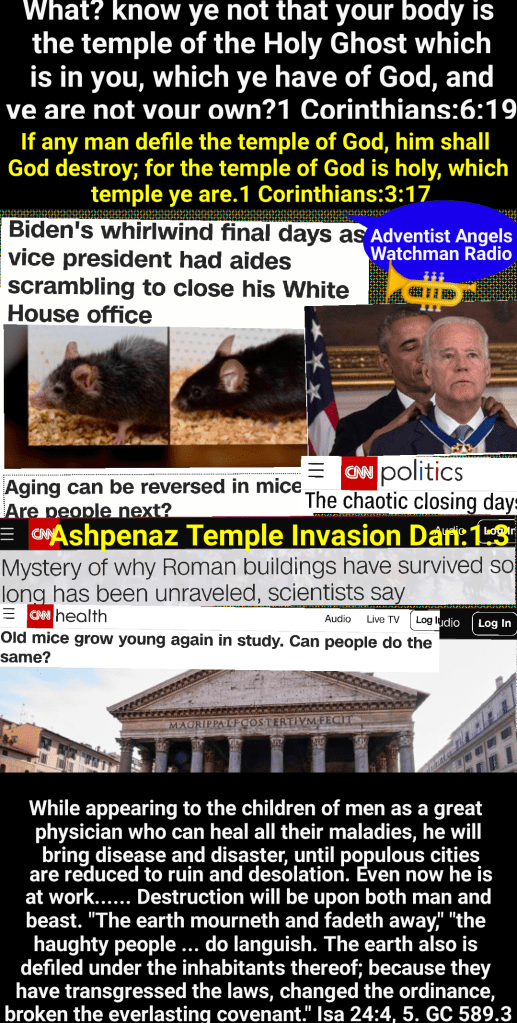
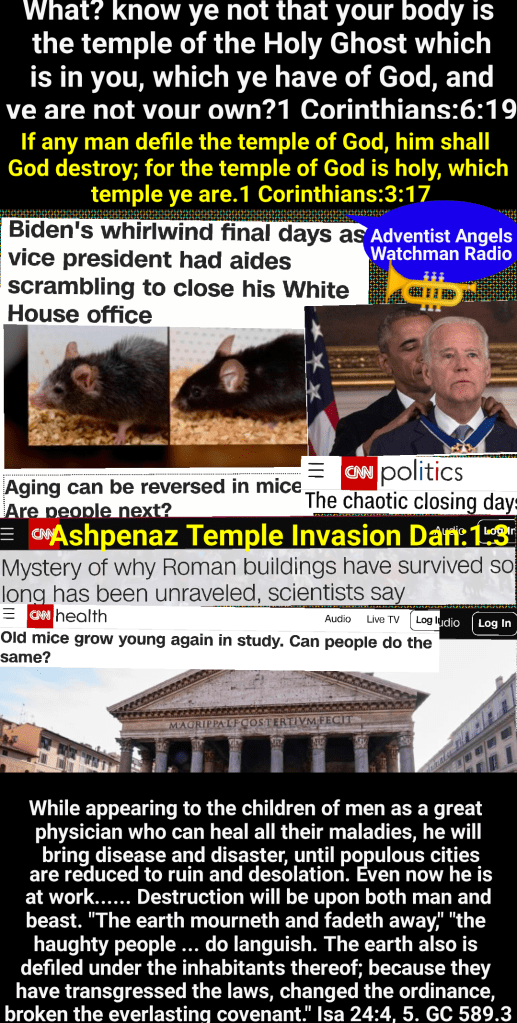

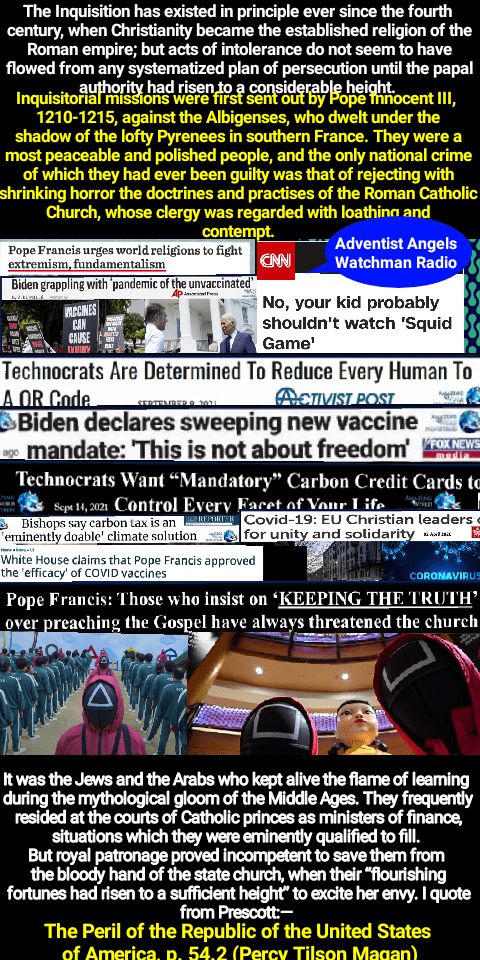
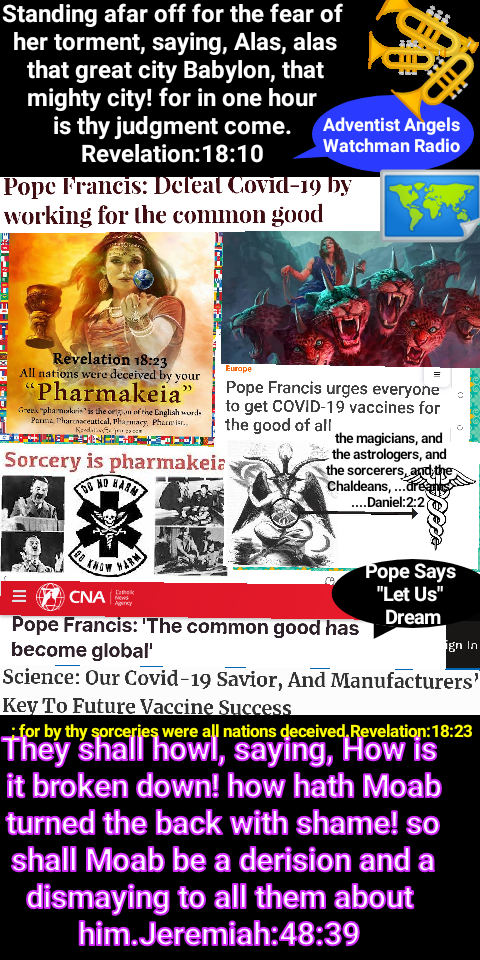
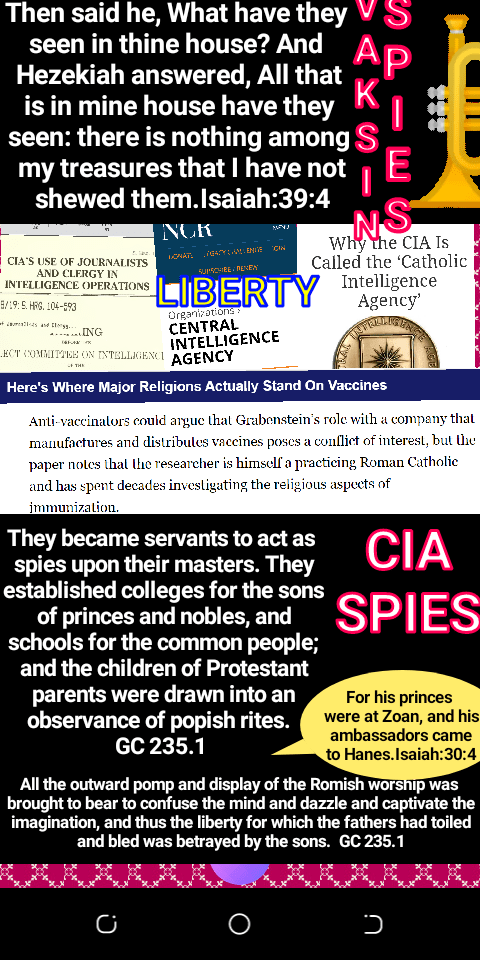
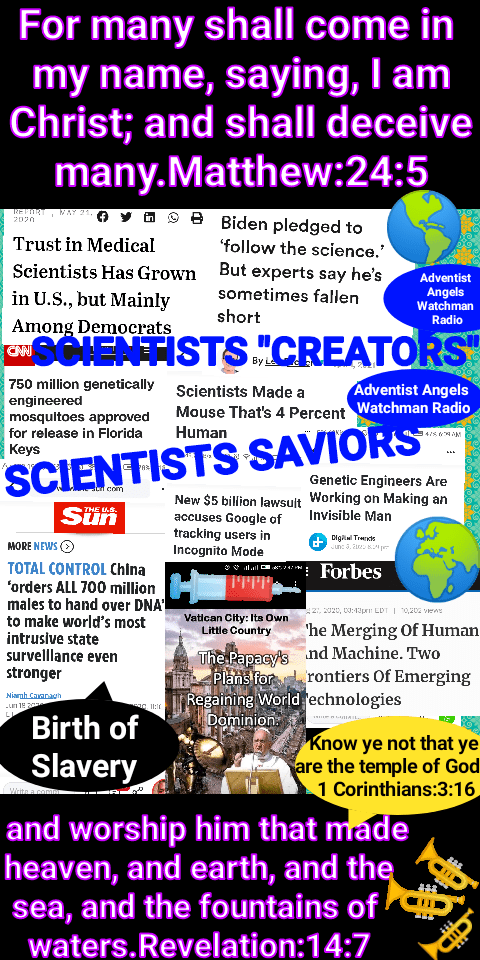

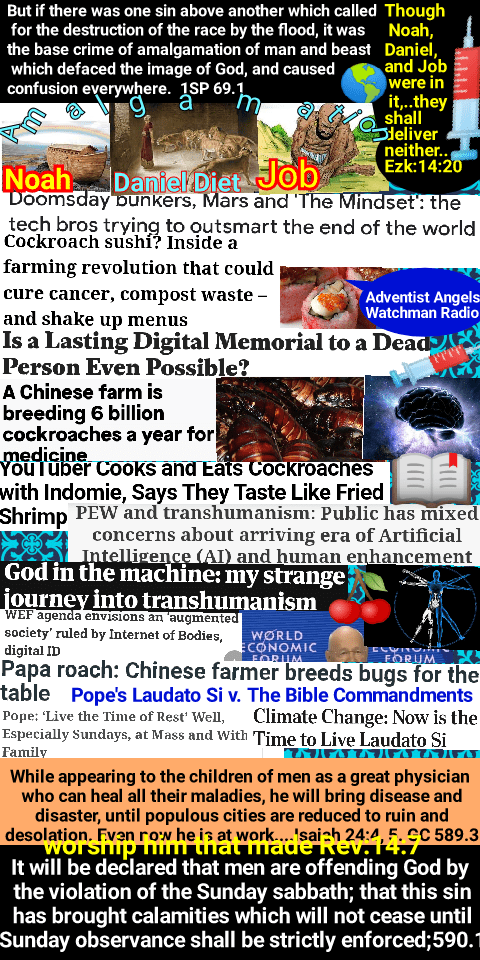


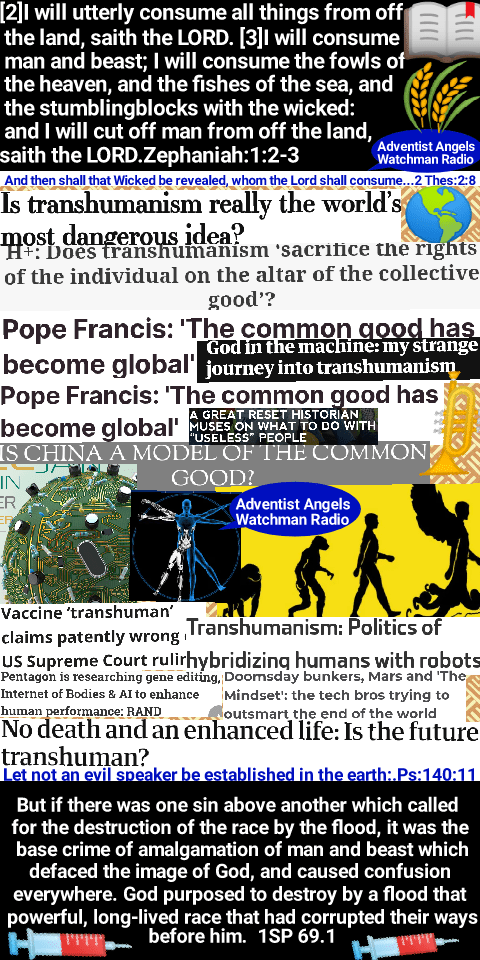
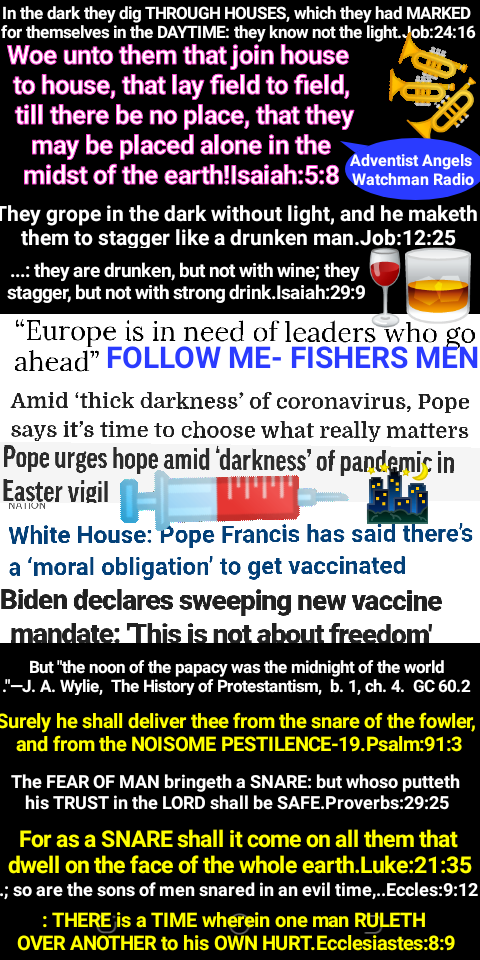
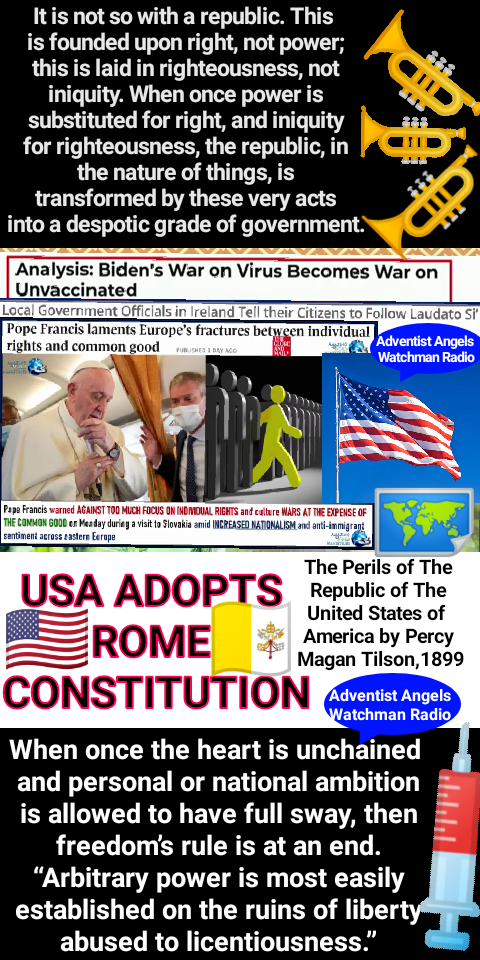

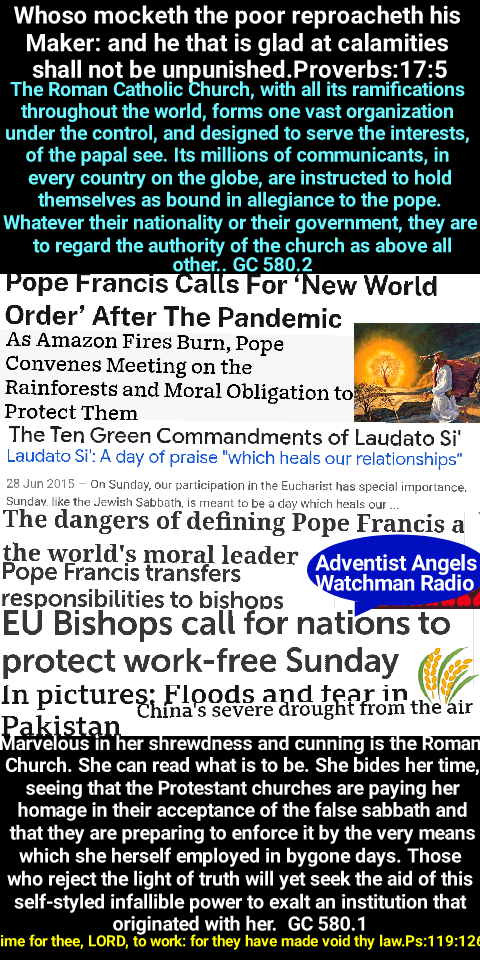
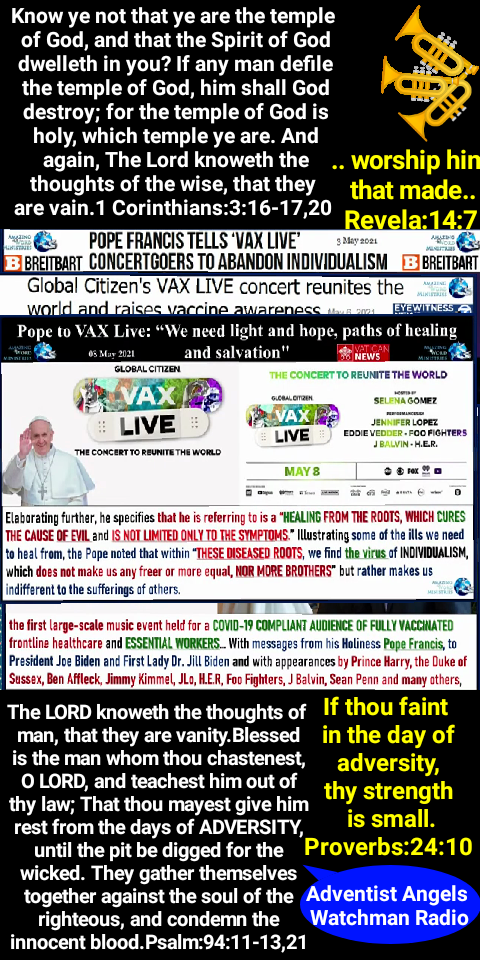

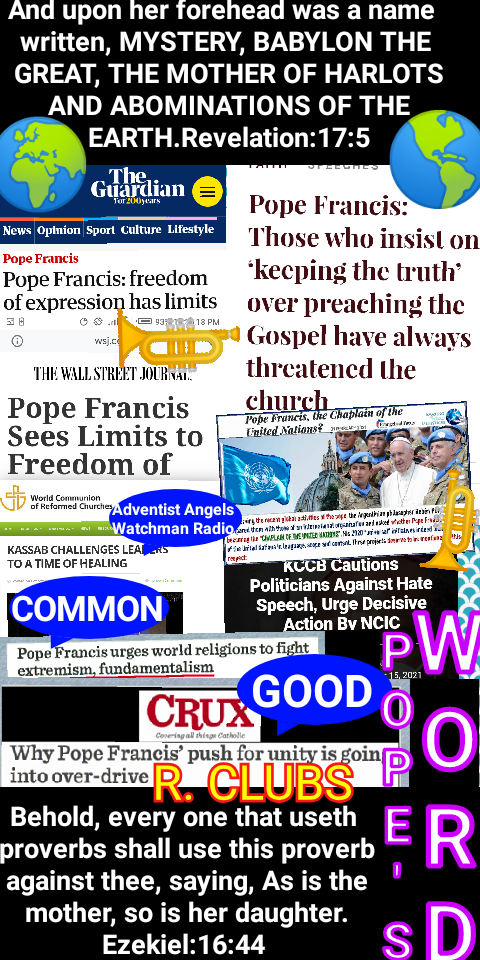
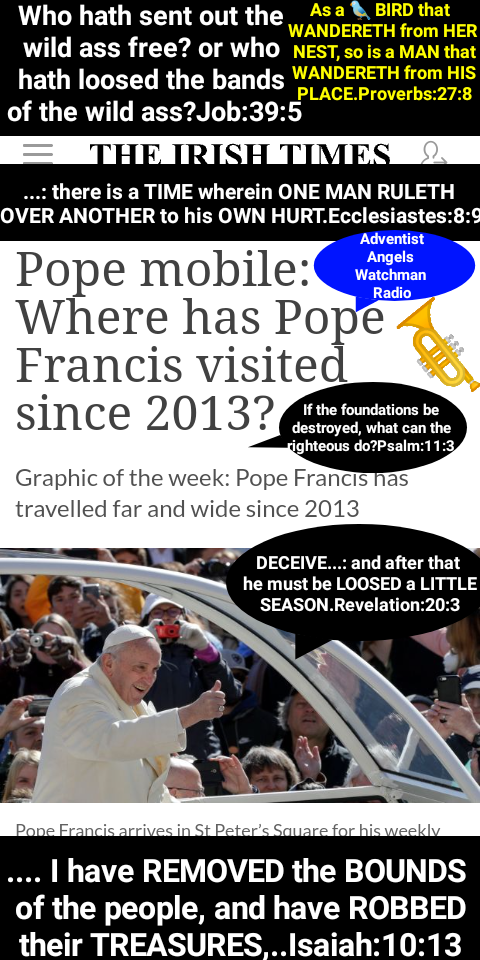
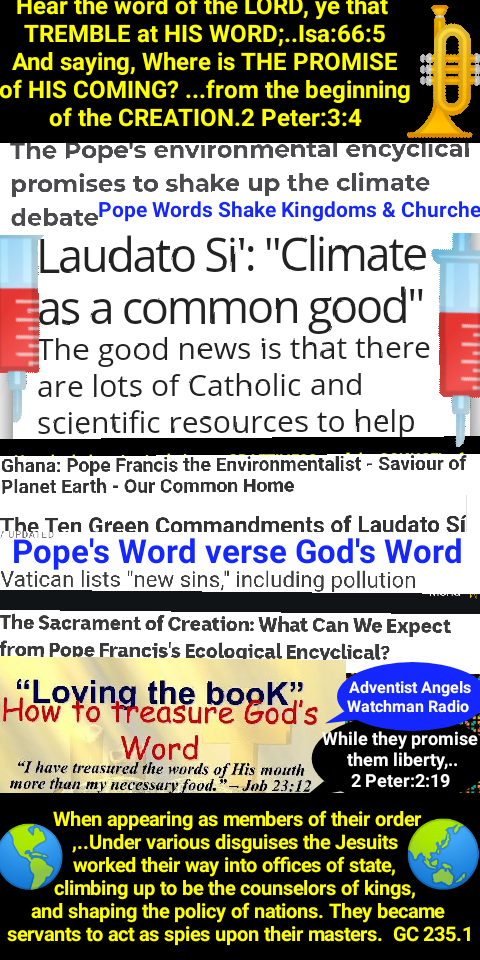
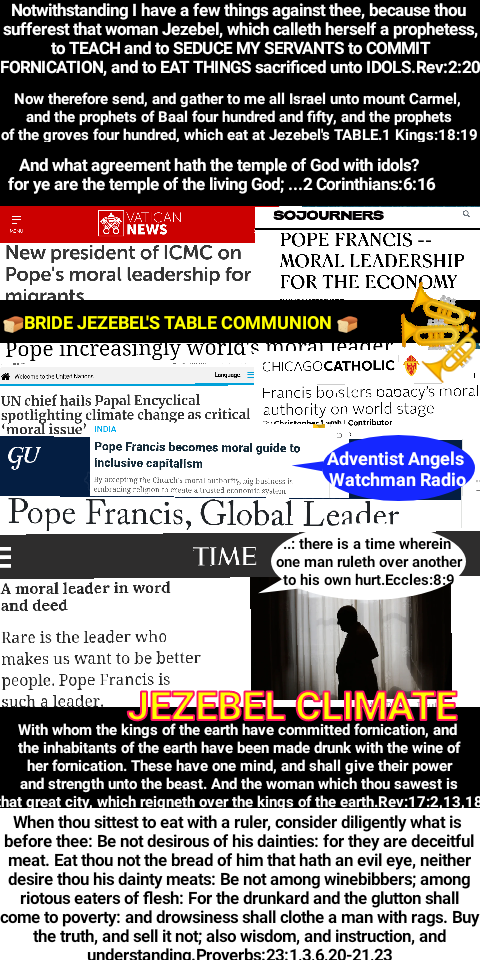
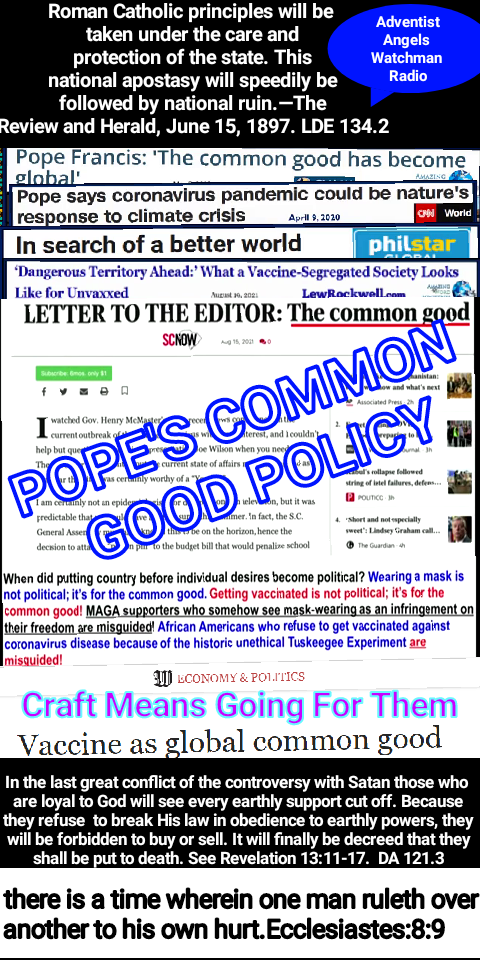
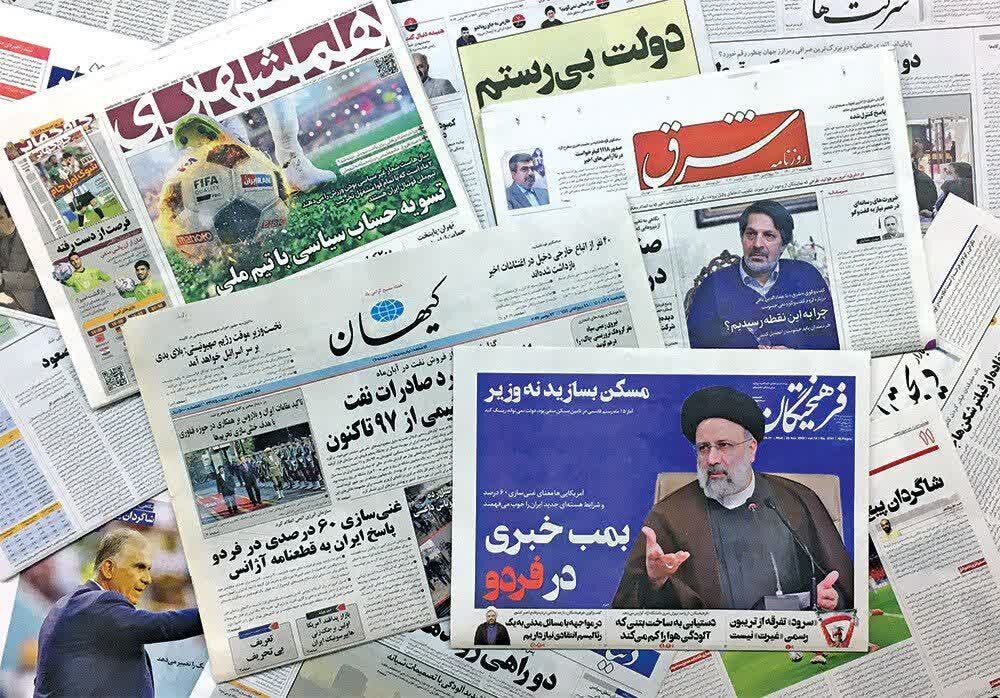
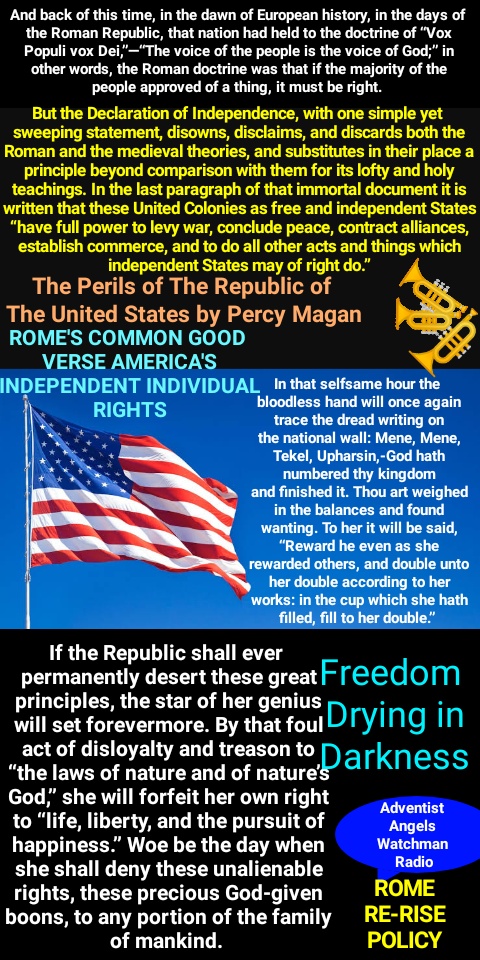
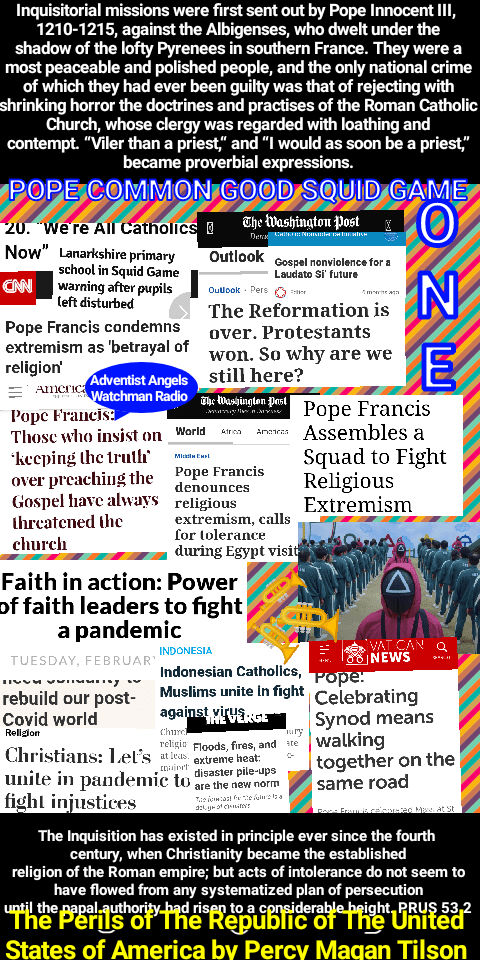
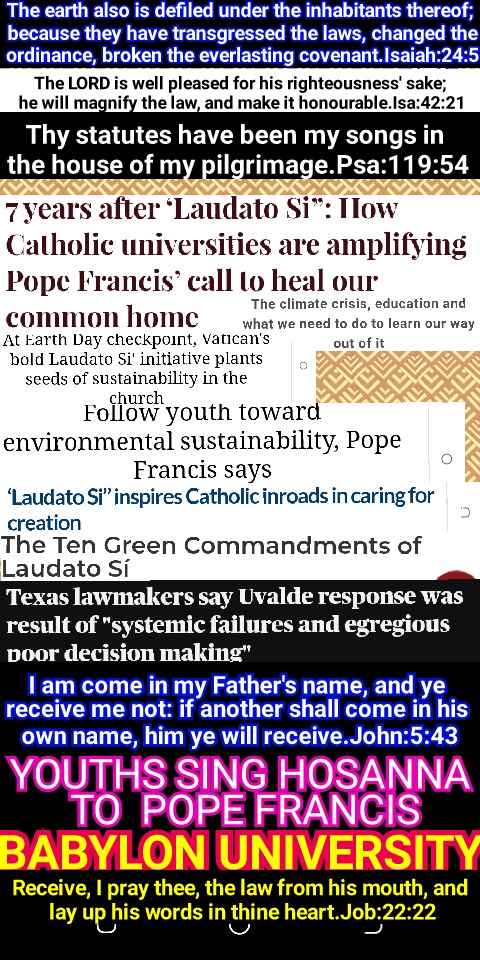
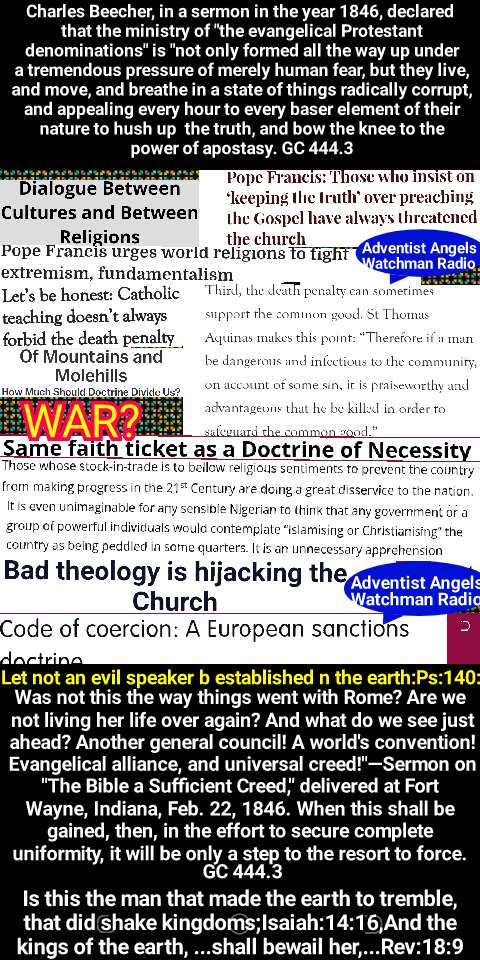
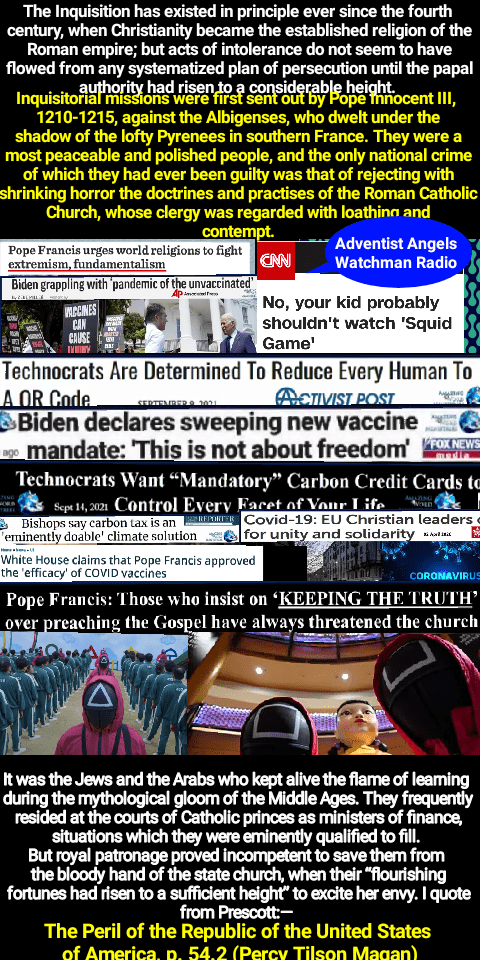

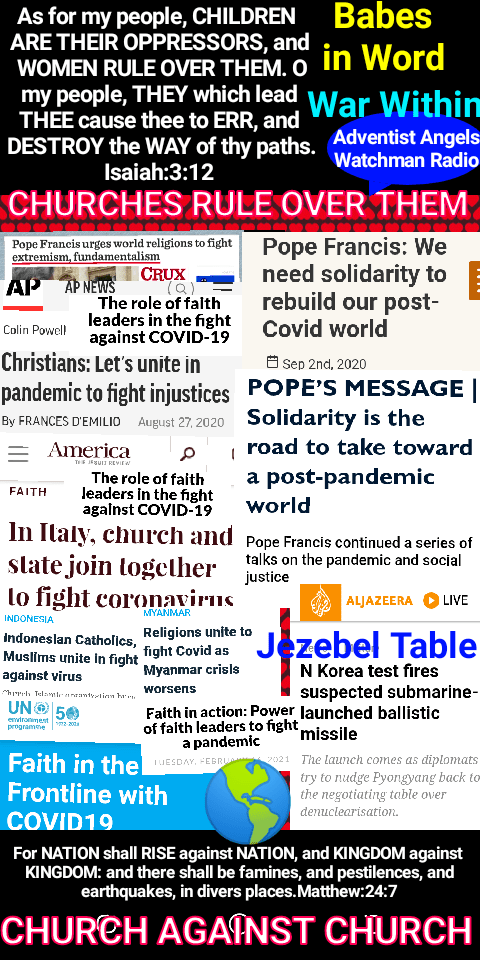
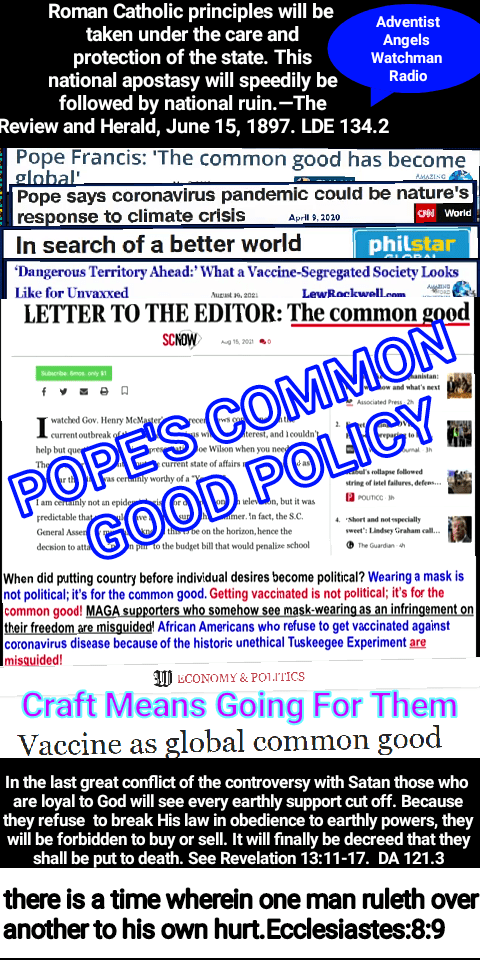
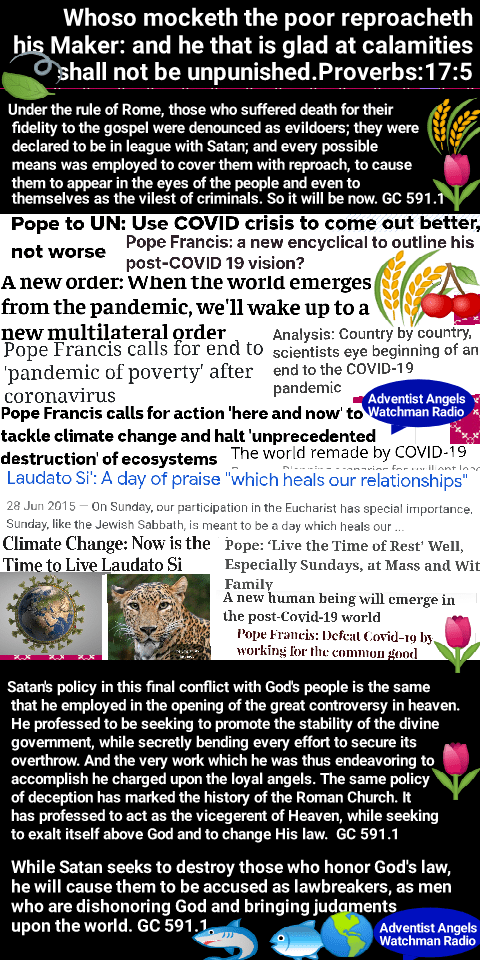



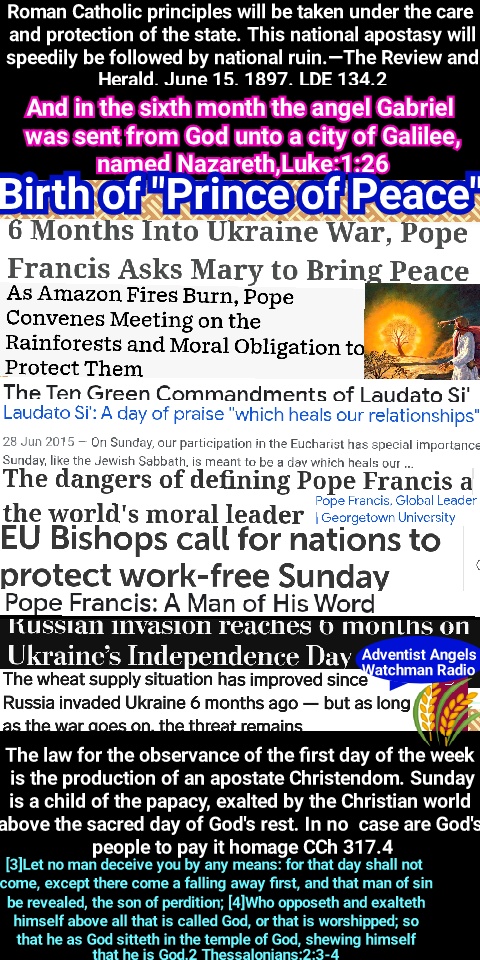
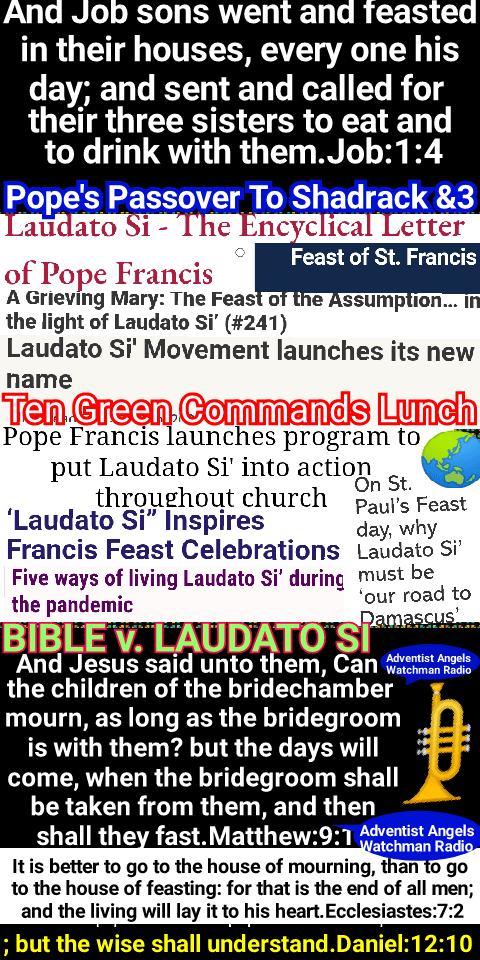
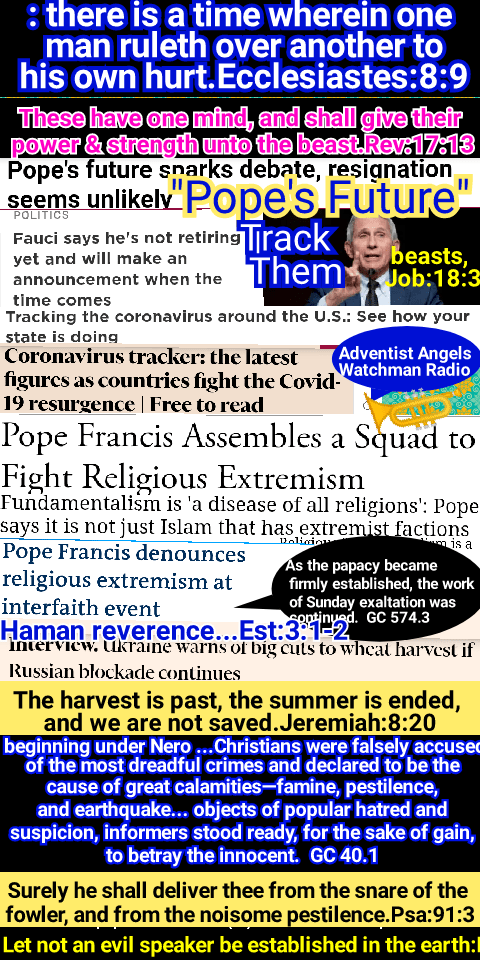
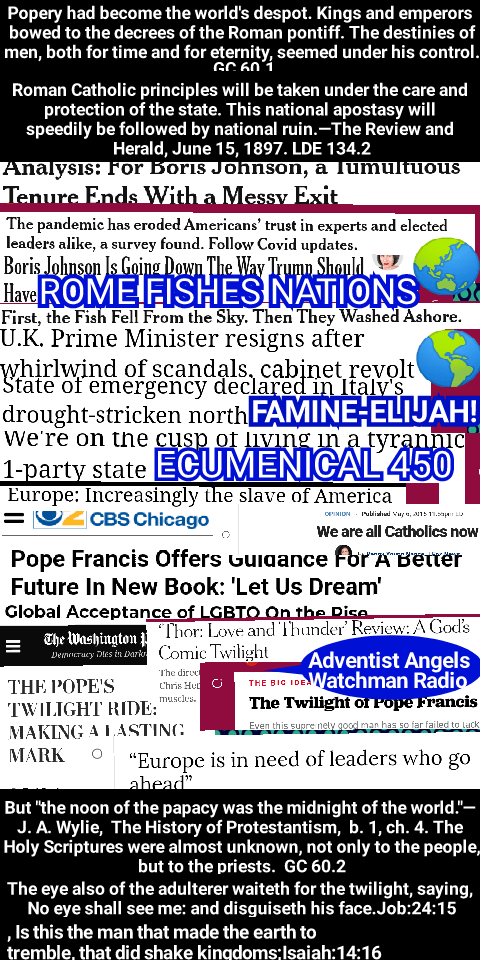
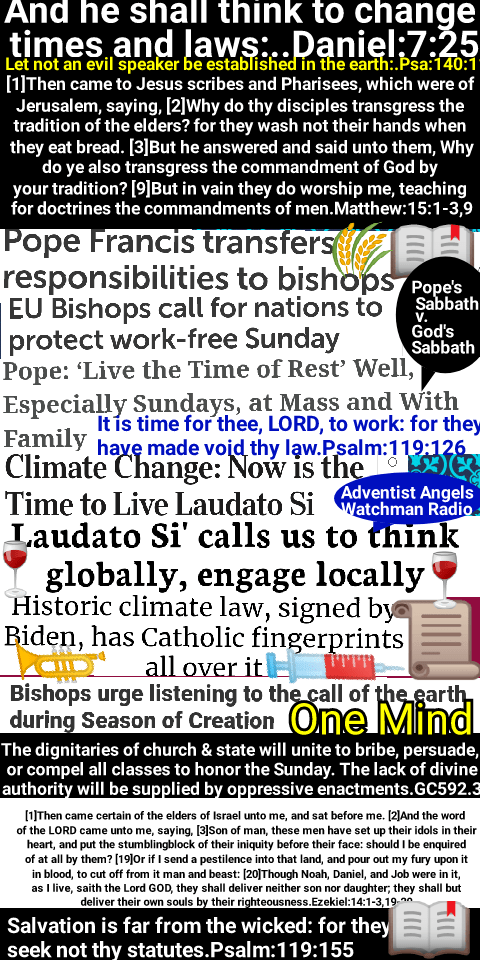
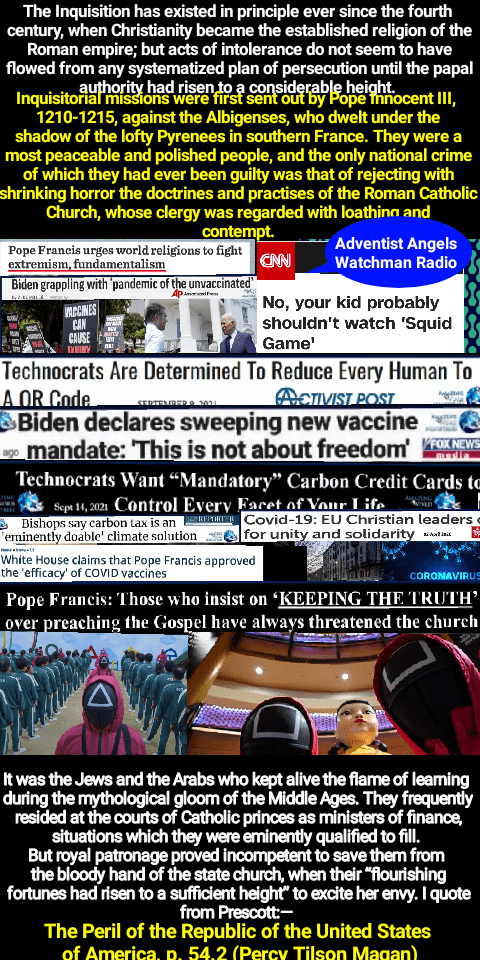
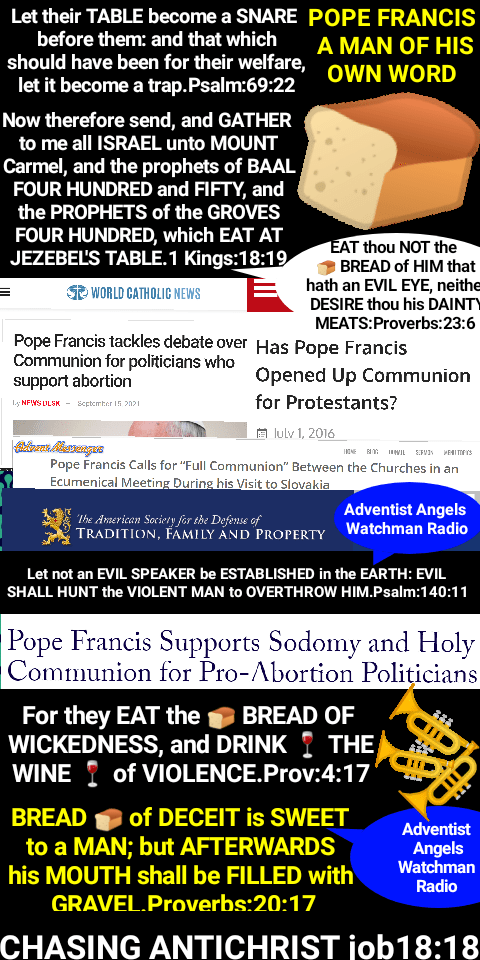
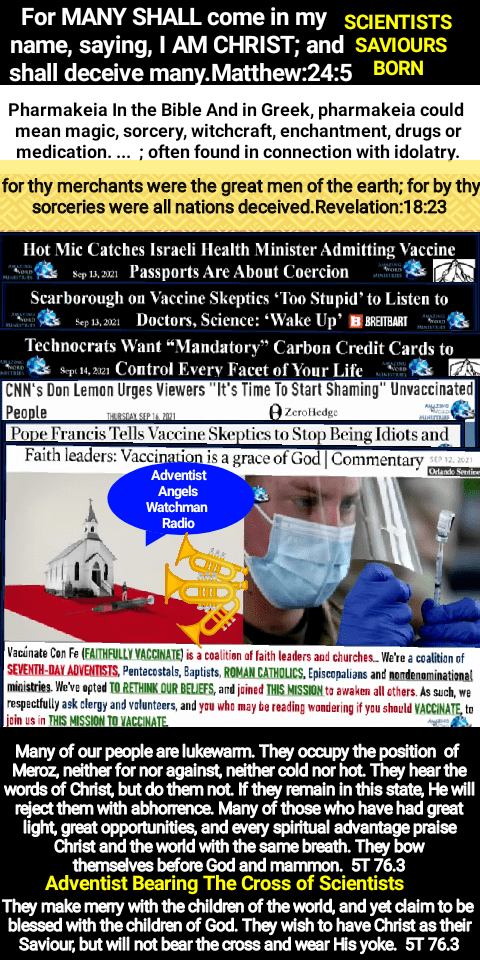

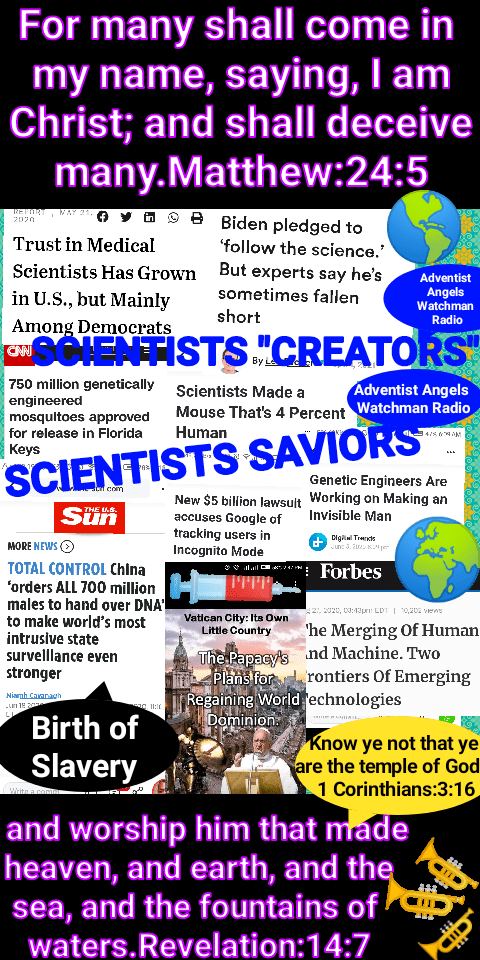
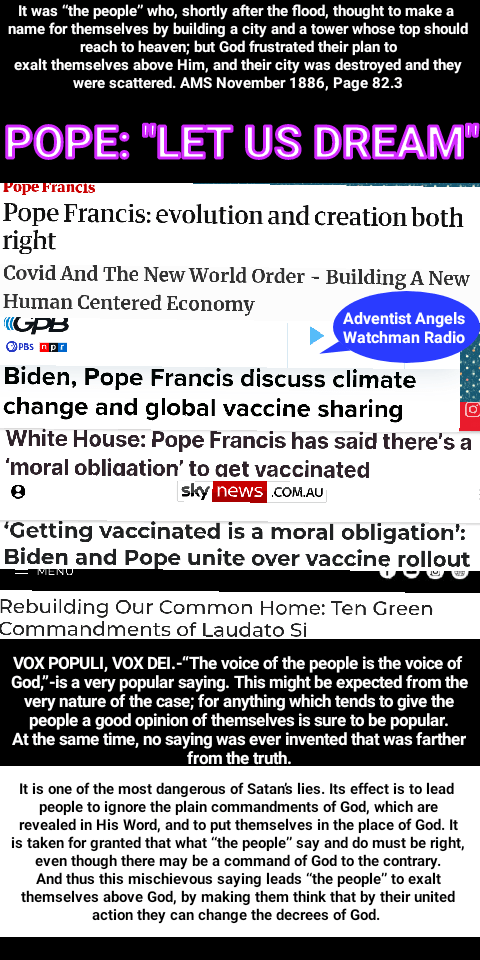
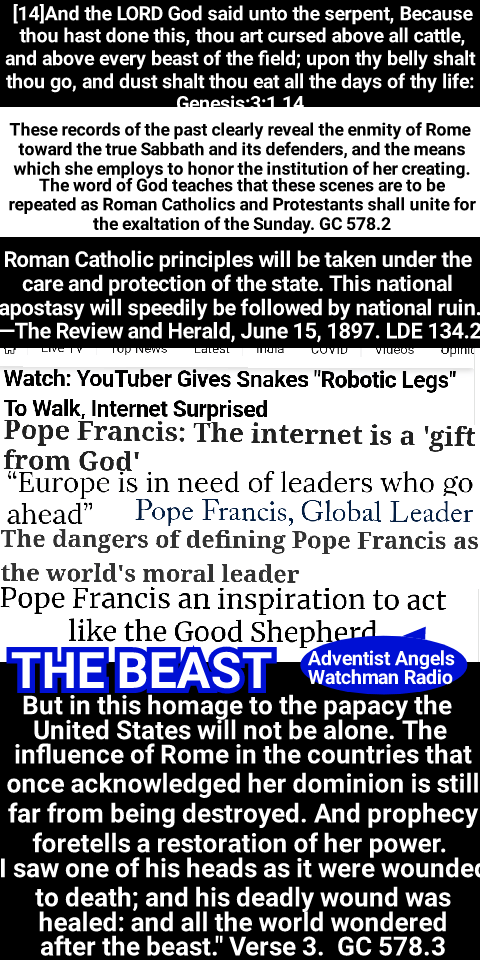
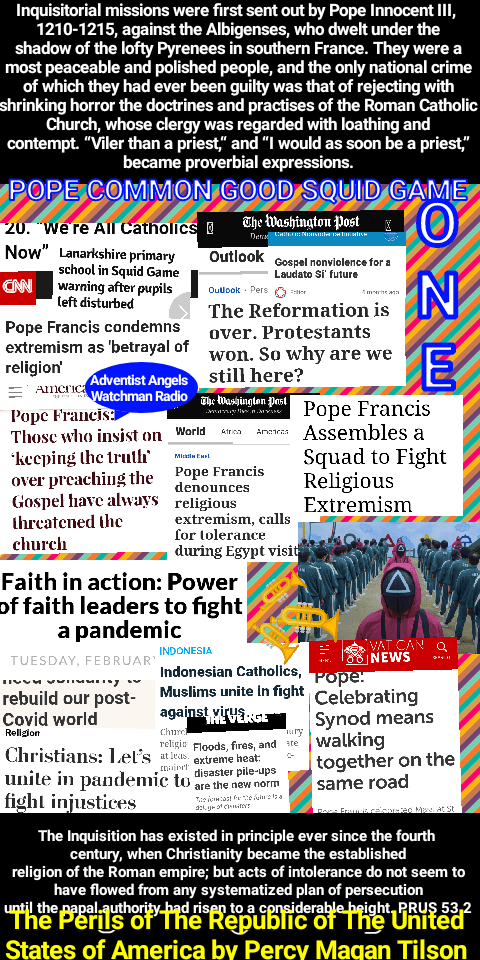
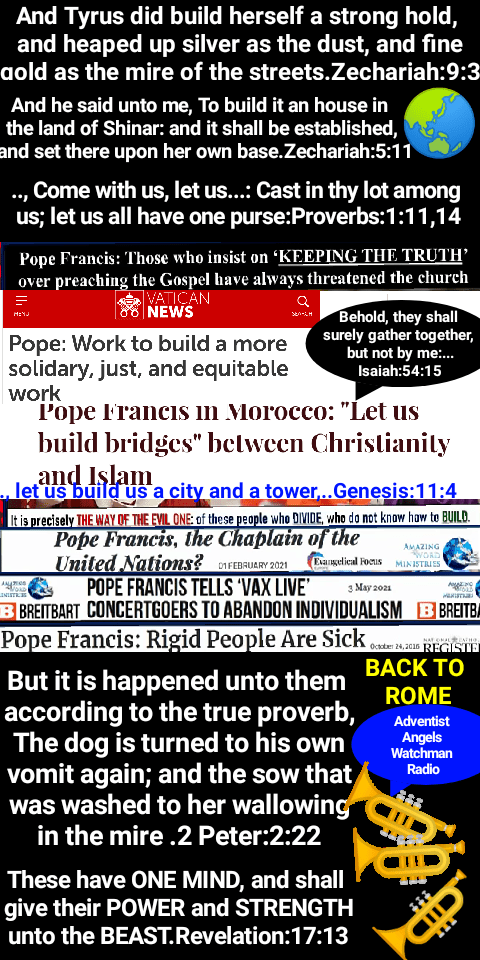
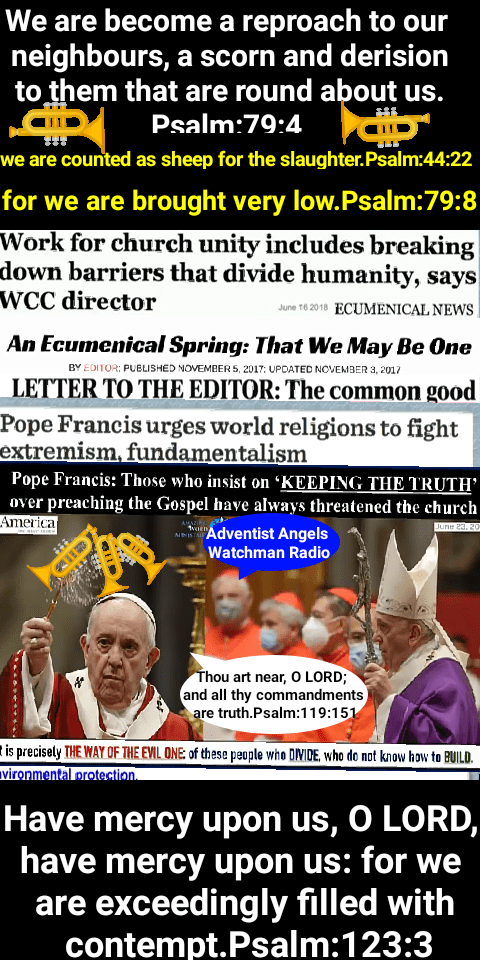

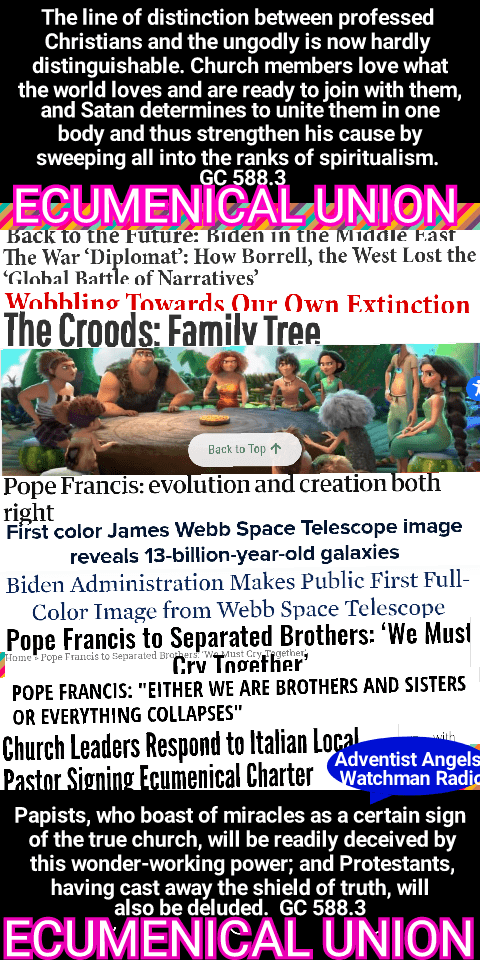

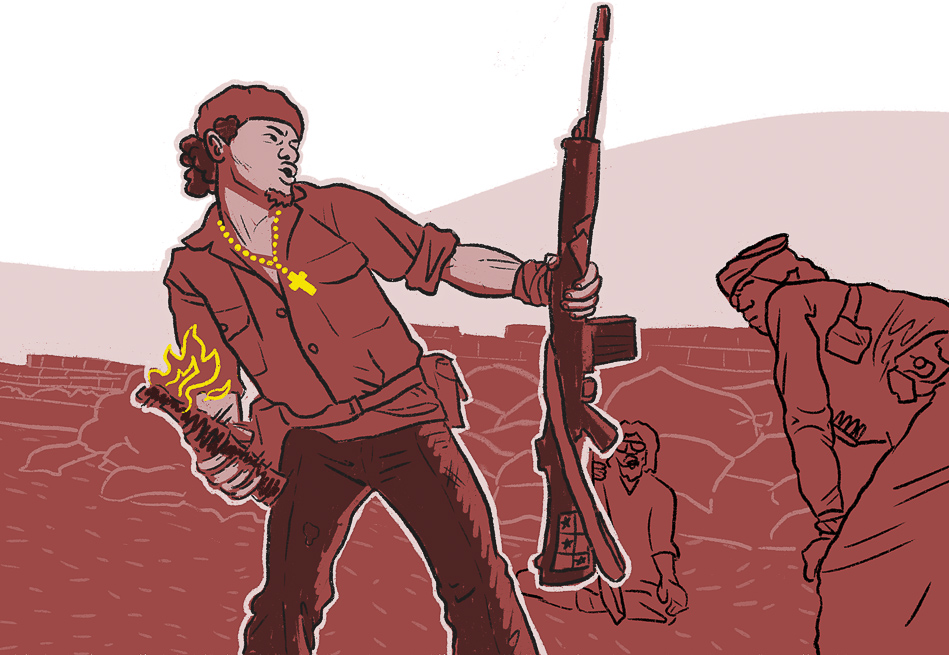
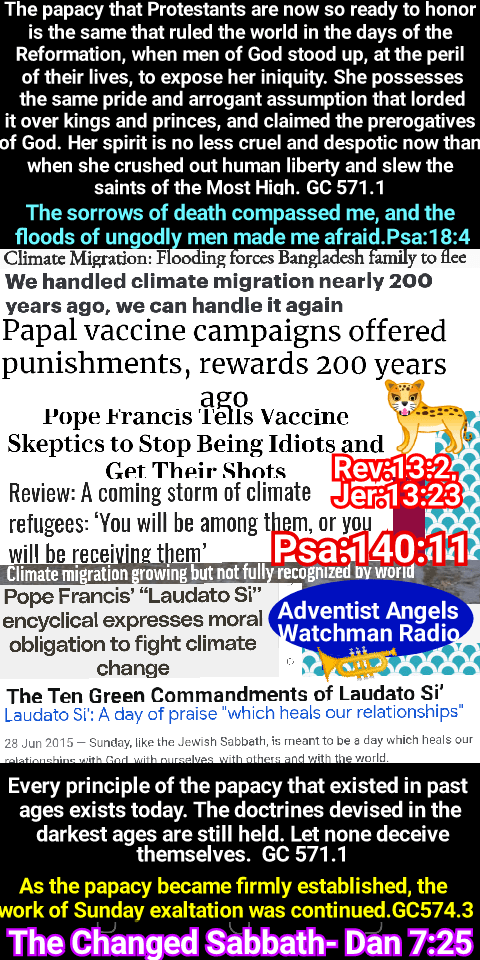
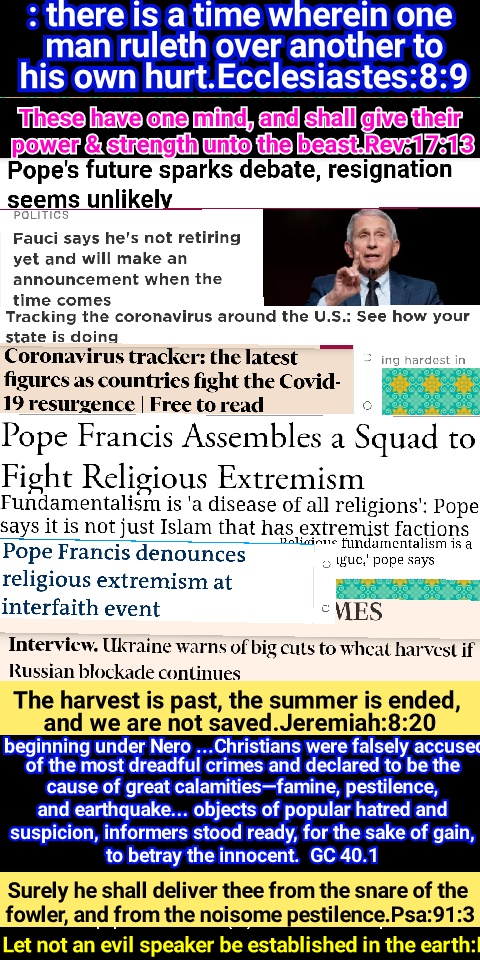

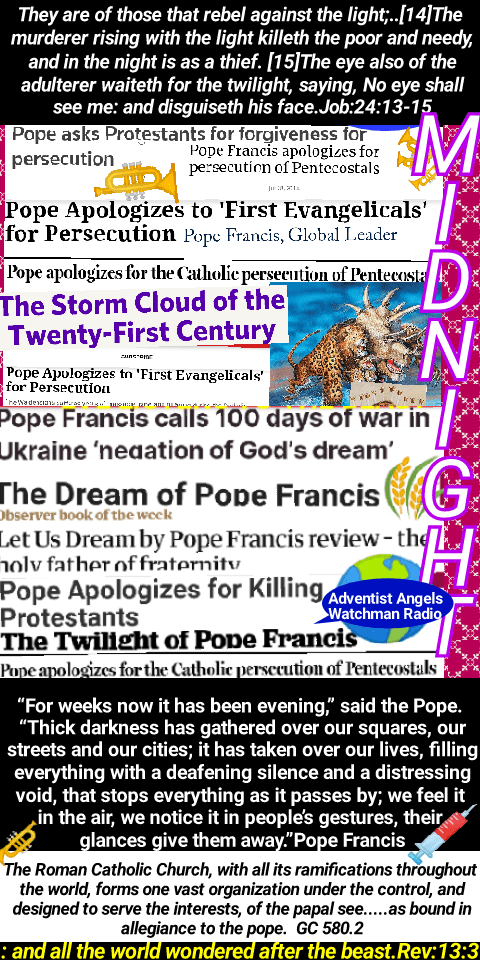
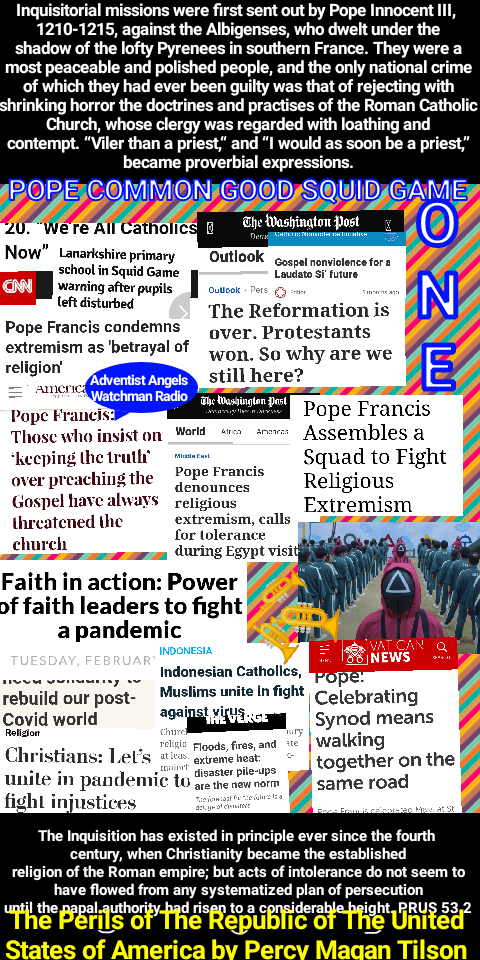
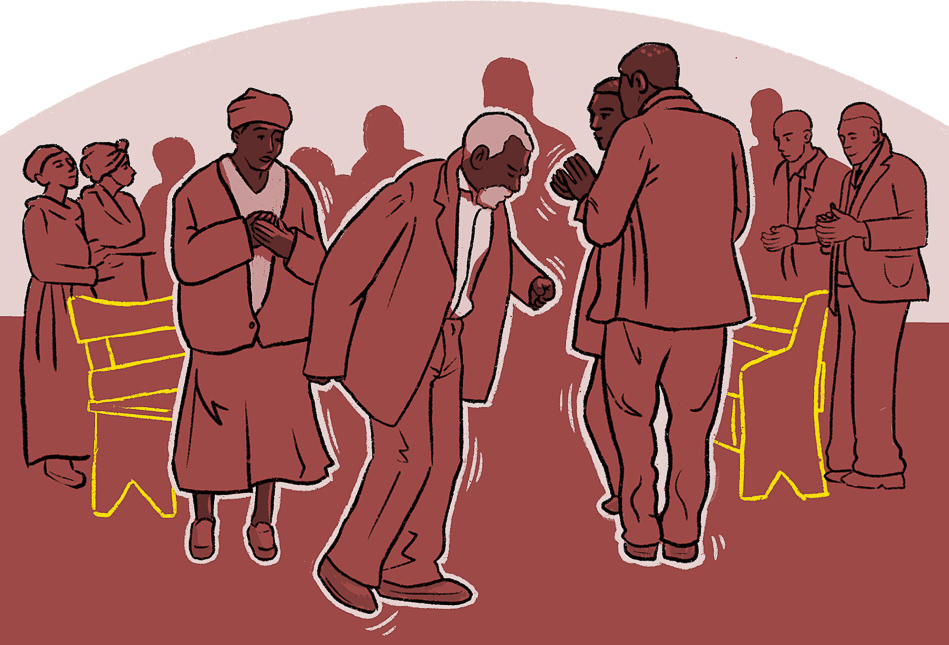


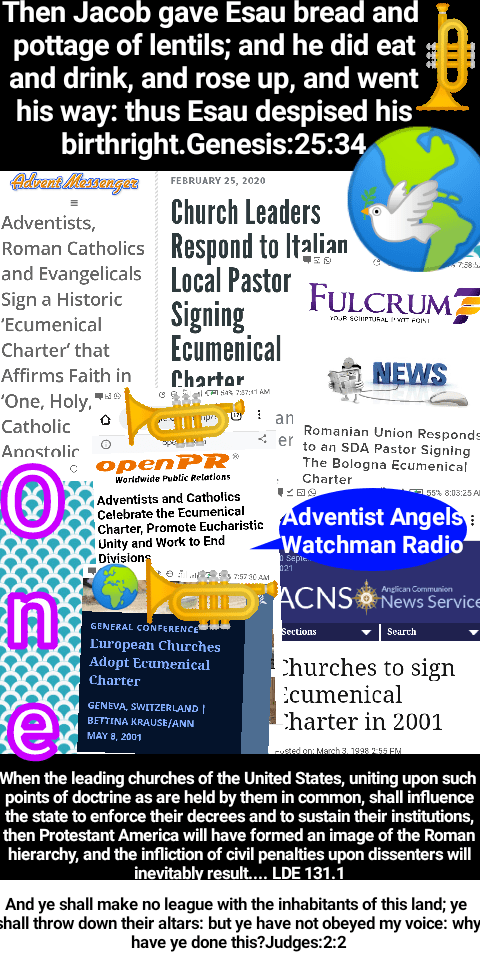
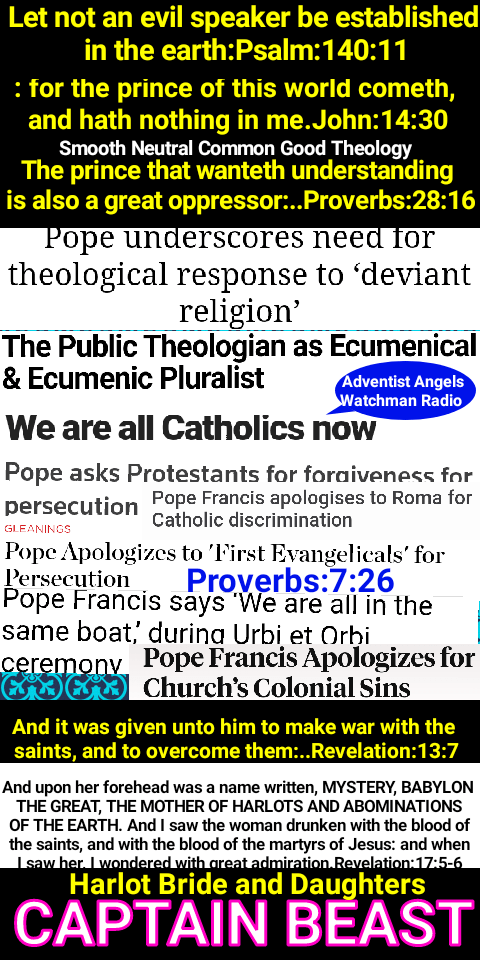
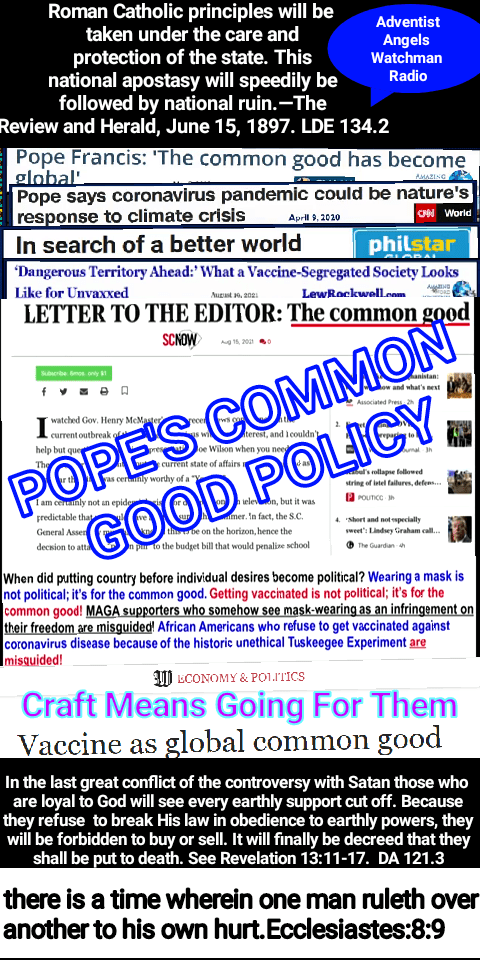
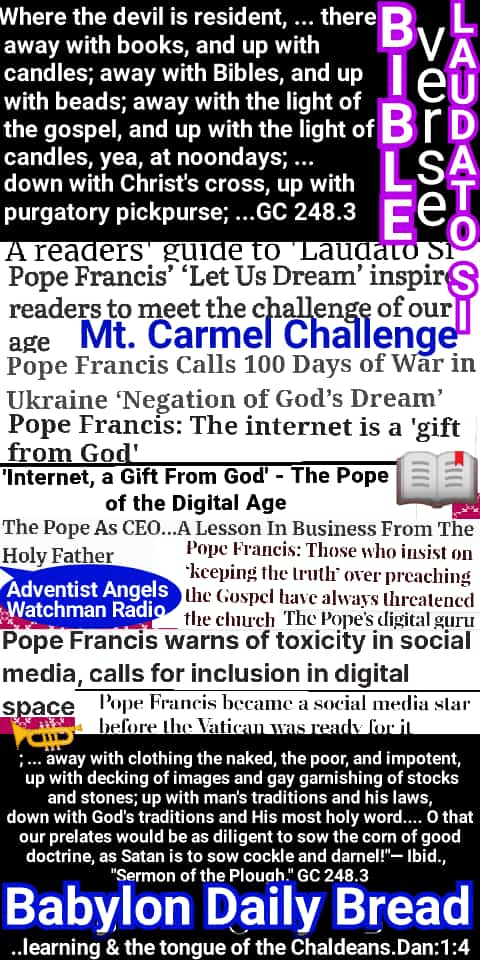
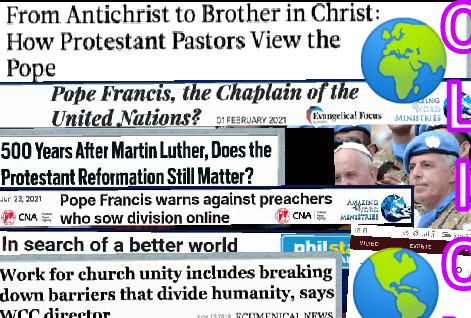
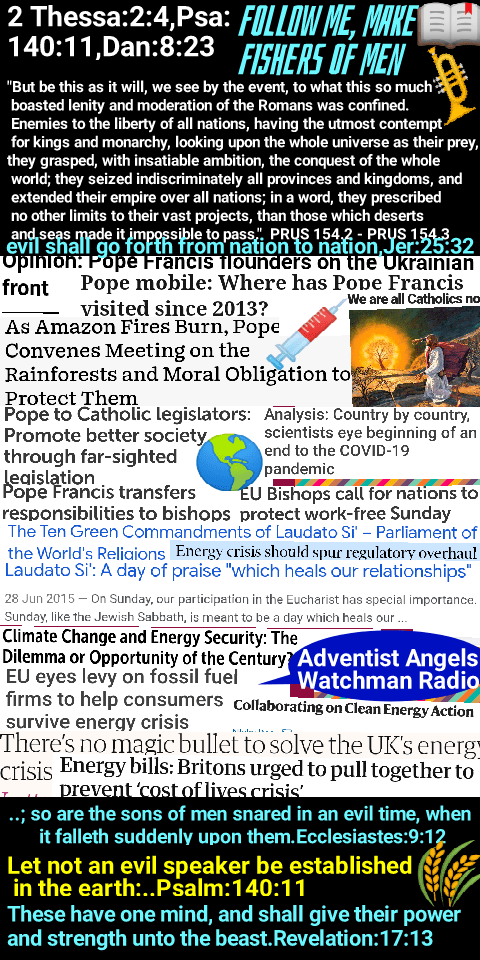
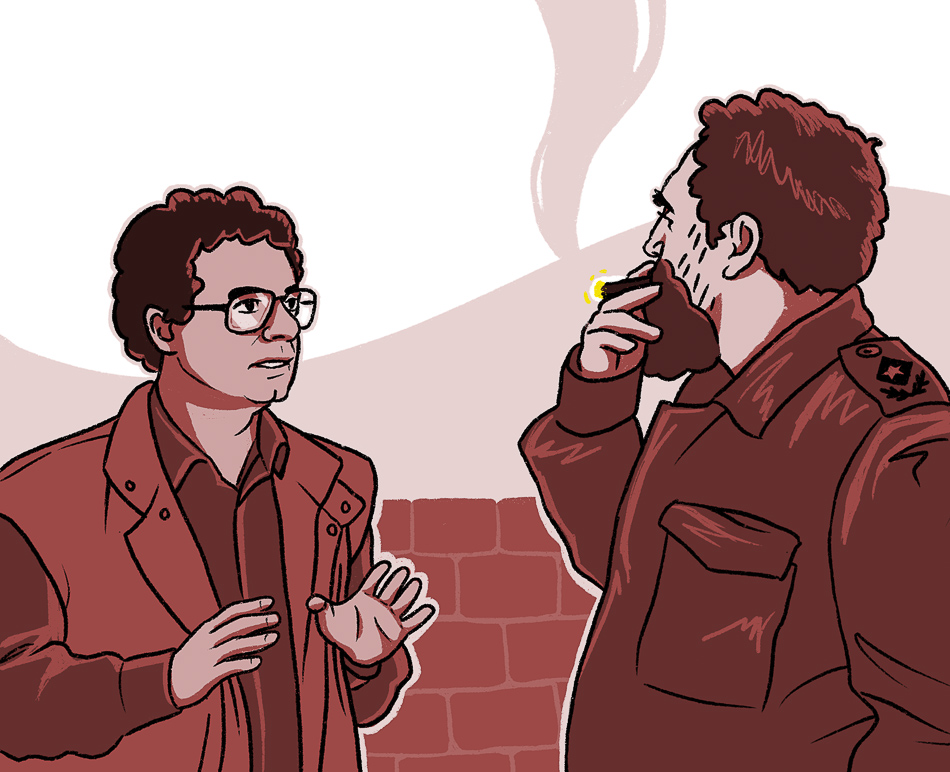
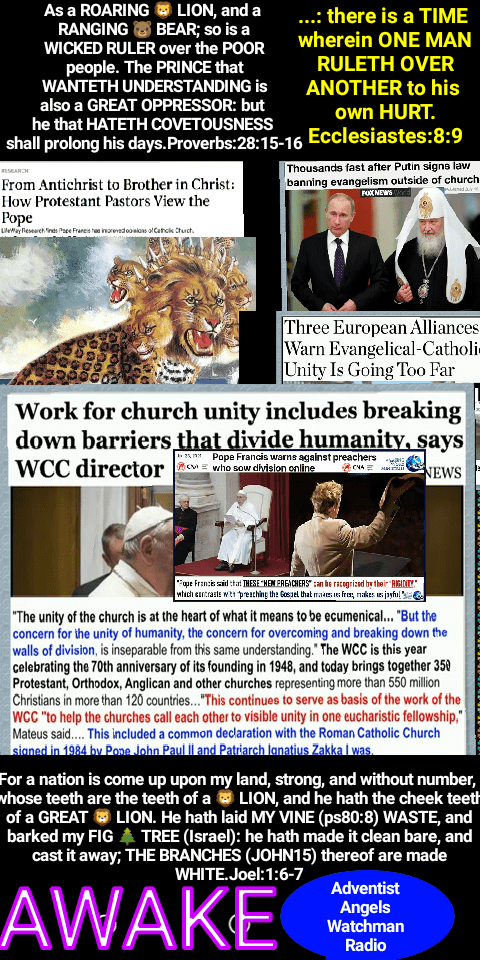
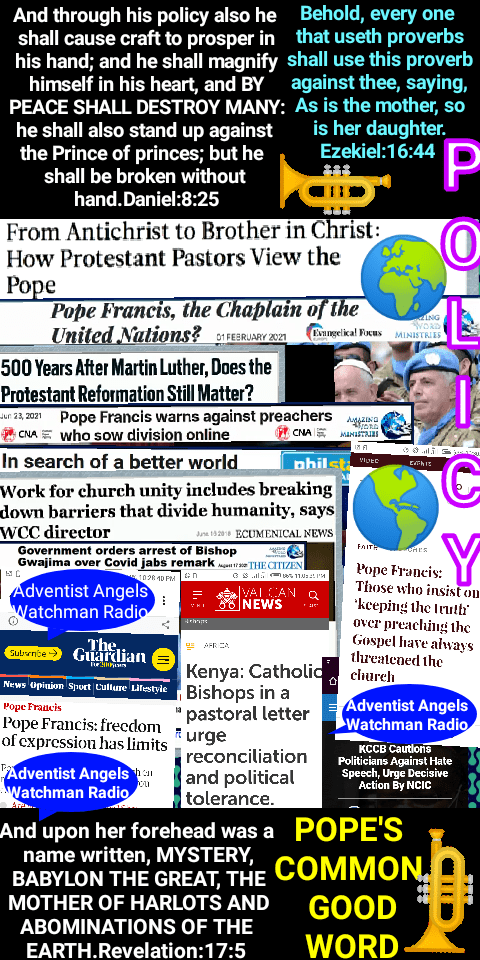
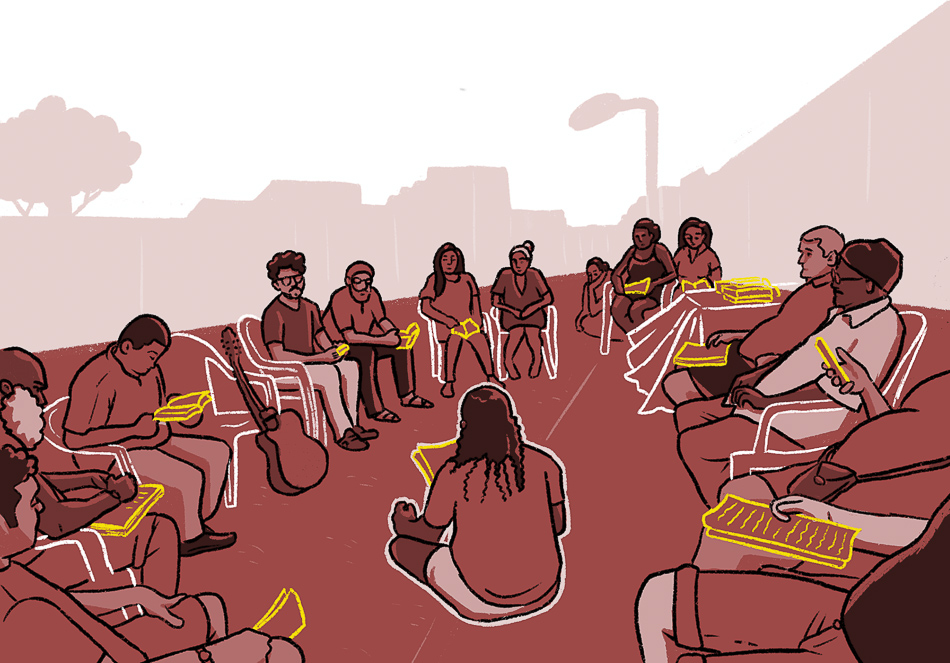

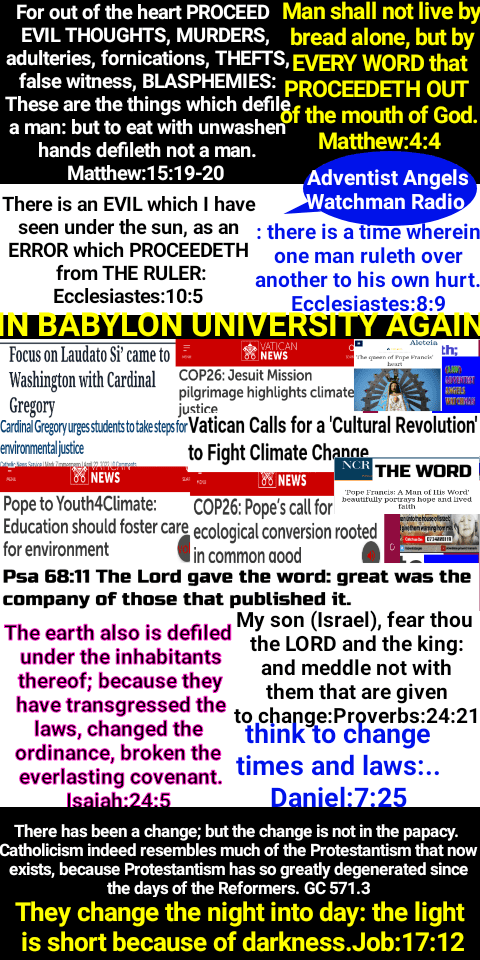
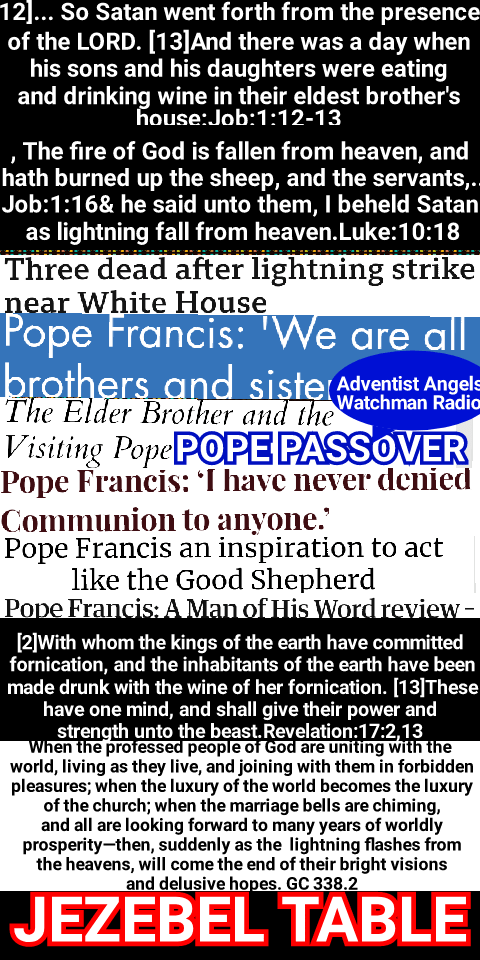
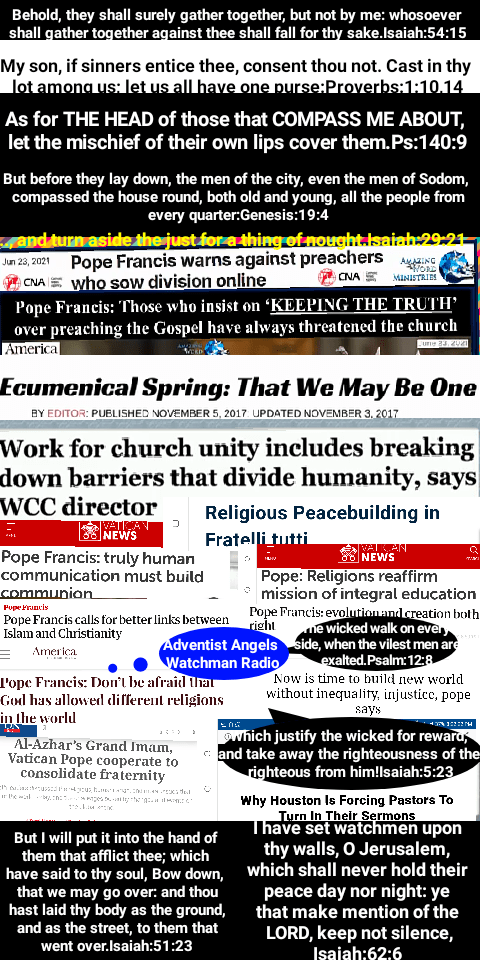
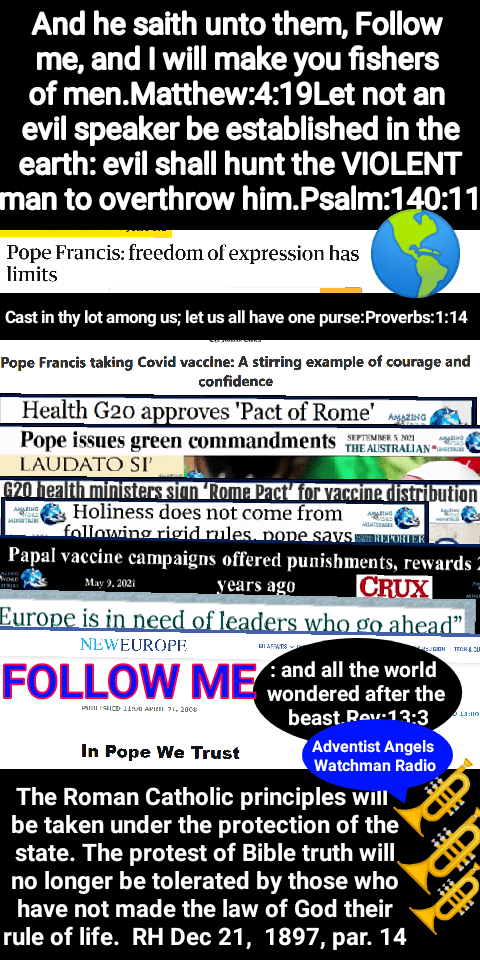

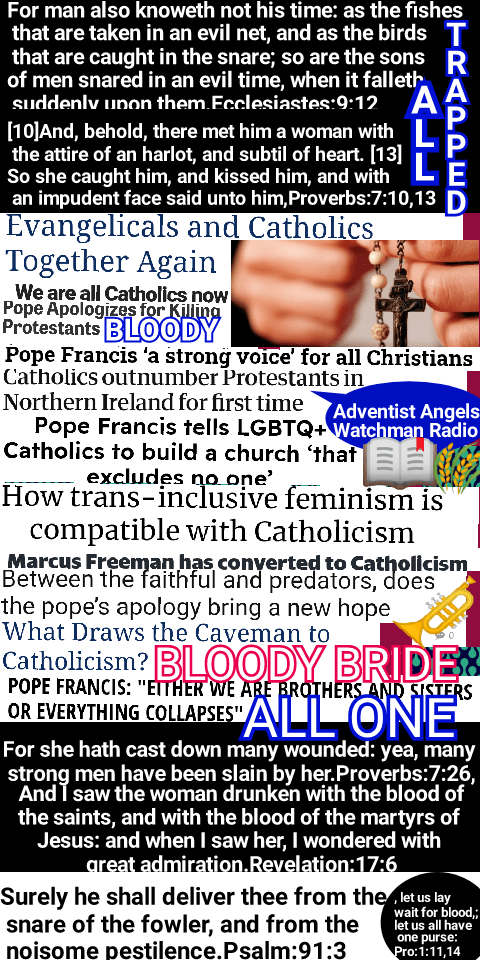
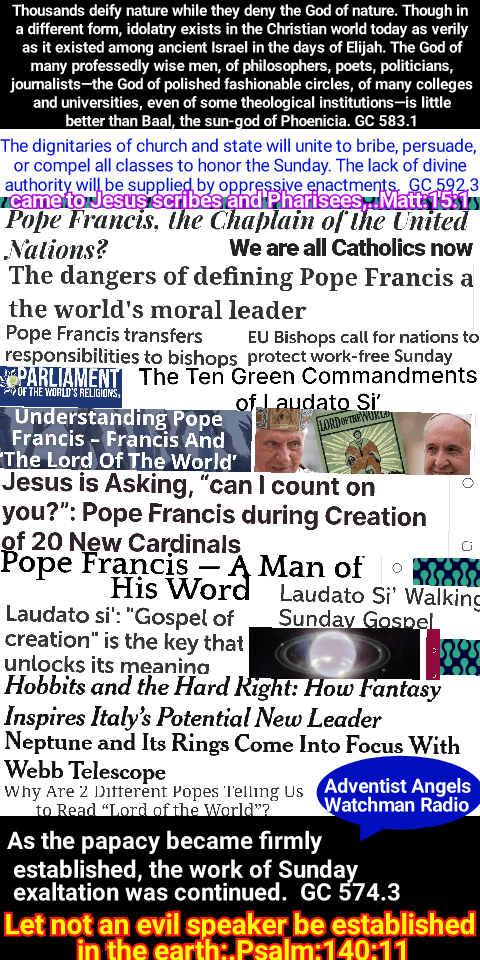
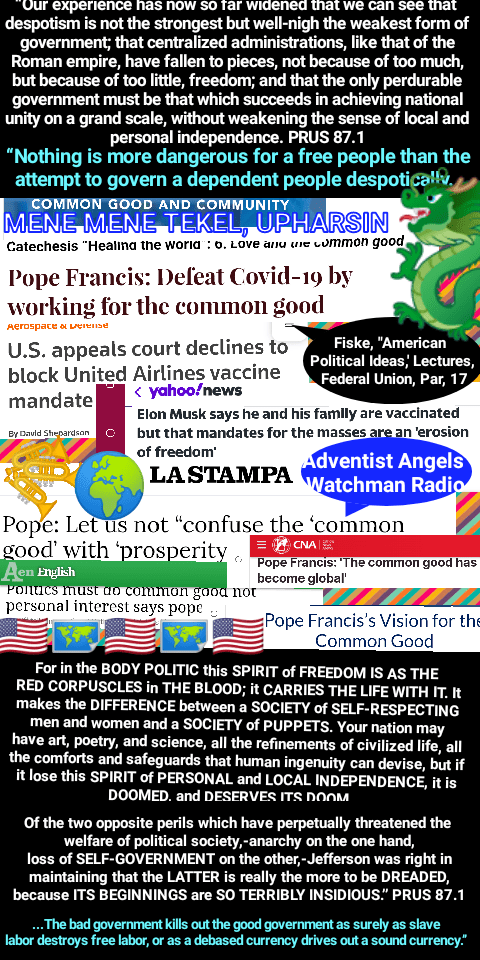
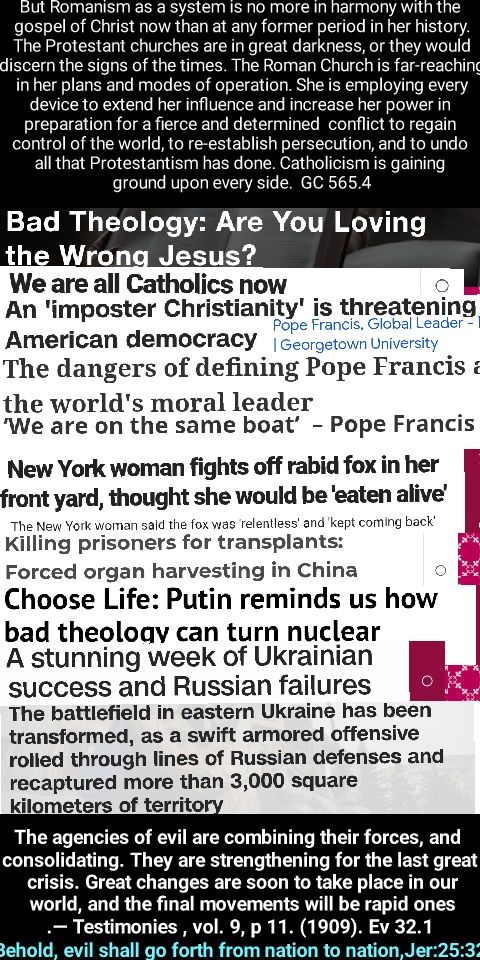
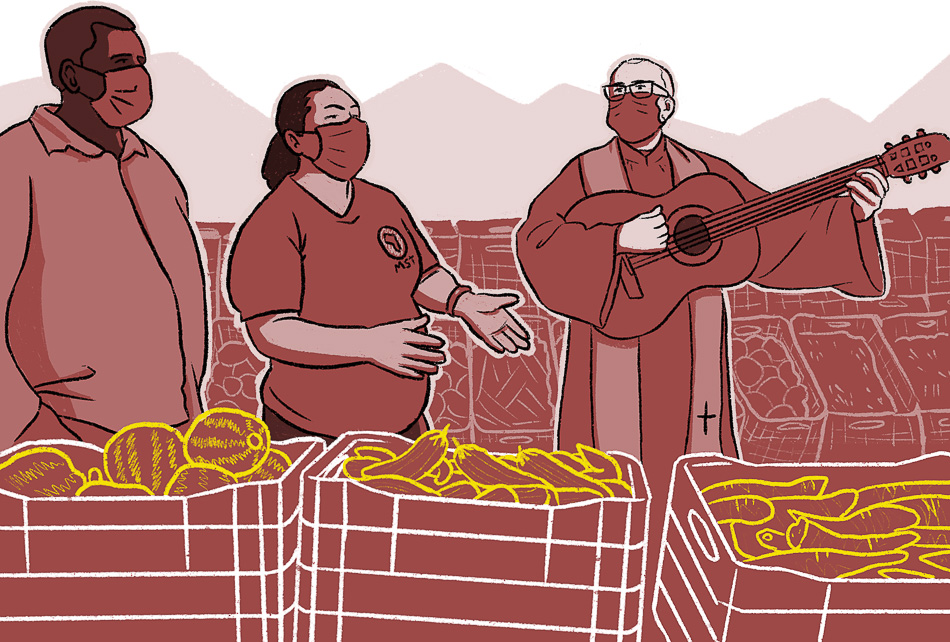
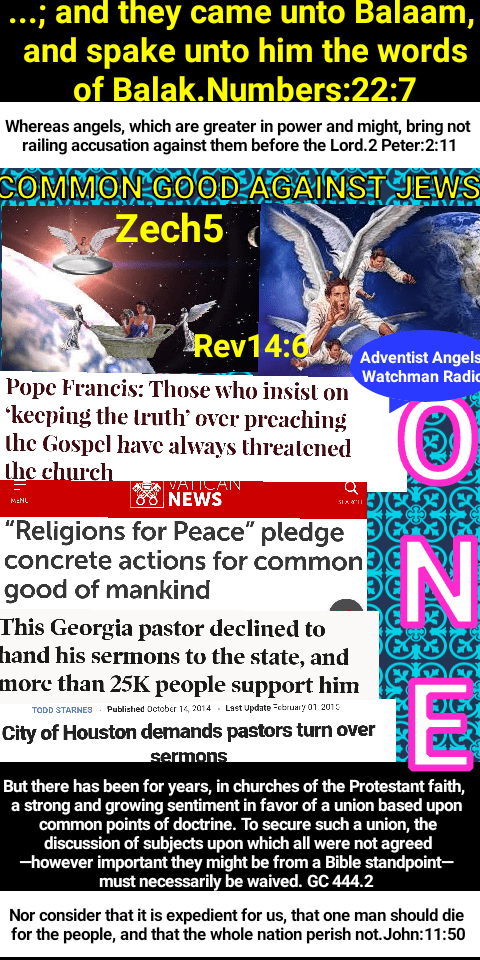
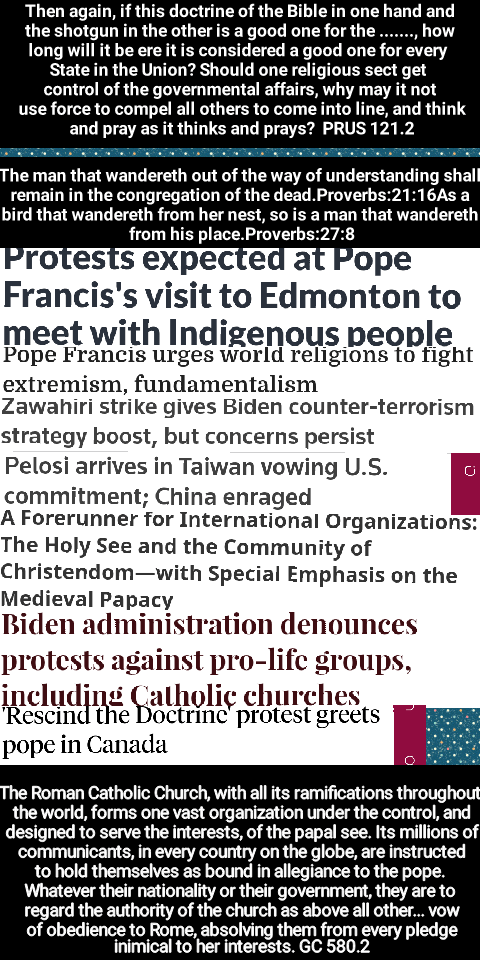
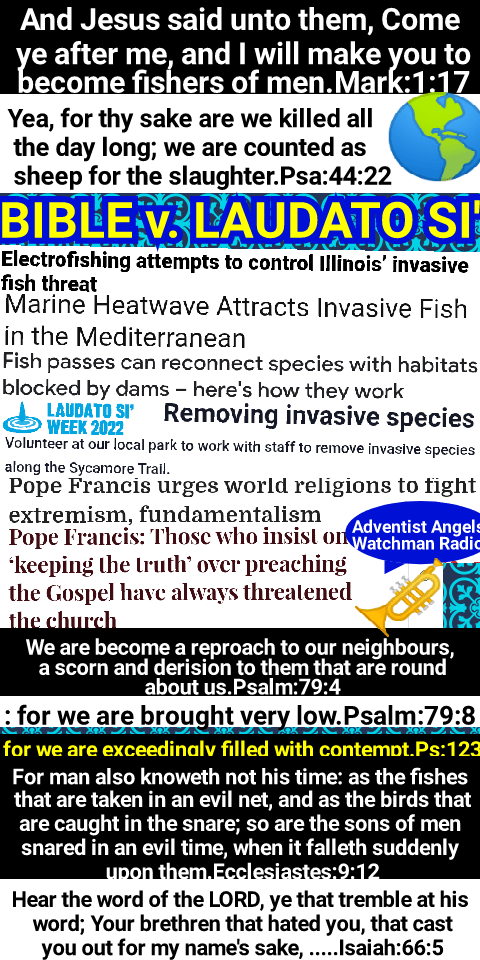
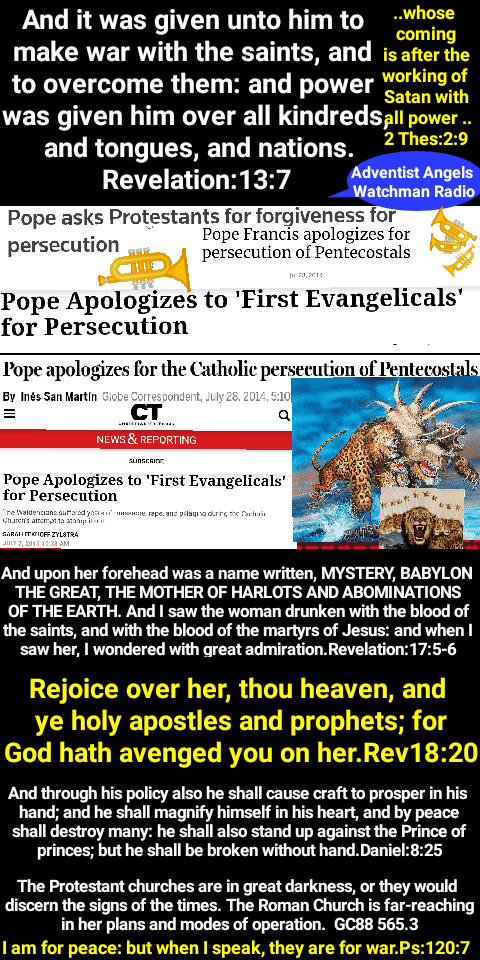
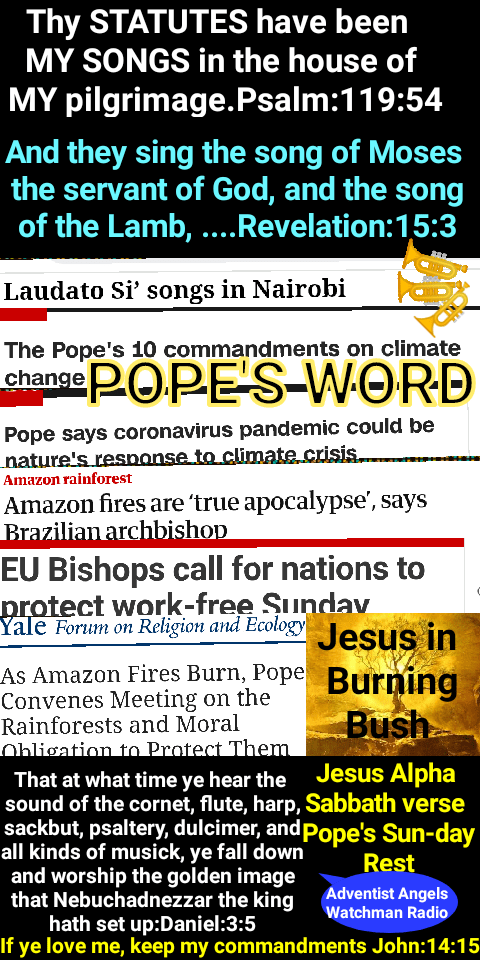
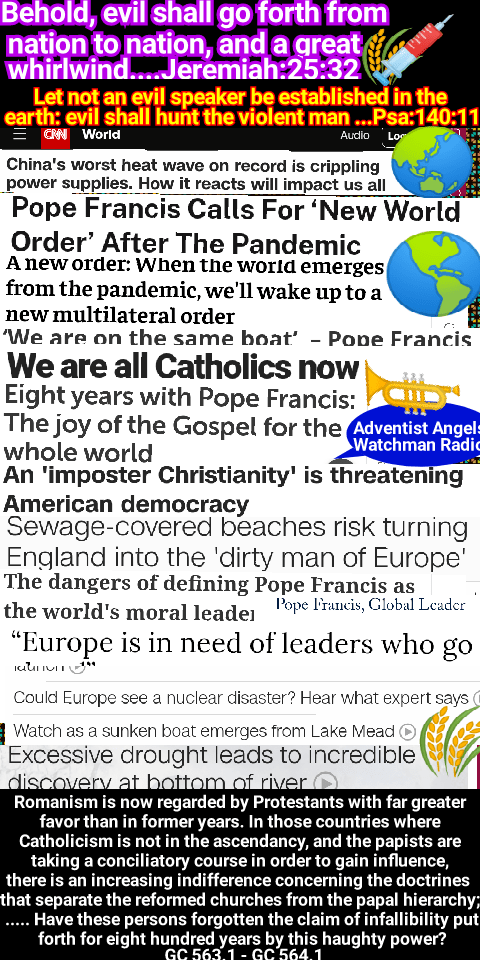
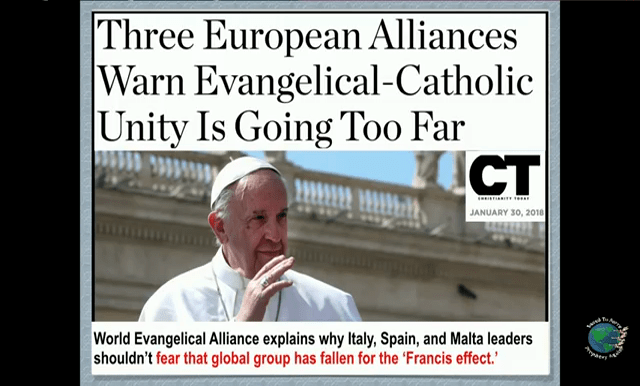
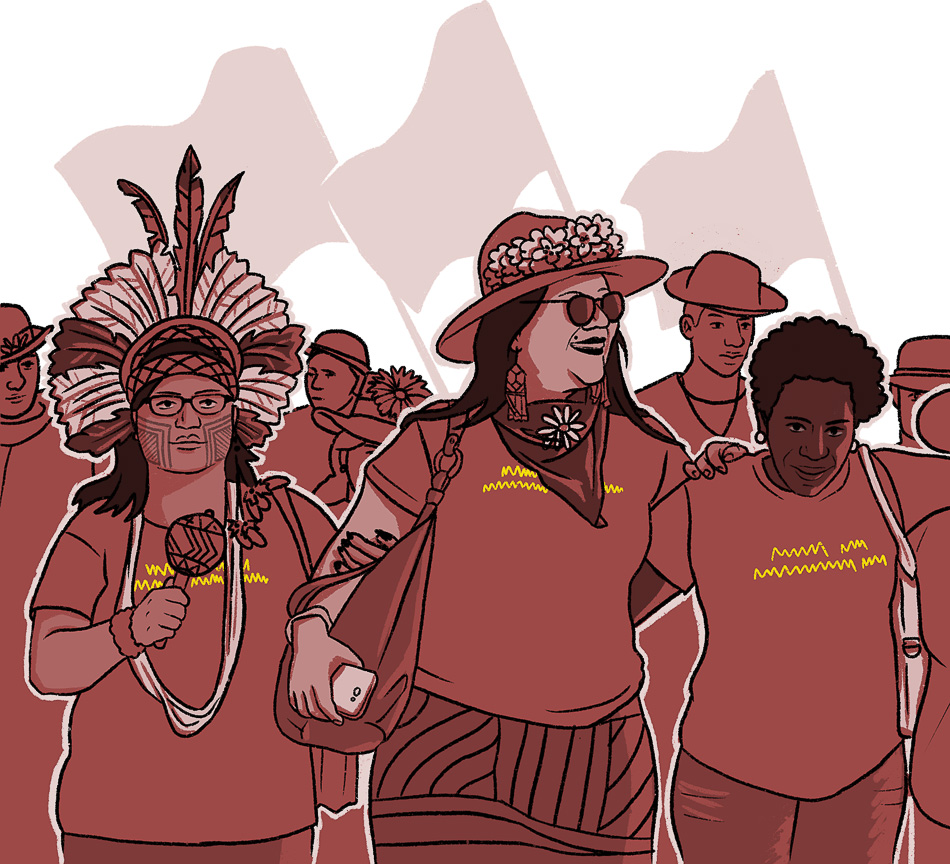
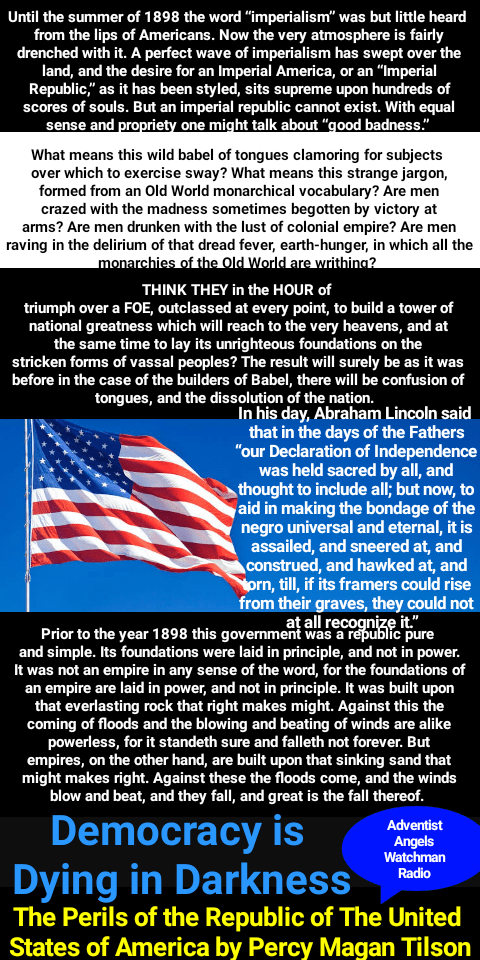


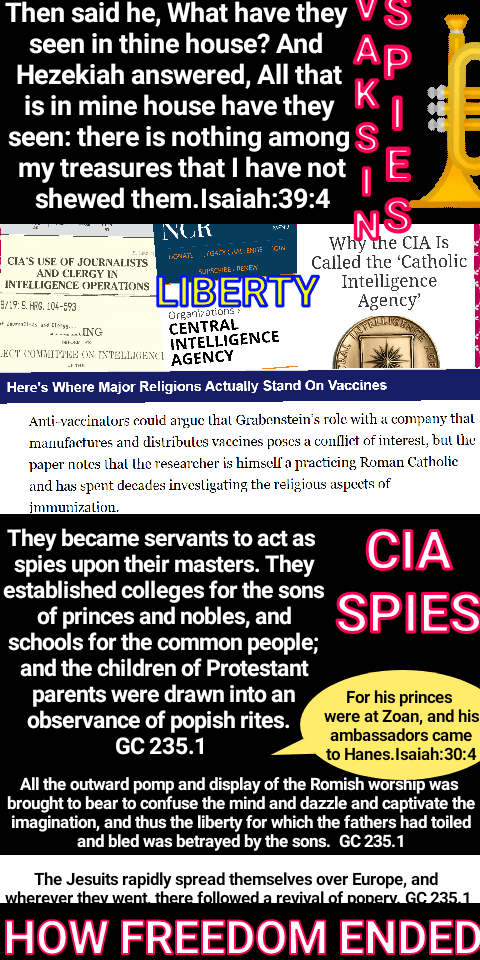
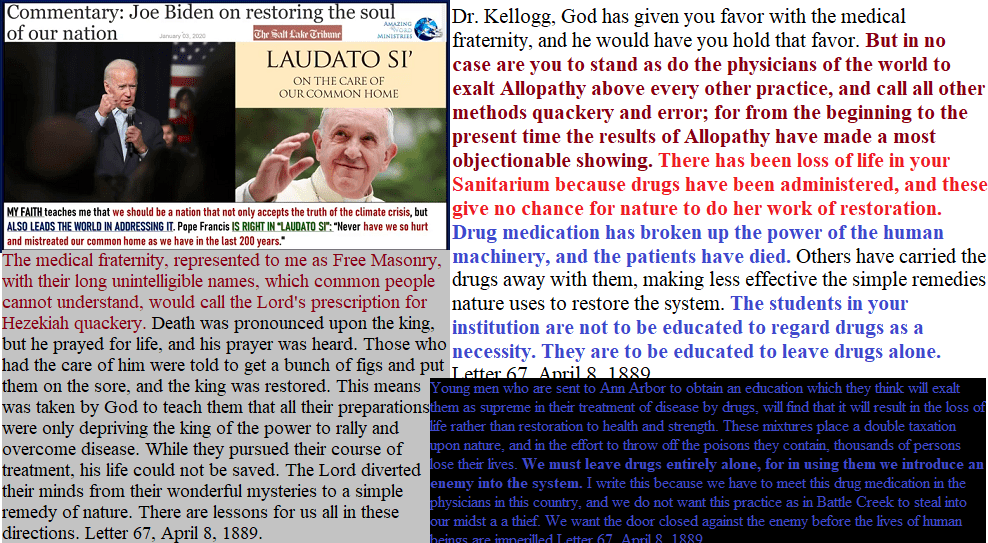
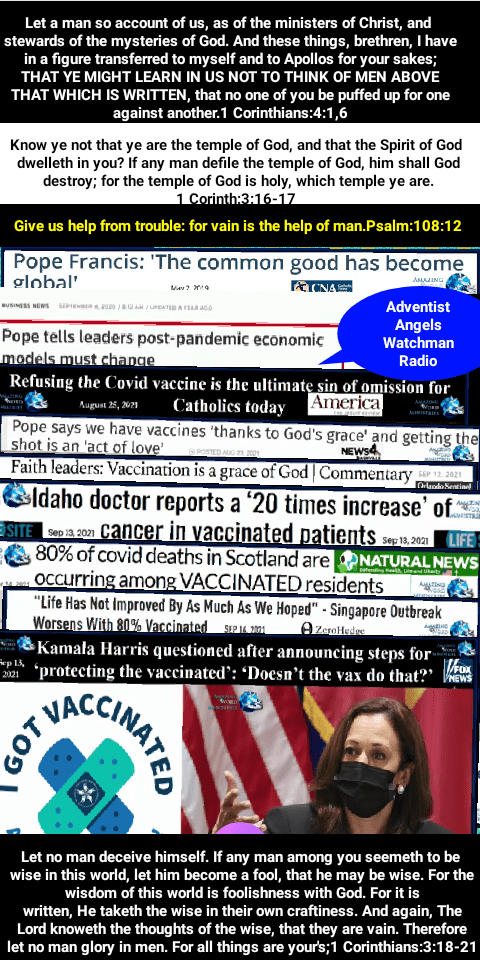
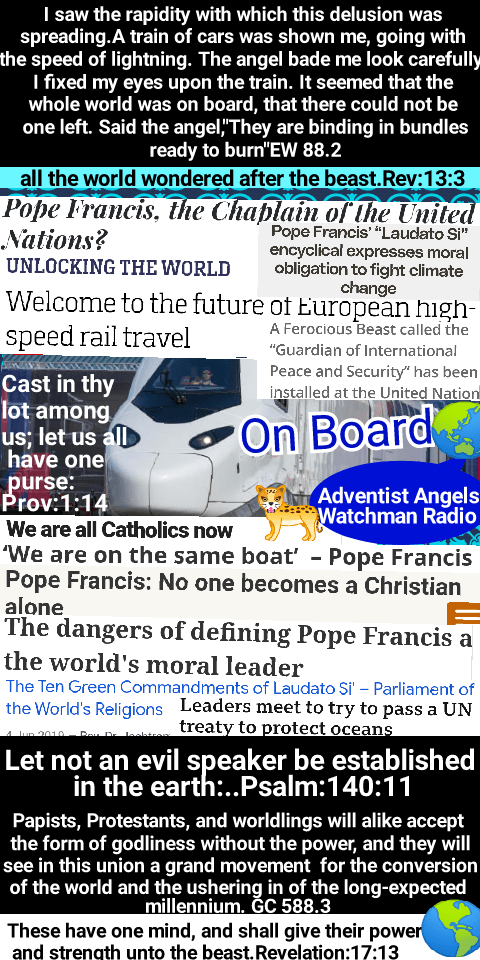
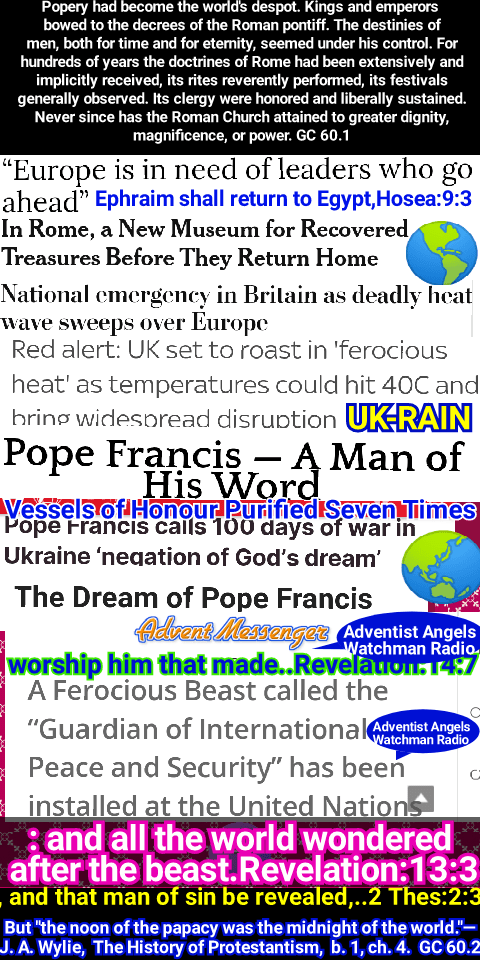

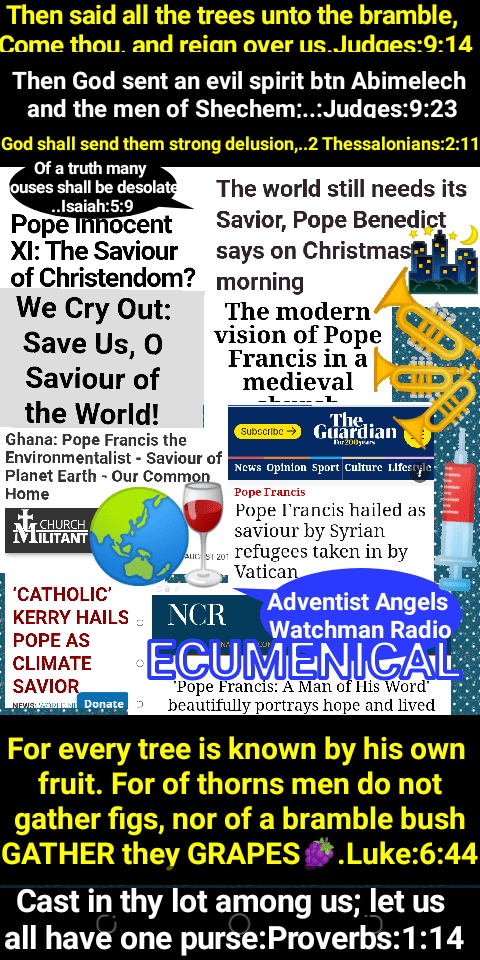
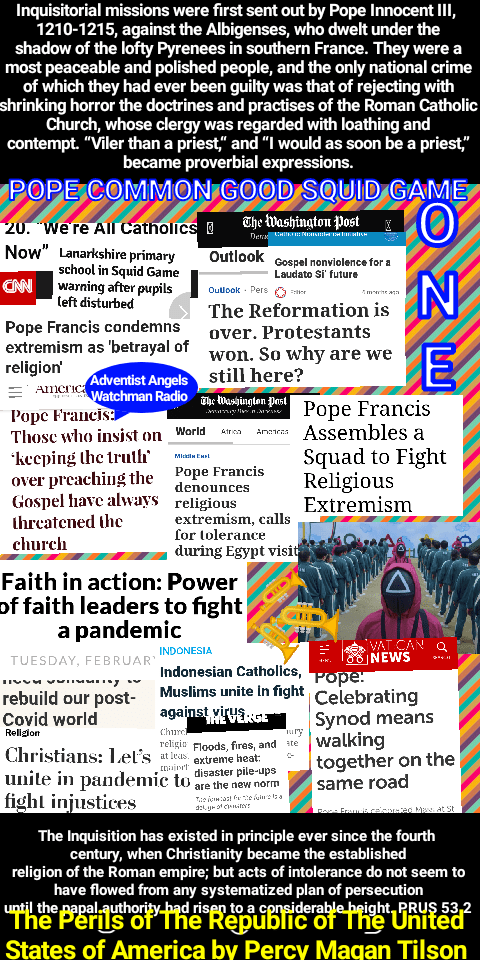
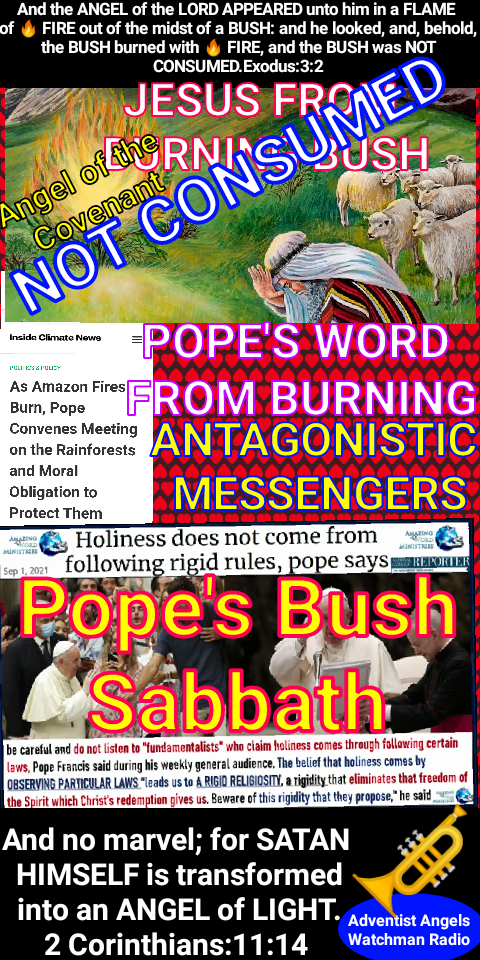
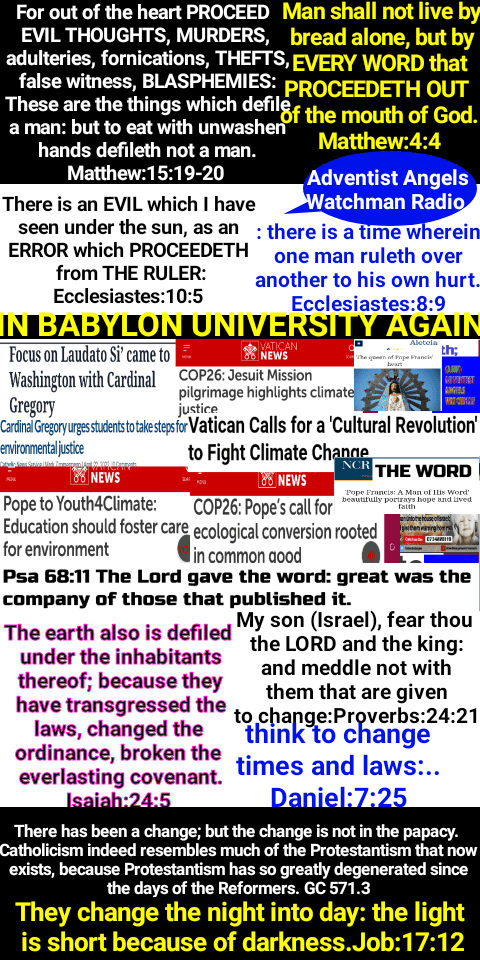
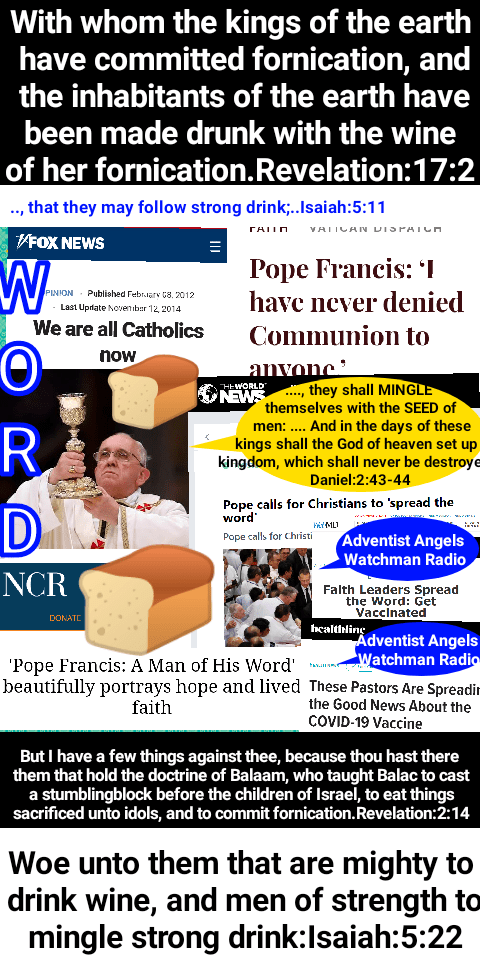
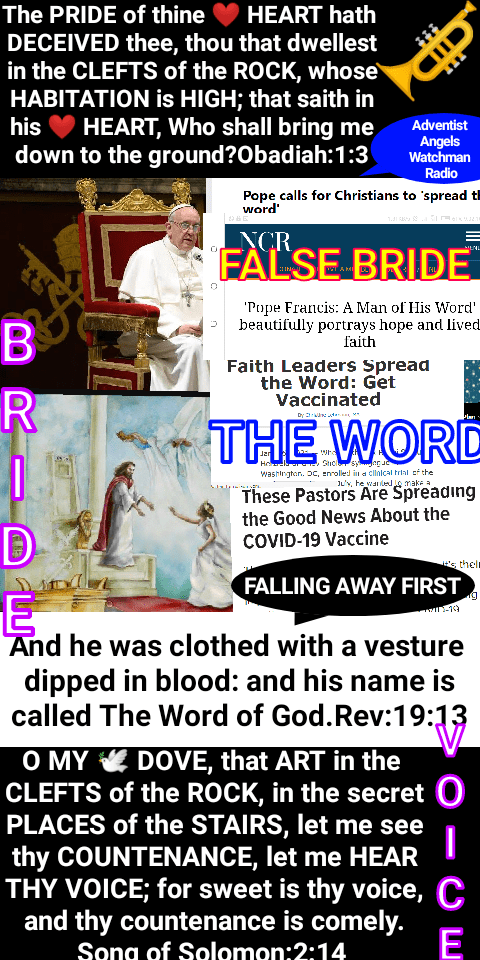
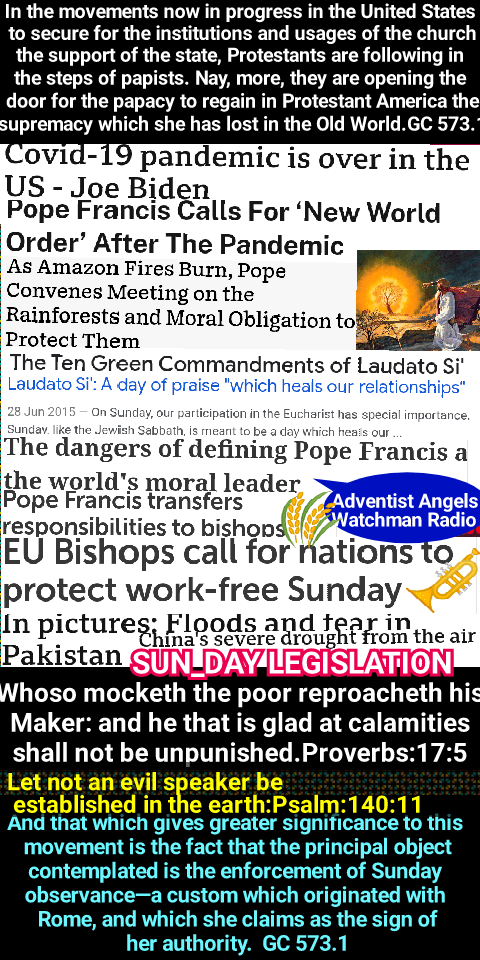
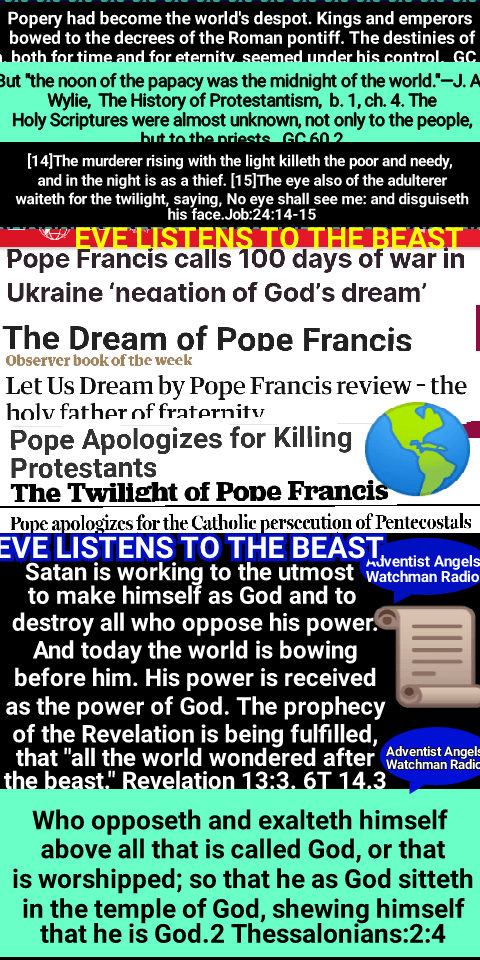
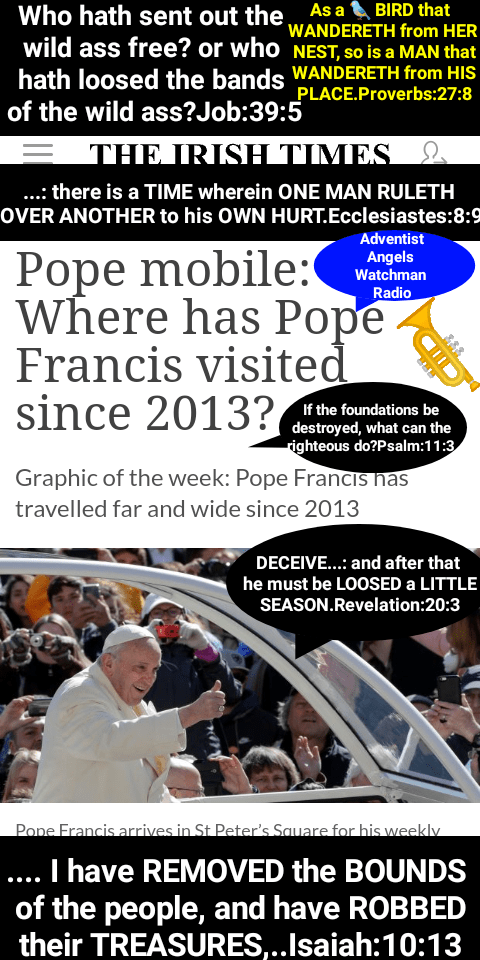
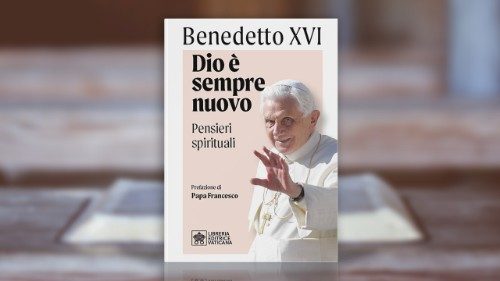
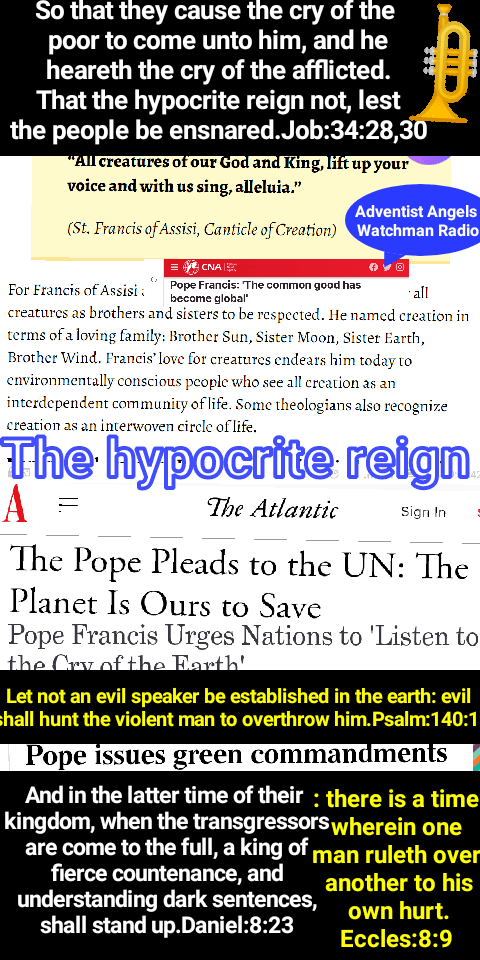

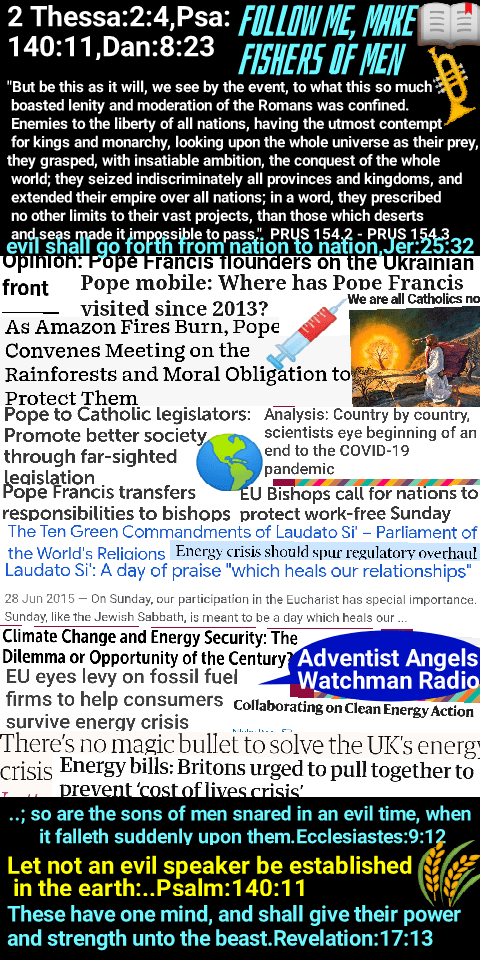
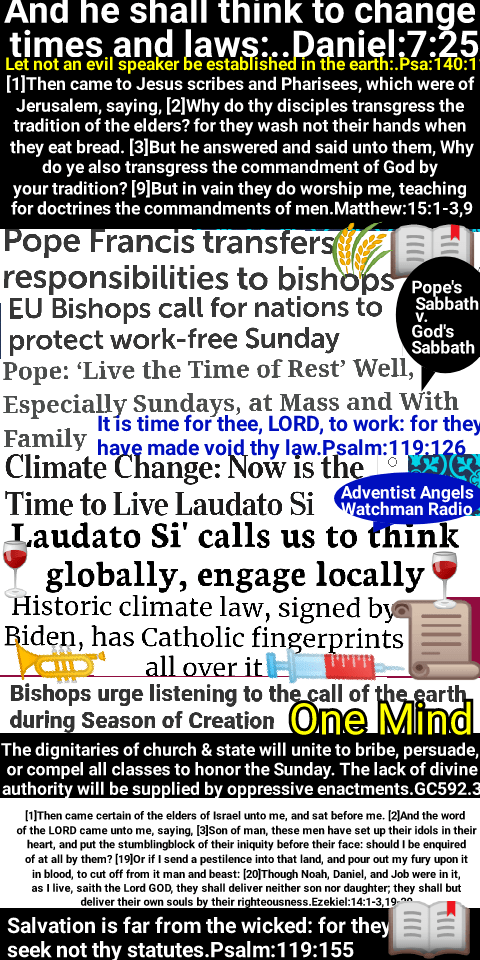
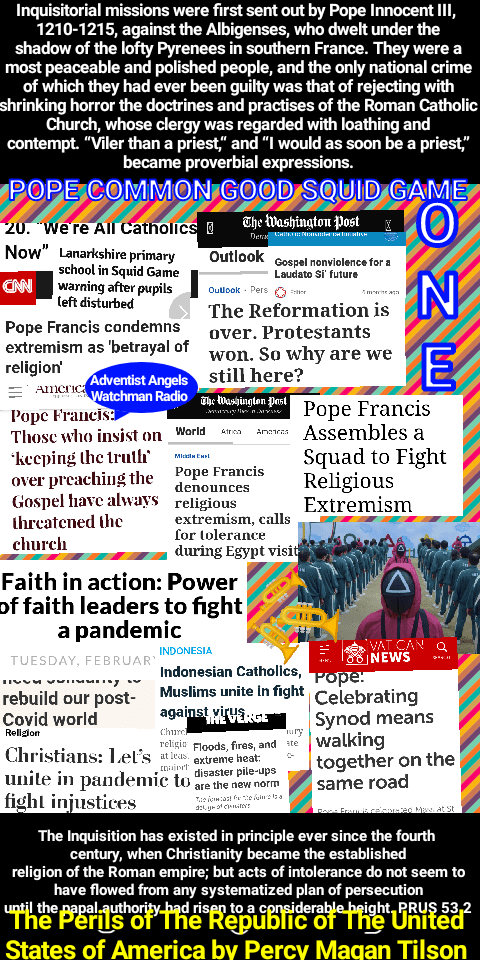
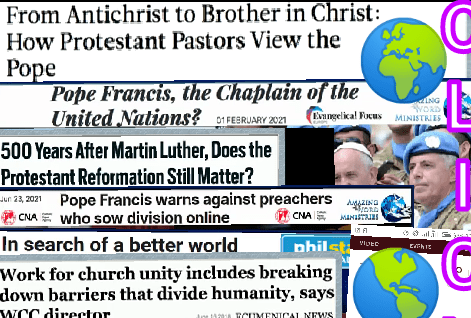
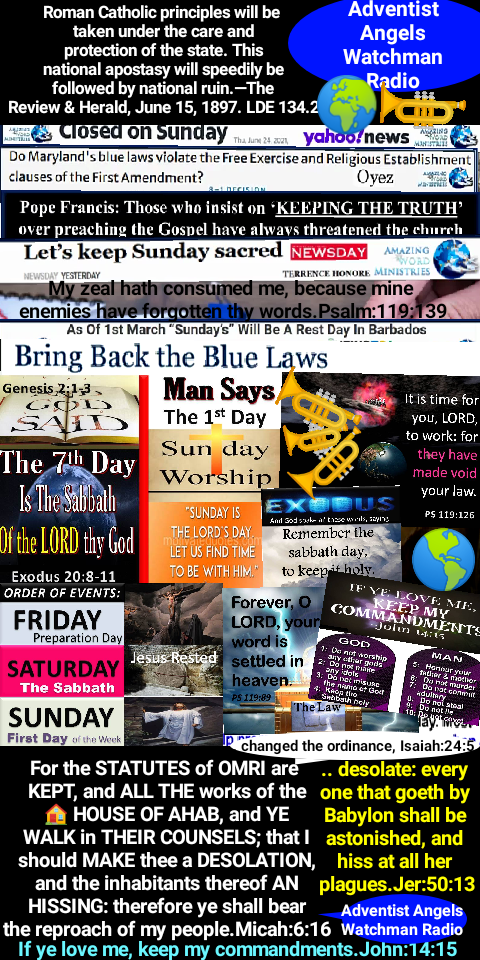
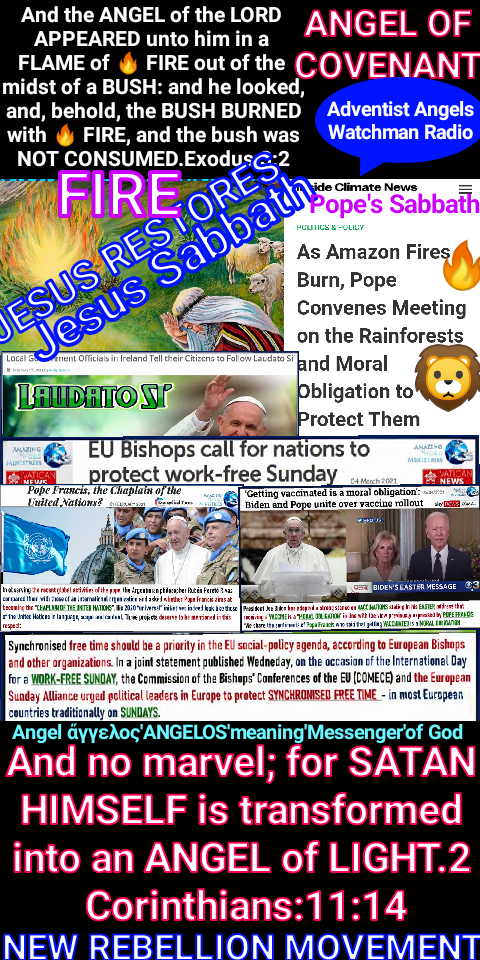

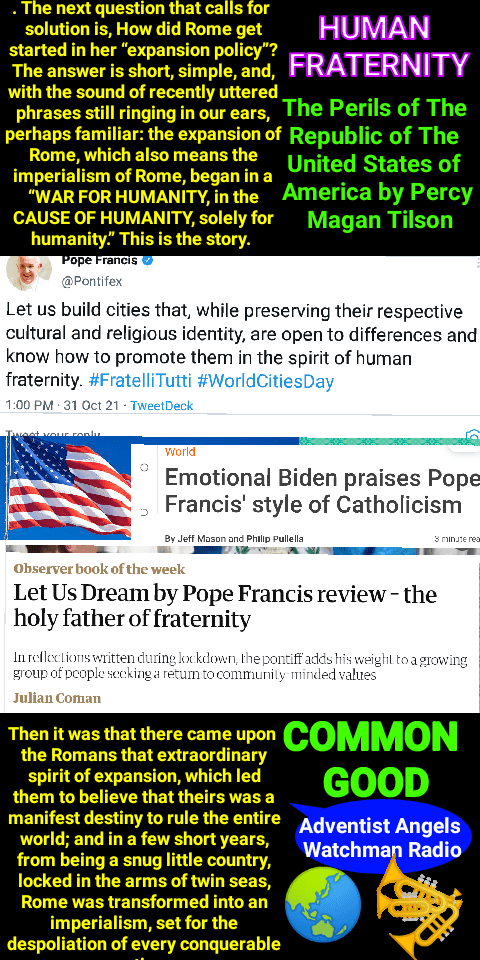
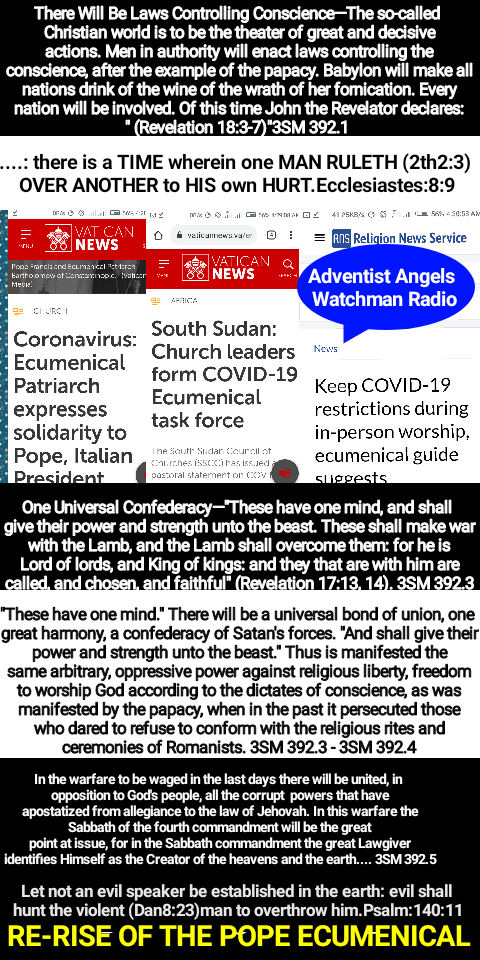
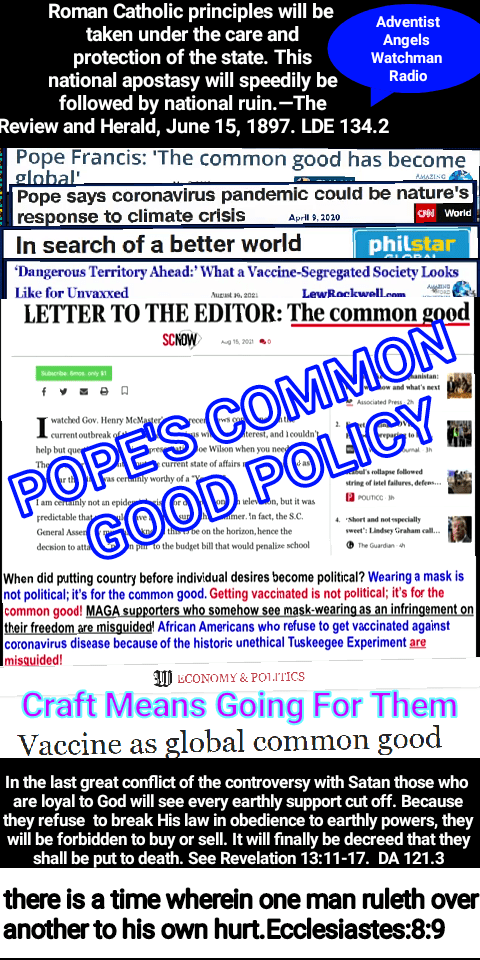
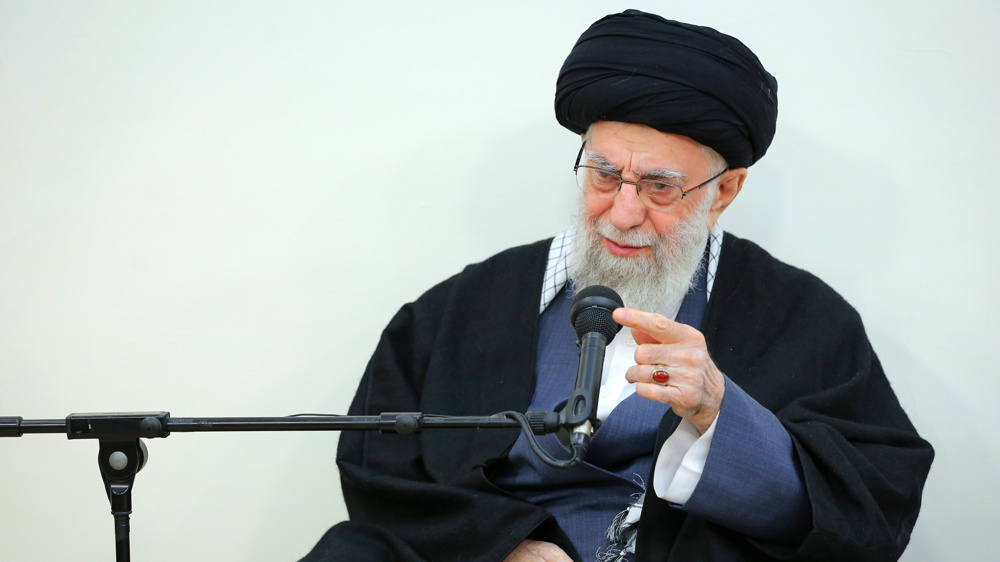
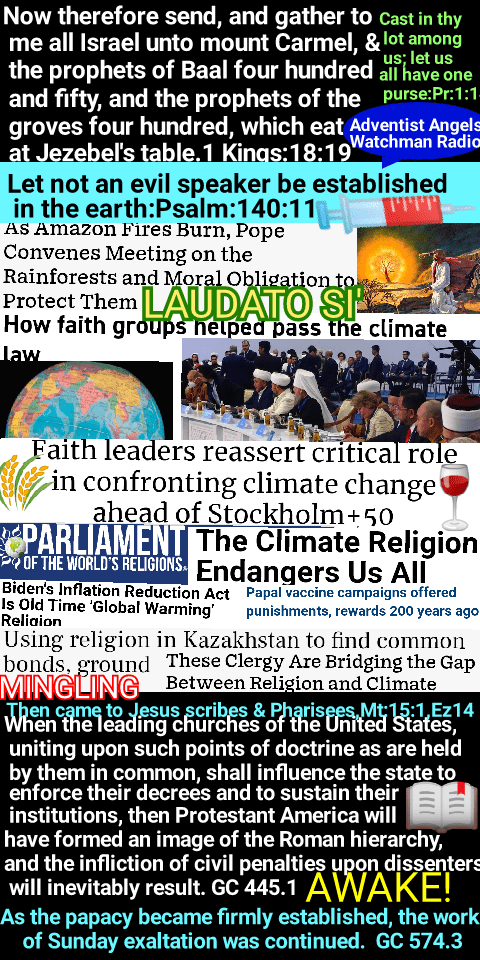
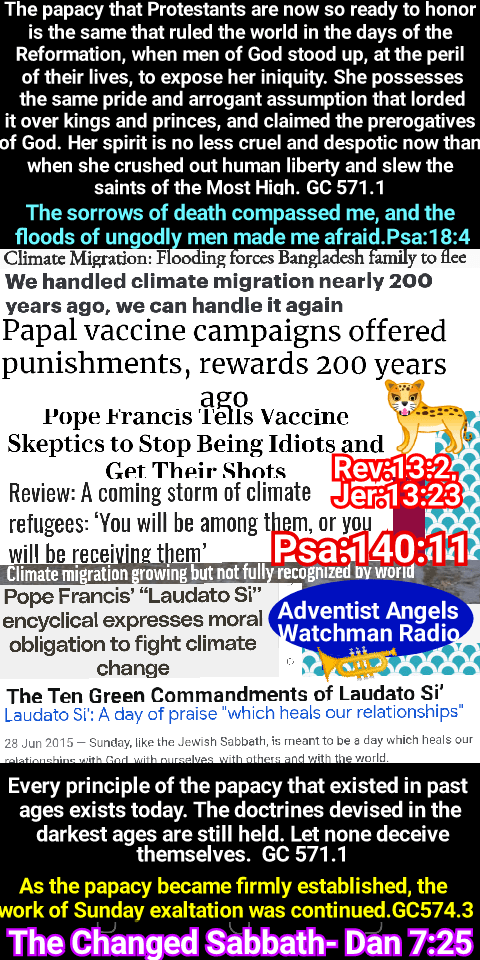
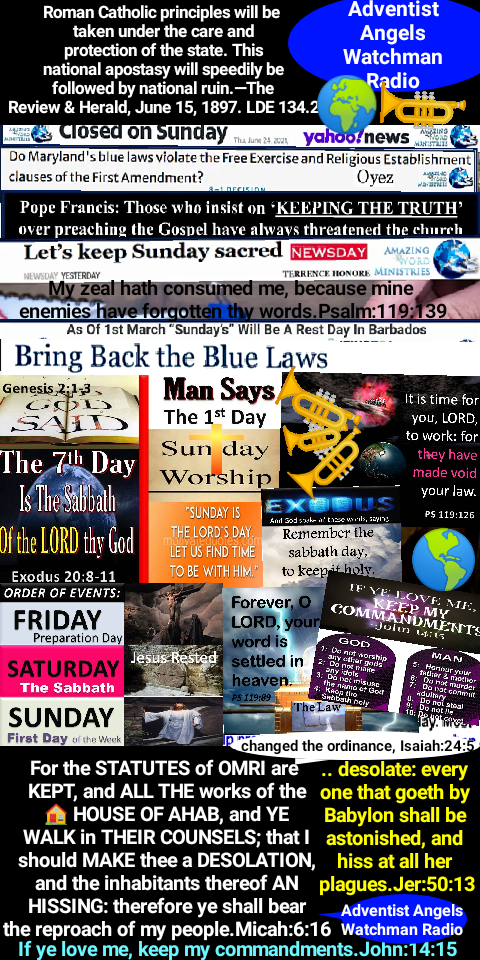

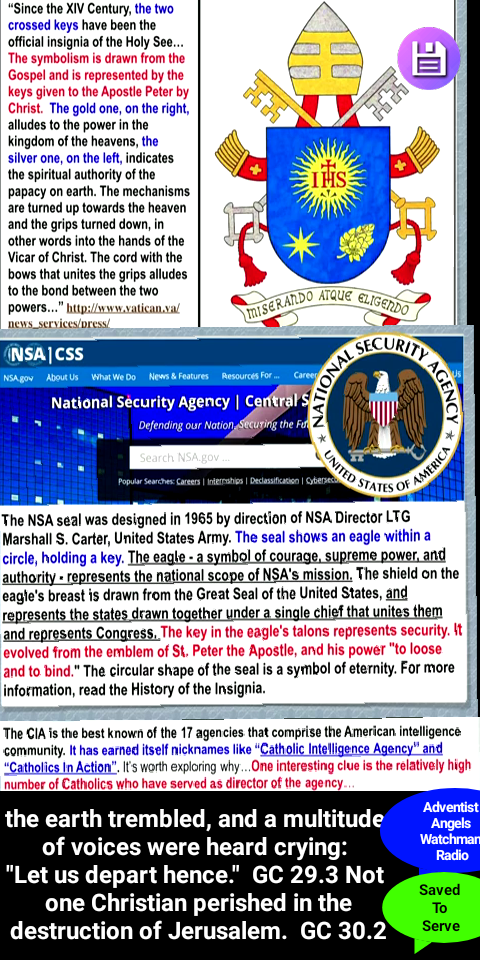


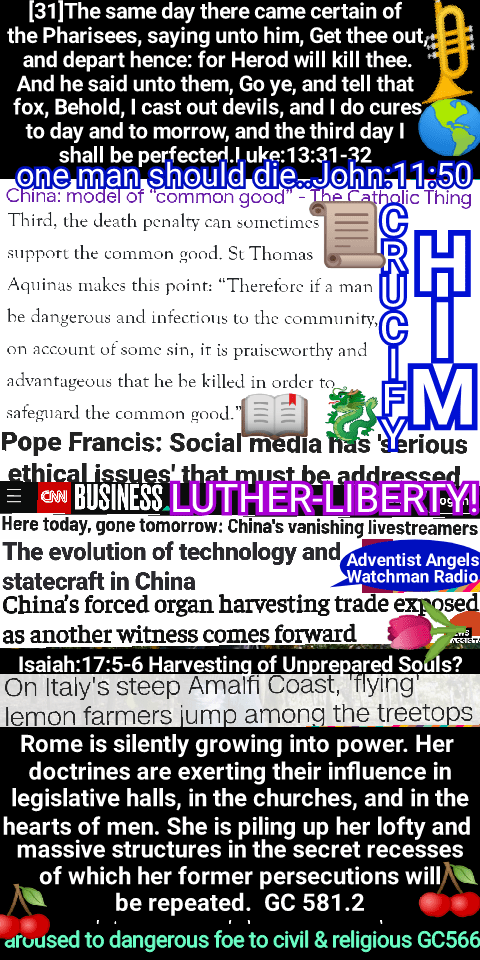

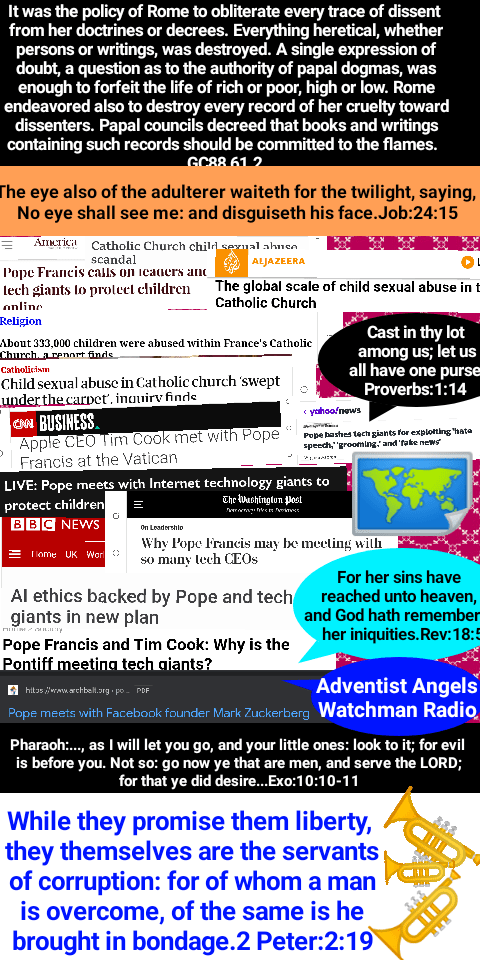
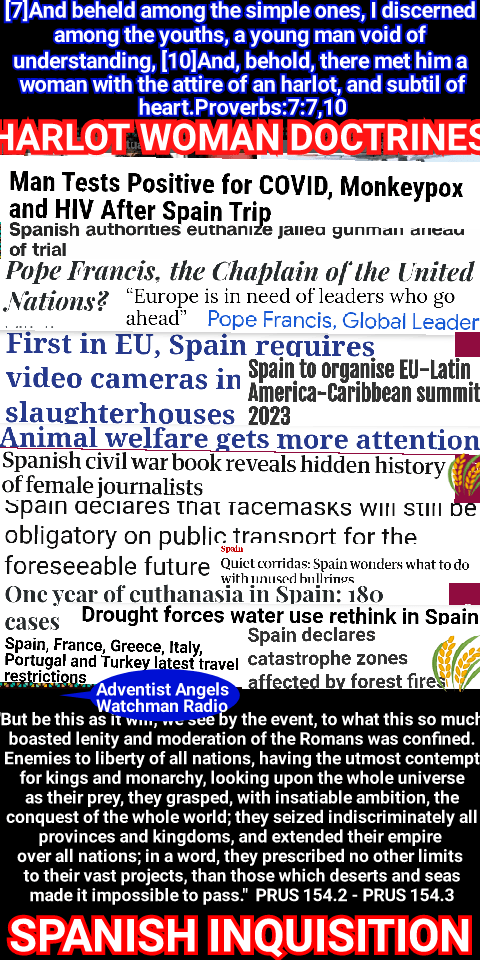
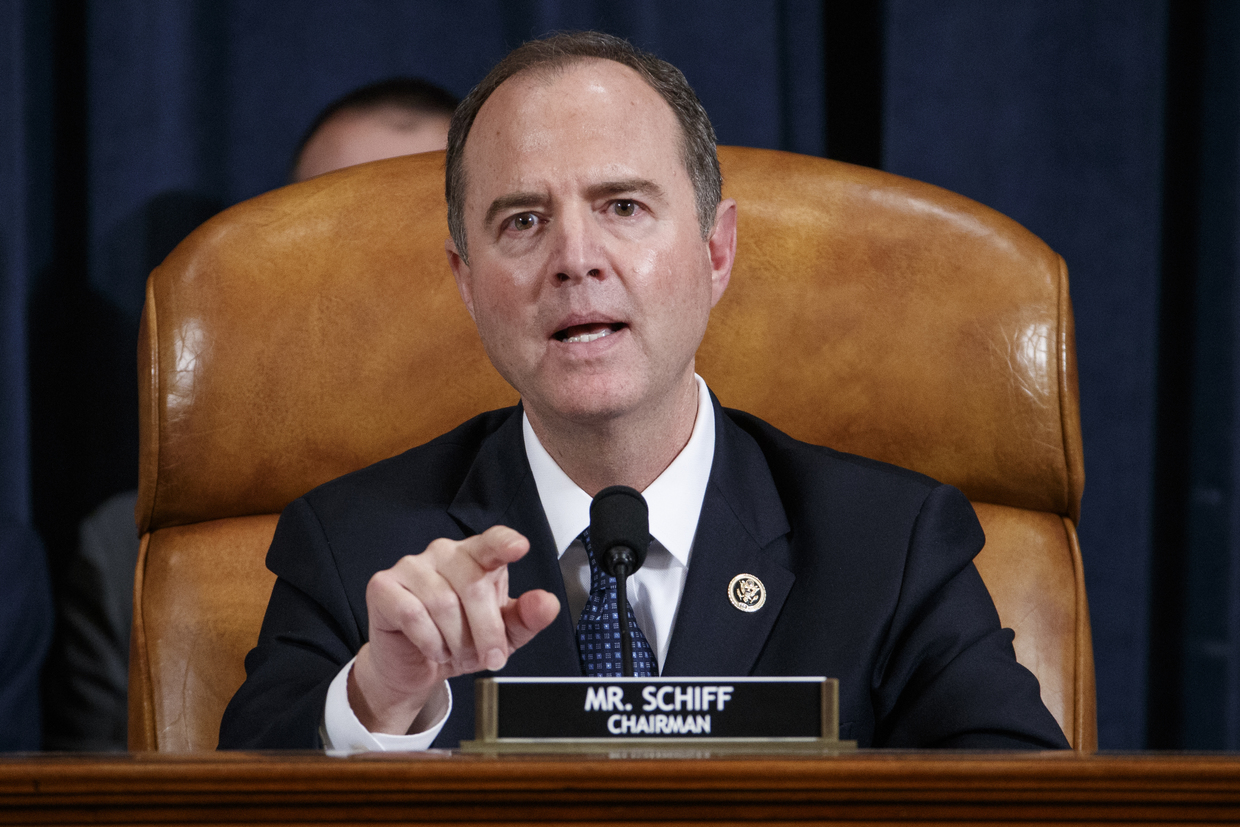

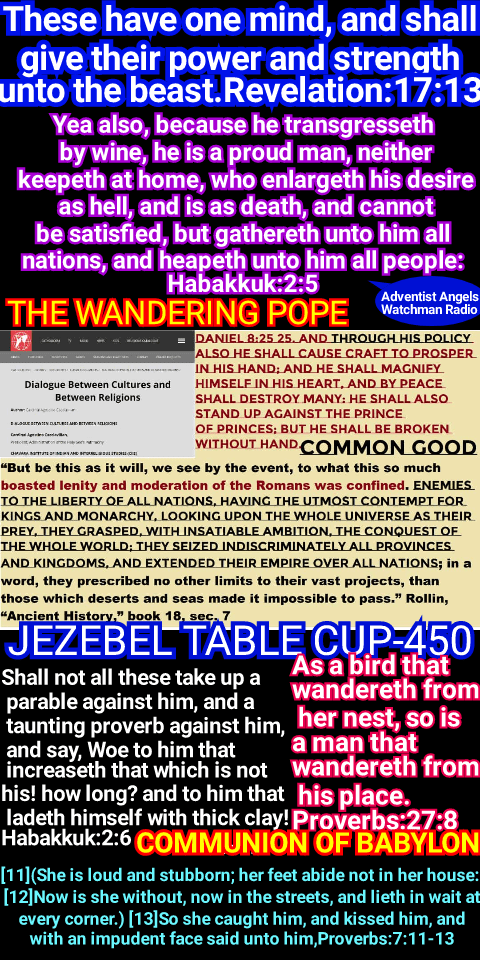
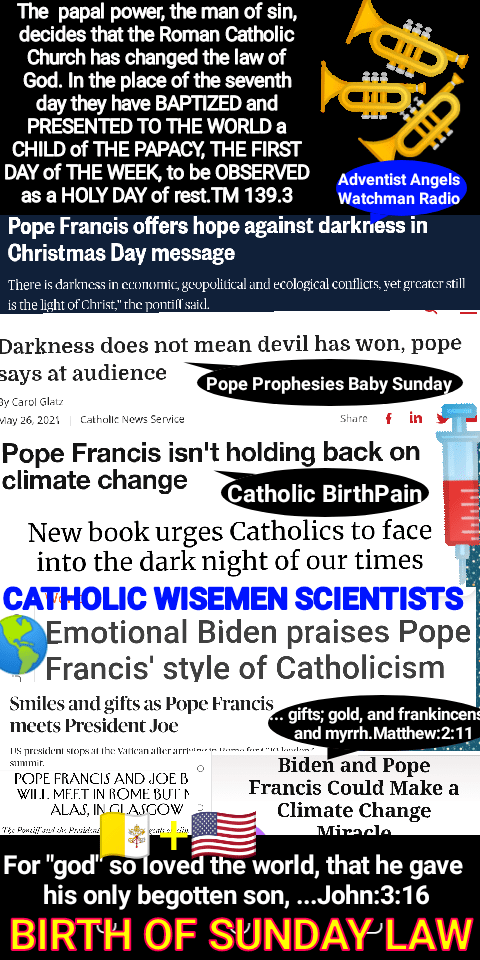
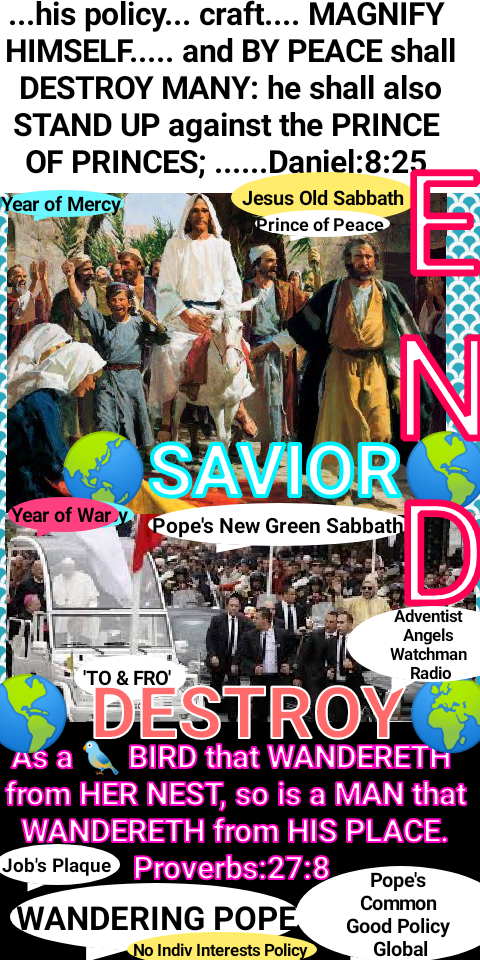
 Adventist Angels Watchman Radio