Welcome to Adventist Angels Watchman Radio official website, preparing the earth for Jesus Christ return Shortly, find us on Facebook, Twitter and You-tube. +254734228119 With Ev. King Osiemo
The breach was made in the law of God when the Sabbath was changed by the Roman power. But the time has come for that divine institution to be restored. The breach is to be repaired and the foundation of many generations to be raised up.
The work of Sabbath reform to be accomplished in the last days is foretold in the prophecy of Isaiah: “Thus saith the Lord, Keep ye judgment, and do justice: for My salvation is near to come, and My righteousness to be revealed. Blessed is the man that doeth this, and the son of man that layeth hold on it; that keepeth the Sabbath from polluting it, and keepeth his hand from doing any evil.” “The sons of the stranger, that join themselves to the Lord, to serve Him, and to love the name of the Lord, to be His servants, everyone that keepeth the Sabbath from polluting it, and taketh hold of My covenant; even them will I bring to My holy mountain, and make them joyful in My house of prayer.” Isaiah 56:1, 2, 6, 7.
These words apply in the Christian age, as shown by the context: “The Lord God which gathereth the outcasts of Israel saith, Yet will I gather others to him, beside those that are gathered unto him.” Verse 8. Here is foreshadowed the gathering in of the Gentiles by the gospel. And upon those who then honor the Sabbath, a blessing is pronounced. Thus the obligation of the fourth commandment extends past the crucifixion, resurrection, and ascension of Christ, to the time when His servants should preach to all nations the message of glad tidings.
The Lord commands by the same prophet: “Bind up the testimony, seal the law among My disciples.” Isaiah 8:16. The seal of God’s law is found in the fourth commandment. This only, of all the ten, brings to view both the name and the title of the Lawgiver. It declares Him to be the Creator of the heavens and the earth, and thus shows His claim to reverence and worship above all others. Aside from this precept, there is nothing in the Decalogue to show by whose authority the law is given. When the Sabbath was changed by the papal power, the seal was taken from the law.The disciples of Jesus are called upon to restore it by exalting the Sabbath of the fourth commandment to its rightful position as the Creator’s memorial and the sign of His authority.
“To the law and to the testimony.” While conflicting doctrines and theories abound, the law of God is the one unerring rule by which all opinions, doctrines, and theories are to be tested. Says the prophet: “If they speak not according to this word, it is because there is no light in them.” Verse 20.
Again, the command is given: “Cry aloud, spare not, lift up thy voice like a trumpet, and show My people their transgression, and the house of Jacob their sins.” It is not the wicked world, but those whom the Lord designates as “my people,” that are to be reproved for their transgressions. He declares further: “Yet they seek Me daily, and delight to know My ways, as a nation that did righteousness, and forsook not the ordinance of their God.” Isaiah 58:1, 2.
Here is brought to view a class who think themselves righteous and appear to manifest great interest in the service of God; but the stern and solemn rebuke of the Searcher of hearts proves them to be trampling upon the divine precepts. The prophet thus points out the ordinance which has been forsaken: “Thou shalt raise up the foundations of many generations; and thou shalt be called, The repairer of the breach, The restorer of paths to dwell in. If thou turn away thy foot from the Sabbath, from doing thy pleasure on My holy day; and call the Sabbath a delight, the holy of the Lord, honorable; and shalt honor Him, not doing thine own ways, nor finding thine own pleasure, nor speaking thine own words: then shalt thou delight thyself in the Lord.” Verses 12-14. This prophecy also applies in our time. The breach was made in the law of God when the Sabbath was changed by the Roman power. But the time has come for that divine institution to be restored. The breach is to be repaired and the foundation of many generations to be raised up.
Hallowed by the Creator’s rest and blessing, the Sabbath was kept by Adam in his innocence in holy Eden; by Adam, fallen yet repentant, when he was driven from his happy estate. It was kept by all the patriarchs, from Abel to righteous Noah, to Abraham, to Jacob. When the chosen people were in bondage in Egypt, many, in the midst of prevailing idolatry, lost their knowledge of God’s law; but when the Lord delivered Israel, He proclaimed His law in awful grandeur to the assembled multitude, that they might know His will and fear and obey Him forever.
The Great Controversy Between Christ and Satan by Ellen G White
From that day to the present the knowledge of God’s law has been preserved in the earth, and the Sabbath of the fourth commandment has been kept. Though the “man of sin” succeeded in trampling underfoot God’s holy day, yet even in the period of his supremacy there were, hidden in secret places, faithful souls who paid it honor. Since the Reformation, there have been some in every generation to maintain its observance. Though often in the midst of reproach and persecution, a constant testimony has been borne to the perpetuity of the law of God and the sacred obligation of the creation Sabbath.
These truths, as presented in Revelation 14 in connection with “the everlasting gospel,” will distinguish the church of Christ at the time of His appearing. For as the result of the threefold message it is announced: “Here are they that keep the commandments of God, and the faith of Jesus.” And this message is the last to be given before the coming of the Lord. Immediately following its proclamation the Son of man is seen by the prophet, coming in glory to reap the harvest of the earth. GC 451.1 – GC 453.3
While Satan seeks to destroy those who honor God’s law, he will cause them to be accused as lawbreakers, as men who are dishonoring God and bringing judgments upon the world.Let not an evil speaker be established in the earth: evil shall hunt the violent man to overthrow him.Psalm:140:11And then shall that Wicked be revealed, whom the Lord shall consume with the spirit of his mouth, and shall destroy with the brightness of his coming:2 Thessalonians:2:8
What is the great lie that has led to all the suffering and misery we see in the world today? Who told that lie? And what is the hope that promises to end this catastrophe of evil? With the earliest history of man, Satan began his efforts to deceive our race. He who had incited rebellion in heaven desired to bring the inhabitants of the earth to unite with him in his warfare against the government of God. Adam and Eve had been perfectly happy in obedience to the law of God, and this fact was a constant testimony against the claim which Satan had urged in heaven, that God’s law was oppressive and opposed to the good of His creatures. And furthermore, Satan’s envy was excited as he looked upon the beautiful home prepared for the sinless pair. He determined to cause their fall, that, having separated them from God and brought them under his own power, he might gain possession of the earth and here establish his kingdom in opposition to the Most High. Had Satan revealed himself in his real character, he would have been repulsed at once, for Adam and Eve had been warned against this dangerous foe; but he worked in the dark, concealing his purpose, that he might more effectually accomplish his object. Employing as his medium the serpent, then a creature of fascinating appearance, he addressed himself to Eve: “Hath God said, ‘Ye shall not eat of every tree of the garden’?” Genesis 3:1. Had Eve refrained from entering into argument with the tempter, she would have been safe; but she ventured to parley with him and fell a victim to his wiles. It is thus that many are still overcome. They doubt and argue concerning the requirements of God; and instead of obeying the divine commands, they accept human theories, which but disguise the devices of Satan. dd 13.null.null – DD 13.2 And beheld among the simple ones, I discerned among the youths, a young man void of understanding, And, behold, there met him a woman with the attire of an harlot, and subtil of heart. With her much fair speech she caused him to yield, with the flattering of her lips she forced him. He goeth after her straightway, as an ox goeth to the slaughter, or as a fool to the correction of the stocks; Till a dart strike through his liver; as a bird hasteth to the snare, and knoweth not that it is for his life. Hearken unto me now therefore, O ye children, and attend to the words of my mouth. Proverbs:7:7,10,21-24
Darkness Before Dawn by Ellen G White
Since the middle of the nineteenth century, students of prophecy in the United States have presented this testimony to the world. In the events now taking place is seen a rapid advance toward the fulfillment of the prediction. With Protestant teachers there is the same claim of divine authority for Sundaykeeping, and the same lack of Scriptural evidence, as with the papal leaders who fabricated miracles to supply the place of a command from God.
The assertion that God’s judgments are visited upon men for their violation of the Sunday-sabbath, will be repeated; already it is beginning to be urged. And a movement to enforce Sunday observance is fast gaining ground.
The Great Controversy Between Christ and Satan by Ellen G White
Marvelous in her shrewdness and cunning is the Roman Church. She can read what is to be. She bides her time, seeing that the Protestant churches are paying her homage in their acceptance of the false sabbath and that they are preparing to enforce it by the very means which she herself employed in bygone days.
Those who reject the light of truth will yet seek the aid of this self-styled infallible power to exalt an institution that originated with her. How readily she will come to the help of Protestants in this work it is not difficult to conjecture. Who understands better than the papal leaders how to deal with those who are disobedient to the church?
The Roman Catholic Church, with all its ramifications throughout the world, forms one vast organization under the control, and designed to serve the interests, of the papal see. Its millions of communicants, in every country on the globe, are instructed to hold themselves as bound in allegiance to the pope. Whatever their nationality or their government, they are to regard the authority of the church as above all other. Though they may take the oath pledging their loyalty to the state, yet back of this lies the vow of obedience to Rome, absolving them from every pledge inimical to her interests.
The Great Controversy Between Christ and Satan by Ellen G White
History testifies of her artful and persistent efforts to insinuate herself into the affairs of nations; and having gained a foothold, to further her own aims, even at the ruin of princes and people. In the year 1204, Pope Innocent III extracted from Peter II, king of Arragon, the following extraordinary oath: “I, Peter, king of Arragonians, profess and promise to be ever faithful and obedient to my lord, Pope Innocent, to his Catholic successors, and the Roman Church, and faithfully to preserve my kingdom in his obedience, defending the Catholic faith, and persecuting heretical pravity.”—John Dowling, The History of Romanism, b. 5, ch. 6, sec. 55. This is in harmony with the claims regarding the power of the Roman pontiff “that it is lawful for him to depose emperors” and “that he can absolve subjects from their allegiance to unrighteous rulers.”—Mosheim, b. 3, cent. 11, pt. 2, ch. 2, sec. 9, note 17. (See also Appendix note for page 447.) And let it be remembered, it is the boast of Rome that she never changes. The principles of Gregory VII and Innocent III are still the principles of the Roman Catholic Church. And had she but the power, she would put them in practice with as much vigor now as in past centuries. Protestants little know what they are doing when they propose to accept the aid of Rome in the work of Sunday exaltation.
While they are bent upon the accomplishment of their purpose, Rome is aiming to re-establish her power, to recover her lost supremacy. Let the principle once be established in the United States that the church may employ or control the power of the state; that religious observances may be enforced by secular laws; in short, that the authority of church and state is to dominate the conscience, and the triumph of Rome in this country is assured.
God’s word has given warning of the impending danger; let this be unheeded, and the Protestant world will learn what the purposes of Rome really are, only when it is too late to escape the snare. She is silently growing into power. Her doctrines are exerting their influence in legislative halls, in the churches, and in the hearts of men. She is piling up her lofty and massive structures in the secret recesses of which her former persecutions will be repeated. Stealthily and unsuspectedly she is strengthening her forces to further her own ends when the time shall come for her to strike. All that she desires is vantage ground, and this is already being given her. We shall soon see and shall feel what the purpose of the Roman element is. Whoever shall believe and obey the word of God will thereby incur reproach and persecution. GC 579.1 – GC 581.2
While appearing to the children of men as a great physician who can heal all their maladies, he will bring disease and disaster, until populous cities are reduced to ruin and desolation. Even now he is at work. In accidents and calamities by sea and by land, in great conflagrations, in fierce tornadoes and terrific hailstorms, in tempests, floods, cyclones, tidal waves, and earthquakes, in every place and in a thousand forms, Satan is exercising his power. He sweeps away the ripening harvest, and famine and distress follow. He imparts to the air a deadly taint, and thousands perish by the pestilence. These visitations are to become more and more frequent and disastrous. Destruction will be upon both man and beast. “The earth mourneth and fadeth away,” “the haughty people … do languish. The earth also is defiled under the inhabitants thereof; because they have transgressed the laws, changed the ordinance, broken the everlasting covenant.” Isaiah 24:4, 5.
And then the great deceiver will persuade men that those who serve God are causing these evils. The class that have provoked the displeasure of Heaven will charge all their troubles upon those whose obedience to God’s commandments is a perpetual reproof to transgressors. It will be declared that men are offending God by the violation of the Sunday sabbath; that this sin has brought calamities which will not cease until Sunday observance shall be strictly enforced; and that those who present the claims of the fourth commandment, thus destroying reverence for Sunday, are troublers of the people, preventing their restoration to divine favor and temporal prosperity. Thus the accusation urged of old against the servant of God will be repeated and upon grounds equally well established: “And it came to pass, when Ahab saw Elijah, that Ahab said unto him, Art thou he that troubleth Israel? And he answered, I have not troubled Israel; but thou, and thy father’s house, in that ye have forsaken the commandments of the Lord, and thou hast followed Baalim.” 1 Kings 18:17, 18. As the wrath of the people shall be excited by false charges, they will pursue a course toward God’s ambassadors very similar to that which apostate Israel pursued toward Elijah.
The miracle-working power manifested through spiritualism will exert its influence against those who choose to obey God rather than men.
Communications from the spirits will declare that God has sent them to convince the rejecters of Sunday of their error, affirming that the laws of the land should be obeyed as the law of God. They will lament the great wickedness in the world and second the testimony of religious teachers that the degraded state of morals is caused by the desecration of Sunday. Great will be the indignation excited against all who refuse to accept their testimony.
Satan’s policy in this final conflict with God’s people is the same that he employed in the opening of the great controversy in heaven. He professed to be seeking to promote the stability of the divine government, while secretly bending every effort to secure its overthrow. And the very work which he was thus endeavoring to accomplish he charged upon the loyal angels. The same policy of deception has marked the history of the Roman Church. It has professed to act as the vicegerent of Heaven, while seeking to exalt itself above God and to change His law. Under the rule of Rome, those who suffered death for their fidelity to the gospel were denounced as evildoers; they were declared to be in league with Satan; and every possible means was employed to cover them with reproach, to cause them to appear in the eyes of the people and even to themselves as the vilest of criminals. So it will be now. While Satan seeks to destroy those who honor God’s law, he will cause them to be accused as lawbreakers, as men who are dishonoring God and bringing judgments upon the world.
God never forces the will or the conscience; but Satan’s constant resort—to gain control of those whom he cannot otherwise seduce—is compulsion by cruelty. Through fear or force he endeavors to rule the conscience and to secure homage to himself. To accomplish this, he works through both religious and secular authorities, moving them to the enforcement of human laws in defiance of the law of God.
Those who honor the Bible Sabbath will be denounced as enemies of law and order, as breaking down the moral restraints of society, causing anarchy and corruption, and calling down the judgments of God upon the earth. Their conscientious scruples will be pronounced obstinacy, stubbornness, and contempt of authority. They will be accused of disaffection toward the government. Ministers who deny the obligation of the divine law will present from the pulpit the duty of yielding obedience to the civil authorities as ordained of God. In legislative halls and courts of justice, commandment keepers will be misrepresented and condemned. A false coloring will be given to their words; the worst construction will be put upon their motives.
As the Protestant churches reject the clear, Scriptural arguments in defense of God’s law, they will long to silence those whose faith they cannot overthrow by the Bible. Though they blind their own eyes to the fact, they are now adopting a course which will lead to the persecution of those who conscientiously refuse to do what the rest of the Christian world are doing, and acknowledge the claims of the papal sabbath.
The dignitaries of church and state will unite to bribe, persuade, or compel all classes to honor the Sunday. The lack of divine authority will be supplied by oppressive enactments. Political corruption is destroying love of justice and regard for truth; and even in free America, rulers and legislators, in order to secure public favor, will yield to the popular demand for a law enforcing Sunday observance. Liberty of conscience, which has cost so great a sacrifice, will no longer be respected. In the soon-coming conflict we shall see exemplified the prophet’s words: “The dragon was wroth with the woman, and went to make war with the remnant of her seed, which keep the commandments of God, and have the testimony of Jesus Christ.” Revelation 12:17. GC 589.3 – GC 592.3
“This isn’t a conspiracy that is playing out on the extreme fringes, we’re seeing it on mainstream social media platforms being shared by regular Americans.”
BY
SOPHIA TULP
AND
THE ASSOCIATED PRESS
The Roman Catholic Church, with all its ramifications throughout the world, forms one vast organization under the control, and designed to serve the interests, of the papal see.Its millions of communicants, in every country on the globe, are instructed to hold themselves as bound in allegiance to the pope. Whatever their nationality or their government, they are to regard the authority of the church as above all other. Though they may take the oath pledging their loyalty to the state, yet back of this lies the vow of obedience to Rome, absolving them from every pledge inimical to her interests. History testifies of her artful and persistent efforts to insinuate herself into the affairs of nations; and having gained a foothold, to further her own aims, even at the ruin of princes and people. GC 580.2 – GC 580.3
The Great Controversy Between Christ and Satan by Ellen G White
When some of the world’s wealthiest and most influential figures gathered at the World Economic Forum’s annual meeting last year, sessions on climate change drew high-level discussions on topics such as carbon financing and sustainable food systems.
But an entirely different narrative played out on the internet, where social media users claimed leaders wanted to force the population to eat insects instead of meat in the name of saving the environment.
The annual event in the Swiss ski resort town of Davos, which opens Monday, has increasingly become a target of bizarre claims from a growing chorus of commentators who believe the forum involves a group of elites manipulating global events for their own benefit. Experts say what was once a conspiracy theory found in the internet’s underbelly has now hit the mainstream.
“This isn’t a conspiracy that is playing out on the extreme fringes,” said Alex Friedfeld, a researcher with the Anti-Defamation League who studies anti-government extremism. “We’re seeing it on mainstream social media platforms being shared by regular Americans. We were seeing it being spread by mainstream media figures right on their prime time news, on their nightly networks.”
The meeting draws heads of state, business executives, cultural trendsetters and representatives from international organizations to the luxe mountain town. Though it’s always unclear how much concrete action will emerge, the meeting is slated to take on pressing global issues from climate change and economic uncertainty to geopolitical instability and public health.
The Lord of heaven permits the world to choose whom they will have as ruler. Let all read carefully the thirteenth chapter of Revelation, for it concerns every human agent, great and small. Every human being must take sides, either for the true and living God, who has given to the world the memorial of creation in the Seventh-day Sabbath, or for a false sabbath, instituted by men who have exalted themselves above all that is called God or that is worshiped, who have taken upon themselves the attributes of Satan in oppressing the loyal and true who keep the commandments of God. This persecuting power will compel the worship of the beast by insisting on the observance of the sabbath he has instituted. Thus he blasphemes God, “sitting in the temple of God, shewing himself that he is God” 2 Thessalonians 2:4. 14MR 91.4
Ellen G White
Hundreds of public sessions are planned, but the four-day conference is also known for secretive backroom meetings and deal-making by business leaders. This gap between what’s shown to the public and what happens behind closed doors helps make that makes the meeting a flashpoint for misinformation.null
For all nations have drunk of the wine of the wrath of her fornication, and the kings of the earth have committed fornication with her, and the merchants of the earth are waxed rich through the abundance of her delicacies. Revelation:18:3
“When we have very high levels of ambiguity, it’s very easy to fill in narratives,” said Kathleen Hall Jamieson, who is the director of the Annenberg Public Policy Center at the University of Pennsylvania and also studies misinformation.
And the Pharisees went forth, and straightway took counsel with the Herodians against him, how they might destroy him. Mark:3:6, The kings of the earth set themselves, and the rulers take counsel together, against the LORD, and against his anointed, saying, Psalm:2:2
Theories about influential global leaders are not new, she said, but scrutiny of the forum and its chairman, Klaus Schwab, intensified in 2020 in the early days of the COVID-19 pandemic.That year, the theme of the annual meeting was “The Great Reset.” The initiative envisioned sweeping changes to how societies and economies would work to recover from the pandemic and build a more sustainable future.
Now, in increasingly mainstream corners of the internet and on conservative talk shows, “The Great Reset” has become shorthand for what skeptics say is a reorganization of society, using global uncertainty as a guise to take away rights. Believers argue that measures including pandemic lockdowns and vaccine mandates are tools to consolidate power and undercut individual sovereignty.
In a time of mounting anxiety, Jamieson says the public has become more susceptible to falsehoods, as conspiracy theories emerge as a tool to cut through the chaos. Researchers who monitor extremism say these beliefs are becoming more popular and more concerning.
At a rally staged on the grounds of an upstate New York church last fall, a photo of Schwab was displayed on the center of a large screen alongside other “villains” accused of threatening American values. The crowd of thousands had gathered in a revivalist tent at a traveling roadshow used as a recruiting tool for an ascendant Christian nationalist movement. Participants discussed “The Great Reset,” among a host of other theories, as an assault on America’s foundations.
The phrase was used more than 60 times across all programs on FoxNews in 2022, according to one tally generated by the Internet Archive’s TV news database. That’s up from 30 mentions in 2021 and about 20 in 2020. It was discussed most frequently on “The Ingraham Angle” and “Tucker Carlson Tonight.”null
And in August, amid a defamation trial for calling the Sandy Hook Elementary School attack a hoax, Infowars host Alex Jones released a book called “The Great Reset: And The War For the World.” It’s described as an analysis of “the global elite’s international conspiracy to enslave humanity and all life on the planet.”
As the World Economic Forum has become intertwined with this narrative, a steady stream of claims have plagued the organization. While some people offer legitimate criticisms of the forum — namely that it hosts wealthy executives who fly in on emissions-spewing corporate jets — others spread unverified or baseless information as fact.
Meanwhile, the popular claim that the forum wants people to replace meat with bugs is a distorted reference to an article once published on the organization’s website. In another instance, a widely shared post claimed without evidence that the forum had “appointed” U.S. Rep. Kevin McCarthy as speaker of the House before the actual vote had taken place.
The concern, Friedfeld says, is that posts like these could introduce people to more fringe and dangerous conspiracy theories or even translate into real-world violence. Yann Zopf, head of media for the forum, says the organization has increased its monitoring of this kind of online activity and carefully watches for direct threats.
“Creating all that kind of stuff can generate enemies that people believe are responsible for whatever bad thing is happening in the world,” Friedfeld said. “Once that happens, when you believe that that things are happening in the world and a certain person or group of people is responsible for these attacks, all of a sudden, the idea of using violence to resist becomes more plausible.”
While appearing to the children of men as a great physician who can heal all their maladies, he will bring disease and disaster, until populous cities are reduced to ruin and desolation. Even now he is at work. In accidents and calamities by sea and by land, in great conflagrations, in fierce tornadoes and terrific hailstorms, in tempests, floods, cyclones, tidal waves, and earthquakes, in every place and in a thousand forms, Satan is exercising his power. He sweeps away the ripening harvest, and famine and distress follow. He imparts to the air a deadly taint, and thousands perish by the pestilence. These visitations are to become more and more frequent and disastrous. Destruction will be upon both man and beast. “The earth mourneth and fadeth away,” “the haughty people … do languish. The earth also is defiled under the inhabitants thereof; because they have transgressed the laws, changed the ordinance, broken the everlasting covenant.” Isaiah 24:4, 5. And then the great deceiver will persuade men that those who serve God are causing these evils. The class that have provoked the displeasure of Heaven will charge all their troubles upon those whose obedience to God’s commandments is a perpetual reproof to transgressors. It will be declared that men are offending God by the violation of the Sunday sabbath; that this sin has brought calamities which will not cease until Sunday observance shall be strictly enforced; and that those who present the claims of the fourth commandment, thus destroying reverence for Sunday, are troublers of the people, preventing their restoration to divine favor and temporal prosperity. Thus the accusation urged of old against the servant of God will be repeated and upon grounds equally well established: “And it came to pass, when Ahab saw Elijah, that Ahab said unto him, Art thou he that troubleth Israel? And he answered, I have not troubled Israel; but thou, and thy father’s house, in that ye have forsaken the commandments of the Lord, and thou hast followed Baalim.” 1 Kings 18:17, 18. As the wrath of the people shall be excited by false charges, they will pursue a course toward God’s ambassadors very similar to that which apostate Israel pursued toward Elijah. GC 589.3 – GC 590.1
Maratha
Learn how to navigate and strengthen trust in your business with The Trust Factor, a weekly newsletter examining what leaders need to succeed. Sign up here.
“In the current situation of globalization not only of the economy but also of technological and cultural exchanges, the nation state is no longer able to procure the common good of its population alone,” Pope Francis told the Pontifical Academy of Social Sciences May 2.
“The common good has become global and nations must associate for their own benefit,” Francis said, noting that some nations today have “a spirit of opposition rather than cooperation.”
The pope called “b
uilding the common good of humanity, a necessary and essential element for the world balance.”
And the revelator declares, also referring to the papacy: “All that dwell upon the earth shall worship him, whose names are not written in the book of life.” Revelation 13:8. In both the Old and the New World, the papacy will receive homage in the honor paid to the Sunday institution, that rests solely upon the authority of the Roman Church. Since the middle of the nineteenth century, students of prophecy in the United States have presented this testimony to the world. In the events now taking place is seen a rapid advance toward the fulfillment of the prediction. With Protestant teachers there is the same claim of divine authority for Sundaykeeping, and the same lack of Scriptural evidence, as with the papal leaders who fabricated miracles to supply the place of a command from God. The assertion that God’s judgments are visited upon men for their violation of the Sunday-sabbath, will be repeated; already it is beginning to be urged. And a movement to enforce Sunday observance is fast gaining ground. Marvelous in her shrewdness and cunning is the Roman Church. She can read what is to be. She bides her time, seeing that the Protestant churches are paying her homage in their acceptance of the false sabbath and that they are preparing to enforce it by the very means which she herself employed in bygone days. Those who reject the light of truth will yet seek the aid of this self-styled infallible power to exalt an institution that originated with her. How readily she will come to the help of Protestants in this work it is not difficult to conjecture. Who understands better than the papal leaders how to deal with those who are disobedient to the church? The Roman Catholic Church, with all its ramifications throughout the world, forms one vast organization under the control, and designed to serve the interests, of the papal see. Its millions of communicants, in every country on the globe, are instructed to hold themselves as bound in allegiance to the pope. Whatever their nationality or their government, they are to regard the authority of the church as above all other. Though they may take the oath pledging their loyalty to the state, yet back of this lies the vow of obedience to Rome, absolving them from every pledge inimical to her interests. History testifies of her artful and persistent efforts to insinuate herself into the affairs of nations; and having gained a foothold, to further her own aims, even at the ruin of princes and people. GC 578.3 – GC 580.3
The Great Controversy Between Christ and Satan by Ellen G White
Cult Of The Medics Ch.1 – Globalist Plandemic Depopulation Vaccines Evil Agenda
A girl wearing a face mask rides on a man’s shoulders as they walk along a tourist shopping street in Beijing on Oct. 7, 2022. [AP Photo]
China has announced its first overall population decline in recent years amid an aging society and plunging birthrate.
The National Bureau of Statistics reported the country had 850,000 fewer people at the end of 2022 than over the previous year. It counts only the population of mainland China while excluding Hong Kong and Macao as well as foreign residents.
That left a total of 1.411.75 billion, with 9.56 million births against 10.41 million deaths, the bureau said at a briefing on Tuesday.
Men also continued to outnumber women by 722.06 million to 689.69 million, the bureau said, a result of the strict one-child policy that only officially ended in 2016 and a traditional preference for male offspring to carry on the family name.
Since abandoning the policy, China has sought to encourage families to have second or even third children, with little success. The expense of raising children in China’s cities is often cited as a cause, reflecting attitudes in much of east Asia where birth rates have fallen precipitously.
China has long been the world’s most populous nation, but is expected to soon be overtaken by India, if it has not already. Estimates put India’s population at more than 1.4 billion and continuing to grow.
The last time China is believed to have recorded a population decline was during the Great Leap Forward at the end of the 1950s, Mao Zedong’s disastrous drive for collective farming and industrialization that produced a massive famine killing tens of millions of people.
The bureau said Chinese of working-age between 16 and 59 totaled 875.56 million, accounting for 62.0% of the national population, while those aged 65 and older totaled 209.78 million, accounting for 14.9% of the total.
The statistics also showed increasing urbanization in a country that until recently had been largely rural. Over 2022, the permanent urban population increased by 6.46 million to reach 920.71 million, or 65.22%, while the rural population fell by 7.31 million.
No direct comment was made on the possible effect on population figures of the COVID-19 outbreak that was first detected in the central Chinese city of Wuhan before spreading around the world. China has been accused by some specialists of underreporting deaths from the virus by blaming them on underlying conditions, but no estimates of the actual number have been published.
The United Nations estimated last year that the world’s population reached 8 billion on Nov. 15 and that India will replace China as the world’s most populous nation in 2023.
In a report released on World Population Day, the U.N. also said global population growth fell below 1% in 2020 for the first time since 1950.
Also Tuesday, the bureau released data showing China’s economic growth fell to its second-lowest level in at least four decades last year under pressure from anti-virus controls and a real estate slump.
The world’s No. 2 economy grew by 3% in 2022, less than half of the previous year’s 8.1%, the data showed.
That was the second-lowest annual rate since at least the 1970s after 2020, when growth fell to 2.4% at the start of the coronavirus pandemic, although activity is reviving after restrictions that kept millions of people at home and sparked protests were lifted.
Catholic social teaching thus tells us to take certain basic goals seriously when we are thinking about political issues, but views on what should be done about them can legitimately vary a great deal.
With that in mind, how can Catholic social teaching help us toward its goals today? Let’s start by looking at some of its basic principles:
“Every human community needs an authority to govern it. The foundation of such authority lies in human nature.”
“Authority is exercised legitimately only when it seeks the common good of the group concerned and if it employs morally licit means to attain it.”
Public authority should neither neglect the common good nor try to determine the whole of social life. That excludes both libertarianism and socialism as guiding principles.
We pursue our own and others’ good primarily through our own efforts and in cooperation with those to whom we are closely connected.
Good government promotes our ability to do so, for example through family law and promotion of appropriate education, and through support for relatively autonomous local, small-scale, and informal institutions (“subsidiarity”).
As appropriate, we should also concern ourselves with more distantly connected people, support them, and engage with them in common efforts (“solidarity”).
How to apply these principles is mostly a matter of the informed prudence of those involved.
On particular issues, these principles might be thought to point in opposing directions.
Suppose, for example, the World Health Organization says it needs more power to deal with pandemics and global health inequities. Joseph Jones wants to give it to them. Public health is part of the public good, and some aspects require a global response, so there should be a public authority to look after it.
Pope Francis called on nations to work toward a global common good Thursday, particularly in confronting climate change, human trafficking, and nuclear threats.
“In the current situation of globalization not only of the economy but also of technological and cultural exchanges, the nation state is no longer able to procure the common good of its population alone,” Pope Francis told the Pontifical Academy of Social Sciences May 2.
“The common good has become global and nations must associate for their own benefit,” Francis said, noting that some nations today have “a spirit of opposition rather than cooperation.”
The pope called “building the common good of humanity, a necessary and essential element for the world balance.”
Through the two great errors, the immortality of the soul and Sunday sacredness, Satan will bring the people under his deceptions. While the former lays the foundation of spiritualism, the latter creates a bond of sympathy with Rome. The Protestants of the United States will be foremost in stretching their hands across the gulf to grasp the hand of spiritualism; they will reach over the abyss to clasp hands with the Roman power; and under the influence of this threefold union, this country will follow in the steps of Rome in trampling on the rights of conscience. As spiritualism more closely imitates the nominal Christianity of the day, it has greater power to deceive and ensnare. Satan himself is converted, after the modern order of things. He will appear in the character of an angel of light. Through the agency of spiritualism, miracles will be wrought, the sick will be healed, and many undeniable wonders will be performed. And as the spirits will profess faith in the Bible, and manifest respect for the institutions of the church, their work will be accepted as a manifestation of divine power. The line of distinction between professed Christians and the ungodly is now hardly distinguishable. Church members love what the world loves and are ready to join with them, and Satan determines to unite them in one body and thus strengthen his cause by sweeping all into the ranks of spiritualism. Papists, who boast of miracles as a certain sign of the true church, will be readily deceived by this wonder-working power; and Protestants, having cast away the shield of truth, will also be deluded. Papists, Protestants, and worldlings will alike accept the form of godliness without the power, and they will see in this union a grand movement for the conversion of the world and the ushering in of the long-expected millennium. Through spiritualism, Satan appears as a benefactor of the race, healing the diseases of the people, and professing to present a new and more exalted system of religious faith; but at the same time he works as a destroyer. His temptations are leading multitudes to ruin. Intemperance dethrones reason; sensual indulgence, strife, and bloodshed follow. Satan delights in war, for it excites the worst passions of the soul and then sweeps into eternity its victims steeped in vice and blood. It is his object to incite the nations to war against one another, for he can thus divert the minds of the people from the work of preparation to stand in the day of God. Satan works through the elements also to garner his harvest of unprepared souls. He has studied the secrets of the laboratories of nature, and he uses all his power to control the elements as far as God allows. When he was suffered to afflict Job, how quickly flocks and herds, servants, houses, children, were swept away, one trouble succeeding another as in a moment. It is God that shields His creatures and hedges them in from the power of the destroyer. But the Christian world have shown contempt for the law of Jehovah; and the Lord will do just what He has declared that He would—He will withdraw His blessings from the earth and remove His protecting care from those who are rebelling against His law and teaching and forcing others to do the same. Satan has control of all whom God does not especially guard. He will favor and prosper some in order to further his own designs, and he will bring trouble upon others and lead men to believe that it is God who is afflicting them. While appearing to the children of men as a great physician who can heal all their maladies, he will bring disease and disaster, until populous cities are reduced to ruin and desolation. Even now he is at work. In accidents and calamities by sea and by land, in great conflagrations, in fierce tornadoes and terrific hailstorms, in tempests, floods, cyclones, tidal waves, and earthquakes, in every place and in a thousand forms, Satan is exercising his power. He sweeps away the ripening harvest, and famine and distress follow. He imparts to the air a deadly taint, and thousands perish by the pestilence. These visitations are to become more and more frequent and disastrous. Destruction will be upon both man and beast. “The earth mourneth and fadeth away,” “the haughty people … do languish. The earth also is defiled under the inhabitants thereof; because they have transgressed the laws, changed the ordinance, broken the everlasting covenant.” Isaiah 24:4, 5. And then the great deceiver will persuade men that those who serve God are causing these evils. The class that have provoked the displeasure of Heaven will charge all their troubles upon those whose obedience to God’s commandments is a perpetual reproof to transgressors.It will be declared that men are offending God by the violation of the Sunday sabbath; that this sin has brought calamities which will not cease until Sunday observance shall be strictly enforced; and that those who present the claims of the fourth commandment, thus destroying reverence for Sunday, are troublers of the people, preventing their restoration to divine favor and temporal prosperity. Thus the accusation urged of old against the servant of God will be repeated and upon grounds equally well established: “And it came to pass, when Ahab saw Elijah, that Ahab said unto him, Art thou he that troubleth Israel? And he answered, I have not troubled Israel; but thou, and thy father’s house, in that ye have forsaken the commandments of the Lord, and thou hast followed Baalim.” 1 Kings 18:17, 18. As the wrath of the people shall be excited by false charges, they will pursue a course toward God’s ambassadors very similar to that which apostate Israel pursued toward Elijah. The miracle-working power manifested through spiritualism will exert its influence against those who choose to obey God rather than men. Communications from the spirits will declare that God has sent them to convince the rejecters of Sunday of their error, affirming that the laws of the land should be obeyed as the law of God. They will lament the great wickedness in the world and second the testimony of religious teachers that the degraded state of morals is caused by the desecration of Sunday. Great will be the indignation excited against all who refuse to accept their testimony. Satan’s policy in this final conflict with God’s people is the same that he employed in the opening of the great controversy in heaven. He professed to be seeking to promote the stability of the divine government, while secretly bending every effort to secure its overthrow. And the very work which he was thus endeavoring to accomplish he charged upon the loyal angels. The same policy of deception has marked the history of the Roman Church. It has professed to act as the vicegerent of Heaven, while seeking to exalt itself above God and to change His law. Under the rule of Rome, those who suffered death for their fidelity to the gospel were denounced as evildoers; they were declared to be in league with Satan; and every possible means was employed to cover them with reproach, to cause them to appear in the eyes of the people and even to themselves as the vilest of criminals. So it will be now. While Satan seeks to destroy those who honor God’s law, he will cause them to be accused as lawbreakers, as men who are dishonoring God and bringing judgments upon the world. God never forces the will or the conscience; but Satan’s constant resort—to gain control of those whom he cannot otherwise seduce—is compulsion by cruelty. Through fear or force he endeavors to rule the conscience and to secure homage to himself. To accomplish this, he works through both religious and secular authorities, moving them to the enforcement of human laws in defiance of the law of God. Those who honor the Bible Sabbath will be denounced as enemies of law and order, as breaking down the moral restraints of society, causing anarchy and corruption, and calling down the judgments of God upon the earth. Their conscientious scruples will be pronounced obstinacy, stubbornness, and contempt of authority. They will be accused of disaffection toward the government. Ministers who deny the obligation of the divine law will present from the pulpit the duty of yielding obedience to the civil authorities as ordained of God. In legislative halls and courts of justice, commandment keepers will be misrepresented and condemned. A false coloring will be given to their words; the worst construction will be put upon their motives. As the Protestant churches reject the clear, Scriptural arguments in defense of God’s law, they will long to silence those whose faith they cannot overthrow by the Bible. Though they blind their own eyes to the fact, they are now adopting a course which will lead to the persecution of those who conscientiously refuse to do what the rest of the Christian world are doing, and acknowledge the claims of the papal sabbath. The dignitaries of church and state will unite to bribe, persuade, or compel all classes to honor the Sunday. The lack of divine authority will be supplied by oppressive enactments. Political corruption is destroying love of justice and regard for truth; and even in free America, rulers and legislators, in order to secure public favor, will yield to the popular demand for a law enforcing Sunday observance. Liberty of conscience, which has cost so great a sacrifice, will no longer be respected. In the soon-coming conflict we shall see exemplified the prophet’s words: “The dragon was wroth with the woman, and went to make war with the remnant of her seed, which keep the commandments of God, and have the testimony of Jesus Christ.” Revelation 12:17. GC 588.1 – GC 592.3
The Great Controversy Between Christ and Satan by Ellen G White
If therefore thou shalt not watch, I will come on thee as a thief, and thou shalt not know what hour I will come upon thee.” Revelation 3:3. The advent of Christ will surprise the false teachers. They are saying, “Peace and safety.” Like the priests and teachers before the fall of Jerusalem, they look for the church to enjoy earthly prosperity and glory. The signs of the times they interpret as foreshadowing this. But what saith the word of Inspiration? “Sudden destruction cometh upon them.” 1 Thessalonians 5:3. Upon all who dwell on the face of the whole earth, upon all who make this world their home, the day of God will come as a snare. It comes to them as a prowling thief. The world, full of rioting, full of godless pleasure, is asleep, asleep in carnal security. Men are putting afar off the coming of the Lord. They laugh at warnings. The proud boast is made, “All things continue as they were from the beginning.” “Tomorrow shall be as this day, and much more abundant.” 2 Peter 3:4; Isaiah 56:12. We will go deeper into pleasure loving. But Christ says, “Behold, I come as a thief.” Revelation 16:15. At the very time when the world is asking in scorn, “Where is the promise of His coming?” the signs are fulfilling. While they cry, “Peace and safety,” sudden destruction is coming. When the scorner, the rejecter of truth, has become presumptuous; when the routine of work in the various money-making lines is carried on without regard to principle; when the student is eagerly seeking knowledge of everything but his Bible, Christ comes as a thief. Everything in the world is in agitation. The signs of the times are ominous. Coming events cast their shadows before. The Spirit of God is withdrawing from the earth, and calamity follows calamity by sea and by land. There are tempests, earthquakes, fires, floods, murders of every grade. Who can read the future? Where is security? There is assurance in nothing that is human or earthly. Rapidly are men ranging themselves under the banner they have chosen. Restlessly are they waiting and watching the movements of their leaders. There are those who are waiting and watching and working for our Lord’s appearing. Another class are falling into line under the generalship of the first great apostate. Few believe with heart and soul that we have a hell to shun and a heaven to win. The crisis is stealing gradually upon us. The sun shines in the heavens, passing over its usual round, and the heavens still declare the glory of God. Men are still eating and drinking, planting and building, marrying, and giving in marriage. Merchants are still buying and selling. Men are jostling one against another, contending for the highest place. Pleasure lovers are still crowding to theaters, horse races, gambling hells. The highest excitement prevails, yet probation’s hour is fast closing, and every case is about to be eternally decided. Satan sees that his time is short. He has set all his agencies at work that men may be deceived, deluded, occupied and entranced, until the day of probation shall be ended, and the door of mercy be forever shut. Solemnly there come to us down through the centuries the warning words of our Lord from the Mount of Olives: “Take heed to yourselves, lest at any time your hearts be overcharged with surfeiting, and drunkenness, and cares of this life, and so that day come upon you unawares.” “Watch ye therefore, and pray always, that ye may be accounted worthy to escape all these things that shall come to pass, and to stand before the Son of man.” DA 635.2 – DA 636.3
Marvelous in her shrewdness and cunning is the Roman Church. She can read what is to be. She bides her time, seeing that the Protestant churches are paying her homage in their acceptance of the false sabbath and that they are preparing to enforce it by the very means which she herself employed in bygone days. Those who reject the light of truth will yet seek the aid of this self-styled infallible power to exalt an institution that originated with her. How readily she will come to the help of Protestants in this work it is not difficult to conjecture. Who understands better than the papal leaders how to deal with those who are disobedient to the church? The Roman Catholic Church, with all its ramifications throughout the world, forms one vast organization under the control, and designed to serve the interests, of the papal see. Its millions of communicants, in every country on the globe, are instructed to hold themselves as bound in allegiance to the pope. Whatever their nationality or their government, they are to regard the authority of the church as above all other. Though they may take the oath pledging their loyalty to the state, yet back of this lies the vow of obedience to Rome, absolving them from every pledge inimical to her interests. History testifies of her artful and persistent efforts to insinuate herself into the affairs of nations; and having gained a foothold, to further her own aims, even at the ruin of princes and people. GC 580.1 – GC 580.3
The Great Controversy Between Christ and Satan by Ellen G White
Therefore at that time, when all the people heard the sound of the cornet, flute, harp, sackbut, psaltery, and all kinds of musick, all the people, the nations, and the languages, fell down and worshipped the golden image that Nebuchadnezzar the king had set up. Daniel:3:7
To appoint unto them that mourn in Zion, to give unto them beauty for ashes, the oil of joy for mourning, the garment of praise for the spirit of heaviness; that they might be called trees of righteousness, the planting of the LORD, that he might be glorified.Isaiah:61:3
Adam and Eve assured the angels that they should never transgress the express command of God; for it was their highest pleasure to do his will. The angels united with Adam and Eve in holy strains of harmonious music; and as their songs pealed forth from blissful Eden, Satan heard the sound of their strains of joyful adoration to the Father and Son. And as Satan heard it, his envy, hatred, and malignity, increased, and he expressed his anxiety to his followers to incite them (Adam and Eve) to disobedience, and at once bring down the wrath of God upon them, and change their songs of praise to hatred, and curses to their Maker. Satan assumes the form of a serpent, and enters Eden. The serpent was a beautiful creature, with wings; and while flying through the air, his appearance was bright, resembling burnished gold. He did not go upon the ground, but went from place to place through the air, and ate fruit like man. Satan entered into the serpent, and took his position in the tree of knowledge, and commenced leisurely eating of the fruit.
Eve, unconsciously at first, separated from her husband in her employment. When she became aware of the fact, she felt that there might be danger; but again she thought herself secure, even if she did not remain close by the side of her husband. She had wisdom and strength to know if evil came, and to meet it. This the angels had cautioned her not to do. Eve found herself gazing with mingled curiosity and admiration upon the fruit of the forbidden tree. She saw it was very lovely, and was reasoning with herself why God had so decidedly prohibited their eating or touching it. Now was Satan’s opportunity. He addressed her as though he was able to divine her thoughts: “Yea, hath God said, Ye shall not eat of every tree of the garden?”Thus, with soft and pleasant words, and with musical voice, he addressed the wondering Eve. She was startled to hear a serpent speak. He extolled her beauty and exceeding loveliness, which was not displeasing to Eve. But she was amazed, for she knew that to the serpent God had not given the power of speech.
And, behold, there met him a woman with the attire of an harlot, and subtil of heart. With her much fair speech she caused him to yield, with the flattering of her lips she forced him. Proverbs:7:10,21
Eve’s curiosity was aroused. Instead of fleeing from the spot, she listened to hear a serpent talk. It did not occur to her mind that it might be that fallen foe, using the serpent as a medium. It was Satan that spoke, not the serpent. Eve was beguiled, flattered, infatuated. Had she met a commanding personage, possessing a form like the angels, and resembling them, she would have been upon her guard. But that strange voice should have driven her to her husband’s side to inquire of him why another should thus freely address her. But she enters into a controversy with the serpent. She answers his question, “We may eat of the fruit of the trees of the garden. But of the fruit of the tree which is in the midst of the garden, God hath said, Ye shall not eat of it, neither shall ye touch it, lest ye die.” The serpent answers, “Ye shall not surely die; for God doth know that in the day ye eat thereof, then your eyes shall be opened, and ye shall be as gods, knowing good and evil.”
Satan would convey the idea that by eating of the forbidden tree, they would receive a new and more noble kind of knowledge than they had hitherto attained.This has been his special work with great success ever since his fall, to lead men to pry into the secrets of the Almighty, and not to be satisfied with what God has revealed, and not careful to obey that which he has commanded. He would lead them to disobey God’s commands, and then make them believe that they are entering a wonderful field of knowledge. This is purely supposition, and a miserable deception. They fail to understand what God has revealed, and disregard his explicit commandments, and aspire after wisdom, independent of God, and seek to understand that which he has been pleased to withhold from mortals.They are elated with their ideas of progression, and charmed with their own vain philosophy; but grope in midnight darkness relative to true knowledge. They are ever learning, and never able to come to the knowledge of the truth.
It was not the will of God that this sinless pair should have any knowledge of evil. He had freely given them the good, but withheld the evil. Eve thought the words of the serpent wise, and she received the broad assertion, “Ye shall not surely die; for God doth know that in the day ye eat thereof then your eyes shall be opened, and ye shall be as gods knowing good and evil”—making God a liar. Satan boldly insinuates that God had deceived them to keep them from being exalted in knowledge equal with himself. God said, If ye eat “ye shall surely die.” The serpent said, If ye eat “ye shall not surely die.” 1SP 34.3 – 1SP 37.1
Through the two great errors, the immortality of the soul and Sunday sacredness, Satan will bring the people under his deceptions. While the former lays the foundation of spiritualism, the latter creates a bond of sympathy with Rome. The Protestants of the United States will be foremost in stretching their hands across the gulf to grasp the hand of spiritualism; they will reach over the abyss to clasp hands with the Roman power; and under the influence of this threefold union, this country will follow in the steps of Rome in trampling on the rights of conscience.
As spiritualism more closely imitates the nominal Christianity of the day, it has greater power to deceive and ensnare. Satan himself is converted, after the modern order of things. He will appear in the character of an angel of light. Through the agency of spiritualism, miracles will be wrought, the sick will be healed, and many undeniable wonders will be performed. And as the spirits will profess faith in the Bible, and manifest respect for the institutions of the church, their work will be accepted as a manifestation of divine power.
The line of distinction between professed Christians and the ungodly is now hardly distinguishable. Church members love what the world loves and are ready to join with them, and Satan determines to unite them in one body and thus strengthen his cause by sweeping all into the ranks of spiritualism. Papists, who boast of miracles as a certain sign of the true church, will be readily deceived by this wonder-working power; and Protestants, having cast away the shield of truth, will also be deluded. Papists, Protestants, and worldlings will alike accept the form of godliness without the power, and they will see in this union a grand movement for the conversion of the world and the ushering in of the long-expected millennium.
Through spiritualism, Satan appears as a benefactor of the race, healing the diseases of the people, and professing to present a new and more exalted system of religious faith; but at the same time he works as a destroyer. His temptations are leading multitudes to ruin. Intemperance dethrones reason; sensual indulgence, strife, and bloodshed follow. Satan delights in war, for it excites the worst passions of the soul and then sweeps into eternity its victims steeped in vice and blood. It is his object to incite the nations to war against one another, for he can thus divert the minds of the people from the work of preparation to stand in the day of God. Satan works through the elements also to garner his harvest of unprepared souls. He has studied the secrets of the laboratories of nature, and he uses all his power to control the elements as far as God allows. When he was suffered to afflict Job, how quickly flocks and herds, servants, houses, children, were swept away, one trouble succeeding another as in a moment. It is God that shields His creatures and hedges them in from the power of the destroyer. But the Christian world have shown contempt for the law of Jehovah; and the Lord will do just what He has declared that He would—He will withdraw His blessings from the earth and remove His protecting care from those who are rebelling against His law and teaching and forcing others to do the same. Satan has control of all whom God does not especially guard. He will favor and prosper some in order to further his own designs, and he will bring trouble upon others and lead men to believe that it is God who is afflicting them.
While appearing to the children of men as a great physician who can heal all their maladies, he will bring disease and disaster, until populous cities are reduced to ruin and desolation. Even now he is at work. In accidents and calamities by sea and by land, in great conflagrations, in fierce tornadoes and terrific hailstorms, in tempests, floods, cyclones, tidal waves, and earthquakes, in every place and in a thousand forms, Satan is exercising his power. He sweeps away the ripening harvest, and famine and distress follow. He imparts to the air a deadly taint, and thousands perish by the pestilence. These visitations are to become more and more frequent and disastrous. Destruction will be upon both man and beast. “The earth mourneth and fadeth away,” “the haughty people … do languish. The earth also is defiled under the inhabitants thereof; because they have transgressed the laws, changed the ordinance, broken the everlasting covenant.” Isaiah 24:4, 5.
And then the great deceiver will persuade men that those who serve God are causing these evils. The class that have provoked the displeasure of Heaven will charge all their troubles upon those whose obedience to God’s commandments is a perpetual reproof to transgressors. It will be declared that men are offending God by the violation of the Sunday sabbath; that this sin has brought calamities which will not cease until Sunday observance shall be strictly enforced; and that those who present the claims of the fourth commandment, thus destroying reverence for Sunday, are troublers of the people, preventing their restoration to divine favor and temporal prosperity. Thus the accusation urged of old against the servant of God will be repeated and upon grounds equally well established: “And it came to pass, when Ahab saw Elijah, that Ahab said unto him, Art thou he that troubleth Israel? And he answered, I have not troubled Israel; but thou, and thy father’s house, in that ye have forsaken the commandments of the Lord, and thou hast followed Baalim.” 1 Kings 18:17, 18. As the wrath of the people shall be excited by false charges, they will pursue a course toward God’s ambassadors very similar to that which apostate Israel pursued toward Elijah.
The miracle-working power manifested through spiritualism will exert its influence against those who choose to obey God rather than men.
Communications from the spirits will declare that God has sent them to convince the rejecters of Sunday of their error, affirming that the laws of the land should be obeyed as the law of God. They will lament the great wickedness in the world and second the testimony of religious teachers that the degraded state of morals is caused by the desecration of Sunday. Great will be the indignation excited against all who refuse to accept their testimony.
Satan’s policy in this final conflict with God’s people is the same that he employed in the opening of the great controversy in heaven. He professed to be seeking to promote the stability of the divine government, while secretly bending every effort to secure its overthrow. And the very work which he was thus endeavoring to accomplish he charged upon the loyal angels. The same policy of deception has marked the history of the Roman Church. It has professed to act as the vicegerent of Heaven, while seeking to exalt itself above God and to change His law. Under the rule of Rome, those who suffered death for their fidelity to the gospel were denounced as evildoers; they were declared to be in league with Satan; and every possible means was employed to cover them with reproach, to cause them to appear in the eyes of the people and even to themselves as the vilest of criminals. So it will be now. While Satan seeks to destroy those who honor God’s law, he will cause them to be accused as lawbreakers, as men who are dishonoring God and bringing judgments upon the world.
God never forces the will or the conscience; but Satan’s constant resort—to gain control of those whom he cannot otherwise seduce—is compulsion by cruelty. Through fear or force he endeavors to rule the conscience and to secure homage to himself. To accomplish this, he works through both religious and secular authorities, moving them to the enforcement of human laws in defiance of the law of God.
Those who honor the Bible Sabbath will be denounced as enemies of law and order, as breaking down the moral restraints of society, causing anarchy and corruption, and calling down the judgments of God upon the earth. Their conscientious scruples will be pronounced obstinacy, stubbornness, and contempt of authority. They will be accused of disaffection toward the government. Ministers who deny the obligation of the divine law will present from the pulpit the duty of yielding obedience to the civil authorities as ordained of God. In legislative halls and courts of justice, commandment keepers will be misrepresented and condemned. A false coloring will be given to their words; the worst construction will be put upon their motives.
As the Protestant churches reject the clear, Scriptural arguments in defense of God’s law, they will long to silence those whose faith they cannot overthrow by the Bible. Though they blind their own eyes to the fact, they are now adopting a course which will lead to the persecution of those who conscientiously refuse to do what the rest of the Christian world are doing, and acknowledge the claims of the papal sabbath.
The dignitaries of church and state will unite to bribe, persuade, or compel all classes to honor the Sunday. The lack of divine authority will be supplied by oppressive enactments. Political corruption is destroying love of justice and regard for truth; and even in free America, rulers and legislators, in order to secure public favor, will yield to the popular demand for a law enforcing Sunday observance. Liberty of conscience, which has cost so great a sacrifice, will no longer be respected. In the soon-coming conflict we shall see exemplified the prophet’s words: “The dragon was wroth with the woman, and went to make war with the remnant of her seed, which keep the commandments of God, and have the testimony of Jesus Christ.” Revelation 12:17. GC 588.1 – GC 592.3
These records of the past clearly reveal the enmity of Rome toward the true Sabbath and its defenders, and the means which she employs to honor the institution of her creating. The word of God teaches that these scenes are to be repeated as Roman Catholics and Protestants shall unite for the exaltation of the Sunday. The prophecy of Revelation 13 declares that the power represented by the beast with lamblike horns shall cause “the earth and them which dwell therein” to worship the papacy—there symbolized by the beast “like unto a leopard.” The beast with two horns is also to say “to them that dwell on the earth, that they should make an image to the beast;” and, furthermore, it is to command all, “both small and great, rich and poor, free and bond,” to receive the mark of the beast. Revelation 13:11-16. It has been shown that the United States is the power represented by the beast with lamblike horns, and that this prophecy will be fulfilled when the United States shall enforce Sunday observance, which Rome claims as the special acknowledgment of her supremacy. But in this homage to the papacy the United States will not be alone. The influence of Rome in the countries that once acknowledged her dominion is still far from being destroyed. And prophecy foretells a restoration of her power. “I saw one of his heads as it were wounded to death; and his deadly wound was healed: and all the world wondered after the beast.” Verse 3. The infliction of the deadly wound points to the downfall of the papacy in 1798. After this, says the prophet, “his deadly wound was healed: and all the world wondered after the beast.” Paul states plainly that the “man of sin” will continue until the second advent. 2 Thessalonians 2:3-8. To the very close of time he will carry forward the work of deception. And the revelator declares, also referring to the papacy: “All that dwell upon the earth shall worship him, whose names are not written in the book of life.” Revelation 13:8. In both the Old and the New World, the papacy will receive homage in the honor paid to the Sunday institution, that rests solely upon the authority of the Roman Church. Since the middle of the nineteenth century, students of prophecy in the United States have presented this testimony to the world. In the events now taking place is seen a rapid advance toward the fulfillment of the prediction. With Protestant teachers there is the same claim of divine authority for Sundaykeeping, and the same lack of Scriptural evidence, as with the papal leaders who fabricated miracles to supply the place of a command from God. The assertion that God’s judgments are visited upon men for their violation of the Sunday-sabbath, will be repeated; already it is beginning to be urged. And a movement to enforce Sunday observance is fast gaining ground. Marvelous in her shrewdness and cunning is the Roman Church. She can read what is to be. She bides her time, seeing that the Protestant churches are paying her homage in their acceptance of the false sabbath and that they are preparing to enforce it by the very means which she herself employed in bygone days. Those who reject the light of truth will yet seek the aid of this self-styled infallible power to exalt an institution that originated with her. How readily she will come to the help of Protestants in this work it is not difficult to conjecture. Who understands better than the papal leaders how to deal with those who are disobedient to the church? The Roman Catholic Church, with all its ramifications throughout the world, forms one vast organization under the control, and designed to serve the interests, of the papal see. Its millions of communicants, in every country on the globe, are instructed to hold themselves as bound in allegiance to the pope. Whatever their nationality or their government, they are to regard the authority of the church as above all other. Though they may take the oath pledging their loyalty to the state, yet back of this lies the vow of obedience to Rome, absolving them from every pledge inimical to her interests. History testifies of her artful and persistent efforts to insinuate herself into the affairs of nations; and having gained a foothold, to further her own aims, even at the ruin of princes and people. In the year 1204, Pope Innocent III extracted from Peter II, king of Arragon, the following extraordinary oath: “I, Peter, king of Arragonians, profess and promise to be ever faithful and obedient to my lord, Pope Innocent, to his Catholic successors, and the Roman Church, and faithfully to preserve my kingdom in his obedience, defending the Catholic faith, and persecuting heretical pravity.”—John Dowling, The History of Romanism, b. 5, ch. 6, sec. 55. This is in harmony with the claims regarding the power of the Roman pontiff “that it is lawful for him to depose emperors” and “that he can absolve subjects from their allegiance to unrighteous rulers.”—Mosheim, b. 3, cent. 11, pt. 2, ch. 2, sec. 9, note 17. (See also Appendix note for page 447.) And let it be remembered, it is the boast of Rome that she never changes. The principles of Gregory VII and Innocent III are still the principles of the Roman Catholic Church. And had she but the power, she would put them in practice with as much vigor now as in past centuries. Protestants little know what they are doing when they propose to accept the aid of Rome in the work of Sunday exaltation. While they are bent upon the accomplishment of their purpose, Rome is aiming to re-establish her power, to recover her lost supremacy.Let the principle once be established in the United States that the church may employ or control the power of the state; that religious observances may be enforced by secular laws; in short, that the authority of church and state is to dominate the conscience, and the triumph of Rome in this country is assured. God’s word has given warning of the impending danger; let this be unheeded, and the Protestant world will learn what the purposes of Rome really are, only when it is too late to escape the snare. She is silently growing into power. Her doctrines are exerting their influence in legislative halls, in the churches, and in the hearts of men. She is piling up her lofty and massive structures in the secret recesses of which her former persecutions will be repeated. Stealthily and unsuspectedly she is strengthening her forces to further her own ends when the time shall come for her to strike. All that she desires is vantage ground, and this is already being given her. We shall soon see and shall feel what the purpose of the Roman element is. Whoever shall believe and obey the word of God will thereby incur reproach and persecution. GC 578.2 – GC 581.2
The Great Controversy Between Christ and Satan by Ellen G White
In the company about Jesus there were shepherds, and also men who had money invested in flocks and herds, and all could appreciate His illustration: “What man of you , having an hundred sheep, if he lose one of them, doth not leave the ninety and nine in the wilderness, and go after that which is lost, until he find it?”
These souls whom you despise, said Jesus, are the property of God. By creation and by redemption they are His, and they are of value in His sight. As the shepherd loves his sheep, and cannot rest if even one be missing, so, in an infinitely higher degree, does God love every outcast soul. Men may deny the claim of His love, they may wander from Him, they may choose another master; yet they are God’s, and He longs to recover His own. He says, “As a shepherd seeketh out his flock in the day that he is among his sheep that are scattered; so will I seek out My sheep, and will deliver them out of all places where they have been scattered in the cloudy and dark day.” Ezekiel 34:12.
In the parable the shepherd goes out to search for one sheep—the very least that can be numbered. So if there had been but one lost soul, Christ would have died for that one.
The sheep that has strayed from the fold is the most helpless of all creatures. It must be sought for by the shepherd, for it cannot find its way back. So with the soul that has wandered away from God; he is as helpless as the lost sheep, and unless divine love had come to his rescue he could never find his way to God.
The shepherd who discovers that one of his sheep is missing does not look carelessly upon the flock that is safely housed, and say, “I have ninety and nine, and it will cost me too much trouble to go in search of the straying one. Let him come back, and I will open the door of the sheepfold, and let him in.” No; no sooner does the sheep go astray than the shepherd is filled with grief and anxiety. He counts and recounts the flock. When he is sure that one sheep is lost, he slumbers not. He leaves the ninety and nine within the fold, and goes in search of the straying sheep. The darker and more tempestuous the night and the more perilous the way, the greater is the shepherd’s anxiety and the more earnest his search. He makes every effort to find that one lost sheep.
With what relief he hears in the distance its first faint cry. Following the sound, he climbs the steepest heights, he goes to the very edge of the precipice, at the risk of his own life. Thus he searches, while the cry, growing fainter, tells him that his sheep is ready to die. At last his effort is rewarded; the lost is found. Then he does not scold it because it has caused him so much trouble. He does not drive it with a whip. He does not even try to lead it home. In his joy he takes the trembling creature upon his shoulders; if it is bruised and wounded, he gathers it in his arms, pressing it close to his bosom, that the warmth of his own heart may give it life. With gratitude that his search has not been in vain, he bears it back to the fold. COL 186.4 – COL 188.1
Romanism is now regarded by Protestants with far greater favor than in former years. In those countries where Catholicism is not in the ascendancy, and the papists are taking a conciliatory course in order to gain influence, there is an increasing indifference concerning the doctrines that separate the reformed churches from the papal hierarchy; the opinion is gaining ground that, after all, we do not differ so widely upon vital points as has been supposed, and that a little concession on our part will bring us into a better understanding with Rome.The time was when Protestants placed a high value upon the liberty of conscience which had been so dearly purchased. They taught their children to abhor popery and held that to seek harmony with Rome would be disloyalty to God.
But how widely different are the sentiments now expressed! The defenders of the papacy declare that the church has been maligned, and the Protestant world are inclined to accept the statement. Many urge that it is unjust to judge the church of today by the abominations and absurdities that marked her reign during the centuries of ignorance and darkness. They excuse her horrible cruelty as the result of the barbarism of the times and plead that the influence of modern civilization has changed her sentiments.
Have these persons forgotten the claim of infallibility put forth for eight hundred years by this haughty power? So far from being relinquished, this claim was affirmed in the nineteenth century with greater positiveness than ever before. As Rome asserts that the “church never erred; nor will it, according to the Scriptures, ever err ” (John L. von Mosheim, Institutes of Ecclesiastical History, book 3, century II, part 2, chapter 2, section 9, note 17), how can she renounce the principles which governed her course in past ages?
The papal church will never relinquish her claim to infallibility. All that she has done in her persecution of those who reject her dogmas she holds to be right; and would she not repeat the same acts, should the opportunity be presented? Let the restraints now imposed by secular governments be removed and Rome be reinstated in her former power, and there would speedily be a revival of her tyranny and persecution.
A well-known writer speaks thus of the attitude of the papal hierarchy as regards freedom of conscience, and of the perils which especially threaten the United States from the success of her policy:
“There are many who are disposed to attribute any fear of Roman Catholicism in the United States to bigotry or childishness. Such see nothing in the character and attitude of Romanism that is hostile to our free institutions, or find nothing portentous in its growth. Let us, then, first compare some of the fundamental principles of our government with those of the Catholic Church.
“The Constitution of the United States guarantees liberty of conscience . Nothing is dearer or more fundamental. Pope Pius IX, in his Encyclical Letter of August 15, 1854, said: `The absurd and erroneous doctrines or ravings in defense of liberty of conscience are a most pestilential error—a pest, of all others, most to be dreaded in a state.’ The same pope, in his Encyclical Letter of December 8, 1864, anathematized `those who assert the liberty of conscience and of religious worship,’ also ‘all such as maintain that the church may not employ force.’ “The pacific tone of Rome in the United States does not imply a change of heart. She is tolerant where she is helpless. Says Bishop O’Connor: ‘Religious liberty is merely endured until the opposite can be carried into effect without peril to the Catholic world.’… The archbishop of St. Louis once said: ‘Heresy and unbelief are crimes; and in Christian countries, as in Italy and Spain, for instance, where all the people are Catholics, and where the Catholic religion is an essential part of the law of the land, they are punished as other crimes.’… “Every cardinal, archbishop, and bishop in the Catholic Church takes an oath of allegiance to the pope, in which occur the following words: ‘Heretics, schismatics, and rebels to our said lord (the pope), or his aforesaid successors, I will to my utmost persecute and oppose.'”—Josiah Strong, Our Country, ch. 5, pars. 2-4. See Appendix for Corrected References. GC 563.1 – GC 565.2
A striking illustration of Rome’s policy toward those who disagree with her was given in the long and bloody persecution of the Waldenses, some of whom were observers of the Sabbath. Others suffered in a similar manner for their fidelity to the fourth commandment. The history of the churches of Ethiopia and Abyssinia is especially significant. Amid the gloom of the Dark Ages, the Christians of Central Africa were lost sight of and forgotten by the world, and for many centuries they enjoyed freedom in the exercise of their faith. But at last Rome learned of their existence, and the emperor of Abyssinia was soon beguiled into an acknowledgment of the pope as the vicar of Christ. Other concessions followed. An edict was issued forbidding the observance of the Sabbath under the severest penalties. (See Michael Geddes, Church History of Ethiopia, pages 311, 312.) But papal tyranny soon became a yoke so galling that the Abyssinians determined to break it from their necks. After a terrible struggle the Romanists were banished from their dominions, and the ancient faith was restored. The churches rejoiced in their freedom, and they never forgot the lesson they had learned concerning the deception, the fanaticism, and the despotic power of Rome. Within their solitary realm they were content to remain, unknown to the rest of Christendom.
The churches of Africa held the Sabbath as it was held by the papal church before her complete apostasy. While they kept the seventh day in obedience to the commandment of God, they abstained from labor on the Sunday in conformity to the custom of the church. Upon obtaining supreme power, Rome had trampled upon the Sabbath of God to exalt her own; but the churches of Africa, hidden for nearly a thousand years, did not share in this apostasy. When brought under the sway of Rome, they were forced to set aside the true and exalt the false sabbath; but no sooner had they regained their independence than they returned to obedience to the fourth commandment. (See Appendix.)
These records of the past clearly reveal the enmity of Rome toward the true Sabbath and its defenders, and the means which she employs to honor the institution of her creating. The word of God teaches that these scenes are to be repeated as Roman Catholics and Protestants shall unite for the exaltation of the Sunday.
The prophecy of Revelation 13 declares that the power represented by the beast with lamblike horns shall cause “the earth and them which dwell therein” to worship the papacy—there symbolized by the beast “like unto a leopard.” The beast with two horns is also to say “to them that dwell on the earth, that they should make an image to the beast;” and, furthermore, it is to command all, “both small and great, rich and poor, free and bond,” to receive the mark of the beast. Revelation 13:11-16. It has been shown that the United States is the power represented by the beast with lamblike horns, and that this prophecy will be fulfilled when the United States shall enforce Sunday observance, which Rome claims as the special acknowledgment of her supremacy. But in this homage to the papacy the United States will not be alone. The influence of Rome in the countries that once acknowledged her dominion is still far from being destroyed. And prophecy foretells a restoration of her power. “I saw one of his heads as it were wounded to death; and his deadly wound was healed: and all the world wondered after the beast.” Verse 3. The infliction of the deadly wound points to the downfall of the papacy in 1798. After this, says the prophet, “his deadly wound was healed: and all the world wondered after the beast.” Paul states plainly that the “man of sin” will continue until the second advent. 2 Thessalonians 2:3-8. To the very close of time he will carry forward the work of deception. And the revelator declares, also referring to the papacy: “All that dwell upon the earth shall worship him, whose names are not written in the book of life.” Revelation 13:8. In both the Old and the New World, the papacy will receive homage in the honor paid to the Sunday institution, that rests solely upon the authority of the Roman Church.
Since the middle of the nineteenth century, students of prophecy in the United States have presented this testimony to the world. In the events now taking place is seen a rapid advance toward the fulfillment of the prediction. With Protestant teachers there is the same claim of divine authority for Sundaykeeping, and the same lack of Scriptural evidence, as with the papal leaders who fabricated miracles to supply the place of a command from God. The assertion that God’s judgments are visited upon men for their violation of the Sunday-sabbath, will be repeated; already it is beginning to be urged. And a movement to enforce Sunday observance is fast gaining ground.
Marvelous in her shrewdness and cunning is the Roman Church. She can read what is to be. She bides her time, seeing that the Protestant churches are paying her homage in their acceptance of the false sabbath and that they are preparing to enforce it by the very means which she herself employed in bygone days. Those who reject the light of truth will yet seek the aid of this self-styled infallible power to exalt an institution that originated with her. How readily she will come to the help of Protestants in this work it is not difficult to conjecture. Who understands better than the papal leaders how to deal with those who are disobedient to the church?
The Roman Catholic Church, with all its ramifications throughout the world, forms one vast organization under the control, and designed to serve the interests, of the papal see. Its millions of communicants, in every country on the globe, are instructed to hold themselves as bound in allegiance to the pope. Whatever their nationality or their government, they are to regard the authority of the church as above all other. Though they may take the oath pledging their loyalty to the state, yet back of this lies the vow of obedience to Rome, absolving them from every pledge inimical to her interests.
History testifies of her artful and persistent efforts to insinuate herself into the affairs of nations; and having gained a foothold, to further her own aims, even at the ruin of princes and people. In the year 1204, Pope Innocent III extracted from Peter II, king of Arragon, the following extraordinary oath: “I, Peter, king of Arragonians, profess and promise to be ever faithful and obedient to my lord, Pope Innocent, to his Catholic successors, and the Roman Church, and faithfully to preserve my kingdom in his obedience, defending the Catholic faith, and persecuting heretical pravity.”—John Dowling, The History of Romanism, b. 5, ch. 6, sec. 55. This is in harmony with the claims regarding the power of the Roman pontiff “that it is lawful for him to depose emperors” and “that he can absolve subjects from their allegiance to unrighteous rulers.”—Mosheim, b. 3, cent. 11, pt. 2, ch. 2, sec. 9, note 17. (See also Appendix note for page 447.)
And let it be remembered, it is the boast of Rome that she never changes. The principles of Gregory VII and Innocent III are still the principles of the Roman Catholic Church. And had she but the power, she would put them in practice with as much vigor now as in past centuries. Protestants little know what they are doing when they propose to accept the aid of Rome in the work of Sunday exaltation. While they are bent upon the accomplishment of their purpose, Rome is aiming to re-establish her power, to recover her lost supremacy.Let the principle once be established in the United States that the church may employ or control the power of the state; that religious observances may be enforced by secular laws; in short, that the authority of church and state is to dominate the conscience, and the triumph of Rome in this country is assured.
God’s word has given warning of the impending danger; let this be unheeded, and the Protestant world will learn what the purposes of Rome really are, only when it is too late to escape the snare.She is silently growing into power. Her doctrines are exerting their influence in legislative halls, in the churches, and in the hearts of men. She is piling up her lofty and massive structures in the secret recesses of which her former persecutions will be repeated. Stealthily and unsuspectedly she is strengthening her forces to further her own ends when the time shall come for her to strike. All that she desires is vantage ground, and this is already being given her. We shall soon see and shall feel what the purpose of the Roman element is. Whoever shall believe and obey the word of God will thereby incur reproach and persecution. GC 577.3 – GC 581.2
The decrees of councils proving insufficient, the secular authorities were besought to issue an edict that would strike terror to the hearts of the people and force them to refrain from labor on the Sunday. At a synod held in Rome, all previous decisions were reaffirmed with greater force and solemnity. They were also incorporated into the ecclesiastical law and enforced by the civil authorities throughout nearly all Christendom. (See Heylyn, History of the Sabbath, pt. 2, ch. 5, sec. 7.)
The Great Controversy Between Christ and Satan by Ellen G White
In the movements now in progress in the United States to secure for the institutions and usages of the church the support of the state, Protestants are following in the steps of papists. Nay, more, they are opening the door for the papacy to regain in Protestant America the supremacy which she has lost in the Old World. And that which gives greater significance to this movement is the fact that the principal object contemplated is the enforcement of Sunday observance—a custom which originated with Rome, and which she claims as the sign of her authority. It is the spirit of the papacy—the spirit of conformity to worldly customs, the veneration for human traditions above the commandments of God—that is permeating the Protestant churches and leading them on to do the same work of Sunday exaltation which the papacy has done before them.
If the reader would understand the agencies to be employed in the soon-coming contest, he has but to trace the record of the means which Rome employed for the same object in ages past. If he would know how papists and Protestants united will deal with those who reject their dogmas, let him see the spirit which Rome manifested toward the Sabbath and its defenders.
Royal edicts, general councils, and church ordinances sustained by secular power were the steps by which the pagan festival attained its position of honor in the Christian world. The first public measure enforcing Sunday observance was the law enacted by Constantine. (A.D. 321; see Appendix note for page 53.) This edict required townspeople to rest on “the venerable day of the sun,” but permitted countrymen to continue their agricultural pursuits. Though virtually a heathen statute, it was enforced by the emperor after his nominal acceptance of Christianity.
The royal mandate not proving a sufficient substitute for divine authority, Eusebius, a bishop who sought the favor of princes, and who was the special friend and flatterer of Constantine, advanced the claim that Christ had transferred the Sabbath to Sunday. Not a single testimony of the Scriptures was produced in proof of the new doctrine. Eusebius himself unwittingly acknowledges its falsity and points to the real authors of the change. “All things,” he says, “whatever that it was duty to do on the Sabbath, these we have transferred to the Lord’s Day.”—Robert Cox, Sabbath Laws and Sabbath Duties, page 538. But the Sunday argument, groundless as it was, served to embolden men in trampling upon the Sabbath of the Lord. All who desired to be honored by the world accepted the popular festival.
As the papacy became firmly established, the work of Sunday exaltation was continued. For a time the people engaged in agricultural labor when not attending church, and the seventh day was still regarded as the Sabbath. But steadily a change was effected. Those in holy office were forbidden to pass judgment in any civil controversy on the Sunday. Soon after, all persons, of whatever rank, were commanded to refrain from common labor on pain of a fine for freemen and stripes in the case of servants. Later it was decreed that rich men should be punished with the loss of half of their estates; and finally, that if still obstinate they should be made slaves. The lower classes were to suffer perpetual banishment.
Miracles also were called into requisition. Among other wonders it was reported that as a husbandman who was about to plow his field on Sunday cleaned his plow with an iron, the iron stuck fast in his hand, and for two years he carried it about with him, “to his exceeding great pain and shame.”—Francis West, Historical and Practical Discourse on the Lord’s Day, page 174.
Later the pope gave directions that the parish priest should admonish the violators of Sunday and wish them to go to church and say their prayers, lest they bring some great calamity on themselves and neighbors. An ecclesiastical council brought forward the argument, since so widely employed, even by Protestants, that because persons had been struck by lightning while laboring on Sunday, it must be the Sabbath. “It is apparent,” said the prelates, “how high the displeasure of God was upon their neglect of this day.” An appeal was then made that priests and ministers, kings and princes, and all faithful people “use their utmost endeavors and care that the day be restored to its honor, and, for the credit of Christianity, more devoutly observed for the time to come.”—Thomas Morer, Discourse in Six Dialogues on the Name, Notion, and Observation of the Lord’s Day, page 271.
The decrees of councils proving insufficient, the secular authorities were besought to issue an edict that would strike terror to the hearts of the people and force them to refrain from labor on the Sunday. At a synod held in Rome, all previous decisions were reaffirmed with greater force and solemnity. They were also incorporated into the ecclesiastical law and enforced by the civil authorities throughout nearly all Christendom. (See Heylyn, History of the Sabbath, pt. 2, ch. 5, sec. 7.)
Still the absence of Scriptural authority for Sundaykeeping occasioned no little embarrassment. The people questioned the right of their teachers to set aside the positive declaration of Jehovah, “The seventh day is the Sabbath of the Lord thy God,” in order to honor the day of the sun. To supply the lack of Bible testimony, other expedients were necessary. A zealous advocate of Sunday, who about the close of the twelfth century visited the churches of England, was resisted by faithful witnesses for the truth; and so fruitless were his efforts that he departed from the country for a season and cast about him for some means to enforce his teachings. When he returned, the lack was supplied, and in his after labors he met with greater success. He brought with him a roll purporting to be from God Himself, which contained the needed command for Sunday observance, with awful threats to terrify the disobedient. This precious document—as base a counterfeit as the institution it supported—was said to have fallen from heaven and to have been found in Jerusalem, upon the altar of St. Simeon, in Golgotha. But, in fact, the pontifical palace at Rome was the source whence it proceeded. Frauds and forgeries to advance the power and prosperity of the church have in all ages been esteemed lawful by the papal hierarchy.
The roll forbade labor from the ninth hour, three o’clock, on Saturday afternoon, till sunrise on Monday; and its authority was declared to be confirmed by many miracles. It was reported that persons laboring beyond the appointed hour were stricken with paralysis. A Miller who attempted to grind his corn, saw, instead of flour, a torrent of blood come forth, and the mill wheel stood still, notwithstanding the strong rush of water. A woman who placed dough in the oven found it raw when taken out, though the oven was very hot. Another who had dough prepared for baking at the ninth hour, but determined to set it aside till Monday, found, the next day, that it had been made into loaves and baked by divine power. A man who baked bread after the ninth hour on Saturday found, when he broke it the next morning, that blood started therefrom. By such absurd and superstitious fabrications did the advocates of Sunday endeavor to establish its sacredness. (See Roger de Hoveden, Annals, vol. 2, pp. 526-530.)
In Scotland, as in England, a greater regard for Sunday was secured by uniting with it a portion of the ancient Sabbath. But the time required to be kept holy varied. An edict from the king of Scotland declared that “Saturday from twelve at noon ought to be accounted holy,” and that no man, from that time till Monday morning, should engage in worldly business.—Morer, pages 290, 291.
But notwithstanding all the efforts to establish Sunday sacredness, papists themselves publicly confessed the divine authority of the Sabbath and the human origin of the institution by which it had been supplanted. In the sixteenth century a papal council plainly declared: “Let all Christians remember that the seventh day was consecrated by God, and hath been received and observed, not only by the Jews, but by all others who pretend to worship God; though we Christians have changed their Sabbath into the Lord’s Day.”— Ibid., pages 281, 282. Those who were tampering with the divine law were not ignorant of the character of their work. They were deliberately setting themselves above God.
A striking illustration of Rome’s policy toward those who disagree with her was given in the long and bloody persecution of the Waldenses, some of whom were observers of the Sabbath. Others suffered in a similar manner for their fidelity to the fourth commandment. The history of the churches of Ethiopia and Abyssinia is especially significant. Amid the gloom of the Dark Ages, the Christians of Central Africa were lost sight of and forgotten by the world, and for many centuries they enjoyed freedom in the exercise of their faith. But at last Rome learned of their existence, and the emperor of Abyssinia was soon beguiled into an acknowledgment of the pope as the vicar of Christ. Other concessions followed. An edict was issued forbidding the observance of the Sabbath under the severest penalties. (See Michael Geddes, Church History of Ethiopia, pages 311, 312.) But papal tyranny soon became a yoke so galling that the Abyssinians determined to break it from their necks. After a terrible struggle the Romanists were banished from their dominions, and the ancient faith was restored. The churches rejoiced in their freedom, and they never forgot the lesson they had learned concerning the deception, the fanaticism, and the despotic power of Rome. Within their solitary realm they were content to remain, unknown to the rest of Christendom.
The churches of Africa held the Sabbath as it was held by the papal church before her complete apostasy. While they kept the seventh day in obedience to the commandment of God, they abstained from labor on the Sunday in conformity to the custom of the church. Upon obtaining supreme power, Rome had trampled upon the Sabbath of God to exalt her own; but the churches of Africa, hidden for nearly a thousand years, did not share in this apostasy. When brought under the sway of Rome, they were forced to set aside the true and exalt the false sabbath; but no sooner had they regained their independence than they returned to obedience to the fourth commandment. (See Appendix.)
These records of the past clearly reveal the enmity of Rome toward the true Sabbath and its defenders, and the means which she employs to honor the institution of her creating. The word of God teaches that these scenes are to be repeated as Roman Catholics and Protestants shall unite for the exaltation of the Sunday.
The prophecy of Revelation 13 declares that the power represented by the beast with lamblike horns shall cause “the earth and them which dwell therein” to worship the papacy—there symbolized by the beast “like unto a leopard.” The beast with two horns is also to say “to them that dwell on the earth, that they should make an image to the beast;” and, furthermore, it is to command all, “both small and great, rich and poor, free and bond,” to receive the mark of the beast. Revelation 13:11-16. It has been shown that the United States is the power represented by the beast with lamblike horns, and that this prophecy will be fulfilled when the United States shall enforce Sunday observance, which Rome claims as the special acknowledgment of her supremacy. But in this homage to the papacy the United States will not be alone.The influence of Rome in the countries that once acknowledged her dominion is still far from being destroyed. And prophecy foretells a restoration of her power. “I saw one of his heads as it were wounded to death; and his deadly wound was healed: and all the world wondered after the beast.” Verse 3. The infliction of the deadly wound points to the downfall of the papacy in 1798. After this, says the prophet, “his deadly wound was healed: and all the world wondered after the beast.” Paul states plainly that the “man of sin” will continue until the second advent. 2 Thessalonians 2:3-8. To the very close of time he will carry forward the work of deception. And the revelator declares, also referring to the papacy: “All that dwell upon the earth shall worship him, whose names are not written in the book of life.” Revelation 13:8. In both the Old and the New World, the papacy will receive homage in the honor paid to the Sunday institution, that rests solely upon the authority of the Roman Church.
Since the middle of the nineteenth century, students of prophecy in the United States have presented this testimony to the world. In the events now taking place is seen a rapid advance toward the fulfillment of the prediction. With Protestant teachers there is the same claim of divine authority for Sundaykeeping, and the same lack of Scriptural evidence, as with the papal leaders who fabricated miracles to supply the place of a command from God. The assertion that God’s judgments are visited upon men for their violation of the Sunday-sabbath, will be repeated; already it is beginning to be urged. And a movement to enforce Sunday observance is fast gaining ground.
Marvelous in her shrewdness and cunning is the Roman Church. She can read what is to be. She bides her time, seeing that the Protestant churches are paying her homage in their acceptance of the false sabbath and that they are preparing to enforce it by the very means which she herself employed in bygone days. Those who reject the light of truth will yet seek the aid of this self-styled infallible power to exalt an institution that originated with her. How readily she will come to the help of Protestants in this work it is not difficult to conjecture. Who understands better than the papal leaders how to deal with those who are disobedient to the church? The Roman Catholic Church, with all its ramifications throughout the world, forms one vast organization under the control, and designed to serve the interests, of the papal see. Its millions of communicants, in every country on the globe, are instructed to hold themselves as bound in allegiance to the pope. Whatever their nationality or their government, they are to regard the authority of the church as above all other. Though they may take the oath pledging their loyalty to the state, yet back of this lies the vow of obedience to Rome, absolving them from every pledge inimical to her interests.
History testifies of her artful and persistent efforts to insinuate herself into the affairs of nations; and having gained a foothold, to further her own aims, even at the ruin of princes and people. In the year 1204, Pope Innocent III extracted from Peter II, king of Arragon, the following extraordinary oath: “I, Peter, king of Arragonians, profess and promise to be ever faithful and obedient to my lord, Pope Innocent, to his Catholic successors, and the Roman Church, and faithfully to preserve my kingdom in his obedience, defending the Catholic faith, and persecuting heretical pravity.”—John Dowling, The History of Romanism, b. 5, ch. 6, sec. 55. This is in harmony with the claims regarding the power of the Roman pontiff “that it is lawful for him to depose emperors” and “that he can absolve subjects from their allegiance to unrighteous rulers.”—Mosheim, b. 3, cent. 11, pt. 2, ch. 2, sec. 9, note 17. (See also Appendix note for page 447.)
And let it be remembered, it is the boast of Rome that she never changes. The principles of Gregory VII and Innocent III are still the principles of the Roman Catholic Church. And had she but the power, she would put them in practice with as much vigor now as in past centuries. Protestants little know what they are doing when they propose to accept the aid of Rome in the work of Sunday exaltation. While they are bent upon the accomplishment of their purpose, Rome is aiming to re-establish her power, to recover her lost supremacy. Let the principle once be established in the United States that the church may employ or control the power of the state; that religious observances may be enforced by secular laws; in short, that the authority of church and state is to dominate the conscience, and the triumph of Rome in this country is assured.
God’s word has given warning of the impending danger; let this be unheeded, and the Protestant world will learn what the purposes of Rome really are, only when it is too late to escape the snare. She is silently growing into power. Her doctrines are exerting their influence in legislative halls, in the churches, and in the hearts of men. She is piling up her lofty and massive structures in the secret recesses of which her former persecutions will be repeated. Stealthily and unsuspectedly she is strengthening her forces to further her own ends when the time shall come for her to strike. All that she desires is vantage ground, and this is already being given her. We shall soon see and shall feel what the purpose of the Roman element is. Whoever shall believe and obey the word of God will thereby incur reproach and persecution. GC 573.1 – GC 581.2
Protestants now urge that the resurrection of Christ on Sunday made it the Christian Sabbath. But Scripture evidence is lacking. No such honor was given to the day by Christ or His apostles. The observance of Sunday as a Christian institution had its origin in that “mystery of lawlessness” (2 Thessalonians 2:7, R.V.) which, even in Paul’s day, had begun its work. Where and when did the Lord adopt this child of the papacy? What valid reason can be given for a change which the Scriptures do not sanction? In the sixth century the papacy had become firmly established. Its seat of power was fixed in the imperial city, and the bishop of Rome was declared to be the head over the entire church. Paganism had given place to the papacy. The dragon had given to the beast “his power, and his seat, and great authority.” Revelation 13:2. And now began the 1260 years of papal oppression foretold in the prophecies of Daniel and the Revelation. Daniel 7:25; Revelation 13:5-7. (See Appendix.) Christians were forced to choose either to yield their integrity and accept the papal ceremonies and worship, or to wear away their lives in dungeons or suffer death by the rack, the fagot, or the headsman’s ax. Now were fulfilled the words of Jesus: “Ye shall be betrayed both by parents, and brethren, and kinsfolks, and friends; and some of you shall they cause to be put to death. And ye shall be hated of all men for My name’s sake.” Luke 21:16, 17. Persecution opened upon the faithful with greater fury than ever before, and the world became a vast battlefield. For hundreds of years the church of Christ found refuge in seclusion and obscurity. Thus says the prophet: “The woman fled into the wilderness, where she hath a place prepared of God, that they should feed her there a thousand two hundred and three-score days.” Revelation 12:6. The accession of the Roman Church to power marked the beginning of the Dark Ages. As her power increased, the darkness deepened. Faith was transferred from Christ, the true foundation, to the pope of Rome. Instead of trusting in the Son of God for forgiveness of sins and for eternal salvation, the people looked to the pope, and to the priests and prelates to whom he delegated authority. They were taught that the pope was their earthly mediator and that none could approach God except through him; and, further, that he stood in the place of God to them and was therefore to be implicitly obeyed. A deviation from his requirements was sufficient cause for the severest punishment to be visited upon the bodies and souls of the offenders. Thus the minds of the people were turned away from God to fallible, erring, and cruel men, nay, more, to the prince of darkness himself, who exercised his power through them. Sin was disguised in a garb of sanctity. When the Scriptures are suppressed, and man comes to regard himself as supreme, we need look only for fraud, deception, and debasing iniquity. With the elevation of human laws and traditions was manifest the corruption that ever results from setting aside the law of God. Those were days of peril for the church of Christ. The faithful standard-bearers were few indeed. Though the truth was not left without witnesses, yet at times it seemed that error and superstition would wholly prevail, and true religion would be banished from the earth. The gospel was lost sight of, but the forms of religion were multiplied, and the people were burdened with rigorous exactions. They were taught not only to look to the pope as their mediator, but to trust to works of their own to atone for sin. Long pilgrimages, acts of penance, the worship of relics, the erection of churches, shrines, and altars, the payment of large sums to the church—these and many similar acts were enjoined to appease the wrath of God or to secure His favor; as if God were like men, to be angered at trifles, or pacified by gifts or acts of penance! Notwithstanding that vice prevailed, even among the leaders of the Roman Church, her influence seemed steadily to increase. About the close of the eighth century, papists put forth the claim that in the first ages of the church the bishops of Rome had possessed the same spiritual power which they now assumed. To establish this claim, some means must be employed to give it a show of authority; and this was readily suggested by the father of lies. Ancient writings were forged by monks. Decrees of councils before unheard of were discovered, establishing the universal supremacy of the pope from the earliest times. And a church that had rejected the truth greedily accepted these deceptions. (See Appendix.) The few faithful builders upon the true foundation (1 Corinthians 3:10, 11) were perplexed and hindered as the rubbish of false doctrine obstructed the work. Like the builders upon the wall of Jerusalem in Nehemiah’s day, some were ready to say: “The strength of the bearers of burdens is decayed, and there is much rubbish; so that we are not able to build.” Nehemiah 4:10. Wearied with the constant struggle against persecution, fraud, iniquity, and every other obstacle that Satan could devise to hinder their progress, some who had been faithful builders became disheartened; and for the sake of peace and security for their property and their lives, they turned away from the true foundation. Others, undaunted by the opposition of their enemies, fearlessly declared: “Be not ye afraid of them: remember the Lord, which is great and terrible” (verse 14); and they proceeded with the work, everyone with his sword girded by his side. Ephesians 6:17. The same spirit of hatred and opposition to the truth has inspired the enemies of God in every age, and the same vigilance and fidelity have been required in His servants. The words of Christ to the first disciples are applicable to His followers to the close of time: “What I say unto you I say unto all, Watch.” Mark 13:37. GC 54.1 – GC 56.3
The Great Controversy Between Christ and Satan by Ellen G White
Pope Francis met with seminarians, staff, and faculty of the Ponitifical North American College in the Vatican’s Apostolic Palace on Jan. 14, 2023. | Vatican Media
Pope Francis met with seminarians, staff, and faculty of the Ponitifical North American College in the Vatican’s Apostolic Palace on Jan. 14, 2023. | Vatican Media
Pope Francis met with seminarians, staff, and faculty of the Ponitifical North American College in the Vatican’s Apostolic Palace on Jan. 14, 2023. | Vatican Media
Pope Francis met with seminarians, staff, and faculty of the Ponitifical North American College in the Vatican’s Apostolic Palace on Jan. 14, 2023. | Vatican Media
Pope Francis met with seminarians, staff, and faculty of the Ponitifical North American College in the Vatican’s Apostolic Palace on Jan. 14, 2023. | Vatican Media
Pope Francis met with seminarians, staff, and faculty of the Ponitifical North American College in the Vatican’s Apostolic Palace on Jan. 14, 2023. | Vatican Media
Pope Francis told American seminarians in Rome that they are called to take up the “challenge and task” of the synodal journey — of listening to the Holy Spirit and to one another — as they study to become priests.
The pope met with students, staff, and faculty of the Pontifical North American College (NAC) at the Vatican on the morning of Jan. 14.
“Your time here in Rome,” he said, “coincides with the synodal journey that the whole Church is presently undertaking, a journey that involves listening, to the Holy Spirit and to one another, in order to discern how to help God’s holy people live his gift of communion and become missionary disciples.”
“This is also the challenge and task you are called to take up as you walk together along the path that leads to priestly ordination and pastoral service,” the pope said in the Apostolic Palace.
null
Pope Francis met with seminarians, staff, and faculty of the Ponitifical North American College in the Vatican’s Apostolic Palace on Jan. 14, 2023. Vatican Media
The Pontifical North American College, founded in 1859, hosts seminarians and priests from the United States and Australia as they complete studies in Rome. Faculty and staff include priests, religious sisters, and lay people.
During the private audience, Francis also encouraged the seminarians to foster a daily relationship with Jesus by spending time in silence before the Eucharist.
“Over the course of your lives, and especially throughout this time of seminary formation, the Lord enters into a personal dialogue with you, asking what you are looking for and inviting you to ‘come and see,’ to speak with him from your hearts and give yourselves to him confidently in faith and love,” Pope Francis said.
“Doing so involves fostering a daily relationship with Jesus, one nourished especially by prayer, meditation on the word of God, the help of spiritual accompaniment, and listening to him in silence before the tabernacle,” he underlined. “Always remember this: listening in silence before the tabernacle.”Pope Francis met with seminarians, staff, and faculty of the Ponitifical North American College in the Vatican’s Apostolic Palace on Jan. 14, 2023. Vatican Media
The pope invited the seminarians to use their years in Rome to see the mystery of the unity of the Church, in which diverse people live the oneness of the faith.
“It is my hope that these experiences will help you develop that fraternal love capable of seeing the grandeur of our neighbor, of finding God in every human being, of tolerating the nuisances of life in common,” he said.
“For it is in these moments of familiar relationship with the Lord,” he continued, “that we can best hear his voice and discover how to serve him and his people generously and wholeheartedly.”
Hannah Brockhaus is Catholic News Agency’s senior Rome correspondent. She grew up in Omaha, Nebraska, and has a degree in English from Truman State University in Missouri.
For example, the Canadian government froze the bank accounts of people who protested Covid-19 vaccine mandates in 2022 — officials had to work with commercial banks to make that happen, but CBDCs could eliminate that hurdle. This means that politicians could more easily mess with the accounts of any individuals targeted by authorities, Grothoff notes.
A cashless future may mean more surveillance and less freedom with our funds.
Romanism is now regarded by Protestants with far greater favor than in former years. In those countries where Catholicism is not in the ascendancy, and the papists are taking a conciliatory course in order to gain influence, there is an increasing indifference concerning the doctrines that separate the reformed churches from the papal hierarchy; the opinion is gaining ground that, after all, we do not differ so widely upon vital points as has been supposed, and that a little concession on our part will bring us into a better understanding with Rome. The time was when Protestants placed a high value upon the liberty of conscience which had been so dearly purchased. They taught their children to abhor popery and held that to seek harmony with Rome would be disloyalty to God. But how widely different are the sentiments now expressed! GC 563.1 The defenders of the papacy declare that the church has been maligned, and the Protestant world are inclined to accept the statement. Many urge that it is unjust to judge the church of today by the abominations and absurdities that marked her reign during the centuries of ignorance and darkness. They excuse her horrible cruelty as the result of the barbarism of the times and plead that the influence of modern civilization has changed her sentiments. Have these persons forgotten the claim of infallibility put forth for eight hundred years by this haughty power? So far from being relinquished, this claim was affirmed in the nineteenth century with greater positiveness than ever before. As Rome asserts that the “church never erred; nor will it, according to the Scriptures, ever err ” (John L. von Mosheim, Institutes of Ecclesiastical History, book 3, century II, part 2, chapter 2, section 9, note 17), how can she renounce the principles which governed her course in past ages? GC 563.2 – GC 564.1
The Great Controversy Between Christ and Satan by Ellen G White
GOVERNMENT-ISSUED CURRENCY has taken on a whole gamut of forms — from pieces of salt to polymer bank notes with security holograms.
After centuries of reliance on physical currency, many of us can go days without touching a coin or bank note — and governments around the world want to take advantage of this digital shift. Several nations have already turned the contents of their citizens’ wallets into digits in an electronic ledger, an emerging concept called central bank digital currency (CBDC).
While China’s digital yuan has received the most attention, nearly 100 CBDCs are in the works around the world, according to the International Monetary Fund. These include economic giants like India, Brazil, and the Eurozone.In the United States, the Federal Reserve Bank of New York is now testing out the concept with major banks.
It may seem alluring to ditch physical currency, particularly considering the boom in cashless businesses and the pandemic-induced cash shortage. And it does promise very real benefits, especially in developing countries seeking to boost financial independence and cut the high costs associated with printing and transporting cash.
But experts have also highlighted a number of downsides: The citizens subject to CBDCs could face a number of risks, including ramped-up government surveillance, data theft, and even financial punishments for political dissidents.
“At the moment I’m hoping it will be used for the best, but we also have to prepare for the worst — at least in some contexts,” Carola Westermeier, a political economist at Goethe-University Frankfurt in Germany, tells Inverse.
WHAT IS A CBDC?
Digital payments like Alipay are highly popular in China, where up to about 60 percent of purchases are now cashless.SOPA Images/LightRocket/Getty Images
Economists don’t fully agree on what a “central bank digital currency” actually entails, and each country has plenty of leeway in designing its own. But all CBDCs do have a few things in common.
For one, it must be digital — existing as numbers in an electronic record known as a ledger, not as coins or bank notes that change literal hands in physical space.
Plenty of people already pay digitally, so the demand is there. This year, around 41 percent of Americans ditched cash for their weekly purchases (up from 24 percent in 2015), according to a 2022 Pew Research Center study. While estimates vary, up to 60 percent of China’s purchases are now cashless — driven not just by credit cards, but also by mobile payment apps like WeChat Pay and Alipay.
But unlike forms of other digital payment, a CBDC falls under the control of a country’s central bank, which the government itself regulates.
While paying with a CBDC could feel similar to pulling up a digital wallet like Bitcoin, the transaction would be backed by a government authority — essentially the opposite of crypto’s radical, anti-regulation origins.
“THE FRONT-END EXPERIENCE IS GOING TO BE, I THINK, IDENTICAL.”
Behind the scenes, a CBDC would enable a central bank to interact directly with the people. For instance, an American digital dollar would allow everyone to open an electronic account at the Federal Reserve as if it were an online bank.
This type of payment could speed up money processing and help people avoid the pesky fees issued by commercial banks, Christian Grothoff, a computer scientist at Bern University of Applied Sciences in Switzerland, tells Inverse.
Overall, though, it may not feel too different from opening up a checking account with, say, Bank of America or Wells Fargo.
“The average American is not going to be able to tell the difference between a checking account at the Fed and a checking account at the Bank of America,” David Andolfatto, an economist at the University of Miami in Florida who has worked at the U.S. Federal Reserve, tells Inverse. “The front-end experience is going to be, I think, identical.”
But on the back end, it isn’t quite clear how much power governments would hold over our funds — and the detailed digital trail our transactions leave behind.
EYES ON OUR WALLETS
CBDCs would drastically shift the role of central banks and could enable government corruption.George Pachantouris/Moment/Getty Images
Even if a CBDC isn’t a major change for customers in its look and feel, it would certainly mark a major shift for central banks. Historically, central banks have issued currency — not managed its day-to-day use. Cash is relatively anonymous, after all. But with a CBDC, that layer of anonymity would likely vanish.
Security advocates have pointed out how a government could theoretically track all of its citizens’ purchases and gain intimate knowledge of someone’s daily activities. And while CBDCs could afford users privacy by making some low-value transactions anonymous, legal restrictions in many countries make anonymous CBDCs practically impossible.
In attempts to crack down on illicit transactions like money laundering and terrorism financing, governments usually require financial institutions to tie their accounts to identity documents. That clearly ties a CBDC account to its user’s name.
It’s theoretically possible, then, for the authorities to monitor what people are doing with their money, coerce them into spending on certain things, or target individuals based on their spending.
“HOW DO WE MAKE SURE THE DATA IS REALLY GONE?”
For example, the Canadian government froze the bank accounts of people who protested Covid-19 vaccine mandates in 2022 — officials had to work with commercial banks to make that happen, but CBDCs could eliminate that hurdle. This means that politicians could more easily mess with the accounts of any individuals targeted by authorities, Grothoff notes.
And if officials don’t meddle with our data, someone else could. Some economists warn that if the data isn’t handled correctly, third parties could crunch it in dubious ways.
Already, insurance companies quote customers using highly personalized data that has resulted in price discrimination.
“To me, this is the most important issue with CBDC and I don’t see any clear solution to it,”Cyril Monnet, an economist at the University of Bern in Switzerland, tells Inverse. “Erasing data after a year or so may be a solution, but how do we make sure the data is really gone?”
For now, major powers like the Central European Bank and the Federal Reserve are still figuring out how to deal with this highly sensitive information in a CBDC structure. And even if leaders do safeguard financial details, transitions in leadership — including a sudden coup — could suddenly endanger citizens’ data.
“How can [central banks] make sure that, first of all, they don’t abuse it, but also that they don’t lose it to somebody who might abuse it?” Grothoff says. “And what if the government changes and tomorrow you have a way worse government in power?”
POLITICIZED PAYMENTS
Since the rollout of Nigeria’s eNaira, authorities have made it more difficult to use cash.Shutterstock
Despite the many unknowns, a few real-life examples hint at what a CBDC looks like in practice.
The highest-profile CBDC project can be found in China, whose digital yuan — the eCNY — made its international debut at the 2022 Winter Olympics in Beijing. China has been tinkering with the eCNY for the better part of a decade. Now, the government is pushing the system in a bid to become the world’s first cashless society.
But the digital yuan is hardly used at the moment, perhaps because it doesn’t offer a clear advantage over existing payment apps. And while the popular apps Alipay and WeChat Pay have both integrated the eCNY, it may not be entirely noticeable to users.
It’s a similar deal with Nigeria’s eNaira, a CBDC introduced by its central bank in October 2021. Less than 0.5 percent of Nigerians use it, according to Iwa Salami, a finance regulation expert at the University of East London in the U.K.
So if CBDCs aren’t particularly helpful for the average person, why are some governments looking into them?
null
It turns out that they could help nations challenge the dominance of the dollar in international trade. CBDCs can help nations avoid middlemen like American credit card companies or the U.S.-dominated SWIFT network that connects financial institutions around the globe. In fact, CBDCs and cryptocurrencies could even help countries avoid U.S. sanctions.
“THERE ARE WAYS [FOR] STATES TO TRY AND ENFORCE CBDCS AS THE DOMINANT FORM OF PAYMENT.”
“Countries see themselves dependent on American technology, especially for payment systems,” Grothoff says. “By establishing CBDCs and making those interoperable without relying on the American system, they might be able to get around sanctions.”
null
When it comes down to it, the proposed benefits of CBDCs could just as well be accomplished by making existing options easier — and cheaper — to use, some experts say. After all, they’re likely not helpful in countries where significant amounts of people don’t have a mobile phone or internet access in the first place. They could even worsen the inequalities they’re meant to help solve by raising the price of physical payments.
You may be wondering: Could governments try to phase out cash entirely?
That may already be the case in Nigeria.
On December 7, the government drastically restricted the amount of cash ATMs in the country could disperse, from 2.5 million naira (around $5,620) per week to just 100,000 naira (around $225), with a 20,000-naira (around $45) daily limit. Ostensibly, the move is to combat I counterfeiting — but it’s the stick pushing naira users to go digital.
null
“There are ways [for] states to try and enforce CBDCs as the dominant form of payment — and we will see how that plays out,” Westermeier says.
These records of the past clearly reveal the enmity of Rome toward the true Sabbath and its defenders, and the means which she employs to honor the institution of her creating. The word of God teaches that these scenes are to be repeated as Roman Catholics and Protestants shall unite for the exaltation of the Sunday. The prophecy of Revelation 13 declares that the power represented by the beast with lamblike horns (America) shall cause “the earth and them which dwell therein” to worship the papacy—there symbolized by the beast “like unto a leopard.” The beast with two horns is also to say “to them that dwell on the earth, that they should make an image to the beast;” and, furthermore, it is to command all, “both small and great, rich and poor, free and bond,” to receive the mark of the beast. Revelation 13:11-16. It has been shown that the United States is the power represented by the beast with lamblike horns, and that this prophecy will be fulfilled when the United States shall enforce Sunday observance, which Rome claims as the special acknowledgment of her supremacy. But in this homage to the papacy the United States will not be alone. The influence of Rome in the countries that once acknowledged her dominion is still far from being destroyed. And prophecy foretells a restoration of her power. “I saw one of his heads as it were wounded to death; and his deadly wound was healed: and all the world wondered after the beast.” Verse 3. The infliction of the deadly wound points to the downfall of the papacy in 1798. After this, says the prophet, “his deadly wound was healed: and all the world wondered after the beast.” Paul states plainly that the “man of sin” will continue until the second advent. 2 Thessalonians 2:3-8. To the very close of time he will carry forward the work of deception. And the revelator declares, also referring to the papacy: “All that dwell upon the earth shall worship him, whose names are not written in the book of life.” Revelation 13:8. In both the Old and the New World, the papacy will receive homage in the honor paid to the Sunday institution, that rests solely upon the authority of the Roman Church. Since the middle of the nineteenth century, students of prophecy in the United States have presented this testimony to the world. In the events now taking place is seen a rapid advance toward the fulfillment of the prediction. With Protestant teachers there is the same claim of divine authority for Sundaykeeping, and the same lack of Scriptural evidence, as with the papal leaders who fabricated miracles to supply the place of a command from God. The assertion that God’s judgments are visited upon men for their violation of the Sunday-sabbath, will be repeated; already it is beginning to be urged. And a movement to enforce Sunday observance is fast gaining ground. Marvelous in her shrewdness and cunning is the Roman Church. She can read what is to be. She bides her time, seeing that the Protestant churches are paying her homage in their acceptance of the false sabbath and that they are preparing to enforce it by the very means which she herself employed in bygone days. Those who reject the light of truth will yet seek the aid of this self-styled infallible power to exalt an institution that originated with her. How readily she will come to the help of Protestants in this work it is not difficult to conjecture. Who understands better than the papal leaders how to deal with those who are disobedient to the church? The Roman Catholic Church, with all its ramifications throughout the world, forms one vast organization under the control, and designed to serve the interests, of the papal see. Its millions of communicants, in every country on the globe, are instructed to hold themselves as bound in allegiance to the pope. Whatever their nationality or their government, they are to regard the authority of the church as above all other. Though they may take the oath pledging their loyalty to the state, yet back of this lies the vow of obedience to Rome, absolving them from every pledge inimical to her interests. History testifies of her artful and persistent efforts to insinuate herself into the affairs of nations; and having gained a foothold, to further her own aims, even at the ruin of princes and people. In the year 1204, Pope Innocent III extracted from Peter II, king of Arragon, the following extraordinary oath: “I, Peter, king of Arragonians, profess and promise to be ever faithful and obedient to my lord, Pope Innocent, to his Catholic successors, and the Roman Church, and faithfully to preserve my kingdom in his obedience, defending the Catholic faith, and persecuting heretical pravity.”—John Dowling, The History of Romanism, b. 5, ch. 6, sec. 55. This is in harmony with the claims regarding the power of the Roman pontiff “that it is lawful for him to depose emperors” and “that he can absolve subjects from their allegiance to unrighteous rulers.”—Mosheim, b. 3, cent. 11, pt. 2, ch. 2, sec. 9, note 17. (See also Appendix note for page 447.) And let it be remembered, it is the boast of Rome that she never changes. The principles of Gregory VII and Innocent III are still the principles of the Roman Catholic Church. And had she but the power, she would put them in practice with as much vigor now as in past centuries. Protestants little know what they are doing when they propose to accept the aid of Rome in the work of Sunday exaltation. While they are bent upon the accomplishment of their purpose, Rome is aiming to re-establish her power, to recover her lost supremacy. Let the principle once be established in the United States that the church may employ or control the power of the state; that religious observances may be enforced by secular laws; in short, that the authority of church and state is to dominate the conscience, and the triumph of Rome in this country is assured. God’s word has given warning of the impending danger; let this be unheeded, and the Protestant world will learn what the purposes of Rome really are, only when it is too late to escape the snare. She is silently growing into power. Her doctrines are exerting their influence in legislative halls, in the churches, and in the hearts of men. She is piling up her lofty and massive structures in the secret recesses of which her former persecutions will be repeated. Stealthily and unsuspectedly she is strengthening her forces to further her own ends when the time shall come for her to strike. All that she desires is vantage ground, and this is already being given her. We shall soon see and shall feel what the purpose of the Roman element is. Whoever shall believe and obey the word of God will thereby incur reproach and persecution. GC 578.2 – GC 581.2
The Great Controversy Between Christ and Satan by Ellen G White



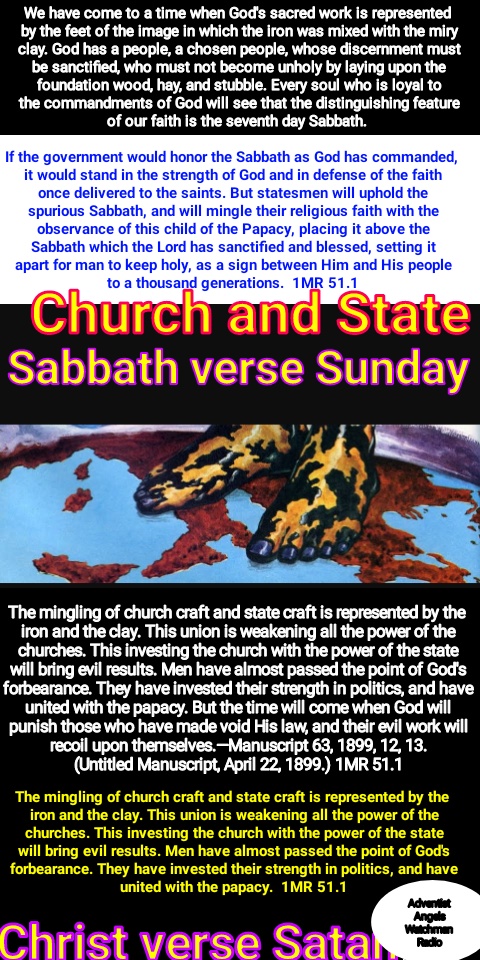
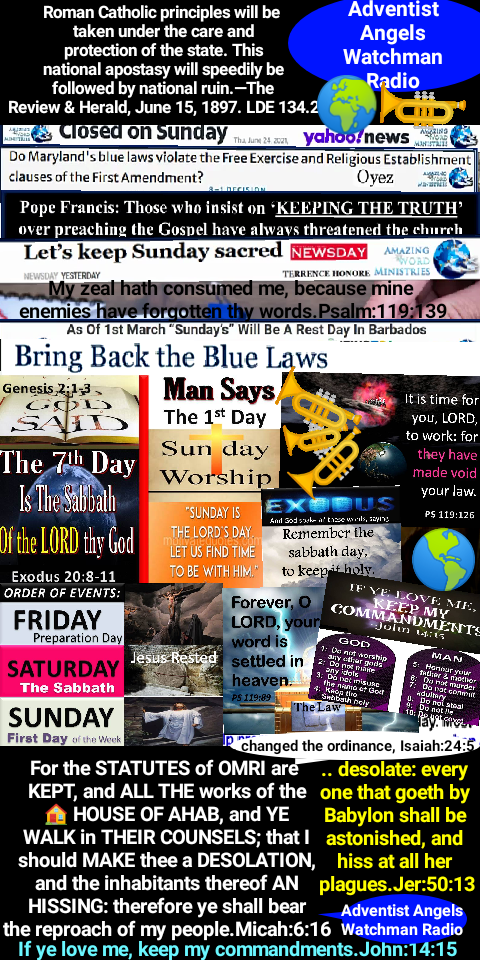
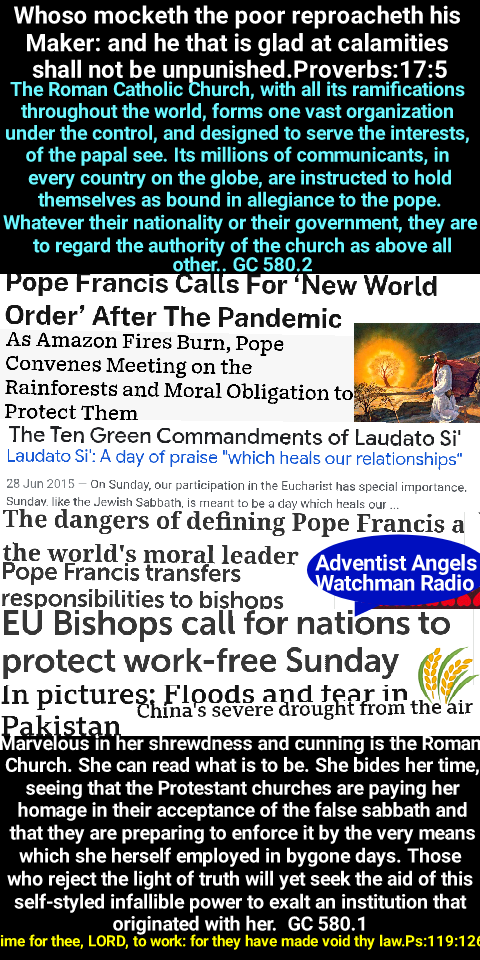
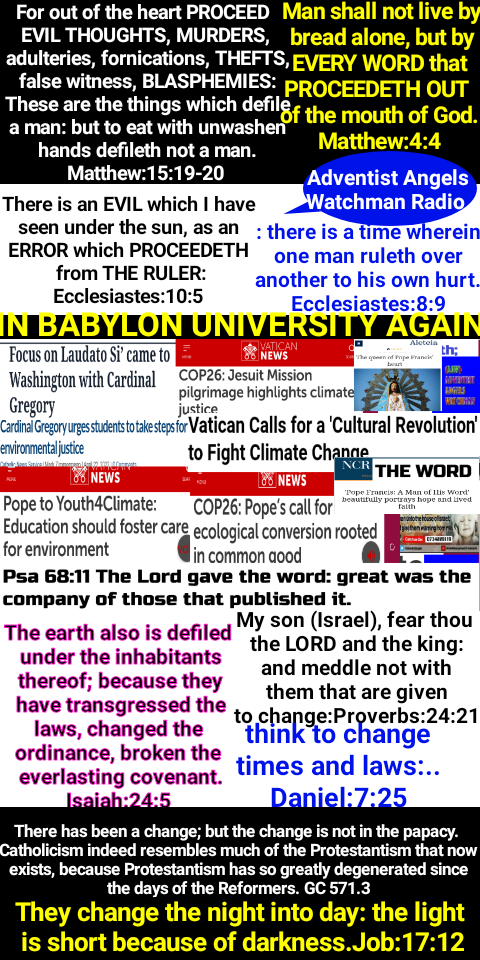
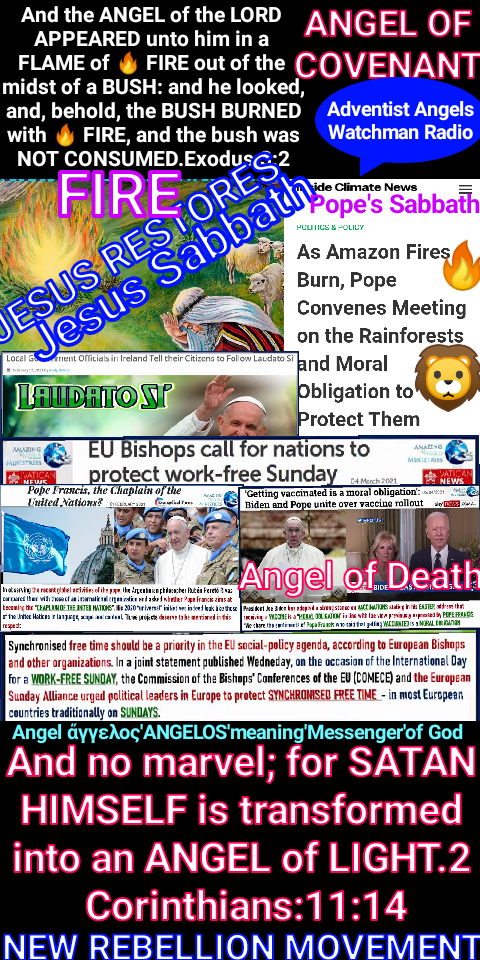
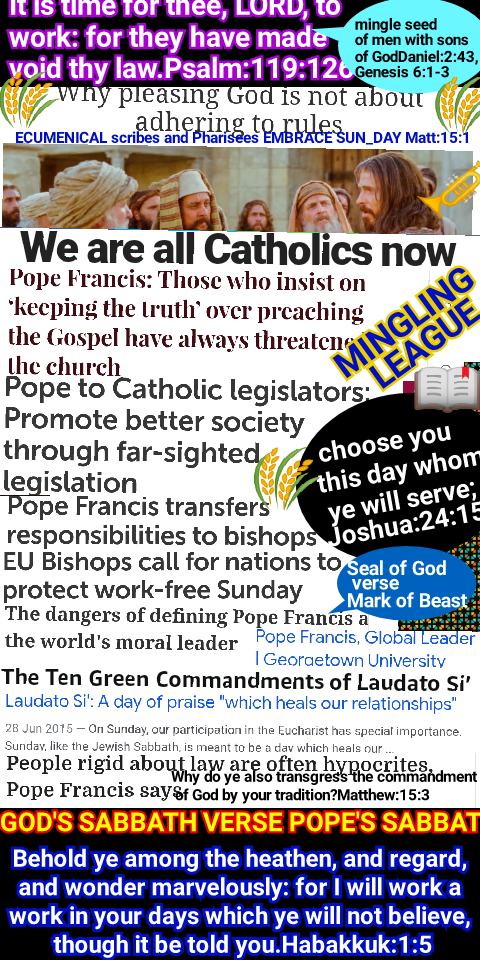
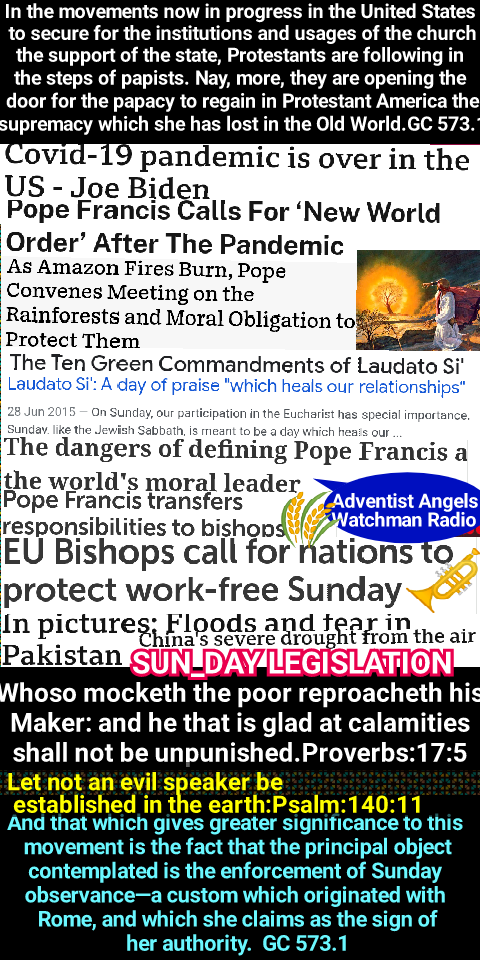
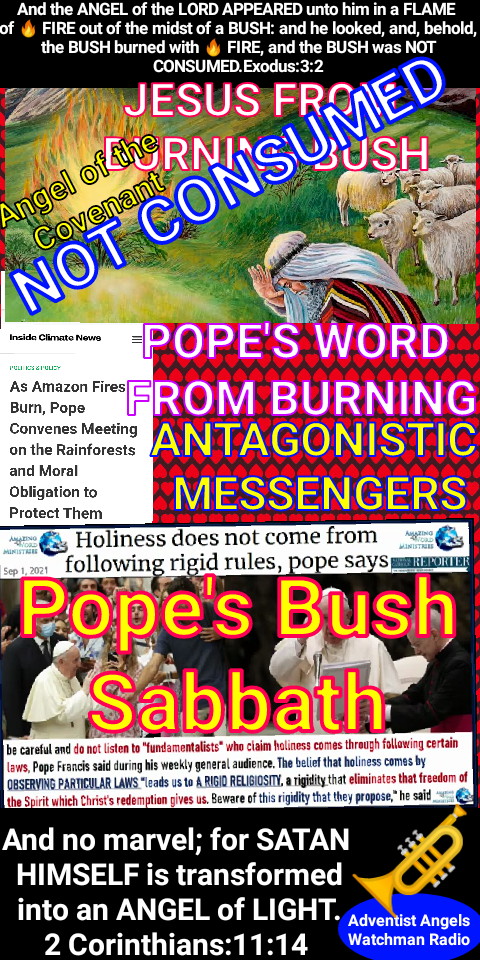
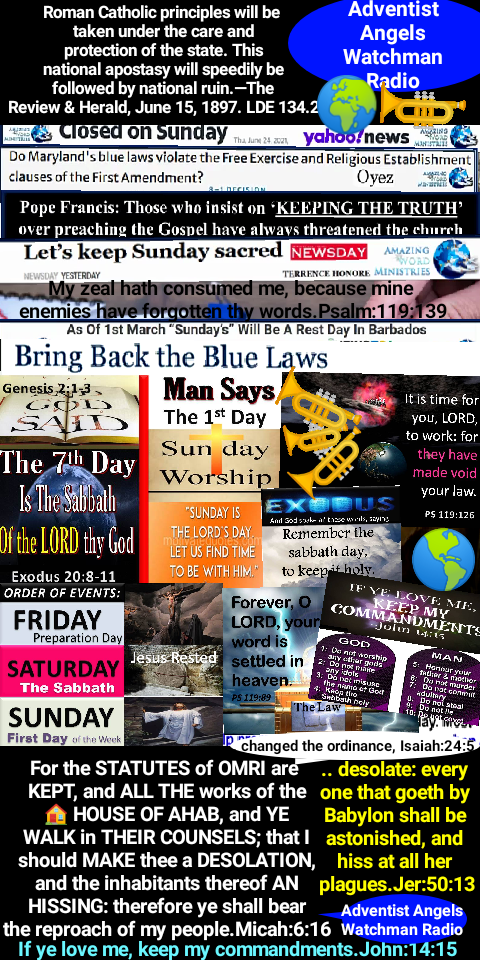
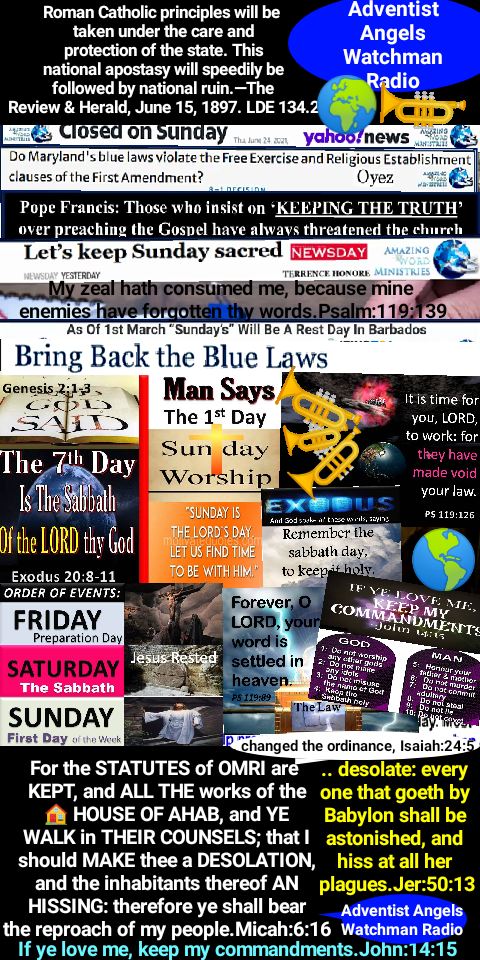
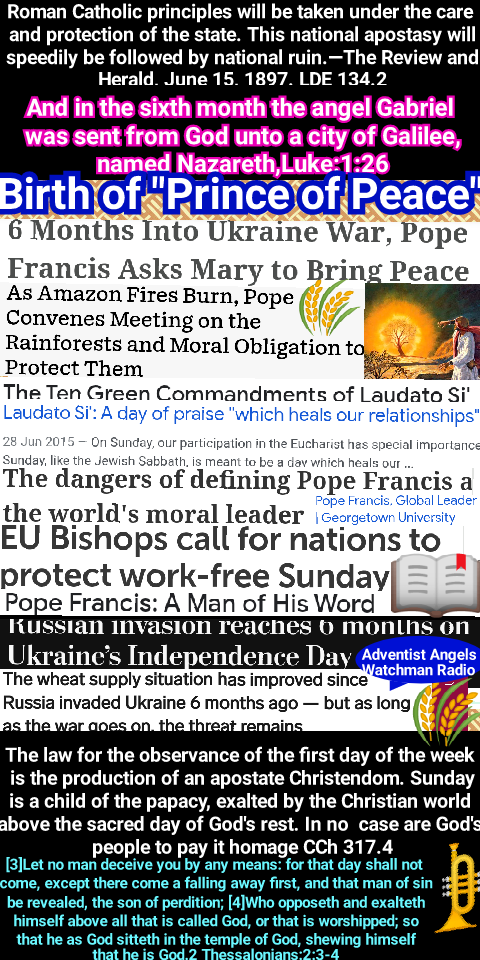
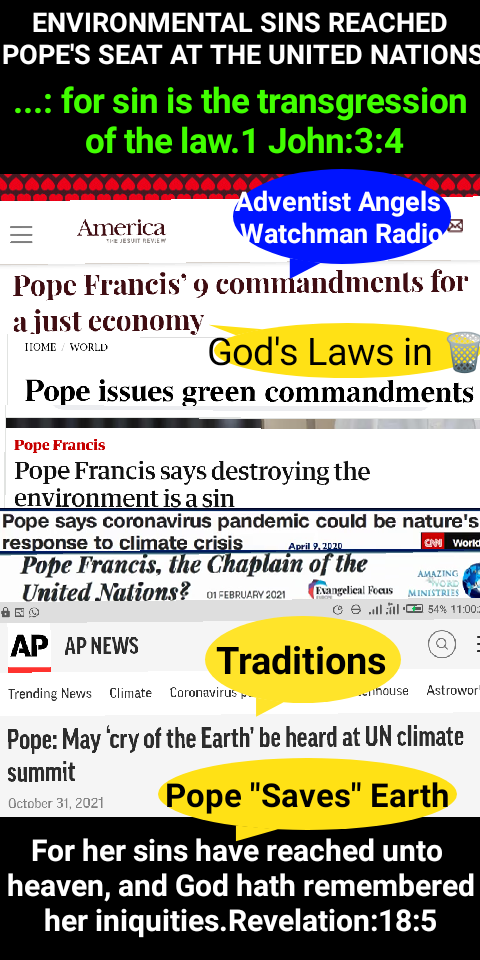

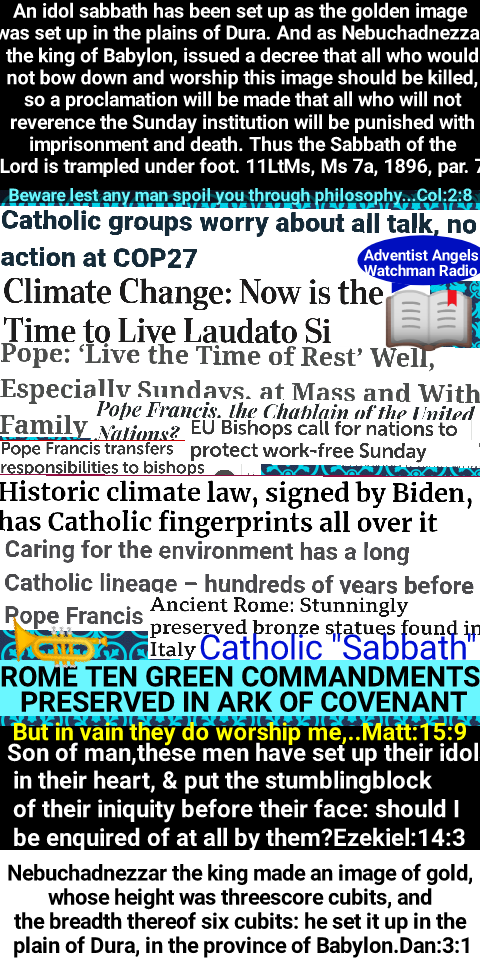
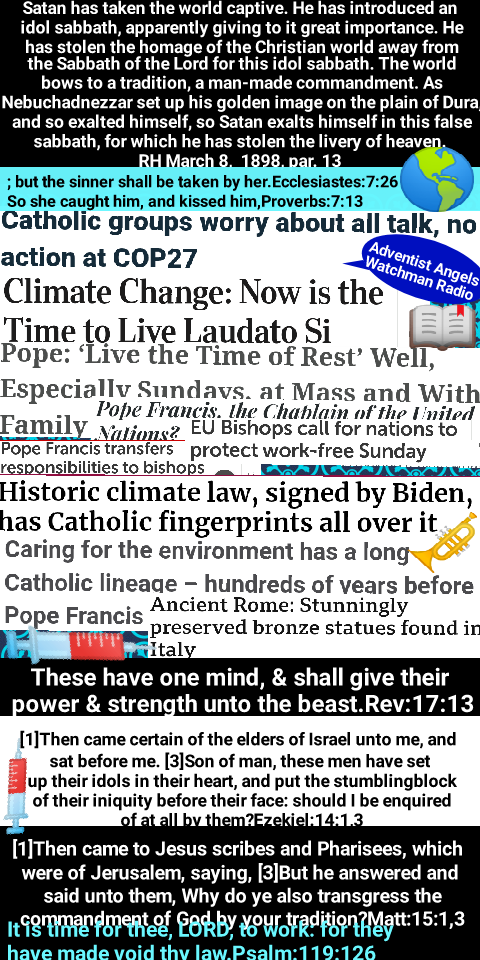
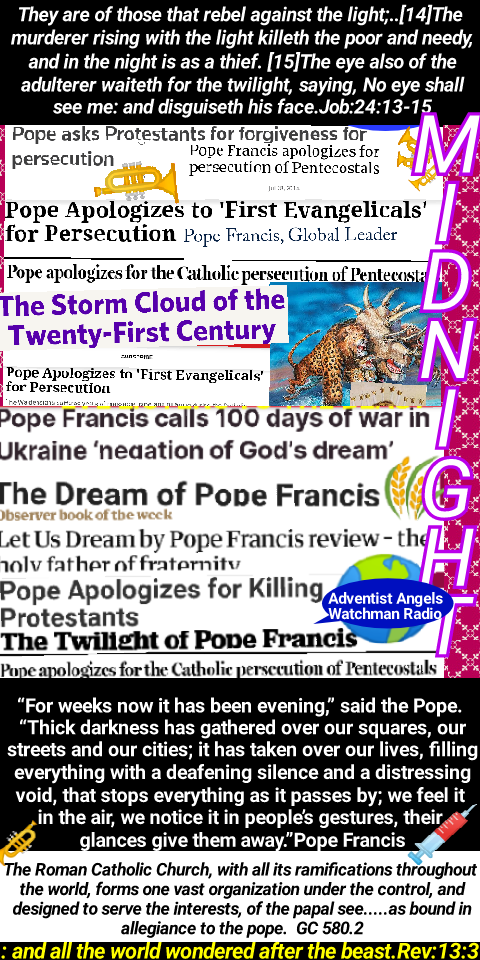

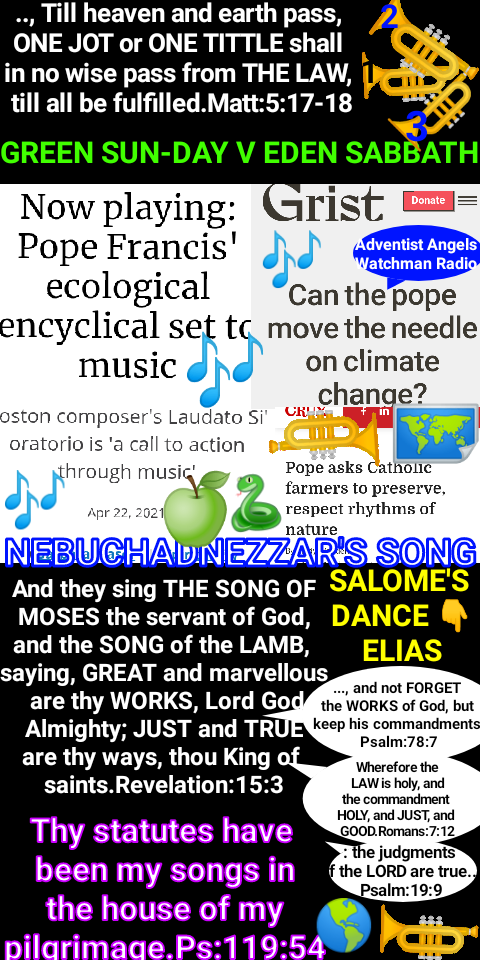
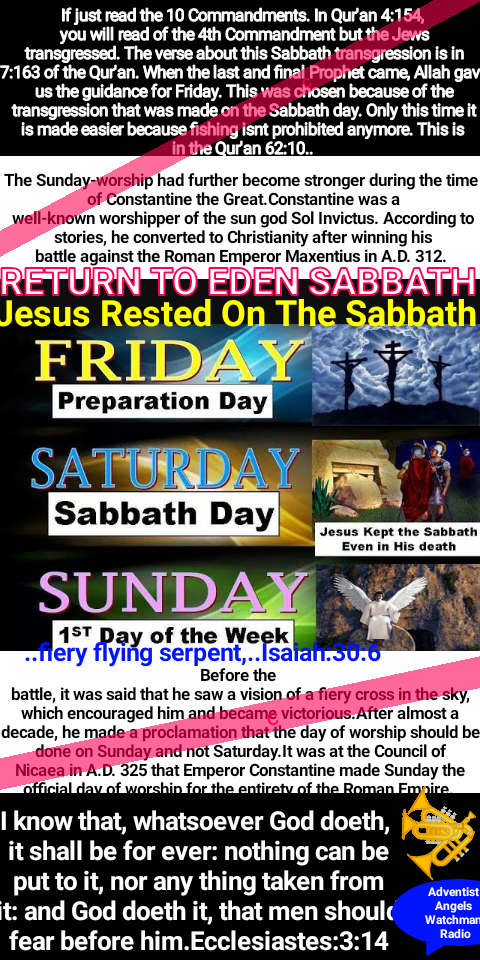

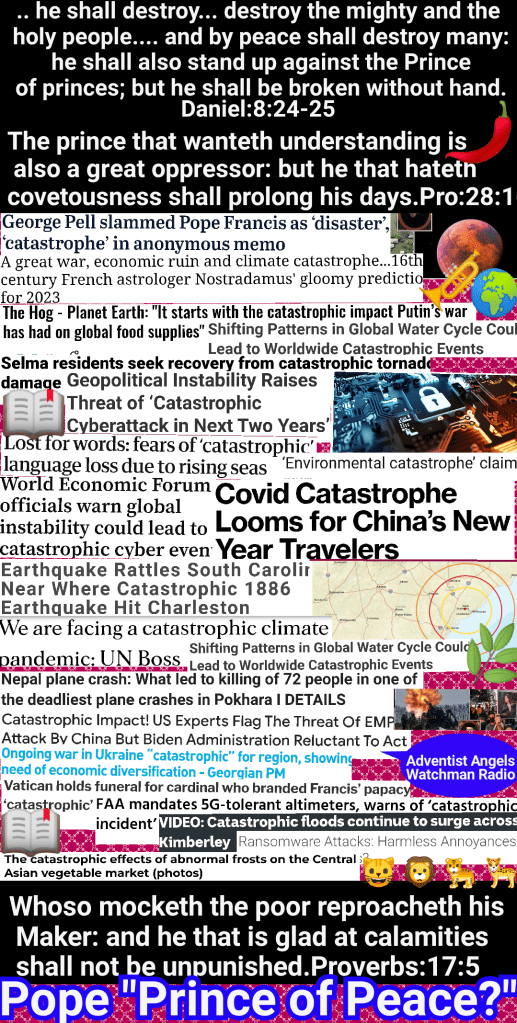


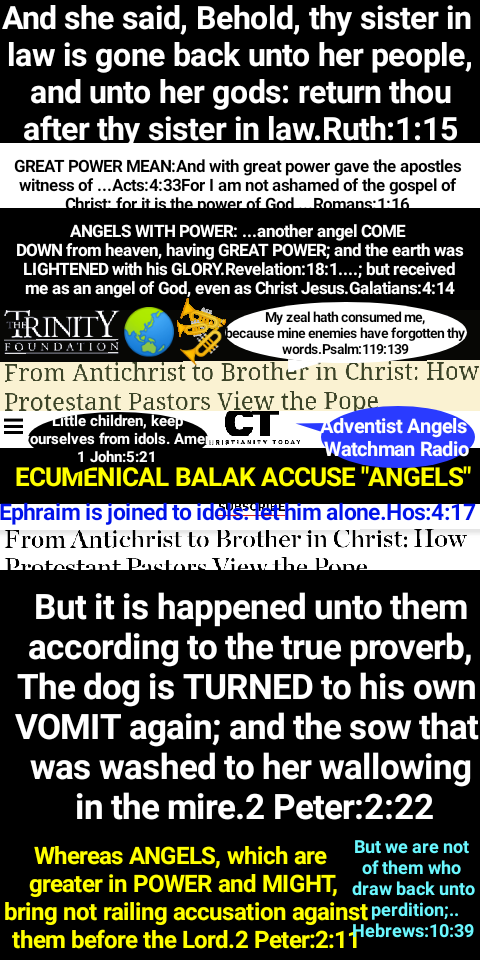


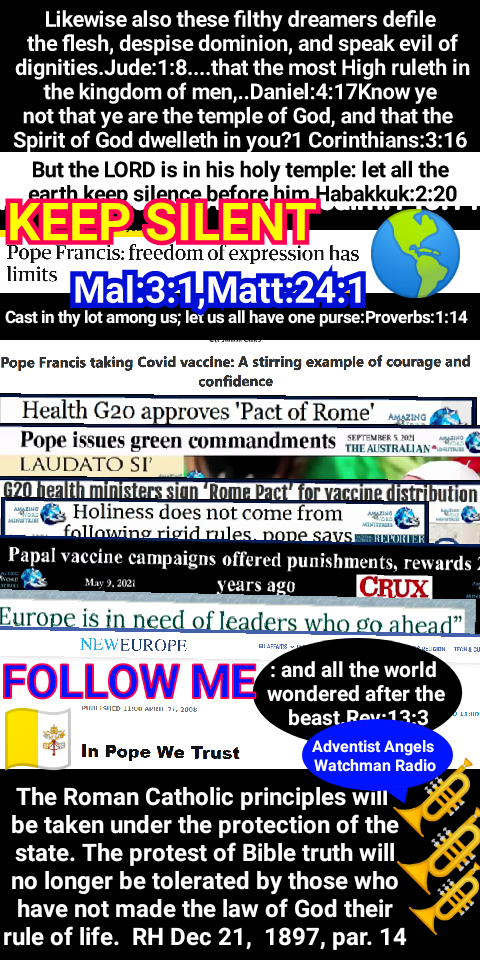
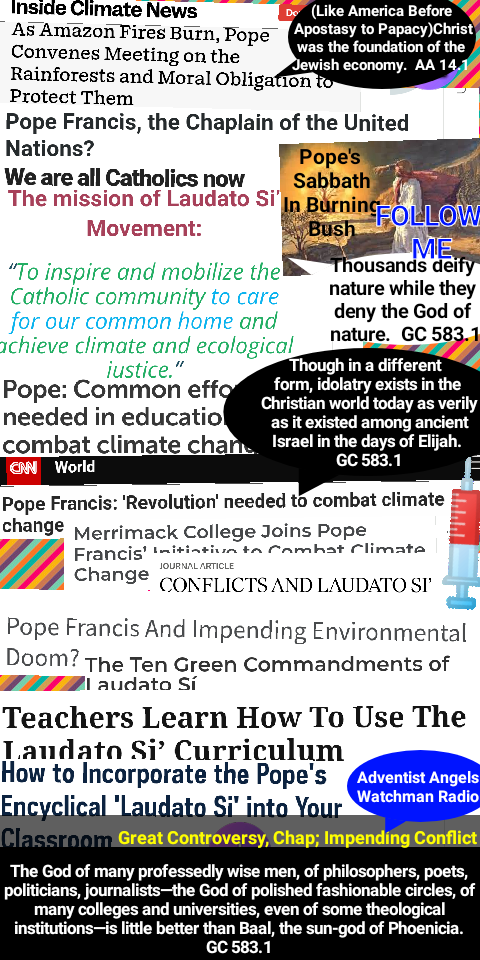

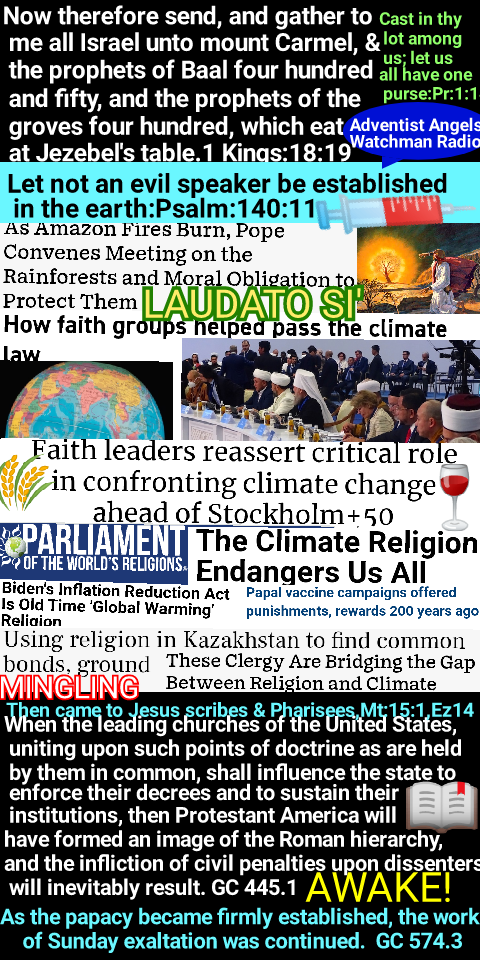
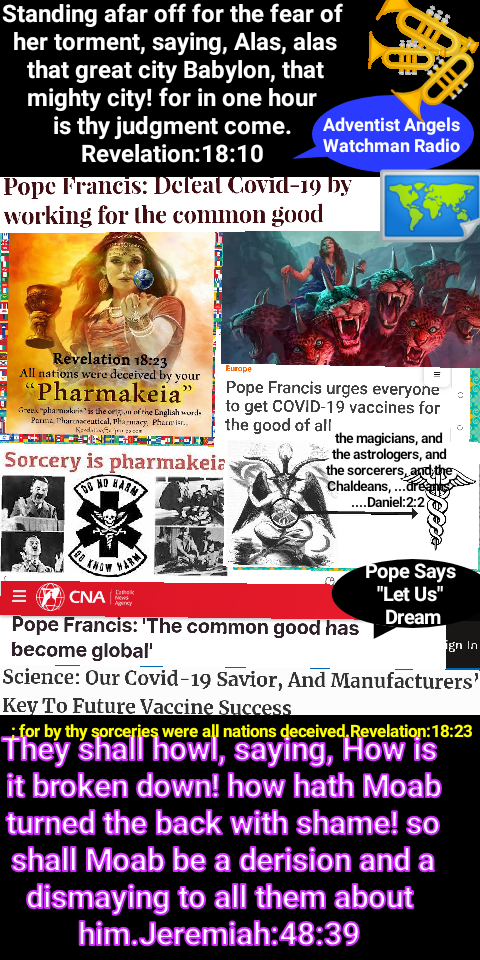

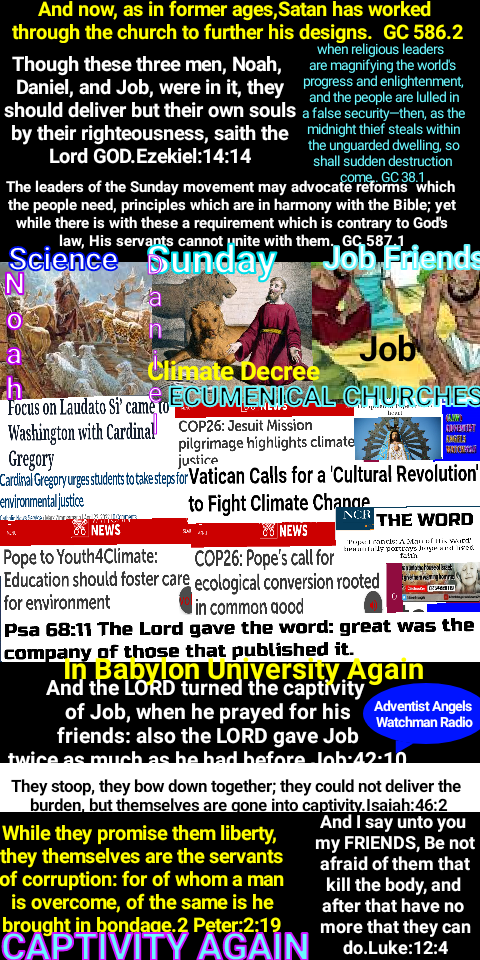

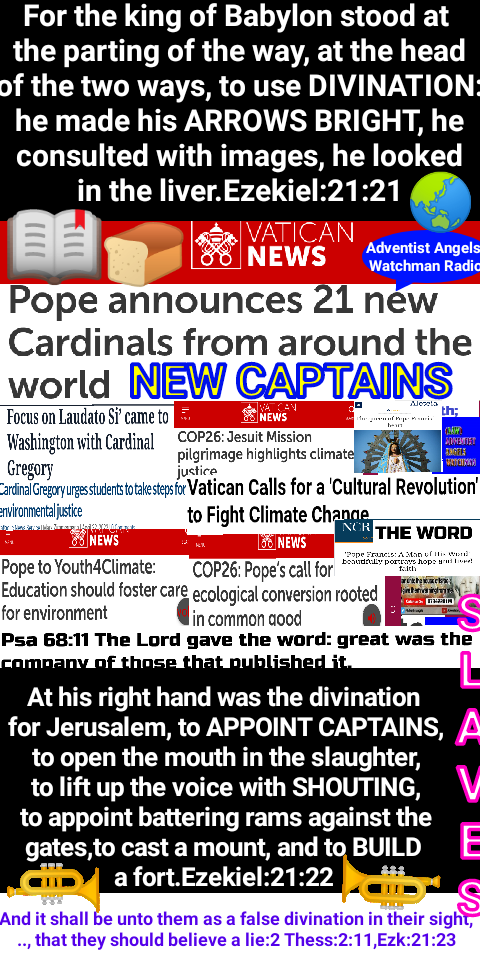
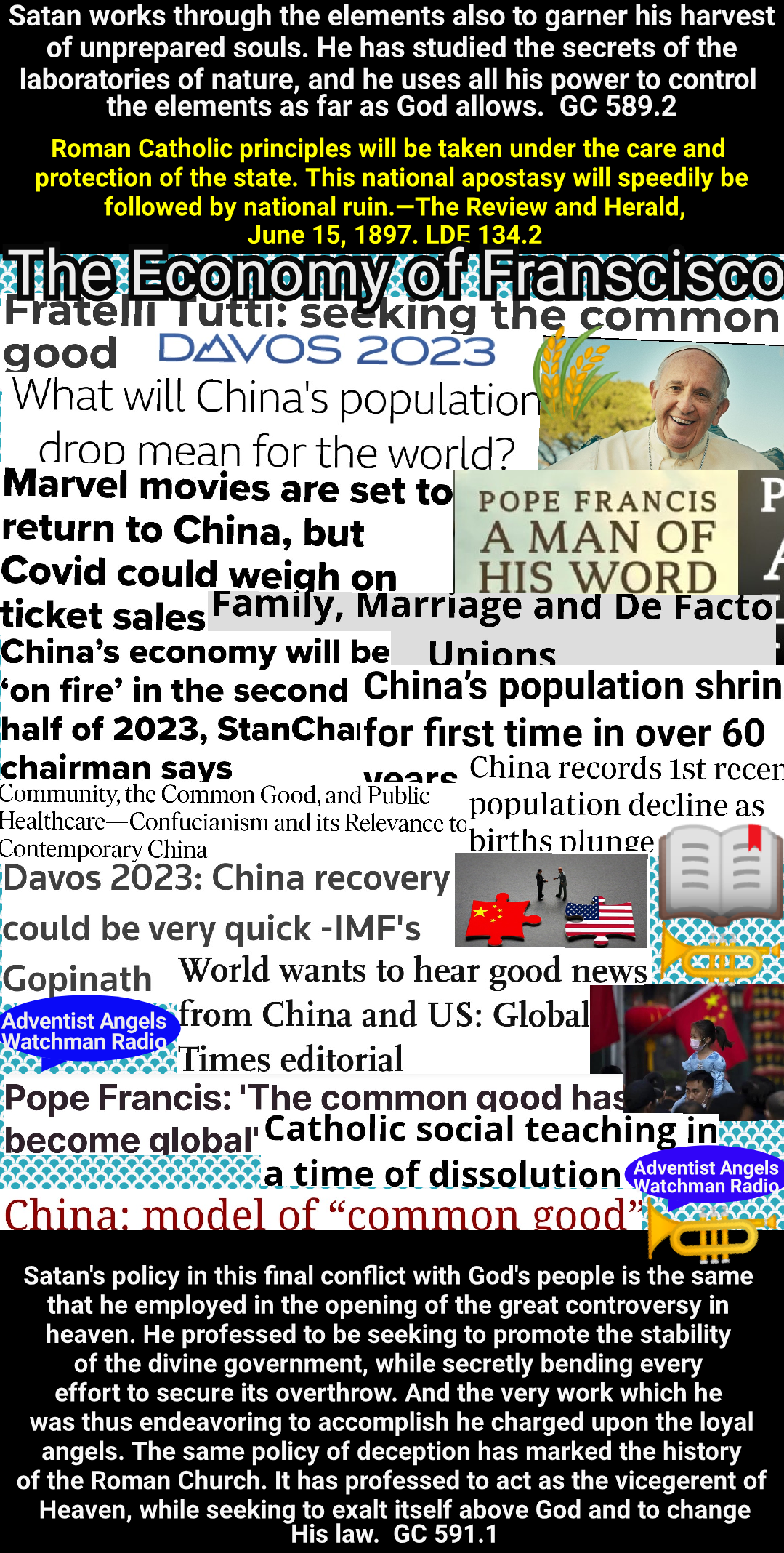
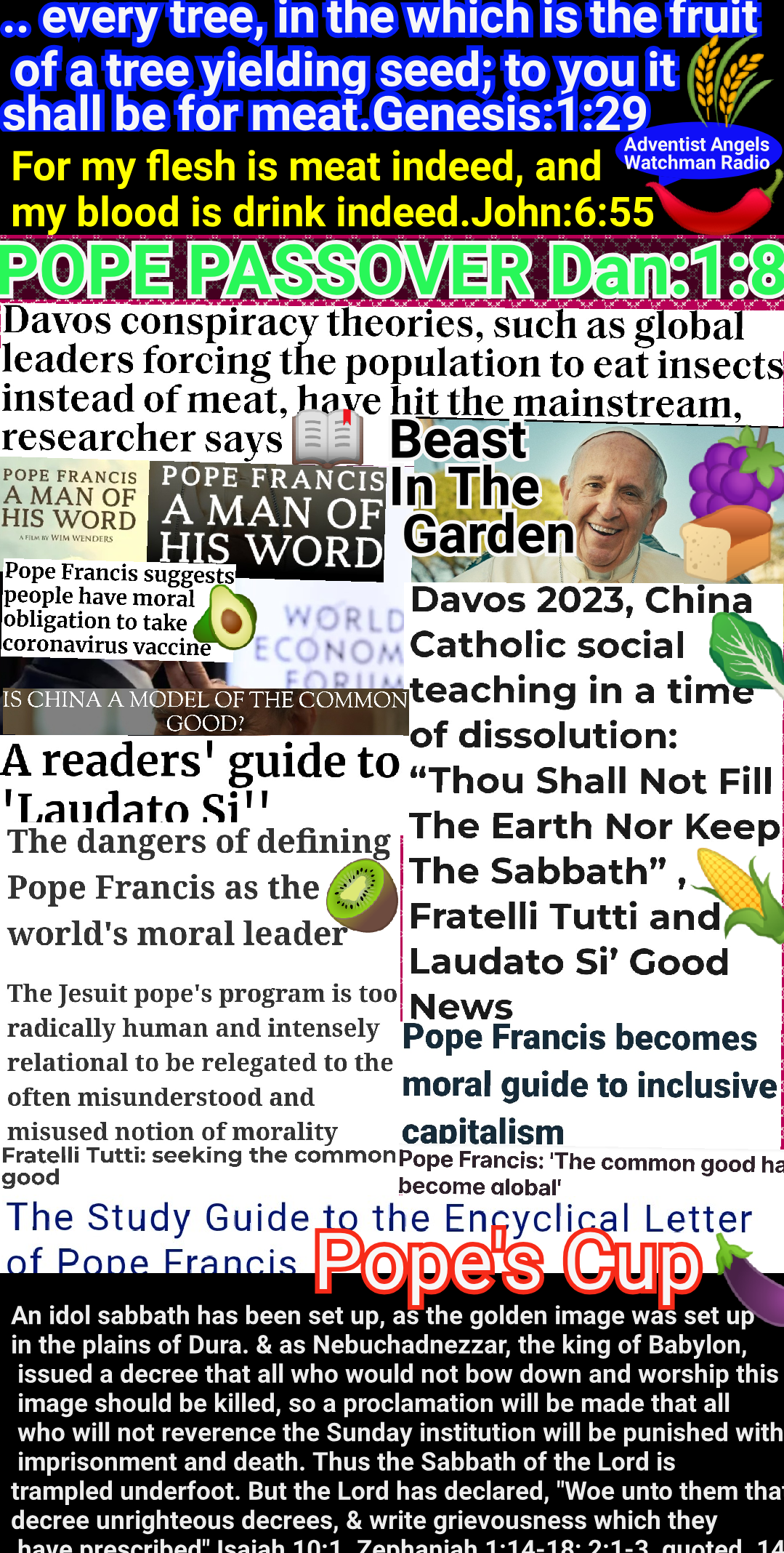

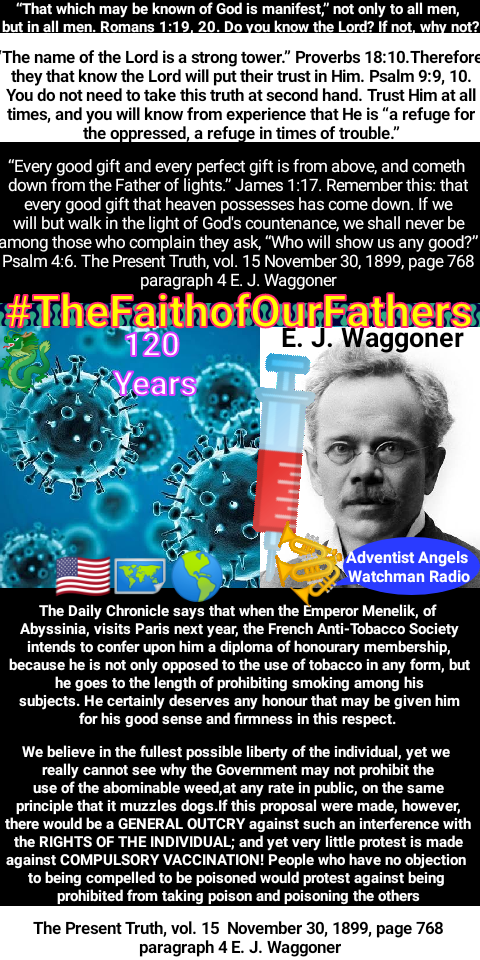

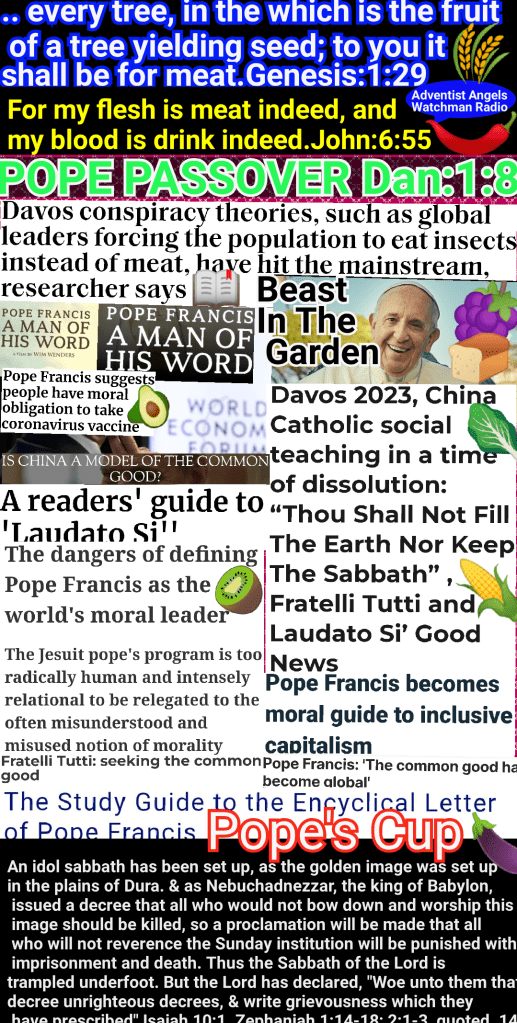
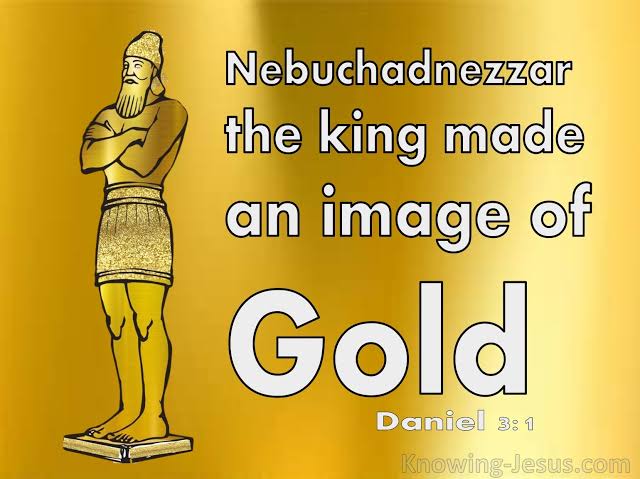
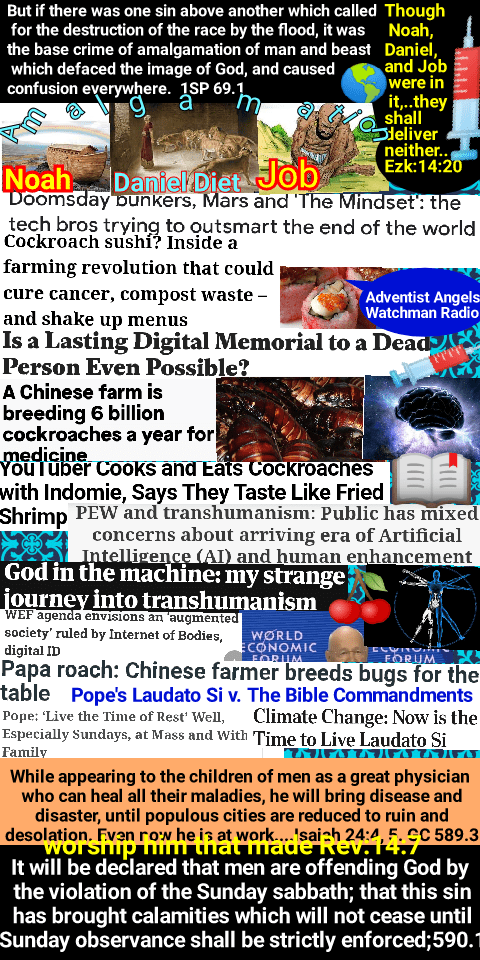
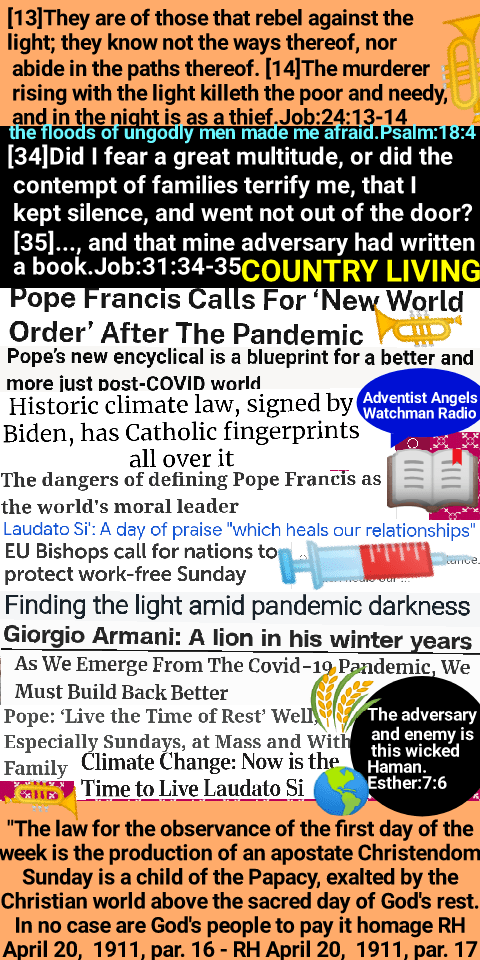

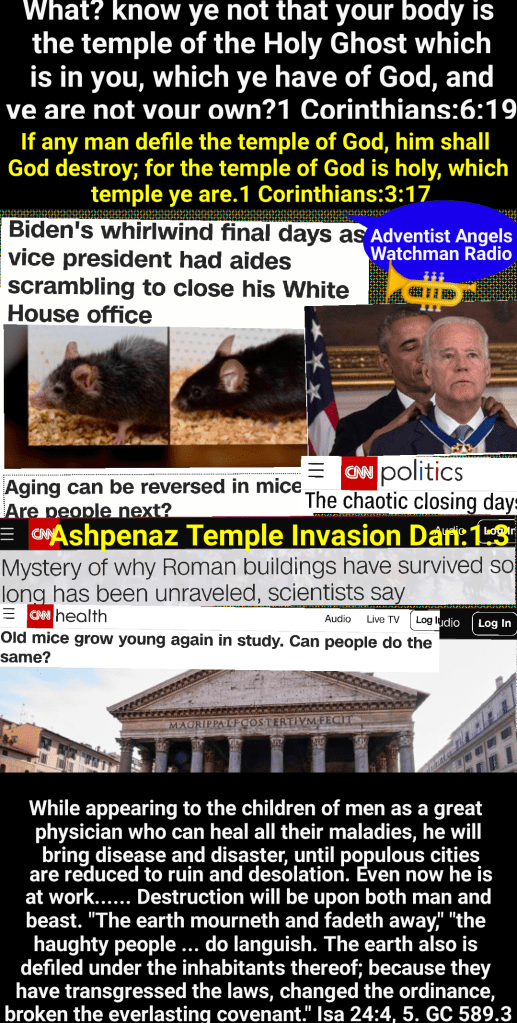
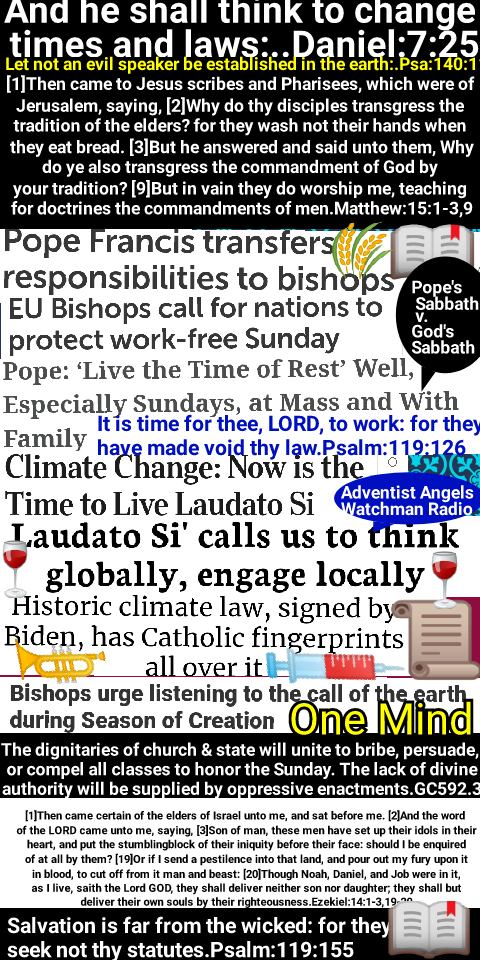
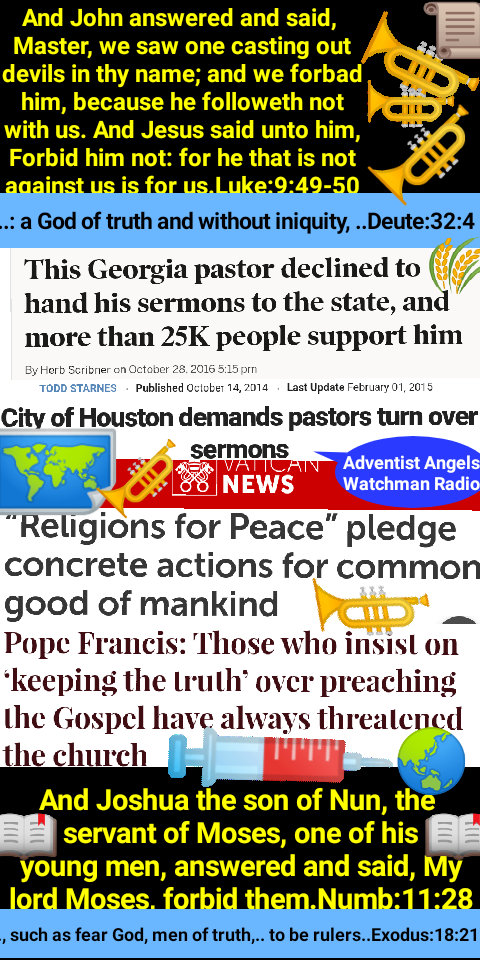
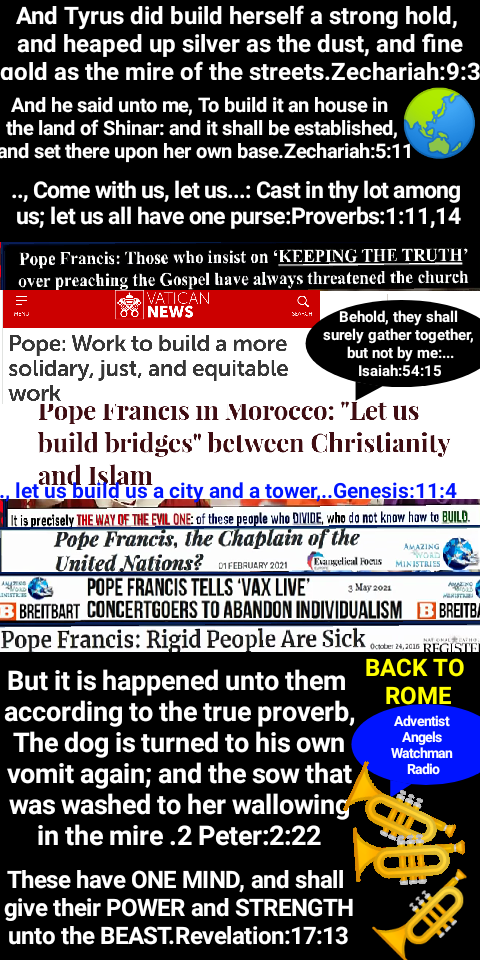
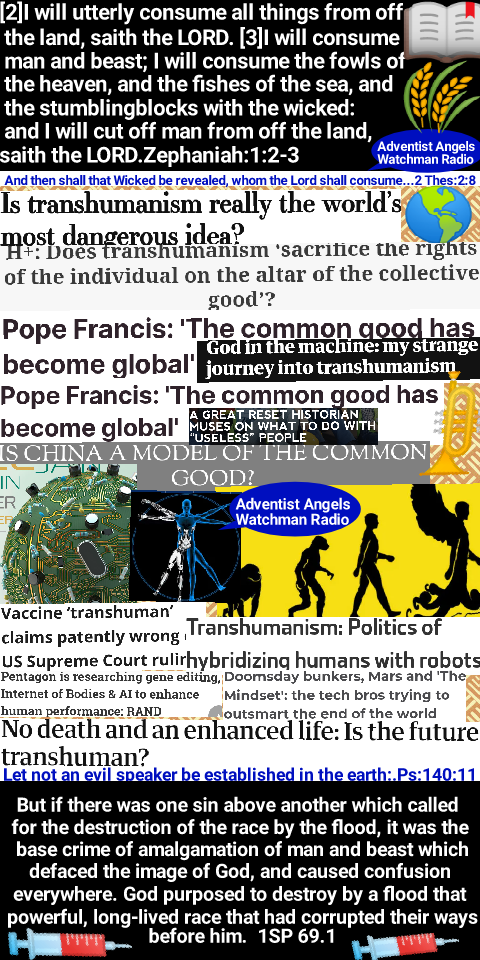
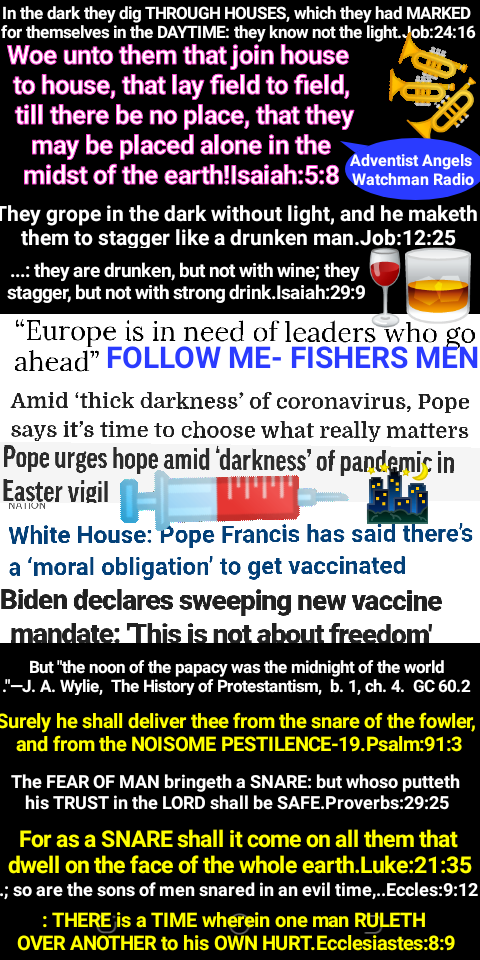
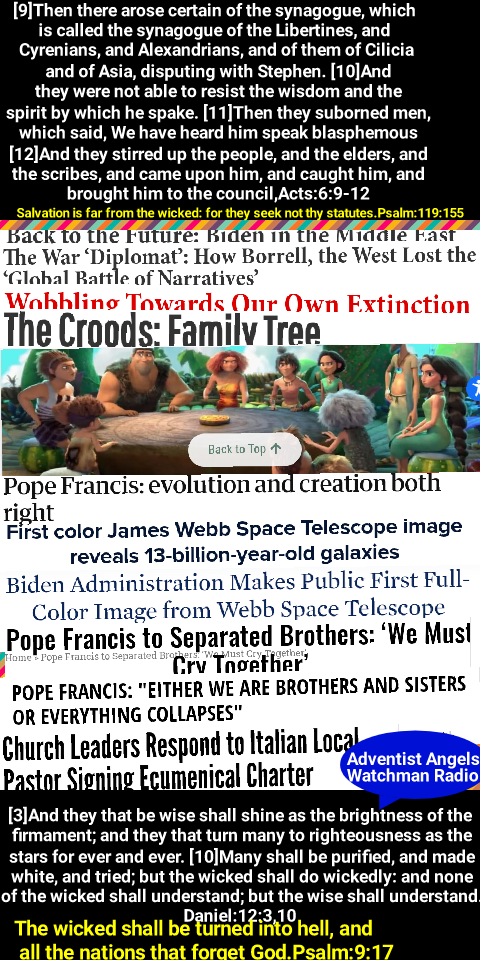

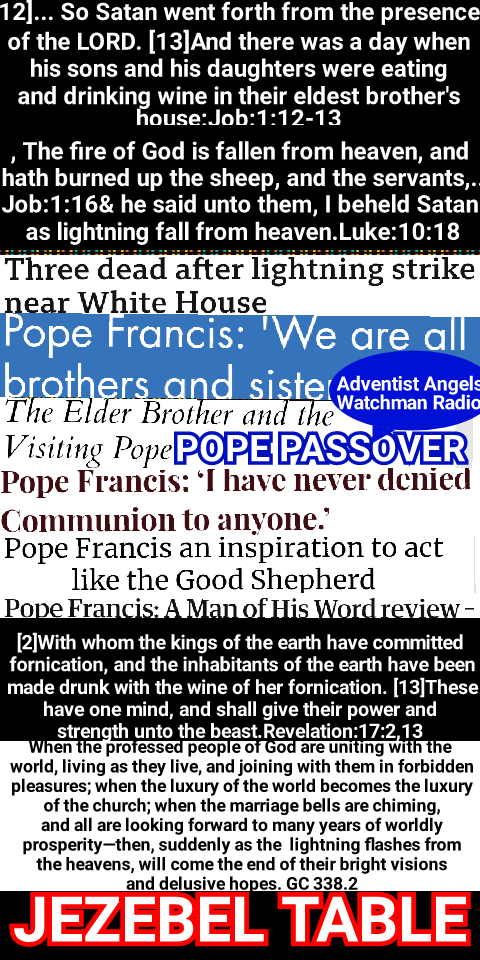
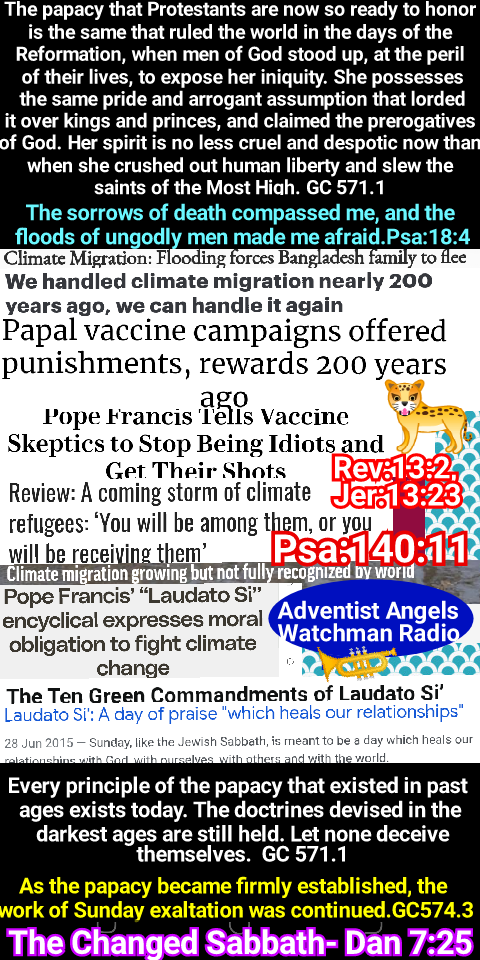
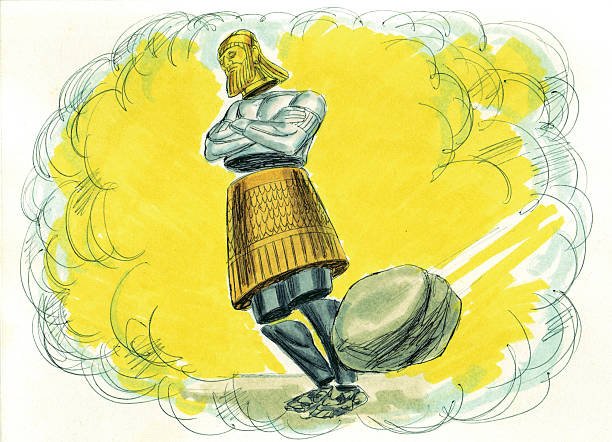
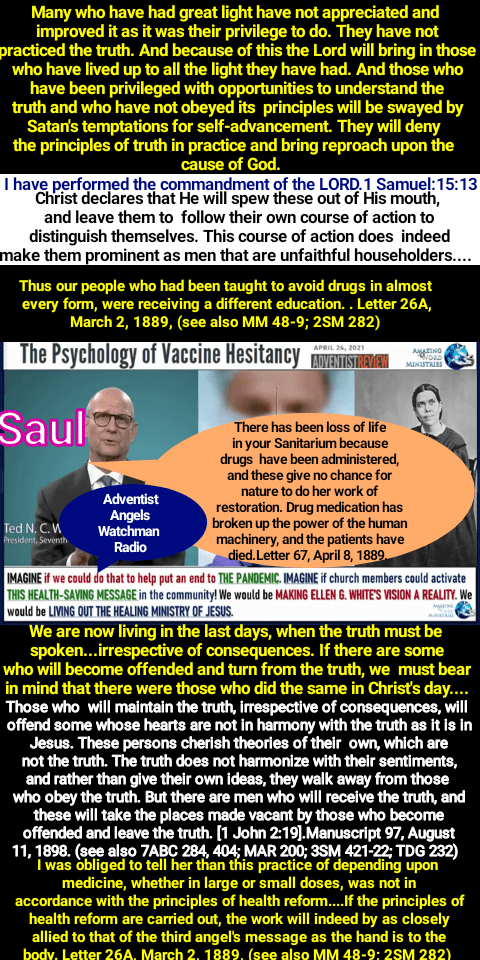
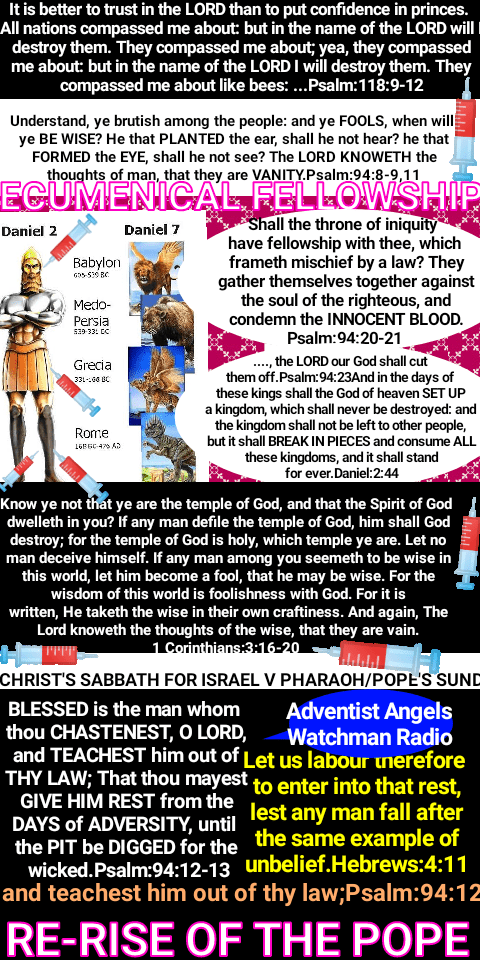

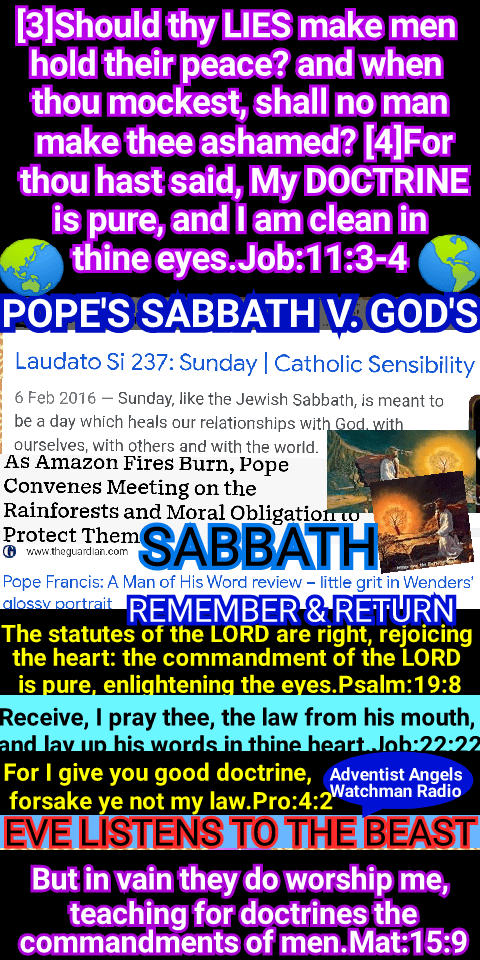
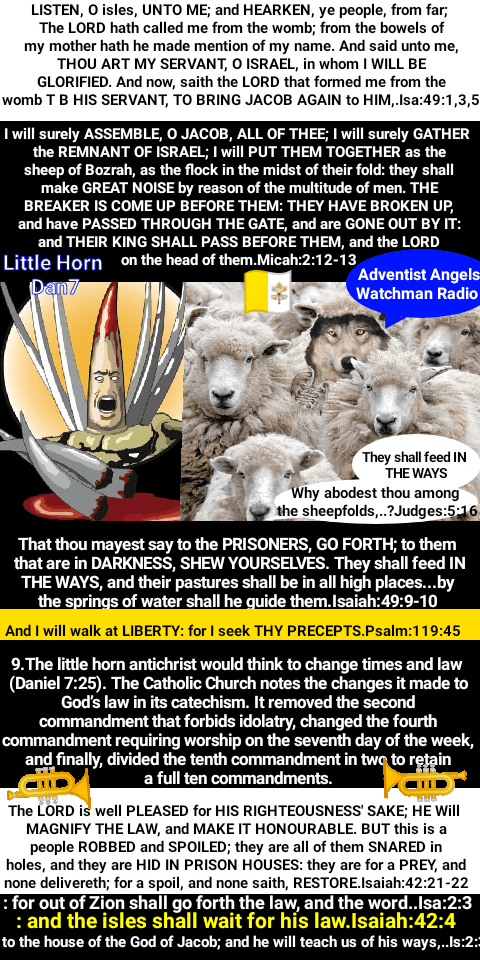
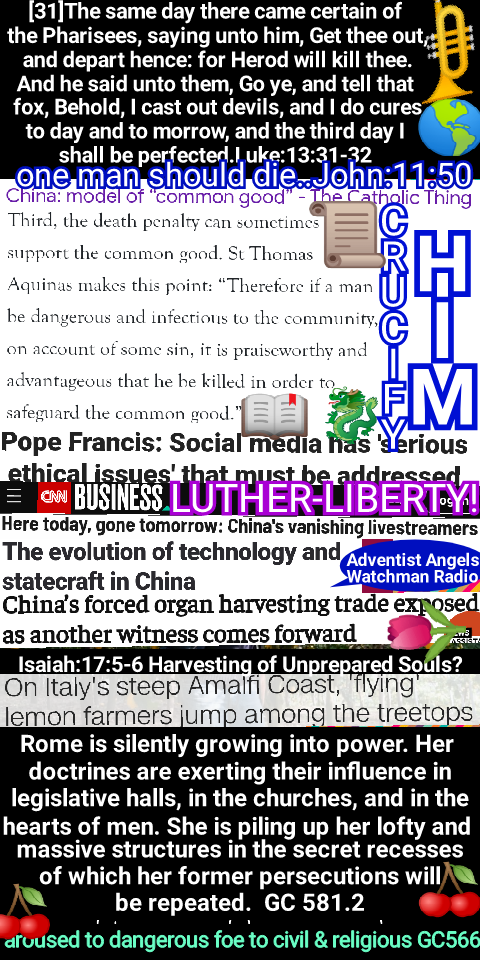
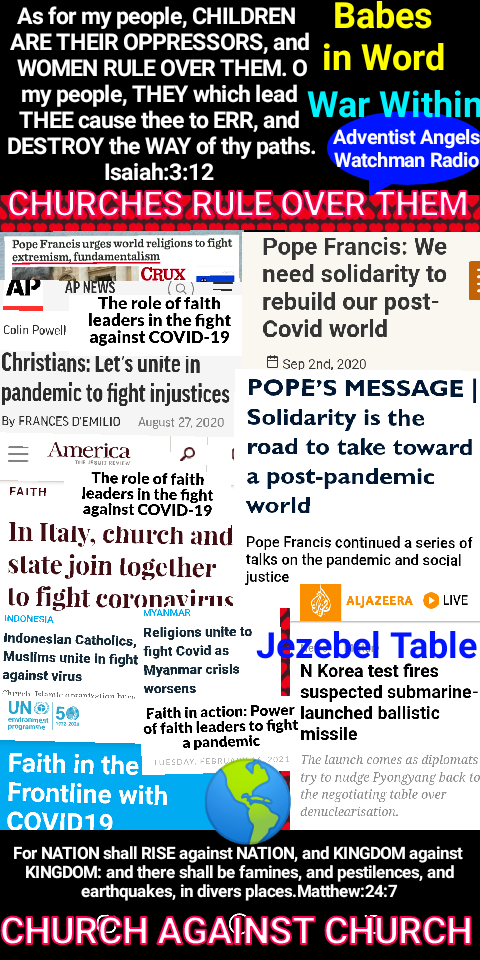
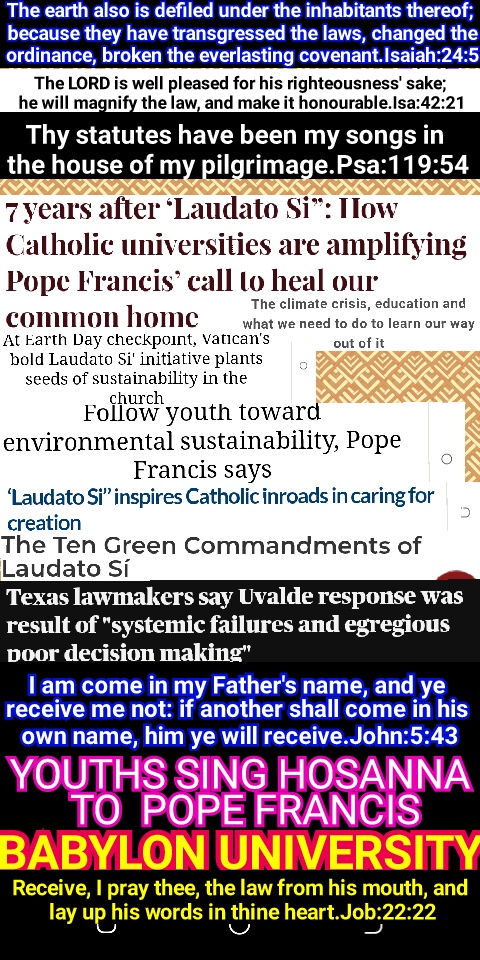

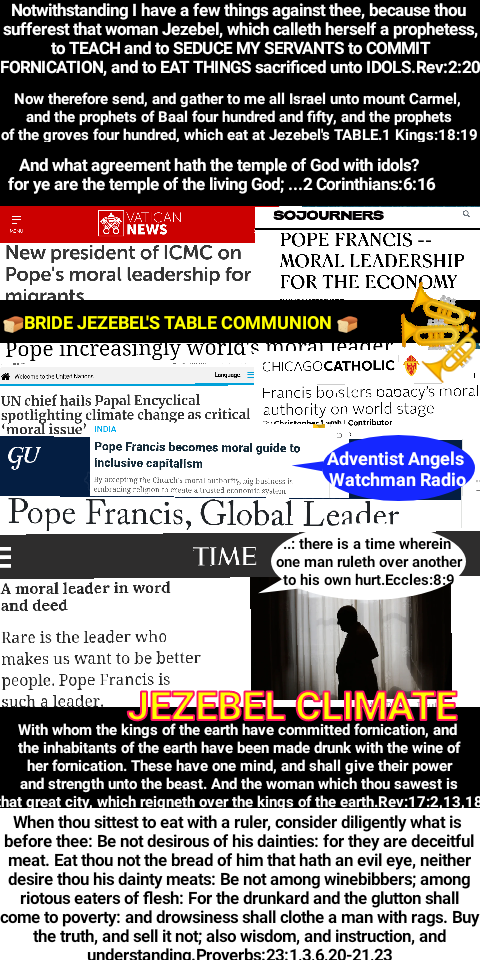
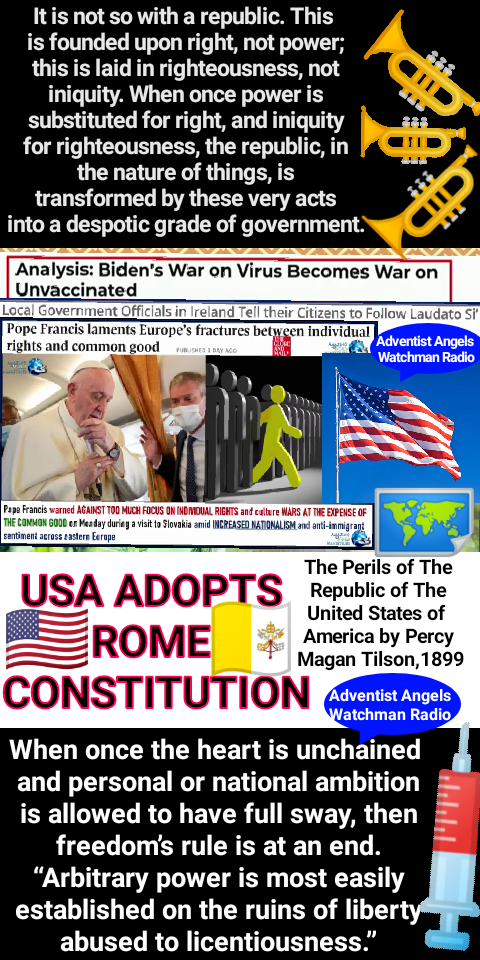
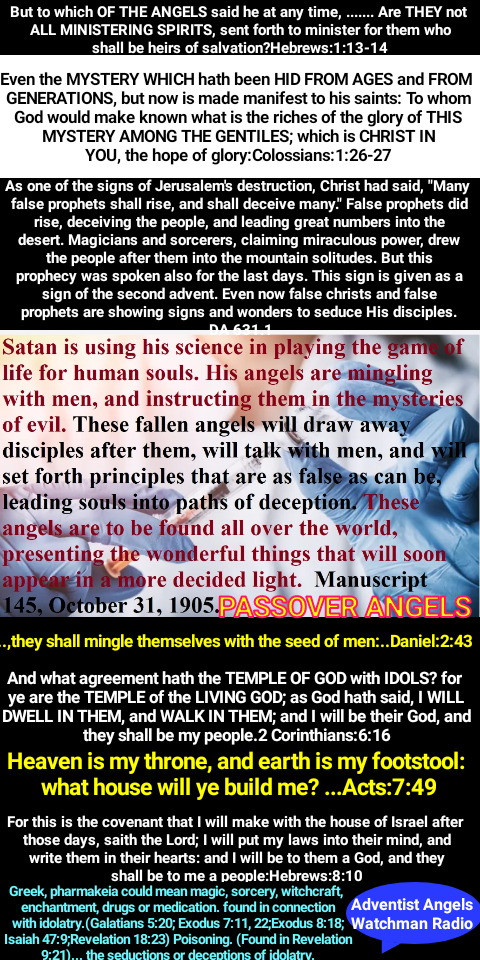

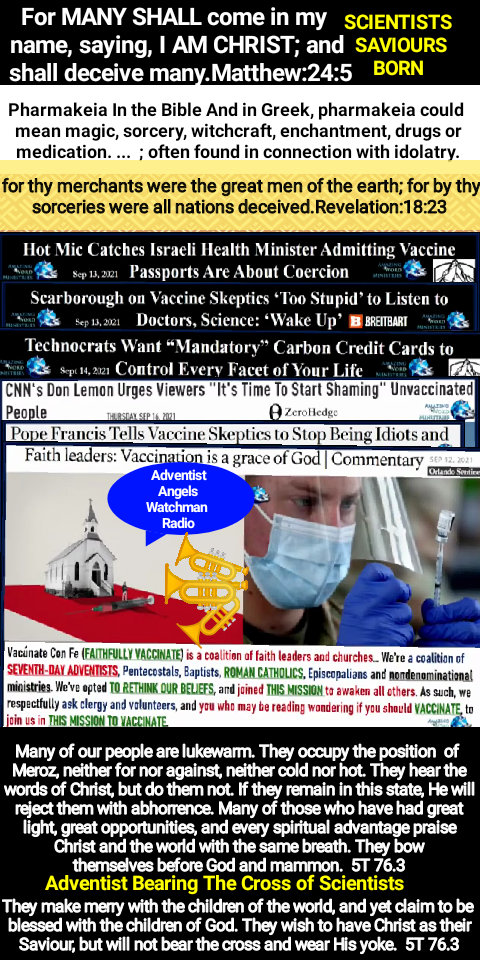
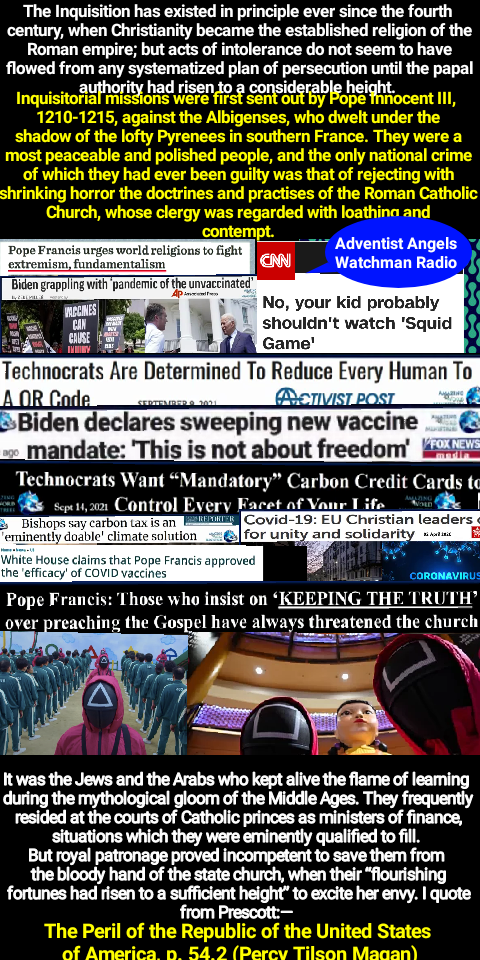
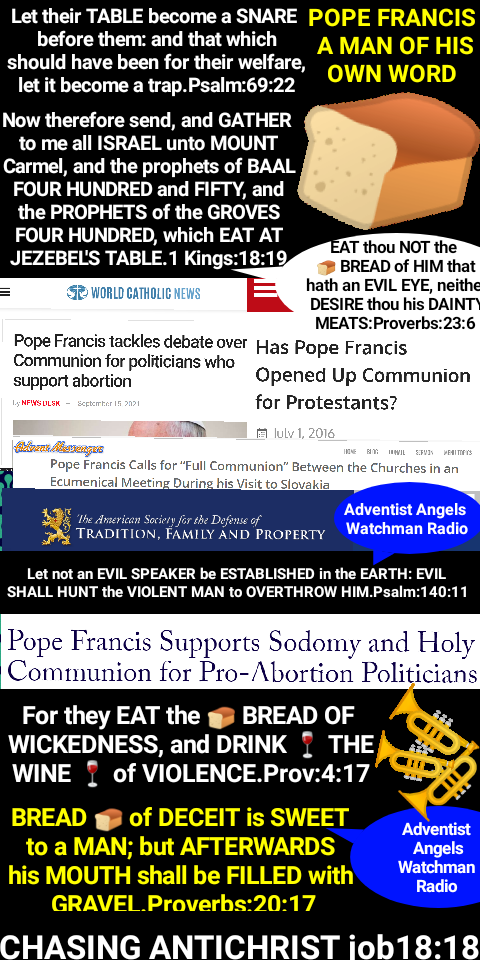
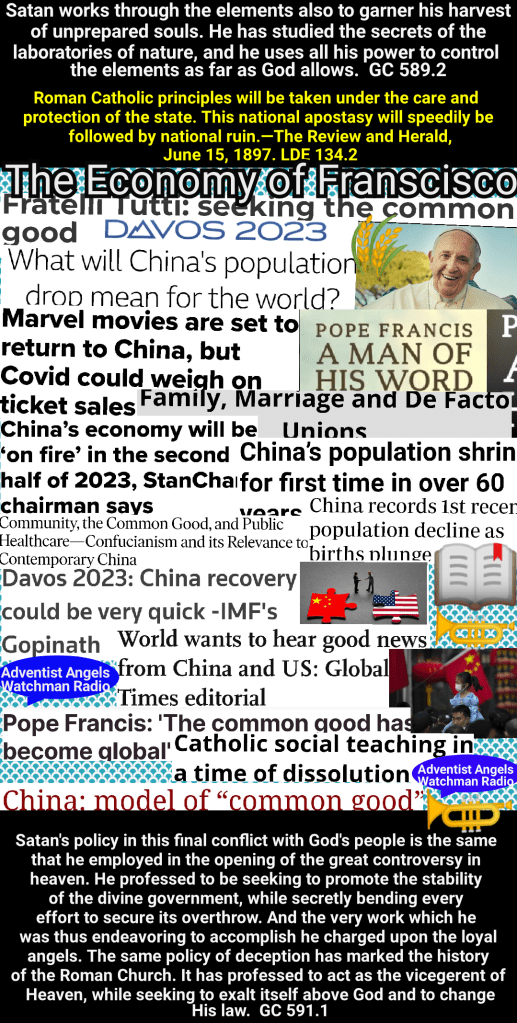




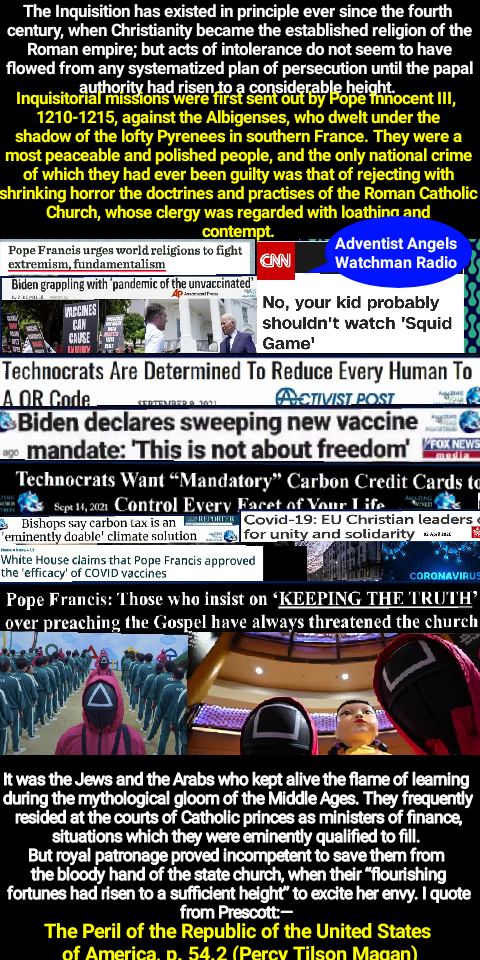
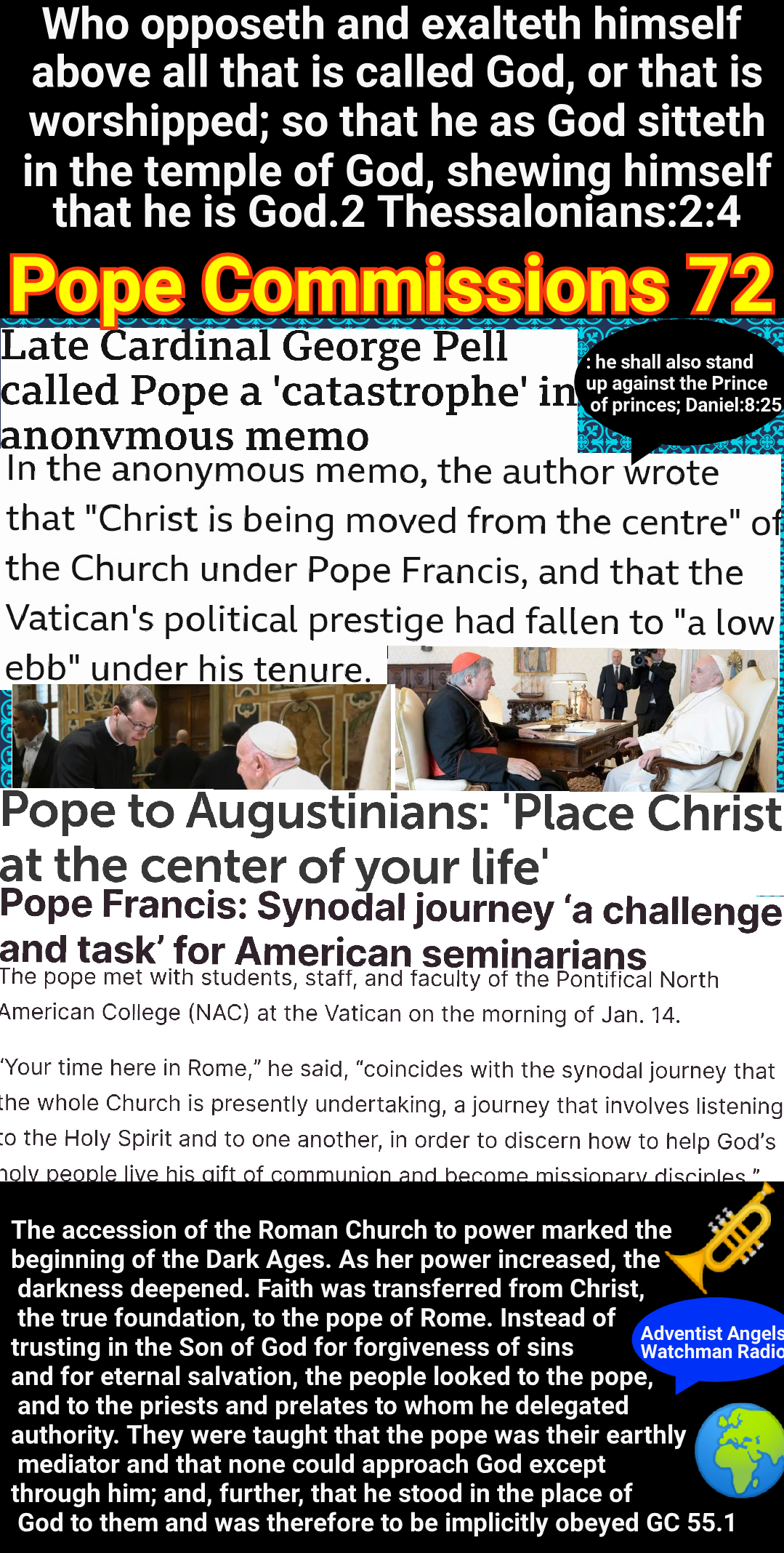

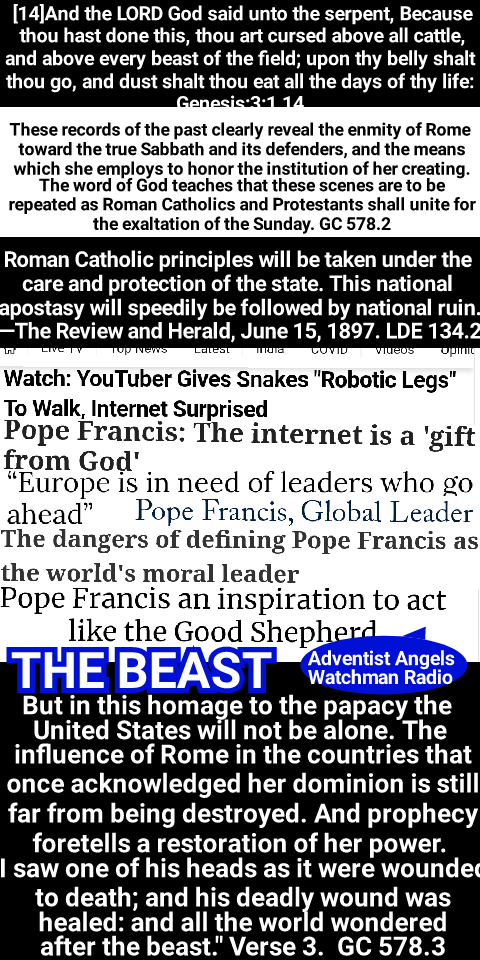
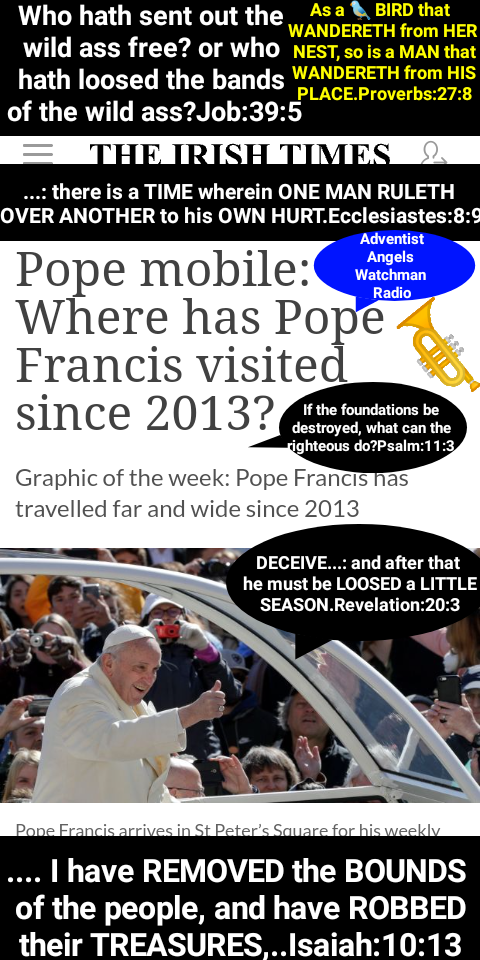
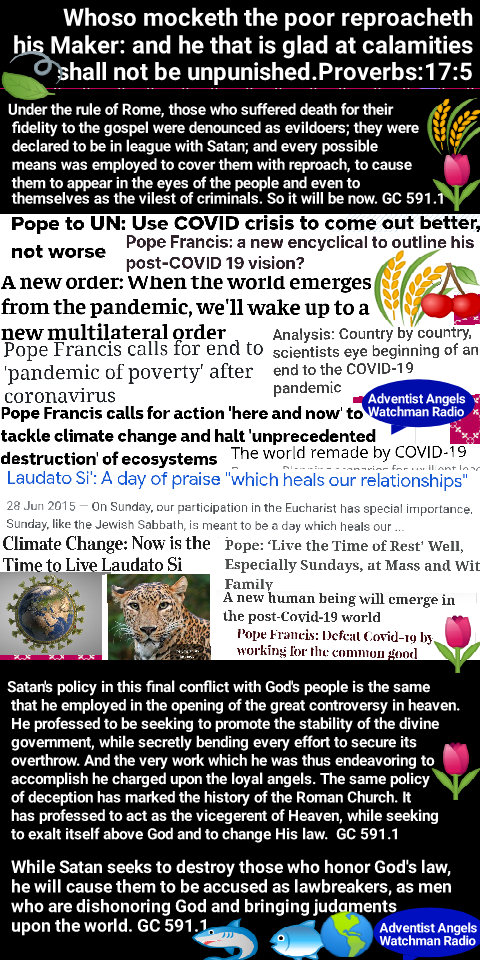
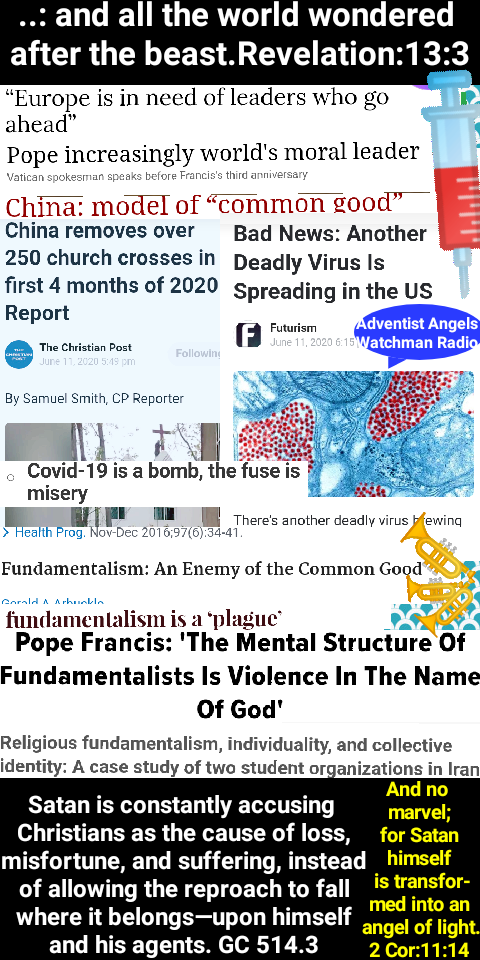
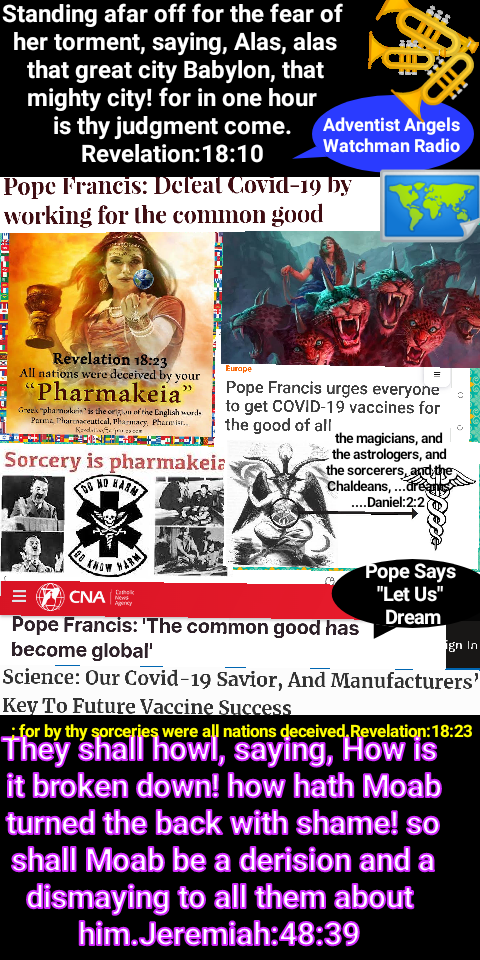
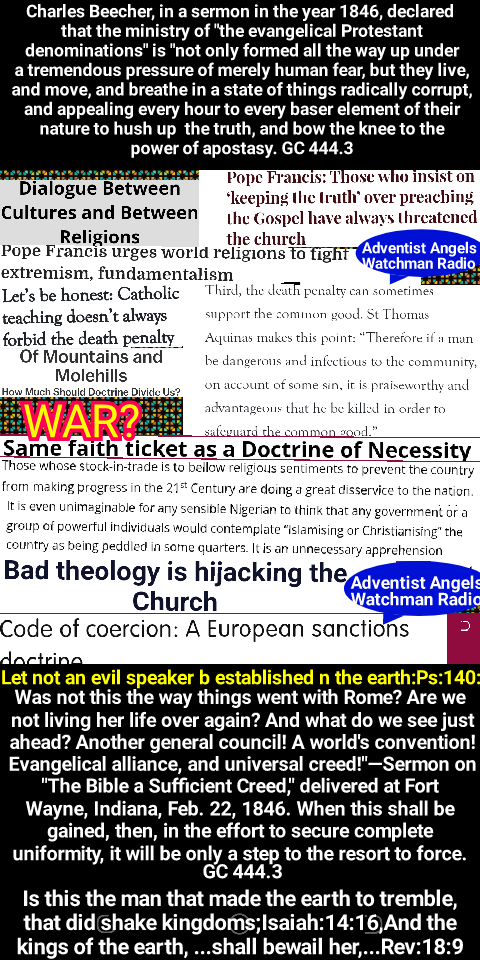

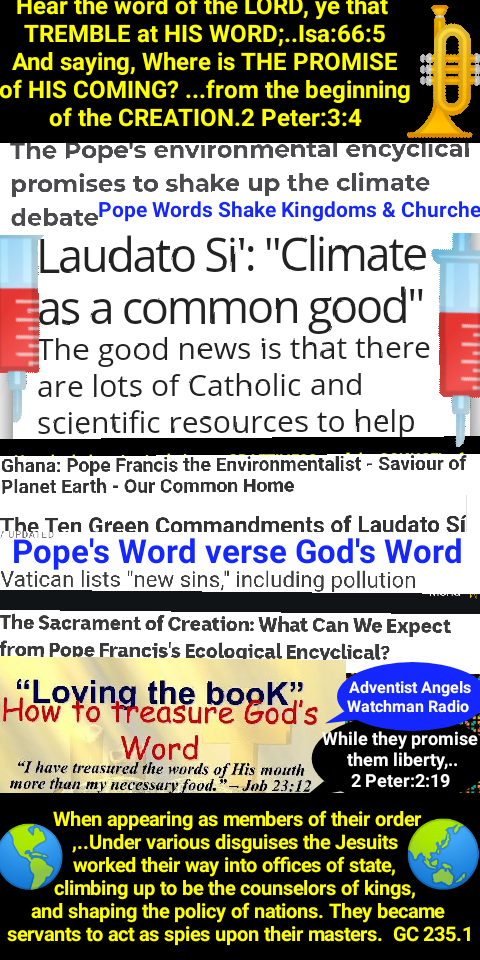
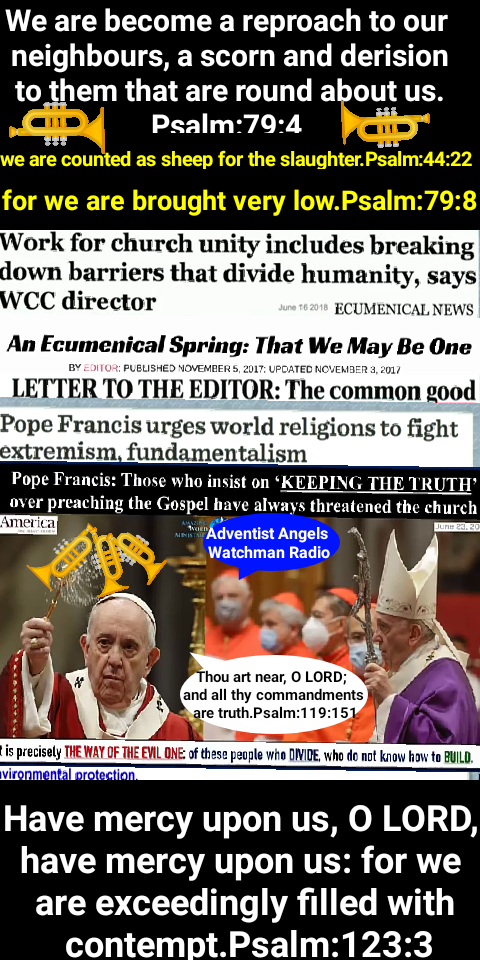
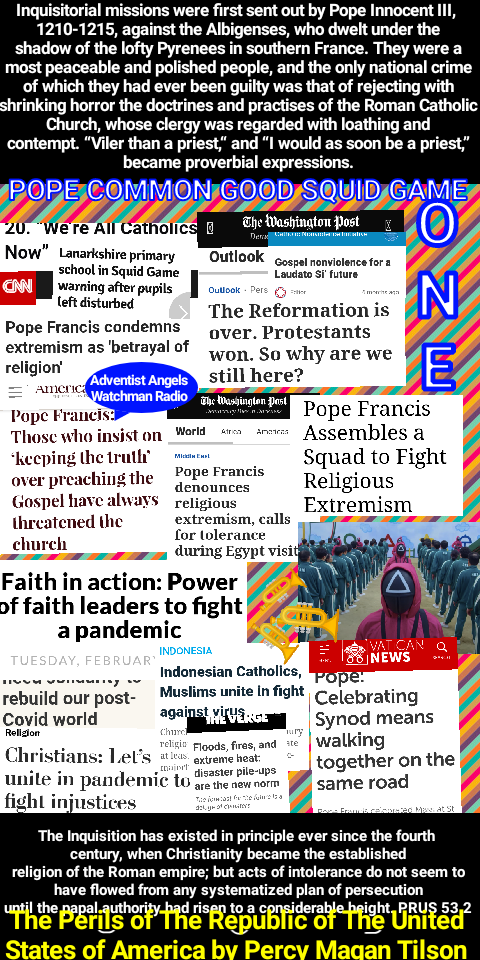
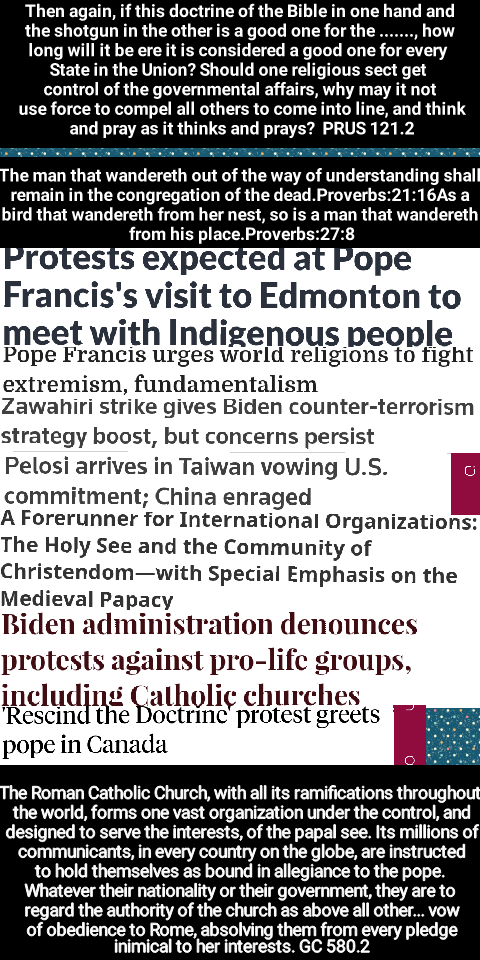
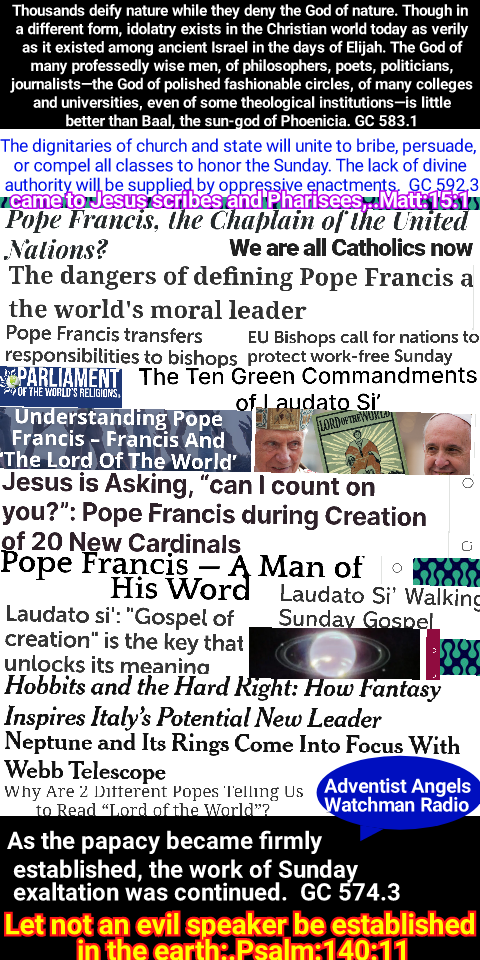
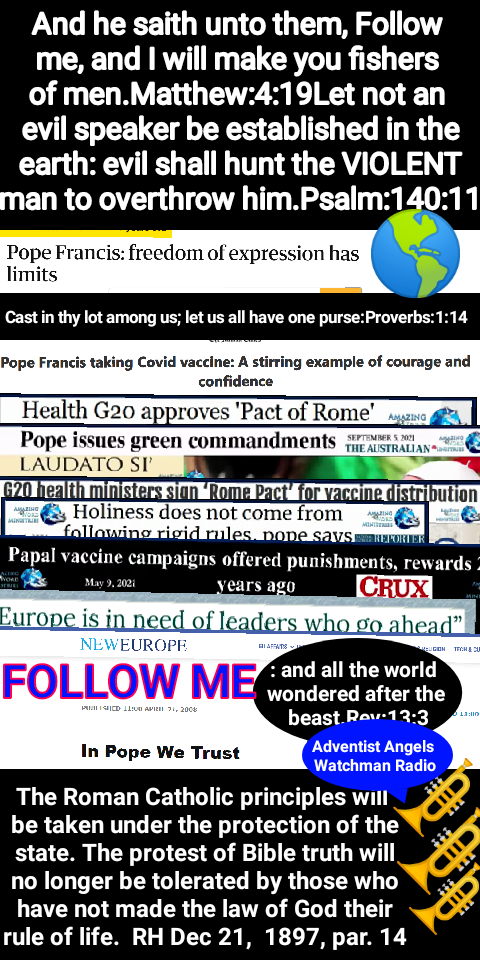
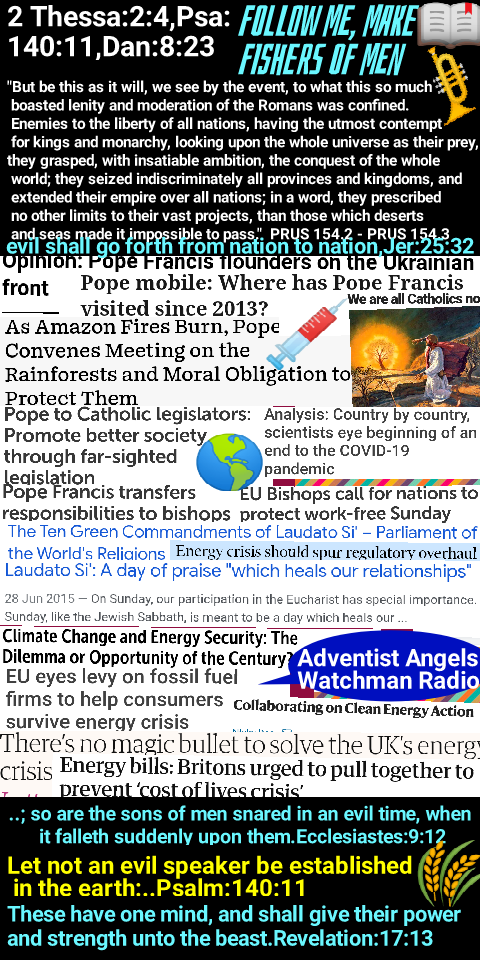
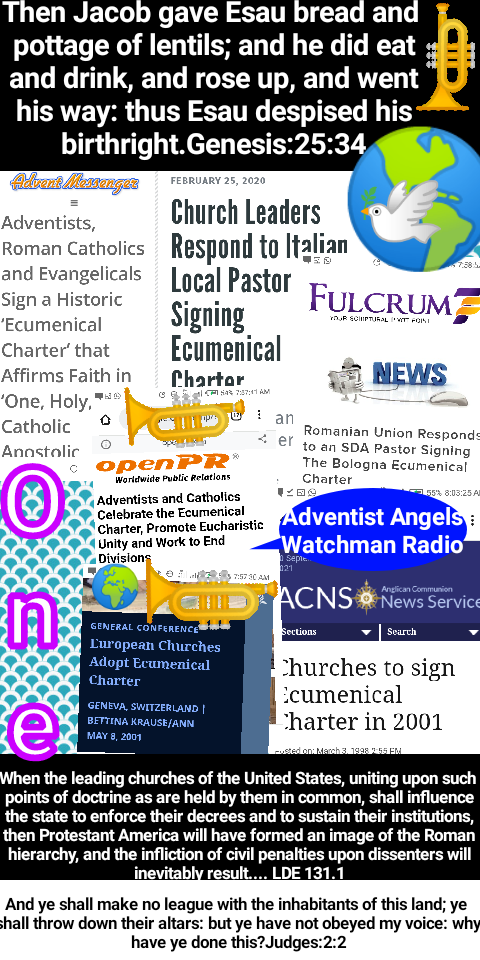


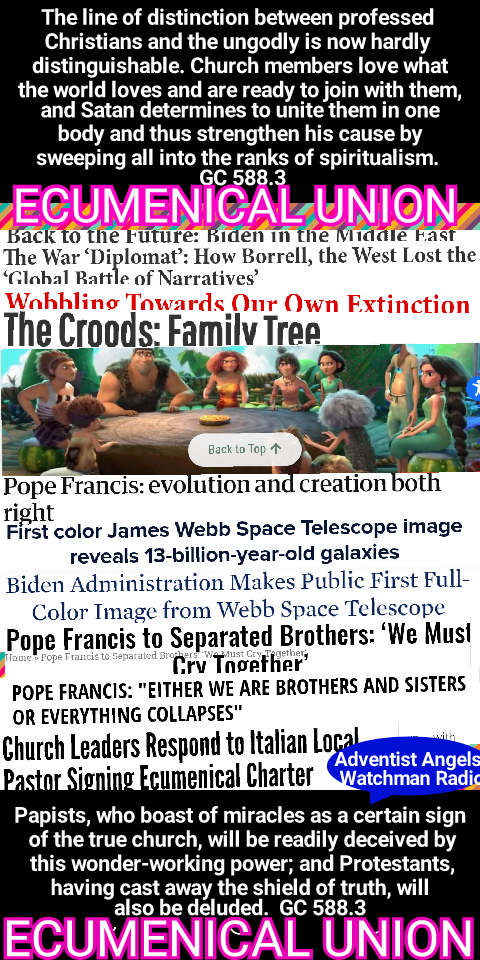
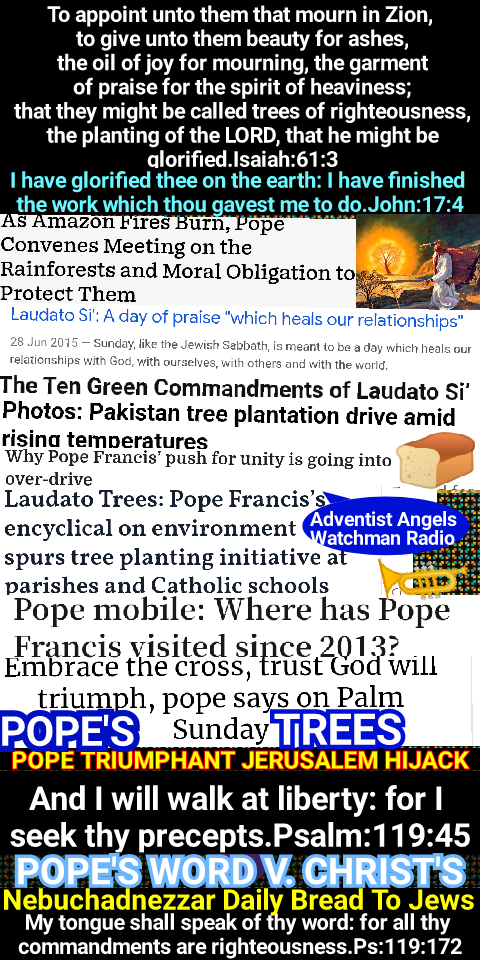
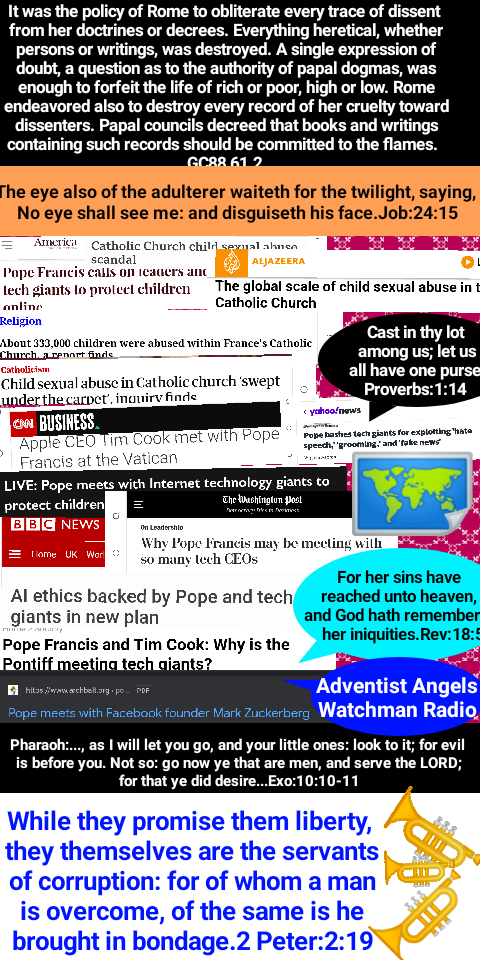
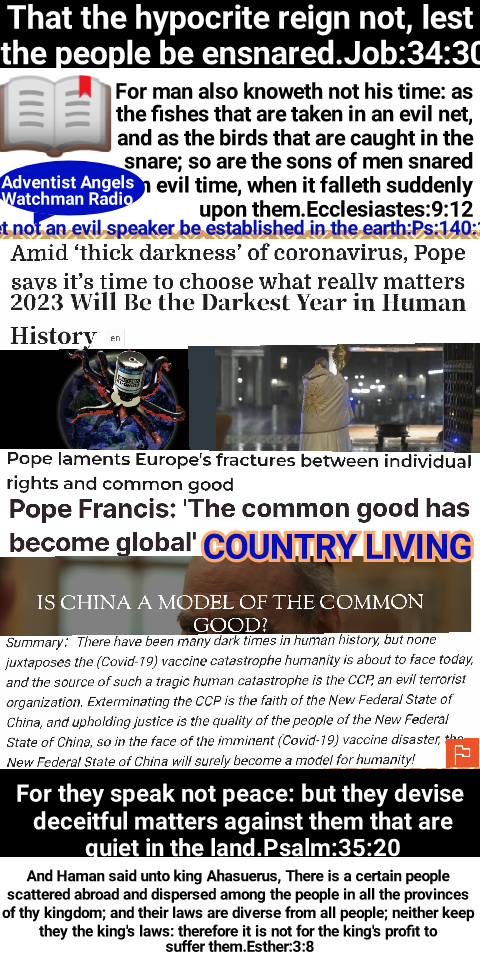
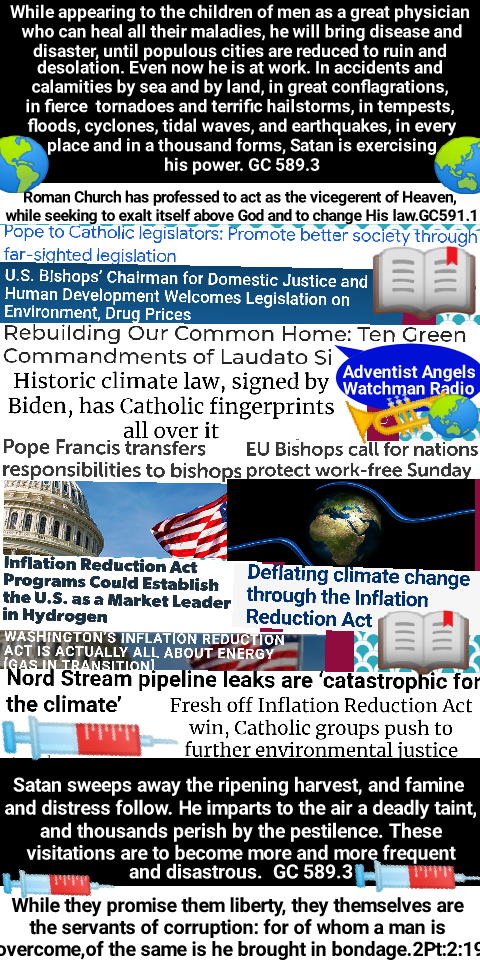
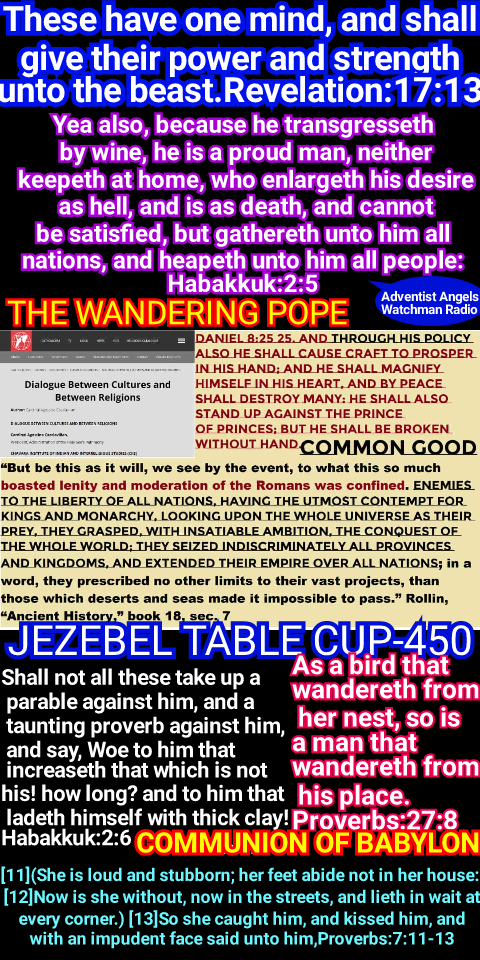
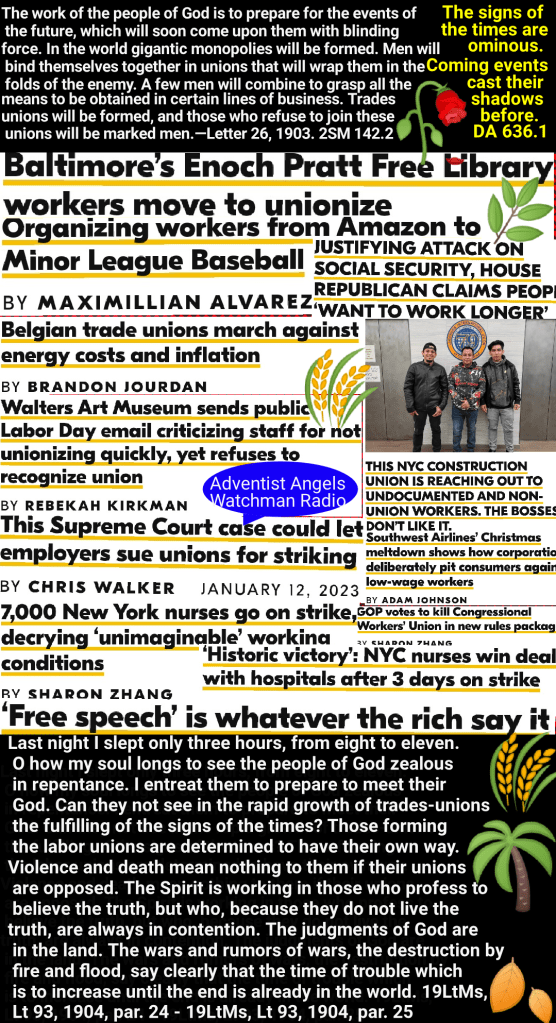

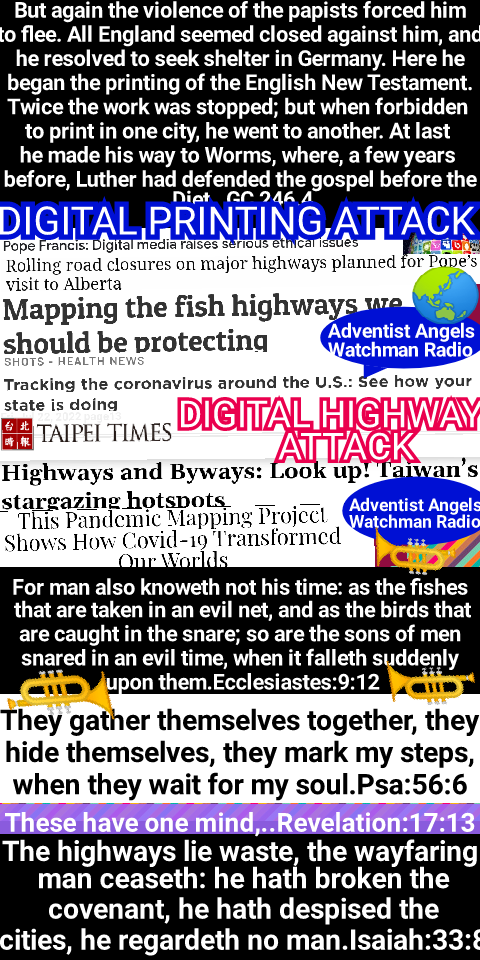
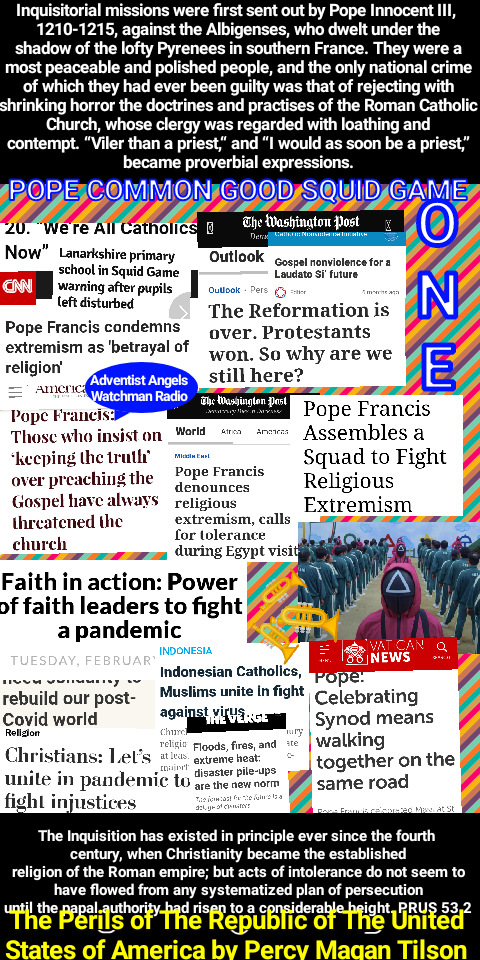
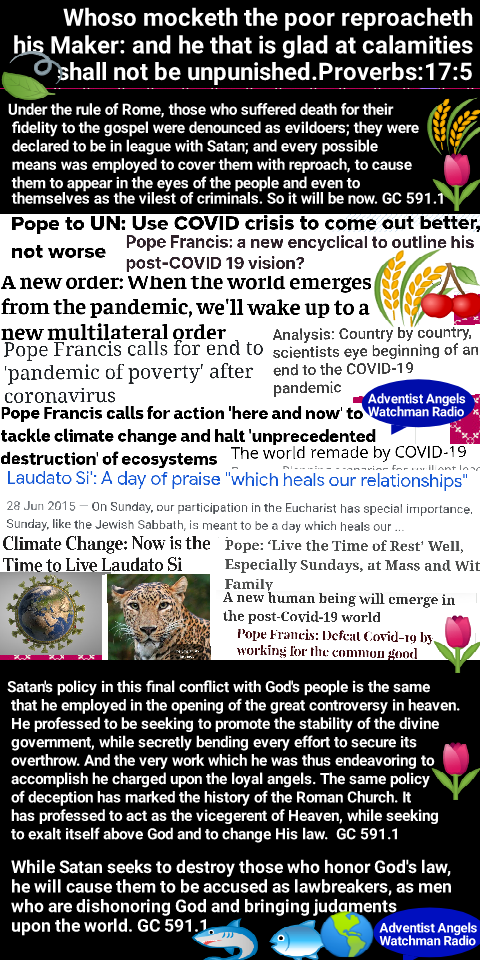
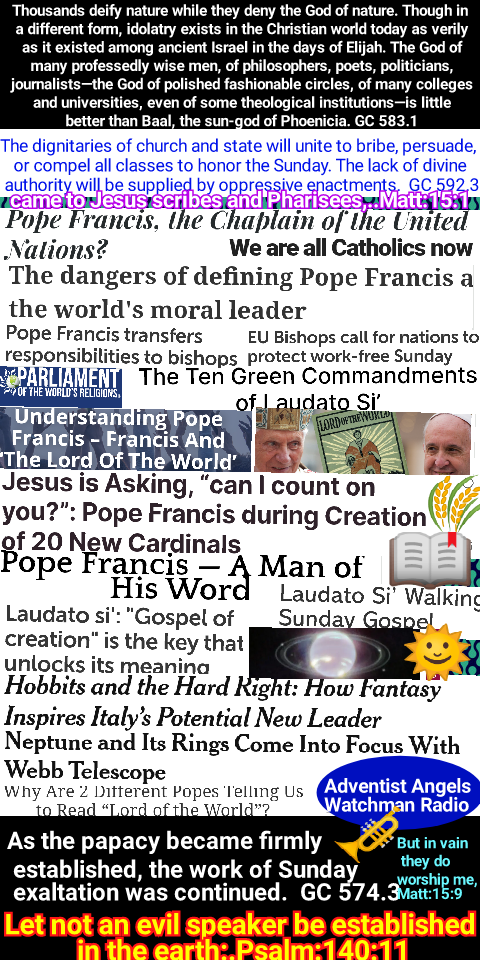
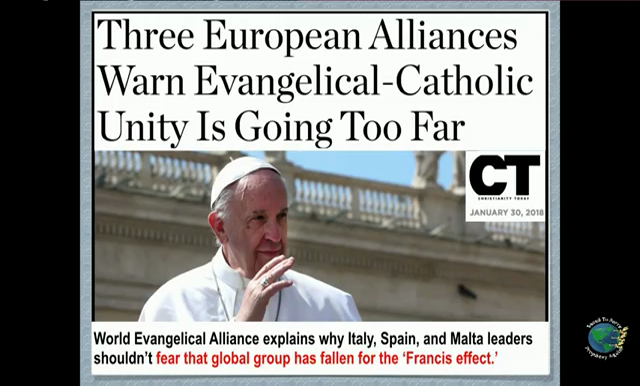
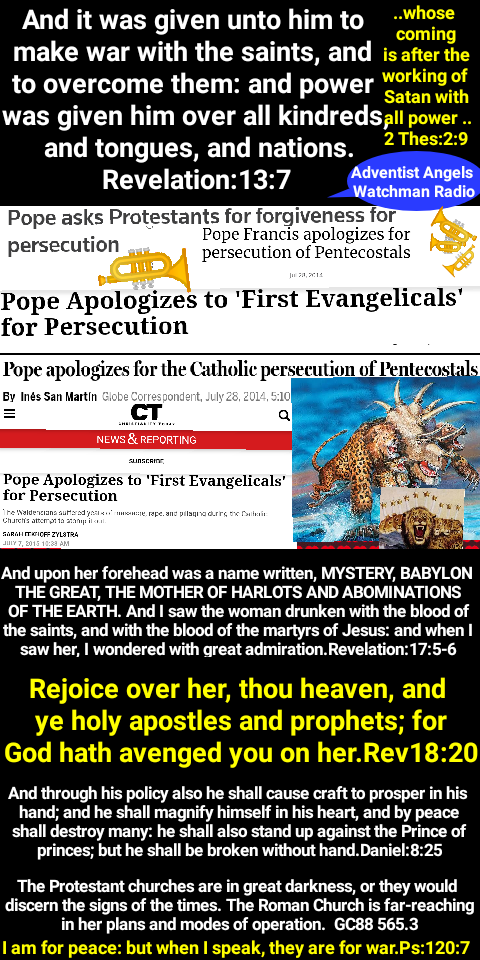
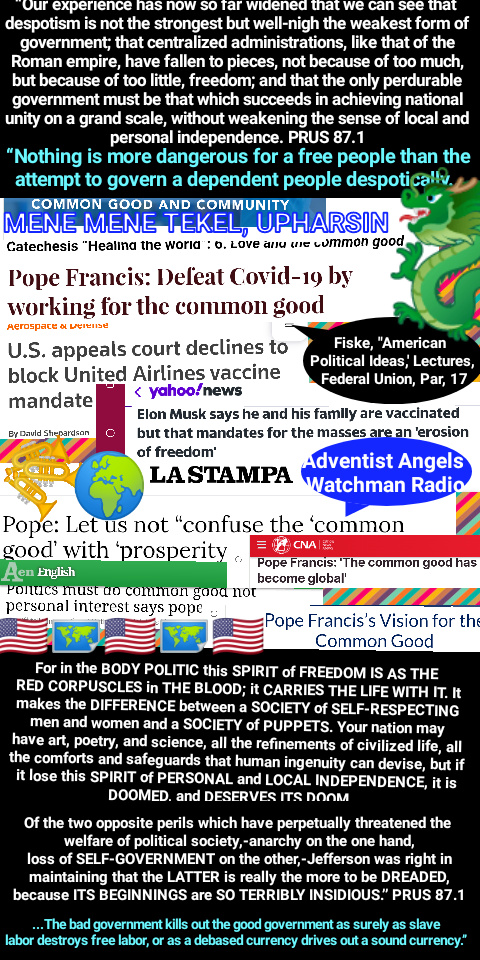

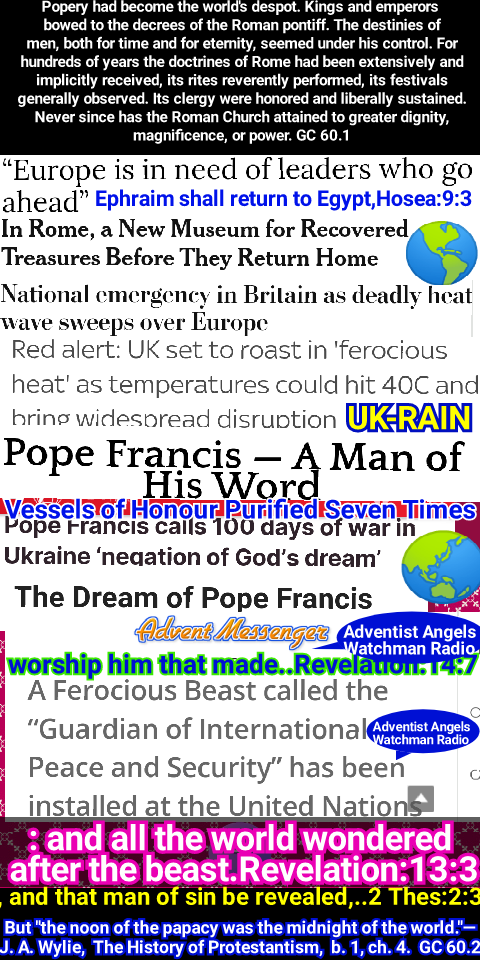
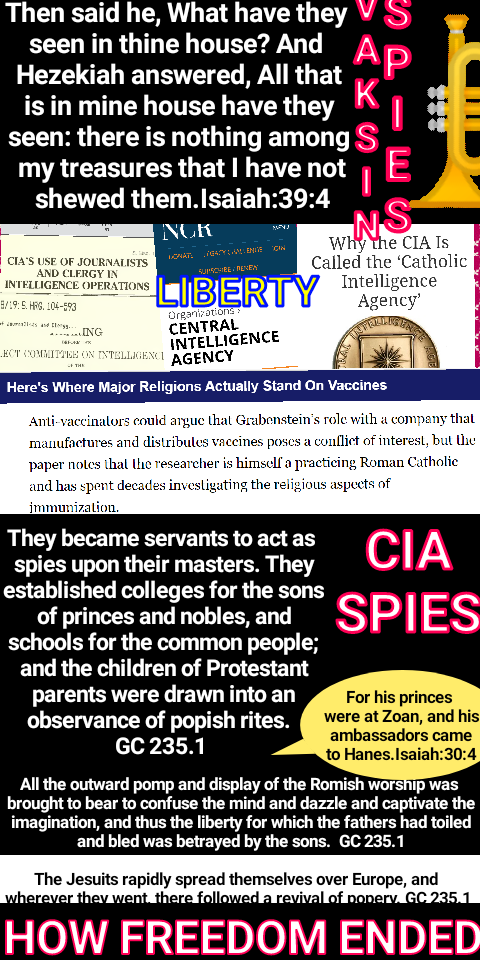
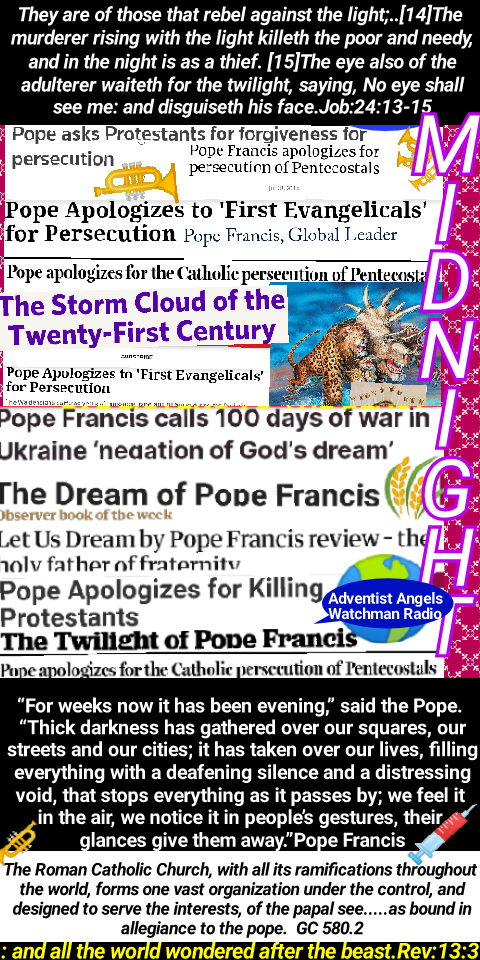
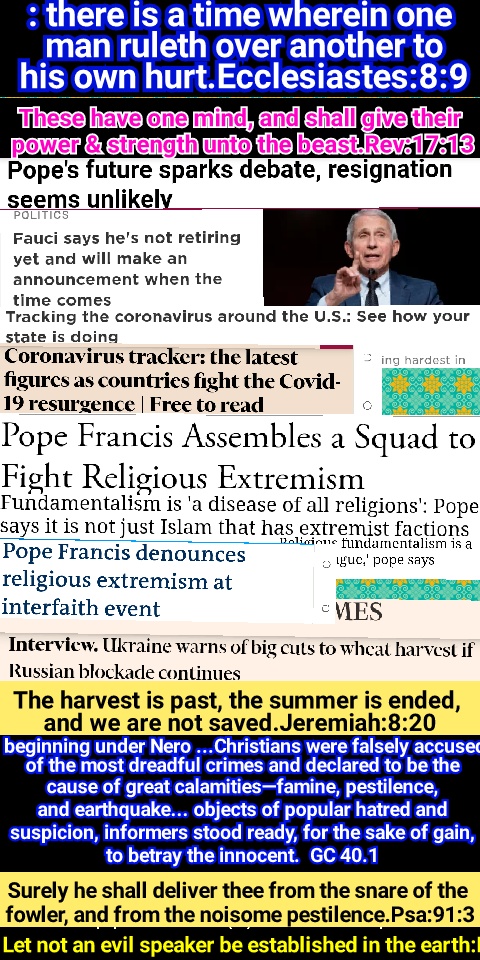

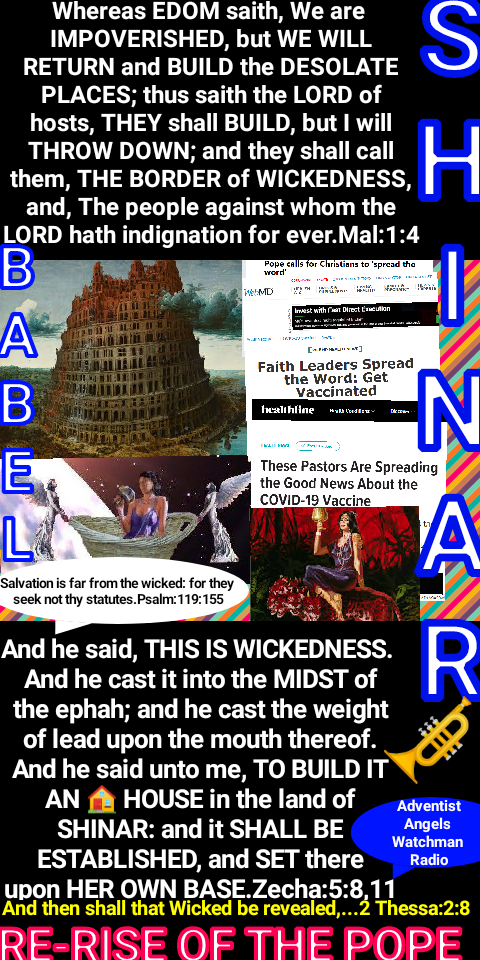

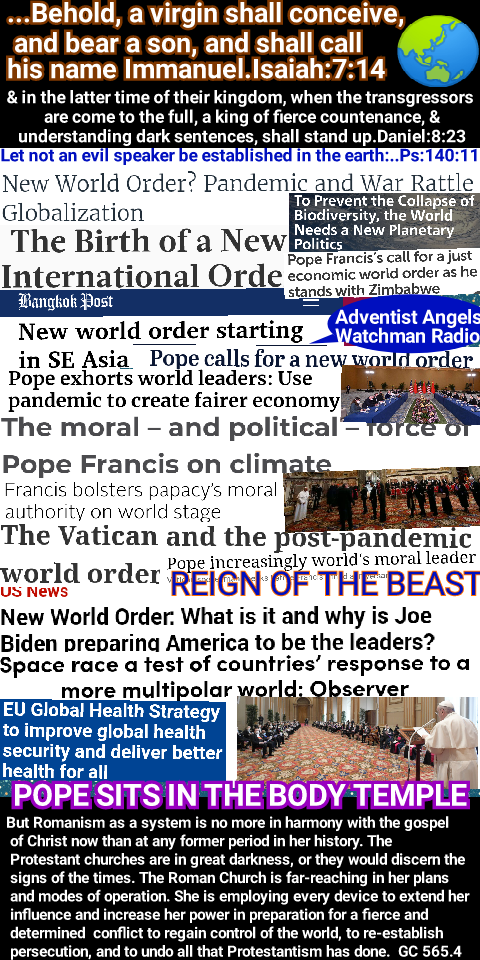
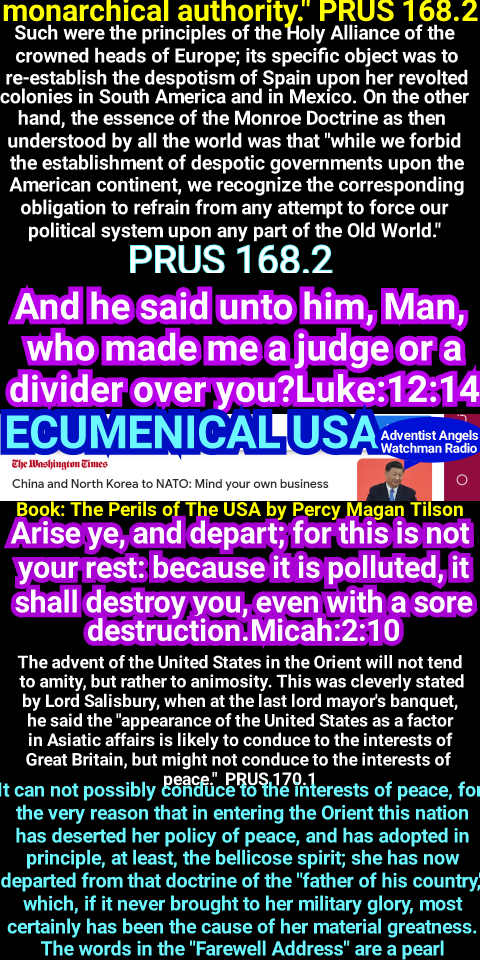
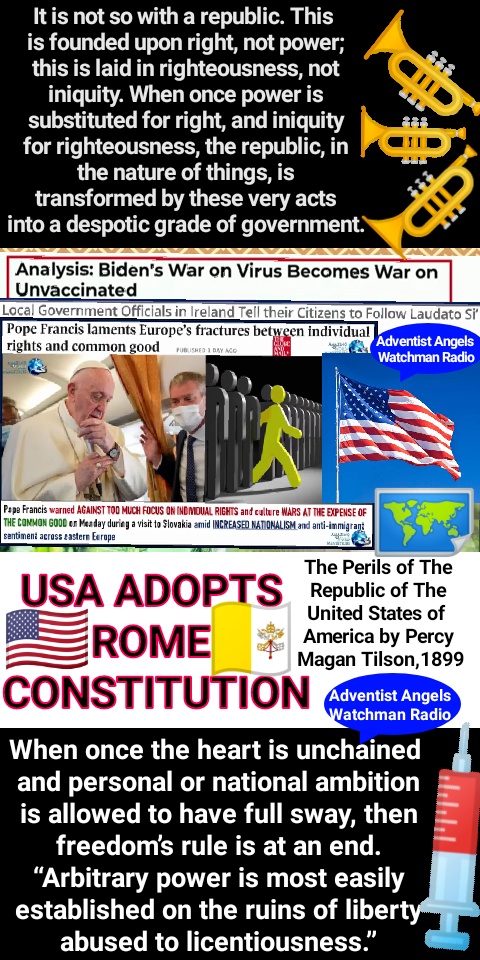
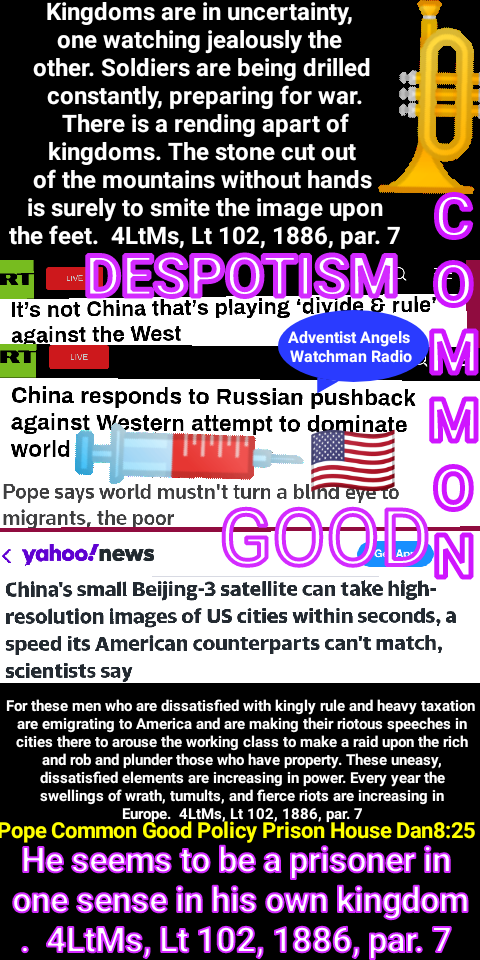
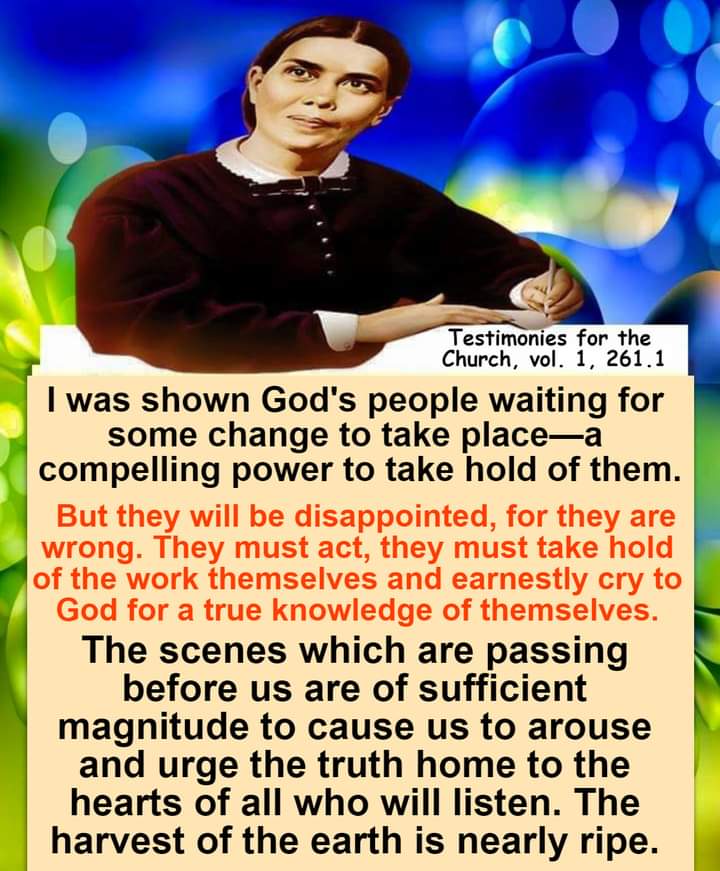
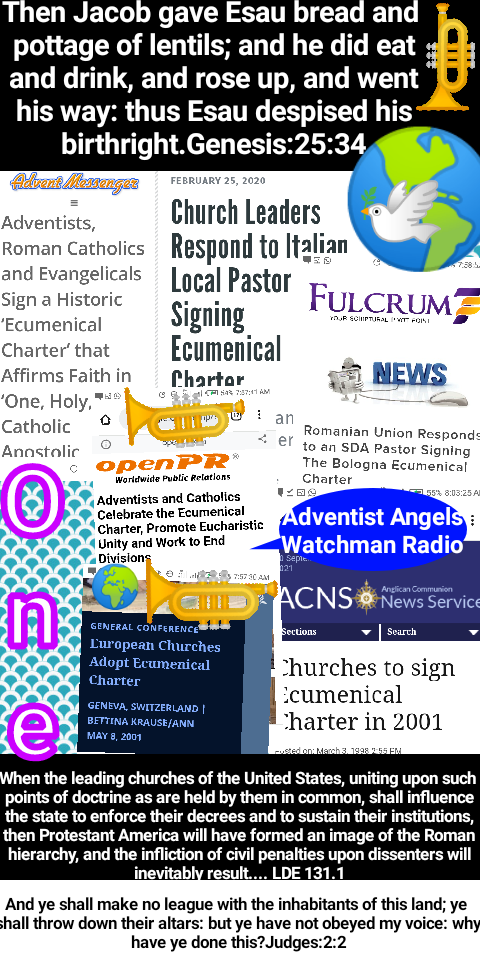
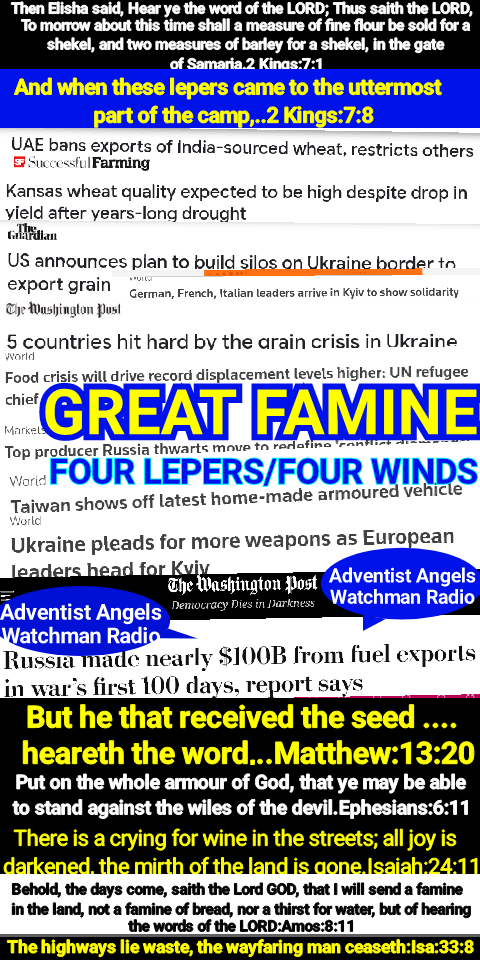
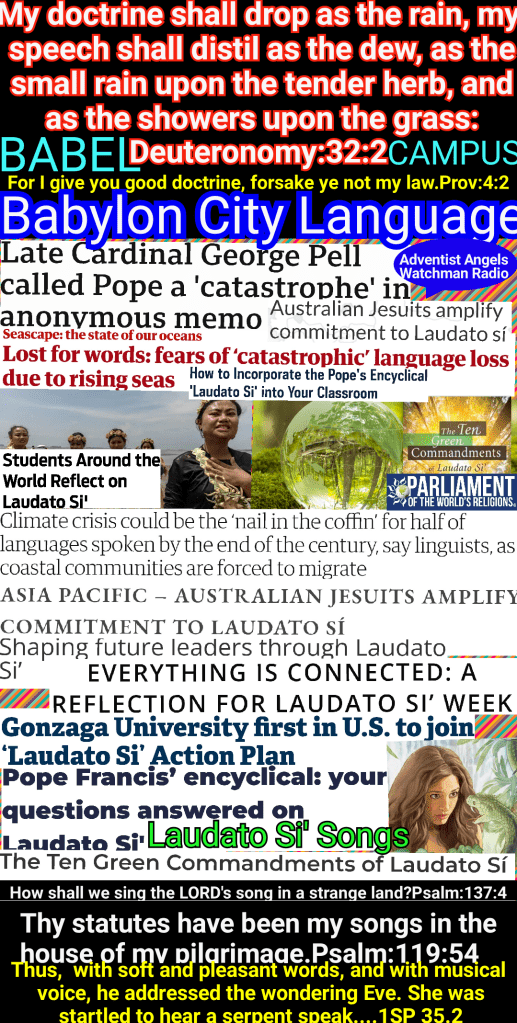
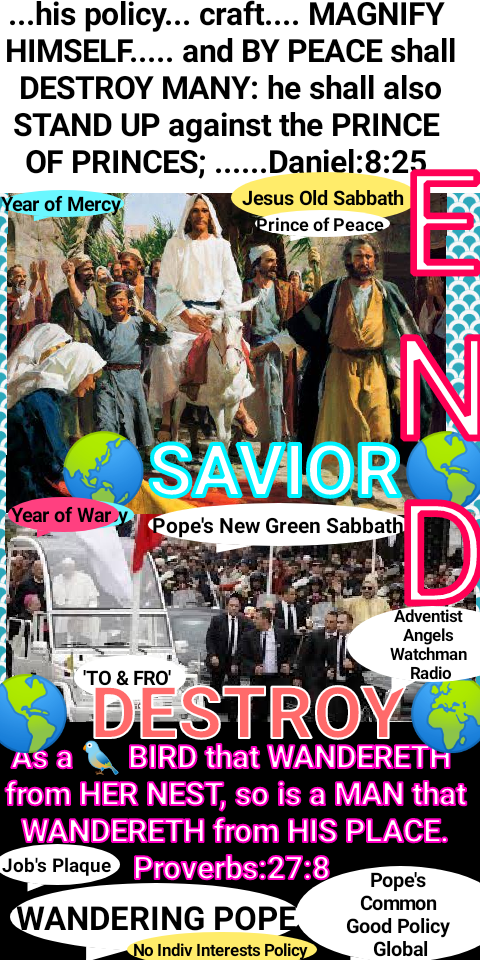
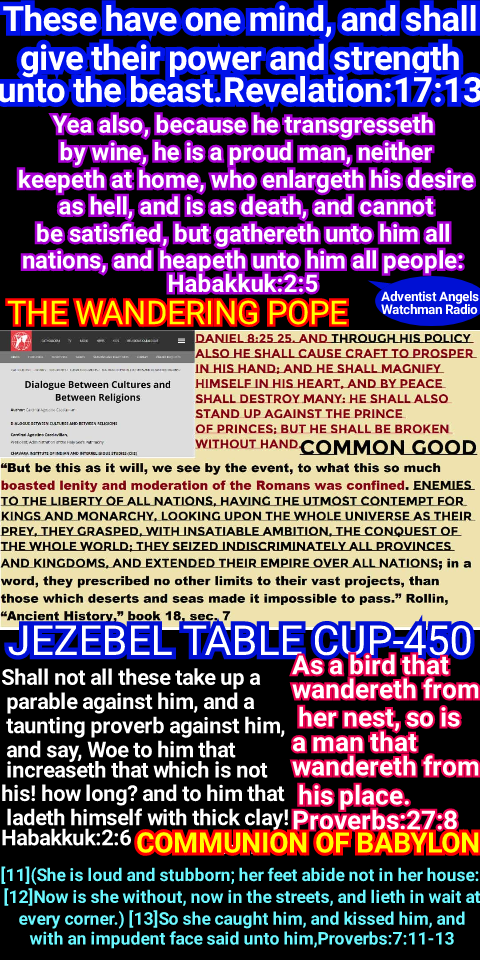
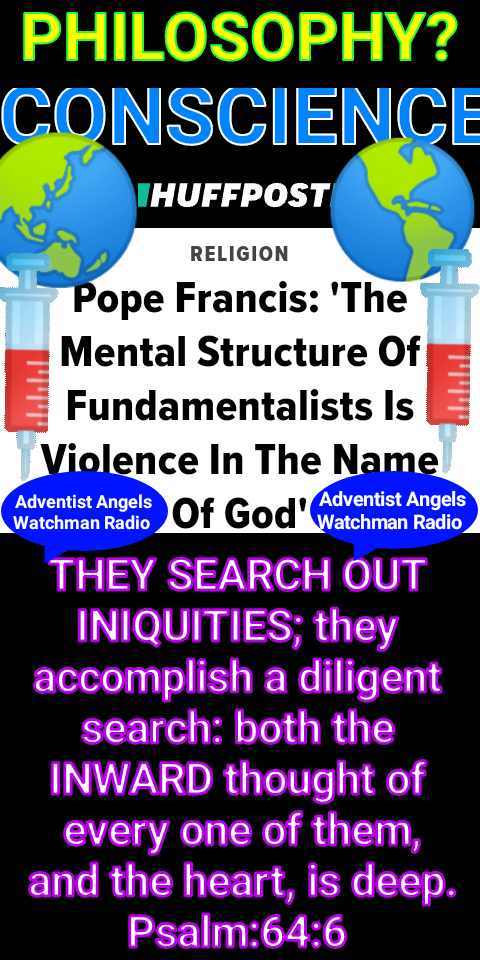
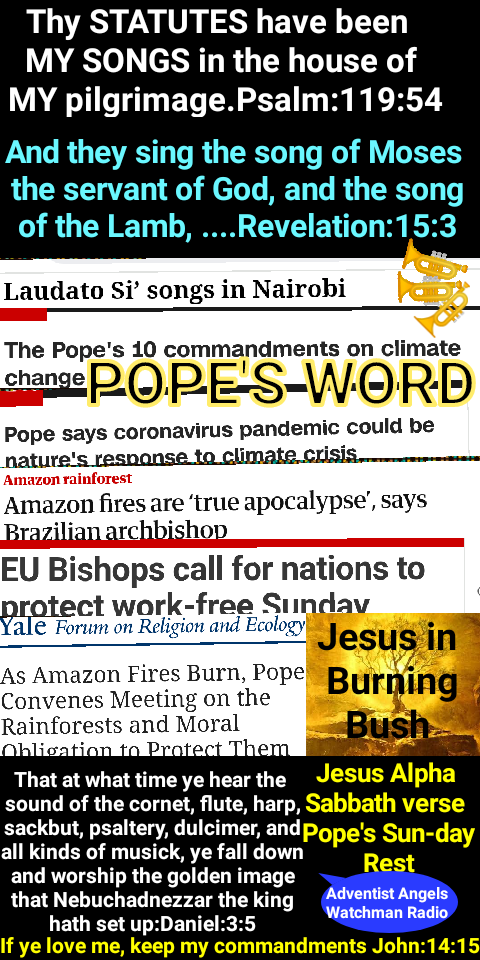
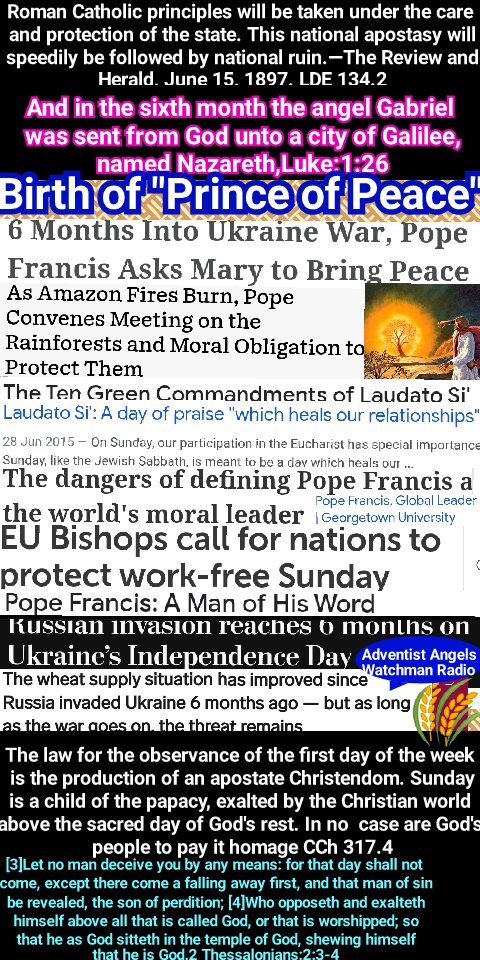

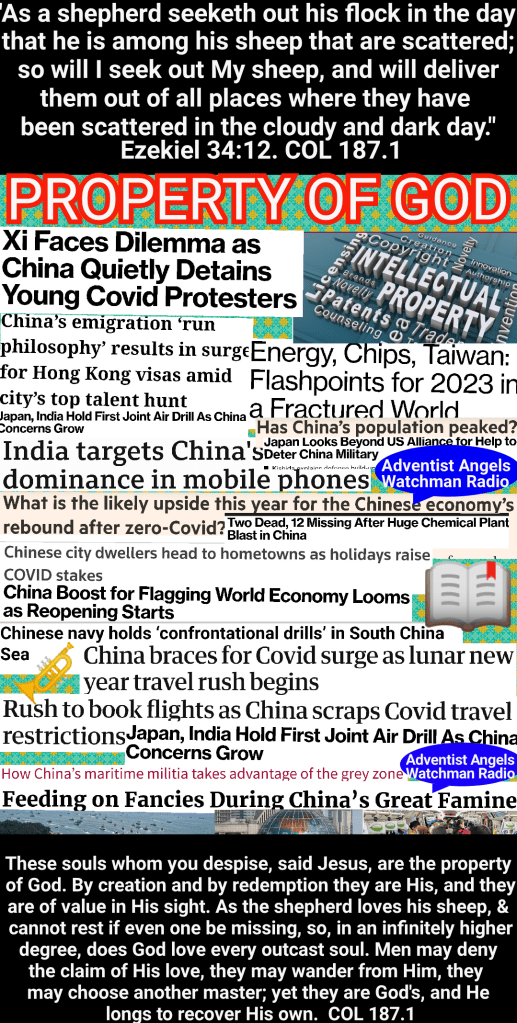
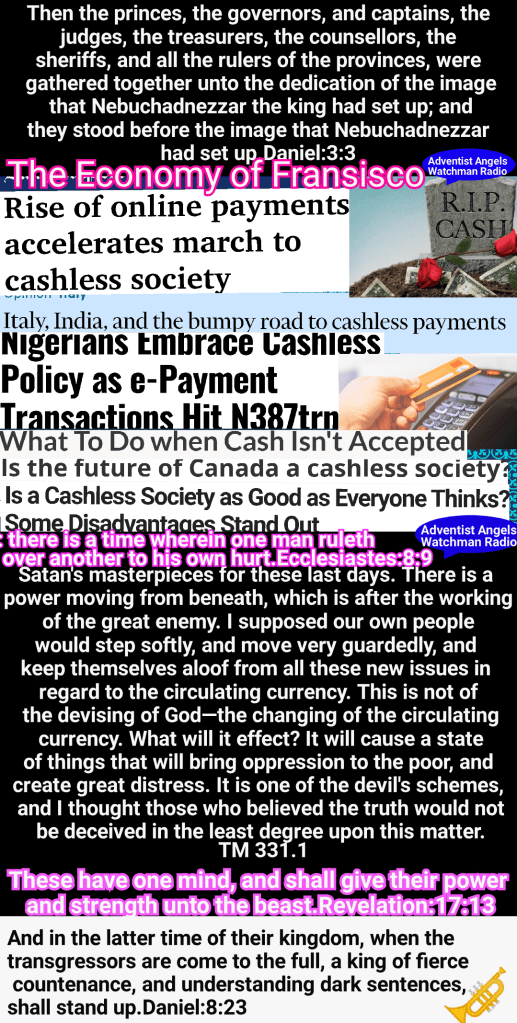
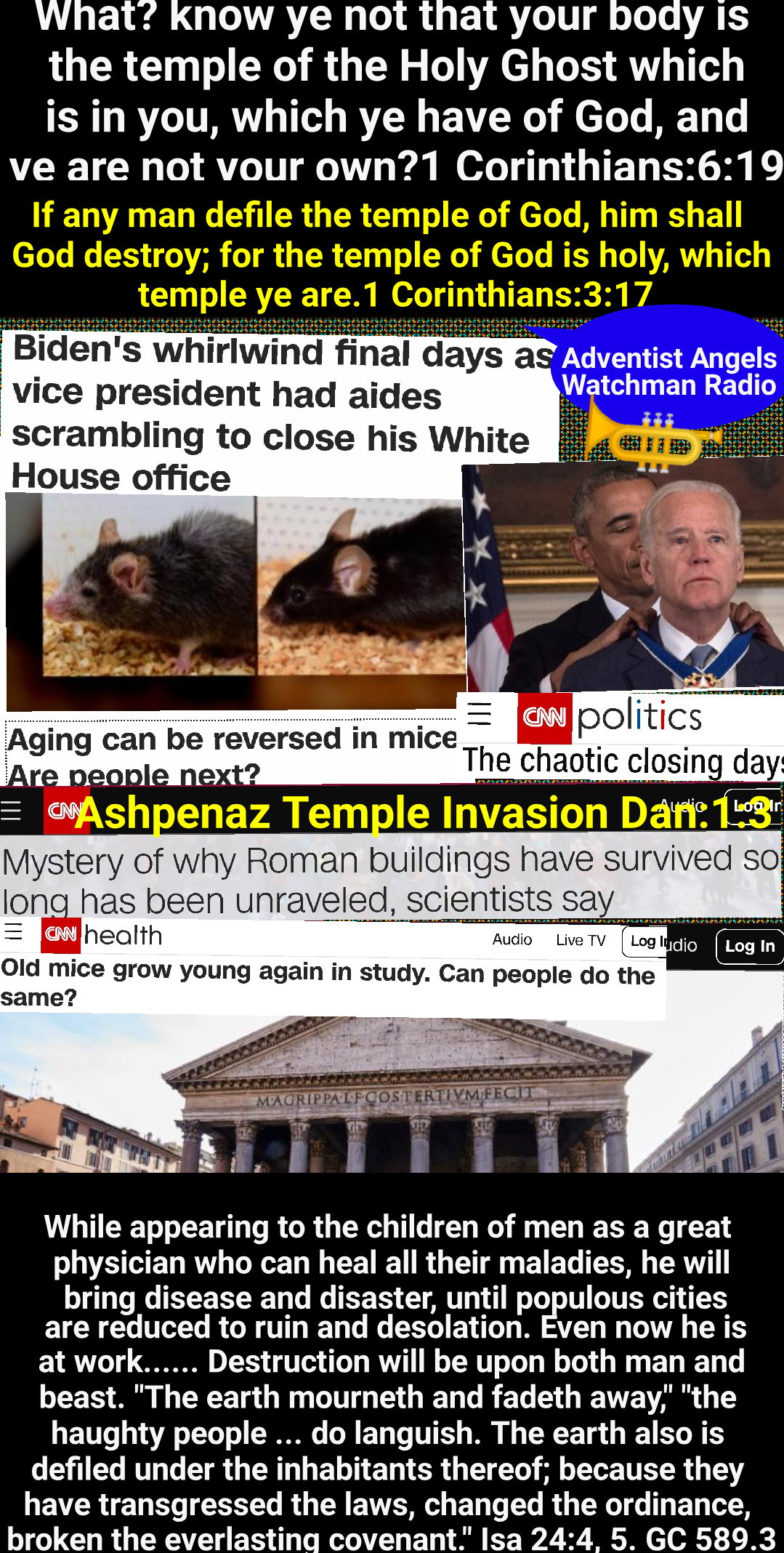


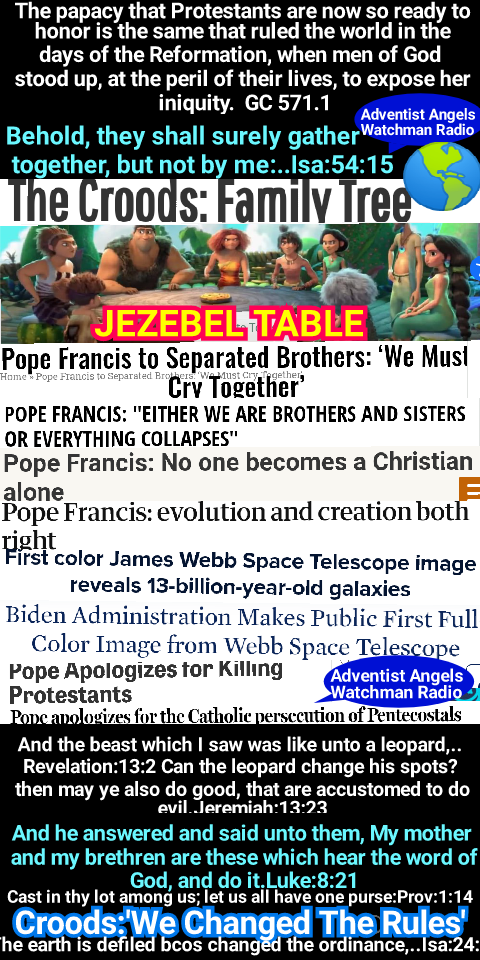

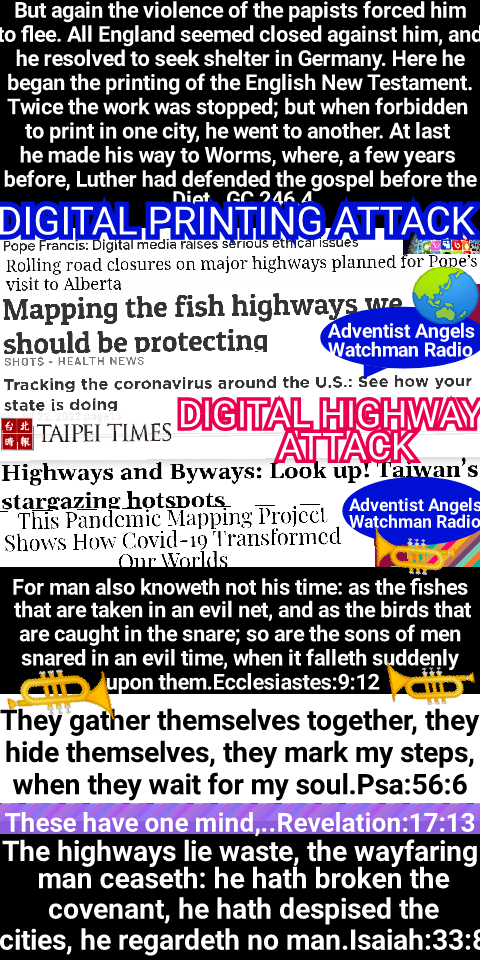



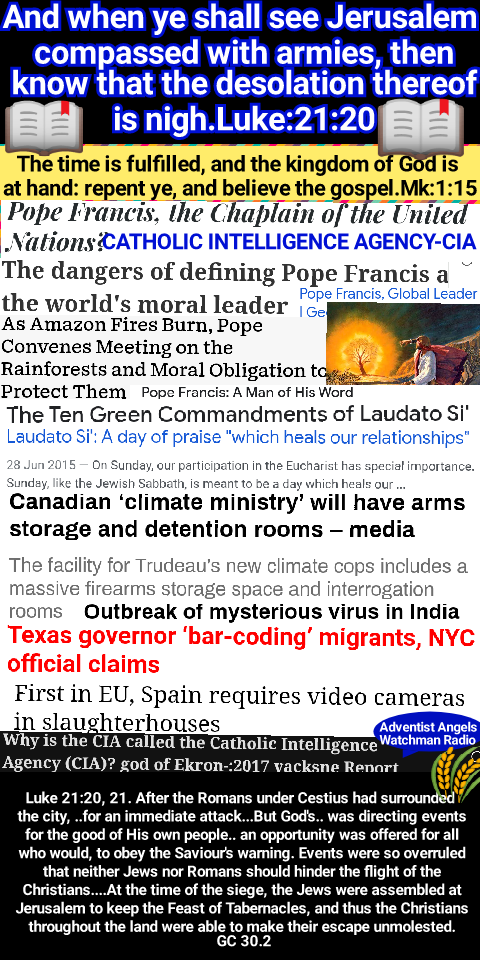
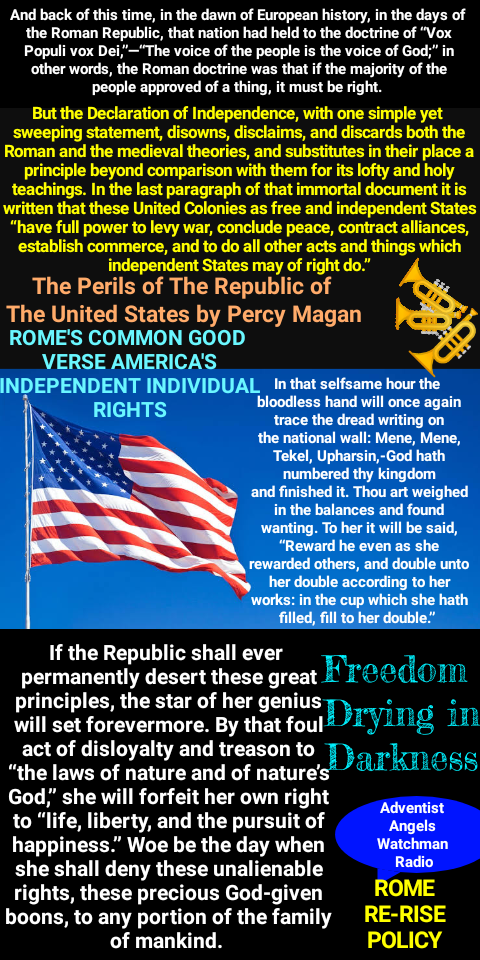
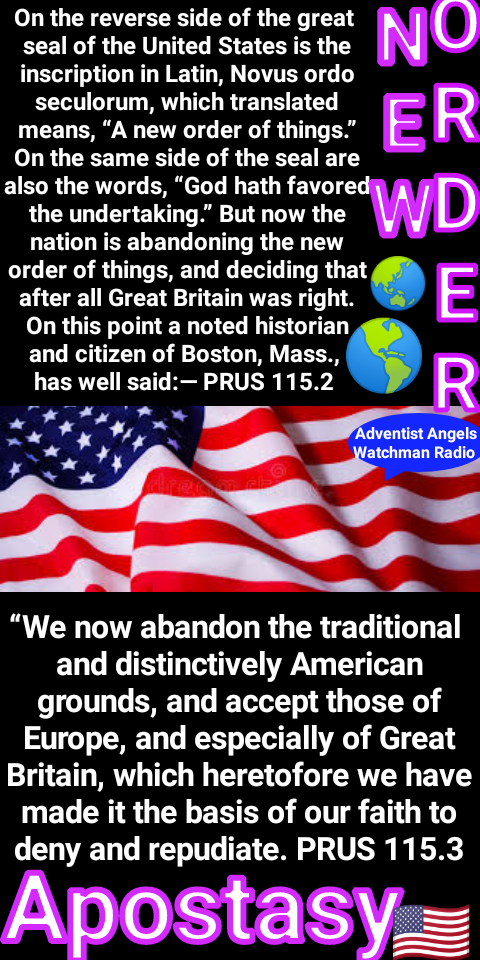


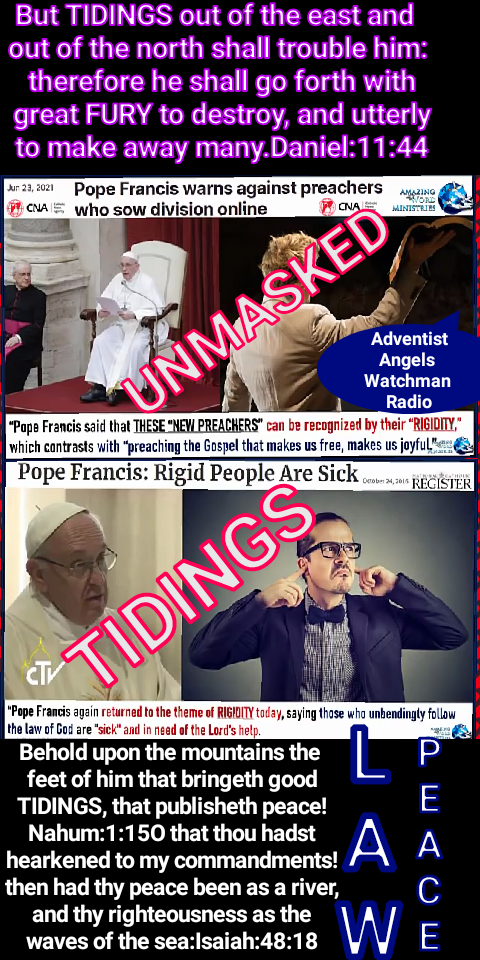
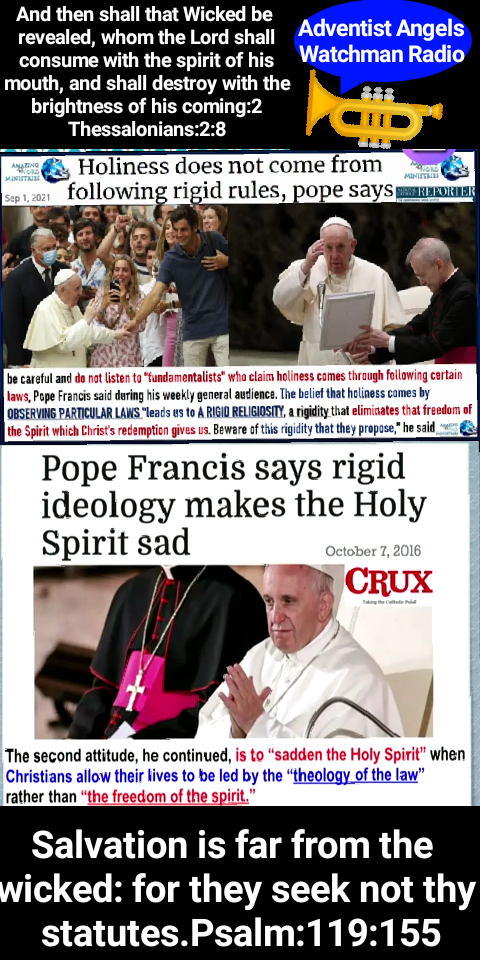
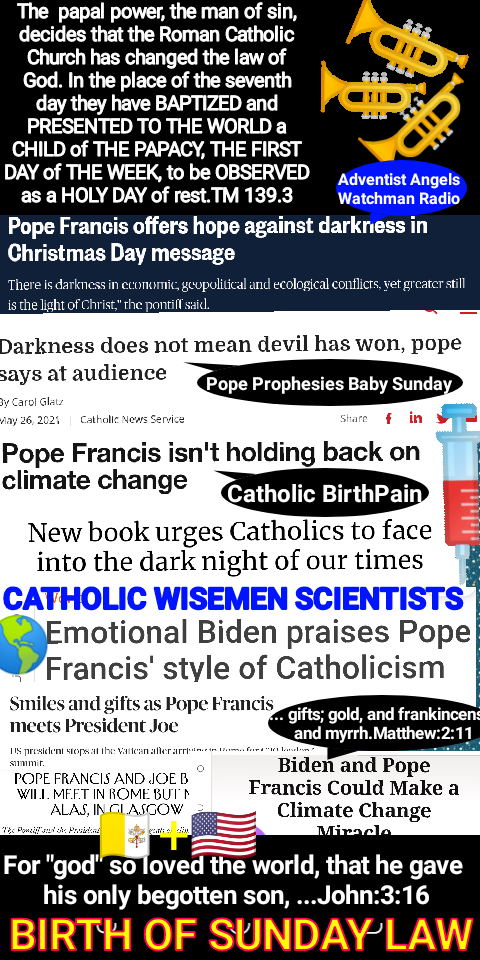
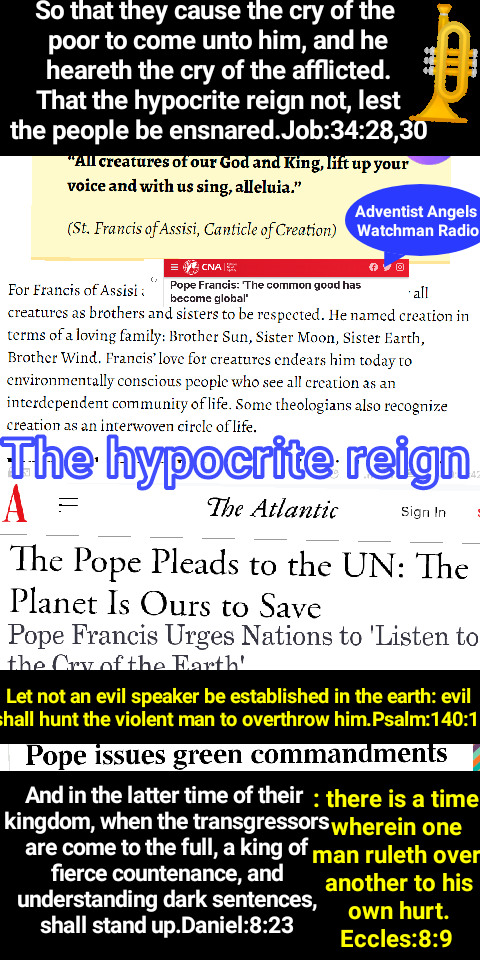
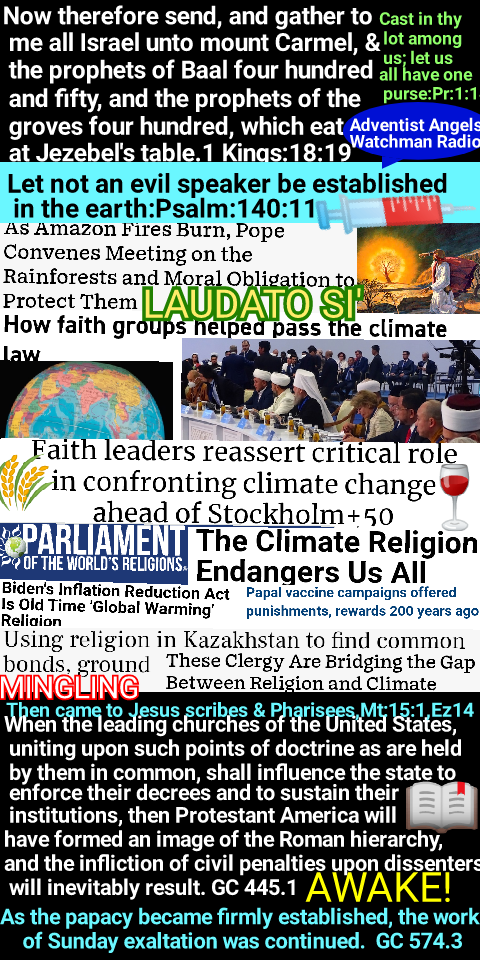
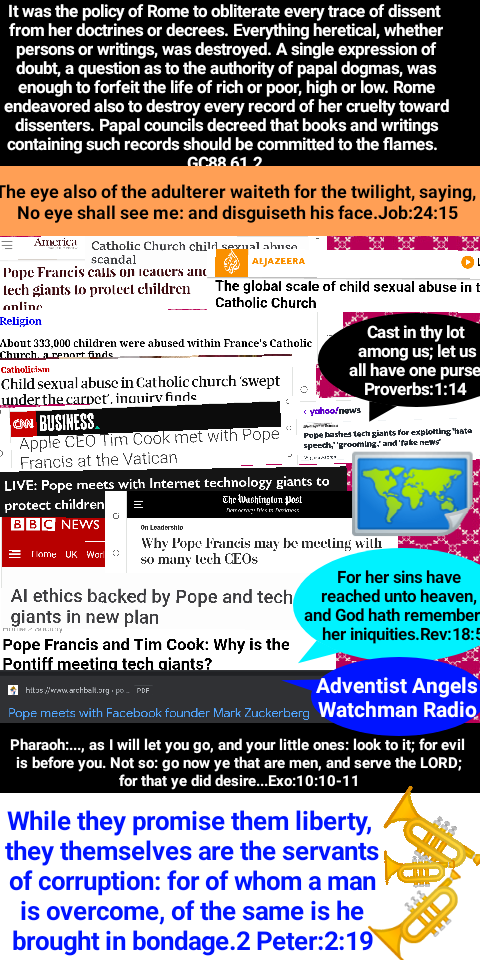
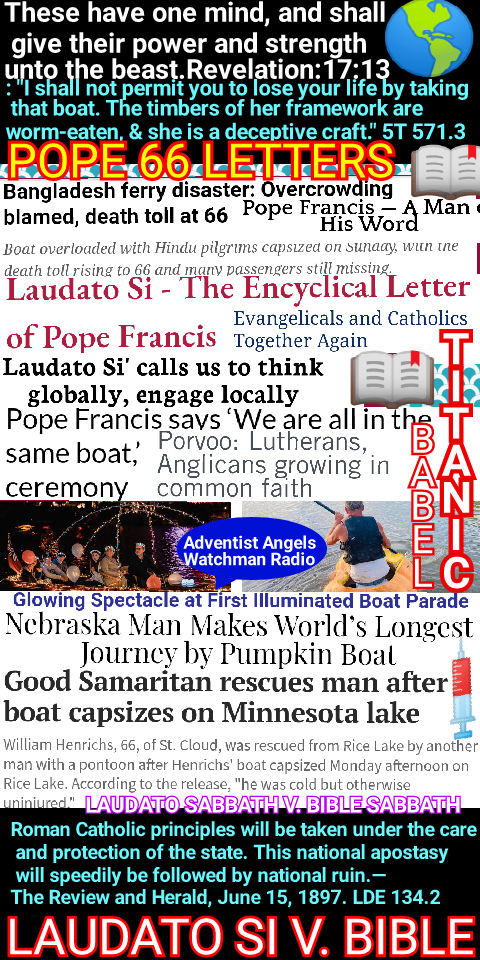
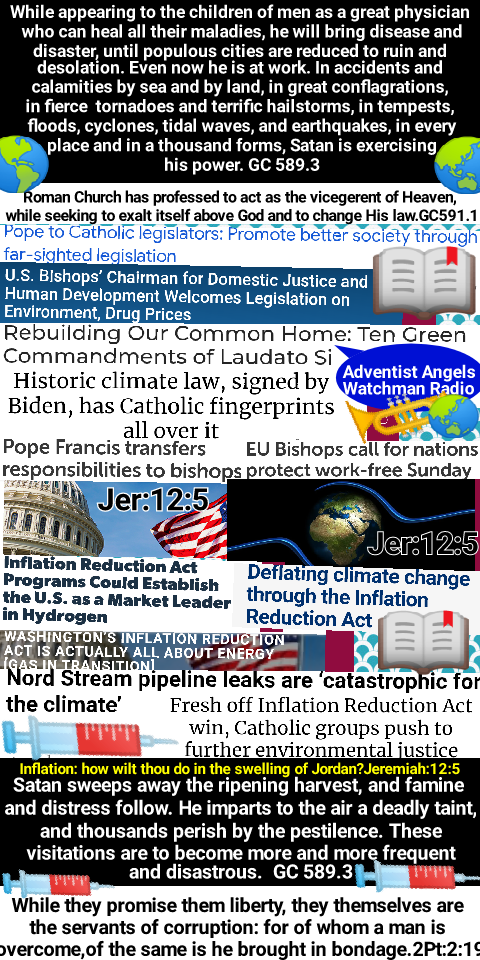
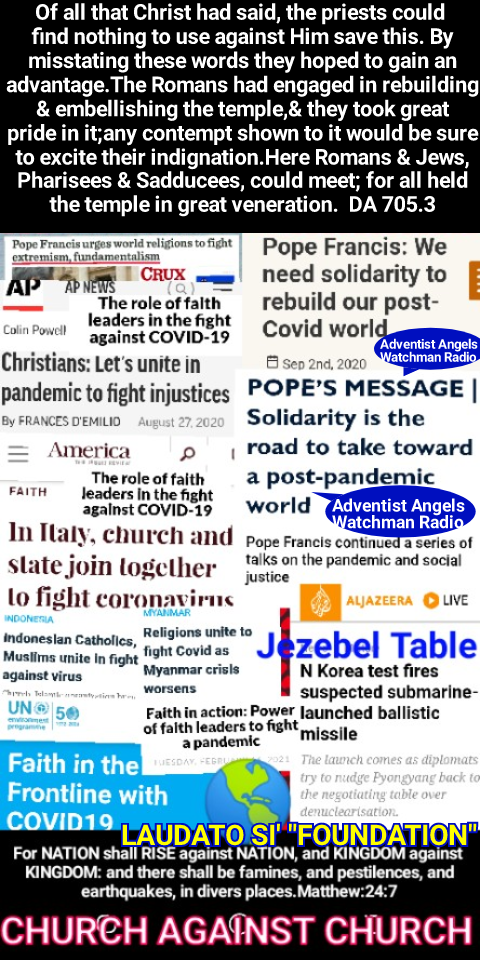
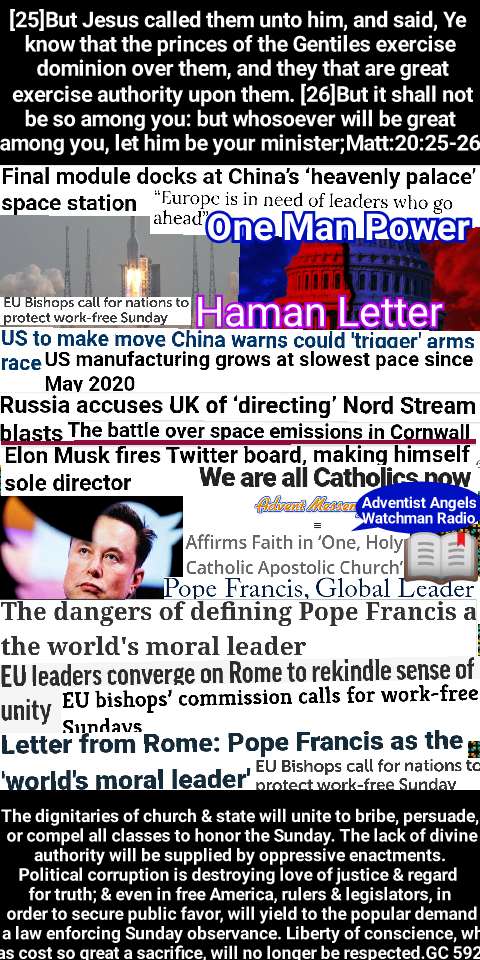
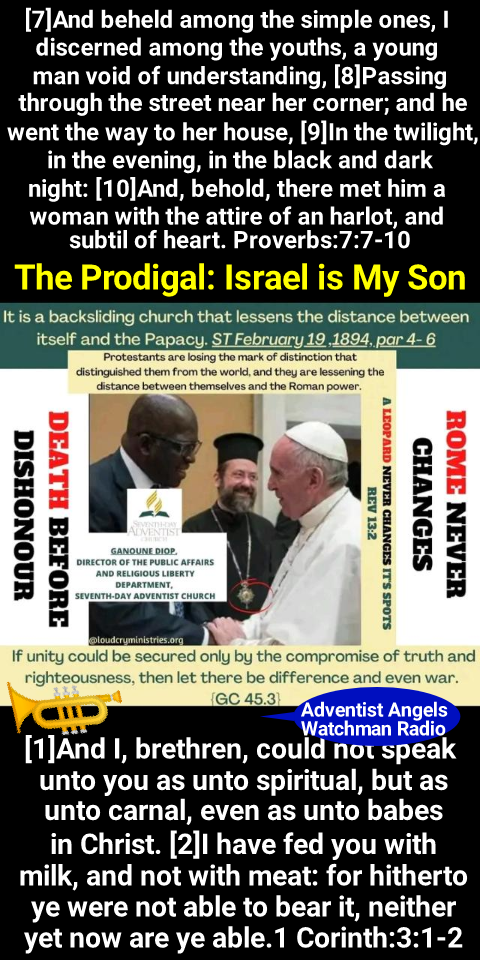
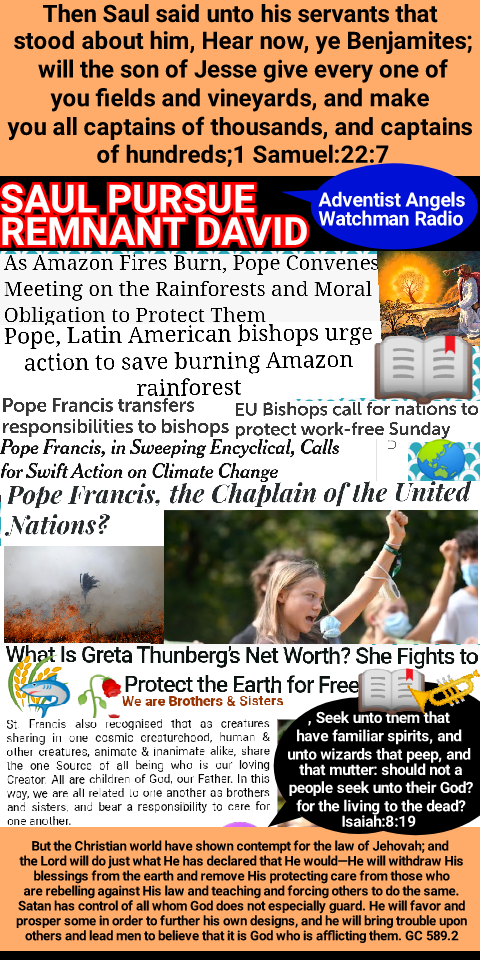
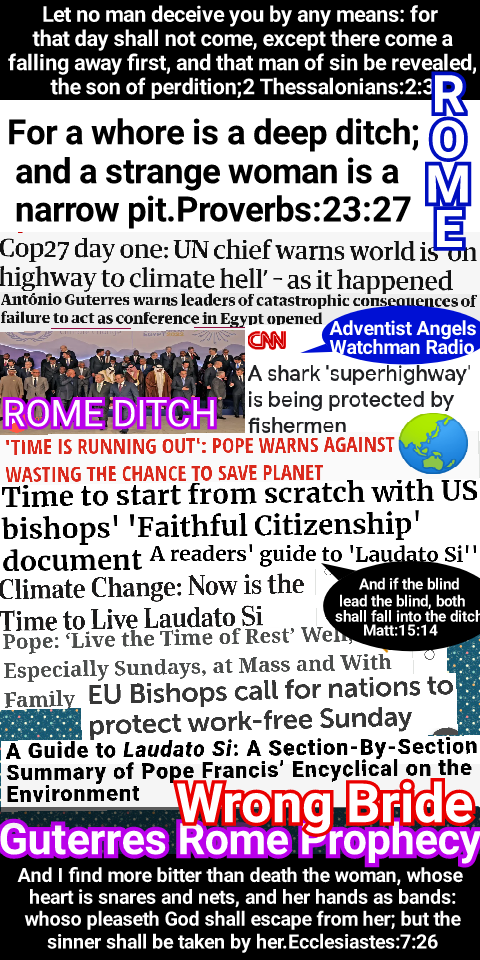
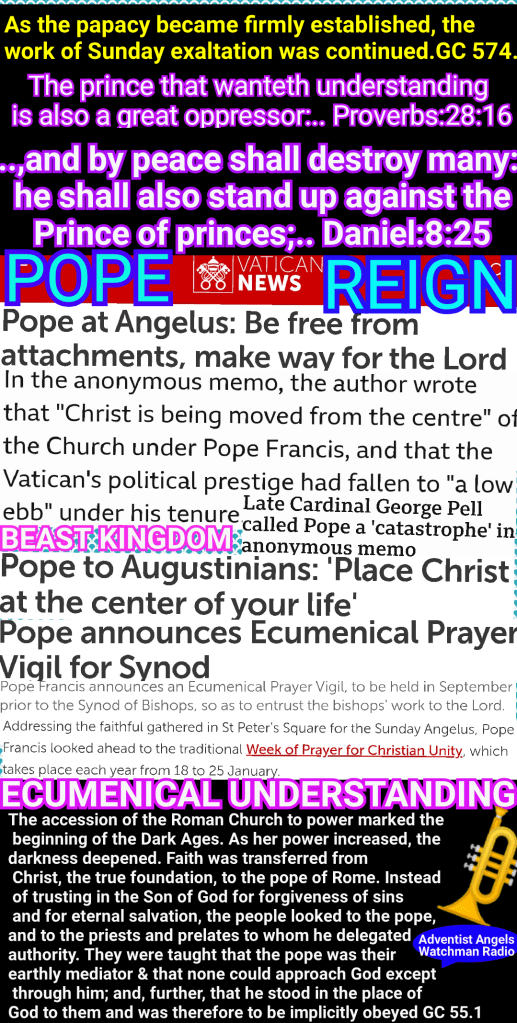
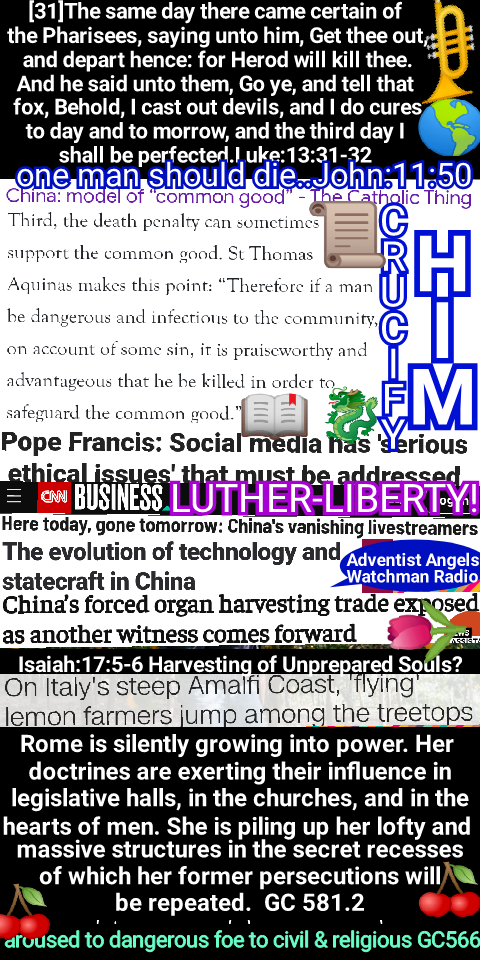


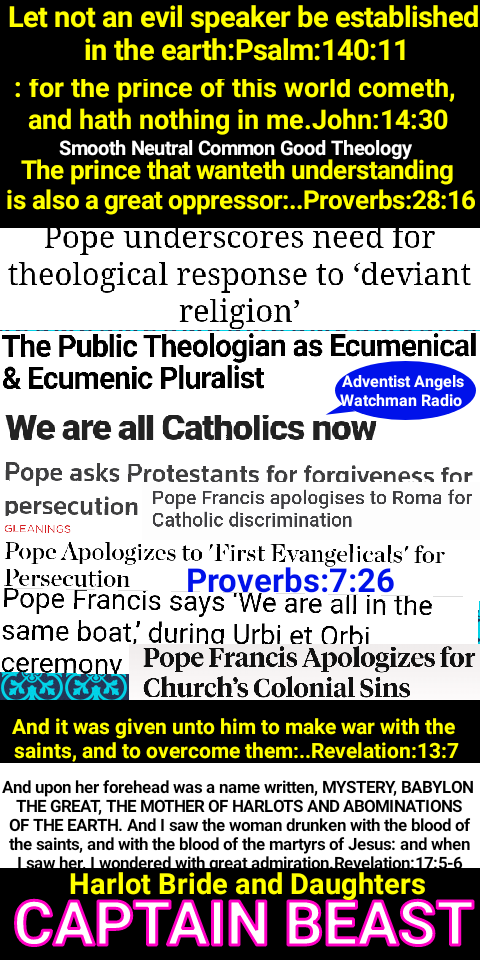
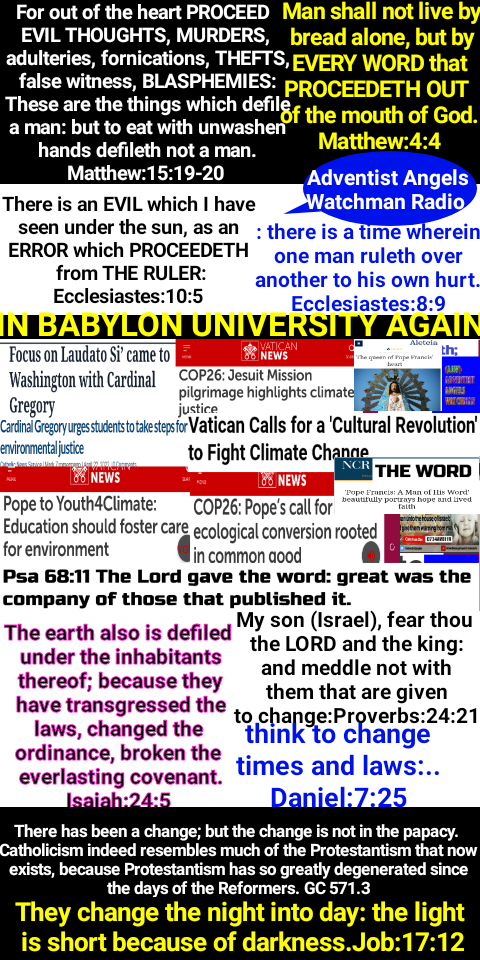
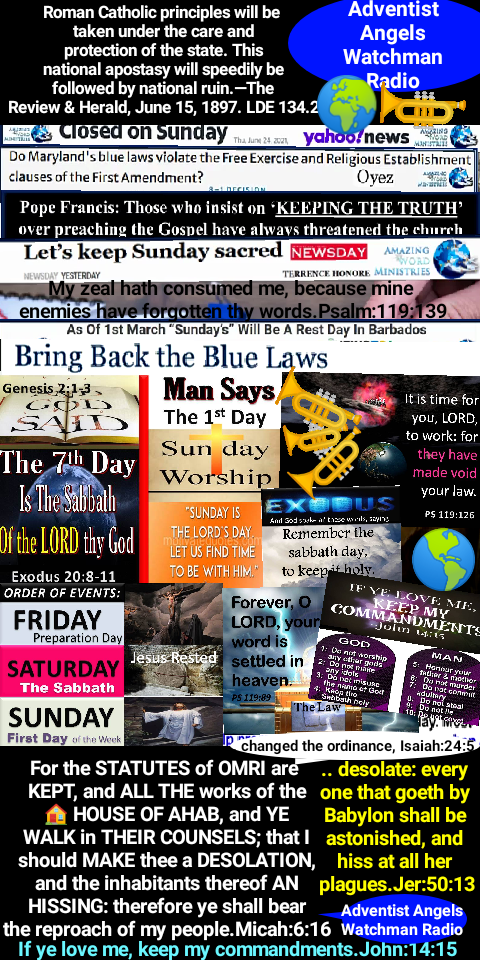
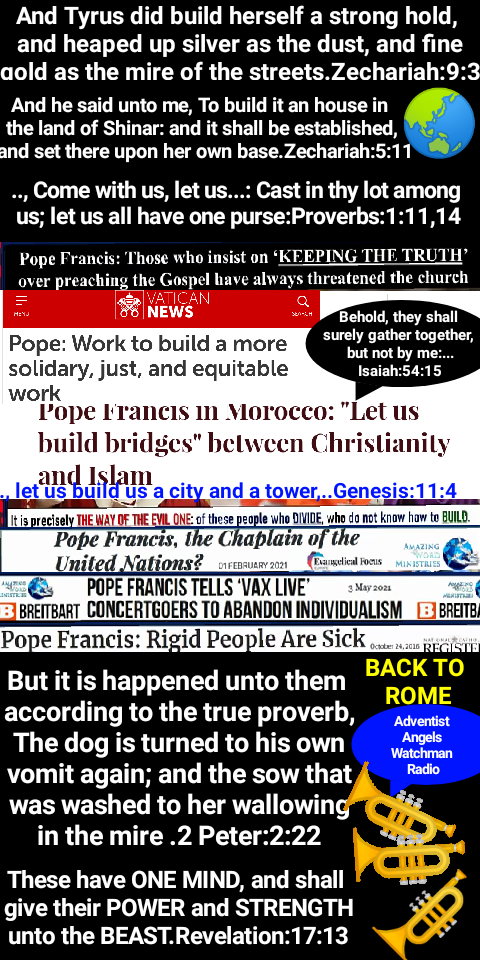
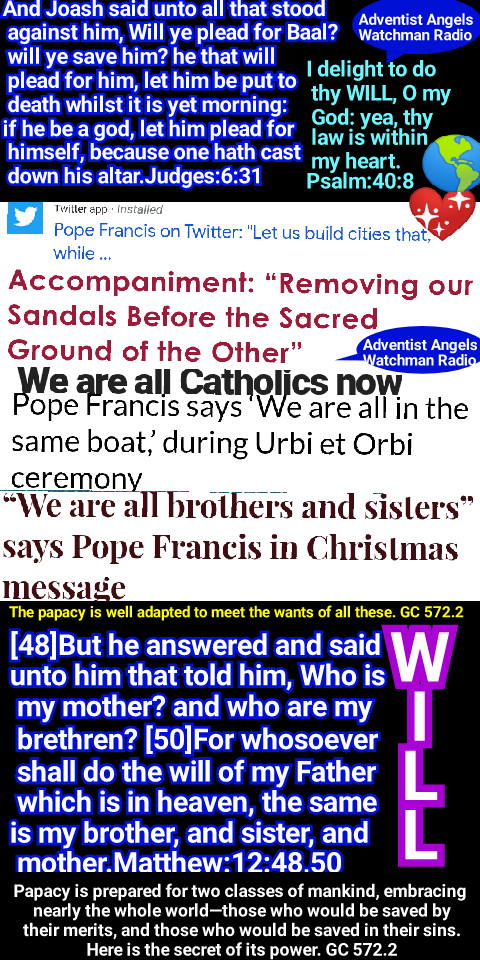

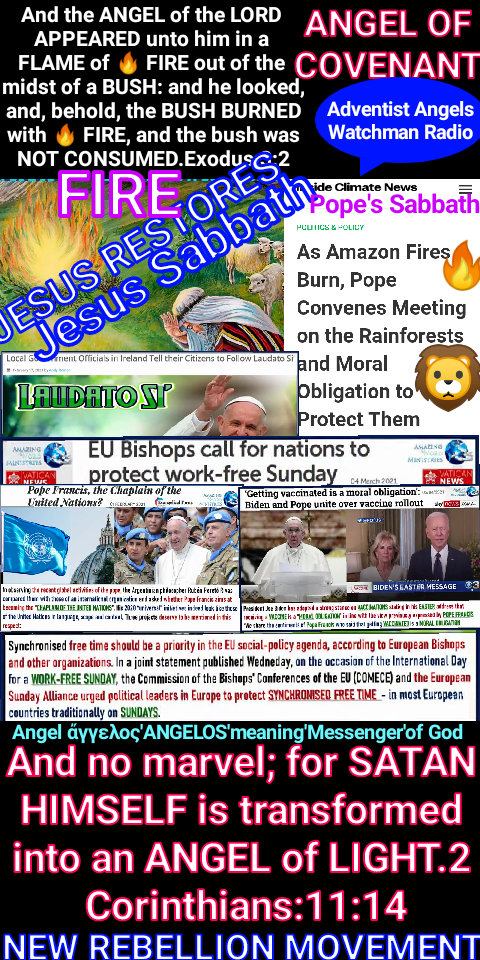
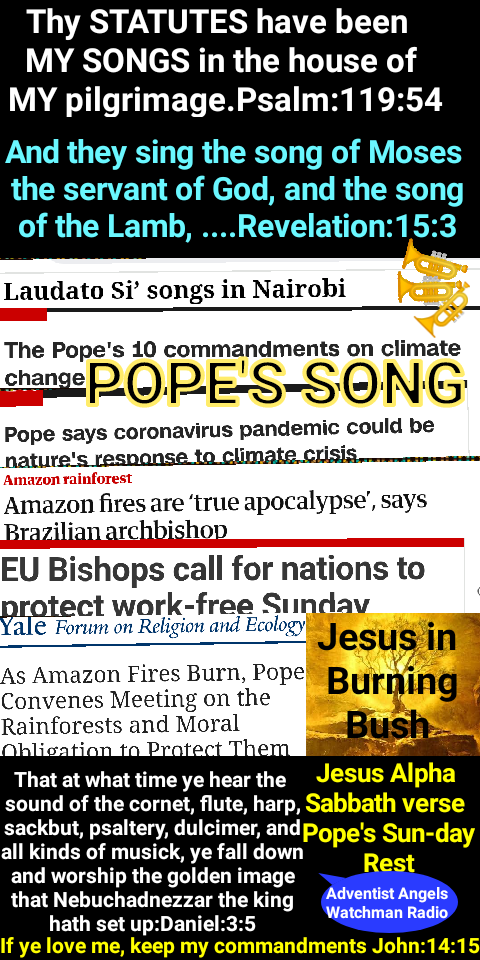
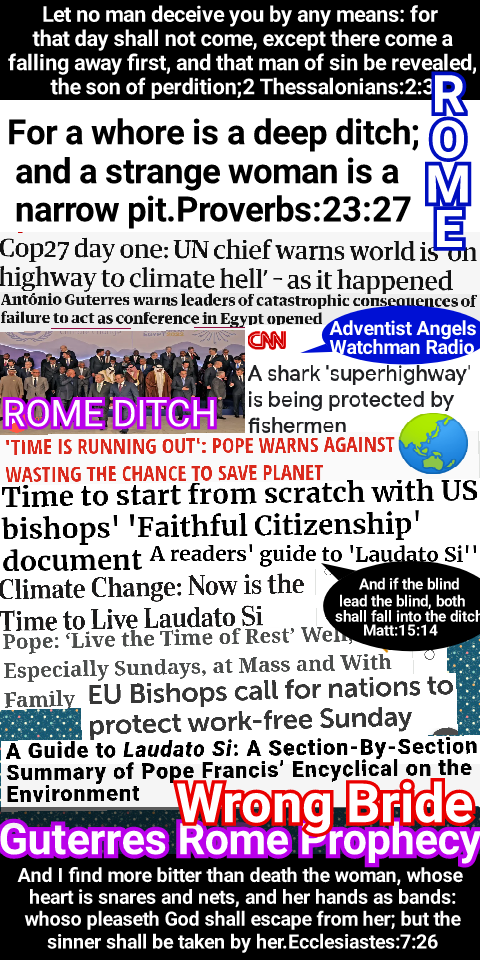
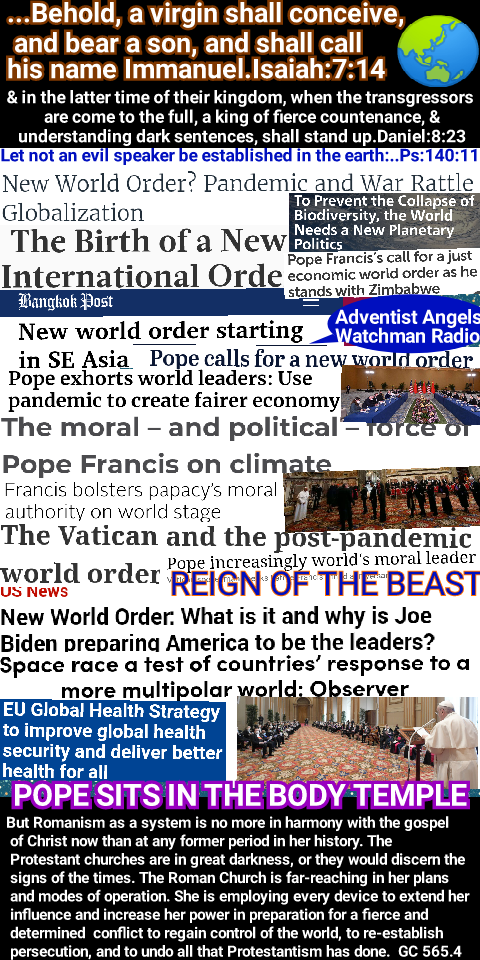
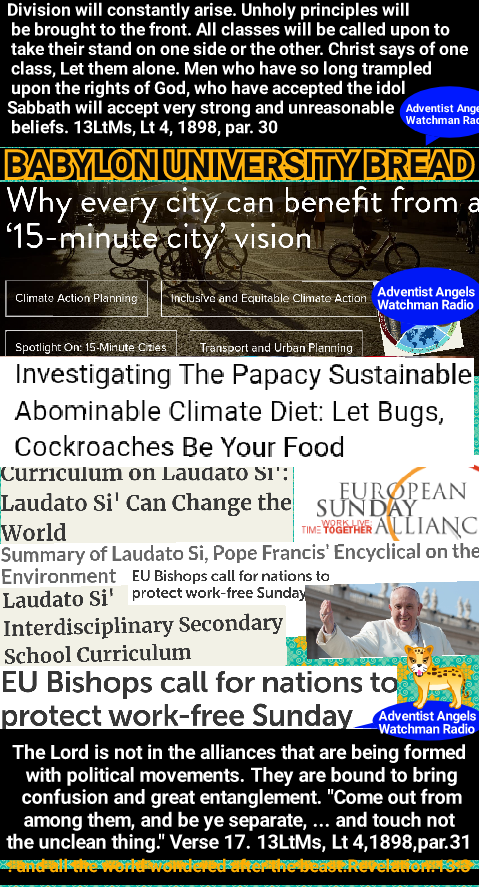
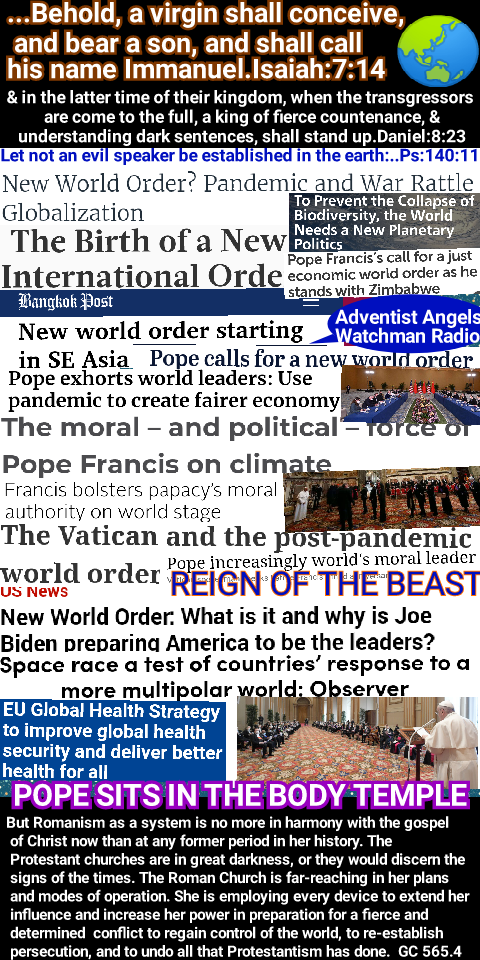
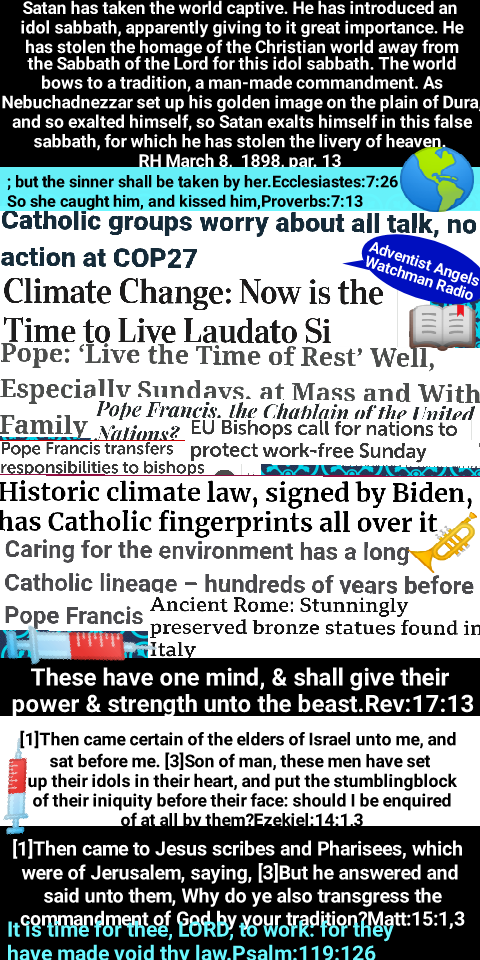
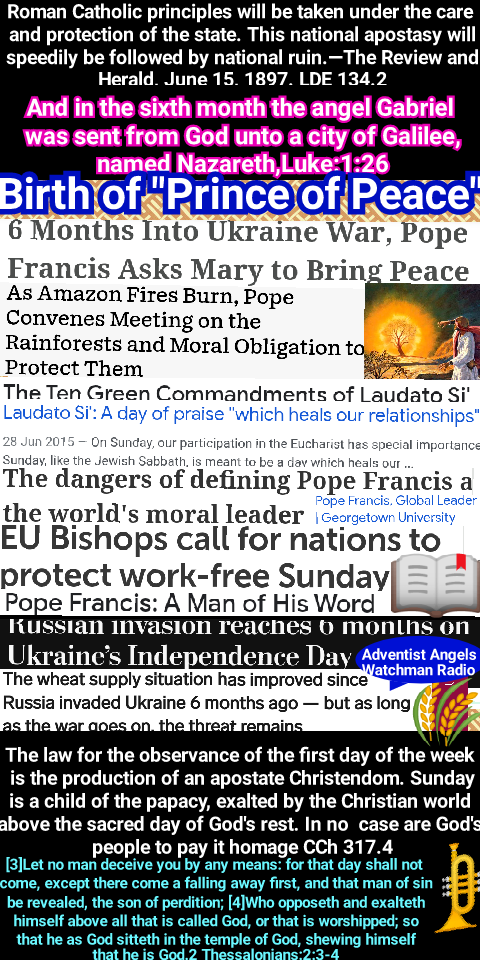
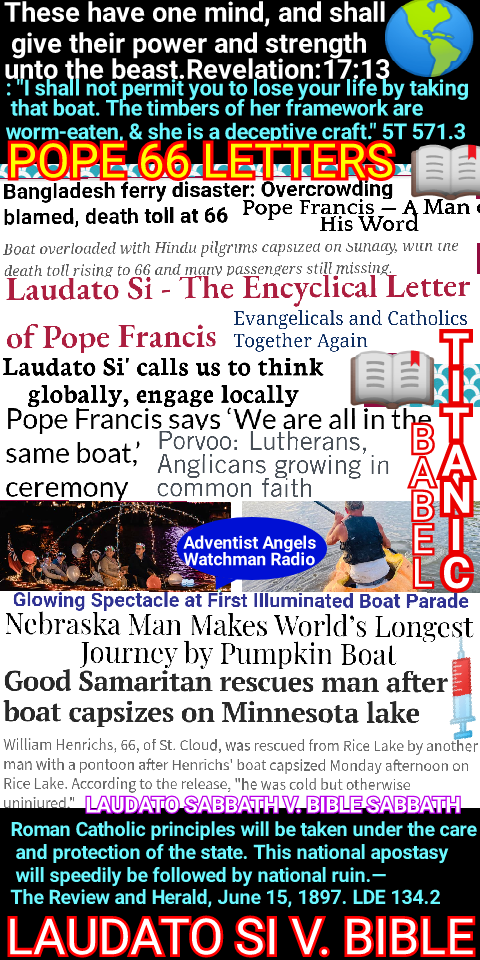
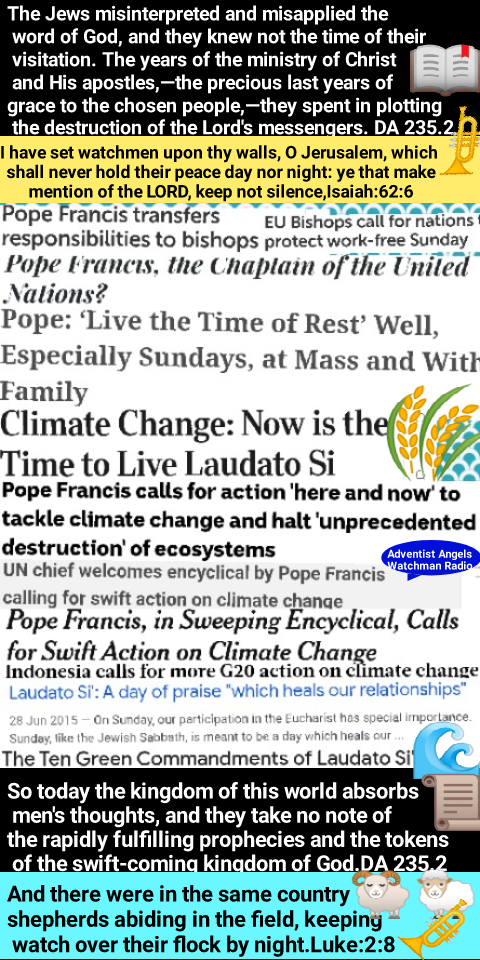
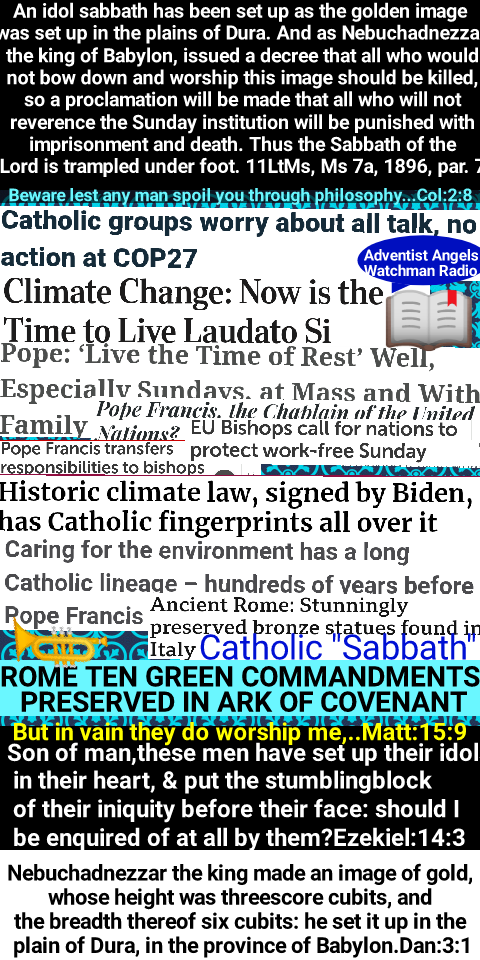
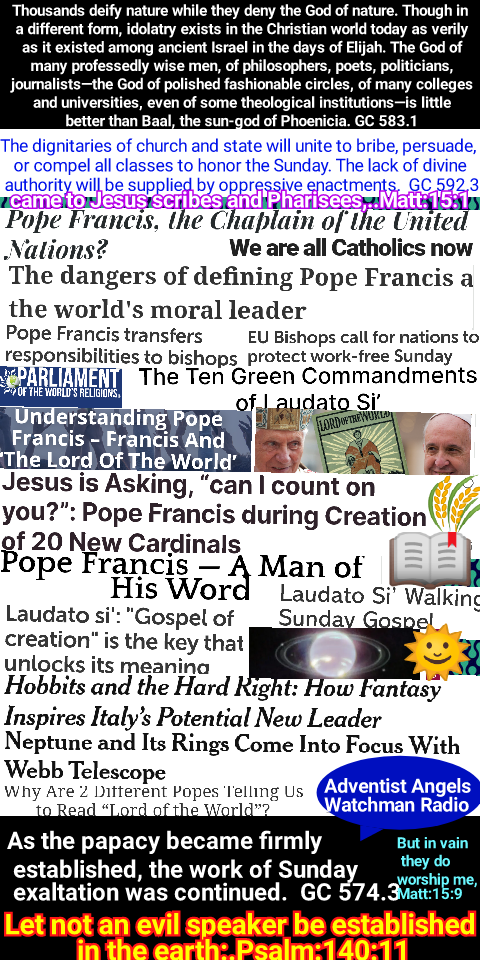
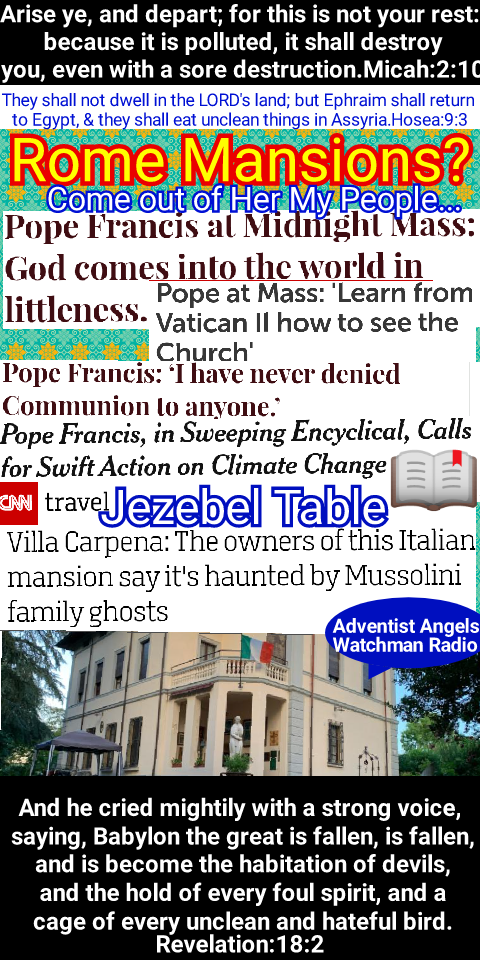
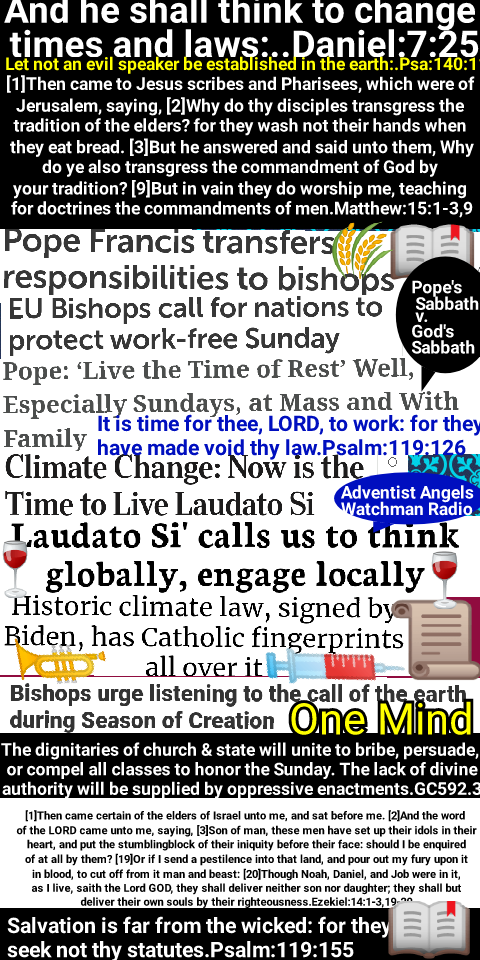
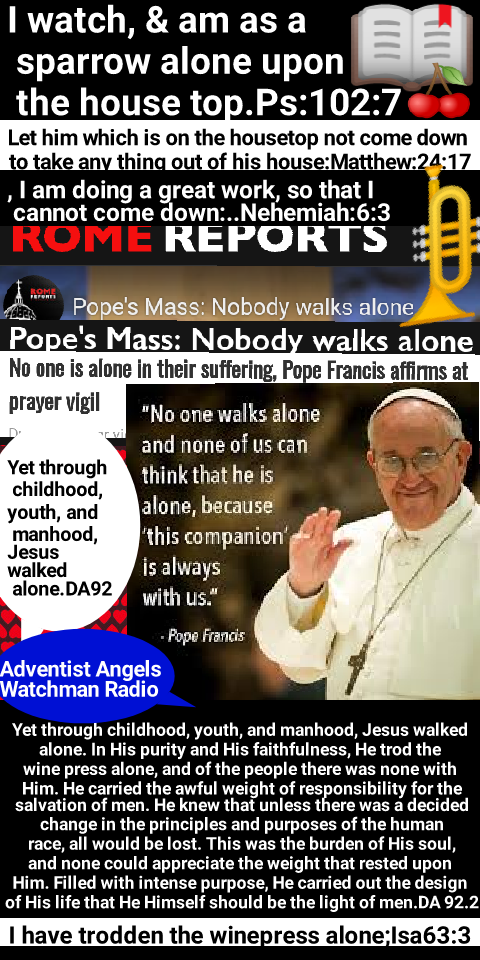
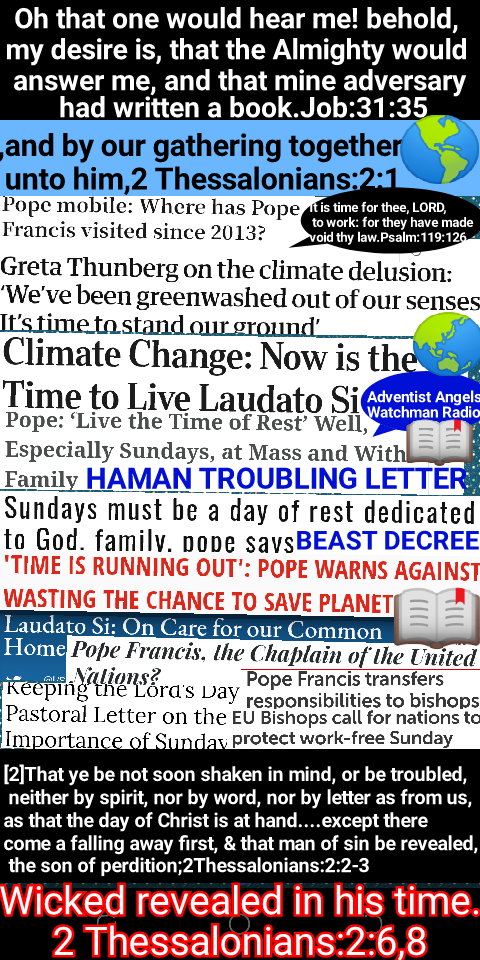
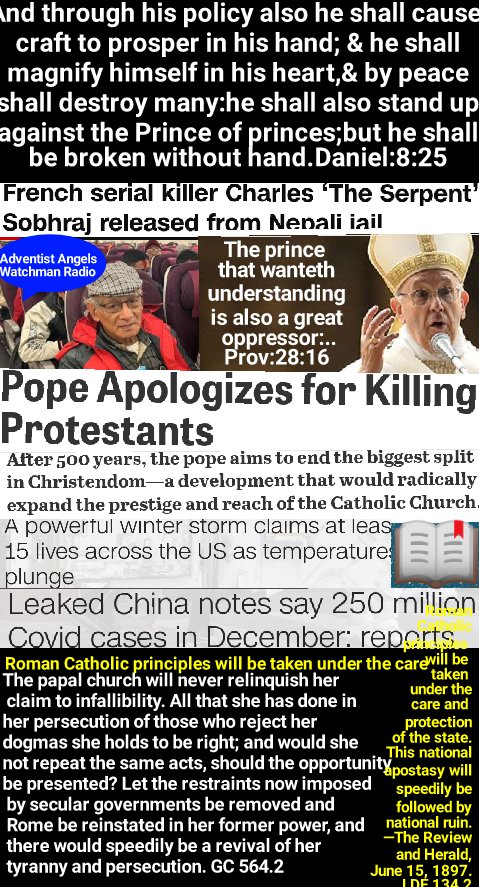
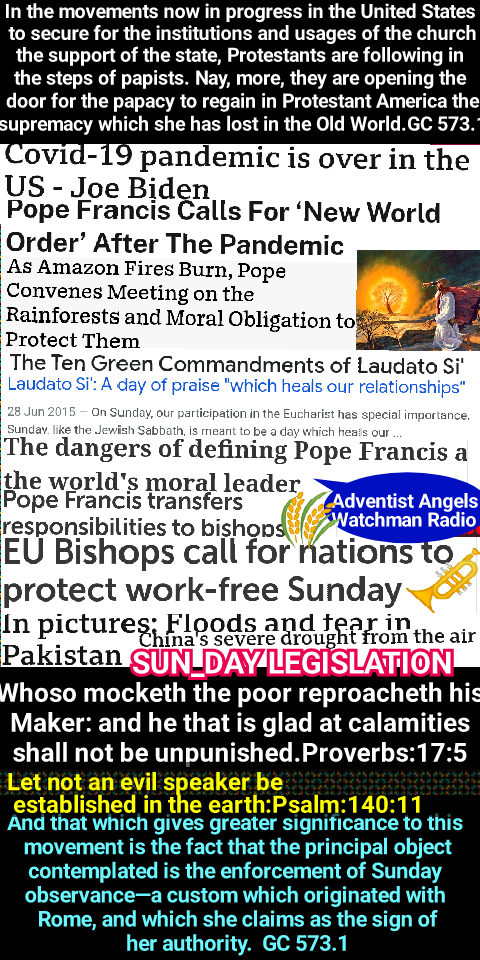
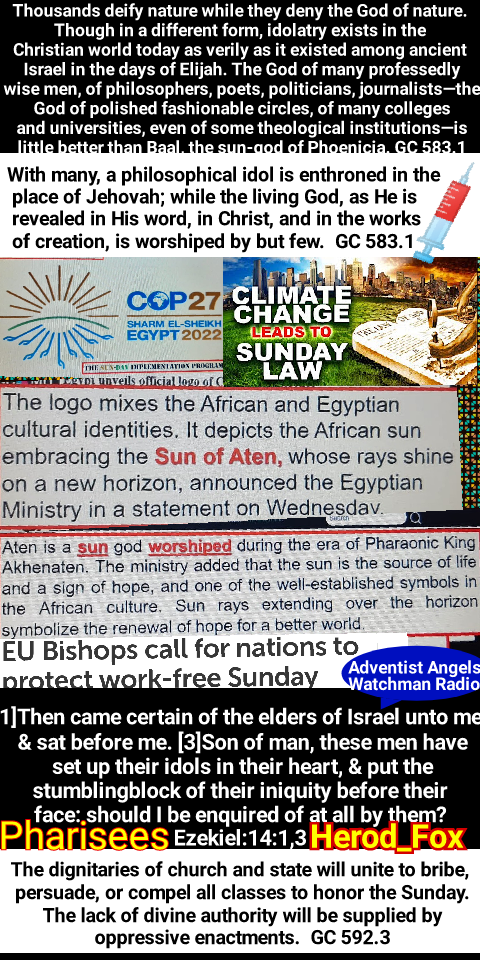
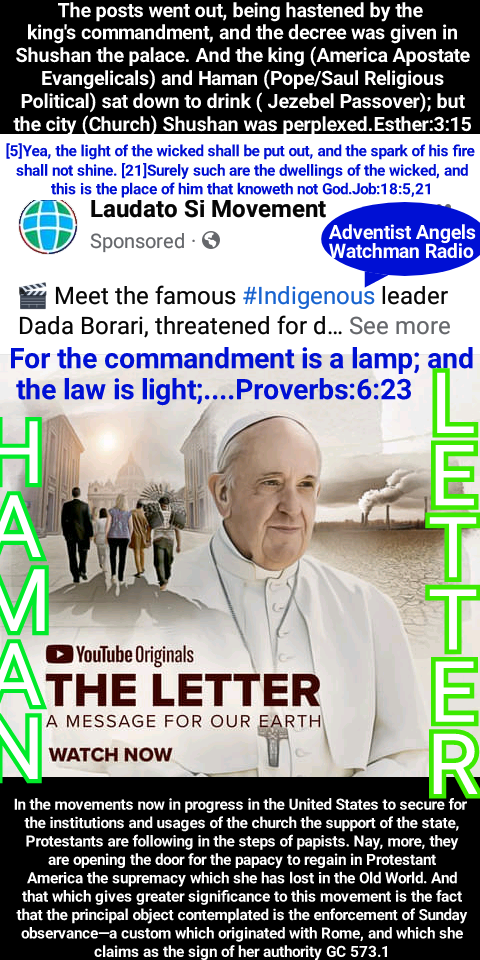

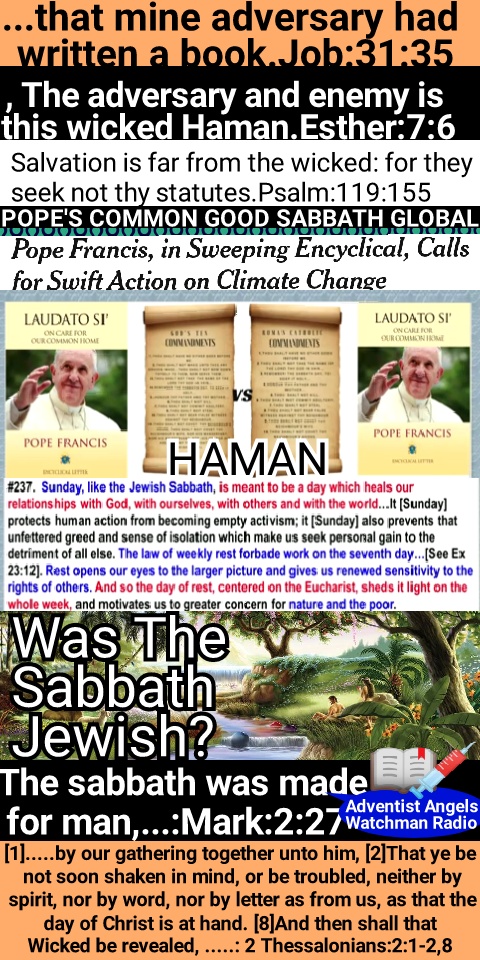
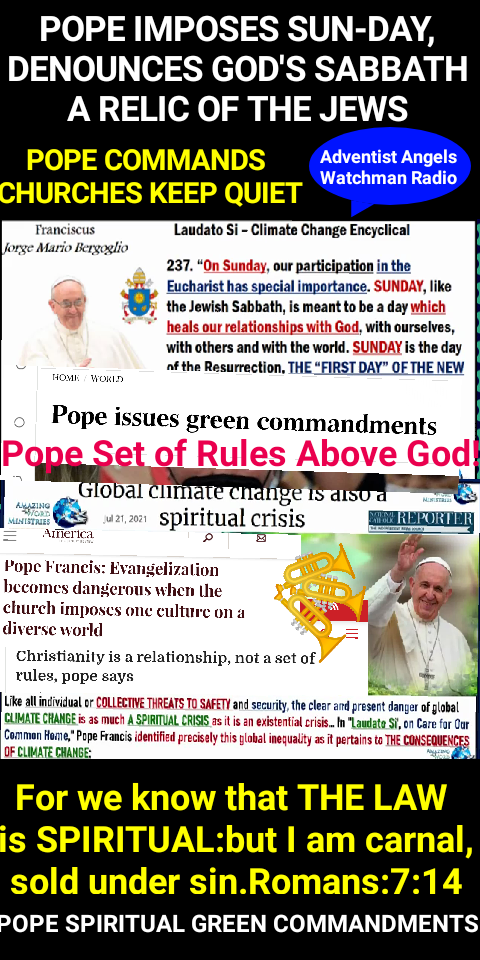

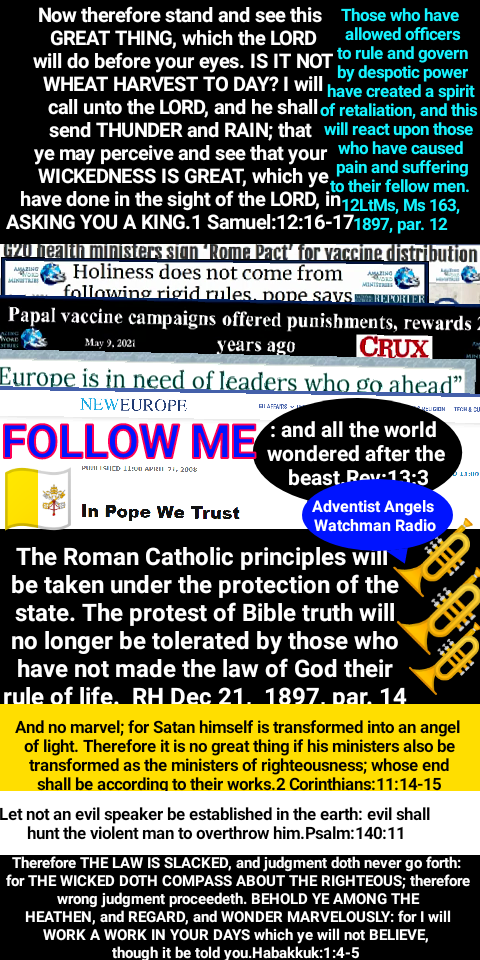
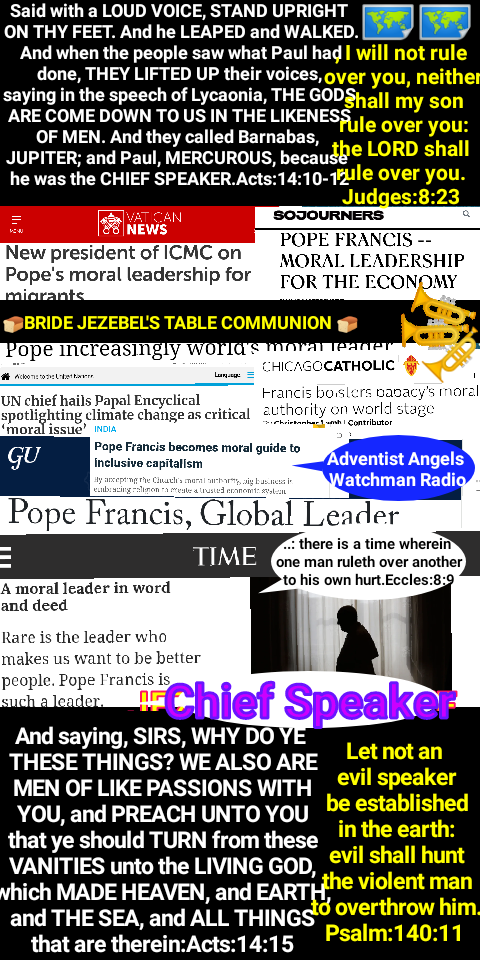
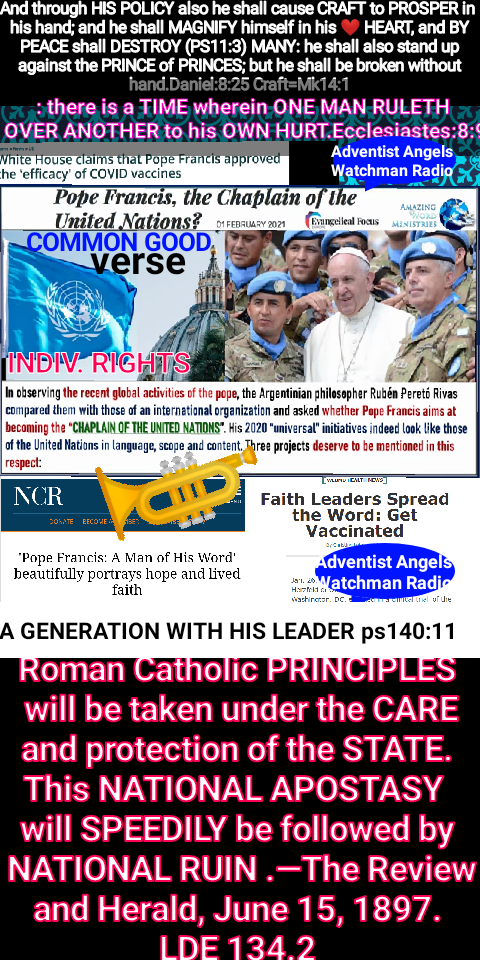
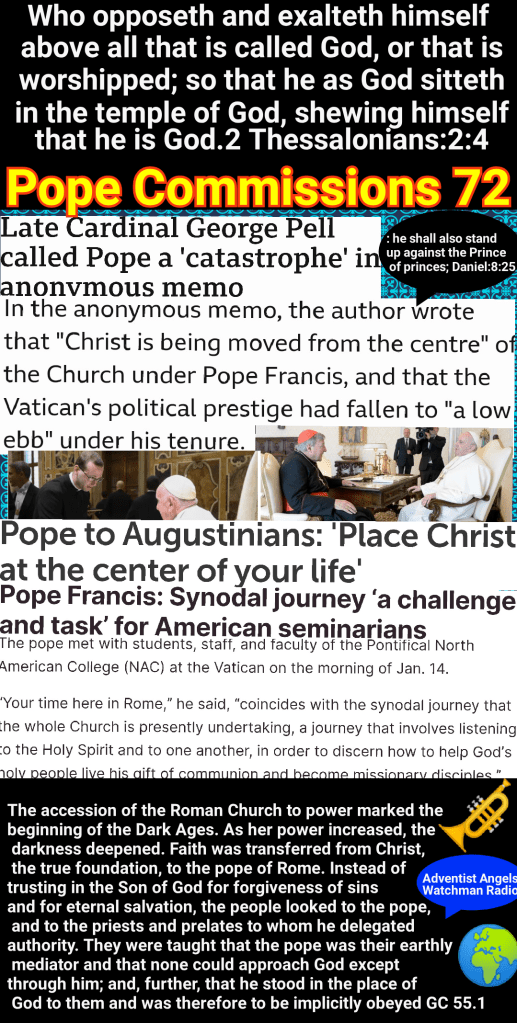
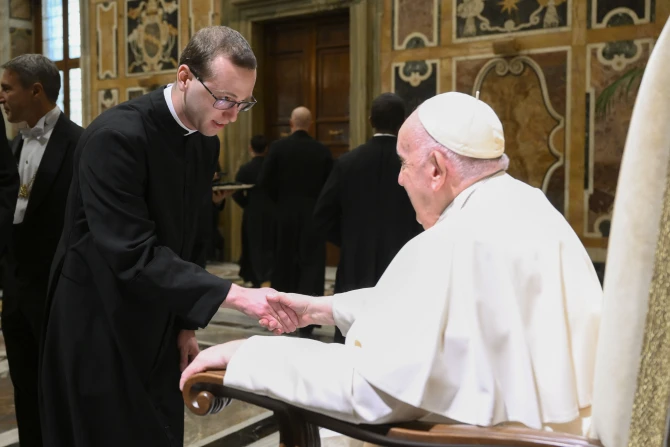
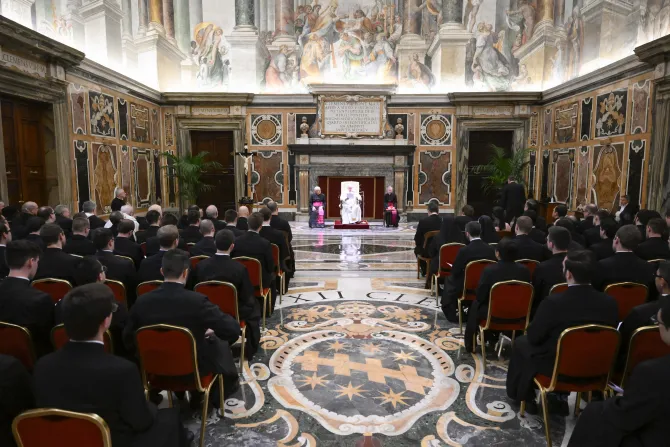
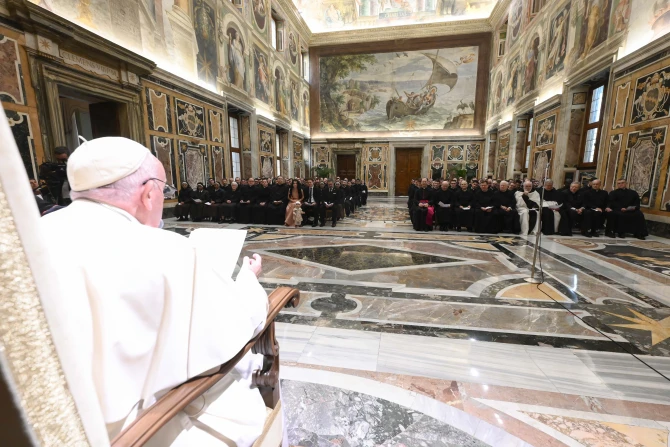
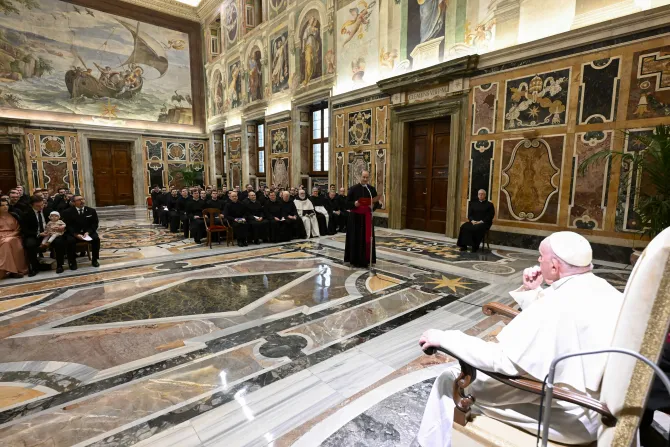
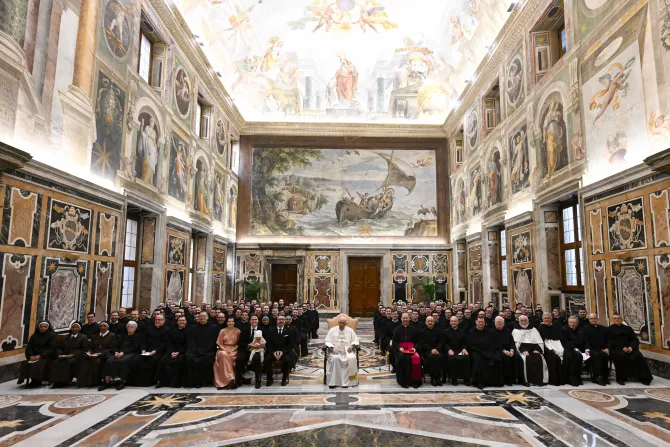

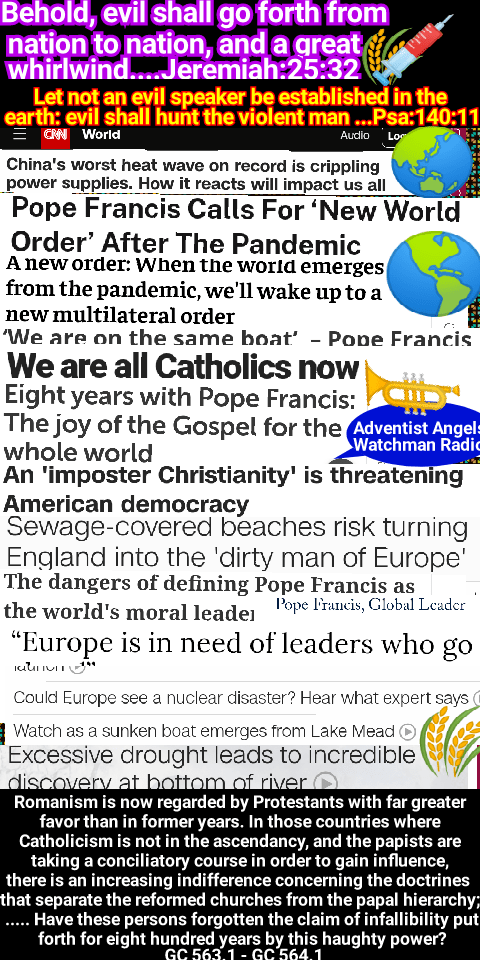
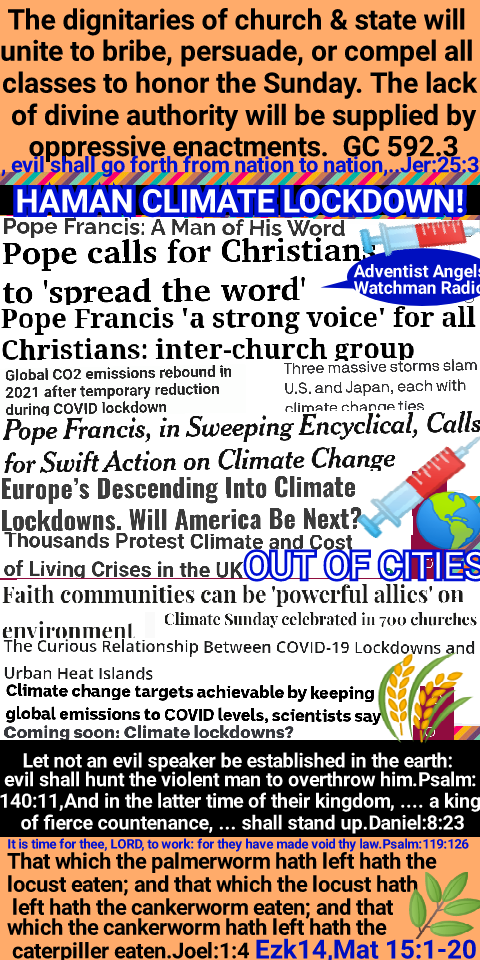
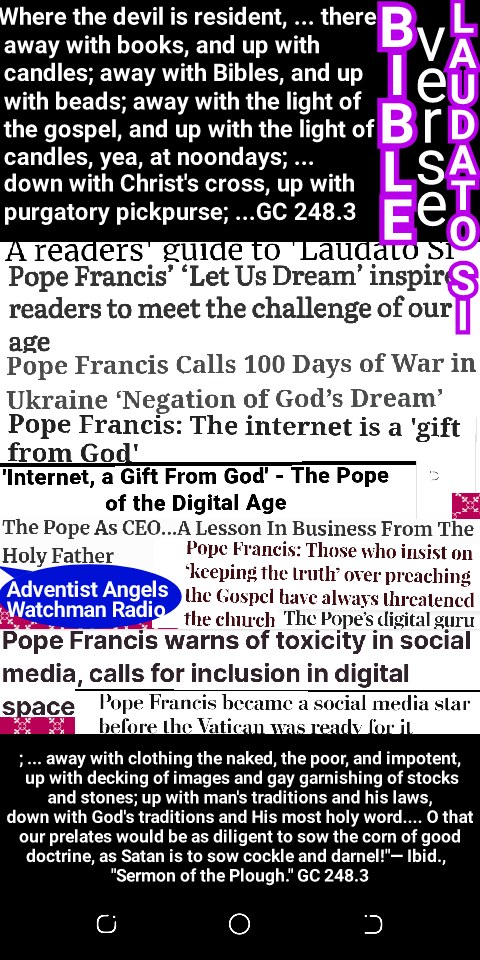

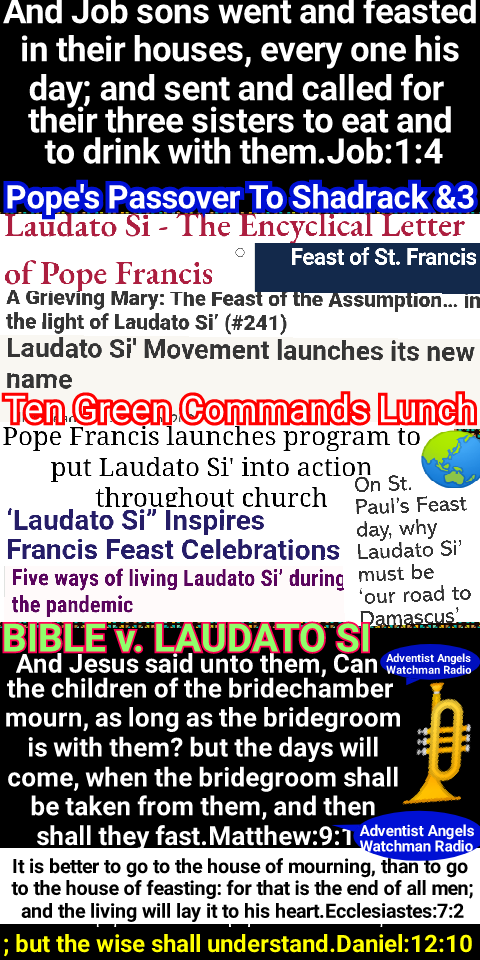
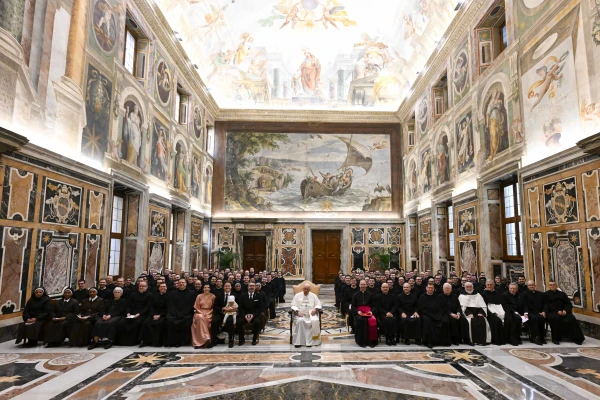
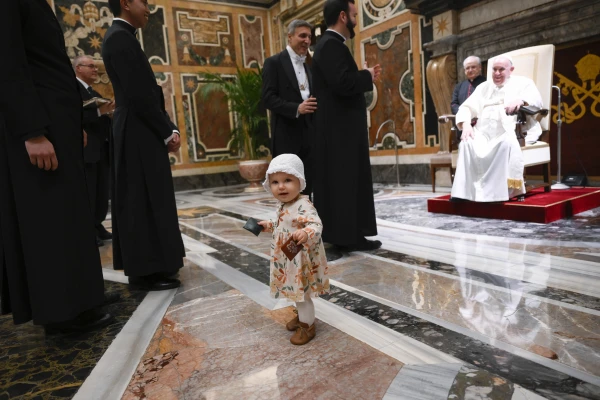


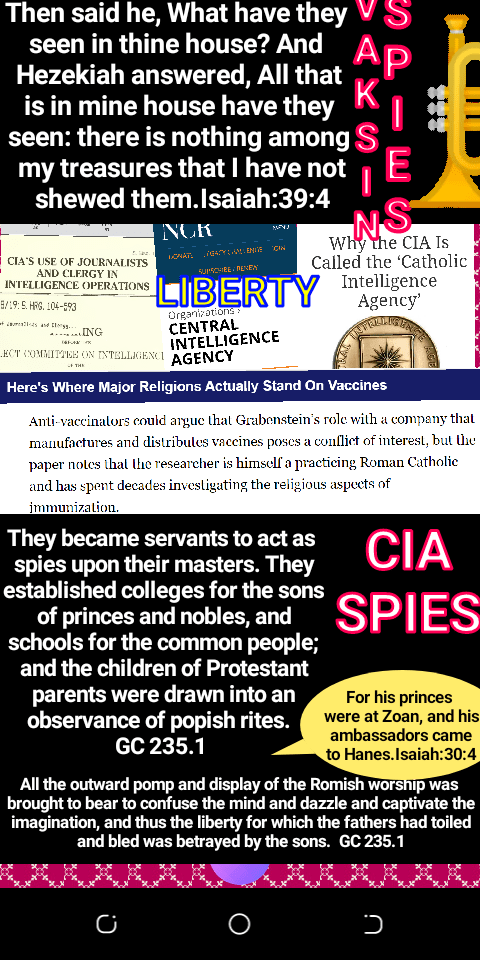


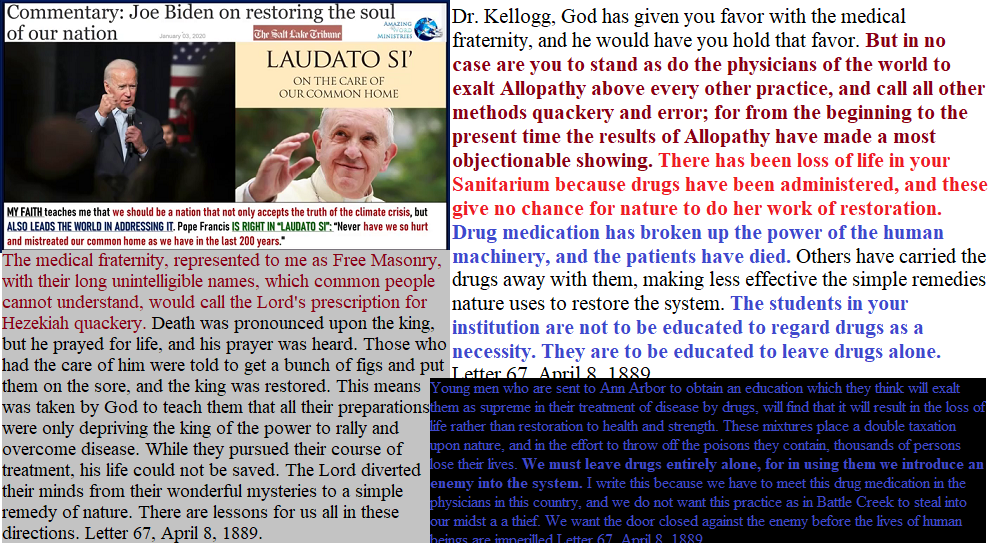
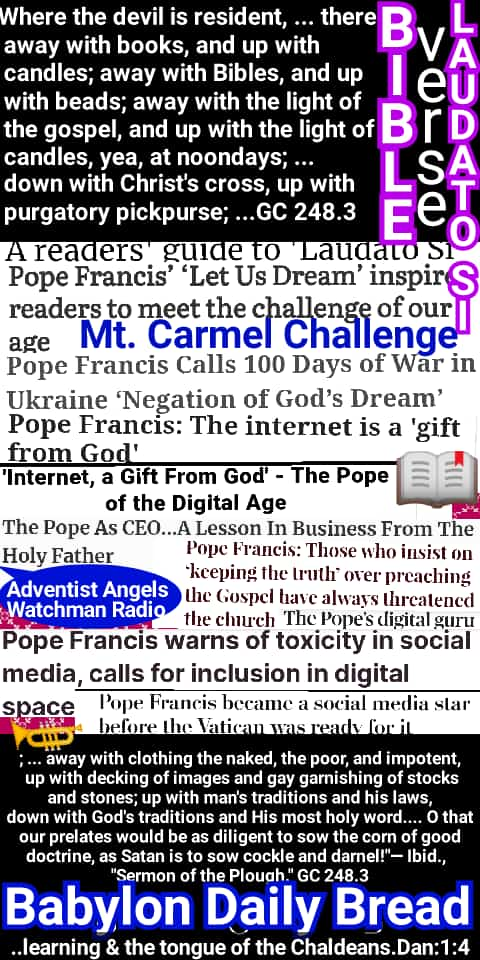



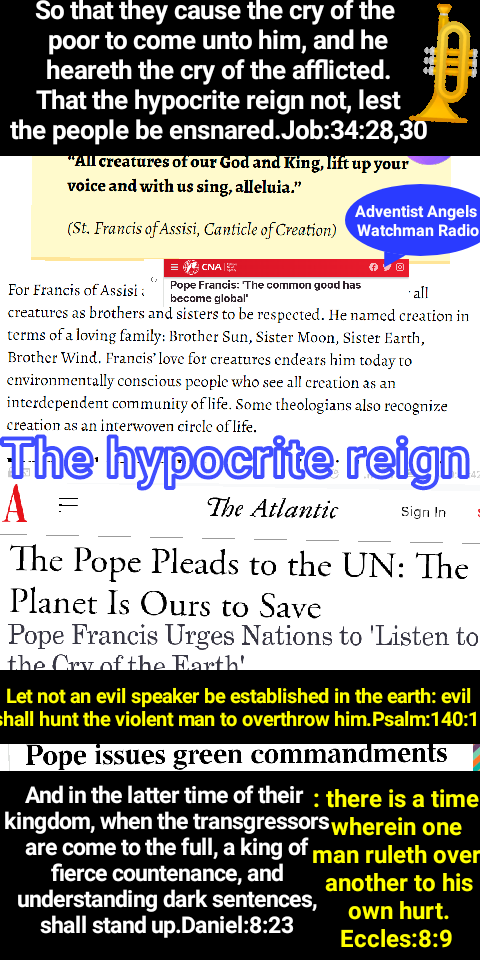
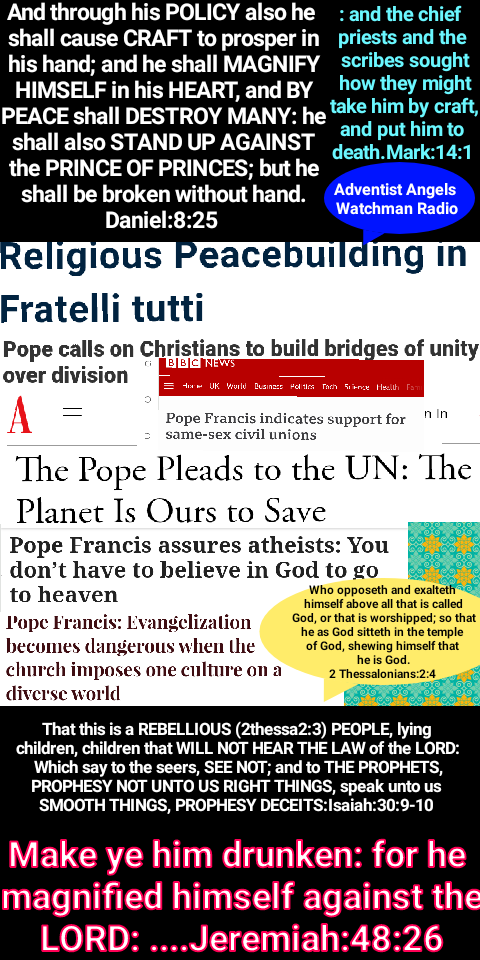
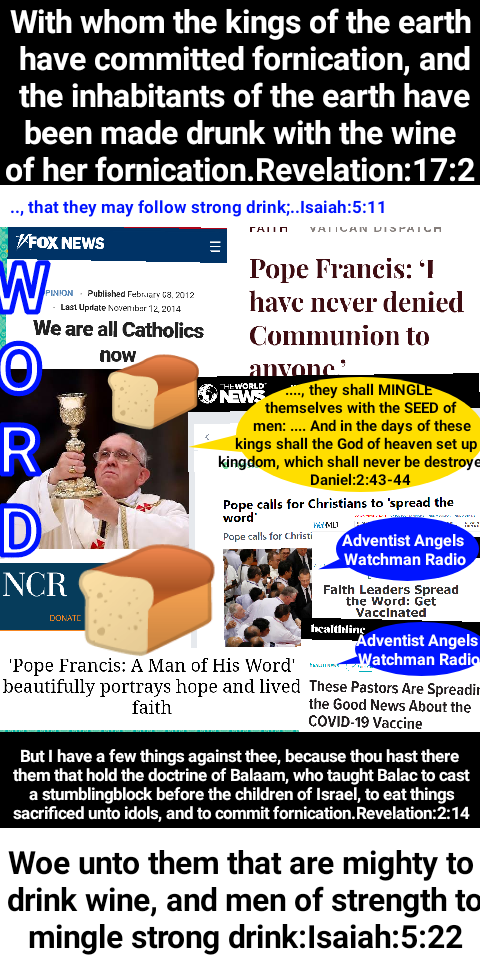
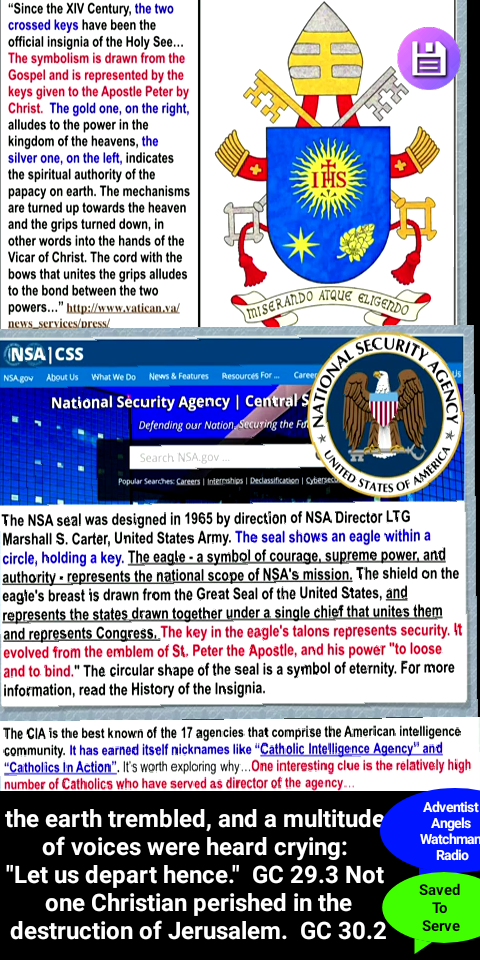
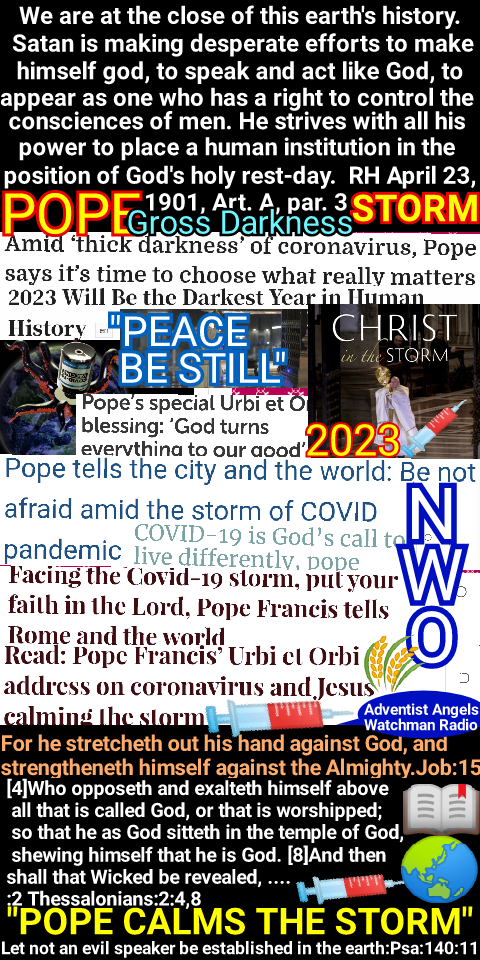
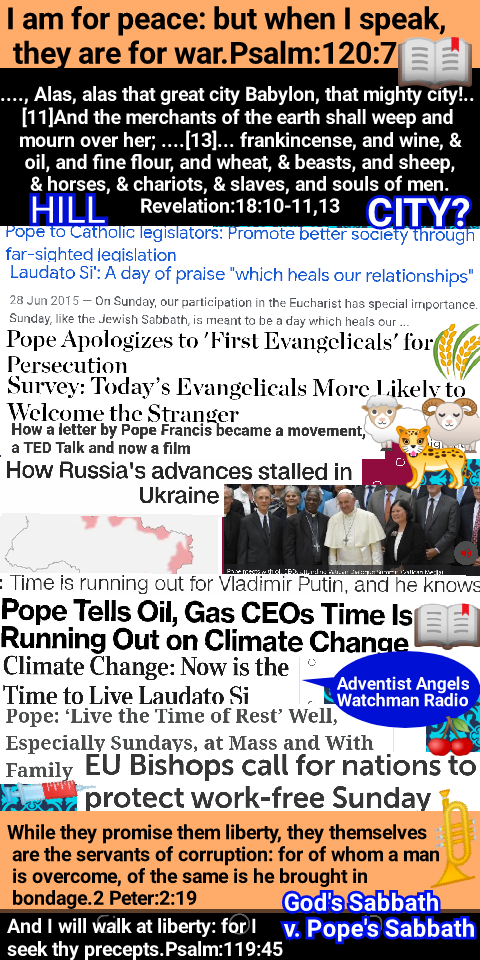

 Adventist Angels Watchman Radio