Welcome to Adventist Angels Watchman Radio official website, preparing the earth for Jesus Christ return Shortly, find us on Facebook, Twitter and You-tube. +254734228119 With Ev. King Osiemo
World Merged Laodecian Church : “But God’s professed people do not support their faith by their works. They believe in the shortness of time, yet grasp just as eagerly after this world’s goods as though the world were to stand a thousand years as it now is”.
Dear Brother J, A great solemnity has rested upon my mind since the vision given Friday evening, June 12, 1868. I was shown that you do not know yourself. You have not felt reconciled to the testimony given in your case and have not made thorough work to reform. I was referred to Isaiah: “Is not this the fast that I have chosen? to loose the bands of wickedness, to undo the heavy burdens, and to let the oppressed go free, and that ye break every yoke? Is it not to deal thy bread to the hungry, and that thou bring the poor that are cast out to thy house? when thou seest the naked, that thou cover him; and that thou hide not thyself from thine own flesh?” If you do these things, the blessings promised will be given. You may raise the inquiry, “Wherefore have we fasted,” “and Thou seest not? wherefore have we afflicted our soul, and Thou takest no knowledge?” God has given reasons why your prayers were not answered. You have thought that you had found reasons in others and have charged the fault upon them. But I saw that there are sufficient reasons in yourself. You have a work to do to set your own heart in order. You should realize that the work must begin with yourself. You have oppressed the destitute and have benefited yourself by taking advantage of their necessities. In regard to means, you have been close and dealt unjustly. You have not possessed that kind, noble, and generous spirit which should ever characterize the life of a follower of Christ. You have oppressed the hireling in her wages. You saw a poorly clad, hard-working person who you knew was conscientious and God-fearing; yet you took advantage of her because you could do so. I saw that the neglect of seeing and understanding her wants, and the small wages paid her, are all written in heaven as done to Jesus in the person of one of His saints. As you have done this unto the least of Christ’s disciples, you have done it unto Him. Heaven has regarded all your closeness to those who have served in your house, and it will stand faithfully chronicled against you unless it is repented of and restitution made. One wrong move does more harm than can be undone in years; if the wrongdoer could see the extent of the evil, it would wring from his soul cries of anguish. You are selfish in regard to means. In the case of Brother K the angel of God pointed to you and said: “Inasmuch as ye have done this to one of Christ’s disciples, ye have done it to Jesus in His person.” The cases I have mentioned are not the only ones. I would you could see these things as Heaven has opened them before me. There is a sad deception upon minds. It is the religion of Christ that you need. He pleased not Himself, but lived to benefit others. You have a work to do, and should lose no time in humbling your heart before God, and by humble confessions remove the blots from your Christian character. Then can you engage in the solemn work of laboring for the salvation of others without making so many mistakes. What has your time amounted to, spent as it has been spent while engaged in a work which God did not set you about? Impressions have been made on minds, and experiences gained, which it will require much labor for them to efface. Souls will wander in darkness, perplexity, and unbelief, and some will never recover. With fasting and earnest prayer, with deep heart searching, stern self-examination, lay bare the soul; let no act escape your critical examination. Then, with self dead and your life hid with Christ in God, offer your humble petitions. If you regard iniquity in your heart, the Lord will not hear you. If He had heard your prayers, you would have been exalted. Satan has stood by, prepared to make the most of the advantage he has gained. Oh, how important it is that faithfulness in little things characterize our lives, that true integrity mark all our course of action, and that we ever bear in mind that angels of God are taking cognizance of every act! That which we mete to others shall be meted to us again. A fearfulness should ever attend you lest you should deal unjustly, selfishly. By sickness and adversity the Lord will remove from us much more than we obtain by grinding the face of the poor. A just God truly estimates all our motives and actions. I was shown Brother and Sister L. The love of the world has so eaten out true godliness and benumbed the powers of the mind that the truth fails to have a transforming influence upon the life and character. The love of the world has closed their hearts to compassion and to a consideration of the wants of others; its spirit has separated them from God. Brother and sister, you have a work to do to get from beneath the rubbish of the world; you need to make earnest efforts to overcome your love of the world, your selfishness, and your penuriousness. These are sins which are cursing God’s people. I was pointed back to the community in which you lived previous to your moving to —–. You were close and exacting in deal there, taking advantage every time that you could well do so. I tried to find in your lives acts of noble self-sacrifice and benevolence, but could not, they were so rare. Your light has shone before others in such a manner that they have felt disgusted with you and your faith. The truth has been reproached by your closeness and overreaching in deal. May God help you to see all, and to have that hatred for this evil that He has. Let your light so shine that others by seeing your good works may be led to glorify your Father who is in heaven. God has been displeased with your course, for it has been marked by self-interest. He is still displeased with it, and will deal with you in judgment, unless you rid yourself of this spirit of littleness, and seek to be sanctified through the truth. Faith without works is dead, being alone. Faith will never save you unless it is justified by works. God requires of you to be rich in good works, ready to distribute, willing to communicate, laying up in store for yourselves a good foundation against the time to come, that you may lay hold on eternal life. I was shown that you have oppressed hirelings in their wages. You have taken advantage of circumstances and secured your help at the lowest figure. This has not been pleasing to God. You should have paid your help liberally, all that they earned. God sees and knows. The Searcher of hearts is acquainted with the thoughts, the intents and purposes of the heart. Every dollar that has been gained by you in this way, if retained, will be scattered through adversity and affliction. The world, the world, the world, has been the order of the day with you. The salvation of the soul has become secondary. Oh, that you could see, in the light of eternity, just how God views these things. You would be alarmed and would not rest until you had made restitution. You had light upon health reform, but you did not receive and live up to it. You gratified the appetite and taught your boy a sad lesson by indulging him in eating when and what he chose. In your love for the world you continued to work upon the high-pressure plan. The hand of God was removed, and you were left to your own weakness. Then you both tottered over the brink of the grave, yet you failed to learn the lesson in many things which God would have you learn. You retained your love for the world. Your selfish love for gain, your small, close dealing, was not put away. You did not appreciate the sympathy, kind care, and watchful tenderness of the one who had the care of you in your sickness. If you had, it would have led you to manifest a spirit of noble benevolence above any cheap dealing with her who had been true to you. You have ground the face of the poor; you have dealt unjustly. “There is that scattereth, and yet increaseth; and there is that withholdeth more than is meet, but it tendeth to poverty.” It seemed to me, as these things were presented before me, that Satan had possessed such power to blind minds through a love of the world, that even professed Christians forgot, or lost all sense of the fact that God lives and that His angels are making a record of all the doings of the children of men; that every mean act, every small deal, is placed upon the life record. Every day bears its burden of record of unfulfilled duties, of neglect, of selfishness, of deception, of fraud, of overreaching. What an amount of evil works is accumulating for the final judgment! When Christ shall come, “His reward is with Him, and His work before Him,” to render to every man according as his works have been. What a revelation will then be made! What confusion of face to some as the acts of their lives are revealed upon the pages of history! “Hearken, my beloved brethren, Hath not God chosen the poor of this world rich in faith, and heirs of the kingdom which He hath promised to them that love Him? But ye have despised the poor.” “What doth it profit, my brethren, though a man say he hath faith, and have not works? can faith save him? If a brother or sister be naked, and destitute of daily food, and one of you say unto them, Depart in peace, be ye warmed and filled; notwithstanding ye give them not those things which are needful to the body; what doth it profit? Even so faith, if it hath not works, is dead, being alone.” You may believe all the truth; yet if its principles are not carried out in your lives, your profession will not save you. Satan believes and trembles. He works. He knows his time is short, and he has come down in great power to do his evil works according to his faith. But God’s professed people do not support their faith by their works. They believe in the shortness of time, yet grasp just as eagerly after this world’s goods as though the world were to stand a thousand years as it now is. Selfishness marks the course of many. “But whoso hath this world’s good, and seeth his brother have need, and shutteth up his bowels of compassion from him, how dwelleth the love of God in him? My little children, let us not love in word, neither in tongue; but in deed and in truth . And hereby we know that we are of the truth, and shall assure our hearts before Him. For if our heart condemn us, God is greater than our heart, and knoweth all things. Beloved, if our heart condemn us not, then have we confidence toward God. And whatsoever we ask, we receive of Him, because we keep His commandments, and do those things that are pleasing in His sight.” Divest yourselves of selfishness and make thorough work for eternity. Redeem the past and do not represent the holy truth you profess where you now live as you have where you have lived hitherto. Let your light so shine that others by seeing your good works may be led to glorify our Father in heaven. Stand upon the elevated platform of eternal truth. Regulate all your business transactions in this life in strict accordance with the word of God. 2t 156.null.null – 2T 161.2
Nothing could be more gentle and equitable than the conduct of the Romans in the beginning . They acted with the utmost moderation toward such states and nations as addressed them for protection; they succored them against their enemies, took the utmost pains in terminating their differences, and in suppressing all commotions which arose among them, and did not demand the least recompence from their allies for all these services. By this means their authority gained strength daily, and prepared the nations for entire subjection. “And, indeed, upon pretense of offering them their good offices, of entering into their interests, and of reconciling them, they rendered themselves the sovereign arbiters of those whom they had restored to liberty, and whom they now considered, in some measure, as their freedmen. They used to depute commissioners to them, to inquire into their complaints, to weigh and examine the reasons on both sides, and to decide their quarrels; but when the articles were of such a nature that there was no possibility of reconciling them on the spot, they invited them to send their deputies to Rome. Afterward, they used, with plenary authority, to summon those who refused to be reconciled, obliged them to plead their cause before the senate, and even to appear in person there. From arbiters and mediators being become supreme judges, they soon assumed a magisterial tone, looked upon their decrees as irrevocable decisions, were greatly offended when the most implicit obedience was not paid to them, and gave the name of rebellion to a second resistance; thus there arose, in the Roman senate, a tribunal which judged all nations and kings, from which there was no appeal. This tribunal, at the end of every war, determined the rewards and punishments due to all parties. They dispossessed the vanquished nations of part of their territories, in order to bestow them on their allies, by which they did two things from which they reaped a double advantage; for they thereby engaged in the interest of Rome such kings as were in no way formidable to them, and from whom they had something to hope; and weakened others, whose friendship the Romans could not expect, and whose arms they had reason to dread. “We shall hear one of the chief magistrates in the republic of the Achaians inveigh strongly in a public assembly against this unjust usurpation, and ask by what title the Romans are empowered to assume so haughty an ascendent over them; whether their republic was not as free and independent as that of Rome; by what right the latter pretended to force the Achaians to account for their conduct; whether they would be pleased, should the Achaians, in their turn, officially pretend to inquire into their affairs, and whether matters ought not to be on the same footing on both sides? All these reflections were very reasonable, just, and unanswerable; and the Romans had no advantage in the question but force . “They acted in the same manner, and their politics were the same in regard to their treatment of kings. They first won over to their interest such among them as were the weakest, and consequently the least formidable; they gave them the title of allies, whereby their persons were rendered in some measure sacred and inviolable; and it was a kind of safeguard against other kings more powerful than themselves; they increased their revenues, and enlarged their territories, to let them see what they might expect from their protection. It was this which raised the kingdom of Pergamus to so exalted a pitch of grandeur. “In the sequel the Romans invaded, upon different pretenses, those great potentates who divided Europe and Asia, and how haughtily did they treat them, even before they had conquered! A powerful king, confined within a narrow circle by a private man of Rome, was obliged to make his answer before he quitted it; how imperious was this! But then how did they treat vanquished kings? They command them to deliver up their children, and the heirs to their crown, as hostages and pledges of their fidelity and good behavior; oblige them to lay down their arms; forbid them to declare war, or conclude any alliance, without first obtaining their leave; banish them to the other side of the mountains; and leave them, in strictness of speech, only an empty title, and a vain show of royalty, divested of all its rights and advantages. “We are not to doubt but that Providence had decreed to the Romans the sovereignty of the world, and the Scriptures had prophesied their future grandeur; but they were strangers to those divine oracles; and besides, the bare prediction of their conquest was no justification of their conduct. Although it be difficult to affirm, and still more difficult to prove, that this people had from their first rise formed a plan, in order to conquer and subject all nations, it can not be denied but that, if we examine their whole conduct attentively, it will appear that they acted as if they had a foreknowledge of this, and that a kind of instinct determined them to conform to it in all things . “But be this as it will, we see by the event, to what this so much boasted lenity and moderation of the Romans was confined. Enemies to the liberty of all nations, having the utmost contempt for kings and monarchy, looking upon the whole universe as their prey, they grasped, with insatiable ambition, the conquest of the whole world; they seized indiscriminately all provinces and kingdoms, and extended their empire over all nations; in a word, they prescribed no other limits to their vast projects, than those which deserts and seas made it impossible to pass.” 13 The expansion fever which laid such firm hold upon the people of the Roman republic has come upon the people of the republic of the United States. In both cases the game of the despoliation of nations and peoples has opened with a war “solely in the cause of humanity.” In the former instance, the Romans did declare the people of the small Greek republics free and independent. The United States has not yet even done this much. The republics of Greece never became free. The “war for humanity” never gave them their liberty. They soon found, and that to their bitter disappointment, that they had only exchanged masters, and that the little finger of Rome was thicker than the loins of Philip of Macedon, and that if the king had chastised them with whips, the republic chastised them with scorpions. They soon found to their intense sorrow that in the “war for humanity” there had been a transfer made, and that they had been the subject of barter. It did not take them long to discover that they had only acquired a slavery more abject and complete than that which they had endured under their previous ruler. It was as much more complete as Rome was more powerful than Macedon. Rome never withdrew her foot from the Greek states, and it is even now doubtful whether the United States will ever withdraw from Cuba. Recent public utterances indicate that a great change of sentiment is sweeping over the country on this point. At the meeting of the members of the Associated Press, held in Chicago, May 18, 1899, in the star speech of the evening, St. Claire McKelway, editor of the Brooklyn Eagle , said:— “There is no newspaper which believes that we are in Porto Rico ever to get out. We are there to stay. There is none which believes that we are in Cuba to get out-soon. I think we will stay there about as long as Great Britain will stay in Egypt, and that Great Britain will stay in Egypt about as long as the Anglo-Saxon race has a habit of staying where it settles down. I am willing to differ from my brethren on this subject, but as my estimate has been only comparative, perhaps there is less room for difference than might superficially appear. The duration of our stay in the Philippines is prodigiously debated. While the debate goes on, we stay. If the debate coincides with our stay, I think it will be a protracted debate.” Indeed, as time goes on, the prospects of this country’s withdrawing from Cuba seem to be more and more remote. A silent revolution has been taking place, a revolution more fatal to the United States than any that ever went on in Cuba could possibly have been to the Spanish throne and power. The things which have come to pass, and which are written out in this book, both those concerning Rome and the United States, have also been written long before in the prophecies of the Book of books, on the sacred leaves of the Holy Scriptures. This is not a chimera, but a fact, a reasonable fact, and one of deepest interest to all the citizens of the United States. It is fashionable nowadays to scoff at the idea that the Bible gives any instructions concerning the affairs of nations; but nevertheless a very large portion of the Word of God is simply a history of the nations, and a record of God’s dealings with them. Nothing can be more true or evident than that God keeps an account, not only with every individual, but also with every family, every city, and every State. When Abraham and his followers entered the land of Canaan, they were not permitted to destroy the sinful inhabitants; but, said Jehovah, addressing the father of the faithful, and referring to Israel: “In the fourth generation they shall come hither again, for the iniquity of the Amorites is not yet full.” 14 And “in the fourth generation” they did “come hither again,” and by the command of the Lord they slew and spared not; and wrote of Sihon: “Then Sihon came out against us, he and all his people, to fight at Jahaz. And the Lord our God delivered him before us; and we smote him, and his sons, and all his people. And we took all his cities at that time, and utterly destroyed the men, and the women, and the little ones, of every city, we left none to remain: only the cattle we took for a prey unto ourselves, and the spoil of the cities which we took. From Aroer, which is by the brink of the river Arnon, and from the city that is by the river, even unto Gilead, there was not one city too strong for us: the Lord our God delivered all unto us: only unto the land of the children of Ammon thou earnest not, nor unto any place of the river Jabbok, nor unto the cities in the mountains, nor unto whatsoever the Lord our God forbade us.” 15 These wars of the Israelites are often taken to prove the position that God approves of war and acts of bloodshed. But the truth is not so. When Israel was commanded to destroy the people of the land into which she entered, it was because their cup of iniquity was full, and because it would be only cruelty on the part of the Creator to permit them a longer existence. Had God permitted them to live longer, their accumulation of sin would only have grown greater, and the penalty which they would have had to receive as individual sinners would necessarily have been more severe. They were utterly destitute of the Spirit of God; it had fled away forever. And being utterly destitute of that which alone can make us holy and good, there was nothing left in them for God to ally himself to, or which he could use as a means to bring them salvation. In principle they were demons; for what are Satan and his angels but beings entirely destitute of the Spirit of God? It is in mercy, therefore, that God brings the career of wicked individuals and evil nations to a close. It is not an arbitrary act, it is the kindest thing that a merciful God can do. When the angels visited Abraham under the oaks on the plains of Mamre, the Lord spake through them, concerning the cities of Sodom and Gomorrah:— “And the Lord said, Shall I hide from Abraham that thing which I do; seeing that Abraham shall surely become a great and mighty nation, and all the nations of the earth shall be blessed in him? For I know him, that he will command his children and his household after him, and they shall keep the way of the Lord, to do justice and judgment: that the Lord may bring upon Abraham that which he hath spoken of him. And the Lord said, Because the cry of Sodom and Gomorrah is great, and because their sin is very grievous; I will go down now, and see whether they have done altogether according to the cry of it, which is come unto me; and if not, I will know.” 16 The angels went on their way, and Abraham remained before the Lord, and pleaded with him, first that he should spare the cities if there could be found fifty righteous persons there; and then if there could be found forty-five, forty, thirty, twenty, or even ten righteous persons within their walls. And the Lord said, “I will not destroy it for ten’s sake.” Only righteous Lot and his family were found, and to them it was said: “Escape for thy life; look not behind thee, neither stay thou in all the plains; escape to the mountain, lest thou be consumed…. Then the Lord rained upon Sodom and upon Gomorrah brimstone and fire from the Lord out of heaven; and he overthrew those cities, and all the plain, and all the inhabitants of the cities, and that which grew upon the ground.” 17 In the case of these cities the limit of God’s forbearance had been reached, the hour of their probation had closed. It was useless to give their inhabitants a further opportunity for salvation; they had sinned away their day of grace, and were given over to wickedness. The same God who watched over the nation of the Amorites, and destroyed them when their cup of iniquity was full; the same God who kept record of the gay pleasures and grievous sins of the people of Sodom and Gomorrah, and who consumed them in the fearful flames when they had passed the unseen line,-that same One also kept watch over the republic of Rome, and is keeping watch over the republic of the United States. In the wonderful prophecies traced with the pencil of the Holy Ghost, the history of these last two is written, and was written long before either came into existence. It was written “to the intent that the living might know that the Most High ruleth in the kingdom of men, and giveth it to whomsoever he will.” There are many who believe that the churches and churchmen should have nothing to do with politics. None hold this view more stanchly than I do. Nevertheless, it is as true to-day as it was in centuries past and gone that prophets and priests are sent by the Lord to warn kings and nations concerning the retribution which will be visited upon them by the King of kings and Lord of lords, if they depart from the path which a divine hand has mapped out for their feet. In this sense, and in this sense only, do I believe that the voice of the ambassadors of Jesus Christ should be heard in the courts and congresses of human powers, of earthly governments. And it is because I firmly believe that if the United States persists in the course she has entered upon, her ruin and the ruin of the world can be the only result, that I have penned these lines. Prophets were sent to heathen kings, as well as to the monarchs who sat on Israel’s throne. They were sent because God loved the people, and did all that infinite love and mercy could do to save them from a general doom. If the nation as a whole heeded not, as was often the case, there were individuals who listened to the voice of the ambassadors of the Lord, and were kept from the dire troubles which God sent upon the rebellious state. My life has been devoted to the affairs of religion and spirituality. I have never been a member in any sense of any political party, and have never in my life cast a vote in city, State, or national elections. In saying this I would in no sense judge my brethren who have considered it their duty to do this; suffice it to say that it has been my conviction that as a citizen of the kingdom of heaven, and as an ambassador of Jesus Christ, I would serve humanity the best by holding entirely aloof from the political strifes which divide men into factions and parties, and devoting my strength to the sweetest of all ministries, that of reconciliation between Christ and sinners. It is only in instances like the present, when the things which are done are the things which are warned against in the Word of God, that I feel free to lift my voice and pen, trusting and praying that the spirit in which I write may rest upon and enter into those who read. With me the events which are now transpiring are not the working out of mere political theories , but of great prophetical principles . It is for this reason that I write. It is because I wish my position upon this matter of Christians in politics to be clearly understood that I have taken time and space for this digression. In the Bible, by the pen of the prophet Daniel and of the revelator John, we have in advance of its enactment the history of Rome and the United States, the two great republics of the West. Daniel spake, and said:— “I saw in my vision by night, and, behold, the four winds of the heaven strove upon the great sea. And four great beasts came up from the sea, diverse one from another. The first was like a lion, and had eagle’s wings: I beheld till the wings thereof were plucked, and it was lifted up from the earth, and made stand upon the feet as a man, and a man’s heart was given to it. And behold another beast, a second, like to a bear, and it raised up itself on one side, and it had three ribs in the mouth of it between the teeth of it: and they said thus unto it, Arise, devour much flesh. After this I beheld, and lo another, like a leopard, which had upon the back of it four wings of a fowl; the beast had also four heads; and dominion was given to it. After this I saw in the night visions, and behold a fourth beast, dreadful and terrible, and strong exceedingly; and it had great iron teeth: it devoured and brake in pieces, and stamped the residue with the feet of it: and it was diverse from all the beasts that were before it .” 18 Such is a part of the vision. Daniel was grieved and troubled, and he asked one of “them that stood by,” “the truth of all this.” He was told that the great beasts are “four kings which shall arise out of the earth.” Not content with this answer he said: “I would know the truth of the fourth beast, which was diverse from all the others, exceeding dreadful, whose teeth were of iron, and his nails of brass; which devoured, brake in pieces, and stamped the residue with his feet…. Thus he said, The fourth beast shall be the fourth kingdom upon the earth, which shall be diverse from all the kingdoms, and shall devour the whole earth, and tread it down, and brake it in pieces.” 19 Now these four kingdoms are named outright in other places in the Bible. They were Babylon, Medo-Persia, Grecia, and Rome. Rome was the fourth, and was diverse from all before it, in that it was a republic . Now it was while it was a republic that Rome “devoured, brake in pieces, and stamped the residue with his feet.” Moreover, in Daniel 8:24, 25 it is written of this same power: “And his power shall be mighty, but not by his own power: and he shall destroy wonderfully, and shall prosper, and practise, and shall destroy the mighty and the holy people. And through his policy also he shall cause craft to prosper in his hand; and he shall magnify himself in his heart, and by peace shall destroy many: he shall also stand up against the Prince of princes; but he shall be broken without hand . And the vision of the evening and the morning which was told is true: wherefore shut thou up the vision; for it shall be for many days.” Just what was this crafty, peaceful, destroying policy , and how his power became mighty, but not by his own power, has already been set forth clearly from the history in this chapter. By the history I have shown that Rome, being a republic, a government of the people, made high pretensions to liberty and to the love of liberty, only for the sake of liberty; that for this reason Rome pretended to love and desire liberty for other people; that the little states of Greece were struggling against monarchies, that they might themselves be free and be republics. Solely from love of liberty for the sake only of liberty, and for the sake of humanity, Rome sent her armies and navies across seas to fight the battles, and win the causes of those other peoples, only to set them free from oppressive powers, to enjoy the blessings of liberty of which Rome was the conservator in the world. And then when the battles were fought, the victories won, and the peoples delivered, those peoples were not free . They were more bound, and more hopeless than ever before, because of Rome’s greater power than that of the former oppressors. And to-day no man can intelligently read that history of the republic of Rome before any audience in the United States without that audience seeing the republic of the United States perfectly outlined up to date. Now a point particularly to be considered is that this history of the republic of Rome was sketched in the book of Daniel three hundred and forty years before it occurred; and then that sketch was closed up and sealed, not for three hundred and forty years, not till 198 b. c. and onward; but for twenty-four hundred years , till “the time of the end.” Why was that sketch of the Roman republic written, and then closed up and sealed until a time two thousand years after that republic had failed as a republic and become imperial?—It was because at this time, “the time of the end,” there would be another republic that would go over the same course as did that republic,-would apostatize from republicanism into imperialism. Moreover it was a state composed of this apostasy of a republic into imperialism,-it was such a state with which the apostate church of early days, the man of sin, of the Bible, united, and this union made the papacy, “the first beast” of the Bible, as mentioned in Revelation 13. In the same thirteenth chapter of Revelation it is written: “And I beheld another beast coming up out of the earth; and he had two horns like a lamb, and he spake as a dragon.” 20 Here is depicted the rise of the United States, coming up peacefully out of the earth, instead of forming amidst long years of tumults and fightings, as was the case with all the other powers. It is represented as having two horns like a lamb. A horn in prophecy signifies power, and the two great principles which have given power to the United States and made her what she is to-day are Protestantism and Republicanism. But Protestantism and Republicanism are both in their spirit pacific; that is, they are lamblike, hence the words, “had two horns like a lamb.” It is obvious from this that should these two horns of power be plucked up, as it were, should they be abandoned, and Roman Catholic principles in things religious, and monarchical ideas in things civil, take possession of this government; then, at once, everything that is lenient and lamblike in the government would at that very moment disappear, and nothing but despotism be in their place. In other words, it is the prevalence of these two principles, Protestantism and Republicanism, which alone makes the government lamblike in its nature. Now the nature of Protestantism is well set forth by D’Aubigne, the historian of the Reformation. Speaking of the diet of Spires, where the famous Protest of the Princes was drawn up, and from which we get the name of Protestant, and the word Protestantism, he says:— “The principles contained in this celebrated protest of the 19th of April, 1592, constitute the very essence of Protestantism. Now this protest opposed two abuses of man in matters of faith: the first is the intrusion of the civil magistrate, and the second the arbitrary authority of the church. Instead of these abuses, Protestantism sets the power of conscience above the magistrate, and the authority of the Word of God above the visible church.” 21 This is the essence of Protestantism in very truth. There may be sects many and varied; but this is the underlying, fundamental, basic principle. True Protestantism opposes the “intrusion of the civil magistrate” in things pertaining to the church. On this point George Bancroft, the great historian of the United States Constitution, has also said of the new nation:— “Vindicating the right of individuality in religion, and in religion above all, the new nation dared to set the example of accepting in its relation to God the principle first divinely ordained of God in Judea. It left the management of temporal things to the temporal power; but the American Constitution, in harmony with the people of the several States, withheld from the federal government the power to invade the home of reason, the citadel of conscience, the sanctuary of the soul; and not from indifference, but that the infinite Spirit of eternal truth might move in its freedom and purity and power.” And the very first amendment to the national Constitution reads:— “Congress shall make no law respecting an establishment of religion, or prohibiting the free exercise thereof.” Thus was the horn of power, the principle of Protestantism, established as a fundamental doctrine of the United States. With equal truth it may be said that the “essence” of republicanism is, that “all men are created equal,” and that “governments are instituted among men deriving their just powers from the consent of the governed.” The principles of Protestantism are the true principles of Christianity,-the Christianity of the Bible. The principles of Republicanism are also the principles of God and the Bible in things civil. But it is said concerning the beast which symbolizes the United States in the Bible that “he had two horns like a lamb, and spake as a dragon.” Here are two things happening together, at the same time, and totally incompatible with one another,-that which is lamblike speaking as a dragon. Now a thing that is lamblike can not possibly speak as a dragon, and still retain its lamblike disposition. It therefore follows that the Scriptures have portrayed that the United States will in name retain its lamblike principles of Protestantism and Republicanism, but in nature and in practise it will deny them. This is national hypocrisy; yea, it is national apostasy. There may never in these United States exist, openly, avowedly, and in name, a union of church and state, which constitutes in itself the abandonment of Protestantism; but the thing itself will be, and even now is, here. We may never have an emperor with a crown upon his brow; but Rome was imperial, and an empire for long years, while still retaining the image and name of a republic. Now the “first beast” was Rome, once a republic, but apostatized into an imperial monarchy, degenerated into a military despotism; united with a church once Protestant in principle, but apostatized into the papacy. The union of these two was, I say, the “first beast.” Now when in the prophecy the image of the beast is to be made, it is said ” to them that dwell on the earth , that they should make an image to the beast.” This shows that it is a government of the people where the image is made. And it is said to them that they shall make a union of church and state. This shows that this is all done in a place where there is no union of church and state. That is true of the United States at its formation, and it is not true of any other nation that was ever on earth. These things show that the nation is first a republic, and that this nation is the one where these things are at last done. But these things can not be done in a true republic, for they are positively antagonistic to it in principle. For these things to be done in a country professing to be a republic, there must be an apostasy from the principles of a true republic. Already there has been an apostasy from the principles of Protestantism, from the principle of a separation of church and state. The Congress of the United States, the executive, and the judiciary of the United States are already committed to the papal principles as opposed to Protestantism. This has already been done, by congressional legislation, executive action, and judicial decision. All three arms of the federal government have already interfered in behalf of a religious institution,-in behalf of Sunday and Sunday laws. Already here in the home of freedom men have been arrested and thrown into prison, and even committed to the chain-gang, in company with loathsome criminals, simply because they could not conscientiously observe the first day of the week. Into the history of this apostasy from Protestant principle I can not go. It is fully written out in other works. 22 A true republic can never unite with papal principles; but now the Republic is apostatizing from republicanism and uniting with apostate Protestant principles, and this is in itself an “image to the beast.” Already this nation has commenced to war against men who plead for republican principles in their island home; and according to the prophecy it is yet to go the furthest step in this awful path, and kill men for desiring Protestant principles in these United States. For it is written of the United States:— “And he had power to give life unto the image of the beast, that the image of the beast should both speak, and cause that as many as would not worship the image of the beast should be killed .” 23 The union of church and state in Rome hastened and actually wrought the ruin of that apostate republic. So even now will this union hasten and cause the ruin of this so far apostate republic. And the sketch of the history of the former was written in the book of the prophet Daniel then, and closed up and sealed until now, so that they that be wise may understand what to do to escape the evil and the ruin that will come, and even now hastens,-a ruin that will come to this modern great Republic as surely as came the ruin of that ancient great Republic. This national apostasy is proceeding daily before the eyes of all the people; and as national apostasy progresses, national ruin hastens. And with this national ruin comes the ruin of the world, and of every nation in the world. PRUS 152.3 – PRUS 165.5
Romanism is now regarded by Protestants with far greater favor than in former years. In those countries where Catholicism is not in the ascendancy, and the papists are taking a conciliatory course in order to gain influence, there is an increasing indifference concerning the doctrines that separate the reformed churches from the papal hierarchy; the opinion is gaining ground that, after all, we do not differ so widely upon vital points as has been supposed, and that a little concession on our part will bring us into a better understanding with Rome. The time was when Protestants placed a high value upon the liberty of conscience which had been so dearly purchased. They taught their children to abhor popery and held that to seek harmony with Rome would be disloyalty to God. But how widely different are the sentiments now expressed! The defenders of the papacy declare that the church has been maligned, and the Protestant world are inclined to accept the statement. Many urge that it is unjust to judge the church of today by the abominations and absurdities that marked her reign during the centuries of ignorance and darkness. They excuse her horrible cruelty as the result of the barbarism of the times and plead that the influence of modern civilization has changed her sentiments. Have these persons forgotten the claim of infallibility put forth for eight hundred years by this haughty power? So far from being relinquished, this claim was affirmed in the nineteenth century with greater positiveness than ever before. As Rome asserts that the “church never erred; nor will it, according to the Scriptures, ever err ” (John L. von Mosheim, Institutes of Ecclesiastical History, book 3, century II, part 2, chapter 2, section 9, note 17), how can she renounce the principles which governed her course in past ages? The papal church will never relinquish her claim to infallibility. All that she has done in her persecution of those who reject her dogmas she holds to be right; and would she not repeat the same acts, should the opportunity be presented? Let the restraints now imposed by secular governments be removed and Rome be reinstated in her former power, and there would speedily be a revival of her tyranny and persecution. A well-known writer speaks thus of the attitude of the papal hierarchy as regards freedom of conscience, and of the perils which especially threaten the United States from the success of her policy: “There are many who are disposed to attribute any fear of Roman Catholicism in the United States to bigotry or childishness. Such see nothing in the character and attitude of Romanism that is hostile to our free institutions, or find nothing portentous in its growth. Let us, then, first compare some of the fundamental principles of our government with those of the Catholic Church. “The Constitution of the United States guarantees liberty of conscience . Nothing is dearer or more fundamental. Pope Pius IX, in his Encyclical Letter of August 15, 1854, said: The absurd and erroneous doctrines or ravings in defense of liberty of conscience are a most pestilential error—a pest, of all others, most to be dreaded in a state.' The same pope, in his Encyclical Letter of December 8, 1864, anathematizedthose who assert the liberty of conscience and of religious worship,’ also ‘all such as maintain that the church may not employ force.’ “The pacific tone of Rome in the United States does not imply a change of heart. She is tolerant where she is helpless. Says Bishop O’Connor: ‘Religious liberty is merely endured until the opposite can be carried into effect without peril to the Catholic world.’… The archbishop of St. Louis once said: ‘Heresy and unbelief are crimes; and in Christian countries, as in Italy and Spain, for instance, where all the people are Catholics, and where the Catholic religion is an essential part of the law of the land, they are punished as other crimes.’… “Every cardinal, archbishop, and bishop in the Catholic Church takes an oath of allegiance to the pope, in which occur the following words: ‘Heretics, schismatics, and rebels to our said lord (the pope), or his aforesaid successors, I will to my utmost persecute and oppose.'”—Josiah Strong, Our Country, ch. 5, pars. 2-4. See Appendix for Corrected References. It is true that there are real Christians in the Roman Catholic communion. Thousands in that church are serving God according to the best light they have. They are not allowed access to His word, and therefore they do not discern the truth. Published in 1888 and 1911. See Appendix. They have never seen the contrast between a living heart service and a round of mere forms and ceremonies. God looks with pitying tenderness upon these souls, educated as they are in a faith that is delusive and unsatisfying. He will cause rays of light to penetrate the dense darkness that surrounds them. He will reveal to them the truth as it is in Jesus, and many will yet take their position with His people. But Romanism as a system is no more in harmony with the gospel of Christ now than at any former period in her history. The Protestant churches are in great darkness, or they would discern the signs of the times. The Roman Church is far-reaching in her plans and modes of operation. She is employing every device to extend her influence and increase her power in preparation for a fierce and determined conflict to regain control of the world, to re-establish persecution, and to undo all that Protestantism has done. Catholicism is gaining ground upon every side. See the increasing number of her churches and chapels in Protestant countries. Look at the popularity of her colleges and seminaries in America, so widely patronized by Protestants. Look at the growth of ritualism in England and the frequent defections to the ranks of the Catholics. These things should awaken the anxiety of all who prize the pure principles of the gospel. Protestants have tampered with and patronized popery; they have made compromises and concessions which papists themselves are surprised to see and fail to understand. Men are closing their eyes to the real character of Romanism and the dangers to be apprehended from her supremacy. The people need to be aroused to resist the advances of this most dangerous foe to civil and religious liberty. Many Protestants suppose that the Catholic religion is unattractive and that its worship is a dull, meaningless round of ceremony. Here they mistake. While Romanism is based upon deception, it is not a coarse and clumsy imposture. The religious service of the Roman Church is a most impressive ceremonial. Its gorgeous display and solemn rites fascinate the senses of the people and silence the voice of reason and of conscience. The eye is charmed. Magnificent churches, imposing processions, golden altars, jeweled shrines, choice paintings, and exquisite sculpture appeal to the love of beauty. The ear also is captivated. The music is unsurpassed. The rich notes of the deep-toned organ, blending with the melody of many voices as it swells through the lofty domes and pillared aisles of her grand cathedrals, cannot fail to impress the mind with awe and reverence. This outward splendor, pomp, and ceremony, that only mocks the longings of the sin-sick soul, is an evidence of inward corruption. The religion of Christ needs not such attractions to recommend it. In the light shining from the cross, true Christianity appears so pure and lovely that no external decorations can enhance its true worth. It is the beauty of holiness, a meek and quiet spirit, which is of value with God. Brilliancy of style is not necessarily an index of pure, elevated thought. High conceptions of art, delicate refinement of taste, often exist in minds that are earthly and sensual. They are often employed by Satan to lead men to forget the necessities of the soul, to lose sight of the future, immortal life, to turn away from their infinite Helper, and to live for this world alone. A religion of externals is attractive to the unrenewed heart. The pomp and ceremony of the Catholic worship has a seductive, bewitching power, by which many are deceived; and they come to look upon the Roman Church as the very gate of heaven. None but those who have planted their feet firmly upon the foundation of truth, and whose hearts are renewed by the Spirit of God, are proof against her influence. Thousands who have not an experimental knowledge of Christ will be led to accept the forms of godliness without the power. Such a religion is just what the multitudes desire. The church’s claim to the right to pardon leads the Romanist to feel at liberty to sin; and the ordinance of confession, without which her pardon is not granted, tends also to give license to evil. He who kneels before fallen man, and opens in confession the secret thoughts and imaginations of his heart, is debasing his manhood and degrading every noble instinct of his soul. In unfolding the sins of his life to a priest,—an erring, sinful mortal, and too often corrupted with wine and licentiousness,—his standard of character is lowered, and he is defiled in consequence. His thought of God is degraded to the likeness of fallen humanity, for the priest stands as a representative of God. This degrading confession of man to man is the secret spring from which has flowed much of the evil that is defiling the world and fitting it for the final destruction. Yet to him who loves self-indulgence, it is more pleasing to confess to a fellow mortal than to open the soul to God. It is more palatable to human nature to do penance than to renounce sin; it is easier to mortify the flesh by sackcloth and nettles and galling chains than to crucify fleshly lusts. Heavy is the yoke which the carnal heart is willing to bear rather than bow to the yoke of Christ. There is a striking similarity between the Church of Rome and the Jewish Church at the time of Christ’s first advent. While the Jews secretly trampled upon every principle of the law of God, they were outwardly rigorous in the observance of its precepts, loading it down with exactions and traditions that made obedience painful and burdensome. As the Jews professed to revere the law, so do Romanists claim to reverence the cross. They exalt the symbol of Christ’s sufferings, while in their lives they deny Him whom it represents. Papists place crosses upon their churches, upon their altars, and upon their garments. Everywhere is seen the insignia of the cross. Everywhere it is outwardly honored and exalted. But the teachings of Christ are buried beneath a mass of senseless traditions, false interpretations, and rigorous exactions. The Saviour’s words concerning the bigoted Jews, apply with still greater force to the leaders of the Roman Catholic Church: “They bind heavy burdens and grievous to be borne, and lay them on men’s shoulders; but they themselves will not move them with one of their fingers.” Matthew 23:4. Conscientious souls are kept in constant terror fearing the wrath of an offended God, while many of the dignitaries of the church are living in luxury and sensual pleasure. The worship of images and relics, the invocation of saints, and the exaltation of the pope are devices of Satan to attract the minds of the people from God and from His Son. To accomplish their ruin, he endeavors to turn their attention from Him through whom alone they can find salvation. He will direct them to any object that can be substituted for the One who has said: “Come unto Me, all ye that labor and are heavy-laden, and I will give you rest.” Matthew 11:28. It is Satan’s constant effort to misrepresent the character of God, the nature of sin, and the real issues at stake in the great controversy. His sophistry lessens the obligation of the divine law and gives men license to sin. At the same time he causes them to cherish false conceptions of God so that they regard Him with fear and hate rather than with love. The cruelty inherent in his own character is attributed to the Creator; it is embodied in systems of religion and expressed in modes of worship. Thus the minds of men are blinded, and Satan secures them as his agents to war against God. By perverted conceptions of the divine attributes, heathen nations were led to believe human sacrifices necessary to secure the favor of Deity; and horrible cruelties have been perpetrated under the various forms of idolatry. The Roman Catholic Church, uniting the forms of paganism and Christianity, and, like paganism, misrepresenting the character of God, has resorted to practices no less cruel and revolting. In the days of Rome’s supremacy there were instruments of torture to compel assent to her doctrines. There was the stake for those who would not concede to her claims. There were massacres on a scale that will never be known until revealed in the judgment. Dignitaries of the church studied, under Satan their master, to invent means to cause the greatest possible torture and not end the life of the victim. In many cases the infernal process was repeated to the utmost limit of human endurance, until nature gave up the struggle, and the sufferer hailed death as a sweet release. Such was the fate of Rome’s opponents. For her adherents she had the discipline of the scourge, of famishing hunger, of bodily austerities in every conceivable, heart-sickening form. To secure the favor of Heaven, penitents violated the laws of God by violating the laws of nature. They were taught to sunder the ties which He has formed to bless and gladden man’s earthly sojourn. The churchyard contains millions of victims who spent their lives in vain endeavors to subdue their natural affections, to repress, as offensive to God, every thought and feeling of sympathy with their fellow creatures. If we desire to understand the determined cruelty of Satan, manifested for hundreds of years, not among those who never heard of God, but in the very heart and throughout the extent of Christendom, we have only to look at the history of Romanism. Through this mammoth system of deception the prince of evil achieves his purpose of bringing dishonor to God and wretchedness to man. And as we see how he succeeds in disguising himself and accomplishing his work through the leaders of the church, we may better understand why he has so great antipathy to the Bible. If that Book is read, the mercy and love of God will be revealed; it will be seen that He lays upon men none of these heavy burdens. All that He asks is a broken and contrite heart, a humble, obedient spirit. Christ gives no example in His life for men and women to shut themselves in monasteries in order to become fitted for heaven. He has never taught that love and sympathy must be repressed. The Saviour’s heart overflowed with love. The nearer man approaches to moral perfection, the keener are his sensibilities, the more acute is his perception of sin, and the deeper his sympathy for the afflicted. The pope claims to be the vicar of Christ; but how does his character bear comparison with that of our Saviour? Was Christ ever known to consign men to the prison or the rack because they did not pay Him homage as the King of heaven? Was His voice heard condemning to death those who did not accept Him? When He was slighted by the people of a Samaritan village, the apostle John was filled with indignation, and inquired: “Lord, wilt Thou that we command fire to come down from heaven, and consume them, even as Elias did?” Jesus looked with pity upon His disciple, and rebuked his harsh spirit, saying: “The Son of man is not come to destroy men’s lives, but to save them.” Luke 9:54, 56. How different from the spirit manifested by Christ is that of His professed vicar. The Roman Church now presents a fair front to the world, covering with apologies her record of horrible cruelties. She has clothed herself in Christlike garments; but she is unchanged. Every principle of the papacy that existed in past ages exists today. The doctrines devised in the darkest ages are still held. Let none deceive themselves. The papacy that Protestants are now so ready to honor is the same that ruled the world in the days of the Reformation, when men of God stood up, at the peril of their lives, to expose her iniquity. She possesses the same pride and arrogant assumption that lorded it over kings and princes, and claimed the prerogatives of God. Her spirit is no less cruel and despotic now than when she crushed out human liberty and slew the saints of the Most High. The papacy is just what prophecy declared that she would be, the apostasy of the latter times. 2 Thessalonians 2:3, 4. It is a part of her policy to assume the character which will best accomplish her purpose; but beneath the variable appearance of the chameleon she conceals the invariable venom of the serpent. “Faith ought not to be kept with heretics, nor persons suspected of heresy” (Lenfant, volume 1, page 516), she declares. Shall this power, whose record for a thousand years is written in the blood of the saints, be now acknowledged as a part of the church of Christ? It is not without reason that the claim has been put forth in Protestant countries that Catholicism differs less widely from Protestantism than in former times. There has been a change; but the change is not in the papacy. Catholicism indeed resembles much of the Protestantism that now exists, because Protestantism has so greatly degenerated since the days of the Reformers. As the Protestant churches have been seeking the favor of the world, false charity has blinded their eyes. They do not see but that it is right to believe good of all evil, and as the inevitable result they will finally believe evil of all good. Instead of standing in defense of the faith once delivered to the saints, they are now, as it were, apologizing to Rome for their uncharitable opinion of her, begging pardon for their bigotry. A large class, even of those who look upon Romanism with no favor, apprehend little danger from her power and influence. Many urge that the intellectual and moral darkness prevailing during the Middle Ages favored the spread of her dogmas, superstitions, and oppression, and that the greater intelligence of modern times, the general diffusion of knowledge, and the increasing liberality in matters of religion forbid a revival of intolerance and tyranny. The very thought that such a state of things will exist in this enlightened age is ridiculed. It is true that great light, intellectual, moral, and religious, is shining upon this generation. In the open pages of God’s Holy Word, light from heaven has been shed upon the world. But it should be remembered that the greater the light bestowed, the greater the darkness of those who pervert and reject it. A prayerful study of the Bible would show Protestants the real character of the papacy and would cause them to abhor and to shun it; but many are so wise in their own conceit that they feel no need of humbly seeking God that they may be led into the truth. Although priding themselves on their enlightenment, they are ignorant both of the Scriptures and of the power of God. They must have some means of quieting their consciences, and they seek that which is least spiritual and humiliating. What they desire is a method of forgetting God which shall pass as a method of remembering Him. The papacy is well adapted to meet the wants of all these. It is prepared for two classes of mankind, embracing nearly the whole world—those who would be saved by their merits, and those who would be saved in their sins. Here is the secret of its power. A day of great intellectual darkness has been shown to be favorable to the success of the papacy. It will yet be demonstrated that a day of great intellectual light is equally favorable for its success. In past ages, when men were without God’s word and without the knowledge of the truth, their eyes were blindfolded, and thousands were ensnared, not seeing the net spread for their feet. In this generation there are many whose eyes become dazzled by the glare of human speculations, “science falsely so called;” they discern not the net, and walk into it as readily as if blindfolded. God designed that man’s intellectual powers should be held as a gift from his Maker and should be employed in the service of truth and righteousness; but when pride and ambition are cherished, and men exalt their own theories above the word of God, then intelligence can accomplish greater harm than ignorance. Thus the false science of the present day, which undermines faith in the Bible, will prove as successful in preparing the way for the acceptance of the papacy, with its pleasing forms, as did the withholding of knowledge in opening the way for its aggrandizement in the Dark Ages. In the movements now in progress in the United States to secure for the institutions and usages of the church the support of the state, Protestants are following in the steps of papists. Nay, more, they are opening the door for the papacy to regain in Protestant America the supremacy which she has lost in the Old World. And that which gives greater significance to this movement is the fact that the principal object contemplated is the enforcement of Sunday observance—a custom which originated with Rome, and which she claims as the sign of her authority. It is the spirit of the papacy—the spirit of conformity to worldly customs, the veneration for human traditions above the commandments of God—that is permeating the Protestant churches and leading them on to do the same work of Sunday exaltation which the papacy has done before them. If the reader would understand the agencies to be employed in the soon-coming contest, he has but to trace the record of the means which Rome employed for the same object in ages past. If he would know how papists and Protestants united will deal with those who reject their dogmas, let him see the spirit which Rome manifested toward the Sabbath and its defenders. Royal edicts, general councils, and church ordinances sustained by secular power were the steps by which the pagan festival attained its position of honor in the Christian world. The first public measure enforcing Sunday observance was the law enacted by Constantine. (A.D. 321; see Appendix note for page 53.) This edict required townspeople to rest on “the venerable day of the sun,” but permitted countrymen to continue their agricultural pursuits. Though virtually a heathen statute, it was enforced by the emperor after his nominal acceptance of Christianity. The royal mandate not proving a sufficient substitute for divine authority, Eusebius, a bishop who sought the favor of princes, and who was the special friend and flatterer of Constantine, advanced the claim that Christ had transferred the Sabbath to Sunday. Not a single testimony of the Scriptures was produced in proof of the new doctrine. Eusebius himself unwittingly acknowledges its falsity and points to the real authors of the change. “All things,” he says, “whatever that it was duty to do on the Sabbath, these we have transferred to the Lord’s Day.”—Robert Cox, Sabbath Laws and Sabbath Duties, page 538. But the Sunday argument, groundless as it was, served to embolden men in trampling upon the Sabbath of the Lord. All who desired to be honored by the world accepted the popular festival. As the papacy became firmly established, the work of Sunday exaltation was continued. For a time the people engaged in agricultural labor when not attending church, and the seventh day was still regarded as the Sabbath. But steadily a change was effected. Those in holy office were forbidden to pass judgment in any civil controversy on the Sunday. Soon after, all persons, of whatever rank, were commanded to refrain from common labor on pain of a fine for freemen and stripes in the case of servants. Later it was decreed that rich men should be punished with the loss of half of their estates; and finally, that if still obstinate they should be made slaves. The lower classes were to suffer perpetual banishment. Miracles also were called into requisition. Among other wonders it was reported that as a husbandman who was about to plow his field on Sunday cleaned his plow with an iron, the iron stuck fast in his hand, and for two years he carried it about with him, “to his exceeding great pain and shame.”—Francis West, Historical and Practical Discourse on the Lord’s Day, page 174. Later the pope gave directions that the parish priest should admonish the violators of Sunday and wish them to go to church and say their prayers, lest they bring some great calamity on themselves and neighbors. An ecclesiastical council brought forward the argument, since so widely employed, even by Protestants, that because persons had been struck by lightning while laboring on Sunday, it must be the Sabbath. “It is apparent,” said the prelates, “how high the displeasure of God was upon their neglect of this day.” An appeal was then made that priests and ministers, kings and princes, and all faithful people “use their utmost endeavors and care that the day be restored to its honor, and, for the credit of Christianity, more devoutly observed for the time to come.”—Thomas Morer, Discourse in Six Dialogues on the Name, Notion, and Observation of the Lord’s Day, page 271. The decrees of councils proving insufficient, the secular authorities were besought to issue an edict that would strike terror to the hearts of the people and force them to refrain from labor on the Sunday. At a synod held in Rome, all previous decisions were reaffirmed with greater force and solemnity. They were also incorporated into the ecclesiastical law and enforced by the civil authorities throughout nearly all Christendom. (See Heylyn, History of the Sabbath, pt. 2, ch. 5, sec. 7.) Still the absence of Scriptural authority for Sundaykeeping occasioned no little embarrassment. The people questioned the right of their teachers to set aside the positive declaration of Jehovah, “The seventh day is the Sabbath of the Lord thy God,” in order to honor the day of the sun. To supply the lack of Bible testimony, other expedients were necessary. A zealous advocate of Sunday, who about the close of the twelfth century visited the churches of England, was resisted by faithful witnesses for the truth; and so fruitless were his efforts that he departed from the country for a season and cast about him for some means to enforce his teachings. When he returned, the lack was supplied, and in his after labors he met with greater success. He brought with him a roll purporting to be from God Himself, which contained the needed command for Sunday observance, with awful threats to terrify the disobedient. This precious document—as base a counterfeit as the institution it supported—was said to have fallen from heaven and to have been found in Jerusalem, upon the altar of St. Simeon, in Golgotha. But, in fact, the pontifical palace at Rome was the source whence it proceeded. Frauds and forgeries to advance the power and prosperity of the church have in all ages been esteemed lawful by the papal hierarchy. The roll forbade labor from the ninth hour, three o’clock, on Saturday afternoon, till sunrise on Monday; and its authority was declared to be confirmed by many miracles. It was reported that persons laboring beyond the appointed hour were stricken with paralysis. A Miller who attempted to grind his corn, saw, instead of flour, a torrent of blood come forth, and the mill wheel stood still, notwithstanding the strong rush of water. A woman who placed dough in the oven found it raw when taken out, though the oven was very hot. Another who had dough prepared for baking at the ninth hour, but determined to set it aside till Monday, found, the next day, that it had been made into loaves and baked by divine power. A man who baked bread after the ninth hour on Saturday found, when he broke it the next morning, that blood started therefrom. By such absurd and superstitious fabrications did the advocates of Sunday endeavor to establish its sacredness. (See Roger de Hoveden, Annals, vol. 2, pp. 526-530.) In Scotland, as in England, a greater regard for Sunday was secured by uniting with it a portion of the ancient Sabbath. But the time required to be kept holy varied. An edict from the king of Scotland declared that “Saturday from twelve at noon ought to be accounted holy,” and that no man, from that time till Monday morning, should engage in worldly business.—Morer, pages 290, 291. But notwithstanding all the efforts to establish Sunday sacredness, papists themselves publicly confessed the divine authority of the Sabbath and the human origin of the institution by which it had been supplanted. In the sixteenth century a papal council plainly declared: “Let all Christians remember that the seventh day was consecrated by God, and hath been received and observed, not only by the Jews, but by all others who pretend to worship God; though we Christians have changed their Sabbath into the Lord’s Day.”— Ibid., pages 281, 282. Those who were tampering with the divine law were not ignorant of the character of their work. They were deliberately setting themselves above God. A striking illustration of Rome’s policy toward those who disagree with her was given in the long and bloody persecution of the Waldenses, some of whom were observers of the Sabbath. Others suffered in a similar manner for their fidelity to the fourth commandment. The history of the churches of Ethiopia and Abyssinia is especially significant. Amid the gloom of the Dark Ages, the Christians of Central Africa were lost sight of and forgotten by the world, and for many centuries they enjoyed freedom in the exercise of their faith. But at last Rome learned of their existence, and the emperor of Abyssinia was soon beguiled into an acknowledgment of the pope as the vicar of Christ. Other concessions followed. An edict was issued forbidding the observance of the Sabbath under the severest penalties. (See Michael Geddes, Church History of Ethiopia, pages 311, 312.) But papal tyranny soon became a yoke so galling that the Abyssinians determined to break it from their necks. After a terrible struggle the Romanists were banished from their dominions, and the ancient faith was restored. The churches rejoiced in their freedom, and they never forgot the lesson they had learned concerning the deception, the fanaticism, and the despotic power of Rome. Within their solitary realm they were content to remain, unknown to the rest of Christendom. The churches of Africa held the Sabbath as it was held by the papal church before her complete apostasy. While they kept the seventh day in obedience to the commandment of God, they abstained from labor on the Sunday in conformity to the custom of the church. Upon obtaining supreme power, Rome had trampled upon the Sabbath of God to exalt her own; but the churches of Africa, hidden for nearly a thousand years, did not share in this apostasy. When brought under the sway of Rome, they were forced to set aside the true and exalt the false sabbath; but no sooner had they regained their independence than they returned to obedience to the fourth commandment. (See Appendix.) These records of the past clearly reveal the enmity of Rome toward the true Sabbath and its defenders, and the means which she employs to honor the institution of her creating. The word of God teaches that these scenes are to be repeated as Roman Catholics and Protestants shall unite for the exaltation of the Sunday. The prophecy of Revelation 13 declares that the power represented by the beast with lamblike horns shall cause “the earth and them which dwell therein” to worship the papacy—there symbolized by the beast “like unto a leopard.” The beast with two horns is also to say “to them that dwell on the earth, that they should make an image to the beast;” and, furthermore, it is to command all, “both small and great, rich and poor, free and bond,” to receive the mark of the beast. Revelation 13:11-16. It has been shown that the United States is the power represented by the beast with lamblike horns, and that this prophecy will be fulfilled when the United States shall enforce Sunday observance, which Rome claims as the special acknowledgment of her supremacy. But in this homage to the papacy the United States will not be alone. The influence of Rome in the countries that once acknowledged her dominion is still far from being destroyed. And prophecy foretells a restoration of her power. “I saw one of his heads as it were wounded to death; and his deadly wound was healed: and all the world wondered after the beast.” Verse 3. The infliction of the deadly wound points to the downfall of the papacy in 1798. After this, says the prophet, “his deadly wound was healed: and all the world wondered after the beast.” Paul states plainly that the “man of sin” will continue until the second advent. 2 Thessalonians 2:3-8. To the very close of time he will carry forward the work of deception. And the revelator declares, also referring to the papacy: “All that dwell upon the earth shall worship him, whose names are not written in the book of life.” Revelation 13:8. In both the Old and the New World, the papacy will receive homage in the honor paid to the Sunday institution, that rests solely upon the authority of the Roman Church. Since the middle of the nineteenth century, students of prophecy in the United States have presented this testimony to the world. In the events now taking place is seen a rapid advance toward the fulfillment of the prediction. With Protestant teachers there is the same claim of divine authority for Sundaykeeping, and the same lack of Scriptural evidence, as with the papal leaders who fabricated miracles to supply the place of a command from God. The assertion that God’s judgments are visited upon men for their violation of the Sunday-sabbath, will be repeated; already it is beginning to be urged. And a movement to enforce Sunday observance is fast gaining ground. Marvelous in her shrewdness and cunning is the Roman Church. She can read what is to be. She bides her time, seeing that the Protestant churches are paying her homage in their acceptance of the false sabbath and that they are preparing to enforce it by the very means which she herself employed in bygone days. Those who reject the light of truth will yet seek the aid of this self-styled infallible power to exalt an institution that originated with her. How readily she will come to the help of Protestants in this work it is not difficult to conjecture. Who understands better than the papal leaders how to deal with those who are disobedient to the church? The Roman Catholic Church, with all its ramifications throughout the world, forms one vast organization under the control, and designed to serve the interests, of the papal see. Its millions of communicants, in every country on the globe, are instructed to hold themselves as bound in allegiance to the pope. Whatever their nationality or their government, they are to regard the authority of the church as above all other. Though they may take the oath pledging their loyalty to the state, yet back of this lies the vow of obedience to Rome, absolving them from every pledge inimical to her interests. History testifies of her artful and persistent efforts to insinuate herself into the affairs of nations; and having gained a foothold, to further her own aims, even at the ruin of princes and people. In the year 1204, Pope Innocent III extracted from Peter II, king of Arragon, the following extraordinary oath: “I, Peter, king of Arragonians, profess and promise to be ever faithful and obedient to my lord, Pope Innocent, to his Catholic successors, and the Roman Church, and faithfully to preserve my kingdom in his obedience, defending the Catholic faith, and persecuting heretical pravity.”—John Dowling, The History of Romanism, b. 5, ch. 6, sec. 55. This is in harmony with the claims regarding the power of the Roman pontiff “that it is lawful for him to depose emperors” and “that he can absolve subjects from their allegiance to unrighteous rulers.”—Mosheim, b. 3, cent. 11, pt. 2, ch. 2, sec. 9, note 17. (See also Appendix note for page 447.) And let it be remembered, it is the boast of Rome that she never changes. The principles of Gregory VII and Innocent III are still the principles of the Roman Catholic Church. And had she but the power, she would put them in practice with as much vigor now as in past centuries. Protestants little know what they are doing when they propose to accept the aid of Rome in the work of Sunday exaltation. While they are bent upon the accomplishment of their purpose, Rome is aiming to re-establish her power, to recover her lost supremacy. Let the principle once be established in the United States that the church may employ or control the power of the state; that religious observances may be enforced by secular laws; in short, that the authority of church and state is to dominate the conscience, and the triumph of Rome in this country is assured. God’s word has given warning of the impending danger; let this be unheeded, and the Protestant world will learn what the purposes of Rome really are, only when it is too late to escape the snare. She is silently growing into power. Her doctrines are exerting their influence in legislative halls, in the churches, and in the hearts of men. She is piling up her lofty and massive structures in the secret recesses of which her former persecutions will be repeated. Stealthily and unsuspectedly she is strengthening her forces to further her own ends when the time shall come for her to strike. All that she desires is vantage ground, and this is already being given her. We shall soon see and shall feel what the purpose of the Roman element is. Whoever shall believe and obey the word of God will thereby incur reproach and persecution. GC 563.1 – GC 581.2
Prophecy not only foretells the manner and object of Christ’s coming, but presents tokens by which men are to know when it is near. Said Jesus: “There shall be signs in the sun, and in the moon, and in the stars.” Luke 21:25. “The sun shall be darkened, and the moon shall not give her light, and the stars of heaven shall fall, and the powers that are in heaven shall be shaken. And then shall they see the Son of man coming in the clouds with great power and glory.” Mark 13:24-26. The revelator thus describes the first of the signs to precede the second advent: “There was a great earthquake; and the sun became black as sackcloth of hair, and the moon became as blood.” Revelation 6:12. These signs were witnessed before the opening of the nineteenth century. In fulfillment of this prophecy there occurred, in the year 1755, the most terrible earthquake that has ever been recorded. Though commonly known as the earthquake of Lisbon, it extended to the greater part of Europe, Africa, and America. It was felt in Greenland, in the West Indies, in the island of Madeira, in Norway and Sweden, Great Britain and Ireland. It pervaded an extent of not less than four million square miles. In Africa the shock was almost as severe as in Europe. A great part of Algiers was destroyed; and a short distance from Morocco, a village containing eight or ten thousand inhabitants was swallowed up. A vast wave swept over the coast of Spain and Africa engulfing cities and causing great destruction. It was in Spain and Portugal that the shock manifested its extreme violence. At Cadiz the inflowing wave was said to be sixty feet high. Mountains, “some of the largest in Portugal, were impetuously shaken, as it were, from their very foundations, and some of them opened at their summits, which were split and rent in a wonderful manner, huge masses of them being thrown down into the subjacent valleys. Flames are related to have issued from these mountains.”—Sir Charles Lyell, Principles of Geology, page 495. At Lisbon “a sound of thunder was heard underground, and immediately afterwards a violent shock threw down the greater part of that city. In the course of about six minutes sixty thousand persons perished. The sea first retired, and laid the bar dry; it then rolled in, rising fifty feet or more above its ordinary level.” “Among other extraordinary events related to have occurred at Lisbon during the catastrophe, was the subsidence of a new quay, built entirely of marble, at an immense expense. A great concourse of people had collected there for safety, as a spot where they might be beyond the reach of falling ruins; but suddenly the quay sank down with all the people on it, and not one of the dead bodies ever floated to the surface.”— Ibid., page 495. “The shock” of the earthquake “was instantly followed by the fall of every church and convent, almost all the large public buildings, and more than one fourth of the houses. In about two hours after the shock, fires broke out in different quarters, and raged with such violence for the space of nearly three days, that the city was completely desolated. The earthquake happened on a holyday, when the churches and convents were full of people, very few of whom escaped.”— Encyclopedia Americana, art. “Lisbon,” note (ed. 1831). “The terror of the people was beyond description. Nobody wept; it was beyond tears. They ran hither and thither, delirious with horror and astonishment, beating their faces and breasts, crying, ‘Misericordia! the world’s at an end!’ Mothers forgot their children, and ran about loaded with crucifixed images. Unfortunately, many ran to the churches for protection; but in vain was the sacrament exposed; in vain did the poor creatures embrace the altars; images, priests, and people were buried in one common ruin.” It has been estimated that ninety thousand persons lost their lives on that fatal day. Twenty-five years later appeared the next sign mentioned in the prophecy—the darkening of the sun and moon. What rendered this more striking was the fact that the time of its fulfillment had been definitely pointed out. In the Saviour’s conversation with His disciples upon Olivet, after describing the long period of trial for the church,—the 1260 years of papal persecution, concerning which He had promised that the tribulation should be shortened,—He thus mentioned certain events to precede His coming, and fixed the time when the first of these should be witnessed: “In those days, after that tribulation, the sun shall be darkened, and the moon shall not give her light.” Mark 13:24. The 1260 days, or years, terminated in 1798. A quarter of a century earlier, persecution had almost wholly ceased. Following this persecution, according to the words of Christ, the sun was to be darkened. On the 19th of May, 1780, this prophecy was fulfilled. “Almost, if not altogether alone, as the most mysterious and as yet unexplained phenomenon of its kind, … stands the dark day of May 19, 1780,—a most unaccountable darkening of the whole visible heavens and atmosphere in New England.”—R. M. Devens, Our First Century, page 89. An eyewitness living in Massachusetts describes the event as follows: “In the morning the sun rose clear, but was soon overcast. The clouds became lowery, and from them, black and ominous, as they soon appeared, lightning flashed, thunder rolled, and a little rain fell. Toward nine o’clock, the clouds became thinner, and assumed a brassy or coppery appearance, and earth, rocks, trees, buildings, water, and persons were changed by this strange, unearthly light. A few minutes later, a heavy black cloud spread over the entire sky except a narrow rim at the horizon, and it was as dark as it usually is at nine o’clock on a summer evening…. “Fear, anxiety, and awe gradually filled the minds of the people. Women stood at the door, looking out upon the dark landscape; men returned from their labor in the fields; the carpenter left his tools, the blacksmith his forge, the tradesman his counter. Schools were dismissed, and tremblingly the children fled homeward. Travelers put up at the nearest farmhouse. ‘What is coming?’ queried every lip and heart. It seemed as if a hurricane was about to dash across the land, or as if it was the day of the consummation of all things. “Candles were used; and hearth fires shone as brightly as on a moonless evening in autumn…. Fowls retired to their roosts and went to sleep, cattle gathered at the pasture bars and lowed, frogs peeped, birds sang their evening songs, and bats flew about. But the human knew that night had not come…. “Dr. Nathanael Whittaker, pastor of the Tabernacle church in Salem, held religious services in the meeting-house, and preached a sermon in which he maintained that the darkness was supernatural. Congregations came together in many other places. The texts for the extemporaneous sermons were invariably those that seemed to indicate that the darkness was consonant with Scriptural prophecy…. The darkness was most dense shortly after eleven o’clock.”— The Essex Antiquarian, April, 1899, vol. 3, No. 4, pp. 53, 54. “In most parts of the country it was so great in the daytime, that the people could not tell the hour by either watch or clock, nor dine, nor manage their domestic business, without the light of candles…. “The extent of this darkness was extraordinary. It was observed as far east as Falmouth. To the westward it reached to the farthest part of Connecticut, and to Albany. To the southward, it was observed along the seacoasts; and to the north as far as the American settlements extend.”—William Gordon, History of the Rise, Progress, and Establishment of the Independence of the U.S.A., vol. 3, p. 57. The intense darkness of the day was succeeded, an hour or two before evening, by a partially clear sky, and the sun appeared, though it was still obscured by the black, heavy mist. “After sundown, the clouds came again overhead, and it grew dark very fast.” “Nor was the darkness of the night less uncommon and terrifying than that of the day; notwithstanding there was almost a full moon, no object was discernible but by the help of some artificial light, which, when seen from the neighboring houses and other places at a distance, appeared through a kind of Egyptian darkness which seemed almost impervious to the rays.”—Isaiah Thomas, Massachusetts Spy; or, American Oracle of Liberty, vol. 10, No. 472 (May 25, 1780). Said an eyewitness of the scene: “I could not help conceiving at the time, that if every luminous body in the universe had been shrouded in impenetrable shades, or struck out of existence, the darkness could not have been more complete.”—Letter by Dr. Samuel Tenney, of Exeter, New Hampshire, December, 1785 (in Massachusetts Historical Society Collections, 1792, 1st series, vol. 1, p. 97). Though at nine o’clock that night the moon rose to the full, “it had not the least effect to dispel the deathlike shadows.” After midnight the darkness disappeared, and the moon, when first visible, had the appearance of blood. May 19, 1780, stands in history as “The Dark Day.” Since the time of Moses no period of darkness of equal density, extent, and duration, has ever been recorded. The description of this event, as given by eyewitnesses, is but an echo of the words of the Lord, recorded by the prophet Joel, twenty-five hundred years previous to their fulfillment: “The sun shall be turned into darkness, and the moon into blood, before the great and terrible day of the Lord come.” Joel 2:31. Christ had bidden His people watch for the signs of His advent and rejoice as they should behold the tokens of their coming King. “When these things begin to come to pass,” He said, “then look up, and lift up your heads; for your redemption draweth nigh.” He pointed His followers to the budding trees of spring, and said: “When they now shoot forth, ye see and know of your own selves that summer is now nigh at hand. So likewise ye, when ye see these things come to pass, know ye that the kingdom of God is nigh at hand.” Luke 21:28, 30, 31. But as the spirit of humility and devotion in the church had given place to pride and formalism, love for Christ and faith in His coming had grown cold. Absorbed in worldliness and pleasure seeking, the professed people of God were blinded to the Saviour’s instructions concerning the signs of His appearing. The doctrine of the second advent had been neglected; the scriptures relating to it were obscured by misinterpretation, until it was, to a great extent, ignored and forgotten. Especially was this the case in the churches of America. The freedom and comfort enjoyed by all classes of society, the ambitious desire for wealth and luxury, begetting an absorbing devotion to money-making, the eager rush for popularity and power, which seemed to be within the reach of all, led men to center their interests and hopes on the things of this life, and to put far in the future that solemn day when the present order of things should pass away. When the Saviour pointed out to His followers the signs of His return, He foretold the state of backsliding that would exist just prior to His second advent. There would be, as in the days of Noah, the activity and stir of worldly business and pleasure seeking—buying, selling, planting, building, marrying, and giving in marriage—with forgetfulness of God and the future life. For those living at this time, Christ’s admonition is: “Take heed to yourselves, lest at any time your hearts be overcharged with surfeiting, and drunkenness, and cares of this life, and so that day come upon you unawares.” “Watch ye therefore, and pray always, that ye may be accounted worthy to escape all these things that shall come to pass, and to stand before the Son of man.” Luke 21:34, 36. The condition of the church at this time is pointed out in the Saviour’s words in the Revelation: “Thou hast a name that thou livest, and art dead.” And to those who refuse to arouse from their careless security, the solemn warning is addressed: “If therefore thou shalt not watch, I will come on thee as a thief, and thou shalt not know what hour I will come upon thee.” Revelation 3:1, 3. It was needful that men should be awakened to their danger; that they should be roused to prepare for the solemn events connected with the close of probation. The prophet of God declares: “The day of the Lord is great and very terrible; and who can abide it?” Who shall stand when He appeareth who is “of purer eyes than to behold evil,” and cannot “look on iniquity”? Joel 2:11; Habakkuk 1:13. To them that cry, “My God, we know Thee,” yet have transgressed His covenant, and hastened after another god, hiding iniquity in their hearts, and loving the paths of unrighteousness—to these the day of the Lord is “darkness, and not light, even very dark, and no brightness in it.” Hosea 8:2, 1; Psalm 16:4; Amos 5:20. “It shall come to pass at that time,” saith the Lord, “that I will search Jerusalem with candles, and punish the men that are settled on their lees: that say in their heart, The Lord will not do good, neither will He do evil.” Zephaniah 1:12. “I will punish the world for their evil, and the wicked for their iniquity; and I will cause the arrogancy of the proud to cease, and will lay low the haughtiness of the terrible.” Isaiah 13:11. “Neither their silver nor their gold shall be able to deliver them;” “their goods shall become a booty, and their houses a desolation.” Zephaniah 1:18, 13. The prophet Jeremiah, looking forward to this fearful time, exclaimed: “I am pained at my very heart…. I cannot hold my peace, because thou hast heard, O my soul, the sound of the trumpet, the alarm of war. Destruction upon destruction is cried.” Jeremiah 4:19, 20. “That day is a day of wrath, a day of trouble and distress, a day of wasteness and desolation, a day of darkness and gloominess, a day of clouds and thick darkness, a day of the trumpet and alarm.” Zephaniah 1:15, 16. “Behold, the day of the Lord cometh, … to lay the land desolate: and He shall destroy the sinners thereof out of it.” Isaiah 13:9. In view of that great day the word of God, in the most solemn and impressive language, calls upon His people to arouse from their spiritual lethargy and to seek His face with repentance and humiliation: “Blow ye the trumpet in Zion, and sound an alarm in My holy mountain: let all the inhabitants of the land tremble: for the day of the Lord cometh, for it is nigh at hand.” “Sanctify a fast, call a solemn assembly: gather the people, sanctify the congregation, assemble the elders, gather the children: … let the bridegroom go forth of his chamber, and the bride out of her closet. Let the priests, the ministers of the Lord, weep between the porch and the altar.” “Turn ye even to Me with all your heart, and with fasting, and with weeping, and with mourning: and rend your heart, and not your garments, and turn unto the Lord your God: for He is gracious and merciful, slow to anger, and of great kindness.” Joel 2:1, 15-17, 12, 13. To prepare a people to stand in the day of God, a great work of reform was to be accomplished. God saw that many of His professed people were not building for eternity, and in His mercy He was about to send a message of warning to arouse them from their stupor and lead them to make ready for the coming of the Lord. This warning is brought to view in Revelation 14. Here is a threefold message represented as proclaimed by heavenly beings and immediately followed by the coming of the Son of man to reap “the harvest of the earth.” The first of these warnings announces the approaching judgment. The prophet beheld an angel flying “in the midst of heaven, having the everlasting gospel to preach unto them that dwell on the earth, and to every nation, and kindred, and tongue, and people, saying with a loud voice, Fear God, and give glory to Him; for the hour of His judgment is come: and worship Him that made heaven, and earth, and the sea, and the fountains of waters.” Revelation 14:6, 7. This message is declared to be a part of “the everlasting gospel.” The work of preaching the gospel has not been committed to angels, but has been entrusted to men. Holy angels have been employed in directing this work, they have in charge the great movements for the salvation of men; but the actual proclamation of the gospel is performed by the servants of Christ upon the earth. Faithful men, who were obedient to the promptings of God’s Spirit and the teachings of His word, were to proclaim this warning to the world. They were those who had taken heed to the “sure word of prophecy,” the “light that shineth in a dark place, until the day dawn, and the daystar arise.” 2 Peter 1:19. They had been seeking the knowledge of God more than all hid treasures, counting it “better than the merchandise of silver, and the gain thereof than fine gold.” Proverbs 3:14. And the Lord revealed to them the great things of the kingdom. “The secret of the Lord is with them that fear Him; and He will show them His covenant.” Psalm 25:14. It was not the scholarly theologians who had an understanding of this truth, and engaged in its proclamation. Had these been faithful watchmen, diligently and prayerfully searching the Scriptures, they would have known the time of night; the prophecies would have opened to them the events about to take place. But they did not occupy this position, and the message was given by humbler men. Said Jesus: “Walk while ye have the light, lest darkness come upon you.” John 12:35. Those who turn away from the light which God has given, or who neglect to seek it when it is within their reach, are left in darkness. But the Saviour declares: “He that followeth Me shall not walk in darkness, but shall have the light of life.” John 8:12. Whoever is with singleness of purpose seeking to do God’s will, earnestly heeding the light already given, will receive greater light; to that soul some star of heavenly radiance will be sent to guide him into all truth. At the time of Christ’s first advent the priests and scribes of the Holy City, to whom were entrusted the oracles of God, might have discerned the signs of the times and proclaimed the coming of the Promised One. The prophecy of Micah designated His birthplace; Daniel specified the time of His advent. Micah 5:2; Daniel 9:25. God committed these prophecies to the Jewish leaders; they were without excuse if they did not know and declare to the people that the Messiah’s coming was at hand. Their ignorance was the result of sinful neglect. The Jews were building monuments for the slain prophets of God, while by their deference to the great men of earth they were paying homage to the servants of Satan. Absorbed in their ambitious strife for place and power among men, they lost sight of the divine honors proffered them by the King of heaven. With profound and reverent interest the elders of Israel should have been studying the place, the time, the circumstances, of the greatest event in the world’s history—the coming of the Son of God to accomplish the redemption of man. All the people should have been watching and waiting that they might be among the first to welcome the world’s Redeemer. But, lo, at Bethlehem two weary travelers from the hills of Nazareth traverse the whole length of the narrow street to the eastern extremity of the town, vainly seeking a place of rest and shelter for the night. No doors are open to receive them. In a wretched hovel prepared for cattle, they at last find refuge, and there the Saviour of the world is born. Heavenly angels had seen the glory which the Son of God shared with the Father before the world was, and they had looked forward with intense interest to His appearing on earth as an event fraught with the greatest joy to all people. Angels were appointed to carry the glad tidings to those who were prepared to receive it and who would joyfully make it known to the inhabitants of the earth. Christ had stooped to take upon Himself man’s nature; He was to bear an infinite weight of woe as He should make His soul an offering for sin; yet angels desired that even in His humiliation the Son of the Highest might appear before men with a dignity and glory befitting His character. Would the great men of earth assemble at Israel’s capital to greet His coming? Would legions of angels present Him to the expectant company? An angel visits the earth to see who are prepared to welcome Jesus. But he can discern no tokens of expectancy. He hears no voice of praise and triumph that the period of Messiah’s coming is at hand. The angel hovers for a time over the chosen city and the temple where the divine presence has been manifested for ages; but even here is the same indifference. The priests, in their pomp and pride, are offering polluted sacrifices in the temple. The Pharisees are with loud voices addressing the people or making boastful prayers at the corners of the streets. In the palaces of kings, in the assemblies of philosophers, in the schools of the rabbis, all are alike unmindful of the wondrous fact which has filled all heaven with joy and praise—that the Redeemer of men is about to appear upon the earth. There is no evidence that Christ is expected, and no preparation for the Prince of life. In amazement the celestial messenger is about to return to heaven with the shameful tidings, when he discovers a group of shepherds who are watching their flocks by night, and, as they gaze into the starry heavens, are contemplating the prophecy of a Messiah to come to earth, and longing for the advent of the world’s Redeemer. Here is a company that is prepared to receive the heavenly message. And suddenly the angel of the Lord appears, declaring the good tidings of great joy. Celestial glory floods all the plain, an innumerable company of angels is revealed, and as if the joy were too great for one messenger to bring from heaven, a multitude of voices break forth in the anthem which all the nations of the saved shall one day sing: “Glory to God in the highest, and on earth peace, good will toward men.” Luke 2:14. Oh, what a lesson is this wonderful story of Bethlehem! How it rebukes our unbelief, our pride and self-sufficiency. How it warns us to beware, lest by our criminal indifference we also fail to discern the signs of the times, and therefore know not the day of our visitation. It was not alone upon the hills of Judea, not among the lowly shepherds only, that angels found the watchers for Messiah’s coming. In the land of the heathen also were those that looked for Him; they were wise men, rich and noble, the philosophers of the East. Students of nature, the Magi had seen God in His handiwork. From the Hebrew Scriptures they had learned of the Star to arise out of Jacob, and with eager desire they awaited His coming, who should be not only the “Consolation of Israel,” but a “Light to lighten the Gentiles,” and “for salvation unto the ends of the earth.” Luke 2:25, 32; Acts 13:47. They were seekers for light, and light from the throne of God illumined the path for their feet. While the priests and rabbis of Jerusalem, the appointed guardians and expounders of the truth, were shrouded in darkness, the Heaven-sent star guided these Gentile strangers to the birthplace of the newborn King. It is “unto them that look for Him” that Christ is to “appear the second time without sin unto salvation.” Hebrews 9:28. Like the tidings of the Saviour’s birth, the message of the second advent was not committed to the religious leaders of the people. They had failed to preserve their connection with God, and had refused light from heaven; therefore they were not of the number described by the apostle Paul: “But ye, brethren, are not in darkness, that that day should overtake you as a thief. Ye are all the children of light, and the children of the day: we are not of the night, nor of darkness.” 1 Thessalonians 5:4, 5. The watchmen upon the walls of Zion should have been the first to catch the tidings of the Saviour’s advent, the first to lift their voices to proclaim Him near, the first to warn the people to prepare for His coming. But they were at ease, dreaming of peace and safety, while the people were asleep in their sins. Jesus saw His church, like the barren fig tree, covered with pretentious leaves, yet destitute of precious fruit. There was a boastful observance of the forms of religion, while the spirit of true humility, penitence, and faith—which alone could render the service acceptable to God—was lacking. Instead of the graces of the Spirit there were manifested pride, formalism, vainglory, selfishness, oppression. A backsliding church closed their eyes to the signs of the times. God did not forsake them, or suffer His faithfulness to fail; but they departed from Him, and separated themselves from His love. As they refused to comply with the conditions, His promises were not fulfilled to them. Such is the sure result of neglect to appreciate and improve the light and privileges which God bestows. Unless the church will follow on in His opening providence, accepting every ray of light, performing every duty which may be revealed, religion will inevitably degenerate into the observance of forms, and the spirit of vital godliness will disappear. This truth has been repeatedly illustrated in the history of the church. God requires of His people works of faith and obedience corresponding to the blessings and privileges bestowed. Obedience requires a sacrifice and involves a cross; and this is why so many of the professed followers of Christ refused to receive the light from heaven, and, like the Jews of old, knew not the time of their visitation. Luke 19:44. Because of their pride and unbelief the Lord passed them by and revealed His truth to those who, like the shepherds of Bethlehem and the Eastern Magi, had given heed to all the light they had received. GC 304.1 – GC 316.1
Satan sees that to call the attention of human beings to the righteousness of the law barricades the soul against his specious devices. His only hope for securing the world is to lead men to ignore the law, to make them believe that the law is null and void, that belief in Christ is all that is necessary. If Satan can so deceive the world that sin will not appear exceeding sinful, he has gained what he desires to gain. And he has succeeded in leading multitudes to believe his falsehoods. Ministers of the gospel preach against the law, and especially against the Fourth Commandment. We are nearing the close of this earth’s history. Satan is making desperate efforts to make himself god, to speak and act like God, to appear as one who has a right to control the consciences of men. He strives with all his power to place a human institution in the position of God’s holy rest-day. Under the jurisdiction of the man of sin, men have exalted a false standard in complete opposition to God’s enactment. Each Sabbath institution bears the name of its author, an ineffaceable mark showing the authority of each. The first day of the week has not one particle of sanctity. It is the production of the man of sin, who strives in this way to counterwork God’s purposes. God has designated the seventh day as His Sabbath. He declares, “Verily my sabbaths ye shall keep: for it is a sign between me and you throughout your generations; that ye may know that I am the Lord that doth sanctify you…. It is a sign between me and the children of Israel forever; for in six days the Lord made heaven and earth, and on the seventh day He rested, and was refreshed.” “Wherefore the children of Israel shall keep the Sabbath, to observe the Sabbath throughout their generations, for a perpetual covenant.” Thus the distinction is drawn between the loyal and the disloyal. Those who desire to have the seal of God in their foreheads must keep the Sabbath of the Fourth Commandment. Thus they are distinguished from the disloyal, who have accepted a man-made institution in place of the true Sabbath. The observance of God’s rest-day is a mark of distinction between him that serveth God and him that serveth Him not. When men make the assertion that a change has been made in the law of God’s government, they cast a reflection upon God’s character. If the law was just when given to Adam, it is just today. “It is easier for heaven and earth to pass,” Christ declared, “than one tittle of the law to fail.” The substitution of the false for the true is the last act in the drama. When this substitution becomes universal, God will reveal himself. When the laws of men are exalted above the laws of God, when the powers of this earth try to force men to keep the first day of the week, know that the time has come for God to work. He will arise in His majesty, and will shake terribly the earth. He will come out of His place to punish the inhabitants of the world for their iniquity. The earth shall disclose her blood, and shall no more cover her slain. The belief that the law of God is not the standard of righteousness is now almost universal in the Christian world. Professed Christians think that the more contempt they place upon the law, the more commendable they are in God’s sight. Each human being exerts an influence upon those with whom he associates. Those who are willing to be led by false theories and unsound doctrines, who build their hopes for eternity on shifting sand, will find that the storm and tempest of trial will sweep away their refuge of lies. Their structure will fall, and they will perish,—lost, lost for all eternity. Adam listened to the words of the tempter, and yielding to his insinuations, fell into sin. Why was not the death penalty at once enforced in his case?—Because a ransom was found. God’s only begotten Son volunteered to take the sin of man upon himself, and to make an atonement for the fallen race. There could have been no pardon for sin had this atonement not been made. Had God pardoned Adam’s sin without an atonement, sin would have been immortalized, and would have been perpetuated with a boldness that would have been without restraint. Remember how soon after the transgression of Adam the apostasy of his posterity became so marked that God repented that He had made man. They followed the imaginations of their evil hearts, and the strivings of the Spirit were not heeded. They refused to be admonished. They had an abundance of blessings for their own enjoyment, and they soon forgot that they had forfeited immortality RH April 23, 1901, Art. A, par. 2 – RH April 23, 1901, Art. A, par. 9
This chapter is based on Luke 10:38-42; John 11:1-44. Among the most steadfast of Christ’s disciples was Lazarus of Bethany. From their first meeting his faith in Christ had been strong; his love for Him was deep, and he was greatly beloved by the Saviour. It was for Lazarus that the greatest of Christ’s miracles was performed. The Saviour blessed all who sought His help; He loves all the human family, but to some He is bound by peculiarly tender associations. His heart was knit by a strong bond of affection to the family at Bethany, and for one of them His most wonderful work was wrought. At the home of Lazarus, Jesus had often found rest. The Saviour had no home of His own; He was dependent on the hospitality of His friends and disciples, and often, when weary, thirsting for human fellowship, He had been glad to escape to this peaceful household, away from the suspicion and jealousy of the angry Pharisees. Here He found a sincere welcome, and pure, holy friendship. Here He could speak with simplicity and perfect freedom, knowing that His words would be understood and treasured. Our Saviour appreciated a quiet home and interested listeners. He longed for human tenderness, courtesy, and affection. Those who received the heavenly instruction He was always ready to impart were greatly blessed. As the multitudes followed Christ through the open fields, He unfolded to them the beauties of the natural world. He sought to open the eyes of their understanding, that they might see how the hand of God upholds the world. In order to call out an appreciation of God’s goodness and benevolence, He called the attention of His hearers to the gently falling dew, to the soft showers of rain and the bright sunshine, given alike to good and evil. He desired men to realize more fully the regard that God bestows on the human instrumentalities He has created. But the multitudes were slow of hearing, and in the home at Bethany Christ found rest from the weary conflict of public life. Here He opened to an appreciative audience the volume of Providence. In these private interviews He unfolded to His hearers that which He did not attempt to tell to the mixed multitude. He needed not to speak to His friends in parables. As Christ gave His wonderful lessons, Mary sat at His feet, a reverent and devoted listener. On one occasion, Martha, perplexed with the care of preparing the meal, went to Christ, saying, “Lord, dost Thou not care that my sister hath left me to serve alone? bid her therefore that she help me.” This was the time of Christ’s first visit to Bethany. The Saviour and His disciples had just made the toilsome journey on foot from Jericho. Martha was anxious to provide for their comfort, and in her anxiety she forgot the courtesy due to her Guest. Jesus answered her with mild and patient words, “Martha, Martha, thou art careful and troubled about many things: but one thing is needful: and Mary hath chosen that good part, which shall not be taken away from her.” Mary was storing her mind with the precious words falling from the Saviour’s lips, words that were more precious to her than earth’s most costly jewels. The “one thing” that Martha needed was a calm, devotional spirit, a deeper anxiety for knowledge concerning the future, immortal life, and the graces necessary for spiritual advancement. She needed less anxiety for the things which pass away, and more for those things which endure forever. Jesus would teach His children to seize every opportunity of gaining that knowledge which will make them wise unto salvation. The cause of Christ needs careful, energetic workers. There is a wide field for the Marthas, with their zeal in active religious work. But let them first sit with Mary at the feet of Jesus. Let diligence, promptness, and energy be sanctified by the grace of Christ; then the life will be an unconquerable power for good. Sorrow entered the peaceful home where Jesus had rested. Lazarus was stricken with sudden illness, and his sisters sent to the Saviour, saying, “Lord, behold, he whom Thou lovest is sick.” They saw the violence of the disease that had seized their brother, but they knew that Christ had shown Himself able to heal all manner of diseases. They believed that He would sympathize with them in their distress; therefore they made no urgent demand for His immediate presence, but sent only the confiding message, “He whom Thou lovest is sick.” They thought that He would immediately respond to their message, and be with them as soon as He could reach Bethany. Anxiously they waited for a word from Jesus. As long as the spark of life was yet alive in their brother, they prayed and watched for Jesus to come. But the messenger returned without Him. Yet he brought the message, “This sickness is not unto death,” and they clung to the hope that Lazarus would live. Tenderly they tried to speak words of hope and encouragement to the almost unconscious sufferer. When Lazarus died, they were bitterly disappointed; but they felt the sustaining grace of Christ, and this kept them from reflecting any blame on the Saviour. When Christ heard the message, the disciples thought He received it coldly. He did not manifest the sorrow they expected Him to show. Looking up to them, He said, “This sickness is not unto death, but for the glory of God, that the Son of God might be glorified thereby.” For two days He remained in the place where He was. This delay was a mystery to the disciples. What a comfort His presence would be to the afflicted household! they thought. His strong affection for the family at Bethany was well known to the disciples, and they were surprised that He did not respond to the sad message, “He whom Thou lovest is sick.” During the two days Christ seemed to have dismissed the message from His mind; for He did not speak of Lazarus. The disciples thought of John the Baptist, the forerunner of Jesus. They had wondered why Jesus, with the power to perform wonderful miracles, had permitted John to languish in prison, and to die a violent death. Possessing such power, why did not Christ save John’s life? This question had often been asked by the Pharisees, who presented it as an unanswerable argument against Christ’s claim to be the Son of God. The Saviour had warned His disciples of trials, losses, and persecution. Would He forsake them in trial? Some questioned if they had mistaken His mission. All were deeply troubled. After waiting for two days, Jesus said to the disciples, “Let us go into Judea again.” The disciples questioned why, if Jesus were going to Judea, He had waited two days. But anxiety for Christ and for themselves was now uppermost in their minds. They could see nothing but danger in the course He was about to pursue. “Master,” they said, “the Jews of late sought to stone Thee; and goest Thou thither again? Jesus answered, Are there not twelve hours in the day?” I am under the guidance of My Father; as long as I do His will, My life is safe. My twelve hours of day are not yet ended. I have entered upon the last remnant of My day; but while any of this remains, I am safe. “If any man walk in the day,” He continued, “he stumbleth not, because he seeth the light of this world.” He who does the will of God, who walks in the path that God has marked out, cannot stumble and fall. The light of God’s guiding Spirit gives him a clear perception of his duty, and leads him aright till the close of his work. “But if a man walk in the night, he stumbleth, because there is no light in him.” He who walks in a path of his own choosing, where God has not called him, will stumble. For him day is turned into night, and wherever he may be, he is not secure. “These things said He: and after that He saith unto them, Our friend Lazarus sleepeth; but I go that I may awake him out of sleep.” “Our friend Lazarus sleepeth.” How touching the words! how full of sympathy! In the thought of the peril their Master was about to incur by going to Jerusalem, the disciples had almost forgotten the bereaved family at Bethany. But not so Christ. The disciples felt rebuked. They had been disappointed because Christ did not respond more promptly to the message. They had been tempted to think that He had not the tender love for Lazarus and his sisters that they had thought He had, or He would have hastened back with the messenger. But the words, “Our friend Lazarus sleepeth,” awakened right feelings in their minds. They were convinced that Christ had not forgotten His suffering friends. “Then said His disciples, Lord, if he sleep, he shall do well. Howbeit Jesus spake of his death: but they thought that He had spoken of taking of rest in sleep.” Christ represents death as a sleep to His believing children. Their life is hid with Christ in God, and until the last trump shall sound those who die will sleep in Him. “Then said Jesus unto them plainly, Lazarus is dead. And I am glad for your sakes that I was not there, to the intent ye may believe; nevertheless let us go unto him.” Thomas could see nothing but death in store for his Master if he went to Judea; but he girded up his spirit, and said to the other disciples, “Let us also go, that we may die with Him.” He knew the hatred of the Jews toward Christ. It was their purpose to compass His death, but this purpose had not succeeded, because some of His allotted time still remained. During this time Jesus had the guardianship of heavenly angels; and even in the regions of Judea, where the rabbis were plotting how they might take Him and put Him to death, no harm could come to Him. The disciples marveled at Christ’s words when He said, “Lazarus is dead. And I am glad … that I was not there.” Did the Saviour by His own choice avoid the home of His suffering friends? Apparently Mary and Martha and the dying Lazarus were left alone. But they were not alone. Christ beheld the whole scene, and after the death of Lazarus the bereaved sisters were upheld by His grace. Jesus witnessed the sorrow of their rent hearts, as their brother wrestled with his strong foe, death. He felt every pang of anguish, as He said to His disciples, “Lazarus is dead.” But Christ had not only the loved ones at Bethany to think of; He had the training of His disciples to consider. They were to be His representatives to the world, that the Father’s blessing might embrace all. For their sake He permitted Lazarus to die. Had He restored him from illness to health, the miracle that is the most positive evidence of His divine character, would not have been performed. Had Christ been in the sickroom, Lazarus would not have died; for Satan would have had no power over him. Death could not have aimed his dart at Lazarus in the presence of the Life-giver. Therefore Christ remained away. He suffered the enemy to exercise his power, that He might drive him back, a conquered foe. He permitted Lazarus to pass under the dominion of death; and the suffering sisters saw their brother laid in the grave. Christ knew that as they looked on the dead face of their brother their faith in their Redeemer would be severely tried. But He knew that because of the struggle through which they were now passing their faith would shine forth with far greater power. He suffered every pang of sorrow that they endured. He loved them no less because He tarried; but He knew that for them, for Lazarus, for Himself, and for His disciples, a victory was to be gained. “For your sakes,” “to the intent ye may believe.” To all who are reaching out to feel the guiding hand of God, the moment of greatest discouragement is the time when divine help is nearest. They will look back with thankfulness upon the darkest part of their way. “The Lord knoweth how to deliver the godly,” 2 Peter 2:9. From every temptation and every trial He will bring them forth with firmer faith and a richer experience. In delaying to come to Lazarus, Christ had a purpose of mercy toward those who had not received Him. He tarried, that by raising Lazarus from the dead He might give to His stubborn, unbelieving people another evidence that He was indeed “the resurrection, and the life.” He was loath to give up all hope of the people, the poor, wandering sheep of the house of Israel. His heart was breaking because of their impenitence. In His mercy He purposed to give them one more evidence that He was the Restorer, the One who alone could bring life and immortality to light. This was to be an evidence that the priests could not misinterpret. This was the reason of His delay in going to Bethany. This crowning miracle, the raising of Lazarus, was to set the seal of God on His work and on His claim to divinity. On His journey to Bethany, Jesus, according to His custom, ministered to the sick and the needy. Upon reaching the town He sent a messenger to the sisters with the tidings of His arrival. Christ did not at once enter the house, but remained in a quiet place by the wayside. The great outward display observed by the Jews at the death of friends or relatives was not in harmony with the spirit of Christ. He heard the sound of wailing from the hired mourners, and He did not wish to meet the sisters in the scene of confusion. Among the mourning friends were relatives of the family, some of whom held high positions of responsibility in Jerusalem. Among these were some of Christ’s bitterest enemies. Christ knew their purposes, and therefore He did not at once make Himself known. The message was given to Martha so quietly that others in the room did not hear. Absorbed in her grief, Mary did not hear the words. Rising at once, Martha went out to meet her Lord, but thinking that she had gone to the place where Lazarus was buried, Mary sat still in her sorrow, making no outcry. Martha hastened to meet Jesus, her heart agitated by conflicting emotions. In His expressive face she read the same tenderness and love that had always been there. Her confidence in Him was unbroken, but she thought of her dearly loved brother, whom Jesus also had loved. With grief surging in her heart because Christ had not come before, yet with hope that even now He would do something to comfort them, she said, “Lord, if Thou hadst been here, my brother had not died.” Over and over again, amid the tumult made by the mourners, the sisters had repeated these words. With human and divine pity Jesus looked into her sorrowful, careworn face. Martha had no inclination to recount the past; all was expressed by the pathetic words, “Lord, if Thou hadst been here, my brother had not died.” But looking into that face of love, she added, “I know, that even now, whatsoever Thou wilt ask of God, God will give it Thee.” Jesus encouraged her faith, saying, “Thy brother shall rise again.” His answer was not intended to inspire hope of an immediate change. He carried Martha’s thoughts beyond the present restoration of her brother, and fixed them upon the resurrection of the just. This He did that she might see in the resurrection of Lazarus a pledge of the resurrection of all the righteous dead, and an assurance that it would be accomplished by the Saviour’s power. Martha answered, “I know that he shall rise again in the resurrection at the last day.” Still seeking to give a true direction to her faith, Jesus declared, “I am the resurrection, and the life.” In Christ is life, original, unborrowed, underived. “He that hath the Son hath life.” 1 John 5:12. The divinity of Christ is the believer’s assurance of eternal life. “He that believeth in Me,” said Jesus, “though he were dead, yet shall he live: and whosoever liveth and believeth in Me shall never die. Believest thou this?” Christ here looks forward to the time of His second coming. Then the righteous dead shall be raised incorruptible, and the living righteous shall be translated to heaven without seeing death. The miracle which Christ was about to perform, in raising Lazarus from the dead, would represent the resurrection of all the righteous dead. By His word and His works He declared Himself the Author of the resurrection. He who Himself was soon to die upon the cross stood with the keys of death, a conqueror of the grave, and asserted His right and power to give eternal life. To the Saviour’s words, “Believest thou?” Martha responded, “Yea, Lord: I believe that Thou art the Christ, the Son of God, which should come into the world.” She did not comprehend in all their significance the words spoken by Christ, but she confessed her faith in His divinity, and her confidence that He was able to perform whatever it pleased Him to do. “And when she had so said, she went her way, and called Mary her sister secretly, saying, The Master is come, and calleth for thee.” She delivered her message as quietly as possible; for the priests and rulers were prepared to arrest Jesus when opportunity offered. The cries of the mourners prevented her words from being heard. On hearing the message, Mary rose hastily, and with an eager look on her face left the room. Thinking that she had gone to the grave to weep, the mourners followed her. When she reached the place where Jesus was waiting, she knelt at His feet, and said with quivering lips, “Lord, if Thou hadst been here, my brother had not died.” The cries of the mourners were painful to her; for she longed for a few quiet words alone with Jesus. But she knew of the envy and jealousy cherished in the hearts of some present against Christ, and she was restrained from fully expressing her grief. “When Jesus therefore saw her weeping, and the Jews also weeping which came with her, He groaned in the spirit, and was troubled.” He read the hearts of all assembled. He saw that with many, what passed as a demonstration of grief was only pretense. He knew that some in the company, now manifesting hypocritical sorrow, would erelong be planning the death, not only of the mighty miracle worker, but of the one to be raised from the dead. Christ could have stripped from them their robe of pretended sorrow. But He restrained His righteous indignation. The words He could in all truth have spoken, He did not speak, because of the loved one kneeling at His feet in sorrow, who truly believed in Him. “Where have ye laid him?” He asked, “They said unto Him, Lord, come and see.” Together they proceeded to the grave. It was a mournful scene. Lazarus had been much beloved, and his sisters wept for him with breaking hearts, while those who had been his friends mingled their tears with those of the bereaved sisters. In view of this human distress, and of the fact that the afflicted friends could mourn over the dead while the Saviour of the world stood by,—”Jesus wept.” Though He was the Son of God, yet He had taken human nature upon Him, and He was moved by human sorrow. His tender, pitying heart is ever awakened to sympathy by suffering. He weeps with those that weep, and rejoices with those that rejoice. But it was not only because of His human sympathy with Mary and Martha that Jesus wept. In His tears there was a sorrow as high above human sorrow as the heavens are higher than the earth. Christ did not weep for Lazarus; for He was about to call him from the grave. He wept because many of those now mourning for Lazarus would soon plan the death of Him who was the resurrection and the life. But how unable were the unbelieving Jews rightly to interpret His tears! Some, who could see nothing more than the outward circumstances of the scene before Him as a cause for His grief, said softly, “Behold how He loved him!” Others, seeking to drop the seed of unbelief into the hearts of those present, said derisively, “Could not this Man, which opened the eyes of the blind, have caused that even this man should not have died?” If it were in Christ’s power to save Lazarus, why then did He suffer him to die? With prophetic eye Christ saw the enmity of the Pharisees and the Sadducees. He knew that they were premeditating His death. He knew that some of those now apparently so sympathetic would soon close against themselves the door of hope and the gates of the city of God. A scene was about to take place, in His humiliation and crucifixion, that would result in the destruction of Jerusalem, and at that time none would make lamentation for the dead. The retribution that was coming upon Jerusalem was plainly portrayed before Him. He saw Jerusalem compassed by the Roman legions. He knew that many now weeping for Lazarus would die in the siege of the city, and in their death there would be no hope. It was not only because of the scene before Him that Christ wept. The weight of the grief of ages was upon Him. He saw the terrible effects of the transgression of God’s law. He saw that in the history of the world, beginning with the death of Abel, the conflict between good and evil had been unceasing. Looking down the years to come, He saw the suffering and sorrow, tears and death, that were to be the lot of men. His heart was pierced with the pain of the human family of all ages and in all lands. The woes of the sinful race were heavy upon His soul, and the fountain of His tears was broken up as He longed to relieve all their distress. “Jesus therefore again groaning in Himself cometh to the grave.” Lazarus had been laid in a cave in a rock, and a massive stone had been placed before the entrance. “Take ye away the stone,” Christ said. Thinking that He only wished to look upon the dead, Martha objected, saying that the body had been buried four days, and corruption had already begun its work. This statement, made before the raising of Lazarus, left no room for Christ’s enemies to say that a deception had been practiced. In the past the Pharisees had circulated false statements regarding the most wonderful manifestations of the power of God. When Christ raised to life the daughter of Jairus, He had said, “The damsel is not dead, but sleepeth.” Mark 5:39. As she had been sick only a short time, and was raised immediately after death, the Pharisees declared that the child had not been dead; that Christ Himself had said she was only asleep. They had tried to make it appear that Christ could not cure disease, that there was foul play about His miracles. But in this case, none could deny that Lazarus was dead. When the Lord is about to do a work, Satan moves upon someone to object. “Take ye away the stone,” Christ said. As far as possible, prepare the way for My work. But Martha’s positive and ambitious nature asserted itself. She was unwilling that the decomposing body should be brought to view. The human heart is slow to understand Christ’s words, and Martha’s faith had not grasped the true meaning of His promise. Christ reproved Martha, but His words were spoken with the utmost gentleness. “Said I not unto thee, that, if thou wouldest believe, thou shouldest see the glory of God?” Why should you doubt in regard to My power? Why reason in opposition to My requirements? You have My word. If you will believe, you shall see the glory of God. Natural impossibilities cannot prevent the work of the Omnipotent One. Skepticism and unbelief are not humility. Implicit belief in Christ’s word is true humility, true self-surrender. “Take ye away the stone.” Christ could have commanded the stone to remove, and it would have obeyed His voice. He could have bidden the angels who were close by His side to do this. At His bidding, invisible hands would have removed the stone. But it was to be taken away by human hands. Thus Christ would show that humanity is to co-operate with divinity. What human power can do divine power is not summoned to do. God does not dispense with man’s aid. He strengthens him, co-operating with him as he uses the powers and capabilities given him. The command is obeyed. The stone is rolled away. Everything is done openly and deliberately. All are given a chance to see that no deception is practiced. There lies the body of Lazarus in its rocky grave, cold and silent in death. The cries of the mourners are hushed. Surprised and expectant, the company stand around the sepulcher, waiting to see what is to follow. Calmly Christ stands before the tomb. A sacred solemnity rests upon all present. Christ steps closer to the sepulcher. Lifting His eyes to heaven, He says, “Father, I thank Thee that Thou hast heard Me.” Not long before this, Christ’s enemies had accused Him of blasphemy, and had taken up stones to cast at Him because He claimed to be the Son of God. They accused Him of performing miracles by the power of Satan. But here Christ claims God as His Father, and with perfect confidence declares that He is the Son of God. In all that He did, Christ was co-operating with His Father. Ever He had been careful to make it evident that He did not work independently; it was by faith and prayer that He wrought His miracles. Christ desired all to know His relationship with His Father. “Father,” He said, “I thank Thee that Thou hast heard Me. And I knew that Thou hearest Me always: but because of the people which stand by I said it, that they may believe that Thou hast sent Me.” Here the disciples and the people were to be given the most convincing evidence in regard to the relationship existing between Christ and God. They were to be shown that Christ’s claim was not a deception. “And when He thus had spoken, He cried with a loud voice, Lazarus, come forth.” His voice, clear and penetrating, pierces the ear of the dead. As He speaks, divinity flashes through humanity. In His face, which is lighted up by the glory of God, the people see the assurance of His power. Every eye is fastened on the entrance to the cave. Every ear is bent to catch the slightest sound. With intense and painful interest all wait for the test of Christ’s divinity, the evidence that is to substantiate His claim to be the Son of God, or to extinguish the hope forever. There is a stir in the silent tomb, and he who was dead stands at the door of the sepulcher. His movements are impeded by the graveclothes in which he was laid away, and Christ says to the astonished spectators, “Loose him, and let him go.” Again they are shown that the human worker is to co-operate with God. Humanity is to work for humanity. Lazarus is set free, and stands before the company, not as one emaciated from disease, and with feeble, tottering limbs, but as a man in the prime of life, and in the vigor of a noble manhood. His eyes beam with intelligence and with love for his Saviour. He casts himself in adoration at the feet of Jesus. The beholders are at first speechless with amazement. Then there follows an inexpressible scene of rejoicing and thanksgiving. The sisters receive their brother back to life as the gift of God, and with joyful tears they brokenly express their thanks to the Saviour. But while brother, sisters, and friends are rejoicing in this reunion, Jesus withdraws from the scene. When they look for the Life-giver, He is not to be found. da 524.null.null – DA 536.4
“I’ll be calling Christians to unity around the Bible – to agree on the things that we agree on and to unify around those things, and not to draw the lines of division and distinction,” CEO of Bible Society Australia Grant Thomson tells Eternity.
“Christians are the minority now in our culture and we need each other. We’re all on the same team. And so if we can unify around Jesus and unify around the Bible to the best of our ability, I think it only makes the church stronger.”
When the early church became corrupted by departing from the simplicity of the gospel and accepting heathen rites and customs, she lost the Spirit and power of God; and in order to control the consciences of the people, she sought the support of the secular power. The result was the papacy, a church that controlled the power of the state and employed it to further her own ends, especially for the punishment of “heresy.” In order for the United States to form an image of the beast, the religious power must so control the civil government that the authority of the state will also be employed by the church to accomplish her own ends. Whenever the church has obtained secular power, she has employed it to punish dissent from her doctrines. Protestant churches that have followed in the steps of Rome by forming alliance with worldly powers have manifested a similar desire to restrict liberty of conscience. An example of this is given in the long-continued persecution of dissenters by the Church of England. During the sixteenth and seventeenth centuries, thousands of nonconformist ministers were forced to flee from their churches, and many, both of pastors and people, were subjected to fine, imprisonment, torture, and martyrdom. It was apostasy that led the early church to seek the aid of the civil government, and this prepared the way for the development of the papacy—the beast. Said Paul: “There” shall “come a falling away, … and that man of sin be revealed.” 2 Thessalonians 2:3. So apostasy in the church will prepare the way for the image to the beast. The Bible declares that before the coming of the Lord there will exist a state of religious declension similar to that in the first centuries. “In the last days perilous times shall come. For men shall be lovers of their own selves, covetous, boasters, proud, blasphemers, disobedient to parents, unthankful, unholy, without natural affection, trucebreakers, false accusers, incontinent, fierce, despisers of those that are good, traitors, heady, high-minded, lovers of pleasures more than lovers of God; having a form of godliness, but denying the power thereof.” 2 Timothy 3:1-5. “Now the Spirit speaketh expressly, that in the latter times some shall depart from the faith, giving heed to seducing spirits, and doctrines of devils.” 1 Timothy 4:1. Satan will work “with all power and signs and lying wonders, and with all deceivableness of unrighteousness.” And all that “received not the love of the truth, that they might be saved,” will be left to accept “strong delusion, that they should believe a lie.” 2 Thessalonians 2:9-11. When this state of ungodliness shall be reached, the same results will follow as in the first centuries. The wide diversity of belief in the Protestant churches is regarded by many as decisive proof that no effort to secure a forced uniformity can ever be made. But there has been for years, in churches of the Protestant faith, a strong and growing sentiment in favor of a union based upon common points of doctrine. To secure such a union, the discussion of subjects upon which all were not agreed—however important they might be from a Bible standpoint—must necessarily be waived. Charles Beecher, in a sermon in the year 1846, declared that the ministry of “the evangelical Protestant denominations” is “not only formed all the way up under a tremendous pressure of merely human fear, but they live, and move, and breathe in a state of things radically corrupt, and appealing every hour to every baser element of their nature to hush up the truth, and bow the knee to the power of apostasy. Was not this the way things went with Rome? Are we not living her life over again? And what do we see just ahead? Another general council! A world’s convention! Evangelical alliance, and universal creed!”—Sermon on “The Bible a Sufficient Creed,” delivered at Fort Wayne, Indiana, Feb. 22, 1846. When this shall be gained, then, in the effort to secure complete uniformity, it will be only a step to the resort to force. When the leading churches of the United States, uniting upon such points of doctrine as are held by them in common, shall influence the state to enforce their decrees and to sustain their institutions, then Protestant America will have formed an image of the Roman hierarchy, and the infliction of civil penalties upon dissenters will inevitably result. The beast with two horns “causeth commands all, both small and great, rich and poor, free and bond, to receive a mark in their right hand, or in their foreheads: and that no man might buy or sell, save he that had the mark, or the name of the beast, or the number of his name.” Revelation 13:16, 17. The third angel’s warning is: “If any man worship the beast and his image, and receive his mark in his forehead, or in his hand, the same shall drink of the wine of the wrath of God.” “The beast” mentioned in this message, whose worship is enforced by the two-horned beast, is the first, or leopardlike beast of Revelation 13—the papacy. The “image to the beast” represents that form of apostate Protestantism which will be developed when the Protestant churches shall seek the aid of the civil power for the enforcement of their dogmas. The “mark of the beast” still remains to be defined. After the warning against the worship of the beast and his image the prophecy declares: “Here are they that keep the commandments of God, and the faith of Jesus.” Since those who keep God’s commandments are thus placed in contrast with those that worship the beast and his image and receive his mark, it follows that the keeping of God’s law, on the one hand, and its violation, on the other, will make the distinction between the worshipers of God and the worshipers of the beast. The special characteristic of the beast, and therefore of his image, is the breaking of God’s commandments. Says Daniel, of the little horn, the papacy: “He shall think to change times and the law.” Daniel 7:25, R.V. And Paul styled the same power the “man of sin,” who was to exalt himself above God. One prophecy is a complement of the other. Only by changing God’s law could the papacy exalt itself above God; whoever should understandingly keep the law as thus changed would be giving supreme honor to that power by which the change was made. Such an act of obedience to papal laws would be a mark of allegiance to the pope in the place of God. The papacy has attempted to change the law of God. The second commandment, forbidding image worship, has been dropped from the law, and the fourth commandment has been so changed as to authorize the observance of the first instead of the seventh day as the Sabbath. But papists urge, as a reason for omitting the second commandment, that it is unnecessary, being included in the first, and that they are giving the law exactly as God designed it to be understood. This cannot be the change foretold by the prophet. An intentional, deliberate change is presented: “He shall think to change the times and the law.” The change in the fourth commandment exactly fulfills the prophecy. For this the only authority claimed is that of the church. Here the papal power openly sets itself above God. While the worshipers of God will be especially distinguished by their regard for the fourth commandment,—since this is the sign of His creative power and the witness to His claim upon man’s reverence and homage,—the worshipers of the beast will be distinguished by their efforts to tear down the Creator’s memorial, to exalt the institution of Rome. It was in behalf of the Sunday that popery first asserted its arrogant claims (see Appendix); and its first resort to the power of the state was to compel the observance of Sunday as “the Lord’s day.” But the Bible points to the seventh day, and not to the first, as the Lord’s day. Said Christ: “The Son of man is Lord also of the Sabbath.” The fourth commandment declares: “The seventh day is the Sabbath of the Lord.” And by the prophet Isaiah the Lord designates it: “My holy day.” Mark 2:28; Isaiah 58:13. The claim so often put forth that Christ changed the Sabbath is disproved by His own words. In His Sermon on the Mount He said: “Think not that I am come to destroy the law, or the prophets: I am not come to destroy, but to fulfill. For verily I say unto you, Till heaven and earth pass, one jot or one tittle shall in no wise pass from the law, till all be fulfilled. Whosoever therefore shall break one of these least commandments, and shall teach men so, he shall be called the least in the kingdom of heaven: but whosoever shall do and teach them, the same shall be called great in the kingdom of heaven,” Matthew 5:17-19. It is a fact generally admitted by Protestants that the Scriptures give no authority for the change of the Sabbath. This is plainly stated in publications issued by the American Tract Society and the American Sunday School Union. One of these works acknowledges “the complete silence of the New Testament so far as any explicit command for the Sabbath Sunday, the first day of the week or definite rules for its observance are concerned.”—George Elliott, The Abiding Sabbath, page 184. Another says: “Up to the time of Christ’s death, no change had been made in the day;” and, “so far as the record shows, they the apostles did not … give any explicit command enjoining the abandonment of the seventh-day Sabbath, and its observance on the first day of the week.”—A. E. Waffle, The Lord’s Day, pages 186-188. Roman Catholics acknowledge that the change of the Sabbath was made by their church, and declare that Protestants by observing the Sunday are recognizing her power. In the Catholic Catechism of Christian Religion, in answer to a question as to the day to be observed in obedience to the fourth commandment, this statement is made: “During the old law, Saturday was the day sanctified; but the church, instructed by Jesus Christ, and directed by the Spirit of God, has substituted Sunday for Saturday; so now we sanctify the first, not the seventh day. Sunday means, and now is, the day of the Lord.” As the sign of the authority of the Catholic Church, papist writers cite “the very act of changing the Sabbath into Sunday, which Protestants allow of; … because by keeping Sunday, they acknowledge the church’s power to ordain feasts, and to command them under sin.”—Henry Tuberville, An Abridgment of the Christian Doctrine, page 58. What then is the change of the Sabbath, but the sign, or mark, of the authority of the Roman Church—”the mark of the beast”? The Roman Church has not relinquished her claim to supremacy; and when the world and the Protestant churches accept a sabbath of her creating, while they reject the Bible Sabbath, they virtually admit this assumption. They may claim the authority of tradition and of the Fathers for the change; but in so doing they ignore the very principle which separates them from Rome—that “the Bible, and the Bible only, is the religion of Protestants.” The papist can see that they are deceiving themselves, willingly closing their eyes to the facts in the case. As the movement for Sunday enforcement gains favor, he rejoices, feeling assured that it will eventually bring the whole Protestant world under the banner of Rome. Romanists declare that “the observance of Sunday by the Protestants is an homage they pay, in spite of themselves, to the authority of the Catholic Church.”—Mgr. Segur, Plain Talk About the Protestantism of Today, page 213. The enforcement of Sundaykeeping on the part of Protestant churches is an enforcement of the worship of the papacy—of the beast. Those who, understanding the claims of the fourth commandment, choose to observe the false instead of the true Sabbath are thereby paying homage to that power by which alone it is commanded. But in the very act of enforcing a religious duty by secular power, the churches would themselves form an image to the beast; hence the enforcement of Sundaykeeping in the United States would be an enforcement of the worship of the beast and his image. But Christians of past generations observed the Sunday, supposing that in so doing they were keeping the Bible Sabbath; and there are now true Christians in every church, not excepting the Roman Catholic communion, who honestly believe that Sunday is the Sabbath of divine appointment. God accepts their sincerity of purpose and their integrity before Him. But when Sunday observance shall be enforced by law, and the world shall be enlightened concerning the obligation of the true Sabbath, then whoever shall transgress the command of God, to obey a precept which has no higher authority than that of Rome, will thereby honor popery above God. He is paying homage to Rome and to the power which enforces the institution ordained by Rome. He is worshiping the beast and his image. As men then reject the institution which God has declared to be the sign of His authority, and honor in its stead that which Rome has chosen as the token of her supremacy, they will thereby accept the sign of allegiance to Rome—”the mark of the beast.” And it is not until the issue is thus plainly set before the people, and they are brought to choose between the commandments of God and the commandments of men, that those who continue in transgression will receive “the mark of the beast.” The most fearful threatening ever addressed to mortals is contained in the third angel’s message. That must be a terrible sin which calls down the wrath of God unmingled with mercy. Men are not to be left in darkness concerning this important matter; the warning against this sin is to be given to the world before the visitation of God’s judgments, that all may know why they are to be inflicted, and have opportunity to escape them. Prophecy declares that the first angel would make his announcement to “every nation, and kindred, and tongue, and people.” The warning of the third angel, which forms a part of the same threefold message, is to be no less widespread. It is represented in the prophecy as being proclaimed with a loud voice, by an angel flying in the midst of heaven; and it will command the attention of the world. In the issue of the contest all Christendom will be divided into two great classes—those who keep the commandments of God and the faith of Jesus, and those who worship the beast and his image and receive his mark. Although church and state will unite their power to compel “all, both small and great, rich and poor, free and bond” (Revelation 13:16), to receive “the mark of the beast,” yet the people of God will not receive it. The prophet of Patmos beholds “them that had gotten the victory over the beast, and over his image, and over his mark, and over the number of his name, stand on the sea of glass, having the harps of God” and singing the song of Moses and the Lamb. Revelation 15:2, 3. GC 443.2 – GC 450.1
Thomson is sharing the focus of his upcoming talk at the inaugural Bible Conference, run by Bible Society Australia on September 2. And unity is not only at the heart of Thomson’s speech, but it’s also his vision for the event as a whole.
“My hope is that the conference might become a sort of neutral ground and gathering point to build unity in God’s kingdom.” – Grant Thomson, CEO Bible Society Australia
“We wanted to speak into a space that isn’t really being addressed – to have a conference that talks about the Bible, not attached to any denominational movement. A conference that talks about Jesus and speaks into this cultural, generational moment about timeless truths that need to be expressed in a way that can unify the body of Christ.
“These truths are not tied to one particular church brand or denominational stream or political leaning – they are just around the Bible itself. My hope is that the conference might become a sort of neutral ground and gathering point to build unity in God’s kingdom.”
Guest speaker at the conference Andy Crouch will address the question: how do we as followers of Jesus understand modern technology? Crouch – partner for theology and culture at Praxis, an organisation that focuses on redemptive entrepreneurship – has studied the impact of technology on culture and relationships in several books, including his latest The Life We’re Looking For: Reclaiming Relationship in a Technological World.
Christine Caine – speaker, author and head of anti-trafficking organisation The A21 Campaign – will also speak at the conference, sharing about how to engage in mission in this secular age.
Executive director of the Centre for Public Christianity (CPX) Simon Smart will help explore contemporary faith questions at the conference, speaking on the fullness of life that Christianity can offer – even to those living in the 21st century.
“It’s worth looking fresh at the claims of Christ and the claims of the Bible to see how they can resonate in people’s lives today.” – Grant Thomson
When asked why he believes the Bible is still relevant in today’s society, Thomson responds: “Today the cultural ethos is that we have all this technical data and we have science, which can answer certain questions, but there are things that science is inadequate completely to address.
“So to presume that because something is old it’s irrelevant, precludes the fact that before the modern era, people had wisdom in areas that we don’t have today.
“The claims of Jesus and the claims of the Bible are unique and timeless. And I think they can speak to any generation in a real, relevant way because the issues concerning humanity’s hearts do not fundamentally change.
“I hope the conference will be particularly helpful for younger people, whether they attend physically or online – to help them understand that having doubts and questions is a normal part of faith. And that perhaps it’s worth looking fresh at the claims of Christ and the claims of the Bible to see how they can resonate in people’s lives today.”
Grant Thomson
Bible Society Australia’s inaugural Bible Conference will be held at the Powerhouse Theatre, Sydney and online on September 2 at 6pm. Both in-person and online tickets are available for a donation. For more information or to book, visit Bible Society Australia’s website.
—As we near the close of time, there will be greater and still greater external parade of heathen power; heathen deities will manifest their signal power, and will exhibit themselves before the cities of the world; and this delineation has already begun to be fulfilled. By a variety of images the Lord Jesus represented to John the wicked character and seductive influence of those who have been distinguished for their persecution of God’s people. All need wisdom carefully to search out the mystery of iniquity that figures so largely in the winding up of this earth’s history…. In the very time in which we live, the Lord has called His people and has given them a message to bear. He has called them to expose the wickedness of the man of sin who has made the Sunday law a distinctive power, who has thought to change times and laws, and to oppress the people of God who stand firmly to honor Him by keeping the only true Sabbath, the Sabbath creation, as holy unto the Lord.—Testimonies to Ministers and Gospel Workers, 117, 118. God’s Fearless Messengers—At the present time, when the end of all things earthly is rapidly approaching, Satan is putting forth desperate efforts to ensnare the world. He is devising many plans to occupy minds, and to divert attention from the truths essential to salvation…. Wickedness is reaching a height never before attained, and yet many ministers of the gospel are crying, “Peace and safety.” But God’s faithful messengers are to go steadily forward with their work. Clothed with the panoply of heaven, they are to advance fearlessly and victoriously, never ceasing their warfare until every soul within their reach shall have received the message of truth for this time.—The Acts of the Apostles, 219, 220 (1911). Ev 705.1 – Ev 705.4
To survive the open ocean, tiny fish larvae must find food, avoid predators and navigate ocean currents to their adult habitats. But what the larvae of most marine species experience during these great ocean odysseys has long been a mystery, until now.
Whenever the church has obtained secular power, she has employed it to punish dissent from her doctrines. Protestant churches that have followed in the steps of Rome by forming alliance with worldly powers have manifested a similar desire to restrict liberty of conscience. An example of this is given in the long-continued persecution of dissenters by the Church of England. During the sixteenth and seventeenth centuries, thousands of nonconformist ministers were forced to flee from their churches, and many, both of pastors and people, were subjected to fine, imprisonment, torture, and martyrdom. It was apostasy that led the early church to seek the aid of the civil government, and this prepared the way for the development of the papacy—the beast. Said Paul: “There” shall “come a falling away, … and that man of sin be revealed.” 2 Thessalonians 2:3. So apostasy in the church will prepare the way for the image to the beast. The Bible declares that before the coming of the Lord there will exist a state of religious declension similar to that in the first centuries. “In the last days perilous times shall come. For men shall be lovers of their own selves, covetous, boasters, proud, blasphemers, disobedient to parents, unthankful, unholy, without natural affection, trucebreakers, false accusers, incontinent, fierce, despisers of those that are good, traitors, heady, high-minded, lovers of pleasures more than lovers of God; having a form of godliness, but denying the power thereof.” 2 Timothy 3:1-5. “Now the Spirit speaketh expressly, that in the latter times some shall depart from the faith, giving heed to seducing spirits, and doctrines of devils.” 1 Timothy 4:1. Satan will work “with all power and signs and lying wonders, and with all deceivableness of unrighteousness.” And all that “received not the love of the truth, that they might be saved,” will be left to accept “strong delusion, that they should believe a lie.” 2 Thessalonians 2:9-11. When this state of ungodliness shall be reached, the same results will follow as in the first centuries. The wide diversity of belief in the Protestant churches is regarded by many as decisive proof that no effort to secure a forced uniformity can ever be made. But there has been for years, in churches of the Protestant faith, a strong and growing sentiment in favor of a union based upon common points of doctrine. To secure such a union, the discussion of subjects upon which all were not agreed—however important they might be from a Bible standpoint—must necessarily be waived. Charles Beecher, in a sermon in the year 1846, declared that the ministry of “the evangelical Protestant denominations” is “not only formed all the way up under a tremendous pressure of merely human fear, but they live, and move, and breathe in a state of things radically corrupt, and appealing every hour to every baser element of their nature to hush up the truth, and bow the knee to the power of apostasy. Was not this the way things went with Rome? Are we not living her life over again? And what do we see just ahead? Another general council! A world’s convention! Evangelical alliance, and universal creed!”—Sermon on “The Bible a Sufficient Creed,” delivered at Fort Wayne, Indiana, Feb. 22, 1846. When this shall be gained, then, in the effort to secure complete uniformity, it will be only a step to the resort to force. When the leading churches of the United States, uniting upon such points of doctrine as are held by them in common, shall influence the state to enforce their decrees and to sustain their institutions, then Protestant America will have formed an image of the Roman hierarchy, and the infliction of civil penalties upon dissenters will inevitably result. The beast with two horns “causeth commands all, both small and great, rich and poor, free and bond, to receive a mark in their right hand, or in their foreheads: and that no man might buy or sell, save he that had the mark, or the name of the beast, or the number of his name.” Revelation 13:16, 17. The third angel’s warning is: “If any man worship the beast and his image, and receive his mark in his forehead, or in his hand, the same shall drink of the wine of the wrath of God.” “The beast” mentioned in this message, whose worship is enforced by the two-horned beast, is the first, or leopardlike beast of Revelation 13—the papacy. The “image to the beast” represents that form of apostate Protestantism which will be developed when the Protestant churches shall seek the aid of the civil power for the enforcement of their dogmas. The “mark of the beast” still remains to be defined. After the warning against the worship of the beast and his image the prophecy declares: “Here are they that keep the commandments of God, and the faith of Jesus.” Since those who keep God’s commandments are thus placed in contrast with those that worship the beast and his image and receive his mark, it follows that the keeping of God’s law, on the one hand, and its violation, on the other, will make the distinction between the worshipers of God and the worshipers of the beast. The special characteristic of the beast, and therefore of his image, is the breaking of God’s commandments. Says Daniel, of the little horn, the papacy: “He shall think to change times and the law.” Daniel 7:25, R.V. And Paul styled the same power the “man of sin,” who was to exalt himself above God. One prophecy is a complement of the other. Only by changing God’s law could the papacy exalt itself above God; whoever should understandingly keep the law as thus changed would be giving supreme honor to that power by which the change was made. Such an act of obedience to papal laws would be a mark of allegiance to the pope in the place of God. The papacy has attempted to change the law of God. The second commandment, forbidding image worship, has been dropped from the law, and the fourth commandment has been so changed as to authorize the observance of the first instead of the seventh day as the Sabbath. But papists urge, as a reason for omitting the second commandment, that it is unnecessary, being included in the first, and that they are giving the law exactly as God designed it to be understood. This cannot be the change foretold by the prophet. An intentional, deliberate change is presented: “He shall think to change the times and the law.” The change in the fourth commandment exactly fulfills the prophecy. For this the only authority claimed is that of the church. Here the papal power openly sets itself above God. While the worshipers of God will be especially distinguished by their regard for the fourth commandment,—since this is the sign of His creative power and the witness to His claim upon man’s reverence and homage,—the worshipers of the beast will be distinguished by their efforts to tear down the Creator’s memorial, to exalt the institution of Rome. It was in behalf of the Sunday that popery first asserted its arrogant claims (see Appendix); and its first resort to the power of the state was to compel the observance of Sunday as “the Lord’s day.” But the Bible points to the seventh day, and not to the first, as the Lord’s day. Said Christ: “The Son of man is Lord also of the Sabbath.” The fourth commandment declares: “The seventh day is the Sabbath of the Lord.” And by the prophet Isaiah the Lord designates it: “My holy day.” Mark 2:28; Isaiah 58:13. The claim so often put forth that Christ changed the Sabbath is disproved by His own words. In His Sermon on the Mount He said: “Think not that I am come to destroy the law, or the prophets: I am not come to destroy, but to fulfill. For verily I say unto you, Till heaven and earth pass, one jot or one tittle shall in no wise pass from the law, till all be fulfilled. Whosoever therefore shall break one of these least commandments, and shall teach men so, he shall be called the least in the kingdom of heaven: but whosoever shall do and teach them, the same shall be called great in the kingdom of heaven,” Matthew 5:17-19. GC 443.3 – GC 447.1
A team of scientists from NOAA’s Pacific Islands Fisheries Science Center, the University of Hawaiʻi at Mānoa, Arizona State University and elsewhere have discovered that a diverse array of marine animals find refuge in so-called “surface slicks” in Hawaiʻi. These ocean features create a superhighway of nursery habitats for more than 100 species of commercially and ecologically important fishes, such as mahi-mahi, jacks and billfish. The findings were published in Scientific Reports.
Surface slicks are meandering lines of smooth surface water formed by the convergence of ocean currents, tides, and variations in the seafloor and have long been recognized as an important part of the seascape. The traditional Hawaiian mele (song) Kona Kai ʻŌpua describes slicks as Ke kai maʻokiʻoki, or “the streaked sea” in the peaceful seas of Kona. Despite this historical knowledge, and scientists’ belief that slicks are important for fish, the tiny marine life that slicks contain has remained elusive.Diagram showing ecological connections in surface slicks. (Photo credit: Whitney et al. 2021)
To unravel the slicks’ secrets, the research team conducted more than 130 plankton net tows to search for larvae and other plankton inside the surface slicks and surrounding waters along the leeward coast of Hawaiʻi Island, while studying ocean properties. They then combined those in-water surveys with a new technique to remotely sense slick footprints using satellites.
A diverse marine nursery
Though the slicks covered only about 8% of the ocean surface in the 380-square-mile-study area, they contained an astounding 39% of the study area’s surface-dwelling larval fish; more than 25% of its zooplankton, which the larval fish eat; and 75% of its floating organic debris such as feathers and leaves. Larval fish densities in surface slicks off West Hawaiʻi were, on average, more than seven times higher than densities in the surrounding waters.
The study showed that surface slicks function as a nursery habitat for marine larvae of at least 112 species of commercially and ecologically important fishes, as well as many other animals. These include coral reef fishes, such as jacks, triggerfish and goatfish; pelagic predators, for example mahi-mahi; deep-water fishes, such as lanternfish; and various invertebrates, such as snails, crabs and shrimp.
“We were shocked to find larvae of so many species, and even entire families of fishes, that were only found in surface slicks,” said lead author Jonathan Whitney, marine ecologist at NOAA and former postdoctoral fellow at the Joint Institute for Marine and Atmospheric Research in UH Mānoa’s School of Ocean and Earth Science and Technology (SOEST). “This suggests they are dependent on these essential habitats.”
Surface slicks off West Hawaii. (Photo credit: Jonathan Whitney, NOAA Fisheries and Paul Cox)
“These ‘bioslicks’ form an interconnected superhighway of rich nursery habitat that accumulate and attract tons of young fishes, along with dense concentrations of food and shelter,” said Whitney. “The fact that surface slicks host such a large proportion of larvae, along with the resources they need to survive, tells us they are critical for the replenishment of adult fish populations.”
In addition to providing crucial nursing habitat for various species and helping maintain healthy and resilient coral reefs, slicks create foraging hotspots for larval fish predators and form a bridge between coral reef and pelagic ecosystems.
In the name of sanctions, geopolitical interests or the so-called “rules-based order”, colonial powers do what they do best – plunder those they see as weak and insubordinate
Satan’s policy in this final conflict with God’s people is the same that he employed in the opening of the great controversy in heaven. He professed to be seeking to promote the stability of the divine government, while secretly bending every effort to secure its overthrow. And the very work which he was thus endeavoring to accomplish he charged upon the loyal angels. The same policy of deception has marked the history of the Roman Church. It has professed to act as the vicegerent of Heaven, while seeking to exalt itself above God and to change His law. Under the rule of Rome, those who suffered death for their fidelity to the gospel were denounced as evildoers; they were declared to be in league with Satan; and every possible means was employed to cover them with reproach, to cause them to appear in the eyes of the people and even to themselves as the vilest of criminals. So it will be now. While Satan seeks to destroy those who honor God’s law, he will cause them to be accused as lawbreakers, as men who are dishonoring God and bringing judgments upon the world. God never forces the will or the conscience; but Satan’s constant resort—to gain control of those whom he cannot otherwise seduce—is compulsion by cruelty. Through fear or force he endeavors to rule the conscience and to secure homage to himself. To accomplish this, he works through both religious and secular authorities, moving them to the enforcement of human laws in defiance of the law of God. Those who honor the Bible Sabbath will be denounced as enemies of law and order, as breaking down the moral restraints of society, causing anarchy and corruption, and calling down the judgments of God upon the earth. Their conscientious scruples will be pronounced obstinacy, stubbornness, and contempt of authority. They will be accused of disaffection toward the government. Ministers who deny the obligation of the divine law will present from the pulpit the duty of yielding obedience to the civil authorities as ordained of God. In legislative halls and courts of justice, commandment keepers will be misrepresented and condemned. A false coloring will be given to their words; the worst construction will be put upon their motives. As the Protestant churches reject the clear, Scriptural arguments in defense of God’s law, they will long to silence those whose faith they cannot overthrow by the Bible. Though they blind their own eyes to the fact, they are now adopting a course which will lead to the persecution of those who conscientiously refuse to do what the rest of the Christian world are doing, and acknowledge the claims of the papal sabbath. The dignitaries of church and state will unite to bribe, persuade, or compel all classes to honor the Sunday. The lack of divine authority will be supplied by oppressive enactments. Political corruption is destroying love of justice and regard for truth; and even in free America, rulers and legislators, in order to secure public favor, will yield to the popular demand for a law enforcing Sunday observance. Liberty of conscience, which has cost so great a sacrifice, will no longer be respected. In the soon-coming conflict we shall see exemplified the prophet’s words: “The dragon was wroth with the woman, and went to make war with the remnant of her seed, which keep the commandments of God, and have the testimony of Jesus Christ.” Revelation 12:17. GC 591.1 – GC 592.3
There is an old joke which still has resonance. A child asks his parent, “Why are there pyramids in Egypt?” The parent answers, “Because they were too big to take to Britain.” Of course, many a true word is spoken in jest. Indeed, there is an apocryphal story that back in the day when Vladimir Lenin was in exile in London, he would enjoy taking friends to the British Museum and explaining to them how and from what far-flung lands all the antiquities there were stolen.
One might have thought that these days of colonial plunder had ended, but one would be very wrong. Current examples abound. A notable one is, of course, the freezing by the US of $7 billion from the Afghanistan treasury – monies the US continues to hold even as it watches Afghans begin to die from starvation. Apparently, the US believes that, after laying waste to Afghanistan through 20 years of war and, even before that by supporting the mujahideen terrorists, it is entitled to some compensation. This upside-down type of reasoning abounds in the minds of those in the West who simply believe they can take whatever they wish.
Similarly, the US is now plundering Syria – another country utterly devastated in no small part by Washington-backed militants in a campaign to overthrow the elected president – of most of its oil, even as Syria suffers from severe energy blackouts. Thus, according to the Syrian Oil Ministry, “US occupation forces and their mercenaries,” referring to the US-backed Syrian Democratic Forces (SDF), “steal up to 66,000 barrels every single day from the fields occupied in the eastern region,” amounting to around 83 percent of Syria’s daily oil production.
According to the ministry’s data, the Syrian oil sector has incurred losses of “about $105 billion since the beginning of the war until the middle of this year” as a result of the US oil theft campaign.
Additionally, the statement added that alongside the financial losses incurred by the oil sector were “losses of life, including 235 martyrs, 46 injured and 112 kidnapped.”
One of the biggest heists the US has carried out is against Russia. After the launch of Russia’s military operation in Ukraine, the US seized an incredible $300 billion of Russian treasury funds which were deposited abroad. This was done, of course, without any due process, and to the great detriment of the Russian people – and with barely a critical word from Western pundits.
The US treatment of Venezuela abounds with other examples. As I write these words, the US is maneuvering to seize a commercial 747 airliner from Venezuela on the grounds that it once belonged to an Iranian airline which had some connection to Iran’s Revolutionary Guard Corps (which Washington has designated as terrorists) – which might sound like a tenuous justification, but the US really needs no reason. And this is simply the tip of the iceberg. The US has already seized Venezuela’s biggest single source of revenue – its US-based oil company CITGO – and is now in the process of selling off this company in pieces, even as Washington lifts restrictions on Venezuelan oil to shore up its own economy. The UK, meanwhile, has decided to keep over $1 billion in gold which Venezuela naively deposited in the Bank of England for safe-keeping. To add insult to injury, the US continues to criticize Venezuela for the hardships its people endure as a direct consequence of this plunder.
Meanwhile, the US continues to persecute Colombian businessman Alex Saab for trying to obtain food and medicine for the Venezuelan people , denied such amenities by US sanctions. Saab was captured at the behest of the US in Cabo Verde in 2020 as he was flying to Iran to negotiate a deal for humanitarian supplies, including medicine to confront the coronavirus pandemic, on a mission he was employed to perform by Caracas. Saab has since been removed to a federal prison in Miami, Florida, despite the lack of an extradition treaty between the US and Cabo Verde, and he continues to languish in prison as the wheels of US “justice” turn at a snail’s pace to resolve his case. In short, not only has the US freely stolen from Venezuela, but it is also going to great lengths to stop those who try to acquire the basic necessities for the Venezuelan people.
All of this illustrates that colonial habits die hard, and the US is always ready to turn to the tried and trusted traditions of plunder – whether to dig itself out of one of the worst economic crises in years, or to coerce other nations to serve its own geopolitical interests. The fact that the US is allowed to get away with this demonstrates that in the Washington-imposed “rules-based order” rule of law is nothing but a tool employed by the mighty to keep the weak down.
The Jews had forged their own fetters; they had filled for themselves the cup of vengeance. In the utter destruction that befell them as a nation, and in all the woes that followed them in their dispersion, they were but reaping the harvest which their own hands had sown. Says the prophet: “O Israel, thou hast destroyed thyself;” “for thou hast fallen by thine iniquity.” Hosea 13:9; 14:1. Their sufferings are often represented as a punishment visited upon them by the direct decree of God. It is thus that the great deceiver seeks to conceal his own work. By stubborn rejection of divine love and mercy, the Jews had caused the protection of God to be withdrawn from them, and Satan was permitted to rule them according to his will. The horrible cruelties enacted in the destruction of Jerusalem are a demonstration of Satan’s vindictive power over those who yield to his control. We cannot know how much we owe to Christ for the peace and protection which we enjoy. It is the restraining power of God that prevents mankind from passing fully under the control of Satan. The disobedient and unthankful have great reason for gratitude for God’s mercy and long-suffering in holding in check the cruel, malignant power of the evil one. But when men pass the limits of divine forbearance, that restraint is removed. God does not stand toward the sinner as an executioner of the sentence against transgression; but He leaves the rejectors of His mercy to themselves, to reap that which they have sown. Every ray of light rejected, every warning despised or unheeded, every passion indulged, every transgression of the law of God, is a seed sown which yields its unfailing harvest. The Spirit of God, persistently resisted, is at last withdrawn from the sinner, and then there is left no power to control the evil passions of the soul, and no protection from the malice and enmity of Satan. The destruction of Jerusalem is a fearful and solemn warning to all who are trifling with the offers of divine grace and resisting the pleadings of divine mercy. Never was there given a more decisive testimony to God’s hatred of sin and to the certain punishment that will fall upon the guilty. The Saviour’s prophecy concerning the visitation of judgments upon Jerusalem is to have another fulfillment, of which that terrible desolation was but a faint shadow. In the fate of the chosen city we may behold the doom of a world that has rejected God’s mercy and trampled upon His law. Dark are the records of human misery that earth has witnessed during its long centuries of crime. The heart sickens, and the mind grows faint in contemplation. Terrible have been the results of rejecting the authority of Heaven. But a scene yet darker is presented in the revelations of the future. The records of the past,—the long procession of tumults, conflicts, and revolutions, the “battle of the warrior … with confused noise, and garments rolled in blood” (Isaiah 9:5),—what are these, in contrast with the terrors of that day when the restraining Spirit of God shall be wholly withdrawn from the wicked, no longer to hold in check the outburst of human passion and satanic wrath! The world will then behold, as never before, the results of Satan’s rule. But in that day, as in the time of Jerusalem’s destruction, God’s people will be delivered, everyone that shall be found written among the living. Isaiah 4:3. Christ has declared that He will come the second time to gather His faithful ones to Himself: “Then shall all the tribes of the earth mourn, and they shall see the Son of man coming in the clouds of heaven with power and great glory. And He shall send His angels with a great sound of a trumpet, and they shall gather together His elect from the four winds, from one end of heaven to the other.” Matthew 24:30, 31. Then shall they that obey not the gospel be consumed with the spirit of His mouth and be destroyed with the brightness of His coming. 2 Thessalonians 2:8. Like Israel of old the wicked destroy themselves; they fall by their iniquity. By a life of sin, they have placed themselves so out of harmony with God, their natures have become so debased with evil, that the manifestation of His glory is to them a consuming fire. Let men beware lest they neglect the lesson conveyed to them in the words of Christ. As He warned His disciples of Jerusalem’s destruction, giving them a sign of the approaching ruin, that they might make their escape; so He has warned the world of the day of final destruction and has given them tokens of its approach, that all who will may flee from the wrath to come. Jesus declares: “There shall be signs in the sun, and in the moon, and in the stars; and upon the earth distress of nations.” Luke 21:25; Matthew 24:29; Mark 13:24-26; Revelation 6:12-17. Those who behold these harbingers of His coming are to “know that it is near, even at the doors.” Matthew 24:33. “Watch ye therefore,” are His words of admonition. Mark 13:35. They that heed the warning shall not be left in darkness, that that day should overtake them unawares. But to them that will not watch, “the day of the Lord so cometh as a thief in the night.” 1 Thessalonians 5:2-5. The world is no more ready to credit the message for this time than were the Jews to receive the Saviour’s warning concerning Jerusalem. Come when it may, the day of God will come unawares to the ungodly. When life is going on in its unvarying round; when men are absorbed in pleasure, in business, in traffic, in money-making; when religious leaders are magnifying the world’s progress and enlightenment, and the people are lulled in a false security—then, as the midnight thief steals within the unguarded dwelling, so shall sudden destruction come upon the careless and ungodly, “and they shall not escape.” Verse 3. GC 35.3 – GC 38.1
The statements, views and opinions expressed in this column are solely those of the author and do not necessarily represent those of RT.


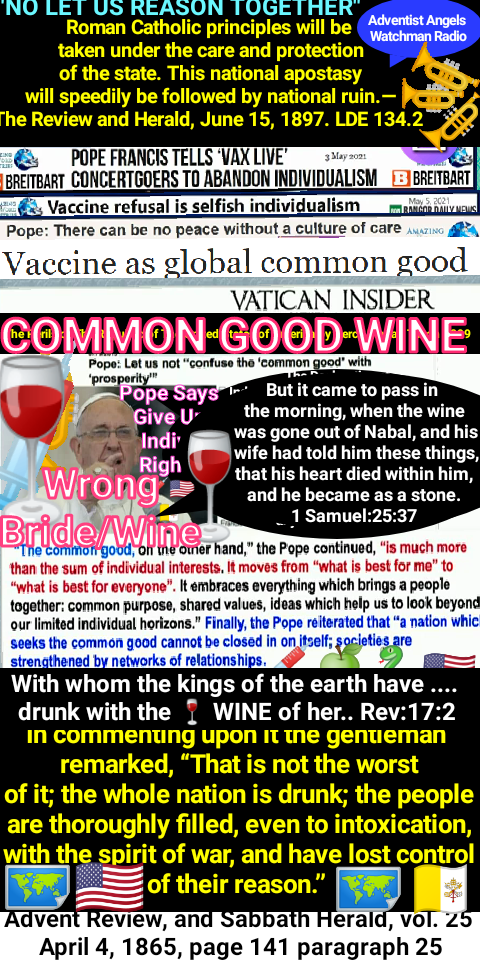
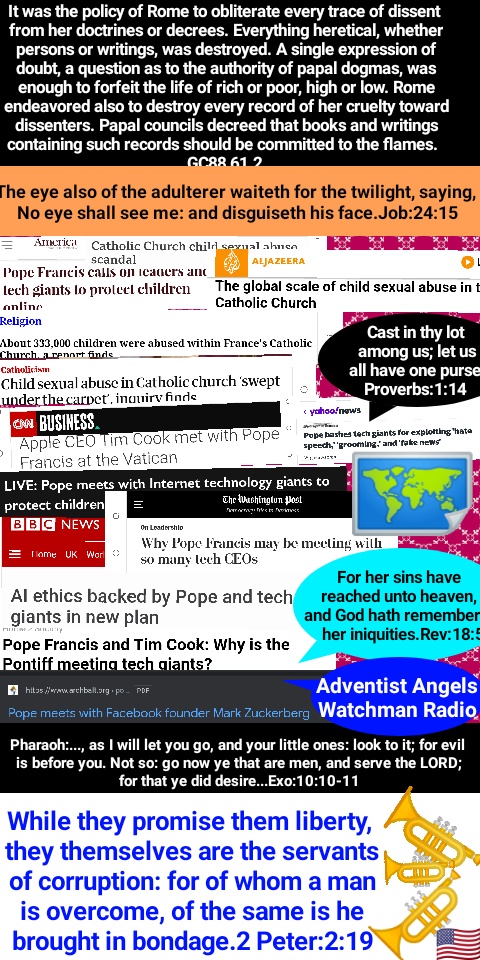


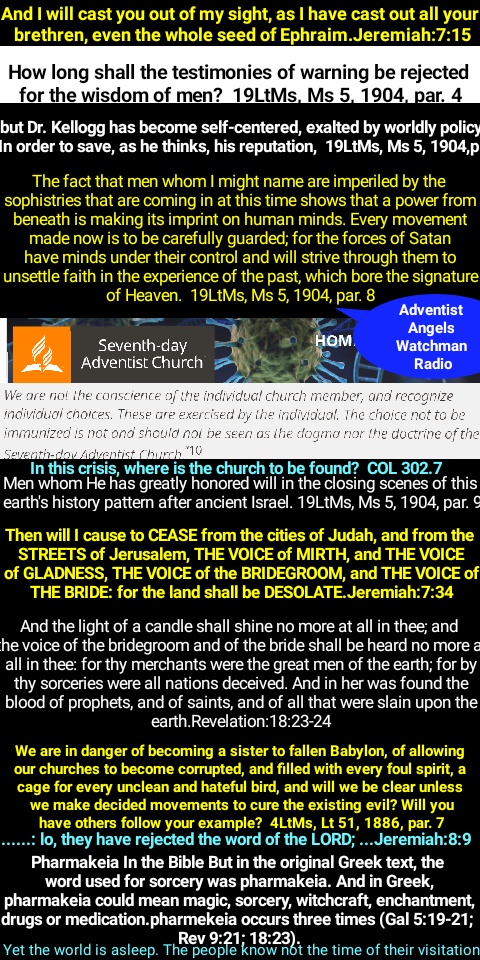
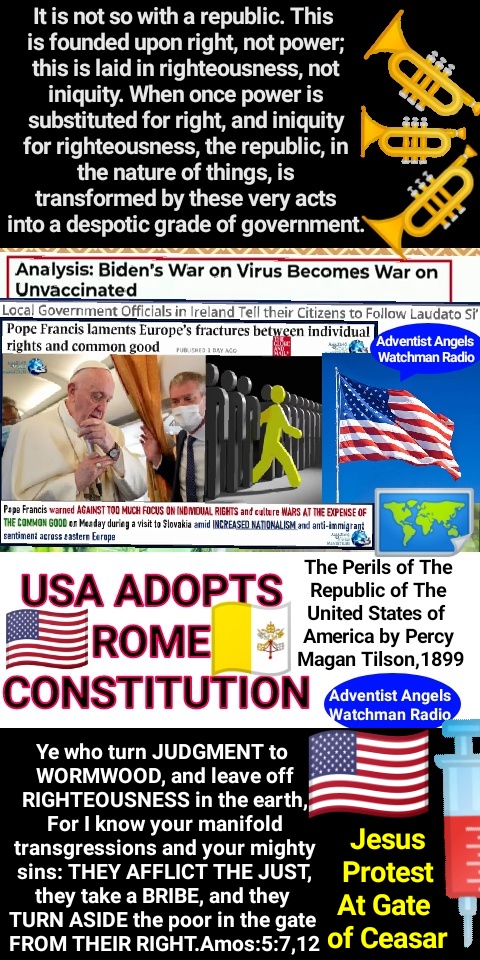


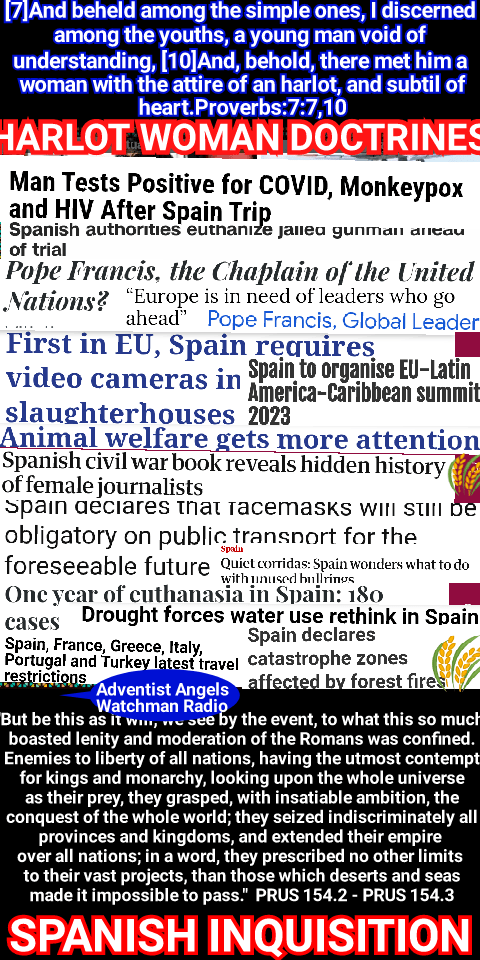
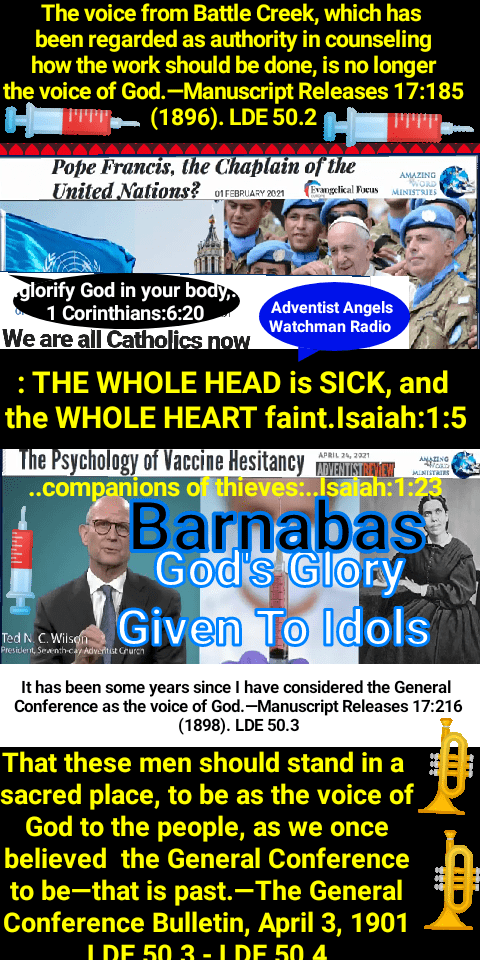
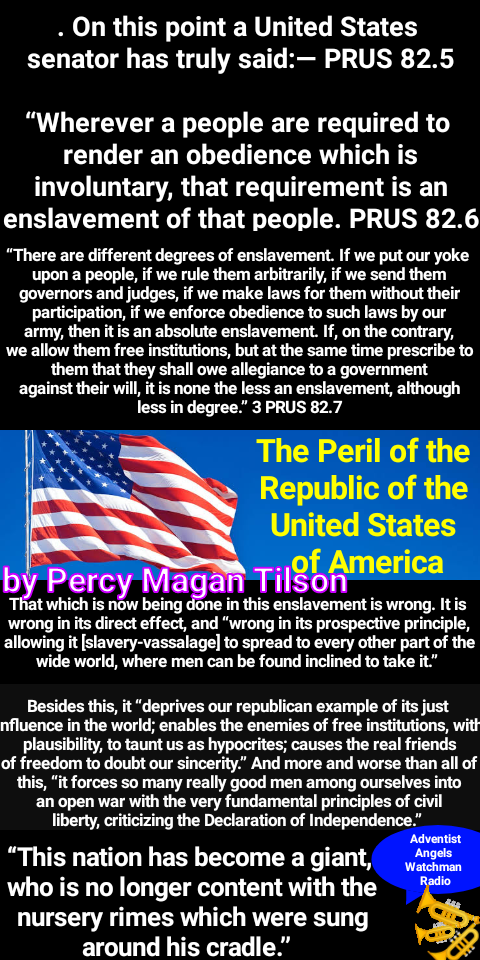
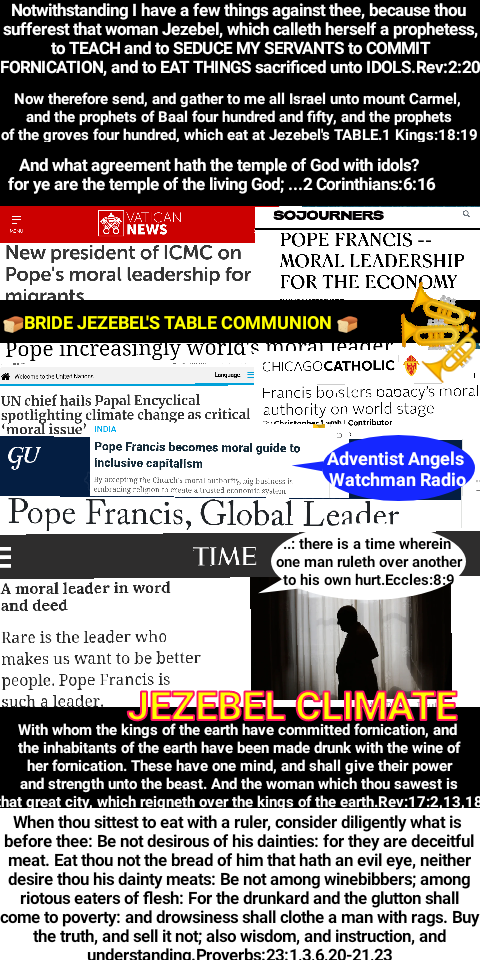
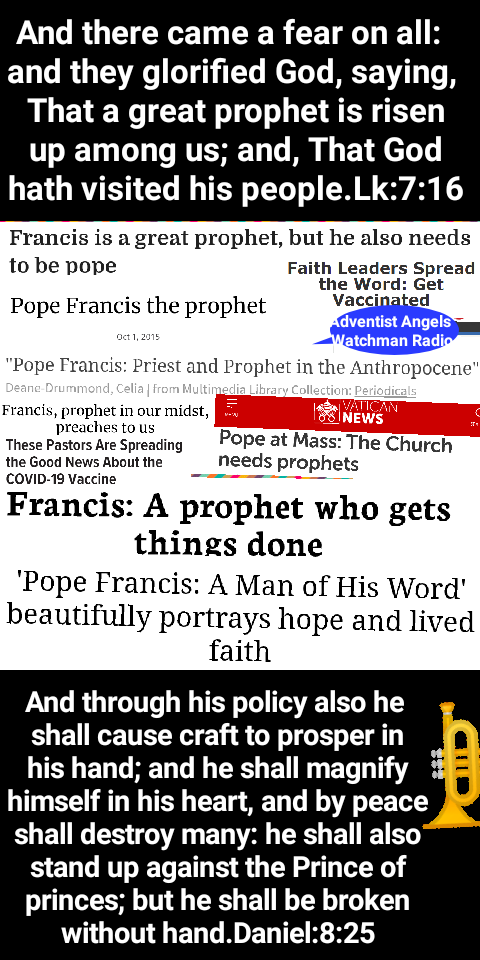
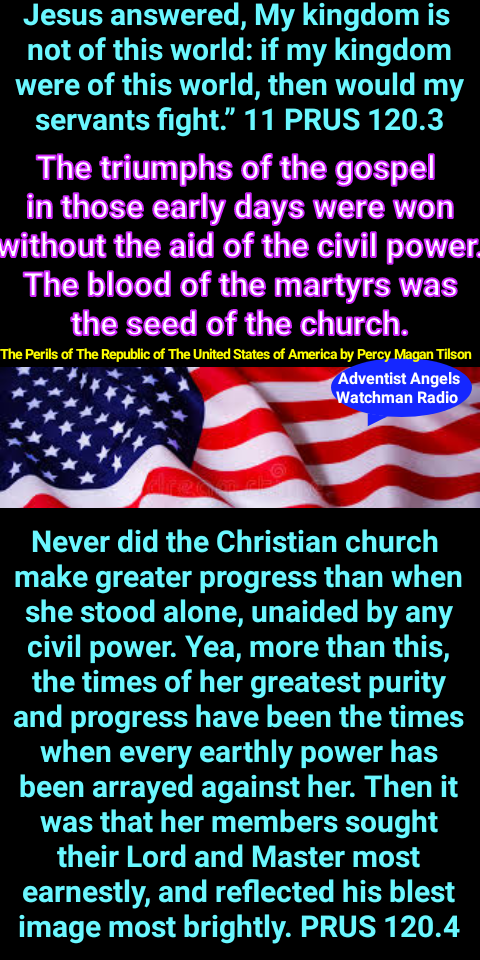
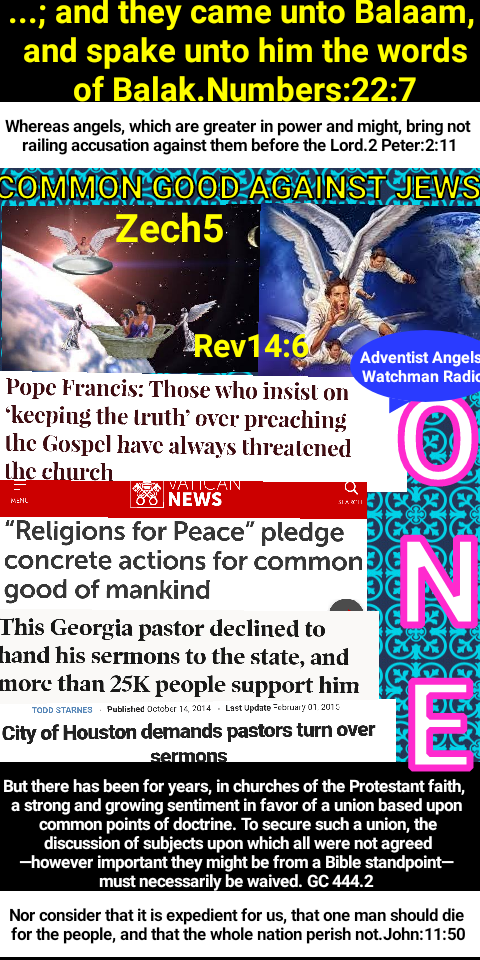

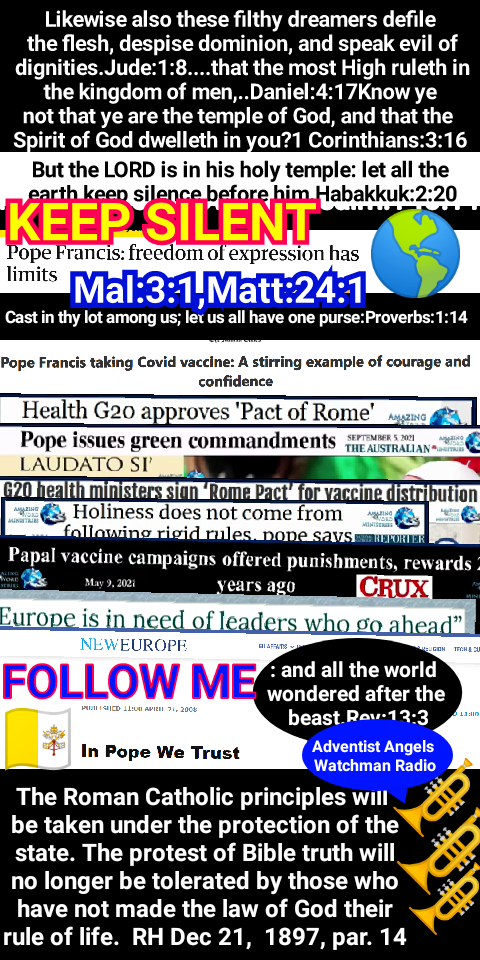
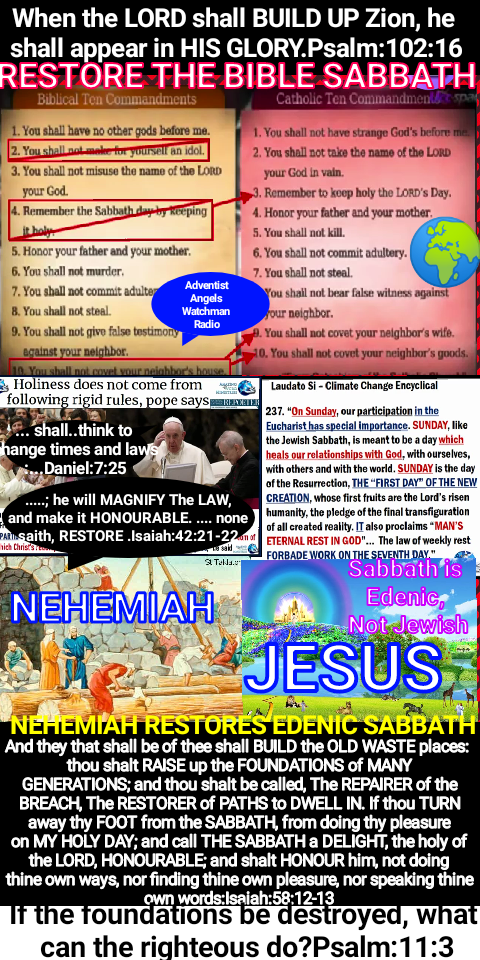
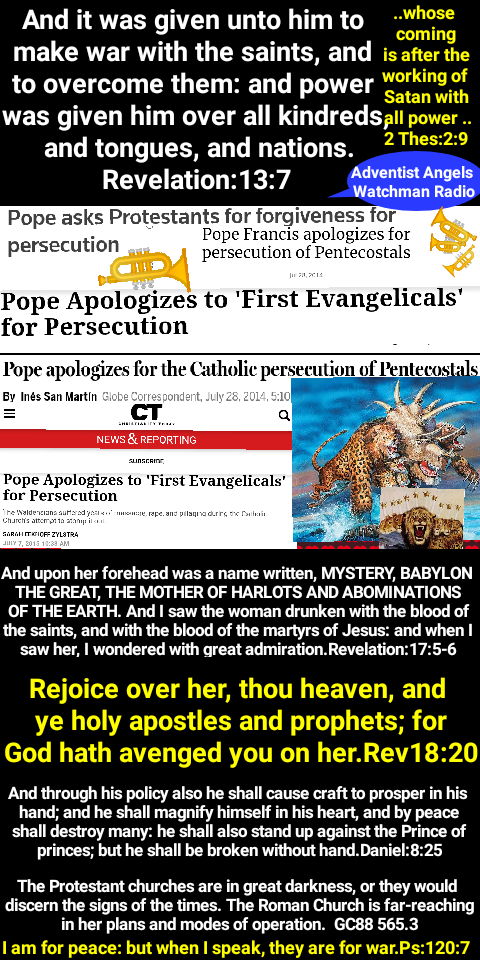
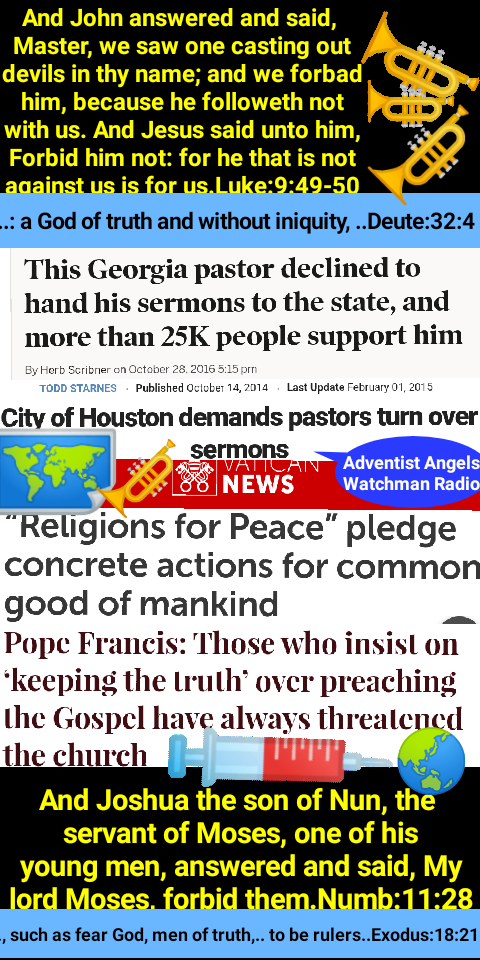
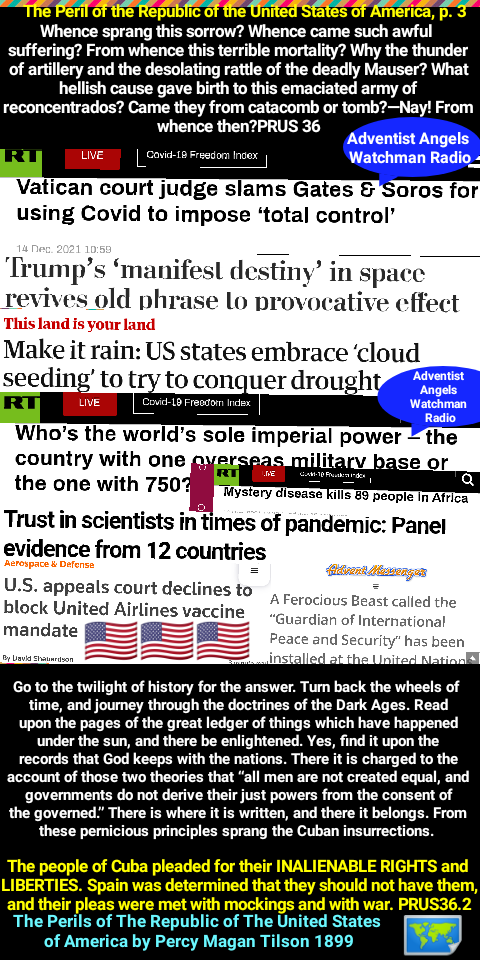
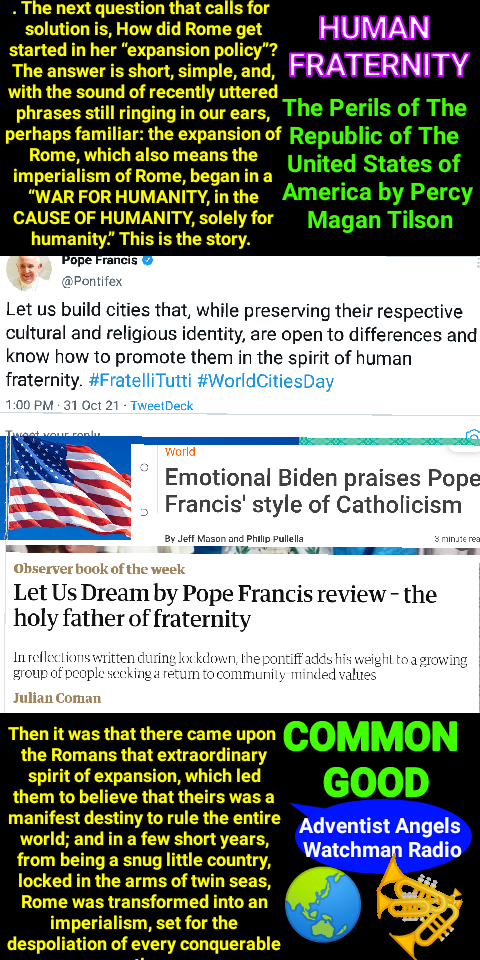
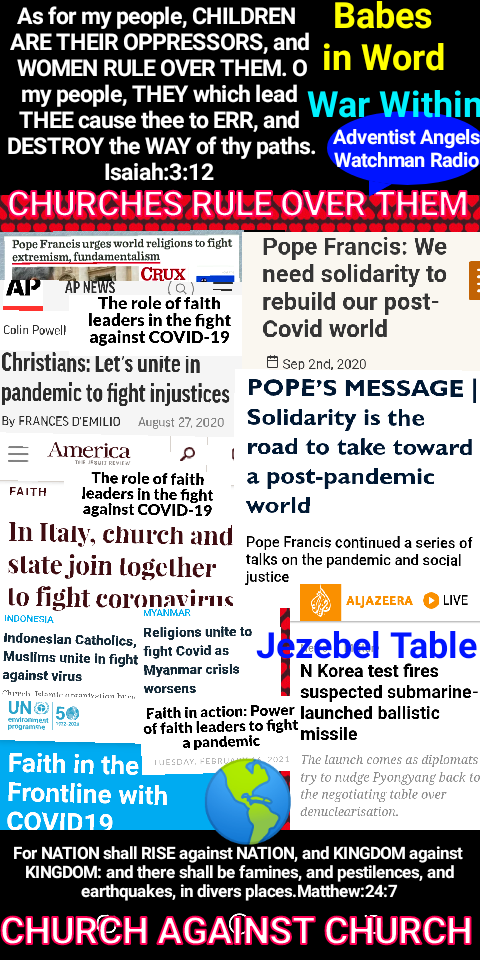
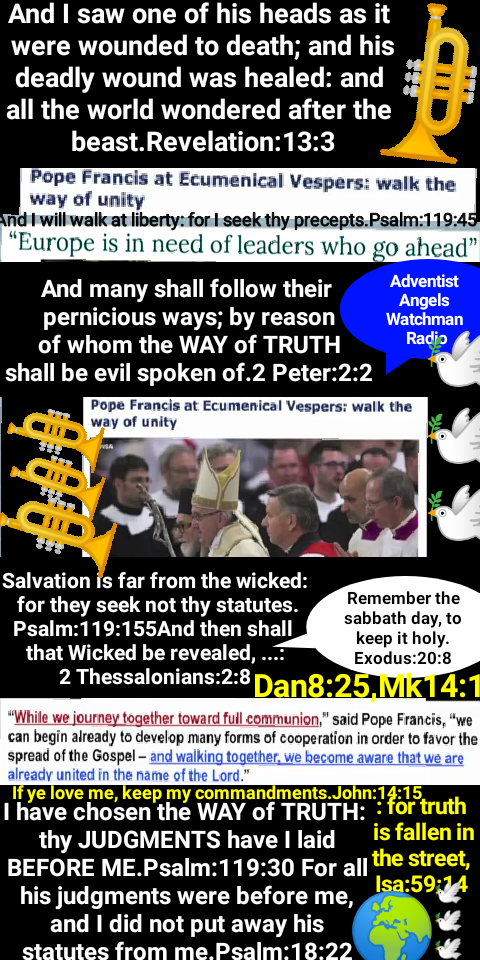
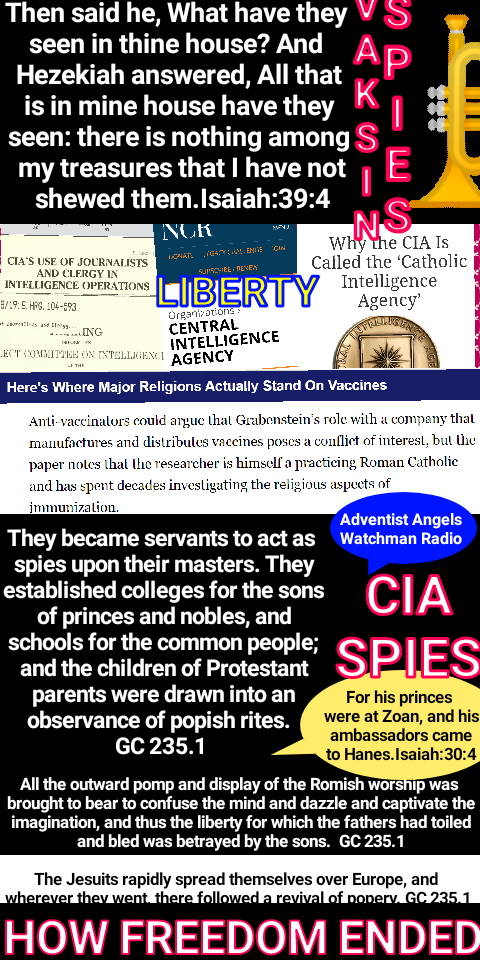
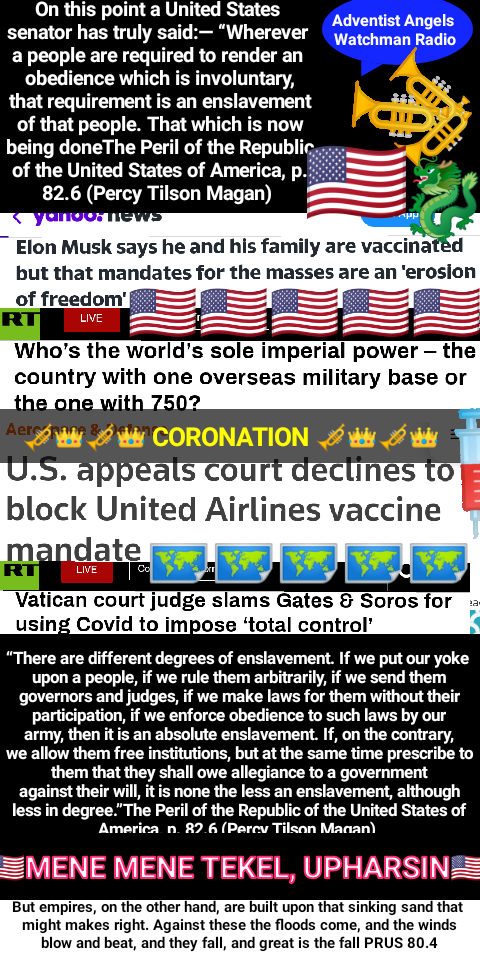
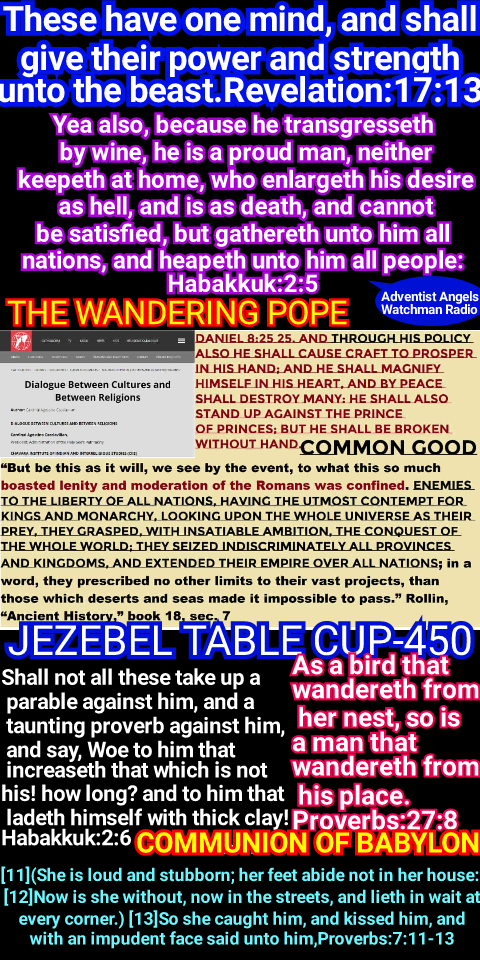
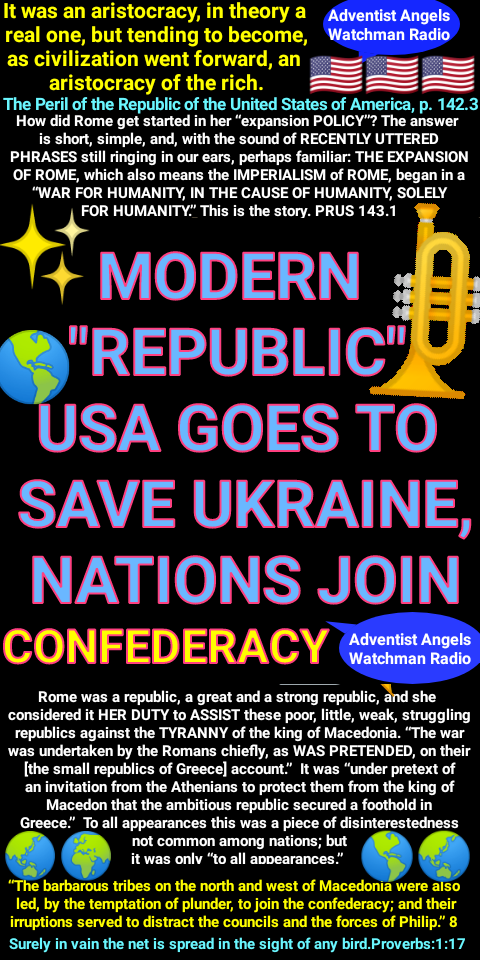

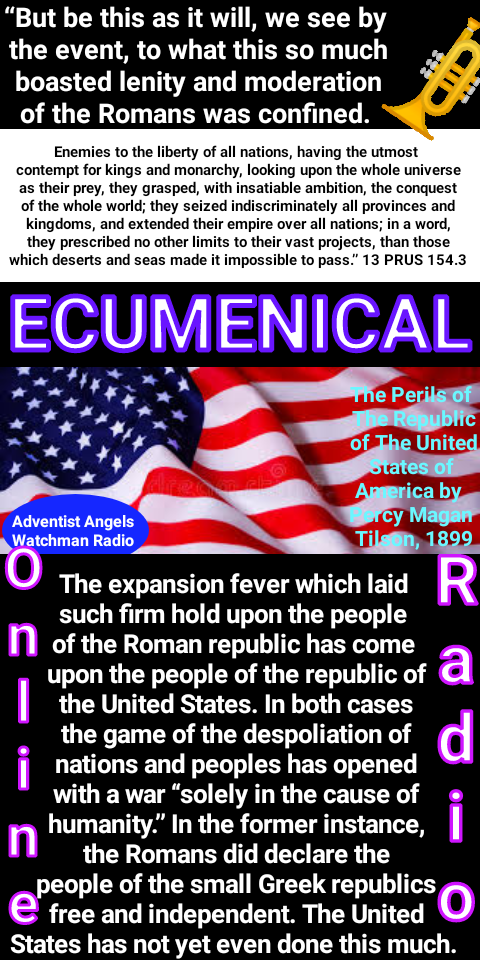

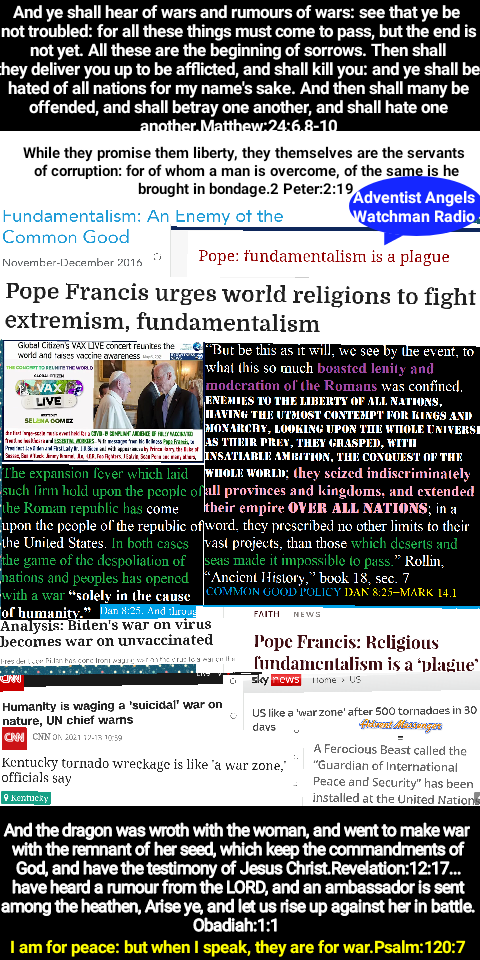
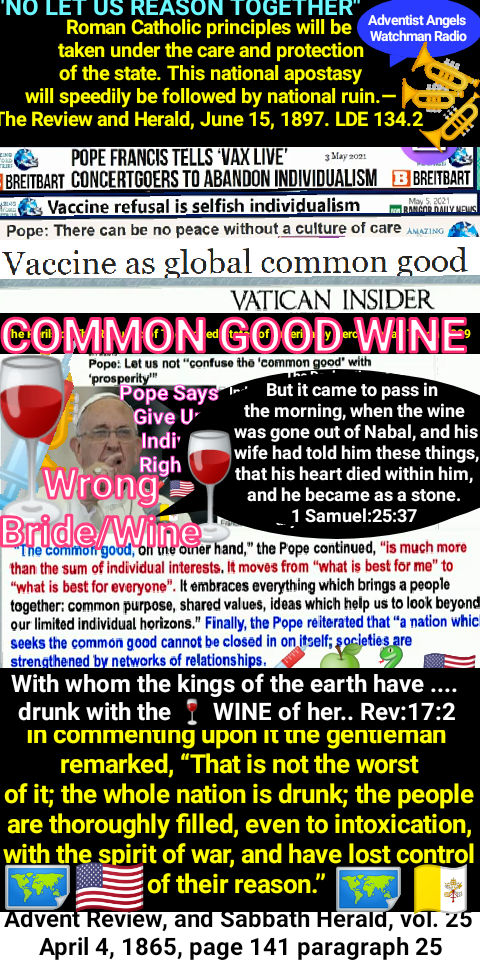

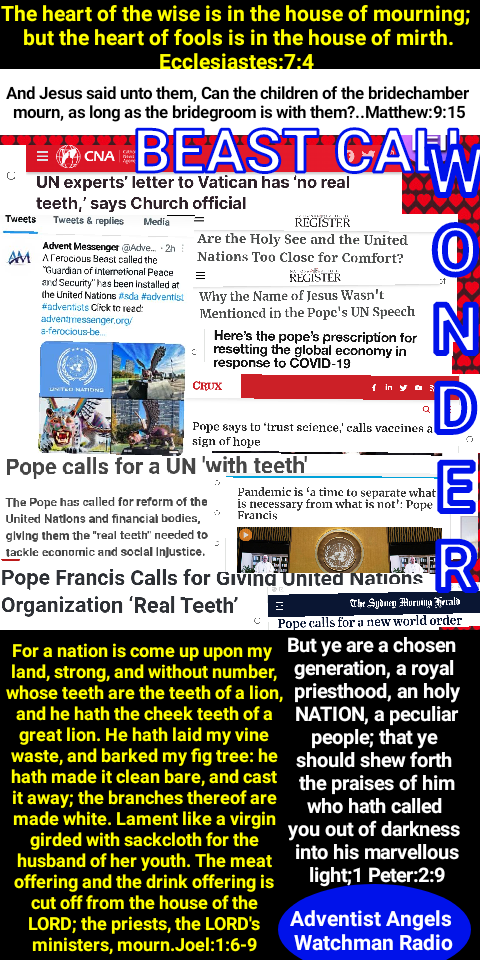
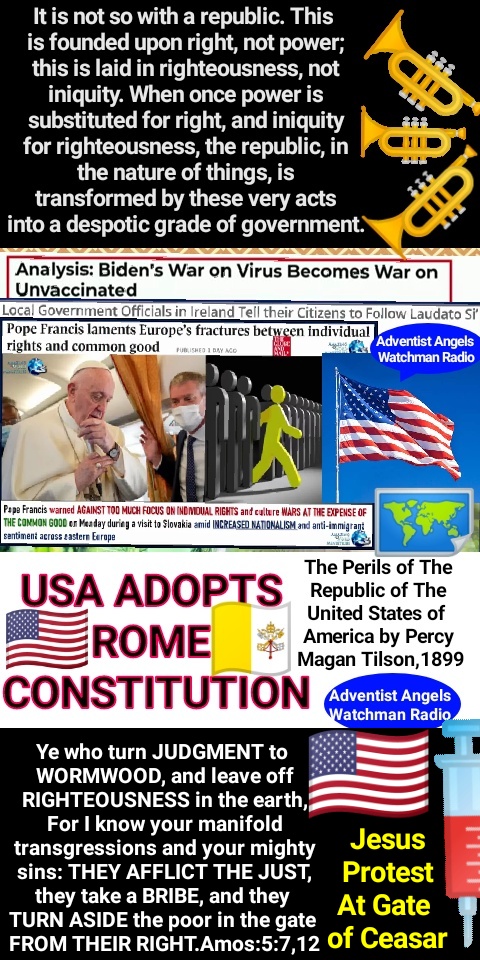

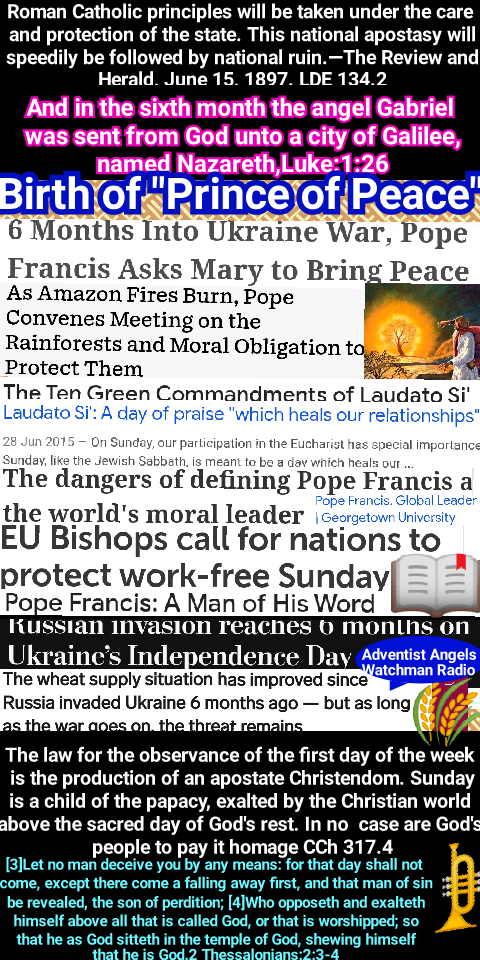
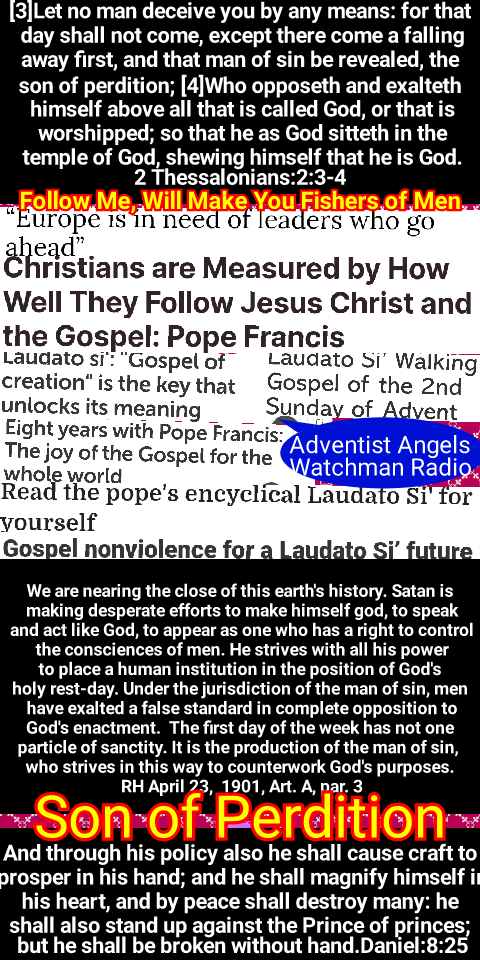

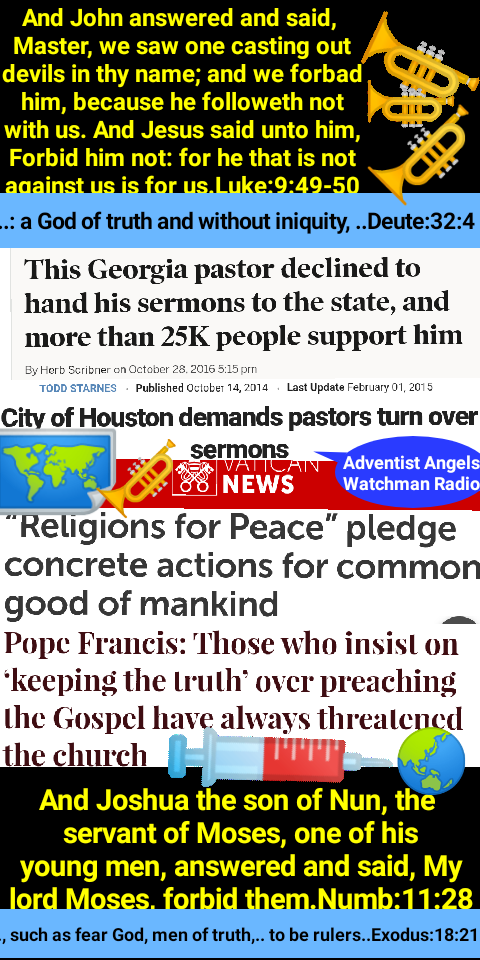
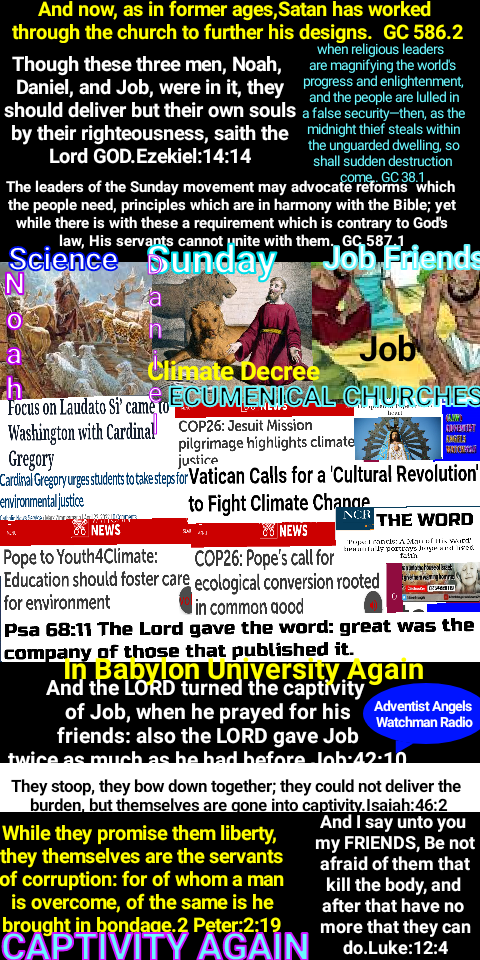
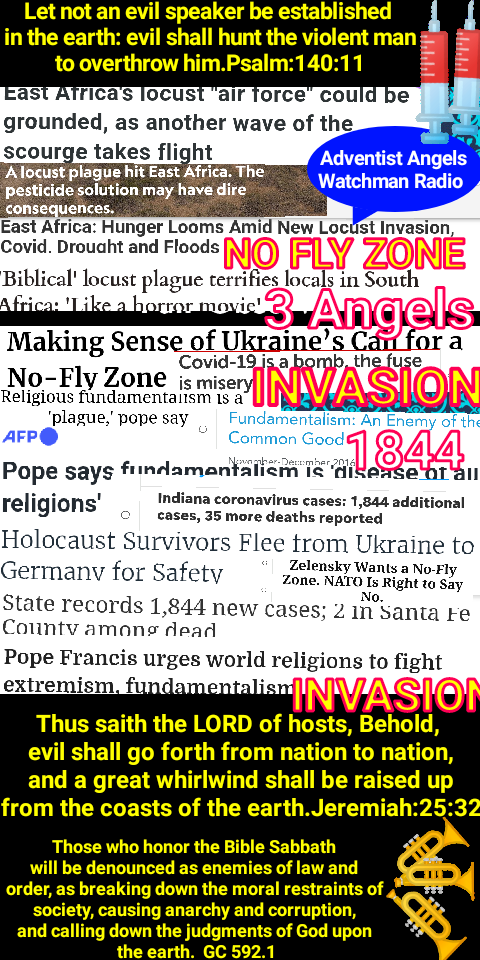
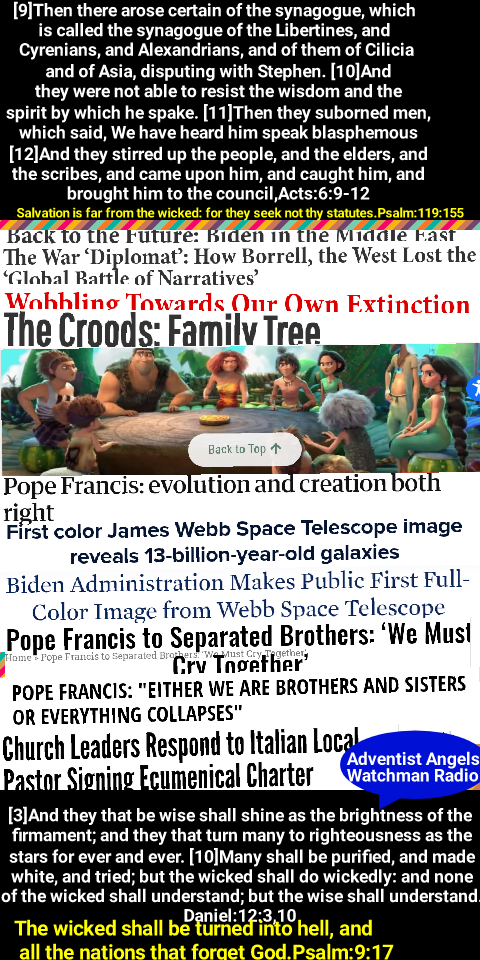
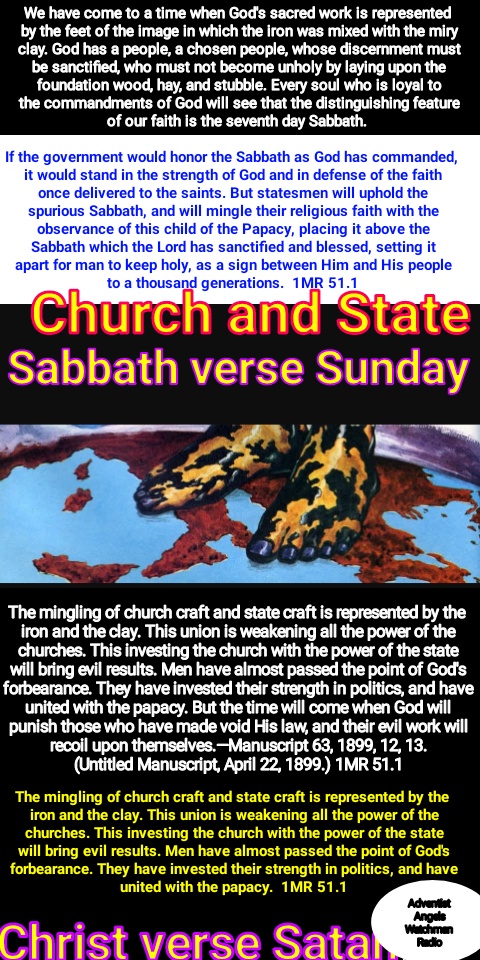
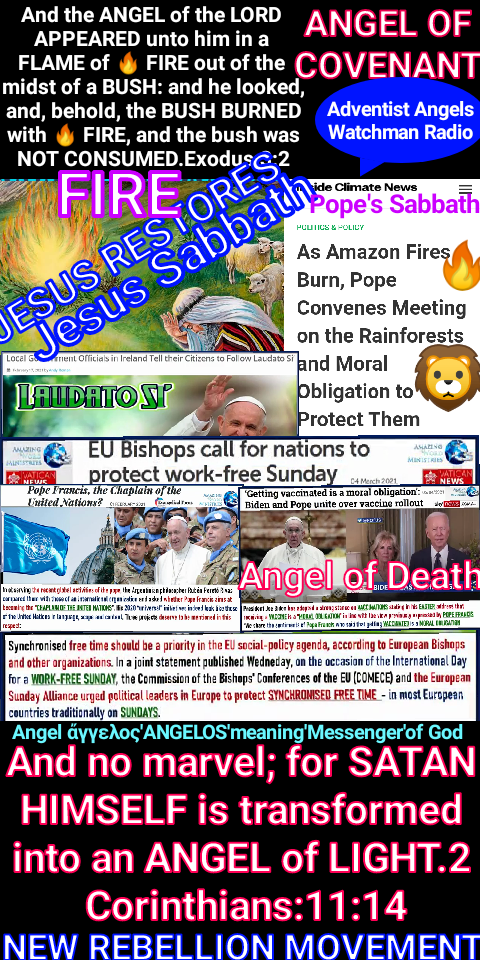

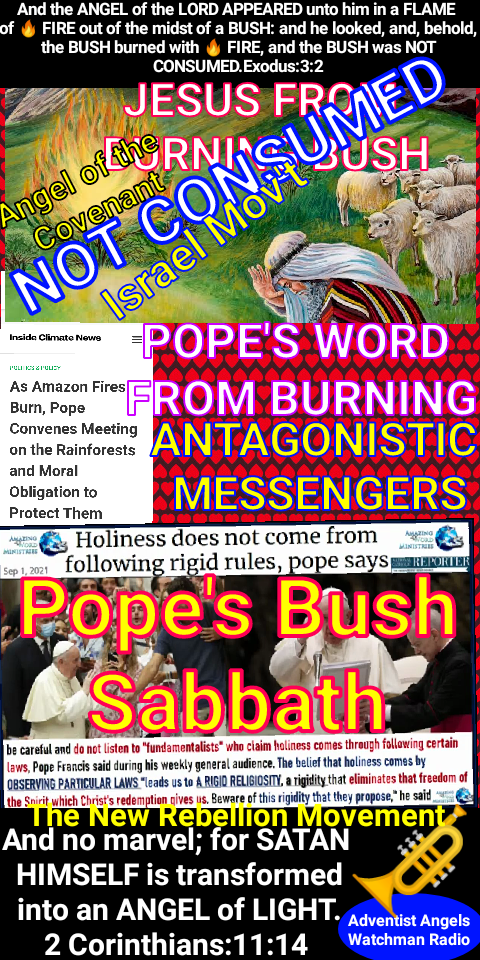
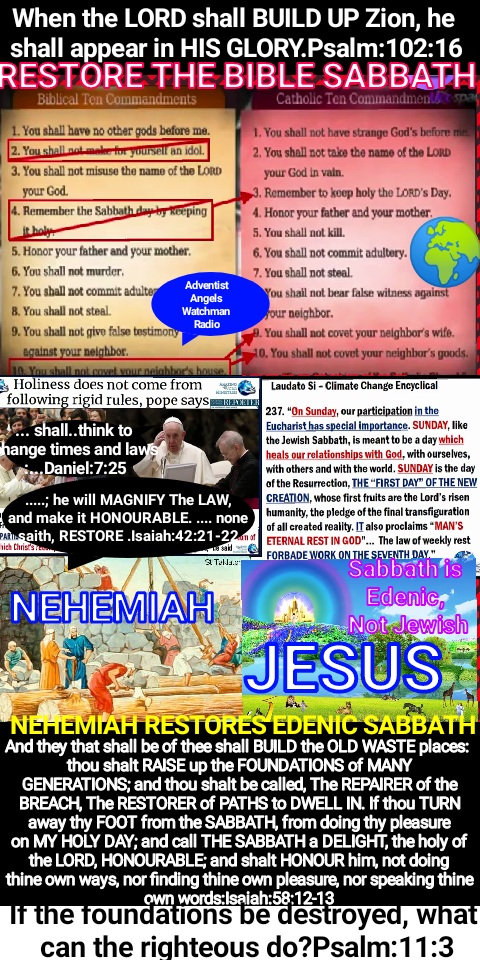
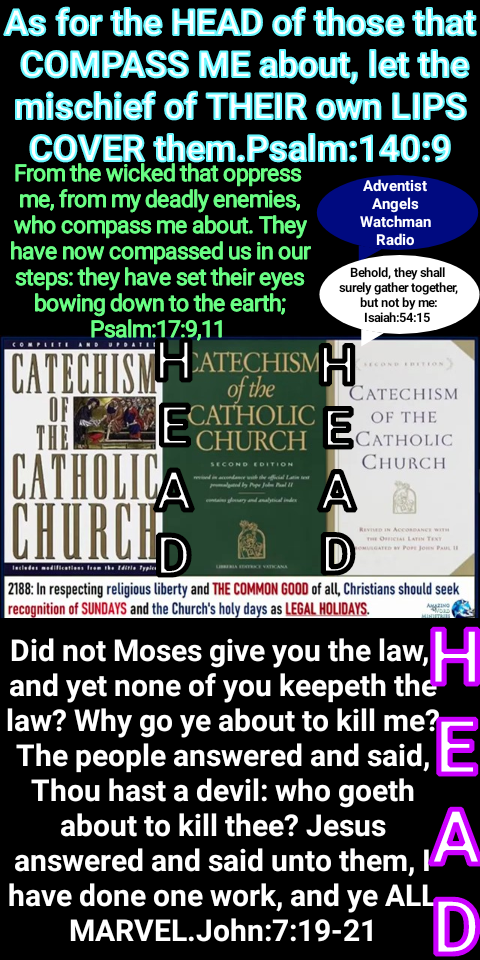
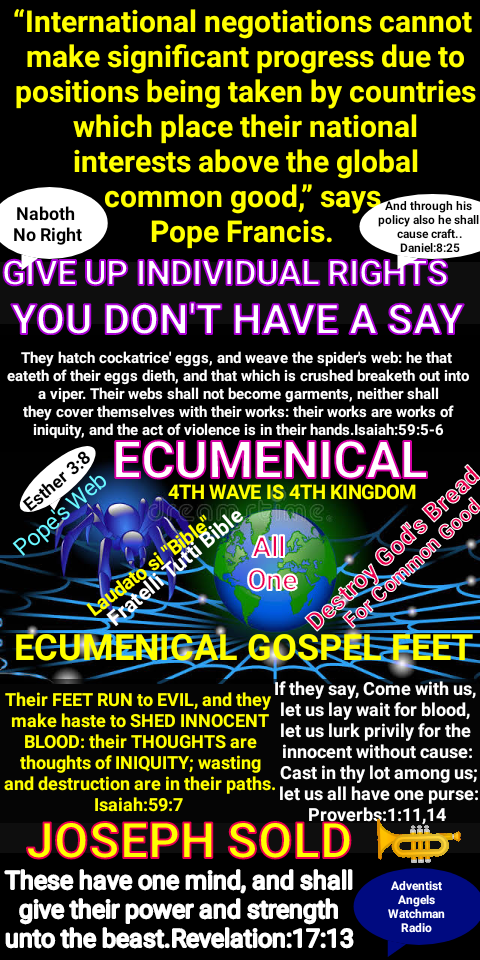

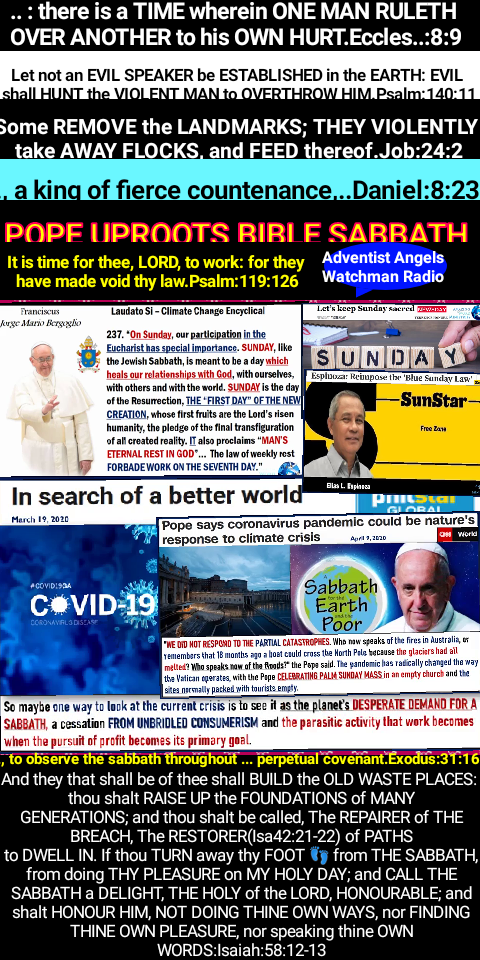

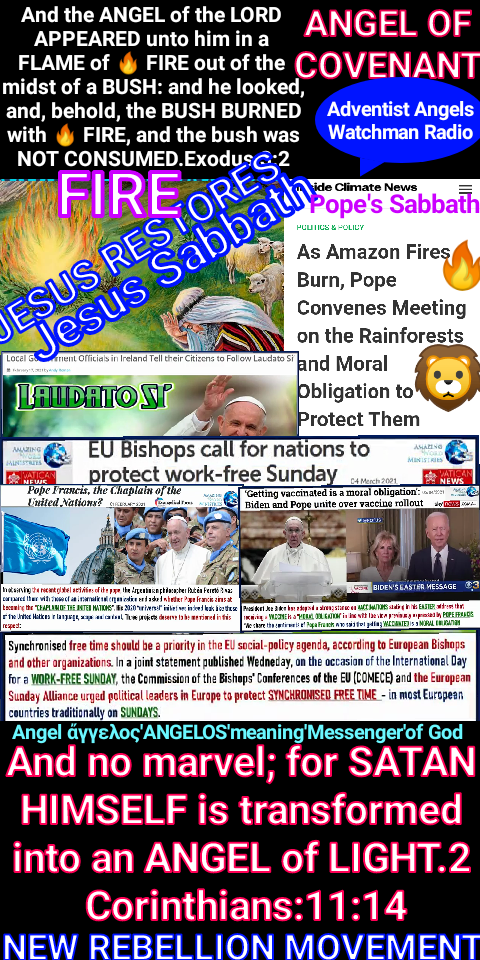
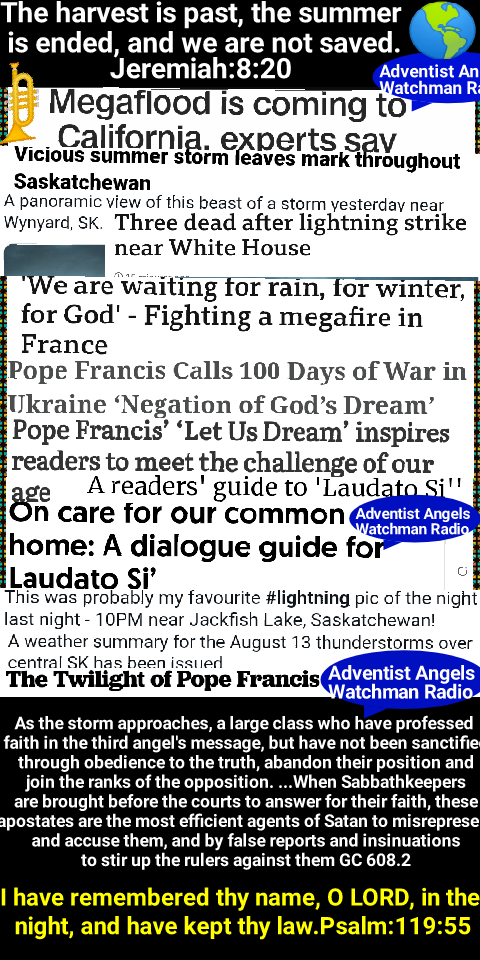
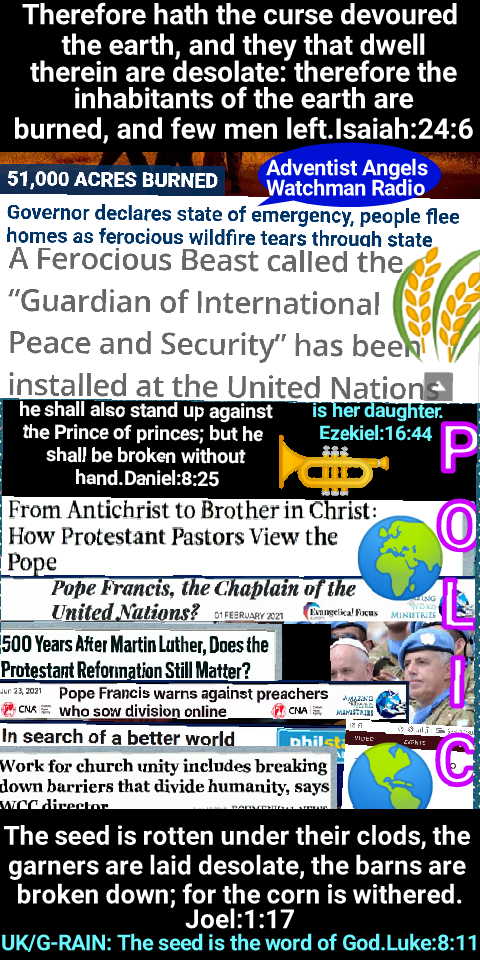
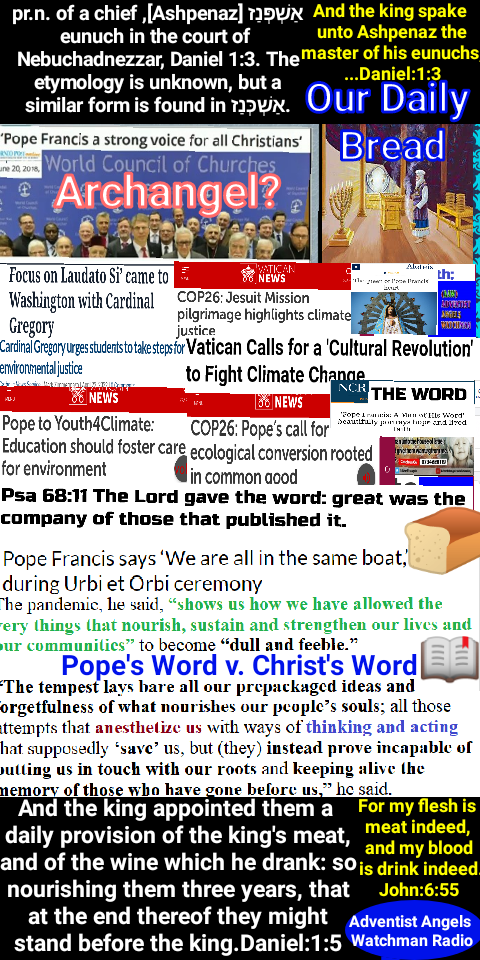
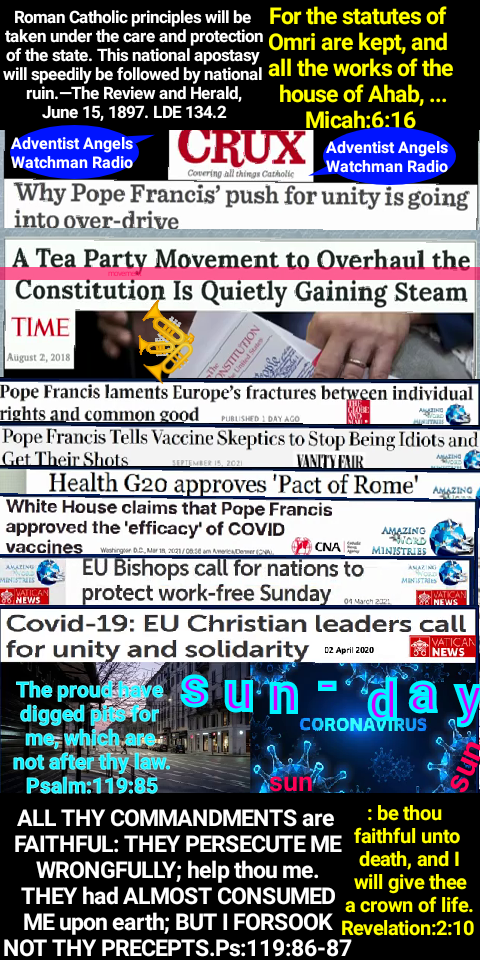
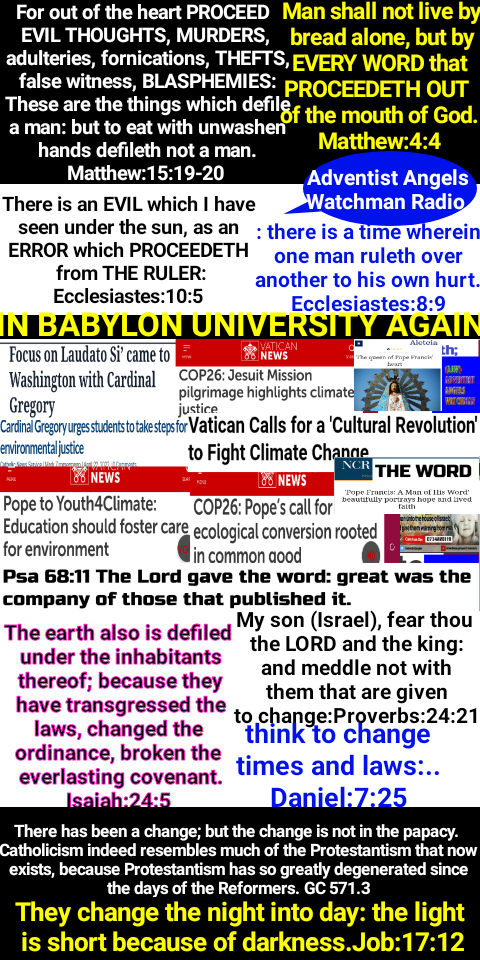

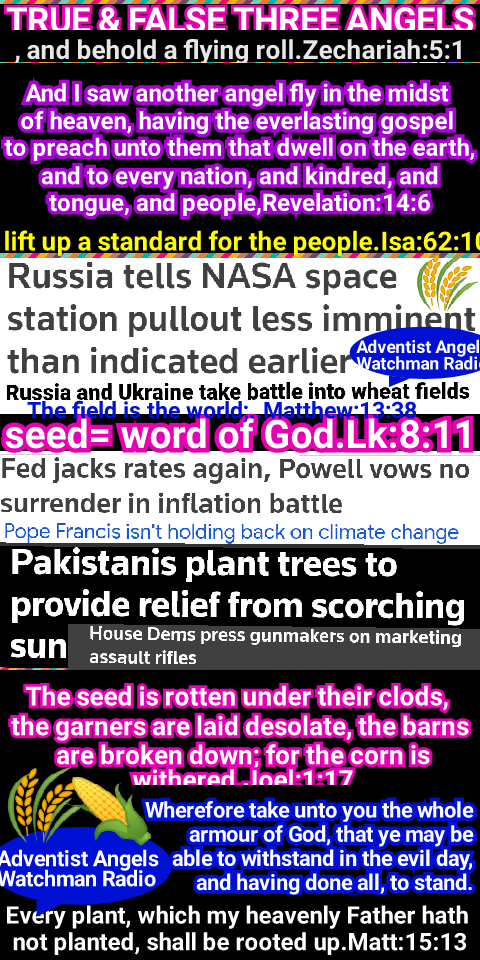
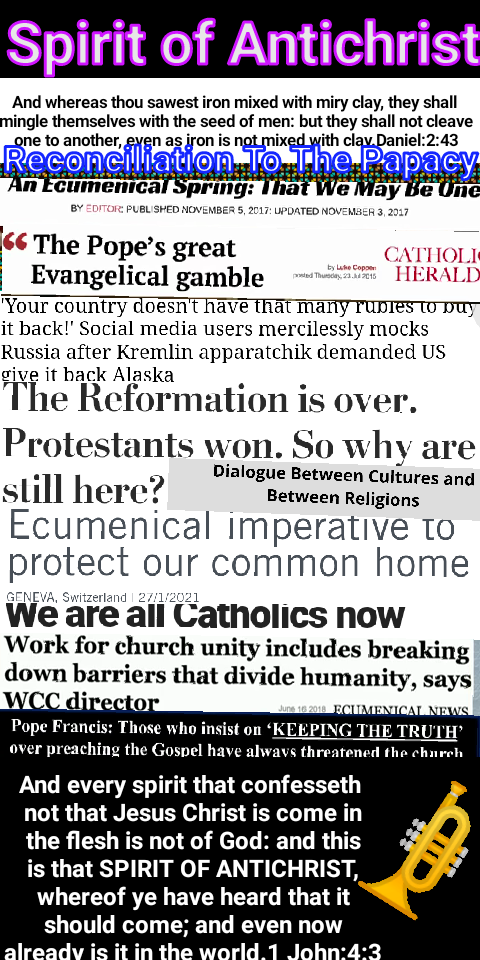
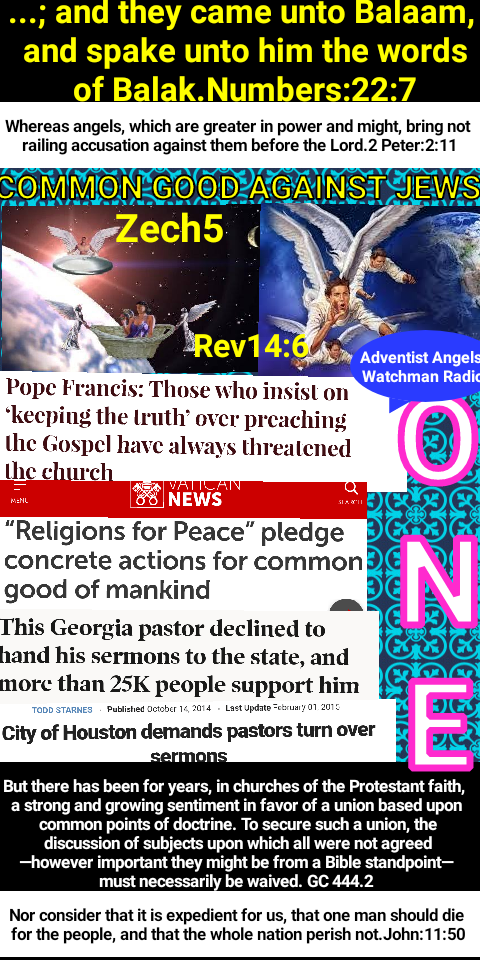
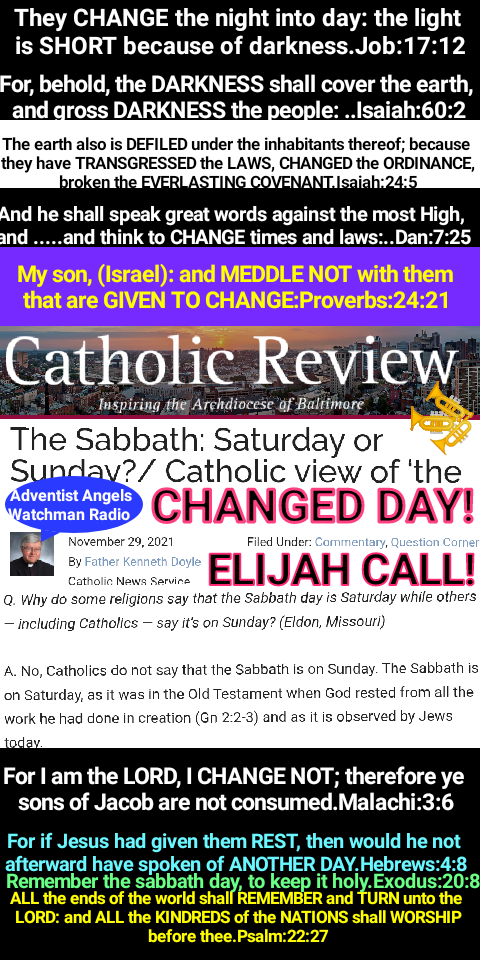
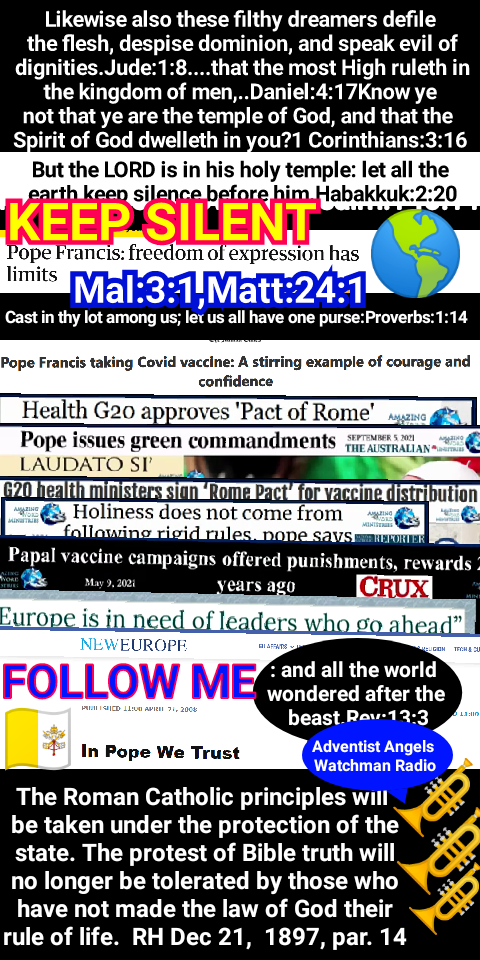
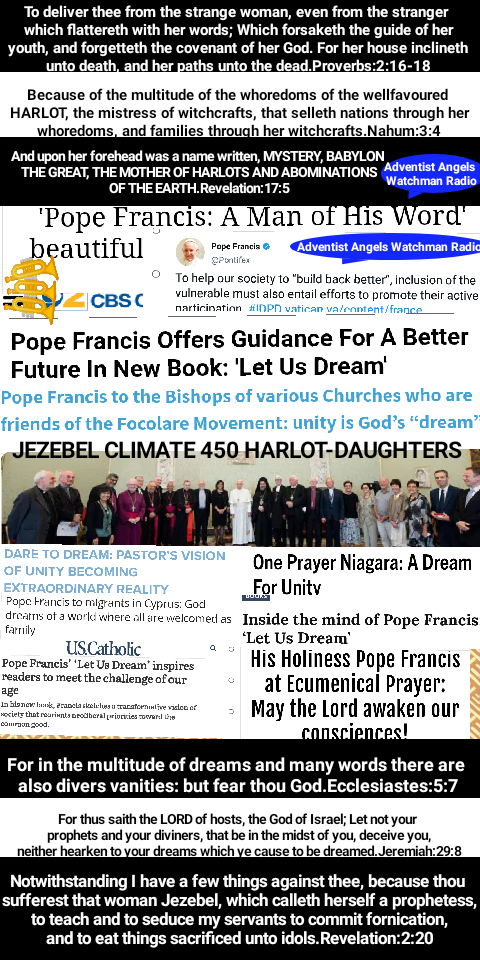
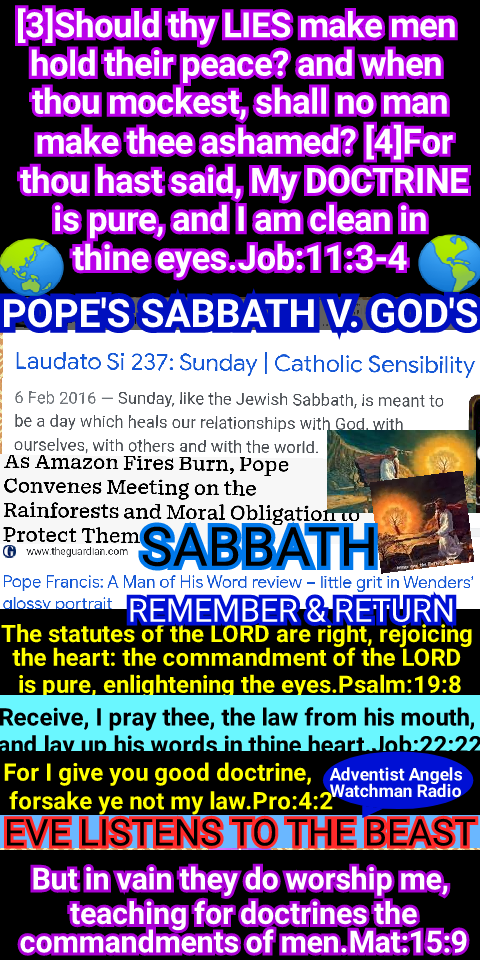
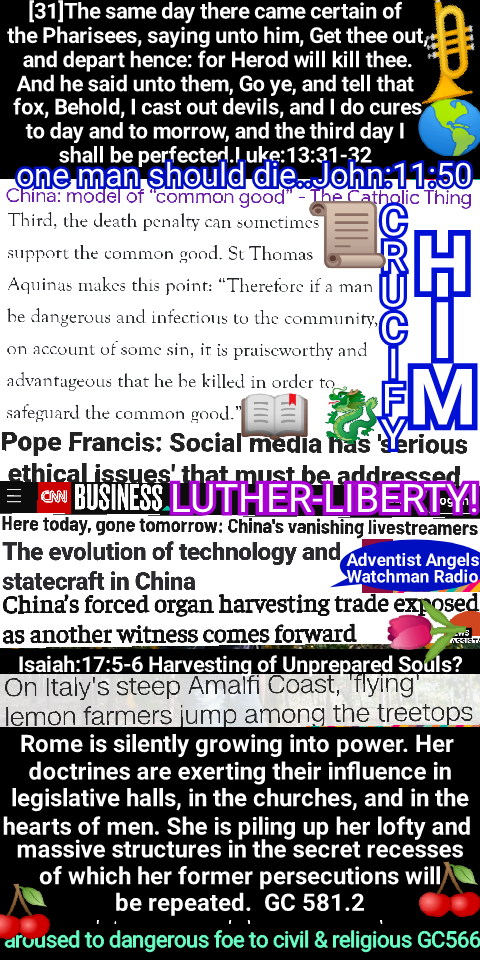


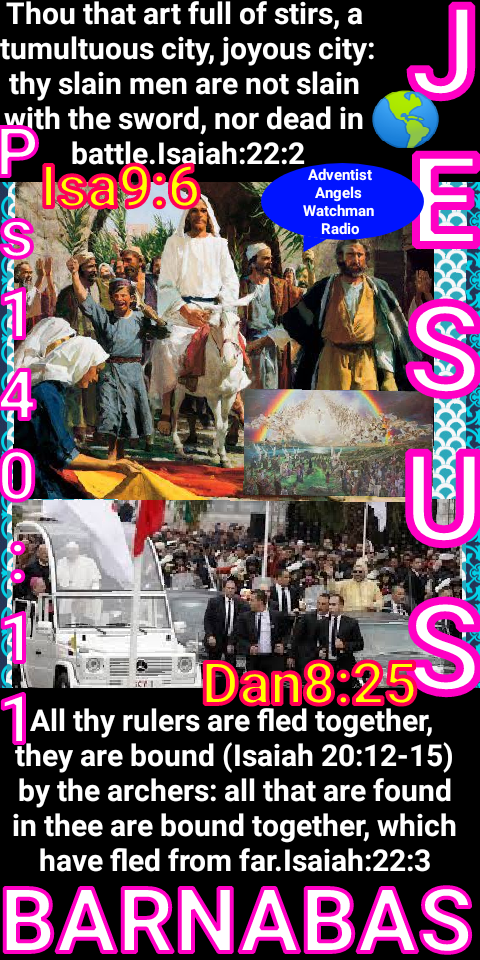
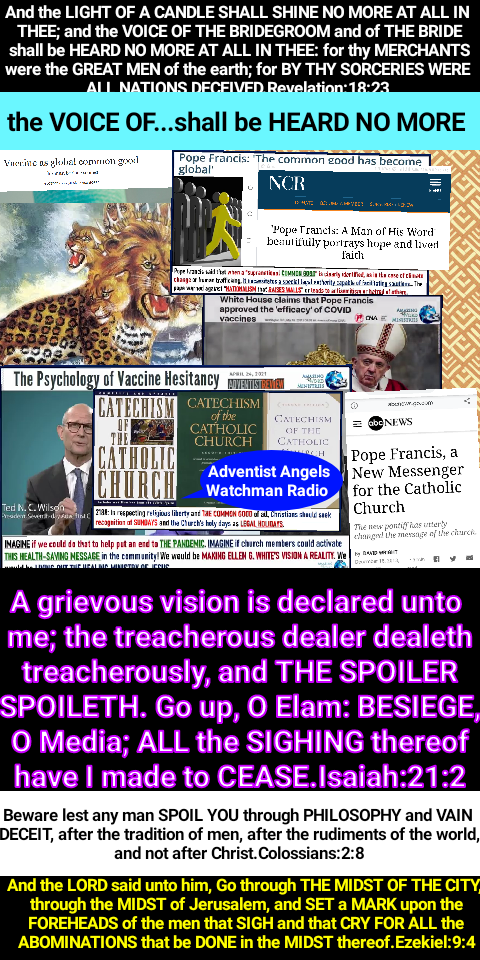
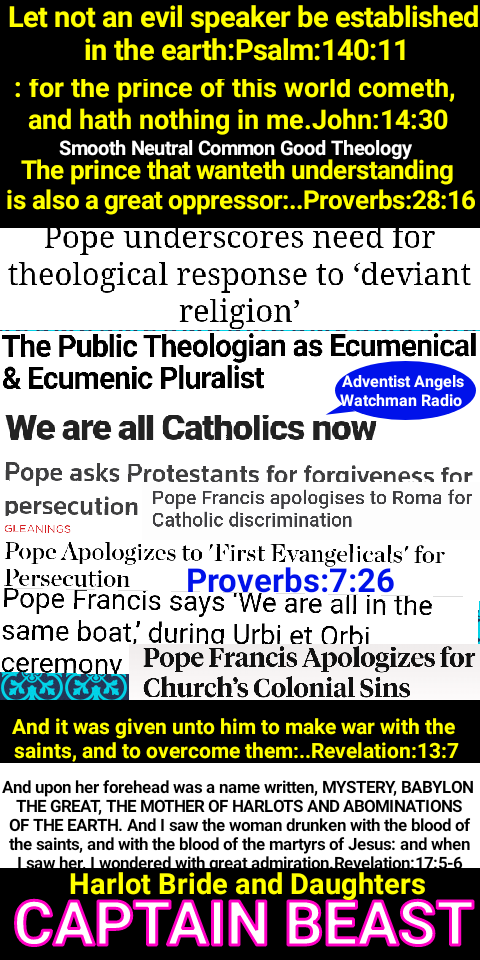
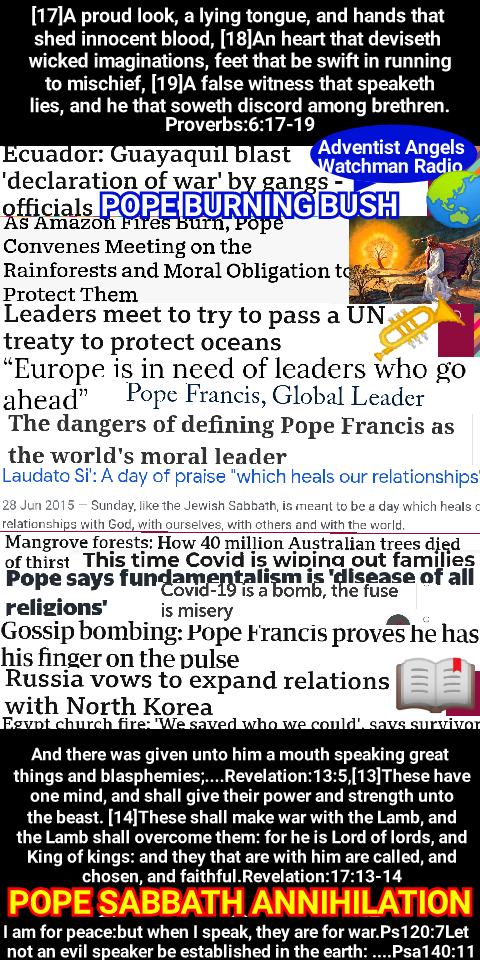
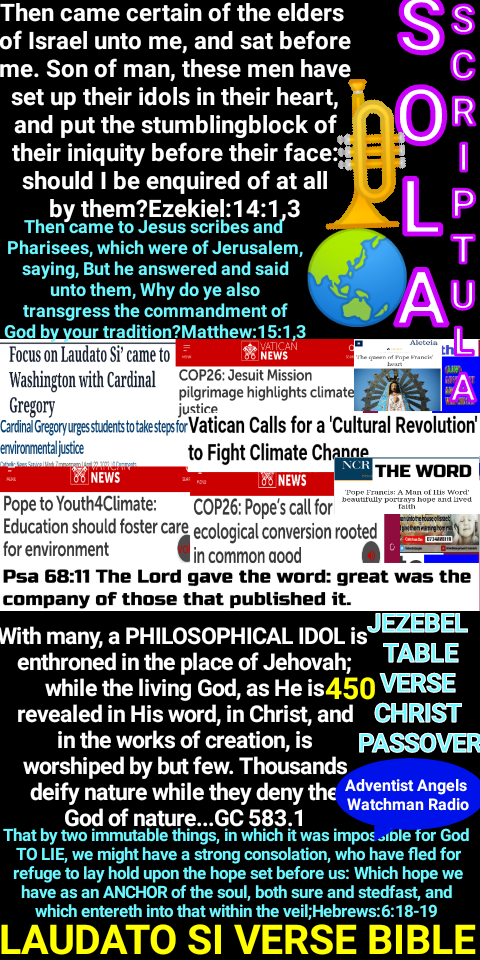
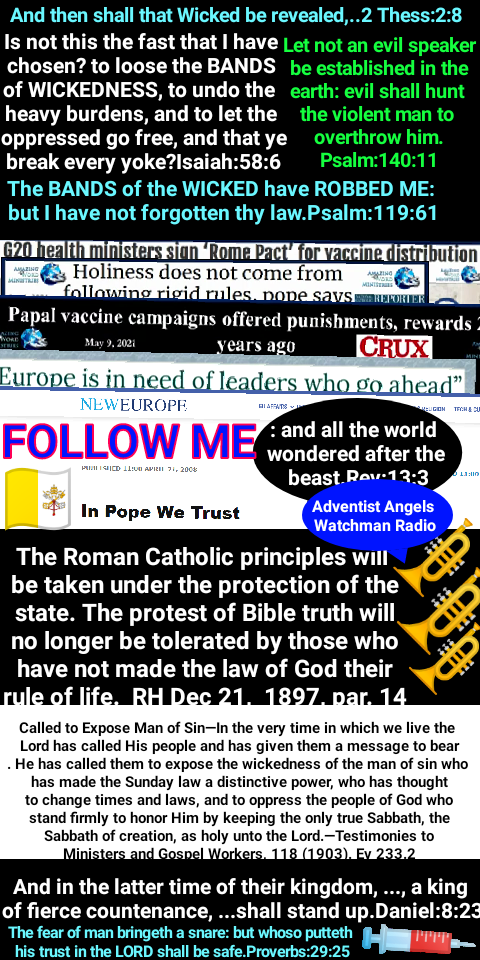
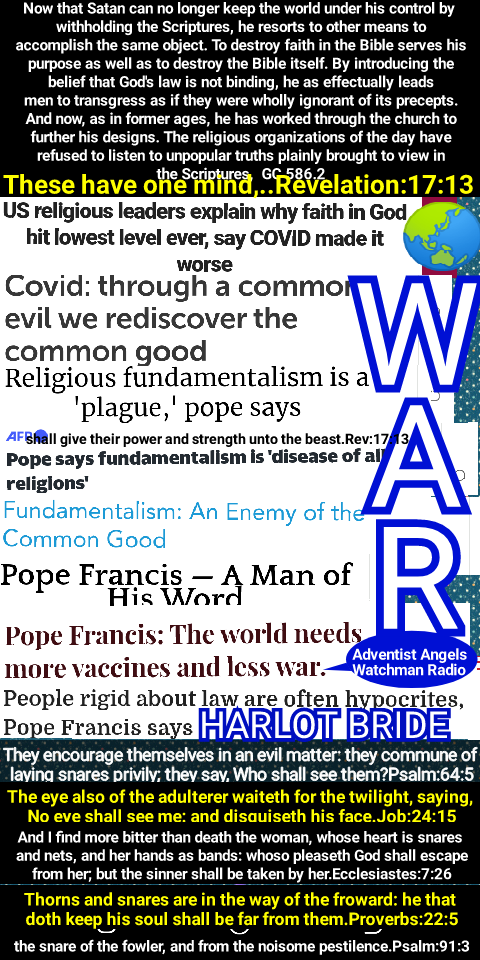
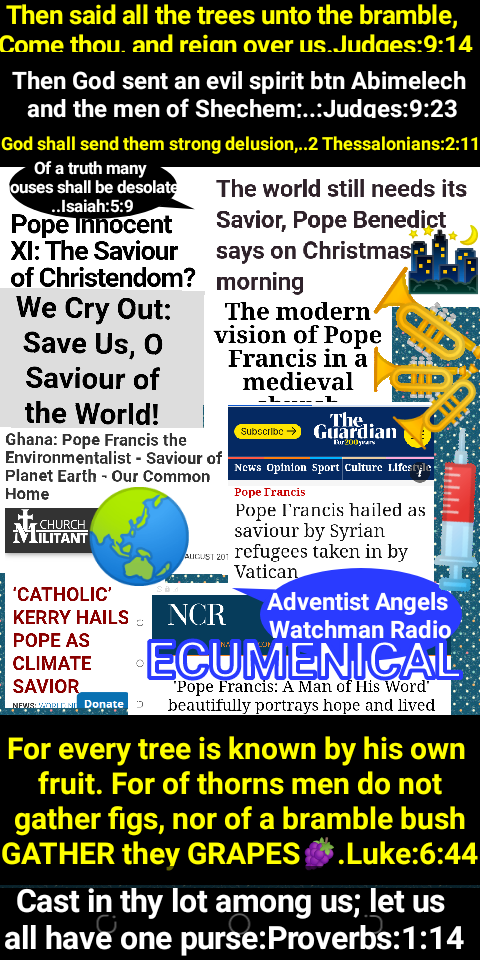
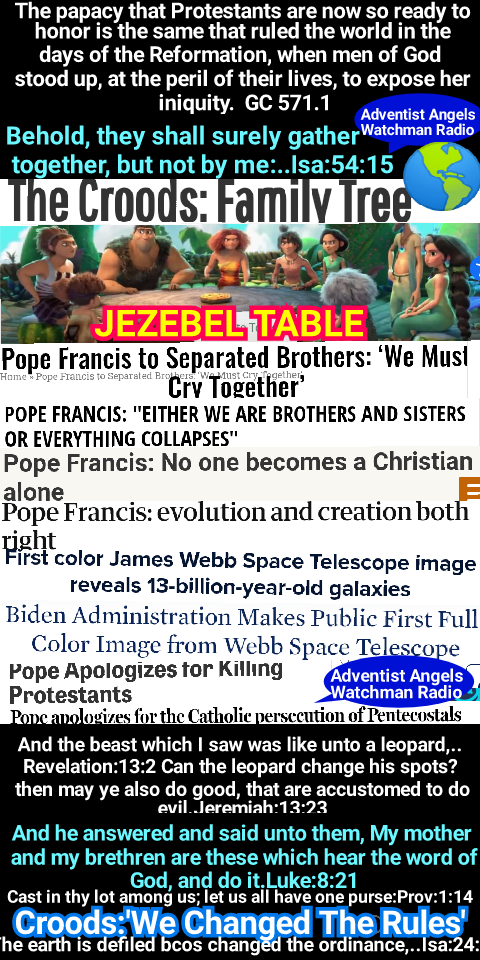
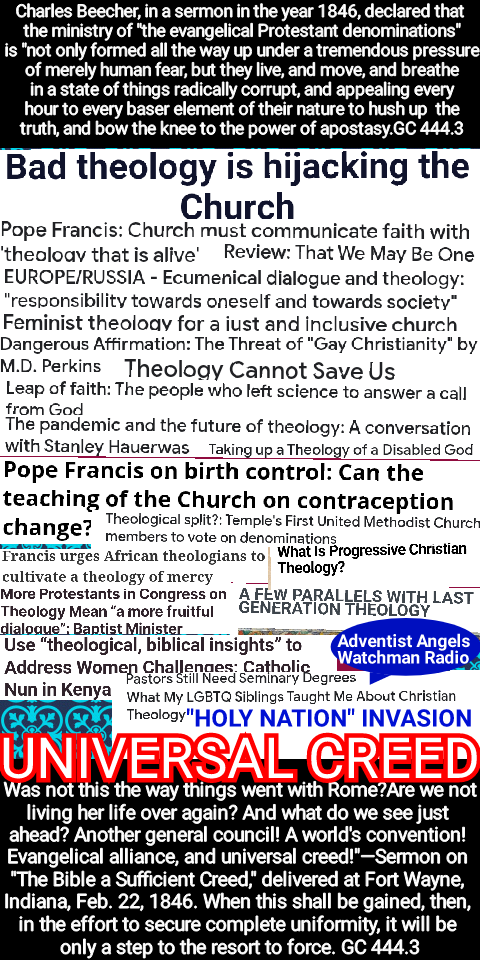
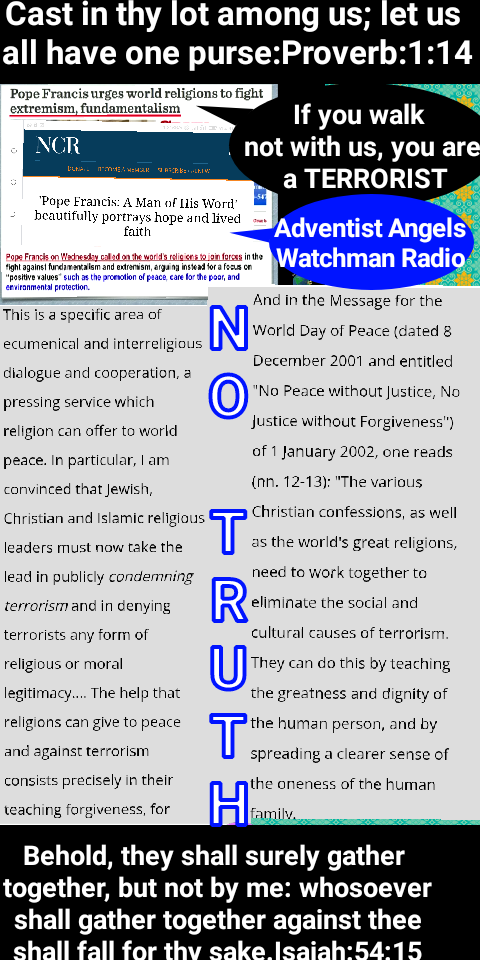
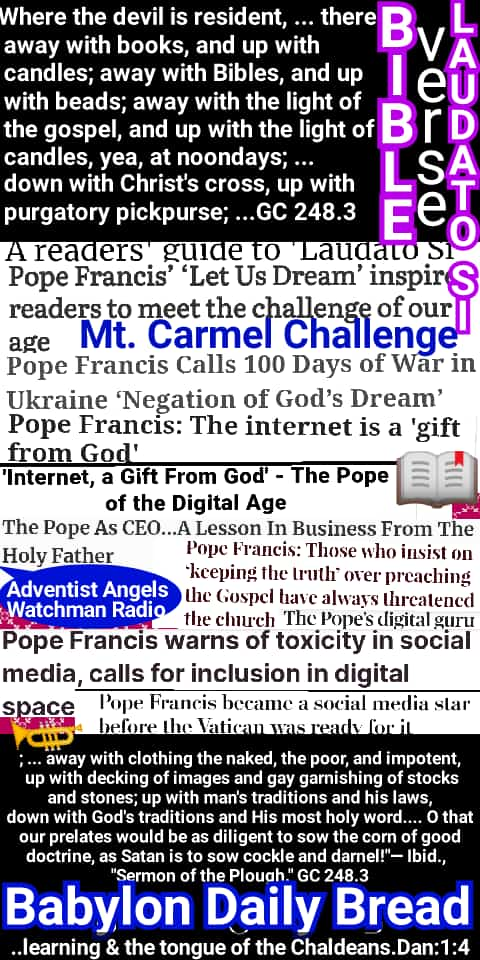
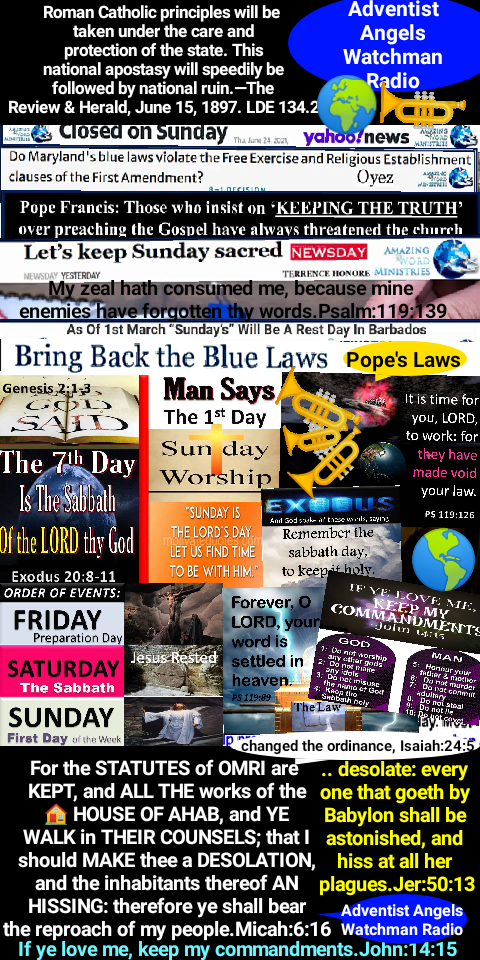

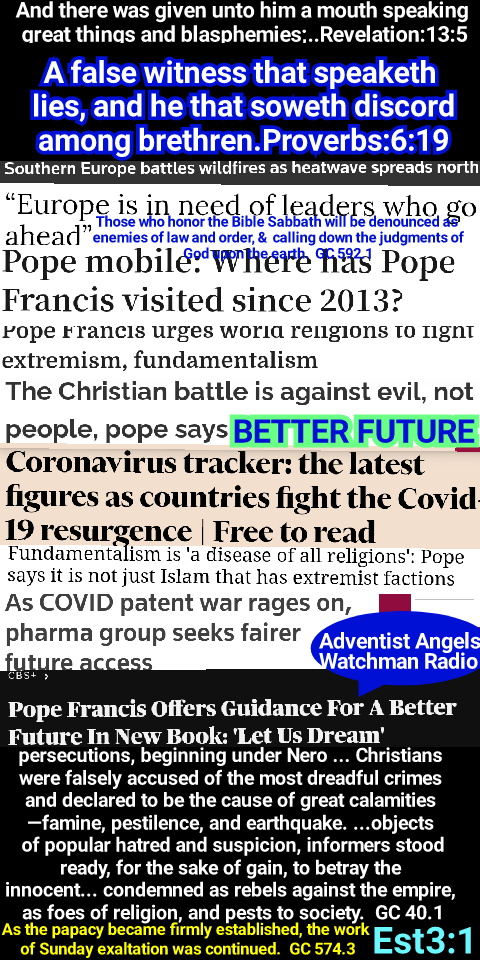
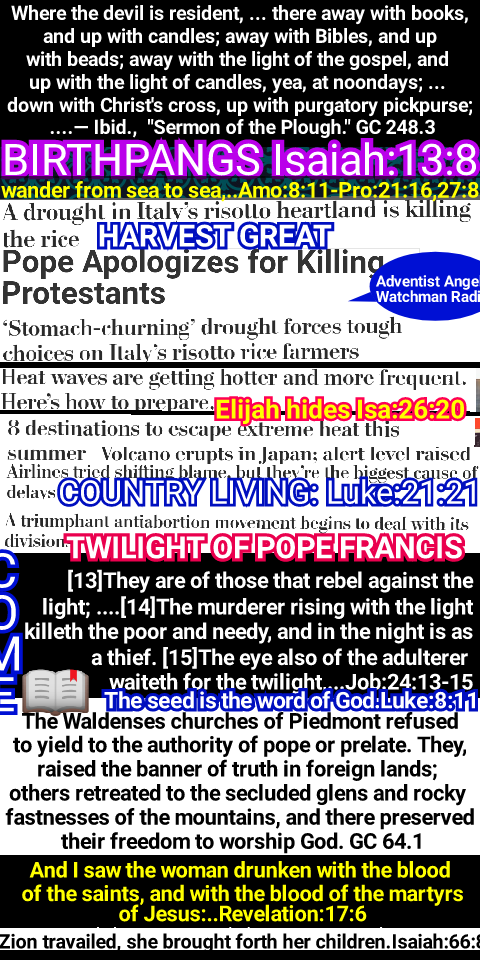
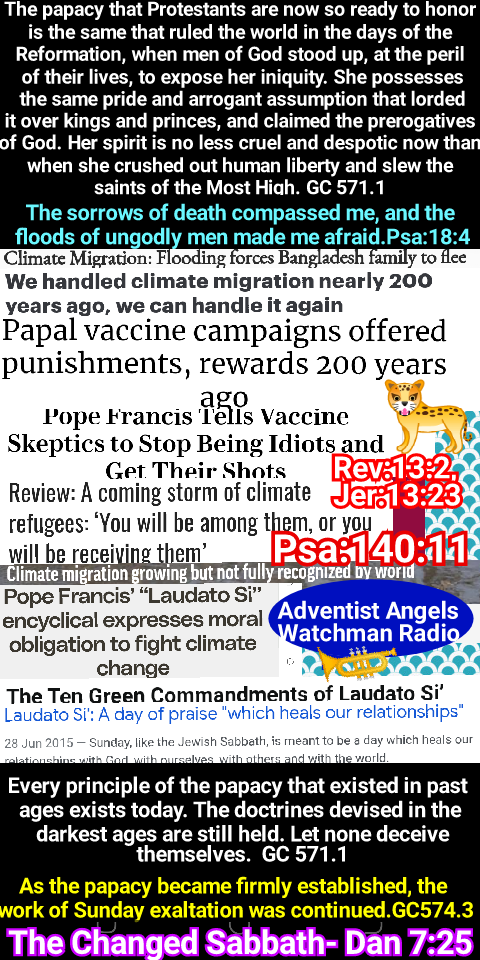
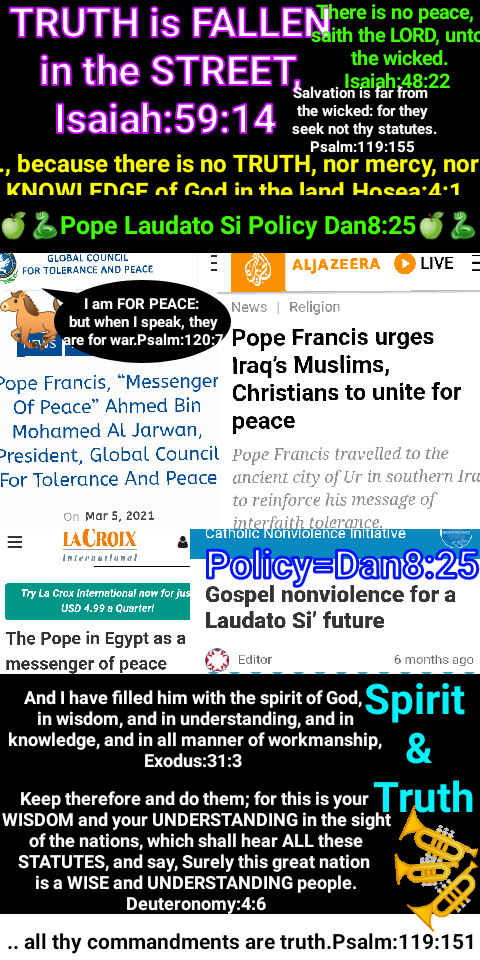
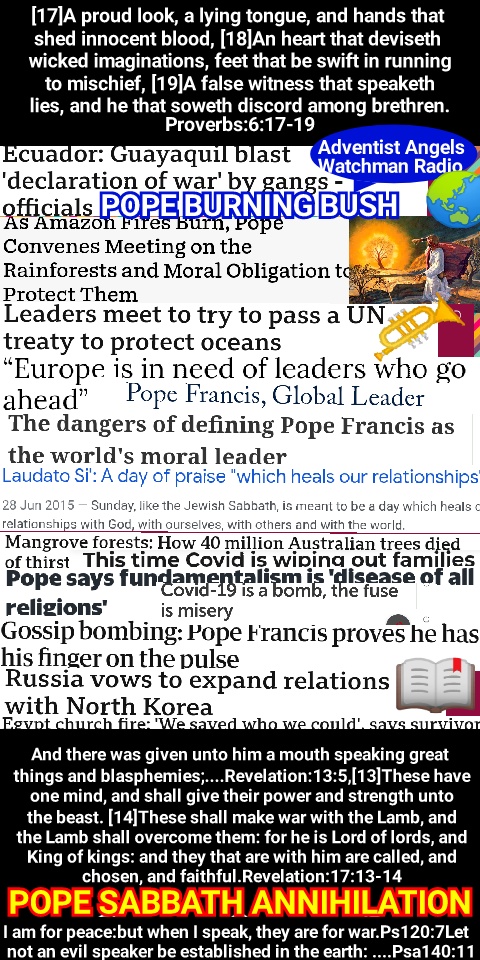

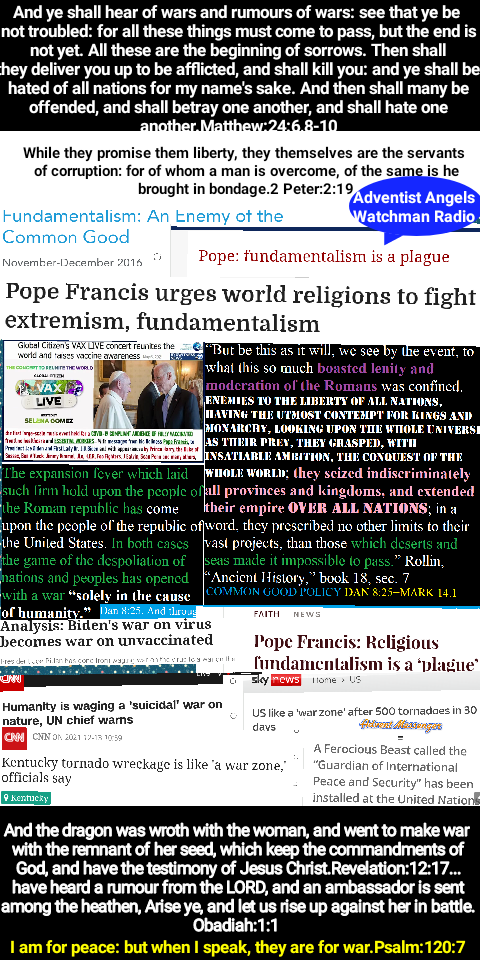
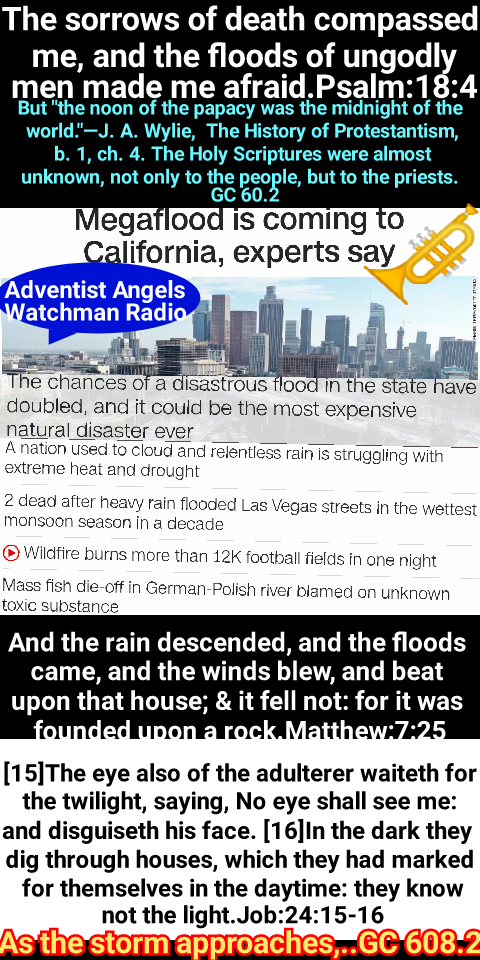
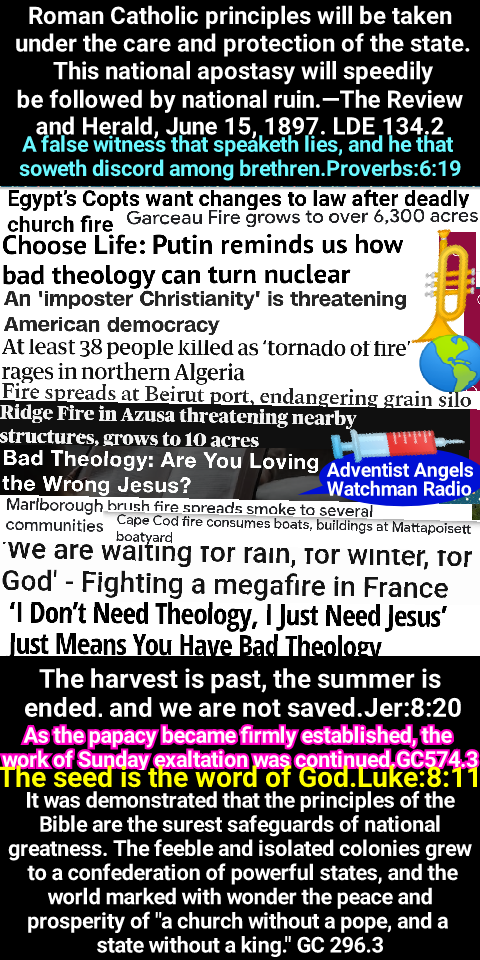
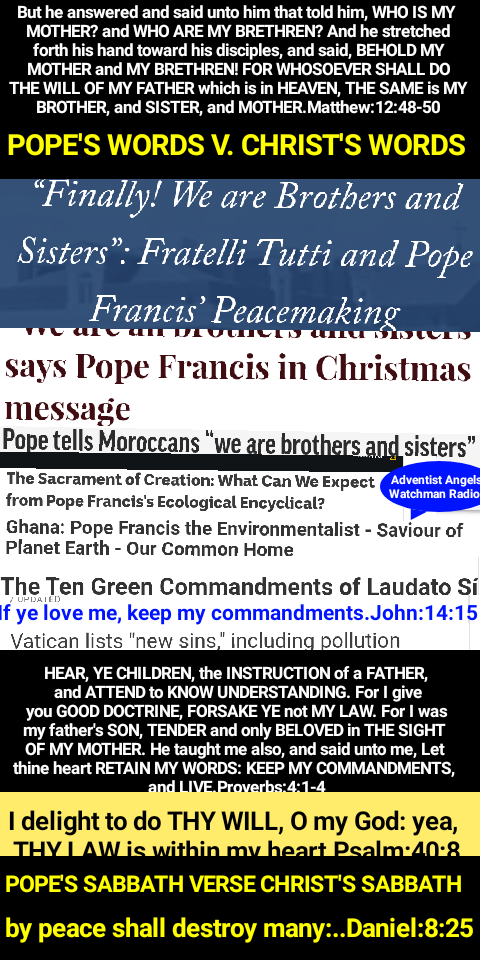
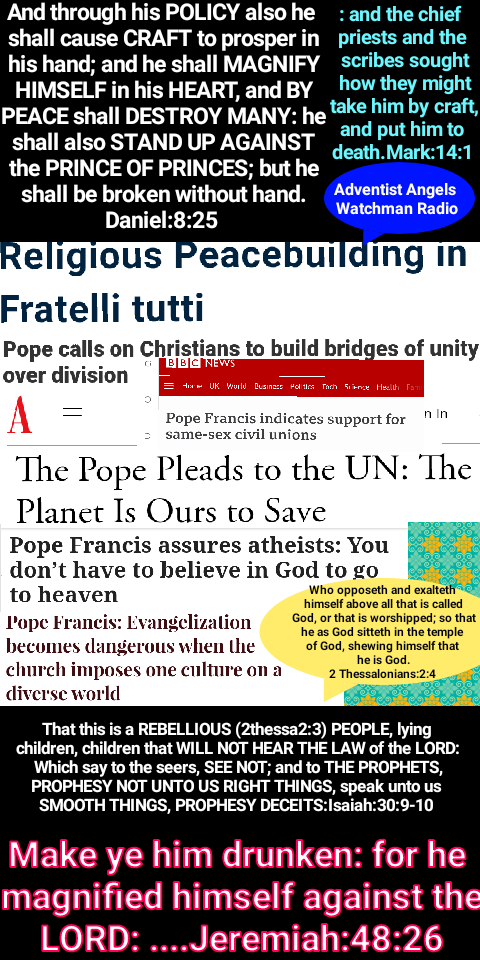
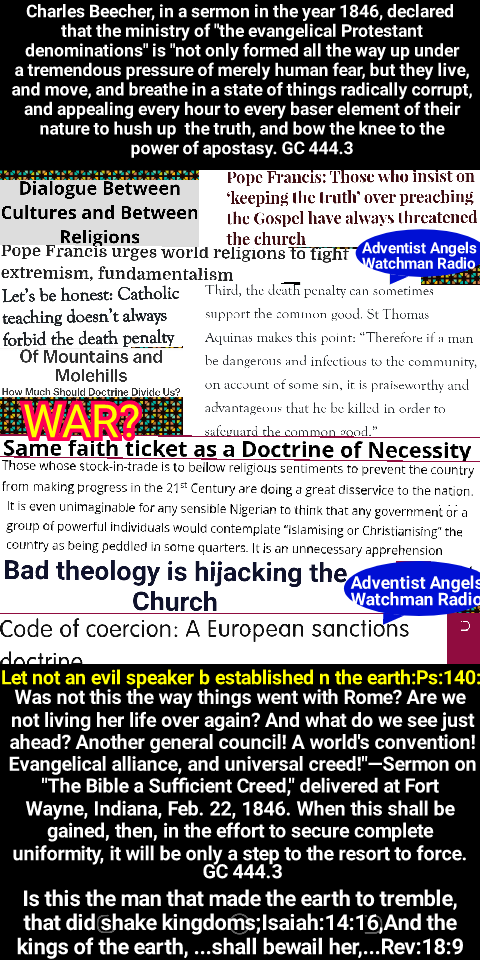
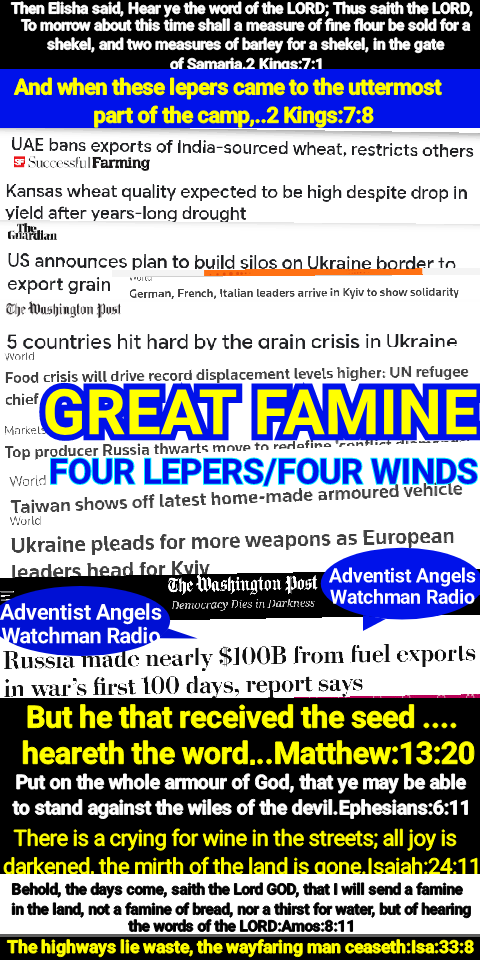
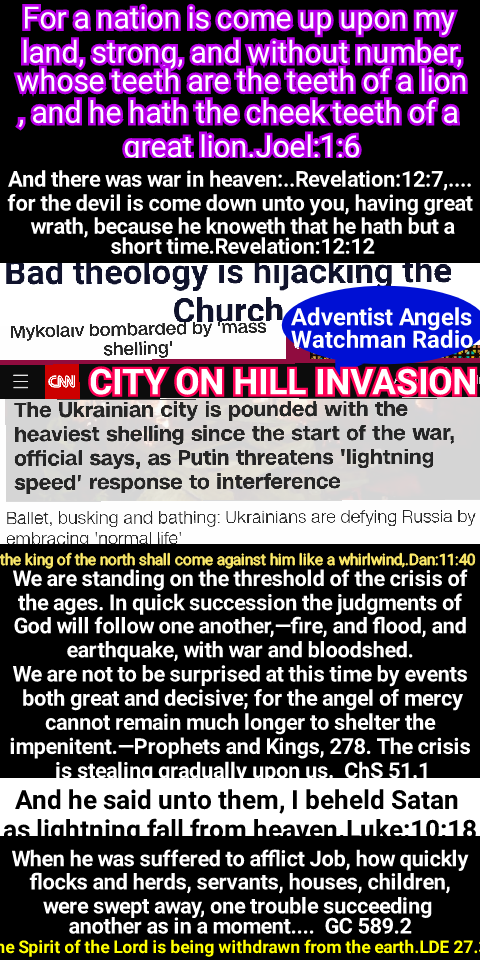
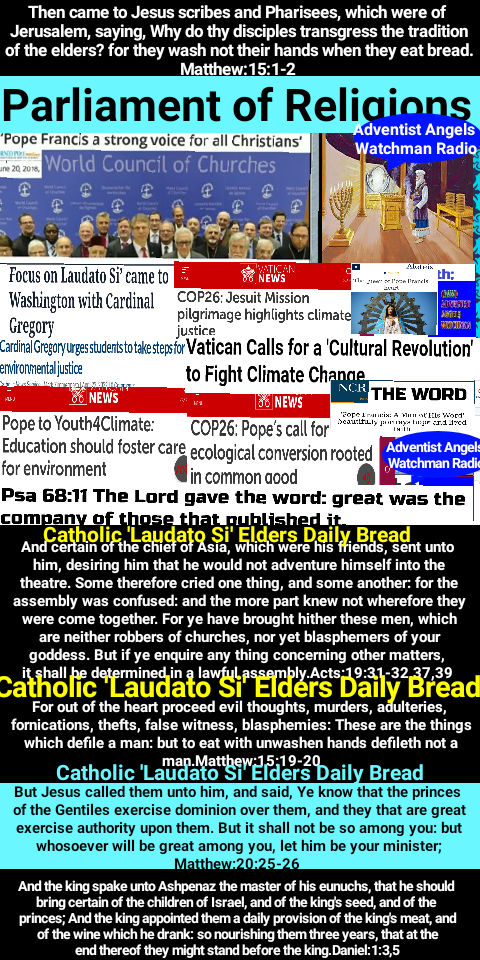
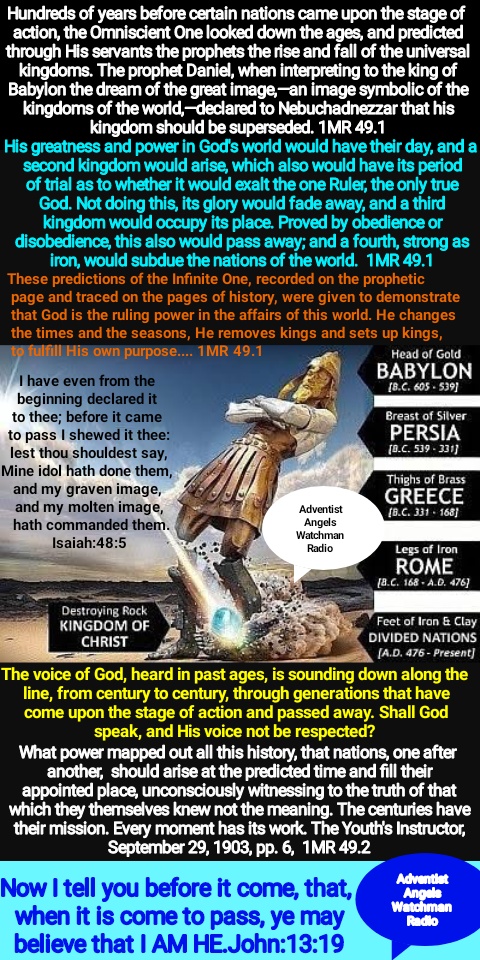
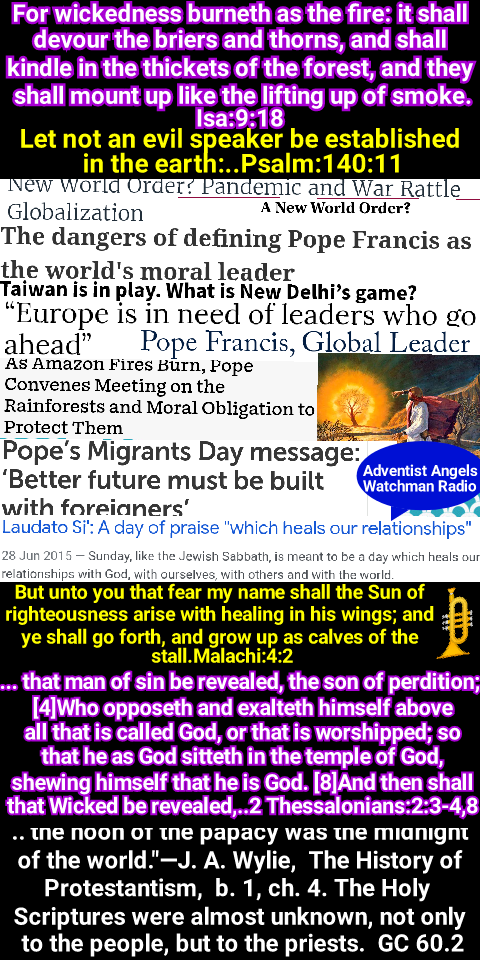
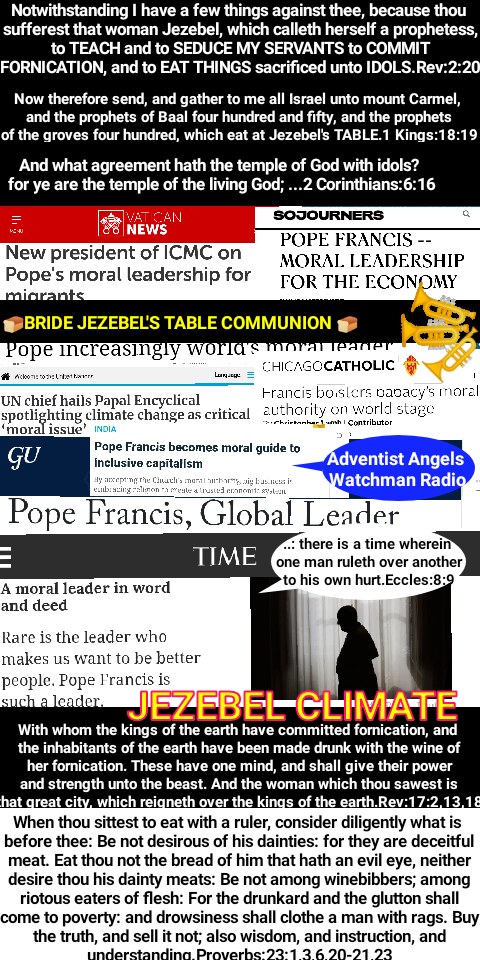
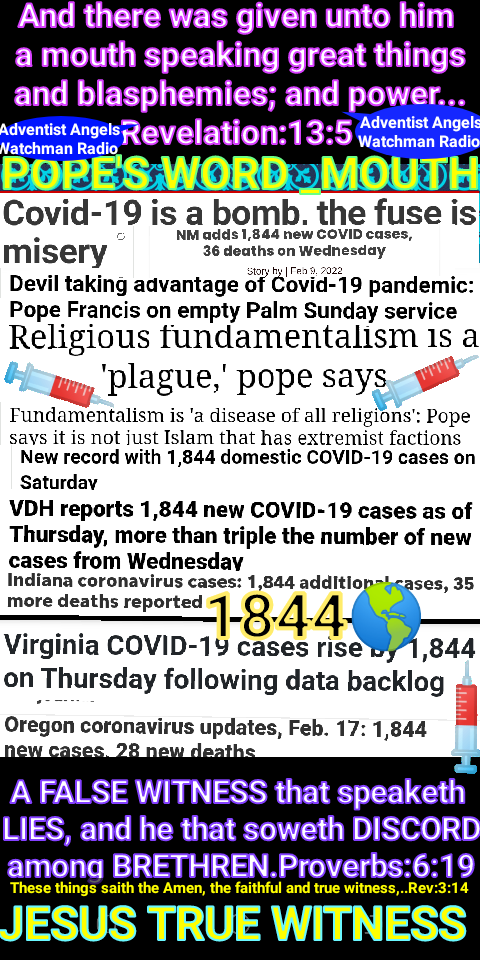
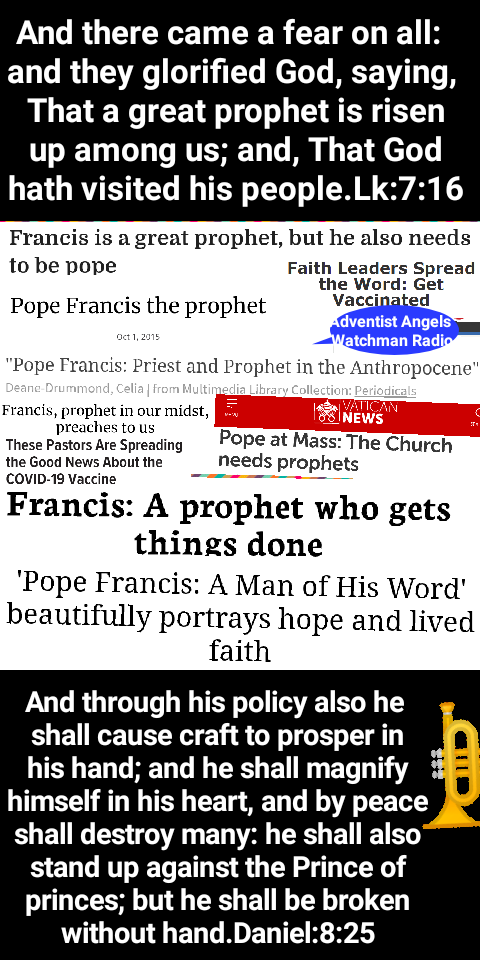
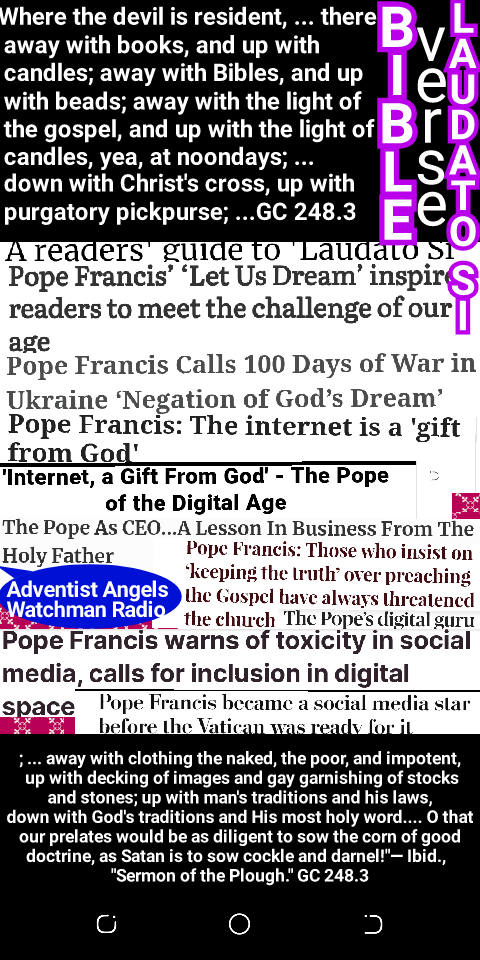
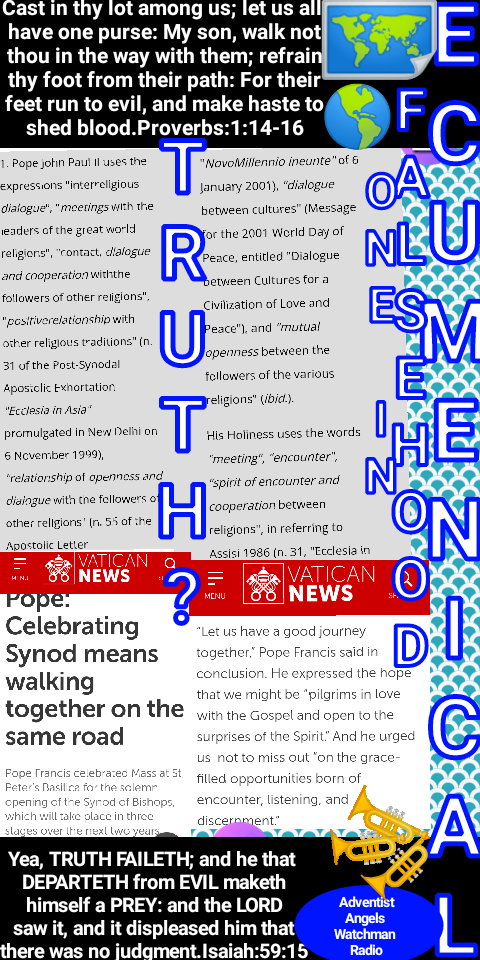

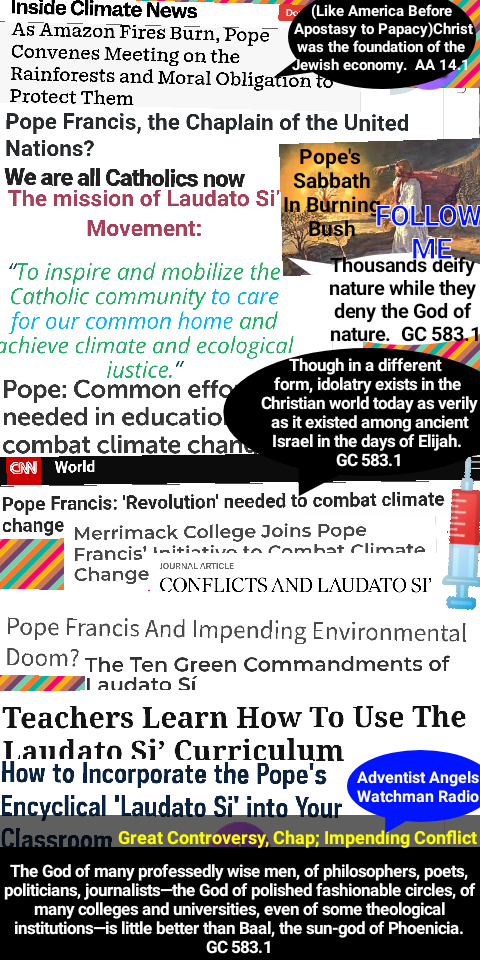
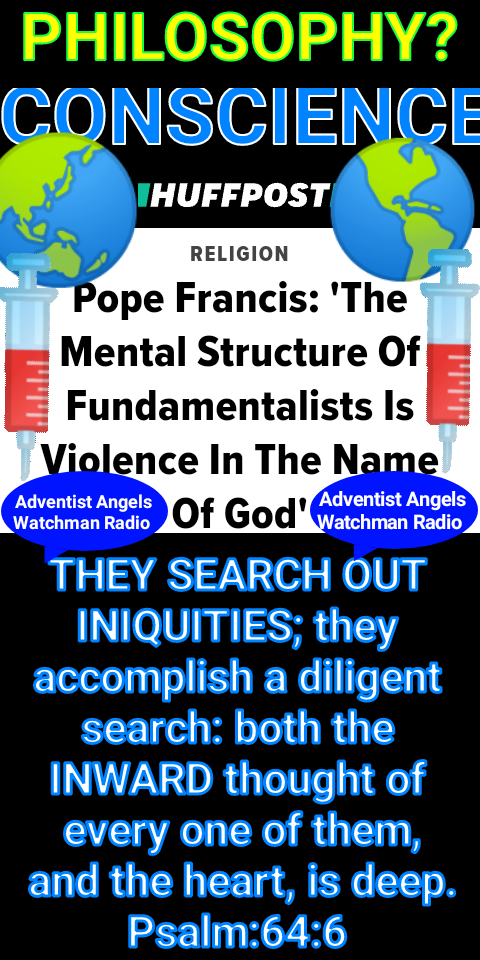
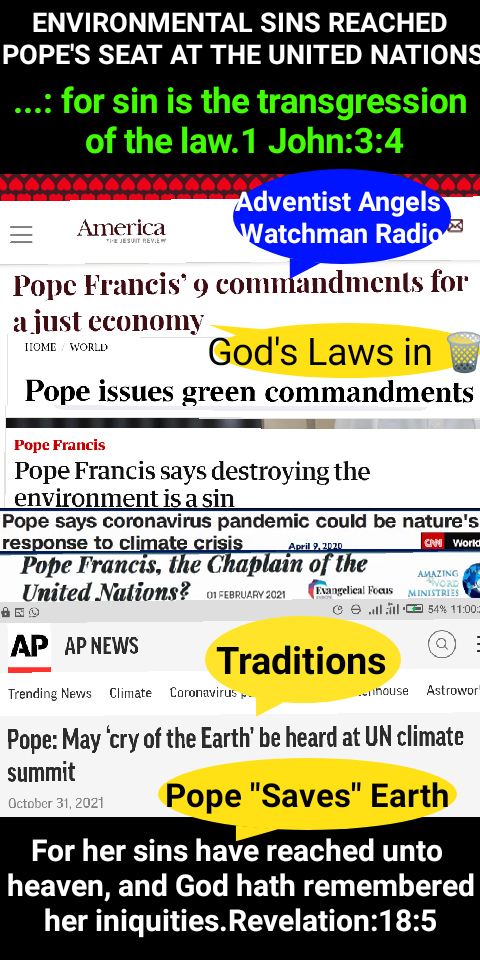

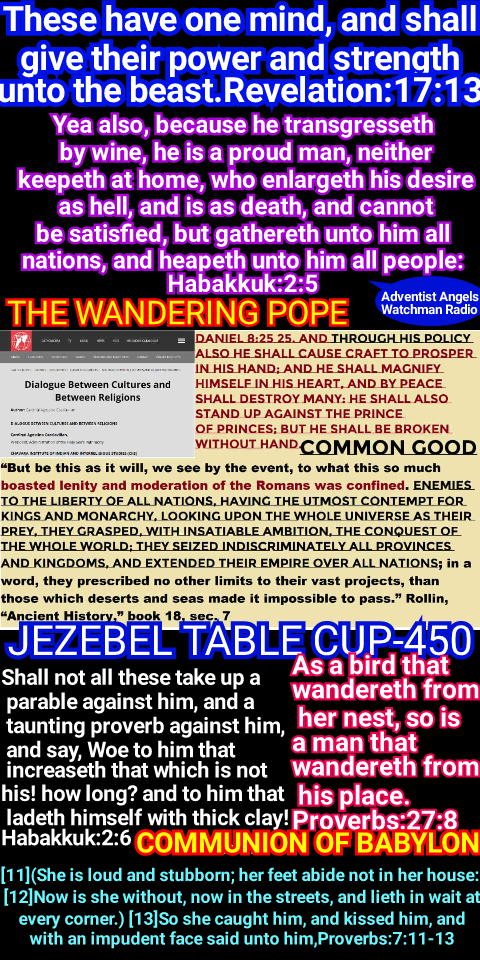

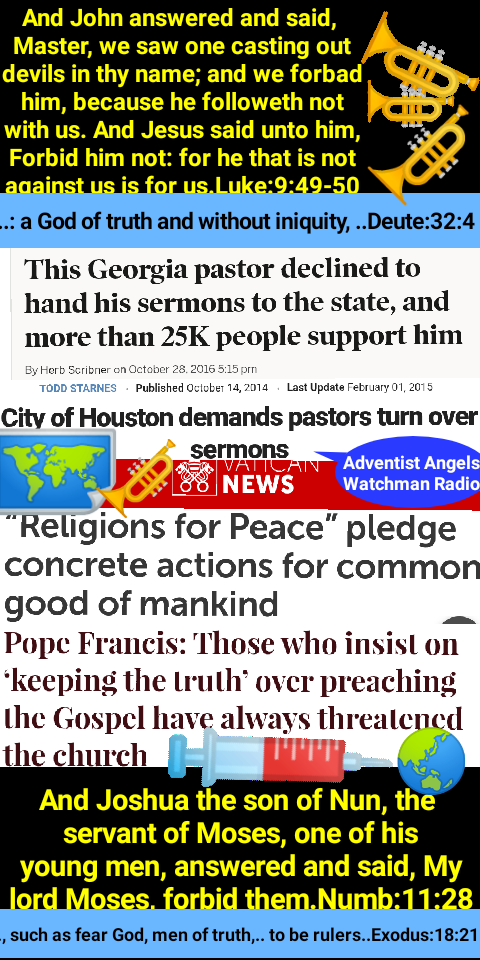
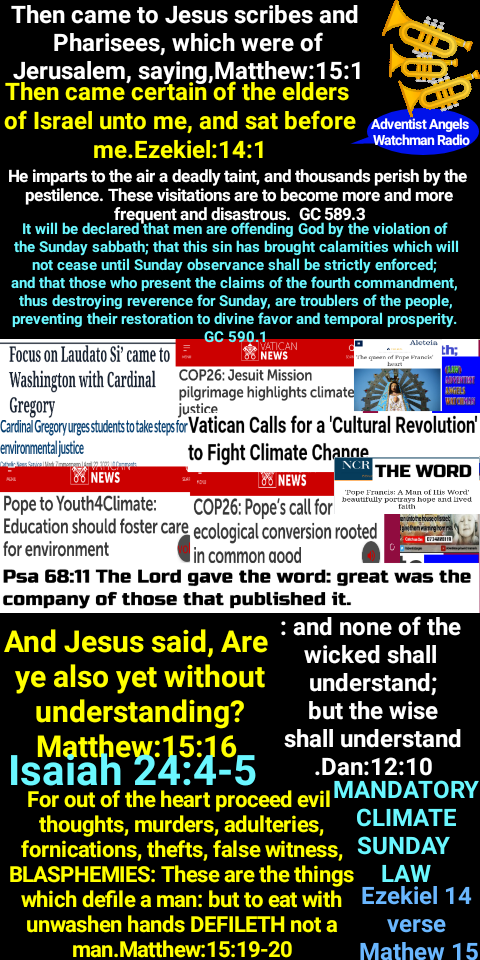


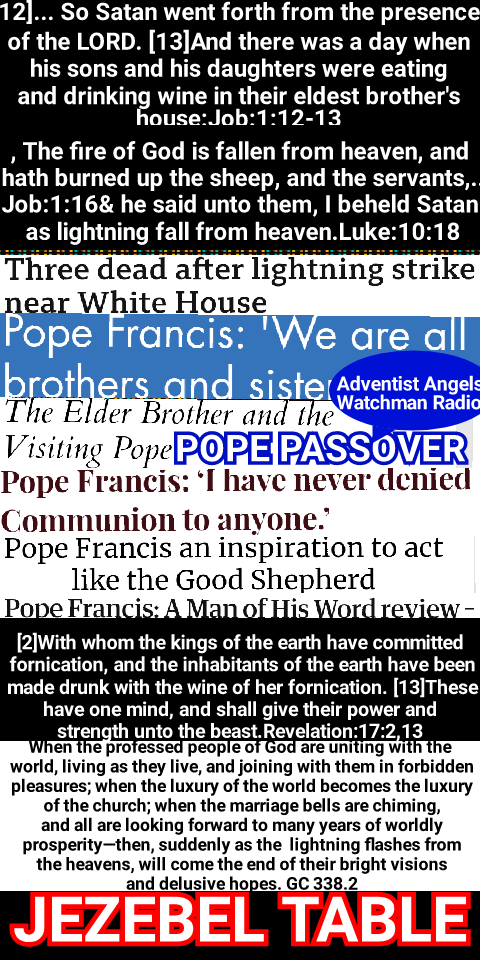
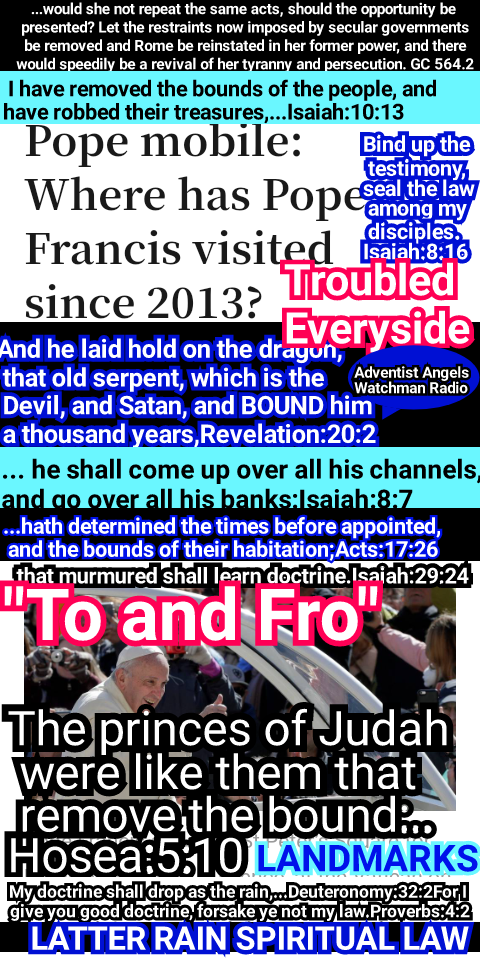
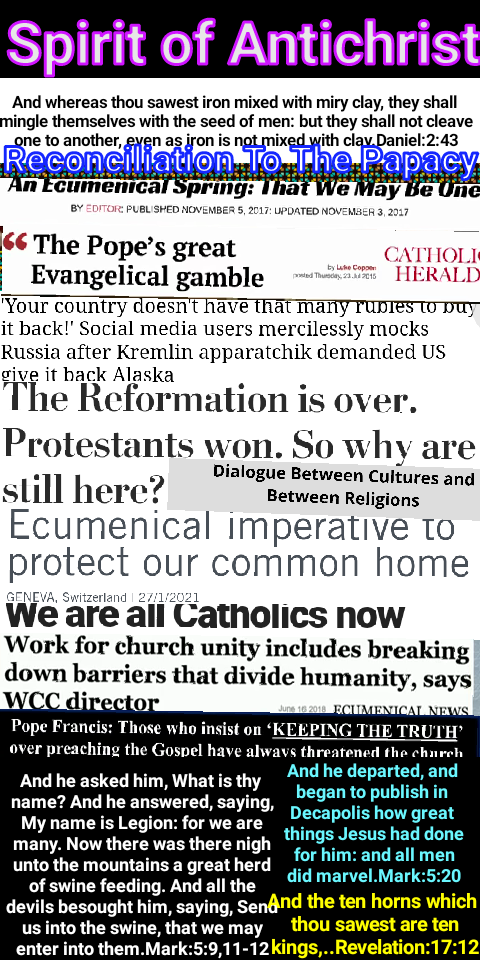

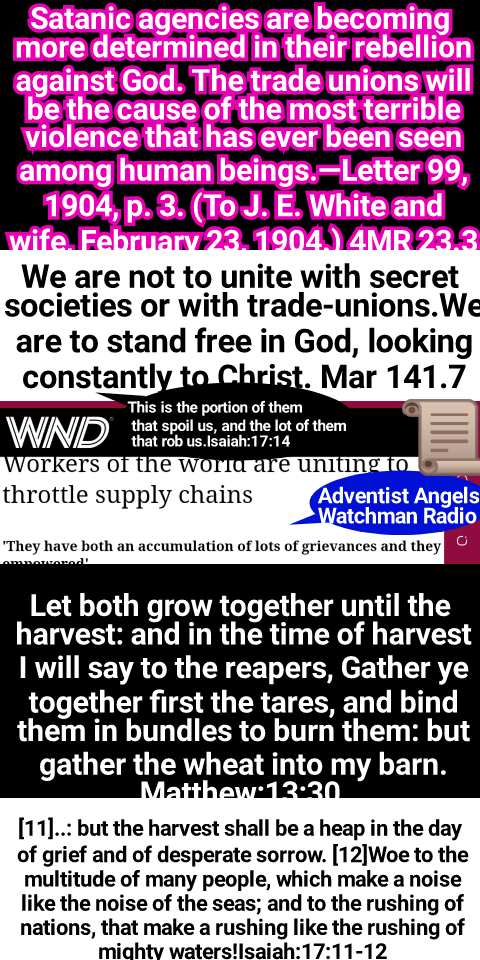
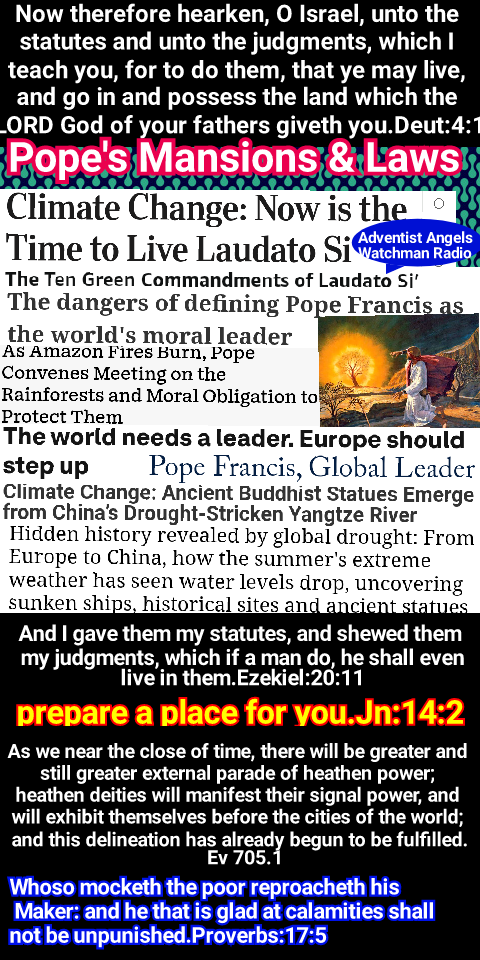


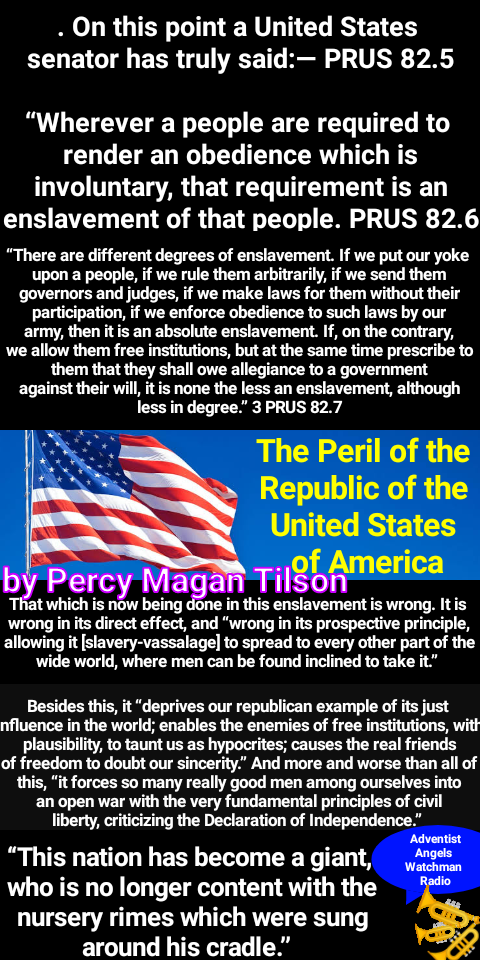

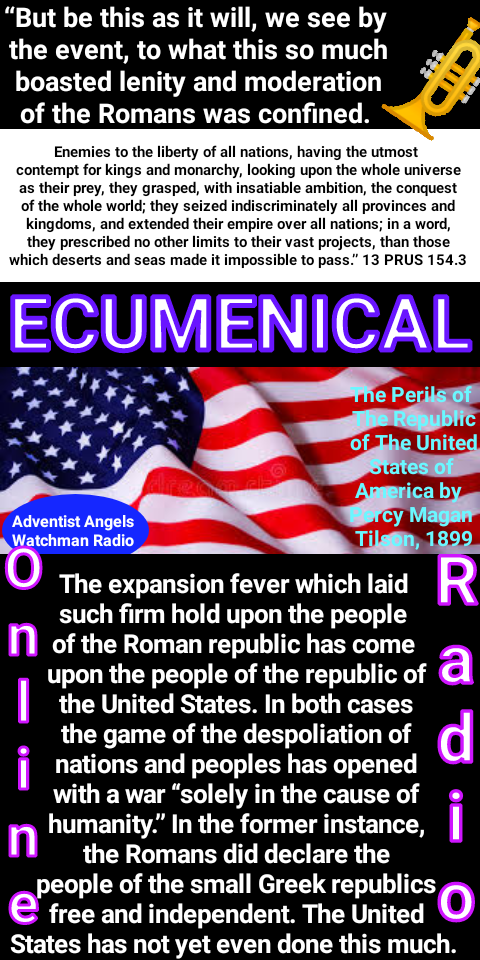
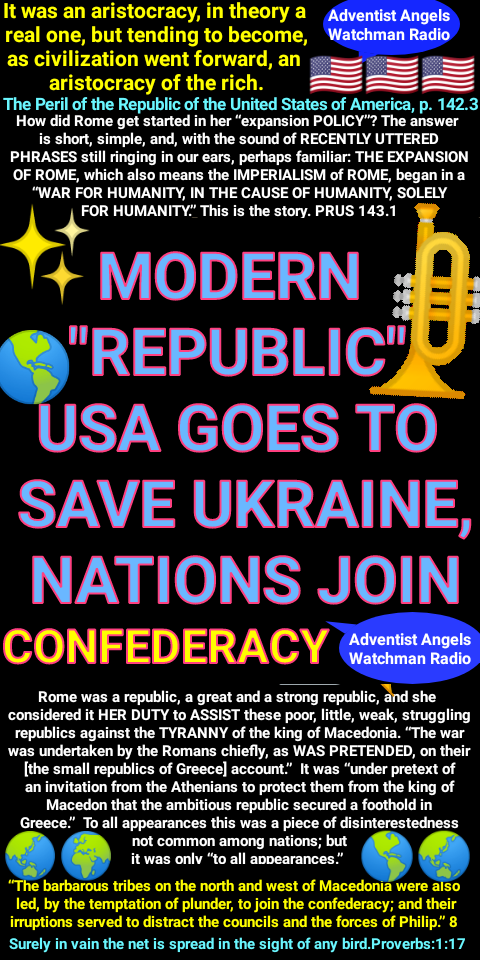
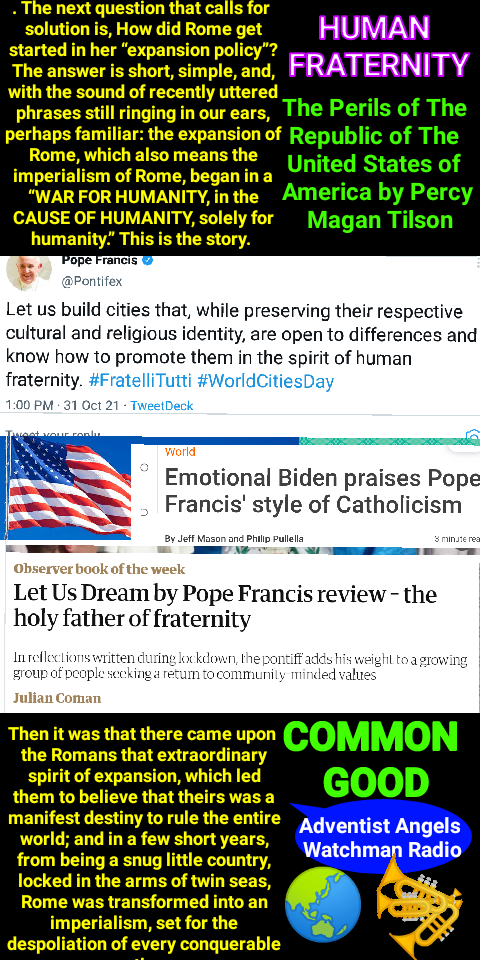
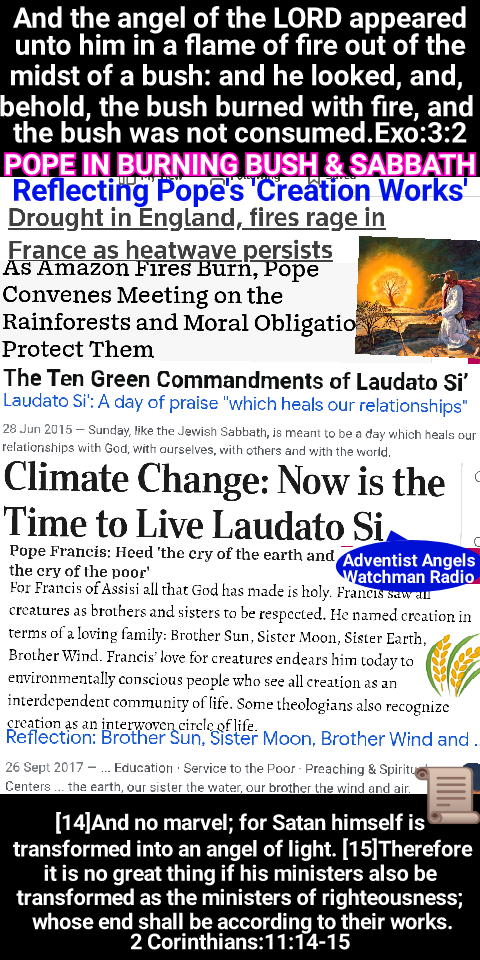
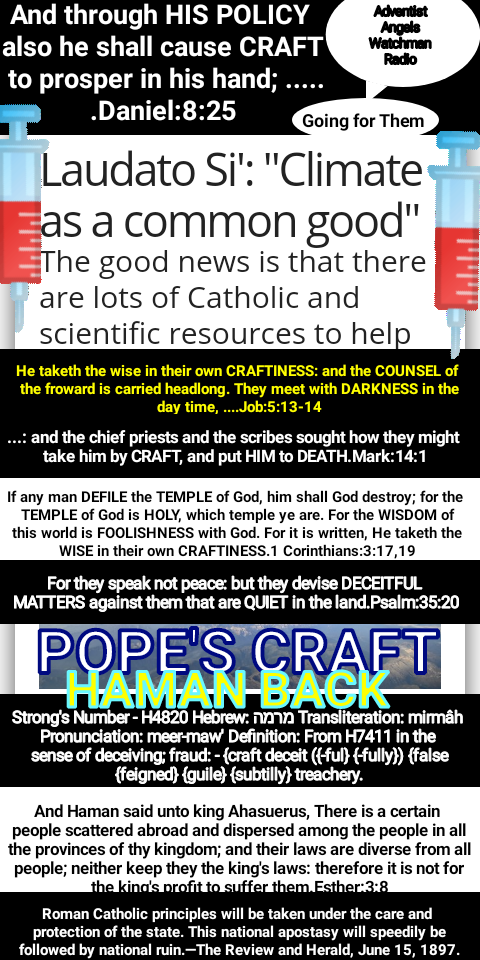
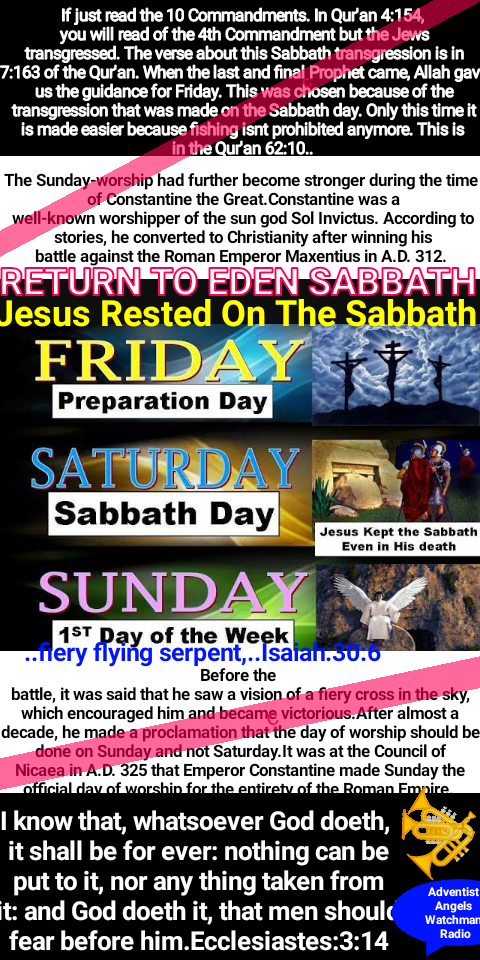
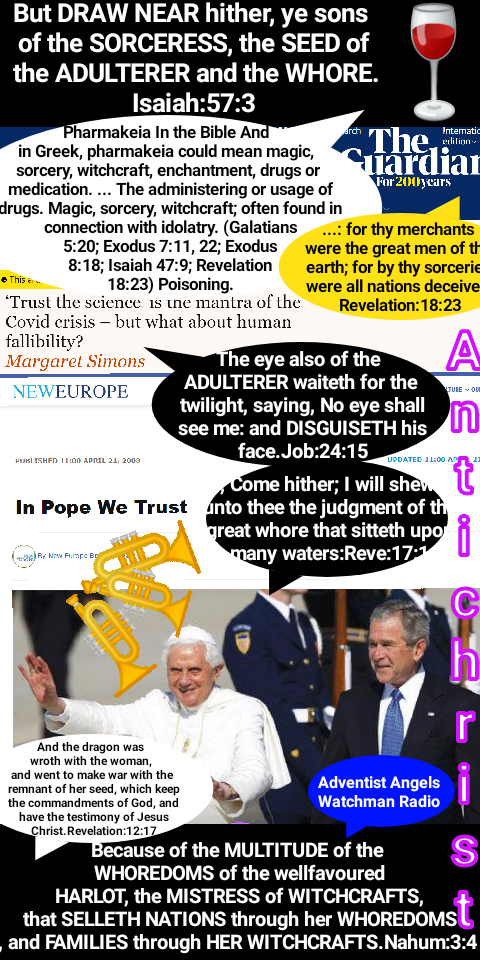
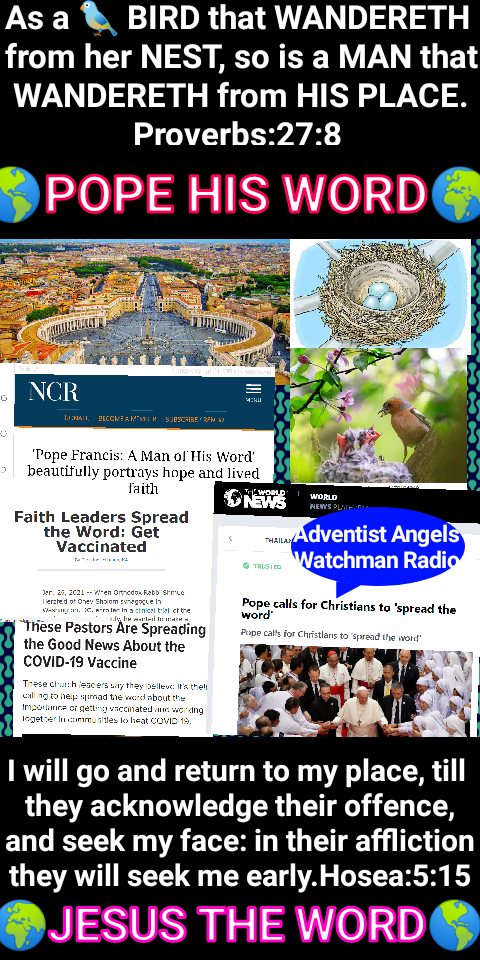
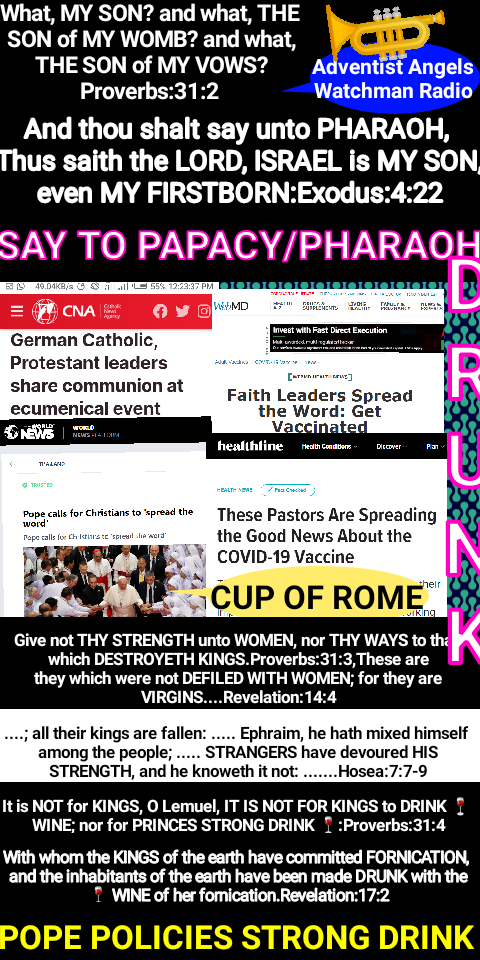
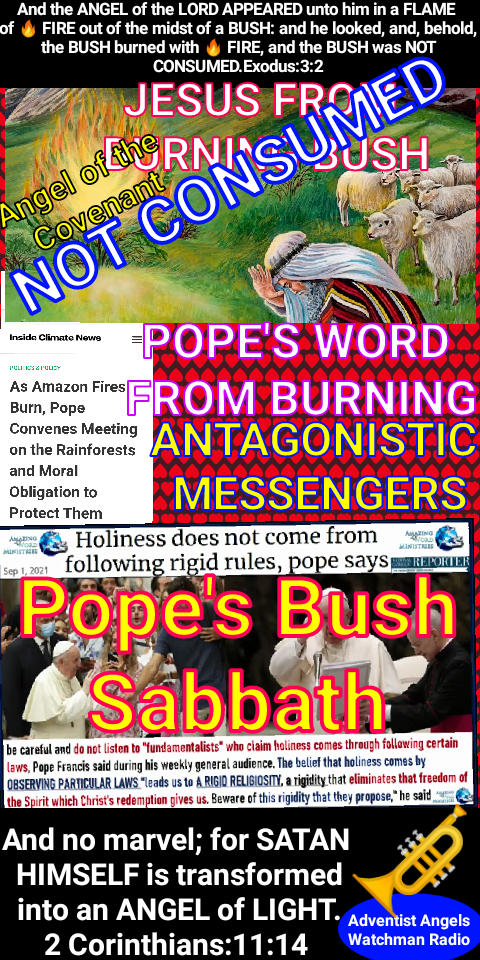
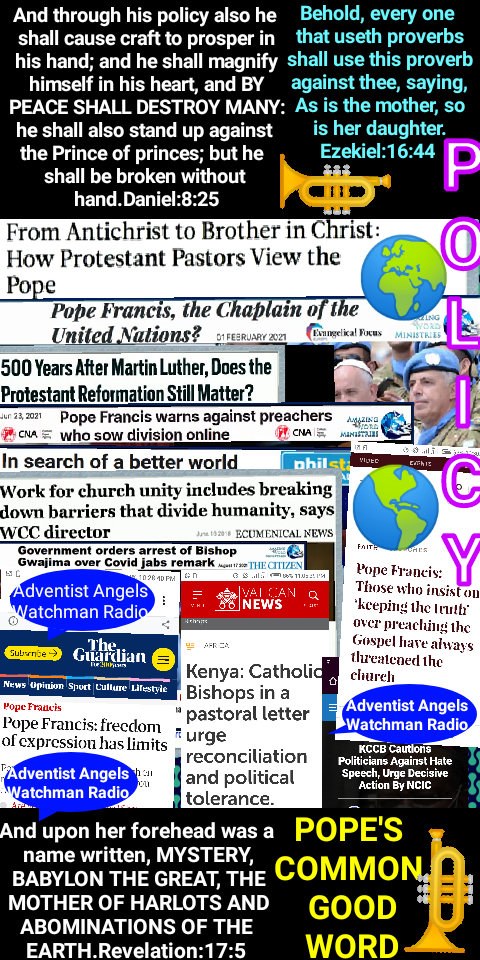
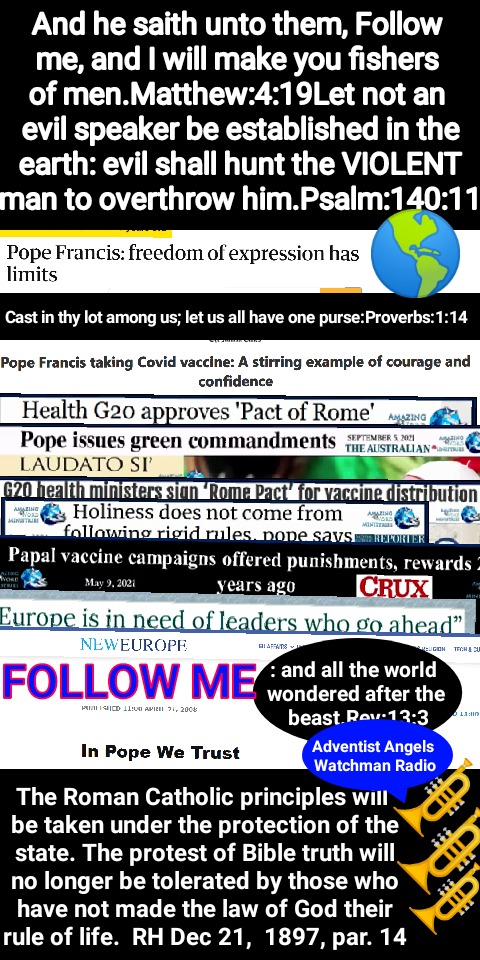
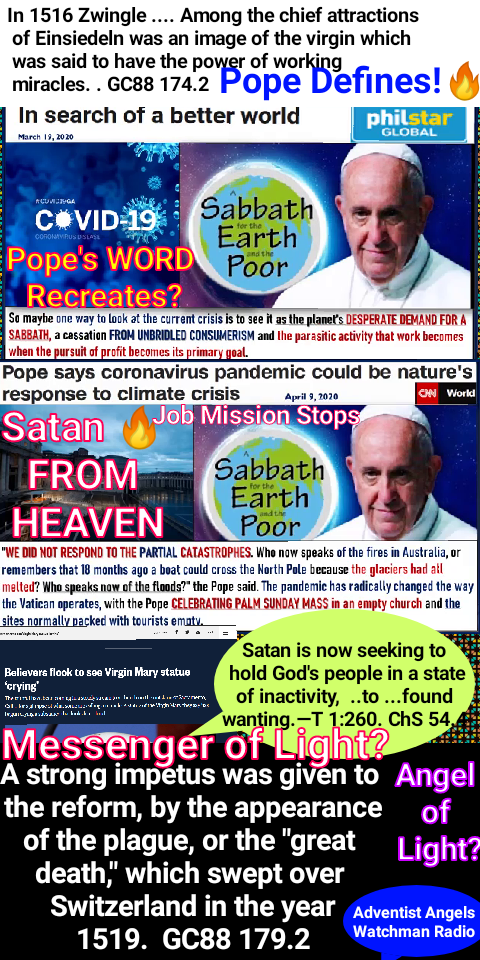

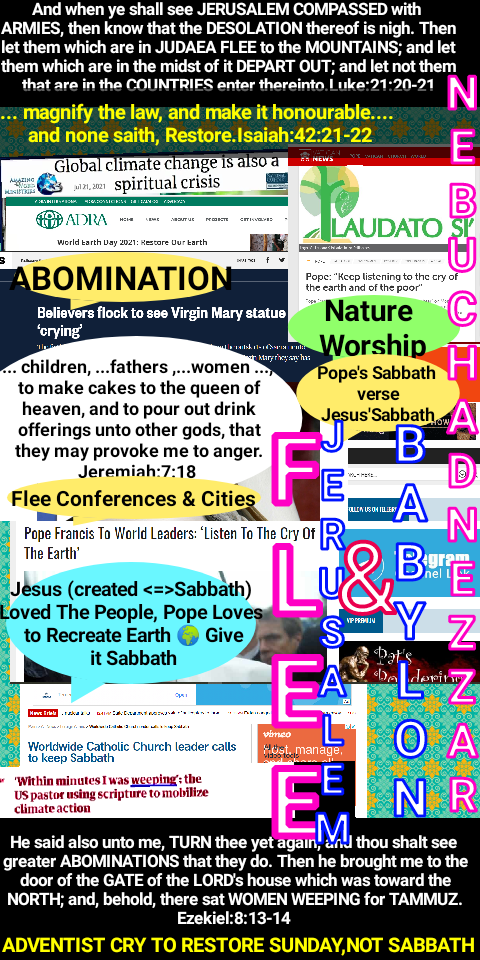
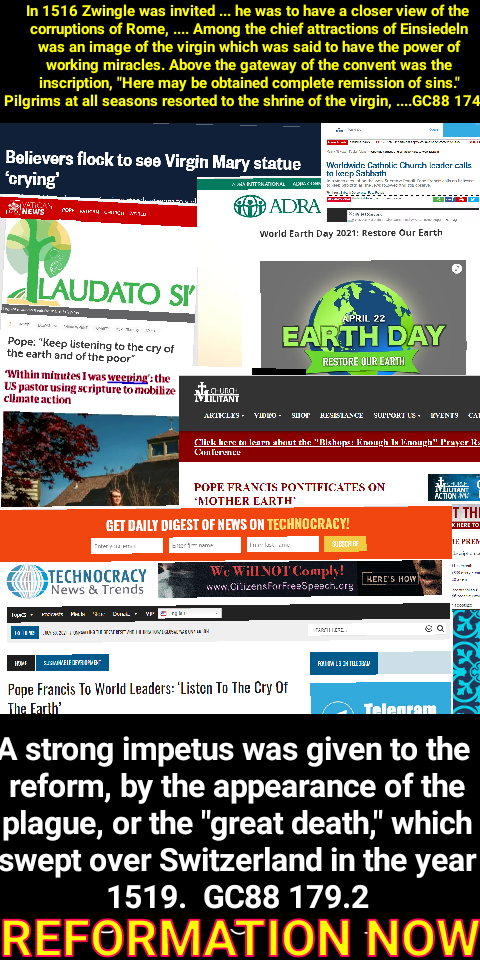
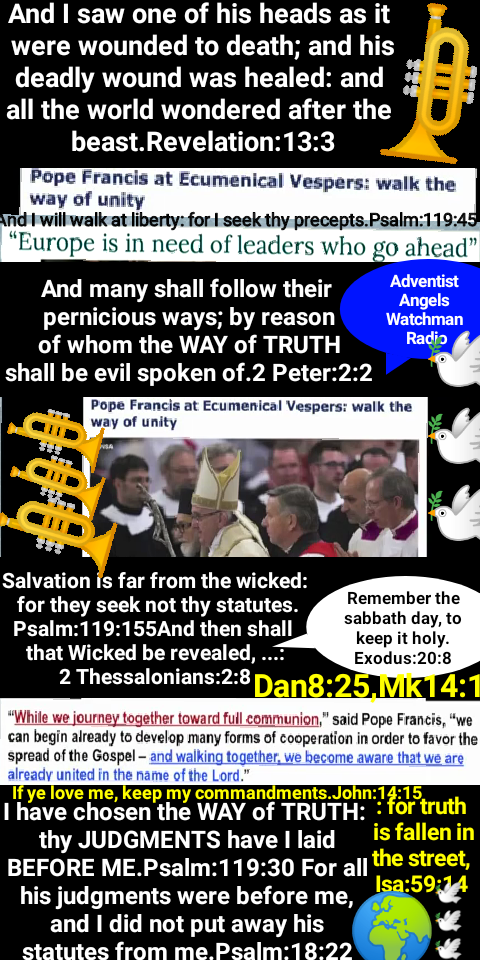
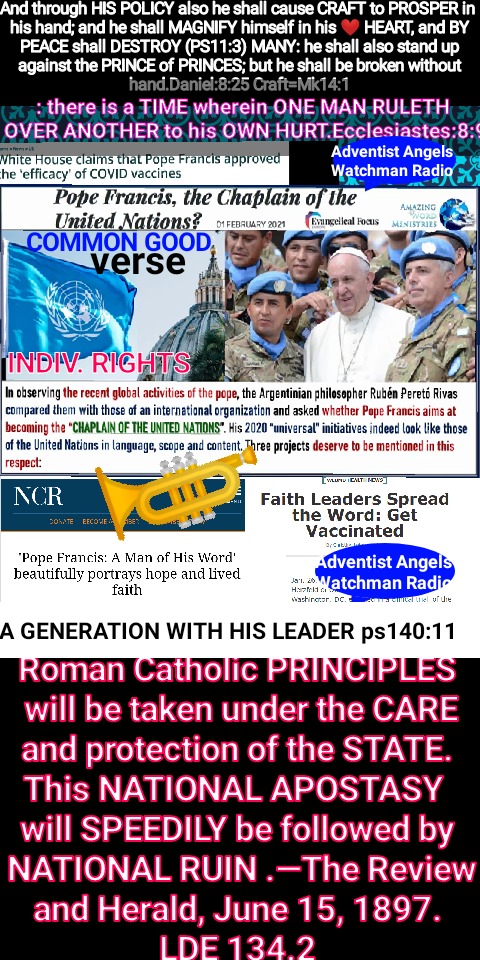
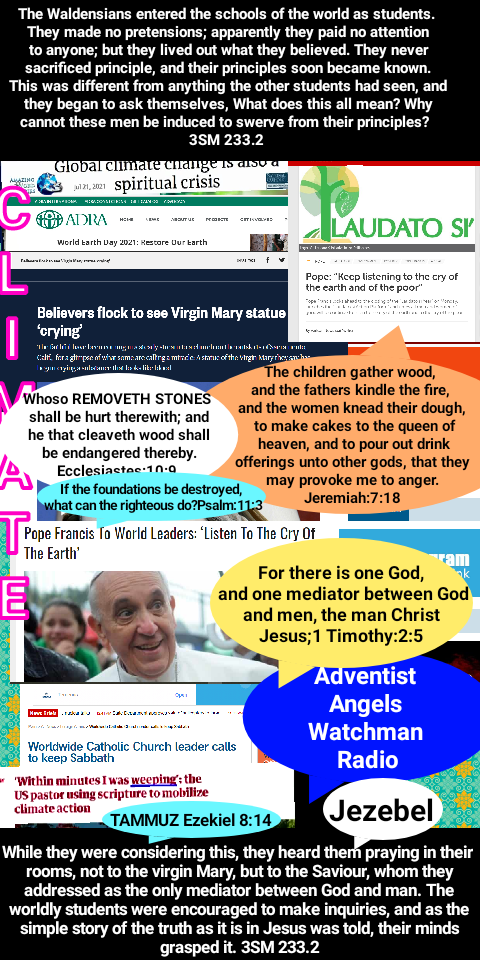
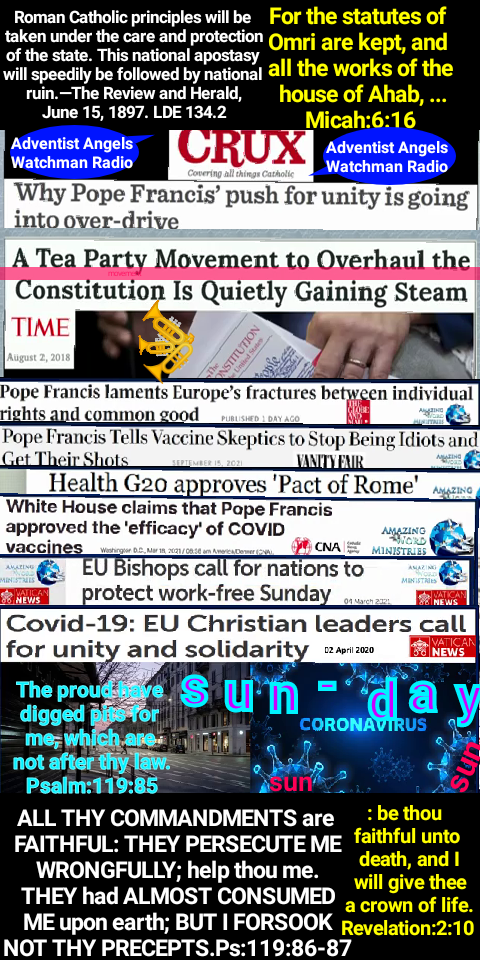

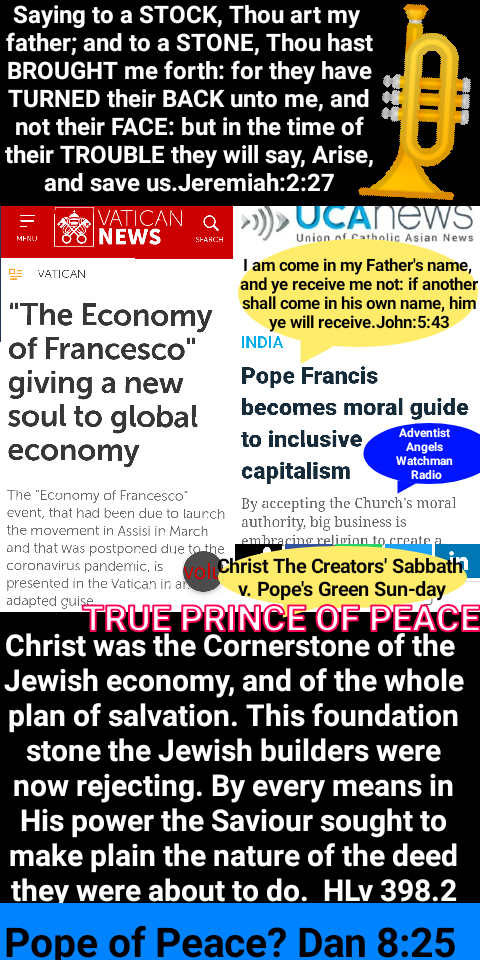
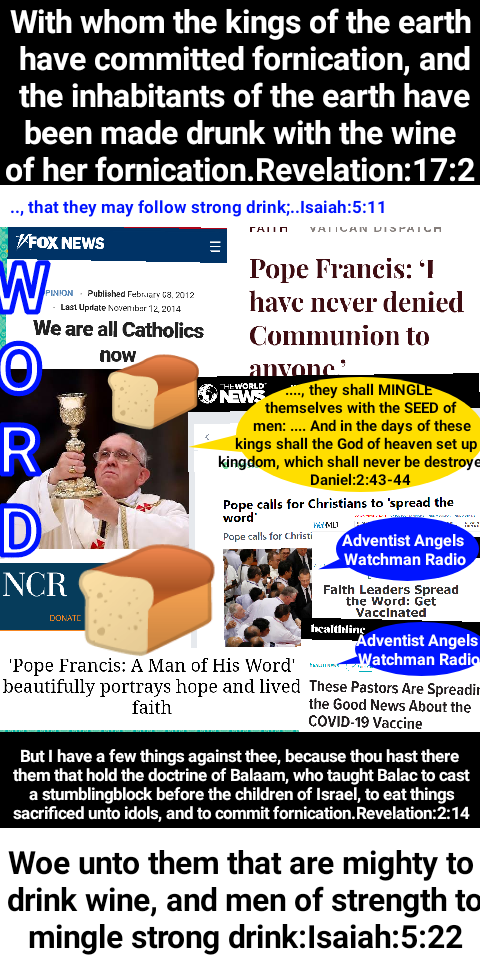
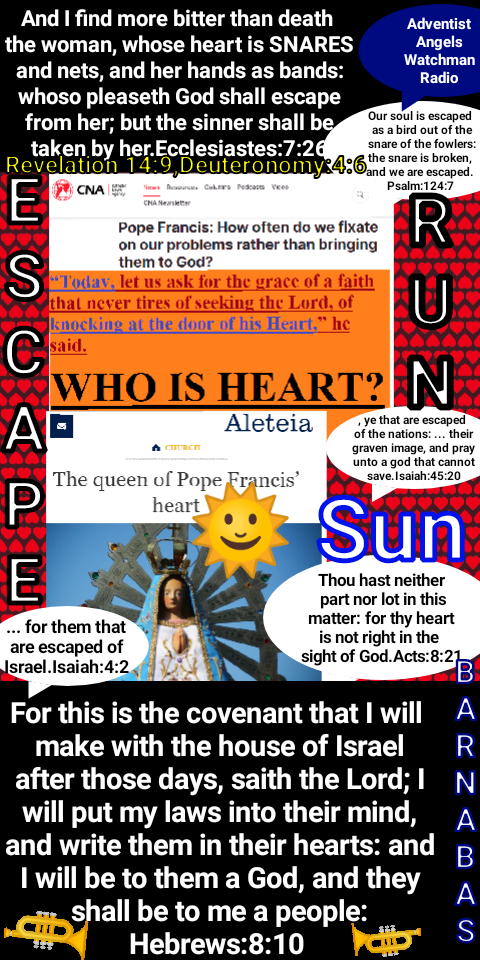
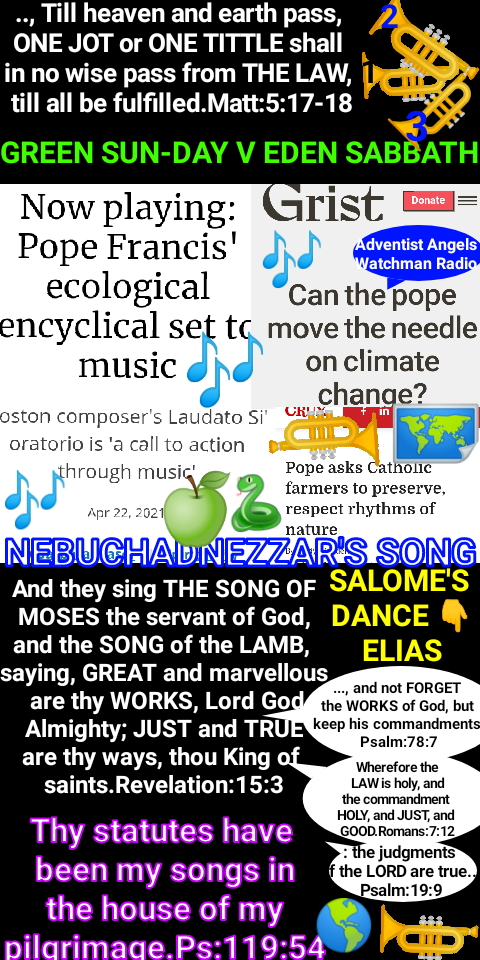
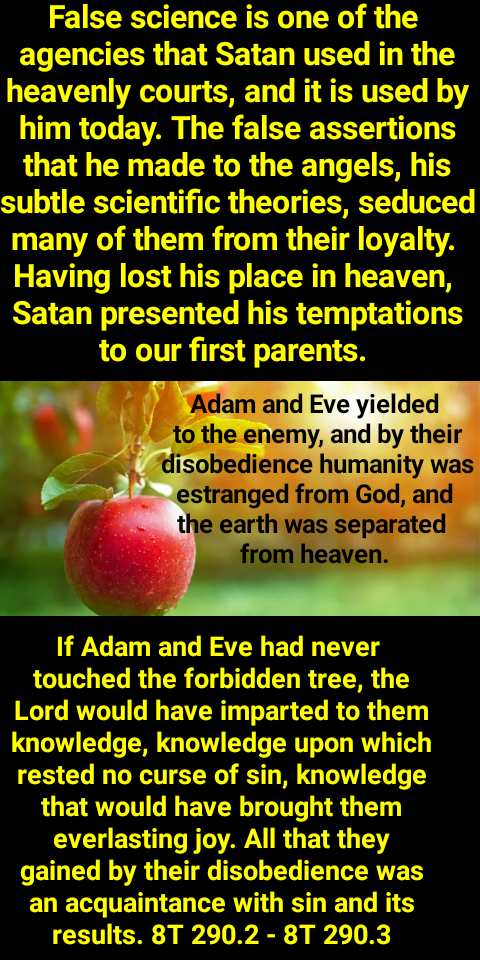
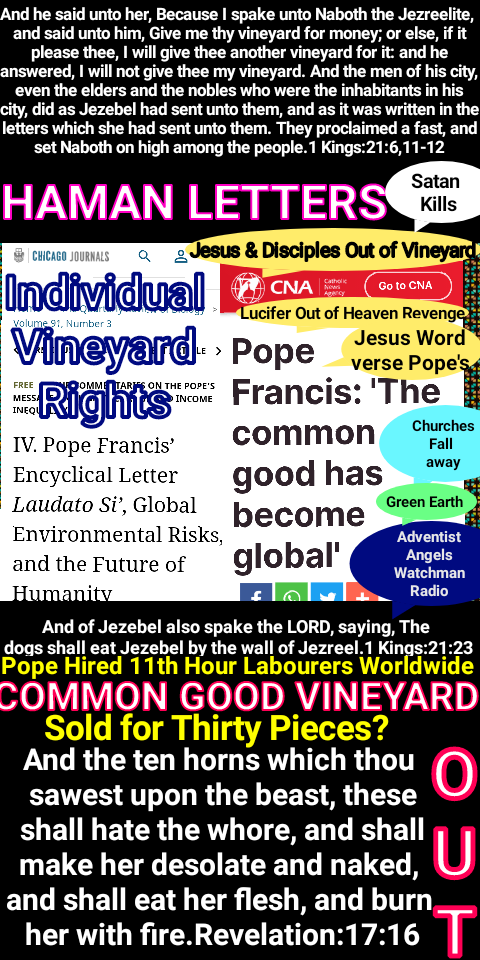
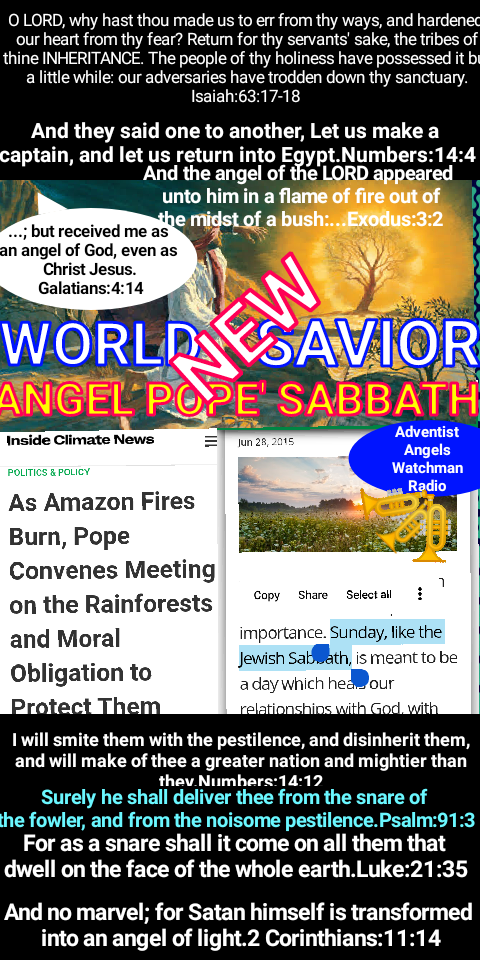
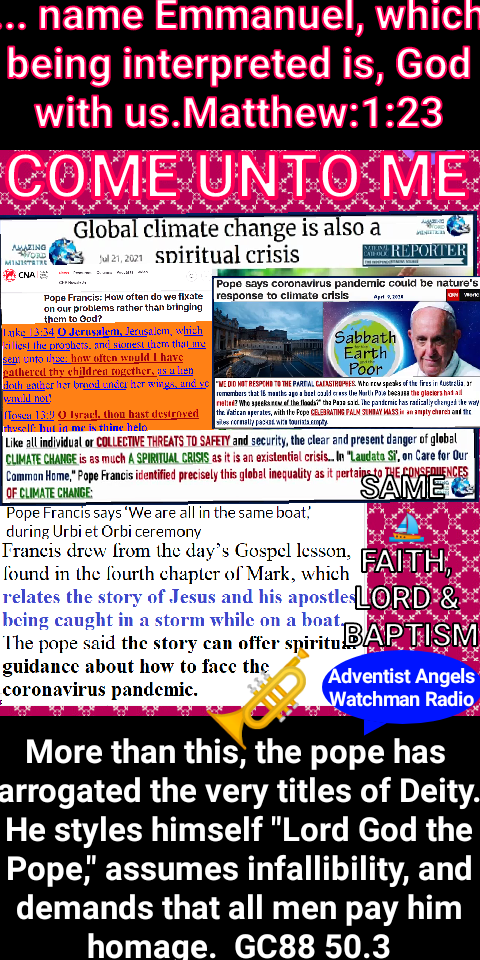
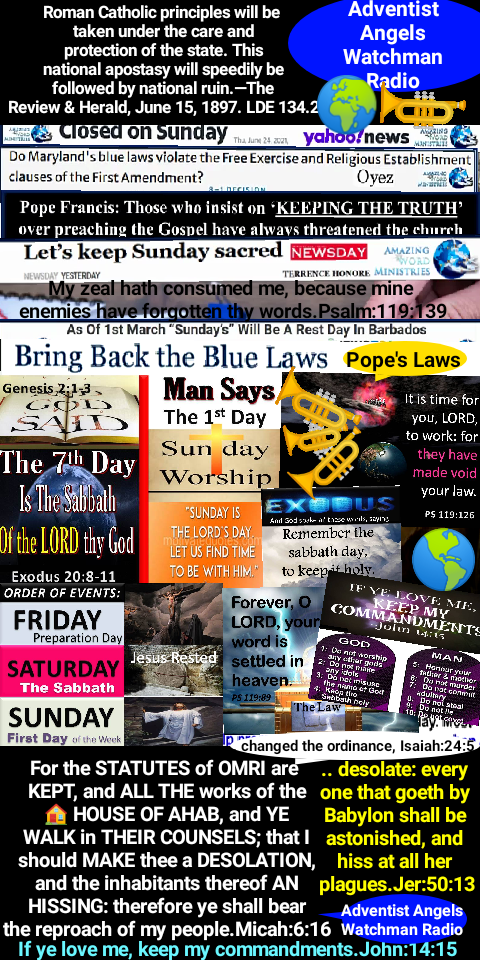
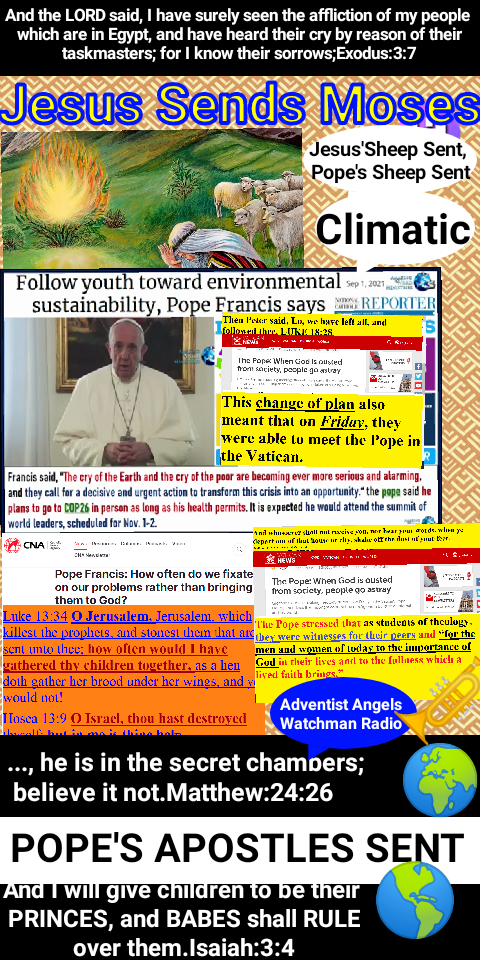


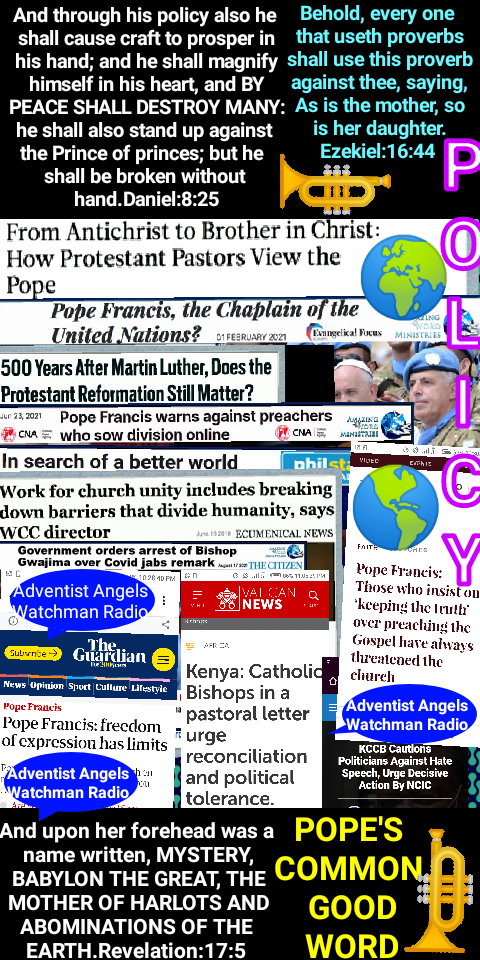

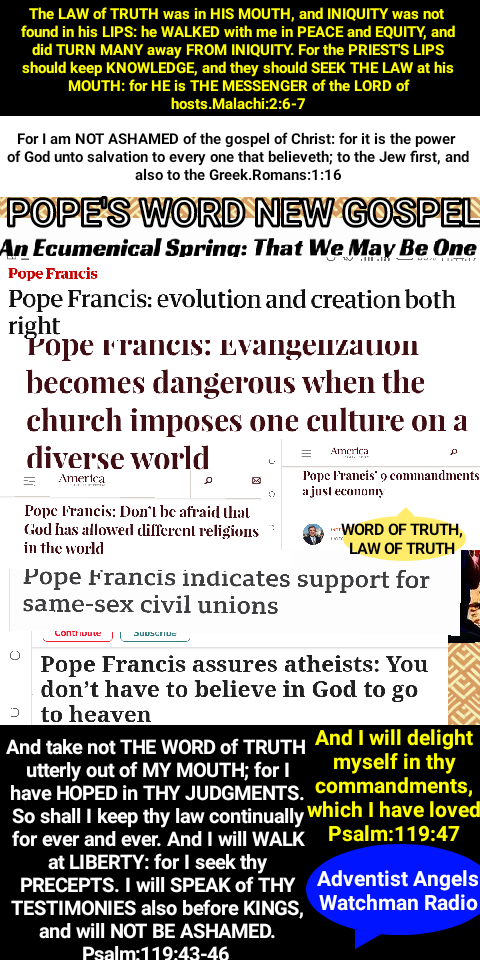
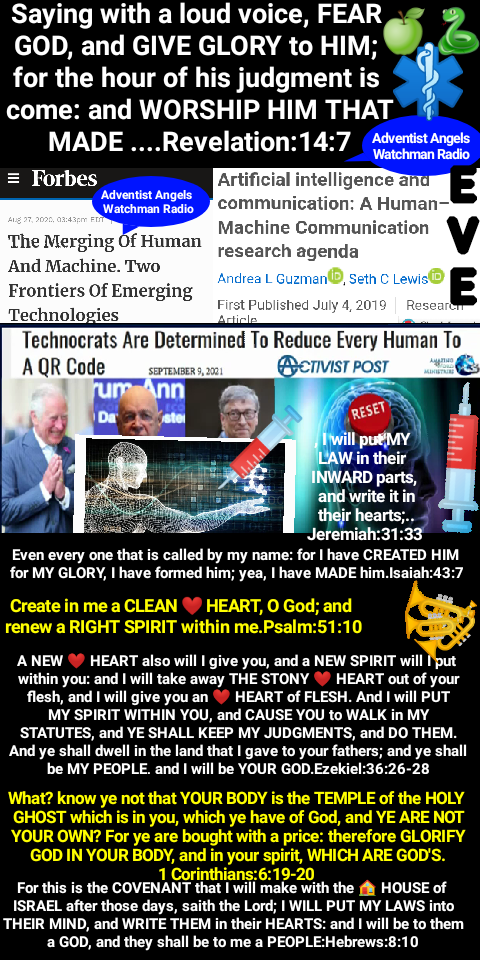
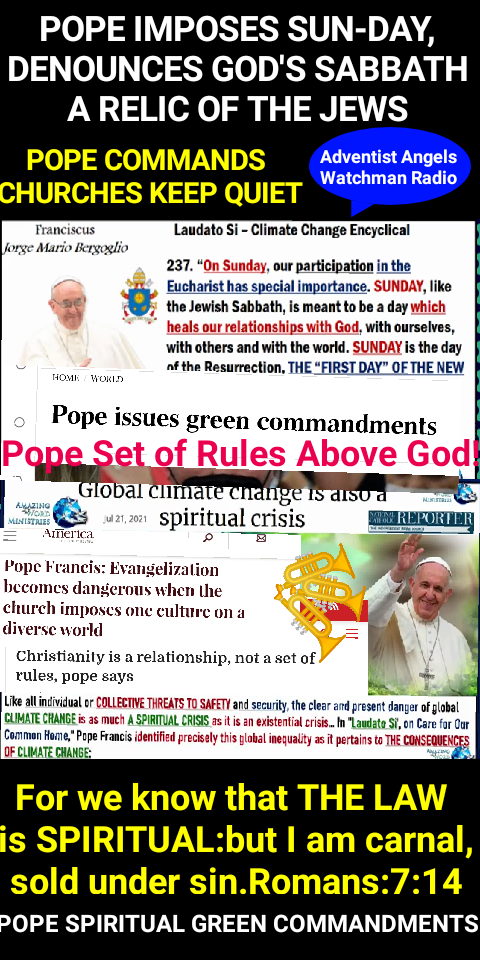
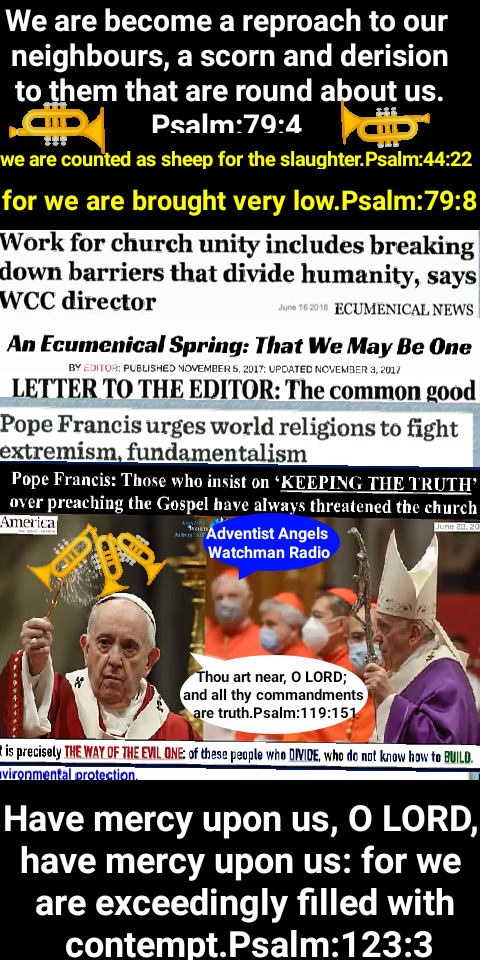
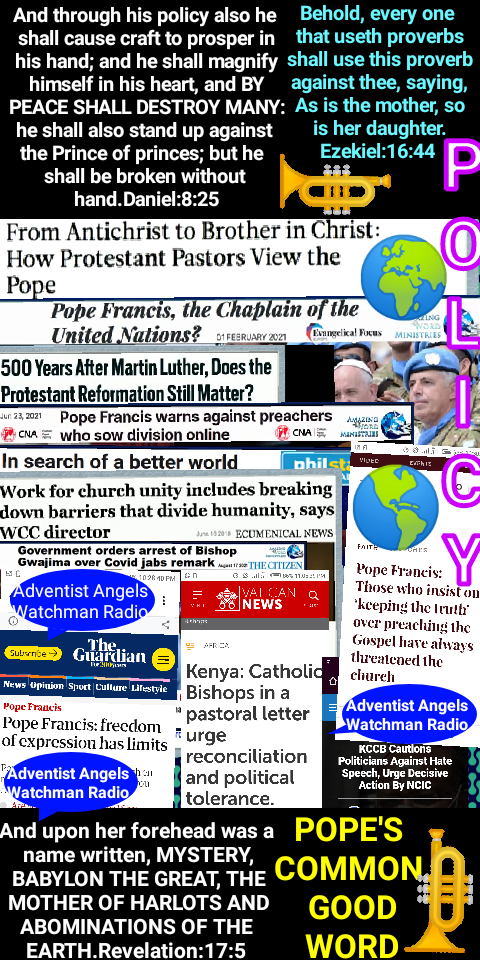
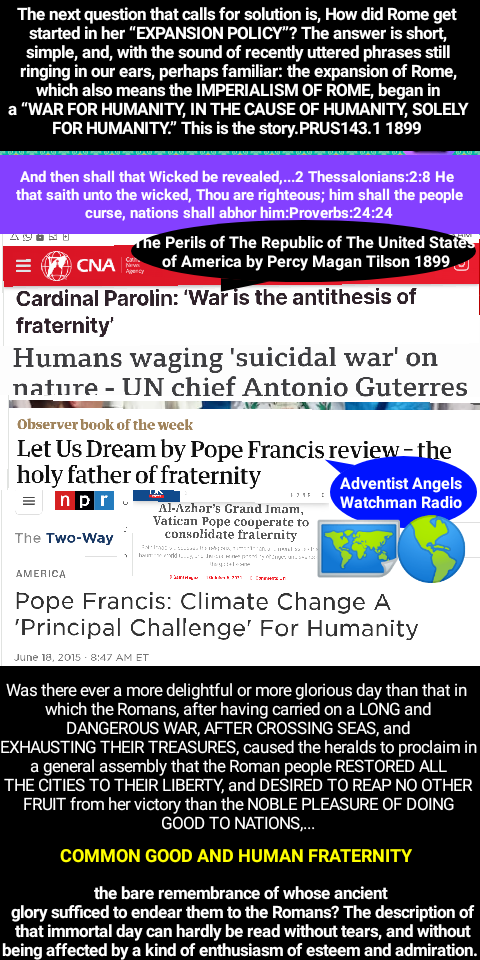
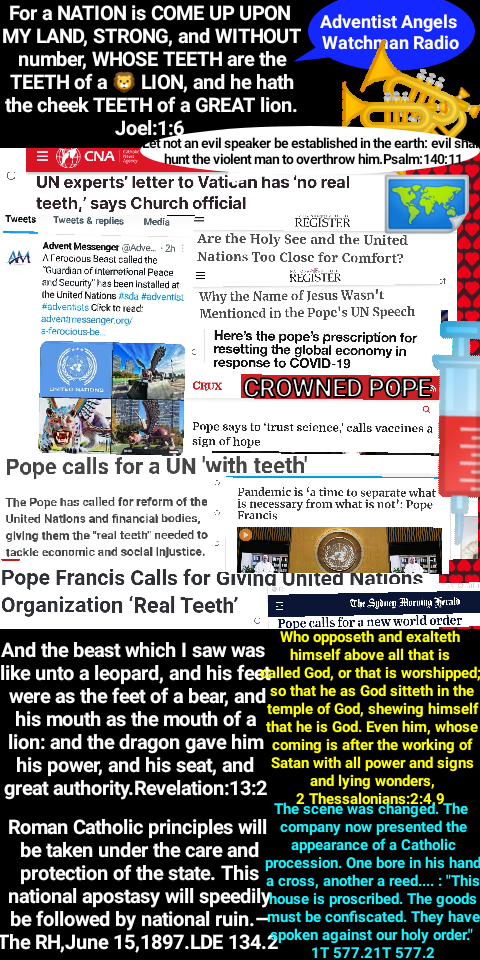

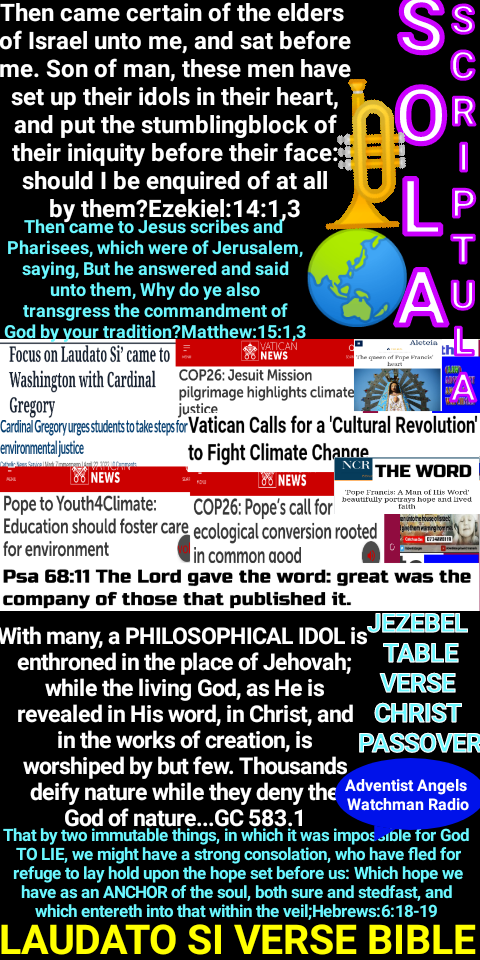
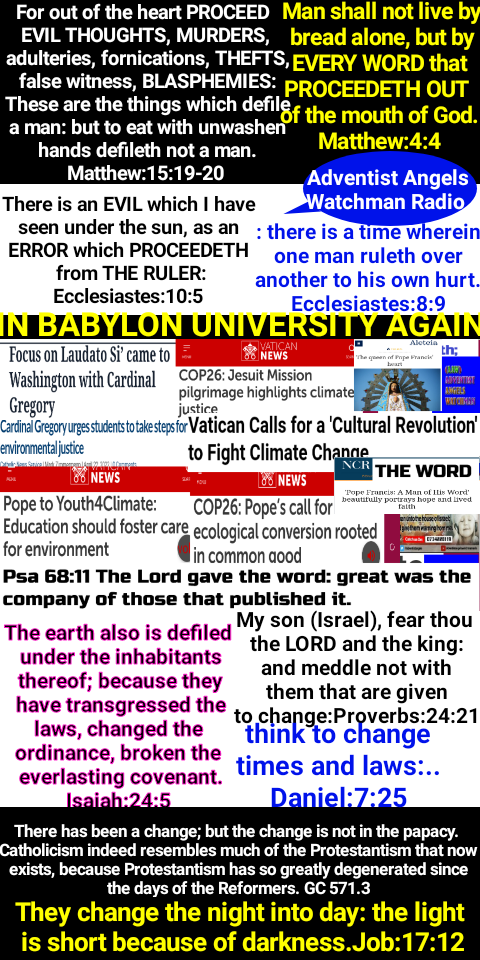
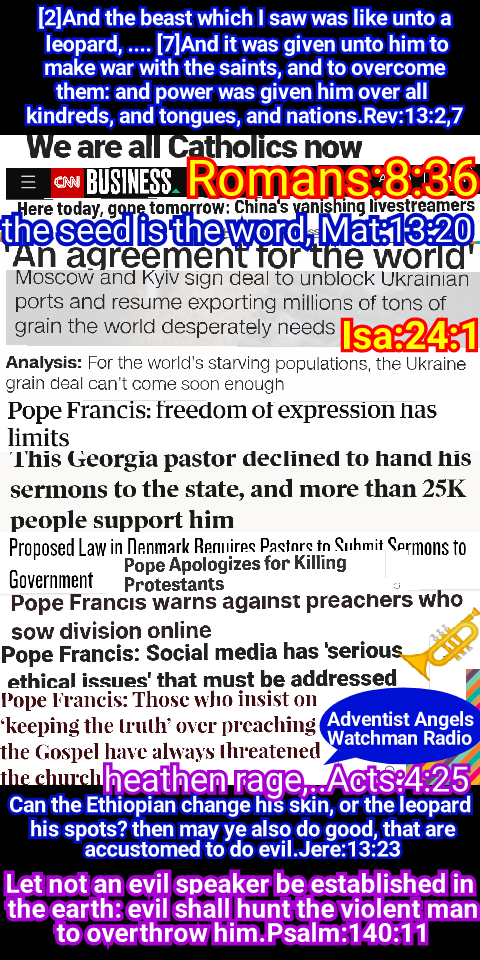
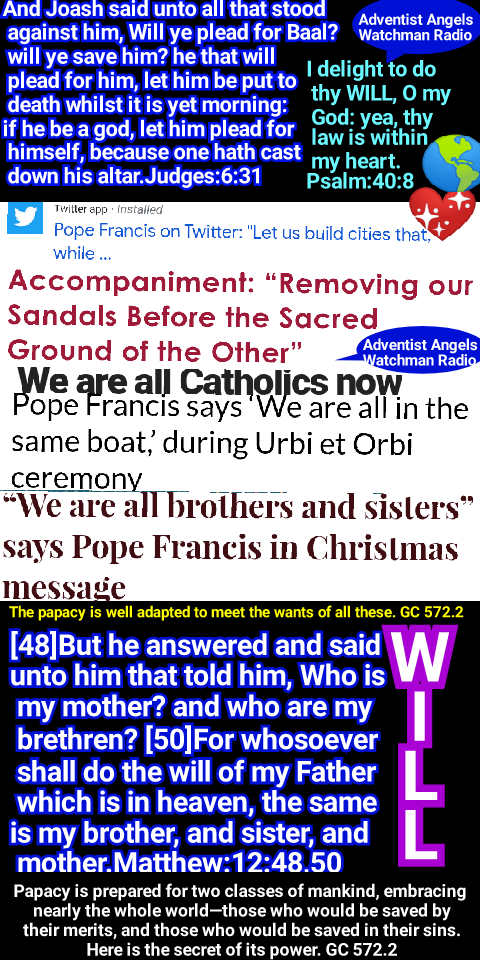
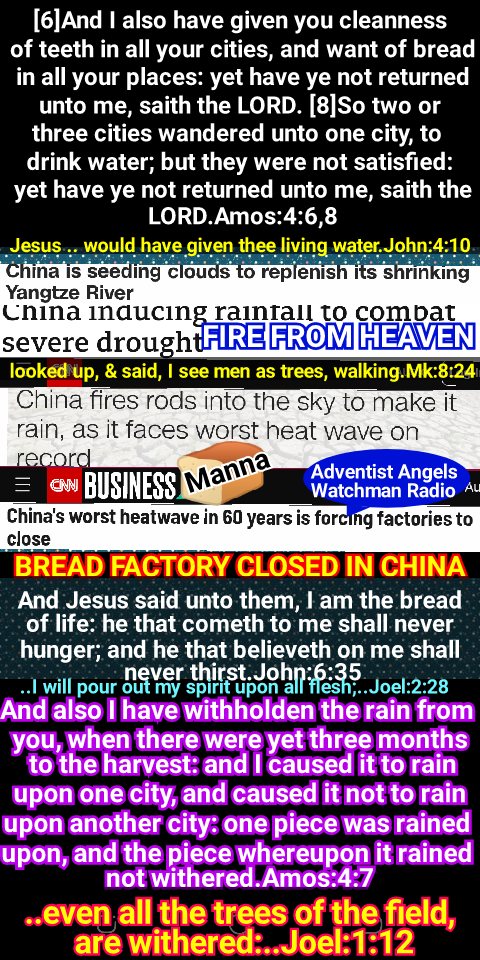

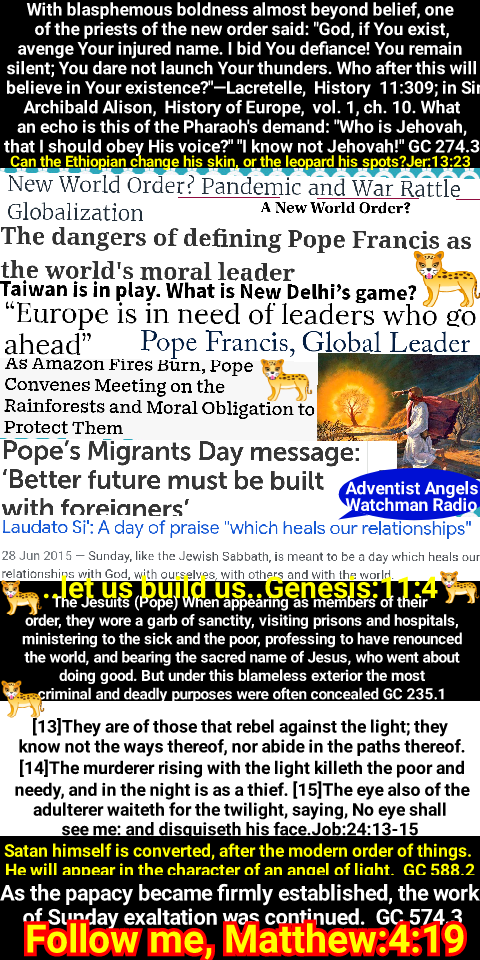
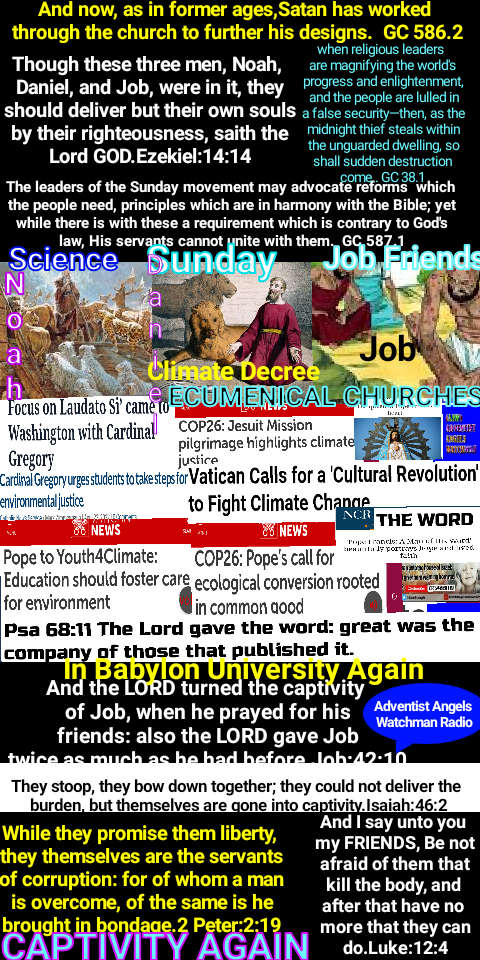
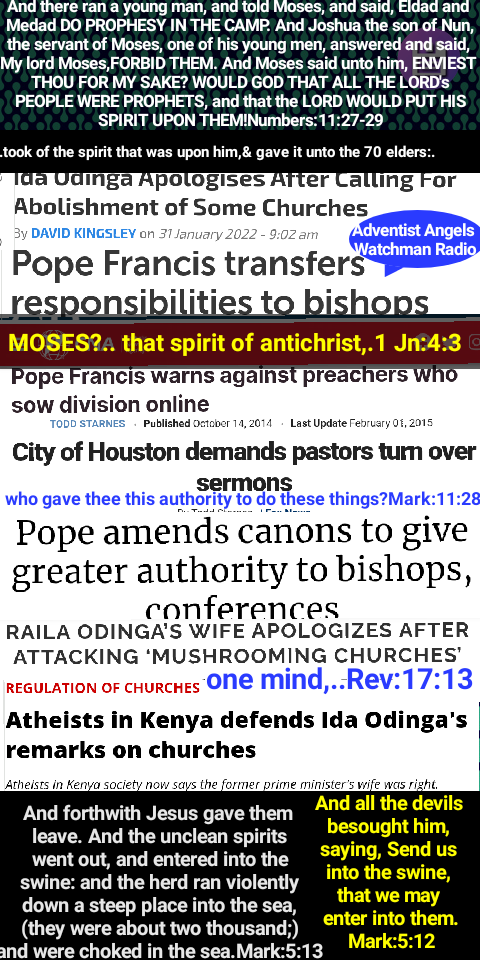
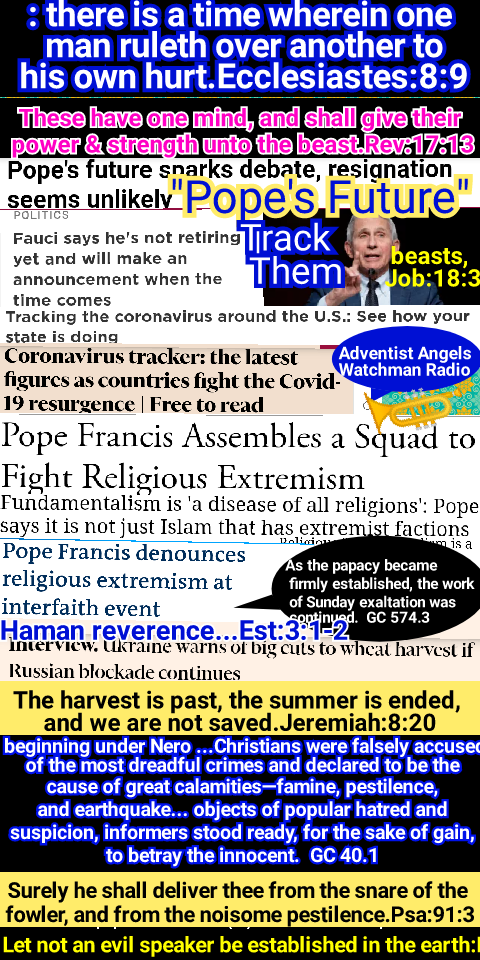
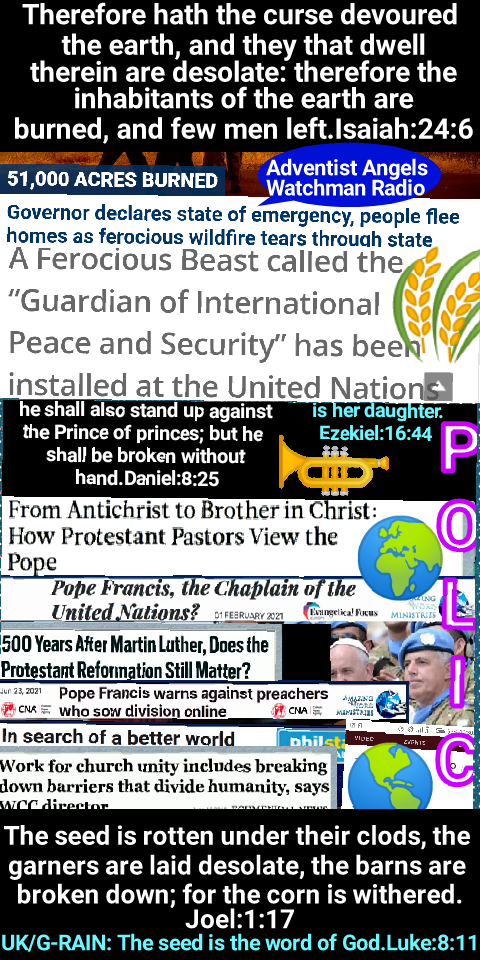
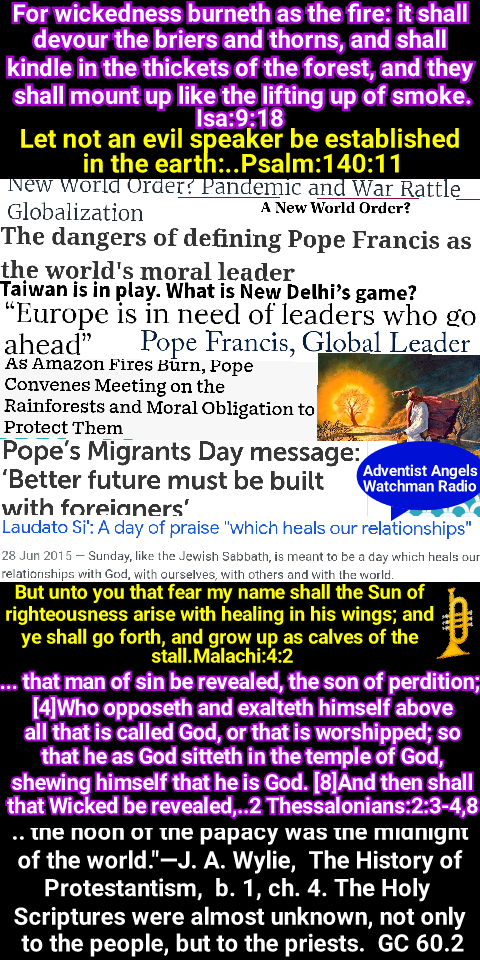
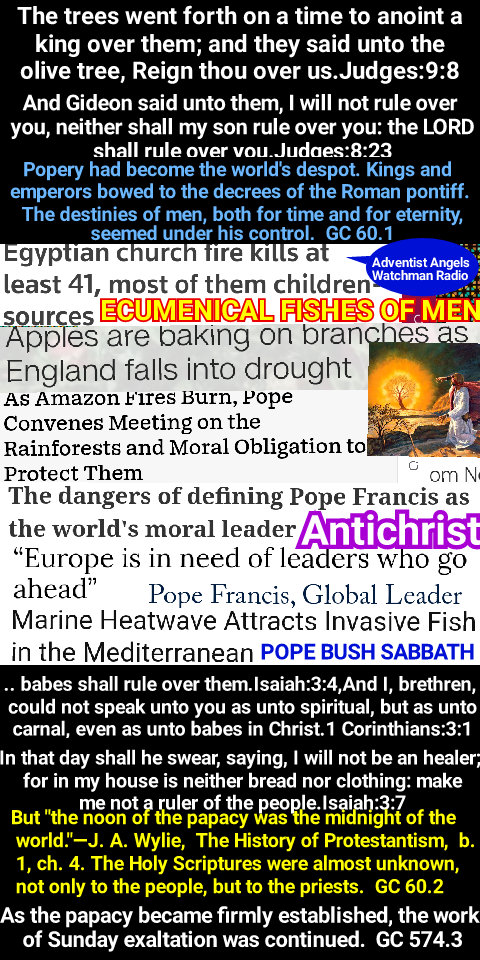
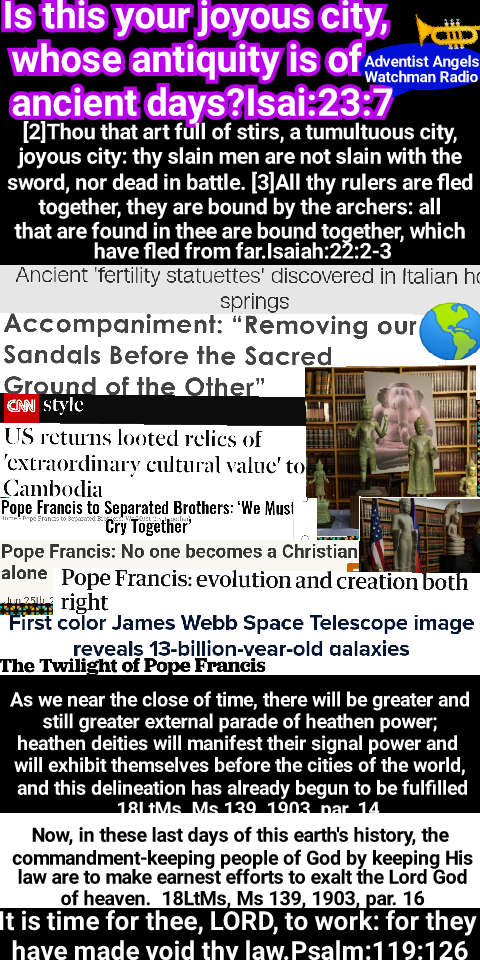
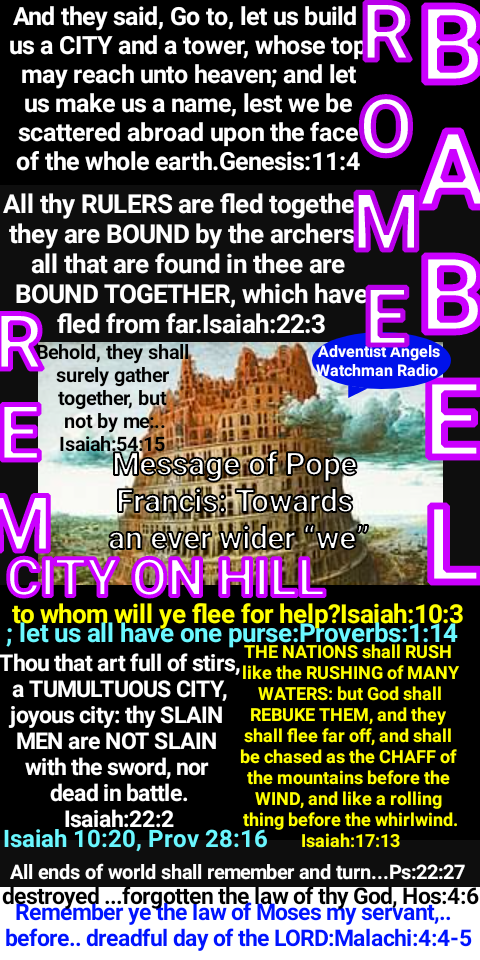
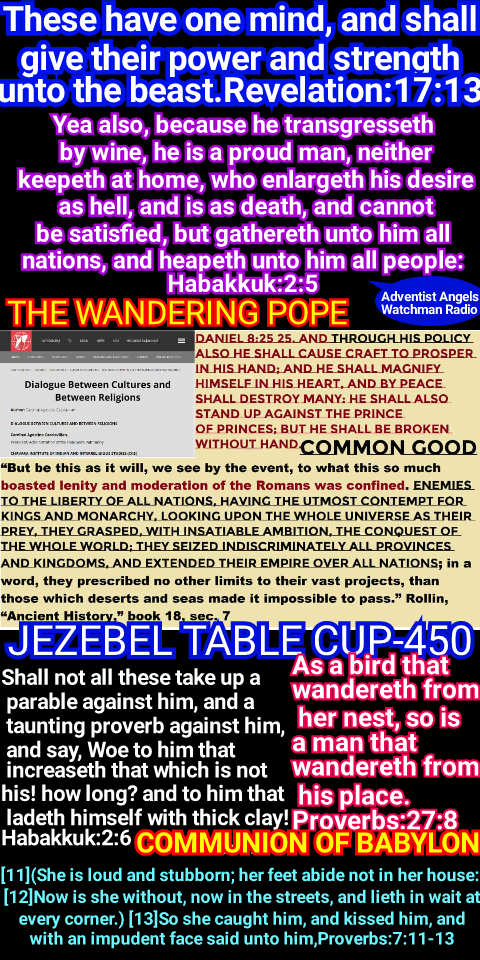
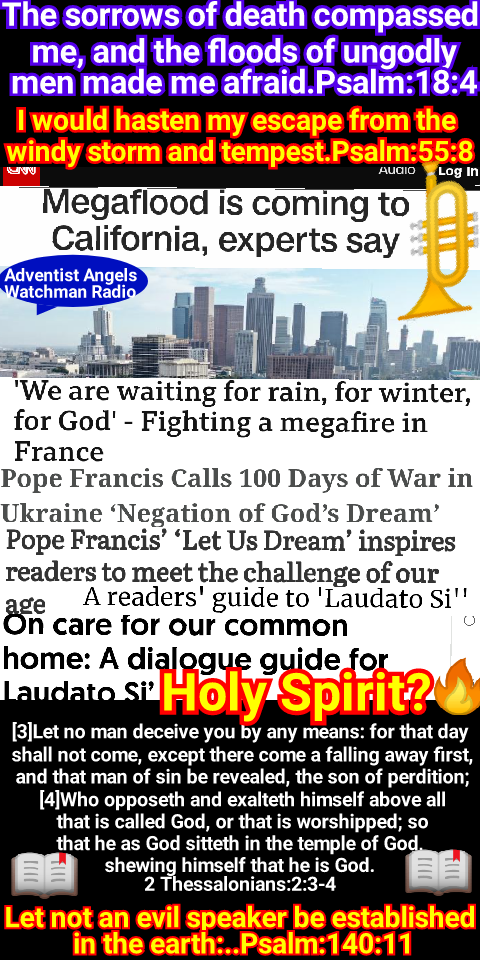
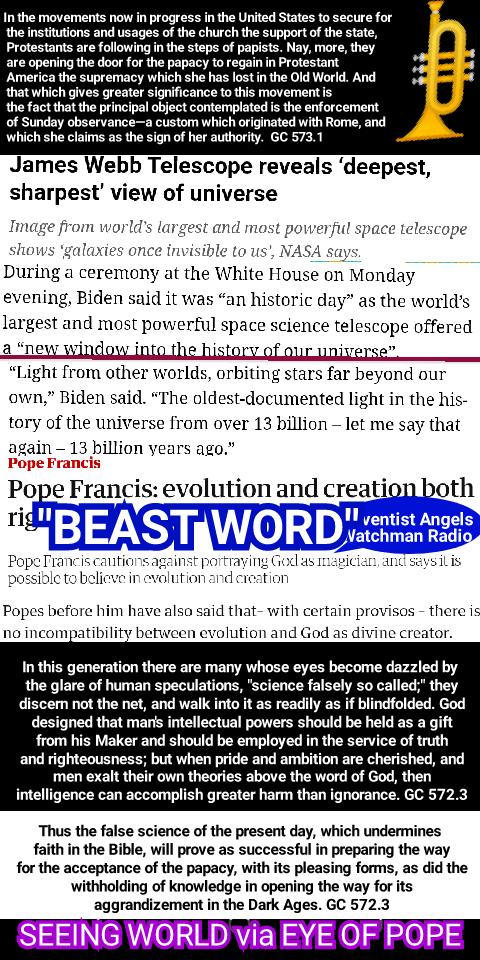
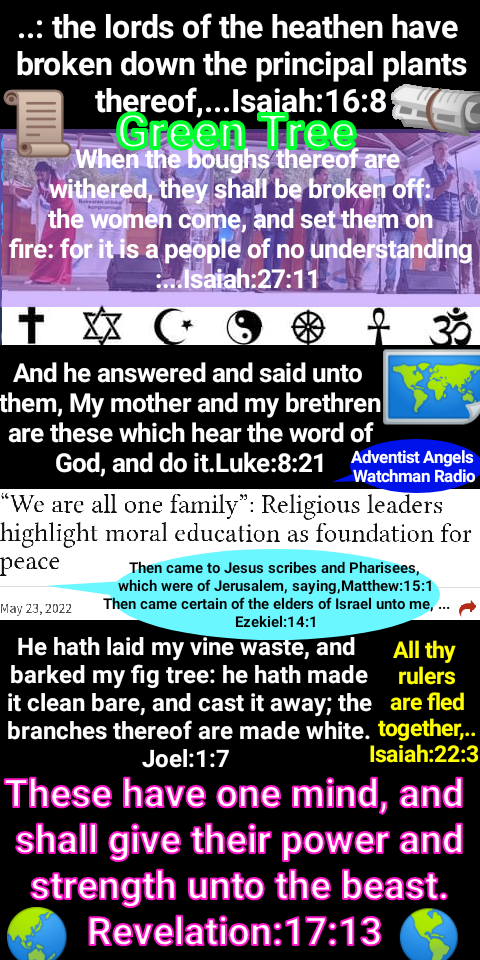
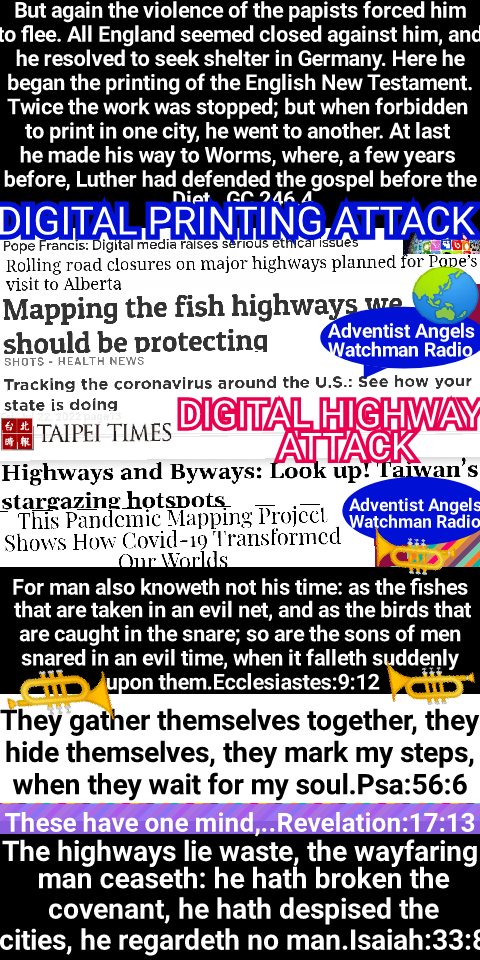
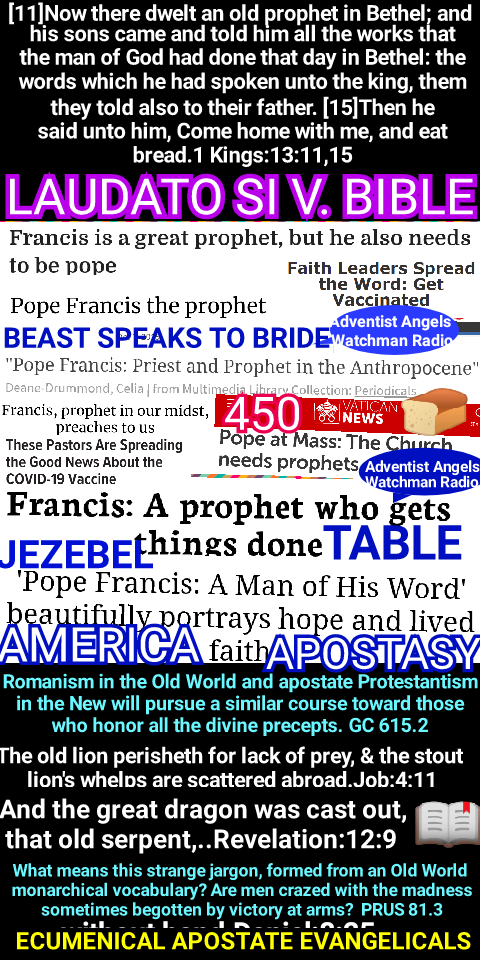

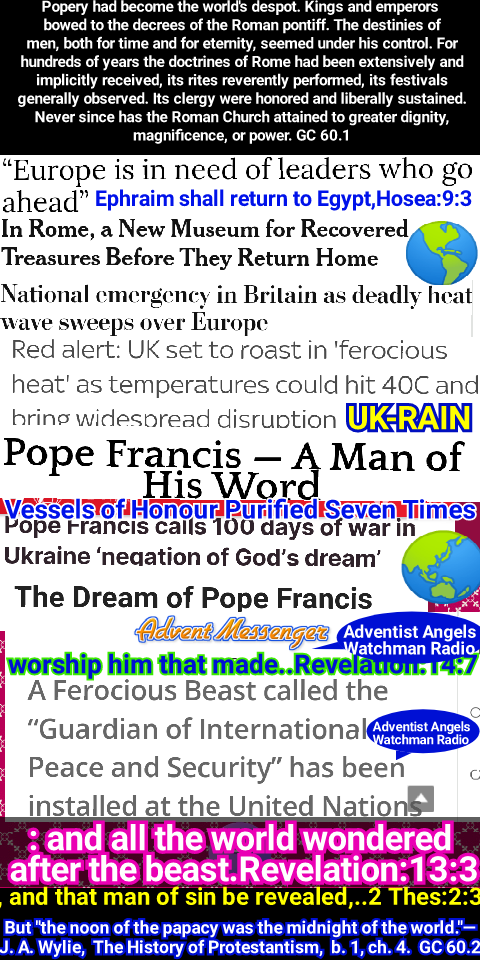

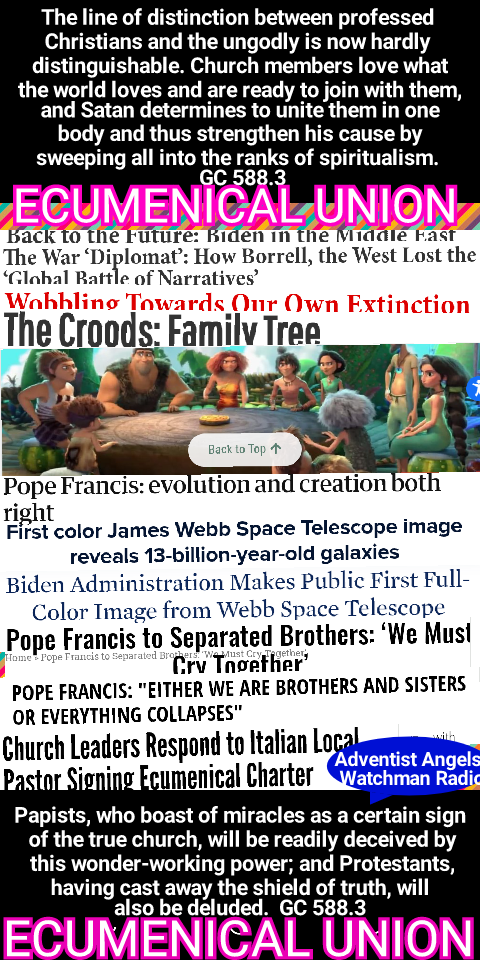
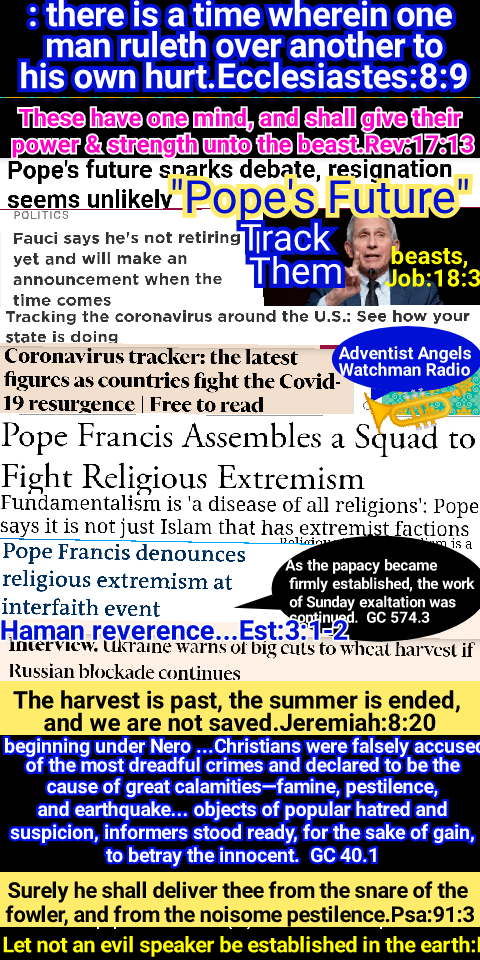
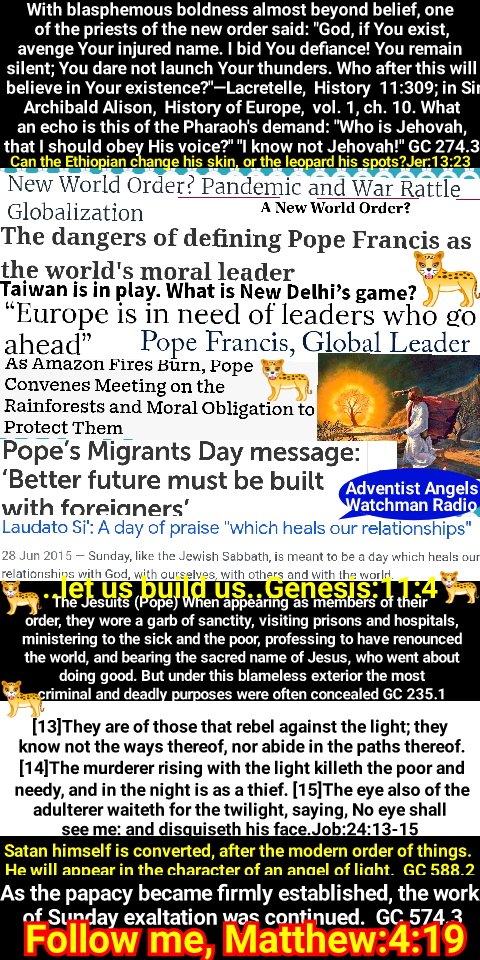












 Adventist Angels Watchman Radio