

Jaden Edison
The Texas Tribune

A coalition of legal organizations on Thursday called on Texas school district leaders to reject the adoption of a recently approved state curriculum heavily infused with references to Christianity and biblical teachings.

The American Civil Liberties Union of Texas, Americans United for Separation of Church and State, Center for Inquiry and the Freedom From Religion Foundation sent superintendents and their school boards a letter Thursday telling them that adopting the curriculum, called Bluebonnet Learning, would “unlawfully impose a set of religious beliefs upon your students and violate their constitutionally guaranteed right to be free from religious coercion.”
The letter suggests a willingness by the groups to take legal action to stop Texas schools from adopting the materials.
“Our organizations, which have long fought for religious freedom for all, will closely monitor any school district across the state that considers implementing the Bluebonnet curriculum and will take any action that is necessary and appropriate to protect the rights of Texas children and their parents,” the letter reads.

In a statement to The Texas Tribune responding to the letter, a spokesperson for the Texas Education Agency said that “public schools may not provide religious instruction, and there is no religious instruction in Bluebonnet Learning.”
“Bluebonnet Learning is comprised of instructional materials that have a broad base of topics including history, literature, the arts and culture which, when contextually relevant, can include religious topics sampling from a wide range of faiths,” the statement said. “The materials include content from or about varied religious source materials for the literary and historical value of the content and its connection to creating a strong background of knowledge for students.”

The State Board of Education narrowly approved the free-to-use elementary school curriculum in November, with a temporary Gov. Greg Abbott appointee casting the deciding vote.
Schools that choose to adopt the materials this year could begin using them for free at the start of the 2025-26 school year. The state will offer an incentive of $60 per student to districts that choose to do so. The education agency said that added funding would allow schools to offset the costs of printing the curriculum’s materials.

The curriculum uses reading and language arts lessons to advance or establish concepts in other subjects, such as history and social studies. Many of the lesson’s critics, which include religious studies scholars, note that the curriculum’s lessons reference Christianity more than any other religion. They believe the disparity could lead to the bullying and isolation of non-Christian students, undermine church-state separation and grant the state far-reaching control over how children learn about religion.
Critics have also questioned the accuracy of some lessons, saying the materials whitewash America’s history of slavery and racism. Many see the curriculum as part of a growing Christian nationalist movement, which holds the belief that the United States’ founding was ordained by God and that its laws and institutions should favor Christians.
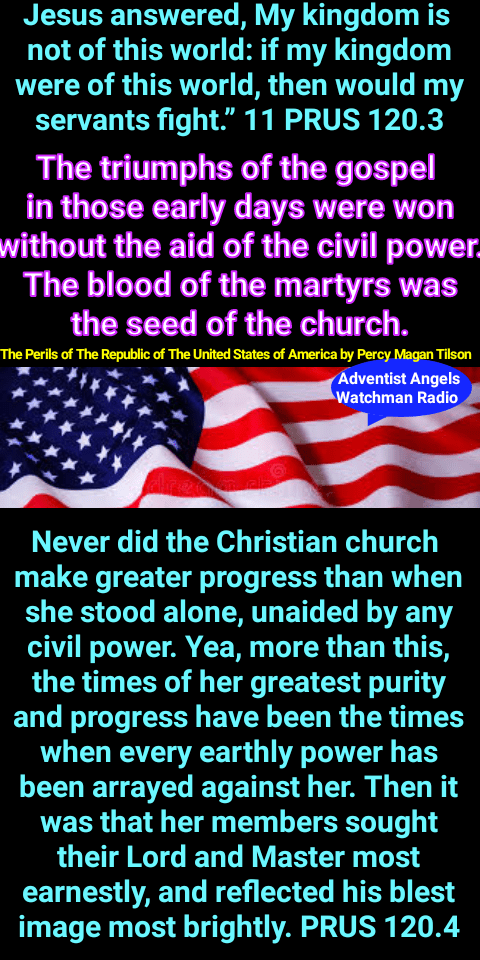
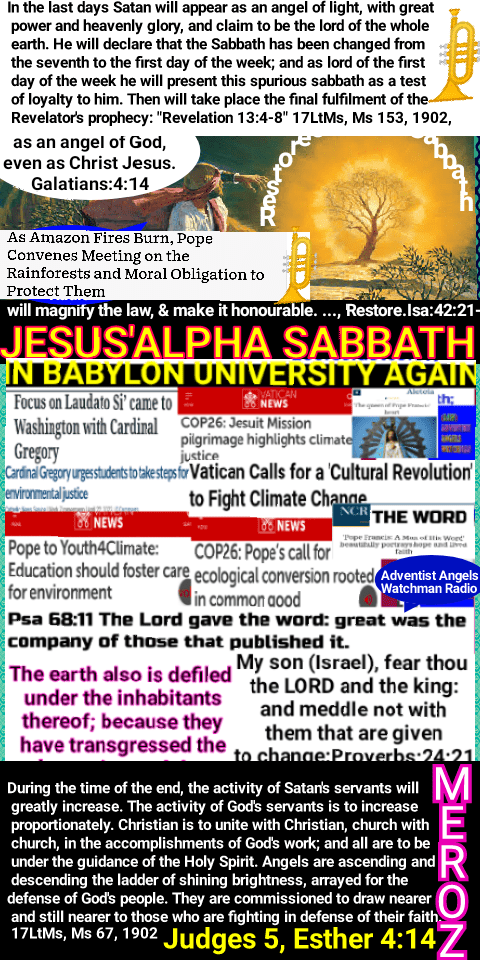
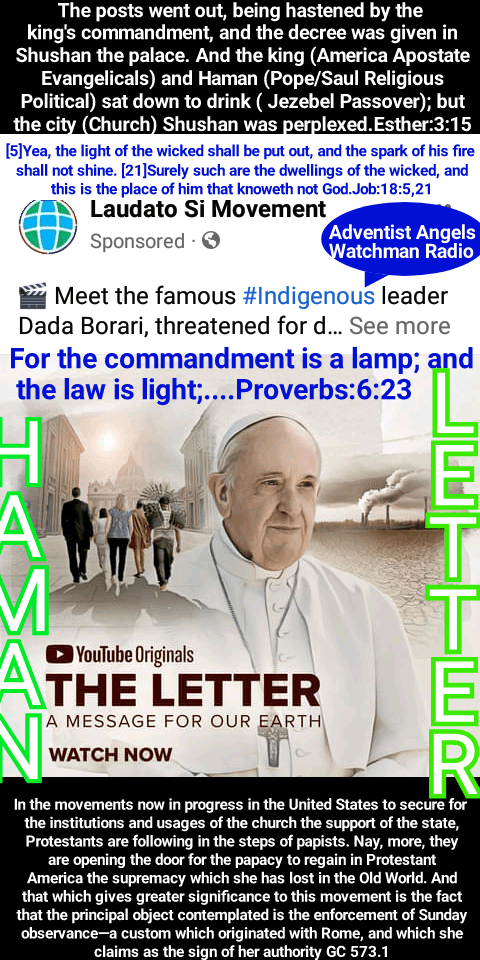
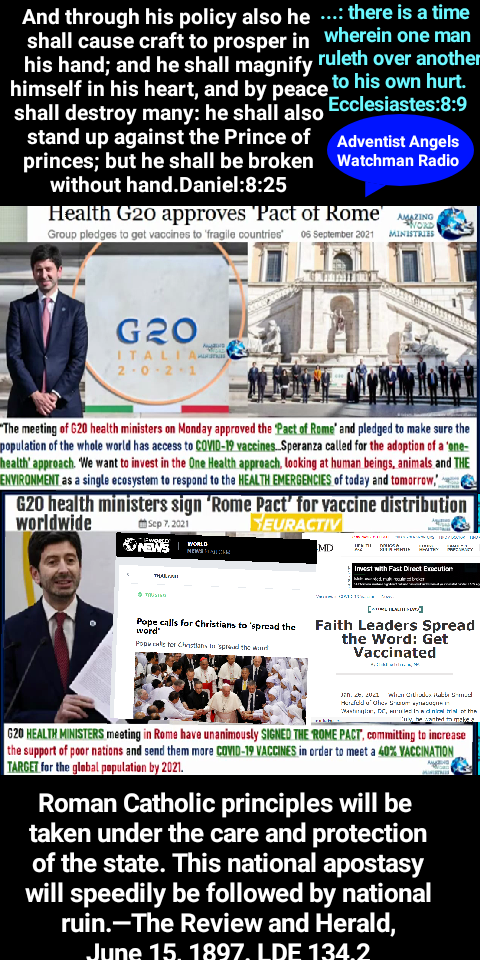
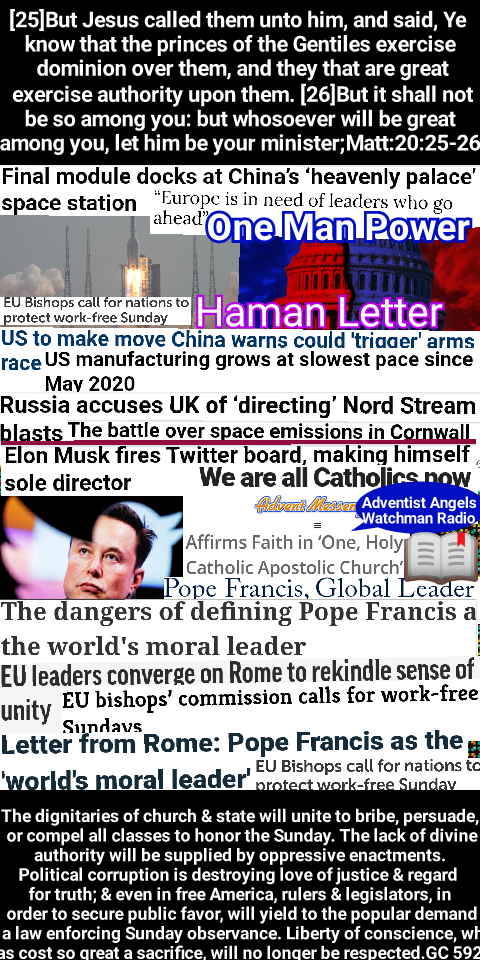
Roger Williams was respected and beloved as a faithful minister, a man of rare gifts, of unbending integrity and true benevolence; yet his steadfast denial of the right of civil magistrates to authority over the church, and his demand for religious liberty, could not be tolerated. The application of this new doctrine, it was urged, would “subvert the fundamental state and government of the country.”—Ibid., pt. 1, ch. 15, par. 10. He was sentenced to banishment from the colonies, and, finally, to avoid arrest, he was forced to flee, amid the cold and storms of winter, into the unbroken forest.
The Great Controversy Between Christ and Satan by Ellen G White
“For fourteen weeks,” he says, “I was sorely tossed in a bitter season, not knowing what bread or bed did mean.” But “the ravens fed me in the wilderness,” and a hollow tree often served him for a shelter.—Martyn, vol. 5, pp. 349, 350. Thus he continued his painful flight through the snow and the trackless forest, until he found refuge with an Indian tribe whose confidence and affection he had won while endeavoring to teach them the truths of the gospel.
Making his way at last, after months of change and wandering, to the shores of Narragansett Bay, he there laid the foundation of the first state of modern times that in the fullest sense recognized the right of religious freedom. The fundamental principle of Roger Williams’s colony was “that every man should have liberty to worship God according to the light of his own conscience.”—Ibid., vol. 5, p. 354. His little state, Rhode Island, became the asylum of the oppressed, and it increased and prospered until its foundation principles—civil and religious liberty—became the cornerstones of the American Republic.
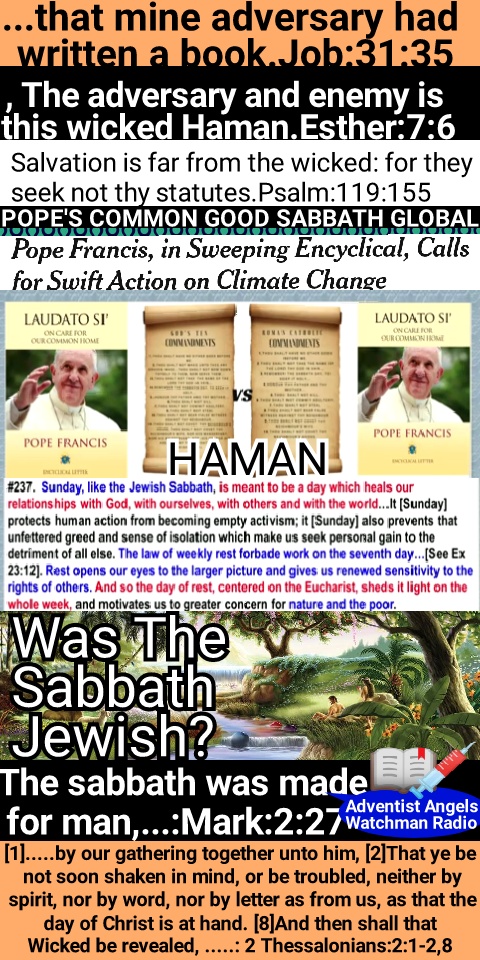
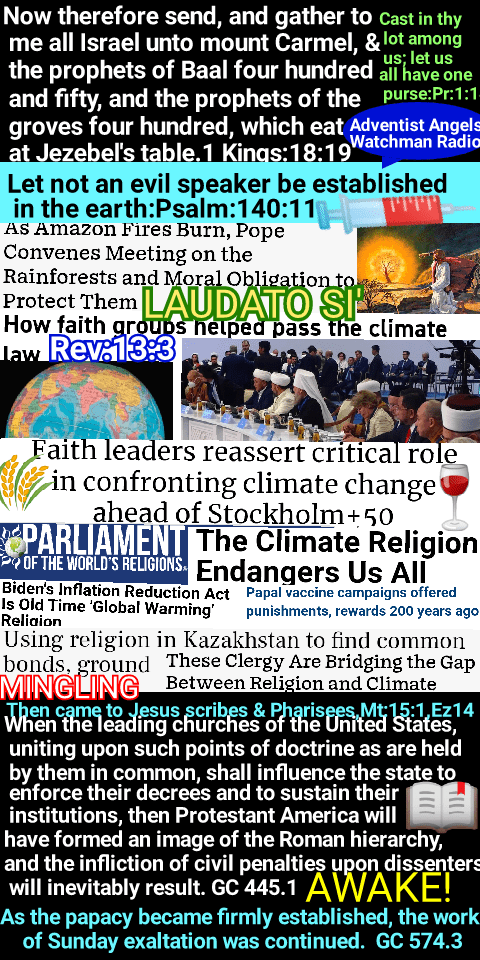
In that grand old document which our forefathers set forth as their bill of rights—the Declaration of Independence—they declared: “We hold these truths to be self-evident, that all men are created equal; that they are endowed by their Creator with certain unalienable rights; that among these are life, liberty, and the pursuit of happiness.” And the Constitution guarantees, in the most explicit terms, the inviolability of conscience: “No religious test shall ever be required as a qualification to any office or public trust under the United States.” “Congress shall make no law respecting an establishment of religion, or prohibiting the free exercise thereof.”
“The framers of the Constitution recognized the eternal principle that man’s relation with his God is above human legislation, and his rights of conscience inalienable. Reasoning was not necessary to establish this truth; we are conscious of it in our own bosoms. It is this consciousness which, in defiance of human laws, has sustained so many martyrs in tortures and flames. They felt that their duty to God was superior to human enactments, and that man could exercise no authority over their consciences. It is an inborn principle which nothing can eradicate.”—Congressional documents (U.S.A.), serial No. 200, document No. 271. GC 294.2 – GC 295.3
Education officials and advocates for the curriculum say references to Christianity will provide students with a better understanding of the country’s history and the effect of important texts like the Bible on the world. They say the materials cover a broad range of faiths and only make references to religion when appropriate. Officials also believe the curriculum provides students with an in-depth understanding of the abolition of slavery, highlights the importance of events like Juneteenth and the Civil Rights Movement, and celebrates the contributions of Black Texans.
Abbott, after the curriculum’s passage, called Bluebonnet “a critical step forward to bring students back to the basics of education and provide the best education in the nation.”
Public Schools Now Religious Schools! Shaw: No displaying the Ten Commandments in public schools and no taxpayer dollars to private schools
Public Schools Now Religious Schools! Shaw: No displaying the Ten Commandments in public schools and no taxpayer dollars to private schools
Since the curriculum received approval in November, at least one school board — the South San Antonio school district — has voted to adopt the materials. The Eagle Mountain-Saginaw district in Fort Worth plans to use the math portion of the materials but avoid the reading materials infused with the Bible lessons. The Conroe school district, located north of Houston, started considering whether to adopt the lessons. And the Denton school district in North Texas publicly stated that it does not plan to consider the curriculum.
“There’s a lot of interest from districts around the state in Bluebonnet, and we are sort of nonstop helping answer those inquiries, supporting them, answering their questions, trying to help facilitate transition,” Texas Education Commissioner Mike Morath told the State Board of Education this week.

School districts have wide latitude when it comes to adopting lesson plans. A district could, for example, decide to use parts of Bluebonnet and ignore other sections, such as the chapters that reference Christianity. Or a district could choose to heavily reference the biblical lessons in Bluebonnet while using another curriculum for other teachings.
Legal experts told The Texas Tribune that recent rulings by the U.S. Supreme Court’s conservative majority have eroded decades of precedent and made it unclear what state actions constitute a violation of the Establishment Clause, which prohibits state endorsement of a particular religion.

The Supreme Court decided, for instance, that a Washington state high school football coach did not violate the First Amendment by conducting personal prayers on the field after team games. In doing so, the justices ended what many referred to as the Lemon test, a standard the court relied upon to assess whether a government action, in part, represented an “excessive entanglement” between church and state.
During a State Board of Education meeting last year, Austin Kinghorn, the state’s deputy attorney general for legal strategy, told board members that he sees teaching about religion and the Bible as “absolutely permissible” under the Constitution.
“So long as it’s done in an objective, academic manner and it does not amount to proselytization,” Kinghorn said.
The letter sent by the legal organizations Thursday expressed the groups’ stance that the Bluebonnet curriculum “treats Christianity and the Bible as true.” The organizations cited many lessons in the curriculum, including one for fifth graders on the painting of the Last Supper. The organizations say it presents the Book of Matthew as “a literal and historical record of what happened.”
The groups reference a unit they say describes Jesus as a historical figure “without any qualification” and that directs teachers to mention that the “Christian Bible explains that Jesus rose from the dead.” The groups also criticize a lesson that asks students to repeat the phrase that starts the creation story in the biblical Book of Genesis and an activity requesting that children remember the order in which the Bible says God created the universe.

Richard Conn, general counsel for the Center for Inquiry, an organization advocating against religion in government, said in a statement that the Bluebonnet curriculum represents “a clear and obvious Establishment Clause violation, even if Texas legislators have decided to pretend otherwise.”
Conn added,
“We urge school superintendents not to make that same mistake and instead to stand up for the rights and constitutionally protected freedoms of the students, families, and communities they serve.”
The Texas Tribune is a nonpartisan, nonprofit media organization that informs and engages with Texans about public policy, politics, government and statewide issues.












































































































 Adventist Angels Watchman Radio