Welcome to Adventist Angels Watchman Radio official website, preparing the earth for Jesus Christ return Shortly, find us on Facebook, Twitter and You-tube. +254734228119 With Ev. King Osiemo
The Bible would exalt God and place finite men in their true position; therefore its sacred truths must be concealed and suppressed. This logic was adopted by the Roman Church. For hundreds of years the circulation of the Bible was prohibited. The people were forbidden to read it or to have it in their houses, and unprincipled priests and prelates interpreted its teachings to sustain their pretensions. Thus the pope came to be almost universally acknowledged as the vicegerent of God on earth, endowed with authority over church and state. GC 51.3
Popery had become the world’s despot. Kings and emperors bowed to the decrees of the Roman pontiff. The destinies of men, both for time and for eternity, seemed under his control. For hundreds of years the doctrines of Rome had been extensively and implicitly received, its rites reverently performed, its festivals generally observed. Its clergy were honored and liberally sustained. Never since has the Roman Church attained to greater dignity, magnificence, or power. But “the noon of the papacy was the midnight of the world.”—J. A. Wylie, The History of Protestantism, b. 1, ch. 4. The Holy Scriptures were almost unknown, not only to the people, but to the priests. Like the Pharisees of old, the papal leaders hated the light which would reveal their sins. God’s law, the standard of righteousness, having been removed, they exercised power without limit, and practiced vice without restraint. Fraud, avarice, and profligacy prevailed. Men shrank from no crime by which they could gain wealth or position. The palaces of popes and prelates were scenes of the vilest debauchery. GC 60.1 – GC 60.2
Assemble yourselves and come; draw near together, ye that are escaped of the nations: they have no knowledge that set up the wood of their graven image, and pray unto a god that cannot save. Tell ye, and bring them near; yea, let them take counsel together: who hath declared this from ancient time? who hath told it from that time? have not I the LORD? and there is no God else beside me; a just God and a Saviour; there is none beside me. Look unto me, and be ye saved, all the ends of the earth: for I am God, and there is none else. I have sworn by myself, the word is gone out of my mouth in righteousness, and shall not return, That unto me every knee shall bow, every tongue shall swear. Surely, shall one say, in the LORD have I righteousness and strength: even to him shall men come; and all that are incensed against him shall be ashamed. In the LORD shall all the seed of Israel be justified, and shall glory. Isaiah:45:20-25
(CNN)When Vladimir Putin launched his invasion of Ukraine, his goals were clear. He wanted to bring his neighbor to heel, assert Russian authority in Eastern Europe and make the West think twice about expanding militarily and politically toward Russia’s borders.
But in one important respect, Putin’s plan appears to have failed: The war has united the West against Moscow in ways that seemed unimaginable in January.
Speaking at a joint news conference with her Swedish counterpart in Stockholm on Wednesday, Finnish Prime Minister Sanna Marin said her country’s decision on whether to apply for membership would be made within “weeks, not within months.”
“We need to have a view on the future and we are using this time to analyze and also build common views on the future when it comes to security,” Marin said. “I won’t give any kind of timetable when we will make our decisions, but I think it will happen quite fast. Within weeks, not within months.”
The Finnish government presented a wide-ranging report to the country’s parliament on Wednesday, which considered the effects of NATO membership.
Enter your email to sign up for CNN’s “Meanwhile in China” Newsletter.
The report says that if Finland and Sweden become full NATO members, “the threshold for using military force in the Baltic Sea region would rise,” enhancing “the stability of the region in the long term.”
The report says that the “most significant effect” of NATO membership “would be that Finland would be part of NATO’s collective defence, and be covered by the security guarantees enshrined in Article 5,” adding that the deterrent effect of being a NATO member would be “considerably stronger than it is at present, as it would be based on the capabilities of the entire Alliance.
The report warns that due to Russia’s “negative view towards NATO enlargement,” if Finland applied for NATO membership, it should be prepared for “risks that are difficult to anticipate.” It adds that Finland “would aim to continue to maintain functioning relations with Russia in the event it becomes a NATO member.”
The paper also noted that “close cooperation between Finland and Sweden during possible accession processes would be important,” and that “simultaneous accession processes” for the two countries could also “facilitate preparation for and response to Russia’s possible reaction.”
Sweden, meanwhile, is due to complete an analysis of its security policy by the end of May. A Swedish official previously told CNN that their nation could make its position public sooner, depending on when neighboring Finland does.
On Wednesday, Swedish Prime Minister Magdalena Andersson told the news conference that “the security landscape has completely changed” after Russia’s invasion of Ukraine and “given this situation we have to really think through what is best for Sweden and our security and our peace in this new situation.”
“This is a very important time in history. There is a before and after 24th of February,” Andersson said, referring to the date Russia’s invasion began. “We have to have a process in Sweden to think this through.”
Andersson was also asked to comment on reports in Swedish media that Sweden has already decided to join the alliance.
“Sometimes if you read some statements in Swedish media, it’s like you should be as quick as possible to make up your mind,” she responded. “I think you really have to analyze the new situation, do it very seriously, think about the consequences, the pros and cons of all potential ways forward.”
Public opinion in both countries has shifted significantly since the invasion, and NATO allies and officials are on the whole supportive of the two countries joining. The only serious objection could come from Hungary, whose leader is close with Putin, but NATO officials think it would be able to twist Prime Minister Viktor Orban’s arm.
Given that Putin started his war demanding that NATO roll its borders back to where they were in the 1990s, the fact this is even being considered represents a diplomatic disaster for Moscow. And if Finland in particular were to join, Putin would find Russia suddenly sharing an additional 830-mile border with NATO.
Kremlin spokesman Dmitry Peskov warned on Monday that expanding NATO wouldn’t bring any more stability to Europe.
“We have repeatedly said that the alliance itself is more of a tool for confrontation. This is not an alliance that provides peace and stability, and further expansion of the alliance, of course, will not lead to more stability on the European continent,” he said.
When the leading churches of the United States, uniting upon such points of doctrine as are held by them in common, shall influence the state to enforce their decrees and to sustain their institutions, then Protestant America will have formed an image of the Roman hierarchy, and the infliction of civil penalties upon dissenters will inevitably result. Great Controversy by Ellen G White pg 445.1
Rob Bauer, the head of NATO’s military committee, told reporters on Tuesday that the alliance has not ruled out new members, but said it was ultimately up to Finland and Sweden to decide whether they want to join, Reuters reported.
“It is a sovereign decision of any nation that wants to join NATO to apply for membership, which they so far have not done … We are forcing no one into NATO,” Bauer said.
Nor has Putin’s invasion motivated Ukraine to pull back from its desire for closer integration with the West. While the country is unlikely to join NATO, its efforts to join the European Union have accelerated since the start of the war. This would take a very long time and could also face stiff opposition from Hungary, which is already in a nasty battle with Brussels over its violations of the rule of law, causing the EU to propose suspending central funding to Budapest.
However, once again, the fact it’s being talked about and the level of support among EU leaders and officials is another indication of just how united the West has become against Russia.
It’s worth noting that since the start of the war, the West has remained largely united in its response to Russia, be it through economic sanctions or military support for Ukraine.
However, there are a few challenges coming up that will test how united this alliance against Russia really is.
First, if it emerges that Russia has used chemical weapons in Ukraine, there will be enormous pressure for the West, particularly NATO, to take an even more active role in the war — something the alliance has been reluctant to do so far.
NATO members have already discussed red lines and what action should be taken in the event of chemical weapons, but those details are still private to prevent Russia from taking pre-emptive protective action.
However, any NATO intervention would almost certainly lead to a less stable security situation in Europe, as the West would risk a military confrontation with Russia — a nuclear power, which would likely respond by intensifying its attacks on Ukraine and possibly in other areas of traditional Russian influence.
Second, the cost of living crisis in many European countries could soon test the unity of future Western sanctions on Russia and embargoes on Russian energy.
If, ultimately, the economy of Western Europe is deemed more important than holding Russia to account for waging war on its peaceful neighbor, then Putin could to some extent get away with invading an innocent country.
But for now, as that unity largely holds, it is clear that Putin’s desire to belittle the Western alliance has backfired — and that the strongman has secured pariah status for his nation, possibly for years to come.
Jennifer Hansler contributed to this report from Washington.
CNN is the only US outlet living through Shanghai’s lockdown. See what it’s like 04:01
(CNN)China has lashed out at the United States for ordering its consulate staff to leave the locked-down city of Shanghai, accusing officials of “weaponizing” the financial hub’s failing attempt to contain the spread of Covid-19.
But it was in another field that Huss began the work of reform. Several years after taking priest’s orders he was appointed preacher of the chapel of Bethlehem. The founder of this chapel had advocated, as a matter of great importance, the preaching of the Scriptures in the language of the people. Notwithstanding Rome’s opposition to this practice, it had not been wholly discontinued in Bohemia. But there was great ignorance of the Bible, and the worst vices prevailed among the people of all ranks. These evils Huss unsparingly denounced, appealing to the word of God to enforce the principles of truth and purity which he inculcated. A citizen of Prague, Jerome, who afterward became so closely associated with Huss, had, on returning from England, brought with him the writings of Wycliffe. The queen of England, who had been a convert to Wycliffe’s teachings, was a Bohemian princess, and through her influence also the Reformer’s works were widely circulated in her native country. These works Huss read with interest; he believed their author to be a sincere Christian and was inclined to regard with favor the reforms which he advocated. Already, though he knew it not, Huss had entered upon a path which was to lead him far away from Rome. About this time there arrived in Prague two strangers from England, men of learning, who had received the light and had come to spread it in this distant land. Beginning with an open attack on the pope’s supremacy, they were soon silenced by the authorities; but being unwilling to relinquish their purpose, they had recourse to other measures. Being artists as well as preachers, they proceeded to exercise their skill. In a place open to the public they drew two pictures. One represented the entrance of Christ into Jerusalem, “meek, and sitting upon an ass” (Matthew 21:5), and followed by His disciples in travel-worn garments and with naked feet. The other picture portrayed a pontifical procession—the pope arrayed in his rich robes and triple crown, mounted upon a horse magnificently adorned, preceded by trumpeters and followed by cardinals and prelates in dazzling array. Here was a sermon which arrested the attention of all classes. Crowds came to gaze upon the drawings. None could fail to read the moral, and many were deeply impressed by the contrast between the meekness and humility of Christ the Master and the pride and arrogance of the pope, His professed servant. There was great commotion in Prague, and the strangers after a time found it necessary, for their own safety, to depart. But the lesson they had taught was not forgotten. The pictures made a deep impression on the mind of Huss and led him to a closer study of the Bible and of Wycliffe’s writings. Though he was not prepared, even yet, to accept all the reforms advocated by Wycliffe, he saw more clearly the true character of the papacy, and with greater zeal denounced the pride, the ambition, and the corruption of the hierarchy. From Bohemia the light extended to Germany, for disturbances in the University of Prague caused the withdrawal of hundreds of German students. Many of them had received from Huss their first knowledge of the Bible, and on their return they spread the gospel in their fatherland. Tidings of the work at Prague were carried to Rome, and Huss was soon summoned to appear before the pope. To obey would be to expose himself to certain death. The king and queen of Bohemia, the university, members of the nobility, and officers of the government united in an appeal to the pontiff that Huss be permitted to remain at Prague and to answer at Rome by deputy. Instead of granting this request, the pope proceeded to the trial and condemnation of Huss, and then declared the city of Prague to be under interdict. In that age this sentence, whenever pronounced, created widespread alarm. The ceremonies by which it was accompanied were well adapted to strike terror to a people who looked upon the pope as the representative of God Himself, holding the keys of heaven and hell, and possessing power to invoke temporal as well as spiritual judgments. It was believed that the gates of heaven were closed against the region smitten with interdict; that until it should please the pope to remove the ban, the dead were shut out from the abodes of bliss.In token of this terrible calamity, all the services of religion were suspended. The churches were closed. Marriages were solemnized in the churchyard. The dead, denied burial in consecrated ground, were interred, without the rites of sepulture, in the ditches or the fields. Thus by measures which appealed to the imagination, Rome essayed to control the consciences of men. The city of Prague was filled with tumult. A large class denounced Huss as the cause of all their calamities and demanded that he be given up to the vengeance of Rome. To quiet the storm, the Reformer withdrew for a time to his native village. Writing to the friends whom he had left at Prague, he said: “If I have withdrawn from the midst of you, it is to follow the precept and example of Jesus Christ, in order not to give room to the ill-minded to draw on themselves eternal condemnation, and in order not to be to the pious a cause of affliction and persecution. I have retired also through an apprehension that impious priests might continue for a longer time to prohibit the preaching of the word of God amongst you; but I have not quitted you to deny the divine truth, for which, with God’s assistance, I am willing to die.”—Bonnechose, The Reformers Before the Reformation, vol. 1, p. 87. Huss did not cease his labors, but traveled through the surrounding country, preaching to eager crowds. Thus the measures to which the pope resorted to suppress the gospel were causing it to be the more widely extended. “We can do nothing against the truth, but for the truth.” 2 Corinthians 13:8. “The mind of Huss, at this stage of his career, would seem to have been the scene of a painful conflict. Although the church was seeking to overwhelm him by her thunderbolts, he had not renounced her authority. The Roman Church was still to him the spouse of Christ, and the pope was the representative and vicar of God. What Huss was warring against was the abuse of authority, not the principle itself. This brought on a terrible conflict between the convictions of his understanding and the claims of his conscience. If the authority was just and infallible, as he believed it to be, how came it that he felt compelled to disobey it? To obey, he saw, was to sin; but why should obedience to an infallible church lead to such an issue? This was the problem he could not solve; this was the doubt that tortured him hour by hour. The nearest approximation to a solution which he was able to make was that it had happened again, as once before in the days of the Saviour, that the priests of the church had become wicked persons and were using their lawful authority for unlawful ends. This led him to adopt for his own guidance, and to preach to others for theirs, the maxim that the precepts of Scripture, conveyed through the understanding, are to rule the conscience; in other words, that God speaking in the Bible, and not the church speaking through the priesthood, is the one infallible guide.”—Wylie, b. 3, ch. 2. When after a time the excitement in Prague subsided, Huss returned to his chapel of Bethlehem, to continue with greater zeal and courage the preaching of the word of God. His enemies were active and powerful, but the queen and many of the nobles were his friends, and the people in great numbers sided with him. Comparing his pure and elevating teachings and holy life with the degrading dogmas which the Romanists preached, and the avarice and debauchery which they practiced, many regarded it an honor to be on his side. Hitherto Huss had stood alone in his labors; but now Jerome, who while in England had accepted the teachings of Wycliffe, joined in the work of reform. The two were hereafter united in their lives, and in death they were not to be divided. Brilliancy of genius, eloquence and learning—gifts that win popular favor—were possessed in a pre-eminent degree by Jerome; but in those qualities which constitute real strength of character, Huss was the greater. His calm judgment served as a restraint upon the impulsive spirit of Jerome, who, with true humility, perceived his worth, and yielded to his counsels. Under their united labors the reform was more rapidly extended. God permitted great light to shine upon the minds of these chosen men, revealing to them many of the errors of Rome; but they did not receive all the light that was to be given to the world. Through these, His servants, God was leading the people out of the darkness of Romanism; but there were many and great obstacles for them to meet, and He led them on, step by step, as they could bear it. They were not prepared to receive all the light at once. Like the full glory of the noontide sun to those who have long dwelt in darkness, it would, if presented, have caused them to turn away. Therefore He revealed it to the leaders little by little, as it could be received by the people. From century to century, other faithful workers were to follow, to lead the people on still further in the path of reform. The schism in the church still continued. Three popes were now contending for the supremacy, and their strife filled Christendom with crime and tumult. Not content with hurling anathemas, they resorted to temporal weapons. Each cast about him to purchase arms and to obtain soldiers. Of course money must be had; and to procure this, the gifts, offices, and blessings of the church were offered for sale. (See Appendix note for page 59.) The priests also, imitating their superiors, resorted to simony and war to humble their rivals and strengthen their own power. With daily increasing boldness Huss thundered against the abominations which were tolerated in the name of religion; and the people openly accused the Romish leaders as the cause of the miseries that overwhelmed Christendom. Again the city of Prague seemed on the verge of a bloody conflict. As in former ages, God’s servant was accused as “he that troubleth Israel.” 1 Kings 18:17. The city was again placed under interdict, and Huss withdrew to his native village. The testimony so faithfully borne from his loved chapel of Bethlehem was ended. He was to speak from a wider stage, to all Christendom, before laying down his life as a witness for the truth. To cure the evils that were distracting Europe, a general council was summoned to meet at Constance GC 99.1 – GC 104.2 From the book the Great Controversy by Ellen G White
On Monday, the US State Department “ordered” the departure of non-emergency employees and their families from the city of 25 million “due to a surge in Covid-19 cases and the impact of restrictions related to (China’s) response,” according to a statement on its website.
The notice came just days after the State Department authorized the “voluntary departure” of staff from Shanghai. A travel advisory also urges Americans to “reconsider travel” to all of China, citing stringent Covid restrictions including “the risk of parents and children being separated.”
“Through my vicegerent, I will exalt myself. The first day will be extolled, and the Protestant world will receive this spurious sabbath as genuine. Through the nonobservance of the Sabbath that God instituted, I will bring His law into contempt. The words, ‘A sign between Me and you throughout your generations,’ I will make to serve on the side of my sabbath. “Thus the world will become mine. I will be the ruler of the earth, the prince of the world. I will so control the minds under my power that God’s Sabbath shall be a special object of contempt. A sign? I will make the observance of the seventh day a sign of disloyalty to the authorities of earth. Human laws will be made so stringent that men and women will not dare to observe the seventh-day Sabbath. For fear of wanting food and clothing, they will join with the world in transgressing God’s law. The earth will be wholly under my dominion.” Through the setting up of a false sabbath, the enemy thought to change times and laws. But has he really succeeded in changing God’s law? The words of the thirty-first chapter of Exodus are the answer. He who is the same yesterday, today, and forever, has declared of the seventh-day Sabbath: “It is a sign between Me and you throughout your generations.” “It is a sign … forever.” Exodus 31:13, 17. The changed signpost is pointing the wrong way, but God has not changed. He is still the mighty God of Israel. “Behold, the nations are as a drop of a bucket, and are counted as the small dust of the balance: behold, He taketh up the isles as a very little thing. And Lebanon is not sufficient to burn, nor the beasts thereof sufficient for a burnt offering. All nations before Him are as nothing; and they are counted to Him less than nothing, and vanity.” Isaiah 40:15-17. And He is just as jealous for His law now as He was in the days of Ahab and Elijah. PK 183.3 – PK 184.3
China’s Foreign Ministry has notified the US it “firmly opposes” the consulate order, ministry spokesperson Zhao Lijian said in a news briefing on Tuesday.
“We express strong dissatisfaction with the politicization and weaponization of evacuations by the US,” Zhao said, adding that the US was “smearing China.”
Zhao also defended China’s Covid prevention and control policies as “scientific and effective,” insisting the government had “every confidence in bringing the new wave of Covid-19 under control” despite rising case numbers.
The financial hub reported more than 26,000 new locally transmitted cases on Monday, the sixth consecutive day over 20,000, according to China’s National Health Commission (NHC). So far, more than 320,000 cases have been reported across 31 provinces — including those in Shanghai — since March 1.
Zhao’s assertion stands in stark contrast to more somber messages from other Chinese officials, including the NHC deputy director Lei Zhenglong, who on Tuesday warned Shanghai’s outbreak has “not been effectively contained.”
He added that the outbreak had since spread to many provinces, and that the number of new infections is expected to remain high in the coming days.
A community volunteer examines vegetables to be distributed to residents under lockdown in Pudong district in Shanghai on April 12.
Lockdown frustrations
Shanghai’s lockdown has been mired in controversy and dysfunction since it was first introduced, seemingly with little warning, on March 29.
Public anger has been exacerbated by stories of parents being separated from their infected children, even toddlers, under Shanghai’s rules on isolation, and of a pet corgi being killed by Covid prevention workers after its owner was placed into quarantine.
Videos circulating online show protests breaking out last week at a residential complex in southwestern Shanghai, with residents confronting police at the gate and shouting, “Give us supplies.”
CNN was not able to independently verify the images or reach local authorities for comment.
Social media posts show rising desperation as well, with one recent video showing a mother begging for medication for her child from neighbors at midnight in Shanghai. “Do you have medicine for fever? My child has fever. Is anyone home? Excuse me, sorry to bother you! Everyone! Is anyone awake?” the mother can be heard crying in the video.
Since the start of pandemic, China has tightened rules around selling and buying fever medication, requiring a prescription and a negative Covid test.
CNN has geolocated the residential compound in the video to be in Shanghai, but could not independently verify the video and has not identified the mother involved.
In the past week, Shanghai’s outbreak has spilled over to nearby cities including Hangzhou and Ningbo in Zhejiang province. Some nearby cities were put under lockdown, including Haining in Zhejiang, and Kunshan in Jiangsu province.
Meanwhile, the southern city of Guangzhou has reported dozens of cases since early April as well, prompting several rounds of mass testing and the closure of schools. Residents have been discouraged from leaving the city, and are required to present a negative PCR test if they want to leave.
On Monday, Shanghai officials began easing measures in neighborhoods that had not reported any positive cases in 14 days. However, authorities warned those residents should only be going out if necessary, get tested twice a week, and that lockdown would be re-imposed if any new cases were detected in the neighborhood. That still leaves the vast majority of the city’s 25 million residents under lockdown.
Leopards are so good at blending in to their environment that they are often difficult to spot in the wild, as is the case in this photo posted on Facebook by “Africa, this is why I live here.”
They are of those that rebel against the light; they know not the ways thereof, nor abide in the paths thereof. The murderer rising with the light killeth the poor and needy, and in the night is as a thief. The eye also of the adulterer waiteth for the twilight, saying, No eye shall see me: and disguiseth his face. In the dark they dig through houses, which they had marked for themselves in the daytime: they know not the light. For the morning is to them even as the shadow of death: if one know them, they are in the terrors of the shadow of death. He is swift as the waters; their portion is cursed in the earth: he beholdeth not the way of the vineyards.Job:24:13-18
It isn’t an easy spot, as evidenced by the reactions by commenters on the Facebook post, a sampling we present here:
“I would have been so dead. It took me forever.”
Thus the message of the third angel will be proclaimed. As the time comes for it to be given with greatest power, the Lord will work through humble instruments, leading the minds of those who consecrate themselves to His service. The laborers will be qualified rather by the unction of His Spirit than by the training of literary institutions. Men of faith and prayer will be constrained to go forth with holy zeal, declaring the words which God gives them. The sins of Babylon will be laid open. The fearful results of enforcing the observances of the church by civil authority, the inroads of spiritualism, the stealthy but rapid progress of the papal power—all will be unmasked. By these solemn warnings the people will be stirred. Thousands upon thousands will listen who have never heard words like these. In amazement they hear the testimony that Babylon is the church, fallen because of her errors and sins, because of her rejection of the truth sent to her from heaven. As the people go to their former teachers with the eager inquiry, Are these things so? the ministers present fables, prophesy smooth things, to soothe their fears and quiet the awakened conscience. But since many refuse to be satisfied with the mere authority of men and demand a plain “Thus saith the Lord,” the popular ministry, like the Pharisees of old, filled with anger as their authority is questioned, will denounce the message as of Satan and stir up the sin-loving multitudes to revile and persecute those who proclaim it. As the controversy extends into new fields and the minds of the people are called to God’s downtrodden law, Satan is astir. The power attending the message will only madden those who oppose it. The clergy will put forth almost superhuman efforts to shut away the light lest it should shine upon their flocks. By every means at their command they will endeavor to suppress the discussion of these vital questions. The church appeals to the strong arm of civil power, and, in this work, papists and Protestants unite. As the movement for Sunday enforcement becomes more bold and decided, the law will be invoked against commandment keepers. They will be threatened with fines and imprisonment, and some will be offered positions of influence, and other rewards and advantages, as inducements to renounce their faith. But their steadfast answer is: “Show us from the word of God our error”—the same plea that was made by Luther under similar circumstances. Those who are arraigned before the courts make a strong vindication of the truth, and some who hear them are led to take their stand to keep all the commandments of God. Thus light will be brought before thousands who otherwise would know nothing of these truths. Conscientious obedience to the word of God will be treated as rebellion. GC 606.2 – GC 608.1
“Nope, don’t see it. Okay, on second look I saw it. But by this time, it’s too late.”
“Oh my goodness, what a good disguise!”
“Wow! Great camouflage!”
“Wow, I finally found it. I would have been his dinner, for sure.”
“It took me awhile.”
“I would have been eaten. Took me so long to find it.”
That great city is in darkness and error, and we have left it so thus long. Will God pardon this negligence on our part? What account shall we give for the men and women who have died without hearing the sound of present truth, who would have received it had the light been brought to them? My spirit is stirred that the work in —– has been delayed so long. The work that is now being done there might have been done years ago and could then have been accomplished with far less expenditure of money, time, and labor. Nevertheless it must not be left undone now. 5T 369.1 Thousands upon thousands will listen who have never heard words like these. In amazement they hear the testimony that Babylon is the church, fallen because of her errors and sins, because of her rejection of the truth sent to her from heaven. GC 606.2
A leopard was spotted in the wheat fields in Raipur village near the forest. The farmers revealed that the leopard sat in front of the combine machine used for harvesting the crop.
For the wicked boasteth of his heart’s desire, and blesseth the covetous, whom the LORD abhorreth.
The wicked, through the pride of his countenance, will not seek after God: God is not in all his thoughts. He hath said in his heart, I shall not be moved: for I shall never be in adversity. His mouth is full of cursing and deceit and fraud: under his tongue is mischief and vanity.
He sitteth in the lurking places of the villages: in the secret places doth he murder the innocent: his eyes are privily set against the poor. He lieth in wait secretly as a lion in his den: he lieth in wait to catch the poor: he doth catch the poor, when he draweth him into his net. He croucheth, and humbleth himself, that the poor may fall by his strong ones. Psalm:10:3-4,6-10
Panic spread among the farmers harvesting crops as a leopard entered the wheat fields in Raipur village, situated near the forest in the Gola Gokarnath police station area of Lakhimpur district.
The leopard entered the field and sat in front of the combine machine. Harpreet Singh, who was harvesting the crop in his wheat field, was stunned to see a leopard entering the field.
And the beast which I saw was like unto a leopard, and his feet were as the feet of a bear, and his mouth as the mouth of a lion: and the dragon gave him his power, and his seat, and great authority. And I saw one of his heads as it were wounded to death; and his deadly wound was healed: and all the world wondered after the beast.Revelation:13:2-3
Another parable put he forth unto them, saying, The kingdom of heaven is like to a grain of mustard seed, which a man took, and sowed in his field: He answered and said unto them, He that soweth the good seed is the Son of man; The field is the world; the good seed are the children of the kingdom; but the tares are the children of the wicked one; The enemy that sowed them is the devil; the harvest is the end of the world; and the reapers are the angels. Matthew:13:31,37-39
The gospel had been planted in Bohemia as early as the ninth century. The Bible was translated, and public worship was conducted, in the language of the people. But as the power of the pope increased, so the word of God was obscured. Gregory VII, who had taken it upon himself to humble the pride of kings, was no less intent upon enslaving the people, and accordingly a bull was issued forbidding public worship to be conducted in the Bohemian tongue. The pope declared that “it was pleasing to the Omnipotent that His worship should be celebrated in an unknown language, and that many evils and heresies had arisen from not observing this rule.”—Wylie, b. 3, ch. 1. Thus Rome decreed that the light of God’s word should be extinguished and the people should be shut up in darkness. But Heaven had provided other agencies for the preservation of the church. Many of the Waldenses and Albigenses, driven by persecution from their homes in France and Italy, came to Bohemia. Though they dared not teach openly, they labored zealously in secret. Thus the true faith was preserved from century to century.
Before the days of Huss there were men in Bohemia who rose up to condemn openly the corruption in the church and the profligacy of the people. Their labors excited widespread interest. The fears of the hierarchy were roused, and persecution was opened against the disciples of the gospel. Driven to worship in the forests and the mountains, they were hunted by soldiers, and many were put to death. After a time it was decreed that all who departed from the Romish worship should be burned. But while the Christians yielded up their lives, they looked forward to the triumph of their cause. One of those who “taught that salvation was only to be found by faith in the crucified Saviour,” declared when dying: “The rage of the enemies of the truth now prevails against us, but it will not be forever; there shall arise one from among the common people, without sword or authority, and against him they shall not be able to prevail.”— Ibid., b. 3, ch. 1. Luther’s time was yet far distant; but already one was rising, whose testimony against Rome would stir the nations. GC 97.1 – GC 97.2
From Bohemia the light extended to Germany, for disturbances in the University of Prague caused the withdrawal of hundreds of German students. Many of them had received from Huss their first knowledge of the Bible, and on their return they spread the gospel in their fatherland.
Tidings of the work at Prague were carried to Rome, and Huss was soon summoned to appear before the pope. To obey would be to expose himself to certain death. The king and queen of Bohemia, the university, members of the nobility, and officers of the government united in an appeal to the pontiff that Huss be permitted to remain at Prague and to answer at Rome by deputy. Instead of granting this request, the pope proceeded to the trial and condemnation of Huss, and then declared the city of Prague to be under interdict.
In that age this sentence, whenever pronounced, created widespread alarm. The ceremonies by which it was accompanied were well adapted to strike terror to a people who looked upon the pope as the representative of God Himself, holding the keys of heaven and hell, and possessing power to invoke temporal as well as spiritual judgments. It was believed that the gates of heaven were closed against the region smitten with interdict; that until it should please the pope to remove the ban, the dead were shut out from the abodes of bliss. In token of this terrible calamity, all the services of religion were suspended. The churches were closed. Marriages were solemnized in the churchyard. The dead, denied burial in consecrated ground, were interred, without the rites of sepulture, in the ditches or the fields. Thus by measures which appealed to the imagination, Rome essayed to control the consciences of men.
The city of Prague was filled with tumult. A large class denounced Huss as the cause of all their calamities and demanded that he be given up to the vengeance of Rome. To quiet the storm, the Reformer withdrew for a time to his native village. Writing to the friends whom he had left at Prague, he said: “If I have withdrawn from the midst of you, it is to follow the precept and example of Jesus Christ, in order not to give room to the ill-minded to draw on themselves eternal condemnation, and in order not to be to the pious a cause of affliction and persecution. I have retired also through an apprehension that impious priests might continue for a longer time to prohibit the preaching of the word of God amongst you; but I have not quitted you to deny the divine truth, for which, with God’s assistance, I am willing to die.”—Bonnechose, The Reformers Before the Reformation, vol. 1, p. 87. Huss did not cease his labors, but traveled through the surrounding country, preaching to eager crowds. Thus the measures to which the pope resorted to suppress the gospel were causing it to be the more widely extended. “We can do nothing against the truth, but for the truth.” 2 Corinthians 13:8. GC 100.2 – GC 101.2
When the leading churches of the United States, uniting upon such points of doctrine as are held by them in common, shall influence the state to enforce their decrees and to sustain their institutions, then Protestant America will have formed an image of the Roman hierarchy, and the infliction of civil penalties upon dissenters will inevitably result.
The beast with two horns “causeth commands all, both small and great, rich and poor, free and bond, to receive a mark in their right hand, or in their foreheads: and that no man might buy or sell, save he that had the mark, or the name of the beast, or the number of his name.” Revelation 13:16, 17. The third angel’s warning is: “If any man worship the beast and his image, and receive his mark in his forehead, or in his hand, the same shall drink of the wine of the wrath of God.” “The beast” mentioned in this message, whose worship is enforced by the two-horned beast, is the first, or leopardlike beast of Revelation 13—the papacy. The “image to the beast” represents that form of apostate Protestantism which will be developed when the Protestant churches shall seek the aid of the civil power for the enforcement of their dogmas. The “mark of the beast” still remains to be defined.
After the warning against the worship of the beast and his image the prophecy declares: “Here are they that keep the commandments of God, and the faith of Jesus.” Since those who keep God’s commandments are thus placed in contrast with those that worship the beast and his image and receive his mark, it follows that the keeping of God’s law, on the one hand, and its violation, on the other, will make the distinction between the worshipers of God and the worshipers of the beast.
The special characteristic of the beast, and therefore of his image, is the breaking of God’s commandments. Says Daniel, of the little horn, the papacy: “He shall think to change times and the law.” Daniel 7:25, R.V. And Paul styled the same power the “man of sin,” who was to exalt himself above God. One prophecy is a complement of the other. Only by changing God’s law could the papacy exalt itself above God; whoever should understandingly keep the law as thus changed would be giving supreme honor to that power by which the change was made. Such an act of obedience to papal laws would be a mark of allegiance to the pope in the place of God.
The papacy has attempted to change the law of God. The second commandment, forbidding image worship, has been dropped from the law, and the fourth commandment has been so changed as to authorize the observance of the first instead of the seventh day as the Sabbath. But papists urge, as a reason for omitting the second commandment, that it is unnecessary, being included in the first, and that they are giving the law exactly as God designed it to be understood. This cannot be the change foretold by the prophet. An intentional, deliberate change is presented: “He shall think to change the times and the law.” The change in the fourth commandment exactly fulfills the prophecy. For this the only authority claimed is that of the church. Here the papal power openly sets itself above God. GC 445.1 – GC 446.2
Then saith he unto his disciples, The harvest truly is plenteous, but the labourers are few;Matthew:9:37 Pray ye therefore the Lord of the harvest, that he will send forth labourers into his harvest.Matthew:9:38
The wild animal sat there for 20 minutes before returning to the jungle.
The agencies which will unite against truth and righteousness in this contest are now actively at work. God’s holy word, which has been handed down to us at such a cost of suffering and blood, is but little valued. The Bible is within the reach of all, but there are few who really accept it as the guide of life. Infidelity prevails to an alarming extent, not in the world merely, but in the church. Many have come to deny doctrines which are the very pillars of the Christian faith. The great facts of creation as presented by the inspired writers, the fall of man, the atonement, and the perpetuity of the law of God, are practically rejected, either wholly or in part, by a large share of the professedly Christian world. Thousands who pride themselves upon their wisdom and independence regard it as an evidence of weakness to place implicit confidence in the Bible; they think it a proof of superior talent and learning to cavil at the Scriptures and to spiritualize and explain away their most important truths. Many ministers are teaching their people, and many professors and teachers are instructing their students, that the law of God has been changed or abrogated; and those who regard its requirements as still valid, to be literally obeyed, are thought to be deserving only of ridicule or contempt.
In rejecting the truth, men reject its Author. In trampling upon the law of God, they deny the authority of the Law-giver. It is as easy to make an idol of false doctrines and theories as to fashion an idol of wood or stone. By misrepresenting the attributes of God, Satan leads men to conceive of Him in a false character. With many, a philosophical idol is enthroned in the place of Jehovah; while the living God, as He is revealed in His word, in Christ, and in the works of creation, is worshiped by but few. Thousands deify nature while they deny the God of nature. Though in a different form, idolatry exists in the Christian world today as verily as it existed among ancient Israel in the days of Elijah. The God of many professedly wise men, of philosophers, poets, politicians, journalists—the God of polished fashionable circles, of many colleges and universities, even of some theological institutions—is little better than Baal, the sun-god of Phoenicia. No error accepted by the Christian world strikes more boldly against the authority of Heaven, none is more directly opposed to the dictates of reason, none is more pernicious in its results, than the modern doctrine, so rapidly gaining ground, that God’s law is no longer binding upon men. Every nation has its laws, which command respect and obedience; no government could exist without them; and can it be conceived that the Creator of the heavens and the earth has no law to govern the beings He has made? Suppose that prominent ministers were publicly to teach that the statutes which govern their land and protect the rights of its citizens were not obligatory—that they restricted the liberties of the people, and therefore ought not to be obeyed; how long would such men be tolerated in the pulpit? But is it a graver offense to disregard the laws of states and nations than to trample upon those divine precepts which are the foundation of all government?
It would be far more consistent for nations to abolish their statutes, and permit the people to do as they please, than for the Ruler of the universe to annul His law, and leave the world without a standard to condemn the guilty or justify the obedient. Would we know the result of making void the law of God? The experiment has been tried. Terrible were the scenes enacted in France when atheism became the controlling power. It was then demonstrated to the world that to throw off the restraints which God has imposed is to accept the rule of the cruelest of tyrants. When the standard of righteousness is set aside, the way is open for the prince of evil to establish his power in the earth.
Wherever the divine precepts are rejected, sin ceases to appear sinful or righteousness desirable. Those who refuse to submit to the government of God are wholly unfitted to govern themselves. Through their pernicious teachings the spirit of insubordination is implanted in the hearts of children and youth, who are naturally impatient of control; and a lawless, licentious state of society results. While scoffing at the credulity of those who obey the requirements of God, the multitudes eagerly accept the delusions of Satan. They give the rein to lust and practice the sins which have called down judgments upon the heathen.
Those who teach the people to regard lightly the commandments of God sow disobedience to reap disobedience. Let the restraint imposed by the divine law be wholly cast aside, and human laws would soon be disregarded. Because God forbids dishonest practices, coveting, lying, and defrauding, men are ready to trample upon His statutes as a hindrance to their worldly prosperity; but the results of banishing these precepts would be such as they do not anticipate. If the law were not binding, why should any fear to transgress? Property would no longer be safe. Men would obtain their neighbor’s possessions by violence, and the strongest would become richest. Life itself would not be respected. The marriage vow would no longer stand as a sacred bulwark to protect the family. He who had the power, would, if he desired, take his neighbor’s wife by violence. The fifth commandment would be set aside with the fourth. Children would not shrink from taking the life of their parents if by so doing they could obtain the desire of their corrupt hearts. The civilized world would become a horde of robbers and assassins; and peace, rest, and happiness would be banished from the earth.
Already the doctrine that men are released from obedience to God’s requirements has weakened the force of moral obligation and opened the floodgates of iniquity upon the world. Lawlessness, dissipation, and corruption are sweeping in upon us like an overwhelming tide. In the family, Satan is at work. His banner waves, even in professedly Christian households. There is envy, evil surmising, hypocrisy, estrangement, emulation, strife, betrayal of sacred trusts, indulgence of lust. The whole system of religious principles and doctrines, which should form the foundation and framework of social life, seems to be a tottering mass, ready to fall to ruin. The vilest of criminals, when thrown into prison for their offenses, are often made the recipients of gifts and attentions as if they had attained an enviable distinction. Great publicity is given to their character and crimes. The press publishes the revolting details of vice, thus initiating others into the practice of fraud, robbery, and murder; and Satan exults in the success of his hellish schemes. The infatuation of vice, the wanton taking of life, the terrible increase of intemperance and iniquity of every order and degree, should arouse all who fear God, to inquire what can be done to stay the tide of evil.
Courts of justice are corrupt. Rulers are actuated by desire for gain and love of sensual pleasure. Intemperance has beclouded the faculties of many so that Satan has almost complete control of them. Jurists are perverted, bribed, deluded. Drunkenness and revelry, passion, envy, dishonesty of every sort, are represented among those who administer the laws. “Justice standeth afar off: for truth is fallen in the street, and equity cannot enter.” Isaiah 59:14. The iniquity and spiritual darkness that prevailed under the supremacy of Rome were the inevitable result of her suppression of the Scriptures; but where is to be found the cause of the widespread infidelity, the rejection of the law of God, and the consequent corruption, under the full blaze of gospel light in an age of religious freedom? Now that Satan can no longer keep the world under his control by withholding the Scriptures, he resorts to other means to accomplish the same object. To destroy faith in the Bible serves his purpose as well as to destroy the Bible itself. By introducing the belief that God’s law is not binding, he as effectually leads men to transgress as if they were wholly ignorant of its precepts. And now, as in former ages, he has worked through the church to further his designs. The religious organizations of the day have refused to listen to unpopular truths plainly brought to view in the Scriptures, and in combating them they have adopted interpretations and taken positions which have sown broadcast the seeds of skepticism. Clinging to the papal error of natural immortality and man’s consciousness in death, they have rejected the only defense against the delusions of spiritualism. The doctrine of eternal torment has led many to disbelieve the Bible. And as the claims of the fourth commandment are urged upon the people, it is found that the observance of the seventh-day Sabbath is enjoined; and as the only way to free themselves from a duty which they are unwilling to perform, many popular teachers declare that the law of God is no longer binding. Thus they cast away the law and the Sabbath together. As the work of Sabbath reform extends, this rejection of the divine law to avoid the claims of the fourth commandment will become well-nigh universal. The teachings of religious leaders have opened the door to infidelity, to spiritualism, and to contempt for God’s holy law; and upon these leaders rests a fearful responsibility for the iniquity that exists in the Christian world GC 582.3 – GC 586.2
There is a crying for wine in the streets; all joy is darkened, the mirth of the land is gone.Isaiah:24:11
Washington is helping Ukraine just enough to bleed Russians but not giving them fighter jets and missile defense systems needed to win, the worst policy choice possible. It should either back Ukrainians or back off
ACCUSER OF OUR BRETHREN ARE NOT FEW—THE MOUTH TEACHINGS OF THE ANTICHRIST BEAST, HE OPENED HIS MOUTH AND TAUGHT THE NATIONS IN PARABLES: “WARS AND RUMOURS”
And I saw three unclean spirits like frogs come out of the mouth of the dragon, and out of the mouth of the beast, and out of the mouth of the false prophet. Revelation:16:13
That which the palmerworm hath left hath the locust eaten; and that which the locust hath left hath the cankerworm eaten; and that which the cankerworm hath left hath the caterpiller eaten. Joel:1:4
Thus saith the Lord of hosts, Behold, evil shall go forth from nation to nation, and a great whirlwind shall be raised up from the coasts of the earth. Jeremiah 25:32. Soon grievous troubles will rise among the nations—trouble that will not cease until Jesus comes. As never before we need to press together, serving Him who has prepared His throne in the heavens and whose kingdom ruleth over all. God has not forsaken His people, and our strength lies in not forsaking Him. The judgments of God are in the land. The wars and rumors of wars, the destruction by fire and flood, say clearly that the time of trouble, which is to increase until the end, is very near at hand. We have no time to lose. The world is stirred with the spirit of war. The prophecies of the eleventh of Daniel have almost reached their final fulfillment.39 Soon strife among the nations will break out with an intensity that we do not now anticipate. The present is a time of overwhelming interest to all living. Rulers and statesmen, men who occupy positions of trust and authority, thinking men and women of all classes, have their attention fixed upon the events taking place about us. They are watching the strained, restless relations that exist among the nations. They observe the intensity that is taking possession of every earthly element, and they realize that something great and decisive is about to take place, that the world is on the verge of a stupendous crisis. A moment of respite has been graciously given us of God. Every power lent us of Heaven is now to be used in working for those perishing in ignorance. There must be no delay. The truth must be proclaimed in the dark places of the earth…. A great work is to be done, and to those who know the truth for this time, this work has been entrusted.40 In the last scenes of this earth’s history, war will rage. There will be pestilence, plague, and famine. The waters of the deep will overflow their boundaries. Property and life will be destroyed by fire and flood. We should be preparing for the mansions that Christ has gone to prepare for them that love Him. There is a rest from earth’s conflict. Mar 174.1 – Mar 174.6
Governor Glenn Youngkin signed SB8 this week, introduced by Senator Chap Petersen, to allow Sunday hunting on public land more than 200 yards from places of worship. Previously, Wildlife Management Areas and National Forests were only open to hunters every other day of the week, except Sundays.
“This legislation encourages Virginians to take full advantage of the many outdoor opportunities our great Commonwealth has to offer,” said Governor Youngkin. “This legislation will open up new opportunities for hunters to enjoy the sport they love.”
The Board of the Department of Wildlife Resources passed a resolution last fall supporting changes to the law to allow hunters access on Sundays. Virginia’s sportsmen and women are a significant economic force – spending more than $1.5 billion, supporting more than 39,160 jobs, generating more than $1.17 billion in salaries and wages, and $242 million in state and local taxes.
SB8 will provide the next generation of sportsmen and women another day on the weekends during hunting seasons to safely recreate, while also ensuring the Virginia Department of Wildlife Resources has robust funding to do great conservation work across the commonwealth. With Governor Youngkin’s signature, the legislation will take effect on July 1, 2022
The Roman Church now presents a fair front to the world, covering with apologies her record of horrible cruelties. She has clothed herself in Christlike garments; but she is unchanged. Every principle of the papacy that existed in past ages exists today. The doctrines devised in the darkest ages are still held. Let none deceive themselves. The papacy that Protestants are now so ready to honor is the same that ruled the world in the days of the Reformation, when men of God stood up, at the peril of their lives, to expose her iniquity. She possesses the same pride and arrogant assumption that lorded it over kings and princes, and claimed the prerogatives of God. Her spirit is no less cruel and despotic now than when she crushed out human liberty and slew the saints of the Most High.
The papacy is just what prophecy declared that she would be, the apostasy of the latter times. 2 Thessalonians 2:3, 4. It is a part of her policy to assume the character which will best accomplish her purpose; but beneath the variable appearance of the chameleon she conceals the invariable venom of the serpent. “Faith ought not to be kept with heretics, nor persons suspected of heresy” (Lenfant, volume 1, page 516), she declares. Shall this power, whose record for a thousand years is written in the blood of the saints, be now acknowledged as a part of the church of Christ?
It is not without reason that the claim has been put forth in Protestant countries that Catholicism differs less widely from Protestantism than in former times. There has been a change; but the change is not in the papacy. Catholicism indeed resembles much of the Protestantism that now exists, because Protestantism has so greatly degenerated since the days of the Reformers.
As the Protestant churches have been seeking the favor of the world, false charity has blinded their eyes. They do not see but that it is right to believe good of all evil, and as the inevitable result they will finally believe evil of all good. Instead of standing in defense of the faith once delivered to the saints, they are now, as it were, apologizing to Rome for their uncharitable opinion of her, begging pardon for their bigotry.
A large class, even of those who look upon Romanism with no favor, apprehend little danger from her power and influence. Many urge that the intellectual and moral darkness prevailing during the Middle Ages favored the spread of her dogmas, superstitions, and oppression, and that the greater intelligence of modern times, the general diffusion of knowledge, and the increasing liberality in matters of religion forbid a revival of intolerance and tyranny. The very thought that such a state of things will exist in this enlightened age is ridiculed. It is true that great light, intellectual, moral, and religious, is shining upon this generation. In the open pages of God’s Holy Word, light from heaven has been shed upon the world. But it should be remembered that the greater the light bestowed, the greater the darkness of those who pervert and reject it.
A prayerful study of the Bible would show Protestants the real character of the papacy and would cause them to abhor and to shun it; but many are so wise in their own conceit that they feel no need of humbly seeking God that they may be led into the truth. Although priding themselves on their enlightenment, they are ignorant both of the Scriptures and of the power of God. They must have some means of quieting their consciences, and they seek that which is least spiritual and humiliating. What they desire is a method of forgetting God which shall pass as a method of remembering Him. The papacy is well adapted to meet the wants of all these. It is prepared for two classes of mankind, embracing nearly the whole world—those who would be saved by their merits, and those who would be saved in their sins. Here is the secret of its power.
A day of great intellectual darkness has been shown to be favorable to the success of the papacy. It will yet be demonstrated that a day of great intellectual light is equally favorable for its success. In past ages, when men were without God’s word and without the knowledge of the truth, their eyes were blindfolded, and thousands were ensnared, not seeing the net spread for their feet. In this generation there are many whose eyes become dazzled by the glare of human speculations, “science falsely so called;” they discern not the net, and walk into it as readily as if blindfolded. God designed that man’s intellectual powers should be held as a gift from his Maker and should be employed in the service of truth and righteousness; but when pride and ambition are cherished, and men exalt their own theories above the word of God, then intelligence can accomplish greater harm than ignorance. Thus the false science of the present day, which undermines faith in the Bible, will prove as successful in preparing the way for the acceptance of the papacy, with its pleasing forms, as did the withholding of knowledge in opening the way for its aggrandizement in the Dark Ages.
In the movements now in progress in the United States to secure for the institutions and usages of the church the support of the state, Protestants are following in the steps of papists. Nay, more, they are opening the door for the papacy to regain in Protestant America the supremacy which she has lost in the Old World. And that which gives greater significance to this movement is the fact that the principal object contemplated is the enforcement of Sunday observance—a custom which originated with Rome, and which she claims as the sign of her authority. It is the spirit of the papacy—the spirit of conformity to worldly customs, the veneration for human traditions above the commandments of God—that is permeating the Protestant churches and leading them on to do the same work of Sunday exaltation which the papacy has done before them.
If the reader would understand the agencies to be employed in the soon-coming contest, he has but to trace the record of the means which Rome employed for the same object in ages past. If he would know how papists and Protestants united will deal with those who reject their dogmas, let him see the spirit which Rome manifested toward the Sabbath and its defenders.
Royal edicts, general councils, and church ordinances sustained by secular power were the steps by which the pagan festival attained its position of honor in the Christian world. The first public measure enforcing Sunday observance was the law enacted by Constantine. (A.D. 321; see Appendix note for page 53.) This edict required townspeople to rest on “the venerable day of the sun,” but permitted countrymen to continue their agricultural pursuits. Though virtually a heathen statute, it was enforced by the emperor after his nominal acceptance of Christianity.
The royal mandate not proving a sufficient substitute for divine authority, Eusebius, a bishop who sought the favor of princes, and who was the special friend and flatterer of Constantine, advanced the claim that Christ had transferred the Sabbath to Sunday. Not a single testimony of the Scriptures was produced in proof of the new doctrine. Eusebius himself unwittingly acknowledges its falsity and points to the real authors of the change. “All things,” he says, “whatever that it was duty to do on the Sabbath, these we have transferred to the Lord’s Day.”—Robert Cox, Sabbath Laws and Sabbath Duties, page 538. But the Sunday argument, groundless as it was, served to embolden men in trampling upon the Sabbath of the Lord. All who desired to be honored by the world accepted the popular festival.
As the papacy became firmly established, the work of Sunday exaltation was continued. For a time the people engaged in agricultural labor when not attending church, and the seventh day was still regarded as the Sabbath. But steadily a change was effected. Those in holy office were forbidden to pass judgment in any civil controversy on the Sunday. Soon after, all persons, of whatever rank, were commanded to refrain from common labor on pain of a fine for freemen and stripes in the case of servants. Later it was decreed that rich men should be punished with the loss of half of their estates; and finally, that if still obstinate they should be made slaves. The lower classes were to suffer perpetual banishment.
Miracles also were called into requisition. Among other wonders it was reported that as a husbandman who was about to plow his field on Sunday cleaned his plow with an iron, the iron stuck fast in his hand, and for two years he carried it about with him, “to his exceeding great pain and shame.”—Francis West, Historical and Practical Discourse on the Lord’s Day, page 174.
Later the pope gave directions that the parish priest should admonish the violators of Sunday and wish them to go to church and say their prayers, lest they bring some great calamity on themselves and neighbors. An ecclesiastical council brought forward the argument, since so widely employed, even by Protestants, that because persons had been struck by lightning while laboring on Sunday, it must be the Sabbath. “It is apparent,” said the prelates, “how high the displeasure of God was upon their neglect of this day.” An appeal was then made that priests and ministers, kings and princes, and all faithful people “use their utmost endeavors and care that the day be restored to its honor, and, for the credit of Christianity, more devoutly observed for the time to come.”—Thomas Morer, Discourse in Six Dialogues on the Name, Notion, and Observation of the Lord’s Day, page 271.
The decrees of councils proving insufficient, the secular authorities were besought to issue an edict that would strike terror to the hearts of the people and force them to refrain from labor on the Sunday. At a synod held in Rome, all previous decisions were reaffirmed with greater force and solemnity. They were also incorporated into the ecclesiastical law and enforced by the civil authorities throughout nearly all Christendom. (See Heylyn, History of the Sabbath, pt. 2, ch. 5, sec. 7.)
Still the absence of Scriptural authority for Sundaykeeping occasioned no little embarrassment. The people questioned the right of their teachers to set aside the positive declaration of Jehovah, “The seventh day is the Sabbath of the Lord thy God,” in order to honor the day of the sun. To supply the lack of Bible testimony, other expedients were necessary. A zealous advocate of Sunday, who about the close of the twelfth century visited the churches of England, was resisted by faithful witnesses for the truth; and so fruitless were his efforts that he departed from the country for a season and cast about him for some means to enforce his teachings. When he returned, the lack was supplied, and in his after labors he met with greater success. He brought with him a roll purporting to be from God Himself, which contained the needed command for Sunday observance, with awful threats to terrify the disobedient. This precious document—as base a counterfeit as the institution it supported—was said to have fallen from heaven and to have been found in Jerusalem, upon the altar of St. Simeon, in Golgotha. But, in fact, the pontifical palace at Rome was the source whence it proceeded. Frauds and forgeries to advance the power and prosperity of the church have in all ages been esteemed lawful by the papal hierarchy.
The roll forbade labor from the ninth hour, three o’clock, on Saturday afternoon, till sunrise on Monday; and its authority was declared to be confirmed by many miracles. It was reported that persons laboring beyond the appointed hour were stricken with paralysis. A Miller who attempted to grind his corn, saw, instead of flour, a torrent of blood come forth, and the mill wheel stood still, notwithstanding the strong rush of water. A woman who placed dough in the oven found it raw when taken out, though the oven was very hot. Another who had dough prepared for baking at the ninth hour, but determined to set it aside till Monday, found, the next day, that it had been made into loaves and baked by divine power. A man who baked bread after the ninth hour on Saturday found, when he broke it the next morning, that blood started therefrom. By such absurd and superstitious fabrications did the advocates of Sunday endeavor to establish its sacredness. (See Roger de Hoveden, Annals, vol. 2, pp. 526-530.)
In Scotland, as in England, a greater regard for Sunday was secured by uniting with it a portion of the ancient Sabbath. But the time required to be kept holy varied. An edict from the king of Scotland declared that “Saturday from twelve at noon ought to be accounted holy,” and that no man, from that time till Monday morning, should engage in worldly business.—Morer, pages 290, 291.
But notwithstanding all the efforts to establish Sunday sacredness, papists themselves publicly confessed the divine authority of the Sabbath and the human origin of the institution by which it had been supplanted. In the sixteenth century a papal council plainly declared: “Let all Christians remember that the seventh day was consecrated by God, and hath been received and observed, not only by the Jews, but by all others who pretend to worship God; though we Christians have changed their Sabbath into the Lord’s Day.”— Ibid., pages 281, 282. Those who were tampering with the divine law were not ignorant of the character of their work. They were deliberately setting themselves above God.
A striking illustration of Rome’s policy toward those who disagree with her was given in the long and bloody persecution of the Waldenses, some of whom were observers of the Sabbath. Others suffered in a similar manner for their fidelity to the fourth commandment. The history of the churches of Ethiopia and Abyssinia is especially significant. Amid the gloom of the Dark Ages, the Christians of Central Africa were lost sight of and forgotten by the world, and for many centuries they enjoyed freedom in the exercise of their faith. But at last Rome learned of their existence, and the emperor of Abyssinia was soon beguiled into an acknowledgment of the pope as the vicar of Christ. Other concessions followed. An edict was issued forbidding the observance of the Sabbath under the severest penalties. (See Michael Geddes, Church History of Ethiopia, pages 311, 312.) But papal tyranny soon became a yoke so galling that the Abyssinians determined to break it from their necks. After a terrible struggle the Romanists were banished from their dominions, and the ancient faith was restored. The churches rejoiced in their freedom, and they never forgot the lesson they had learned concerning the deception, the fanaticism, and the despotic power of Rome. Within their solitary realm they were content to remain, unknown to the rest of Christendom.
The churches of Africa held the Sabbath as it was held by the papal church before her complete apostasy. While they kept the seventh day in obedience to the commandment of God, they abstained from labor on the Sunday in conformity to the custom of the church. Upon obtaining supreme power, Rome had trampled upon the Sabbath of God to exalt her own; but the churches of Africa, hidden for nearly a thousand years, did not share in this apostasy. When brought under the sway of Rome, they were forced to set aside the true and exalt the false sabbath; but no sooner had they regained their independence than they returned to obedience to the fourth commandment. (See Appendix.)
These records of the past clearly reveal the enmity of Rome toward the true Sabbath and its defenders, and the means which she employs to honor the institution of her creating. The word of God teaches that these scenes are to be repeated as Roman Catholics and Protestants shall unite for the exaltation of the Sunday.
The prophecy of Revelation 13 declares that the power represented by the beast with lamblike horns shall cause “the earth and them which dwell therein” to worship the papacy—there symbolized by the beast “like unto a leopard.” The beast with two horns is also to say “to them that dwell on the earth, that they should make an image to the beast;” and, furthermore, it is to command all, “both small and great, rich and poor, free and bond,” to receive the mark of the beast. Revelation 13:11-16. It has been shown that the United States is the power represented by the beast with lamblike horns, and that this prophecy will be fulfilled when the United States shall enforce Sunday observance, which Rome claims as the special acknowledgment of her supremacy. But in this homage to the papacy the United States will not be alone. The influence of Rome in the countries that once acknowledged her dominion is still far from being destroyed. And prophecy foretells a restoration of her power. “I saw one of his heads as it were wounded to death; and his deadly wound was healed: and all the world wondered after the beast.” Verse 3. The infliction of the deadly wound points to the downfall of the papacy in 1798. After this, says the prophet, “his deadly wound was healed: and all the world wondered after the beast.” Paul states plainly that the “man of sin” will continue until the second advent. 2 Thessalonians 2:3-8. To the very close of time he will carry forward the work of deception. And the revelator declares, also referring to the papacy: “All that dwell upon the earth shall worship him, whose names are not written in the book of life.” Revelation 13:8. In both the Old and the New World, the papacy will receive homage in the honor paid to the Sunday institution, that rests solely upon the authority of the Roman Church.
Since the middle of the nineteenth century, students of prophecy in the United States have presented this testimony to the world. In the events now taking place is seen a rapid advance toward the fulfillment of the prediction. With Protestant teachers there is the same claim of divine authority for Sundaykeeping, and the same lack of Scriptural evidence, as with the papal leaders who fabricated miracles to supply the place of a command from God. The assertion that God’s judgments are visited upon men for their violation of the Sunday-sabbath, will be repeated; already it is beginning to be urged. And a movement to enforce Sunday observance is fast gaining ground.
Marvelous in her shrewdness and cunning is the Roman Church. She can read what is to be. She bides her time, seeing that the Protestant churches are paying her homage in their acceptance of the false sabbath and that they are preparing to enforce it by the very means which she herself employed in bygone days. Those who reject the light of truth will yet seek the aid of this self-styled infallible power to exalt an institution that originated with her. How readily she will come to the help of Protestants in this work it is not difficult to conjecture. Who understands better than the papal leaders how to deal with those who are disobedient to the church?
The Roman Catholic Church, with all its ramifications throughout the world, forms one vast organization under the control, and designed to serve the interests, of the papal see. Its millions of communicants, in every country on the globe, are instructed to hold themselves as bound in allegiance to the pope. Whatever their nationality or their government, they are to regard the authority of the church as above all other. Though they may take the oath pledging their loyalty to the state, yet back of this lies the vow of obedience to Rome, absolving them from every pledge inimical to her interests.
History testifies of her artful and persistent efforts to insinuate herself into the affairs of nations; and having gained a foothold, to further her own aims, even at the ruin of princes and people. In the year 1204, Pope Innocent III extracted from Peter II, king of Arragon, the following extraordinary oath: “I, Peter, king of Arragonians, profess and promise to be ever faithful and obedient to my lord, Pope Innocent, to his Catholic successors, and the Roman Church, and faithfully to preserve my kingdom in his obedience, defending the Catholic faith, and persecuting heretical pravity.”—John Dowling, The History of Romanism, b. 5, ch. 6, sec. 55. This is in harmony with the claims regarding the power of the Roman pontiff “that it is lawful for him to depose emperors” and “that he can absolve subjects from their allegiance to unrighteous rulers.”—Mosheim, b. 3, cent. 11, pt. 2, ch. 2, sec. 9, note 17. (See also Appendix note for page 447.)
And let it be remembered, it is the boast of Rome that she never changes. The principles of Gregory VII and Innocent III are still the principles of the Roman Catholic Church. And had she but the power, she would put them in practice with as much vigor now as in past centuries. Protestants little know what they are doing when they propose to accept the aid of Rome in the work of Sunday exaltation. While they are bent upon the accomplishment of their purpose, Rome is aiming to re-establish her power, to recover her lost supremacy. Let the principle once be established in the United States that the church may employ or control the power of the state; that religious observances may be enforced by secular laws; in short, that the authority of church and state is to dominate the conscience, and the triumph of Rome in this country is assured.
God’s word has given warning of the impending danger; let this be unheeded, and the Protestant world will learn what the purposes of Rome really are, only when it is too late to escape the snare. She is silently growing into power. Her doctrines are exerting their influence in legislative halls, in the churches, and in the hearts of men. She is piling up her lofty and massive structures in the secret recesses of which her former persecutions will be repeated. Stealthily and unsuspectedly she is strengthening her forces to further her own ends when the time shall come for her to strike. All that she desires is vantage ground, and this is already being given her. We shall soon see and shall feel what the purpose of the Roman element is. Whoever shall believe and obey the word of God will thereby incur reproach and persecution GC 571.1 – GC 581.2
In every generation God has sent His servants to rebuke sin, both in the world and in the church. But the people desire smooth things spoken to them, and the pure, unvarnished truth is not acceptable. Many reformers, in entering upon their work, determined to exercise great prudence in attacking the sins of the church and the nation. They hoped, by the example of a pure Christian life, to lead the people back to the doctrines of the Bible. But the Spirit of God came upon them as it came upon Elijah, moving him to rebuke the sins of a wicked king and an apostate people; they could not refrain from preaching the plain utterances of the Bible—doctrines which they had been reluctant to present. They were impelled to zealously declare the truth and the danger which threatened souls. The words which the Lord gave them they uttered, fearless of consequences, and the people were compelled to hear the warning.
Thus the message of the third angel will be proclaimed. As the time comes for it to be given with greatest power, the Lord will work through humble instruments, leading the minds of those who consecrate themselves to His service. The laborers will be qualified rather by the unction of His Spirit than by the training of literary institutions. Men of faith and prayer will be constrained to go forth with holy zeal, declaring the words which God gives them. The sins of Babylon will be laid open. The fearful results of enforcing the observances of the church by civil authority, the inroads of spiritualism, the stealthy but rapid progress of the papal power—all will be unmasked. By these solemn warnings the people will be stirred. Thousands upon thousands will listen who have never heard words like these. In amazement they hear the testimony that Babylon is the church, fallen because of her errors and sins, because of her rejection of the truth sent to her from heaven. As the people go to their former teachers with the eager inquiry, Are these things so? the ministers present fables, prophesy smooth things, to soothe their fears and quiet the awakened conscience. But since many refuse to be satisfied with the mere authority of men and demand a plain “Thus saith the Lord,” the popular ministry, like the Pharisees of old, filled with anger as their authority is questioned, will denounce the message as of Satan and stir up the sin-loving multitudes to revile and persecute those who proclaim it.
As the controversy extends into new fields and the minds of the people are called to God’s downtrodden law, Satan is astir. The power attending the message will only madden those who oppose it. The clergy will put forth almost superhuman efforts to shut away the light lest it should shine upon their flocks. By every means at their command they will endeavor to suppress the discussion of these vital questions. The church appeals to the strong arm of civil power, and, in this work, papists and Protestants unite. As the movement for Sunday enforcement becomes more bold and decided, the law will be invoked against commandment keepers. They will be threatened with fines and imprisonment, and some will be offered positions of influence, and other rewards and advantages, as inducements to renounce their faith. But their steadfast answer is: “Show us from the word of God our error”—the same plea that was made by Luther under similar circumstances. Those who are arraigned before the courts make a strong vindication of the truth, and some who hear them are led to take their stand to keep all the commandments of God. Thus light will be brought before thousands who otherwise would know nothing of these truths.
Conscientious obedience to the word of God will be treated as rebellion. Blinded by Satan, the parent will exercise harshness and severity toward the believing child; the master or mistress will oppress the commandment-keeping servant. Affection will be alienated; children will be disinherited and driven from home. The words of Paul will be literally fulfilled: “All that will live godly in Christ Jesus shall suffer persecution.” 2 Timothy 3:12. As the defenders of truth refuse to honor the Sunday-sabbath, some of them will be thrust into prison, some will be exiled, some will be treated as slaves. To human wisdom all this now seems impossible; but as the restraining Spirit of God shall be withdrawn from men, and they shall be under the control of Satan, who hates the divine precepts, there will be strange developments. The heart can be very cruel when God’s fear and love are removed.
As the storm approaches, a large class who have professed faith in the third angel’s message, but have not been sanctified through obedience to the truth, abandon their position and join the ranks of the opposition. By uniting with the world and partaking of its spirit, they have come to view matters in nearly the same light; and when the test is brought, they are prepared to choose the easy, popular side. Men of talent and pleasing address, who once rejoiced in the truth, employ their powers to deceive and mislead souls. They become the most bitter enemies of their former brethren. When Sabbathkeepers are brought before the courts to answer for their faith, these apostates are the most efficient agents of Satan to misrepresent and accuse them, and by false reports and insinuations to stir up the rulers against them. GC 606.1 – GC 608.2
The VOICE from Battle Creek, which has been regarded as AUTHORITY in COUNSELING how the WORK should be done, is NO LONGER the VOICE of God.—Manuscript Releases 17:185 (1896).LDE 50.2
It has been some YEARS SINCE I have CONSIDERED the GENERAL CONFERENCE as the VOICE of God.—Manuscript Releases 17:216 (1898).LDE 50.3
That THESE MEN should STAND in a SACRED PLACE, to be as the VOICE of GOD to the PEOPLE, as WE ONCE BELIEVED the General Conference to be—That is PAST.—The General Conference Bulletin, April 3, 1901, p. 25.



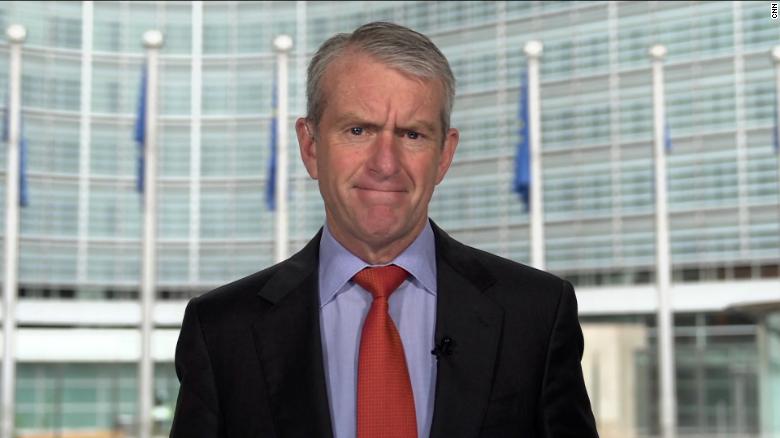
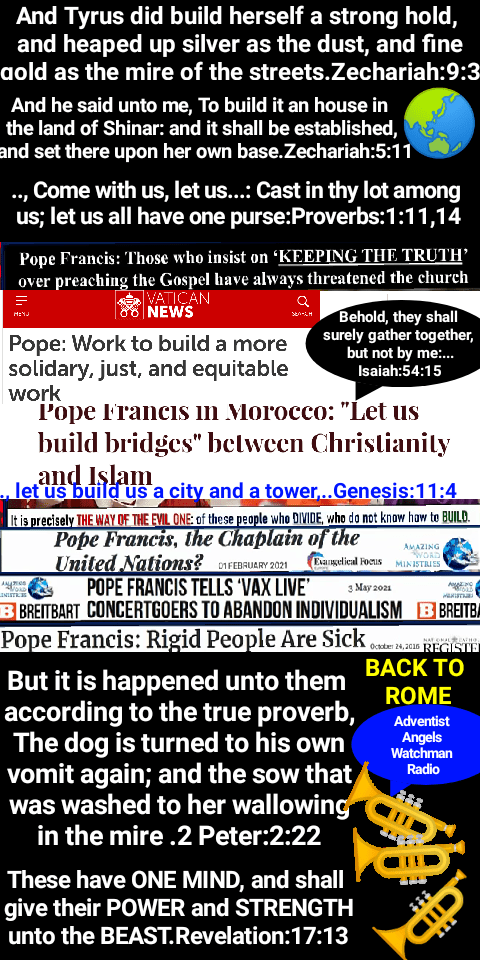
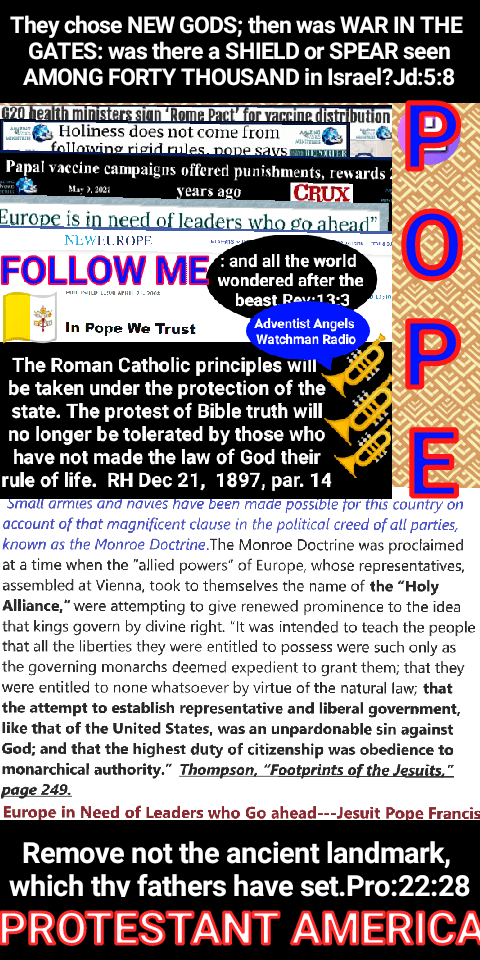
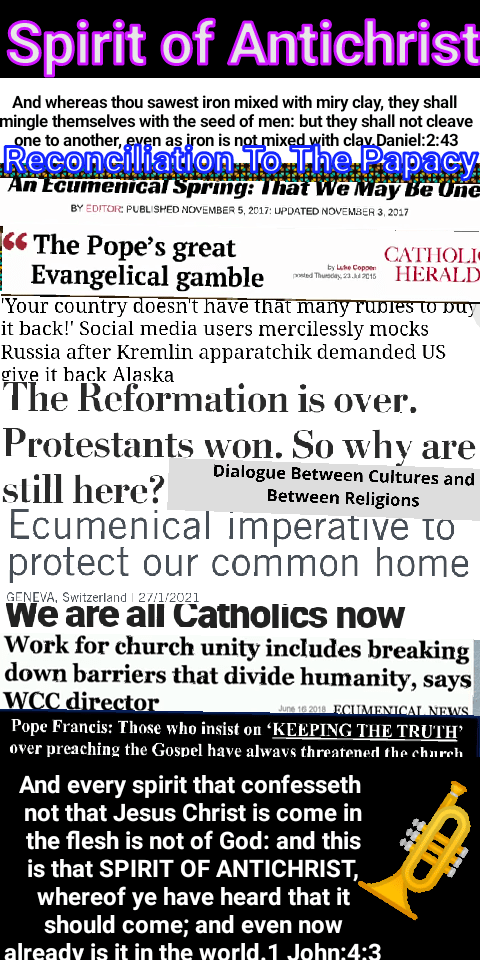
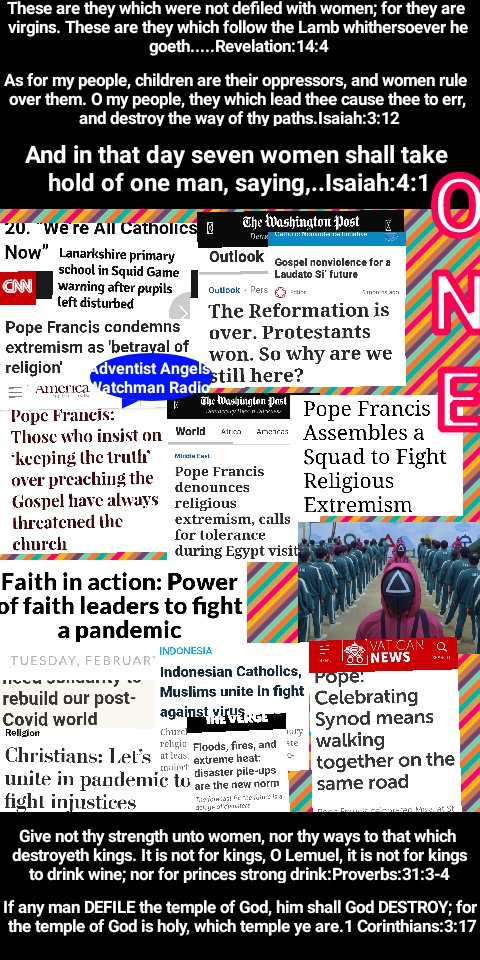
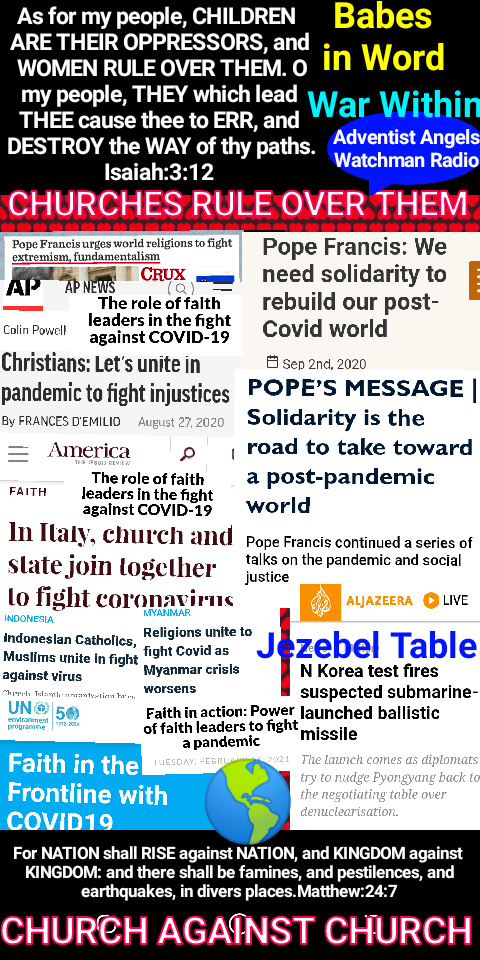
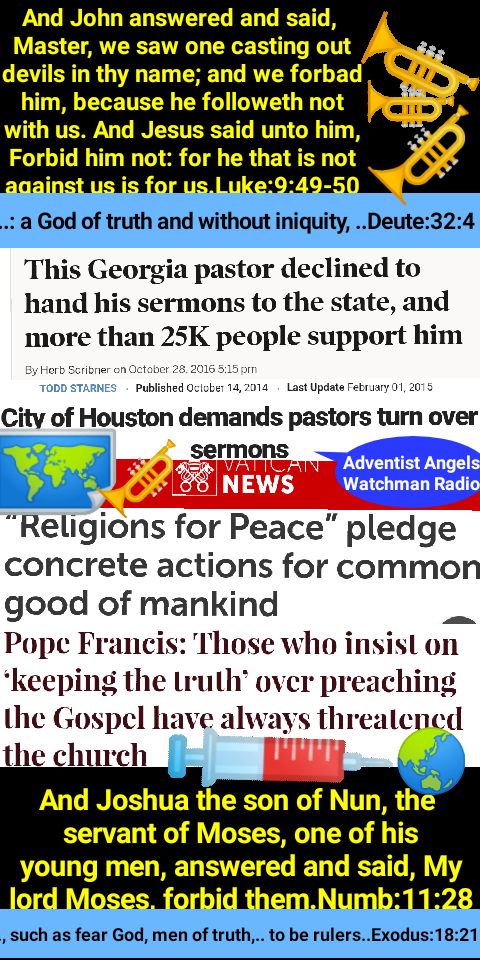

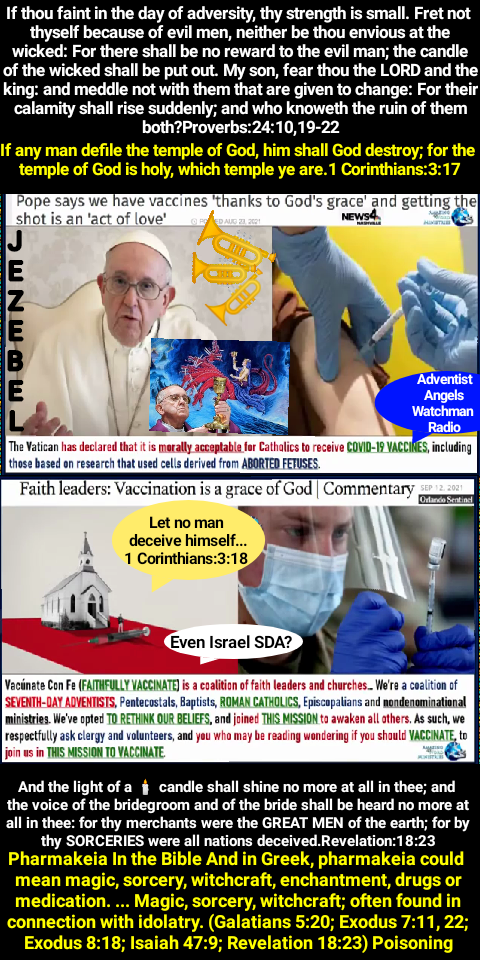
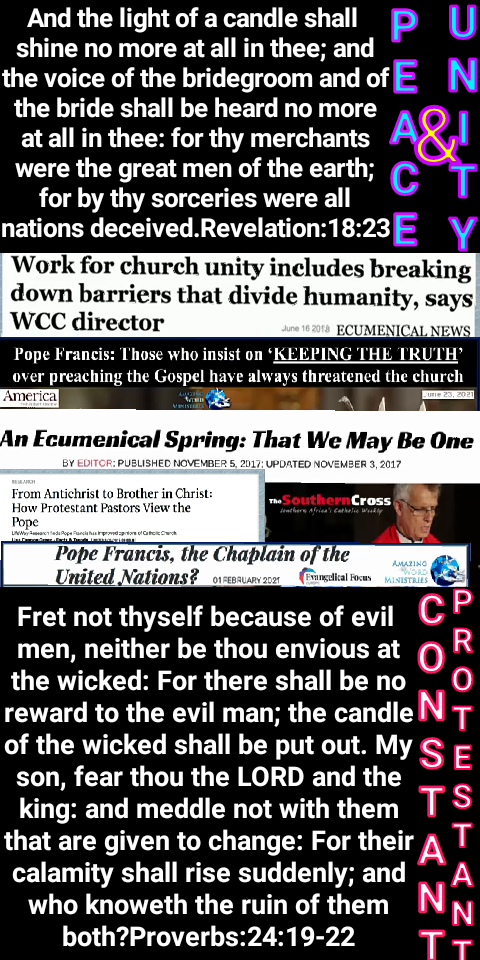
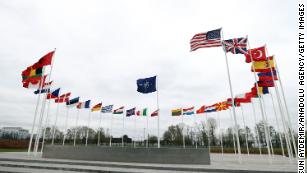
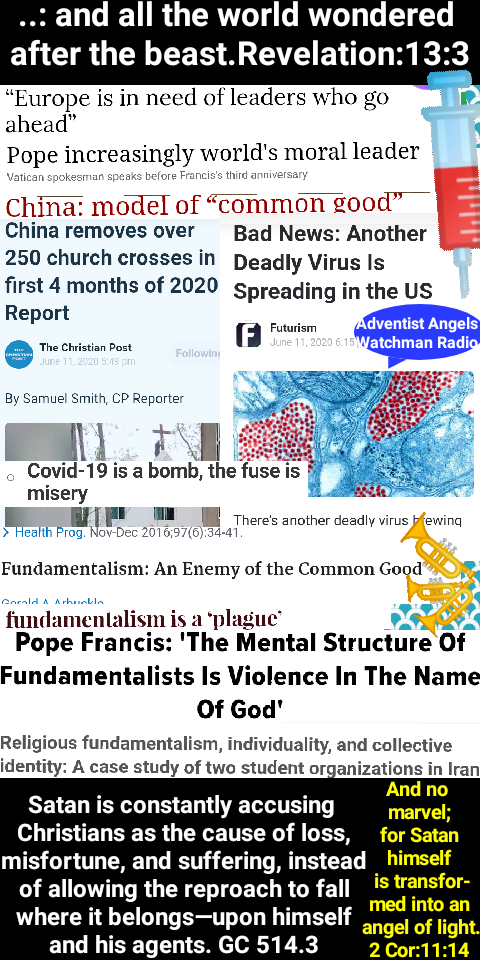
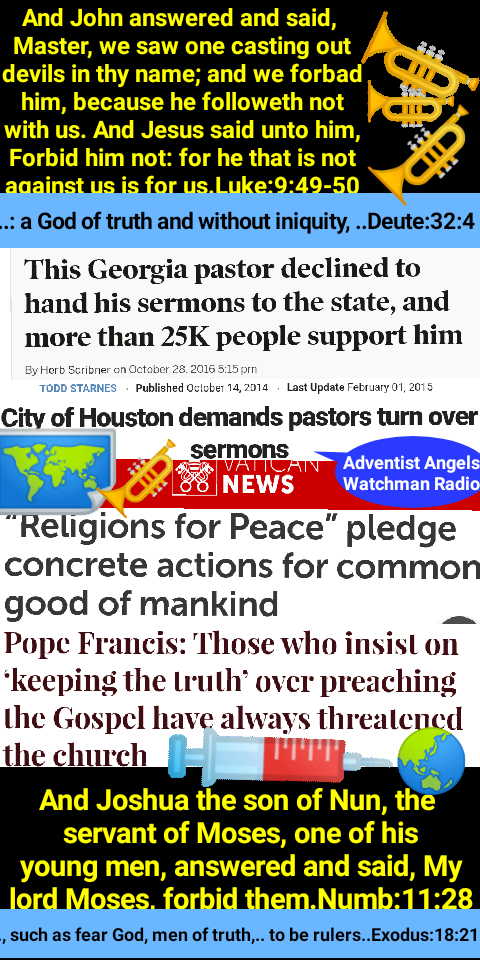
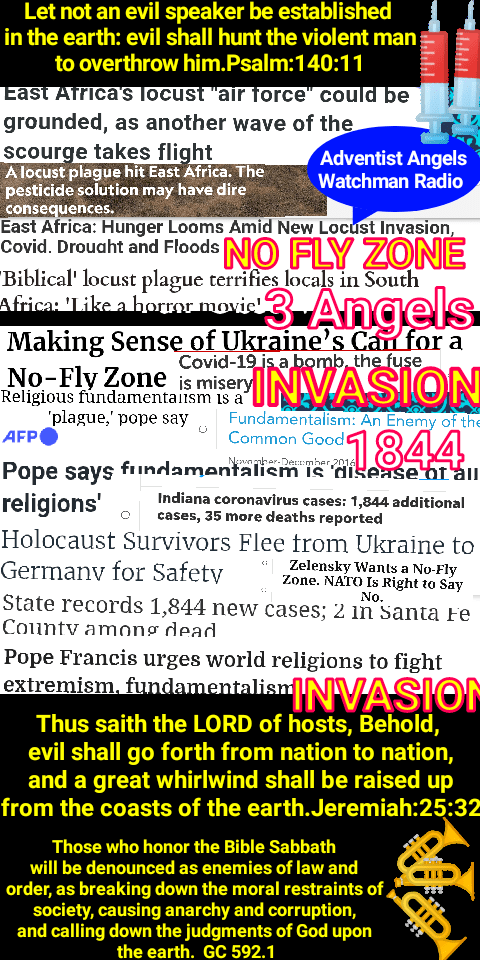
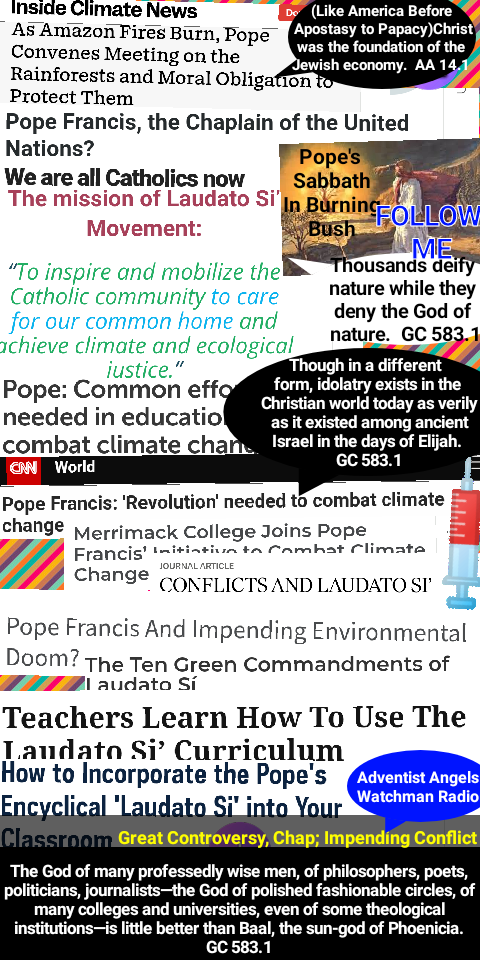
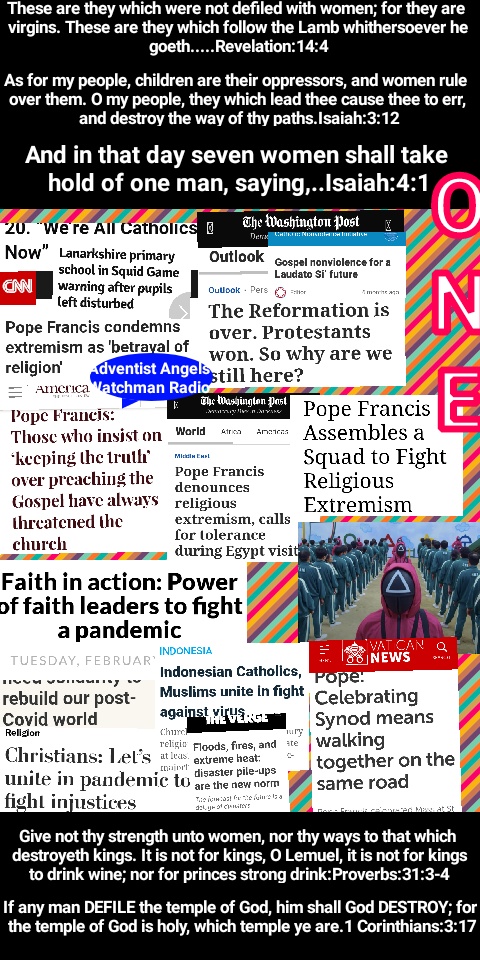
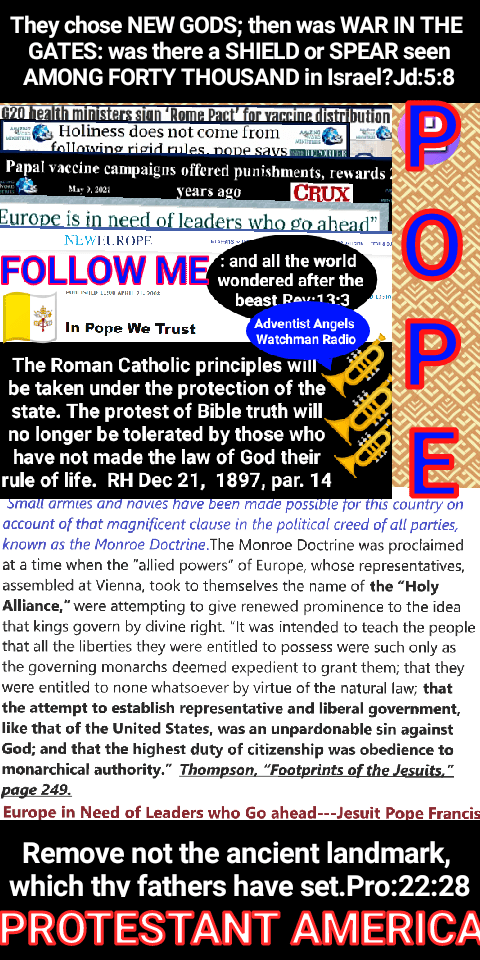

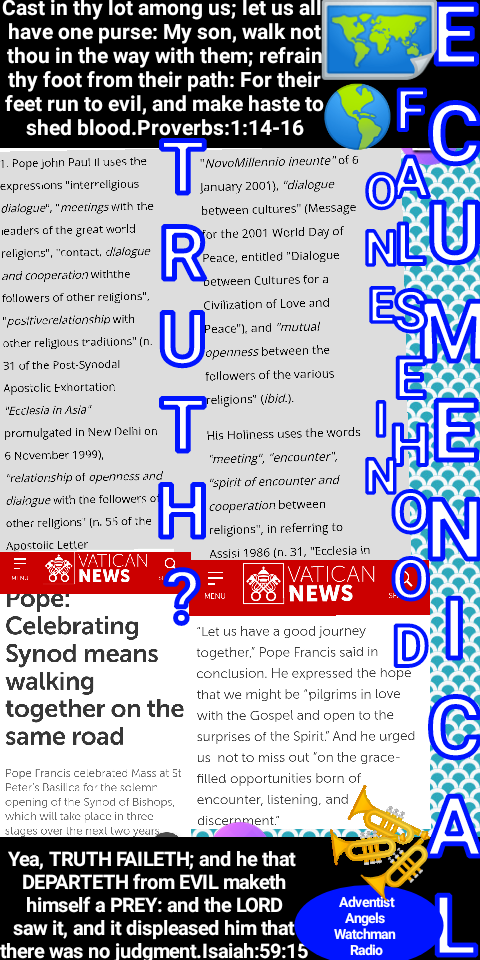
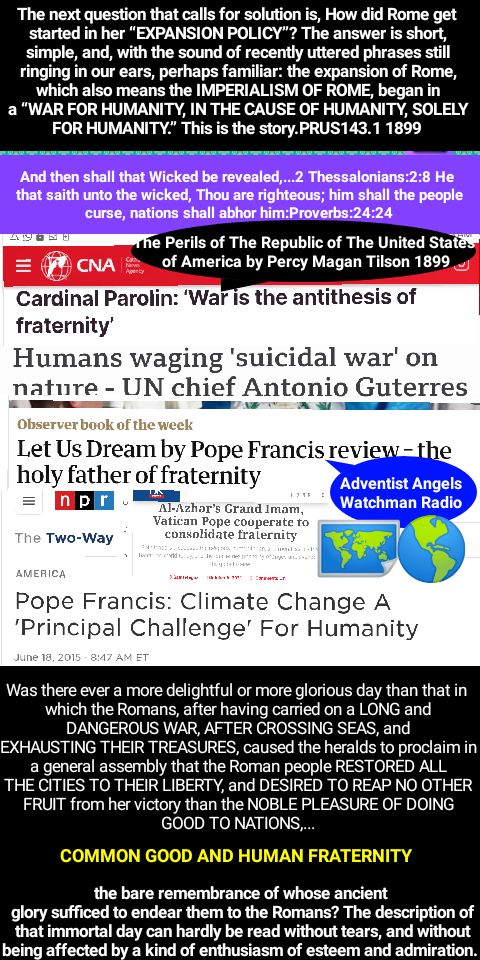
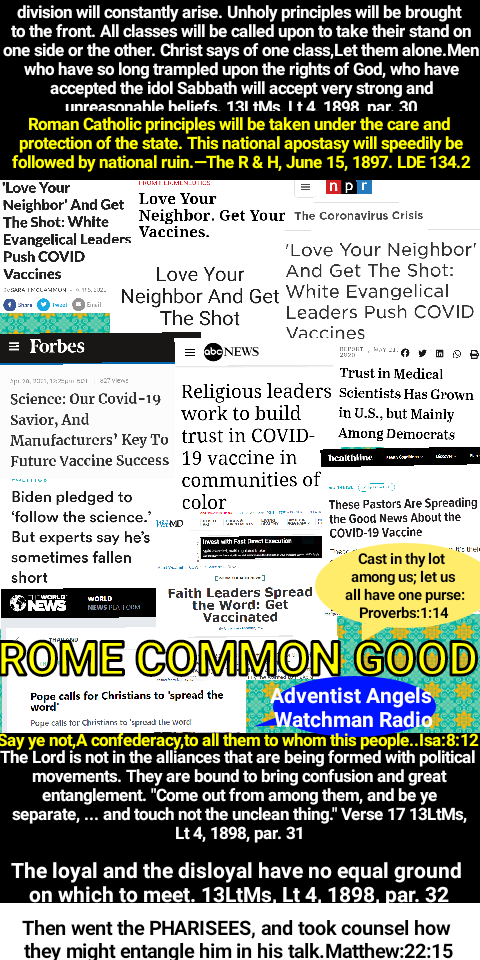

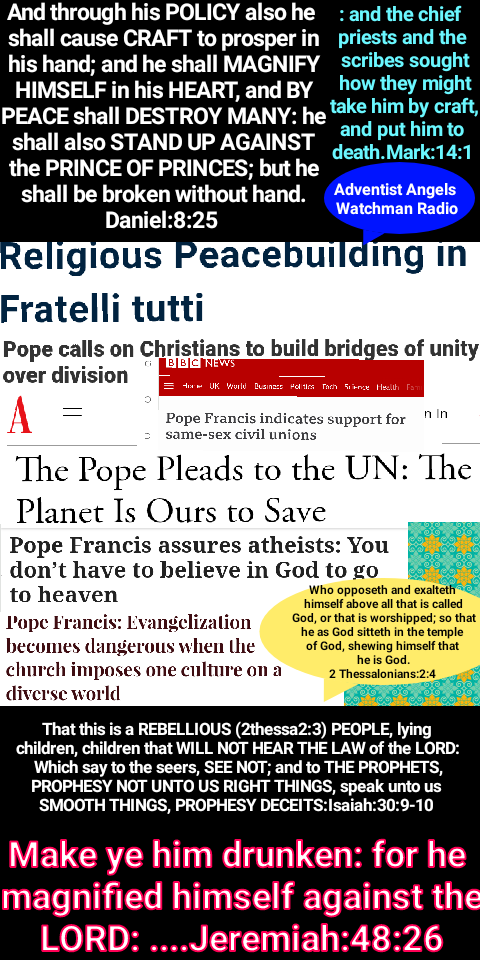
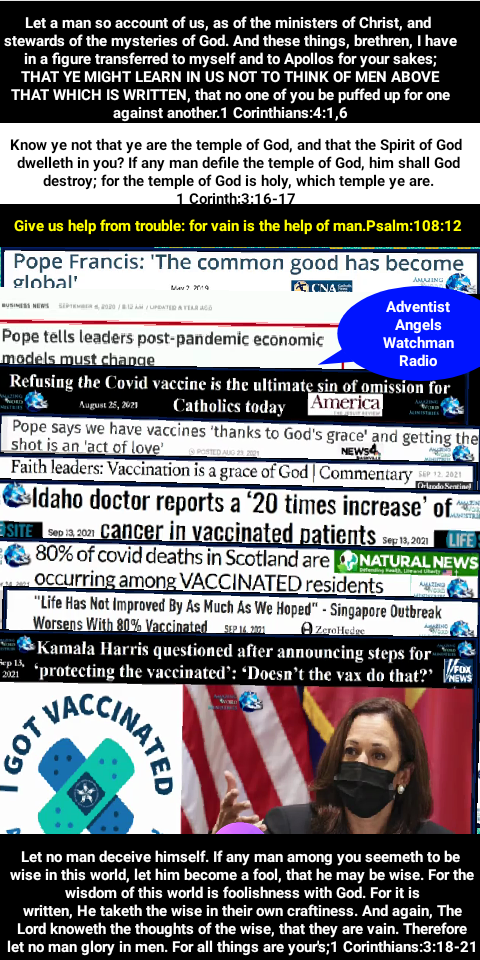
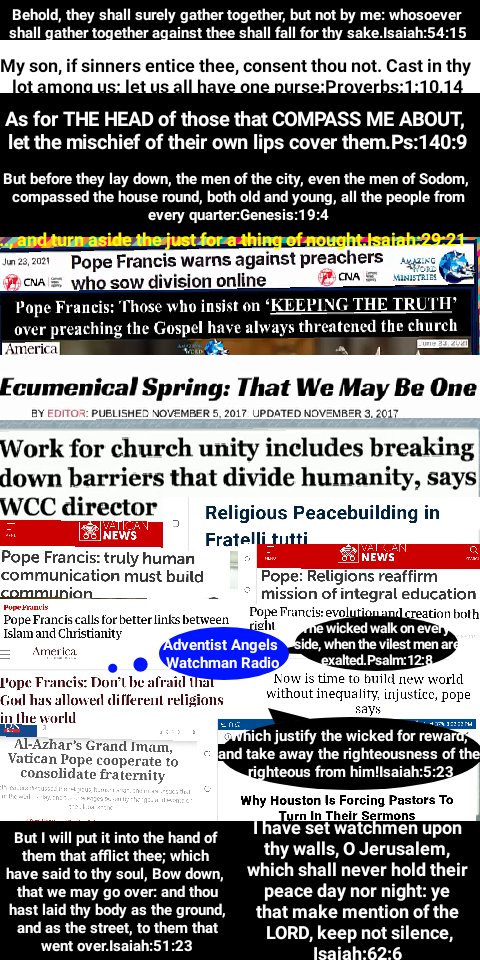
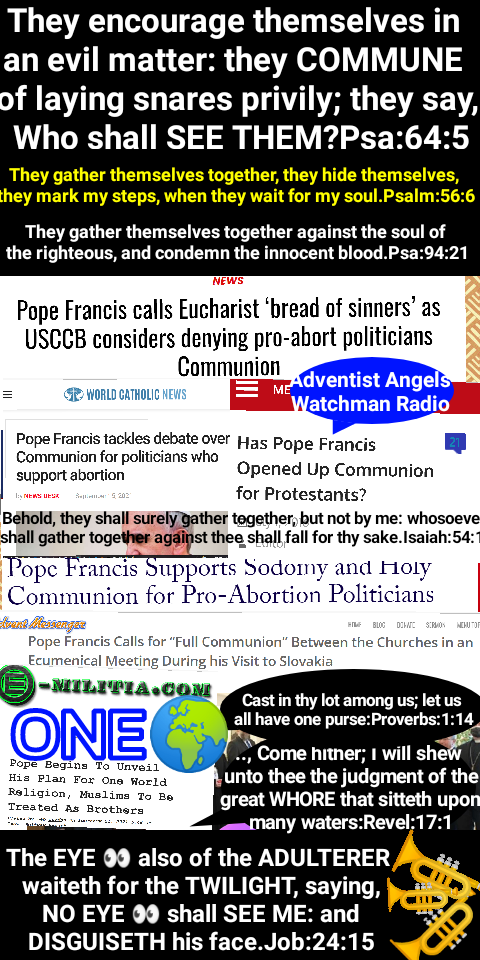
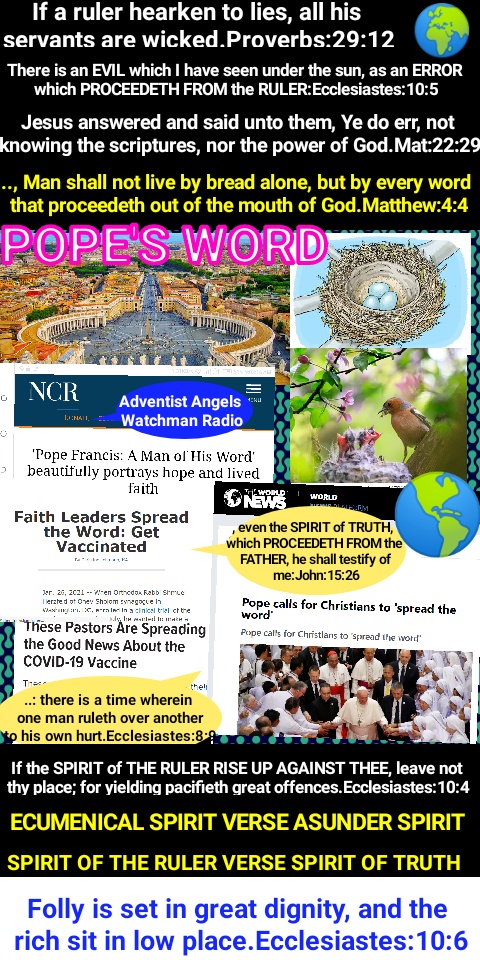
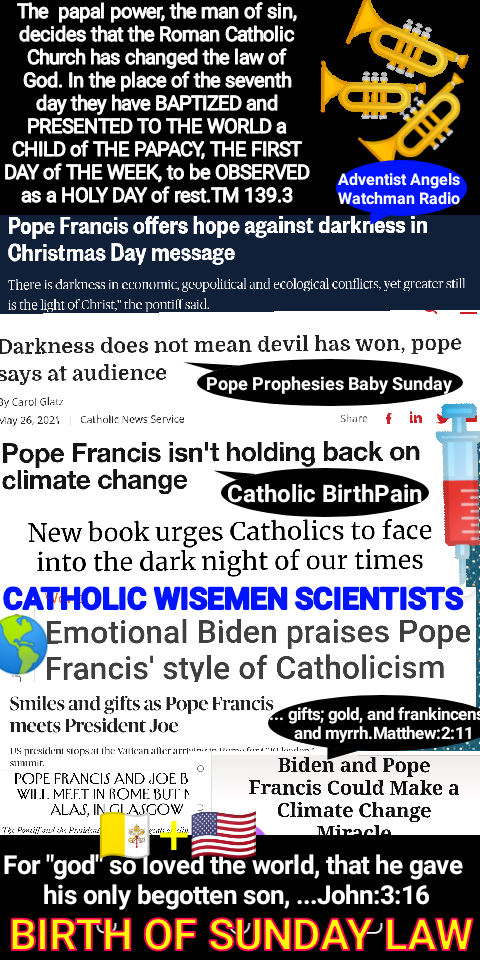
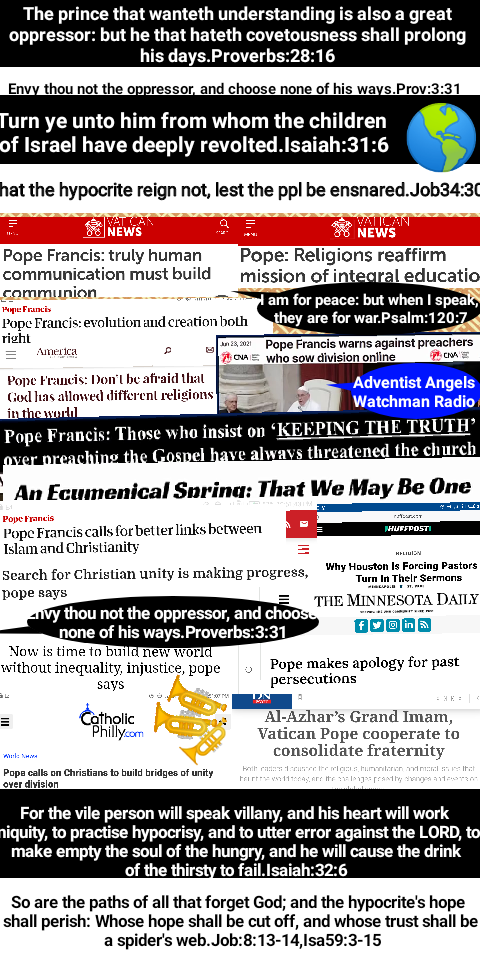

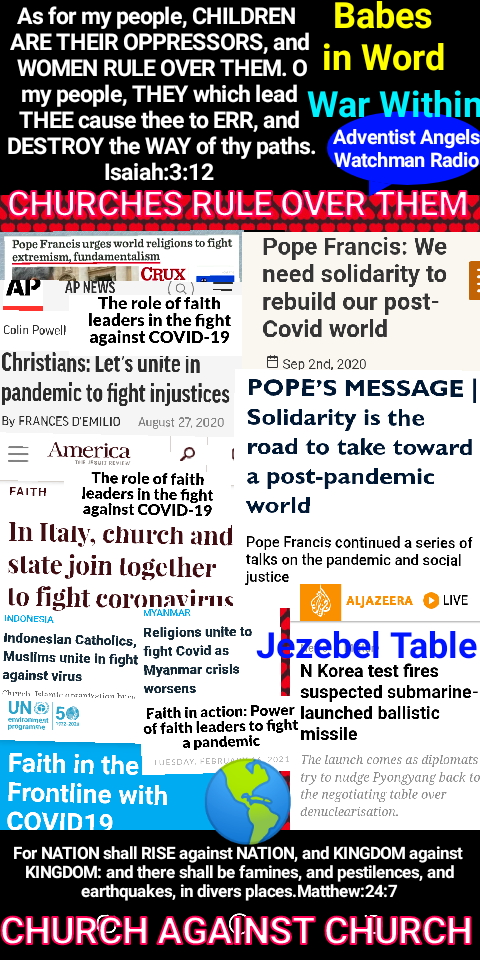
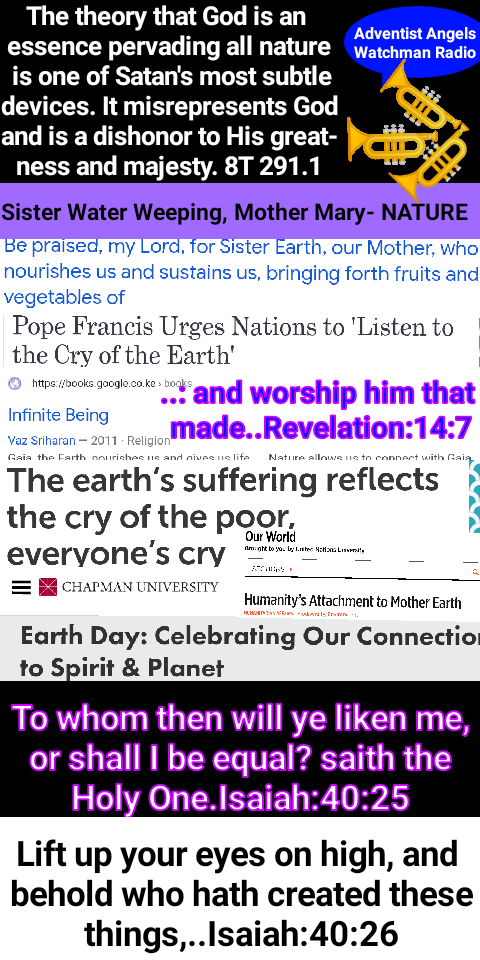
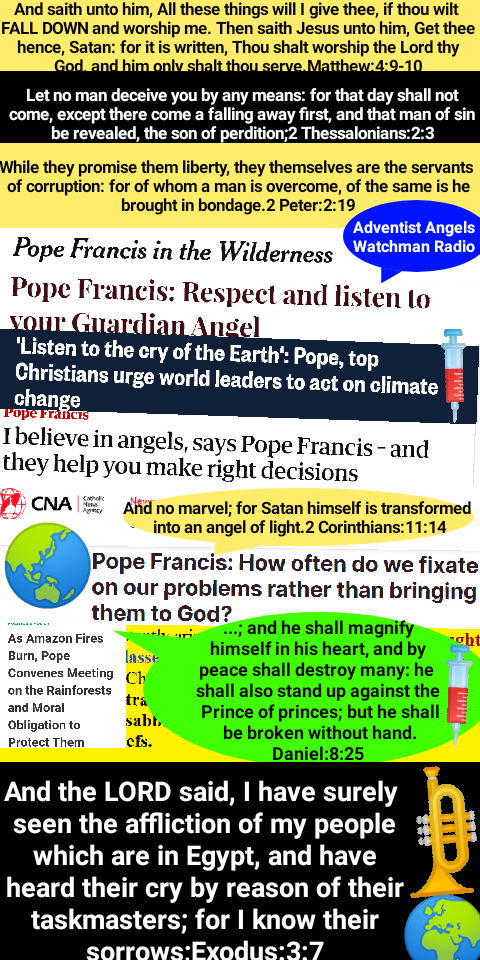
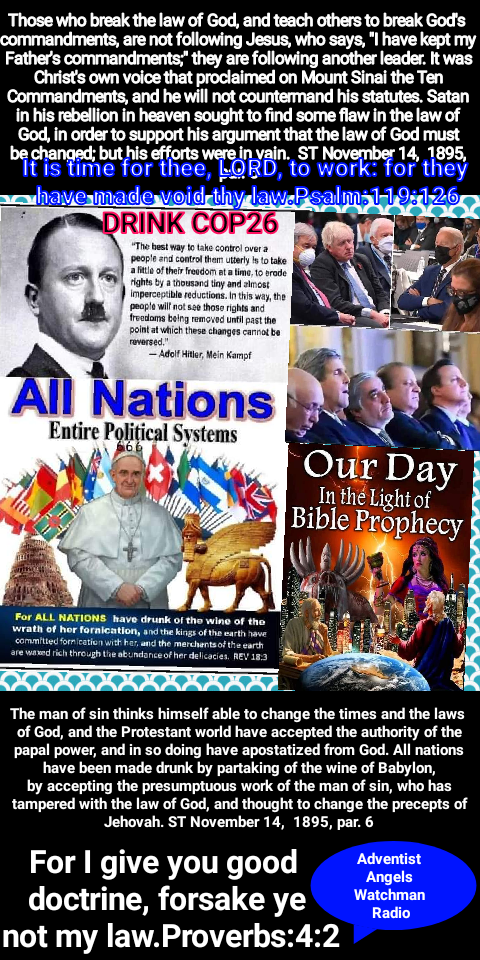
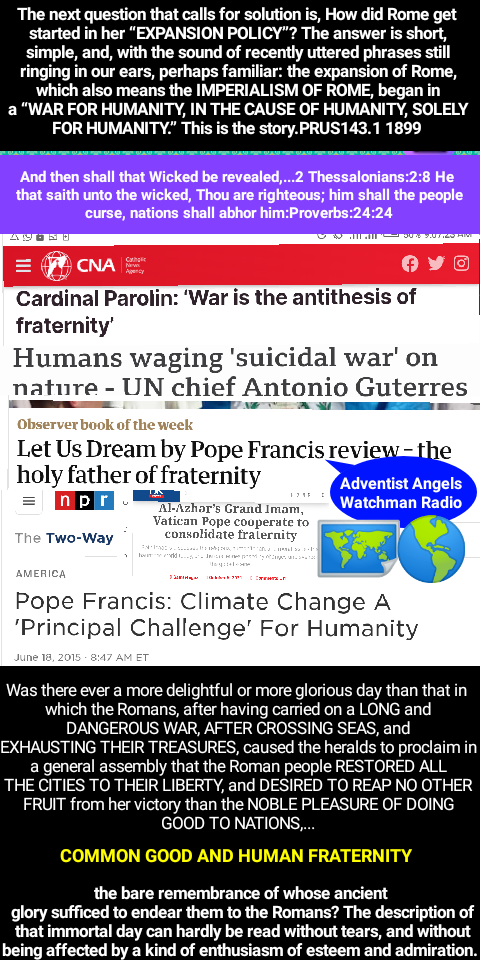
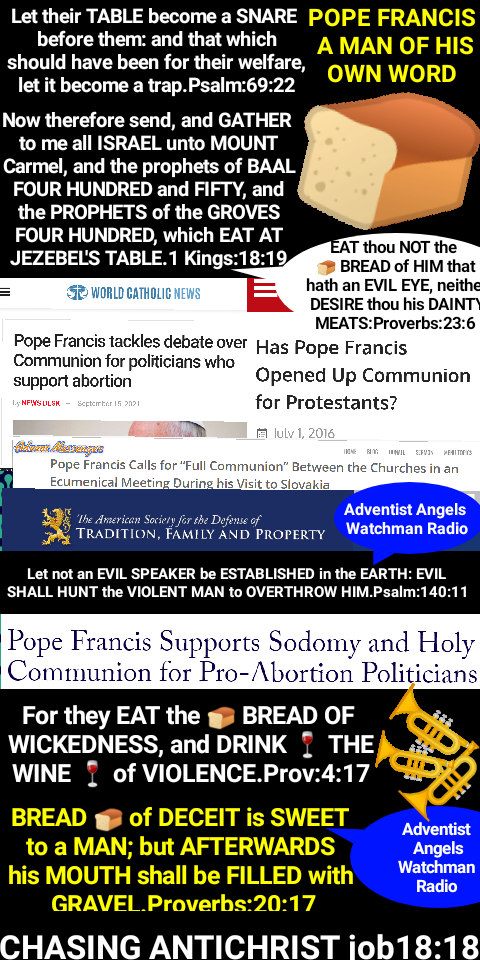
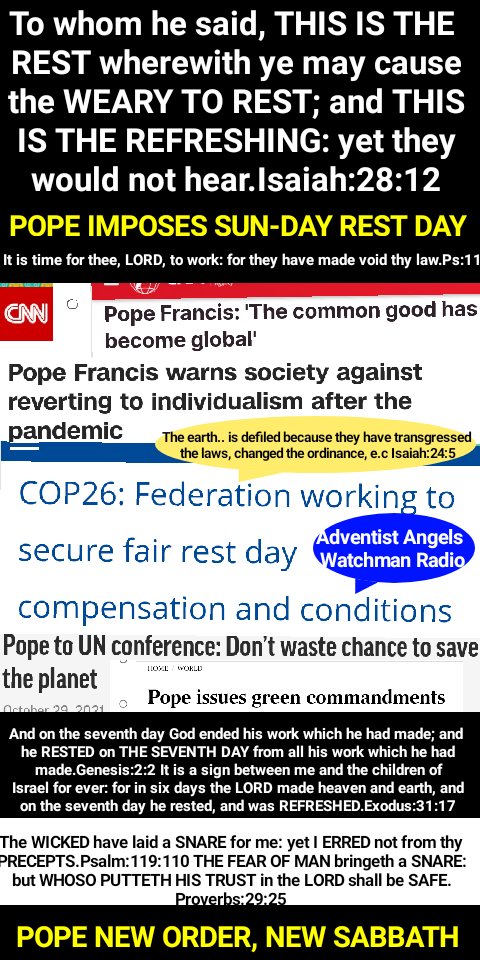
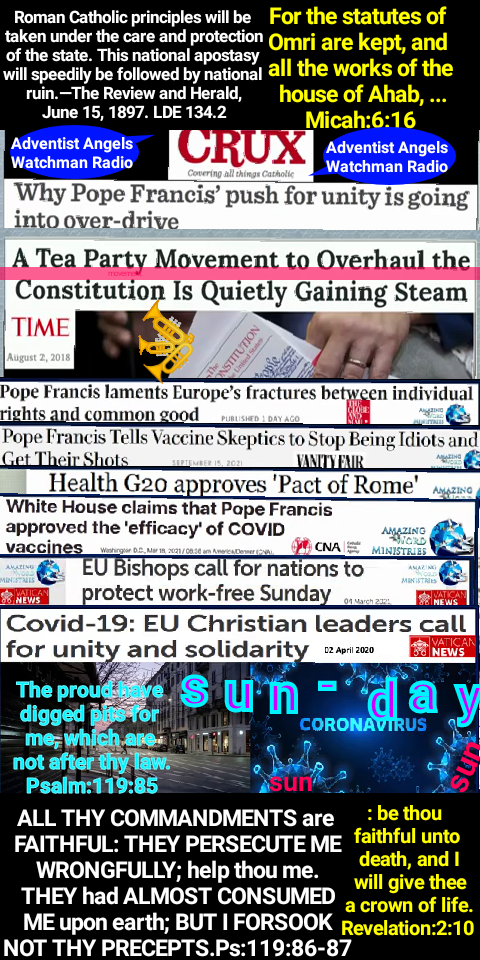
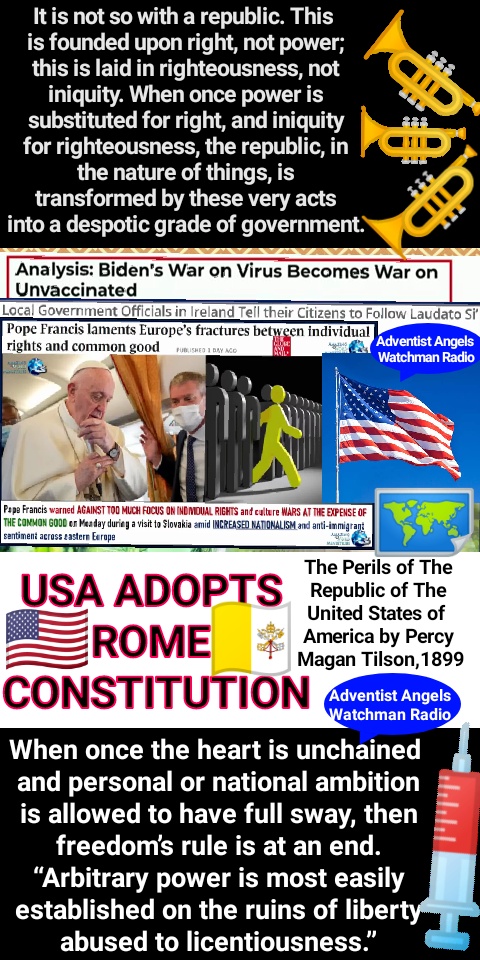
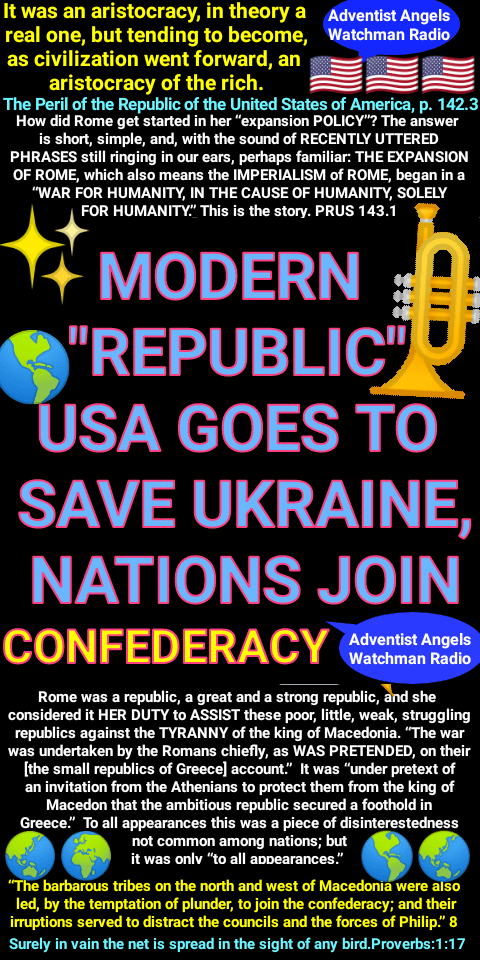
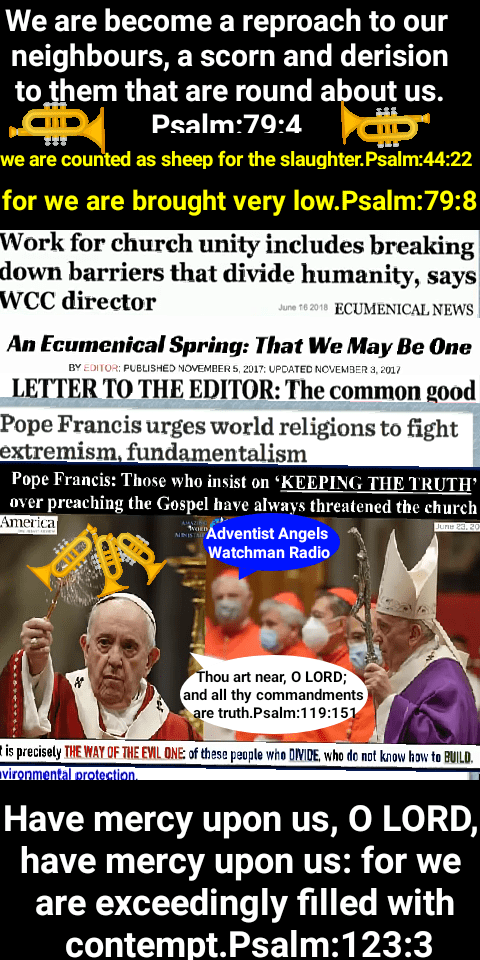
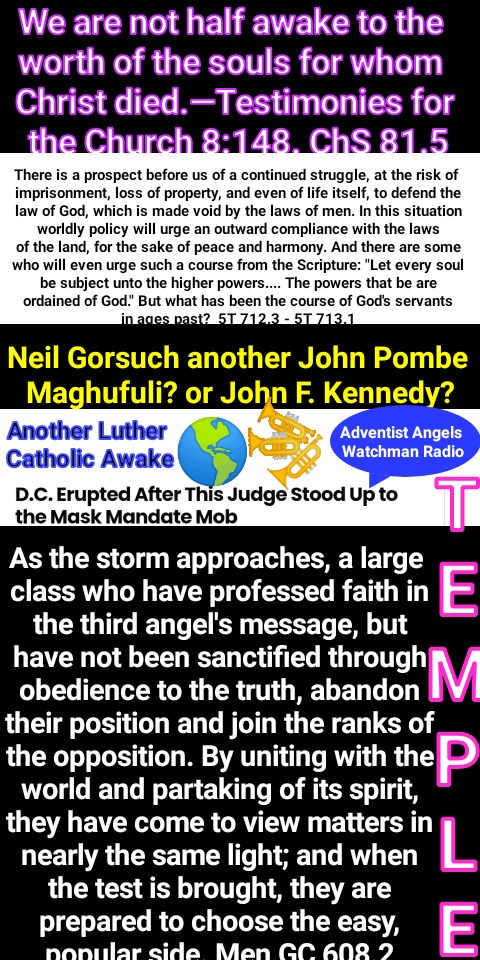
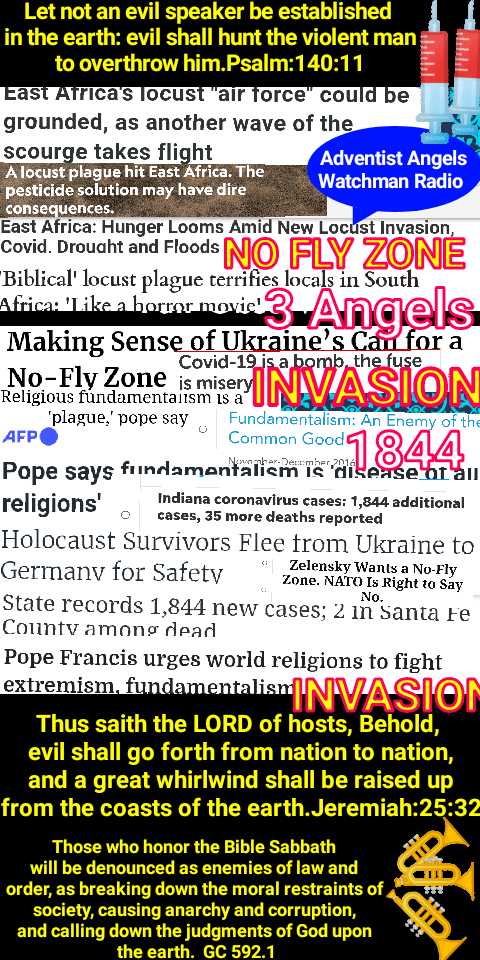







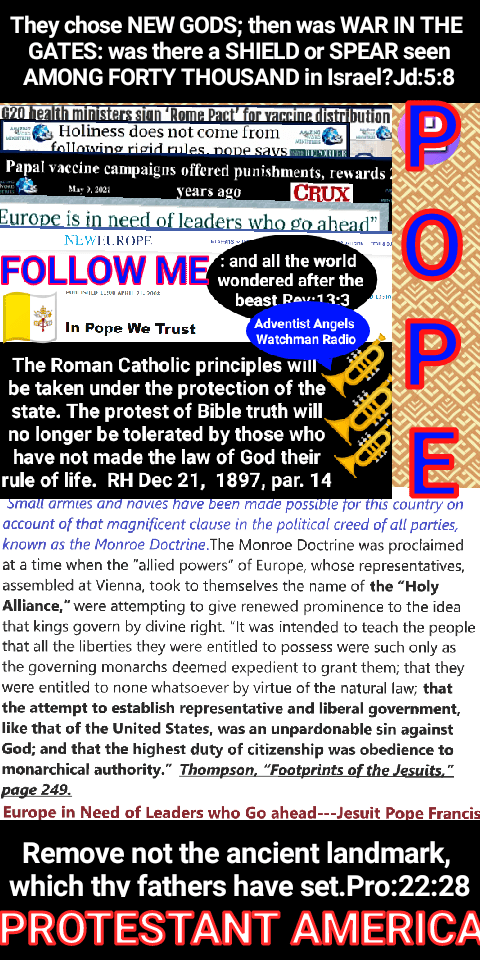
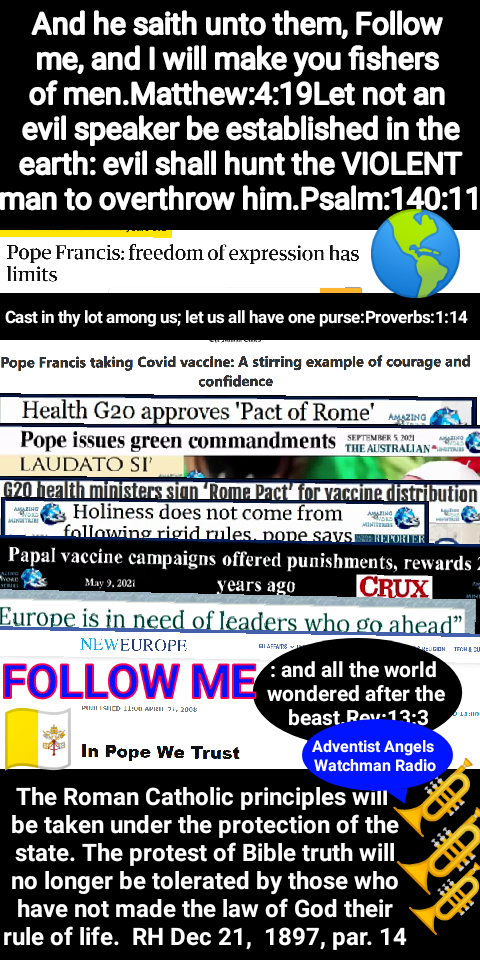
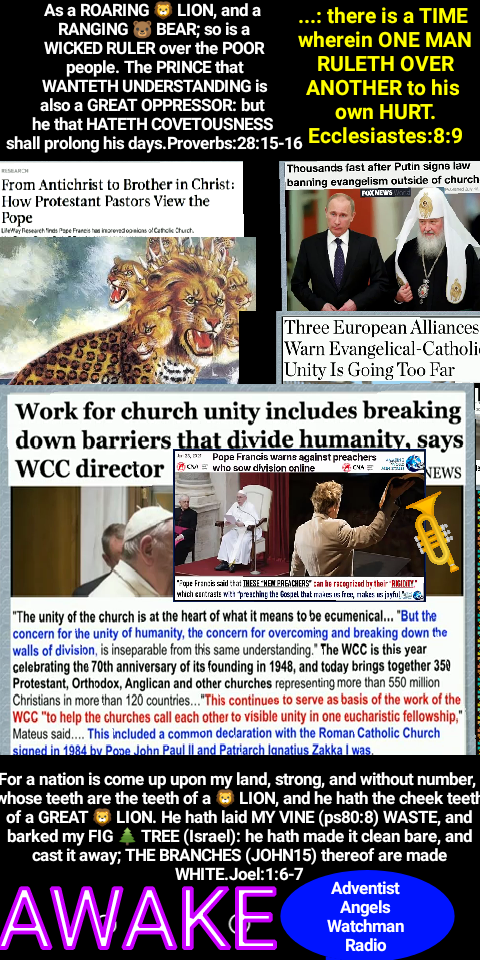
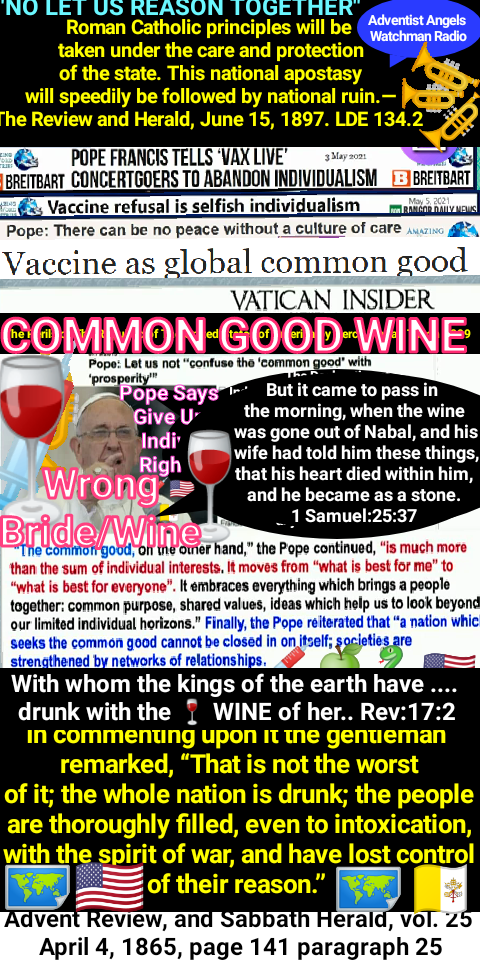

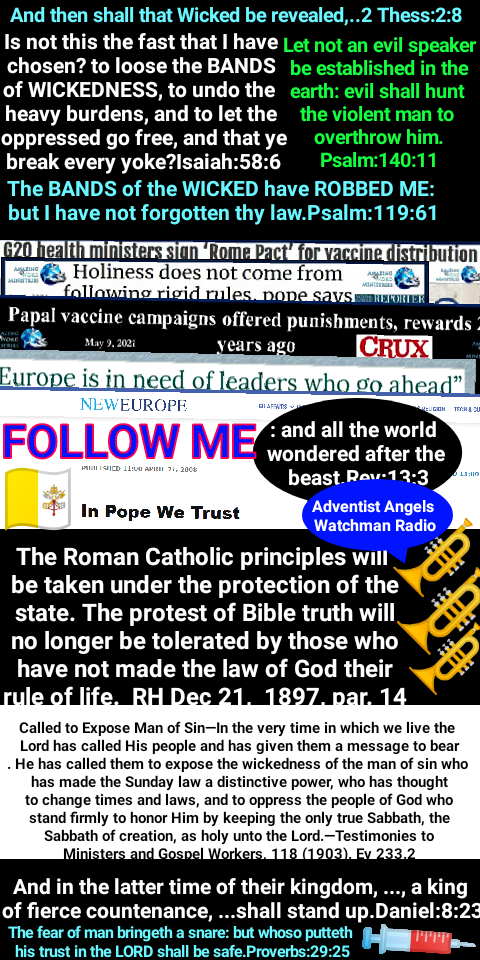
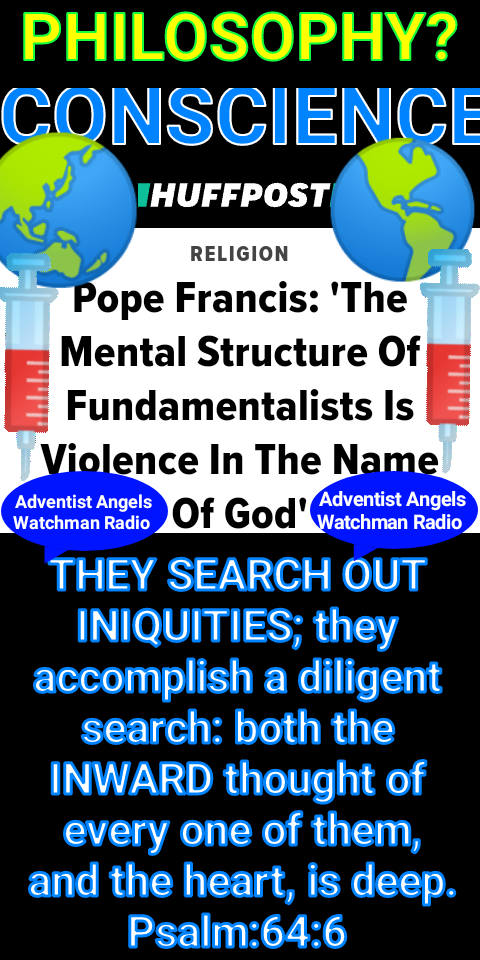
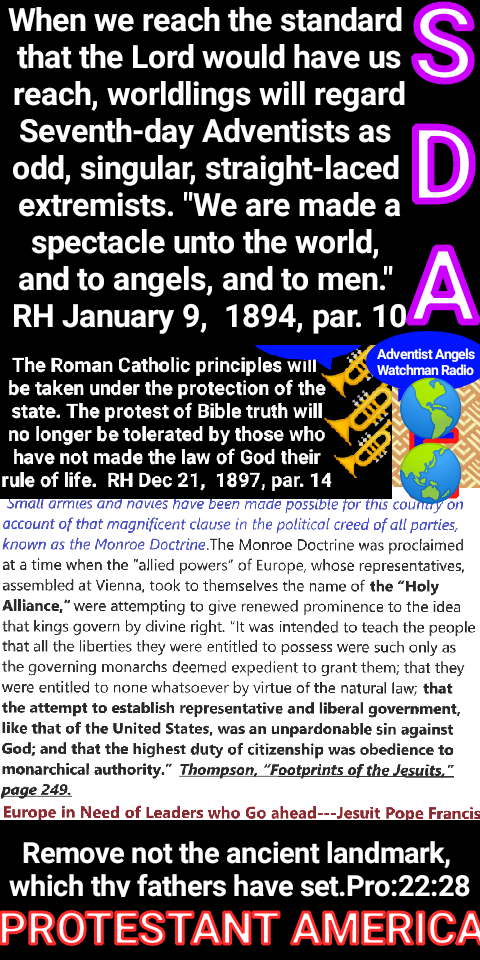
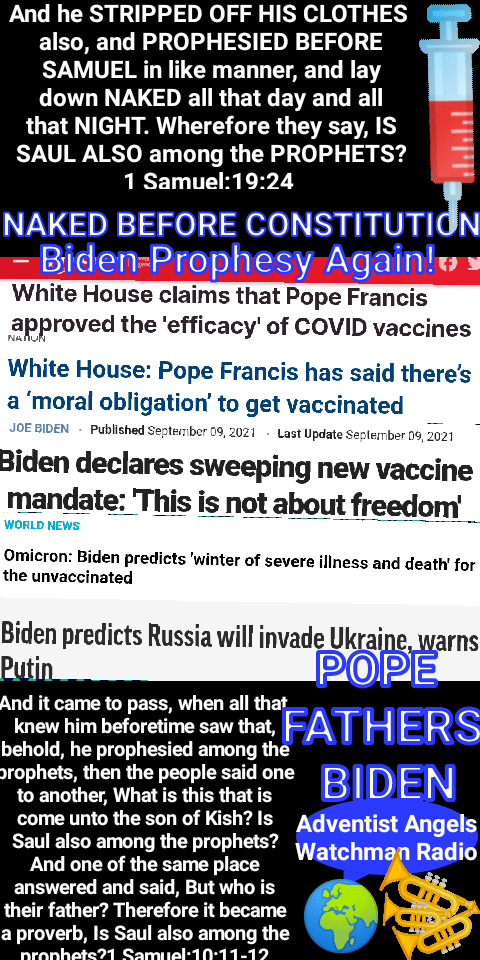
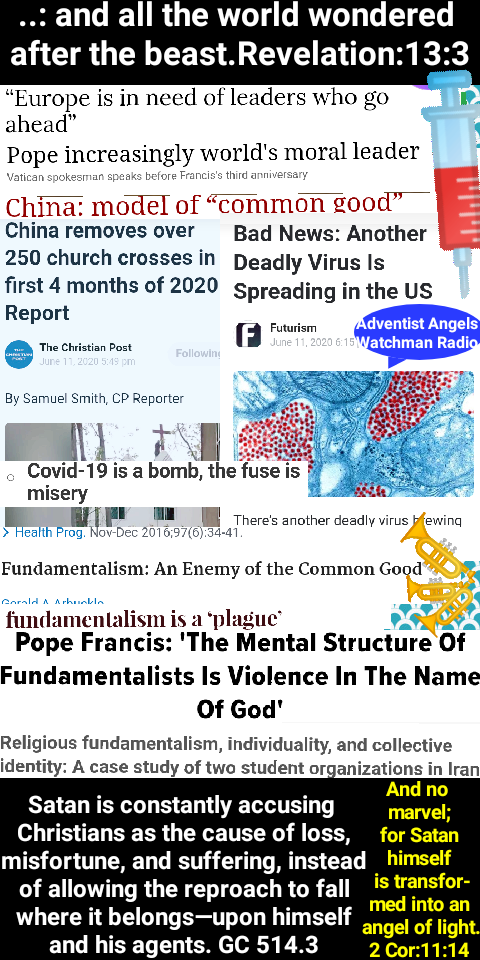
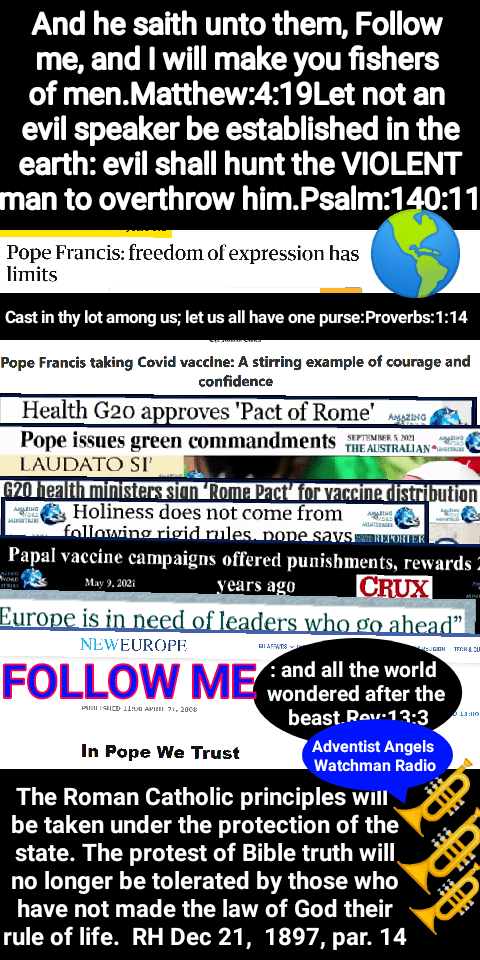
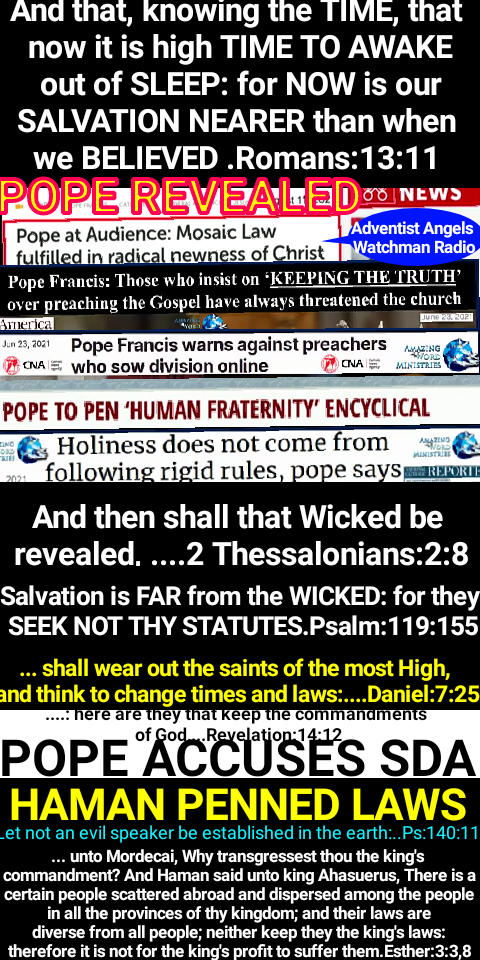


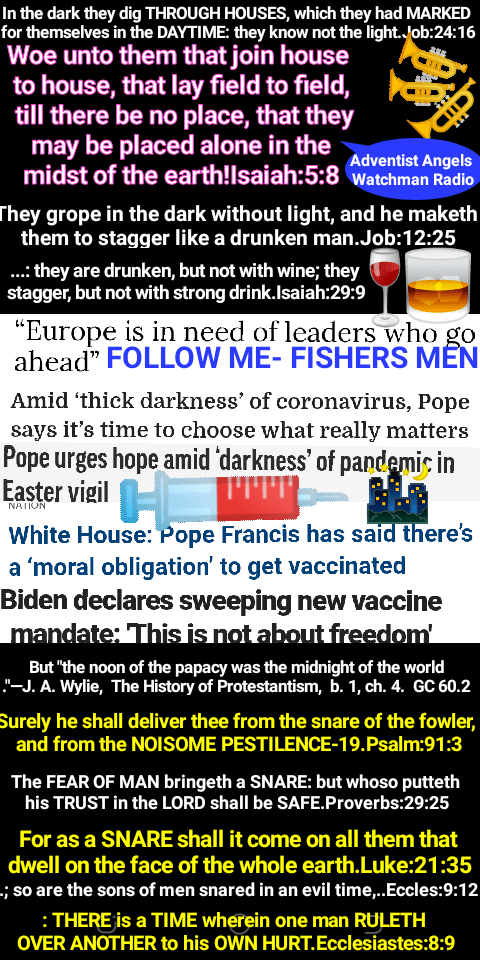
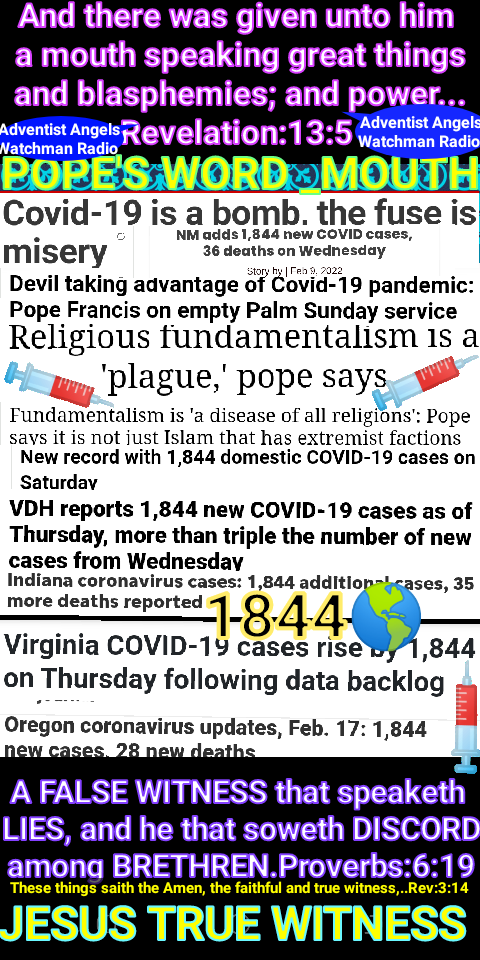
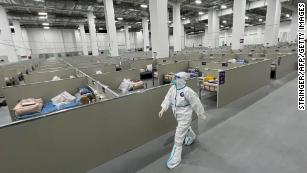




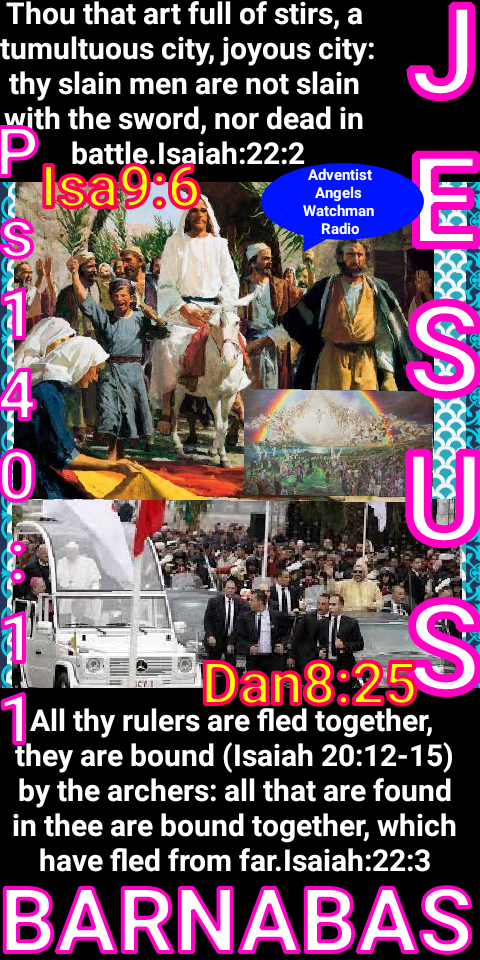

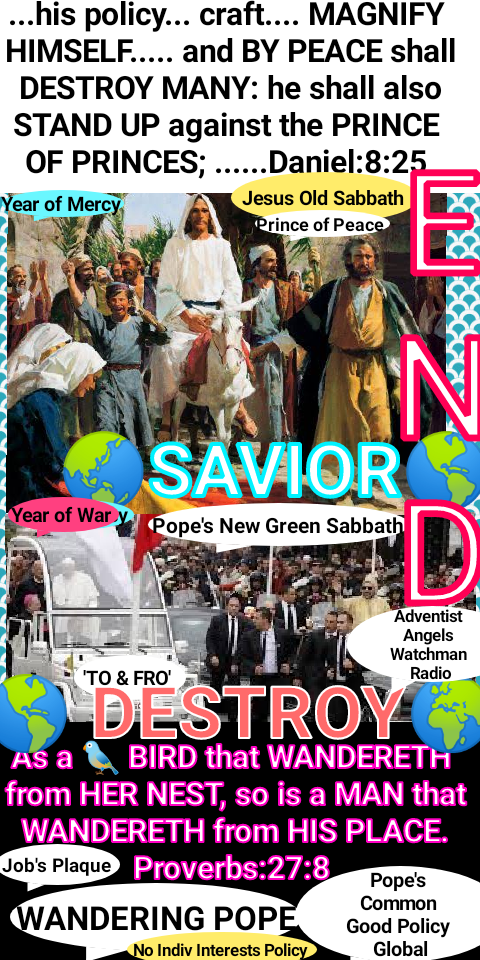

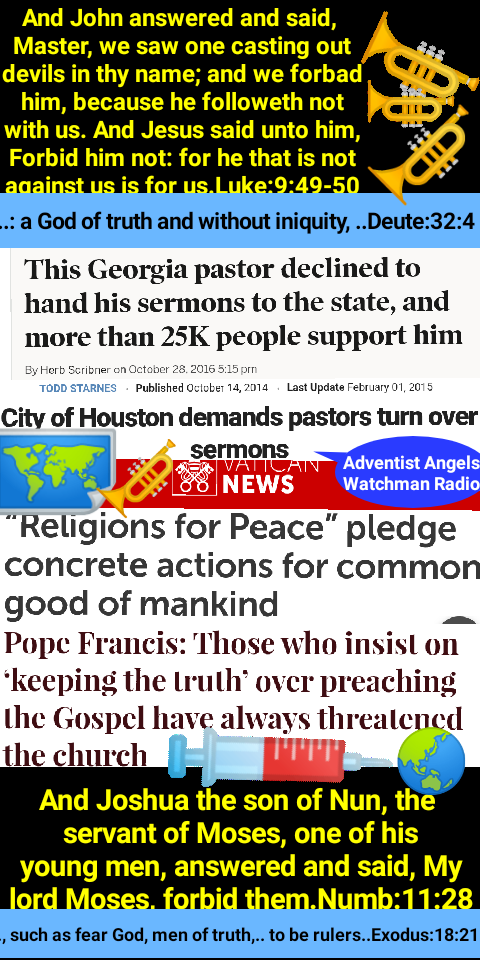
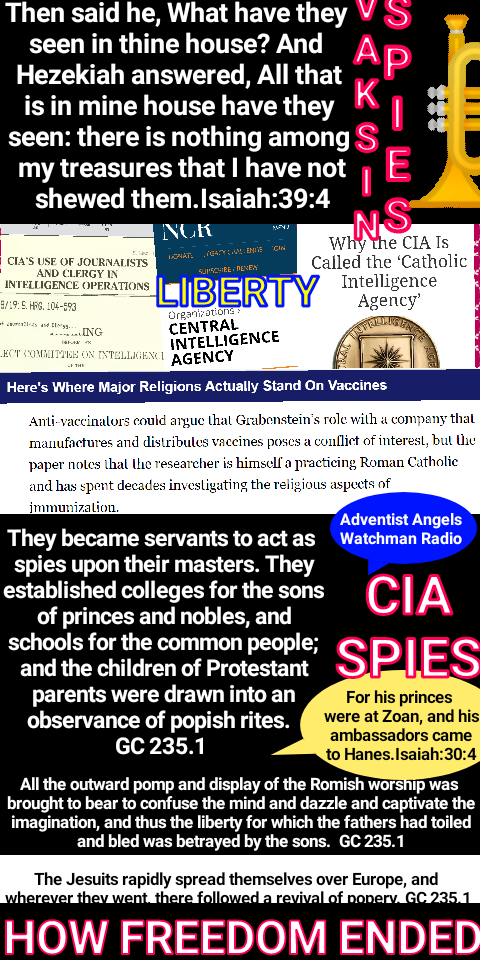
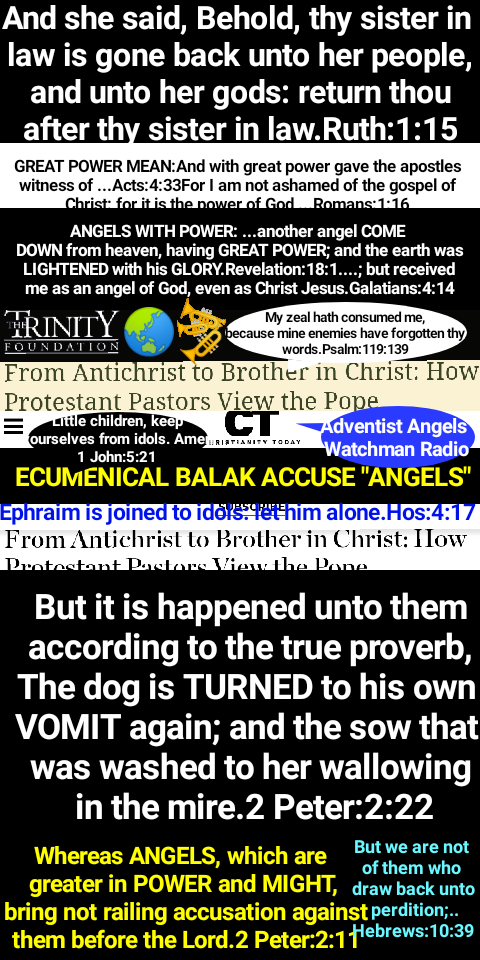
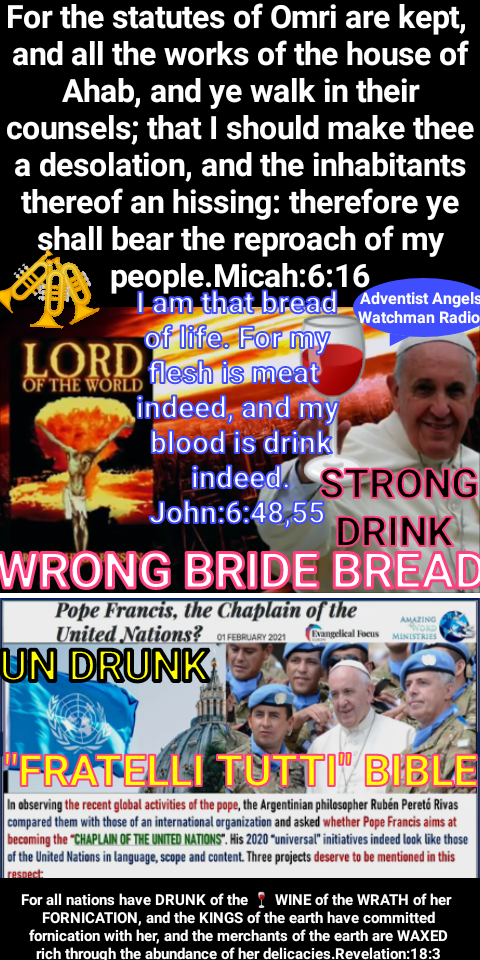

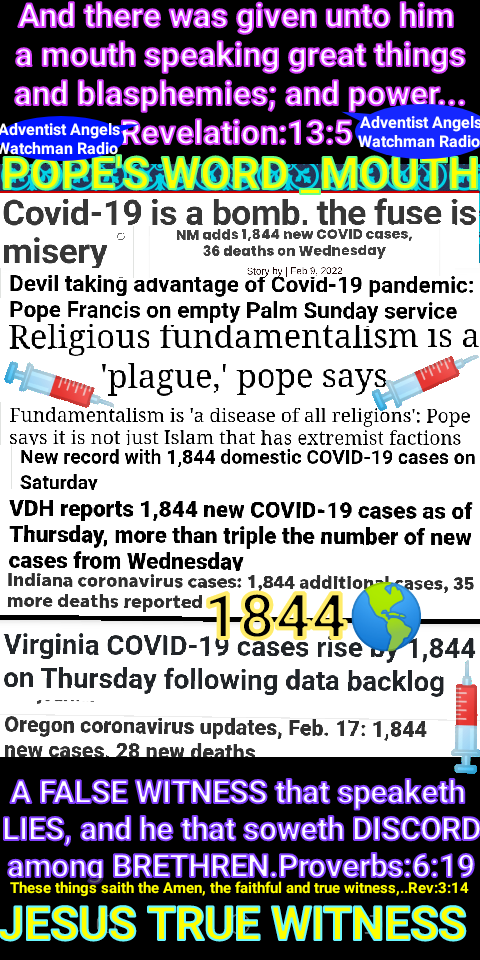
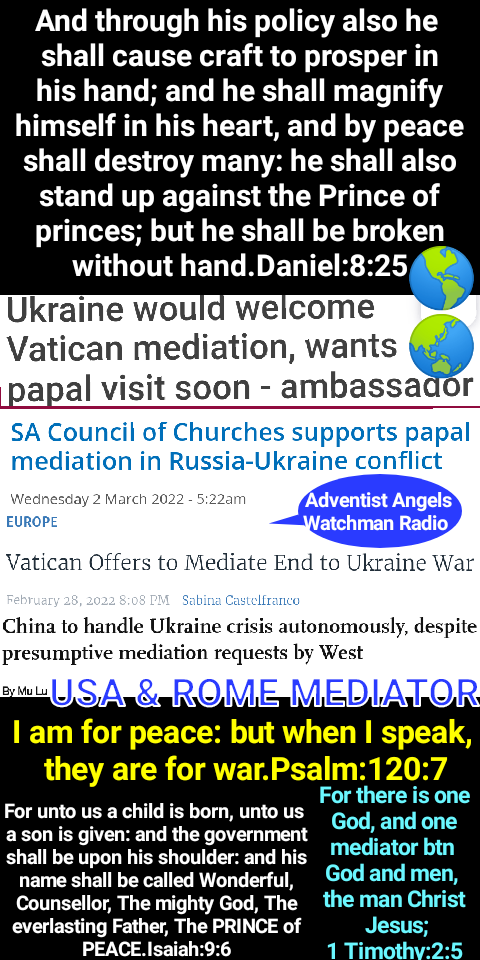
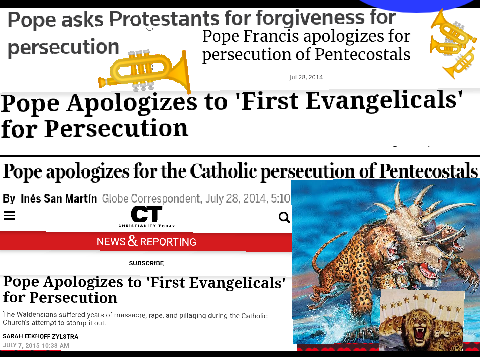
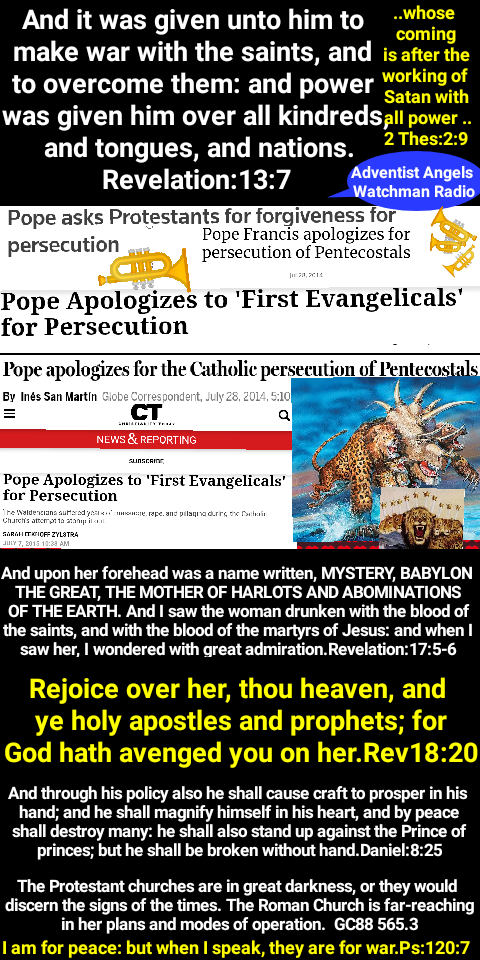

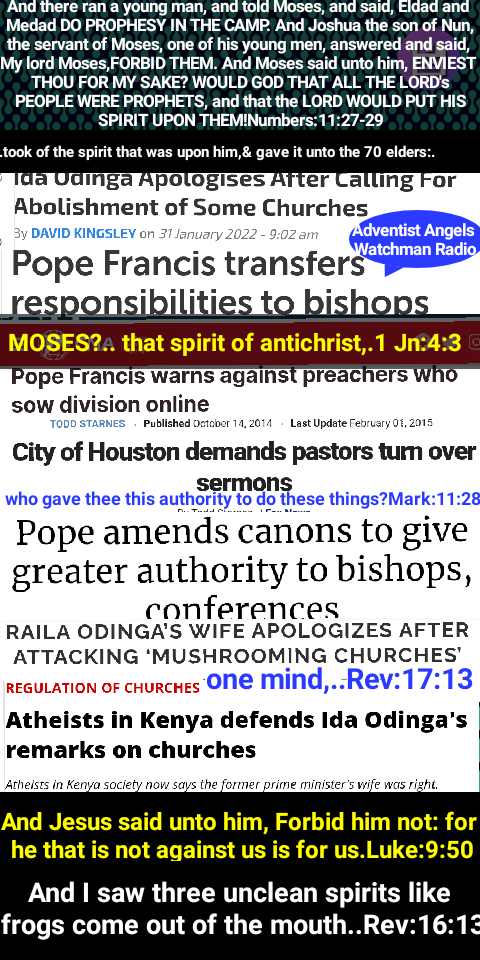
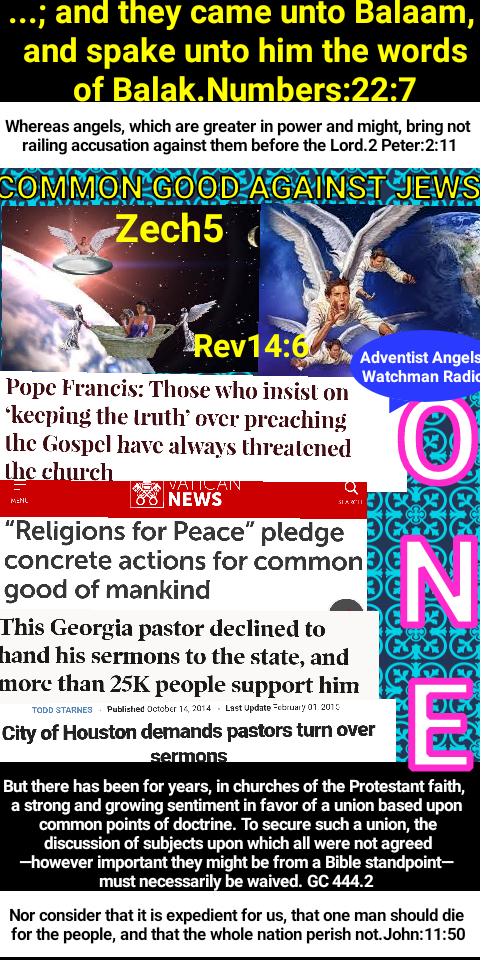

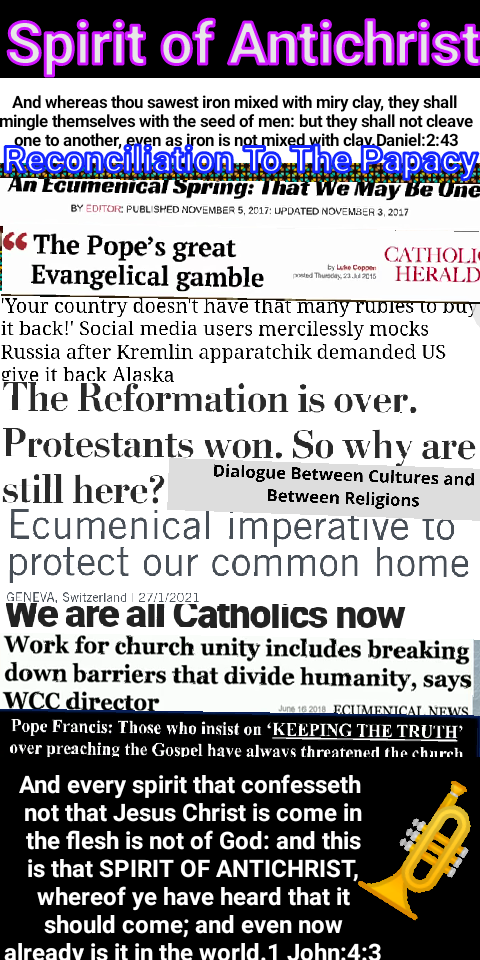

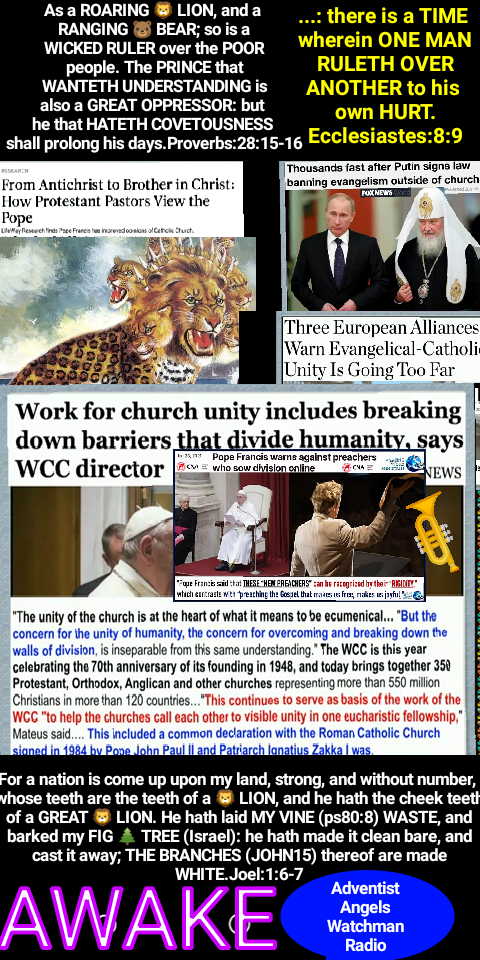

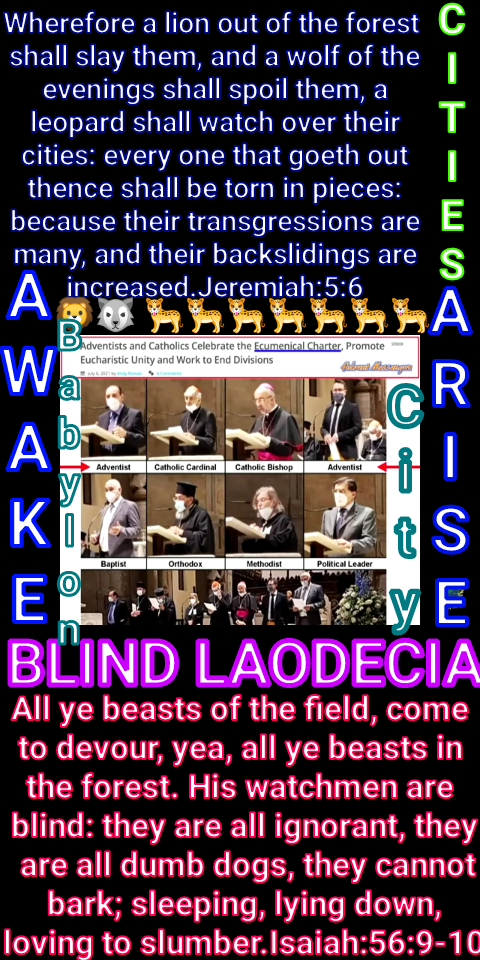
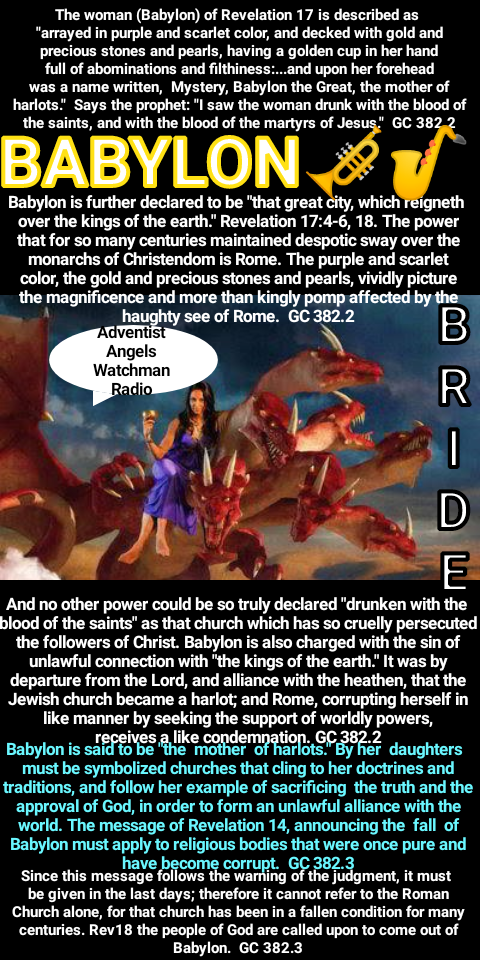

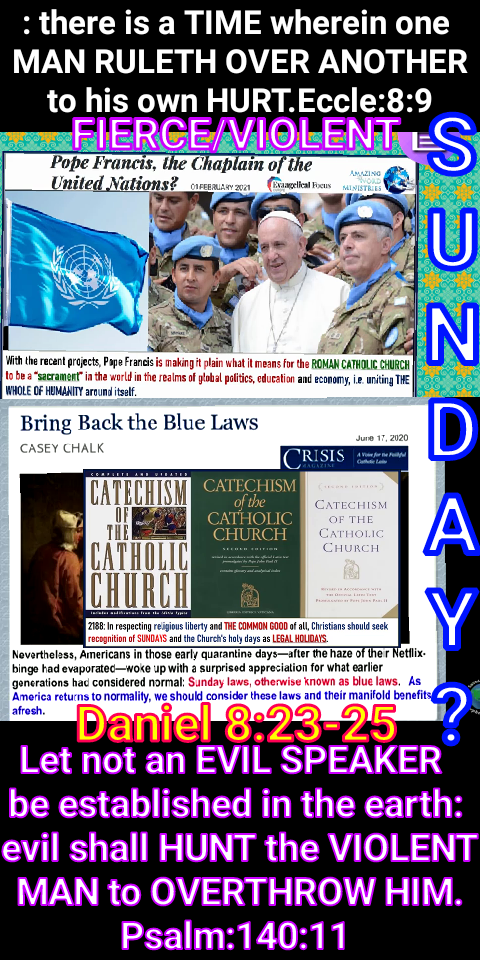
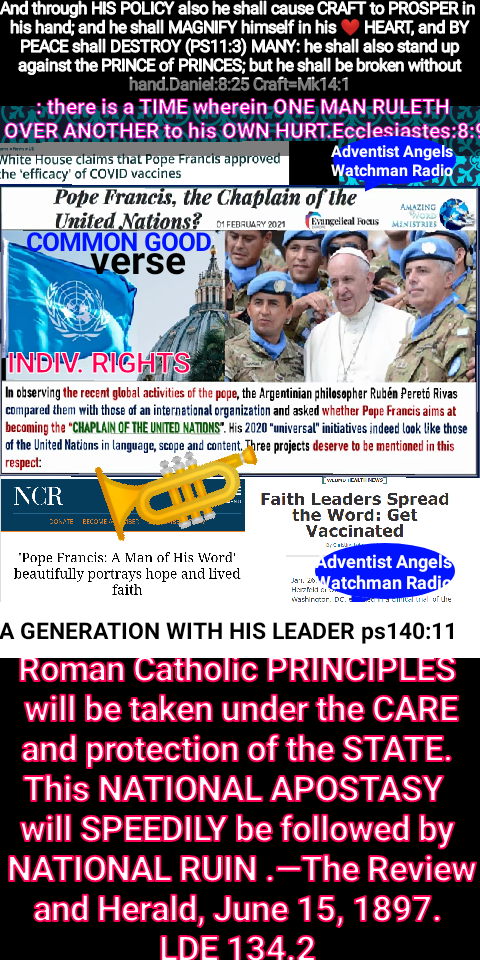

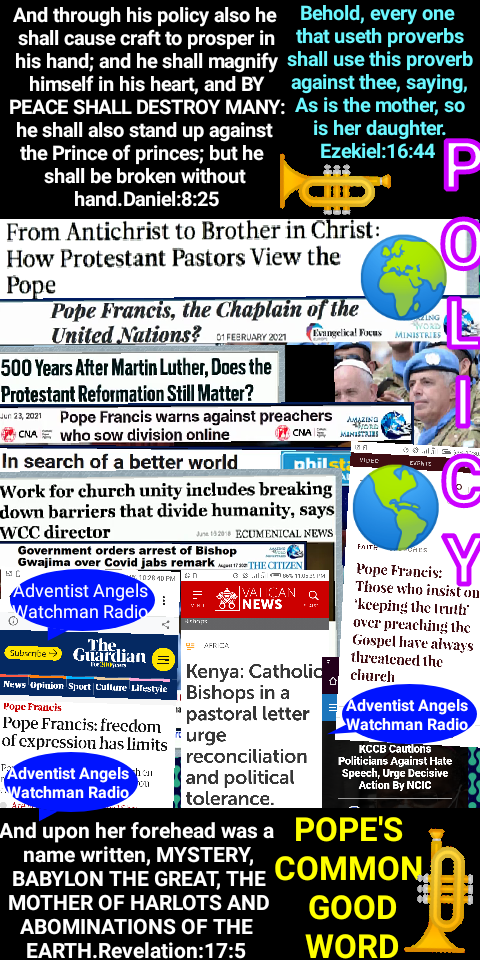



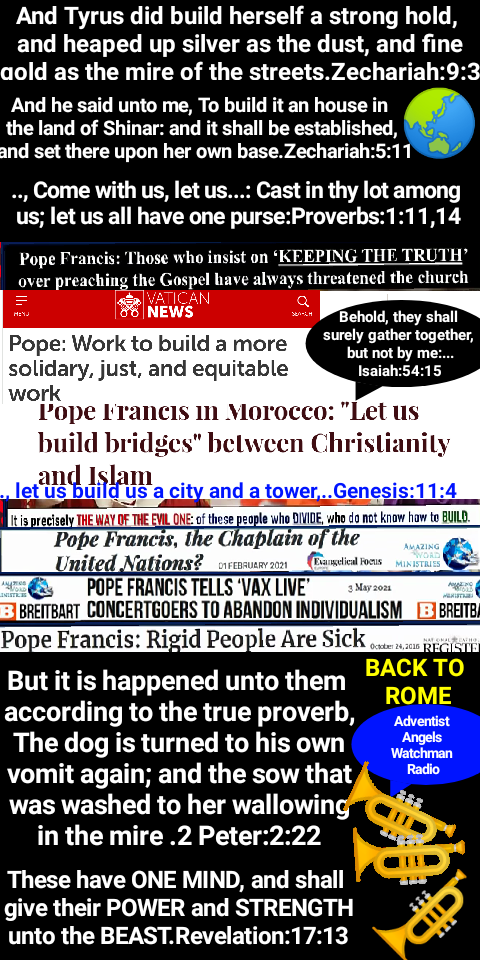
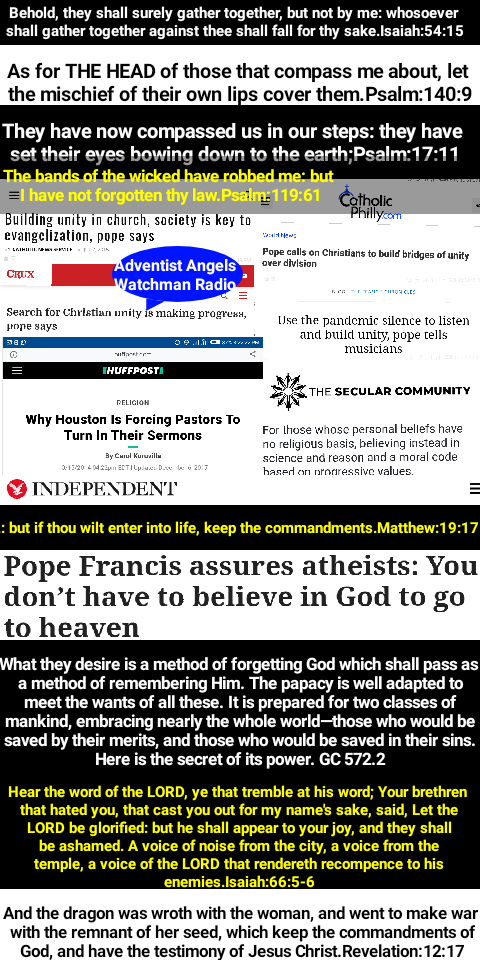
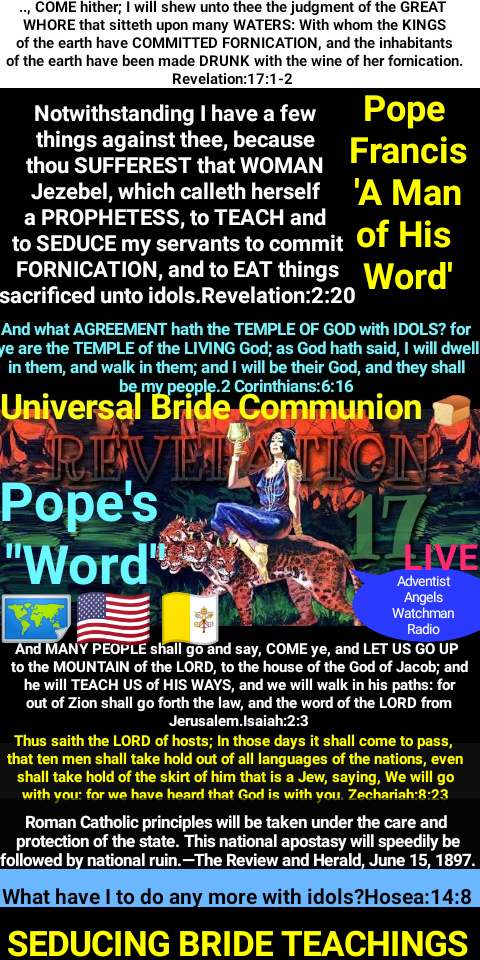
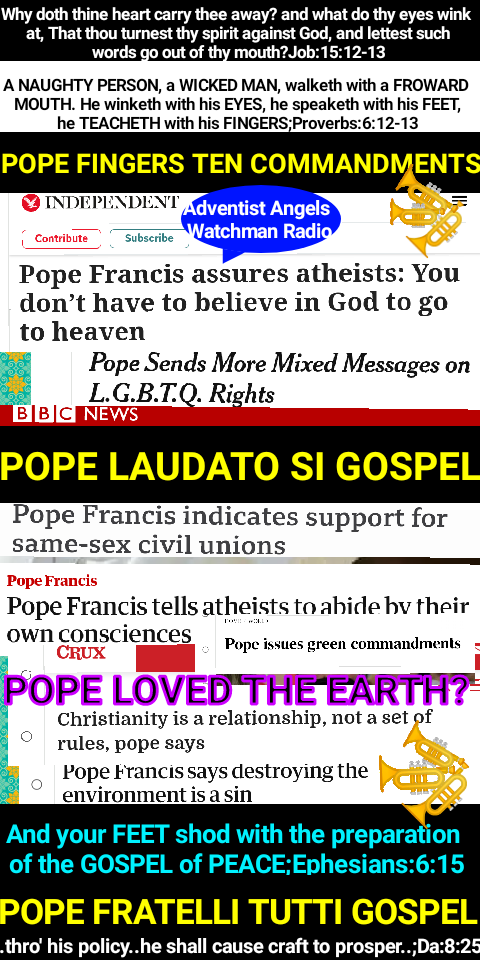
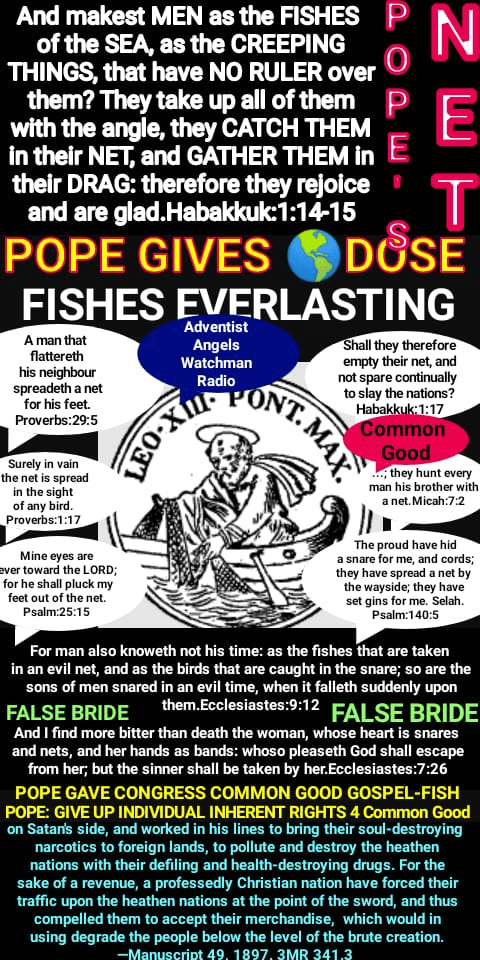
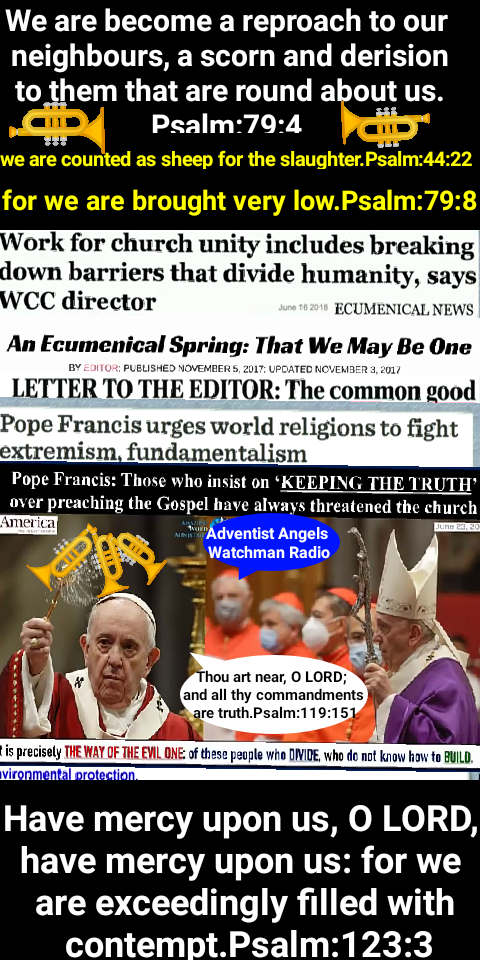
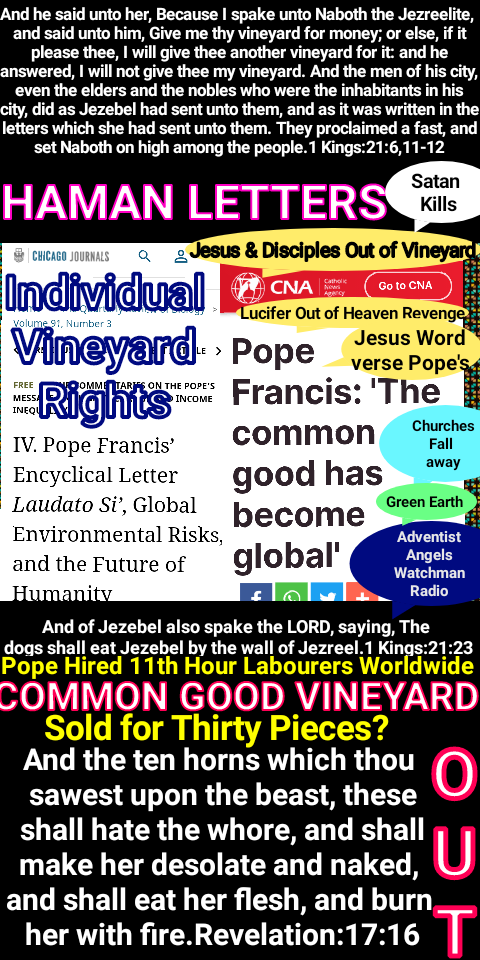


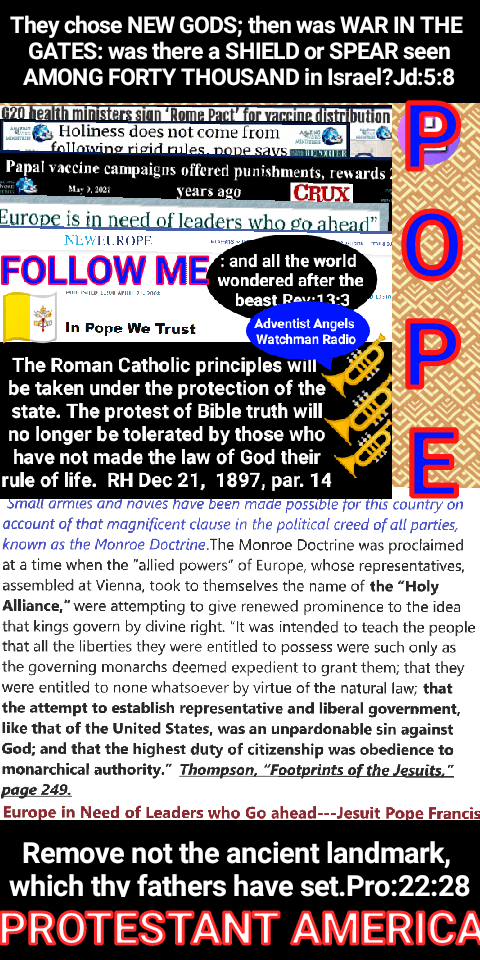


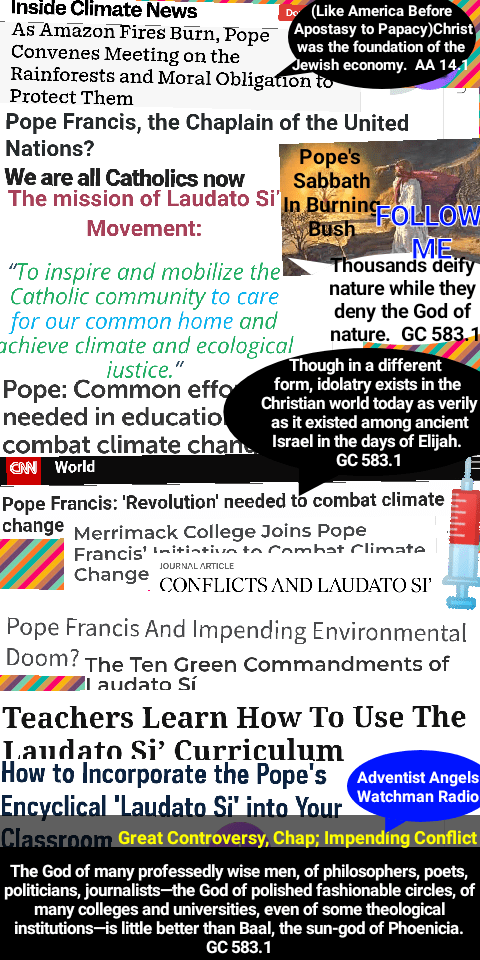

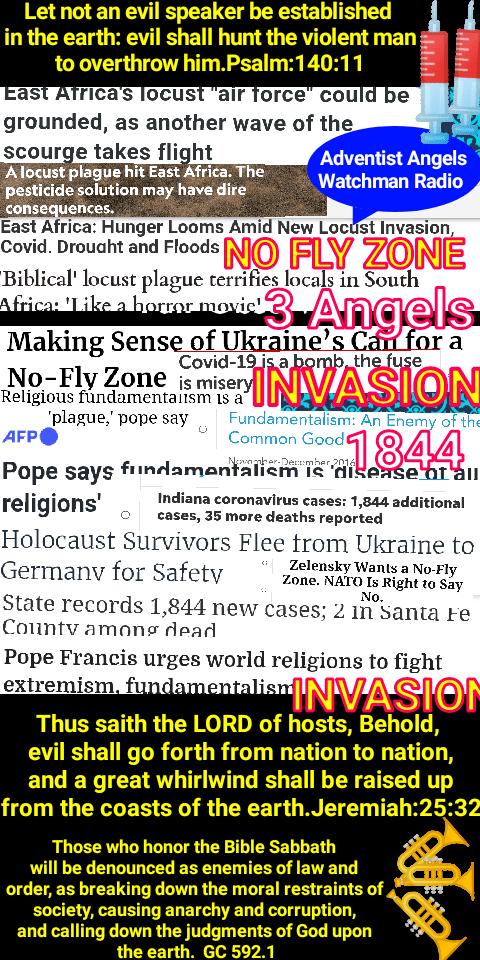
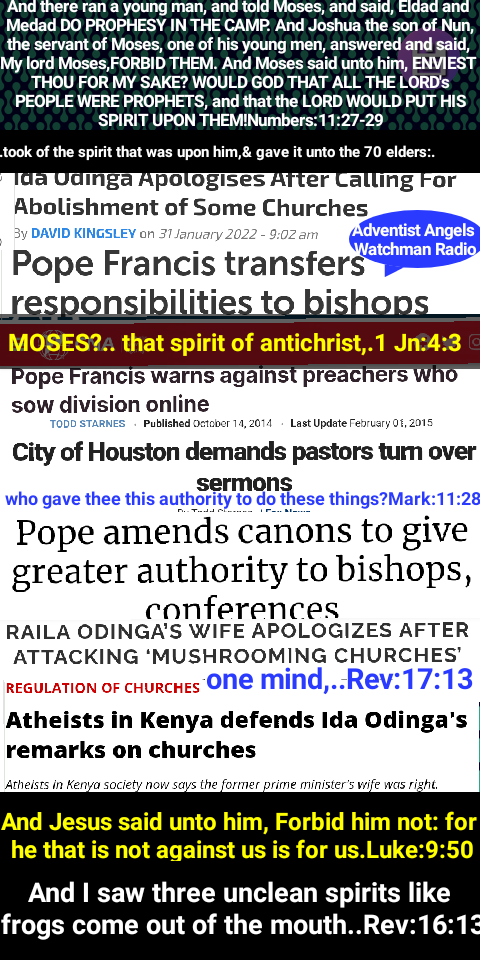

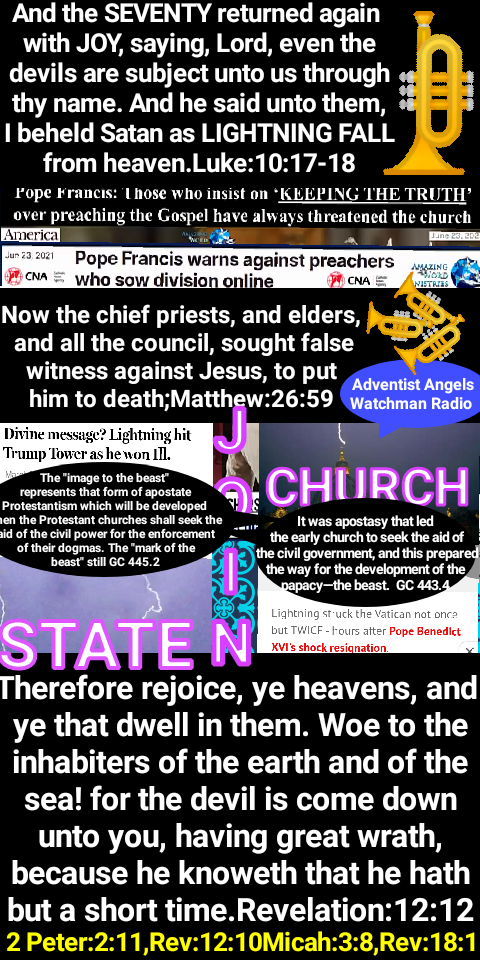
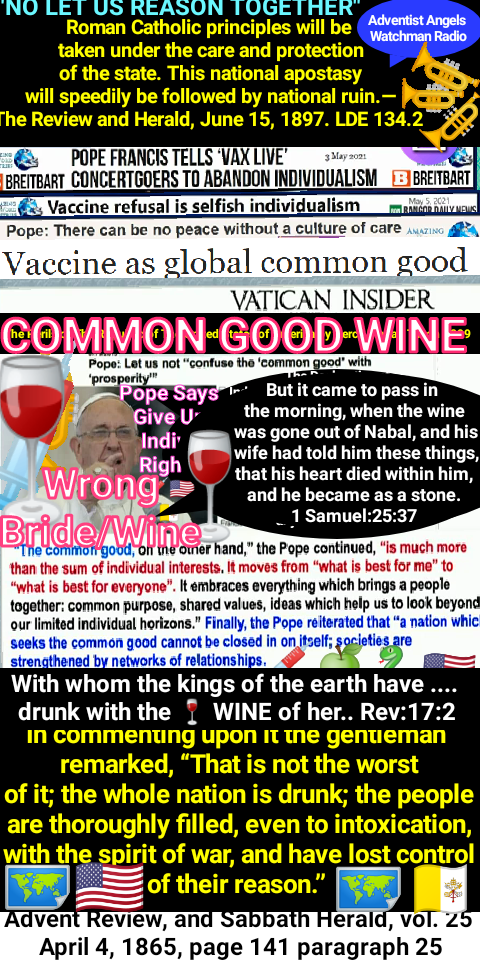

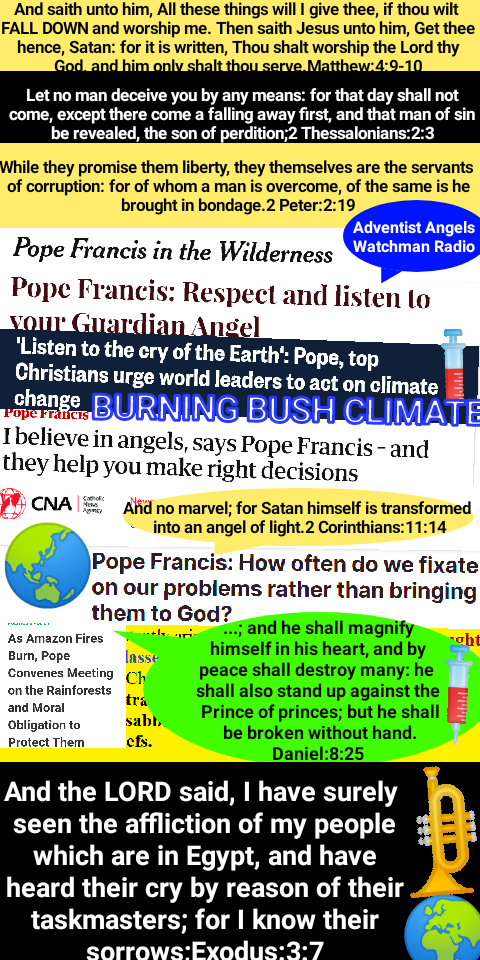



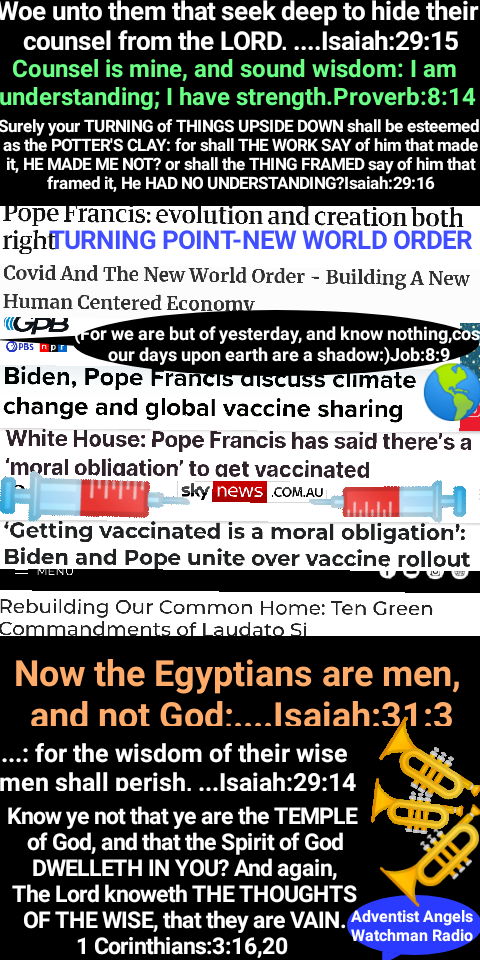
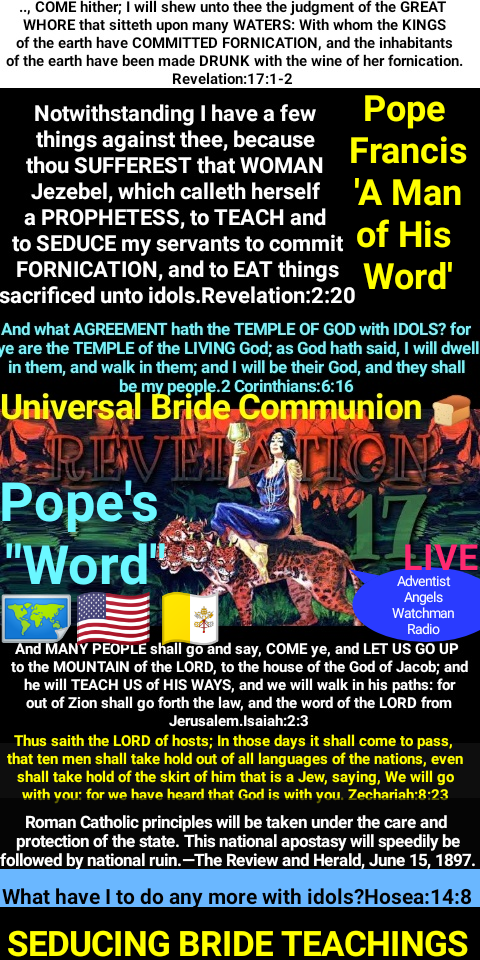
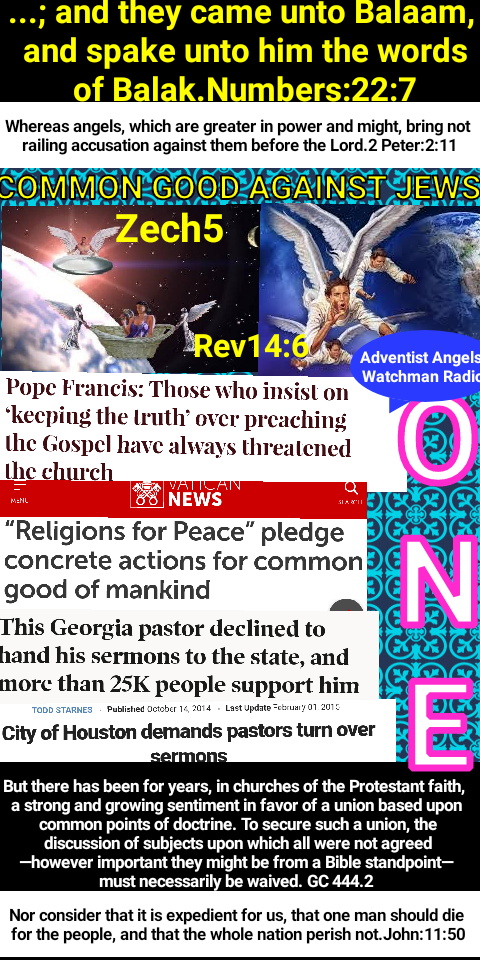
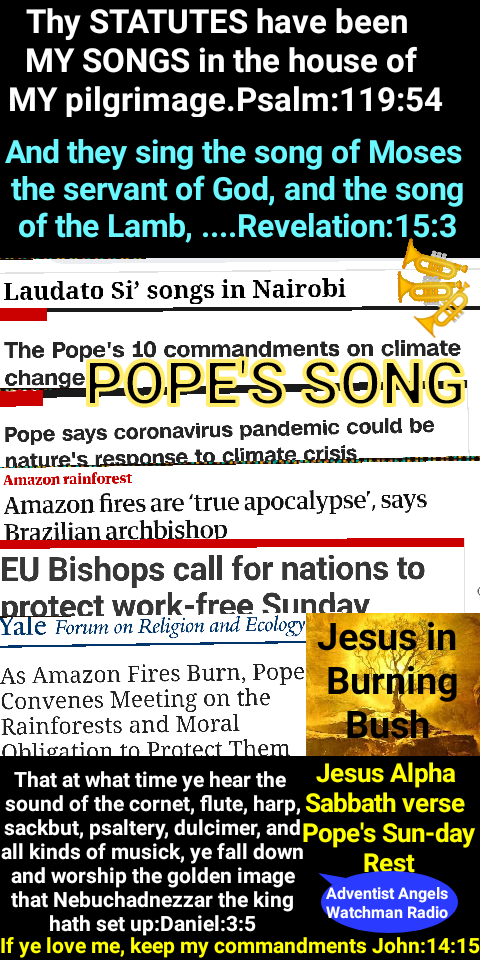
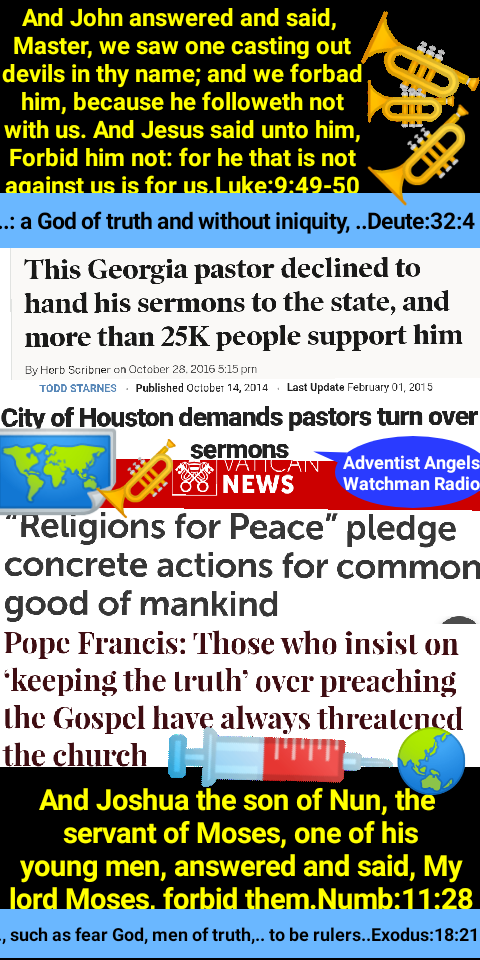


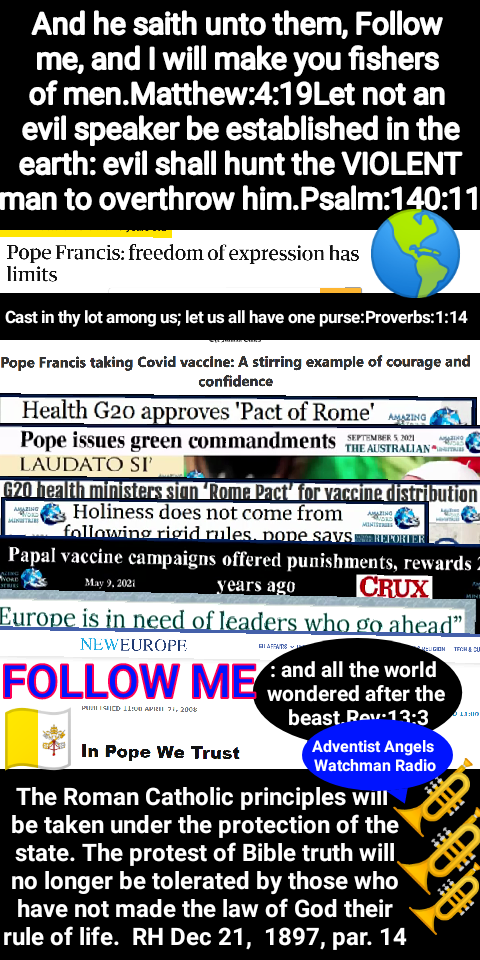








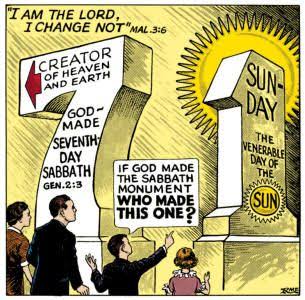

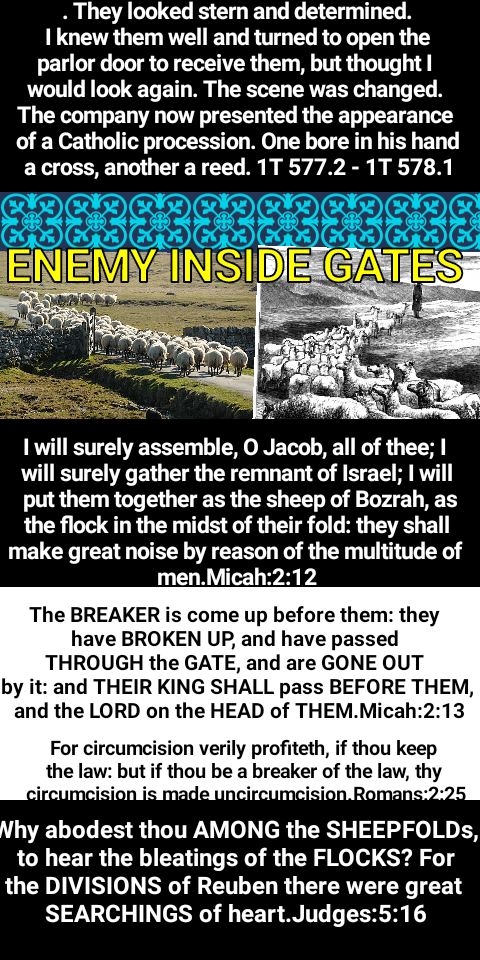
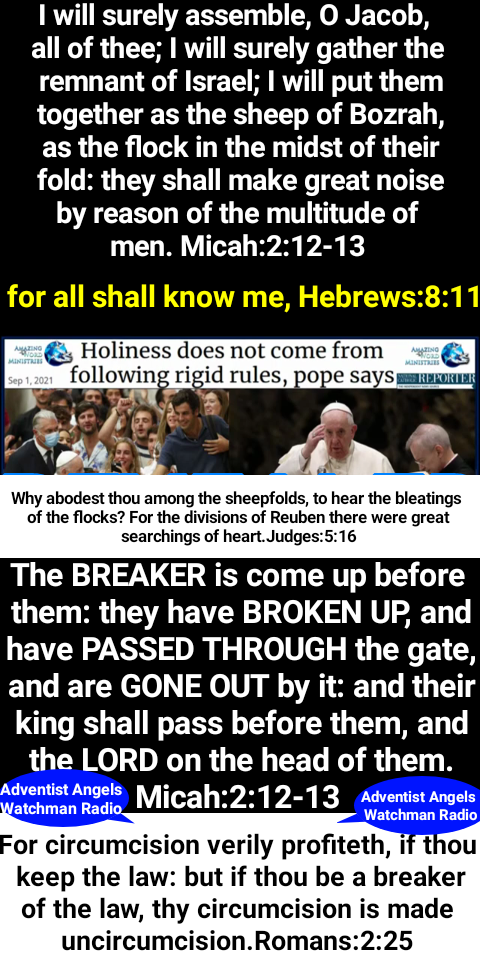
 Adventist Angels Watchman Radio