Welcome to Adventist Angels Watchman Radio official website, preparing the earth for Jesus Christ return Shortly, find us on Facebook, Twitter and You-tube. +254734228119 With Ev. King Osiemo
The Bible was held as the foundation of faith, the source of wisdom, and the charter of liberty. Its principles were diligently taught in the home, in the school, and in the church, and its fruits were manifest in thrift, intelligence, purity, and temperance. One might be for years a dweller in the Puritan settlement, “and not see a drunkard, or hear an oath, or meet a beggar.”—Bancroft, pt. 1, ch. 19, par. 25. It was demonstrated that the principles of the Bible are the surest safeguards of national greatness. The feeble and isolated colonies grew to a confederation of powerful states, and the world marked with wonder the peace and prosperity of “a church without a pope, and a state without a king.” But continually increasing numbers were attracted to the shores of America, actuated by motives widely different from those of the first Pilgrims. Though the primitive faith and purity exerted a widespread and molding power, yet its influence became less and less as the numbers increased of those who sought only worldly advantage. GC 296.3 – GC 296.4
In rejecting the truth, men reject its Author. In trampling upon the law of God, they deny the authority of the Law-giver. It is as easy to make an idol of false doctrines and theories as to fashion an idol of wood or stone. By misrepresenting the attributes of God, Satan leads men to conceive of Him in a false character. With many, a philosophical idol is enthroned in the place of Jehovah; while the living God, as He is revealed in His word, in Christ, and in the works of creation, is worshiped by but few. Thousands deify nature while they deny the God of nature. Though in a different form, idolatry exists in the Christian world today as verily as it existed among ancient Israel in the days of Elijah. The God of many professedly wise men, of philosophers, poets, politicians, journalists—the God of polished fashionable circles, of many colleges and universities, even of some theological institutions—is little better than Baal, the sun-god of Phoenicia. GC 583.1
Friday, 20 May 2022 4:44 AM [ Last Update: Friday, 20 May 2022 5:22 AM ]
The palms of a monkeypox case patient from Lodja, a city located within the Katako-Kombe Health Zone, are seen during a health investigation in the Democratic Republic of Congo in 1997. (Photo by Reuters)
With the COVID-19 pandemic still lingering, a new health scare in the form of a rare viral infection of monkeypox has emerged in Europe and the US, putting health authorities on high alert.
The outbreak is small — so far 68 suspected cases, including 8 in England and 20 in Portugal, have been identified – but the transmission ways of the virus are still shrouded in mystery.
Health authorities in the UK have little clue where people contracted the virus, amid growing concern the virus may be spreading through the community, possibly through a new route of transmission.
Satan works through the elements also to garner his harvest of unprepared souls. He has studied the secrets of the laboratories of nature, and he uses all his power to control the elements as far as God allows. When he was suffered to afflict Job, how quickly flocks and herds, servants, houses, children, were swept away, one trouble succeeding another as in a moment. It is God that shields His creatures and hedges them in from the power of the destroyer. But the Christian world have shown contempt for the law of Jehovah; and the Lord will do just what He has declared that He would—He will withdraw His blessings from the earth and remove His protecting care from those who are rebelling against His law and teaching and forcing others to do the same. Satan has control of all whom God does not especially guard. He will favor and prosper some in order to further his own designs, and he will bring trouble upon others and lead men to believe that it is God who is afflicting them. While appearing to the children of men as a great physician who can heal all their maladies, he will bring disease and disaster, until populous cities are reduced to ruin and desolation. Even now he is at work. In accidents and calamities by sea and by land, in great conflagrations, in fierce tornadoes and terrific hailstorms, in tempests, floods, cyclones, tidal waves, and earthquakes, in every place and in a thousand forms, Satan is exercising his power. He sweeps away the ripening harvest, and famine and distress follow. He imparts to the air a deadly taint, and thousands perish by the pestilence. These visitations are to become more and more frequent and disastrous. Destruction will be upon both man and beast. “The earth mourneth and fadeth away,” “the haughty people … do languish. The earth also is defiled under the inhabitants thereof; because they have transgressed the laws, changed the ordinance, broken the everlasting covenant.” Isaiah 24:4, 5. And then the great deceiver will persuade men that those who serve God are causing these evils. The class that have provoked the displeasure of Heaven will charge all their troubles upon those whose obedience to God’s commandments is a perpetual reproof to transgressors. It will be declared that men are offending God by the violation of the Sunday sabbath; that this sin has brought calamities which will not cease until Sunday observance shall be strictly enforced; and that those who present the claims of the fourth commandment, thus destroying reverence for Sunday, are troublers of the people, preventing their restoration to divine favor and temporal prosperity. Thus the accusation urged of old against the servant of God will be repeated and upon grounds equally well established: “And it came to pass, when Ahab saw Elijah, that Ahab said unto him, Art thou he that troubleth Israel? And he answered, I have not troubled Israel; but thou, and thy father’s house, in that ye have forsaken the commandments of the Lord, and thou hast followed Baalim.” 1 Kings 18:17, 18. As the wrath of the people shall be excited by false charges, they will pursue a course toward God’s ambassadors very similar to that which apostate Israel pursued toward Elijah. GC 589.2 – GC 590.1
The rare viral disease was first reported in the Democratic Republic of Congo in the 1970s.
Apart from the UK and Portugal, Spain said it was testing 23 potential cases, Canada reported 13 suspected cases of the virus, Sweden confirmed one case on Thursday, Australia has also found a “probable” case while the US state of Massachusetts announced it had found a case in a man who recently traveled to Canada.
“This [outbreak] is rare and unusual,” epidemiologist Susan Hopkins, who’s the chief medical adviser of the UK Health Security Agency (UKHSA), said in a statement on Monday.
“Exactly where and how they [the people] acquired their infections remains under urgent investigation,” the agency said in the statement.
Jimmy Whitworth, a professor of international public health at the London School of Hygiene and Tropical Medicine, was quoted as saying that it was “highly unusual”.
“Historically, there have been very few cases exported. It has only happened eight times in the past before this year,” he said.
Monkeypox causes fever, body aches, enlarged lymph nodes, and eventually “pox,” or painful, fluid-filled blisters on the face, hands, and feet, according to medical experts.
Most people recover from the illness, which is endemic in parts of central and western Africa and usually the result of close contact with infected animals, within a few weeks, but it can be fatal.
One of its versions is deemed deadly and kills up to 10 percent of people infected, but the version spreading presently in the UK is said to be milder with a 1 percent fatality rate.
The first case of monkeypox was confirmed in the UK earlier this month. The country is working with the World Health Organization (WHO) to investigate the virus’s spread after being unable to find a link between the initial case, in a man who had traveled from Nigeria, and the more recent ones.
Health authorities suspect some of the infections may have occurred through sexual contact – in this instance among gay or bisexual men – with four of the UK cases identified among people who visited sexual health clinics after developing the rash associated with monkeypox.
In seeking to cast contempt upon the divine statutes, Satan has perverted the doctrines of the Bible, and errors have thus become incorporated into the faith of thousands who profess to believe the Scriptures. The last great conflict between truth and error is but the final struggle of the long-standing controversy concerning the law of God. Upon this battle we are now entering—a battle between the laws of men and the precepts of Jehovah, between the religion of the Bible and the religion of fable and tradition. The agencies which will unite against truth and righteousness in this contest are now actively at work. God’s holy word, which has been handed down to us at such a cost of suffering and blood, is but little valued. The Bible is within the reach of all, but there are few who really accept it as the guide of life. Infidelity prevails to an alarming extent, not in the world merely, but in the church. Many have come to deny doctrines which are the very pillars of the Christian faith. The great facts of creation as presented by the inspired writers, the fall of man, the atonement, and the perpetuity of the law of God, are practically rejected, either wholly or in part, by a large share of the professedly Christian world. Thousands who pride themselves upon their wisdom and independence regard it as an evidence of weakness to place implicit confidence in the Bible; they think it a proof of superior talent and learning to cavil at the Scriptures and to spiritualize and explain away their most important truths. Many ministers are teaching their people, and many professors and teachers are instructing their students, that the law of God has been changed or abrogated; and those who regard its requirements as still valid, to be literally obeyed, are thought to be deserving only of ridicule or contempt GC 582.2 – GC 582.3
“What is even more bizarre is finding cases that appear to have acquired the infection via sexual contact,” epidemiologist Mateo Prochazka at the UKHSA tweeted. “This is a novel route of transmission that will have implications for outbreak response and control.”
What is even more bizarre is finding cases that appear to have acquired the infection via sexual contact – this is a novel route of transmission that will have implications for outbreak response and control.— Mateo Prochazka (@teozka) May 17, 2022
“No source of infection has yet been confirmed for either the family or GBMSM clusters,” the World Health Organization (WHO) said in a statement on Wednesday.
“Based on currently available information, the infection seems to have been locally acquired in the United Kingdom. The extent of local transmission is unclear at this stage and there is the possibility of identification of further cases.”
The UK, Portugal, Spain, and the US are among the countries that have reported the monkeypox virus infection cases in recent days.
Press TV’s website can also be accessed at the following alternate addresses:
The ember hours of the nineteenth century are here. The gloaming time of this cycle of a hundred years is upon us. Shall the ship of state be held upon the course which God through the Fathers set for her, or shall the brilliant star of her peace and power be allowed to be diverted, be made to grow dim, and to lose its heavenly luster? PRUS 192.1
Proclaiming peace and preparing for war—China the storm center—The czar’s manifesto and the Peace and Disarmament Conference—The United States formerly the champion of peace—The Monroe doctrine—The advent of the United States in the Orient, does it portend peace or war?—Washington’s farewell address—Carl Schurz on the English alliance—“What shall be the sign of thy coming, and of the end of the world?”—Position of Jerusalem in the world—Position of the United States in the world—The vision of the great image—The ten kingdoms of prophecy—The God of heaven shall set up a kingdom—The image struck upon the feet—The reason for this—The kings of the East—Turkey and the great powers—Prophecies concerning Russia—The apostasy of the United States—All nations in rebellion—The armies of heaven—The kingdom and citizens of our Lord and of his Christ
The people of this world are proclaiming peace, and preparing for war. Never has there been a state of affairs so utterly incongruous. With one voice men unite in declaring that the halcyon days are at hand, while at the same time they get ready for the biggest game of powder and projectile that has ever been proposed during the history of the earth. Europe presents the appearance of one vast battle-field, with the rival armies of every nation drawn up in military array, waiting for the signal which will announce that the time has come for the fray to commence. In Africa, from the Cape to Cairo, and from Sierra Leone to Zanzibar, the powers and potentates of the Old World have staked out their claims, and in a state of delirium incident to the dread fever of earth-hunger, they are ready at a moment’s warning to fly at each others’ throats, or to tear out each others’ vitals. Around the China Sea we again find them all encamped, watching for and hastening on the breakup of the Middle Kingdom. The empire of the Celestials is the storm-center round which the international typhoon is whirling, and even now almost bursting from its own inherent power,-power so sensitive and dangerous that it is scarcely possible for it to keep from detonating like a charge of dynamite or guncotton. Into this awful vortex of angry nations the United States has voluntarily leaped, now henceforward to be reckoned as one of the sceptered kings of the East. PRUS 166.1
In 1898 the world was startled by the peace and disarmament proclamation of the Russian czar, through which he called for all the nations to join him in a peace conference, the purpose of which should be to bring about some scheme of general disarmament on the part of the nations. Of that appeal this is the leading and most important part:— PRUS 166.2
“In the course of the last twenty years the longings for a general appeasement have grown especially pronounced in the consciences of civilized nations. The preservation of peace has been put forward as the object of international policy; it is in its name that great states have concluded between themselves powerful alliances; it is the better to guarantee peace that they have developed in proportions hitherto unprecedented their military forces, and still continue to increase them without shrinking from any sacrifice. PRUS 166.3
“All these efforts, nevertheless, have not yet been able to bring about the beneficent results of the desired pacification. The financial charges following an upward march strike at the public prosperity at its very source. PRUS 167.1
“The intellectual and physical strength of the nations, labor and capital, are for the major part diverted from their natural application, and unproductively consumed. Hundreds of millions are devoted to acquiring terrible engines of destruction, which, though to-day regarded as the last word of science, are destined to-morrow to lose all value in consequence of some fresh discovery in the same field. PRUS 167.2
“National culture, economic progress, and the production of wealth are either paralyzed or checked in their development. Moreover, in proportion as the armaments of each power increase, so do they less and less fulfil the object which the governments have set before themselves. PRUS 167.3
“The economic crisis, due in great part to the system of armaments, àoutrance [to the point of outrage, or to the bitter end], and the continued danger which lies in this massing of war material, are transforming the armed peace of our days into a crushing burden, which the people have more and more difficulty in bearing. It appears evident, then, that if this state of things were prolonged, it would inevitably lead to the very cataclysm which it is desired to avert, and the horrors of which make every thinking man shudder in advance.” PRUS 167.4
Whatever may have been the underlying reasons which caused the czar of all the Russias to issue this invitation to his brother potentates, one thing is certain, that whether his object and design was sinister or sincere, men stand aghast when they view the terrible effects which must needs be produced by modern warfare. Within hundreds of thousands of breasts there exists a desire for a change in this state of affairs so horrible to contemplate. PRUS 167.5
Until the year 1899 the United States has stood before the world as the champion of small standing armies, and squadrons of war-ships sufficient only for the patrol of the coast. While clinging to this doctrine, the United States has become one of the greatest of the world-powers, without possessing a fleet worth speaking of, and without calling upon her few soldiers to step beyond the boundaries of her own continent. Small armies and navies have been made possible for this country on account of that magnificent clause in the political creed of all parties, known as the Monroe Doctrine. This was announced by the president of the country full seventy-five years ago, and the essence of it is: “We owe it, therefore, to candor and to the amicable relations existing between the United States and those powers, to declare that we should consider any attempt on their part to extend their system to any portion of this hemisphere as dangerous to our peace and safety.” And immediately after this there was enunciated the solemn declaration: “With the existing colonies or dependencies of any European power we have not interfered, and shall not interfere.” PRUS 167.6
The Monroe Doctrine was proclaimed at a time when the “allied powers” of Europe, whose representatives, assembled at Vienna, took to themselves the name of the “Holy Alliance,” were attempting to give renewed prominence to the idea that kings govern by divine right. “It was intended to teach the people that all the liberties they were entitled to possess were such only as the governing monarchs deemed expedient to grant them; that they were entitled to none whatsoever by virtue of the natural law; that the attempt to establish representative and liberal government, like that of the United States, was an unpardonable sin against God; and that the highest duty of citizenship was obedience to monarchical authority.” 1 PRUS 168.1
Such were the principles of the Holy Alliance of the crowned heads of Europe; its specific object was to re-establish the despotism of Spain upon her revolted colonies in South America and in Mexico. On the other hand, the essence of the Monroe Doctrine as then understood by all the world was that “while we forbid the establishment of despotic governments upon the American continent, we recognize the corresponding obligation to refrain from any attempt to force our political system upon any part of the Old World.” 2 PRUS 168.2
Now we have abandoned the Monroe Doctrine, and entered into the arena for foreign possessions, and this, of course, naturally calls for a large increase of the army and the navy. If the American nation persists in this policy, the time is past and gone forever when she can look down with condescending pity upon the nations of Europe groaning beneath the weight of tremendous military establishments. It is now seriously urged that the United States requires an army of at least 100,000 fighting men. This would mean an annual cost of about $150,000,000. It must also be remembered that to-day the nation is carrying a pension roll of most enormous proportions. Last year there was paid to the pensioners of the Civil war the gigantic sum of $145,000,000. This is an amount larger than the cost per annum of the entire peace establishment of Germany, including her pension roll. PRUS 169.1
However, the item of cost is but a small one compared with the principle involved. Had the czar’s peace and disarmament conference been called a year or so earlier, the United States could have gone to take a part in its deliberations, and joyfully told the monarchies of the Old World the benefits to be derived from having no large standing armies, or huge navies. The representatives of this government could have told those people that peace and disarmament were the two things She had been not only advocating, but of which she had been a living example during all her national history. The United States would have then been entitled to the chief place in the van, and could have led all the other nations to the full fruition of the harvest of peace so ardently desired. But now the one nation which could have rightfully and with power born of a principle lived up to, changed the course of the other powers, has herself apostatized from these principles of peace and disarmament, and has now taken up a position which will necessarily entail walking in the labyrinth from which they are so vainly trying to extricate themselves. PRUS 169.2
The Peace and Disarmament Conference has met, deliberated, and come to a close. Many are of the opinion that something has been accomplished; but in reality nothing of real worth or merit has been accomplished. That anything of real worth or merit should have been accomplished is impossible in the very nature of things. Many are saying that the time has come when strong nations shall “beat their swords into plowshares, and their spears into pruning-hooks: nation shall not lift up a sword against a nation, neither shall they learn war any more. But they shall sit every man under his own vine, and under his fig-tree.” 3 PRUS 169.3
The advent of the United States in the Orient will not tend to amity, but rather to animosity. This was cleverly stated by Lord Salisbury, when at the last lord mayor’s banquet, he said the “appearance of the United States as a factor in Asiatic affairs is likely to conduce to the interests of Great Britain, but might not conduce to the interests of peace.” It can not possibly conduce to the interests of peace, for the very reason that in entering the Orient this nation has deserted her policy of peace, and has adopted in principle, at least, the bellicose spirit; she has now departed from that doctrine of the “father of his country,” which, if it never brought to her military glory, most certainly has been the cause of her material greatness. The words in the “Farewell Address” are a pearl of great price. They may be familiar, but they can not too often be recalled:— PRUS 170.1
“Against the insidious wiles of foreign influence (I conjure you to believe me, fellow citizens) the jealousy of a free people ought to be constantly awake, since history and experience prove that foreign influence is one of the most baneful foes of republican government…. PRUS 170.2
“The great rule of conduct for us in regard to foreign nations is, in extending our commercial relations, to have with them as little political connection as possible. So far as we have already formed engagements, let them be fulfilled with perfect good faith. Here let us stop. PRUS 170.3
“Europe has a set of primary interests which to us have none or a very remote relation. Hence she must be engaged in frequent controversies, the causes of which are essentially foreign to our concerns. Hence, therefore, it must be unwise in us to implicate ourselves by artificial ties in the ordinary vicissitudes of her politics, or the ordinary combinations or collisions of her friendships or enmities. PRUS 170.4
“Our detached and distant situation invites and enables us to pursue a very different course. If we remain one people, under an efficient government, the period is not far off when we may defy material injury from external annoyance; when we may take suck an attitude as will cause the neutrality we may at any time resolve upon to be scrupulously respected; when belligerent nations, under the impossibility of making acquisitions upon us, will not lightly hazard the giving us provocation; when we may choose peace or war, as our interests, guided by justice, shall counsel. PRUS 170.5
“Why forego the advantages of so peculiar a situation? Why quit our own to stand upon foreign ground? Why, by interweaving our destiny with that of any part of Europe, entangle our peace and prosperity in the toils of European ambition, rivalship, interest, humor, or caprice? PRUS 171.1
“It is our true policy to steer clear of permanent alliances with any portion of the foreign world.” PRUS 171.2
But all the nations interested in the Chinese and Oriental problem in general are continually making and breaking alliances. This is absolutely necessary in the very nature of things. One nation may on account of its own internal policy and traditions desire to keep aloof from the others; but when combinations are formed against it, there is no other choice but to join forces with some other power. England has been, more than any other nation, perhaps, friendly to the idea of having the United States in the Oriental caldron. Many think that this friendship will conduce to peace, but that it can not possibly do this is clearly set forth by Carl Schurz in his address before the convocation of the Chicago University last January:— PRUS 171.3
“If we take those new regions, we shall be well entangled in that contest for territorial aggrandizement which distracts other nations and drives them far beyond their original design. So it will be inevitably with us. We shall want new conquests to protect that which we already possess. The greed of speculators working upon our government will push us from one point to another, and we shall have new conflicts on our hands, almost without knowing how we got into them. It has always been so under such circumstances, and always will be. This means more and more soldiers, ships, and guns. PRUS 171.4
“A singular delusion has taken hold of the minds of otherwise clear-headed men. It is that our new friendship with England will serve firmly to secure the world’s peace. Nobody can hail that friendly feeling between the two nations more warmly than I do, and I fervidly hope it will last. But I am profoundly convinced that if this friendship results in the two countries setting out to grasp ‘for the Anglo-Saxon,’ as the phrase is, whatever of the earth may be obtainable-if they hunt in couple-they will surely soon fall out about the game, and the first serious quarrel, or at least one of the first, we shall have, will be with Great Britain. And as family feuds are the bitterest, that feud will be apt to become one of the most deplorable in its consequences. PRUS 171.5
“No nation is, or ought to be, unselfish. England, in her friendly feeling toward us, is not inspired by mere sentimental benevolence. The anxious wish of many Englishmen that we should take the Philippines is not free from the consideration that, if we do so, we shall for a long time depend on British friendship to maintain our position on that field of rivalry, and that Britain will derive ample profit from our dependence on her. This was recently set forth with startling candor by the London Saturday Review, thus:— PRUS 172.1
“‘Let us be frank, and say outright that we expect mutual gain in material interests from this rapprochement. The American commissioners at Paris are making this bargain, whether they realize it or not, under the protecting naval strength of England, and we shall expect a material quid pro quo for this assistance. We expect the United States to deal generously with Canada in the matter of tariffs, and we expect to be remembered when the United States comes in possession of the Philippine Islands, and above all we expect her assistance on the day, which is quickly approaching, when the future of China comes up for settlement, for the young imperialist has entered upon a path where it will require a strong friend, and a lasting friendship between the two nations can be secured not by frothy sentimentality on public platforms, but by reciprocal advantages in solid, material interests.’ PRUS 172.2
“And the cable despatch from London bringing this utterance added:— PRUS 172.3
“‘The foregoing opinion is certainly outspoken enough, but every American moving in business circles here knows this voices the expectations of the average Englishman.’ PRUS 172.4
“This is plain. If Englishmen think so, we have no fault to find with them. But it would be extremely foolish on our part to close our eyes to the fact. British friendship is a good thing to have, but, perhaps, not so good a thing to need. If we are wise, we shall not put ourselves in a situation in which we shall need it. British statesmanship has sometimes shown great skill in making other nations fight its battles. This is very admirable from its point of view, but it is not so pleasant for the nations so used. I should be loath to see this republic associated with Great Britain in apparently joint concerns as junior partner with a minority interest, or the American navy in the situation of a mere squadron of the British fleet. This would surely lead to trouble in the settling of accounts.” PRUS 172.5
This is a correct statement of what awaits the United States in the case. It therefore follows, that as far as the nativity of the “United States of America and Asia” is concerned, the cause of Armageddon, rather than that of amity, will be served. And aside from all matters of accident or policy there is a principle which will work to this end, one foretold in the Bible, and worth considering here. PRUS 173.1
In Matthew 24 there is a wonderful prophecy which fell from the lips of the Saviour himself. As he sat on the Mount of Olives the disciples came unto him “privately,” saying, “Tell us, when shall these things be? and what shall be the sign of thy coming and of the end of the world?” They came to him privately, and it was then that these questions were asked. There is a wonderful significance in these words. It is only to those who come to the Lord privately, alone on their knees in the secret chambers, or by themselves in some quiet place,—it is only to such that there is revealed the sign of his coming and of the end of the world. Away from the hurry and the bustle of the things of life, and shut in alone with the Master, the “still, small voice” communicates with the pleading soul, anxious for knowledge concerning the greatest event in human and divine history. PRUS 173.2
It was not even all of the disciples who came to the Master, and thus besought him in private for this precious knowledge. In the gospel of Mark it is written that there were only four of them,-Peter, James, John, and Andrew. These were the most faithful and trusty of his followers, and yet to them the Saviour replied: PRUS 173.3
“Take heed that no man deceive you.” Not simply the careless and sinful ones are in danger of being deceived concerning the sign of his coming and of the end of the world. It must ever be remembered that these words were spoken for the benefit of those who of all people were most constant in prayer and communion with God; and if they were needful for them, how much more so for the thoughtless and indifferent. The true knowledge of the sign of the coming of the Lord is a matter of the heart, rather than of the head and the mind. We may hear it discoursed upon from pulpits, we may read arguments upon it in books and papers; but the only knowledge of it which will nave power to keep from deception in the day of deception is that which is gained alone with Jesus in sacred and spiritual communion. PRUS 174.1
“Ye shall hear of wars and rumors of wars: see that ye be not troubled, for all these things must come to pass, but the end is not yet.” Just prior to the destruction of Jerusalem there was fearful political commotion in the world. The Roman empire filled the earth, but this gave no peace or security. Men struggled for the mastery. Emperor after emperor was slain by the hand of political foes, and all was turmoil, all was confusion. Favorite parasites of the throne to-day were galley-slaves to-morrow. There will be these wars and rumors of wars, said Jesus, but the end of the Jewish nation “is not yet.” PRUS 174.2
“For nation shall rise against nation, and kingdom against kingdom: and there shall be famines, and pestilences, and earthquakes in divers places. All these are the beginning of sorrows…. And because iniquity shall abound, the love of many shall wax cold.” In the last great conflict for the souls of men which will be waged between the powers of light and darkness, there will be many of those who have once loved and known the Saviour whose affection will not only wane, but will “wax cold.” These words have not been placed in the Bible to discomfort and discourage the fainthearted, but rather that through them we might gain strength, and be prepared for the trial which awaits us. It is in mercy to his children that the Master utters them, for in them, if accepted in living faith and applied to the soul and life, is power and strength to resist spiritual declension. PRUS 174.3
“But he that shall endure to the end, the same shall be saved.” The Redeemer does not say, he that shall live to the end, but he that shall endure; and this shows something of the temptation and trial which the latter-day Christian will have to withstand. We speak about enduring pain, or torture of mind or body, and signify thereby that every fiber of our being is brought into play, and put to the utmost strain and test in order to cope with that which was brought to bear against us. It is even so in the end, the struggle will require every nerve and fiber of spiritual strength to wage successful combat. PRUS 174.4
“And this gospel of the kingdom shall be preached in all the world for a witness unto all nations; and then shall the end come.” Then said the Saviour, “When ye therefore shall see the abomination of desolation, spoken of by Daniel the prophet, stand in the holy place (whoso readeth let him understand): then let them which be in Judea flee into the mountains: let him which is on the housetop not come down to take anything out of his house: neither let him which is in the field return back to take his clothes. And woe unto them that are with child, and to them that give suck in those days! For then shall be great tribulation, such as was not since the beginning of the world to this time, no, nor ever shall be.” PRUS 175.1
The gospel is now being preached to all the world. This is so as never before in the history of the world. Missionaries are compassing sea and land to herald to those who sit in darkness the glad tidings of the cross and crown of Calvary. So manifest is this movement that it does not need argument here. But said the Saviour, when this has been done, “Then shall the end come.” PRUS 175.2
What is the “abomination of desolation” spoken of by Daniel the prophet? It was to stand in the “holy place.” The Syriac version renders it “the abominable sign of desolation.” And Luke in the contemporaneous record of this prophecy says: “And when ye shall see Jerusalem compassed with armies, then know that the desolation thereof is nigh.” It follows from this that the “abomination of desolation” spoken of by Matthew is the army of the Romans surrounding Jerusalem, spoken of by Luke. That the term “abomination of desolation” used by Matthew fitly describes the Roman army, there can be no question. Wherever the army of the Romans planted their eagles, there desolation and ruin followed. It was everywhere the same. Self-government became a thing of the past, and a Roman governor arbitrarily appointed in the capital city took its place, while the people mourned beneath the heavy load of taxes. In the year a. d. 70 the Roman army did invest Jerusalem, and they did stand “in the holy place.” The armies of the Romans no longer exist. Long since their legions and centuries have been laid to molder in the dust. But the principles which were back of the Roman armies still live, and will live until the end of the world. The armies themselves, the men who formed the legions, were no more abominable or desolating in their behavior than the troops of any army. War is inhuman, but war by the Romans was no more inhuman than by scores of other nations. The Roman rule was a denial of the doctrine that all men are created equal, and that governments derive their just powers from the consent of the governed. And it is these principles of arbitrary government which have always everywhere caused abominable desolation, which still live, and which will live till the history of this earth in its present form is brought to a close. PRUS 175.3
The Lord had set Jerusalem in the earth to be a light to all the nations round about. It was the will of God that from the sacred citadel at Jerusalem should emanate right principles concerning the relations which should exist between man and man, and man and his Maker. But Jerusalem apostatized, and left the true faith and love of God, so that when the Saviour came, he was denied and rejected, instead of being acknowledged and received. Then, and not till then, was it given over to the armies of Rome, and the devastating principles of Rome. Jerusalem had passed the unseen line of her probation, and only desolation and destruction could come. PRUS 176.1
Now in this latter day the Lord set the nation of the United States for a light in the world, that from and through it there should go forth to all the world the right principles of government both concerning the relation of the state to the church, and the relation of the state to the citizen. As long as the United States held fast to these two principles, Republicanism and Protestantism,-government by the consent of the governed, and no interference by the civil magistrate in the things of the church,-as long as the United States remained true to these things, she was impregnable in the rocky strength of her principles and convictions. But now the principles of Protestantism have been deserted, and the principles of Republicanism are being deserted. The principles of Rome have invested the United States, and naught but “the abomination of desolation” can possibly follow. PRUS 176.2
The territorial expansion of the United States has been purchased at the cost of the contraction of the principles of the United States. The United States is now in the East, not as a republic of the East, but as one of the “kings of the East.” But these kings of the East are spoken of in the Scriptures. Here is what is said by John the revelator: “And the sixth angel poured out his vial on the great river Euphrates; and the water thereof was dried up, that the way of the kings of the East might be prepared. And I saw three unclean spirits like frogs come out of the mouth of the dragon, and out of the mouth of the beast, and out of the mouth of the false prophet. For they are the spirits of devils, working miracles, which go forth unto the kings of the earth and of the whole world, to gather them to the battle of that great day of God Almighty. Behold I come as a thief. Blessed is he that watcheth, and keepeth his garments, lest he walk naked, and they see his shame. And he gathered them together into a place called in the Hebrew tongue Armageddon.” PRUS 177.1
These kings of the East, then, with all the kings of the earth, are to be gathered together to the battle of that great day of God Almighty. And that battle is to be in a place called in the Hebrew tongue Armageddon. PRUS 177.2
Now who are the kings of the East at the present time. Is the king of Greece one of them?—Assuredly not, for he is subject to the dictum of the great powers in all external affairs of his kingdom. Is the sultan of Turkey one of them?—No, for he has been taken in charge by the great powers. Are the native princes of India, or is the shah of Persia, or the ameer of Afghanistan?—Again the answer can only be in the negative. Is the emperor of China?—In his case it goes without the saying of it that he is a mere puppet in the hands of the great powers of Western Europe. Now to the prophecy, that “more sure word,” “whereunto ye do well that ye take heed, as unto a light that shineth in a dark place, until the day dawn, and the day star arise in your hearts.” PRUS 177.3
In Daniel, the second chapter, compressed in a few short verses is the most wonderful outline history of the nations of earth that has ever been written. PRUS 177.4
To Nebuchadnezzar, the king of Babylon, a dream was given. On awakening he could not recall the things which he had seen in his dream, and after the wise men of his government had failed to tell him what these things were, Daniel, the young Hebrew captive, was permitted to make manifest before the king of that great world-power the skill and understanding which God had given him, and to that great monarch he said: “Thou, O King, sawest, and behold a great image. This great image, whose brightness was excellent, stood before thee; and the form thereof was terrible. This image’s head was of fine gold, his breast and his arms of silver, his belly and his thighs of brass, his legs of iron, his feet part of iron and part of clay. Thou sawest till that a stone was cut out without hands, which smote the image upon his feet that were of iron and clay, and brake them to pieces. Then was the iron, the clay, the brass, the silver, and the gold, broken to pieces together, and became like the chaff of the summer thrashing-floors; and the wind carried them away that no place was found for them: and the stone that smote the image became a great mountain, and filled the whole earth. This is the dream; and we will tell the interpretation thereof before the king. Thou, O king, art a king of kings: for the God of heaven hath given thee a kingdom, power, and strength, and glory. And wheresoever the children of men dwell, the beasts of the field and the fowls of the heaven hath he given into thine hand, and hath made thee ruler over them all. Thou art this head of gold. And after thee shall arise another kingdom inferior to thee, and another third kingdom of brass, which shall bear rule over all the earth. And the fourth kingdom shall be strong as iron: forasmuch as iron breaketh in pieces and subdueth all things: and as iron that breaketh all these, shall it break in pieces and bruise. And whereas thou sawest the feet and toes, part of potters’ clay, and part of iron, the kingdom shall be divided; but there shall be in it of the strength of the iron, forasmuch as thou sawest the iron mixed with miry clay. And as the toes of the feet were part of iron, and part of clay, so the kingdom shall be partly strong, and partly broken. And whereas thou sawest iron mixed with miry clay, they shall mingle themselves with the seed of men: but they shall not cleave one to another, even as iron is not mixed with clay. And in the days of these kings shall the God of heaven set up a kingdom, which shall never be destroyed: and the kingdom shall not be left to other people, but it shall break in pieces and consume all these kingdoms, and it shall stand forever. Forasmuch as thon sawest that the stone was cut out of the mountain without hands, and that it brake in pieces the iron, the brass, the clay, the silver, and the gold; the great God hath made known to the king what shall come to pass hereafter: and the dream is certain, and the interpretation thereof sure.” 4 PRUS 178.1
Babylon, the head of gold, was the first of the universal empires; and when the day of Babylon passed away, Medo-Persia occupied her place. For a while Babylon had been true to her trust, and had done the work required at her hand by the Lord; but when she neglected this, and turned from it, God took the Medes and the Persians and through them brought punishment upon the guilty nation. Then the power of Medo-Persia filled the world; but she also apostatized from the task assigned her by the Lord, and her place and her station was taken by Greece, the kingdom of brass. And when the iniquity of the transgressors in Greece was come to the full, God took the Romans, and, evil as they were, used them to punish Greece. But they, instead of turning to the Lord, only increased in their wickedness, until in 476 a. d. the empire of the Romans fell into ruins; and from her ruins and ashes arose the ten kingdoms represented by the ten toes of the image, part of iron and part of potter’s clay, partly strong and partly brittle. Of these, three were plucked up by the roots, as brought to view in Daniel 7, and the remaining seven stand till the present day as the kingdoms of Western Europe. PRUS 179.1
It is in the days of these kingdoms that the God of heaven is to set up his kingdom, which shall never be destroyed, “but it shall break in pieces and consume all these kingdoms, and it shall stand forever.” We are living in the days of these kingdoms, and therefore we are living in the days when the kingdom of the God of heaven shall be set up. PRUS 179.2
In the vision, when the stone, cut out without hands, struck the image, it struck the image on the feet; and the record says that then was the rest of the body, “the iron, the clay, the brass, the silver, and the gold, broken to pieces together, and became like the chaff of the summer thrashing-floors.” PRUS 179.3
The stone was made to strike the image on the feet. This is unnatural. The missile is always aimed at the head, or some vital portion of the body. It is aimed at the head, because there is the seat of life. This shows, therefore, that, at the end of time, when this world is to be brought to an end, the seat of the life of the world will be in the feet, that is, in the nations of Western Europe. And this is now precisely the case. It is more the case to-day than it was one year ago, and it is getting more and more so all the time. To-day it is the nations of Western Europe which rule the greater part of the earth, and all that portion formerly ruled over by Babylon, Medo-Persia, and Greece, to say nothing of the territory of Rome, is ruled over by them. The nations of Western Europe are the rulers of all the Oriental countries, and especially of China. They are in deed and in fact the “kings of the East.” But more than this, it could never be truthfully said that they were the kings of the East until within the last year or two. For years England held that China should be kept intact, and that the dissolution of the Celestial empire should be prevented. But just recently England has agreed with Russia that the “spheres of influence” system shall be admitted as the law governing the great powers in the case of China, and now all the great nations are grabbing every portion of that vast empire that is worth having. Into the details of this it is not necessary to go. The facts are well known to all, and the boundary lines of to-day might be all upset by some fresh move upon the part of one of the great powers to-morrow. PRUS 180.1
And now, into the East, as one of the “kings of the East,“ the United States has gone. For this nation is not in the Philippines as a republic, but as a king. The United States is in the East as one of the kings of the East, and with all the others only waiting one event, and that event every day threatened,-to be gathered together to the great day of the battle of God Almighty, into a place called in the Hebrew tongue Armageddon. PRUS 180.2
The event for which all the nations are waiting before they can be gathered together to this great conflict is stated in the Scriptures as being the drying up of the waters of the great river Euphrates. No one, upon a moment’s thought, can entertain the proposition that by the term “the great river Euphrates” here used, the literal river is intended. In the first place the book of Revelation is a book of symbols, for it is “the revelation of Jesus Christ, which God gave unto him, to show unto his servants things which must shortly come to pass; and he sent and signified it by his angel unto his servant John.” To signify is to make manifest by a sign, or symbol. The term “river Euphrates” is therefore only a sign, or symbol, of the power occupying or holding possession of the territory through which that river runs, and this power is the Ottoman, or Turkish, empire. PRUS 180.3
For about half a century the great powers of Europe have been of the belief that the preservation of the Turkish empire was a necessity to the peace of Christendom. So thoroughly is this now an established part of the political creed of all nations that it maybe considered as an axiom in statesmanship. The idea was very clearly set forth by Lord Salisbury in his Mansion House speech, Nov. 9, 1895. He had been discussing the state of affairs in Armenia, at that time quite acute, and the possibility of bringing pressure by means of persuasion to bear upon the sultan, and in the course of his remarks said:— PRUS 181.1
“But, supposing the sultan will not give these reforms, what is to follow? The first answer I should give is that, above all treaties, and above all combinations of external powers, ‘the nature of things,’ if you please, or ‘the providence of God,’ if you please to put it so, has determined that persistent and constant misgovernment must lead the government which follows it to its doom; and while I readily admit that it is quite possible for the sultan of Turkey, if he will, to govern all his subjects in justice and peace, he is not exempt more than any other potentate from the law that injustice will bring the highest on earth to ruin. Well, it is not only the necessary action of the law,-of the law of which I have spoken,-there is the authority of the great powers. Turkey is in that remarkable condition that it has now stood for half a century mainly because the great powers of the world have resolved that for the peace of Christendom it is necessary that the Ottoman empire should stand. They came to that conclusion nearly half a century ago. I do not think that they have altered it now. The danger that if the Ottoman empire should fall, would not merely be the danger that would threaten the territories of which that empire consists; it would be the danger that the fire there lit should spread to other nations, and should involve all that is most powerful and civilized in Europe in a dangerous and calamitous contest. That was a danger that was present to the minds of our fathers when they resolved to make the integrity and independence of the Ottoman empire a matter of European treaty, and that is a danger which has not passed away.” PRUS 181.2
The only thing that has kept the Ottoman empire in place for about half a century has been the authority of the powers. Should that help be withdrawn, the Turkish empire would be doomed. And this is precisely what will be done. This is foretold in the Word of God. “And he shall plant the tabernacles of his palace between the seas in the glorious holy mountain; yet he shall come to his end and none shall help him.” 5 Then says the prophets, “And at that time shall Michael stand up, the great prince which standeth for the children of thy people: and there shall be a time of trouble, such as never was since there was a nation even to that same time: and at that time thy people shall be delivered, every one that shall be found written in the book. And many of them that sleep in the dust of the earth shall awake, some to everlasting life, and some to shame and everlasting contempt.” PRUS 182.1
With the removal of the Turkish government from Constantinople to the glorious holy mountain,-that is, to Jerusalem,-there comes the “time of trouble such as never was since there was a nation, even to that same time.” This trouble, then, is national trouble. PRUS 182.2
We have now seen that it is the nations of Western Europe who are the “kings of the East.” But it is the nations of Western Europe who constitute the feet and toes of the image, which is stricken on the feet with the stone cut out of the mountain without hands. And it is the “kings of the East” who are to be gathered together to the battle of the great day of God Almighty, at a place called in the Hebrew tongue Armageddon. And it is also the “kings of the East” who are only waiting for the reduction of the Turkish power before this last grand move is made; and that the wiping out of the Turkish power in Europe may occur at any moment is evident to any one who endeavors at all to keep pace with the affairs agitating the minds of the statesmen of the great powers of the earth. PRUS 182.3
Just at present Russia appears to be the nation which is forcing things more than any other in the far East. This also is foretold in the Scriptures in the book of Ezekiel. There it is written: “And the word of the Lord came unto me saying, Son of man, set thy face against Gog, the land of Magog, the chief prince of Meshech [Moscow] and Tubal [Tobolsk], and prophesy against him.” PRUS 183.1
This is the rendering in the King James version. But the Revised Version reads, “I am against thee, O Gog, prince of Rosh, Meshech, and Tubal.” From this word Rosh comes the modern name and nation of the Russians (Rosh, Roas, Rouss, Russ, Russians). Of this power, Russia, the Lord says, “I am against thee.” In the late aggressive movements of the king of Rosh, is he not already beginning to come up from “the north parts” just as the Bible said he would? And he is doing it, even although the Lord says, “I am against thee.” PRUS 183.2
The prophet continues:— PRUS 183.3
“And I will turn thee back, and put hooks into thy jaws, and I will bring thee forth, and all thine army, horses, and horsemen, all of them clothed with all sorts of armor, even a great company with bucklers and shields, all of them handling swords: Persia, Ethiopia, and Libya 6 with them; all of them with shield and helmet: Goiner, 7 and all his bands; the house of Torgarmah 8 of the north quarters, and all his bands: and many people with thee. Be thou prepared, and prepare for thyself, thou and all thy company that are assembled unto thee, and be thou a guard unto them. PRUS 183.4
“After many days thou shalt be visited: in the latter years thou shalt come into the land that is brought back from the sword, and is gathered out of many people, against the mountains of Israel, which have been always waste: but it is brought forth out of the nations, and they shall dwell safely all of them. Thou shalt ascend and come like a storm, thou shalt be like a cloud to cover the land, thou, and all thy bands, and many people with thee…. It shall be in the latter days, and I will bring thee against my land, that the heathen may know me, when I shall be sanctified in thee, O Gog, before their eyes…. And it shall come to pass at the same time when Gog shall come against the land of Israel, saith the Lord God, that my fury shall come up in my face…. And I will call for a sword against him throughout all my mountains, saith the Lord God: every man’s sword shall be against his brother. And I will plead against him with pestilence and with blood; and I will rain upon him, and upon his bands, and upon the many people that are with him, an overflowing rain, and great hailstones, fire, and brimstone. Thus will I magnify myself, and sanctify myself: and I will be known in the eyes of many nations, and they shall know that I am the Lord.” 9 PRUS 183.5
It is clear from all of this that when the king of Rosh, the emperor of the Russians, comes forth from the “north quarters” with all his bands with him, that he comes forth to war, and that that war is “against the mountains of Israel.” It is also clear that the Lord is “against” the emperor of the Russians, and at that time and place pleads with him with “great hailstones, fire, and brimstone.” And what is this but the battle of Armageddon in which all the “kings of the East” and “of the whole world” are involved? And where is it but in the land of Palestine, on the “mountains of Israel,” the place to which the Ottoman empire is to go when driven out from Constantinople? PRUS 184.1
In the book of the prophet Micah it is written that in “the last days” there shall “many nations come, and say, Come, and let us go up to the mountain of the Lord, and to the house of the God of Jacob; and he will teach us of his ways, and we will walk in his paths: for the law shall go forth of Zion, and the word of the Lord from Jerusalem. And he shall judge among many people, and rebuke strong nations afar off; and they shall beat their swords into plowshares, and their spears into pruninghooks: nation shall not lift up a sword against nation, neither shall they learn war any more. But they shall sit every man under his vine, and under his fig-tree; and none shall make them afraid: for the mouth of the Lord of hosts hath spoken it. For all people will walk every one in the name of his God, and we will walk in the name of the Lord our God forever and ever.” 10 PRUS 184.2
It will be observed that in this scripture it is not the Lord who says all of this, but “many nations.” This is precisely what the nations are saying at the present time. They are talking of amity, but they are preparing for Armageddon. But while many nations are talking about beating their swords into plowshares, and their spears into pruninghooks, and saying that nation shall not lift up a sword against nation, neither shall they learn war any more,-while they are saying all this, God declares what they are actually doing:— PRUS 185.1
“Proclaim ye this among the Gentiles; Prepare war, wake up the mighty men, let all the men of war draw near; let them come up: beat your plowshares into swords, and your pruninghooks into spears: let the weak say, I am strong. Assemble yourselves, and come, all ye heathen, and gather yourselves together round about: thither cause thy mighty ones to come down, O Lord. Let the heathen be wakened, and come up to the valley of Jehoshaphat: for there will I sit to judge all the heathen round about. Put ye in the sickle, for the harvest is ripe: come, get you down; for the press is full, the fats overflow; for their wickedness is great. Multitudes, multitudes in the valley of concision [margin]: for the day of the Lord is near in the valley of concision. The sun and the moon shall be darkened, and the stars shall withdraw their shining. The Lord also shall roar out of Zion, and utter his voice from Jerusalem; and the heavens and the earth shall shake: but the Lord will be the hope of his people, and the strength of the children of Israel. So shall ye know that I am the Lord your God dwelling in Zion, my holy mountain: then shall Jerusalem be holy, and there shall no strangers pass through her any more.” 11 PRUS 185.2
In the years of the past, when a nation had done evil, and transgressed the principles which God has laid down for the guidance of all nations, he has taken another and purer nation with which to visit punishment upon the guilty one. Thus it was that he took the armies of Medo-Persia with which to punish Babylon; thus it was that when Medo-Persia became corrupt and departed from the path he had marked for her feet, that he took Greece and her armies, and through them brought punishment upon the Medes and the Persians. And when the “iniquity of the transgressors” was “full” in Greece, God took the Romans, and they were an instrument in his hand to chastise this dissolute people; and when in their turn the Roman nation rejected the ways of the Lord, when the figures of their account had reached a certain limit which God had fixed, he took the barbarous Germans of the North, unlettered and ignorant, but knowing far more of the true principles of government, and with them brought the Roman empire to an end. The nations of Western Europe to-day are the descendants of these Germans, and from their loins have come forth the people of the new nation, of the United States. This nation above them all has been the recipient of great light from heaven. But now when the United States, the last of them all, has turned from the ways of the Lord, there is no nation which God can take to punish her, for every one has rejected the counsels of the “King of kings and Lord of lords.” PRUS 185.3
When the Lord comes to earth again in this latter day, he comes not only as the Saviour of the redeemed, but as the judge of the nations, to plead with them with fire and sword. He comes with an army of angels, and with his army he smites the armies of princes of the earth. All of this is plainly set forth in the Scriptures:— PRUS 186.1
“Blow ye the trumpet in Zion, and sound an alarm in my holy mountain: let all the inhabitants of the land tremble: for the day of the Lord cometh, for it is nigh at hand; a day of darkness and of gloominess, a day of clouds and of thick darkness, as the morning spread upon the mountains: a great people and a strong; there hath not ever been the like, neither shall be any more after it, even to the years of many generations. PRUS 186.2
“A fire devoureth before them; and behind them a flame burn-eth: the land is as the garden of Eden before them, and behind them a desolate wilderness; yea, and nothing shall escape them. The appearance of them is as the appearance of horses; and as horsemen, so shall they run. Like the noise of chariots on the tops of mountains shall they leap, like the noise of a flame of fire that devoureth the stubble, as a strong people set in battle array. Before their faces the people shall be much pained: all faces shall gather blackness. They shall run like mighty men, they shall climb the wall like men of war; and they shall march every one on his ways, and they shall not break their ranks; neither shall one thrust another; they shall walk every one in his path: and when they fall upon the sword, they shall not be wounded. They shall run to and fro in the city; they shall run upon the wall, they shall climb up upon the houses; they shall enter in at the windows like a thief. The earth shall quake before them; the heavens shall tremble: the sun and the moon shall be dark, the stars shall withdraw their shining: and the Lord shall utter his voice before his army; for his camp is very great: for he is strong that executeth his word: for the day of the Lord is great and very terrible; and who can abide it?” 12 PRUS 186.3
This is a description of the second coming of the Lord; and when the Saviour comes to earth again, he comes as King of kings and Lord of lords. He comes with all the angels of heaven with him. These are in the form of men of war, who give battle to the princes and the potentates of the earth, who, with the nations they rule, have rejected the principles of High Heaven, and filled up the cup of their iniquity. And when the kings of the East, and of the whole world meet in the valley of Jehoshaphat, at Armageddon, they meet to settle with the one whose principles they have trampled under foot. That Christ comes to punish the nations as such for their rebellion against him, is clearly set forth by John the revelator:— PRUS 187.1
“And I saw heaven opened, and behold a white horse; and he that sat upon him was called Faithful and True, and in righteousness he doth judge and make war. His eyes were a flame of fire, and on his head were many crowns; and he had a name written, that no man knew, but he himself. And he was clothed with a vesture dipped in blood: and his name is called the Word of God. And the armies which were in heaven followed him upon white horses, clothed in fine linen, white and clean. And out of his mouth goeth a sharp sword, that with it he should smite the nations: and he shall rule them with a rod of iron: and he treadeth the winepress of the fierceness and wrath of Almighty God. And he hath on his vesture and on his thigh a name written, King of kings and Lord of lords. And I saw an angel standing in the sun; and he cried with a loud voice, saying to all the fowls that fly in the midst of heaven, Come and gather yourselves together unto the supper of the great God; that ye may eat the flesh of kings, and the flesh of captains, and the flesh of mighty men, and the flesh of horses, and of them that sit on them, and the flesh of all men, both free and bond, both small and great. And I saw the beast, and the kings of the earth, and their armies, gathered together to make war against him that sat on the horse, and against his army. And the beast was taken, and with him the false prophet that wrought miracles before him, with which he deceived them which had received the mark of the beast, and them that worshiped his image. These both were cast alive into a lake of fire burning with brimstone. And the remnant were slain with the sword of him that sat upon the horse, which sword proceeded out of his mouth: and all the fowls were filled with their flesh.” 13 PRUS 187.2
* * * * * * * * *
In the proud parade of nations,-princes, potentates, and powers,-which, since the gray dawn of the nineteenth century, have with serried ranks, in tramping column and marching file, maneuvered and deployed upon the grand plateau of human history, one, one only, and one alone,-the United States, has broken out her banners to the breezes, and nobly declared her right to a place in the galaxy of great world-powers because she stood for a priceless principle, eternal as the heavens. All others have stood upon might; this one, and this one alone, upon irresistible, impregnable right. PRUS 188.1
On the folds of the flag of Columbia have been woven in glittering strands, “By the laws of nature and of nature’s God, to establish justice.” Her silver stars have shone forth like ambassadors of better things from the blue dome of the goodly land beyond. In the breasts of her freemen has burned the sacred flame of “liberty for all mankind.” This flame has partaken, of the nature of the cloven tongues of fire which once rested upon the apostles of our Lord. It has gone forth and attracted tens of thousands of the oppressed, yet still the best and blest of every nation, kindred, tongue, and tribe. PRUS 188.2
They have come by the millions. And when, all tired from their voyages across the stormy seas, they have touched the sands of our shining shores, Columbia, innately good, arising in the peaceful purity of her nature to bid them welcome, has with her gentle, unmailed hand pointed their weary eyes and longing souls to the precious pillars of priceless principle upon which the great temple of the nation is upreared. And then the magnetic light whose mellow beams had penetrated distance and annihilated space, drawing these pilgrims of the night from every clime on earth, has flashed forth in power from the pillars, kindling itself in their eyes and sitting itself down upon the altar of their hearts. For these stones of principle upon which the national fabric rests may be, dimly perhaps, but truly, nevertheless, compared to the foundations of the New Jerusalem,—“having the glory of God, and her light was like unto a stone most precious, even like a jasper stone clear as crystal.” Quickly then have these pilgrims become one with the people of the land, and their natures and voices have blended in unison with those whose happy lot they have become privileged to share. PRUS 189.1
Viewed in the gaze of the Old World monarchies, from the standpoint of army and navy, the United States has been weak. But there is such a thing as the “irresistible might of weakness.” This the United States has possessed in a remarkable degree. True, her cities have not been garrisoned, nor have her sons been taken from the arts of agriculture to learn the art of arms. In the peaceful hours of the morning, as the scions of the soil go to the beautiful fields and vineyards, and the daughters of the hearth to the duties of domestic life, no sharp sound of the reveille has broken upon their ear. The air has not reverberated with the thundering of artillery perfecting itself in the dark sciences of death. No clash and clank of trotting cavalry have they heard upon their highways. There has been no measured tread of infantry upon their country roads. PRUS 189.2
By the sea, the fishers of this land have gone down into the deep with their nets. On the bosom of the twin oceans their boats of commerce have gently rocked. Scarce a steel-clad ship protected them. No cruiser bristling with great guns has been necessary to make them safe, or to guard the shores from which they came. A stronger arm than that of sailor or marine with Gatling gun and fighting-top has been here to ward away all harm. PRUS 189.3
Last summer I visited a “cousin from the motherland across the sea.” He had come to the great republic to make his home at a quiet spot on the banks of the lone Columbia River. His cottage stands upon the very brink of the noble stream. I stood by the window. On the table beside me lay a London illustrated paper. On the open page was a picture of Rudyard Kipling writing his great “Recessional Ode.” He sat by a desk, his elbow rested upon it, his hand supporting his head. Behind him, as it were upon the wall, was a great panorama of the British navy. There were the cruisers “Powerful” and “Terrible,” and the battle-ships “Majestic” and “Revenge,” with a host of half a thousand other craft of war. PRUS 190.1
But the back of the writer was turned upon these terrible engines of destruction. He was rapt in deep meditation. His thoughts were far away. Upon the edge of the desk lay a partially unfolded scroll upon which in plain letters was penciled the thought which occupied Kipling’s mind,—“A Fleet in Being.” PRUS 190.2
A new chord of life and emotion had been touched and awakened in my soul. I looked at the dark, disdainful, swirling waters of the great Columbia. I gazed upon the stern and rocky headlands, which in places looked as if they were about to close upon the proud waters, and challenge their right of way. The whole scene was symbolic of great power. PRUS 190.3
From the river and the headland to the tracings on the scroll my mind wandered to and fro, and forth and back again. Over and over, like the ever-heaving, swelling billows of old ocean, those words kept rising to the surface of my soul, “A fleet in being.” And as I pondered, my heart gave answer to my thought: yes, there is a “fleet in being;” in being not only true, but in being the truth. There is a host of power in being, a power immeasurably superior to that of soldiers and sailors, of parapet on frowning fort, or turret on ship of steel. Blessed an hundredfold is the man who is great for what he is above the man who is great only for what he does. There have been legions of the latter, but the numbers of the former are few. There is wonderful power in being-in being pure, in being holy, in being firm as adamant, loyal as lead in the rock, to convictions inspired and guided from above. PRUS 190.4
Luther was the all-powerful figure at the Diet of Worms. He was all-powerful in the irresistible might of his weakness. All that was great and grand on earth was arrayed against him. There he stands, garbed in the humble robe of an Augustine monk. Around him in that marble hall was a galaxy of princes. They were bedecked in gorgeous gowns and resplendent uniforms, and bejeweled with countless orders of royalty. But the lowly habit of the friar concealed a breast burning with the power of God,-the power of eternal truth. That poor, lone priest had the power of being. Those princes had naught but the power of position. This latter, though to human vision it may appear great, is so feeble that its light is to the power of being like the little flickerings of the glowworm to the effulgence of the sun in the meridian. PRUS 191.1
On his way to the hall, Luther had passed the old general, George of Freundsberg, who touched his shoulder, and shaking his head, blanched in many a battle, kindly said, “Poor monk, poor monk, thou art going to make a nobler stand than I or any other captain have ever made in the bloodiest of our battles. But if thy cause is just, and thou art sure of it, go forward in God’s name, and fear nothing; God will not forsake thee.” PRUS 191.2
And Luther did go forward in God’s name. Spellbound sat the princes through his speech. It’s close resembled the grand finale of a sacred oratorio. His very form and figure grew majestic. His bosom heaved with conscious power; his eye flashed fire more deadly to those who opposed him than the thunderbolts of artillery; while his voice swelled in resonant, stentorian tones like the music of the great pipe organ in the cathedral at Friberg, and that immortal sentence was hurled forth as by creative energy, and sent rolling and reverberating through that hall of princes: “Here I stand; I can do no other; may God help me; amen.” PRUS 191.3
Ah, there was a power of being in the monk; a power which a few brief years later changed the map of Europe, hurled the emperor from his throne, and caused the crowns to topple from the heads of tottering princes. Before the power of truth, the power of position became “as the waters that pass away.” PRUS 191.4
And it is the power of being, the power begotten by the possession and living out of truth, wonderful truth, that has caused the name of the Republic of the United States to be reverenced and revered through all the earth. Hitherto the United States has stood like a rock for the truth, and her very being has been the truth. Her very being has been impregnated with the thoughts of liberty and equal rights to all mankind. Hitherto she has set to herself the bounds and metes of right. And when vaunting ambition in the breasts of her sons would strive to break beyond these natural barriers, her voice has been heard in the words of a Greater One, saying to their ambition, “Hitherto [as far as the line of right] shalt thou come but no further; and here shall thy proud waves be stayed.” PRUS 191.5
The ember hours of the nineteenth century are here. The gloaming time of this cycle of a hundred years is upon us. Shall the ship of state be held upon the course which God through the Fathers set for her, or shall the brilliant star of her peace and power be allowed to be diverted, be made to grow dim, and to lose its heavenly luster? PRUS 192.1
That a dark time of trouble is before this land and before the world, and is swiftly closing in upon the sons and daughters of men, is evident to many of different faiths both spiritual and secular. We hear the mutterings of the storm, the distant roar of the angry billows of strife in things religious and civil. The tempest will surely break, but let it be our holy glory, our sacred joy, that, although we may be broken by it, we shall never bend before it. Infinitely happier is the man who is defeated in a good cause than the man who is victorious in a bad one. PRUS 192.2
But the tempest produced by transgression in things individual and things national will not last forever; it can not last for long. Sin and transgression are terrible things; but they carry in their breasts a poison which not only destroys all that it touches, but ultimately breeds destruction to themselves. In sin and wickedness Providence has fixed an evolution unto death. PRUS 192.3
After the night there will come the glorious dawning of the better morn. It will be for the good and the pure. We may differ as to how it will come, but that it will come, we all believe. Soon will be heard great voices in heaven, saying, “The kingdoms of this world are become the kingdoms of our Lord and of his Christ, and he shall reign forever and ever.” PRUS 192.4
The citizens of that blest kingdom will be those who have known the power of being,-of being true as steel to priceless principle of right in things national as well as in things personal. For the kingdom of God itself is founded upon the principle of right, founded upon the consent of the governed, and the voices of the redeemed will whisper gently among the amaranthine flowers, saying, “Thou art worthy, O Lord, to receive glory and honor and power.” PRUS 192.5
Therefore let us work for right principles while it is day, for the night cometh when no man can work. Let us gird up the loins of our minds, and be sober, and hope to the end for the grace which is to be brought unto us at the coming of Jesus Christ. PRUS 193.1
Romanism is now regarded by Protestants with far greater favor than in former years. In those countries where Catholicism is not in the ascendancy, and the papists are taking a conciliatory course in order to gain influence, there is an increasing indifference concerning the doctrines that separate the reformed churches from the papal hierarchy; the opinion is gaining ground that, after all, we do not differ so widely upon vital points as has been supposed, and that a little concession on our part will bring us into a better understanding with Rome. The time was when Protestants placed a high value upon the liberty of conscience which had been so dearly purchased. They taught their children to abhor popery and held that to seek harmony with Rome would be disloyalty to God. But how widely different are the sentiments now expressed! The defenders of the papacy declare that the church has been maligned, and the Protestant world are inclined to accept the statement. Many urge that it is unjust to judge the church of today by the abominations and absurdities that marked her reign during the centuries of ignorance and darkness. They excuse her horrible cruelty as the result of the barbarism of the times and plead that the influence of modern civilization has changed her sentiments. Have these persons forgotten the claim of infallibility put forth for eight hundred years by this haughty power? So far from being relinquished, this claim was affirmed in the nineteenth century with greater positiveness than ever before. As Rome asserts that the “church never erred; nor will it, according to the Scriptures, ever err ” (John L. von Mosheim, Institutes of Ecclesiastical History, book 3, century II, part 2, chapter 2, section 9, note 17), how can she renounce the principles which governed her course in past ages? The papal church will never relinquish her claim to infallibility. All that she has done in her persecution of those who reject her dogmas she holds to be right; and would she not repeat the same acts, should the opportunity be presented? Let the restraints now imposed by secular governments be removed and Rome be reinstated in her former power, and there would speedily be a revival of her tyranny and persecution. A well-known writer speaks thus of the attitude of the papal hierarchy as regards freedom of conscience, and of the perils which especially threaten the United States from the success of her policy: “There are many who are disposed to attribute any fear of Roman Catholicism in the United States to bigotry or childishness. Such see nothing in the character and attitude of Romanism that is hostile to our free institutions, or find nothing portentous in its growth. Let us, then, first compare some of the fundamental principles of our government with those of the Catholic Church. “The Constitution of the United States guarantees liberty of conscience . Nothing is dearer or more fundamental. Pope Pius IX, in his Encyclical Letter of August 15, 1854, said: The absurd and erroneous doctrines or ravings in defense of liberty of conscience are a most pestilential error—a pest, of all others, most to be dreaded in a state.' The same pope, in his Encyclical Letter of December 8, 1864, anathematizedthose who assert the liberty of conscience and of religious worship,’ also ‘all such as maintain that the church may not employ force.’ “The pacific tone of Rome in the United States does not imply a change of heart. She is tolerant where she is helpless. Says Bishop O’Connor: ‘Religious liberty is merely endured until the opposite can be carried into effect without peril to the Catholic world.’… The archbishop of St. Louis once said: ‘Heresy and unbelief are crimes; and in Christian countries, as in Italy and Spain, for instance, where all the people are Catholics, and where the Catholic religion is an essential part of the law of the land, they are punished as other crimes.’… “Every cardinal, archbishop, and bishop in the Catholic Church takes an oath of allegiance to the pope, in which occur the following words: ‘Heretics, schismatics, and rebels to our said lord (the pope), or his aforesaid successors, I will to my utmost persecute and oppose.'”—Josiah Strong, Our Country, ch. 5, pars. 2-4. See Appendix for Corrected References. It is true that there are real Christians in the Roman Catholic communion. Thousands in that church are serving God according to the best light they have. They are not allowed access to His word, and therefore they do not discern the truth. Published in 1888 and 1911. See Appendix. They have never seen the contrast between a living heart service and a round of mere forms and ceremonies. God looks with pitying tenderness upon these souls, educated as they are in a faith that is delusive and unsatisfying. He will cause rays of light to penetrate the dense darkness that surrounds them. He will reveal to them the truth as it is in Jesus, and many will yet take their position with His people. But Romanism as a system is no more in harmony with the gospel of Christ now than at any former period in her history. The Protestant churches are in great darkness, or they would discern the signs of the times. The Roman Church is far-reaching in her plans and modes of operation. She is employing every device to extend her influence and increase her power in preparation for a fierce and determined conflict to regain control of the world, to re-establish persecution, and to undo all that Protestantism has done. Catholicism is gaining ground upon every side. See the increasing number of her churches and chapels in Protestant countries. Look at the popularity of her colleges and seminaries in America, so widely patronized by Protestants. Look at the growth of ritualism in England and the frequent defections to the ranks of the Catholics. These things should awaken the anxiety of all who prize the pure principles of the gospel. Protestants have tampered with and patronized popery; they have made compromises and concessions which papists themselves are surprised to see and fail to understand. Men are closing their eyes to the real character of Romanism and the dangers to be apprehended from her supremacy. The people need to be aroused to resist the advances of this most dangerous foe to civil and religious liberty. Many Protestants suppose that the Catholic religion is unattractive and that its worship is a dull, meaningless round of ceremony. Here they mistake. While Romanism is based upon deception, it is not a coarse and clumsy imposture. The religious service of the Roman Church is a most impressive ceremonial. Its gorgeous display and solemn rites fascinate the senses of the people and silence the voice of reason and of conscience. The eye is charmed. Magnificent churches, imposing processions, golden altars, jeweled shrines, choice paintings, and exquisite sculpture appeal to the love of beauty. The ear also is captivated. The music is unsurpassed. The rich notes of the deep-toned organ, blending with the melody of many voices as it swells through the lofty domes and pillared aisles of her grand cathedrals, cannot fail to impress the mind with awe and reverence. This outward splendor, pomp, and ceremony, that only mocks the longings of the sin-sick soul, is an evidence of inward corruption. The religion of Christ needs not such attractions to recommend it. In the light shining from the cross, true Christianity appears so pure and lovely that no external decorations can enhance its true worth. It is the beauty of holiness, a meek and quiet spirit, which is of value with God. Brilliancy of style is not necessarily an index of pure, elevated thought. High conceptions of art, delicate refinement of taste, often exist in minds that are earthly and sensual. They are often employed by Satan to lead men to forget the necessities of the soul, to lose sight of the future, immortal life, to turn away from their infinite Helper, and to live for this world alone. A religion of externals is attractive to the unrenewed heart. The pomp and ceremony of the Catholic worship has a seductive, bewitching power, by which many are deceived; and they come to look upon the Roman Church as the very gate of heaven. None but those who have planted their feet firmly upon the foundation of truth, and whose hearts are renewed by the Spirit of God, are proof against her influence. Thousands who have not an experimental knowledge of Christ will be led to accept the forms of godliness without the power. Such a religion is just what the multitudes desire. The church’s claim to the right to pardon leads the Romanist to feel at liberty to sin; and the ordinance of confession, without which her pardon is not granted, tends also to give license to evil. He who kneels before fallen man, and opens in confession the secret thoughts and imaginations of his heart, is debasing his manhood and degrading every noble instinct of his soul. In unfolding the sins of his life to a priest,—an erring, sinful mortal, and too often corrupted with wine and licentiousness,—his standard of character is lowered, and he is defiled in consequence. His thought of God is degraded to the likeness of fallen humanity, for the priest stands as a representative of God. This degrading confession of man to man is the secret spring from which has flowed much of the evil that is defiling the world and fitting it for the final destruction. Yet to him who loves self-indulgence, it is more pleasing to confess to a fellow mortal than to open the soul to God. It is more palatable to human nature to do penance than to renounce sin; it is easier to mortify the flesh by sackcloth and nettles and galling chains than to crucify fleshly lusts. Heavy is the yoke which the carnal heart is willing to bear rather than bow to the yoke of Christ. There is a striking similarity between the Church of Rome and the Jewish Church at the time of Christ’s first advent. While the Jews secretly trampled upon every principle of the law of God, they were outwardly rigorous in the observance of its precepts, loading it down with exactions and traditions that made obedience painful and burdensome. As the Jews professed to revere the law, so do Romanists claim to reverence the cross. They exalt the symbol of Christ’s sufferings, while in their lives they deny Him whom it represents. Papists place crosses upon their churches, upon their altars, and upon their garments. Everywhere is seen the insignia of the cross. Everywhere it is outwardly honored and exalted. But the teachings of Christ are buried beneath a mass of senseless traditions, false interpretations, and rigorous exactions. The Saviour’s words concerning the bigoted Jews, apply with still greater force to the leaders of the Roman Catholic Church: “They bind heavy burdens and grievous to be borne, and lay them on men’s shoulders; but they themselves will not move them with one of their fingers.” Matthew 23:4. Conscientious souls are kept in constant terror fearing the wrath of an offended God, while many of the dignitaries of the church are living in luxury and sensual pleasure. The worship of images and relics, the invocation of saints, and the exaltation of the pope are devices of Satan to attract the minds of the people from God and from His Son. To accomplish their ruin, he endeavors to turn their attention from Him through whom alone they can find salvation. He will direct them to any object that can be substituted for the One who has said: “Come unto Me, all ye that labor and are heavy-laden, and I will give you rest.” Matthew 11:28. It is Satan’s constant effort to misrepresent the character of God, the nature of sin, and the real issues at stake in the great controversy. His sophistry lessens the obligation of the divine law and gives men license to sin. At the same time he causes them to cherish false conceptions of God so that they regard Him with fear and hate rather than with love. The cruelty inherent in his own character is attributed to the Creator; it is embodied in systems of religion and expressed in modes of worship. Thus the minds of men are blinded, and Satan secures them as his agents to war against God. By perverted conceptions of the divine attributes, heathen nations were led to believe human sacrifices necessary to secure the favor of Deity; and horrible cruelties have been perpetrated under the various forms of idolatry. The Roman Catholic Church, uniting the forms of paganism and Christianity, and, like paganism, misrepresenting the character of God, has resorted to practices no less cruel and revolting. In the days of Rome’s supremacy there were instruments of torture to compel assent to her doctrines. There was the stake for those who would not concede to her claims. There were massacres on a scale that will never be known until revealed in the judgment. Dignitaries of the church studied, under Satan their master, to invent means to cause the greatest possible torture and not end the life of the victim. In many cases the infernal process was repeated to the utmost limit of human endurance, until nature gave up the struggle, and the sufferer hailed death as a sweet release. Such was the fate of Rome’s opponents. For her adherents she had the discipline of the scourge, of famishing hunger, of bodily austerities in every conceivable, heart-sickening form. To secure the favor of Heaven, penitents violated the laws of God by violating the laws of nature. They were taught to sunder the ties which He has formed to bless and gladden man’s earthly sojourn. The churchyard contains millions of victims who spent their lives in vain endeavors to subdue their natural affections, to repress, as offensive to God, every thought and feeling of sympathy with their fellow creatures. If we desire to understand the determined cruelty of Satan, manifested for hundreds of years, not among those who never heard of God, but in the very heart and throughout the extent of Christendom, we have only to look at the history of Romanism. Through this mammoth system of deception the prince of evil achieves his purpose of bringing dishonor to God and wretchedness to man. And as we see how he succeeds in disguising himself and accomplishing his work through the leaders of the church, we may better understand why he has so great antipathy to the Bible. If that Book is read, the mercy and love of God will be revealed; it will be seen that He lays upon men none of these heavy burdens. All that He asks is a broken and contrite heart, a humble, obedient spirit. Christ gives no example in His life for men and women to shut themselves in monasteries in order to become fitted for heaven. He has never taught that love and sympathy must be repressed. The Saviour’s heart overflowed with love. The nearer man approaches to moral perfection, the keener are his sensibilities, the more acute is his perception of sin, and the deeper his sympathy for the afflicted. The pope claims to be the vicar of Christ; but how does his character bear comparison with that of our Saviour? Was Christ ever known to consign men to the prison or the rack because they did not pay Him homage as the King of heaven? Was His voice heard condemning to death those who did not accept Him? When He was slighted by the people of a Samaritan village, the apostle John was filled with indignation, and inquired: “Lord, wilt Thou that we command fire to come down from heaven, and consume them, even as Elias did?” Jesus looked with pity upon His disciple, and rebuked his harsh spirit, saying: “The Son of man is not come to destroy men’s lives, but to save them.” Luke 9:54, 56. How different from the spirit manifested by Christ is that of His professed vicar. The Roman Church now presents a fair front to the world, covering with apologies her record of horrible cruelties. She has clothed herself in Christlike garments; but she is unchanged. Every principle of the papacy that existed in past ages exists today. The doctrines devised in the darkest ages are still held. Let none deceive themselves. The papacy that Protestants are now so ready to honor is the same that ruled the world in the days of the Reformation, when men of God stood up, at the peril of their lives, to expose her iniquity. She possesses the same pride and arrogant assumption that lorded it over kings and princes, and claimed the prerogatives of God. Her spirit is no less cruel and despotic now than when she crushed out human liberty and slew the saints of the Most High. The papacy is just what prophecy declared that she would be, the apostasy of the latter times. 2 Thessalonians 2:3, 4. It is a part of her policy to assume the character which will best accomplish her purpose; but beneath the variable appearance of the chameleon she conceals the invariable venom of the serpent. “Faith ought not to be kept with heretics, nor persons suspected of heresy” (Lenfant, volume 1, page 516), she declares. Shall this power, whose record for a thousand years is written in the blood of the saints, be now acknowledged as a part of the church of Christ? It is not without reason that the claim has been put forth in Protestant countries that Catholicism differs less widely from Protestantism than in former times. There has been a change; but the change is not in the papacy. Catholicism indeed resembles much of the Protestantism that now exists, because Protestantism has so greatly degenerated since the days of the Reformers. As the Protestant churches have been seeking the favor of the world, false charity has blinded their eyes. They do not see but that it is right to believe good of all evil, and as the inevitable result they will finally believe evil of all good. Instead of standing in defense of the faith once delivered to the saints, they are now, as it were, apologizing to Rome for their uncharitable opinion of her, begging pardon for their bigotry. A large class, even of those who look upon Romanism with no favor, apprehend little danger from her power and influence. Many urge that the intellectual and moral darkness prevailing during the Middle Ages favored the spread of her dogmas, superstitions, and oppression, and that the greater intelligence of modern times, the general diffusion of knowledge, and the increasing liberality in matters of religion forbid a revival of intolerance and tyranny. The very thought that such a state of things will exist in this enlightened age is ridiculed. It is true that great light, intellectual, moral, and religious, is shining upon this generation. In the open pages of God’s Holy Word, light from heaven has been shed upon the world. But it should be remembered that the greater the light bestowed, the greater the darkness of those who pervert and reject it. A prayerful study of the Bible would show Protestants the real character of the papacy and would cause them to abhor and to shun it; but many are so wise in their own conceit that they feel no need of humbly seeking God that they may be led into the truth. Although priding themselves on their enlightenment, they are ignorant both of the Scriptures and of the power of God. They must have some means of quieting their consciences, and they seek that which is least spiritual and humiliating. What they desire is a method of forgetting God which shall pass as a method of remembering Him. The papacy is well adapted to meet the wants of all these. It is prepared for two classes of mankind, embracing nearly the whole world—those who would be saved by their merits, and those who would be saved in their sins. Here is the secret of its power. A day of great intellectual darkness has been shown to be favorable to the success of the papacy. It will yet be demonstrated that a day of great intellectual light is equally favorable for its success. In past ages, when men were without God’s word and without the knowledge of the truth, their eyes were blindfolded, and thousands were ensnared, not seeing the net spread for their feet. In this generation there are many whose eyes become dazzled by the glare of human speculations, “science falsely so called;” they discern not the net, and walk into it as readily as if blindfolded. God designed that man’s intellectual powers should be held as a gift from his Maker and should be employed in the service of truth and righteousness; but when pride and ambition are cherished, and men exalt their own theories above the word of God, then intelligence can accomplish greater harm than ignorance. Thus the false science of the present day, which undermines faith in the Bible, will prove as successful in preparing the way for the acceptance of the papacy, with its pleasing forms, as did the withholding of knowledge in opening the way for its aggrandizement in the Dark Ages. In the movements now in progress in the United States to secure for the institutions and usages of the church the support of the state, Protestants are following in the steps of papists. Nay, more, they are opening the door for the papacy to regain in Protestant America the supremacy which she has lost in the Old World. And that which gives greater significance to this movement is the fact that the principal object contemplated is the enforcement of Sunday observance—a custom which originated with Rome, and which she claims as the sign of her authority. It is the spirit of the papacy—the spirit of conformity to worldly customs, the veneration for human traditions above the commandments of God—that is permeating the Protestant churches and leading them on to do the same work of Sunday exaltation which the papacy has done before them. If the reader would understand the agencies to be employed in the soon-coming contest, he has but to trace the record of the means which Rome employed for the same object in ages past. If he would know how papists and Protestants united will deal with those who reject their dogmas, let him see the spirit which Rome manifested toward the Sabbath and its defenders. Royal edicts, general councils, and church ordinances sustained by secular power were the steps by which the pagan festival attained its position of honor in the Christian world. The first public measure enforcing Sunday observance was the law enacted by Constantine. (A.D. 321; see Appendix note for page 53.) This edict required townspeople to rest on “the venerable day of the sun,” but permitted countrymen to continue their agricultural pursuits. Though virtually a heathen statute, it was enforced by the emperor after his nominal acceptance of Christianity. The royal mandate not proving a sufficient substitute for divine authority, Eusebius, a bishop who sought the favor of princes, and who was the special friend and flatterer of Constantine, advanced the claim that Christ had transferred the Sabbath to Sunday. Not a single testimony of the Scriptures was produced in proof of the new doctrine. Eusebius himself unwittingly acknowledges its falsity and points to the real authors of the change. “All things,” he says, “whatever that it was duty to do on the Sabbath, these we have transferred to the Lord’s Day.”—Robert Cox, Sabbath Laws and Sabbath Duties, page 538. But the Sunday argument, groundless as it was, served to embolden men in trampling upon the Sabbath of the Lord. All who desired to be honored by the world accepted the popular festival. As the papacy became firmly established, the work of Sunday exaltation was continued. For a time the people engaged in agricultural labor when not attending church, and the seventh day was still regarded as the Sabbath. But steadily a change was effected. Those in holy office were forbidden to pass judgment in any civil controversy on the Sunday. Soon after, all persons, of whatever rank, were commanded to refrain from common labor on pain of a fine for freemen and stripes in the case of servants. Later it was decreed that rich men should be punished with the loss of half of their estates; and finally, that if still obstinate they should be made slaves. The lower classes were to suffer perpetual banishment. Miracles also were called into requisition. Among other wonders it was reported that as a husbandman who was about to plow his field on Sunday cleaned his plow with an iron, the iron stuck fast in his hand, and for two years he carried it about with him, “to his exceeding great pain and shame.”—Francis West, Historical and Practical Discourse on the Lord’s Day, page 174. Later the pope gave directions that the parish priest should admonish the violators of Sunday and wish them to go to church and say their prayers, lest they bring some great calamity on themselves and neighbors. An ecclesiastical council brought forward the argument, since so widely employed, even by Protestants, that because persons had been struck by lightning while laboring on Sunday, it must be the Sabbath. “It is apparent,” said the prelates, “how high the displeasure of God was upon their neglect of this day.” An appeal was then made that priests and ministers, kings and princes, and all faithful people “use their utmost endeavors and care that the day be restored to its honor, and, for the credit of Christianity, more devoutly observed for the time to come.”—Thomas Morer, Discourse in Six Dialogues on the Name, Notion, and Observation of the Lord’s Day, page 271. The decrees of councils proving insufficient, the secular authorities were besought to issue an edict that would strike terror to the hearts of the people and force them to refrain from labor on the Sunday. At a synod held in Rome, all previous decisions were reaffirmed with greater force and solemnity. They were also incorporated into the ecclesiastical law and enforced by the civil authorities throughout nearly all Christendom. (See Heylyn, History of the Sabbath, pt. 2, ch. 5, sec. 7.) Still the absence of Scriptural authority for Sundaykeeping occasioned no little embarrassment. The people questioned the right of their teachers to set aside the positive declaration of Jehovah, “The seventh day is the Sabbath of the Lord thy God,” in order to honor the day of the sun. To supply the lack of Bible testimony, other expedients were necessary. A zealous advocate of Sunday, who about the close of the twelfth century visited the churches of England, was resisted by faithful witnesses for the truth; and so fruitless were his efforts that he departed from the country for a season and cast about him for some means to enforce his teachings. When he returned, the lack was supplied, and in his after labors he met with greater success. He brought with him a roll purporting to be from God Himself, which contained the needed command for Sunday observance, with awful threats to terrify the disobedient. This precious document—as base a counterfeit as the institution it supported—was said to have fallen from heaven and to have been found in Jerusalem, upon the altar of St. Simeon, in Golgotha. But, in fact, the pontifical palace at Rome was the source whence it proceeded. Frauds and forgeries to advance the power and prosperity of the church have in all ages been esteemed lawful by the papal hierarchy. The roll forbade labor from the ninth hour, three o’clock, on Saturday afternoon, till sunrise on Monday; and its authority was declared to be confirmed by many miracles. It was reported that persons laboring beyond the appointed hour were stricken with paralysis. A Miller who attempted to grind his corn, saw, instead of flour, a torrent of blood come forth, and the mill wheel stood still, notwithstanding the strong rush of water. A woman who placed dough in the oven found it raw when taken out, though the oven was very hot. Another who had dough prepared for baking at the ninth hour, but determined to set it aside till Monday, found, the next day, that it had been made into loaves and baked by divine power. A man who baked bread after the ninth hour on Saturday found, when he broke it the next morning, that blood started therefrom. By such absurd and superstitious fabrications did the advocates of Sunday endeavor to establish its sacredness. (See Roger de Hoveden, Annals, vol. 2, pp. 526-530.) In Scotland, as in England, a greater regard for Sunday was secured by uniting with it a portion of the ancient Sabbath. But the time required to be kept holy varied. An edict from the king of Scotland declared that “Saturday from twelve at noon ought to be accounted holy,” and that no man, from that time till Monday morning, should engage in worldly business.—Morer, pages 290, 291. But notwithstanding all the efforts to establish Sunday sacredness, papists themselves publicly confessed the divine authority of the Sabbath and the human origin of the institution by which it had been supplanted. In the sixteenth century a papal council plainly declared: “Let all Christians remember that the seventh day was consecrated by God, and hath been received and observed, not only by the Jews, but by all others who pretend to worship God; though we Christians have changed their Sabbath into the Lord’s Day.”— Ibid., pages 281, 282. Those who were tampering with the divine law were not ignorant of the character of their work. They were deliberately setting themselves above God. A striking illustration of Rome’s policy toward those who disagree with her was given in the long and bloody persecution of the Waldenses, some of whom were observers of the Sabbath. Others suffered in a similar manner for their fidelity to the fourth commandment. The history of the churches of Ethiopia and Abyssinia is especially significant. Amid the gloom of the Dark Ages, the Christians of Central Africa were lost sight of and forgotten by the world, and for many centuries they enjoyed freedom in the exercise of their faith. But at last Rome learned of their existence, and the emperor of Abyssinia was soon beguiled into an acknowledgment of the pope as the vicar of Christ. Other concessions followed. An edict was issued forbidding the observance of the Sabbath under the severest penalties. (See Michael Geddes, Church History of Ethiopia, pages 311, 312.) But papal tyranny soon became a yoke so galling that the Abyssinians determined to break it from their necks. After a terrible struggle the Romanists were banished from their dominions, and the ancient faith was restored. The churches rejoiced in their freedom, and they never forgot the lesson they had learned concerning the deception, the fanaticism, and the despotic power of Rome. Within their solitary realm they were content to remain, unknown to the rest of Christendom. The churches of Africa held the Sabbath as it was held by the papal church before her complete apostasy. While they kept the seventh day in obedience to the commandment of God, they abstained from labor on the Sunday in conformity to the custom of the church. Upon obtaining supreme power, Rome had trampled upon the Sabbath of God to exalt her own; but the churches of Africa, hidden for nearly a thousand years, did not share in this apostasy. When brought under the sway of Rome, they were forced to set aside the true and exalt the false sabbath; but no sooner had they regained their independence than they returned to obedience to the fourth commandment. (See Appendix.) These records of the past clearly reveal the enmity of Rome toward the true Sabbath and its defenders, and the means which she employs to honor the institution of her creating. The word of God teaches that these scenes are to be repeated as Roman Catholics and Protestants shall unite for the exaltation of the Sunday. The prophecy of Revelation 13 declares that the power represented by the beast with lamblike horns shall cause “the earth and them which dwell therein” to worship the papacy—there symbolized by the beast “like unto a leopard.” The beast with two horns is also to say “to them that dwell on the earth, that they should make an image to the beast;” and, furthermore, it is to command all, “both small and great, rich and poor, free and bond,” to receive the mark of the beast. Revelation 13:11-16. It has been shown that the United States is the power represented by the beast with lamblike horns, and that this prophecy will be fulfilled when the United States shall enforce Sunday observance, which Rome claims as the special acknowledgment of her supremacy. But in this homage to the papacy the United States will not be alone. The influence of Rome in the countries that once acknowledged her dominion is still far from being destroyed. And prophecy foretells a restoration of her power. “I saw one of his heads as it were wounded to death; and his deadly wound was healed: and all the world wondered after the beast.” Verse 3. The infliction of the deadly wound points to the downfall of the papacy in 1798. After this, says the prophet, “his deadly wound was healed: and all the world wondered after the beast.” Paul states plainly that the “man of sin” will continue until the second advent. 2 Thessalonians 2:3-8. To the very close of time he will carry forward the work of deception. And the revelator declares, also referring to the papacy: “All that dwell upon the earth shall worship him, whose names are not written in the book of life.” Revelation 13:8. In both the Old and the New World, the papacy will receive homage in the honor paid to the Sunday institution, that rests solely upon the authority of the Roman Church. Since the middle of the nineteenth century, students of prophecy in the United States have presented this testimony to the world. In the events now taking place is seen a rapid advance toward the fulfillment of the prediction. With Protestant teachers there is the same claim of divine authority for Sundaykeeping, and the same lack of Scriptural evidence, as with the papal leaders who fabricated miracles to supply the place of a command from God. The assertion that God’s judgments are visited upon men for their violation of the Sunday-sabbath, will be repeated; already it is beginning to be urged. And a movement to enforce Sunday observance is fast gaining ground. Marvelous in her shrewdness and cunning is the Roman Church. She can read what is to be. She bides her time, seeing that the Protestant churches are paying her homage in their acceptance of the false sabbath and that they are preparing to enforce it by the very means which she herself employed in bygone days. Those who reject the light of truth will yet seek the aid of this self-styled infallible power to exalt an institution that originated with her. How readily she will come to the help of Protestants in this work it is not difficult to conjecture. Who understands better than the papal leaders how to deal with those who are disobedient to the church? The Roman Catholic Church, with all its ramifications throughout the world, forms one vast organization under the control, and designed to serve the interests, of the papal see. Its millions of communicants, in every country on the globe, are instructed to hold themselves as bound in allegiance to the pope. Whatever their nationality or their government, they are to regard the authority of the church as above all other. Though they may take the oath pledging their loyalty to the state, yet back of this lies the vow of obedience to Rome, absolving them from every pledge inimical to her interests. History testifies of her artful and persistent efforts to insinuate herself into the affairs of nations; and having gained a foothold, to further her own aims, even at the ruin of princes and people. In the year 1204, Pope Innocent III extracted from Peter II, king of Arragon, the following extraordinary oath: “I, Peter, king of Arragonians, profess and promise to be ever faithful and obedient to my lord, Pope Innocent, to his Catholic successors, and the Roman Church, and faithfully to preserve my kingdom in his obedience, defending the Catholic faith, and persecuting heretical pravity.”—John Dowling, The History of Romanism, b. 5, ch. 6, sec. 55. This is in harmony with the claims regarding the power of the Roman pontiff “that it is lawful for him to depose emperors” and “that he can absolve subjects from their allegiance to unrighteous rulers.”—Mosheim, b. 3, cent. 11, pt. 2, ch. 2, sec. 9, note 17. (See also Appendix note for page 447.) And let it be remembered, it is the boast of Rome that she never changes. The principles of Gregory VII and Innocent III are still the principles of the Roman Catholic Church. And had she but the power, she would put them in practice with as much vigor now as in past centuries. Protestants little know what they are doing when they propose to accept the aid of Rome in the work of Sunday exaltation. While they are bent upon the accomplishment of their purpose, Rome is aiming to re-establish her power, to recover her lost supremacy. Let the principle once be established in the United States that the church may employ or control the power of the state; that religious observances may be enforced by secular laws; in short, that the authority of church and state is to dominate the conscience, and the triumph of Rome in this country is assured. God’s word has given warning of the impending danger; let this be unheeded, and the Protestant world will learn what the purposes of Rome really are, only when it is too late to escape the snare. She is silently growing into power. Her doctrines are exerting their influence in legislative halls, in the churches, and in the hearts of men. She is piling up her lofty and massive structures in the secret recesses of which her former persecutions will be repeated. Stealthily and unsuspectedly she is strengthening her forces to further her own ends when the time shall come for her to strike. All that she desires is vantage ground, and this is already being given her. We shall soon see and shall feel what the purpose of the Roman element is. Whoever shall believe and obey the word of God will thereby incur reproach and persecution. GC 563.1 – GC 581.2
Rescued Hondurans receive immediate medical care assessment from US military during hurricane relief efforts by Joint Task Force-Bravo, Nov. 13, 2020. (U.S. Air Force photo by Staff Sgt. Elijaih Tiggs)
It is also glaringly obvious that the lion’s share of what is detailed in the report will fall to the U.S. military to deal with. And the more a negligent civilian leadership — both at the national and local levels — delays serious action to adapt to and ameliorate climate change, the more this reality will be exacerbated.
Whether it’s sea level rise, unprecedented drought, extreme weather events, devastating and wide-ranging fires, dwindling fresh water supplies, food scarcity, multiple pandemics, or massive human migrations (particularly from the Global South), or any number of these occurring simultaneously or synergistically, the hand-writing is on the wall.
Other countries’ militaries are for the most part either too small or too ill-equipped and ill-trained to deal with such challenges. The U.S. military is not only resourced and trained; it is the only military with unparalleled global reach. The ships, the planes, wheeled vehicles, water distribution systems, satellite communication networks, and, most of all, the ability to deploy far from its shores, all reside chiefly in America’s military forces.
All Americans should be grateful that the leaders of their military services, unlike many of their civilian leaders, are not burying their heads in the sand and looking the other way. All of the services have climate change strategies. But none of these strategies — yet — contemplates the devastation and work that confronts the military, and sooner rather than later. The new IPCC report is loaded with examples.
Simply looking at water and food — “the staples of life” — demonstrates how daunting the challenges are. Look at Syria today for an early example.
From 2007 to 2010, Syria experienced the worst multi-year drought in its history. This was on top of two previous multi-year droughts that themselves were devastating, particularly to Syrian agriculture. Before the droughts, Syria was a net exporter of wheat; after the third drought, Syria had to purchase wheat on the world market — and usually at very high prices. We all know what followed — a bitter 11-year civil war from which the country has yet to emerge.
Meanwhile, the water and food situation grows increasingly desperate, as it does all across the Levant where aridity is the worst it’s been in a thousand years.
The recent much-praised agreement between Israel and Jordan to trade solar-generated energy for water is an example of the sort of state-to-state cooperation the region will require to reduce some of the risk, but it still falls far short of what is needed. All across northern Africa and much of the way south, east, and west from there is similarly hurting as ground water is depleted, crops and livestock are starved for water and food, and conditions worsen every day. The ongoing Ukraine crisis has highlighted some of the challenge.
Because of the ongoing war, Ukraine, a key food exporter, especially to the Levant and North Africa — has had to curb some exports. Lebanon was receiving more than 50 percent of its wheat from Ukraine. No longer. On top of such dramatic changes, food prices are at a 10-year high and will likely rise further. Worse perhaps, fertilizer prices have skyrocketed as high as 205 percent above pre-war levels. Both Russia and China have begun to limit exports of fertilizer, fearing each might not have sufficient amounts for their own agricultural sectors.
And U.S. sanctions on Belarus have increased the global price of potash, a key ingredient in fertilizer. These price increases are wreaking havoc on the food security of critical regions in the Global South that are already increasingly challenged by climate change’s impact on their food and water supplies that, in turn, is promoting transnational migration.
The Ukraine crisis also provoked some remarkably courageous comments from the IPCC heads of delegation from both Ukraine and Russia under the circumstances. Oleg Anisimov, the Russian representative, said: “Let me present an apology on behalf of all Russians not able to prevent this conflict….[I] fail to find any justification for the attack on Ukraine.” And Svitlana Krakovska, his Ukrainian counterpart, said: “Human-induced climate change and the war on Ukraine have the same roots — fossil fuels and our dependence on them.”
As climate change begins seriously to threaten American — indeed global — security, the only large and capable military forces readily available will be those of the United States. Within less than a generation, emergency delivery of food and water, as in Somalia in 1993, will be essential to stop massive starvation and total state collapse.
Medical care will be needed as well. But soon, such early and interim steps will give way to extremely serious decision-making in Washington. For example, as its own Americas portion of the Global South suffers ever more seriously the effects of the climate crisis, millions will try to relocate. The border challenges of today, as overwhelming as they may see, may only be a harbinger of much worse to come. Every southern U.S. state, even the states with only water borders, will likely have to deploy its National Guard. Active military forces will follow.
America must get moving now, not dither and doubt. The U.S. military’s risk factor equation is around 60-65 percent. That is, if the chance of disaster is that high, you buy insurance, the best policy you can afford. The risk with the climate crisis is human existence and the risk factor is at least 70-plus percent. Ask yourself what you would do.
These recommendations in no way constitute an advocacy for more overseas bases for the U.S. military, a supplemental to its already-over-the-top budget, or an increase in its overall numbers. In fact, these recommendations absolutely eschew even more stupid, endless wars that detract from attention to genuine national security challenges such as that presented by the changing climate.
The military knows it’s coming, just as many in 1938 and 1939 knew a massive war in Europe was coming and that it would eventually envelop America. We did something — almost too late, but not quite. This time the risk is far, far greater. We owe it to our military to get moving. Indeed, we owe it to the human race.
It looks like the Blob is starting to come around to the idea that maybe the U.S. approach to the Middle East for the last 20 years or so hasn’t been all that great.
Satan works through the elements also to garner his harvest of unprepared souls. He has studied the secrets of the laboratories of nature, and he uses all his power to control the elements as far as God allows. When he was suffered to afflict Job, how quickly flocks and herds, servants, houses, children, were swept away, one trouble succeeding another as in a moment. It is God that shields His creatures and hedges them in from the power of the destroyer. But the Christian world have shown contempt for the law of Jehovah; and the Lord will do just what He has declared that He would—He will withdraw His blessings from the earth and remove His protecting care from those who are rebelling against His law and teaching and forcing others to do the same. Satan has control of all whom God does not especially guard. He will favor and prosper some in order to further his own designs, and he will bring trouble upon others and lead men to believe that it is God who is afflicting them. While appearing to the children of men as a great physician who can heal all their maladies, he will bring disease and disaster, until populous cities are reduced to ruin and desolation. Even now he is at work. In accidents and calamities by sea and by land, in great conflagrations, in fierce tornadoes and terrific hailstorms, in tempests, floods, cyclones, tidal waves, and earthquakes, in every place and in a thousand forms, Satan is exercising his power. He sweeps away the ripening harvest, and famine and distress follow. He imparts to the air a deadly taint, and thousands perish by the pestilence. These visitations are to become more and more frequent and disastrous. Destruction will be upon both man and beast. “The earth mourneth and fadeth away,” “the haughty people … do languish. The earth also is defiled under the inhabitants thereof; because they have transgressed the laws, changed the ordinance, broken the everlasting covenant.” Isaiah 24:4, 5. And then the great deceiver will persuade men that those who serve God are causing these evils. The class that have provoked the displeasure of Heaven will charge all their troubles upon those whose obedience to God’s commandments is a perpetual reproof to transgressors. It will be declared that men are offending God by the violation of the Sunday sabbath; that this sin has brought calamities which will not cease until Sunday observance shall be strictly enforced; and that those who present the claims of the fourth commandment, thus destroying reverence for Sunday, are troublers of the people, preventing their restoration to divine favor and temporal prosperity. Thus the accusation urged of old against the servant of God will be repeated and upon grounds equally well established: “And it came to pass, when Ahab saw Elijah, that Ahab said unto him, Art thou he that troubleth Israel? And he answered, I have not troubled Israel; but thou, and thy father’s house, in that ye have forsaken the commandments of the Lord, and thou hast followed Baalim.” 1 Kings 18:17, 18. As the wrath of the people shall be excited by false charges, they will pursue a course toward God’s ambassadors very similar to that which apostate Israel pursued toward Elijah. The miracle-working power manifested through spiritualism will exert its influence against those who choose to obey God rather than men. Communications from the spirits will declare that God has sent them to convince the rejecters of Sunday of their error, affirming that the laws of the land should be obeyed as the law of God. They will lament the great wickedness in the world and second the testimony of religious teachers that the degraded state of morals is caused by the desecration of Sunday. Great will be the indignation excited against all who refuse to accept their testimony. Satan’s policy in this final conflict with God’s people is the same that he employed in the opening of the great controversy in heaven. He professed to be seeking to promote the stability of the divine government, while secretly bending every effort to secure its overthrow. And the very work which he was thus endeavoring to accomplish he charged upon the loyal angels. The same policy of deception has marked the history of the Roman Church. It has professed to act as the vicegerent of Heaven, while seeking to exalt itself above God and to change His law. Under the rule of Rome, those who suffered death for their fidelity to the gospel were denounced as evildoers; they were declared to be in league with Satan; and every possible means was employed to cover them with reproach, to cause them to appear in the eyes of the people and even to themselves as the vilest of criminals. So it will be now. While Satan seeks to destroy those who honor God’s law, he will cause them to be accused as lawbreakers, as men who are dishonoring God and bringing judgments upon the world. God never forces the will or the conscience; but Satan’s constant resort—to gain control of those whom he cannot otherwise seduce—is compulsion by cruelty. Through fear or force he endeavors to rule the conscience and to secure homage to himself. To accomplish this, he works through both religious and secular authorities, moving them to the enforcement of human laws in defiance of the law of God. Those who honor the Bible Sabbath will be denounced as enemies of law and order, as breaking down the moral restraints of society, causing anarchy and corruption, and calling down the judgments of God upon the earth. Their conscientious scruples will be pronounced obstinacy, stubbornness, and contempt of authority. They will be accused of disaffection toward the government. Ministers who deny the obligation of the divine law will present from the pulpit the duty of yielding obedience to the civil authorities as ordained of God. In legislative halls and courts of justice, commandment keepers will be misrepresented and condemned. A false coloring will be given to their words; the worst construction will be put upon their motives. As the Protestant churches reject the clear, Scriptural arguments in defense of God’s law, they will long to silence those whose faith they cannot overthrow by the Bible. Though they blind their own eyes to the fact, they are now adopting a course which will lead to the persecution of those who conscientiously refuse to do what the rest of the Christian world are doing, and acknowledge the claims of the papal sabbath. The dignitaries of church and state will unite to bribe, persuade, or compel all classes to honor the Sunday. The lack of divine authority will be supplied by oppressive enactments. Political corruption is destroying love of justice and regard for truth; and even in free America, rulers and legislators, in order to secure public favor, will yield to the popular demand for a law enforcing Sunday observance. Liberty of conscience, which has cost so great a sacrifice, will no longer be respected. In the soon-coming conflict we shall see exemplified the prophet’s words: “The dragon was wroth with the woman, and went to make war with the remnant of her seed, which keep the commandments of God, and have the testimony of Jesus Christ.” Revelation 12:17. GC 589.2 – GC 592.3
450 Prophets of Mother Jezebel Table Laudato Si Cup Bread Curriculum v The Lord Table, Murmured
But those things which PROCEED out of the mouth come forth from the heart; and they defile the man. For out of The Heart PROCEED EVIL THOUGHTS, MURDERS, Adulteries, Fornications, THEFTS, false witness, BLASPHEMIES: These are the things which defile a man: but to eat with unwashen hands defileth not a man. Matthew:15:18-20
The EARTH also is DEFILED under the INHABITANTS thereof; because they have TRANSGRESSED the laws, changed the ordinance, broken the everlasting covenant. Isaiah:24:5
There is an evil which I have seen under the sun, as an error which PROCEEDETH from the ruler: Ecclesiastes:10:5
All this have I seen, and applied my heart unto every work that is done under the sun: there is a time wherein one man ruleth over another to his own hurt. Ecclesiastes:8:9
But he answered and said, It is written, Man shall not live by bread alone, but by every word that PROCEEDETH out of the mouth of God. Matthew:4:4
Let not an EVIL SPEAKER be established in the earth: evil shall hunt the violent man to overthrow him. Psalm:140:11
And it shall come to pass in that day, that the remnant of Israel, and such as are escaped of the house of Jacob, shall no more again stay upon him that smote them; but shall stay upon the LORD, the Holy One of Israel, in truth. Isaiah:10:20
The prince that wanteth understanding is also a great oppressor: but he that hateth covetousness shall prolong his days. Proverbs:28:16
When the Most High divided to the nations their inheritance, when he separated the SONS OF Adam, he set the bounds of the people according to the number of THE CHILDREN OF ISRAEL.Deuteronomy:32:8
Remember therefore how thou hast received and heard, and hold fast, and repent. If therefore thou shalt not watch, I will come on thee as a thief, and thou shalt not know what hour I will come upon thee. Revelation:3:3
All the ends of the world shall remember and turn unto the LORD: and all the kindreds of the nations shall worship before thee. Psalm:22:27
Remember ye the law of Moses my servant, which I commanded unto him in Horeb for all Israel, with the statutes and judgments. Behold, I will send you Elijah the prophet before the coming of the great and dreadful day of the LORD: And he shall turn the heart of the fathers to the children, and the heart of the children to their fathers, lest I come and smite the earth with a curse. Malachi:4:4-6
Pope Invades & Besieges Sanctuary, Mediates Leprous Miriam, Same Boat Master Ev King Osiemo https://youtu.be/kIHGZTu71Jg
The wide diversity of belief in the Protestant churches is regarded by many as decisive proof that no effort to secure a forced uniformity can ever be made. But there has been for years, in churches of the Protestant faith, a strong and growing sentiment in favor of a union based upon common points of doctrine. To secure such a union, the discussion of subjects upon which all were not agreed—however important they might be from a Bible standpoint—must necessarily be waived. Charles Beecher, in a sermon in the year 1846, declared that the ministry of “the evangelical Protestant denominations” is “not only formed all the way up under a tremendous pressure of merely human fear, but they live, and move, and breathe in a state of things radically corrupt, and appealing every hour to every baser element of their nature to hush up the truth, and bow the knee to the power of apostasy. Was not this the way things went with Rome? Are we not living her life over again? And what do we see just ahead? Another general council! A world’s convention! Evangelical alliance, and universal creed!”—Sermon on “The Bible a Sufficient Creed,” delivered at Fort Wayne, Indiana, Feb. 22, 1846. When this shall be gained, then, in the effort to secure complete uniformity, it will be only a step to the resort to force.
When the leading churches of the United States, uniting upon such points of doctrine as are held by them in common, shall influence the state to enforce their decrees and to sustain their institutions, then Protestant America will have formed an image of the Roman hierarchy, and the infliction of civil penalties upon dissenters will inevitably result. The beast with two horns “causeth commands all, both small and great, rich and poor, free and bond, to receive a mark in their right hand, or in their foreheads: and that no man might buy or sell, save he that had the mark, or the name of the beast, or the number of his name.” Revelation 13:16, 17. The third angel’s warning is: “If any man worship the beast and his image, and receive his mark in his forehead, or in his hand, the same shall drink of the wine of the wrath of God.” “The beast” mentioned in this message, whose worship is enforced by the two-horned beast, is the first, or leopardlike beast of Revelation 13—the papacy. The “image to the beast” represents that form of apostate Protestantism which will be developed when the Protestant churches shall seek the aid of the civil power for the enforcement of their dogmas. The “mark of the beast” still remains to be defined.
After the warning against the worship of the beast and his image the prophecy declares: “Here are they that keep the commandments of God, and the faith of Jesus.” Since those who keep God’s commandments are thus placed in contrast with those that worship the beast and his image and receive his mark, it follows that the keeping of God’s law, on the one hand, and its violation, on the other, will make the distinction between the worshipers of God and the worshipers of the beast. The special characteristic of the beast, and therefore of his image, is the breaking of God’s commandments. Says Daniel, of the little horn, the papacy: “He shall think to change times and the law.” Daniel 7:25, R.V. And Paul styled the same power the “man of sin,” who was to exalt himself above God. One prophecy is a complement of the other. Only by changing God’s law could the papacy exalt itself above God; whoever should understandingly keep the law as thus changed would be giving supreme honor to that power by which the change was made. Such an act of obedience to papal laws would be a mark of allegiance to the pope in the place of God.
The papacy has attempted to change the law of God. The second commandment, forbidding image worship, has been dropped from the law, and the fourth commandment has been so changed as to authorize the observance of the first instead of the seventh day as the Sabbath. But papists urge, as a reason for omitting the second commandment, that it is unnecessary, being included in the first, and that they are giving the law exactly as God designed it to be understood. This cannot be the change foretold by the prophet. An intentional, deliberate change is presented: “He shall think to change the times and the law.” The change in the fourth commandment exactly fulfills the prophecy. For this the only authority claimed is that of the church. Here the papal power openly sets itself above God. While the worshipers of God will be especially distinguished by their regard for the fourth commandment,—since this is the sign of His creative power and the witness to His claim upon man’s reverence and homage,—the worshipers of the beast will be distinguished by their efforts to tear down the Creator’s memorial, to exalt the institution of Rome. It was in behalf of the Sunday that popery first asserted its arrogant claims (see Appendix); and its first resort to the power of the state was to compel the observance of Sunday as “the Lord’s day.” But the Bible points to the seventh day, and not to the first, as the Lord’s day. Said Christ: “The Son of man is Lord also of the Sabbath.” The fourth commandment declares: “The seventh day is the Sabbath of the Lord.” And by the prophet Isaiah the Lord designates it: “My holy day.” Mark 2:28; Isaiah 58:13. The claim so often put forth that Christ changed the Sabbath is disproved by His own words. In His Sermon on the Mount He said: “Think not that I am come to destroy the law, or the prophets: I am not come to destroy, but to fulfill. For verily I say unto you, Till heaven and earth pass, one jot or one tittle shall in no wise pass from the law, till all be fulfilled. Whosoever therefore shall break one of these least commandments, and shall teach men so, he shall be called the least in the kingdom of heaven: but whosoever shall do and teach them, the same shall be called great in the kingdom of heaven,” Matthew 5:17-19. It is a fact generally admitted by Protestants that the Scriptures give no authority for the change of the Sabbath. This is plainly stated in publications issued by the American Tract Society and the American Sunday School Union. One of these works acknowledges “the complete silence of the New Testament so far as any explicit command for the Sabbath Sunday, the first day of the week or definite rules for its observance are concerned.”—George Elliott, The Abiding Sabbath, page 184. GC 444.2 – GC 447.2
I have really thought critically on the causes of climate change so called, I learnt from the great teacher Jesus Christ that it’s caused by five things namely; Evil thoughts, Murders, Adulteries, Fornications, Thefts, False Witness, BLASPHEMIES. (Blasphemy is to think to forgive sins while you are a man, or thinking to be God on Earth)
The Jews answered him, saying, For a good work we stone thee not; but for blasphemy; and because that thou, being a man, makest thyself God.John:10:33 And, behold, they brought to him a man sick of the palsy, lying on a bed: and Jesus seeing their faith said unto the sick of the palsy; Son, be of good cheer; thy sins be forgiven thee. And, behold, certain of the scribes said within themselves, This man blasphemeth.Matthew:9:2-3
The earth mourneth and fadeth away, the world languisheth and fadeth away, the haughty people of the earth do languish. The earth also is defiled under the inhabitants thereof; because they have transgressed the laws, changed the ordinance, broken the everlasting covenant. Isaiah:24:4-5
Let them alone: they be blind leaders of the blind. And if the blind lead the blind, both shall fall into the ditch. For out of the heart proceed evil thoughts, murders, adulteries, fornications, thefts, false witness, blasphemies: Matthew:15:14,19
They change the night into day: the light is short because of darkness.Job:17:12
They are of those that rebel against the light; they know not the ways thereof, nor abide in the paths thereof. The murderer rising with the light killeth the poor and needy, and in the night is as a thief. The eye also of the adulterer waiteth for the twilight, saying, No eye shall see me: and disguiseth his face. In the dark they dig through houses, which they had marked for themselves in the daytime: they know not the light. Job:24:13-16
But “the noon of the papacy was the midnight of the world.”—J. A. Wylie, The History of Protestantism, b. 1, ch. 4. The Holy Scriptures were almost unknown, not only to the people, but to the priests. Like the Pharisees of old, the papal leaders hated the light which would reveal their sins. God’s law, the standard of righteousness, having been removed, they exercised power without limit, and practiced vice without restraint. Fraud, avarice, and profligacy prevailed. Men shrank from no crime by which they could gain wealth or position. The palaces of popes and prelates were scenes of the vilest debauchery. Some of the reigning pontiffs were guilty of crimes so revolting that secular rulers endeavored to depose these dignitaries of the church as monsters too vile to be tolerated. For centuries Europe had made no progress in learning, arts, or civilization. A moral and intellectual paralysis had fallen upon Christendom. GC 60.2
For, behold, the darkness shall cover the earth, and gross darkness the people: but the LORD shall arise upon thee, and his glory shall be seen upon thee. Isaiah:60:2
450 Prophets of Mother Jezebel Table Laudato Si Cup Bread Curriculum v The Lord Table, Murmured
450 Prophets of Mother Jezebel Table Laudato Si Cup Bread Curriculum v The Lord Table, Murmured
In rejecting the truth, men reject its Author. In trampling upon the law of God, they deny the authority of the Law-giver. It is as easy to make an idol of false doctrines and theories as to fashion an idol of wood or stone. By misrepresenting the attributes of God, Satan leads men to conceive of Him in a false character. With many, a philosophical idol is enthroned in the place of Jehovah; while the living God, as He is revealed in His word, in Christ, and in the works of creation, is worshiped by but few. Thousands deify nature while they deny the God of nature. Though in a different form, idolatry exists in the Christian world today as verily as it existed among ancient Israel in the days of Elijah. The God of many professedly wise men, of philosophers, poets, politicians, journalists—the God of polished fashionable circles, of many colleges and universities, even of some theological institutions—is little better than Baal, the sun-god of Phoenicia. GC 583.1







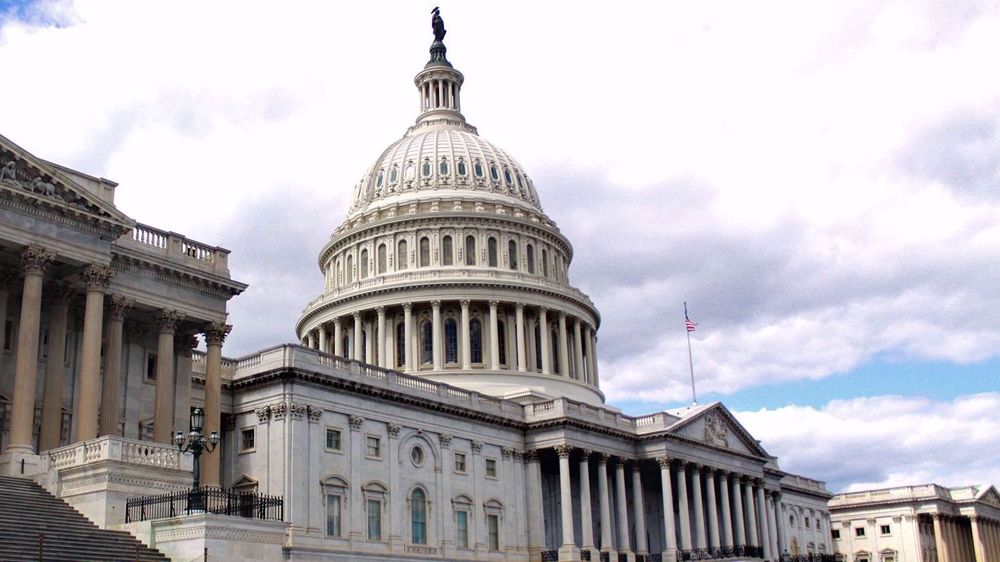

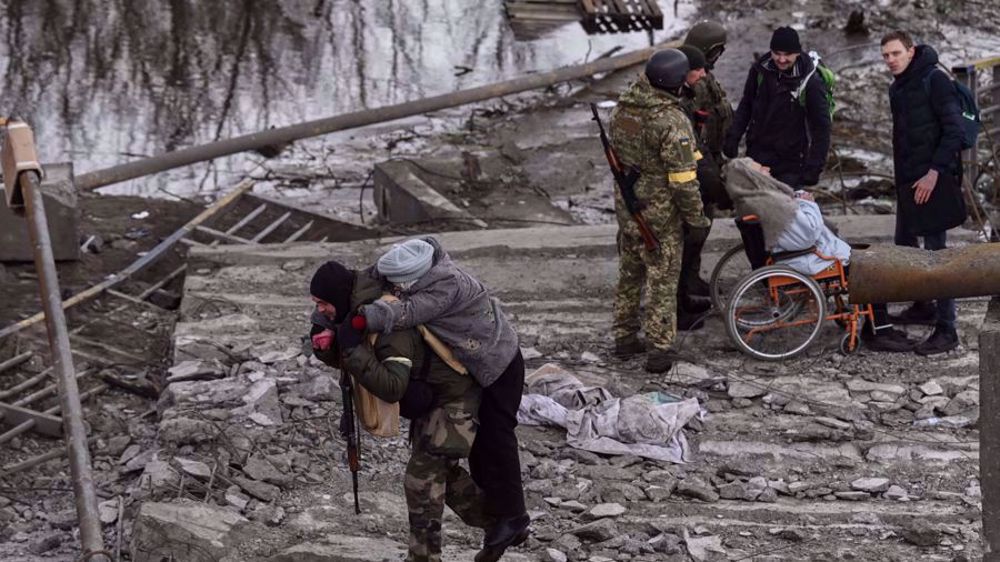












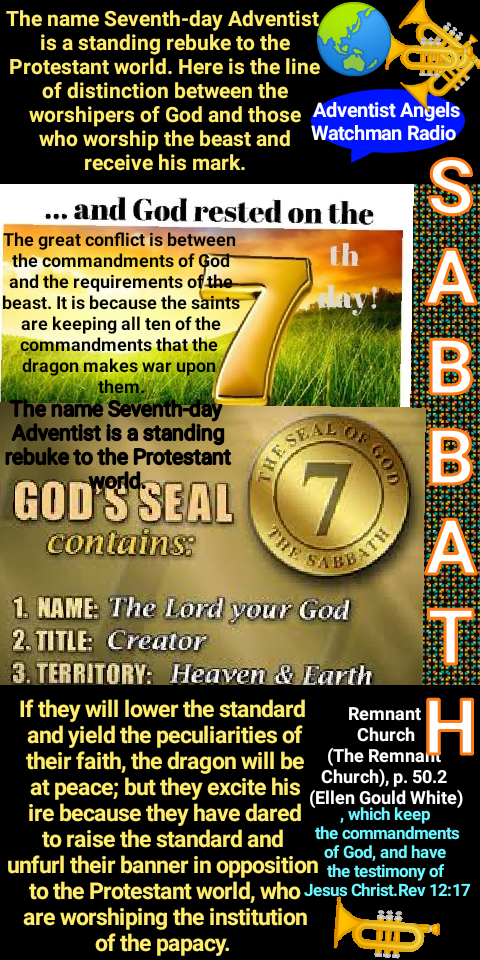

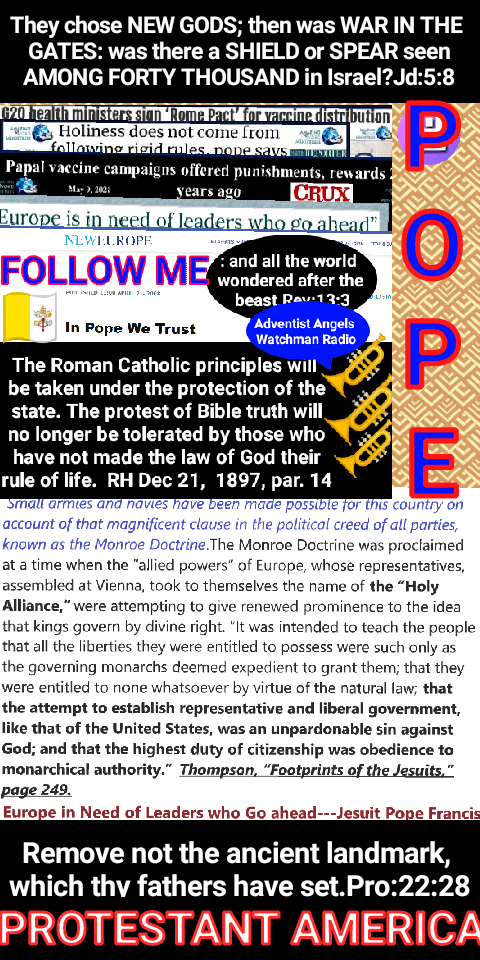
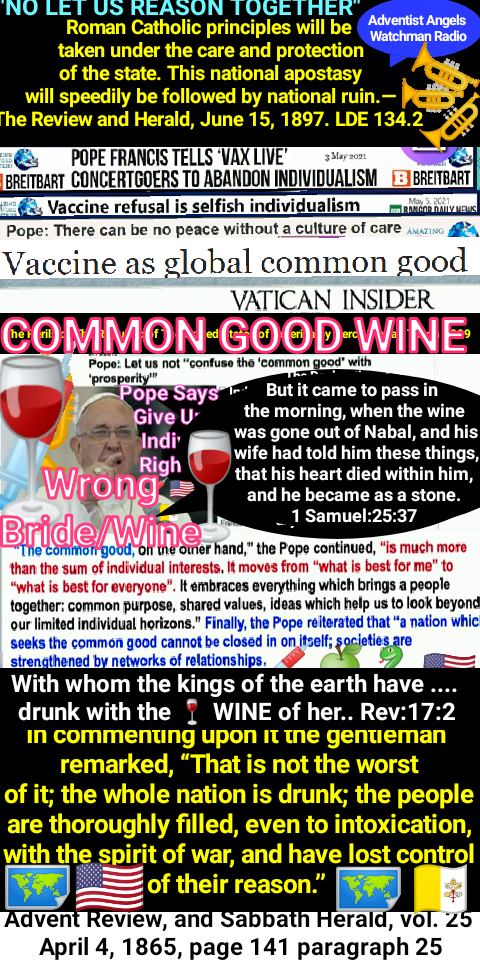
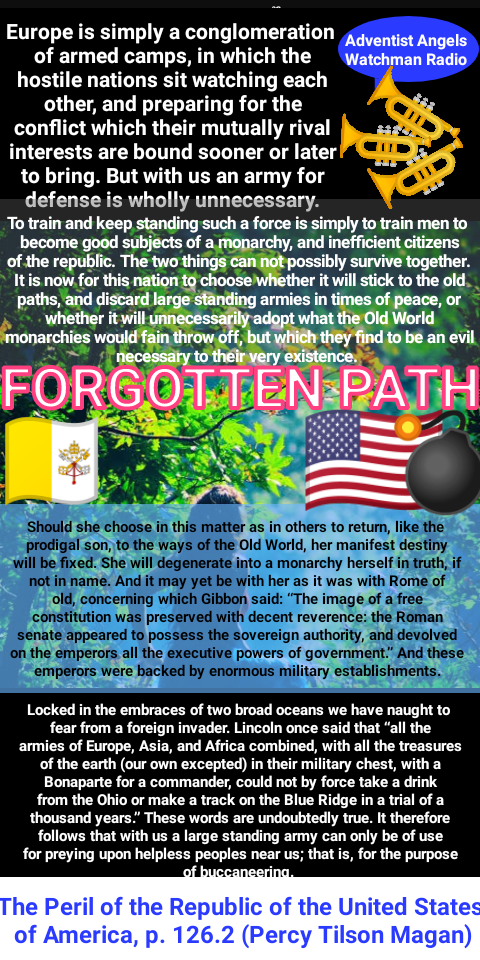
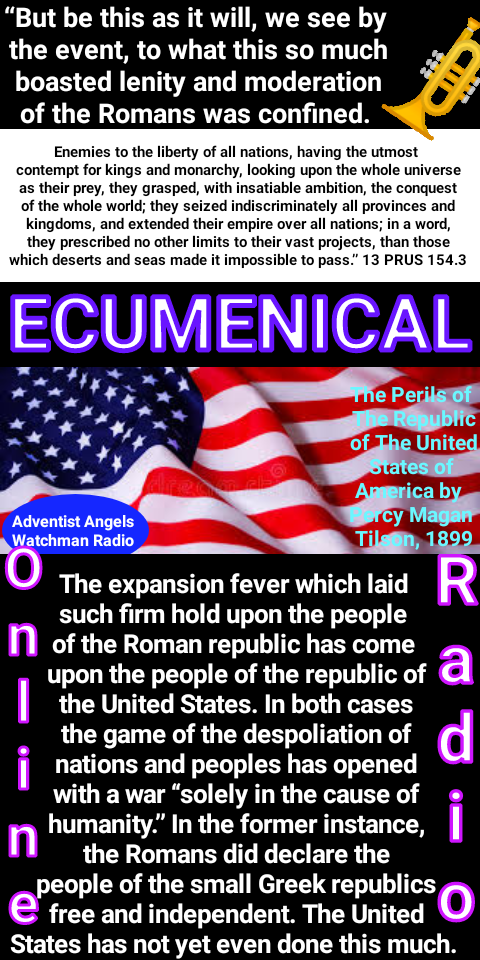
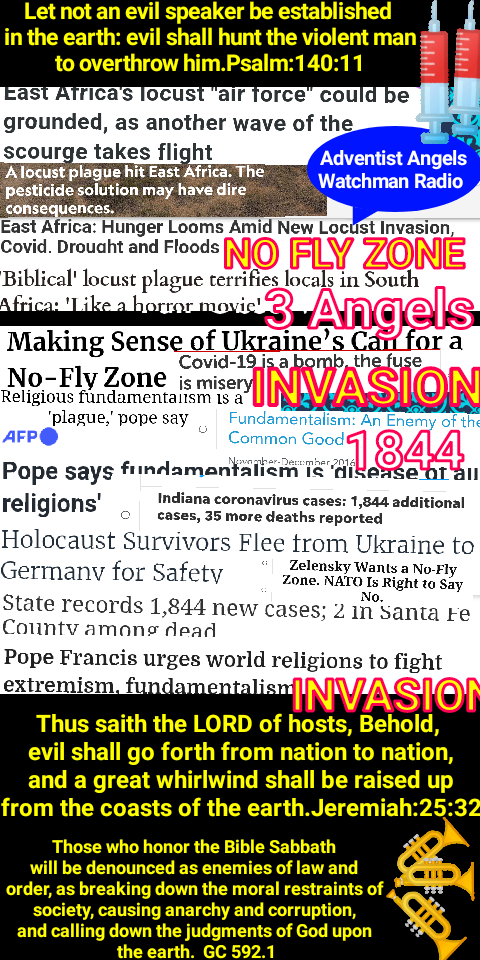
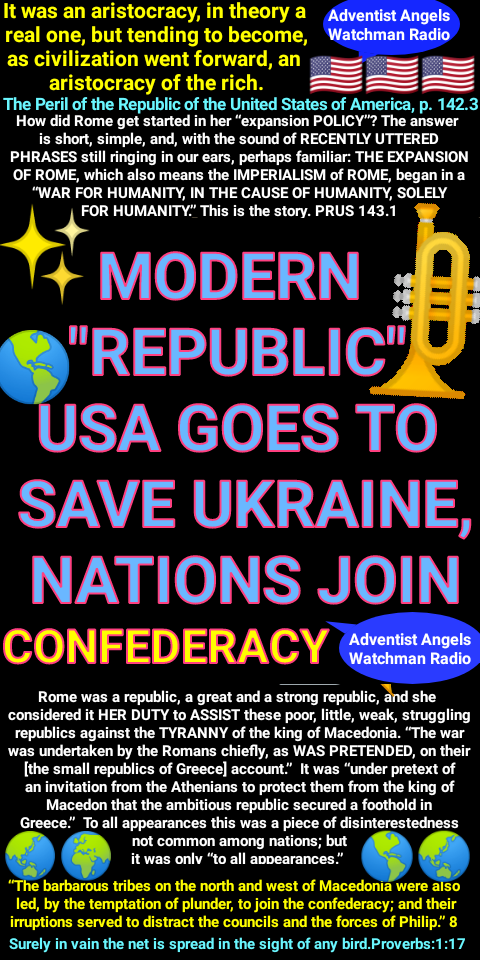
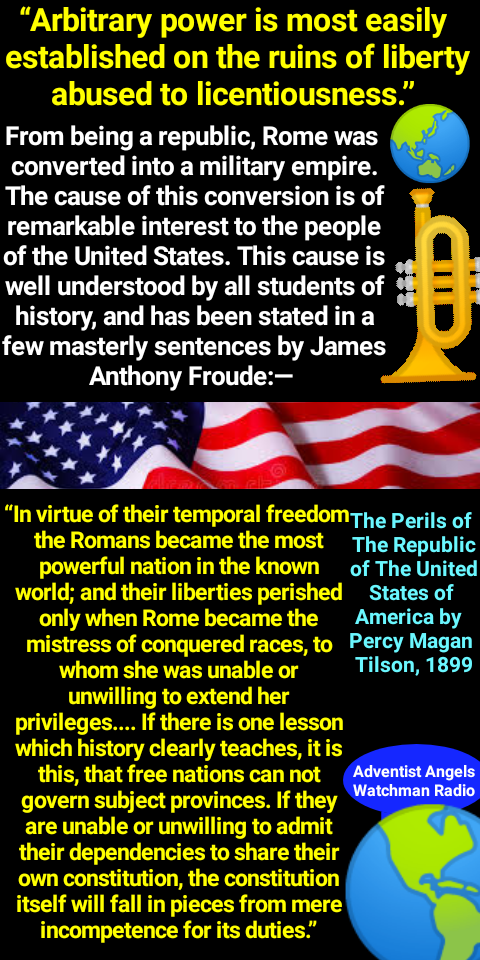


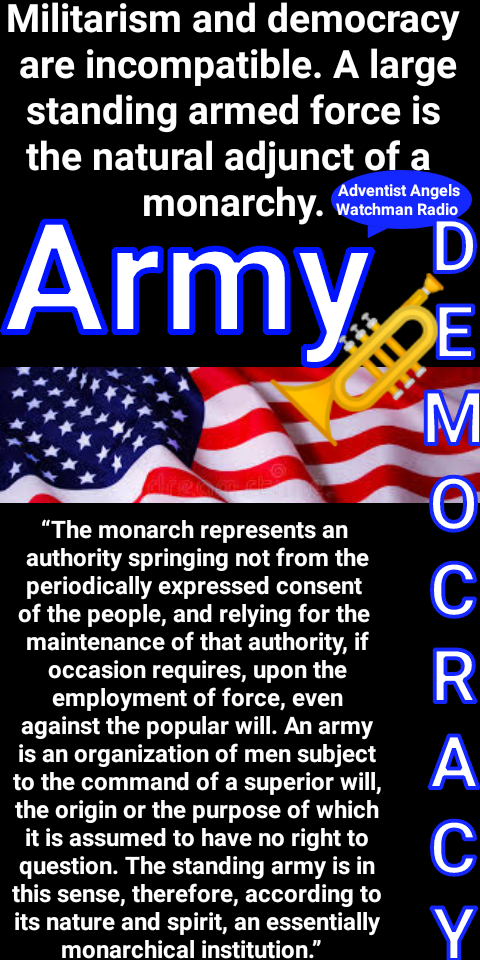






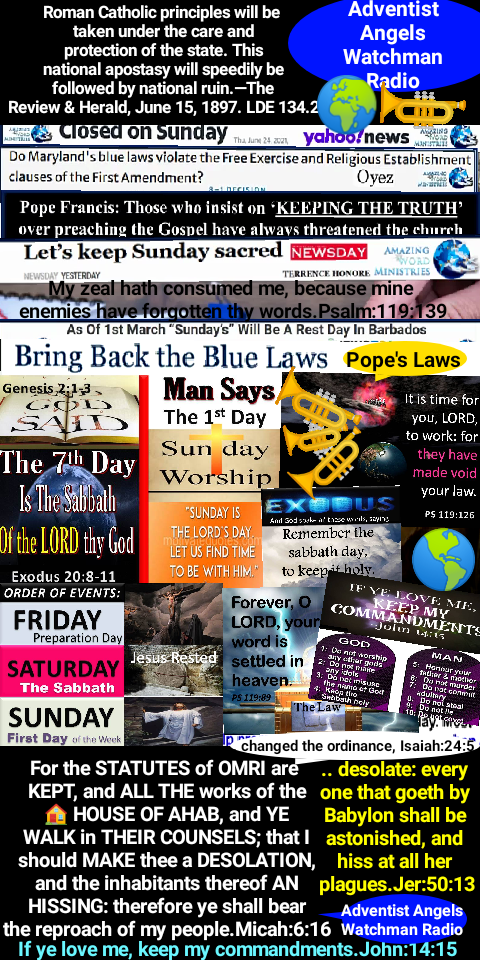
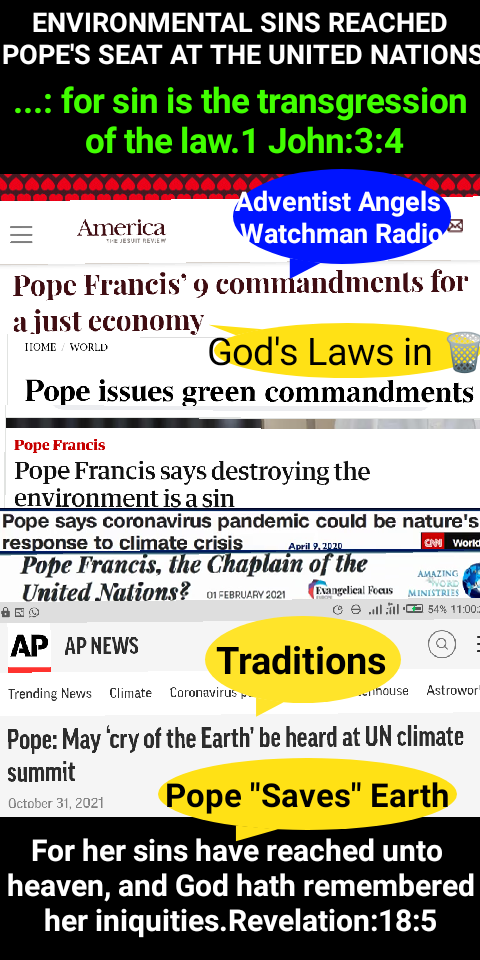
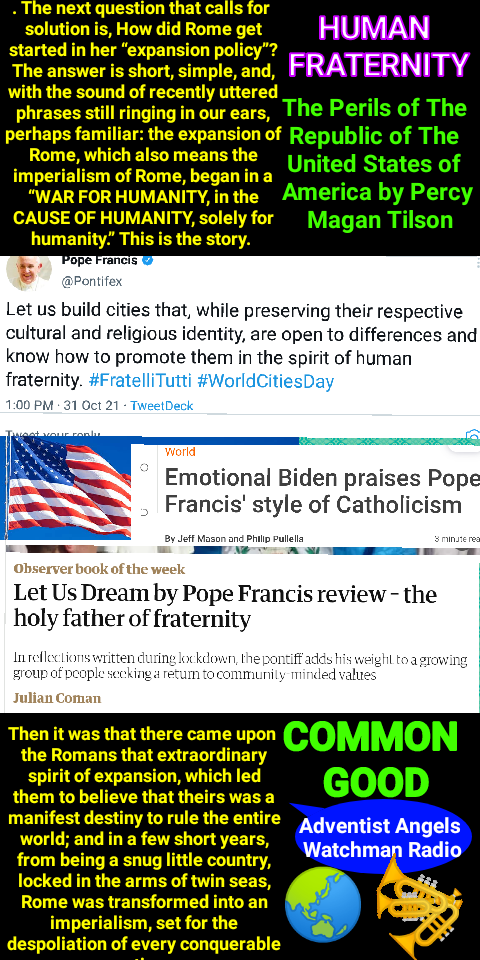

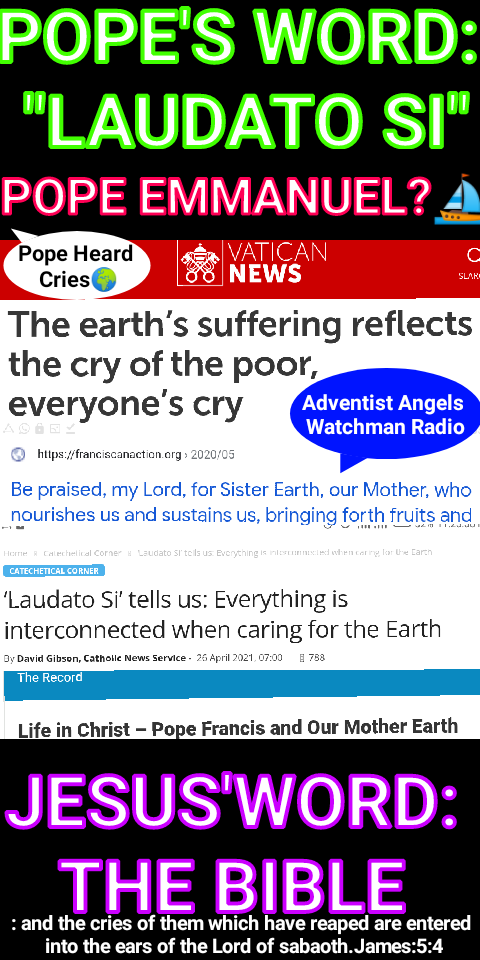
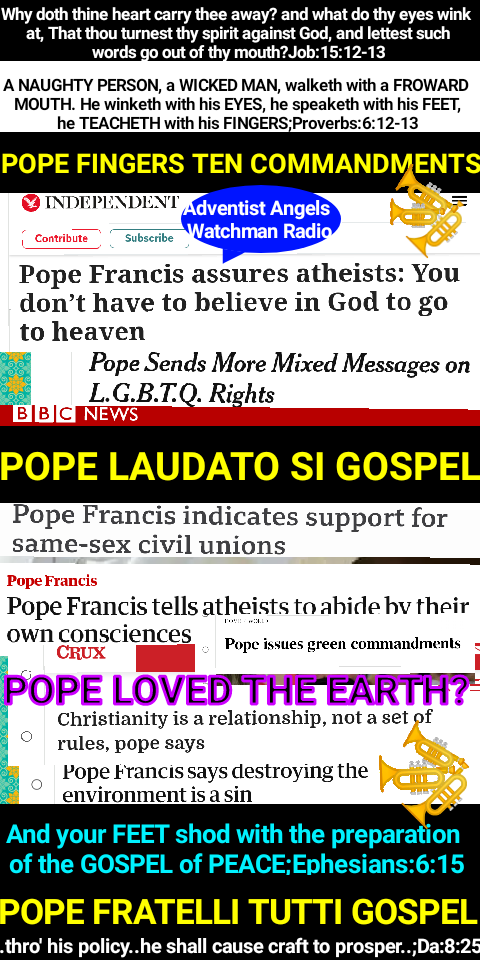
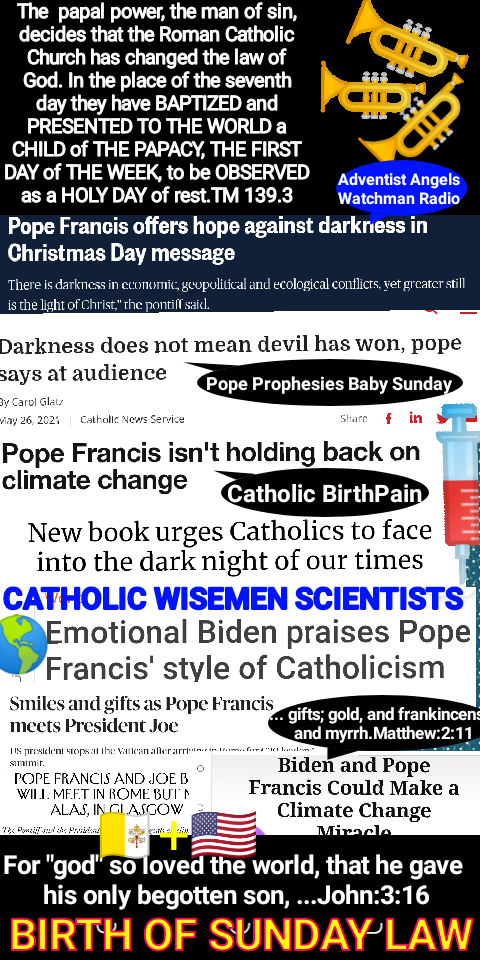

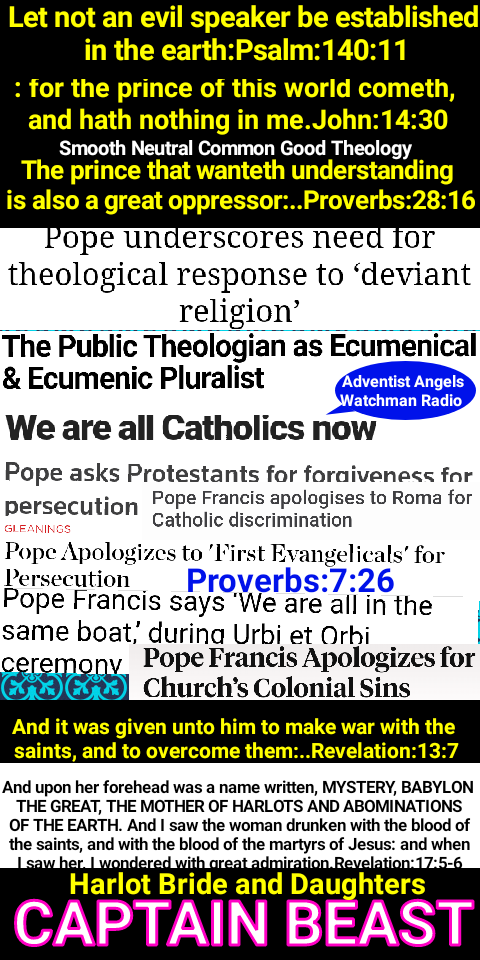
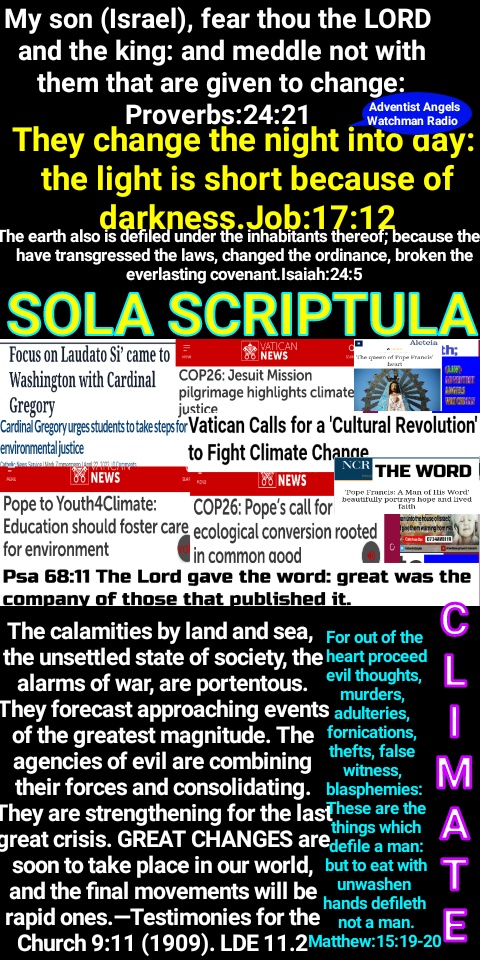



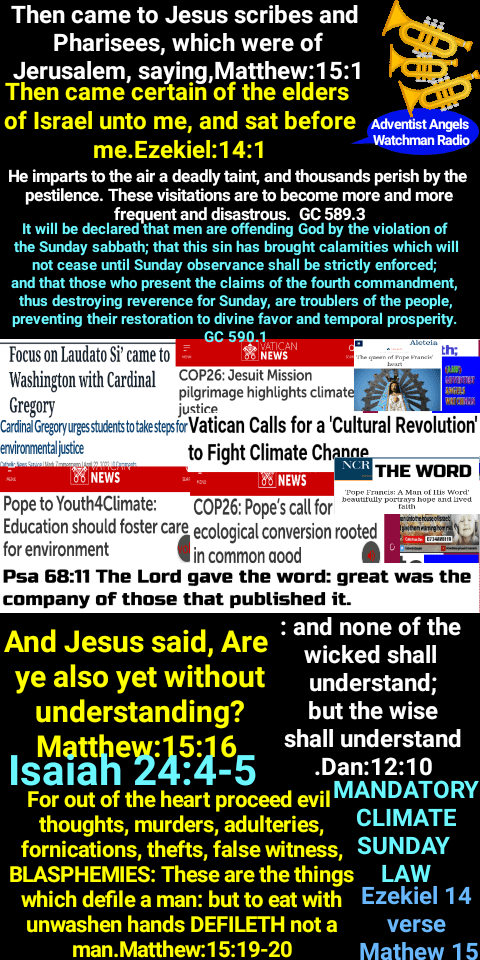
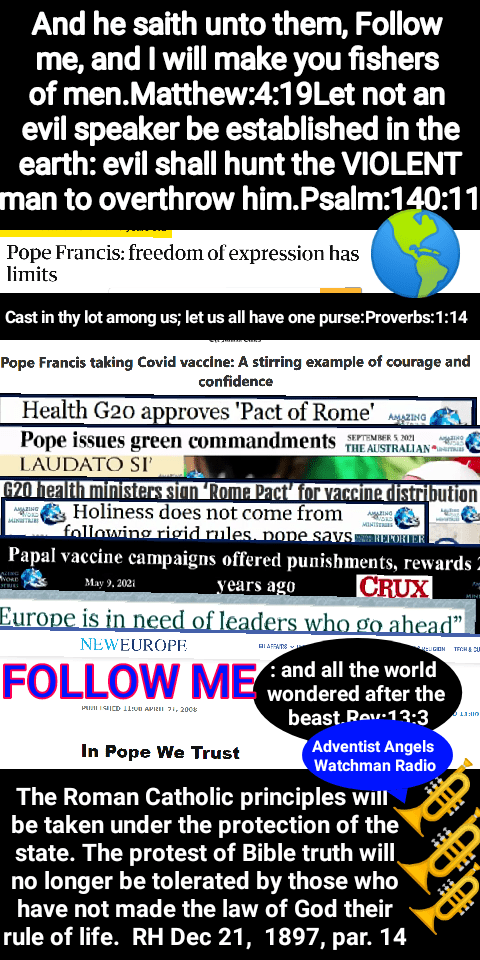

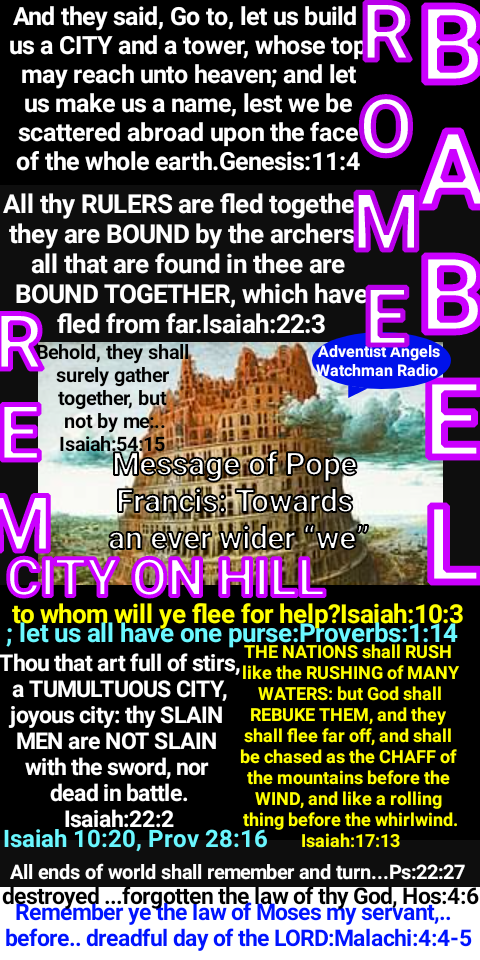

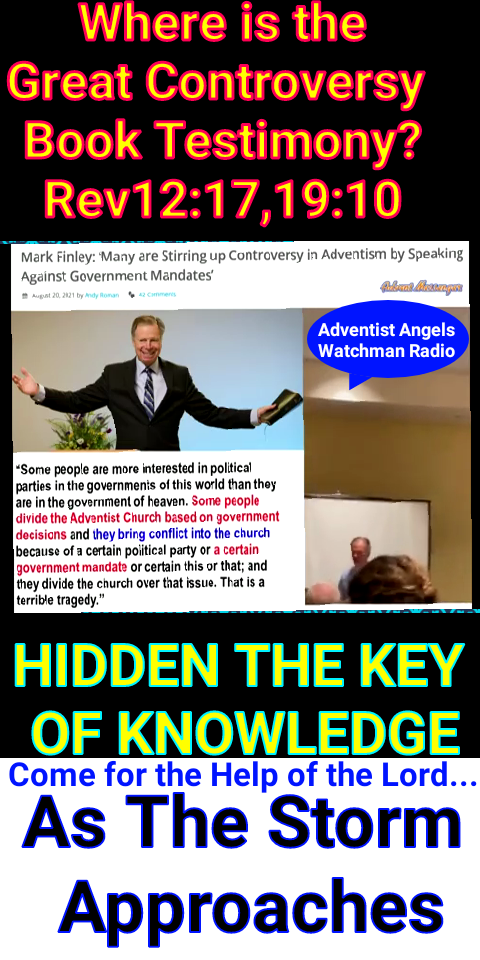
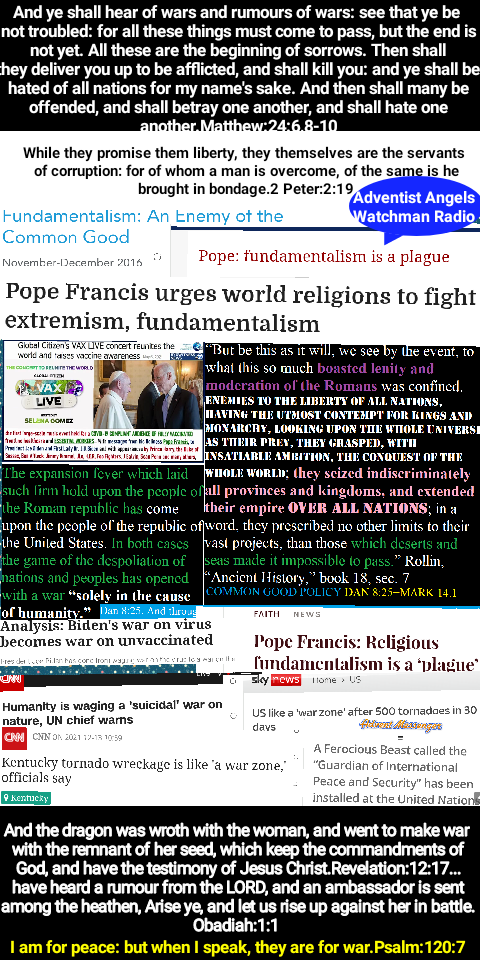
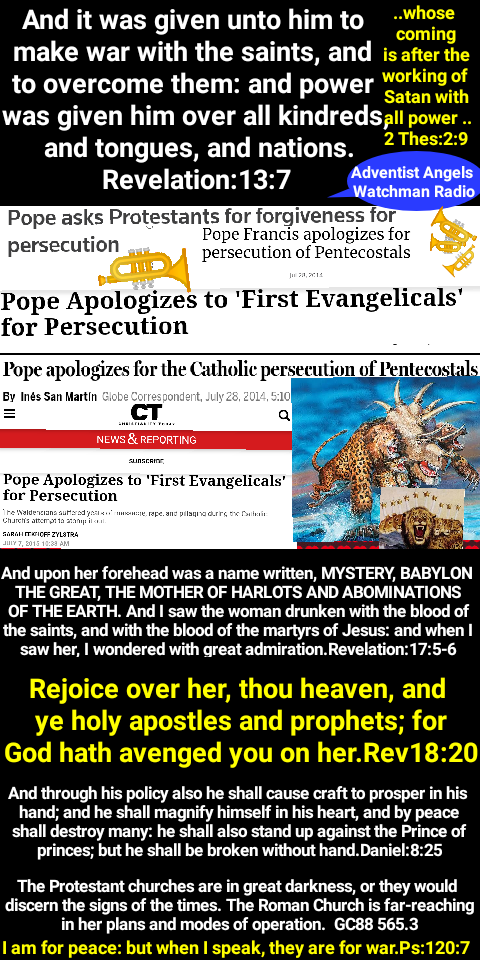
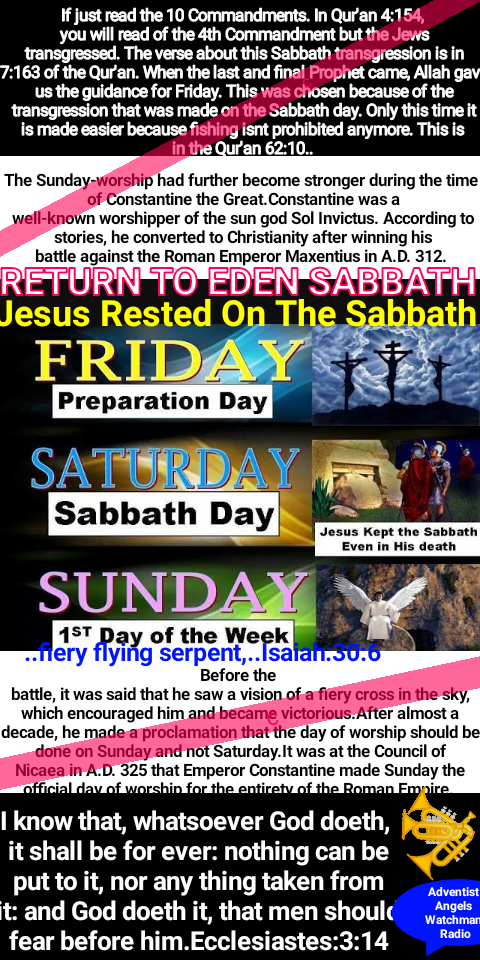

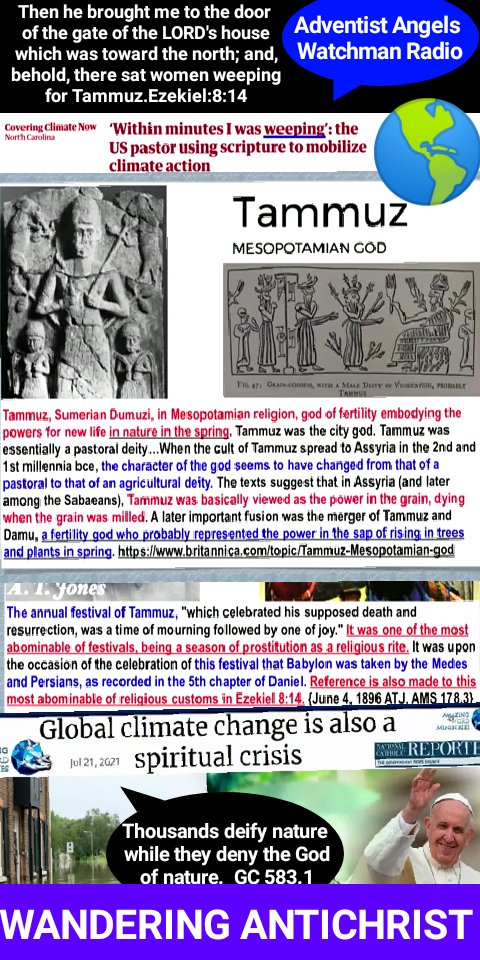


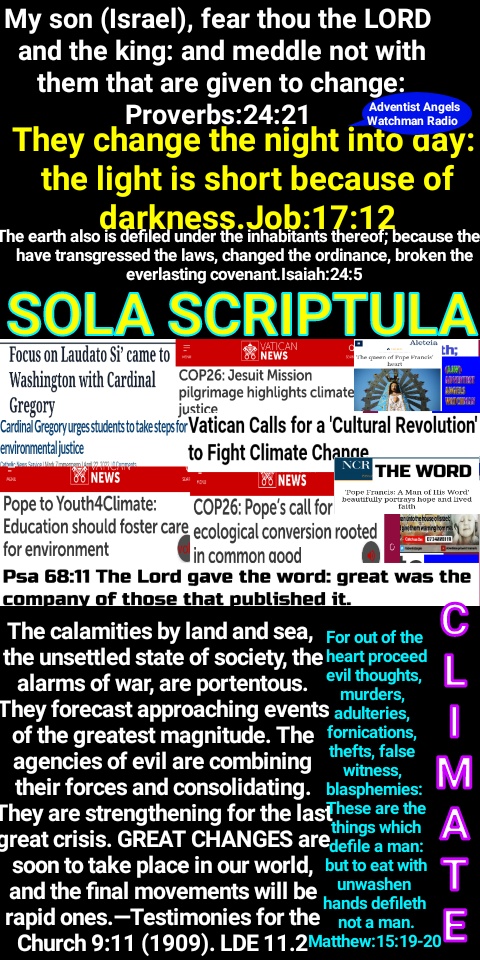

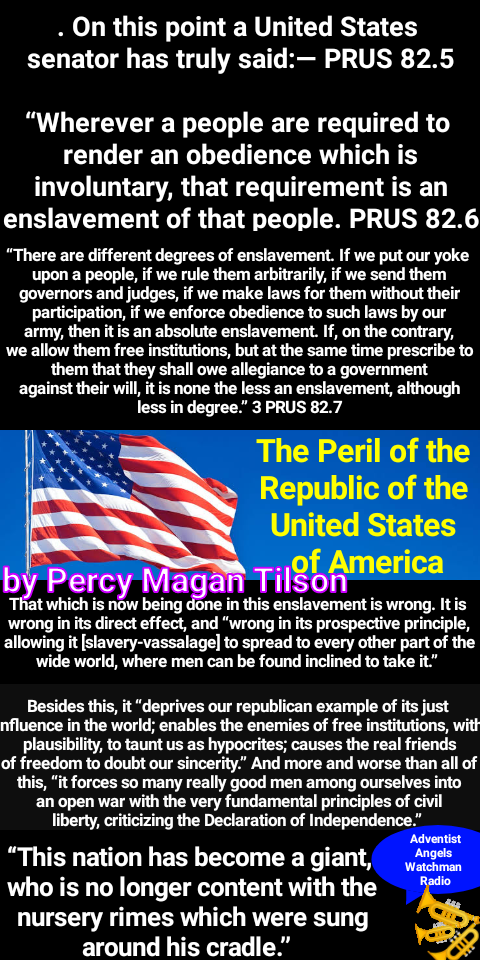
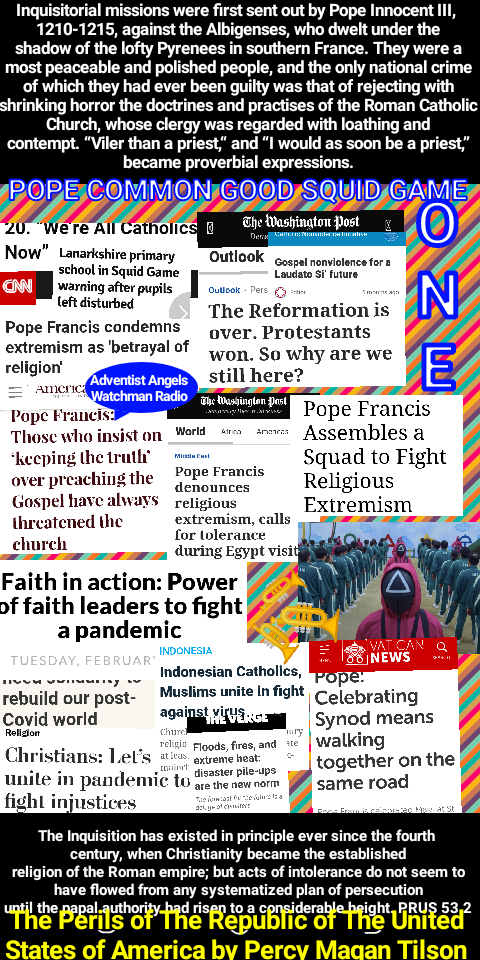
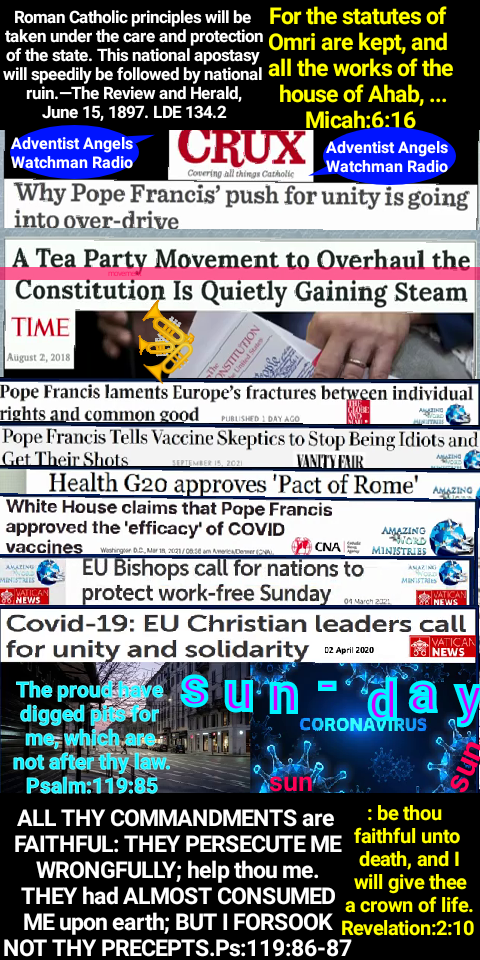
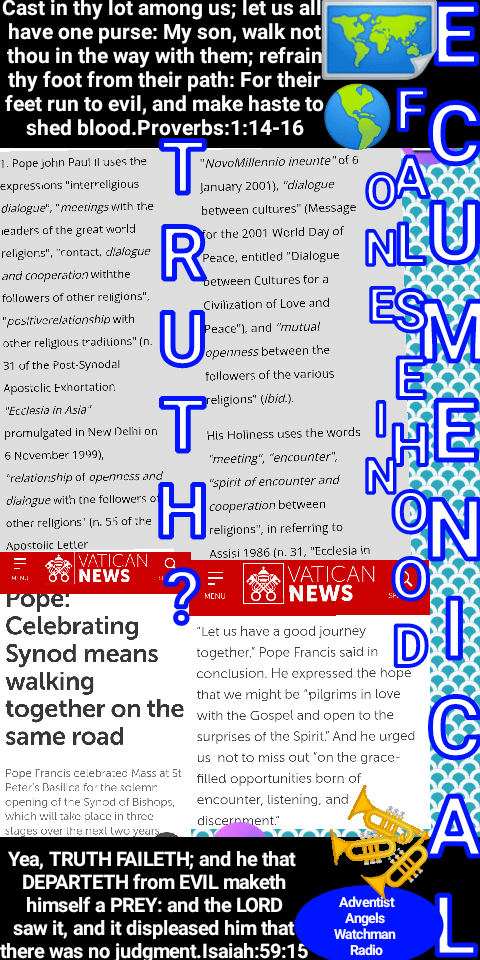
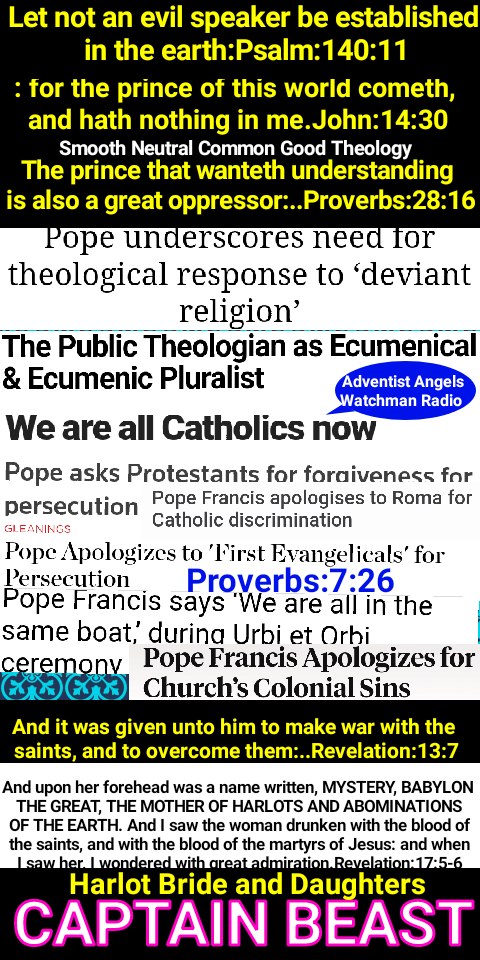
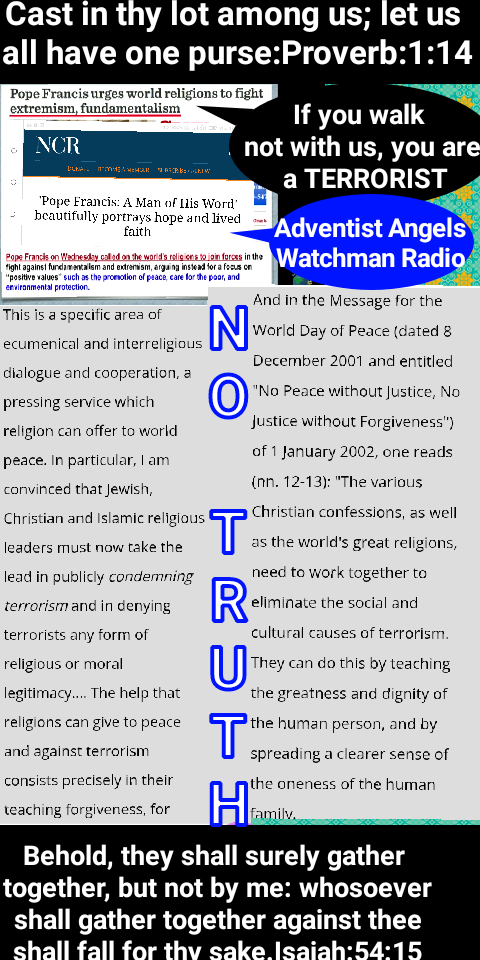



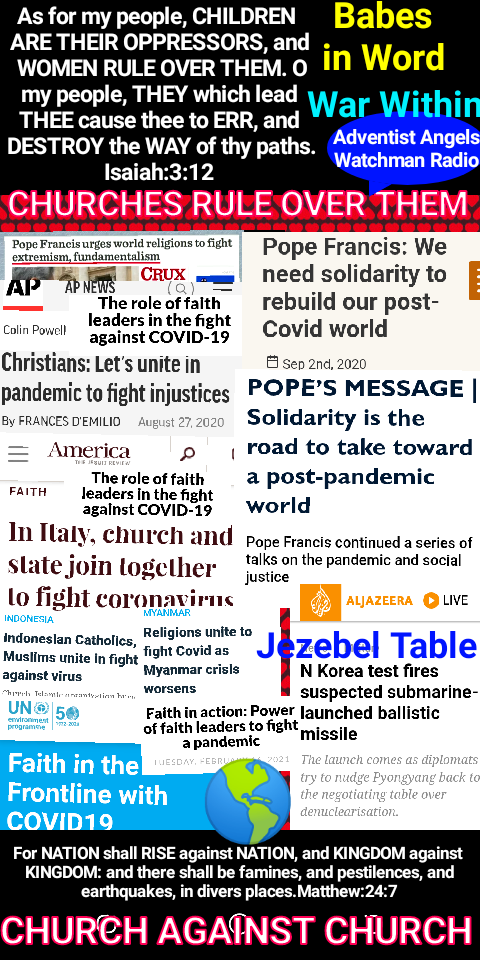
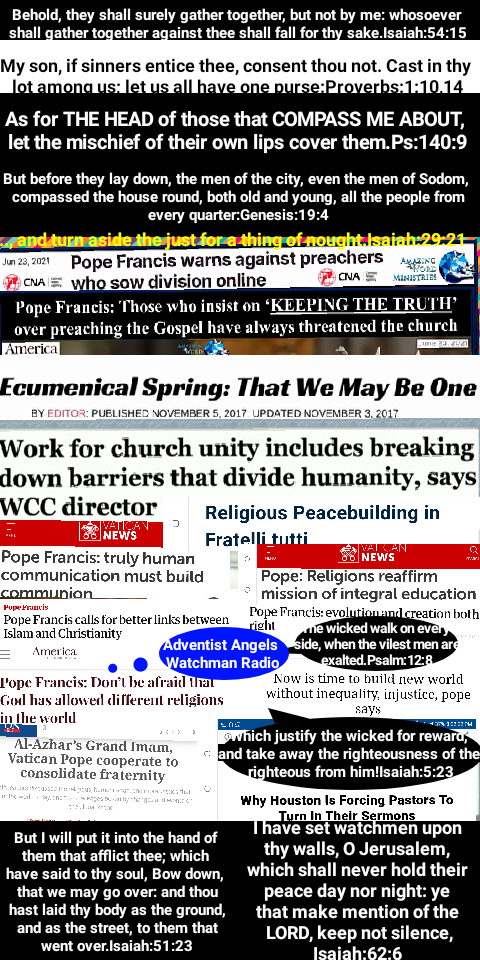
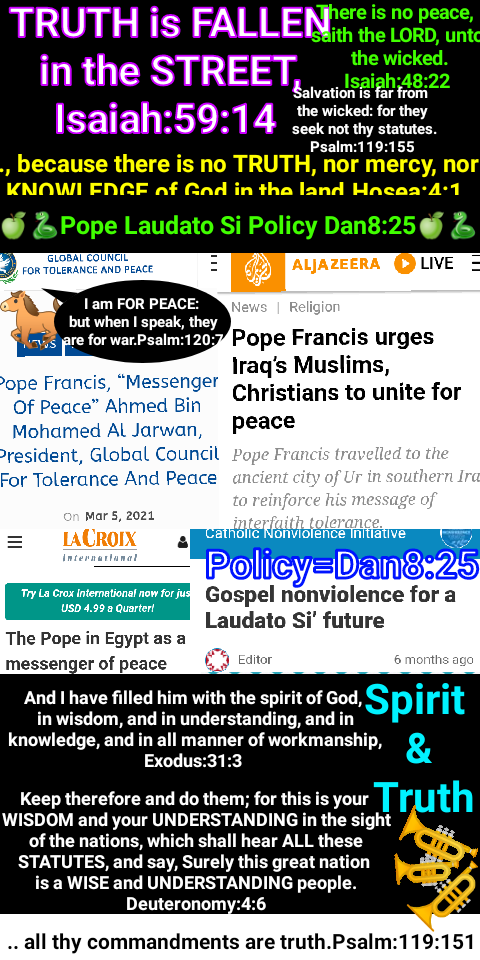
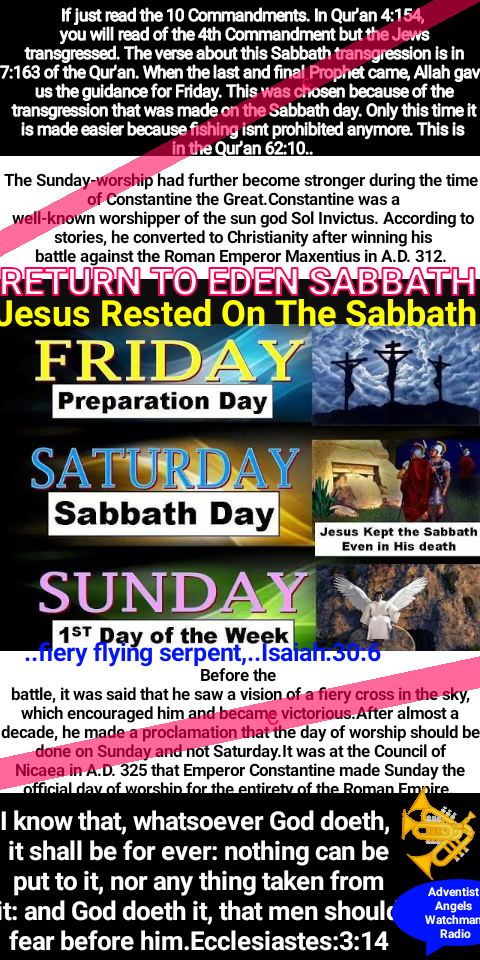
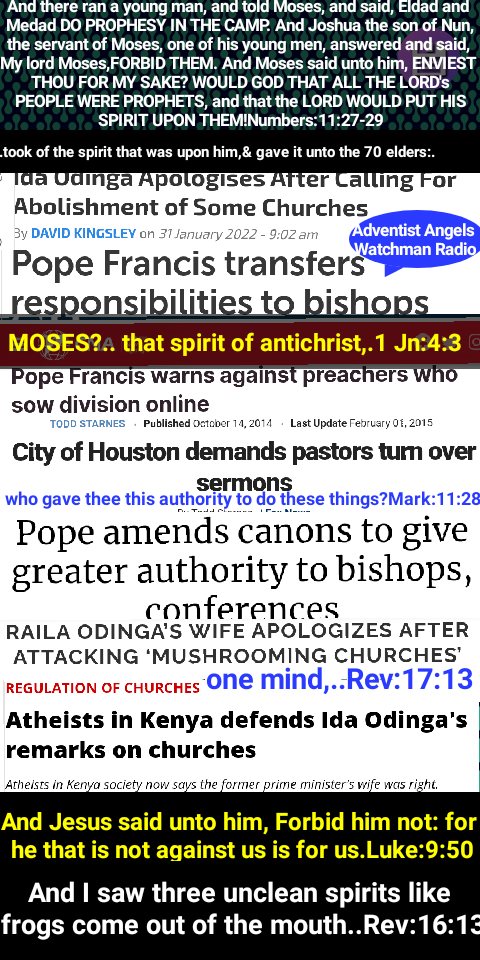
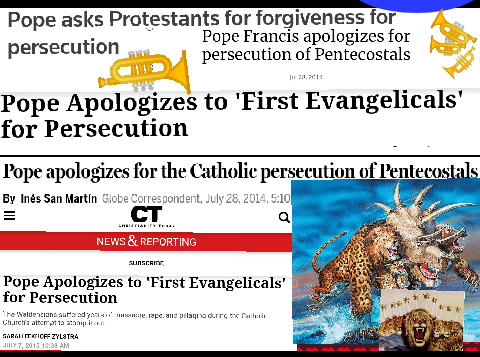
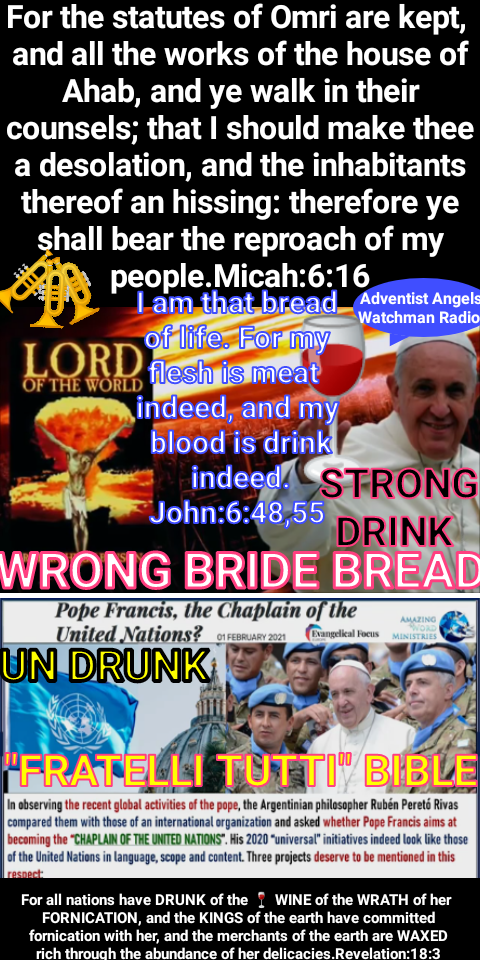
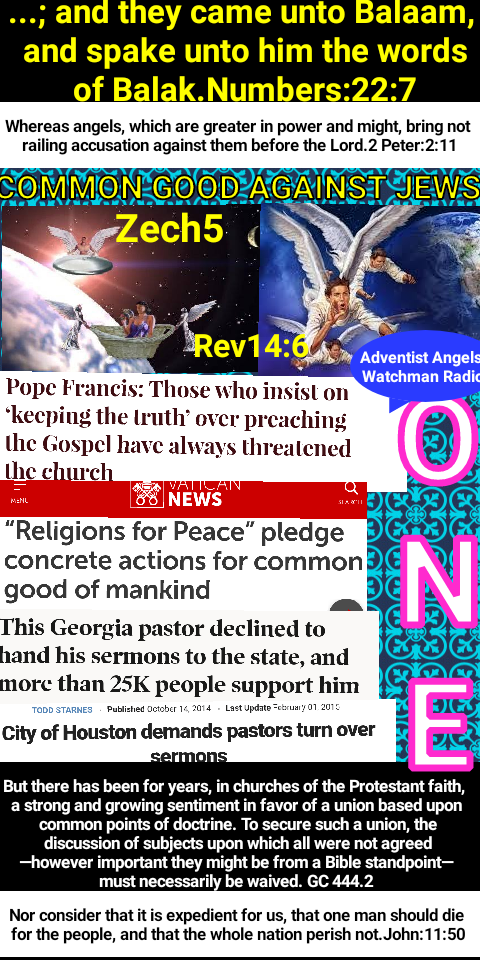
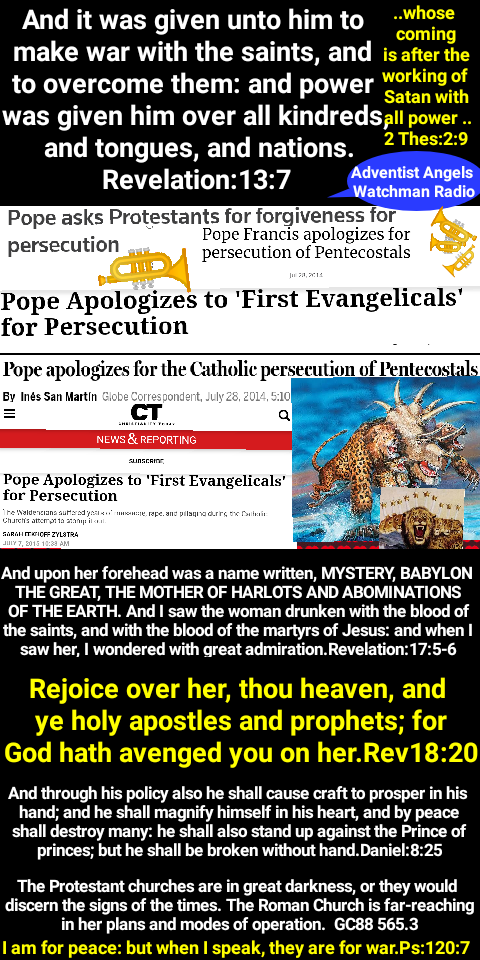
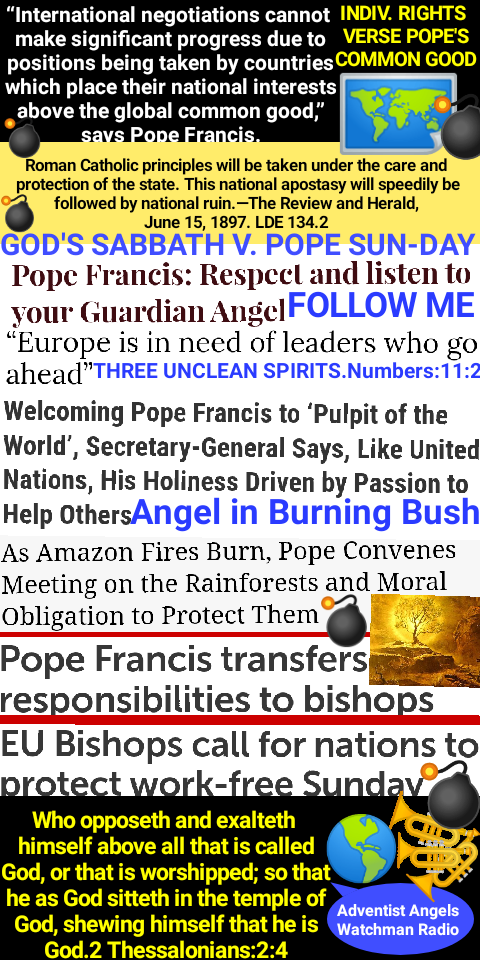
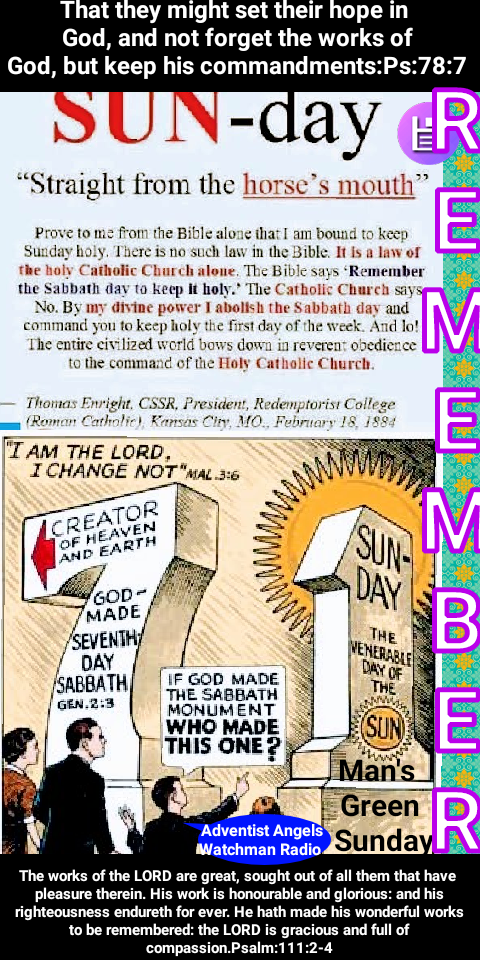
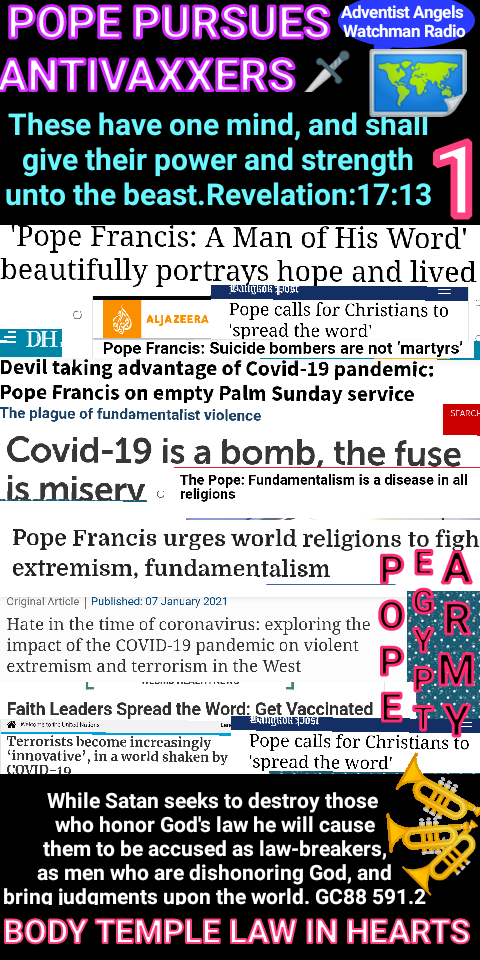
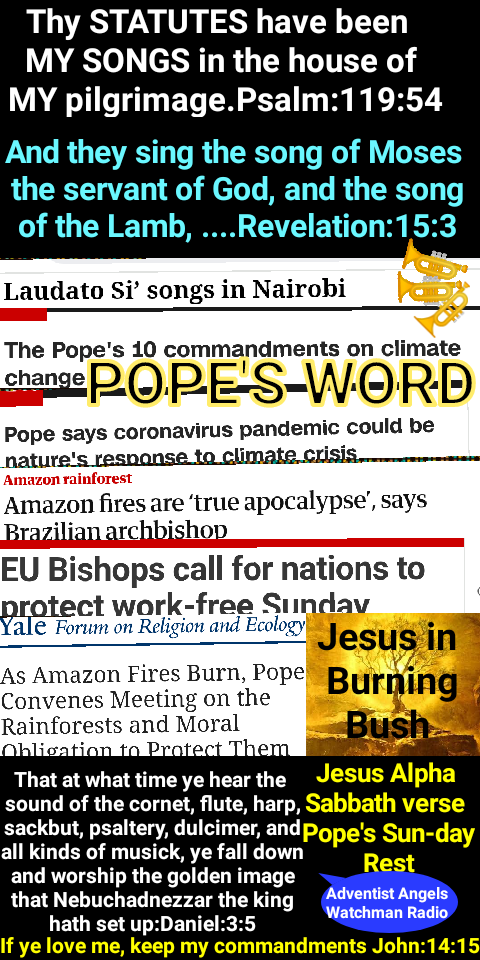
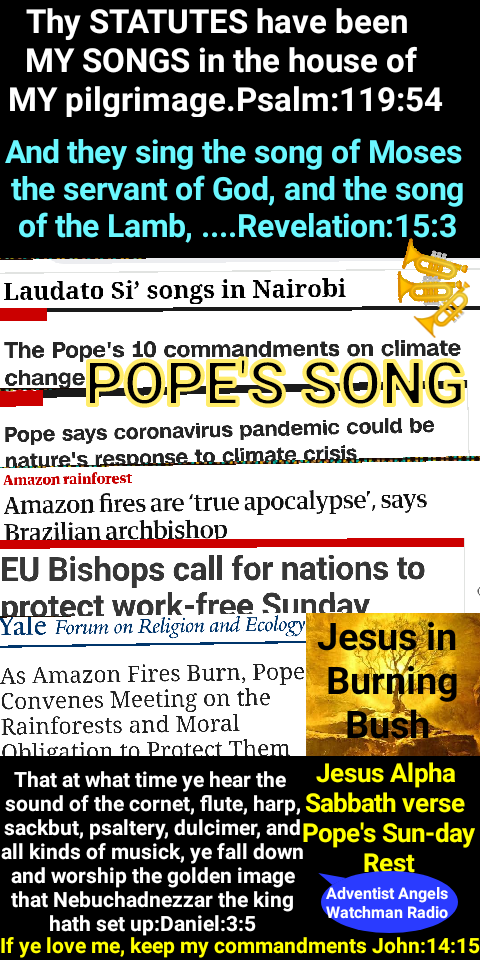
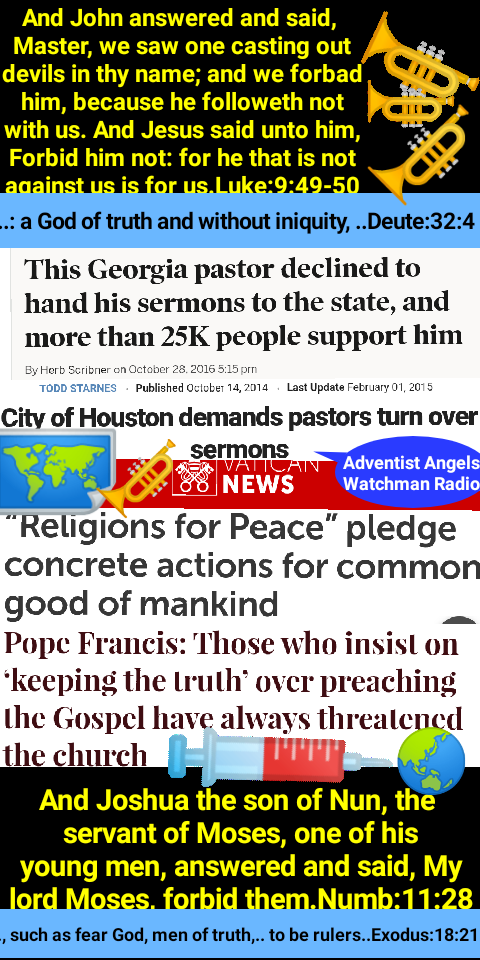


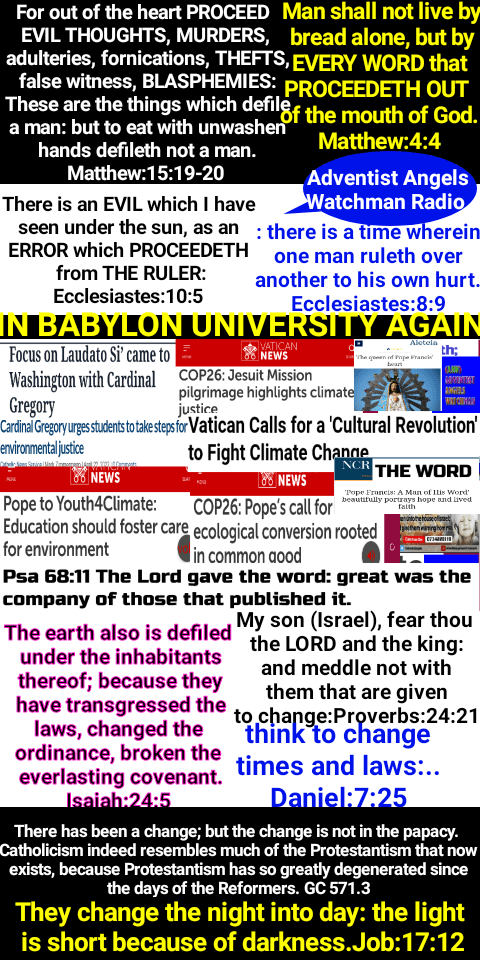
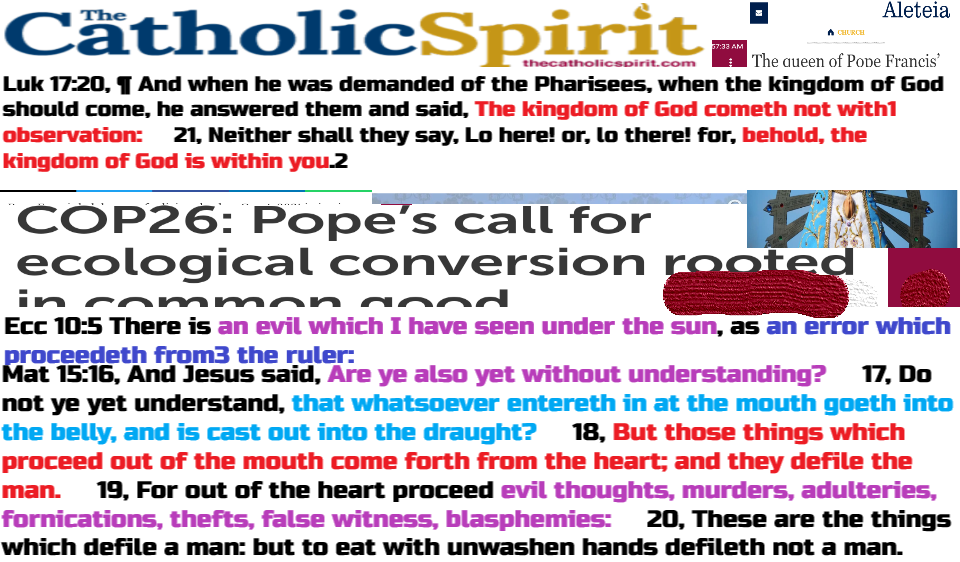

 Adventist Angels Watchman Radio