Welcome to Adventist Angels Watchman Radio official website, preparing the earth for Jesus Christ return Shortly, find us on Facebook, Twitter and You-tube. +254734228119 With Ev. King Osiemo
The Ecumenical Tsunami Movement of churches in the land. A time of trouble is eminent to eliminate those who cannot join them. Nation uniting with Nation
The wide diversity of belief in the Protestant churches is regarded by many as decisive proof that no effort to secure a forced uniformity can ever be made. But there has been for years, in churches of the Protestant faith, a strong and growing sentiment in favor of a union based upon common points of doctrine. To secure such a union, the discussion of subjects upon which all were not agreed—however important they might be from a Bible standpoint—must necessarily be waived.
Charles Beecher, in a sermon in the year 1846, declared that the ministry of “the evangelical Protestant denominations” is “not only formed all the way up under a tremendous pressure of merely human fear, but they live, and move, and breathe in a state of things radically corrupt, and appealing every hour to every baser element of their nature to hush up the truth, and bow the knee to the power of apostasy. Was not this the way things went with Rome? Are we not living her life over again? And what do we see just ahead? Another general council! A world’s convention! Evangelical alliance, and universal creed!”—Sermon on “The Bible a Sufficient Creed,” delivered at Fort Wayne, Indiana, Feb. 22, 1846. When this shall be gained, then, in the effort to secure complete uniformity, it will be only a step to the resort to force.
When the leading churches of the United States, uniting upon such points of doctrine as are held by them in common, shall influence the state to enforce their decrees and to sustain their institutions, then Protestant America will have formed an image of the Roman hierarchy, and the infliction of civil penalties upon dissenters will inevitably result. The beast with two horns “causeth commands all, both small and great, rich and poor, free and bond, to receive a mark in their right hand, or in their foreheads: and that no man might buy or sell, save he that had the mark, or the name of the beast, or the number of his name.” Revelation 13:16, 17. The third angel’s warning is: “If any man worship the beast and his image, and receive his mark in his forehead, or in his hand, the same shall drink of the wine of the wrath of God.” “The beast” mentioned in this message, whose worship is enforced by the two-horned beast, is the first, or leopardlike beast of Revelation 13—the papacy. The “image to the beast” represents that form of apostate Protestantism which will be developed when the Protestant churches shall seek the aid of the civil power for the enforcement of their dogmas. The “mark of the beast” still remains to be defined.
After the warning against the worship of the beast and his image the prophecy declares: “Here are they that keep the commandments of God, and the faith of Jesus.” Since those who keep God’s commandments are thus placed in contrast with those that worship the beast and his image and receive his mark, it follows that the keeping of God’s law, on the one hand, and its violation, on the other, will make the distinction between the worshipers of God and the worshipers of the beast GC 444.2 – GC 445.3
Knowing this first, that there shall come in the last days scoffers, walking after their own lusts, And saying, Where is the promise of his coming? for since the fathers fell asleep, all things continue as they were from the beginning of the creation. For this they willingly are ignorant of, that by the word of God the heavens were of old, and the earth standing out of the water and in the water: 2 Peter:3:3-5
And Jesus, walking by the sea of Galilee, saw two brethren, Simon called Peter, and Andrew his brother, casting a net into the sea: for they were fishers. And he saith unto them, Follow me, and I will make you fishers of men. And they straightway left their nets, and followed him. And they immediately left the ship and their father, and followed him.Matthew:4:18-20,22
Sound the note of warning, “Come; for all things are now ready.” Luke 14:17. In the time in which we are living, skepticism, infidelity, speculation, and Phariseeism abound to divert the mind from the vital questions at issue. False reports, false representations of character, calumny, and every species of reproach will be originated by the great deceiver to throw discredit upon the Word of God and those who advocate it. But what voice shall say, Quit the field; it costs too much in time, and calls for too great an outlay of means, and is a hard and unprofitable field? Oh, never let this voice call you away from the work.
Among the American brethren we see that which pains our hearts. Self-indulgence abounds in the church, and the world finds large patronage from its members, because self-denial is not practiced. Money is expended for unnecessary things, and we know that this means the limiting of donations which should be applied to the great enterprise of building up the kingdom of Christ in our world. As the world advances and converts the church to its customs, and to its fashions, and leads the professed follower of Christ to indulge in it gratifications, the treasury of God is robbed in the withholding of tithes and offerings that should be given, that there may be “meat in Mine house.” Malachi 3:8-10.
The indolence that is seen in the churches and among those who claim to believe the truth brings its curse of results, which are represented in the parable of the slothful servant who buried his talent in the earth and misrepresented his Lord who had loaned him the talent for wise improvement. Oh, that all who have an intelligent knowledge of the truth would realize that their talents are loaned them of God to be improved by trading upon the Lord’s goods! Those who put the Lord’s money out to the exchangers will receive divine commendation.
Suppose those who enter the field do meet with opposition; they will be but strengthened if they work in Christ’s lines; and if they have but one talent to begin with, it will not always remain one, but will become two. Then if the two are faithfully used, the talents will again be doubled, for heavenly wisdom will be imparted to the humble soul who walks by faith, imparting light under the most discouraging circumstances. He who handles the Lord’s goods as faithfully in trading upon pence as upon pounds will bring a large revenue into the Lord’s treasury. Every missionary who goes forth seeking to do his best will have the support of One who will supply all his necessities. The great Master Workman will not leave him to want.
The missionary’s only business is to receive orders from God and to obey the orders given. Souls are to be sought for, and the truth is to be presented to men in its simplicity. Missionaries are not to study English rules, customs, or practices; but they are to make everything according to the pattern shown to them in the mount. As certainly as our workers do not bring a new, divine element into their work that will be like leaven put into the meal, they might as well quit the field. Let missionaries do their best to follow the great Exemplar.
We are years behind. Let the missionaries obey orders from their great Captain and put life and energy into the work; God will give the power of His Holy Spirit. The fields in Europe do not require so great a change in the manner of working from the way in which the work is done in America, as they require an element of energy and renovation that will surprise and startle the people from their sleepy lethargy. They need the quickening, vitalizing power of the Holy Spirit, which will alone be efficient, and will speed the work in rapid movements. The Lord is not asleep, if England is. The Lord will give success to His work when His workers arouse to the emergency of the situation. Tares were sown among the wheat while men slept; and unless there is an earnest pushing forward of the work, it will never assume the proportions that God designed it should assume. London is an important point, and throughout England the cities are not to be neglected. God will move upon agents, God will work, and His power will be revealed if men will co-operate with Him. Where are the men, where are the women, who will give themselves entirely to the work? We need the converting power of God every day. Old habits of precision, of moving in a certain groove, will have to be changed; old customs and habits that have long been cherished and idolized will have to be broken up.
Men will have to experience a daily conversion, in order that they may be working agents, who can be molded and fashioned as clay is molded and fashioned by the hands of the potter. Workers are to learn daily lessons in the school of Christ; for it is not your mold that God would have upon the characters of the church members. Give God a chance to impress minds and to place His mold upon the character and upon the church. We are to look unto Jesus, who is the author and the finisher of our faith, in order that by beholding we may become changed into His image, from character to character. We are not always to retain the same mold of character, but more and more to reflect the image of Jesus, that we may lead men away from self and out of self to become one with Christ. “Ye are complete in Him.” Colossians 2:10. Our completeness is in Jesus Christ. He is our pattern. I am sorry I could not have done more labor in England. We long to see the work make more rapid strides, because we know it can and should. I am setting the wants of Europe before our people. I know that some will feel the burden, and others will do nothing, although they can do much. Asleep, asleep on the very verge of eternity! 5LtMs, Lt 15, 1887, par. 6 – 5LtMs, Lt 15, 1887, par. 14
But ye are a chosen generation, a royal priesthood, an HOLY NATION, a peculiar people; that ye should shew forth the praises of him who hath called you out of darkness into his marvellous light; 1 Peter:2:9
And ye shall be unto me a kingdom of priests, and an HOLY NATION. These are the words which thou shalt speak unto the children of Israel.Exodus:19:6
Thus saith the LORD of hosts, Behold, evil shall go forth from NATION to NATION, and a great whirlwind shall be raised up from the coasts of the earth.Jeremiah:25:32
Woe unto them that join HOUSE to HOUSE, that lay FIELD to FIELD, till there be no place, that they may be placed alone in the midst of the earth! Isaiah:5:8
He is the LORD our God; his judgments are in all the earth. Be ye mindful ALWAYS OF HIS COVENANT; THE WORD WHICH HE COMMANDED to a THOUSAND GENERATIONS; Even of THE COVENANT which he made with Abraham, and of his oath unto Isaac; And hath CONFIRMED the same to Jacob for a LAW, and to Israel for an EVERLASTING COVENANT, Saying, Unto thee will I give the land of Canaan, the lot of your inheritance; When ye were but few, even a few, and strangers in it. And when they went from nation to nation, and from one kingdom to another people; He suffered no man to do them wrong: yea, he reproved kings for their sakes, Saying, Touch not mine anointed, and do my prophets no harm. Sing unto the LORD, all the earth; show forth from day to day his salvation. 1 Chronicles:16:14-23
Seventh-day Adventists have been chosen by God as a peculiar people, separate from the world. By the great cleaver of truth He has cut them out from the quarry of the world and brought them into connection with Himself. He has made them His representatives and has called them to be ambassadors for Him in the last work of salvation. The greatest wealth of truth ever entrusted to mortals, the most solemn and fearful warnings ever sent by God to man, have been committed to them to be given to the world.—Testimonies for the Church 7:138 (1902). In a special sense Seventh-day Adventists have been set in the world as watchmen and light bearers. To them has been entrusted the last warning for a perishing world. On them is shining wonderful light from the Word of God. They have been given a work of the most solemn import—the proclamation of the first, second, and third angels’ messages. There is no other work of so great importance. They are to allow nothing else to absorb their attention.—Testimonies for the Church 9:19 (1909). LDE 45.2 – LDE 45.3
And ye shall hear of WARS and RUMOURS of WARS: see that ye be not troubled: for all these things must come to pass, but the end is not yet. For NATION shall rise against NATION, and KINGDOM against KINGDOM: and there shall be FAMINES, and PESTILENCES, and EARTHQUAKES, in divers places. All these are the beginning of sorrows. Then shall they DELIVER you up to be afflicted, and shall kill you: and ye shall be HATED of ALL NATIONS for my name’s sake. And then shall many be offended, and shall betray one another, and shall hate one another. And many false prophets shall rise, and shall deceive many. But he that shall endure unto the end, the same shall be saved. Matthew:24:6-11,13
THE MANDATES REMINDS ME OF 1555 MANDATES AGAINST COMMON ENEMY, THE CONTINUED PROTESTANTISM: WHAT HAPPENED WHEN HAMAAN TOOK OFFICE IN ESTHER 3? And Pope Francis 2013?
Immediately after the accession of Philip, the terrible edict of 1550 was re-enacted. From this notable document an idea of Spain’s methods of governing her colonies may be gathered:— PRUS 63.2
“No one shall print, write, copy, keep, conceal, sell, buy, or give in churches, streets, or other places, any book or writing made by Martin Luther, John Ecolampadius, Ulrich Zwinglius, Martin Bucer, John Calvin, or other heretics reprobated by the holy church; … nor break, or otherwise injure the images of the Holy Virgin or canonized saints; … nor in his house hold conventicles, or illegal gatherings, or be present at any such in which the adherents of the above-mentioned heretics teach, baptize, and form conspiracies against the holy church and the general welfare…. Moreover, we forbid all persons to converse or dispute concerning the Holy Scriptures, openly or secretly, especially on any doubtful or difficult matters, or to read, teach, or expound the Scriptures unless they have duly studied theology, and been approved by some renowned university; … or to preach secretly, or openly, or to entertain any of the opinions of the above-mentioned heretics; … on pain, should any be found to have contravened any of the points above mentioned, as perturbers of the state and of the general quiet, to be punished in the following manner: that such perturbators of the general quiet are to be executed; to wit, the men with the sword, and the women to be buried alive, if they do not persist in their errors; if they do persist in them, then they are to be executed with fire; all their property in both cases to be confiscated to the crown.” PRUS 63.3
“Thus, the clemency of the sovereign permitted the repentant heretic to be beheaded or buried alive, instead of being burned.” PRUS 64.1
All who in any way helped the heretic were in danger of, and liable to, the same punishment; for said the decree:— PRUS 64.2
“We forbid all persons to lodge, entertain, furnish with food, fire, or clothing, or otherwise to favor any one holden or notoriously suspected of being a heretic; … and any one failing to denounce any such, we ordain shall be liable to the above-mentioned punishments.” The edict went on to provide “that if any person, being not convicted of heresy or error, but greatly suspected thereof, and therefore condemned by the spiritual judge to abjure such heresy, or by the secular magistrate to make public fine or reparation, shall again become suspected or tainted with heresy-although it should not appear that he has contravened or violated any one of our abovementioned commands-nevertheless we do will and ordain that such person shall be considered as relapsed, and, as such, be punished with loss of life and property, without any hope of moderation or mitigation of the above-mentioned penalties.”
Many do not hesitate to sneer at the word of God. Those who believe that word just as it reads are held up to ridicule. There is a growing contempt for law and order, directly traceable to a violation of the plain commands of Jehovah. Violence and crime are the result of turning aside from the path of obedience. Behold the wretchedness and misery of multitudes who worship at the shrine of idols and who seek in vain for happiness and peace.
Behold the well-nigh universal disregard of the Sabbath commandment. Behold also the daring impiety of those who, while enacting laws to safeguard the supposed sanctity of the first day of the week, at the same time are making laws legalizing the liquor traffic. Wise above that which is written, they attempt to coerce the consciences of men, while lending their sanction to an evil that brutalizes and destroys the beings created in the image of God. It is Satan himself who inspires such legislation. He well knows that the curse of God will rest on those who exalt human enactments above the divine, and he does all in his power to lead men into the broad road that ends in destruction.
So long have men worshiped human opinions and human institutions that almost the whole world is following after idols. And he who has endeavored to change God’s law is using every deceptive artifice to induce men and women to array themselves against God and against the sign by which the righteous are known. But the Lord will not always suffer His law to be broken and despised with impunity. There is a time coming when “the lofty looks of man shall be humbled, and the haughtiness of men shall be bowed down, and the Lord alone shall be exalted in that day.” Isaiah 2:11. Skepticism may treat the claims of God’s law with jest, scoffing, and denial. The spirit of worldliness may contaminate the many and control the few, the cause of God may hold its ground only by great exertion and continual sacrifice, yet in the end the truth will triumph gloriously.
In the closing work of God in the earth, the standard of His law will be again exalted. PK 185.2 – PK 186.3
Japan has broadened the list of goods and technologies that are prohibited from being exported to Russia as part of the sanctions package imposed against the country due to its military operation in Ukraine.
According to an announcement by Japan’s Ministry of Economy, Trade and Industry on Tuesday, instead of the previously listed 57 titles, the restrictions now cover around 300 items.
The list includes semiconductors, equipment for maritime and aviation security, telecommunications equipment, communications equipment, as well as military products including weapons, explosives, and bulletproof vests. In addition, restrictions have been placed on the export of equipment and products related to nuclear energy, products of the chemical industry, various sensors, and software.
Japan’s export ban will become effective on March 18. The restrictions affect 49 Russian companies and organizations, including state enterprises Rosoboronexport and Rostec, as well as Russia’s Federal Security Service and the Foreign Intelligence Service. Similar measures were also introduced against the Ministry of Defense of Belarus and Belarusian tech manufacturer Integral.
Japan had previously imposed several rounds of sanctions against Russia, joining a number of Western states in condemning its ongoing military operation in Ukraine. In addition to export restrictions, Japan froze the assets of seven of Russia’s largest banks which were also sanctioned by Brussels and Washington, and banned the export of oil refining equipment to Russia.
The Peril of the Republic of the United States of America, Magan, Percy Tilson
CHAPTER VI. “THE COUNCIL OF BLOOD.”
The dealings of Spain with Holland and the Netherlands are dyed in stains of deepest crimson. This chapter in the history of Spain is a tragedy of the most dreadful type. During the few short years in which this dependency of the Spanish crown struggled for freedom, crimes, monumental in their proportions and unnumbered for their multitude stand registered against the government and warfare of Spain. PRUS 61.1
Of all the people of Europe, none were more brave than the Hollanders. To an unparalleled degree they were tenacious of liberty, both in things civil and in things religious. From time to time during their history they had wrested valuable charters of freedom from their masters. These had been won at great cost of blood and treasure, and at all times their owners showed a disposition to cling to them firmly. From the earliest days of their history, sovereignty had resided in the great assembly of the people, and this same assembly elected the village magistrates, and decided upon all matters of great importance. The government may have been a fierce democracy, but it was a democracy nevertheless. PRUS 61.2
At length, however, Holland fell under the rule of Spain; and with the advent to the throne of Charles V. of Reformation fame, ill times began for the little land. This monarch made continued effort to drain their treasure, and to hamper their industry. He hated their ancient and dearly bought civil liberties, and did all in his power to restrict and overthrow them. The Netherlands at this time were divided into seventeen distinct and separate provinces; but this prince was determined to construct them into one kingdom, in order that he might rule them the more effectually with the iron hand of absolutism. 1 PRUS 61.3
His hand it was that planted the Inquisition in the Netherlands. For reading the Scriptures, for looking irreverently at a graven image, for even daring to hint that the actual body and blood of Jesus Christ was not present in the consecrated wafer, from fifty to one hundred thousand Dutch perished according to his edicts. Well has Motley said that his “name deserves to be handed down to eternal infamy, not only throughout the Netherlands, but in every land where a single heart beats for political or religious freedom.” PRUS 62.1
But even in this life his crimes went not unpunished. “While he was preparing to crush, forever, the Protestant Church, with the arms which a bench of bishops were forging, lo, the rapid and desperate Maurice, with long red beard streaming like a meteor in the wind, dashing through the mountain passes, at the head of his lancers-arguments more convincing than all the dogmas of Granville! Disguised as an old woman, the emperor had attempted, on the 6th of April, to escape in a peasant’s wagon from Innspruck into Flanders. Saved for the time by the mediation of Ferdinand, he had, a few weeks later, after his troops had been defeated by Maurice at Fussen, again fled at midnight of the 22nd of May, 1555, almost unattended, sick in body and soul, in the midst of thunder, lightning, and rain, along the difficult Alpine passes from Innspruck into Carinthia.” Sad end indeed was this to all his greatness. Sick and tired of life, on the 25th of October, 1555, he abdicated the throne, and went to spend the rest of his life within the walls of a monastery. “This was a fitting end for a monarch who all his life had been false as water, who never possessed a lofty thought, or entertained a noble or generous sentiment.” PRUS 62.2
He was succeeded in Spain and the Netherlands by Philip II, who married Bloody Mary of England. The tastes of these two certainly ran in the same direction. “To maintain the supremacy of the Church seemed to both of them the main object of existence; to execute unbelievers, the most sacred duty imposed by the Deity upon anointed princes; to convert their kingdom into a hell, the surest means of winning heaven for themselves.” Philip hated the Christian heretic with a more venemous hatred than any of his ancestors had ever manifested toward Jew or Moor. Yet in spite of all this pretended piety, he was so grossly licentious that his liaisons are the scandal of the annals of his state. PRUS 62.3
For national and popular rights he had a loathing which he never attempted to disguise. For the people itself,—“that vile and mischievous animal called the people,”—as far as their inalienable rights were concerned he entertained a most supreme contempt. It was during his reign that the great struggle for freedom in the Netherlands broke out. “It was a great episode,—the longest, the darkest, the bloodiest, the most important episode in the history of the religious reformation in Europe.” Spain was determined to put the Netherlands in a quarantine so effective that the religious pest of Protestantism should find no entrance. In the Netherlands the scaffold had many victims, but the numbers of its converts were few indeed. In that land there were men and women who dared and suffered much for conscience’ sake. They were not fanatics. “For them all was terrible reality. The emperor and his edicts were realities; the ax, the stake, were realities; and the heroism with which men took each other by the hand and walked into the flames, or with which women sang a song of triumph while the grave-digger was shoveling the earth upon their living faces, was a reality also.” PRUS 63.1
Immediately after the accession of Philip, the terrible edict of 1550 was re-enacted. From this notable document an idea of Spain’s methods of governing her colonies may be gathered:— PRUS 63.2
“No one shall print, write, copy, keep, conceal, sell, buy, or give in churches, streets, or other places, any book or writing made by Martin Luther, John Ecolampadius, Ulrich Zwinglius, Martin Bucer, John Calvin, or other heretics reprobated by the holy church; … nor break, or otherwise injure the images of the Holy Virgin or canonized saints; … nor in his house hold conventicles, or illegal gatherings, or be present at any such in which the adherents of the above-mentioned heretics teach, baptize, and form conspiracies against the holy church and the general welfare…. Moreover, we forbid all persons to converse or dispute concerning the Holy Scriptures, openly or secretly, especially on any doubtful or difficult matters, or to read, teach, or expound the Scriptures unless they have duly studied theology, and been approved by some renowned university; … or to preach secretly, or openly, or to entertain any of the opinions of the above-mentioned heretics; … on pain, should any be found to have contravened any of the points above mentioned, as perturbers of the state and of the general quiet, to be punished in the following manner: that such perturbators of the general quiet are to be executed; to wit, the men with the sword, and the women to be buried alive, if they do not persist in their errors; if they do persist in them, then they are to be executed with fire; all their property in both cases to be confiscated to the crown.” PRUS 63.3
“Thus, the clemency of the sovereign permitted the repentant heretic to be beheaded or buried alive, instead of being burned.” PRUS 64.1
All who in any way helped the heretic were in danger of, and liable to, the same punishment; for said the decree:— PRUS 64.2
“We forbid all persons to lodge, entertain, furnish with food, fire, or clothing, or otherwise to favor any one holden or notoriously suspected of being a heretic; … and any one failing to denounce any such, we ordain shall be liable to the above-mentioned punishments.” The edict went on to provide “that if any person, being not convicted of heresy or error, but greatly suspected thereof, and therefore condemned by the spiritual judge to abjure such heresy, or by the secular magistrate to make public fine or reparation, shall again become suspected or tainted with heresy-although it should not appear that he has contravened or violated any one of our abovementioned commands-nevertheless we do will and ordain that such person shall be considered as relapsed, and, as such, be punished with loss of life and property, without any hope of moderation or mitigation of the above-mentioned penalties.”
“But be this as it will, we see by the event, to what this so much boasted lenity and moderation of the Romans was confined. Enemies to the liberty of all nations, having the utmost contempt for kings and monarchy, looking upon the whole universe as their prey, they grasped, with insatiable ambition, the conquest of the whole world; they seized indiscriminately all provinces and kingdoms, and extended their empire over all nations; in a word, they prescribed no other limits to their vast projects, than those which deserts and seas made it impossible to pass.”
The expansion fever which laid such firm hold upon the people of the Roman republic has come upon the people of the republic of the United States. In both cases the game of the despoliation of nations and peoples has opened with a war “solely in the cause of humanity.” In the former instance, the Romans did declare the people of the small Greek republics free and independent. The United States has not yet even done this much. The republics of Greece never became free. The “war for humanity” never gave them their liberty. They soon found, and that to their bitter disappointment, that they had only exchanged masters, and that the little finger of Rome was thicker than the loins of Philip of Macedon, and that if the king had chastised them with whips, the republic chastised them with scorpions. They soon found to their intense sorrow that in the “war for humanity” there had been a transfer made, and that they had been the subject of barter. It did not take them long to discover that they had only acquired a slavery more abject and complete than that which they had endured under their previous ruler. It was as much more complete as Rome was more powerful than Macedon.
This excerpt is adapted from the book The Perils of The Republic of The United States of America by Percy Magan Tilson,1899
Among the great nations of ancient times the republic of Rome is at once the most gigantic and striking figure. In the history of mankind only two republics have ever risen to a pitch of grandeur and prominence sufficient to entitle them to a rank in the galaxy of “great world-powers.” Of these the republic of the Romans is one, and that of the United States of America is the other. PRUS 137.1
Aside from the Anglo-Saxon race, no people have ever possessed the faculty of self-government to such an extent as the Roman nation. Theirs was a commonwealth, which, as Cicero, one of their own greatest orators, said, ought to be immortal, and forever renew its youth. His words contain a truth, but sad to state, a truth unrealized beneath the sun. Republican forms of government have proved even less enduring than the other systems which have been devised for the ruling of mankind. This constitutes no criticism of the principle on which republics are based. Popular government is an experiment upon the heart of man; a higher, that is, a more self-sacrificing, grade of citizenship is required from the individual in order that the higher form of national life may survive and prosper. It is possible for a monarchy to continue to exist, even although great crimes are committed in the name of the state; even though justice and the rights of men and peoples are mired beneath the mailed heel of arbitrary authority. In the doing of these things a monarchy violates no natural law of its being or its life. It is not so with a republic. This is founded upon right, not power; this is laid in righteousness, not iniquity. When once power is substituted for right, and iniquity for righteousness, the republic, in the nature of things, is transformed by these very acts into a despotic grade of government. It may continue to wear the insignia and badge of freedom, but the life, the sacred fire, has flickered and gone out in darkness. The image may remain, but ‘t is only a death mask; the vital breath has fled. If republics endure, their citizens must not only know the right, but they must do the right. This the people of the Roman republic, in early days, knew and appreciated. Hence, they worshiped the virtues. They built temples, and offered sacrifices “to the highest human excellences,’ to ‘Valor,’ to ‘Truth’ to ‘Good Faith,’ to ‘Modesty,’ to ‘Charity’ to ‘Concord.’” Hence it was that they said to every man: “You do not live for yourself. If you live for yourself, you shall come to nothing. Be brave, be just, be pure, be true in word and deed; care not for your enjoyment, care not for your life; care only for what is right. So, and not otherwise, it shall be well with you. So the Maker of you has ordered, whom you will disobey at your peril.” 1 These words give at least a strong intimation of how even the people of that “elder day” regarded popular government as being an experiment on the heart. When once the heart is unchained and personal or national ambition is allowed to have full sway, then freedom’s rule is at an end. “Arbitrary power is most easily established on the ruins of liberty abused to licentiousness.” 2 PRUS 137.2
From being a republic, Rome was converted into a military empire. The cause of this conversion is of remarkable interest to the people of the United States. This cause is well understood by all students of history, and has been stated in a few masterly sentences by James Anthony Froude:— PRUS 138.1
“In virtue of their temporal freedom the Romans became the most powerful nation in the known world; and their liberties perished only when Rome became the mistress of conquered races, to whom she was unable or unwilling to extend her privileges…. If there is one lesson which history clearly teaches, it is this, that free nations can not govern subject provinces. If they are unable or unwilling to admit their dependencies to share their own constitution, the constitution itself will fall in pieces from mere incompetence for its duties.”
Rome became imperial because she was unable or unwilling to extend the privileges of her constitution to the nations which she conquered. This was the cause of her imperialism. The result to the Roman people themselves was that “their own liberties perished.” In refusing the privileges of her constitution to the peoples whom she had conquered, Rome denied a fundamental law of her own governmental being, and nothing else could logically follow but ruin of her government, of her constitution; that is, the ruin of the republic of Rome.
To-day the republic of the United States is coursing over the same track to the same goal. But when the tape at the end of the track is reached, the dead line of republican life will have been passed. The nation is riding for a fall just as certainly as did ancient Rome, that other great republic of the West. The one lesson which history teaches, “that free nations can not govern subject provinces,” is now being ignored and scoffed at, as if it were the veriest fairy-tale, totally unworthy of contemplation by reflective and intelligent minds. It is now being seriously urged that this nation is not “unwilling,” but only “unable,” to extend her privileges to the “conquered races.” This inability is said to be caused, not by any inherent weakness or lack upon the part of the conqueror; but because of the conditions and circumstances of the conquered. Precisely the same thing was argued in the Roman times; but such arguments availed nothing to prevent loss of liberty to the people of Rome themselves, and ruin to her constitution. Rome violated a natural law of her being, and all violations of natural law, governmental as well as physical, bring, by nature, punishment upon the transgressor In the Declaration of Independence this nation declared that she “assumed among the powers of the earth the separate and equal station to which the laws of nature and of nature’s God entitled her.” The very foundation stones of this nation then are laid in natural law. That natural law is “that all men are created equal; that they are endowed by their Creator with certain unalienable rights; that among these are life, liberty, and the pursuit of happiness; that, to secure these rights, governments are instituted among men, deriving their just powers from the consent of the governed.” The United States is now engaged in a war, the avowed purpose of which is to deprive a poor people of “liberty,” their “unalienable right.” But the natural law by means of which this nation came into existence and being declares that “to secure this right,”—liberty,—“governments are instituted among men, deriving their just powers from the consent of the governed.” But now, the government of the United States is being “instituted among men,”—the Filipinos,—not to “secure” to them, but to “deprive” them of their “rights.” If this is not the violation of a natural law of our own national being, then there never has been such a thing in the history of the world.
“Goethe compares life to a game at whist, where the cards are dealt out by destiny, and the rules of the game are fixed; subject to these conditions, the players are left to win or lose, according to their skill or want of skill. The life of a nation, like the life of a man, may be prolonged in honor into the fulness of its time, or it may perish prematurely, for want of guidance, by violence or internal disorders. And thus the history of national revolutions is to statesmanship what the pathology of disease is to the art of medicine. The physician can not arrest the coming on of age. Where disease has laid bold upon the constitution, he can not expel it; but he may check the progress of the evil if he can recognize the symptoms in time. He can save life at the cost of an unsound limb. He can tell us how to preserve our health when we have it; he can warn us of the conditions under which particular disorders will have us at disadvantage. And so with nations: amid the endless variety of circumstances there are constant phenomena which give notice of approaching danger; there are courses of action which have uniformly produced the same results; and the wise politicians are those who have learned from experience the real tendencies of things, unmisled by superficial differences, who can shun the rocks where others have been wrecked, or from foresight of what is coming can be cool when the peril is upon them.”
In so many ways the times when Rome fell from her lofty estate as a republic and degenerated into a military empire are akin to our own. No historian has discerned this so clearly as Froude, and his delineation of that drama is powerful beyond description. He says:—
“With such vividness, with such transparent clearness, the age stands before us of Cato and Pompey, of Cicero and Julius Cæsar; the more distinctly because it was an age in so many ways the counterpart of our own, the blossoming period of the old civilization, when the intellect was trained to the highest point which it could reach; and on the great subjects of human interest, on morals and politics, on poetry and art, even on religion itself, and the speculative problems of life, men thought as we think, doubted where we doubt, argued as we argue, aspired and struggled after the same objects. It was an age of material progress and material civilization; an age of civil liberty and intellectual culture; an age of pamphlets and epigrams, of salons and dinner parties, of senatorial majorities and electoral corruption. The highest offices of state were open in theory to the meanest citizen; they were confined, in fact, to those who had the longest purses, or the most ready use of the tongue on popular platforms. Distinctions of birth had been exchanged for distinctions of wealth. The struggles between plebeians and patricians for equality of privilege were over, and a new division had been formed between the party of property and the party who desired a change in the structure of society. The free cultivators were disappearing from the soil. Italy was being absorbed into vast estates and held by a few favored families, and cultivated by slaves, while the old agricultural population was driven off the land, and was crowded into towns. The rich were extravagant, for life had ceased to have practical interests except for its material pleasures; the occupation of the higher classes was to obtain money without labor, and to spend it in idle enjoyment. Patriotism survived on the lips, but patriotism meant the ascendency of the party which would maintain the existing order of things, or would overthrow for a more equal distribution of the good things which alone were valued. Religion, once the foundation of the laws and rule of personal conduct, had subsided into opinion. The educated, in their hearts, disbelieved it. Temples were still built with increasing splendor; the established forms were scrupulously observed. Public men spoke conventionally of Providence, that they might throw on their opponents the odium of impiety; but of genuine belief that life had any serious meaning, there was none remaining beyond the circle of the silent, patient, ignorant multitude. The whole spiritual atmosphere was saturated with cant-cant moral, cant political, cant religious; an affectation of high principle which had ceased to touch the conduct, and flowed on in an increasing volume of insincere and unreal speech. The truest thinkers were those who, like Lucretius, spoke frankly out their real convictions, declared that Providence was a dream, and that man and the world he lived in were material phenomena generated by natural forces out of cosmic atoms, and into atoms to be again dissolved.
“Tendencies now in operation may a few generations hence land modern society in similar conclusions, unless other convictions revive meanwhile and get the mastery over them; of which possibility no more need be said than this, that unless there be such a revival, in some shape or other, the forces, whatever they be, which control the forms in which human things adjust themselves, will make an end again, as they made an end before, of what are called free institutions. Popular forms of government are possible only when individual men can govern their own lives on moral principles, and when duty is of more importance than pleasure, and justice than material expediency.”
Then it was that there came upon the Romans that extraordinary spirit of expansion, which led them to believe that theirs was a manifest destiny to rule the entire world; and in a few short years, from being a snug little country, locked in the arms of twin seas, Rome was transformed into an imperialism, set for the despoliation of every conquerable nation. On this point Froude has said:—
“Italy had fallen to them by natural and wholesome expansion; but from being sovereigns of Italy, they became a race of imperial conquerors. Suddenly and in comparatively a few years after the one power was gone which could resist them, they became the actual or virtual rulers of the entire circuit of the Mediterranean. The southeast of Spain, the coast of France from the Pyrenees to Nice, the north of Italy, Illyria and Greece, Sardinia, Sicily, and the Greek islands, the southern and western shores of Asia Minor, were Roman provinces, governed directly by Roman magistrates. On the African side, Mauritania (Morocco) was still free. Numidia (the modern Algeria) retained its native dynasty, but was a Roman dependency. The Carthaginian dominions, Tunis and Tripoli, had been annexed to the empire. The interior of Asia Minor up to the Euphrates, with Syria and Egypt, were under sovereigns, called allies, but like the native princes in India, subject to a Roman protectorate. Over this enormous territory, rich with the accumulated treasures of centuries, and inhabited by thriving, industrious races, the energetic Roman men of business had spread and settled themselves, gathering into their hands the trade, the financial administration, the entire commercial control of the Mediterranean basin. They had been trained in thrift and economy, in abhorrence of debt, in strictest habits of close and careful management. Their frugal education, their early lessons in the value of money, good and excellent as these lessons were, led them, as a matter of course, to turn to account their extraordinary opportunities. Governors with their staffs, permanent officials, contractors for the revenue, negotiators, bill-brokers, bankers, merchants, were scattered everywhere in thousands. Money poured in upon them in rolling streams of gold. The largest share of the spoils fell to the Senate and the senatorial families. The Senate was the permanent council of state, and was the real administrator of the empire. The Senate had the control of the treasury, conducted the public policy, appointed from its own ranks the governors of the provinces. It was patrician in sentiment, but not necessarily patrician in composition. The members of it had virtually been elected for life by the people, and were almost entirely those who had been quæstors, ædiles, prætors, or consuls; and these offices had been long open to the plebeians. It was an aristocracy, in theory a real one, but tending to become, as civilization went forward, an aristocracy of the rich. How the senatorial privileges affected the management of the provinces will be seen more and more particularly as we go on. It is enough at present to say that the nobles and great commoners of Rome rapidly found themselves in possession of revenues which their fathers could not have imagined in their dreams; and money, in the stage of progress at which Rome had arrived, was convertible into power.”
This is a good description of the territory of Rome’s expansion, and what she did with it, when once it fell into her possession. The next question that calls for solution is, How did Rome get started in her “expansion policy”? The answer is short, simple, and, with the sound of recently uttered phrases still ringing in our ears, perhaps familiar: the expansion of Rome, which also means the imperialism of Rome, began in a “war for humanity, in the cause of humanity, solely for humanity.” This is the story.
When the second Punic war came to an end, with such a disastrous issue for the Carthaginians, and such a favorable outcome for the Romans, the latter determined immediately to crush the power of Philip, king of Macedon. True, peace had been concluded with him two or three years before, “yet the grounds of a new quarrel were soon discovered.” He was accused of having attacked the Athenians and some of the other friends of Rome. At this time the southern part of Greece was divided into a number of small republics, all of which paid more or less tribute to Philip of Macedon. Rome was a republic, a great and a strong republic, and she considered it her duty to assist these poor, little, weak, struggling republics against the tyranny of the king of Macedonia. “The war was undertaken by the Romans chiefly, as was pretended, on their [the small republics of Greece] account.” It was “under pretext of an invitation from the Athenians to protect them from the king of Macedon that the ambitious republic secured a foothold in Greece.” To all appearances this was a piece of disinterestedness not common among nations; but it was only “to all appearances.” “The barbarous tribes on the north and west of Macedonia were also led, by the temptation of plunder, to join the confederacy; and their irruptions served to distract the councils and the forces of Philip.”
The parallel or analogy between that war “solely for humanity” and the one through which the United States has just passed, is quite complete. The little republics of Southern Greece stood related to Philip of Macedon much the same as Cuba, Porto Rico, and other places stood related to Spain at the time when this nation, “solely in the cause of humanity,” declared war in their behalf. And, moreover, it may not be out of the way to compare “the barbarous tribes on the north and west of Macedonia,” who were led to join the confederacy, and whose irruptions served to distract the councils and forces of Philip,-it may not be out of the way to compare-these to Aguinaldo and his “barbarous” hordes of Negritos, who, by a United States consul and a commodore of the United States navy, were led to “join the confederacy,” and whose “irruptions served to distract the councils and forces of Spain.”
At the battle of Cynocephale, in 197 b. c., Philip was signally defeated, his country was exposed to invasion, “and he was reduced to accept peace on such terms as the Romans thought proper to dictate.”
“These, as usual, tended to cripple the power of the vanquished party, and at the same time to increase the reputation of the Romans, by appearing more favorable to their allies than to themselves.
“Philip was obliged to give up every Greek city that he possessed beyond the limits of Macedonia, both in Europe and in Asia; a stipulation which deprived him of Thessaly, Achaia, Phthiotis, Perrhæbia, and Magnesia, and particularly of the three important towns of Corinth, Chalcis, and Demetrias, which he used to call the fetters of Greece.” 9 In other words, Philip of Macedon lost all his outlying dependencies; and this is just about what happened to Spain at the treaty of Paris. Both alike were stripped of by far the greater part of their territory outside of the home land. PRUS 145.3
“All these states were declared free and independent, except that the Romans (pretending that Antiochus, king of Syria, threatened the safety of Greece) retained, for the present, the strong places of Chalcis and Demetrias in their own hands.” 10 PRUS 145.4
The war had been waged by Rome at an infinite cost of blood and treasure to herself. Freely she had sacrificed the blood of her sons, and caused the tears of her daughters to be shed, in this war, “solely for humanity.” She had marshaled her armies, and mobilized her fleets, put the former in the field, and the latter in the sea, solely and only for the purpose of bringing liberty to these small and distressed dependencies, the little sister republics, who were struggling for their freedom. She asked no money nor land for all this; her cup of joy was full to the overflowing, because she had done such a great act of disinterested kindness “in the cause of humanity.” In a striking proclamation she published to the world the liberty of these people, won by her valor at arms, and freely given to them:— PRUS 145.5
“The senate and people of Rome, and Titus Quintius the general, having conquered Philip and the Macedonians, do set at liberty from all garrisons, imposts, and taxes, the Corinthians, the Locrians, the Phocians, the Phthiot-Achaians, the Messenians, the Thessalians, and the Perrhebians, declare them free! and ordain that they shall be governed by their respective customs and usages. PRUS 145.6
“Then followed the memorable scene at the Isthmian games, when it was announced to all the multitude assembled on that occasion, that the Romans bestowed entire freedom upon all those states of Greece which had been subject to the kings of Macedonia. The Greeks, unable to read the future, and having as yet had no experience of the ambition of Rome, received this act with the warmest gratitude; and seemed to acknowledge the Romans in the character they assumed, of protectors and deliverers of Greece.” 11
Following this was a war with Antiochus, king of Syria. He was reduced to the condition of a suppliant in b. c. 190, by the event of the battle of Magnesia. Philip of Macedon had helped the Romans in their campaigns against him. This king seems “vainly to have hoped that by a faithful and a zealous observance of the treaty of peace, he might soften the remorseless ambition of the Romans.” The Ætolians fell before the Roman arms, and then the Galatians, and now the way was open for Rome to continue her ambitious designs against Perseus, king of Macedon. At the battle of Pydna his army was overthrown, and his power broken. This was in b. c. 168. “Macedonia was then divided into four districts, each of which was to be under a republican government. Half of the tribute formerly paid to the king was henceforward to be paid to the Romans, who also appropriated to themselves the produce of all the gold and silver mines of the kingdom. The inhabitants were forbidden to fell timber for ship-building; and all intermarriages and sales of land between the people of the several districts were forbid den. With these marks of real slavery, they were left, for the present, nominally free; and Macedonia was not yet reduced to the form of a Roman province.” PRUS 146.2
Then, says Arnold, and his words are pregnant with deepest instruction for the people of the United States at the present time:— PRUS 146.3
“It is curious to observe, how, after every successive conquest, the Romans altered their behavior to those allies who had aided them to gain it, and whose friendship or enmity was now becomeindifferent to them. Thus, after their first war with Philip, they slighted the Ætolians; after they had vanquished Antiochus, they readily listened to complaints against Philip; and now the destruction of Macedon enabled them to use the language of sovereigns rather than of allies to their oldest and most faithful friends, Eumenes, the Rhodians, and the Achaians. The senate first tampered with Attalus, the brother of Eumenes, hoping that he might be persuaded to accuse his brother, and to petition for a share of his dominions; but when they found him deaf to their temptations, they retracted some promises which they had made him, in the hope that he would listen to them. Afterward, when Eumenes himself landed in Italy on his way to Rome, with a view to removing the suspicions entertained against him, the senate, aware of his purpose, issued an order that no king should be allowed to come to Rome; and despatched one of the quæstors to announce it to him at Brundusium, and to command him to leave Italy immediately. The Rhodians had offended by declaring openly ‘that they were tired of the war with Perseus; that he, as well as the Romans, was the friend of their commonwealth; that they should wish to see the contending parties reconciled; and that they would themselves declare against those whose obstinacy should be an impediment to peace.’ This declaration, which was received at Rome most indignantly, had been privately recommended by Q. Marcius, the Roman consul, to one of the Rhodian ambassadors, who had visited him in his camp in Macedonia, during the preceding year; and Polybius reasonably conjectures that Marcius, confident of a speedy victory over Perseus, gave this advice to the Rhodians, with the treacherous purpose of furnishing the senate with a future pretense for hostility against them. However, their fault was punished by the loss of Lycia and Caria, which the senate now declared independent; and the individuals who were accused of favoring Perseus were given up to the Romans, or at the instigation of Roman officers were put to death by the Rhodian government. Nor should it be omitted that a general inquiry was instituted throughout Greece into the conduct of the principal men in the several states during the late war. Those who were accused by their countrymen of the Roman party of having favored Perseus were summoned to Rome to plead their cause as criminals; and some were even put to death. But if the mere opinions and inclinations of individuals were thus punished, the states which had actually taken part with Macedon met with a still heavier destiny. Let it be forever remembered that by the decree of the senate seventy towns of Epirus were given up to be plundered by the Roman army, after all hostilities were at an end; that falsehood and deceit were used to prevent resistance or escape; and that in one day and one hour seventy towns were sacked and destroyed, and one hundred and fifty thousand human beings sold for slaves. The instrument employed on this occasion was L. Emilius Paulus, the conqueror of Macedon, and one of those whom we are taught to regard as models of Roman virtue. There is no reason to doubt his sincere affection for his country, his indifference to money, and his respectability as a citizen, husband, son, and father. But it is useful to see what dreadful actions the best men of ancient times were led unhesitatingly to commit, from the utter absence of a just law of nations, and the fatal habit of making their country the supreme object of their duty. Nor is it possible that these evils should be prevented, unless truer notions have insensibly established themselves in the minds of men, even of those who are least grateful to the source from which they have derived them; and if modern Europe be guided by purer principles, the Christian historian can not forget from what cause this better and happier condition has arisen. PRUS 146.4
“It remains now that we speak of the conduct of the Romans toward the Achaians. The early history of the Achaian League, and the leaning of its councils toward a friendly connection with Macedon, has been already noticed. In the war between the Romans and Philip, however, the Achaians were persuaded to join with the former, a step which Polybius describes as absolutely necessary for their safety; whether it were altogether equally honorable we have hardly the means of deciding. But their new connection, whatever may be thought of its origin, was ever afterward faithfully observed, insomuch that the Romans, though sufficiently adroit in finding matter of complaint, when they were disposed to do so, and though offended by the free and independent tone which the Achaian government always maintained toward them, could yet obtain no tolerable pretext for attacking them. There was, however, a traitor among the Achaians, named Calicrates, who, jealous of the popularity of the ruling party in the councils of his country, endeavored to supplant them through the influence of Rome; and to ingratiate himself with the senate by representing his opponents as despisers of the Roman authority, which he and his friends vainly endeavored to uphold. After the Macedonian war, his intrigues were carried to a greater extent than ever. He accused a great number
After the Macedonian war, his intrigues were carried to a greater extent than ever. He accused a great number of the most eminent of his countrymen of having favored the cause of Perseus; and although the conduct of the Achaian government toward Rome had been perfectly blameless, and nothing was found among the papers of the king of Macedon which confirmed the charge, even against any of its individual citizens, yet, on the demand of the Romans, more than a thousand of the most eminent men in the commonwealth were arrested and sent into Italy, under pretense that they should be tried for their conduct at Rome. On their arrival in Italy, they were confined in the different cities of Tuscany, and there remained nearly seventeen years. The senate repeatedly refused the petition of the Achaian government, that they might either be released or else be brought to trial. It is added that whoever among them were at any time detected in endeavoring to escape were invariably put to death. At last, after most of them had died in captivity, the influence of Cato, the censor, was exerted in behalf of the survivors, at the request of Scipio Æmilianus, who was anxious to serve one of their number, his own familiar friend, the historian Polybius. But the manner in which Cato pleaded their cause deserves to be recorded. He represented the Achaian prisoners as unworthy of the notice of the senate of Rome. ‘We sit here all day,’ said he, ‘as if we had nothing to do, debating about the fate of a few wretched old Greeks, whether the undertakers of Rome or of Achaia are to have the burying of them.’ We have dwelt the more fully on this treatment of the Achaians, because it sets in the clearest light the character of the Roman government; and enables us to appreciate the state of the world under the Roman dominion, when such men as Polybius were subject to the worst oppression and insolence from a nation which boasted of Cato the censor as one of its greatest ornaments. PRUS 148.1
“Hitherto, however, Achaia and the rest of Greece still enjoyed a nominal independence, notwithstanding the real supremacy of the Roman power. But within little more than twenty years from the overthrow of Perseus, even these poor remains of freedom were destroyed.” 12 PRUS 149.1
Into the details of this it is not necessary to go; suffice it to say that the same course of treachery, duplicity, and base perfidy which had marked the course of Rome in other cases also marked her trail in this one. Achaia was one of the last allies of Rome, in whose behalf she had entered upon war “solely in the cause of humanity,” but with other enemies or friends, as the case might be, disposed of, it was decided that her hour for destruction was now arrived. The Achaian league was dissolved, and Greece was henceforth treated as a province, was subjected to tribute, and was governed by a Roman proconsul, or prætor. PRUS 150.1
Such are the military facts connected with the story of the “expansion” and “imperialism” of Rome. Upon them, the historian Rollin has written some “Reflections on the conduct of the Romans with regard to the Græcian states, and the kings both of Europe and Asia.” His reflections contain the wisest philosophy on these events that the writer has ever discovered. His words are full of instruction concerning that time; but they are also full of truths applicable to all times and places, and the present crisis in the United States, perhaps more than any other. He says:— PRUS 150.2
“The reader begins to discover, in the events before related, one of the principal characteristics of the Romans, which will soon determine the fates of all the states of Greece, and produce an almost general change in the universe; I mean, a spirit of sovereignty and dominion. This characteristic does not display itself at first in its full extent; it reveals itself only by degrees; and it is only by insensible progressions, which at the same time are rapid enough, that it is carried at last to its greatest height.
“It must be confessed that this people, on certain occasions, show such a moderation and disinterestedness as (judging them only from their outside) exceed everything we meet with in history, and to which it seems inconsistent to refuse praise. Was there ever a more delightful or more glorious day than that in which the Romans, after having carried on a long and dangerous war, after crossing seas, and exhausting their treasures, caused the heralds to proclaim in a general assembly that the Roman people restored all the cities to their liberty, and desired to reap no other fruit from her victory than the noble pleasure of doing good to nations, the bare remembrance of whose ancient glory sufficed to endear them to the Romans? The description of that immortal day can hardly be read without tears, and without being affected by a kind of enthusiasm of esteem and admiration. PRUS 150.4
“Had this deliverance of the Græcian states proceeded merely from a principle of generosity, void of all interested motives; had the whole tenor of the conduct of the Romans never belied such exalted sentiments,-nothing could possibly have been more august, or more capable of doing honor to a nation. But, if we penetrate ever so little beyond this glaring outside, we soon perceive that this specious moderation of the Romans was entirely founded upon a profound policy; wise indeed, and prudent, according to the ordinary rules of government, but, at the same time, very remote from that noble disinterestedness, so highly extolled on the present occasion. It may be affirmed that the Græcians had abandoned themselves to a stupid joy; fondly imagining that they were really free, because the Romans declared them so. PRUS 151.1
“Greece, in the times I am now speaking of, was divided between two powers; I mean the Græcian republics and Macedonia; and they were always engaged in war, the former to preserve the remains of their ancient liberty, and the latter to complete their subjection. The Romans, being perfectly well acquainted with this state of Greece, were sensible that they needed not to be under any apprehensions from those little republics, which were grown weak through length of years, intestine feuds, mutual jealousies, and the wars they had been forced to support against foreign powers. But Macedonia, which was possessed of well-disciplined troops, inured to all the toils of war, which had continually in view the glory of its former monarchs; which had formerly extended its conquests to the extremities of the globe; which harbored ardent, though chimerical desire of attaining universal empire; and which had a kind of natural alliance with the kings of Egypt and Syria, sprung from the same origin, and united by the common interest of monarchy,-Macedonia, I say, gave just alarms to Rome, which, from the time of the ruin of Carthage, had no obstacle left with regard to their ambitious designs, but those powerful kingdoms that shared the rest of the world between them, and especially Macedonia, as it lay nearer to Italy than the rest. PRUS 151.2
“To balance, therefore, the power of Macedon, and to dispossess Philip of the aid which he flattered himself he should receive from the Greeks, which, indeed, had they united all their forces with his, in order to oppose this common enemy, would perhaps have made him invincible with regard to the Romans; in this view, I say, this latter people declared loudly in favor of those republics, made it their glory to take them under their protection, and that with no other design in outward appearance than to defend them against their oppressors; and further to attach them by a still stronger tie, they hung out to them a specious bait (as a reward for their fidelity); I mean liberty, of which all the republics in question were inexpressibly jealous; and which the Macedonian monarchs had perpetually disputed with them. PRUS 152.1
“The bait was artfully prepared, and swallowed very greedily by the generality of the Greeks, whose views penetrated no farther. But the most judicious and most clear sighted among them discovered the danger that lay concealed beneath this charming bait; and accordingly they exhorted the people from time to time, in their public assemblies to beware of this cloud that was gathering in the west, and which, changing on a sudden into a dreadful tempest, would break like thunder over their heads, to their utter destruction. PRUS 152.2
“Nothing could be more gentle and equitable than the conduct of the Romans in the beginning. They acted with the utmost moderation toward such states and nations as addressed them for protection; they succored them against their enemies, took the utmost pains in terminating their differences, and in suppressing all commotions which arose among them, and did not demand the least recompence from their allies for all these services. By this means their authority gained strength daily, and prepared the nations for entire subjection. PRUS 152.3
“And, indeed, upon pretense of offering them their good offices, of entering into their interests, and of reconciling them, they rendered themselves the sovereign arbiters of those whom they had restored to liberty, and whom they now considered, in some measure, as their freedmen. They used to depute commissioners to them, to inquire into their complaints, to weigh and examine the reasons on both sides, and to decide their quarrels; but when the articles were of such a nature that there was no possibility of reconciling them on the spot, they invited them to send their deputies to Rome. Afterward, they used, with plenary authority, to summon those who refused to be reconciled, obliged them to plead their cause before the senate, and even to appear in person there. From arbiters and mediators being become supreme judges, they soon assumed a magisterial tone, looked upon their decrees as irrevocable decisions, were greatly offended when the most implicit obedience was not paid to them, and gave the name of rebellion to a second resistance; thus there arose, in the Roman senate, a tribunal which judged all nations and kings, from which there was no appeal. This tribunal, at the end of every war, determined the rewards and punishments due to all parties. They dispossessed the vanquished nations of part of their territories, in order to bestow them on their allies, by which they did two things from which they reaped a double advantage; for they thereby engaged in the interest of Rome such kings as were in no way formidable to them, and from whom they had something to hope; and weakened others, whose friendship the Romans could not expect, and whose arms they had reason to dread.
“We shall hear one of the chief magistrates in the republic of the Achaians inveigh strongly in a public assembly against this unjust usurpation, and ask by what title the Romans are empowered to assume so haughty an ascendent over them; whether their republic was not as free and independent as that of Rome; by what right the latter pretended to force the Achaians to account for their conduct; whether they would be pleased, should the Achaians, in their turn, officially pretend to inquire into their affairs, and whether matters ought not to be on the same footing on both sides? All these reflections were very reasonable, just, and unanswerable; and the Romans had no advantage in the question but force.
“They acted in the same manner, and their politics were the same in regard to their treatment of kings. They first won over to their interest such among them as were the weakest, and consequently the least formidable; they gave them the title of allies, whereby their persons were rendered in some measure sacred and inviolable; and it was a kind of safeguard against other kings more powerful than themselves; they increased their revenues, and enlarged their territories, to let them see what they might expect from their protection. It was this which raised the kingdom of Pergamus to so exalted a pitch of grandeur. PRUS 153.2
“In the sequel the Romans invaded, upon different pretenses, those great potentates who divided Europe and Asia, and how haughtily did they treat them, even before they had conquered! A powerful king, confined within a narrow circle by a private man of Rome, was obliged to make his answer before he quitted it; how imperious was this! But then how did they treat vanquished kings? They command them to deliver up their children, and the heirs to their crown, as hostages and pledges of their fidelity and good behavior; oblige them to lay down their arms; forbid them to declare war, or conclude any alliance, without first obtaining their leave; banish them to the other side of the mountains; and leave them, in strictness of speech, only an empty title, and a vain show of royalty, divested of all its rights and advantages. PRUS 154.1
“We are not to doubt but that Providence had decreed to the Romans the sovereignty of the world, and the Scriptures had prophesied their future grandeur; but they were strangers to those divine oracles; and besides, the bare prediction of their conquest was no justification of their conduct. Although it be difficult to affirm, and still more difficult to prove, that this people had from their first rise formed a plan, in order to conquer and subject all nations, it can not be denied but that, if we examine their whole conduct attentively, it will appear that they acted as if they had a foreknowledge of this, and that a kind of instinct determined them to conform to it in all things. PRUS 154.2
“But be this as it will, we see by the event, to what this so much boasted lenity and moderation of the Romans was confined. Enemies to the liberty of all nations, having the utmost contempt for kings and monarchy, looking upon the whole universe as their prey, they grasped, with insatiable ambition, the conquest of the whole world; they seized indiscriminately all provinces and kingdoms, and extended their empire over all nations; in a word, they prescribed no other limits to their vast projects, than those which deserts and seas made it impossible to pass.”
The expansion fever which laid such firm hold upon the people of the Roman republic has come upon the people of the republic of the United States. In both cases the game of the despoliation of nations and peoples has opened with a war “solely in the cause of humanity.” In the former instance, the Romans did declare the people of the small Greek republics free and independent. The United States has not yet even done this much. The republics of Greece never became free. The “war for humanity” never gave them their liberty. They soon found, and that to their bitter disappointment, that they had only exchanged masters, and that the little finger of Rome was thicker than the loins of Philip of Macedon, and that if the king had chastised them with whips, the republic chastised them with scorpions. They soon found to their intense sorrow that in the “war for humanity” there had been a transfer made, and that they had been the subject of barter. It did not take them long to discover that they had only acquired a slavery more abject and complete than that which they had endured under their previous ruler. It was as much more complete as Rome was more powerful than Macedon.
The message must go broadcast that those who have been imperceptibly tampering with popery, not knowing what they were doing, may hear. They are fraternizing with popery by compromises and by concessions which surprise the adherents of the papacy. But let us hope it is not yet too late to do a work that our people ought to have done years before this. God has children, many of them in the Protestant churches, and a large number in the Catholic churches, who are more true to obey the light and to do to the very best of their knowledge than a large number among Sabbathkeeping Adventists who do not walk in the light. The Lord will have the message of truth proclaimed that Protestants may be warned and awakened to the true state of things and consider the worth of the privileges of religious freedom which they have long enjoyed. 6LtMs, Ms 30, 1889, par. 74 – 6LtMs, Ms 30, 1889, par. 75
The message must go broadcast that those who have been imperceptibly tampering with popery, not knowing what they were doing, may hear. They are fraternizing with popery by compromises and by concessions which surprise the adherents of the papacy. But let us hope it is not yet too late to do a work that our people ought to have done years before this. God has children, many of them in the Protestant churches, and a large number in the Catholic churches, who are more true to obey the light and to do to the very best of their knowledge than a large number among Sabbathkeeping Adventists who do not walk in the light. The Lord will have the message of truth proclaimed that Protestants may be warned and awakened to the true state of things and consider the worth of the privileges of religious freedom which they have long enjoyed. 6LtMs, Ms 30, 1889, par. 74 – 6LtMs, Ms 30, 1889, par. 75
The days are fast approaching when there will be great perplexity and confusion. Satan, clothed in angel robes, will deceive, if possible, the very elect. There will be gods many and lords many. Every wind of doctrine will be blowing. Those who have rendered supreme homage to “science falsely so called” will not be the leaders then. Those who have trusted to intellect, genius, or talent will not then stand at the head of rank and file. They did not keep pace with the light. Those who have proved themselves unfaithful will not then be entrusted with the flock. In the last solemn work few great men will be engaged. They are self-sufficient, independent of God, and He cannot use them. The Lord has faithful servants, who in the shaking, testing time will be disclosed to view. There are precious ones now hidden who have not bowed the knee to Baal. They have not had the light which has been shining in a concentrated blaze upon you. But it may be under a rough and uninviting exterior the pure brightness of a genuine Christian character will be revealed. In the day time we look toward heaven but do not see the stars. They are there, fixed in the firmament, but the eye cannot distinguish them. In the night we behold their genuine luster. The time is not far distant when the test will come to every soul. The mark of the beast will be urged upon us. Those who have step by step yielded to worldly demands and conformed to worldly customs will not find it a hard matter to yield to the powers that be, rather than subject themselves to derision, insult, threatened imprisonment, and death. The contest is between the commandments of God and the commandments of men. In this time the gold will be separated from the dross in the church. True godliness will be clearly distinguished from the appearance and tinsel of it. Many a star that we have admired for its brilliancy will then go out in darkness. Chaff like a cloud will be borne away on the wind, even from places where we see only floors of rich wheat. All who assume the ornaments of the sanctuary, but are not clothed with Christ’s righteousness, will appear in the shame of their own nakedness. When trees without fruit are cut down as cumberers of the ground, when multitudes of false brethren are distinguished from the true, then the hidden ones will be revealed to view, and with hosannas range under the banner of Christ. Those who have been timid and self-distrustful will declare themselves openly for Christ and His truth. The most weak and hesitating in the church will be as David—willing to do and dare. The deeper the night for God’s people, the more brilliant the stars. Satan will sorely harass the faithful; but, in the name of Jesus, they will come off more than conquerors. Then will the church of Christ appear “fair as the moon, clear as the sun, and terrible as an army with banners.” 5T 80.1 – 5T 81.2
It is his (Satan) purpose to cause the discoveries of men to be exalted above the wisdom of God. When the mind is engrossed with the conceptions and theories of men to the exclusion of the wisdom of God, it is stamped with idolatry. Science, falsely so-called, has been exalted above God, nature above its Maker, and how can God look upon such wisdom? CE 83.3
Know ye not that ye are the temple of God, and that the Spirit of God dwelleth in you? If any man defile the temple of God, him shall God destroy; for the temple of God is holy, which temple ye are. Let no man deceive himself. If any man among you seemeth to be wise in this world, let him become a fool, that he may be wise. For the wisdom of this world is foolishness with God. For it is written, He taketh the wise in their own craftiness. And again, The Lord knoweth the thoughts of the wise, that they are vain. 1 Corinthians:3:16-20
For man also knoweth not his time: as the fishes that are taken in an evil net, and as the birds that are caught in the snare; so are the sons of men snared in an evil time, when it falleth suddenly upon them.Ecclesiastes:9:12
In this generation there are many whose eyes become dazzled by the glare of human speculations, “science falsely so-called;” they discern not the net, and walk into it as readily as if blindfolded. God designed that man’s intellectual powers should be held as a gift from his Maker, and should be employed in the service of truth and righteousness; but when pride and ambition are cherished, and men exalt their own theories above the Word of God, then intelligence can accomplish greater harm than ignorance. Thus the false science of the nineteenth century, which undermines faith in the Bible, will prove as successful in preparing the way for the acceptance of the papacy, with its pleasing forms, as did the withholding of knowledge in opening the way for its aggrandizement in the Dark Ages. GC88 572.3
Drifting Away From Bible Landmarks—Many know so little about their Bibles that they are unsettled in the faith. They remove the old landmarks, and fallacies and winds of doctrine blow them hither and thither. Science, falsely so-called, is wearing away the foundation of Christian principle; and those who once were in the faith drift away from the Bible landmarks, and divorce themselves from God, while still claiming to be His children.—The Review and Herald, December 29, 1896. Ev 362.3
This contest is to decide whether the pure gospel shall have the field in our nation, or whether the property of past ages shall receive the right hand of fellowship from Protestantism, and this power prevail to restrict religious liberty. The struggle is right upon us. We are years behind, and yet men in responsible positions will in their blindness keep the key of knowledge, refusing to enter themselves and hindering those who would enter. The message must go broadcast that those who have been imperceptibly tampering with popery, not knowing what they were doing, may hear. They are fraternizing with popery by compromises and by concessions which surprise the adherents of the papacy. But let us hope it is not yet too late to do a work that our people ought to have done years before this. God has children, many of them in the Protestant churches, and a large number in the Catholic churches, who are more true to obey the light and to do to the very best of their knowledge than a large number among Sabbathkeeping Adventists who do not walk in the light. The Lord will have the message of truth proclaimed that Protestants may be warned and awakened to the true state of things and consider the worth of the privileges of religious freedom which they have long enjoyed. This land has been the home of the oppressed, the witness for liberty of conscience, and the great center of Scriptural light. God has sent messengers who have studied their Bibles to find what is truth, and studied the movements of those who are acting their part in fulfilling prophecy in bringing about the religious amendment which is making void the law of God and thus giving ascendancy to the man of sin. And shall no voice be raised of direct warning to arouse the churches to their danger? Shall we let things drift, and let Satan have the victory without a protest? God forbid. The Lord Jesus understands the pressure that is brought to bear against those who are loyal and true to Him, for He has felt the same in the highest degree. Those who witnessed a good confession in behalf of truth in the reformation counted not their lives dear unto themselves that truth might be vindicated. God and angels are looking on as witnesses from their holy dwelling place and marking the earnestness and zeal of the defenders of the truth in this age. What do they defend? The faith once delivered to the saints. Then let the message go to all nations, tongues, and people. Stand out of the way, Brethren. Do not interpose yourselves between God and His work. If you have no burden of the message yourselves, then prepare the way for those who have the burden of the message, for there are many souls to come out of the ranks of the world, out of the churches—even the Catholic church—whose zeal will far exceed that of those who have stood in rank and file to proclaim the truth heretofore. For this reason the eleventh hour laborers will receive their penny. These will see the battle coming and will give the trumpet a certain sound. When the crisis is upon us, when the season of calamity shall come, they will come to the front, gird themselves with the whole armor of God, and exalt His law, adhere to the faith of Jesus, and maintain the cause of religious liberty which Reformers defended with toil and for which they sacrificed their lives. The watchmen must sound the alarm. If men are at ease in Zion somebody must be awake to give the trumpet a certain sound. Let the blaze of the beacon light be seen everywhere. Let the ease-loving awake, the tranquil be disturbed, and let them labor for religious liberty. And after we have done all we can, then leave our Lord to do His work 6LtMs, Ms 30, 1889, par. 74 – 6LtMs, Ms 30, 1889, par. 79
The Nearness of the End25LtMs, Ms 15, 1910, par. 12Listen to the voice of Jesus as it comes sounding down along the line to our time, addressing the professed Christian who stands idle in the market place, “Why stand ye here all the day idle? … Go ye also into the vineyard.” Matthew 20:6, 7. Work while it is day, for the night cometh in which no man can work. The Saviour declared that before His second coming there would be wars and rumors of wars and earthquakes in divers places. The reports that reached us of the terrible earthquake in Italy and Sicily tell of another fulfilment of the signs of the end. These calamities are becoming more and more frequent, and each report of calamity by land or sea is a testimony to the fact that the end of all things is near. The world is filled with iniquity, and the Lord is punishing it for its wickedness. As crimes and iniquities increase, these judgments will become more frequent until the time shall come when the earth shall no more cover her slain. The judgments of God are hanging over our cities. We know not how soon they will be visited by just such a calamity as recently befell Italy. I pray for the deep movings of the Holy Spirit on the hearts of God’s people, that this message—the last message of warning—may be given without delay. The day of the Lord is hasting greatly. The end is nearer than when we first believed. Everything in this world is in an unsettled state. The nations are angry, and preparations for war are being made. But though there is among the nations an increasing unrest, though they are mustering their forces, they are as if held back from action by an unseen power. The angels are holding the four winds until the servants of God are sealed in their foreheads. Soon strife among the nations will break out with an intensity that we do not now anticipate. The present is a time of overwhelming interest to all living. Rulers and statesmen, men who occupy positions of trust and authority, thinking men and women of all classes, have their attention fixed upon the events taking place about us. They are watching the strained, restless relations that exist amongst the nations. They observe the intensity that is taking possession of every earthly element, and they realize that something great and decisive is about to take place, that the world is on the verge of a stupendous crisis. A moment of respite has been graciously given us of God. Every power lent us of heaven is now to be used in working for those perishing in ignorance. There must be no delay. The truth must be proclaimed in the dark places of the earth. Obstacles must be met and surmounted. A great work is to be done; and to those who know the truth for this time, this work has been entrusted. 25LtMs, Ms 15, 1910, par. 12 – 25LtMs, Ms 15, 1910, par. 18
Amid Confusion of Last Days—The words of Jesus Christ are spoken to us living down here in the close of this earth’s history. “When these things begin to come to pass, then look up, and lift up your heads; for your redemption draweth nigh.” The nations are in unrest. Times of perplexity are upon us. The waves of the sea are roaring; men’s hearts are failing them for fear and for expectation of those things that are coming upon the earth; but those who believe on the Son of God will hear His voice amid the storm, saying, “It is I; be not afraid”…. We see the world lying in wickedness and apostasy. Rebellion to the commandments of God seems almost universal. Amid the tumult of excitement with confusion in every place, there is a work to be done in the world.—Manuscript 44, 1900. Ev 18.1
The nations are in unrest. Times of perplexity are upon us. Men’s hearts are failing them for fear of the things that are coming upon the earth. But those who believe in God will hear His voice amid the storm, saying, “It is I; be not afraid.”—The Signs of the Times, October 9, 1901. Strange and eventful history is being recorded in the books of heaven—events which it was declared should shortly precede the great day of God. Everything in the world is in an unsettled state.—Manuscript Releases 3:313 (1908). LDE 19.4 – LDE 20.1
There is today in our world an unceasing unrest among the nations. Yet the nations are as if held back from action by unseen forces. In their moral disorder, the powers are in terrible confusion. This will be seen in every church, in every institution, that claims to believe the truth for this time. These are the objects of Satan’s special work. He strives to unsettle the works, to make them discontented. If there are among them unconsecrated ministers or teachers, who have attributes of character that Satan delights to handle, he will use them plant the seed that yields thorns. 13LtMs, Lt 2, 1898, par. 16
The Nearness of the End25LtMs, Ms 15, 1910, par. 12Listen to the voice of Jesus as it comes sounding down along the line to our time, addressing the professed Christian who stands idle in the market place, “Why stand ye here all the day idle? … Go ye also into the vineyard.” Matthew 20:6, 7. Work while it is day, for the night cometh in which no man can work.
The Saviour declared that before His second coming there would be wars and rumors of wars and earthquakes in divers places. The reports that reached us of the terrible earthquake in Italy and Sicily tell of another fulfilment of the signs of the end. These calamities are becoming more and more frequent, and each report of calamity by land or sea is a testimony to the fact that the end of all things is near. The world is filled with iniquity, and the Lord is punishing it for its wickedness. As crimes and iniquities increase, these judgments will become more frequent until the time shall come when the earth shall no more cover her slain.
The judgments of God are hanging over our cities. We know not how soon they will be visited by just such a calamity as recently befell Italy. I pray for the deep movings of the Holy Spirit on the hearts of God’s people, that this message—the last message of warning—may be given without delay. The day of the Lord is hasting greatly. The end is nearer than when we first believed.
Everything in this world is in an unsettled state. The nations are angry, and preparations for war are being made. But though there is among the nations an increasing unrest, though they are mustering their forces, they are as if held back from action by an unseen power. The angels are holding the four winds until the servants of God are sealed in their foreheads.
Soon strife among the nations will break out with an intensity that we do not now anticipate. The present is a time of overwhelming interest to all living. Rulers and statesmen, men who occupy positions of trust and authority, thinking men and women of all classes, have their attention fixed upon the events taking place about us. They are watching the strained, restless relations that exist amongst the nations. They observe the intensity that is taking possession of every earthly element, and they realize that something great and decisive is about to take place, that the world is on the verge of a stupendous crisis.
A moment of respite has been graciously given us of God. Every power lent us of heaven is now to be used in working for those perishing in ignorance. There must be no delay. The truth must be proclaimed in the dark places of the earth. Obstacles must be met and surmounted. A great work is to be done; and to those who know the truth for this time, this work has been entrusted. 25LtMs, Ms 15, 1910, par. 12 – 25LtMs, Ms 15, 1910, par. 18
The United States, China and Russia have been striving for power in space for years. China and Russia have joined forces for a number of space missions and initiatives, including plans for a research base on the moon.
Tuesday, 01 March 2022 9:14 PM [ Last Update: Tuesday, 01 March 2022 9:20 PM ]
The American SpaceX Crew Dragon capsule approaches the International Space Station for docking. (AP file photo)
American officials say China is gaining the upper hand in space and that could pose an existential threat to US national security.
The officials made the remarks while speaking at the Space Force Association’s ‘Lasso the Moon’ conference in Houston on Monday, The Hill reported.
“Whoever leads in space sets the rules. And I for one don’t want the Chinese Communist Party setting our rules,” said Rep. Brian Babin (R-Texas), who attended the conference virtually due to illness.
The United States, China and Russia have been striving for power in space for years. China and Russia have joined forces for a number of space missions and initiatives, including plans for a research base on the moon.
China is also planning to send an expedition to the moon by 2024. The US planning a moon mission by 2025.
“Bottom line, we cannot give up our American presence in LEO [low-Earth orbit]. I am not interested in ceding any more turf to other states, or worse, to adversarial nations like China,” said Babin. “China is a problem, and the more they prioritize space, the more of a problem they will become.”
China also reportedly plans to complete its space station by the end of this year, and is also expected to launch some 40 space flights this year alone.
China blasted America’s irresponsibility after a recent near-miss between China’s space station and two of Elon Musk’s SpaceX satellites.
Babin said the US still dominates the space landscape, but “if we fall victim to partisanship gains, our leadership will erode over time.”
Lt. Gen. Chance Saltzman, the Space Force’s deputy chief of operations, nuclear and cyber, drew a parallel with the current information war around Russia’s military actions in Ukraine.
“If you do not have control of space and cyber, forget about Taiwan. If you do not own the information space, forget about Ukraine,” Saltzman said during his speech at Monday’s event.
“If we are reactive in space for cyber domains, we are going to fail. We just don’t have the luxury of time to recover. And so we have to be ahead of this power curve,” Saltzman added.
Saltzman praised the way the US has waged the information war against Russia, and cited it as an example of how non-military arenas can shape geopolitical power.
‘Pentagon seeks to turn space into a battlefield’
In a recent interview with Press TV,American political analyst Bill Dores said, “Of the 3,372 satellites now orbiting Earth, 1,897 belong to the United States. (China is second, with 412.) Of those 160 are officially military. But most of the commercial and weather satellites also carry spy equipment.”
“The United States has also destroyed satellites in space. In February 2008, the US Navy carried out Operation Burnt Frost, destroying a malfunctioning US military satellite that threatened to unleash toxic debris onto our atmosphere,” he noted.
“But the Pentagon seeks to go beyond spying. It aims to turn space into a battlefield. In 1984, they created the US Space Defense Command with a view to weaponizing outer space,” he said.
“In 2019, the Trump regime created the US Space Force. The Pentagon also set up the Space Development Agency that same year,” he said.
“Trump was rightly ridiculed for the Space Force. Yet the Biden White House has continued it, even as it battles Congress to fund badly needed infrastructure and social programs,” he said.
“The US militarization of space is not only a massive theft of resources from human needs in the United States. It forces other countries to divert their own resources in self-defense. And as the Russian test showed, if the US continues to pursue this dangerous course, it will be answered,” the analyst said.
“Space exploration should be for the good of humanity and life on earth, not a means to destroy it. It should be an area of cooperation, not armed confrontation. The United States should shut down the Space Force and deactivate its military satellites before it’s too late,” he concluded.
Press TV’s website can also be accessed at the following alternate addresses:
This matter is by the decree of the watchers, and the demand by the word of the holy ones: to the intent that the living may know that the most High ruleth in the kingdom of men, and giveth it to whomsoever he will, and setteth up over it the basest of men.Daniel:4:17
But chiefly them that walk after the flesh in the lust of uncleanness, and despise government.Presumptuous are they, selfwilled, they are not afraid to speak evil of dignities. Which have forsaken the right way, and are gone astray, following the way of Balaam the son of Bosor, who loved the wages of unrighteousness; While they promise them liberty, they themselves are the servants of corruption: for of whom a man is overcome, of the same is he brought in bondage. 2 Peter:2:10,15,19
How art thou fallen from heaven, O Lucifer, son of the morning! how art thou cut down to the ground, which didst weaken the nations! For thou hast said in thine heart, I will ascend into heaven, I will exalt my throne above the stars of God: I will sit also upon the mount of the congregation, in the sides of the north: I will ascend above the heights of the clouds; I will be like the most High. Yet thou shalt be brought down to hell, to the sides of the pit.Isaiah:14:12-15
Satan well knew that the Holy Scriptures would enable men to discern his deceptions and withstand his power. It was by the word that even the Saviour of the world had resisted his attacks. At every assault, Christ presented the shield of eternal truth, saying, “It is written.” To every suggestion of the adversary, He opposed the wisdom and power of the word. In order for Satan to maintain his sway over men, and establish the authority of the papal usurper, he must keep them in ignorance of the Scriptures. The Bible would exalt God and place finite men in their true position; therefore its sacred truths must be concealed and suppressed. This logic was adopted by the Roman Church. For hundreds of years the circulation of the Bible was prohibited. The people were forbidden to read it or to have it in their houses, and unprincipled priests and prelates interpreted its teachings to sustain their pretensions. Thus the pope came to be almost universally acknowledged as the vicegerent of God on earth, endowed with authority over church and state. The detector of error having been removed, Satan worked according to his will. Prophecy had declared that the papacy was to “think to change times and laws.” Daniel 7:25. This work it was not slow to attempt. To afford converts from heathenism a substitute for the worship of idols, and thus to promote their nominal acceptance of Christianity, the adoration of images and relics was gradually introduced into the Christian worship. The decree of a general council (see Appendix) finally established this system of idolatry. To complete the sacrilegious work, Rome presumed to expunge from the law of God the second commandment, forbidding image worship, and to divide the tenth commandment, in order to preserve the number. The spirit of concession to paganism opened the way for a still further disregard of Heaven’s authority. Satan, working through unconsecrated leaders of the church, tampered with the fourth commandment also, and essayed to set aside the ancient Sabbath, the day which God had blessed and sanctified (Genesis 2:2, 3), and in its stead to exalt the festival observed by the heathen as “the venerable day of the sun.” This change was not at first attempted openly. In the first centuries the true Sabbath had been kept by all Christians. They were jealous for the honor of God, and, believing that His law is immutable, they zealously guarded the sacredness of its precepts. But with great subtlety Satan worked through his agents to bring about his object. That the attention of the people might be called to the Sunday, it was made a festival in honor of the resurrection of Christ. Religious services were held upon it; yet it was regarded as a day of recreation, the Sabbath being still sacredly observed. To prepare the way for the work which he designed to accomplish, Satan had led the Jews, before the advent of Christ, to load down the Sabbath with the most rigorous exactions, making its observance a burden. Now, taking advantage of the false light in which he had thus caused it to be regarded, he cast contempt upon it as a Jewish institution. While Christians generally continued to observe the Sunday as a joyous festival, he led them, in order to show their hatred of Judaism, to make the Sabbath a fast, a day of sadness and gloom. In the early part of the fourth century the emperor Constantine issued a decree making Sunday a public festival throughout the Roman Empire. (See Appendix.) The day of the sun was reverenced by his pagan subjects and was honored by Christians; it was the emperor’s policy to unite the conflicting interests of heathenism and Christianity. He was urged to do this by the bishops of the church, who, inspired by ambition and thirst for power, perceived that if the same day was observed by both Christians and heathen, it would promote the nominal acceptance of Christianity by pagans and thus advance the power and glory of the church. But while many God-fearing Christians were gradually led to regard Sunday as possessing a degree of sacredness, they still held the true Sabbath as the holy of the Lord and observed it in obedience to the fourth commandment. The archdeceiver had not completed his work. He was resolved to gather the Christian world under his banner and to exercise his power through his vicegerent, the proud pontiff who claimed to be the representative of Christ. Through half-converted pagans, ambitious prelates, and world-loving churchmen he accomplished his purpose. Vast councils were held from time to time, in which the dignitaries of the church were convened from all the world. In nearly every council the Sabbath which God had instituted was pressed down a little lower, while the Sunday was correspondingly exalted. Thus the pagan festival came finally to be honored as a divine institution, while the Bible Sabbath was pronounced a relic of Judaism, and its observers were declared to be accursed. The great apostate had succeeded in exalting himself “above all that is called God, or that is worshiped.” 2 Thessalonians 2:4. He had dared to change the only precept of the divine law that unmistakably points all mankind to the true and living God. In the fourth commandment, God is revealed as the Creator of the heavens and the earth, and is thereby distinguished from all false gods. It was as a memorial of the work of creation that the seventh day was sanctified as a rest day for man. It was designed to keep the living God ever before the minds of men as the source of being and the object of reverence and worship. Satan strives to turn men from their allegiance to God, and from rendering obedience to His law; therefore he directs his efforts especially against that commandment which points to God as the Creator. Protestants now urge that the resurrection of Christ on Sunday made it the Christian Sabbath. But Scripture evidence is lacking. No such honor was given to the day by Christ or His apostles. The observance of Sunday as a Christian institution had its origin in that “mystery of lawlessness” (2 Thessalonians 2:7, R.V.) which, even in Paul’s day, had begun its work. Where and when did the Lord adopt this child of the papacy? What valid reason can be given for a change which the Scriptures do not sanction? In the sixth century the papacy had become firmly established. Its seat of power was fixed in the imperial city, and the bishop of Rome was declared to be the head over the entire church. Paganism had given place to the papacy. The dragon had given to the beast “his power, and his seat, and great authority.” Revelation 13:2. And now began the 1260 years of papal oppression foretold in the prophecies of Daniel and the Revelation. Daniel 7:25; Revelation 13:5-7. (See Appendix.) Christians were forced to choose either to yield their integrity and accept the papal ceremonies and worship, or to wear away their lives in dungeons or suffer death by the rack, the fagot, or the headsman’s ax. Now were fulfilled the words of Jesus: “Ye shall be betrayed both by parents, and brethren, and kinsfolks, and friends; and some of you shall they cause to be put to death. And ye shall be hated of all men for My name’s sake.” Luke 21:16, 17. Persecution opened upon the faithful with greater fury than ever before, and the world became a vast battlefield. For hundreds of years the church of Christ found refuge in seclusion and obscurity. Thus says the prophet: “The woman fled into the wilderness, where she hath a place prepared of God, that they should feed her there a thousand two hundred and three-score days.” Revelation 12:6. The accession of the Roman Church to power marked the beginning of the Dark Ages. As her power increased, the darkness deepened. Faith was transferred from Christ, the true foundation, to the pope of Rome. Instead of trusting in the Son of God for forgiveness of sins and for eternal salvation, the people looked to the pope, and to the priests and prelates to whom he delegated authority. They were taught that the pope was their earthly mediator and that none could approach God except through him; and, further, that he stood in the place of God to them and was therefore to be implicitly obeyed. A deviation from his requirements was sufficient cause for the severest punishment to be visited upon the bodies and souls of the offenders. Thus the minds of the people were turned away from God to fallible, erring, and cruel men, nay, more, to the prince of darkness himself, who exercised his power through them. Sin was disguised in a garb of sanctity. When the Scriptures are suppressed, and man comes to regard himself as supreme, we need look only for fraud, deception, and debasing iniquity. With the elevation of human laws and traditions was manifest the corruption that ever results from setting aside the law of God. Those were days of peril for the church of Christ. The faithful standard-bearers were few indeed. Though the truth was not left without witnesses, yet at times it seemed that error and superstition would wholly prevail, and true religion would be banished from the earth. The gospel was lost sight of, but the forms of religion were multiplied, and the people were burdened with rigorous exactions. They were taught not only to look to the pope as their mediator, but to trust to works of their own to atone for sin. Long pilgrimages, acts of penance, the worship of relics, the erection of churches, shrines, and altars, the payment of large sums to the church—these and many similar acts were enjoined to appease the wrath of God or to secure His favor; as if God were like men, to be angered at trifles, or pacified by gifts or acts of penance! Notwithstanding that vice prevailed, even among the leaders of the Roman Church, her influence seemed steadily to increase. About the close of the eighth century, papists put forth the claim that in the first ages of the church the bishops of Rome had possessed the same spiritual power which they now assumed. To establish this claim, some means must be employed to give it a show of authority; and this was readily suggested by the father of lies. Ancient writings were forged by monks. Decrees of councils before unheard of were discovered, establishing the universal supremacy of the pope from the earliest times. And a church that had rejected the truth greedily accepted these deceptions. (See Appendix.) The few faithful builders upon the true foundation (1 Corinthians 3:10, 11) were perplexed and hindered as the rubbish of false doctrine obstructed the work. Like the builders upon the wall of Jerusalem in Nehemiah’s day, some were ready to say: “The strength of the bearers of burdens is decayed, and there is much rubbish; so that we are not able to build.” Nehemiah 4:10. Wearied with the constant struggle against persecution, fraud, iniquity, and every other obstacle that Satan could devise to hinder their progress, some who had been faithful builders became disheartened; and for the sake of peace and security for their property and their lives, they turned away from the true foundation. Others, undaunted by the opposition of their enemies, fearlessly declared: “Be not ye afraid of them: remember the Lord, which is great and terrible” (verse 14); and they proceeded with the work, everyone with his sword girded by his side. Ephesians 6:17. The same spirit of hatred and opposition to the truth has inspired the enemies of God in every age, and the same vigilance and fidelity have been required in His servants. The words of Christ to the first disciples are applicable to His followers to the close of time: “What I say unto you I say unto all, Watch.” Mark 13:37. The darkness seemed to grow more dense. Image worship became more general. Candles were burned before images, and prayers were offered to them. The most absurd and superstitious customs prevailed. The minds of men were so completely controlled by superstition that reason itself seemed to have lost its sway. While priests and bishops were themselves pleasure-loving, sensual, and corrupt, it could only be expected that the people who looked to them for guidance would be sunken in ignorance and vice. Another step in papal assumption was taken, when, in the eleventh century, Pope Gregory VII proclaimed the perfection of the Roman Church. Among the propositions which he put forth was one declaring that the church had never erred, nor would it ever err, according to the Scriptures. But the Scripture proofs did not accompany the assertion. The proud pontiff also claimed the power to depose emperors, and declared that no sentence which he pronounced could be reversed by anyone, but that it was his prerogative to reverse the decisions of all others. (See Appendix.) A striking illustration of the tyrannical character of this advocate of infallibility was given in his treatment of the German emperor, Henry IV. For presuming to disregard the pope’s authority, this monarch was declared to be excommunicated and dethroned. Terrified by the desertion and threats of his own princes, who were encouraged in rebellion against him by the papal mandate, Henry felt the necessity of making his peace with Rome. In company with his wife and a faithful servant he crossed the Alps in midwinter, that he might humble himself before the pope. Upon reaching the castle whither Gregory had withdrawn, he was conducted, without his guards, into an outer court, and there, in the severe cold of winter, with uncovered head and naked feet, and in a miserable dress, he awaited the pope’s permission to come into his presence. Not until he had continued three days fasting and making confession, did the pontiff condescend to grant him pardon. Even then it was only upon condition that the emperor should await the sanction of the pope before resuming the insignia or exercising the power of royalty. And Gregory, elated with his triumph, boasted that it was his duty to pull down the pride of kings. How striking the contrast between the overbearing pride of this haughty pontiff and the meekness and gentleness of Christ, who represents Himself as pleading at the door of the heart for admittance, that He may come in to bring pardon and peace, and who taught His disciples: “Whosoever will be chief among you, let him be your servant.” Matthew 20:27. The advancing centuries witnessed a constant increase of error in the doctrines put forth from Rome. Even before the establishment of the papacy the teachings of heathen philosophers had received attention and exerted an influence in the church. Many who professed conversion still clung to the tenets of their pagan philosophy, and not only continued its study themselves, but urged it upon others as a means of extending their influence among the heathen. Serious errors were thus introduced into the Christian faith. Prominent among these was the belief in man’s natural immortality and his consciousness in death. This doctrine laid the foundation upon which Rome established the invocation of saints and the adoration of the Virgin Mary. From this sprang also the heresy of eternal torment for the finally impenitent, which was early incorporated into the papal faith. Then the way was prepared for the introduction of still another invention of paganism, which Rome named purgatory, and employed to terrify the credulous and superstitious multitudes. By this heresy is affirmed the existence of a place of torment, in which the souls of such as have not merited eternal damnation are to suffer punishment for their sins, and from which, when freed from impurity, they are admitted to heaven. (See Appendix.) Still another fabrication was needed to enable Rome to profit by the fears and the vices of her adherents. This was supplied by the doctrine of indulgences. Full remission of sins, past, present, and future, and release from all the pains and penalties incurred, were promised to all who would enlist in the pontiff’s wars to extend his temporal dominion, to punish his enemies, or to exterminate those who dared deny his spiritual supremacy. The people were also taught that by the payment of money to the church they might free themselves from sin, and also release the souls of their deceased friends who were confined in the tormenting flames. By such means did Rome fill her coffers and sustain the magnificence, luxury, and vice of the pretended representatives of Him who had not where to lay His head. (See Appendix.) The Scriptural ordinance of the Lord’s Supper had been supplanted by the idolatrous sacrifice of the mass. Papal priests pretended, by their senseless mummery, to convert the simple bread and wine into the actual “body and blood of Christ.”—Cardinal Wiseman, The Real Presence of the Body and Blood of Our Lord Jesus Christ in the Blessed Eucharist, Proved From Scripture, lecture 8, sec. 3, par. 26. With blasphemous presumption, they openly claimed the power of creating God, the Creator of all things. Christians were required, on pain of death, to avow their faith in this horrible, Heaven-insulting heresy. Multitudes who refused were given to the flames. (See Appendix.) In the thirteenth century was established that most terrible of all the engines of the papacy—the Inquisition. The prince of darkness wrought with the leaders of the papal hierarchy. In their secret councils Satan and his angels controlled the minds of evil men, while unseen in the midst stood an angel of God, taking the fearful record of their iniquitous decrees and writing the history of deeds too horrible to appear to human eyes. “Babylon the great” was “drunken with the blood of the saints.” The mangled forms of millions of martyrs cried to God for vengeance upon that apostate power. Popery had become the world’s despot. Kings and emperors bowed to the decrees of the Roman pontiff. The destinies of men, both for time and for eternity, seemed under his control. For hundreds of years the doctrines of Rome had been extensively and implicitly received, its rites reverently performed, its festivals generally observed. Its clergy were honored and liberally sustained. Never since has the Roman Church attained to greater dignity, magnificence, or power. But “the noon of the papacy was the midnight of the world.”—J. A. Wylie, The History of Protestantism, b. 1, ch. 4. The Holy Scriptures were almost unknown, not only to the people, but to the priests. Like the Pharisees of old, the papal leaders hated the light which would reveal their sins. God’s law, the standard of righteousness, having been removed, they exercised power without limit, and practiced vice without restraint. Fraud, avarice, and profligacy prevailed. Men shrank from no crime by which they could gain wealth or position. The palaces of popes and prelates were scenes of the vilest debauchery. Some of the reigning pontiffs were guilty of crimes so revolting that secular rulers endeavored to depose these dignitaries of the church as monsters too vile to be tolerated. For centuries Europe had made no progress in learning, arts, or civilization. A moral and intellectual paralysis had fallen upon Christendom. The condition of the world under the Romish power presented a fearful and striking fulfillment of the words of the prophet Hosea: “My people are destroyed for lack of knowledge: because thou hast rejected knowledge, I will also reject thee: … seeing thou hast forgotten the law of thy God, I will also forget thy children.” “There is no truth, nor mercy, nor knowledge of God in the land. By swearing, and lying, and killing, and stealing, and committing adultery, they break out, and blood toucheth blood.” Hosea 4:6, 1, 2. Such were the results of banishing the word of God GC 51.3 – GC 60.3
The page of cooperation with the West has been ‘turned’
By Fyodor Lukyanov, the editor-in-chief of Russia in Global Affairs, chairman of the Presidium of the Council on Foreign and Defense Policy, and research director of the Valdai International Discussion Club.
Russia’s military intervention in Ukraine has spelled the end of an epoch in the state of global affairs after President Vladimir Putin launched the action last week. Its impact will be felt for years to come, but Moscow has positioned itself to “become an agent of cardinal change for the whole world.”
The Russian Armed Forces’ operation in Ukraine marks the end of an era. It began with the fall of the Soviet Union and its dissolution in 1991, when a fairly stable bipolar structure was overturned by what eventually came to be known as the ‘Liberal World Order’. This paved the way for the US and its allies to play a dominant role in international politics centered around universalist ideology.
The crisis manifested itself long ago, although there was no significant resistance from major powers who were left unsatisfied with their position in the new political playing field. In fact, for quite a long time (at least a decade and a half), there had been practically no opposition at all. Non-Western countries, namely China and Russia, made efforts to integrate into the hierarchy. Beijing managed not only to do this, but also made the most of the situation to gain a foothold as a dominant player. Moscow, however, came out much worse and took longer to adjust to this new world order and cement a respectable place within its ranks.
READ MORE
Russia confirms putting nuclear forces on high combat alert
The system turned out to be both inflexible and shaky as it conceptually excluded any balance of power. More importantly, however, it did not allow for a sufficient level of cultural and political diversity, which is inherently essential for the sustainable functioning of the world. A uniform worldview that ruled out all others was imposed using various means, including attitudes toward military activity.
The Russian operation is a mirror image of what the US and its allies have done more than once in recent decades in different parts of the world.
The Russian operation is a mirror image of what the US and its allies have done more than once in recent decades in different parts of the world.
As legend goes, Tsar Peter the Great raised a toast to his “Swedish teachers” after the Battle of Poltava in 1709. Now, the current Russian leadership can also say that it has learned a lot from the West. In Russia’s actions in Ukraine, it is easy to pinpoint elements – from military to informational – that were present in America and NATO’s campaigns against Yugoslavia, Iraq, and Libya.
Tensions have long been boiling, and Ukraine has now become the decisive frontline. This is not an ideological battle like the one witnessed in the second half of the twentieth century. World hegemony is currently being challenged in favor of a much more distributed model. The old Cold War concept of ‘spheres of influence’ is no longer applicable because the world has become much more transparent and interconnected, making isolation possible only to a limited degree. At least, that’s what we’ve thought – up until now.
READ MORE
London takes back ‘Putin regime change’ claim
As has often happened in the past, the current fight is being waged for strategically important territory. The old adage ‘history repeats itself’ is evident when flicking from one media outlet to another. Two different approaches have collided. On one side, there is the exercise of classic hard power, which is guided by simple, unpolished, but plainly understandable principles – blood and soil. Meanwhile, on the other is a modern method of propagating interests and influence, realized through a set of ideological, communicative, and economic tools, which are effective and, at the same time, malleable – commonly referred to as ‘values’.
Since the Cold War, the more modern of these approaches has nearly always been the go-to method. Let’s call it by its fashionable, but inaccurate, name – ‘hybrid war’. For the most part, however, this has never been met with serious resistance, let alone direct armed confrontation.
Ukraine 2022 is the decisive test that will prove which of these approaches will reign victorious. In this sense, those who suspect that the consequences could be a great deal more profound than they thought are correct.
The Russian leadership, which decided on extremely drastic steps, probably understood the consequences, or even consciously aspired to them. The page of cooperation with the West has been turned. This does not mean that isolationism will become the norm, but it does mark the end of an important historical chapter in political relations. The new Cold War will not end quickly.
After some time, the effects that the current military operation has caused will most likely begin to subside, and some forms of interaction will resume, but the line has inevitably been drawn. Even in a favorable scenario, it will be many years before sanctions are lifted and ties are gradually and selectively restored. Restructuring economic priorities will require a different approach, which will stimulate development in some ways, and slow it down in others. The most active part of Russian society will have to realize that their old way of life is gone.
‘Fort Russia’ has decided to put its strength to the test and, at the same time, has become an agent of cardinal change for the whole world.
The statements, views and opinions expressed in this column are solely those of the author and do not necessarily represent those of RT.
Rome is not allowing a good crisis to go to waste. Cardinal Pietro Parolin, the Vatican Secretary of State, told four separate newspapers on Monday, February 28, 2022, that Rome is ready to resolve the political and theological conflicts between Russia and Ukraine. The Vatican has devised a strategy to radically transform the world’s political and religious systems. They believe that the best approach to resolve society’s political difficulties is to eliminate all religious differences.
We hear a call to embrace Catholic social doctrine in almost every crisis we see today. Rome is not allowing a good crisis to go to waste. Cardinal Pietro Parolin, the Vatican Secretary of State, told four separate newspapers on Monday, February 28, 2022, that Rome is ready to resolve the political and theological conflicts between Russia and Ukraine. The Vatican has devised a strategy to radically transform the world’s political and religious systems. They believe that the best approach to resolve society’s political difficulties is to eliminate all religious differences.
The Vatican has just stated that it wants to put an end to both Russia and Ukraine’s military conflicts as well as their religious differences. The Ukrainian Greek Catholic Church is the country’s most popular religion. They recognize the Pope as their leader and are in full communion with the Roman Catholic Church. The Russian Orthodox Church is the dominant religion in Russia and has special status within the Russian state, despite not being in full communion with Rome. The Russian Orthodox Church recognizes Pope Francis as a religious leader, but they reject the doctrine of papal supremacy, which holds that he is the spiritual leader of all Christians.
The most disturbing thing about this is when they claim that in order to stop wars and conflicts, diverse belief systems must be united and that there can be no church divisions. To put it another way, these political wars exist because we are not one. The Pope’s universal fraternity has not been accepted by us. And the longer the churches are separated, the worse these political conflicts will get. #sda #adventist #adventista
Popery had become the world’s despot. Kings and emperors bowed to the decrees of the Roman pontiff. The destinies of men, both for time and for eternity, seemed under his control. For hundreds of years the doctrines of Rome had been extensively and implicitly received, its rites reverently performed, its festivals generally observed. Its clergy were honored and liberally sustained. Never since has the Roman Church attained to greater dignity, magnificence, or power.
But “the noon of the papacy was the midnight of the world.”—J. A. Wylie, The History of Protestantism, b. 1, ch. 4. The Holy Scriptures were almost unknown, not only to the people, but to the priests. Like the Pharisees of old, the papal leaders hated the light which would reveal their sins. God’s law, the standard of righteousness, having been removed, they exercised power without limit, and practiced vice without restraint. Fraud, avarice, and profligacy prevailed. Men shrank from no crime by which they could gain wealth or position. The palaces of popes and prelates were scenes of the vilest debauchery. Some of the reigning pontiffs were guilty of crimes so revolting that secular rulers endeavored to depose these dignitaries of the church as monsters too vile to be tolerated. For centuries Europe had made no progress in learning, arts, or civilization. A moral and intellectual paralysis had fallen upon Christendom.
The condition of the world under the Romish power presented a fearful and striking fulfillment of the words of the prophet Hosea: “My people are destroyed for lack of knowledge: because thou hast rejected knowledge, I will also reject thee: … seeing thou hast forgotten the law of thy God, I will also forget thy children.” “There is no truth, nor mercy, nor knowledge of God in the land. By swearing, and lying, and killing, and stealing, and committing adultery, they break out, and blood toucheth blood.” Hosea 4:6, 1, 2. Such were the results of banishing the word of God GC 60.1 – GC 60.3





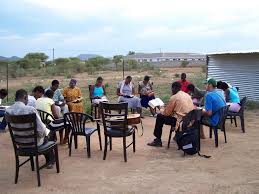
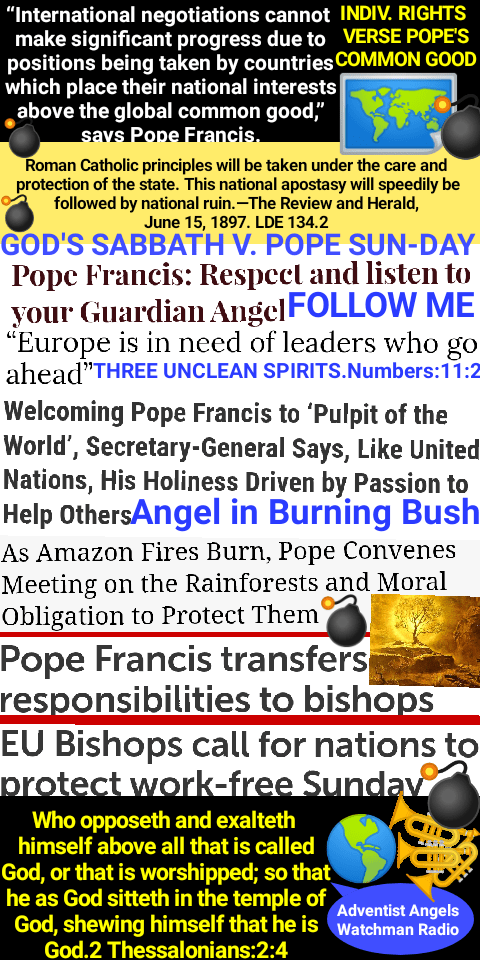
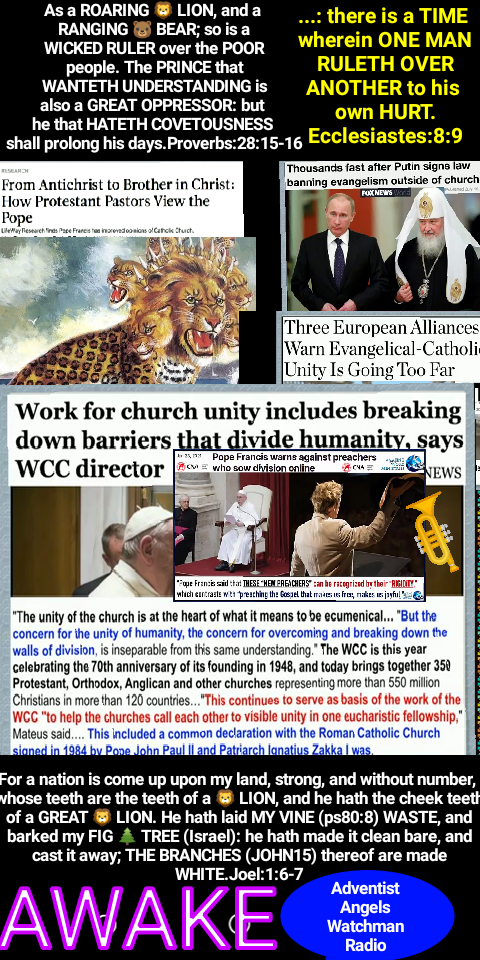
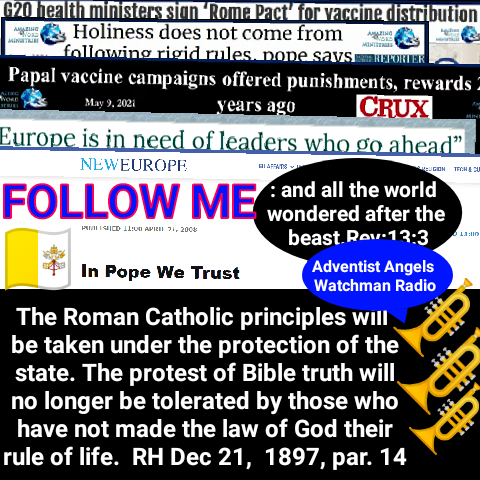
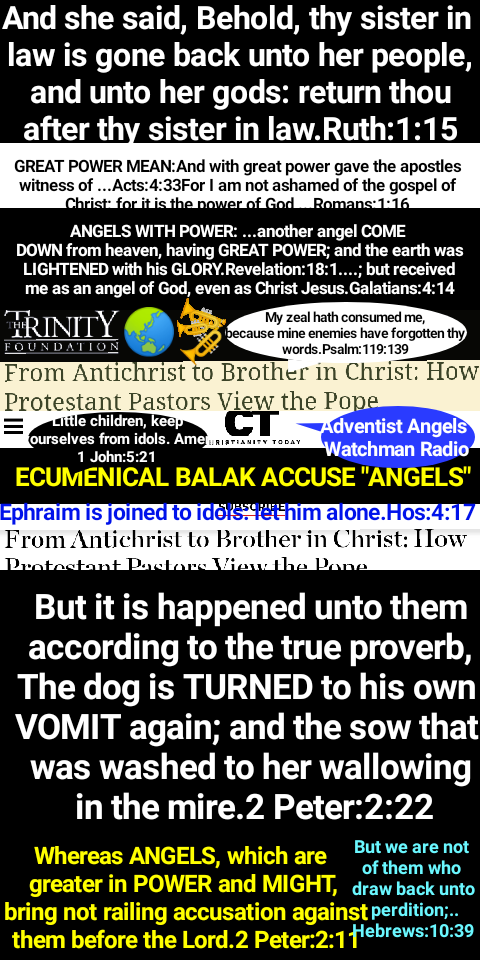
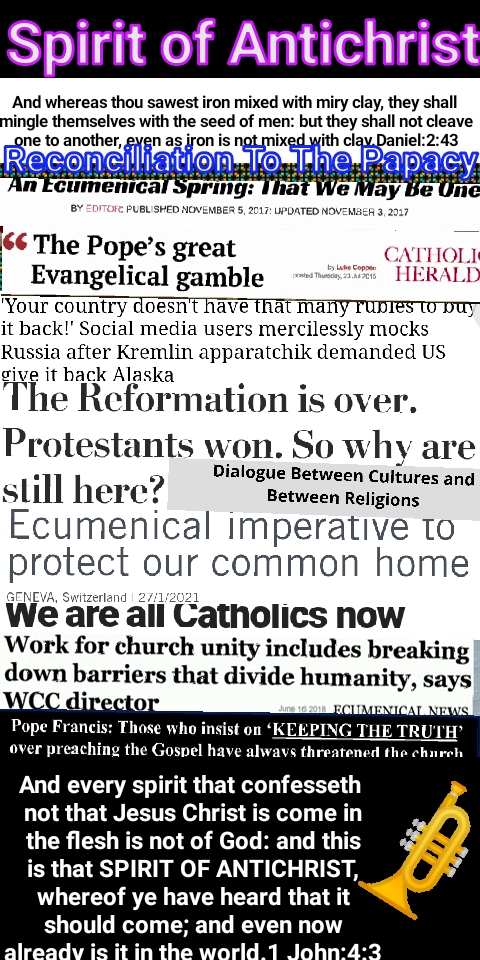
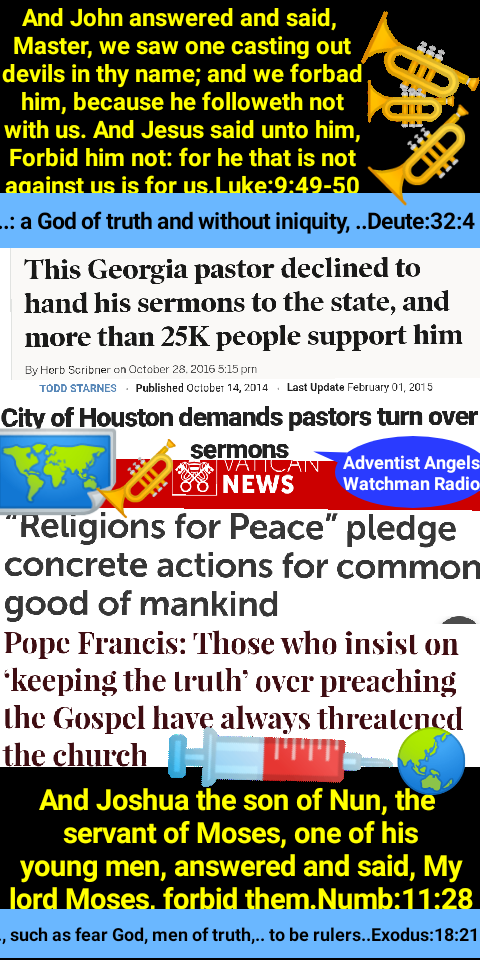
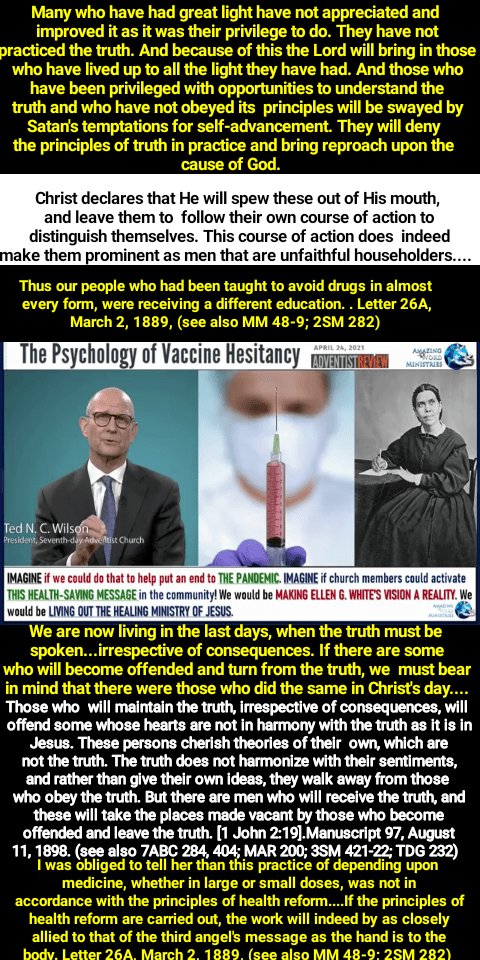
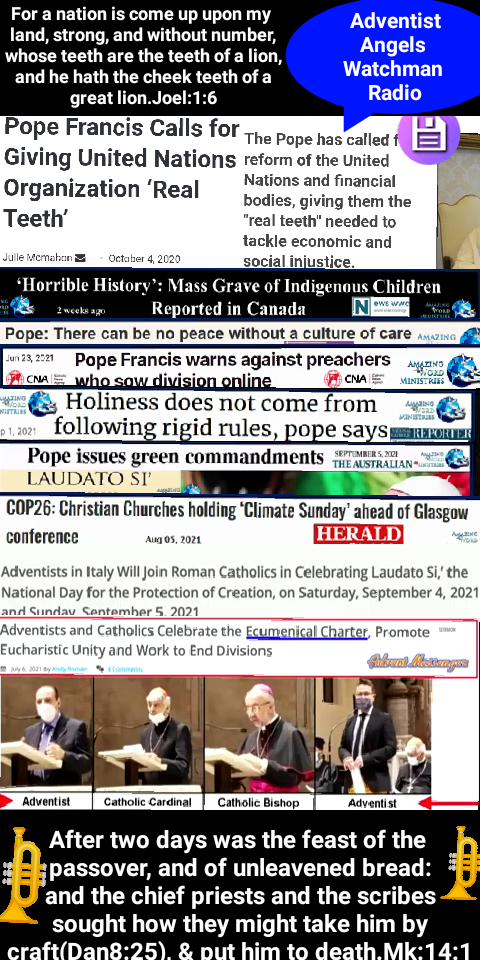
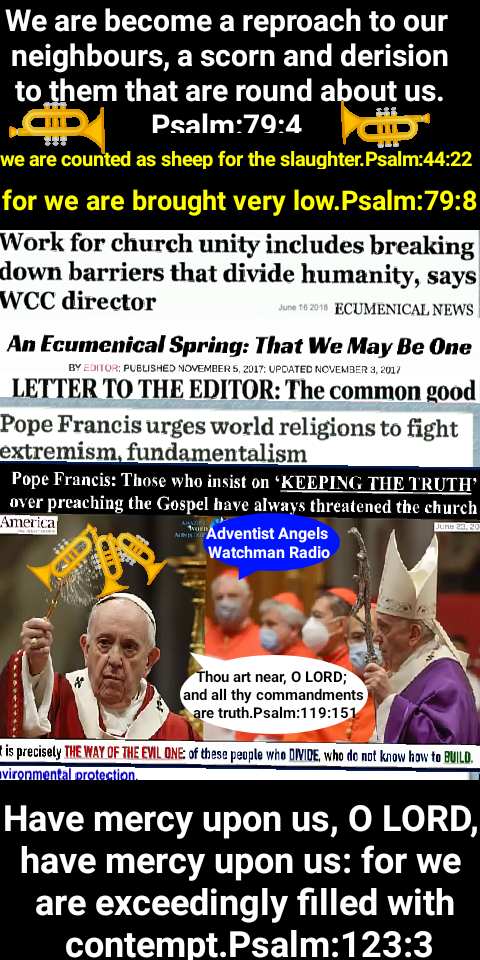


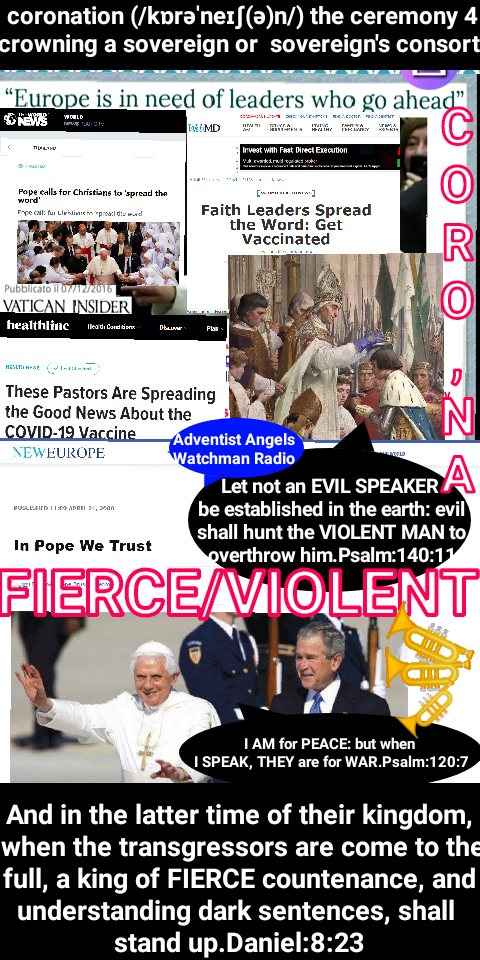
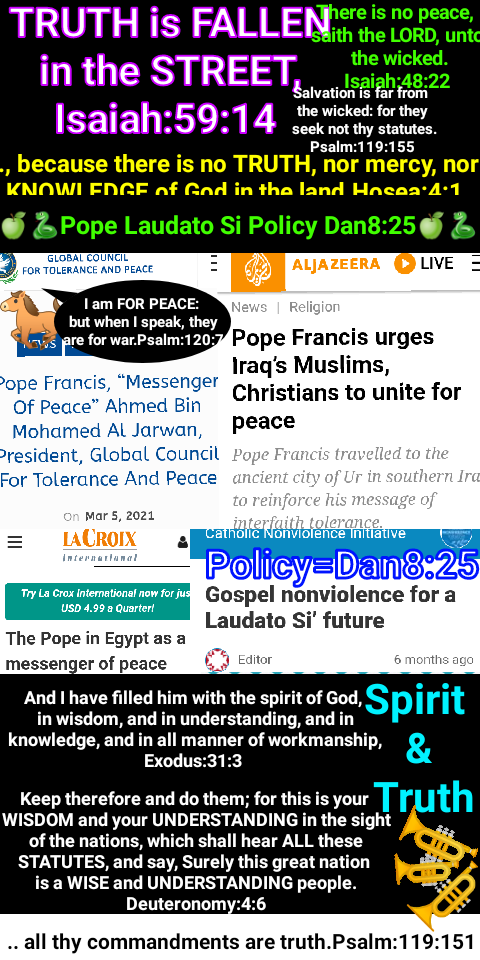




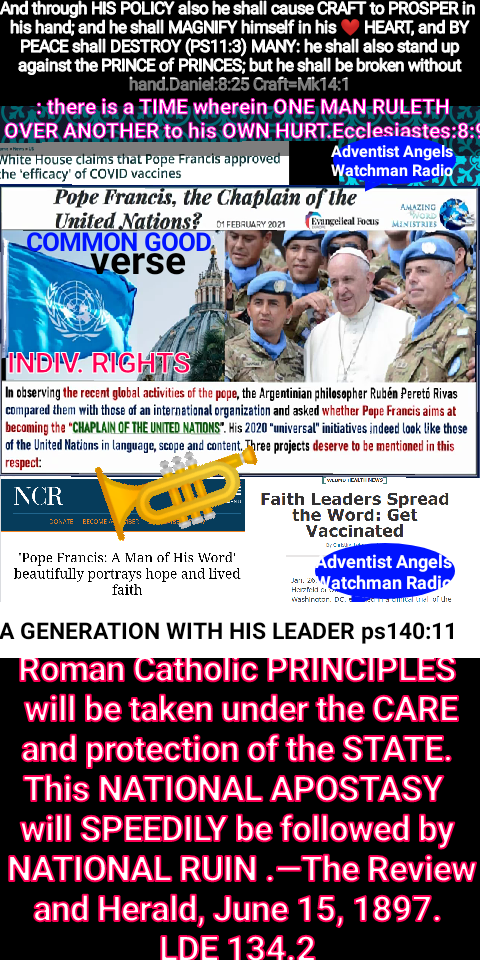
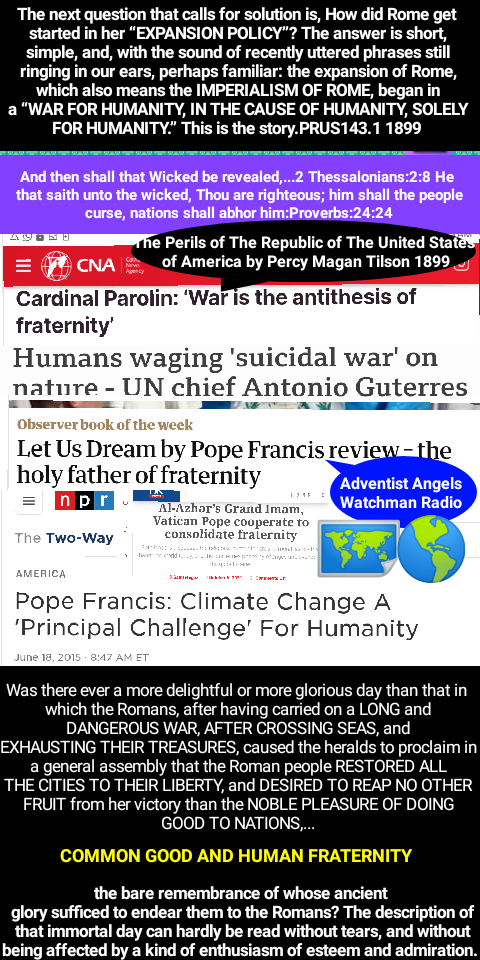

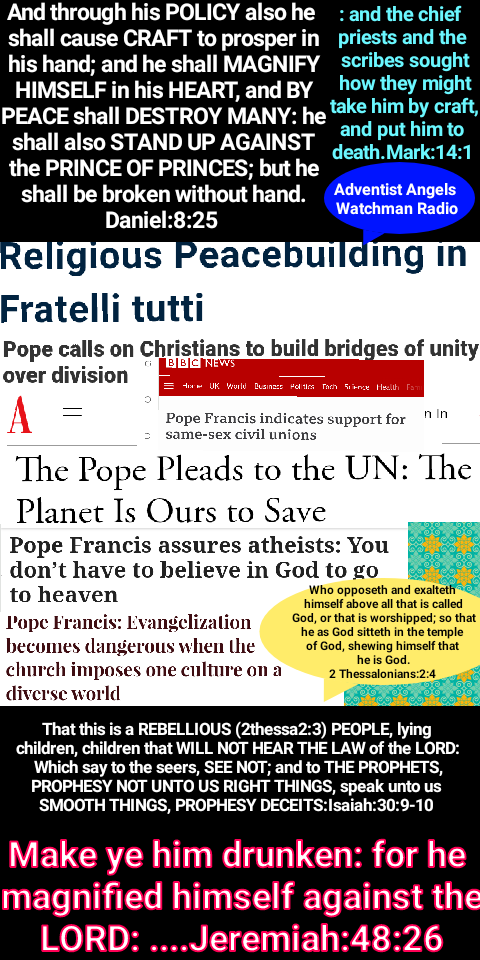
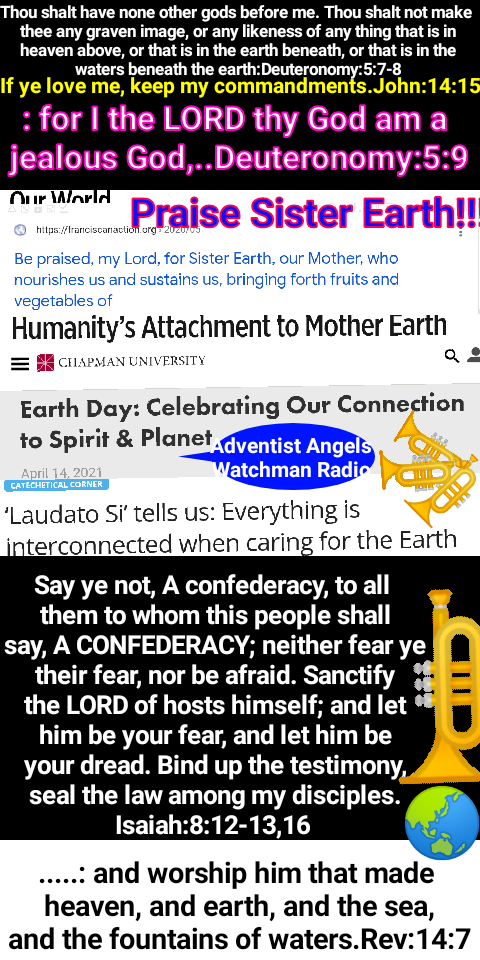
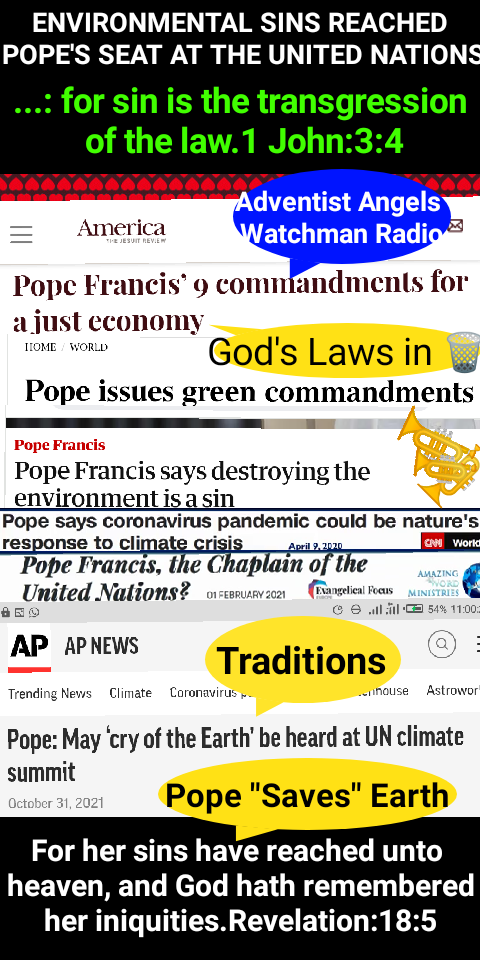
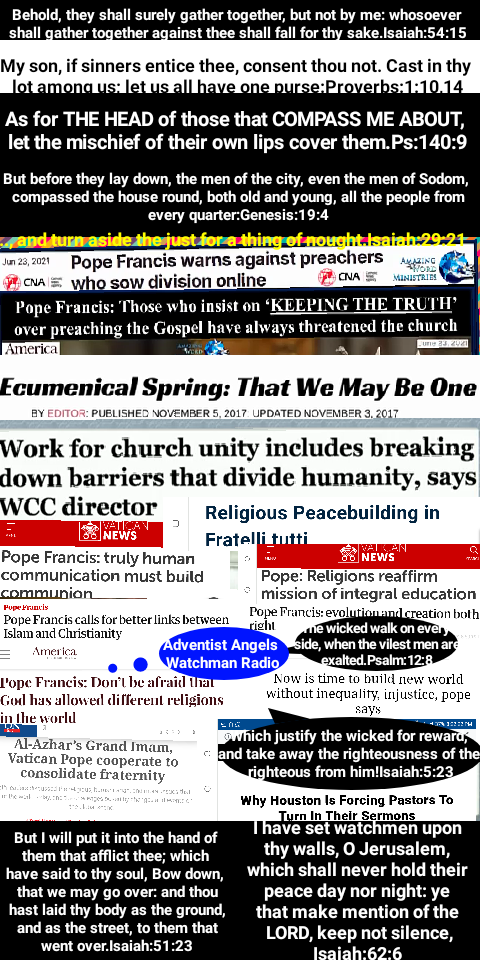
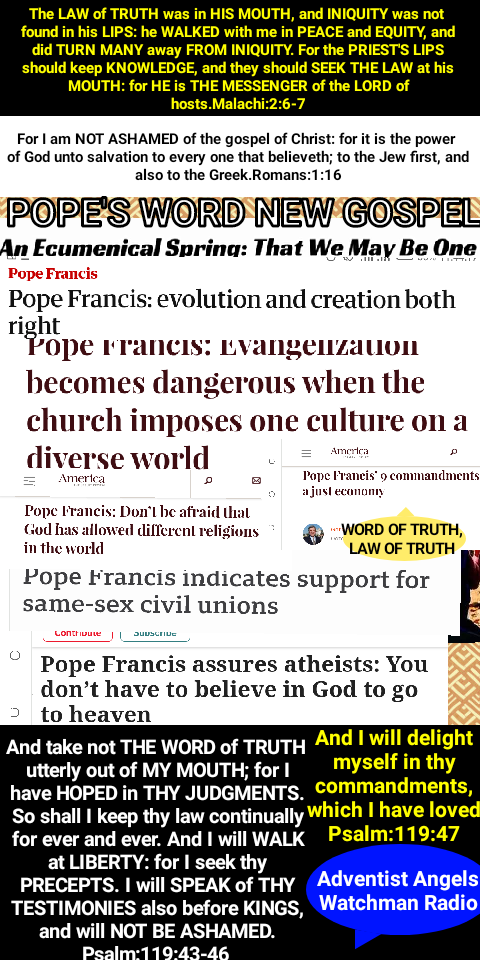
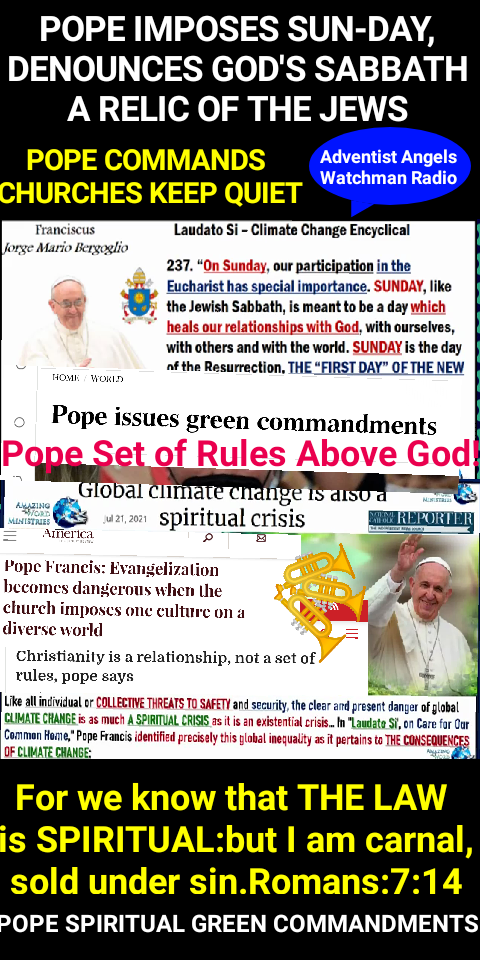
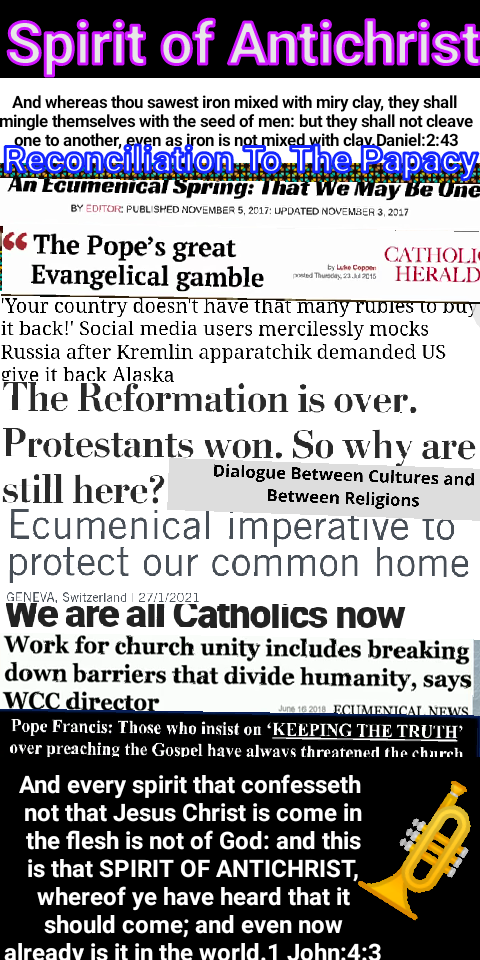
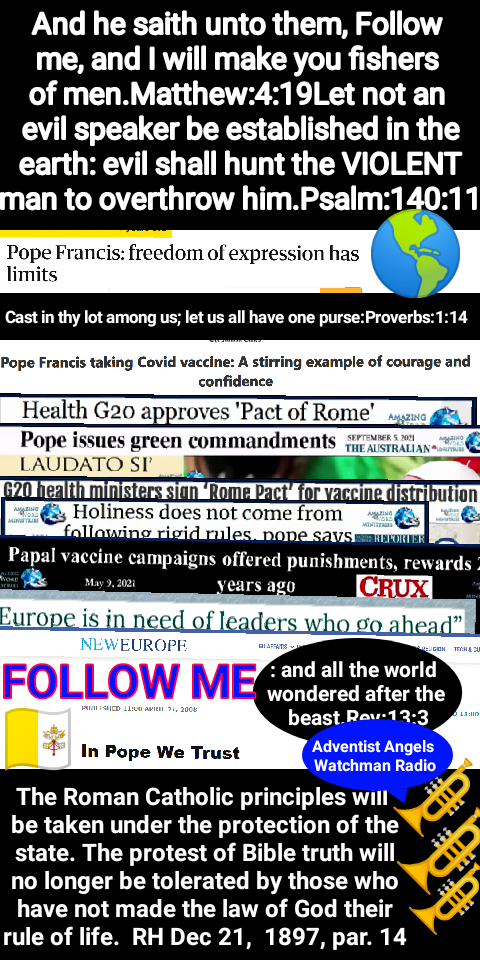
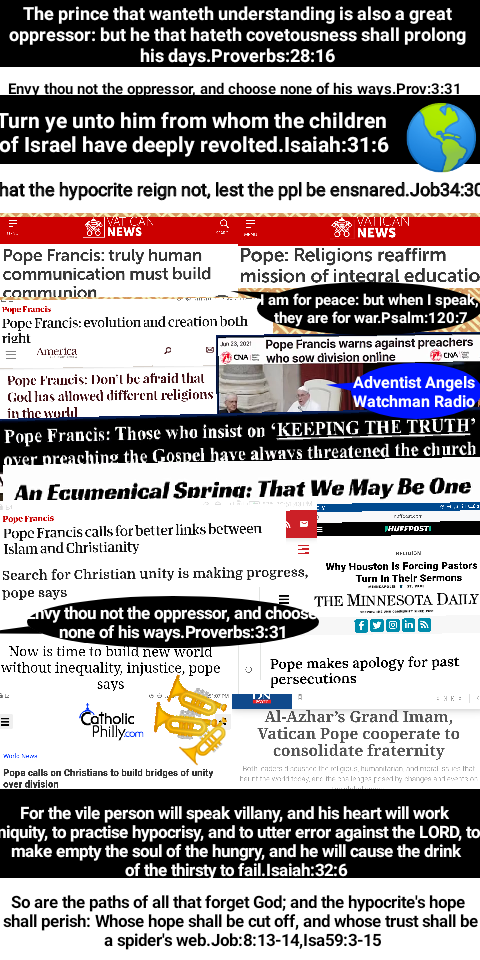
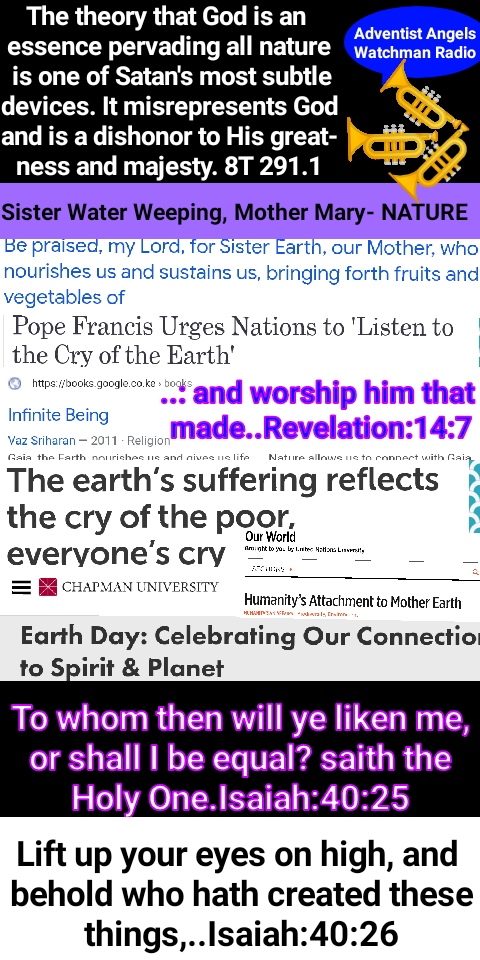
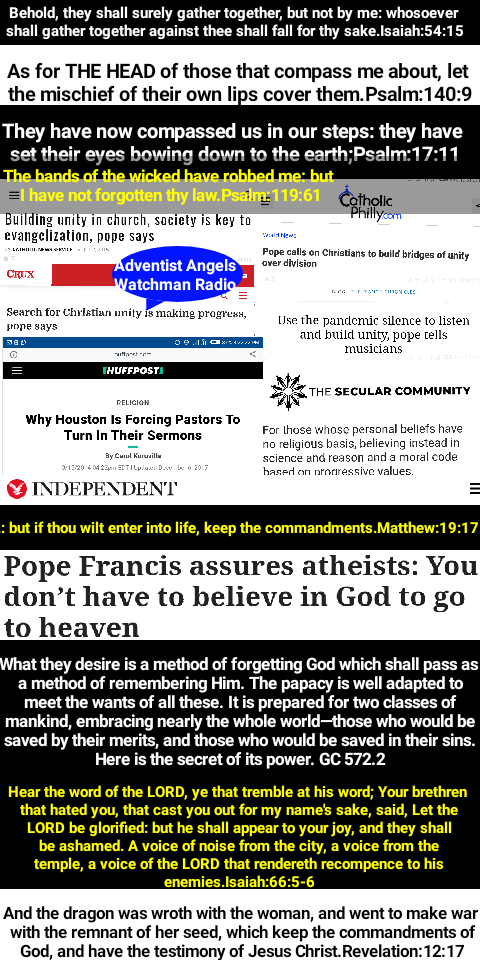
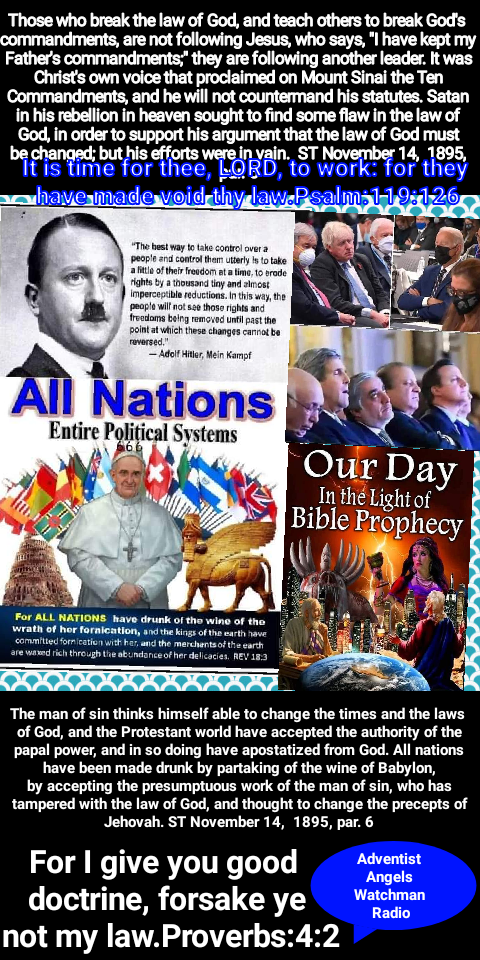
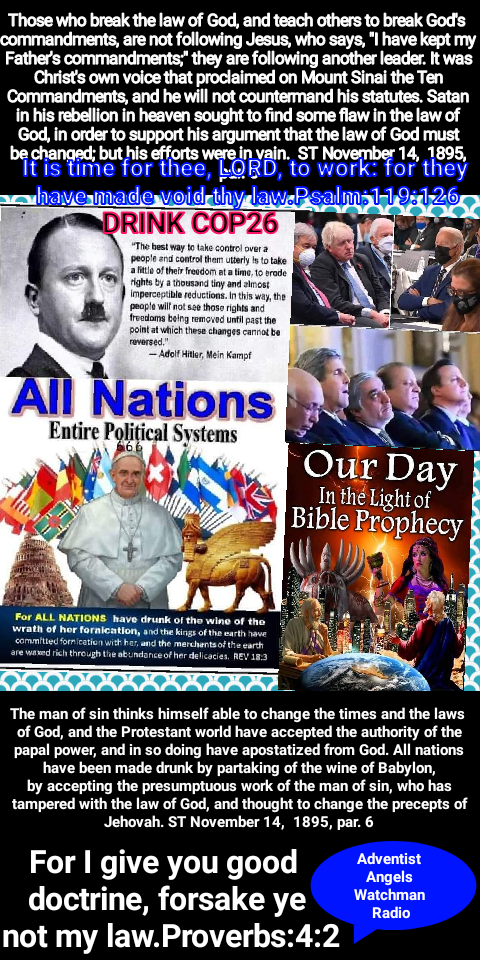
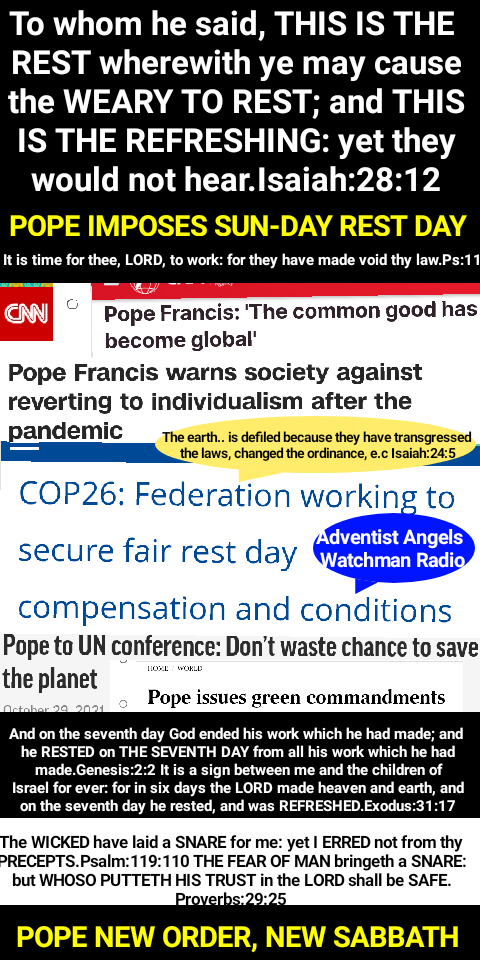
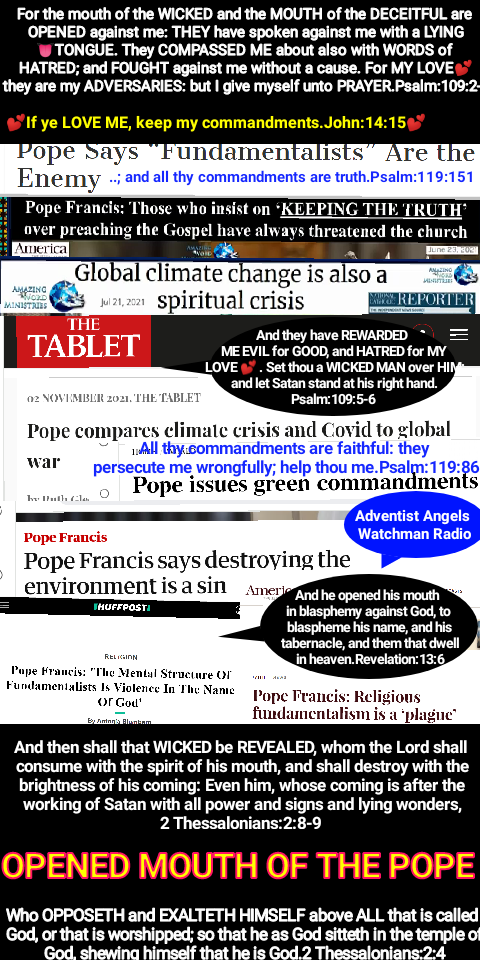
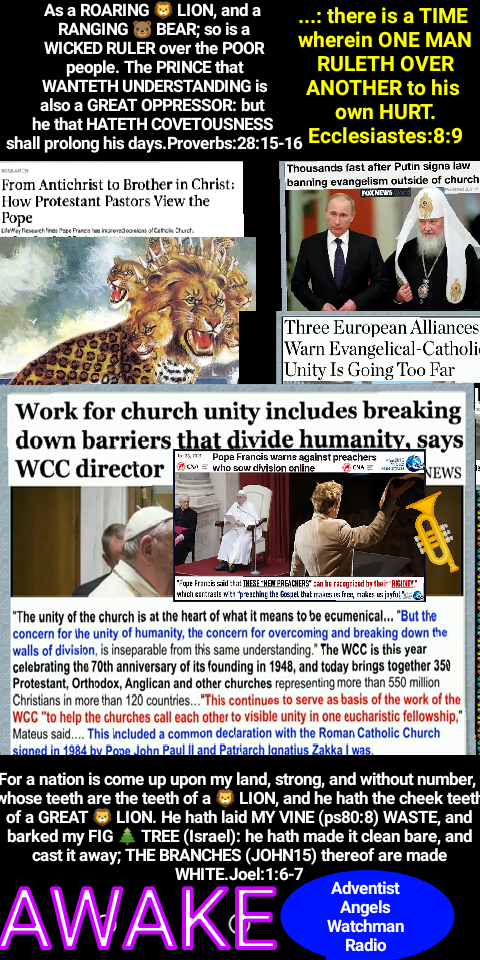




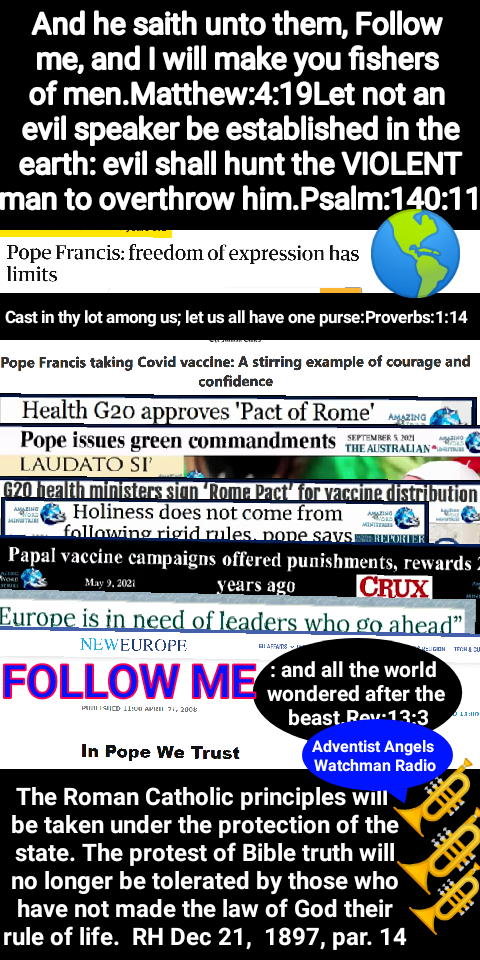
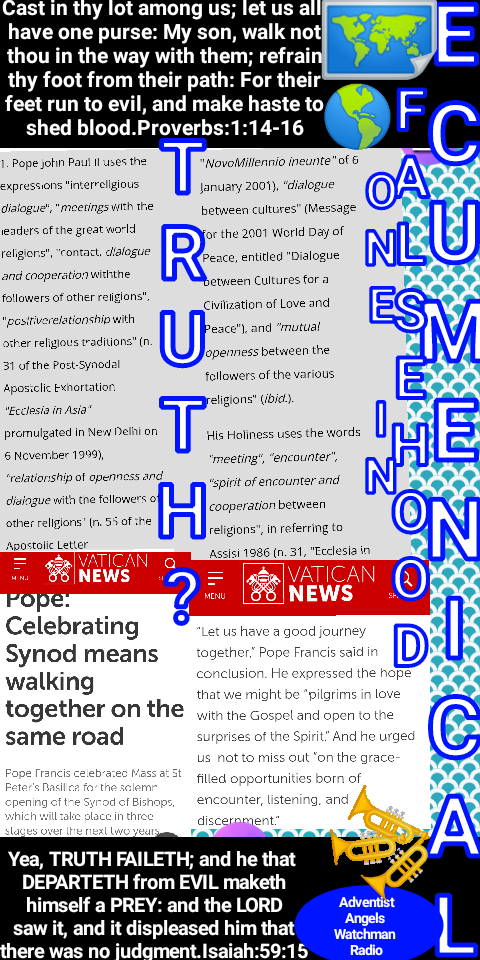
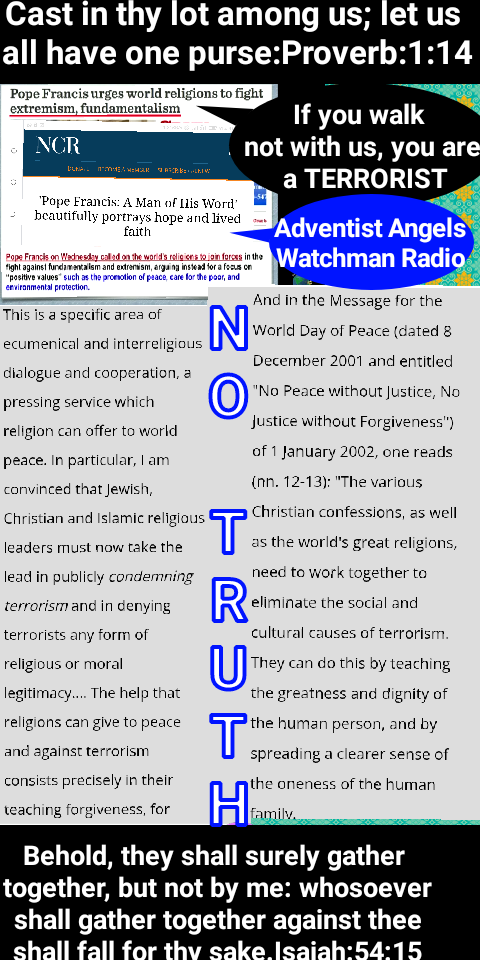
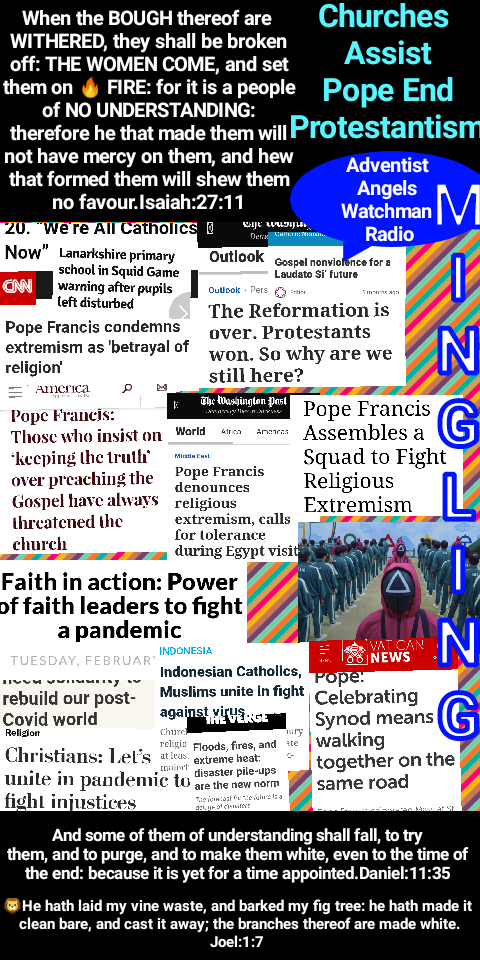

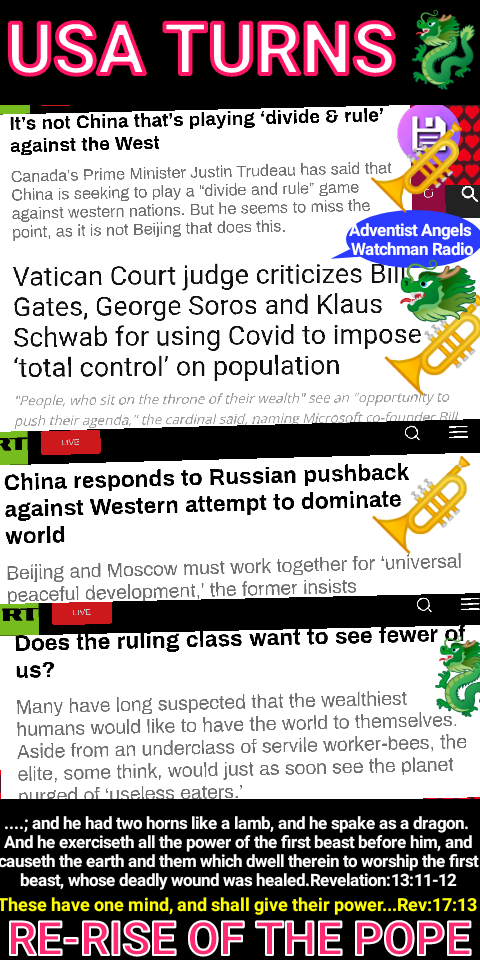
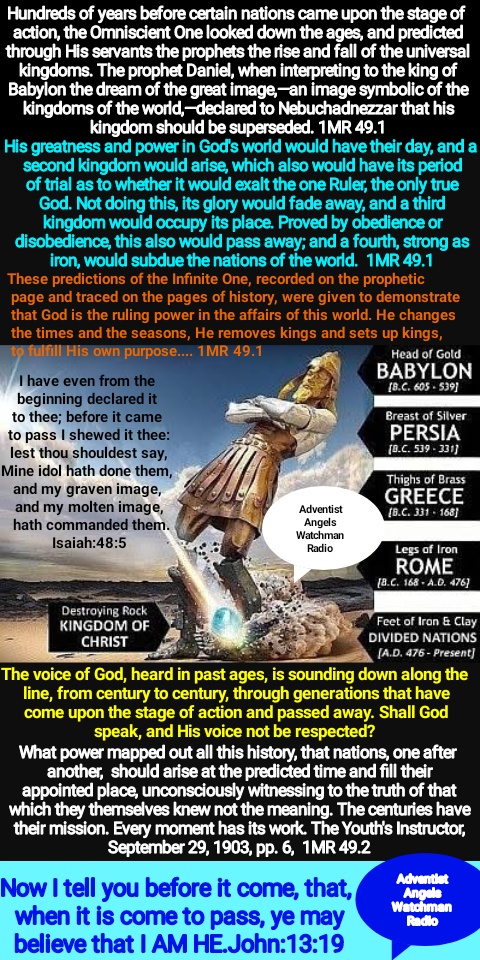
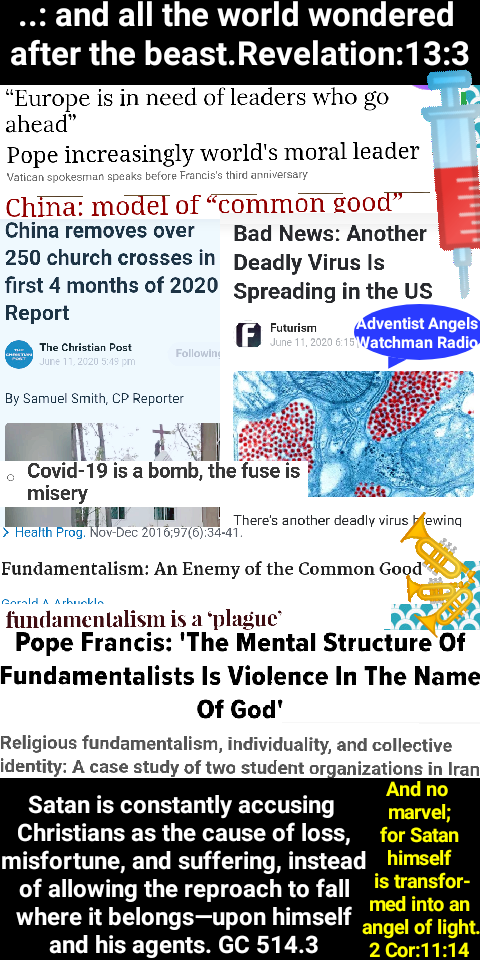
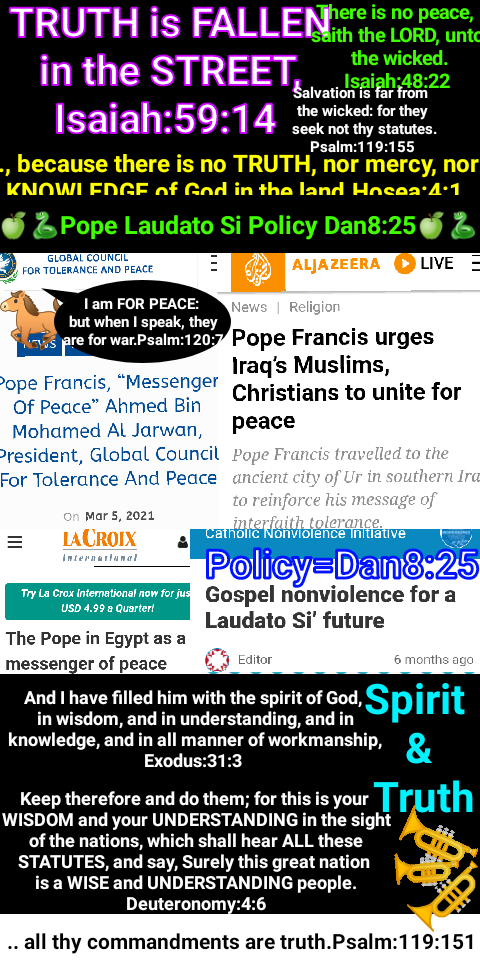

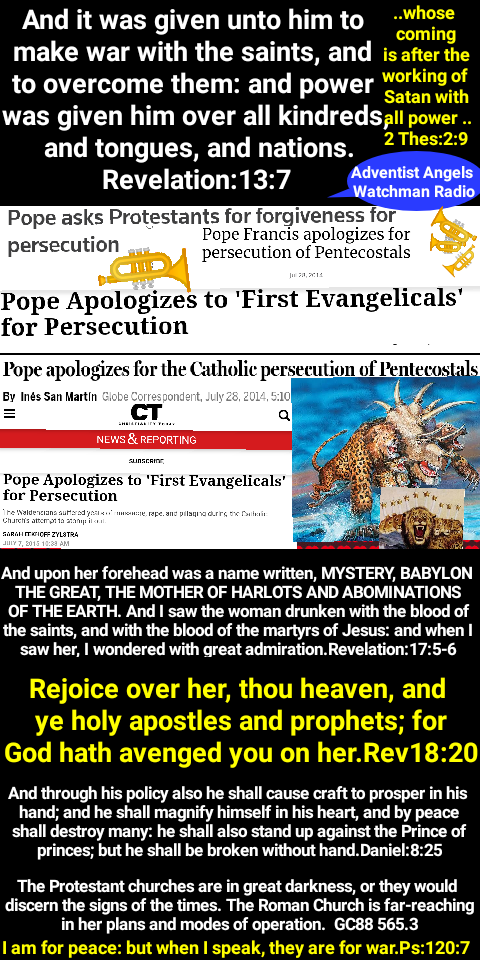
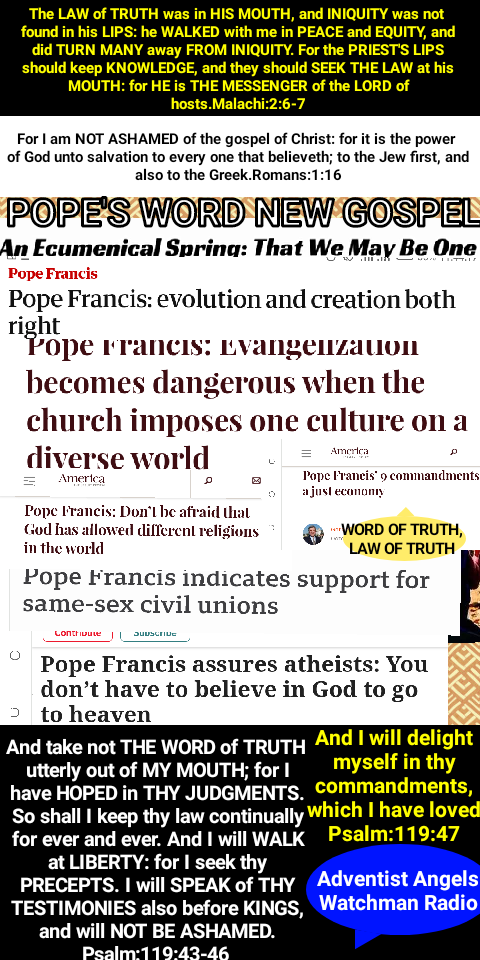

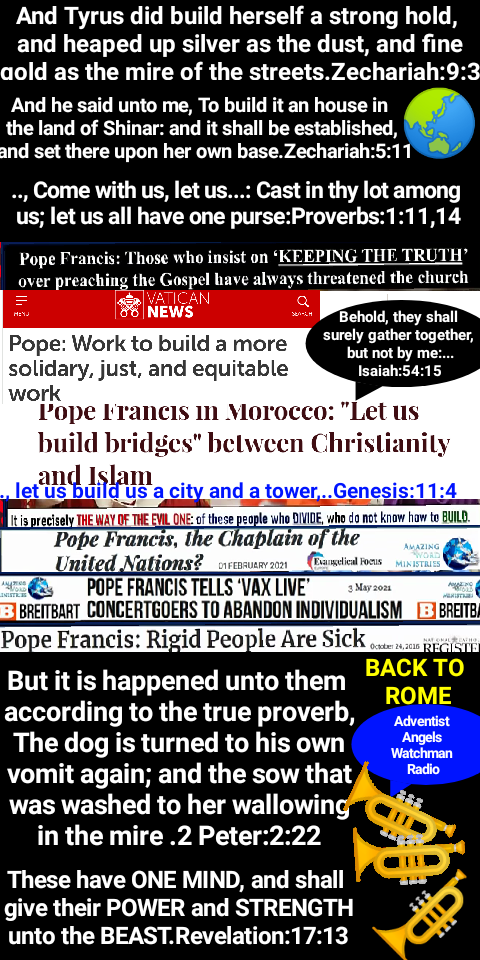
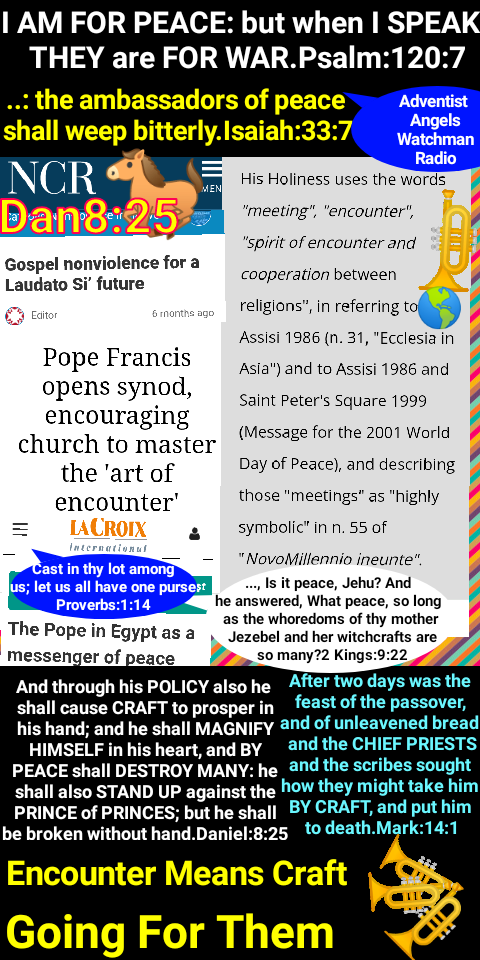
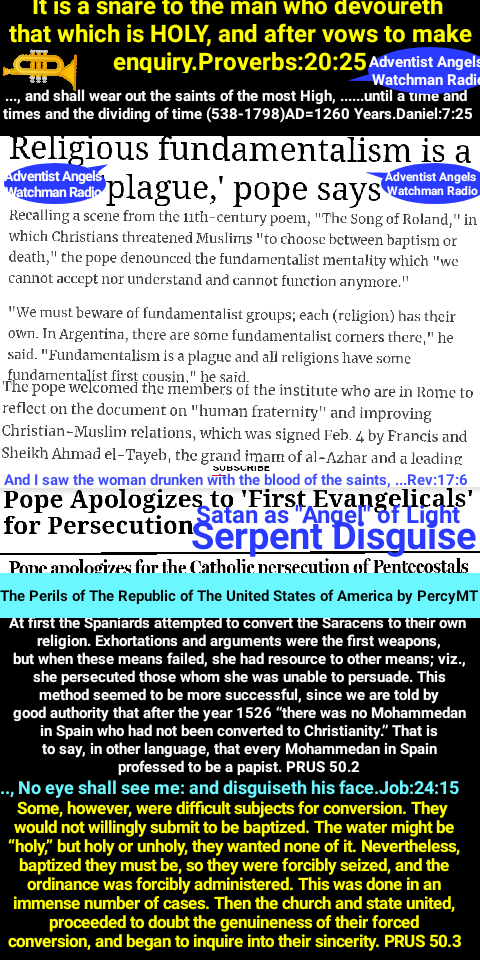
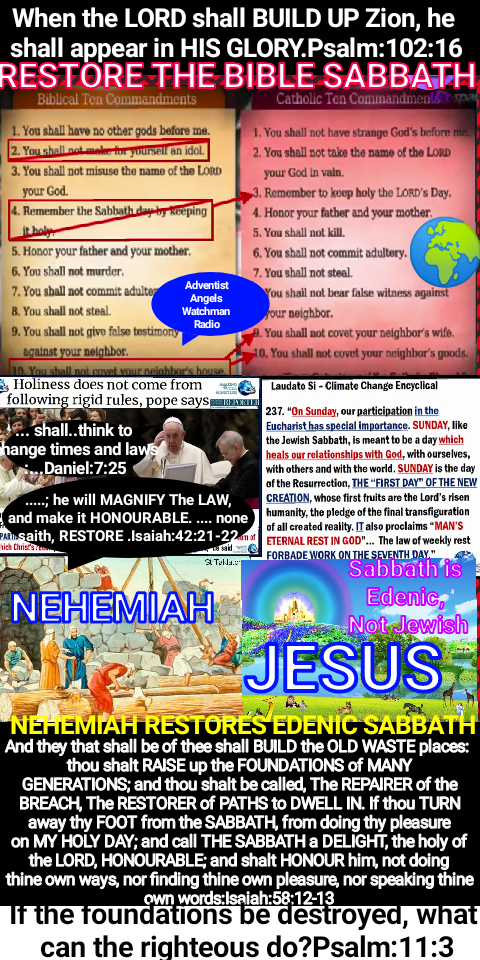
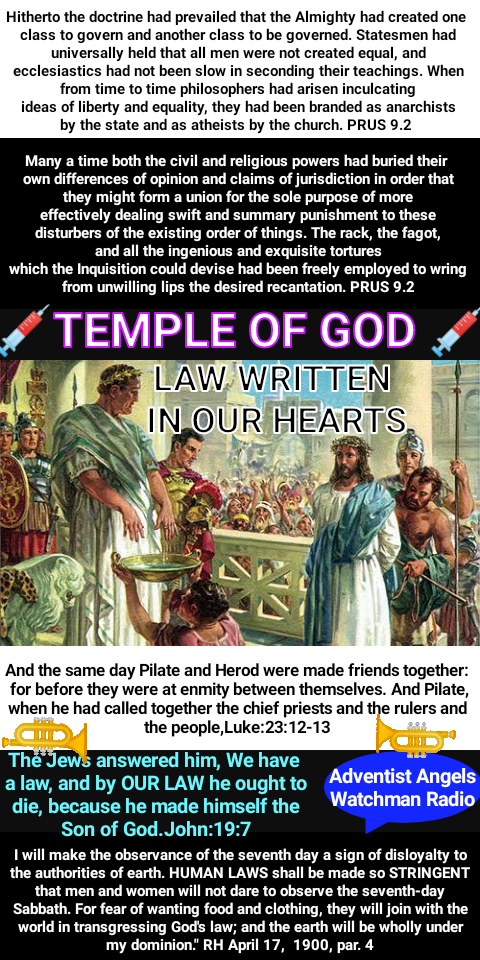
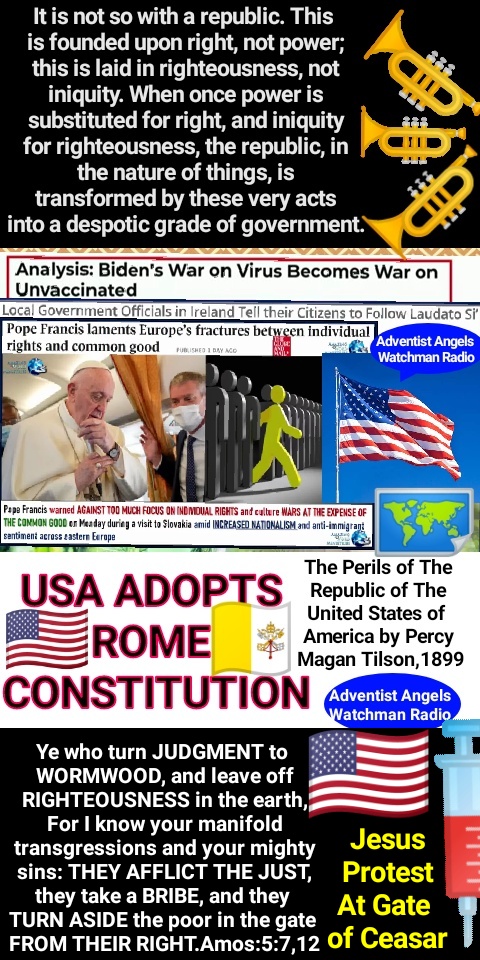
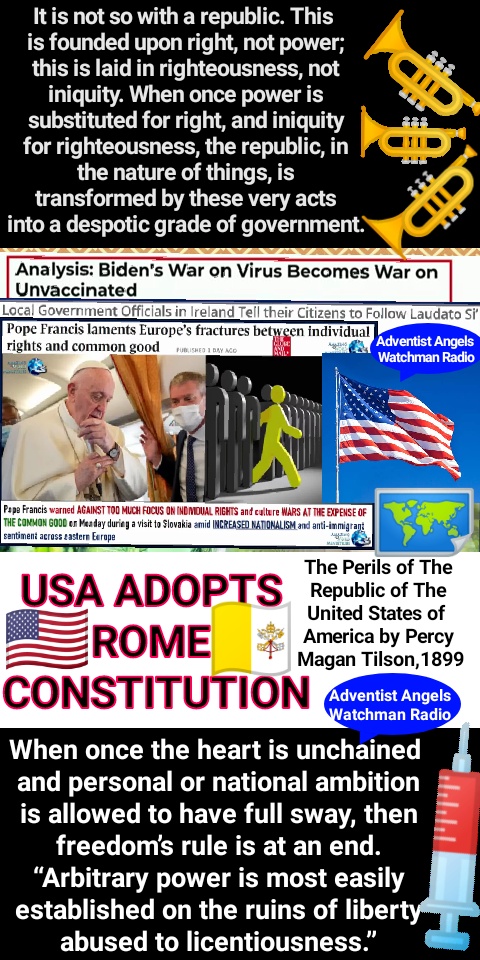

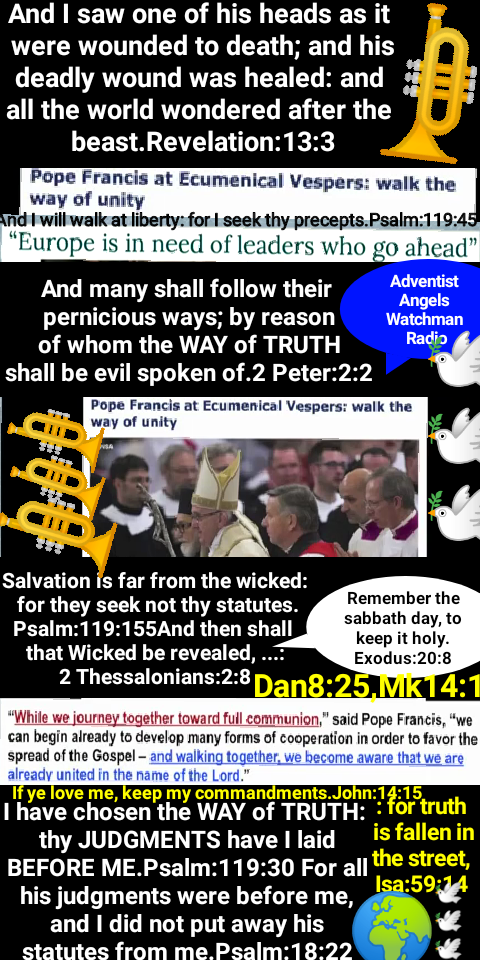


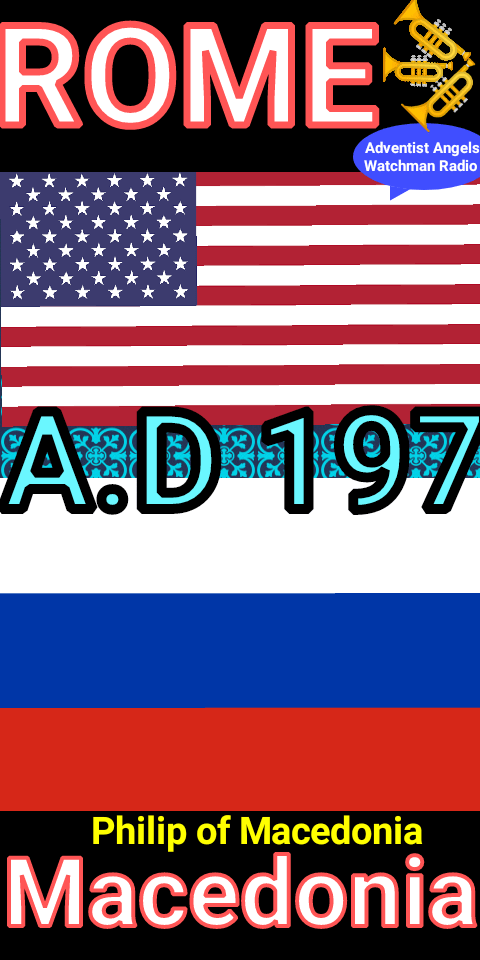

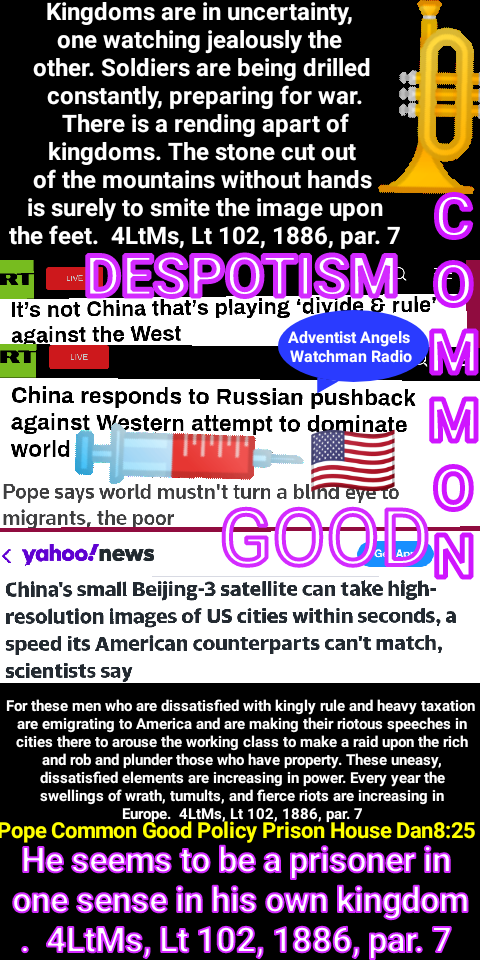
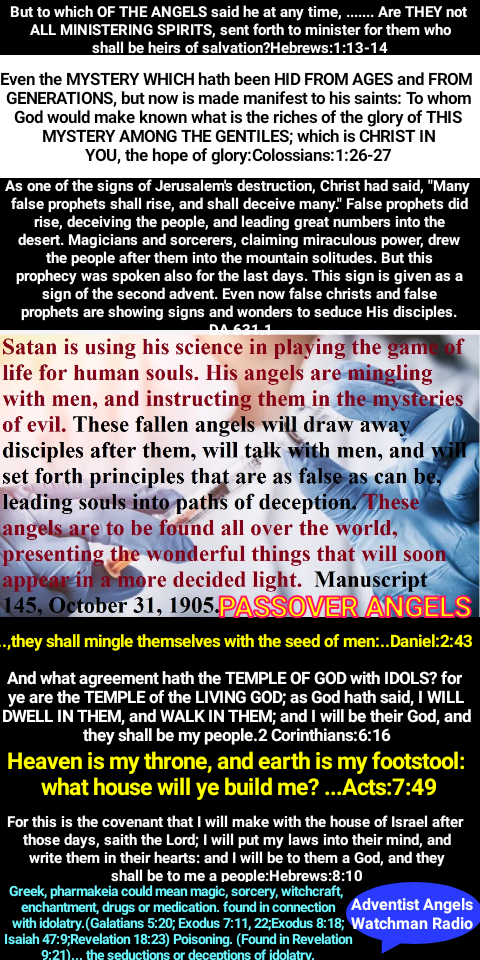
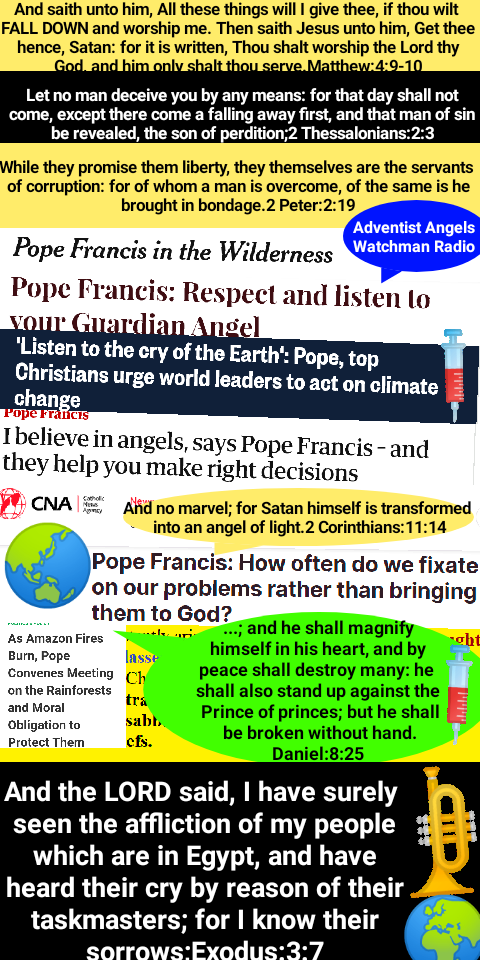


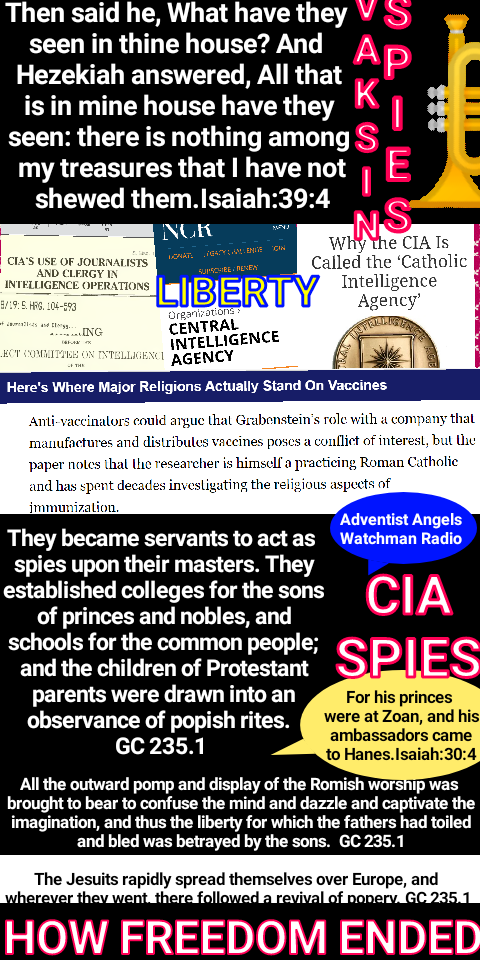
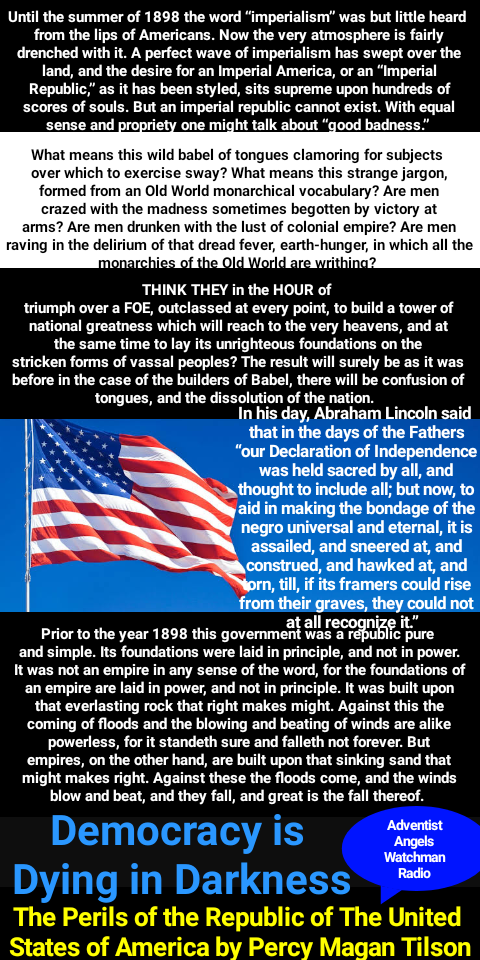
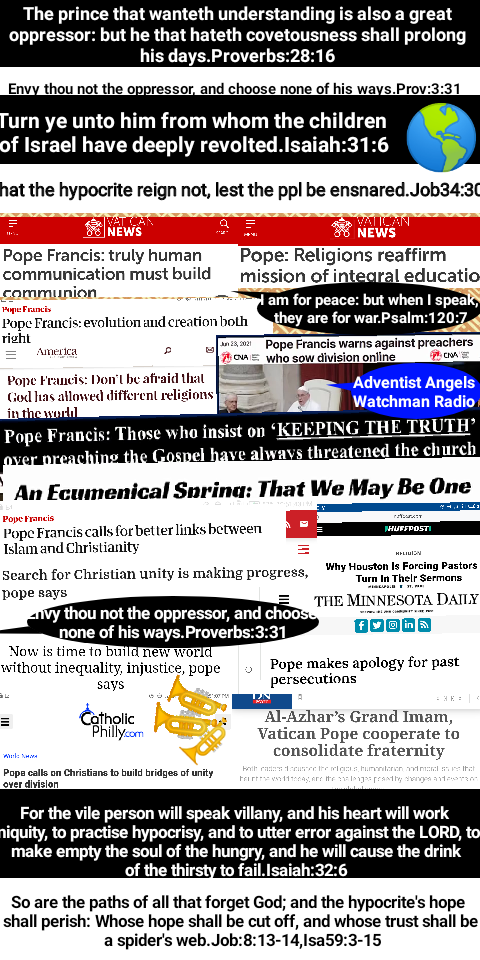
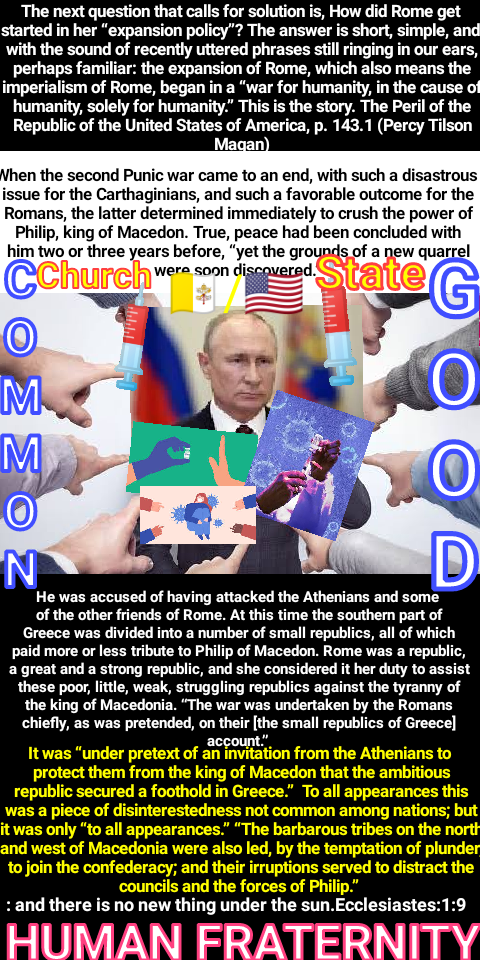

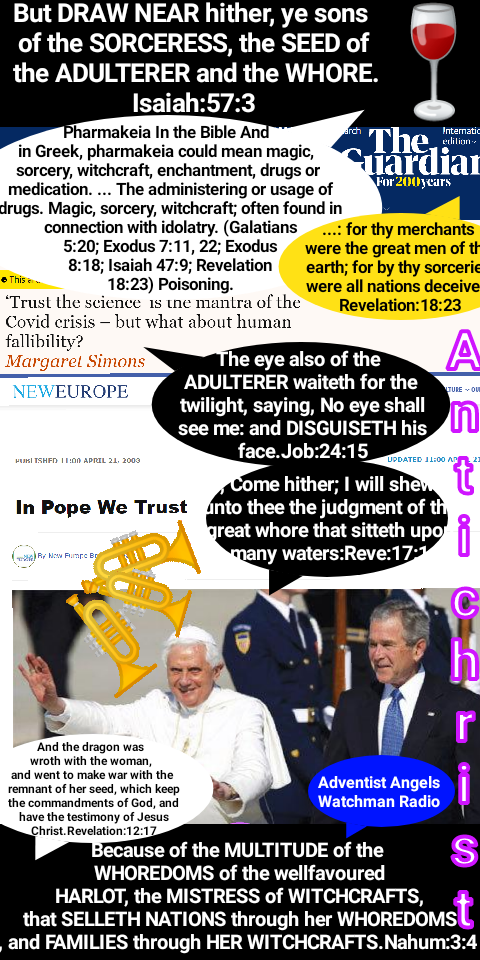
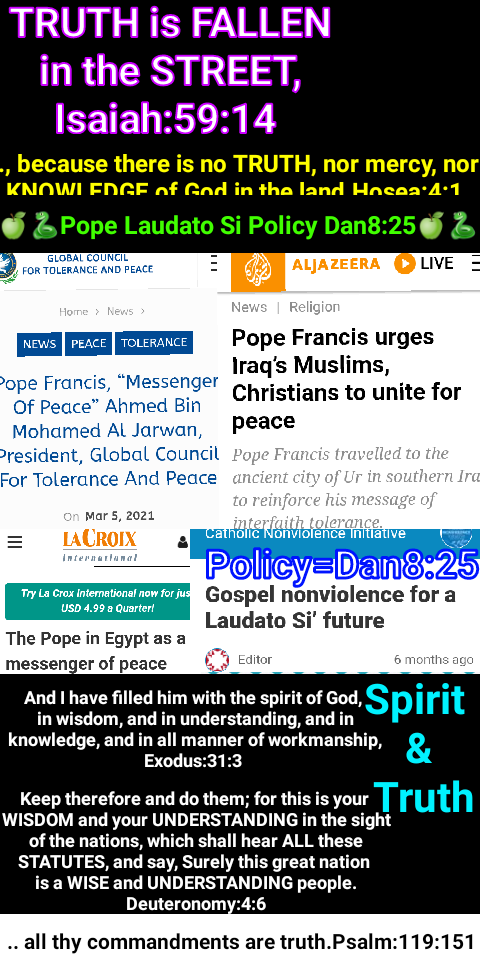
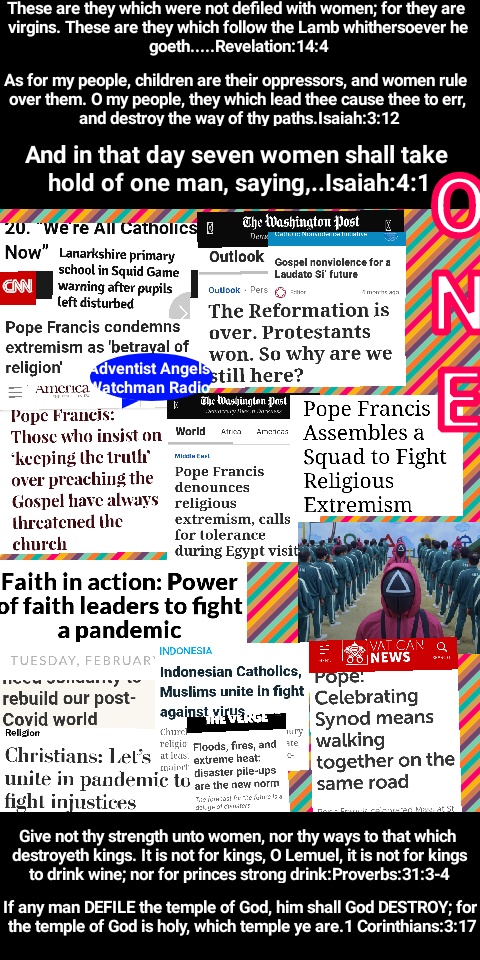

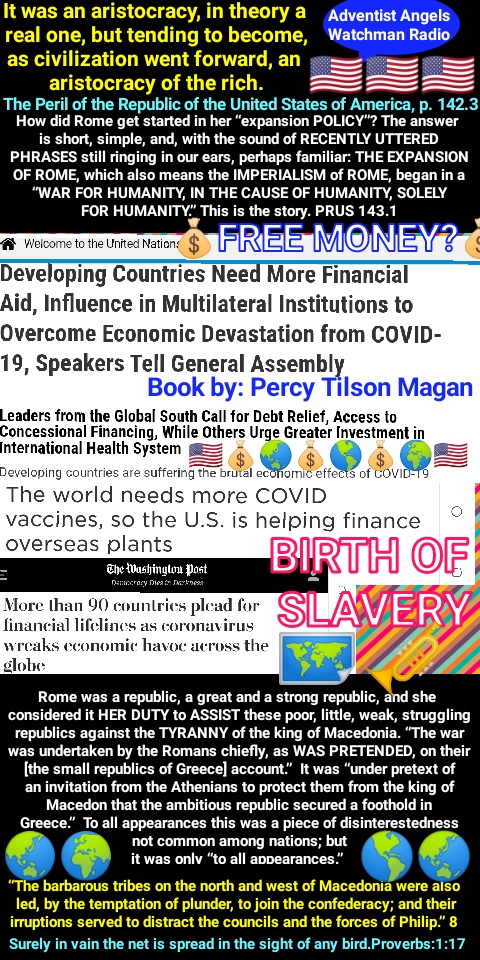
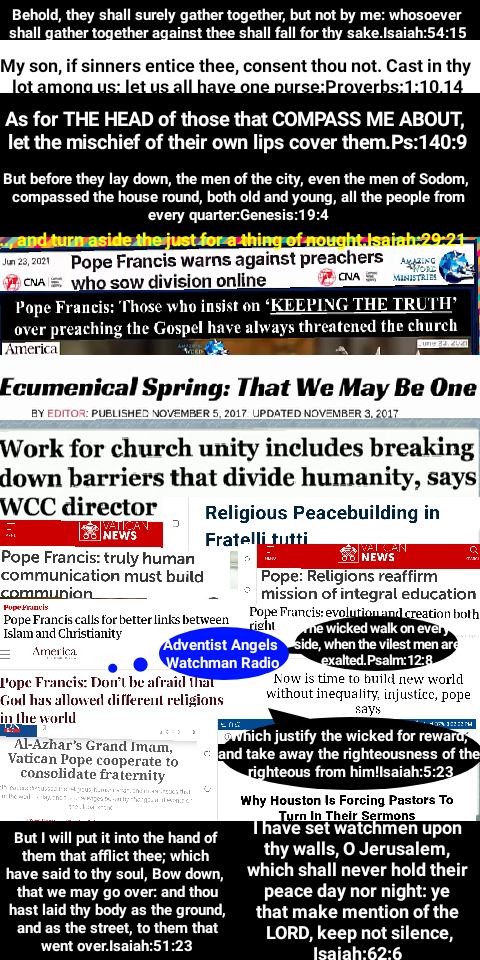
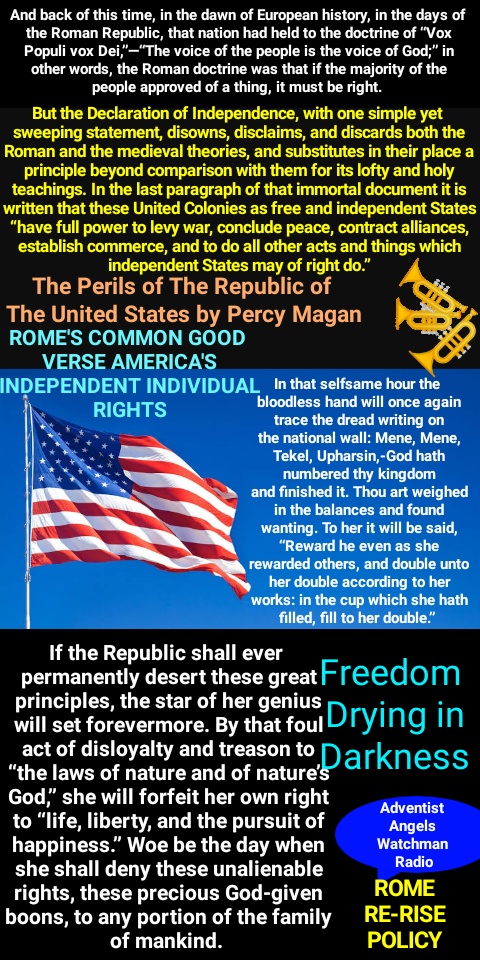

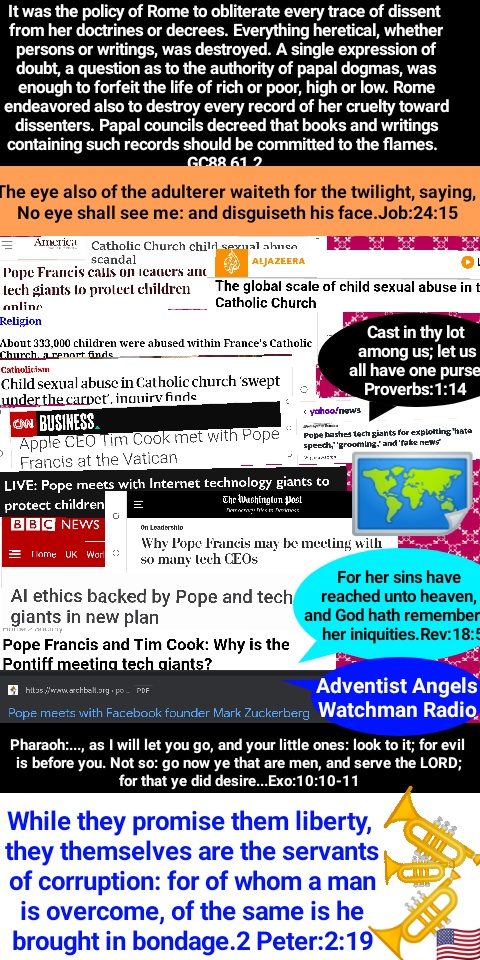


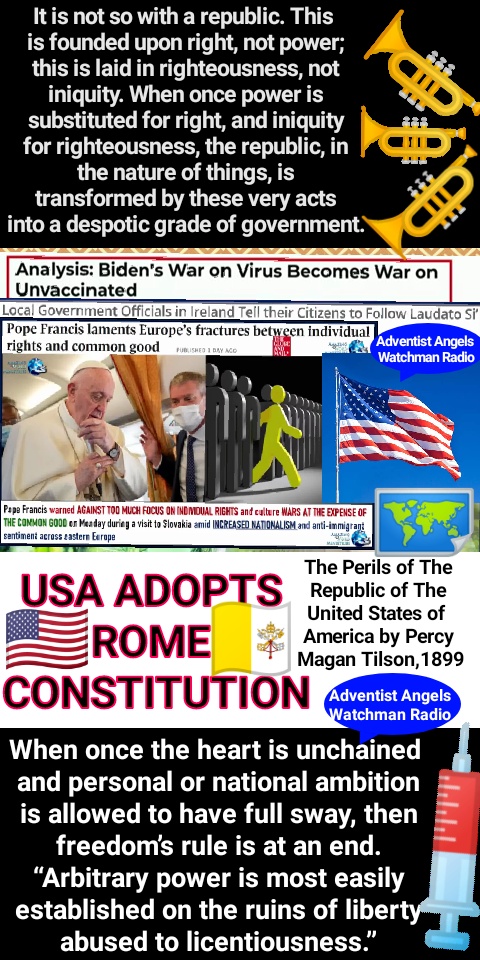
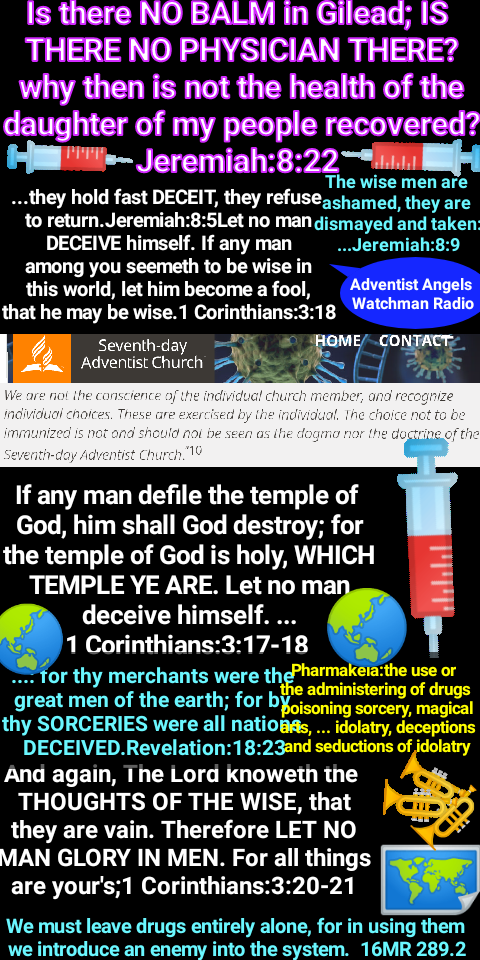
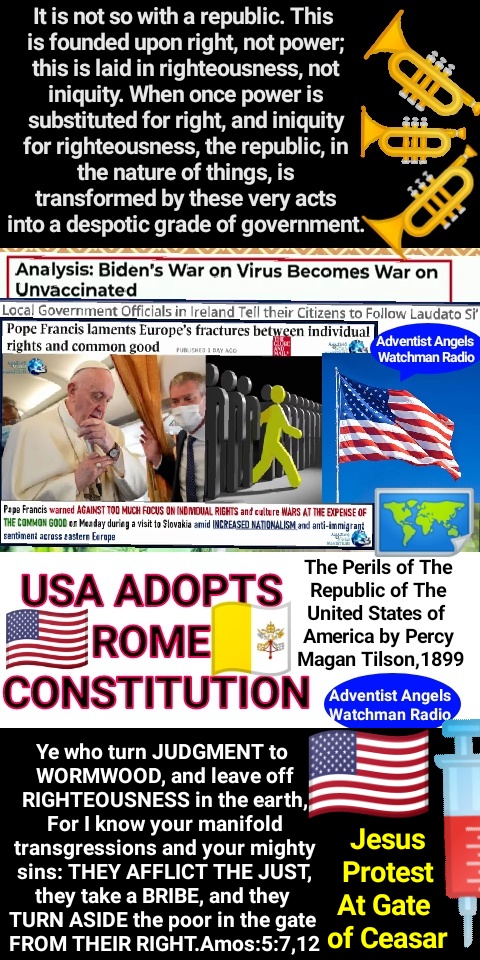
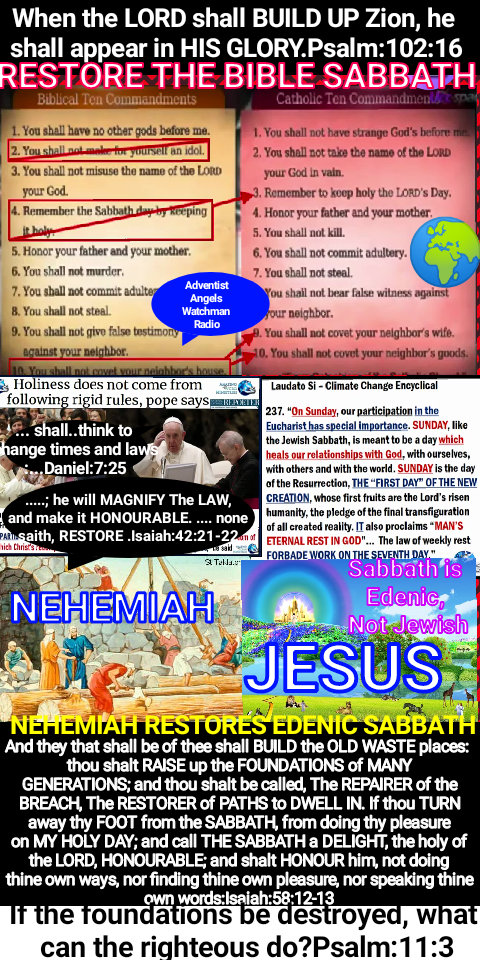
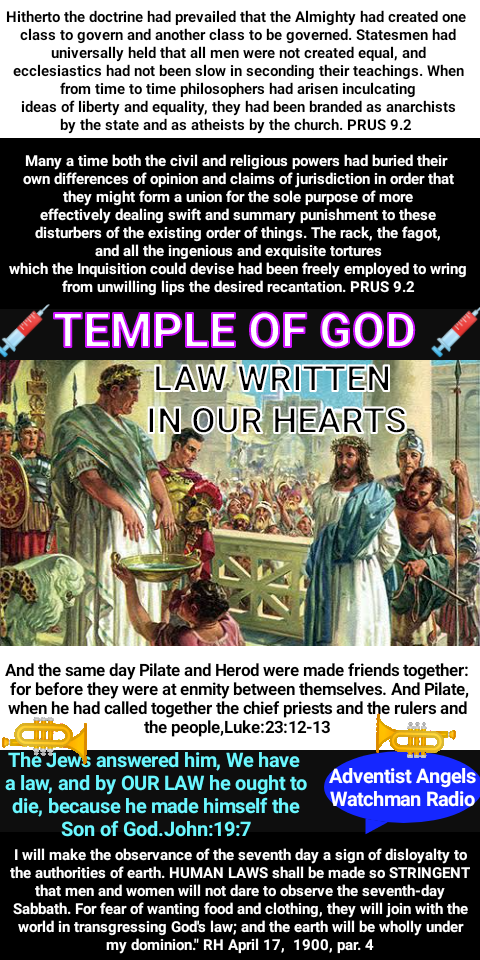
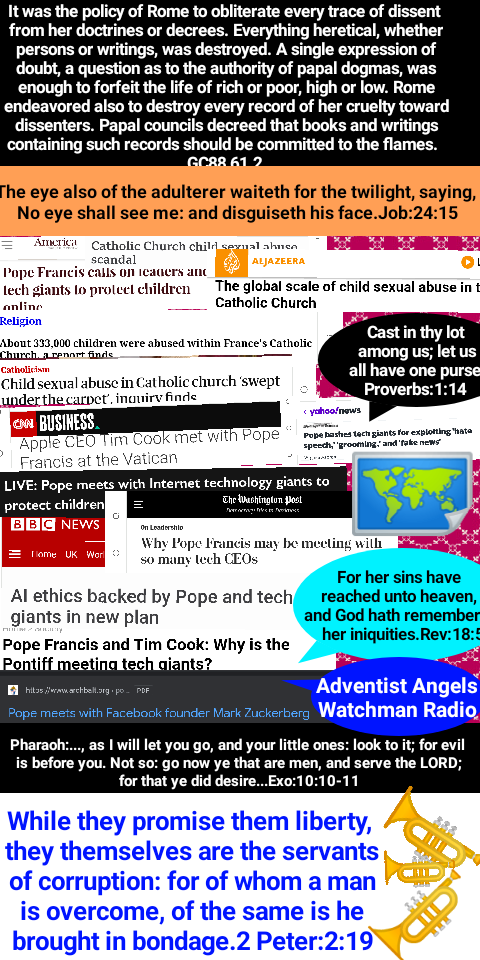
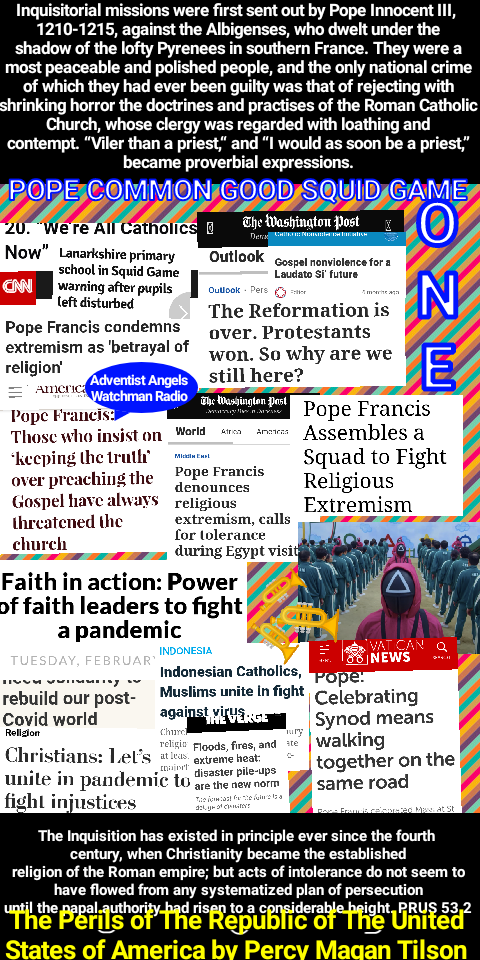
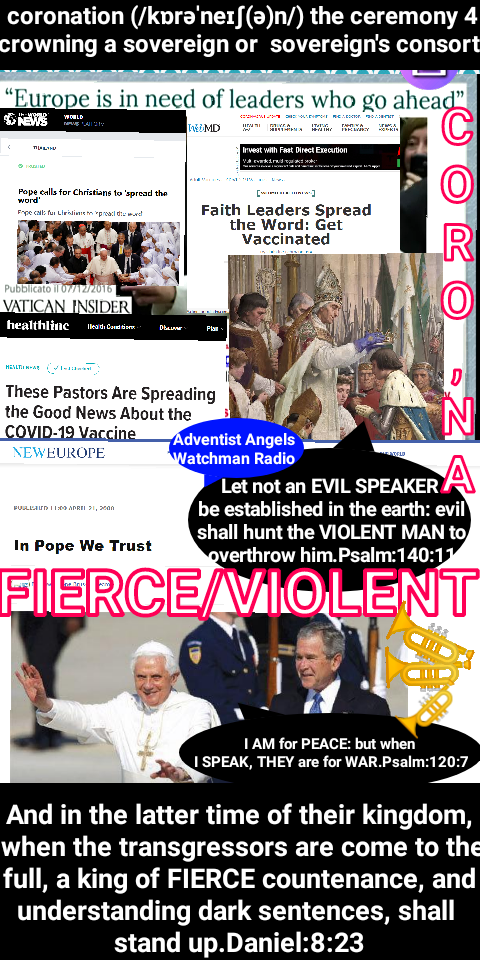
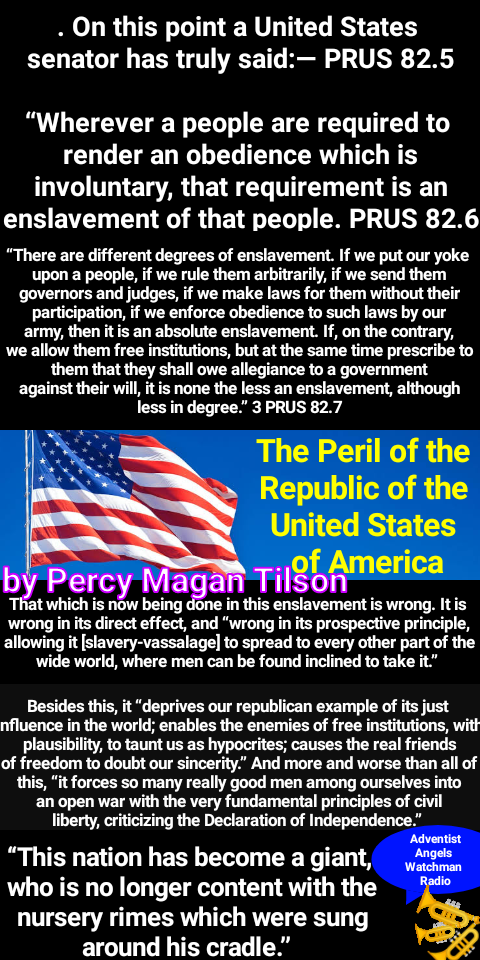
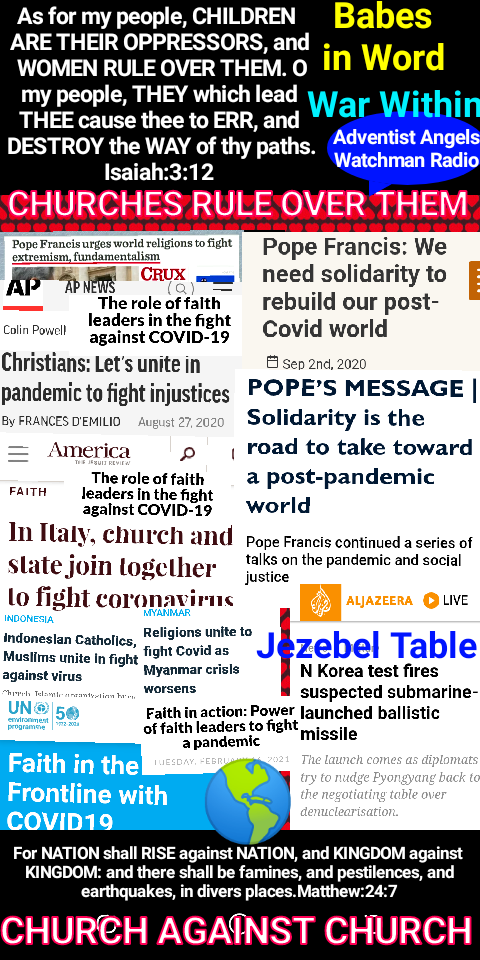
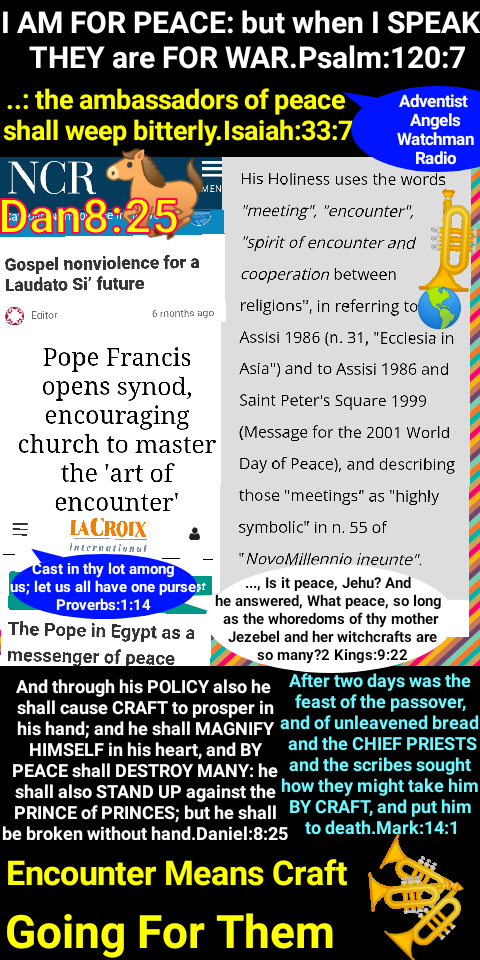
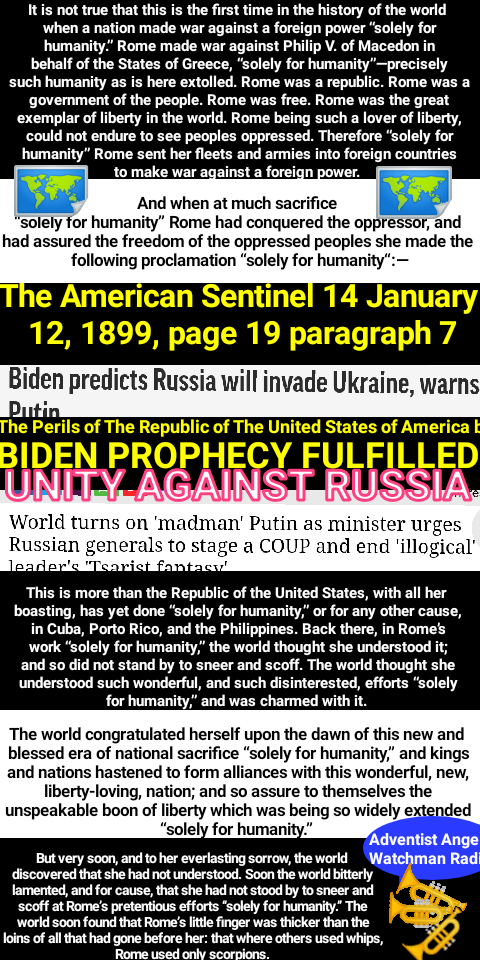

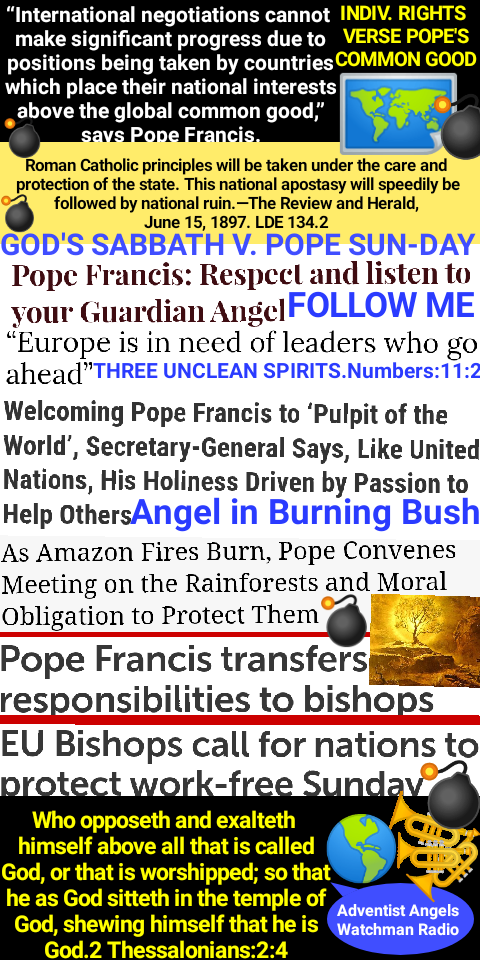


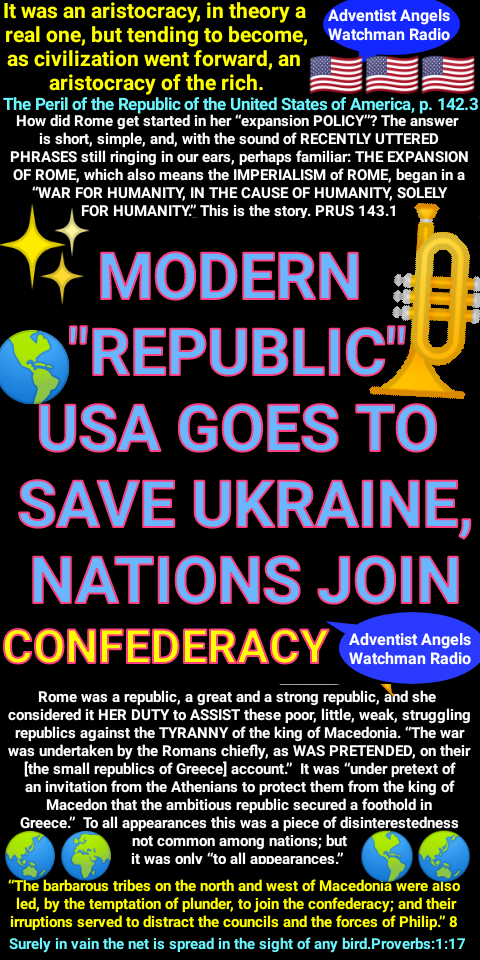

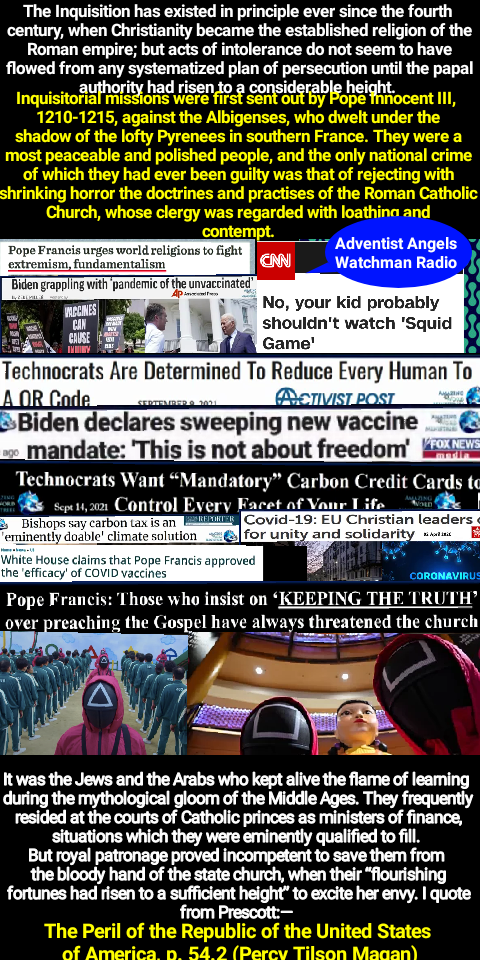
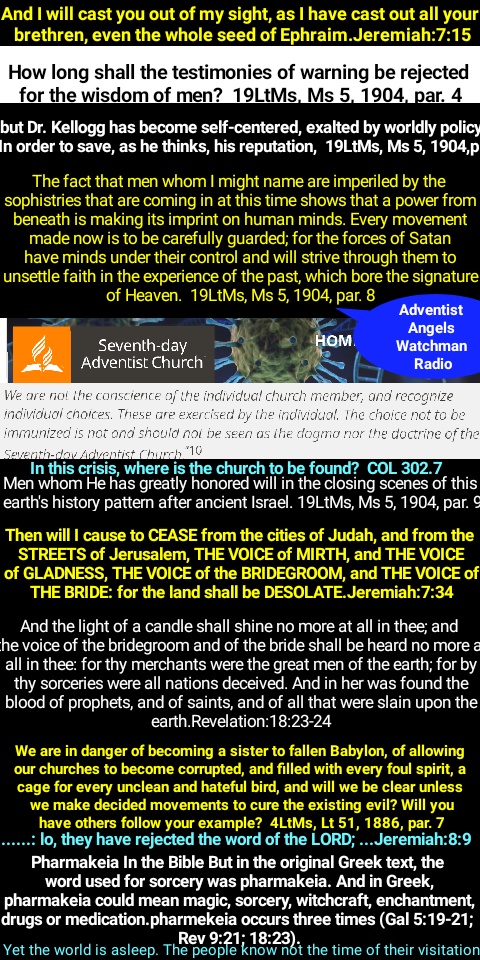

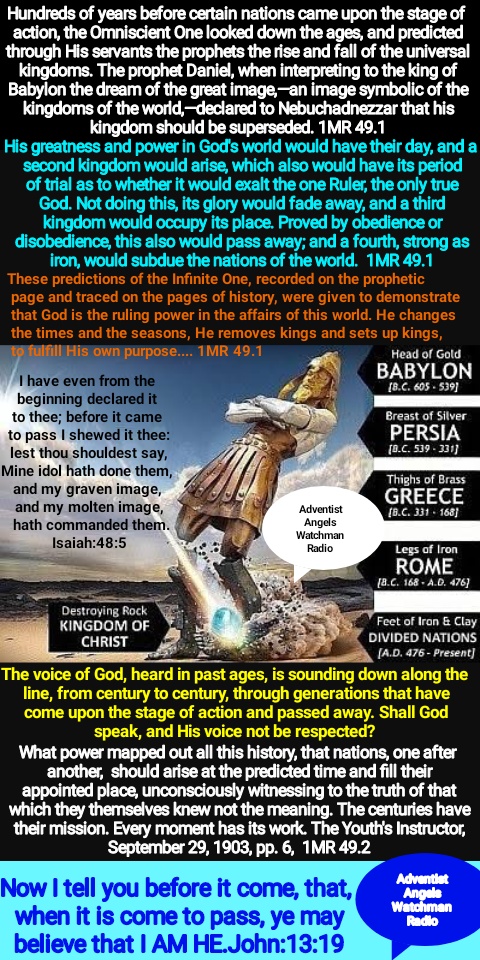
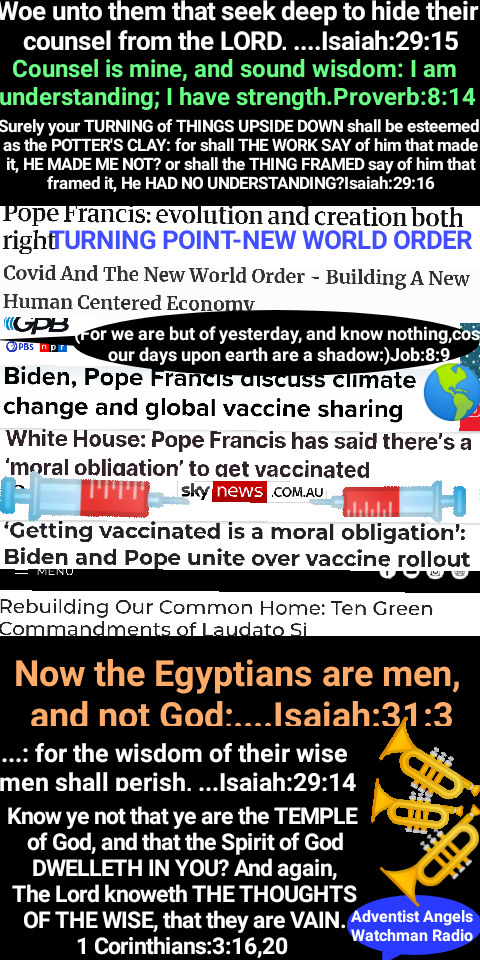

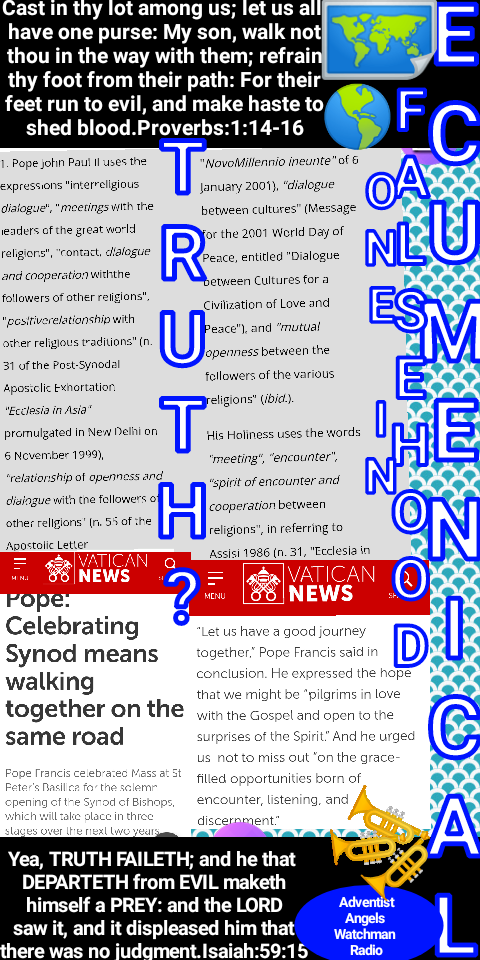
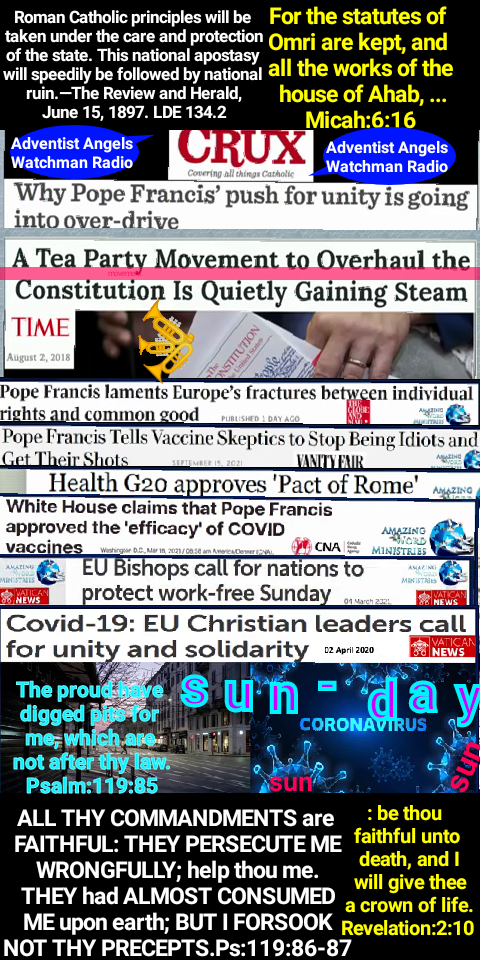
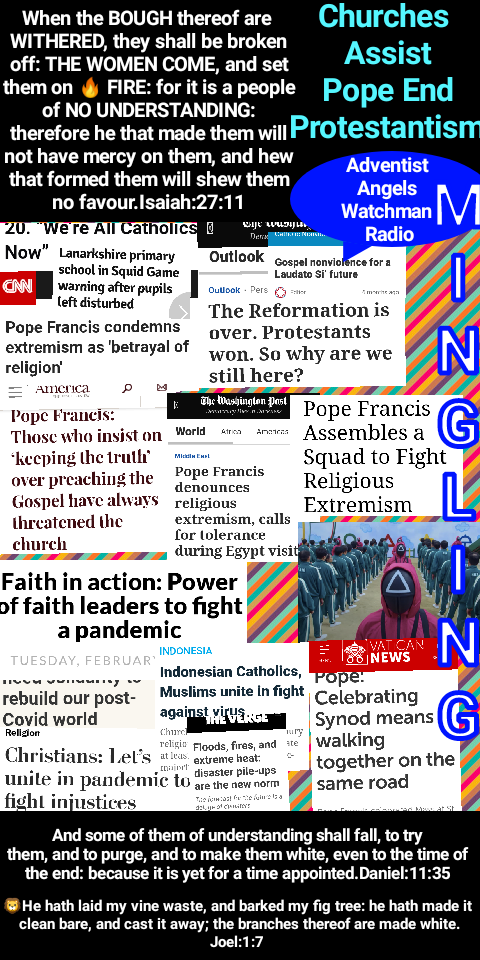

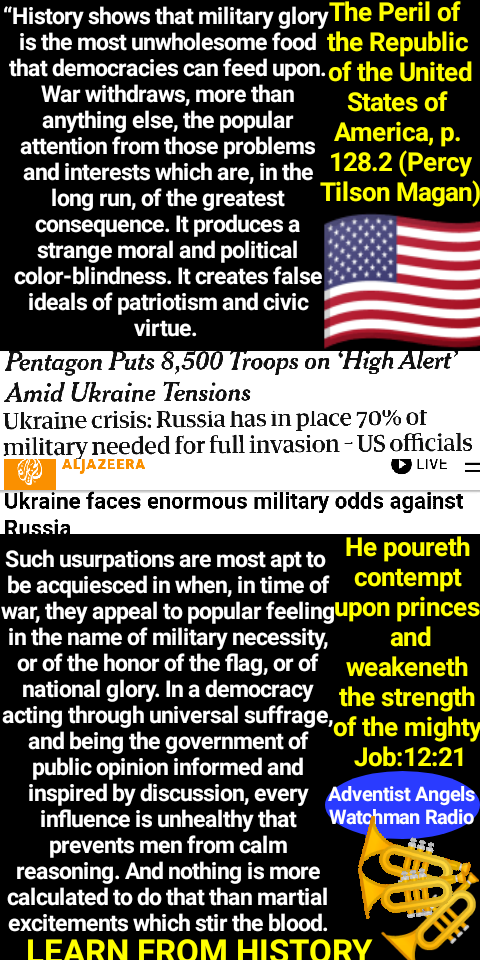
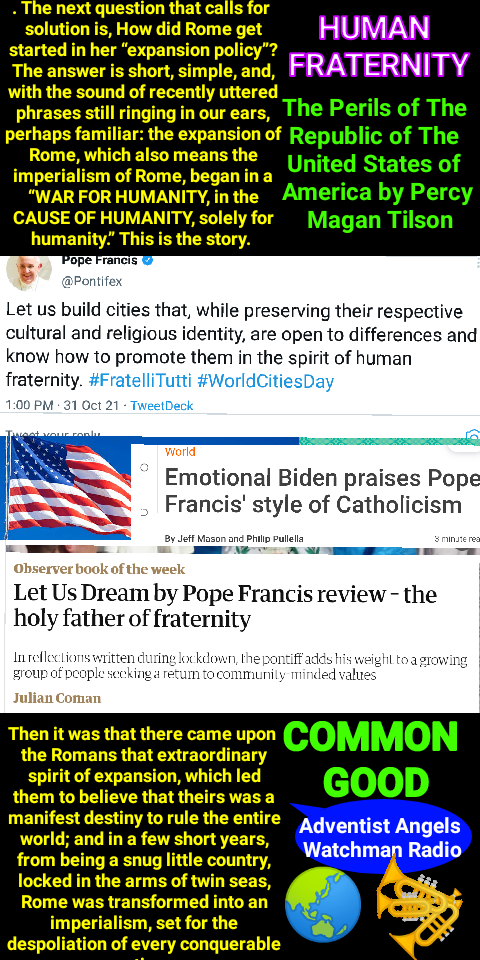
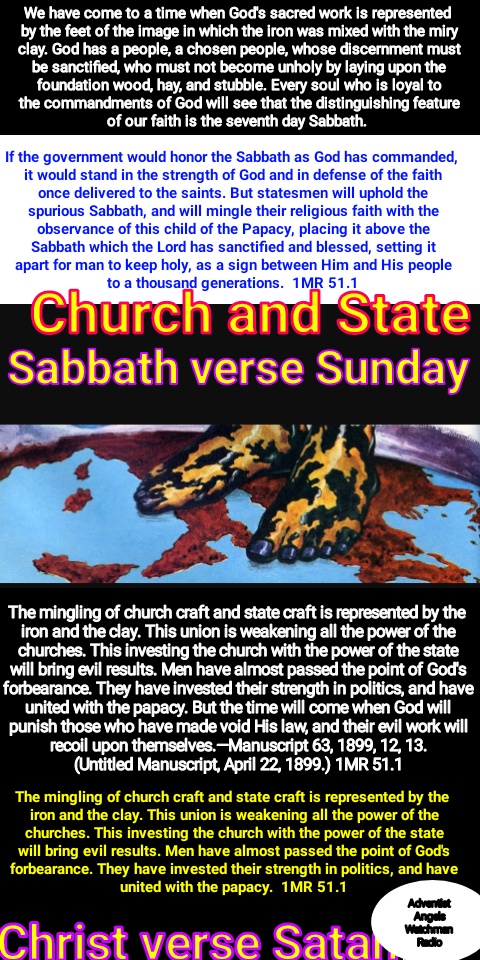
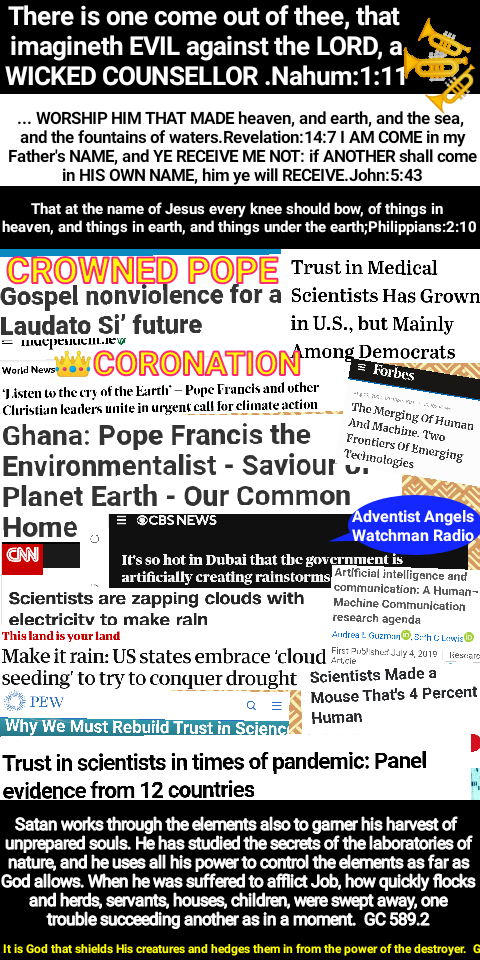
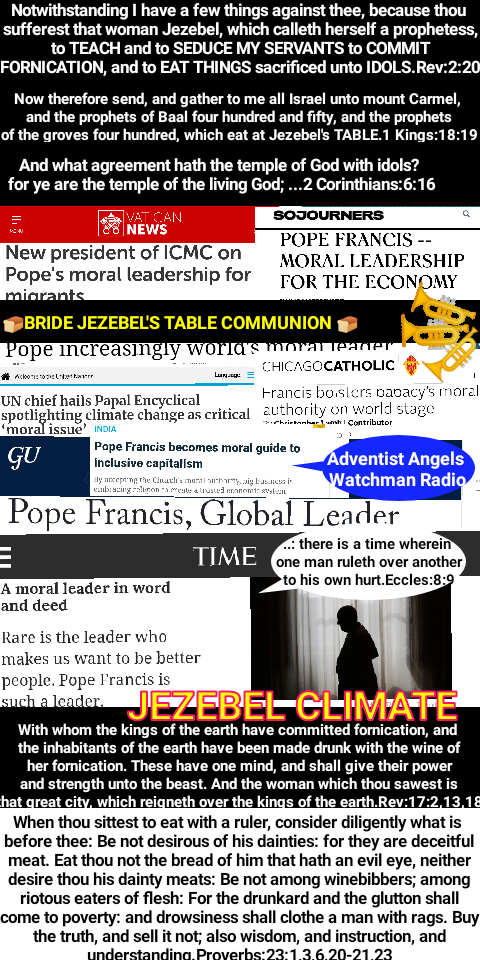

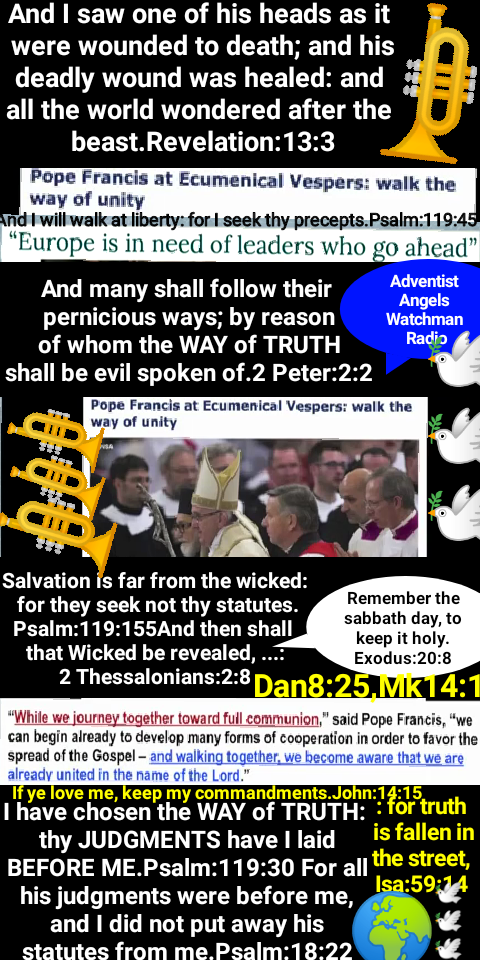
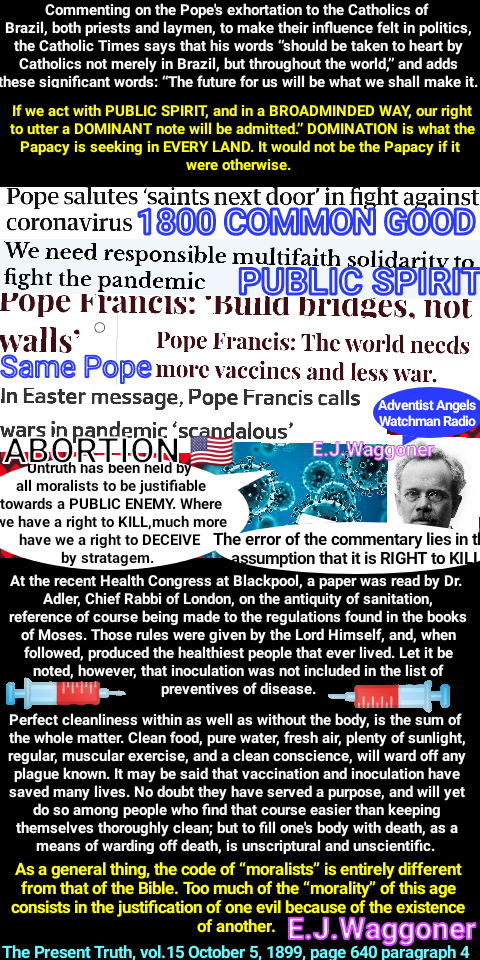
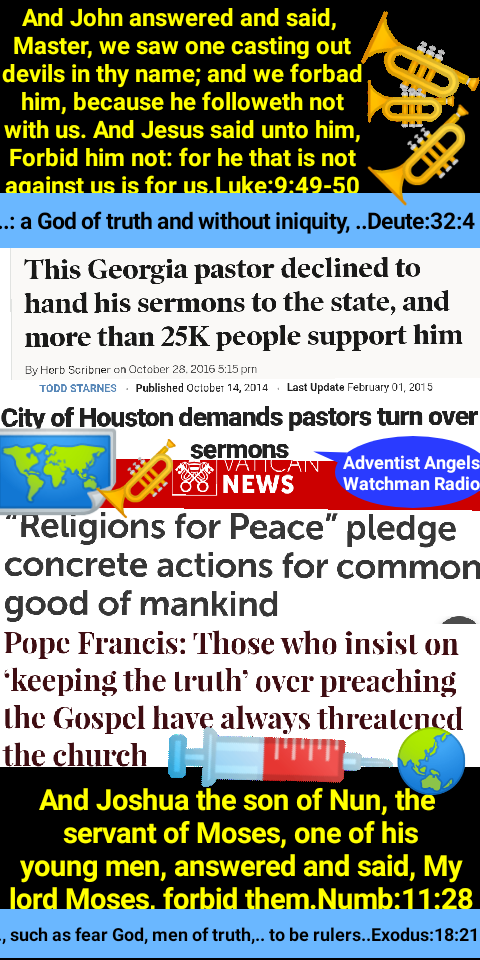
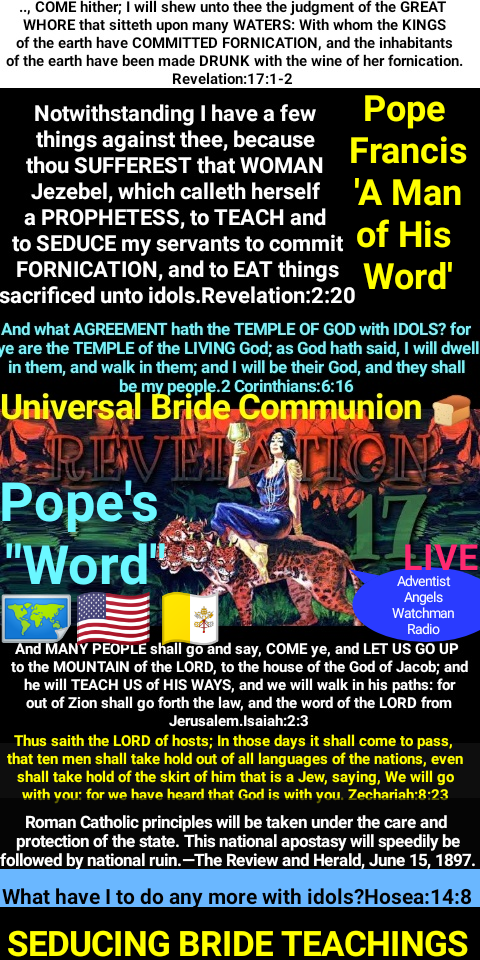
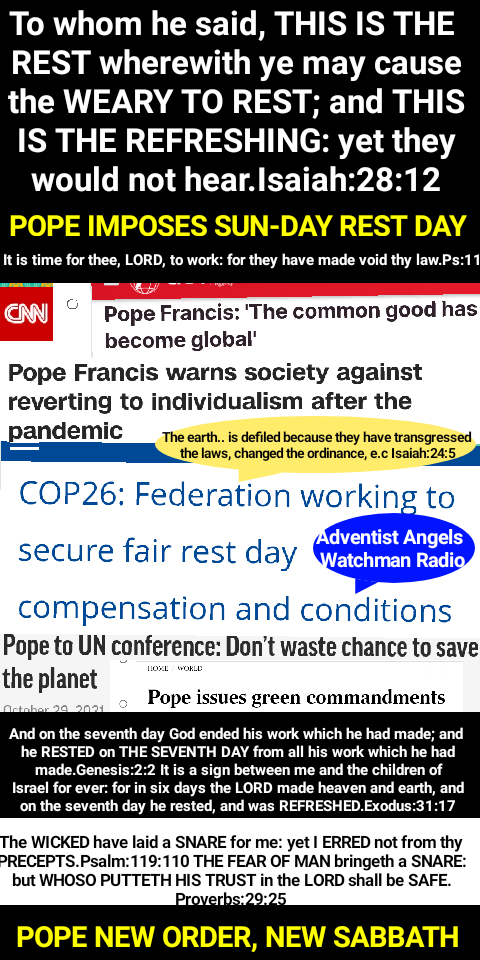

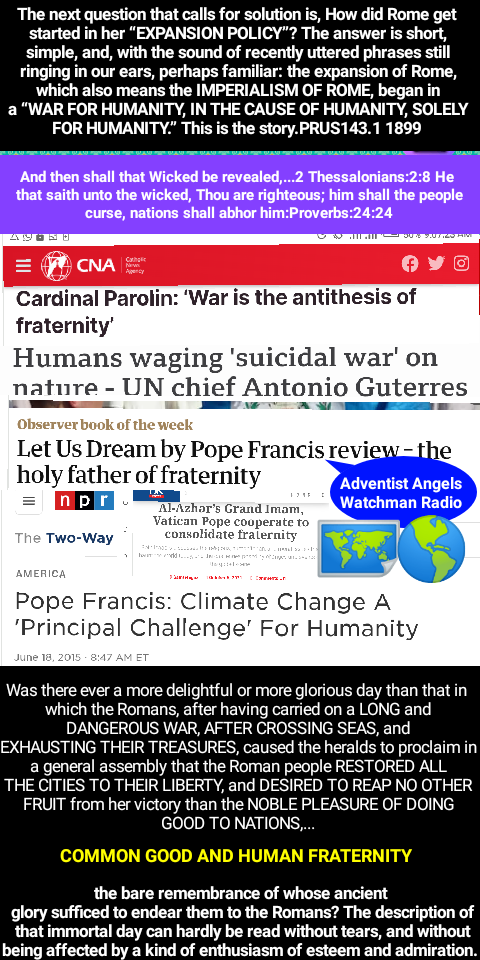
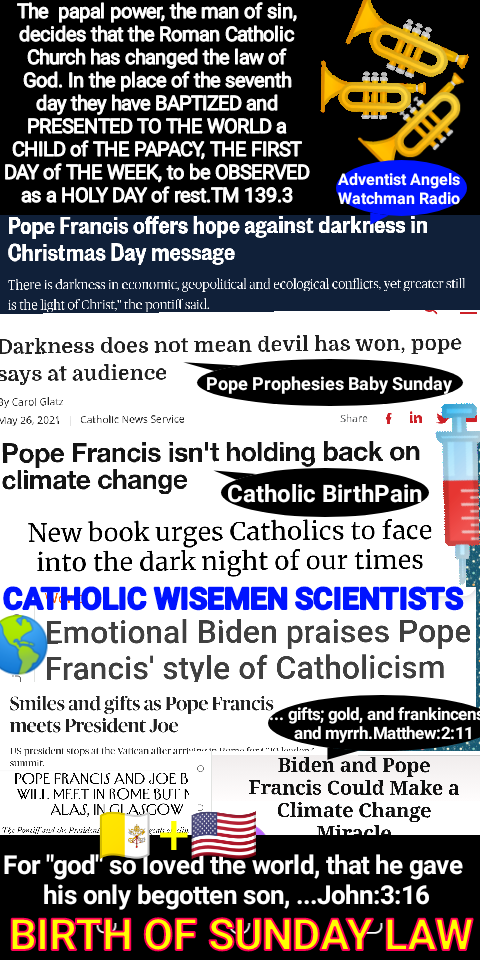
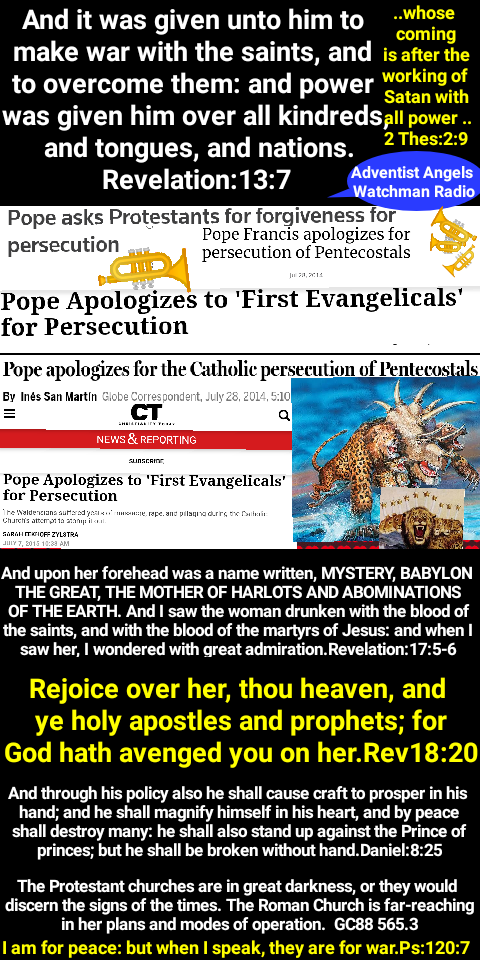
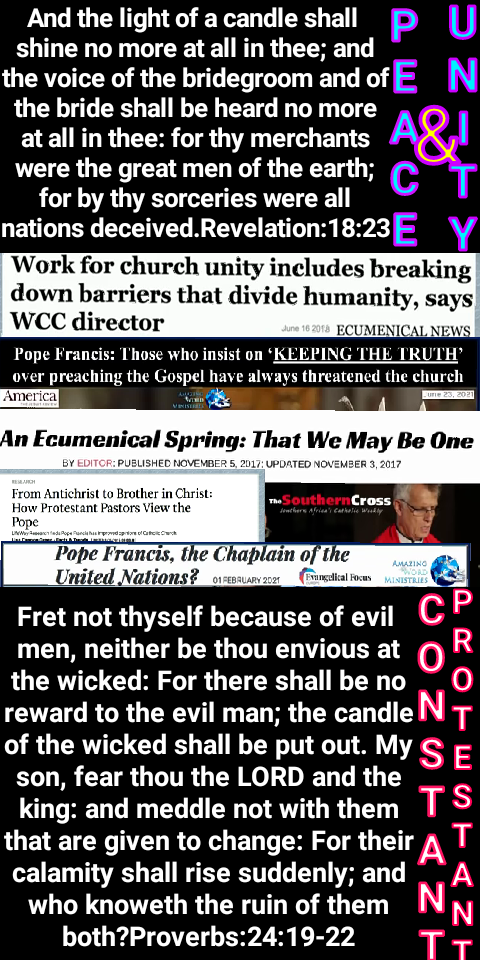
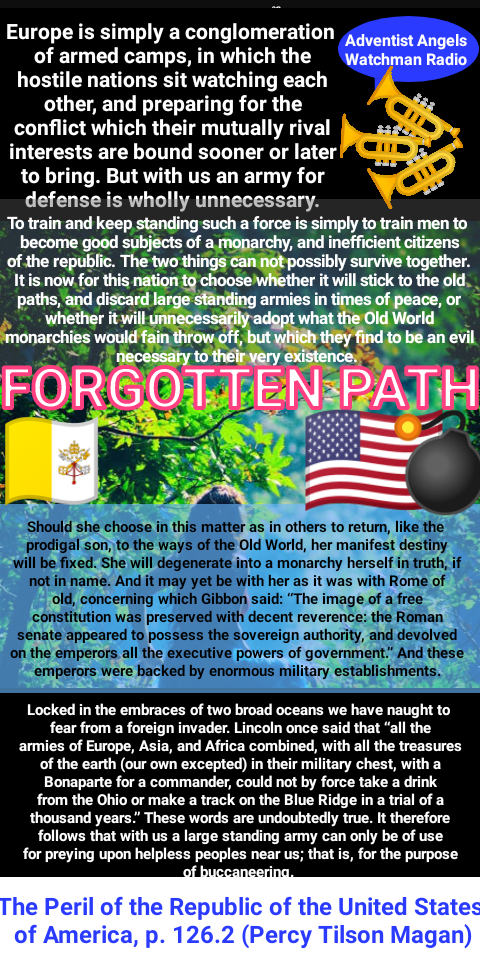
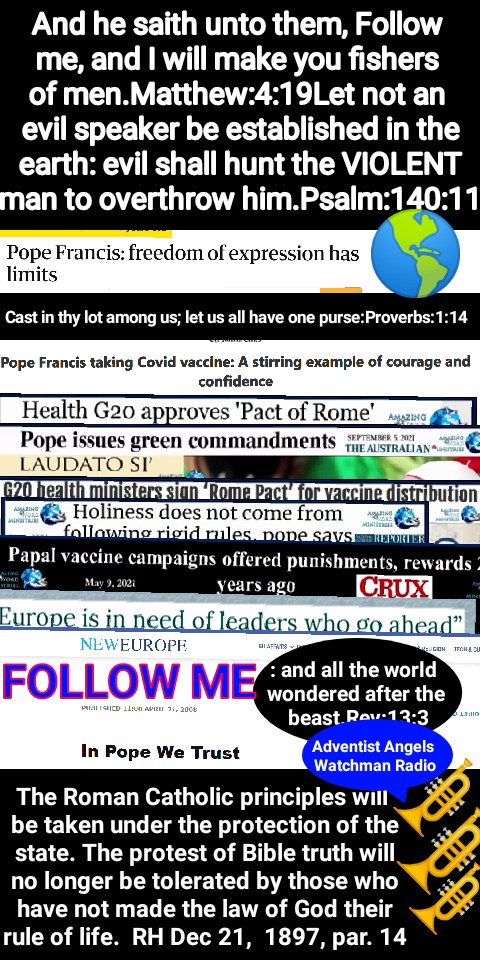
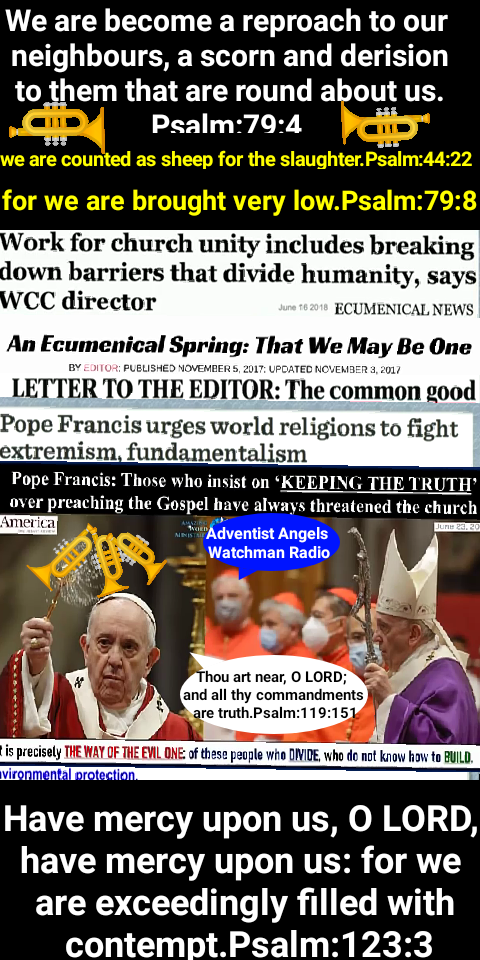
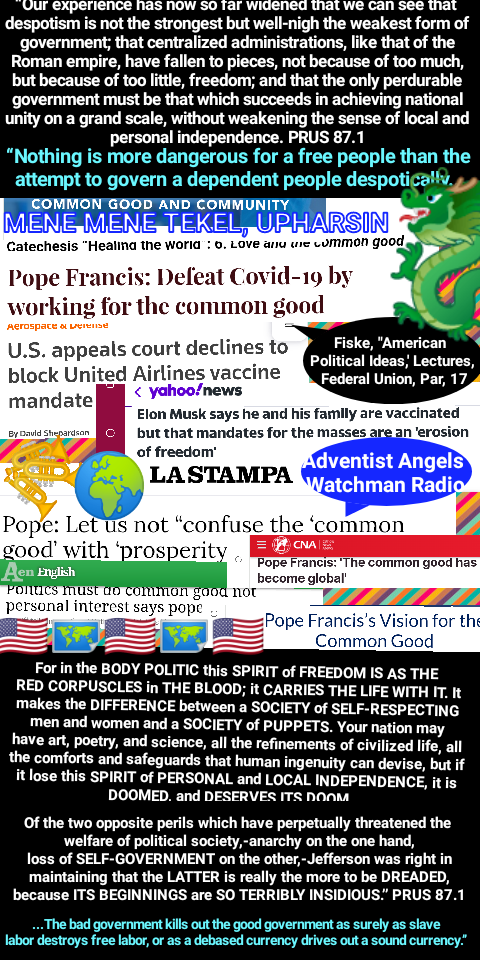
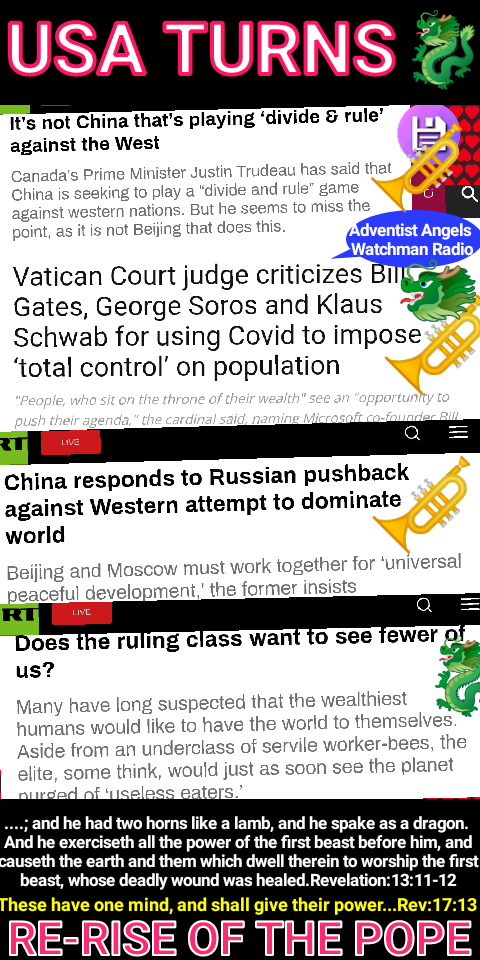
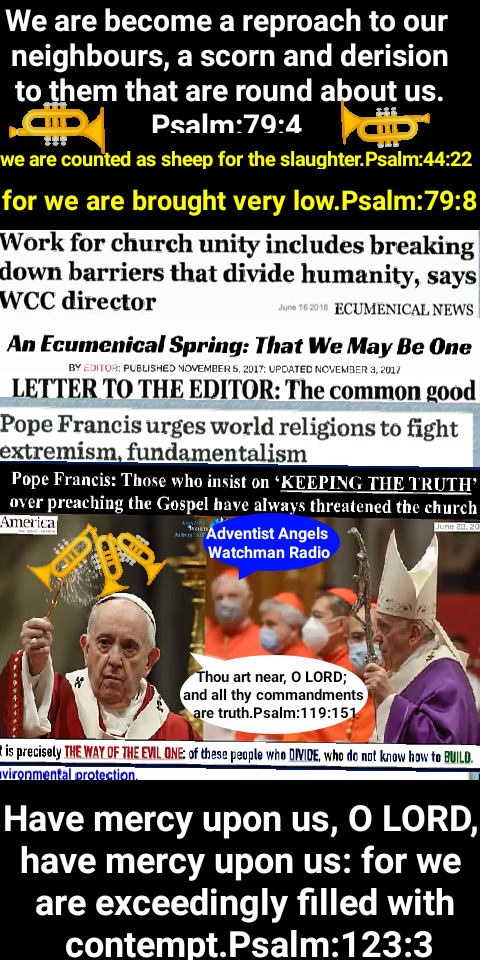
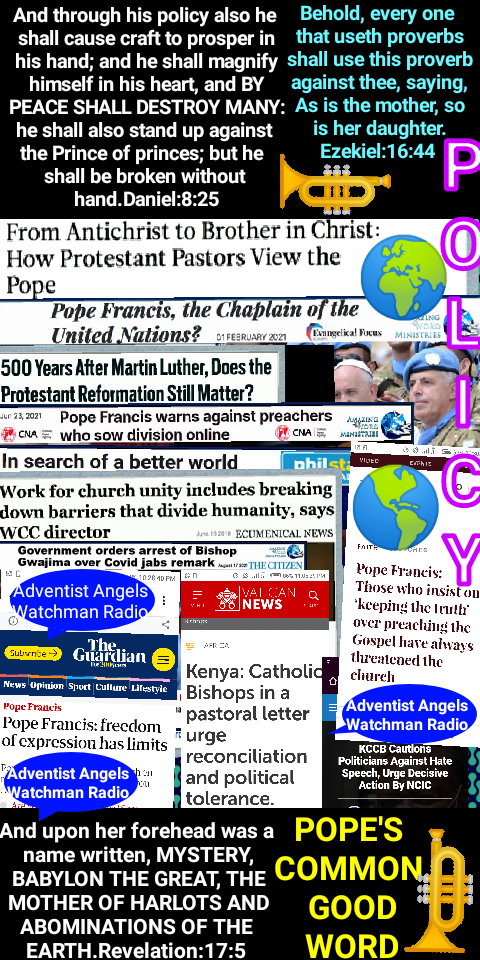
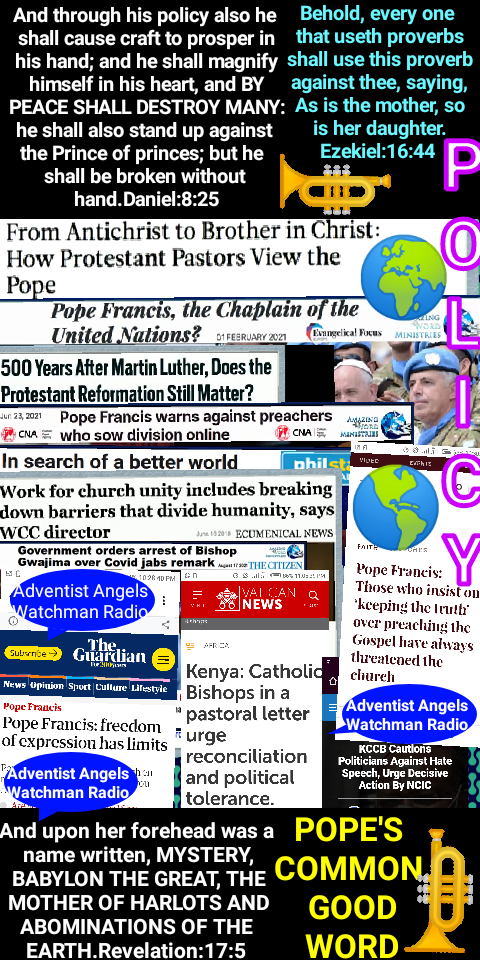

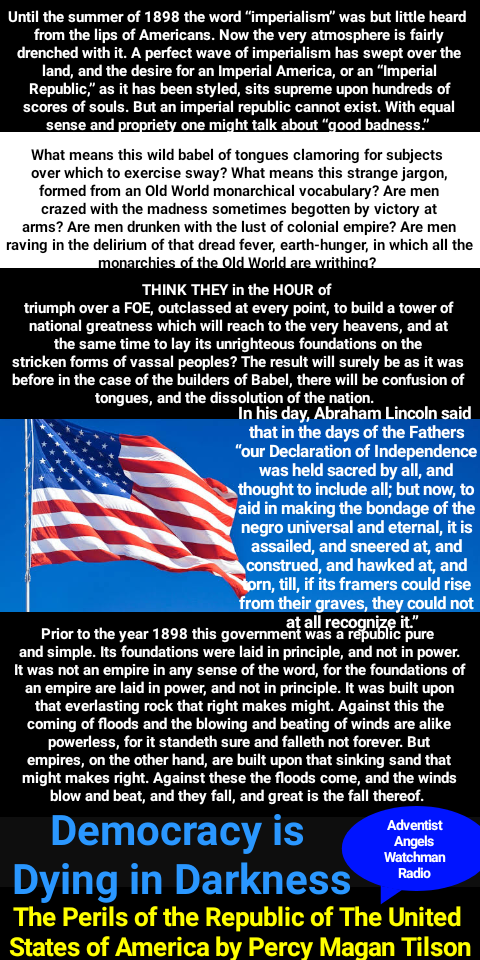
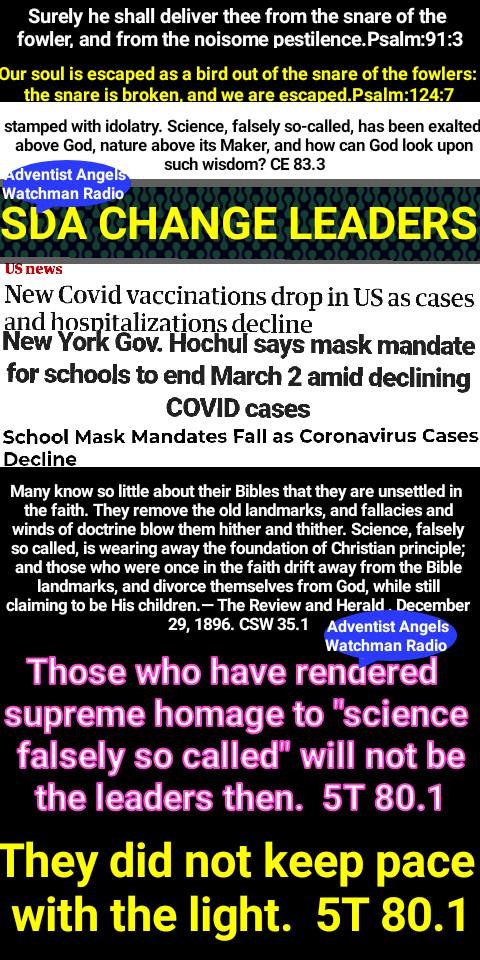



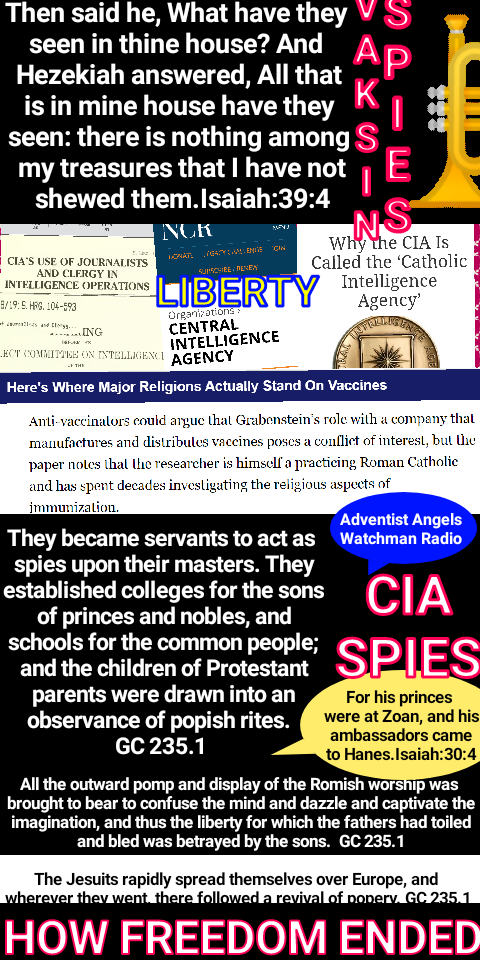
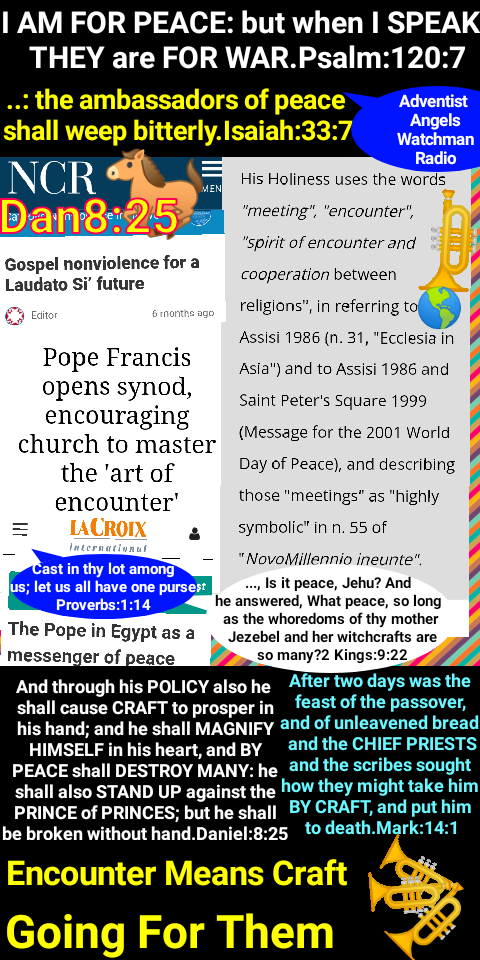

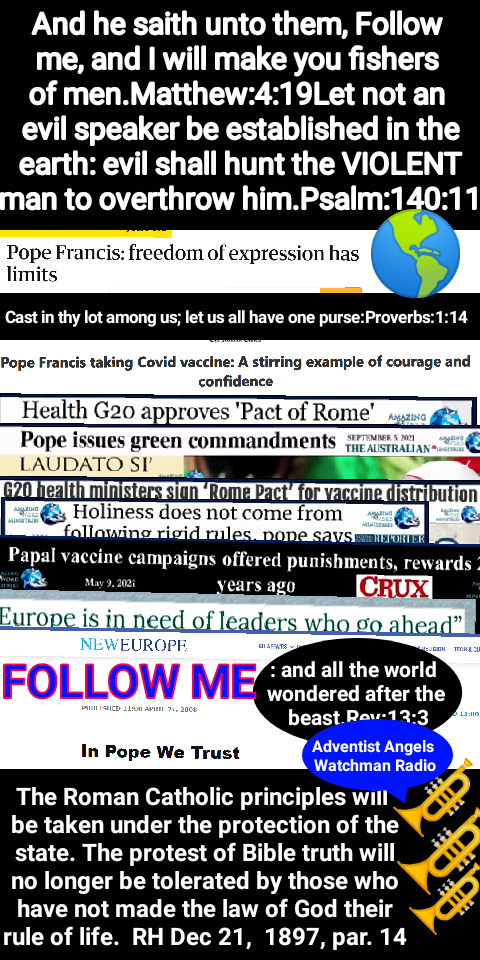
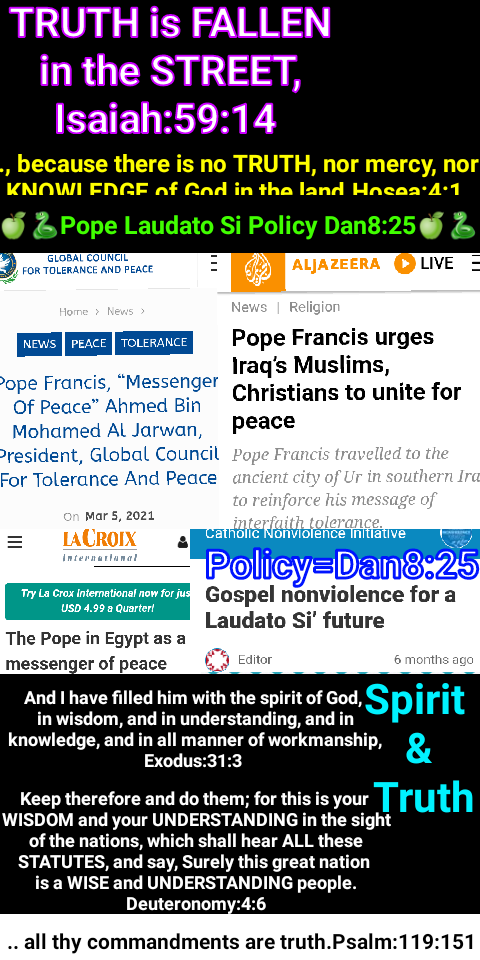
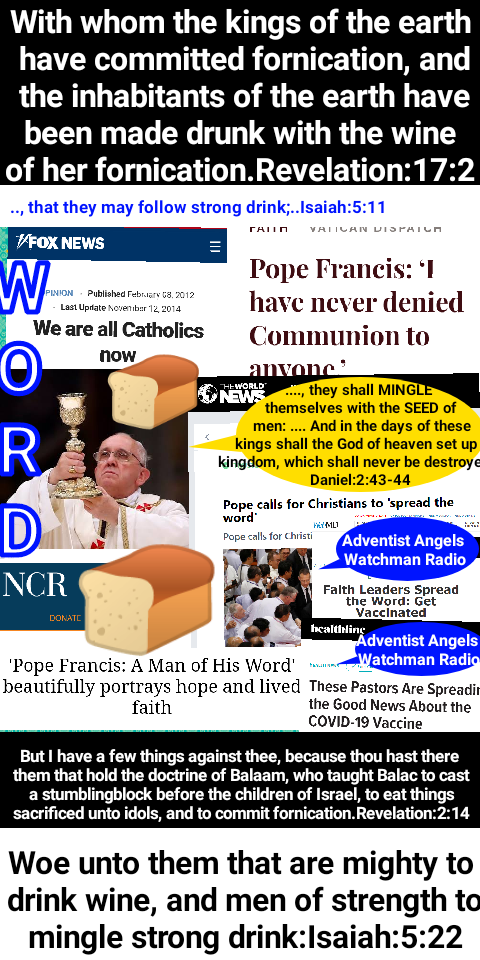

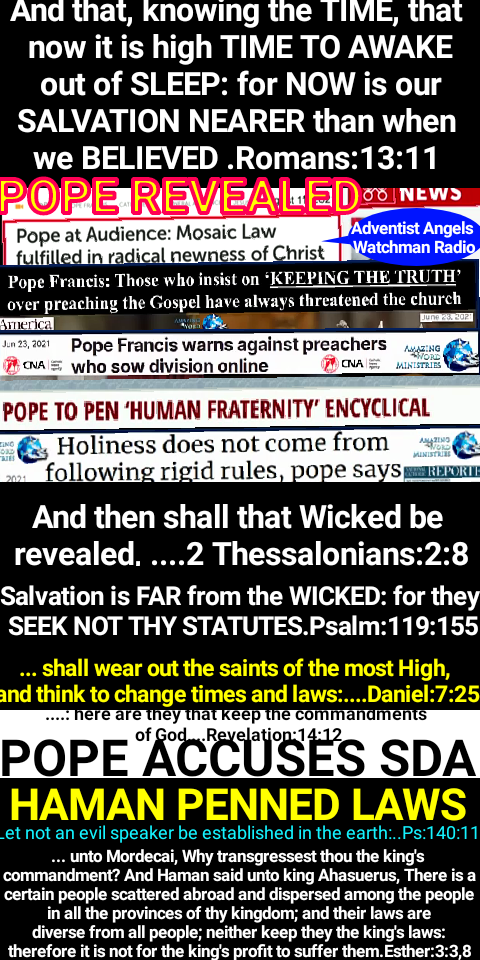

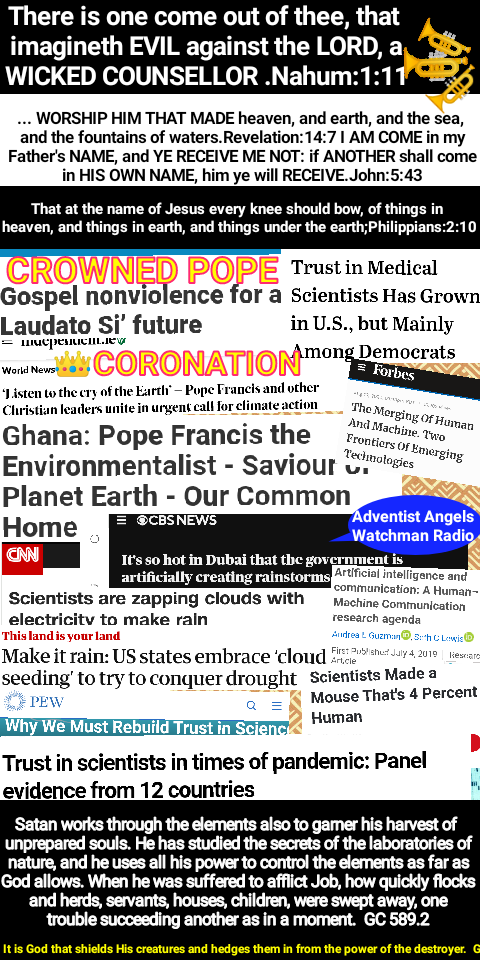
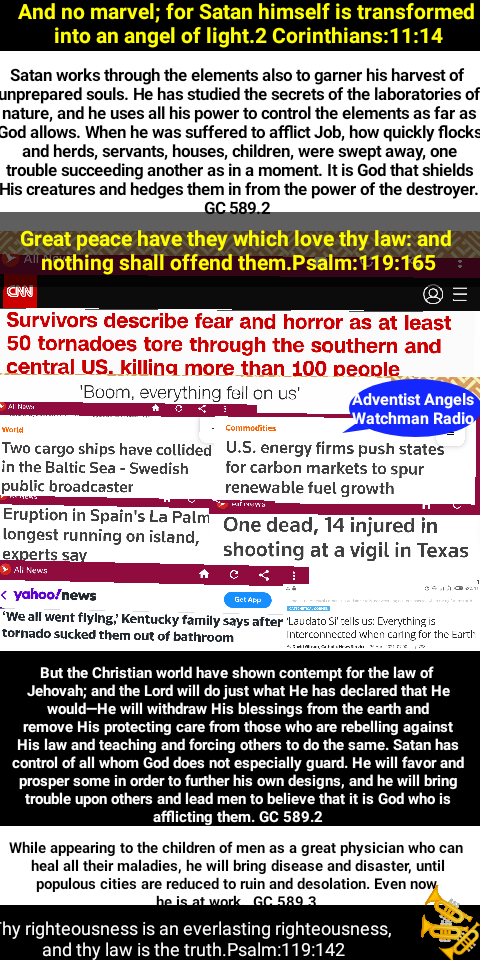
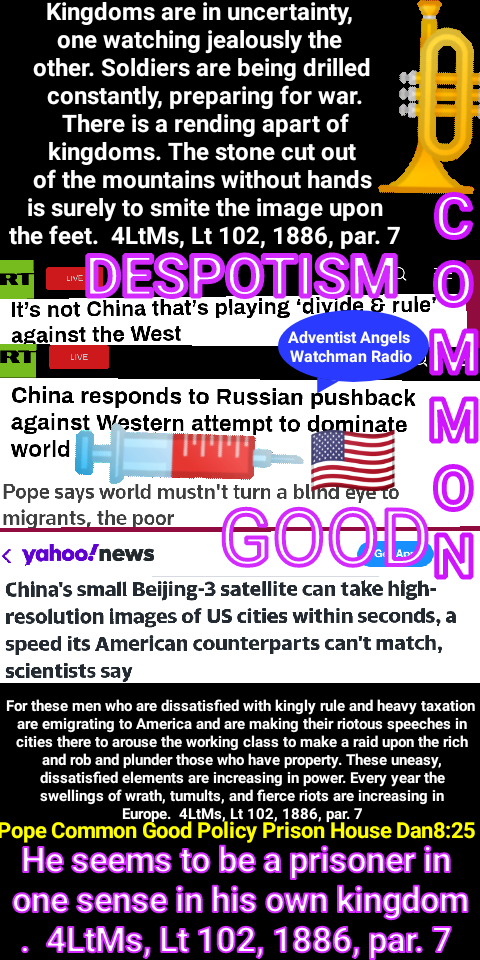
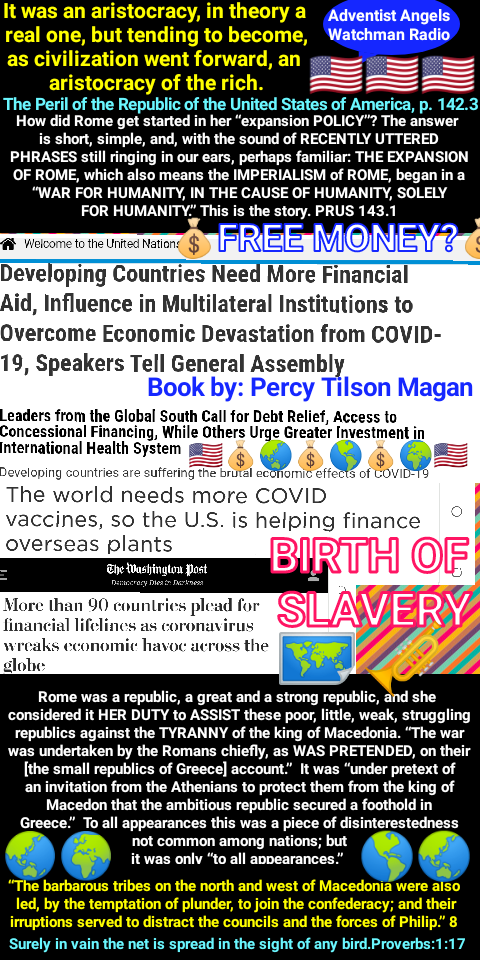
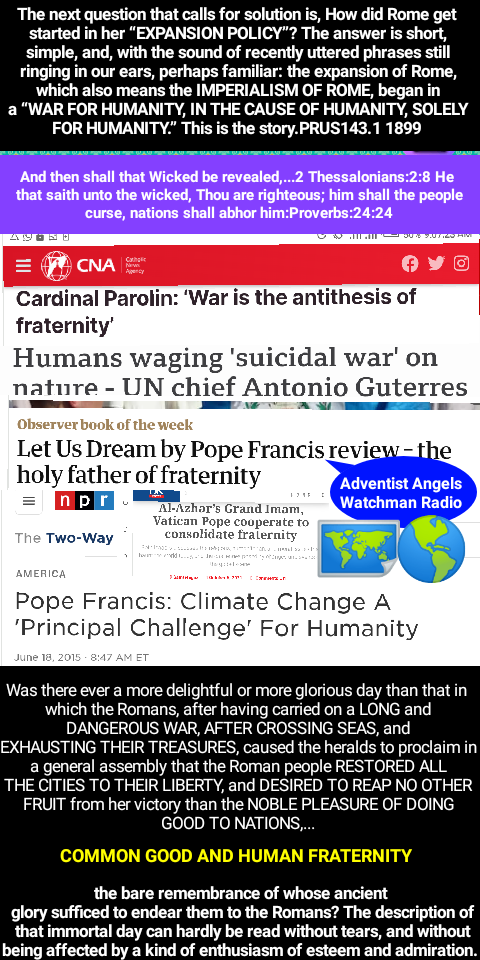

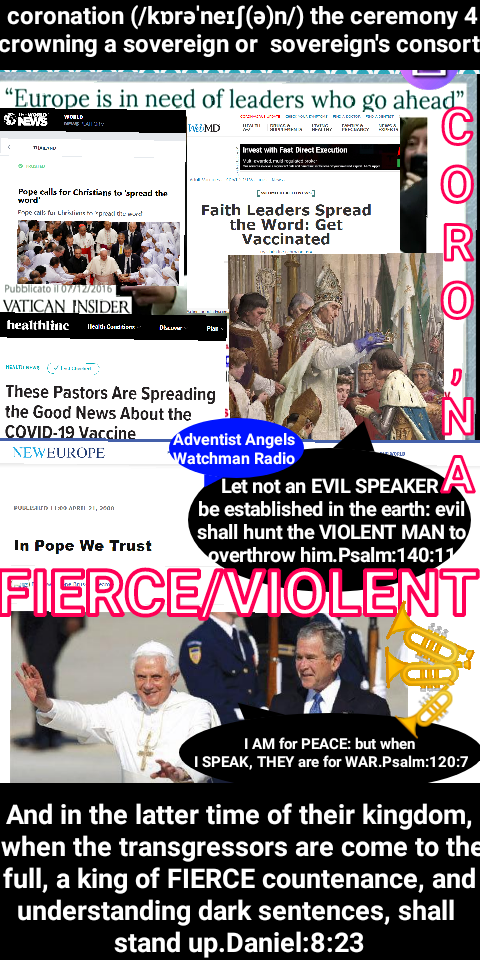
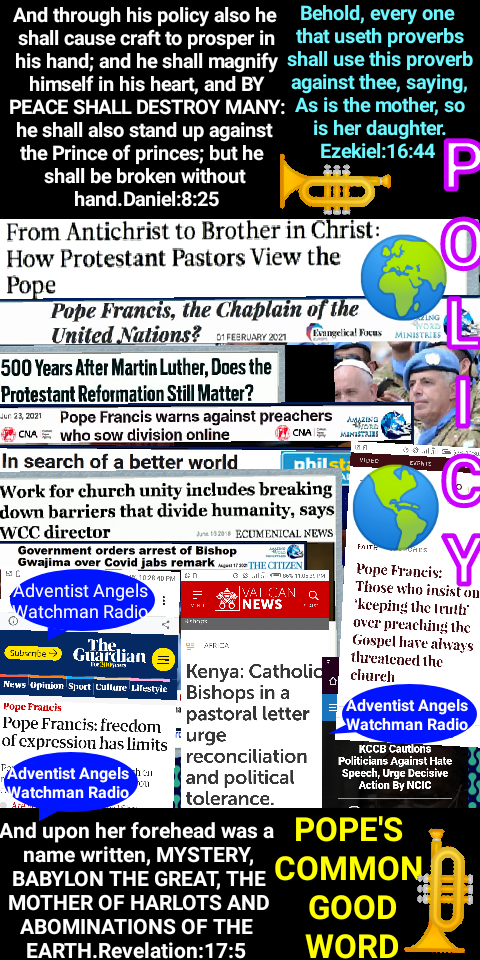
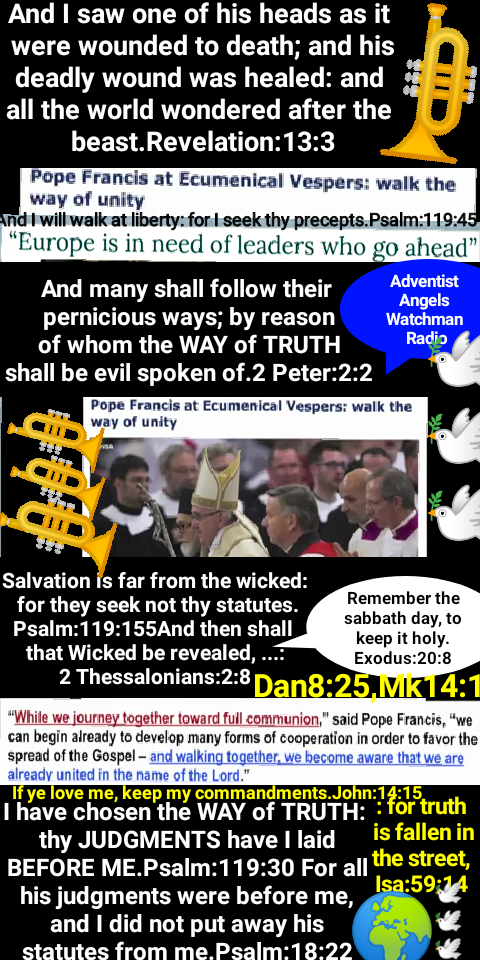
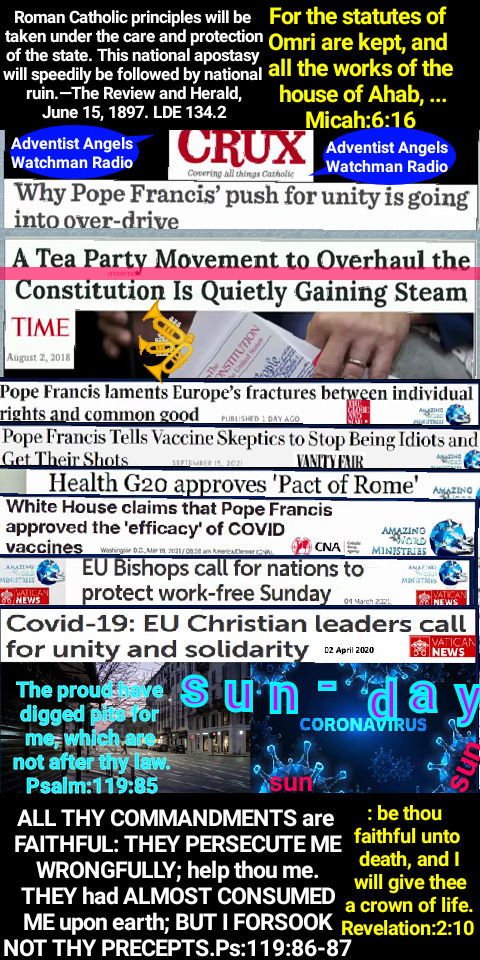

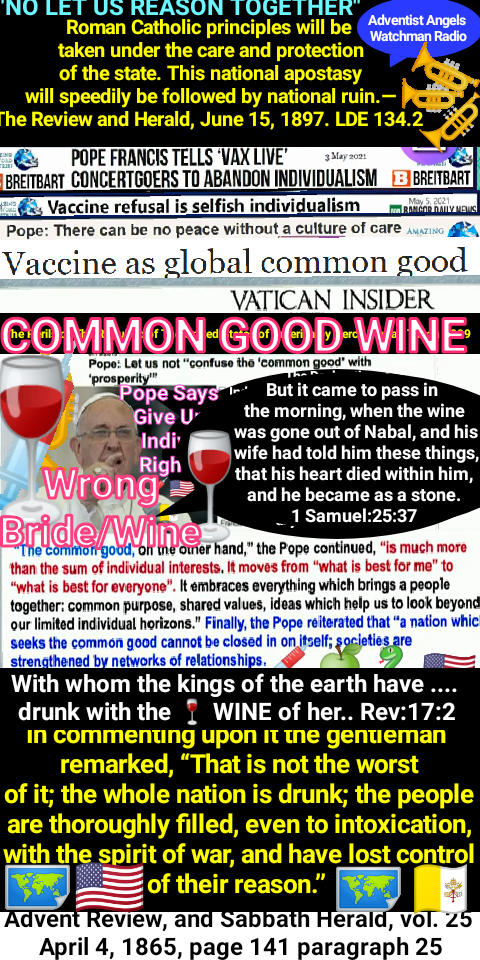
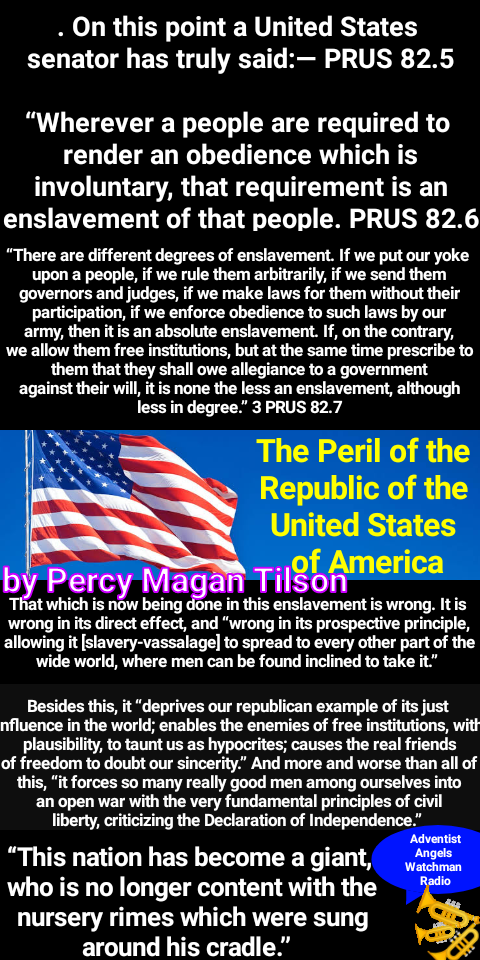
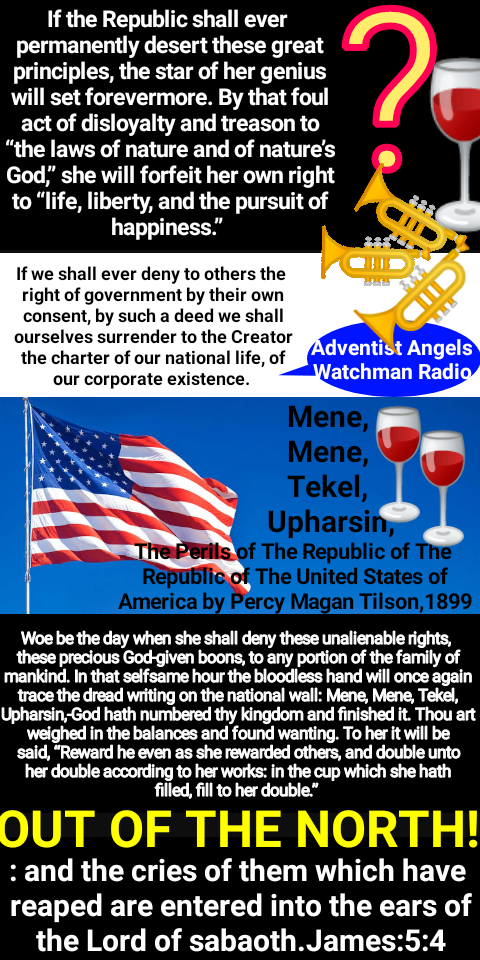
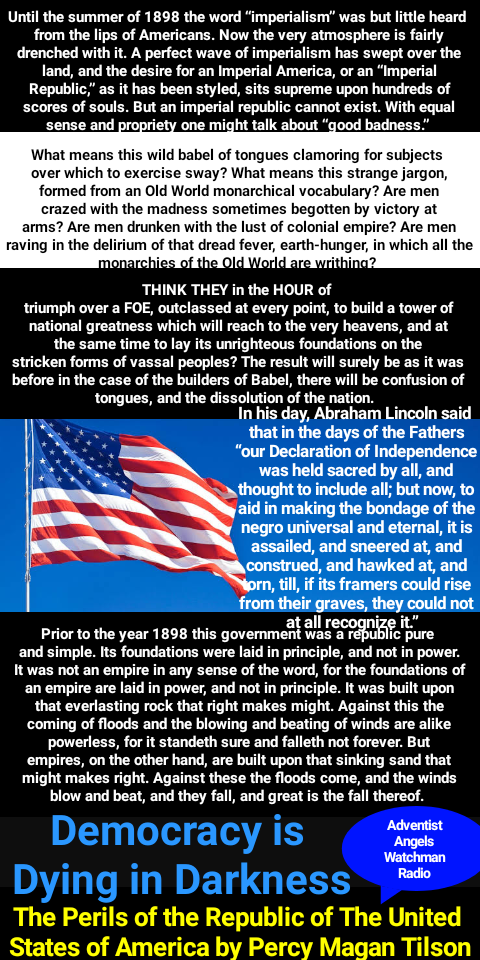
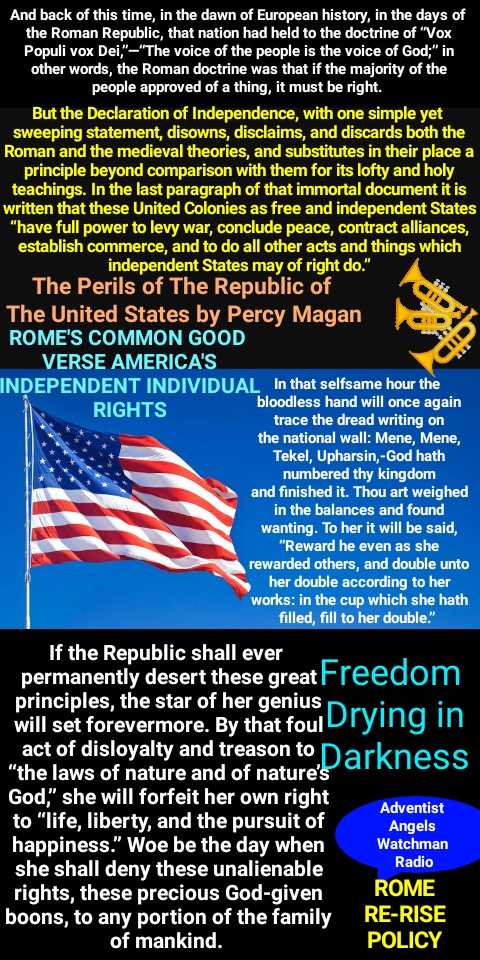
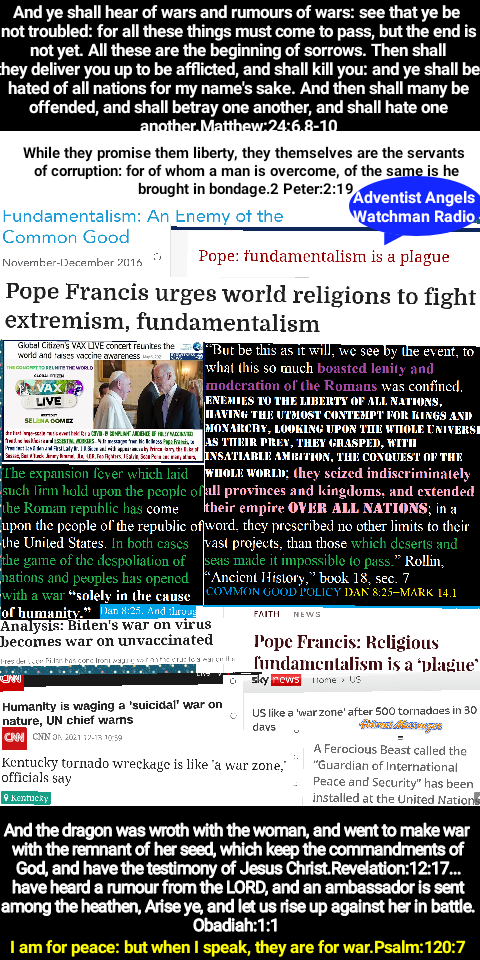
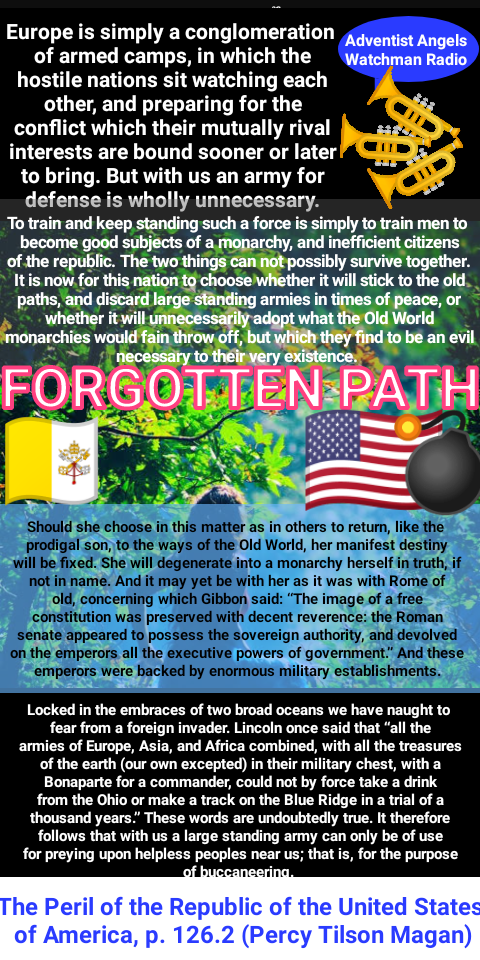
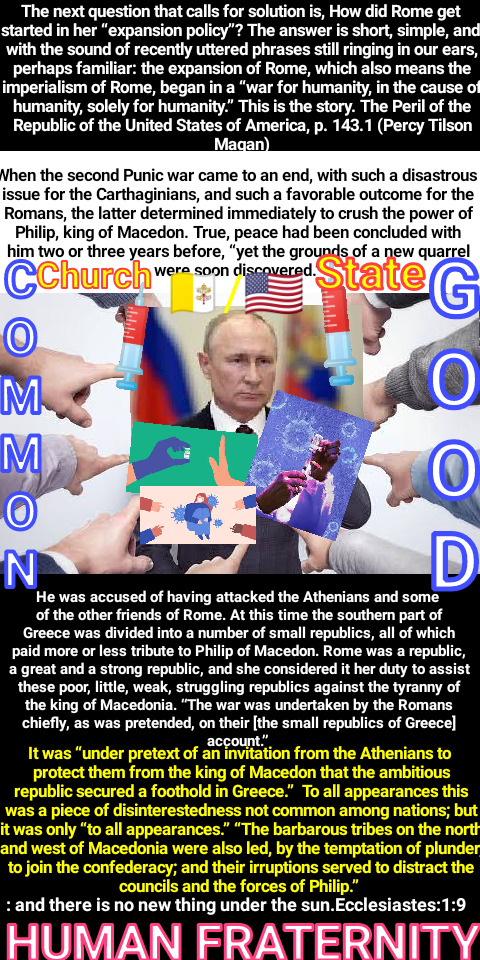
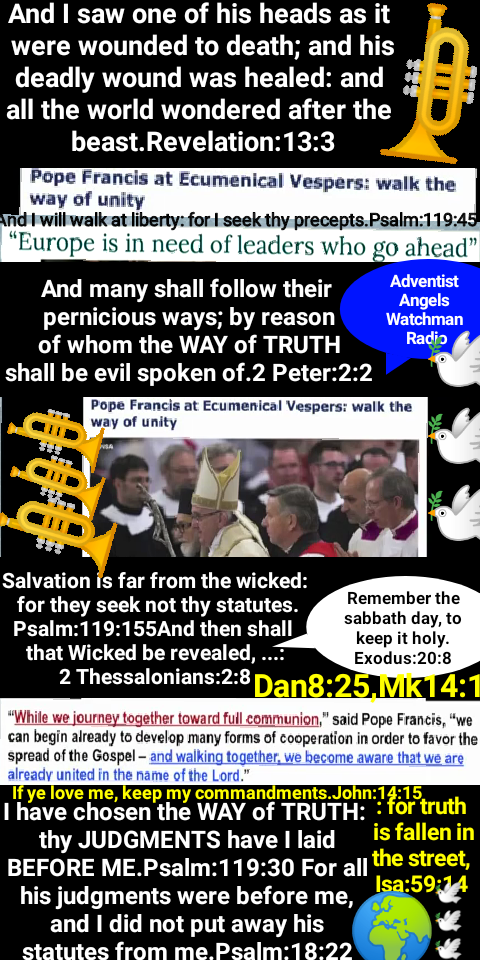
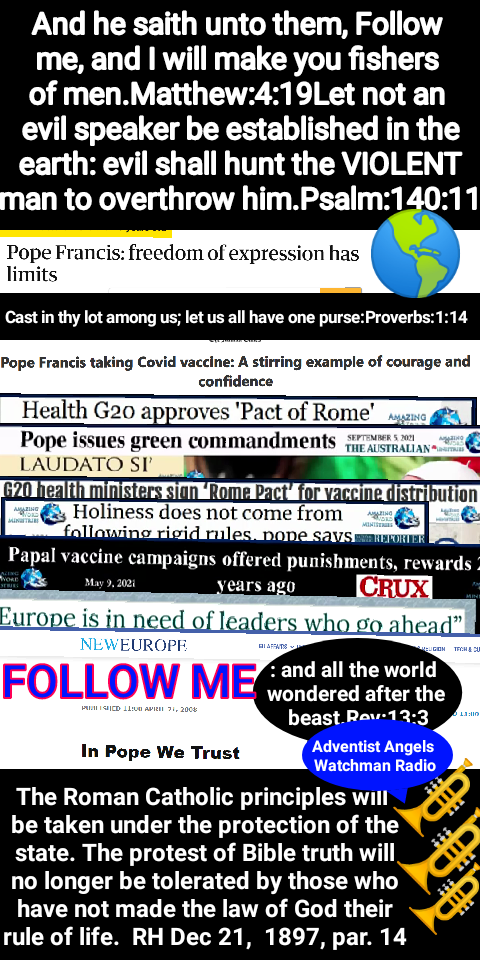
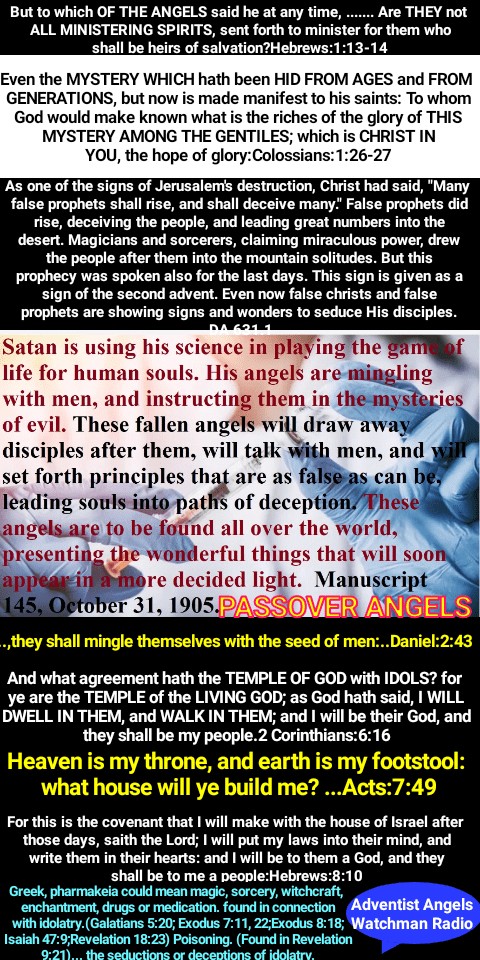
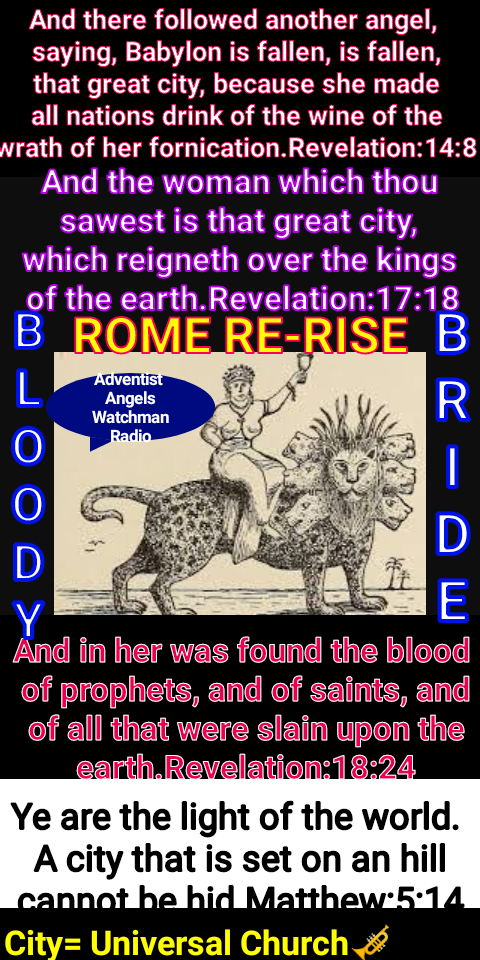
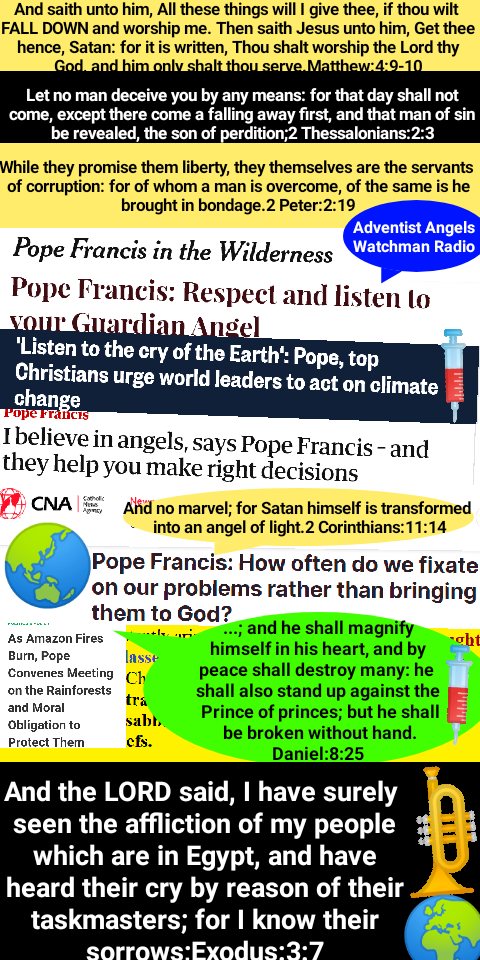
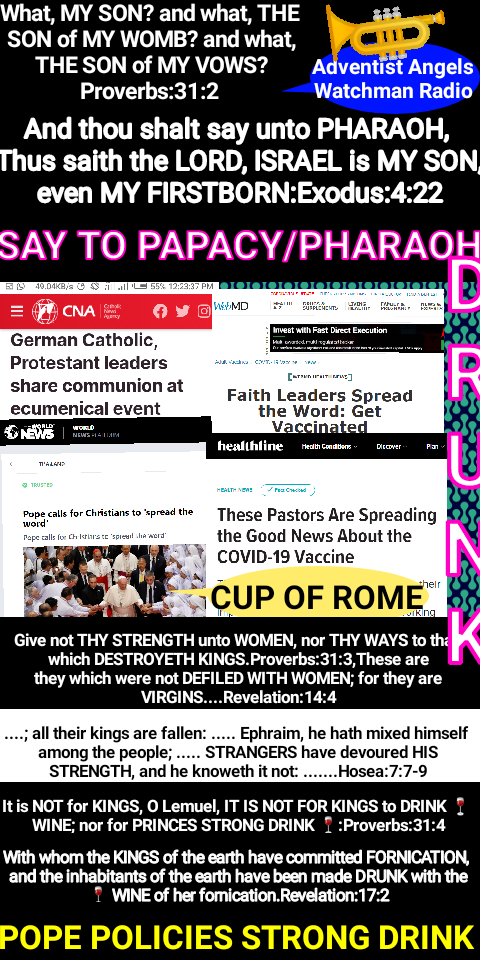
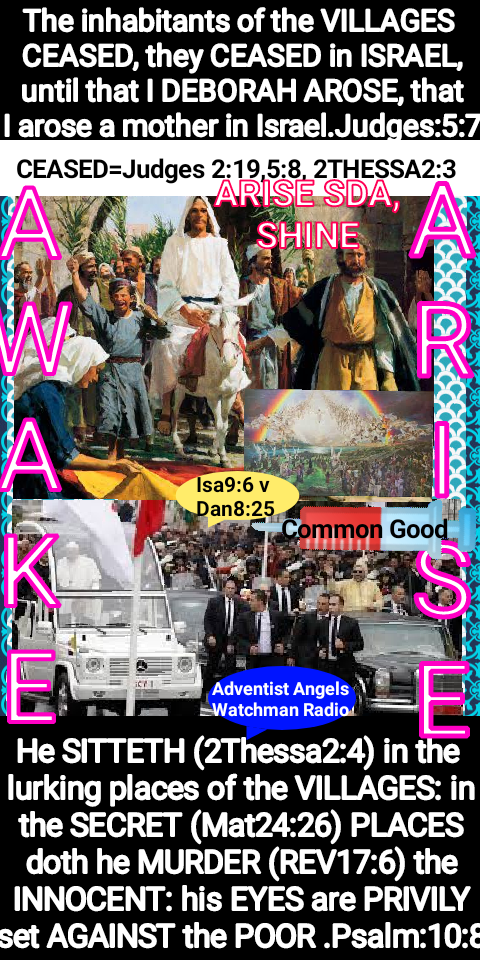


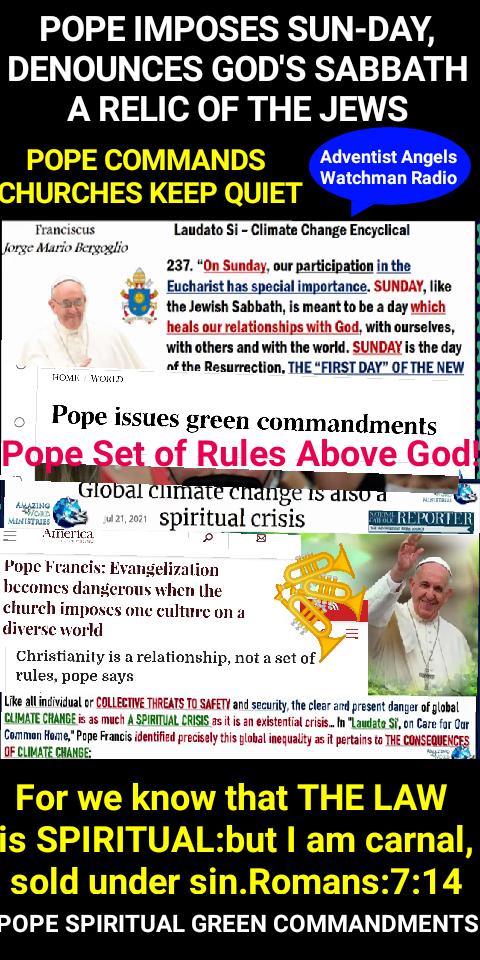
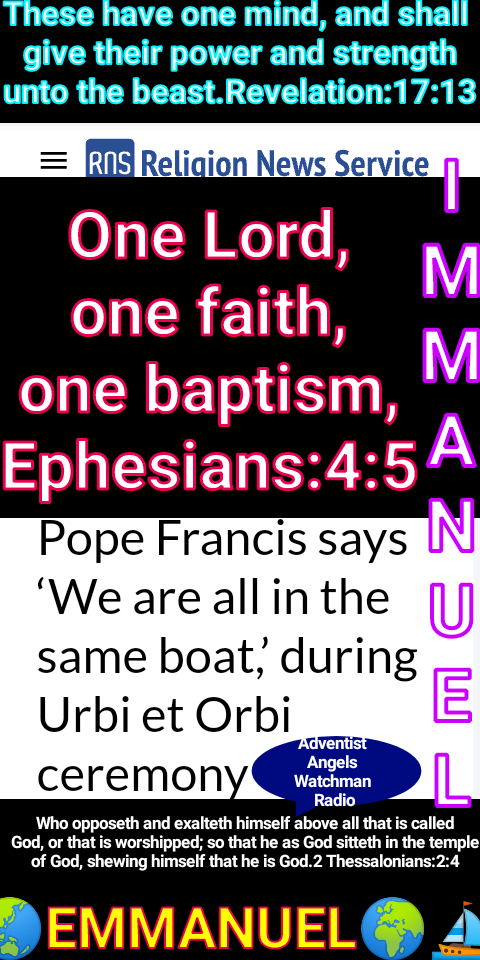
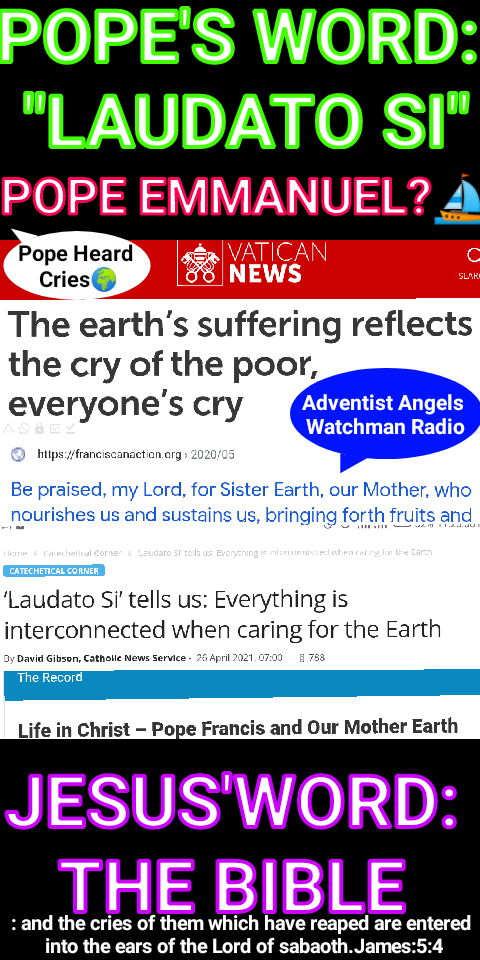

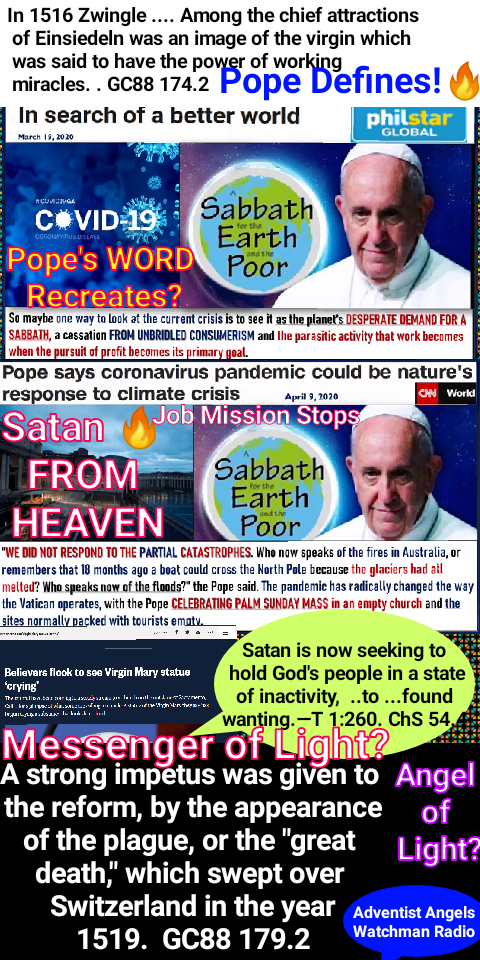

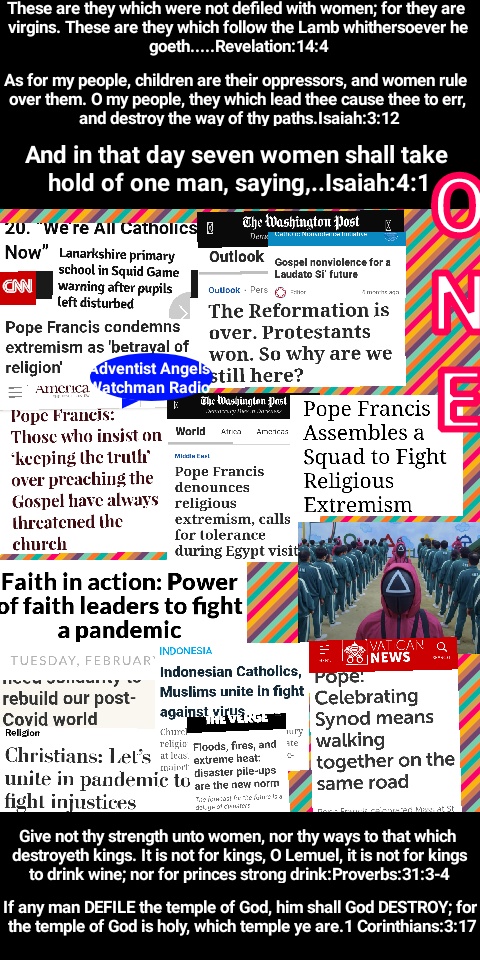




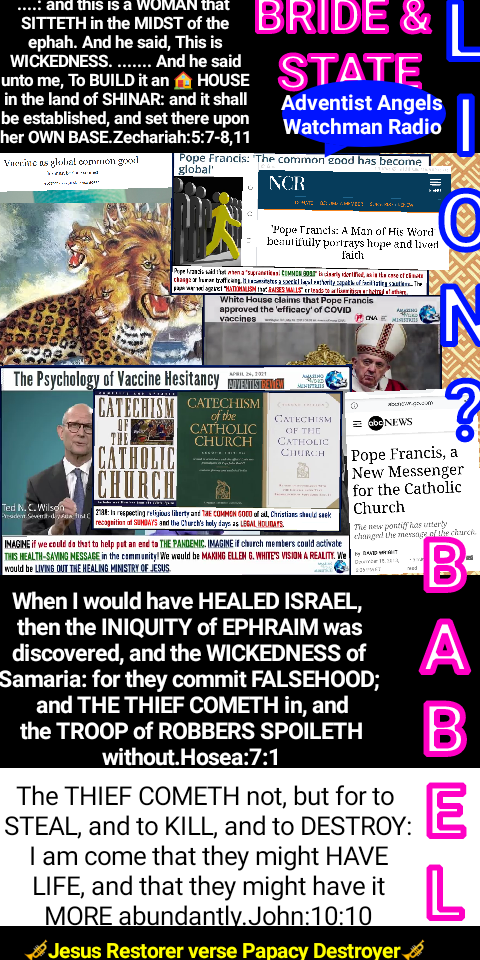
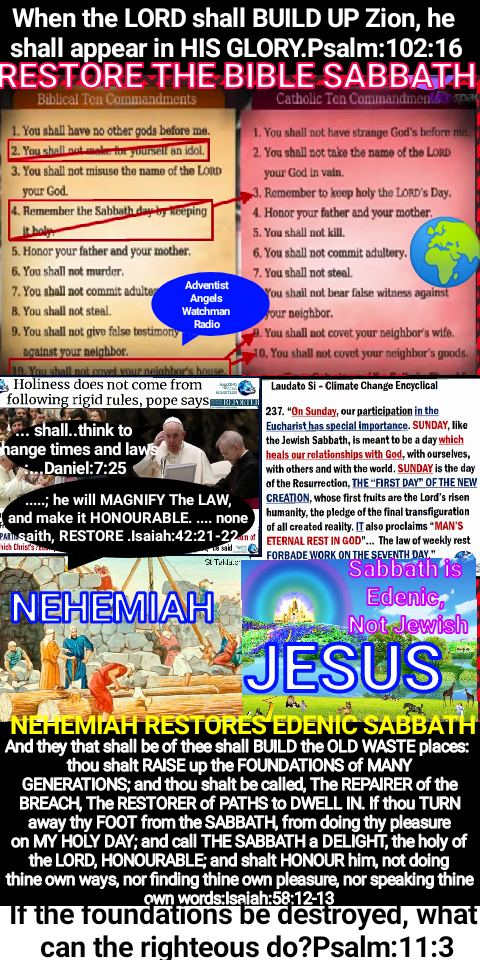
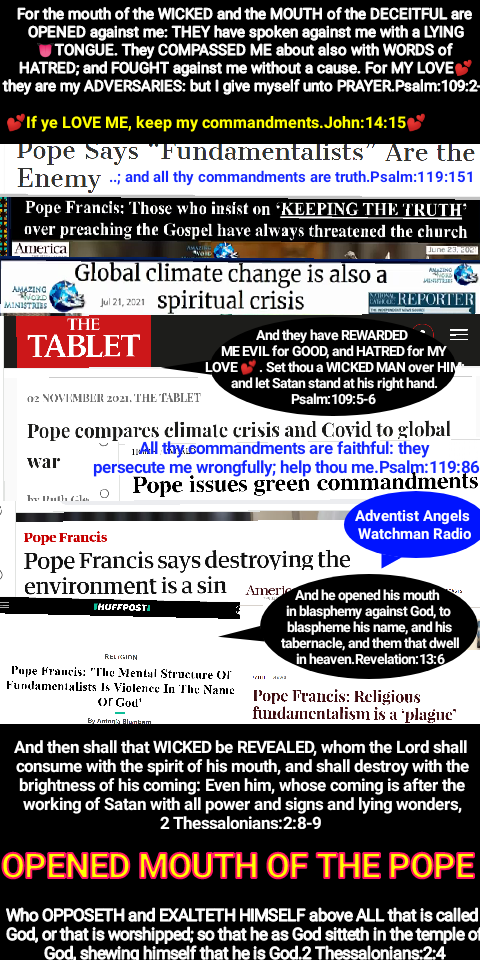
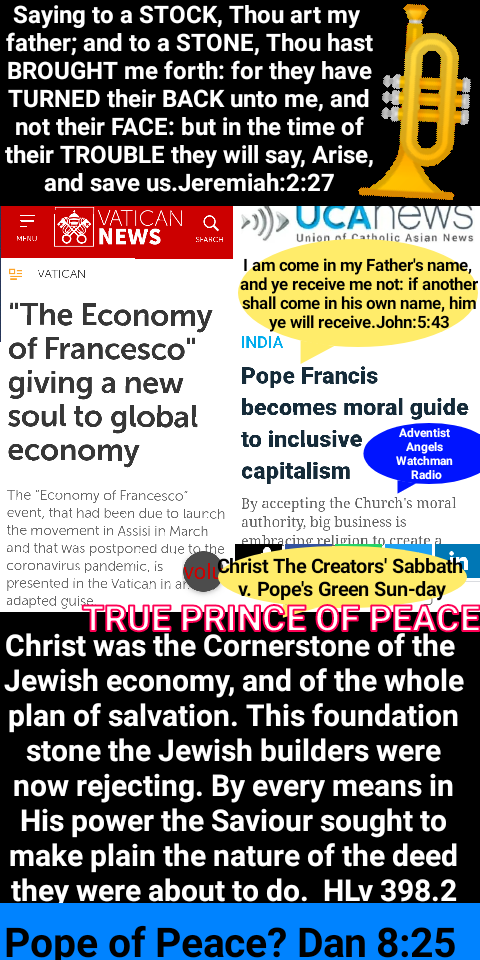
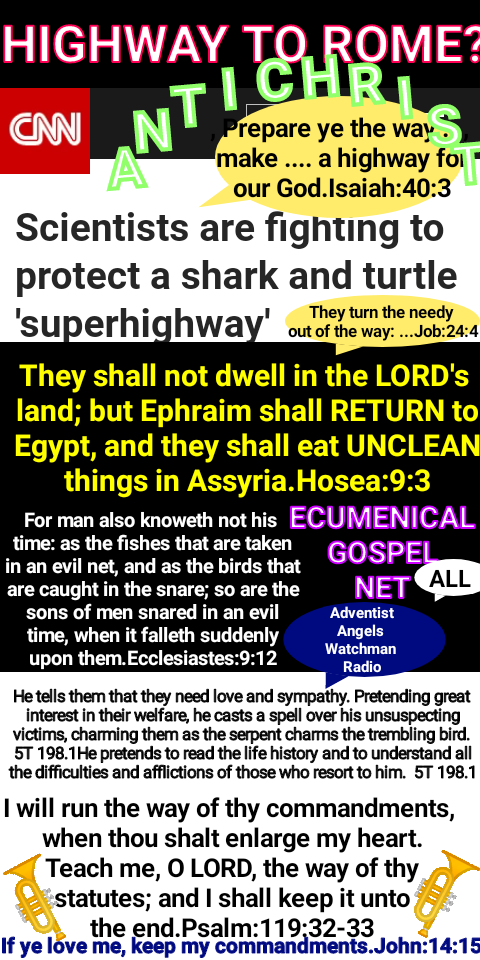
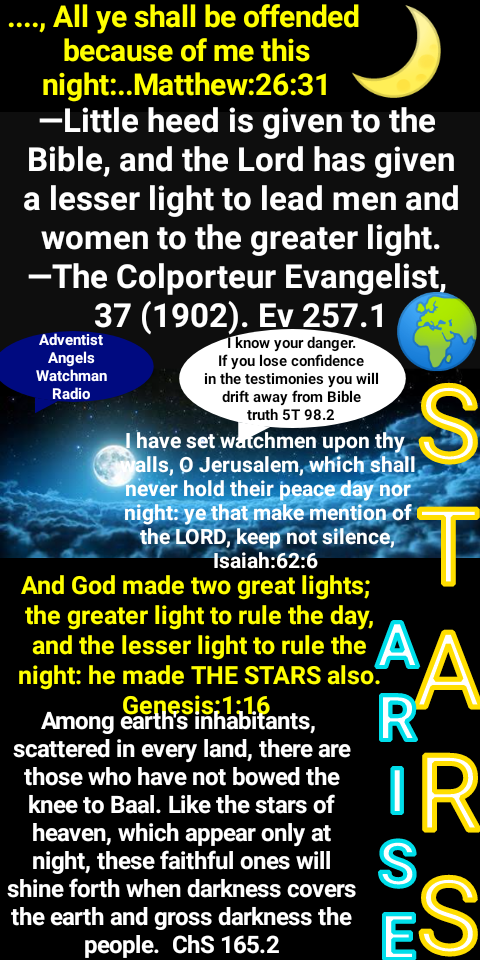

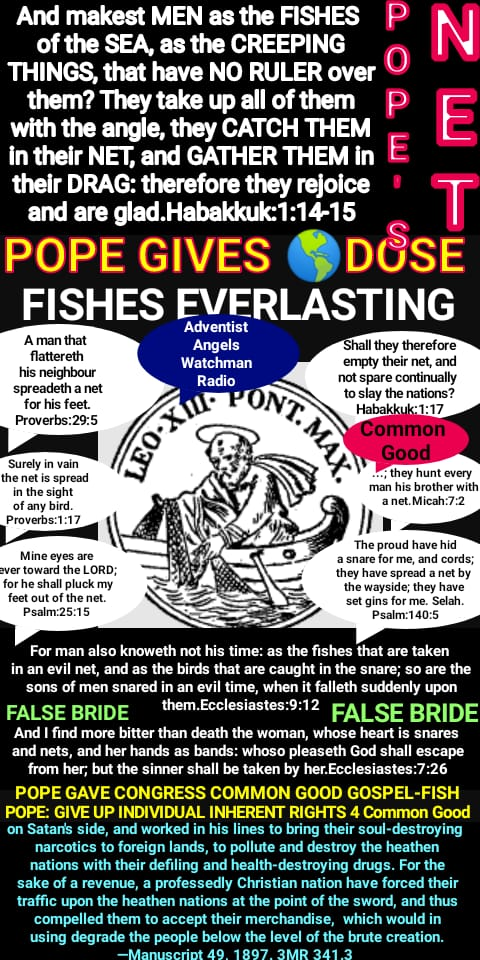



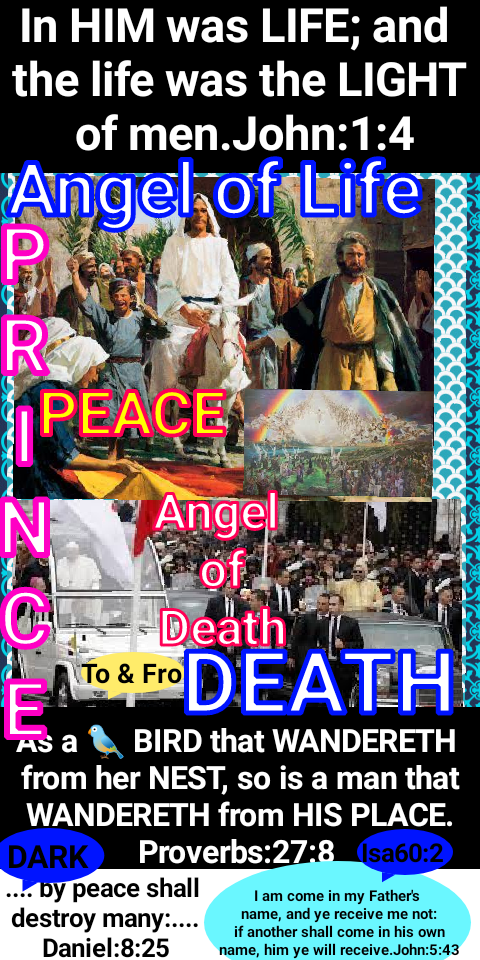
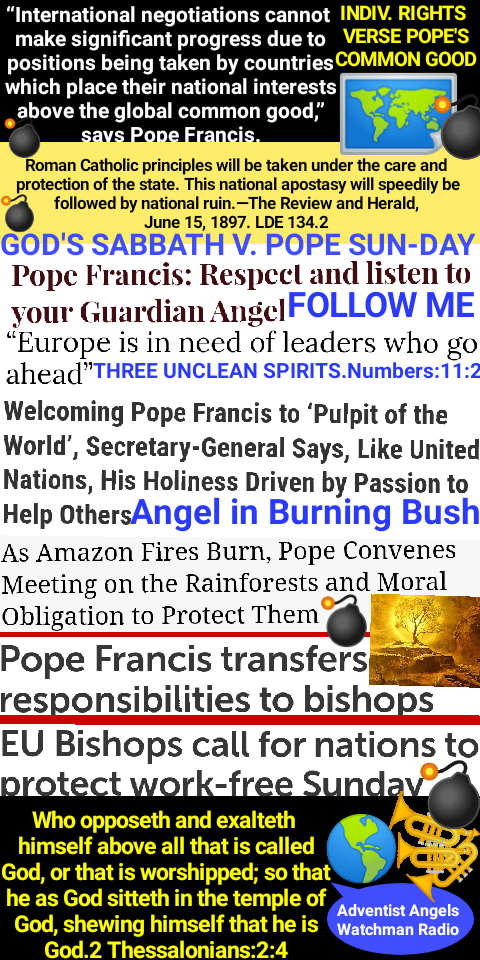

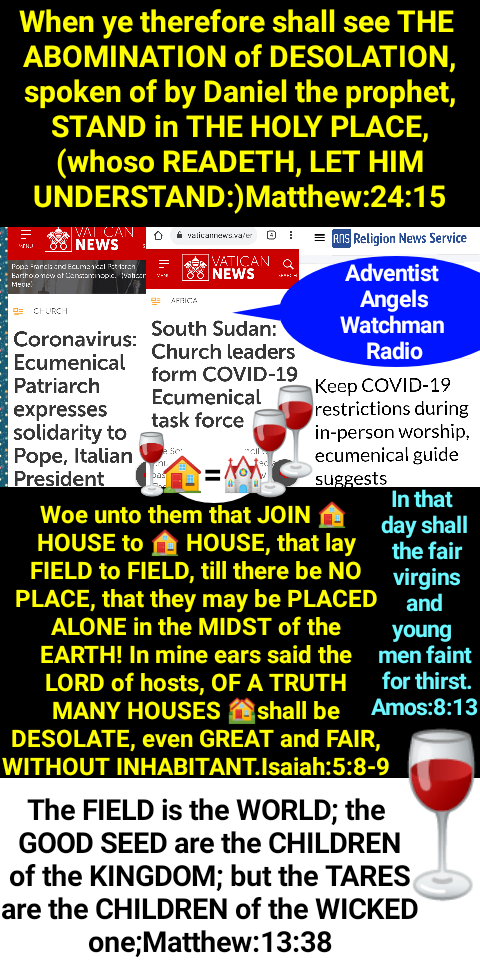

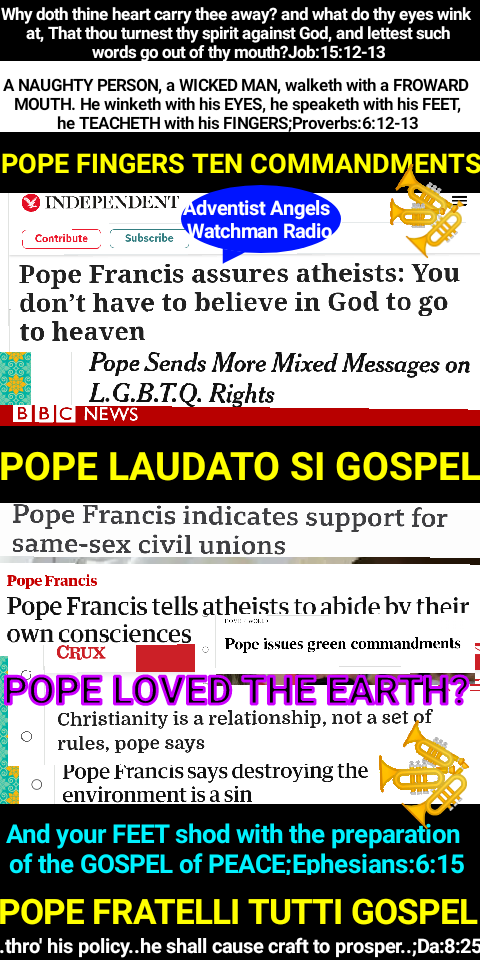
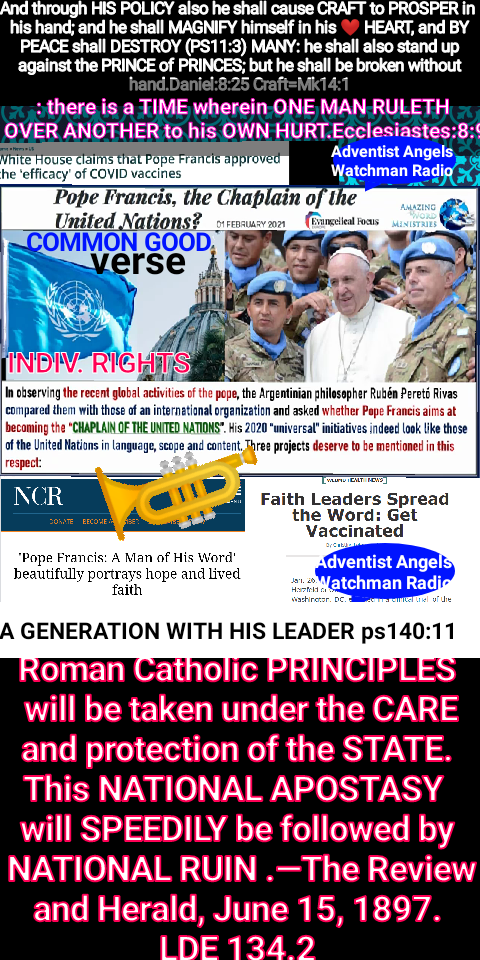


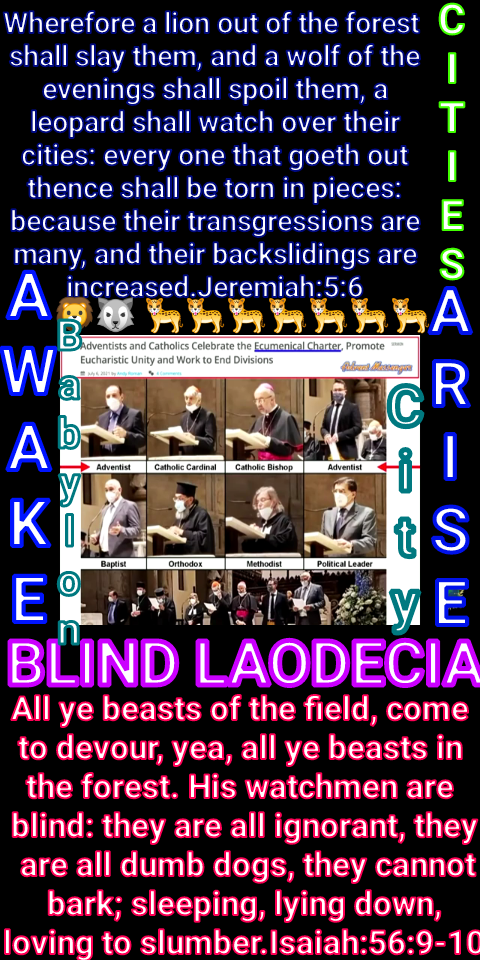
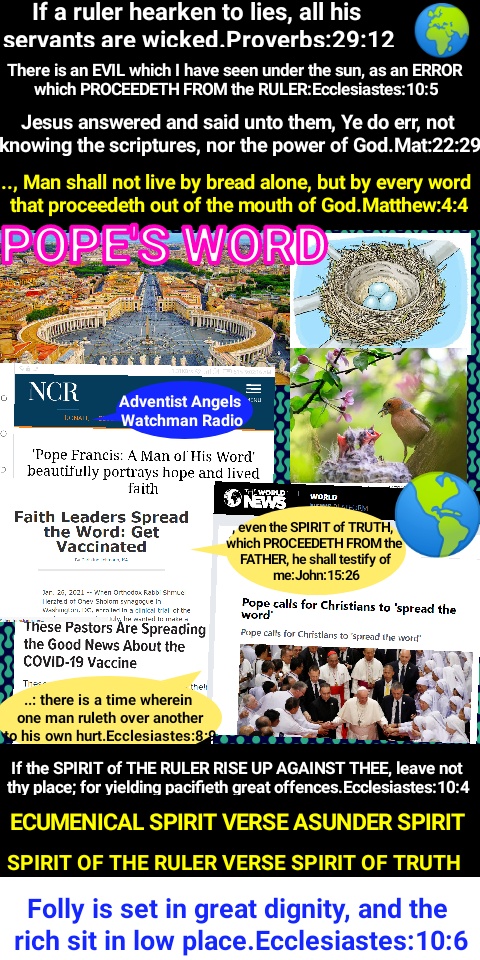
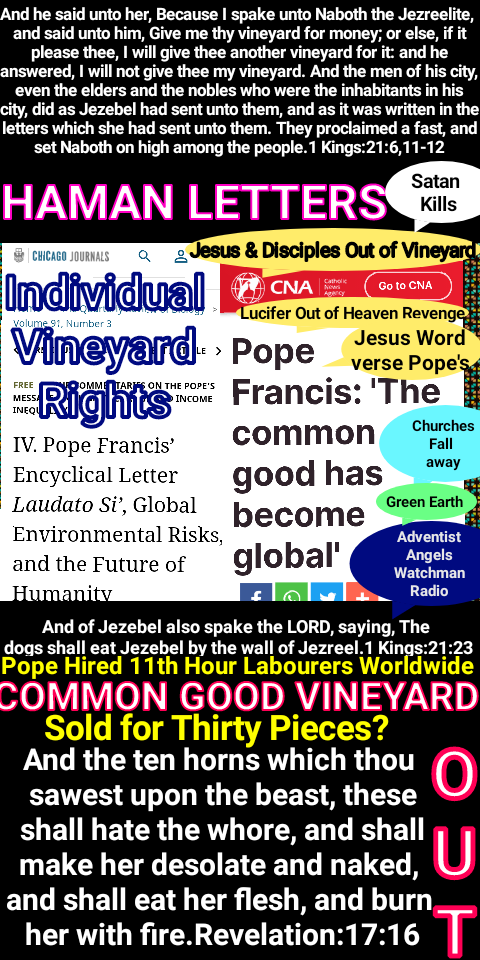
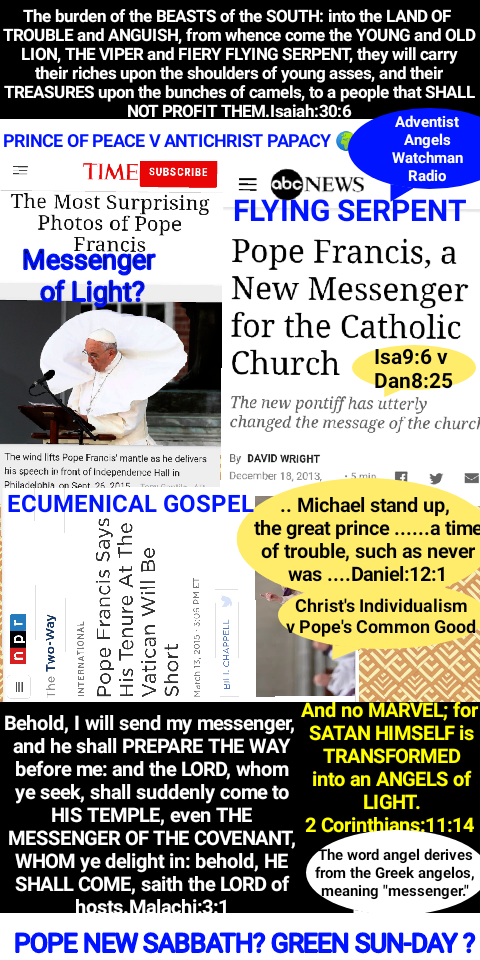
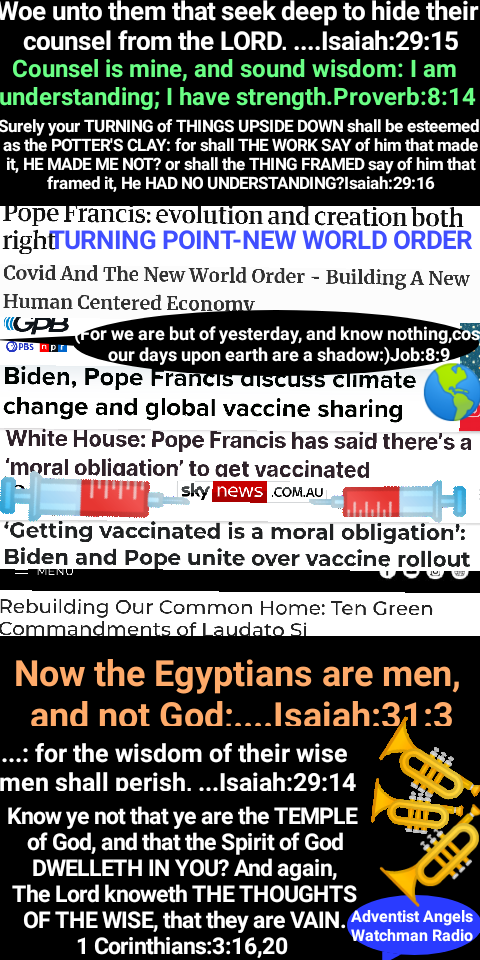
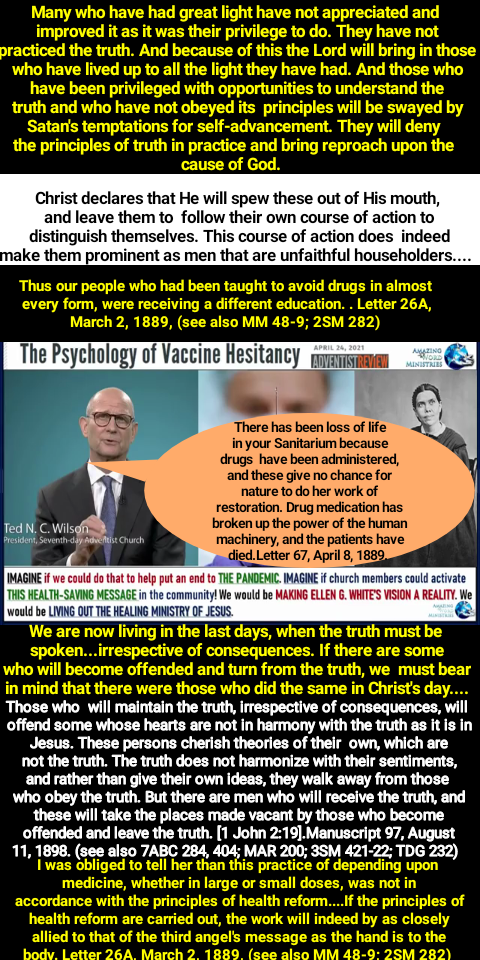


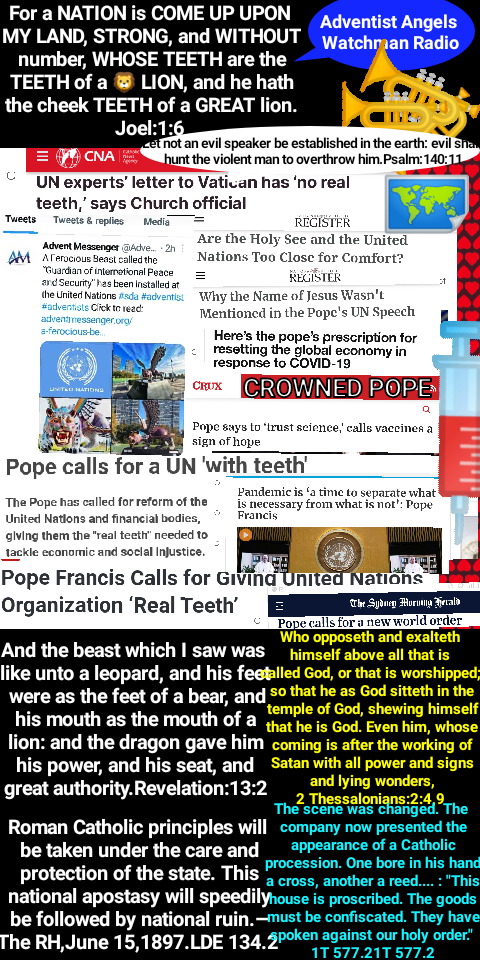
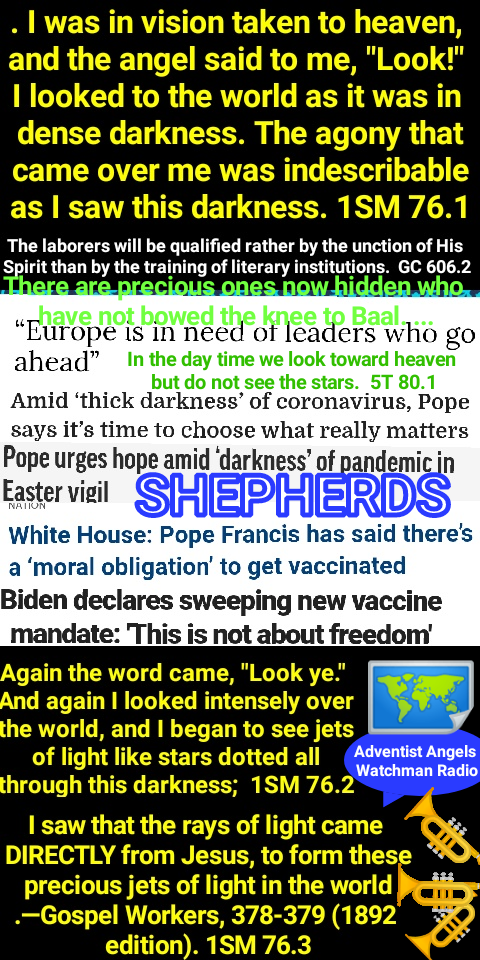
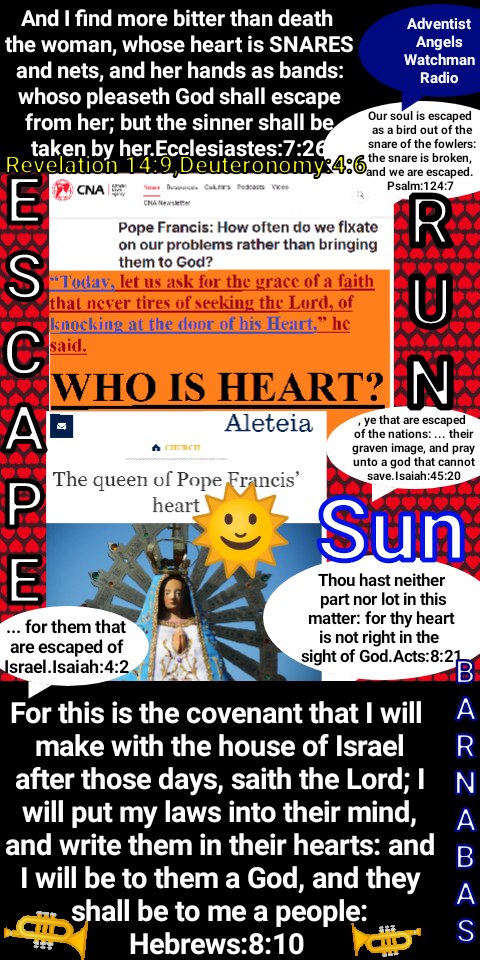
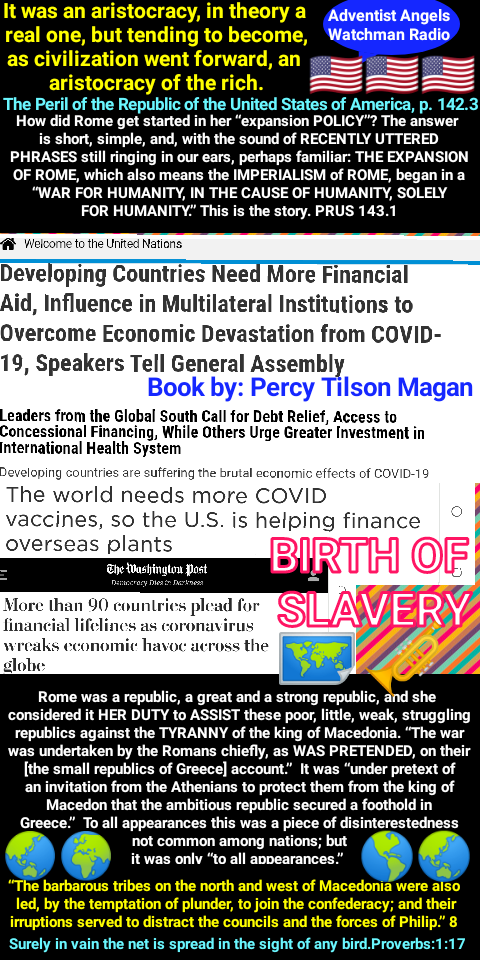
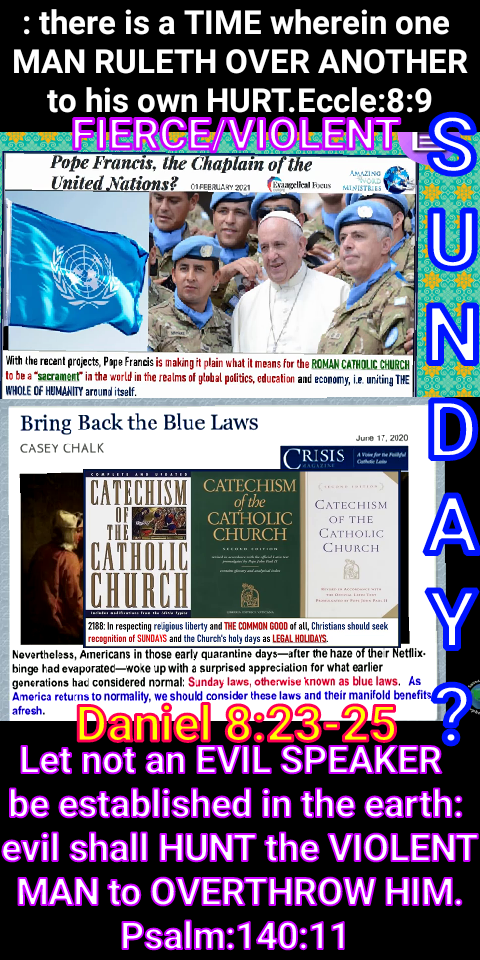
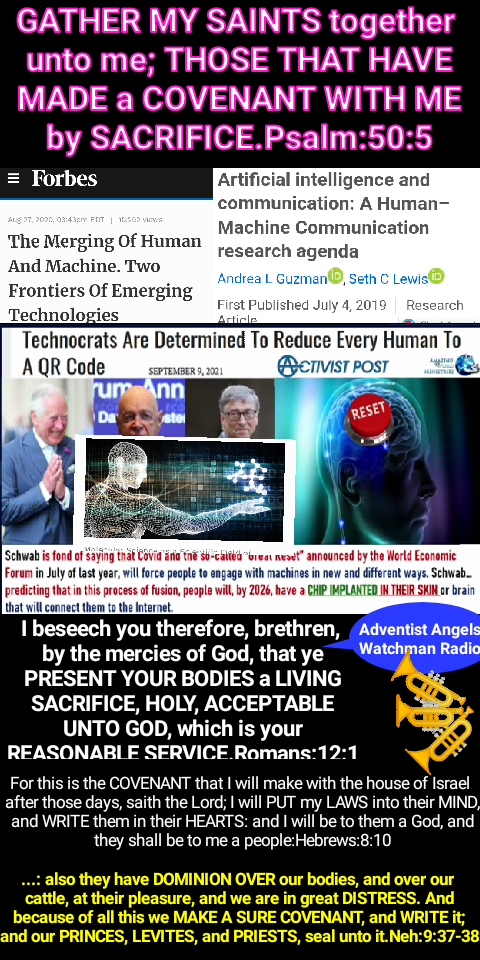

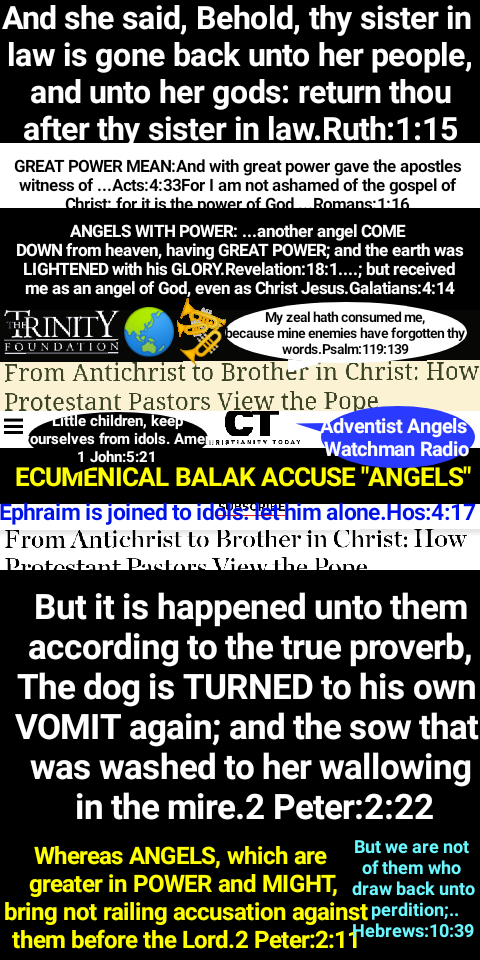
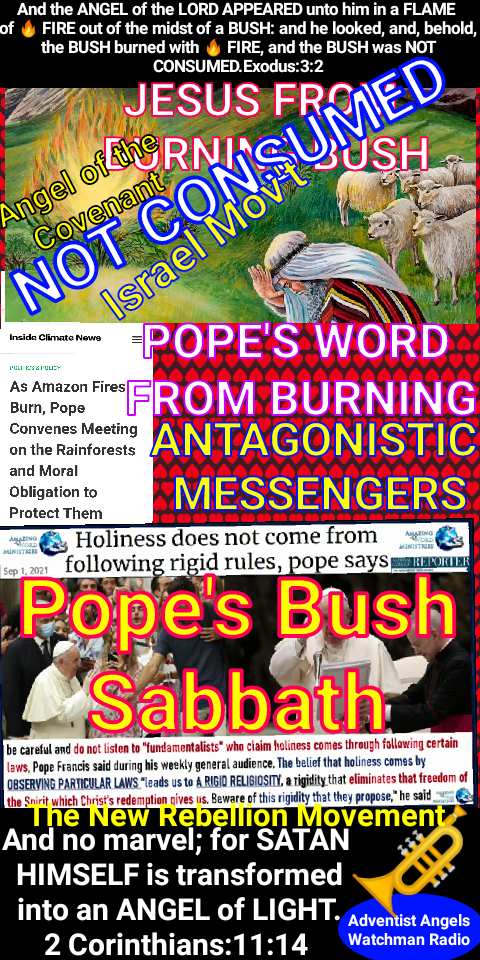
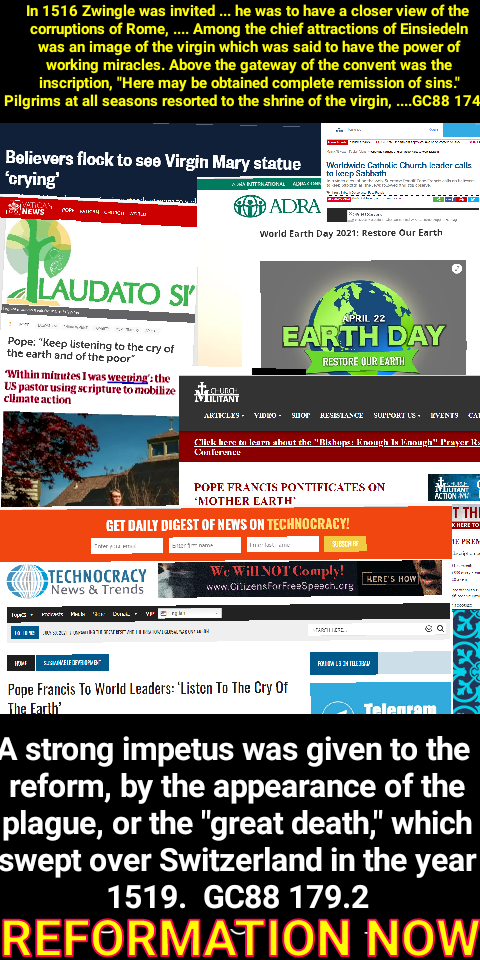
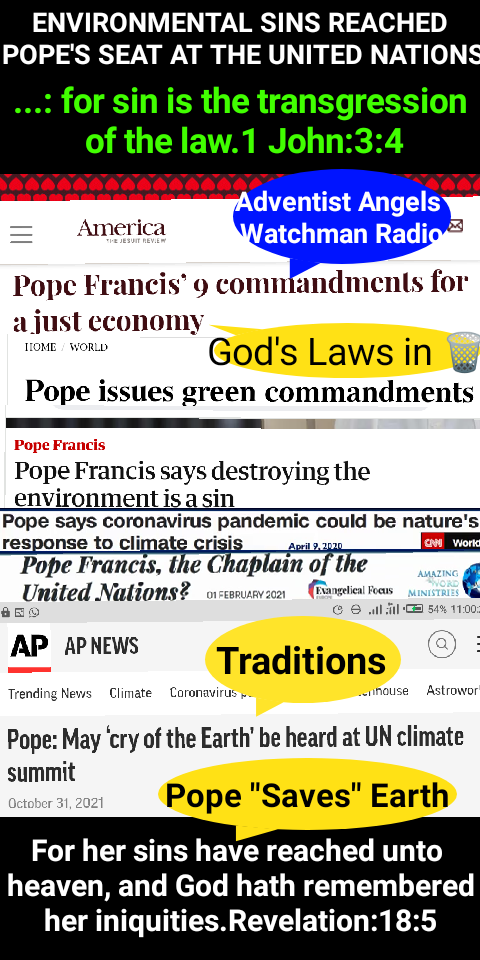
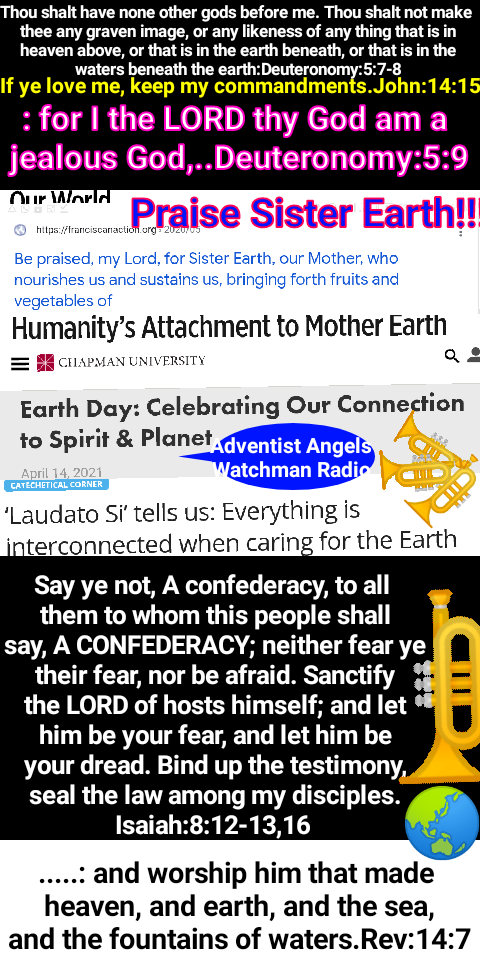
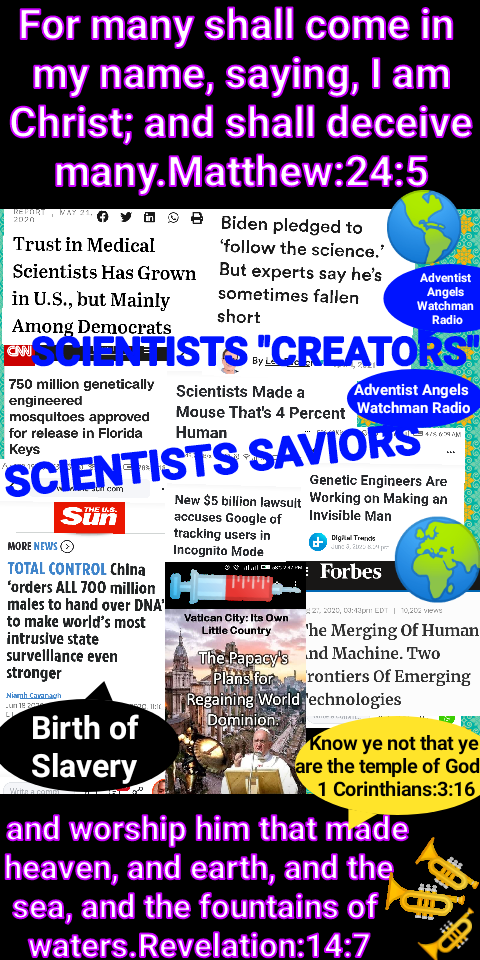
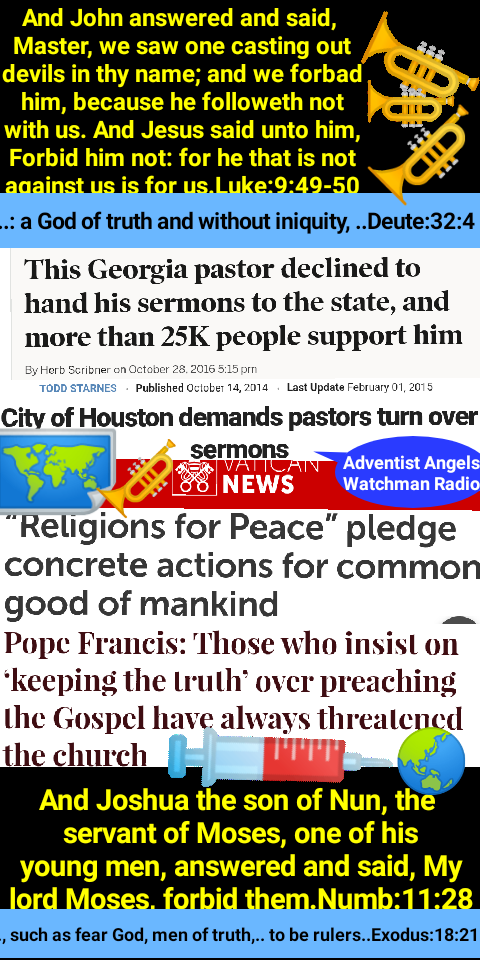
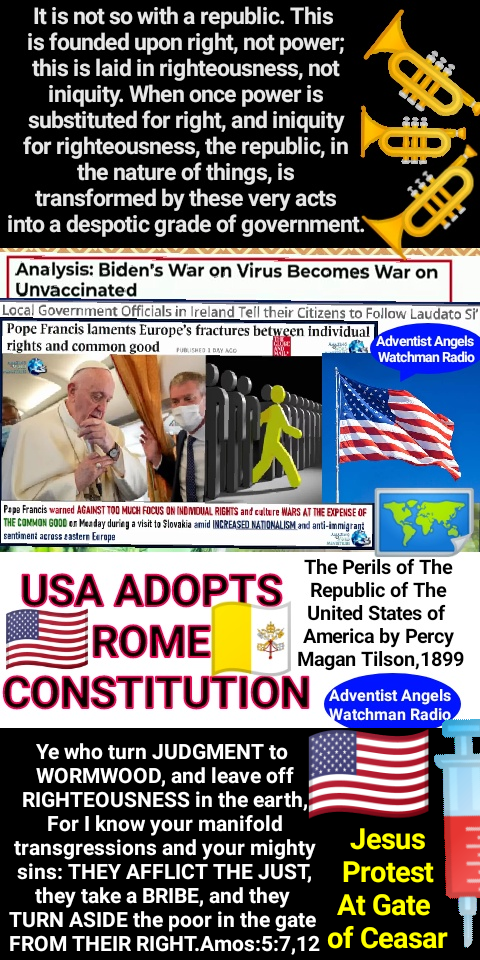


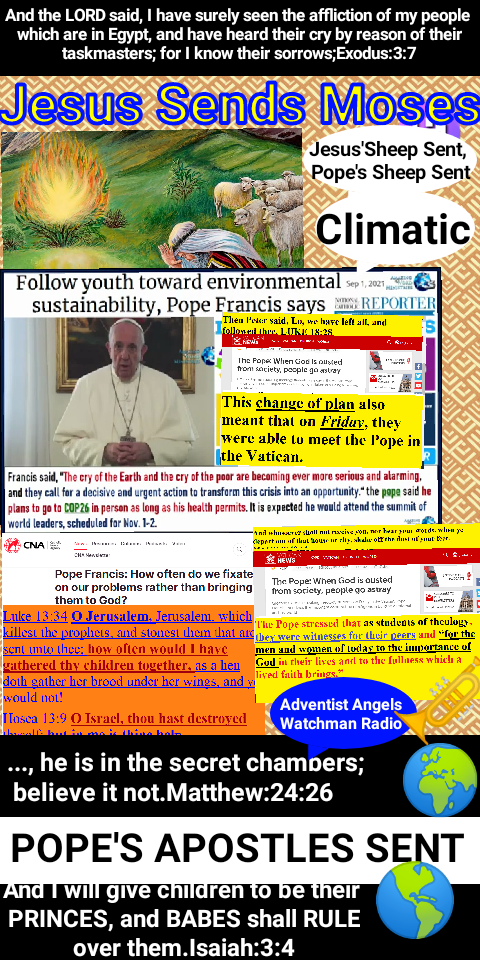
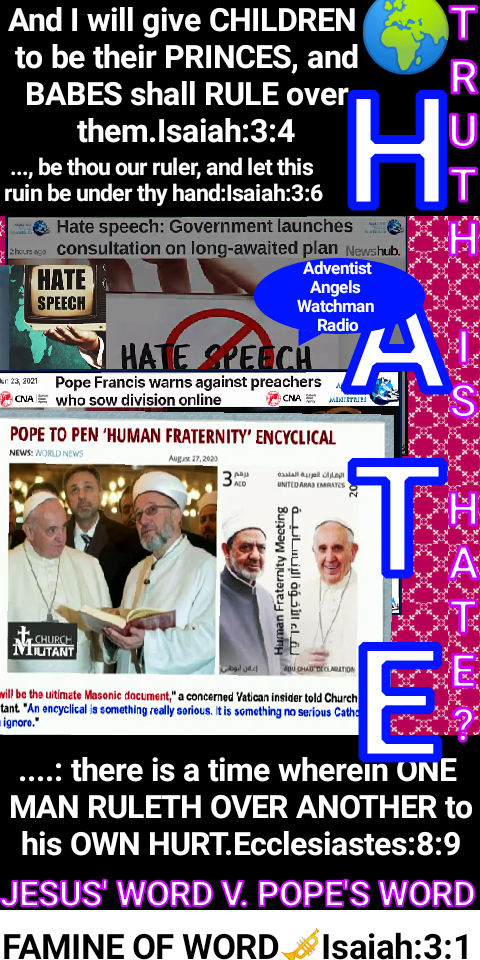
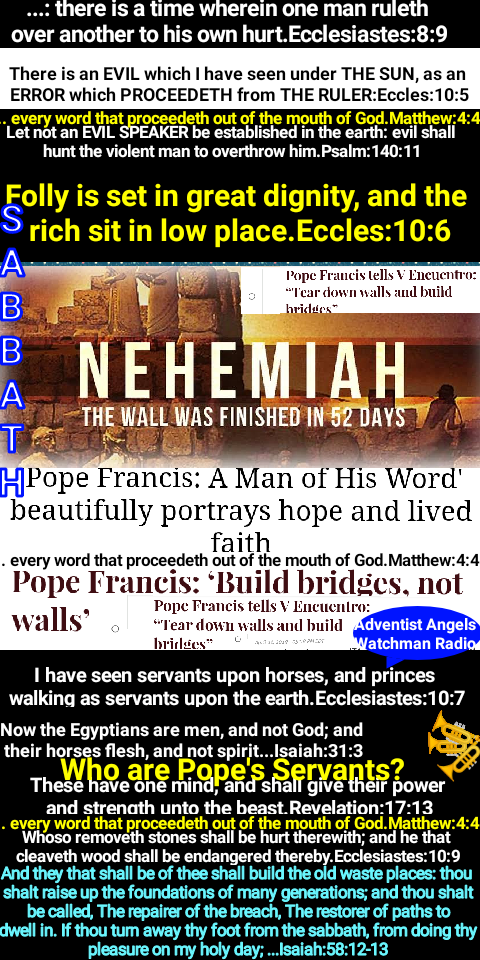
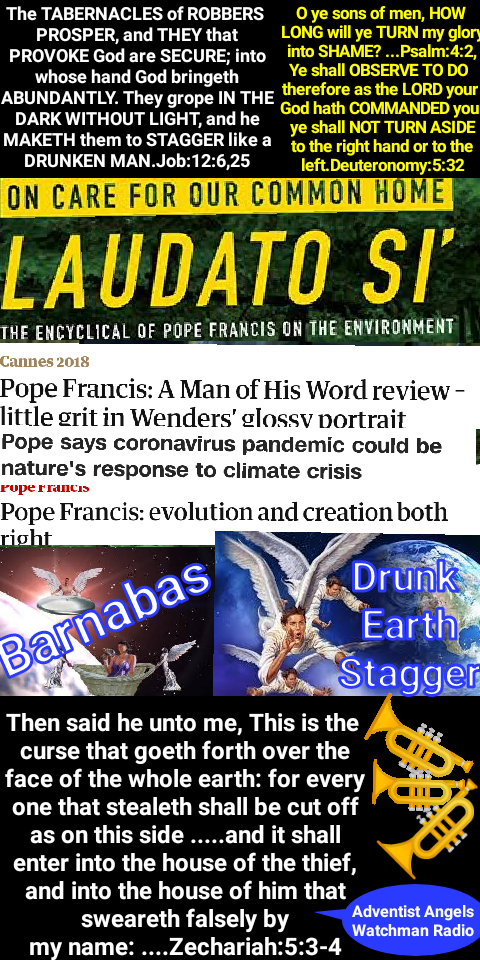

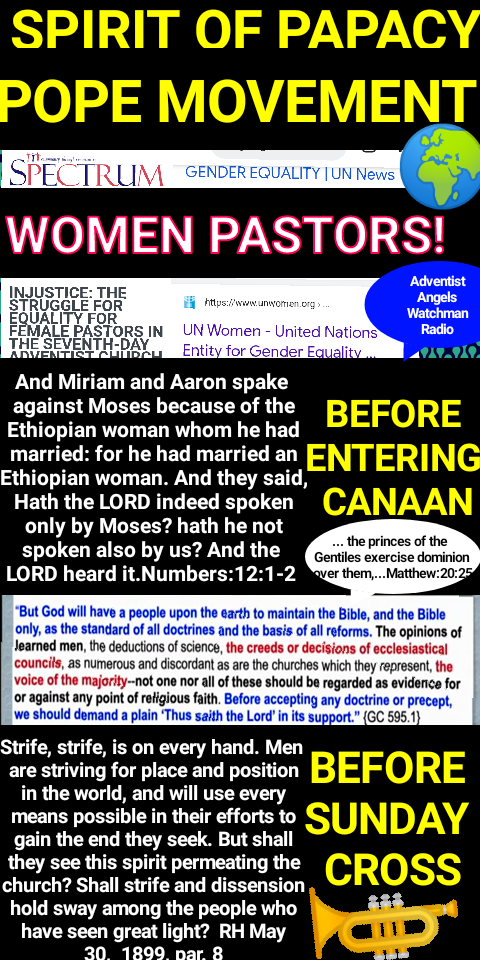
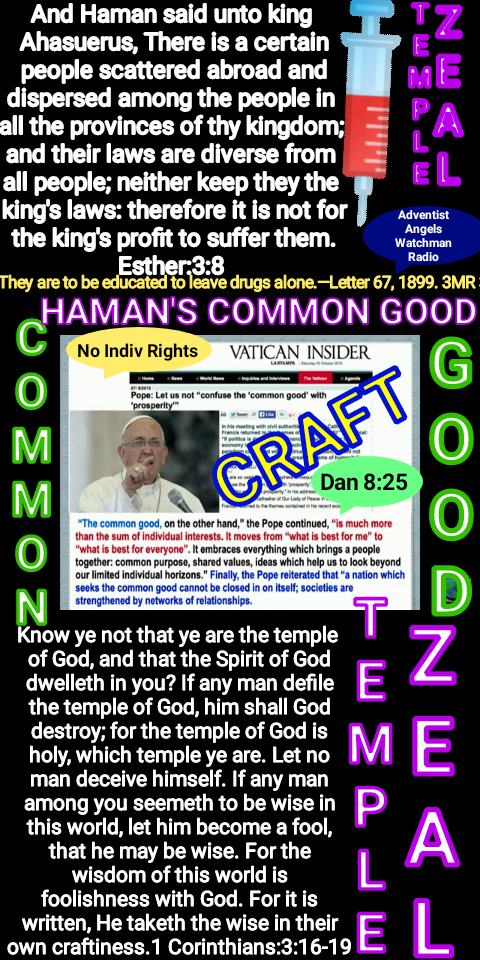

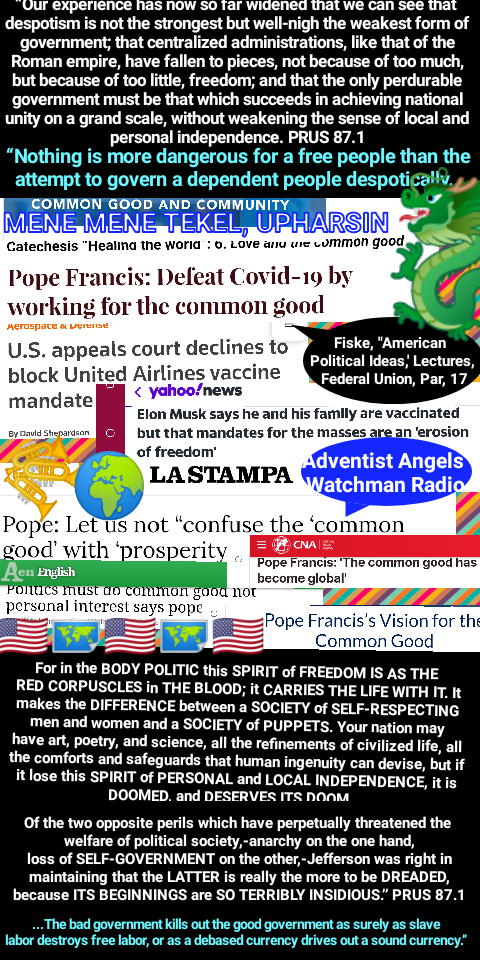
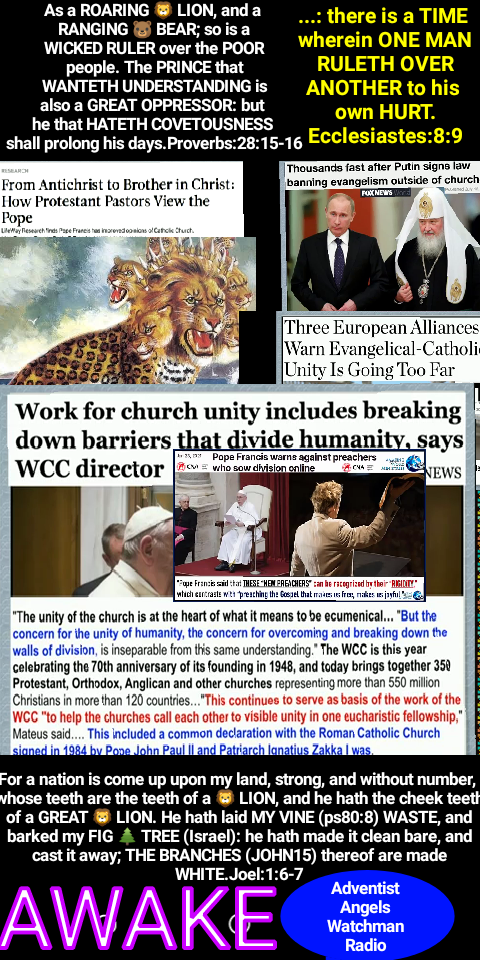
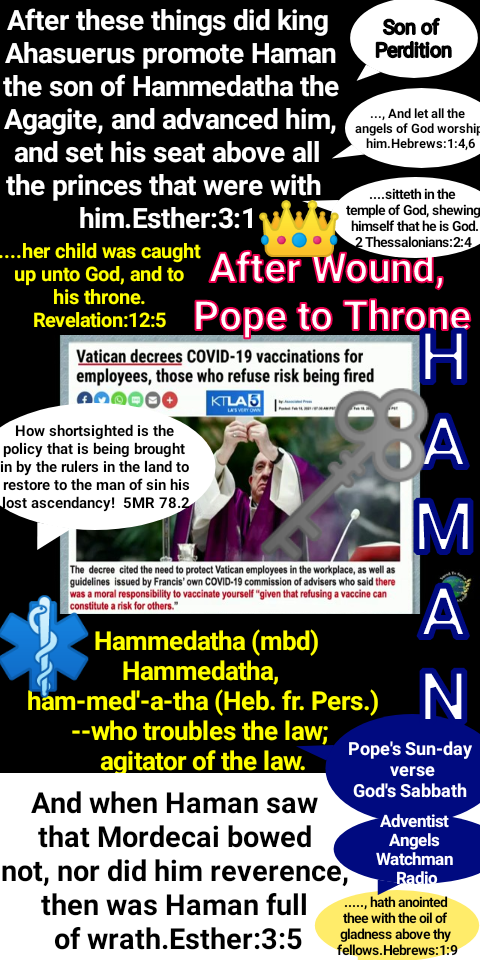

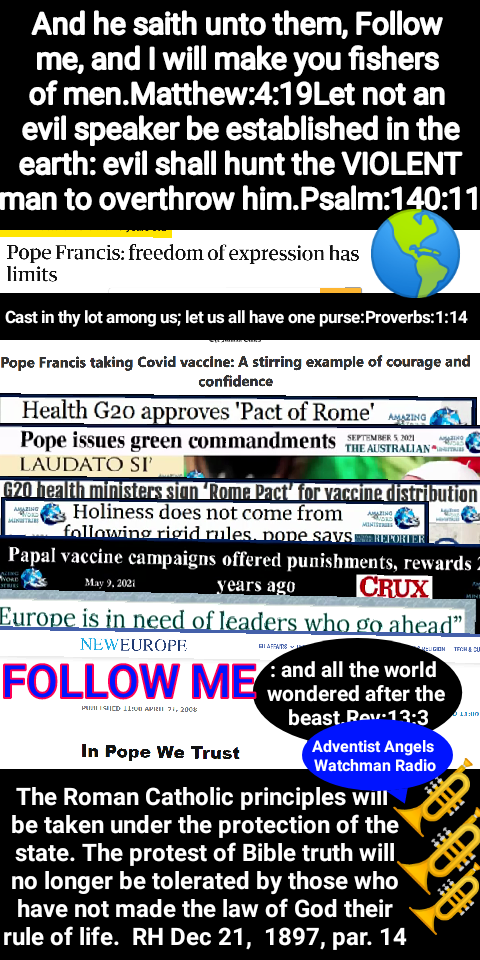

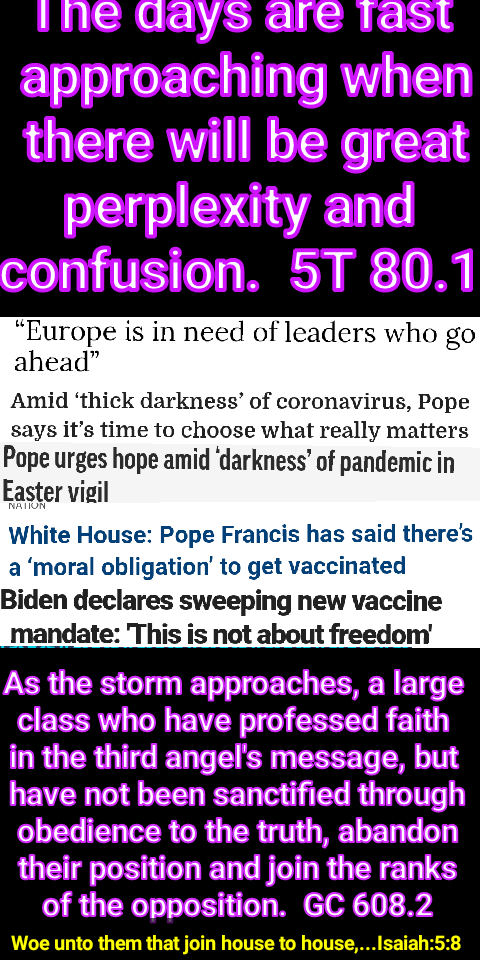
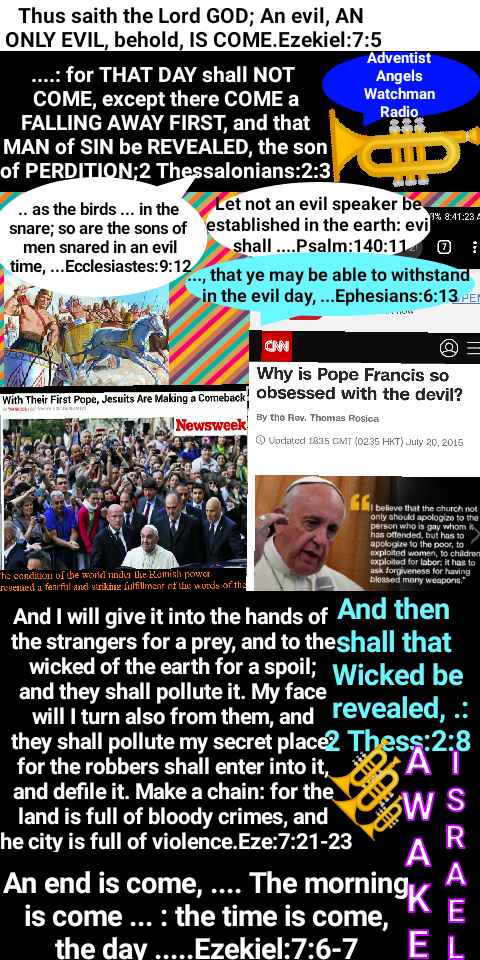
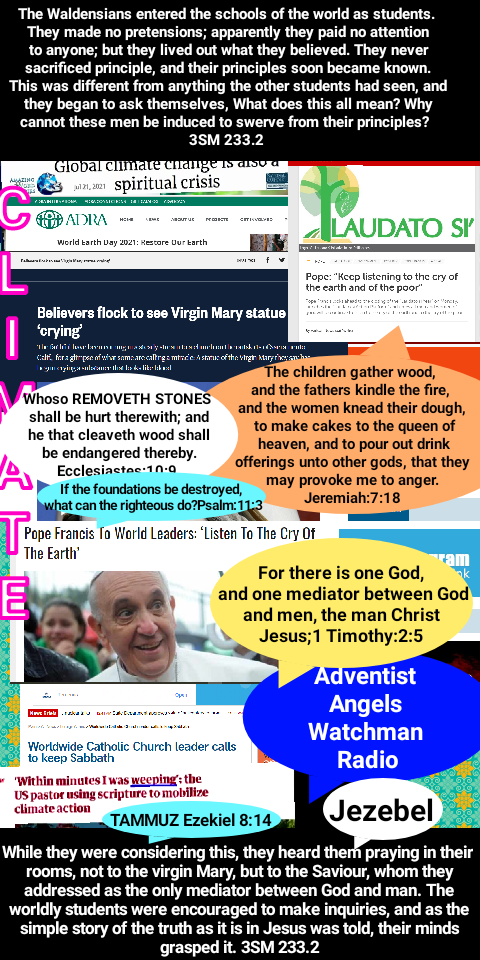
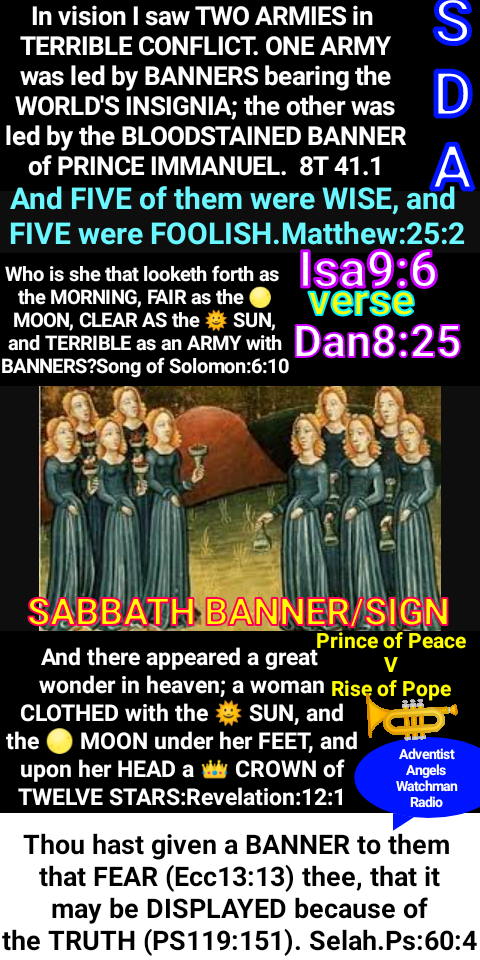

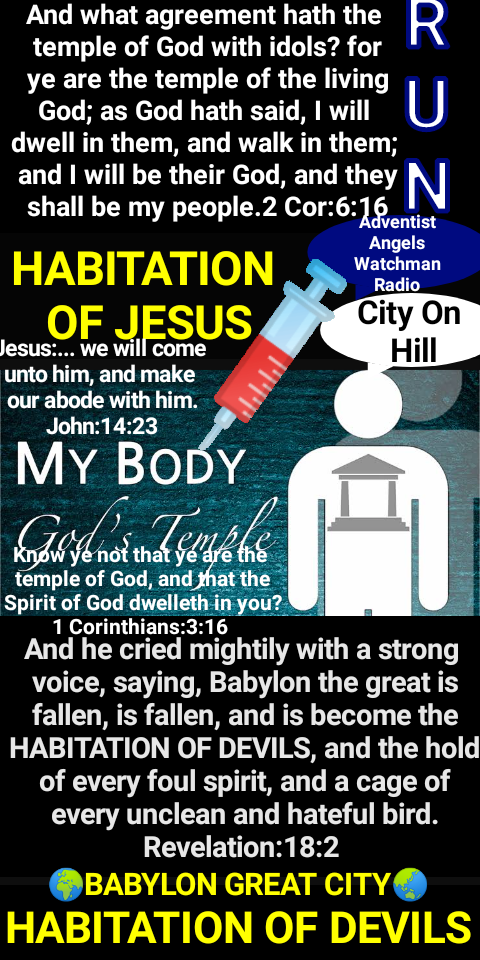
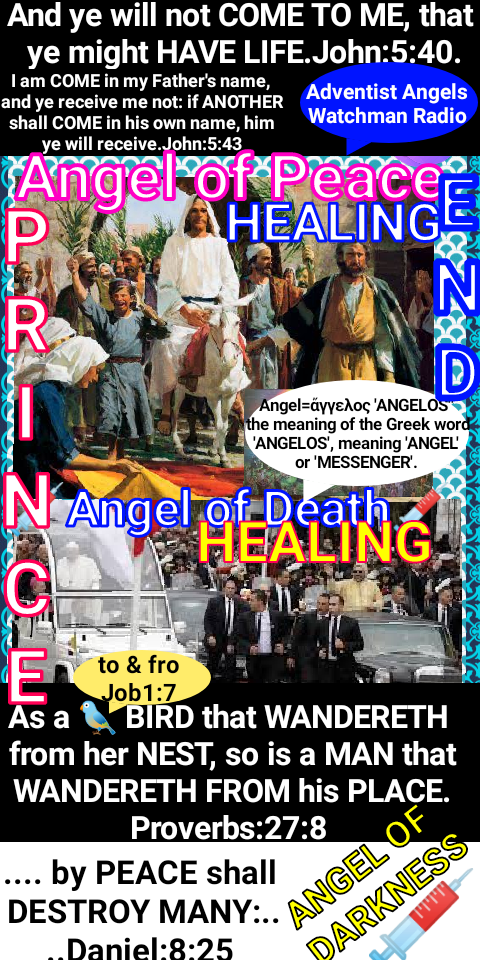

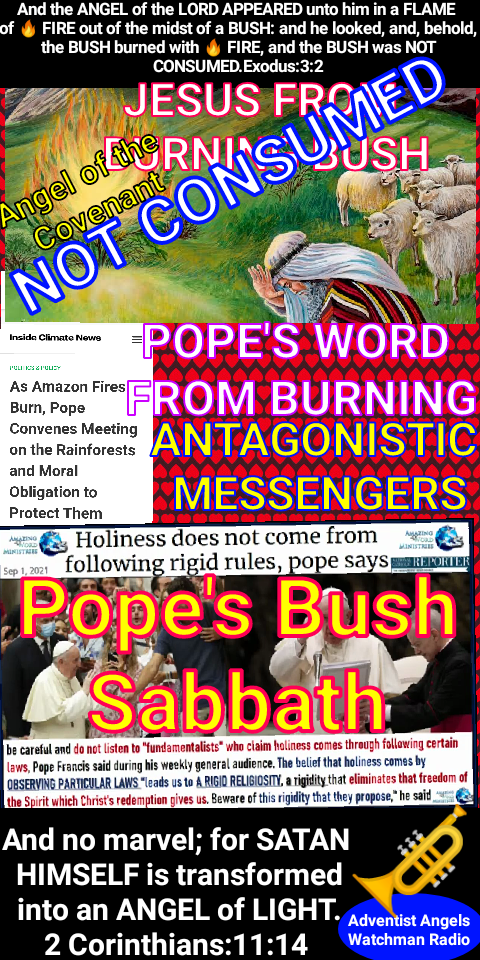

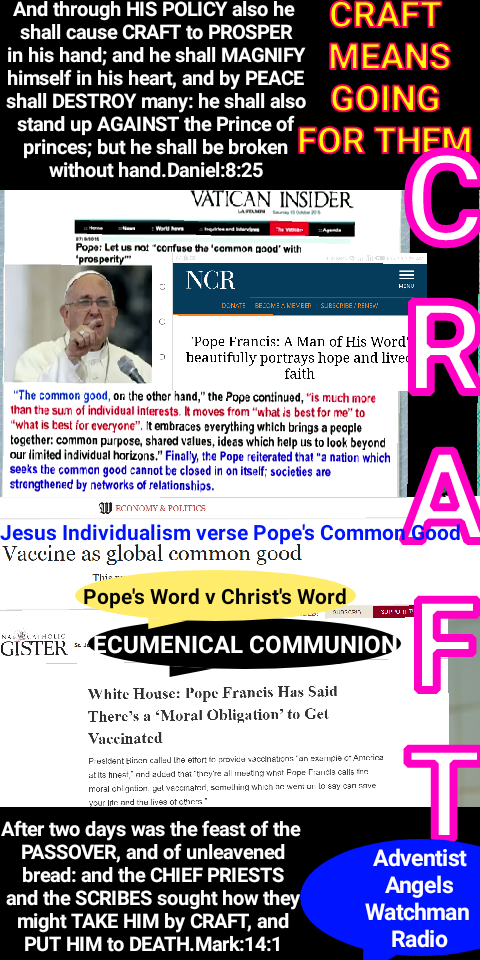
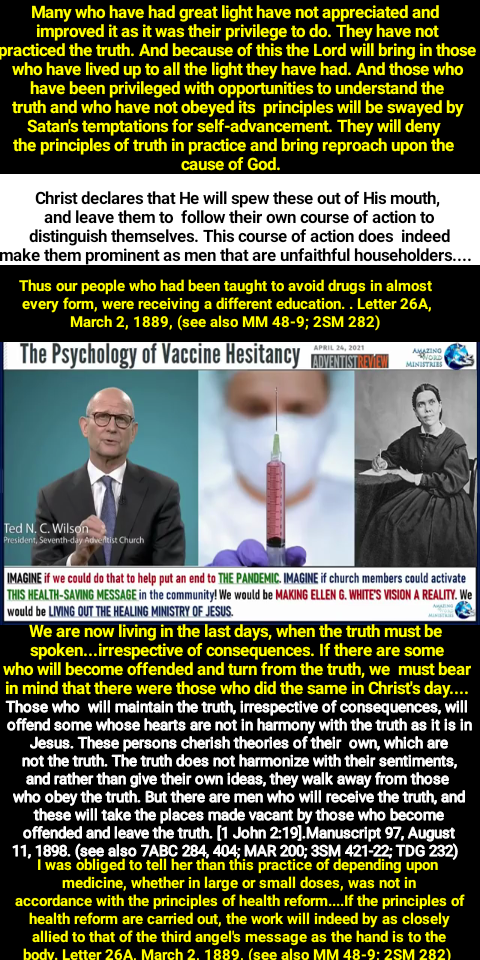

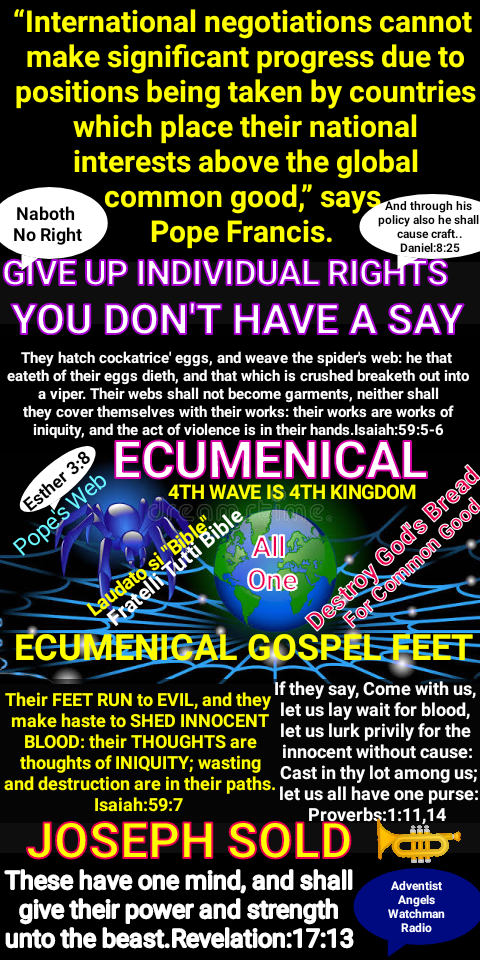

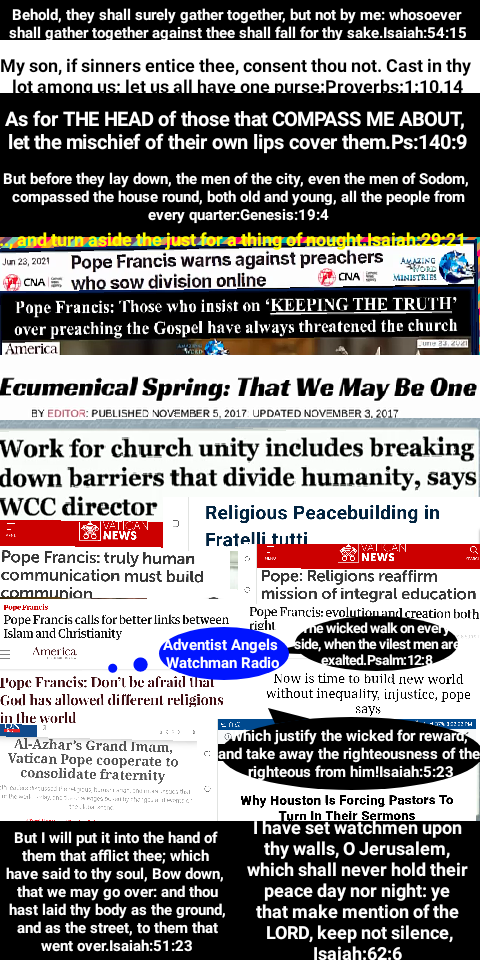

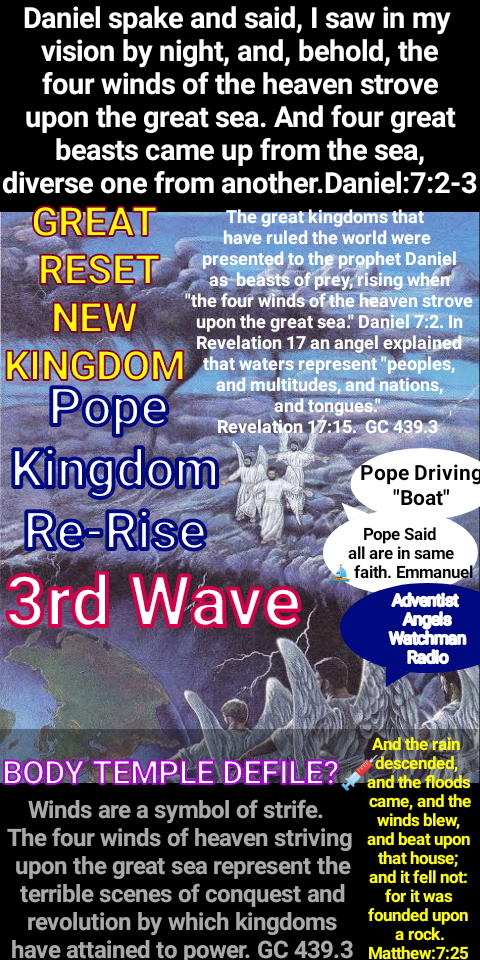

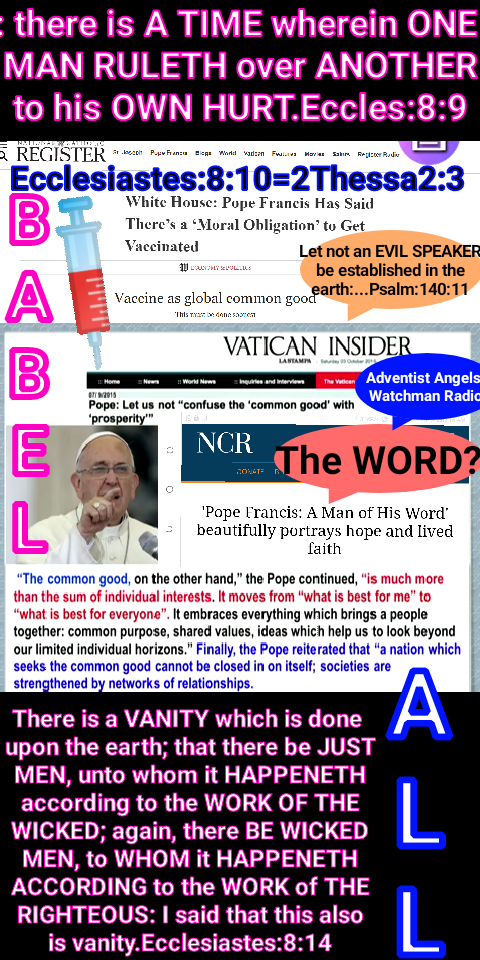

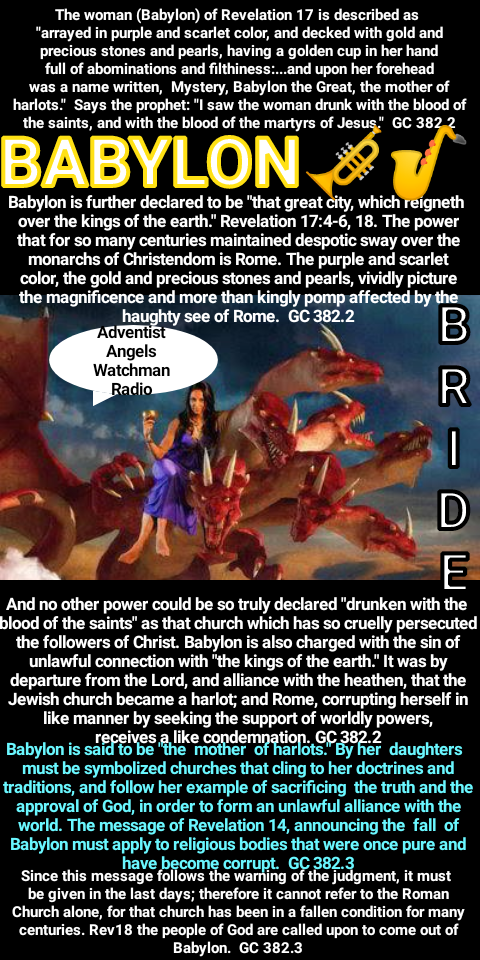
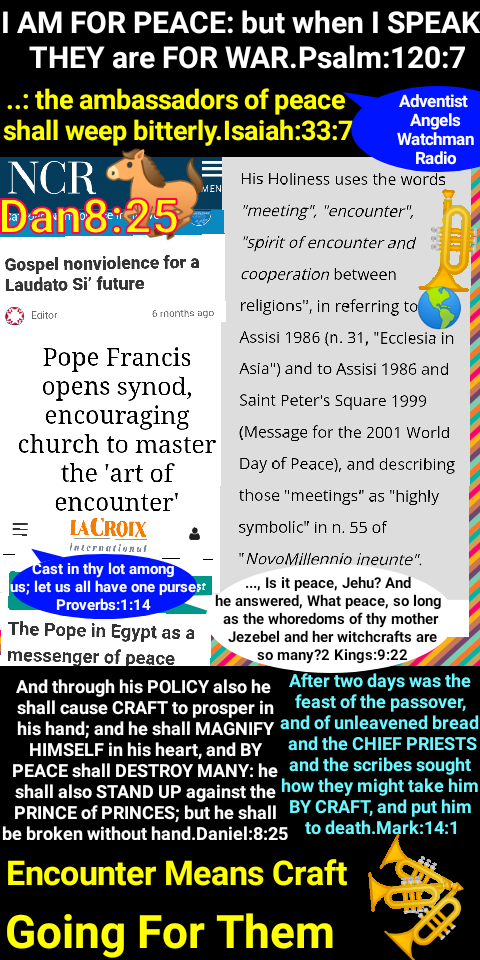
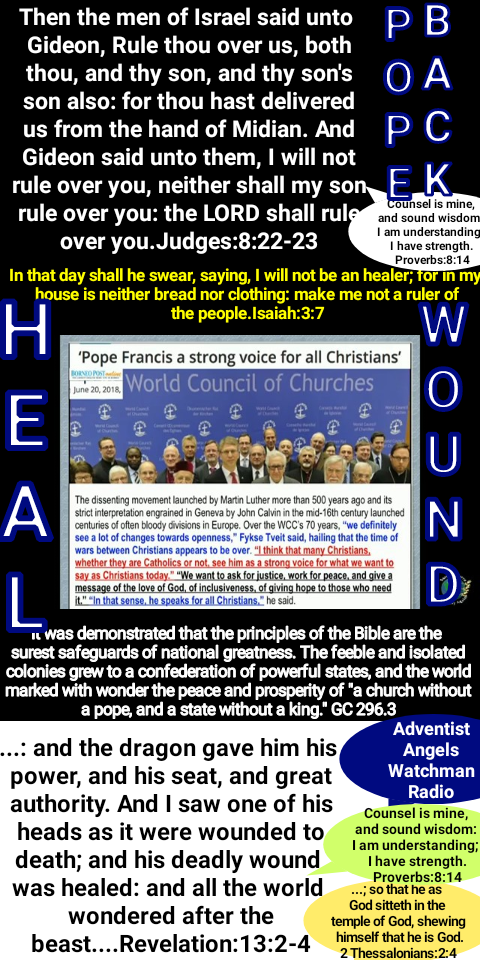
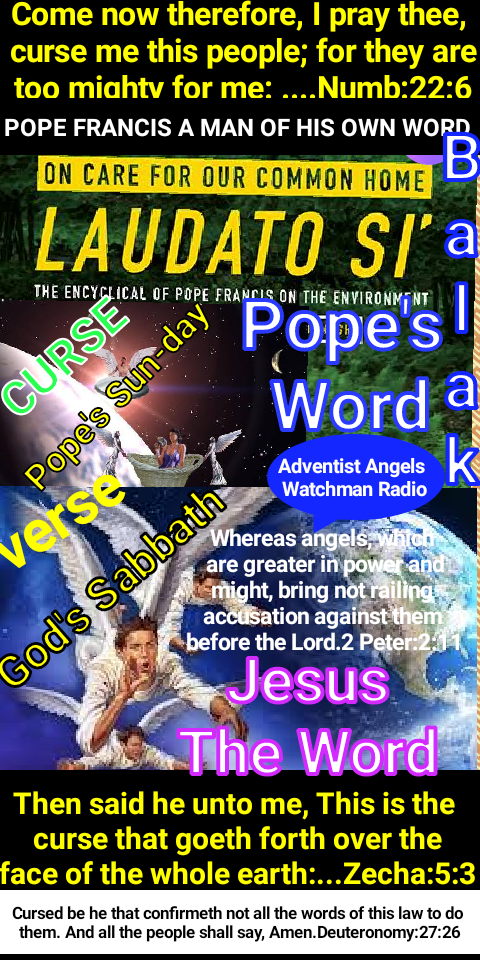
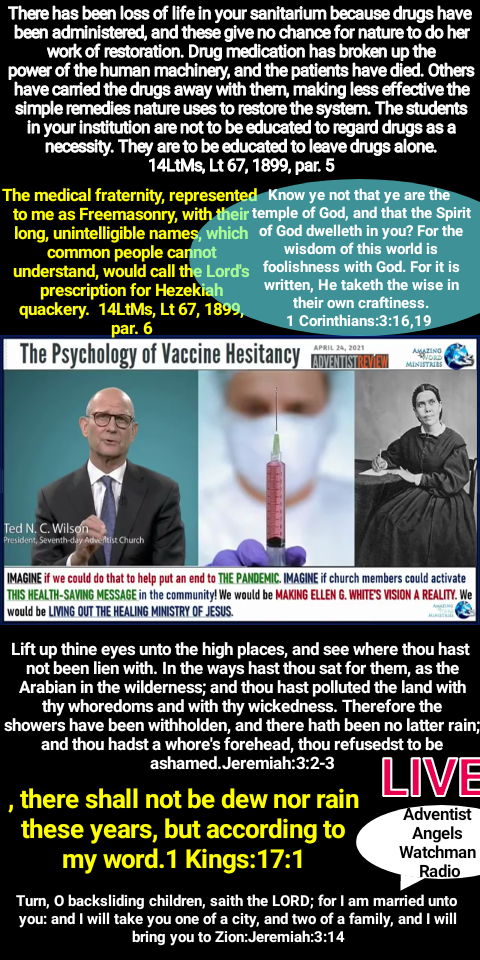
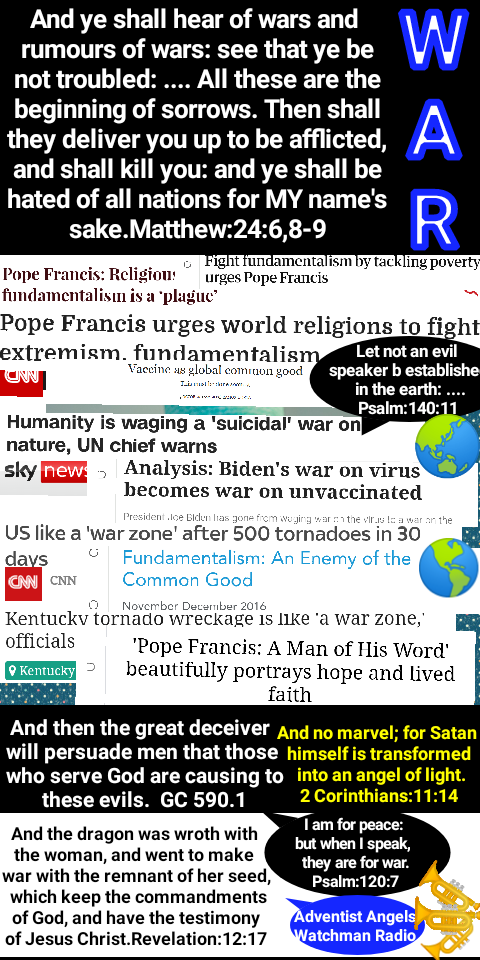
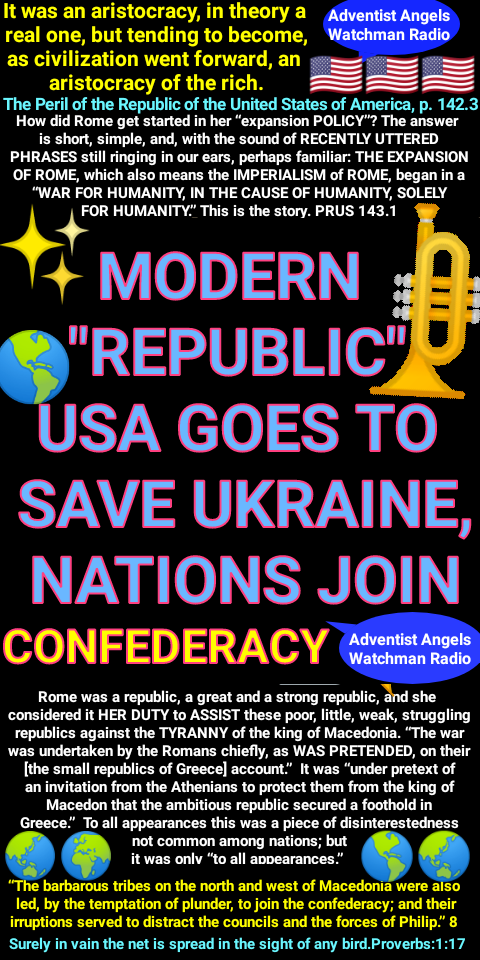






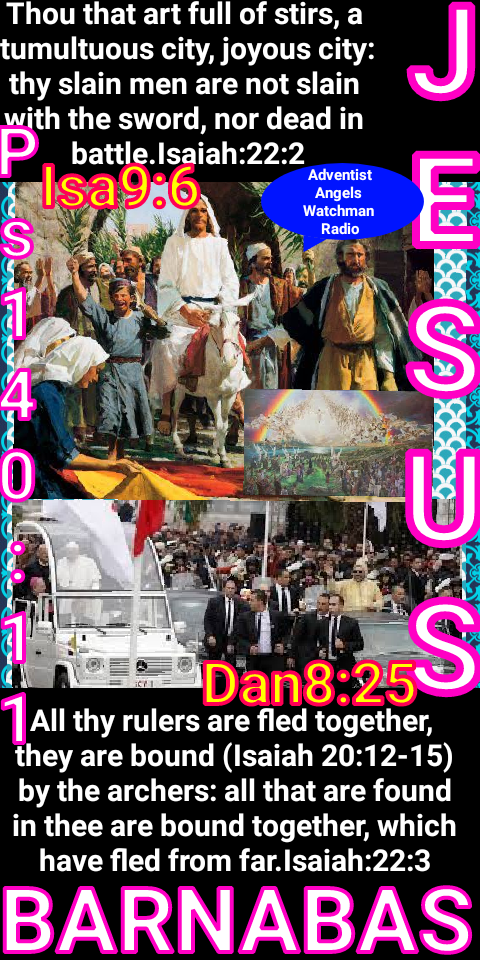
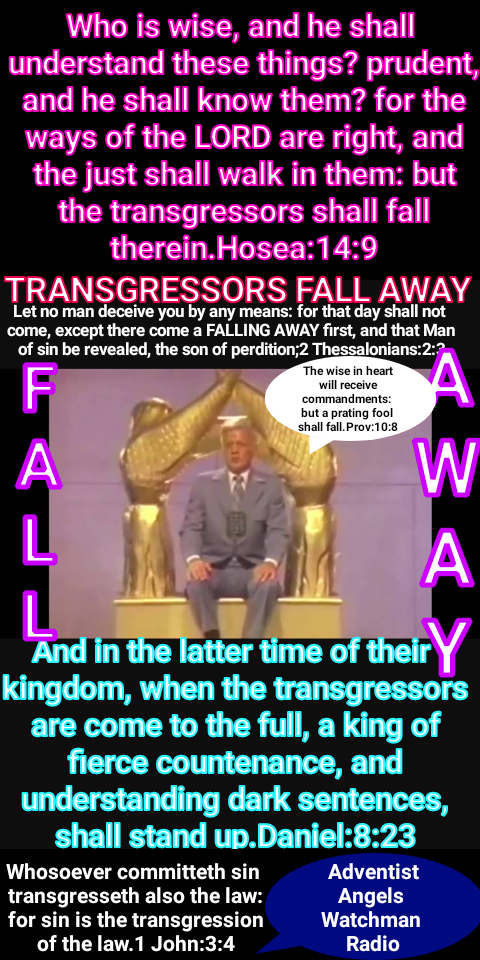

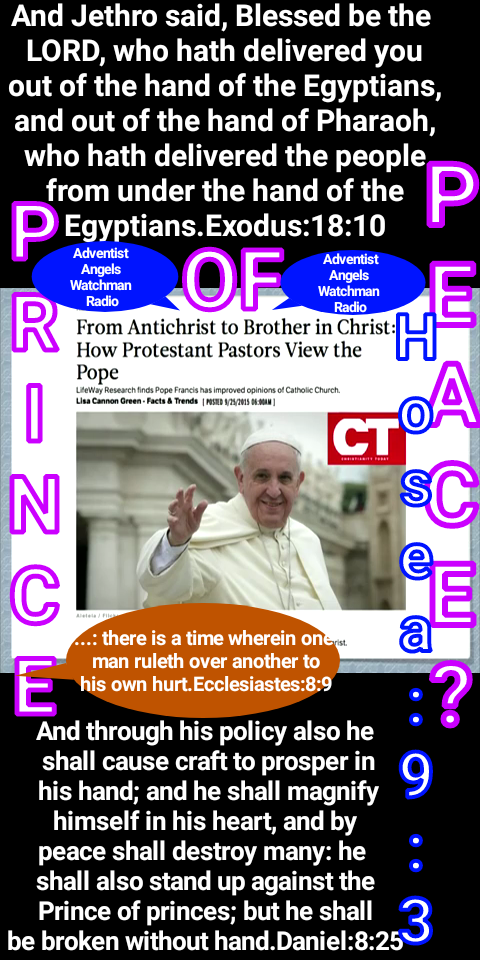

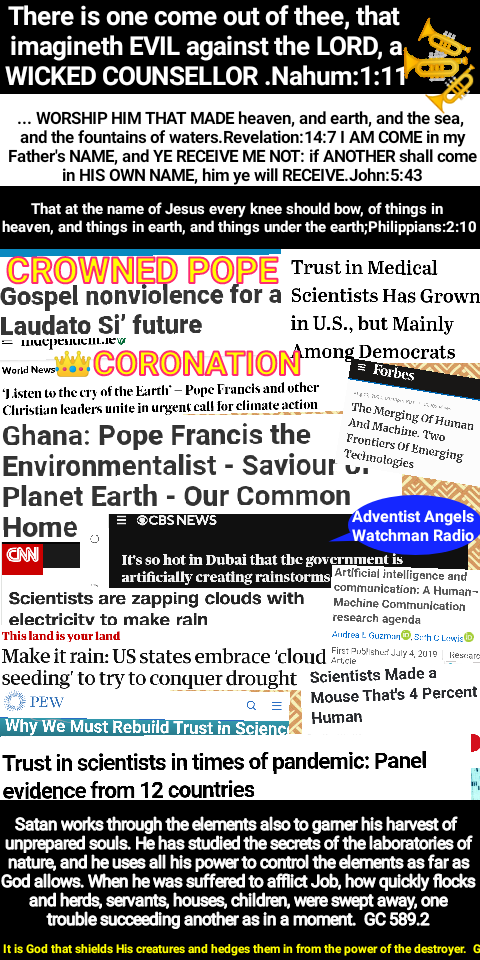
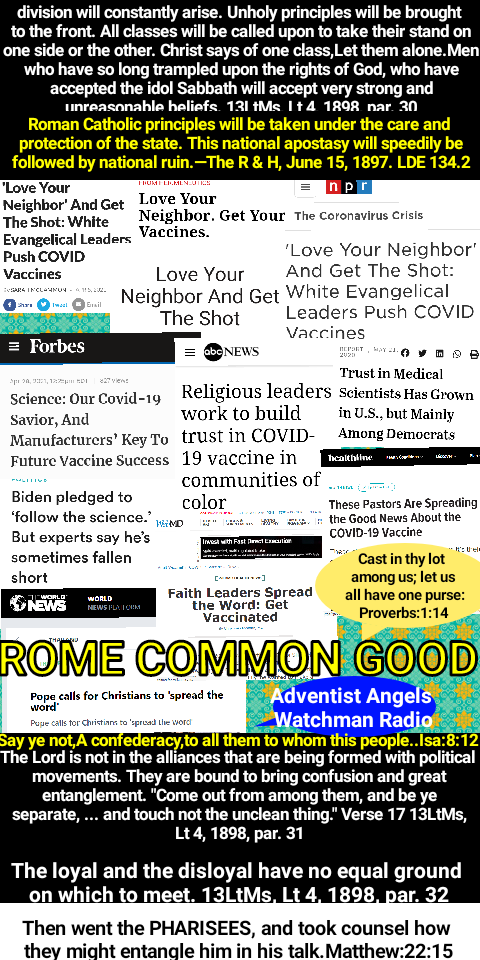
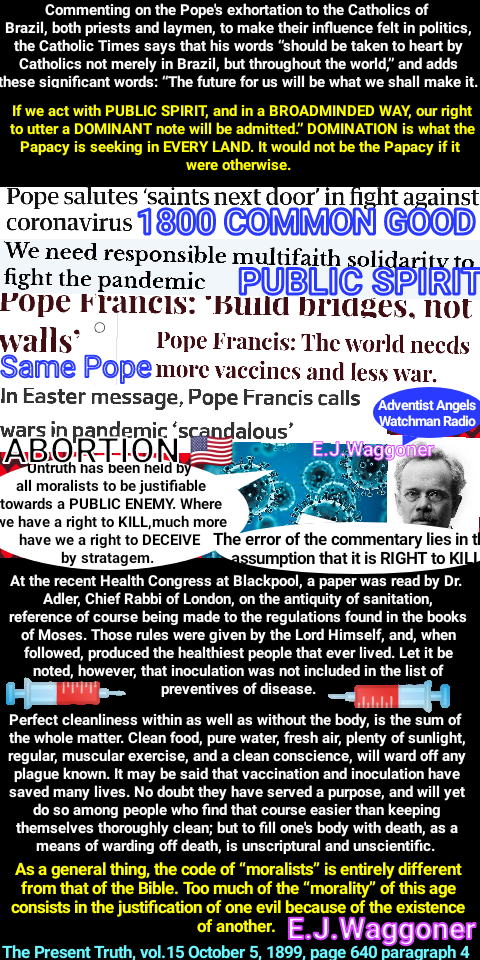
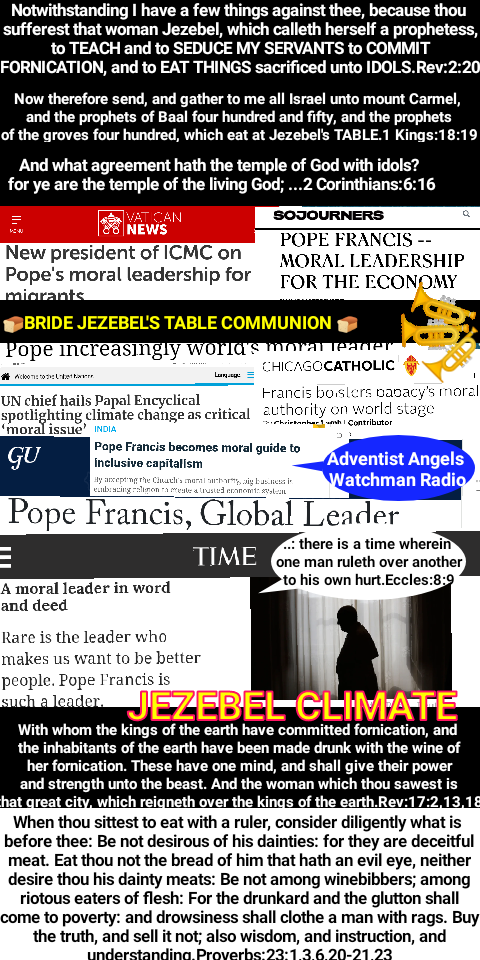

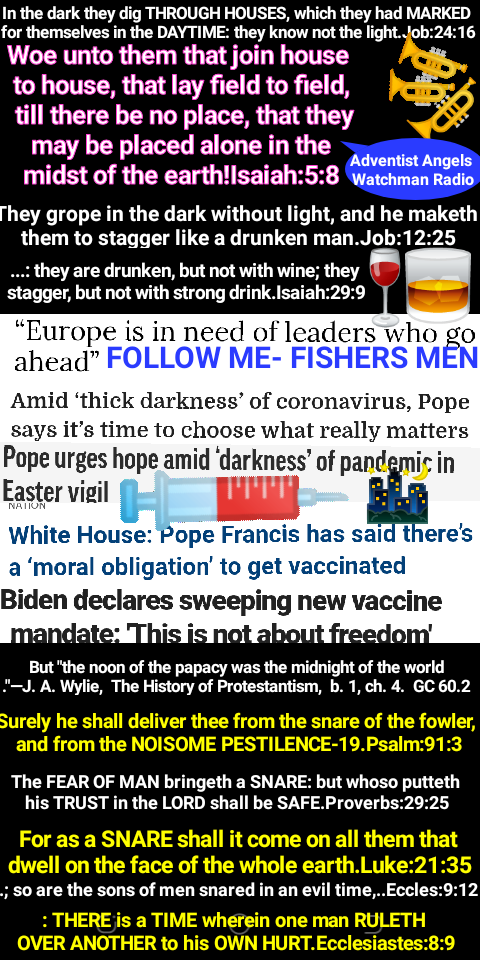
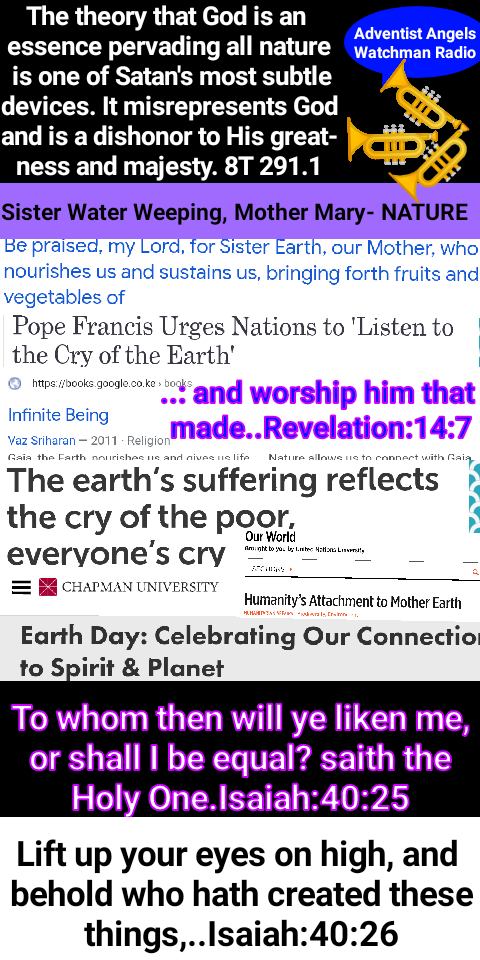
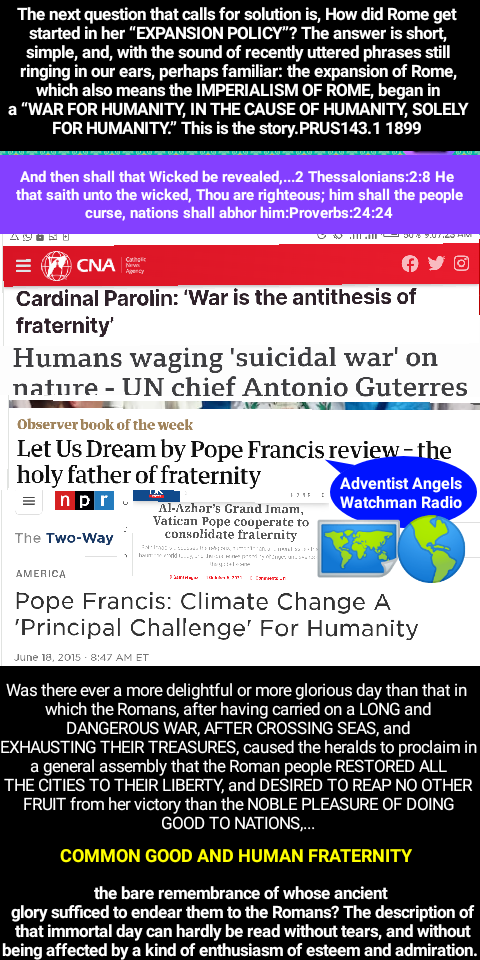
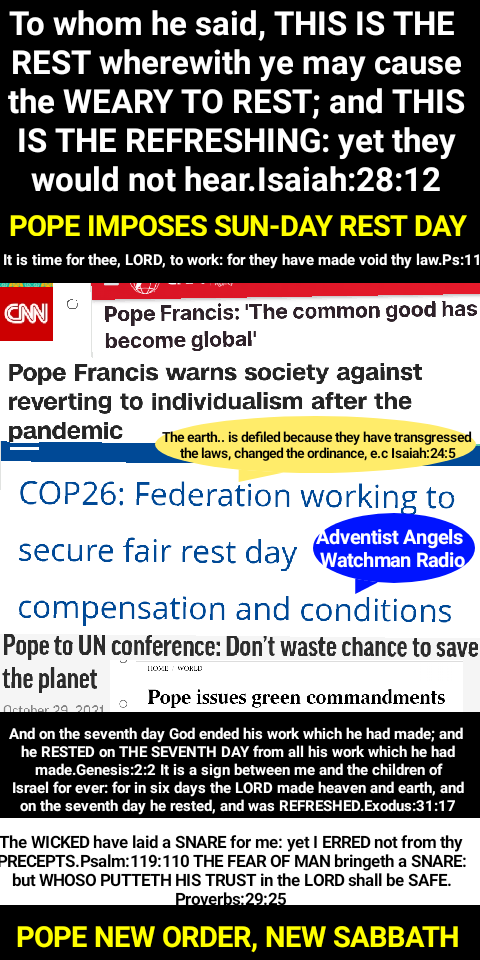

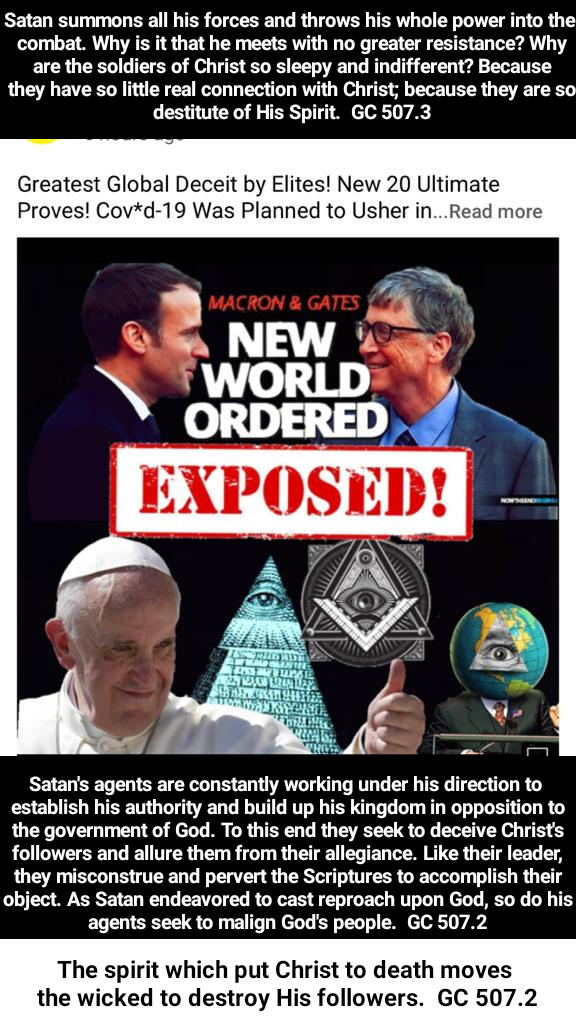

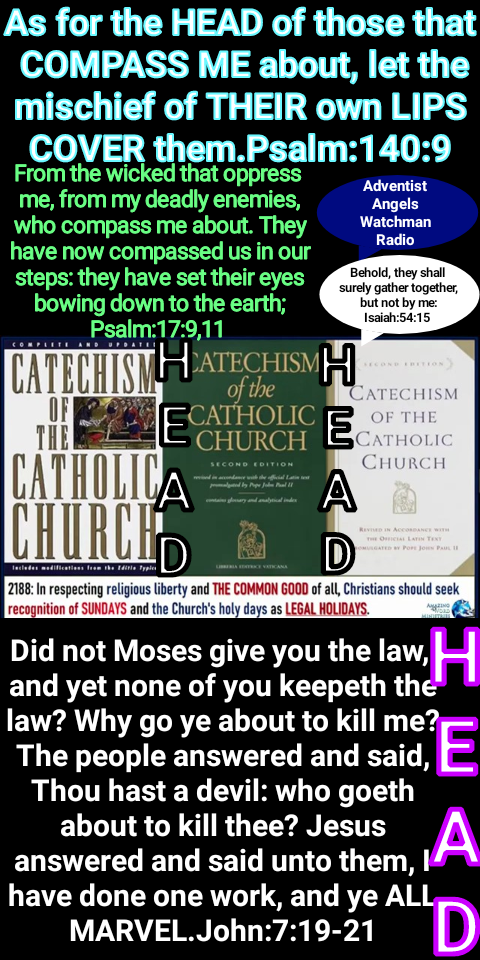


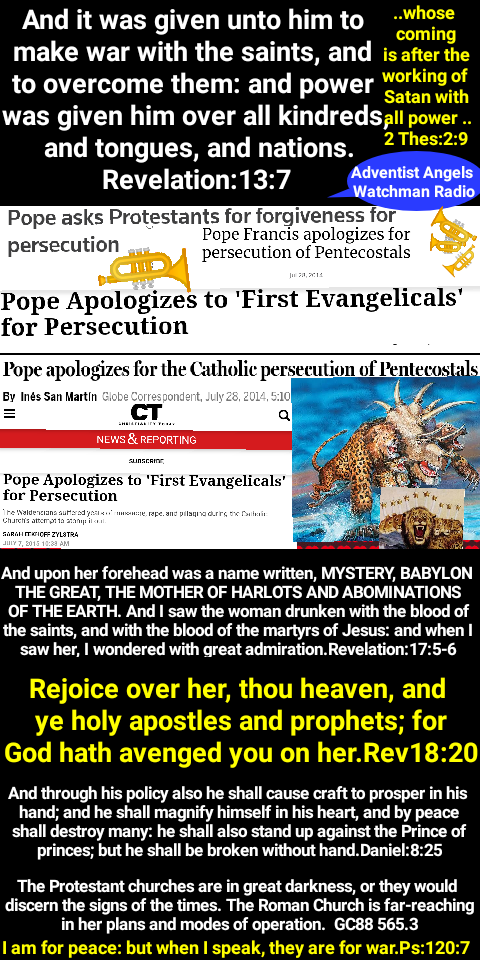
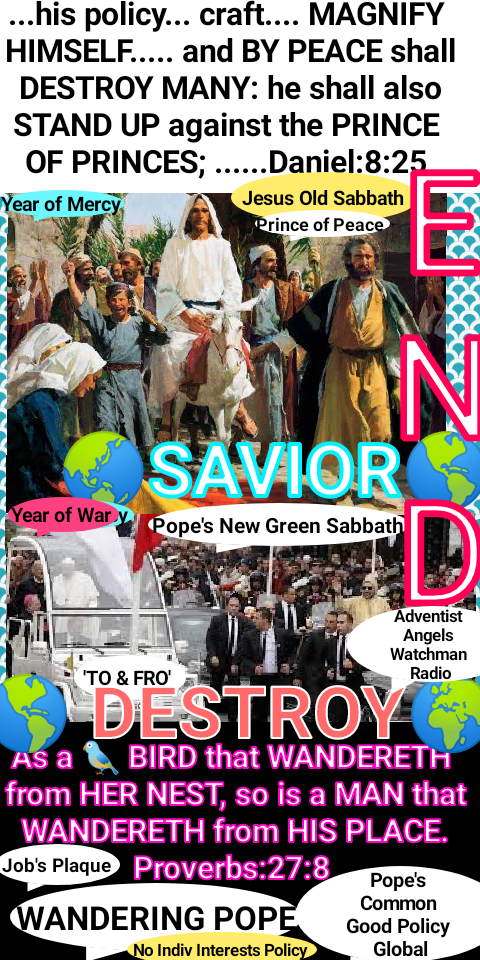
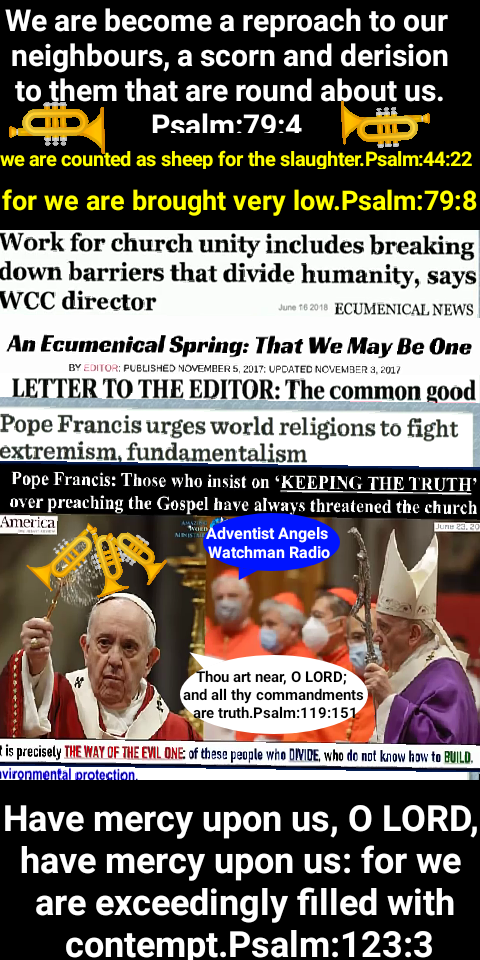
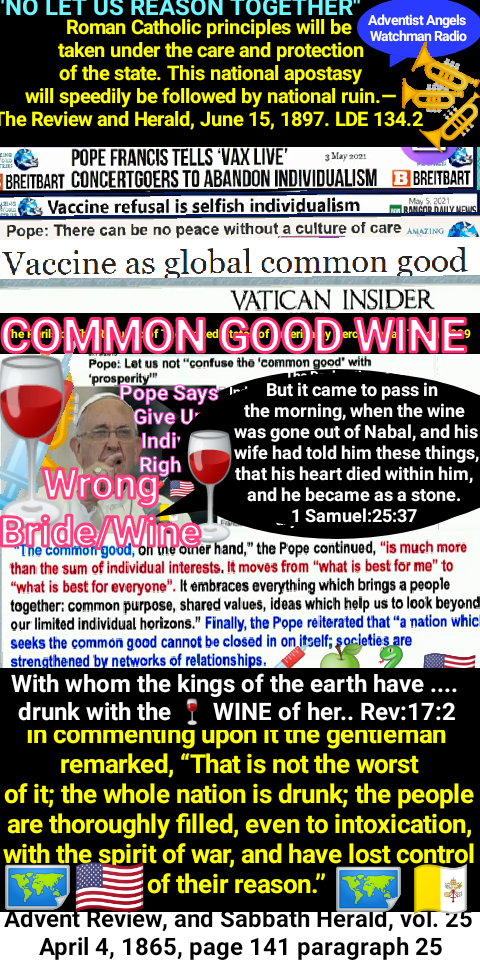

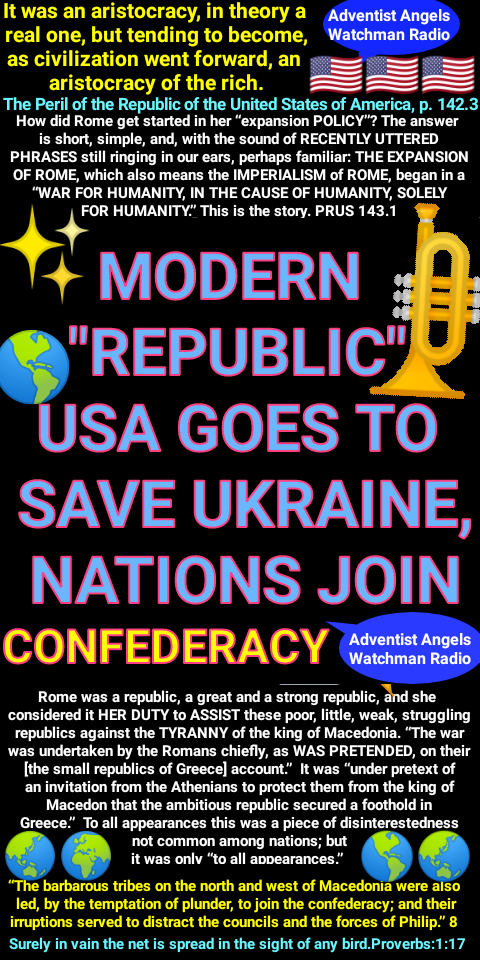
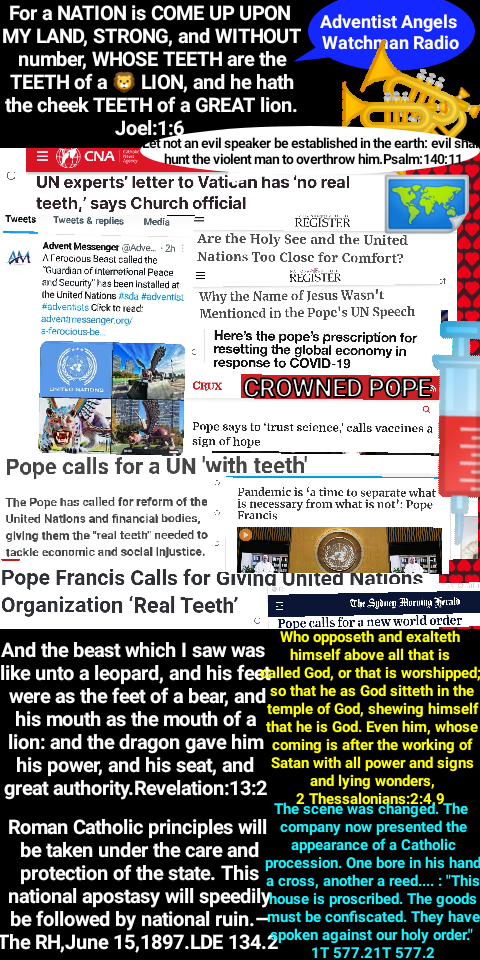
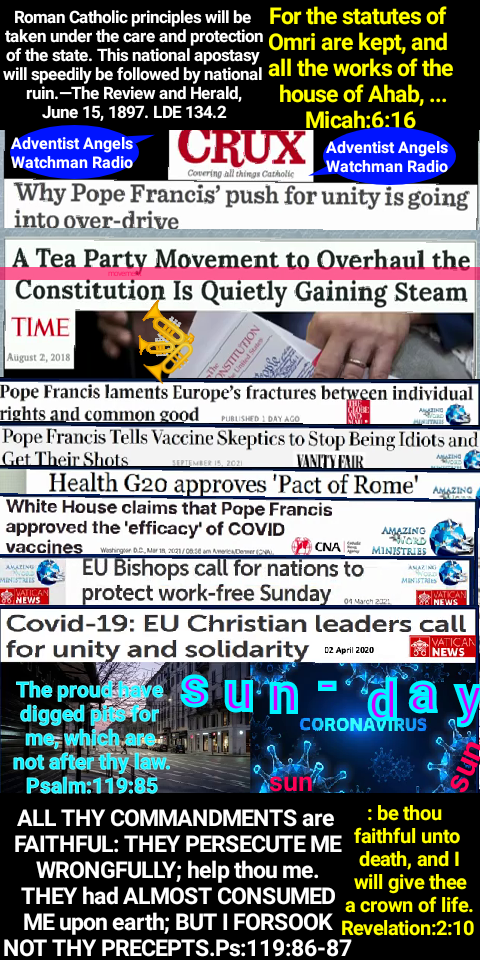

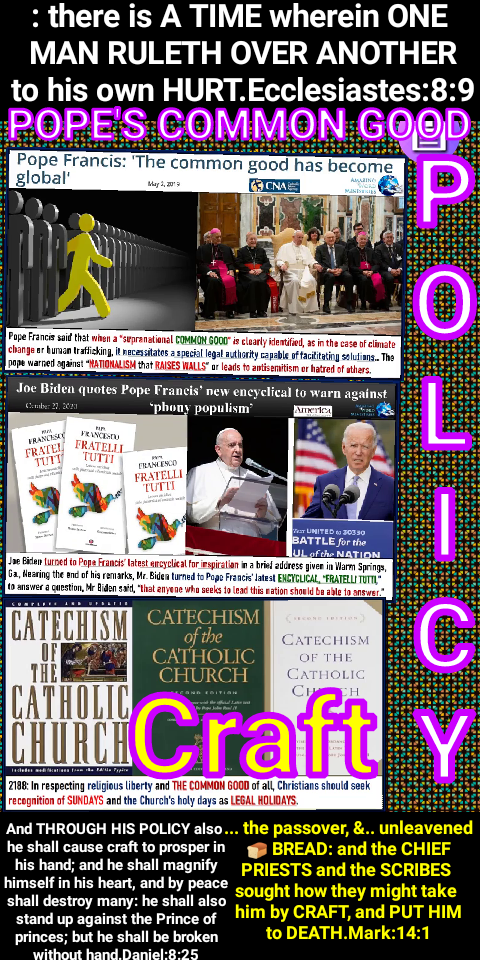
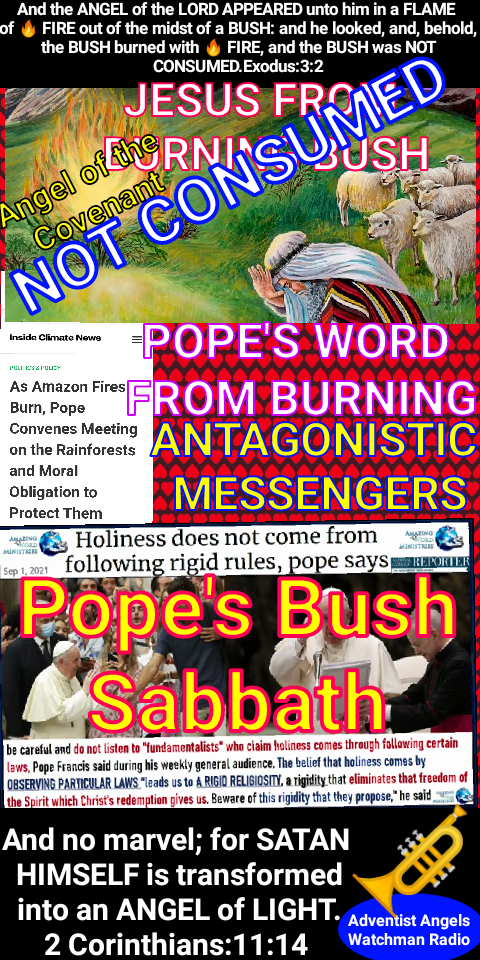
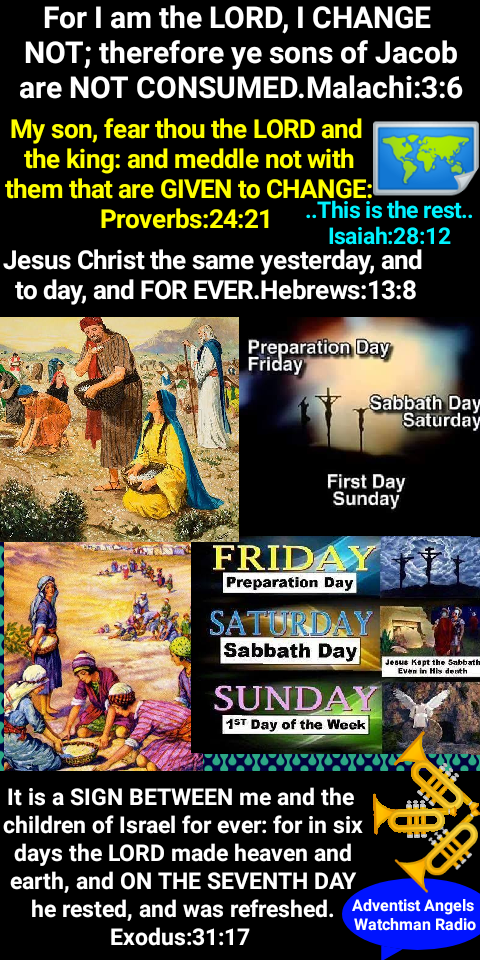
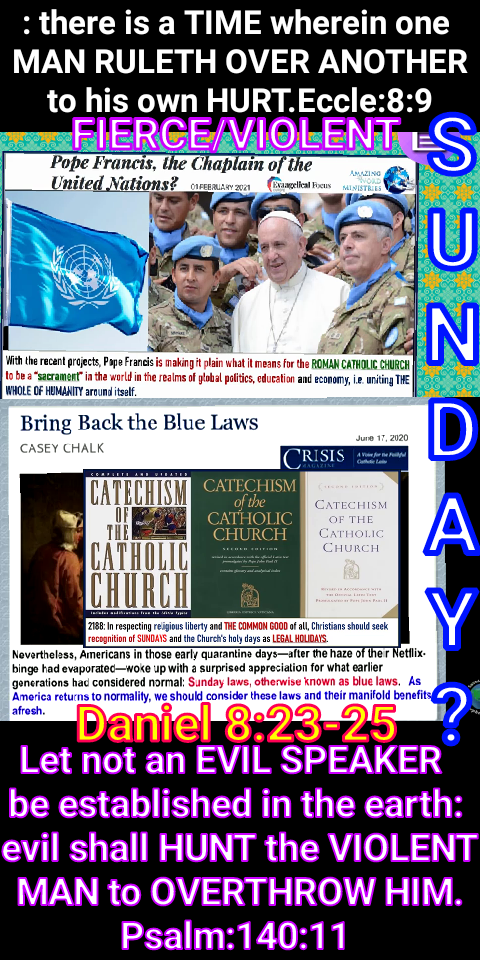
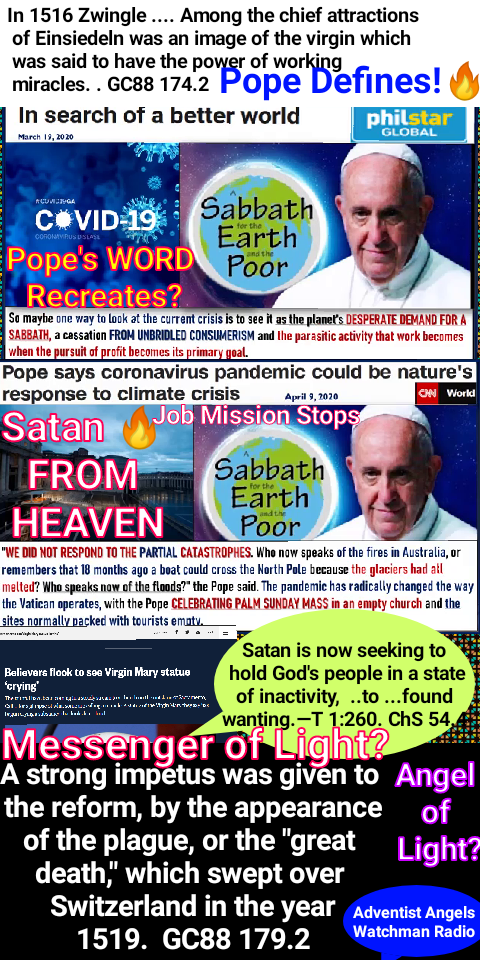
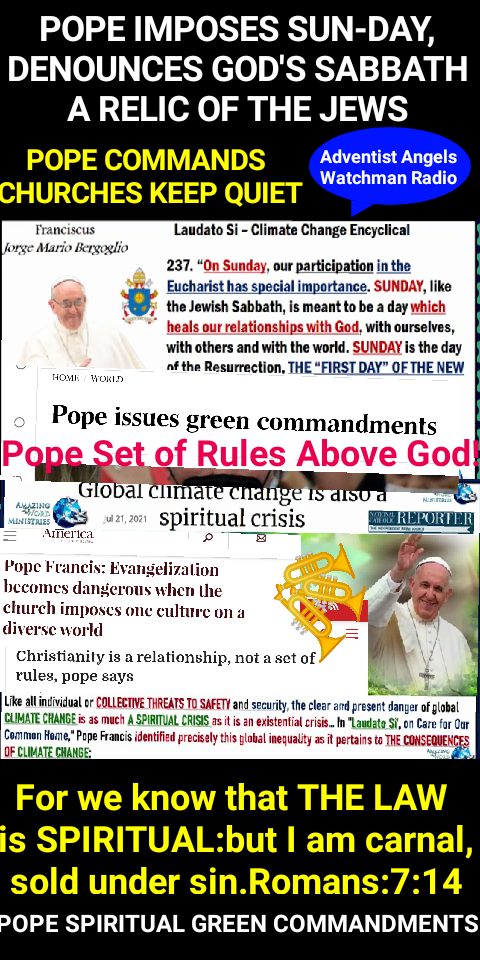

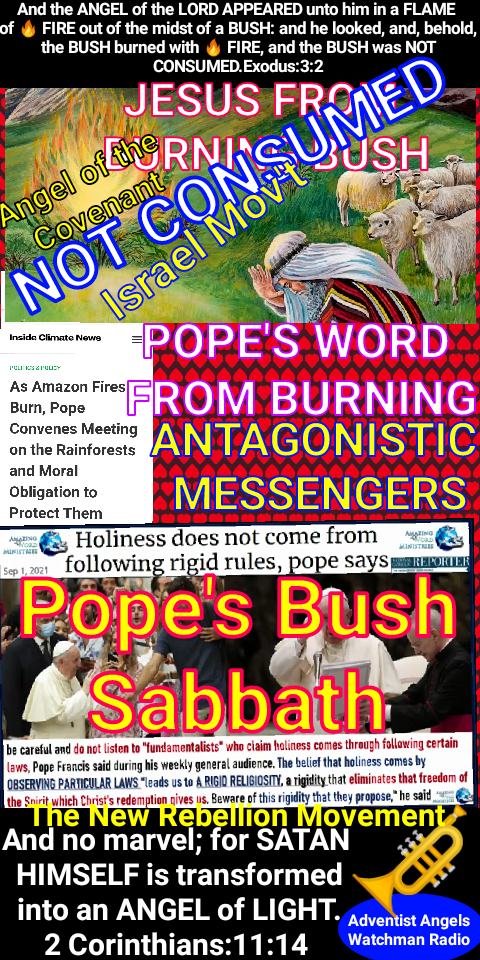
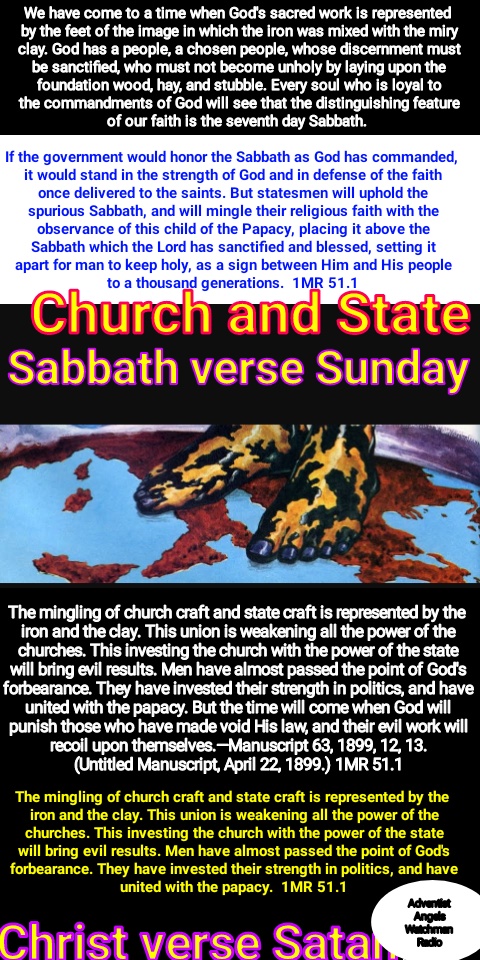
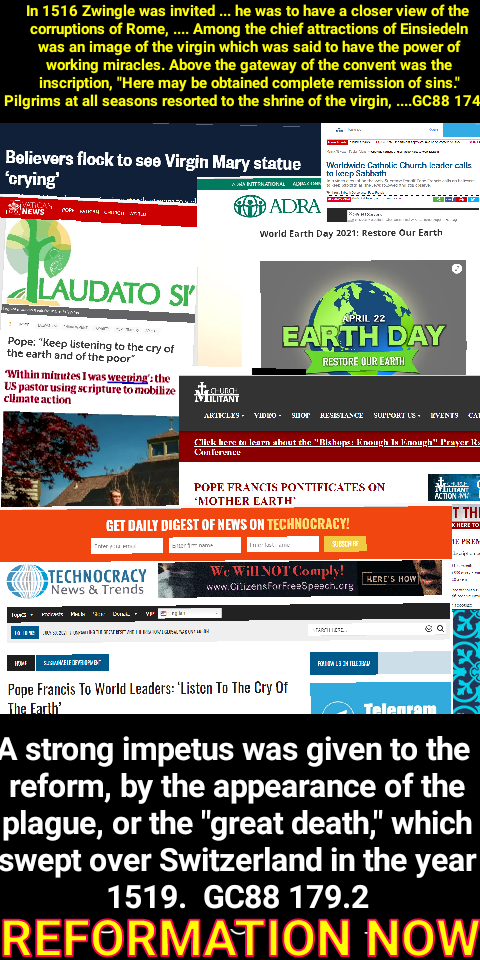

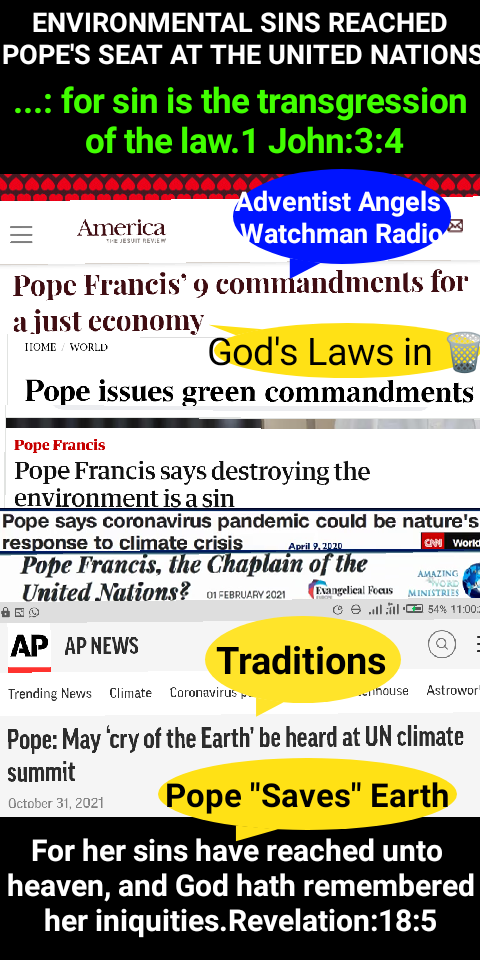




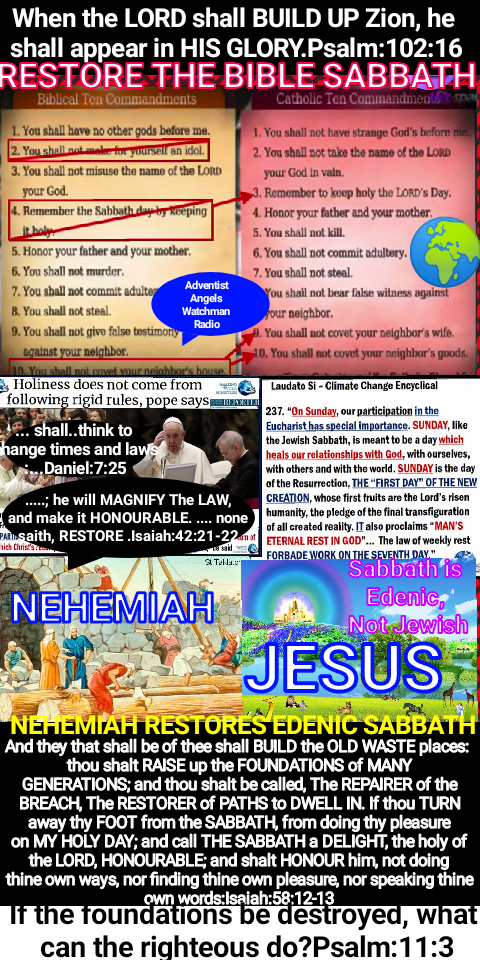
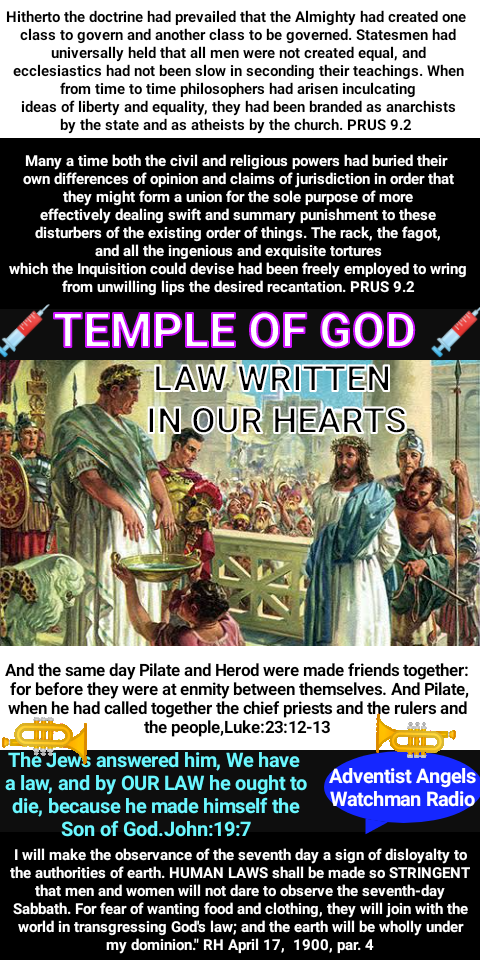

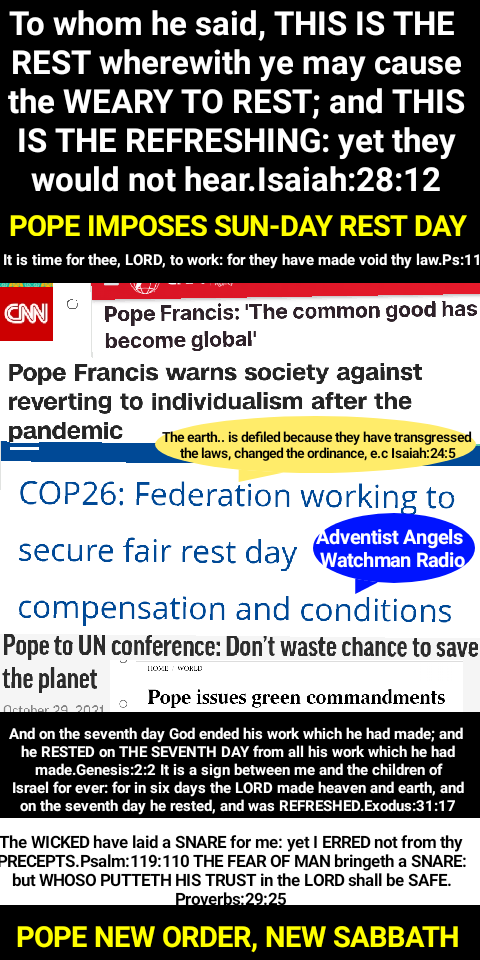
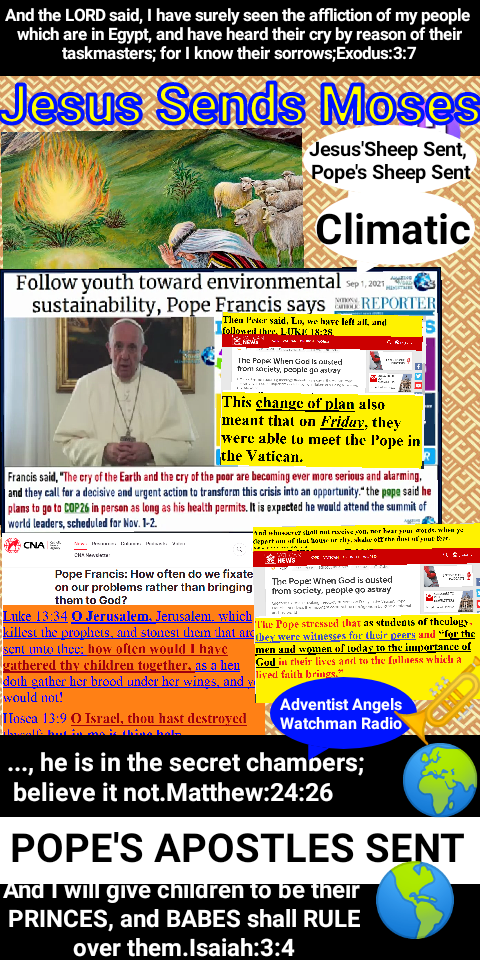

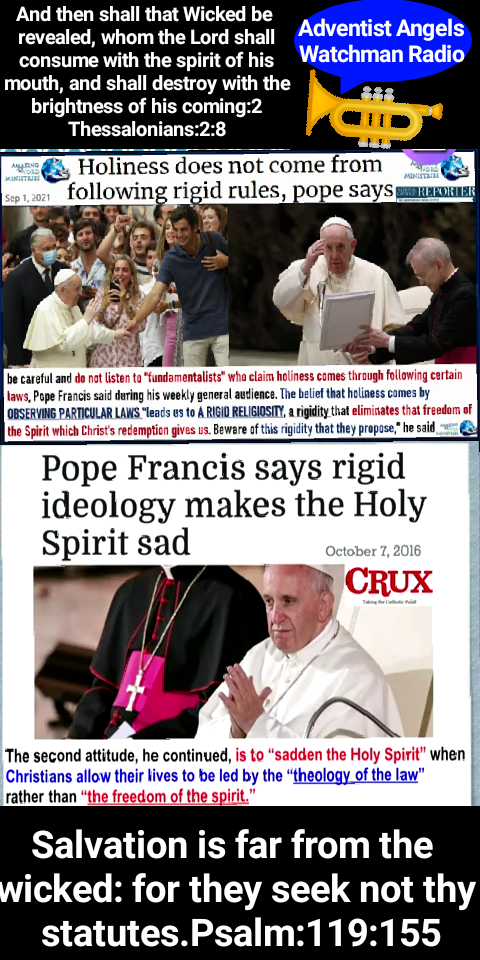
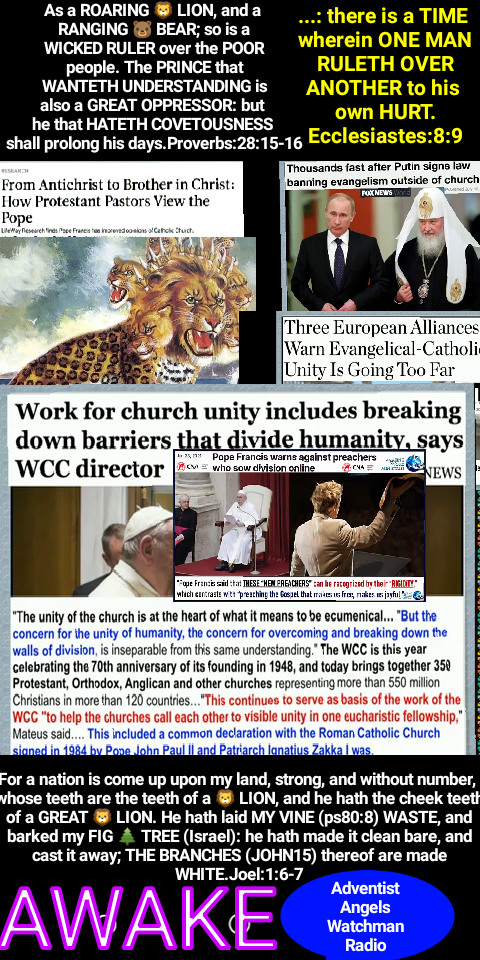
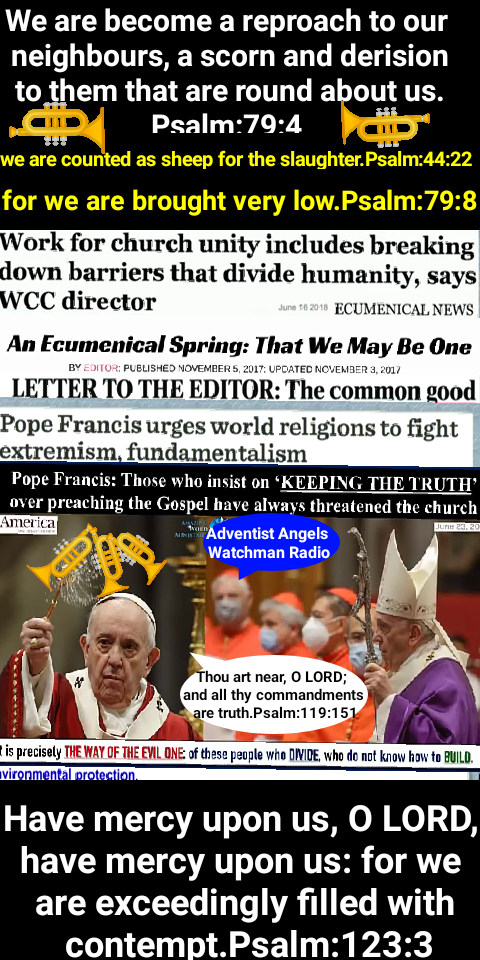

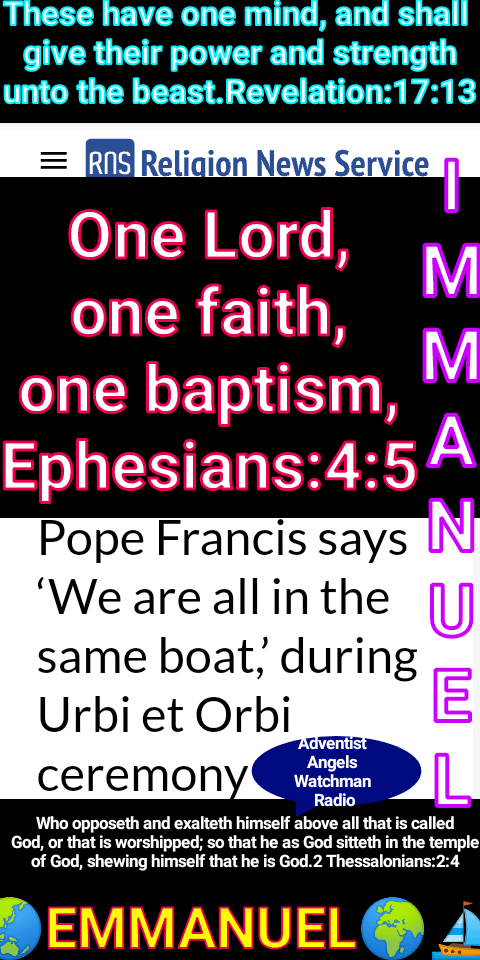




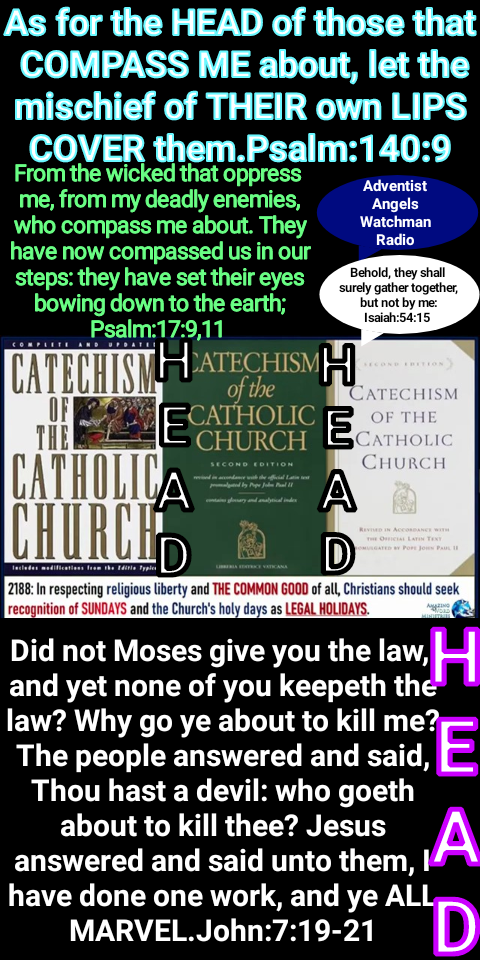

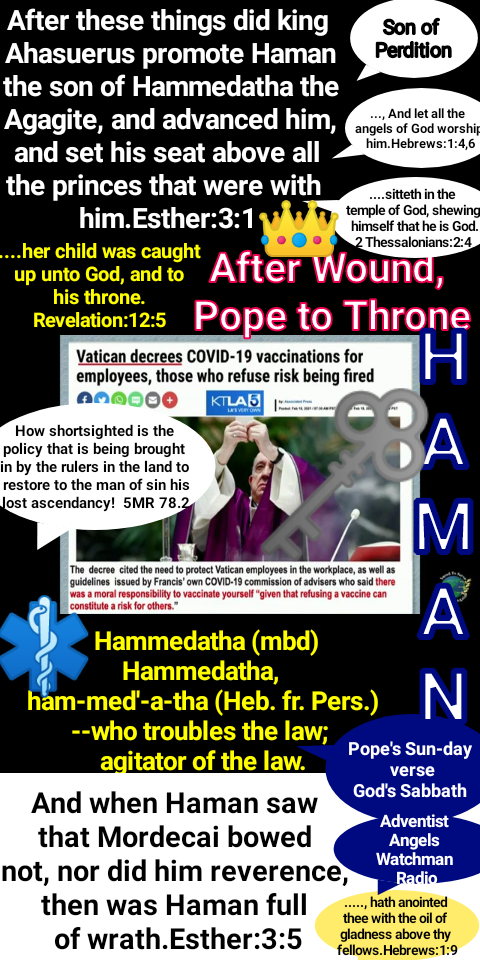
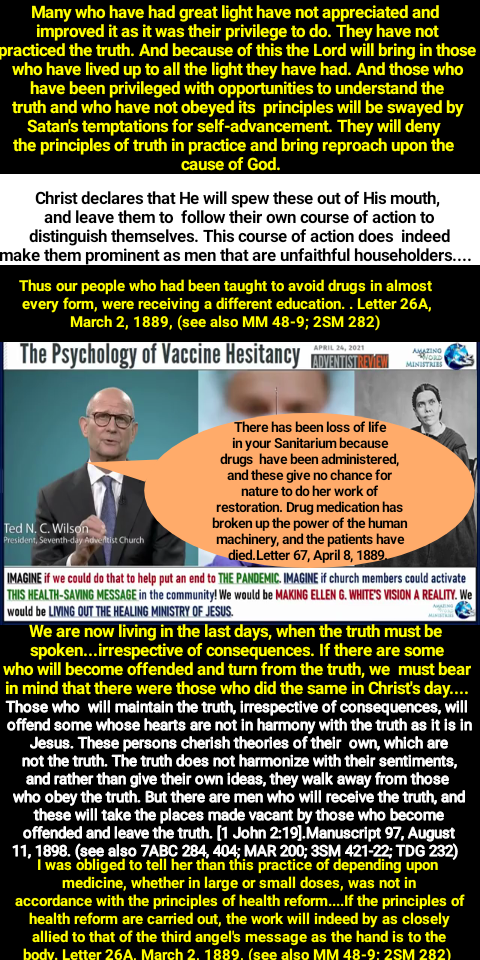
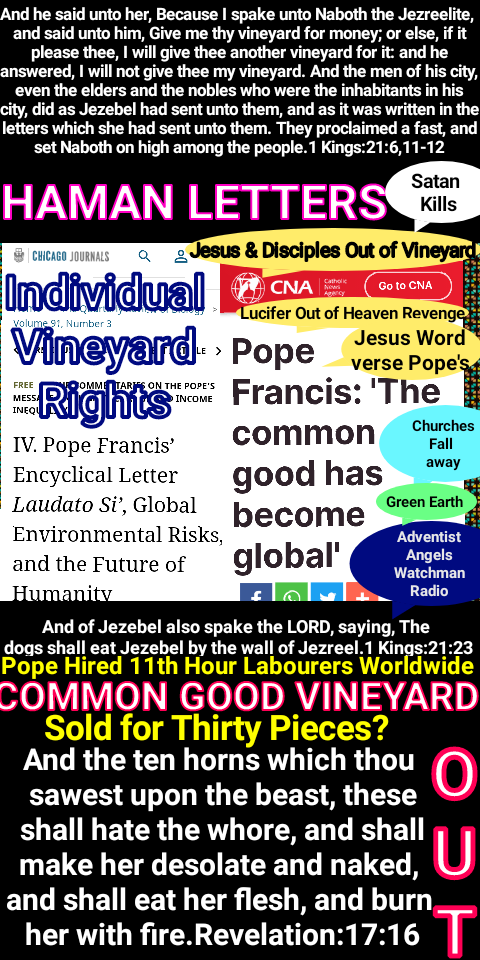

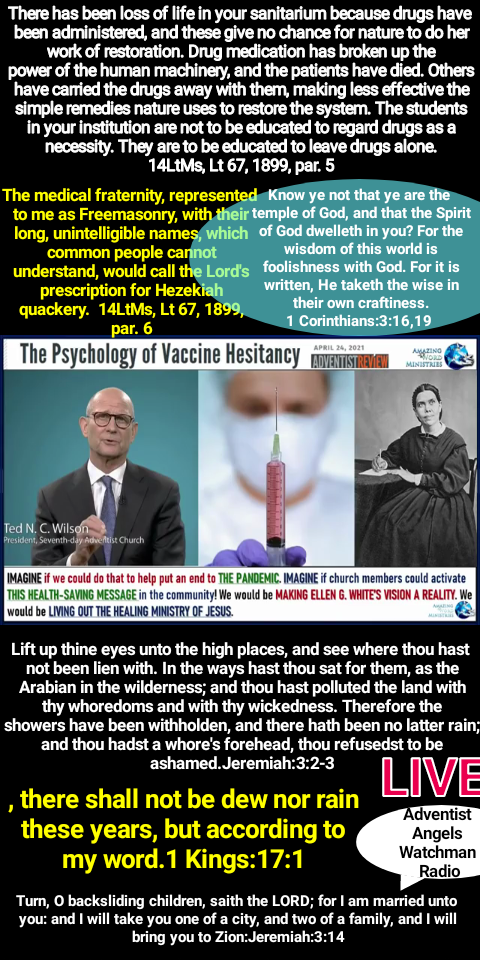
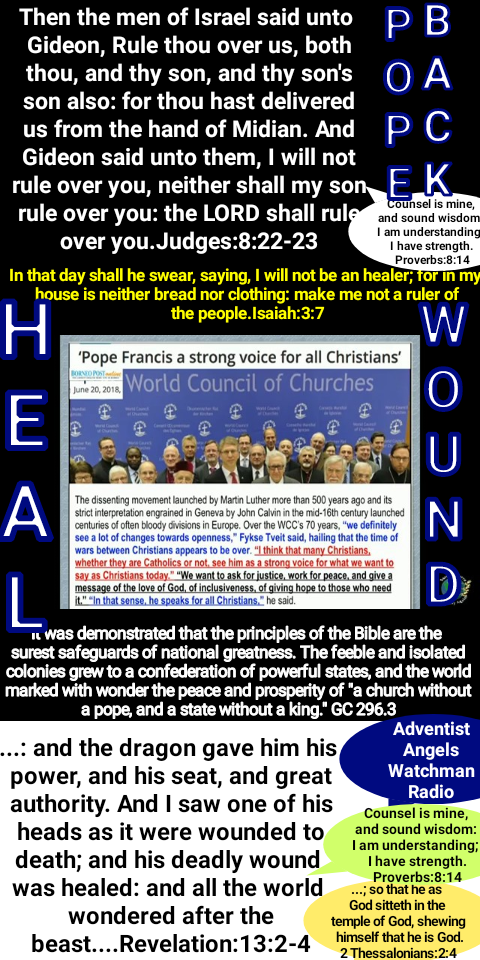

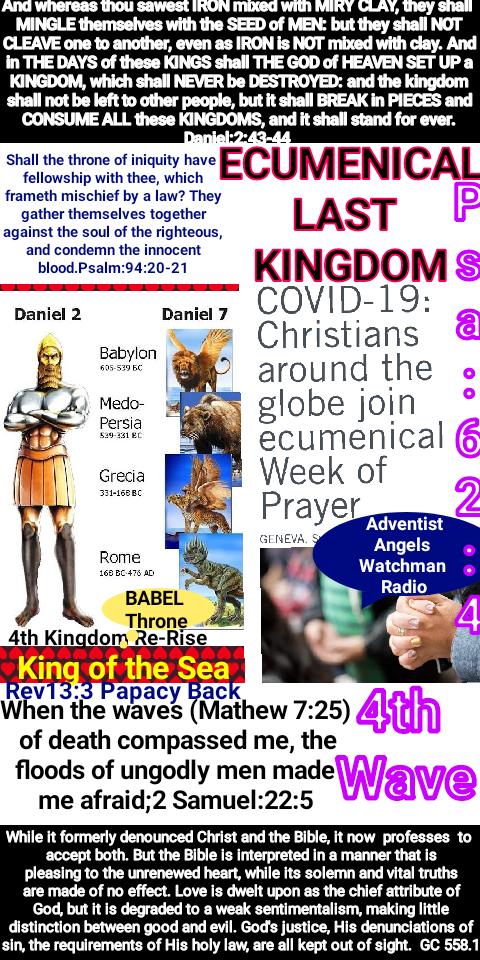
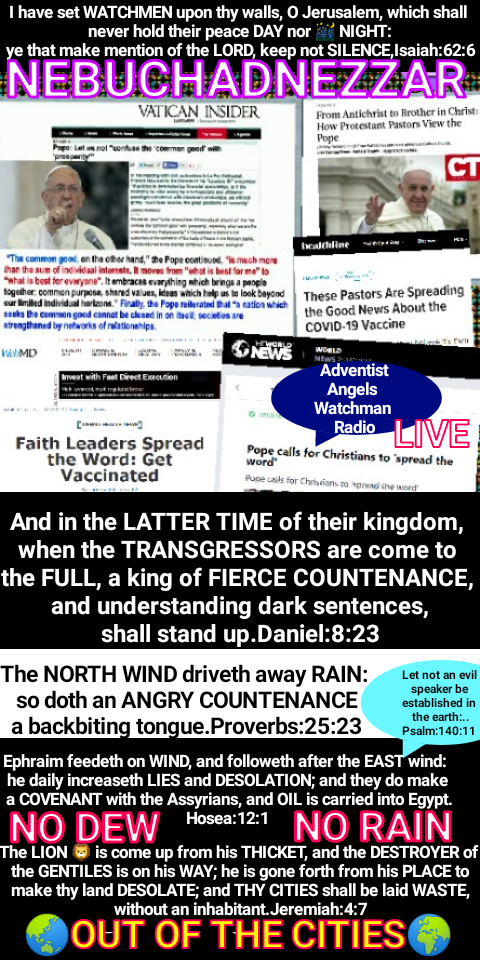


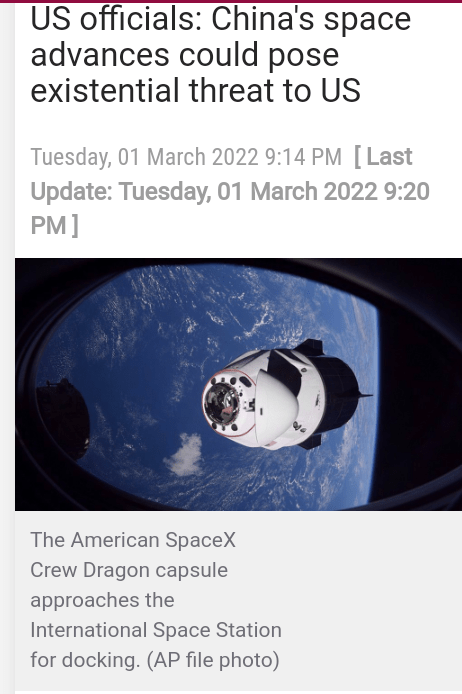
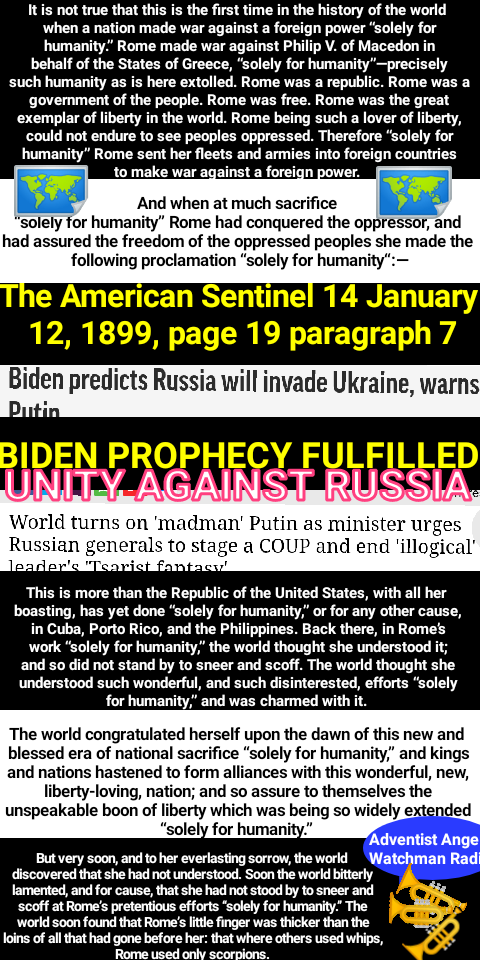
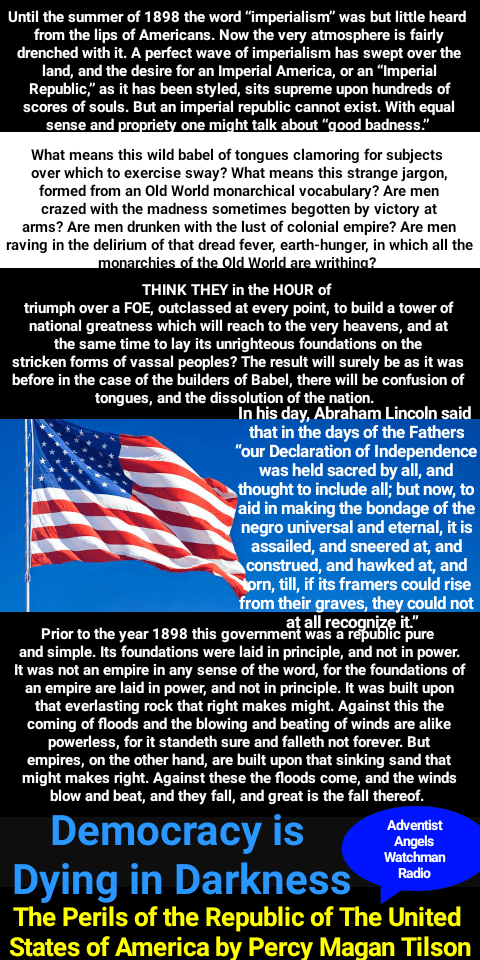
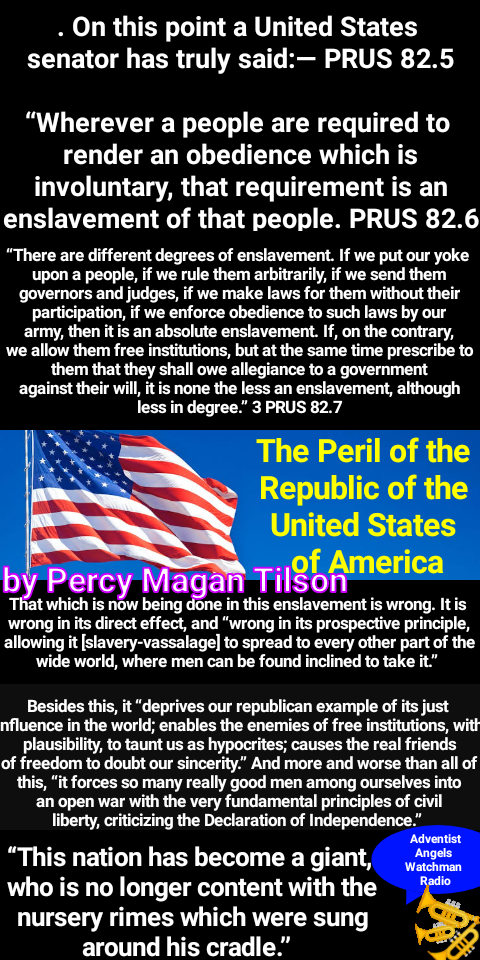

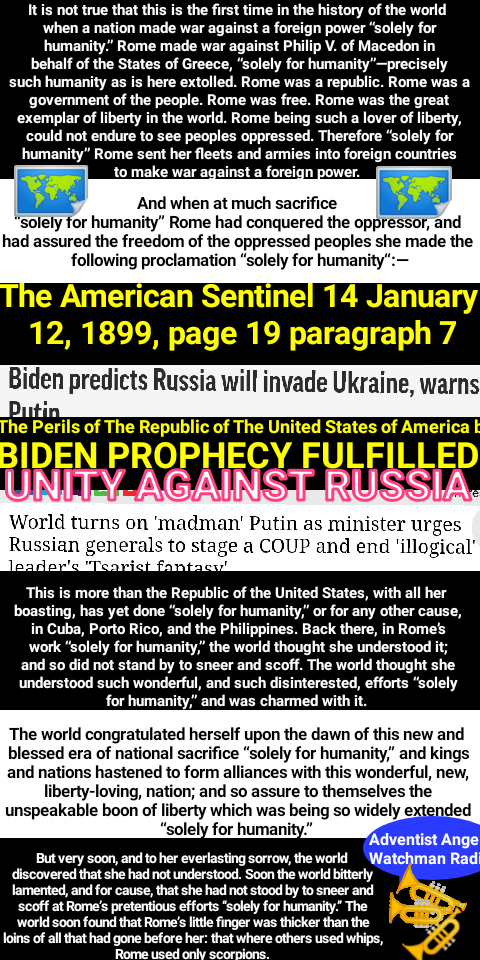
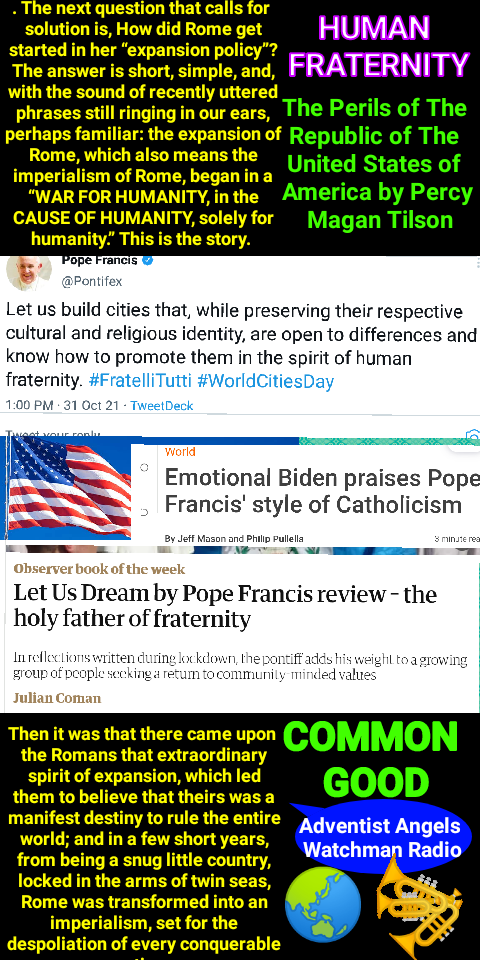
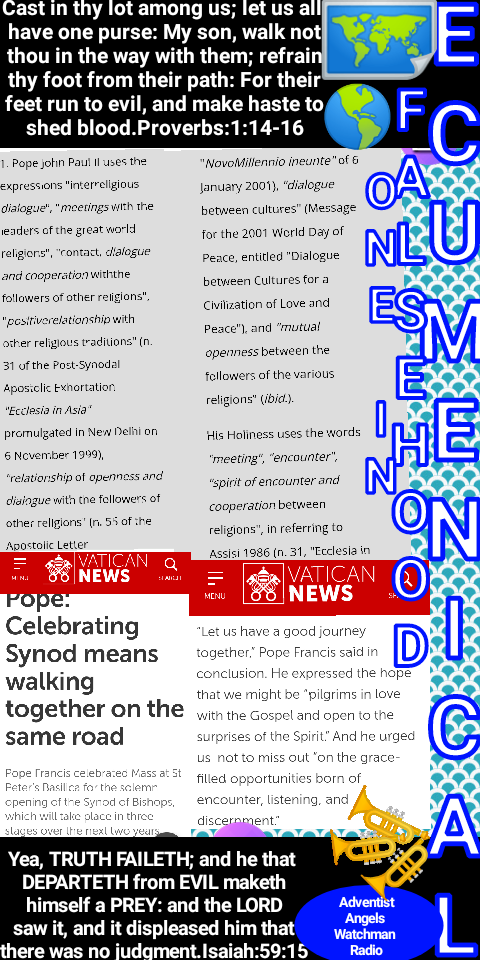
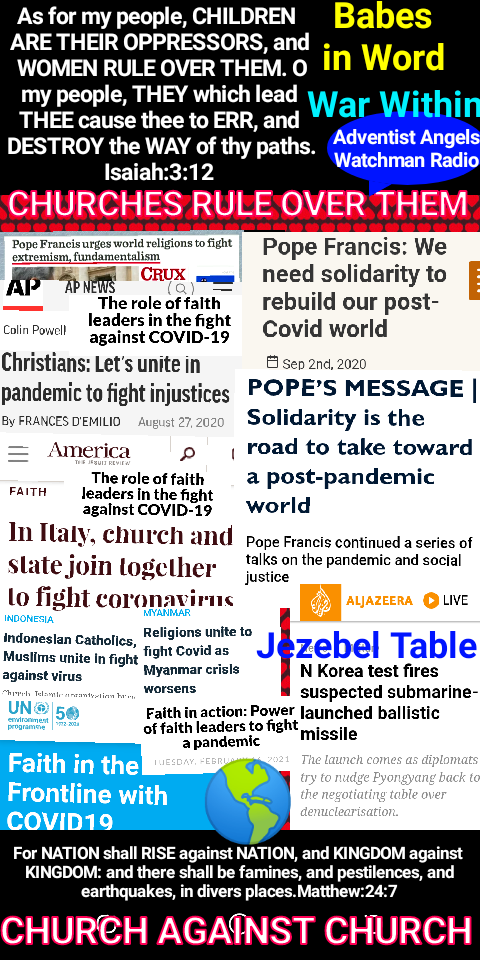
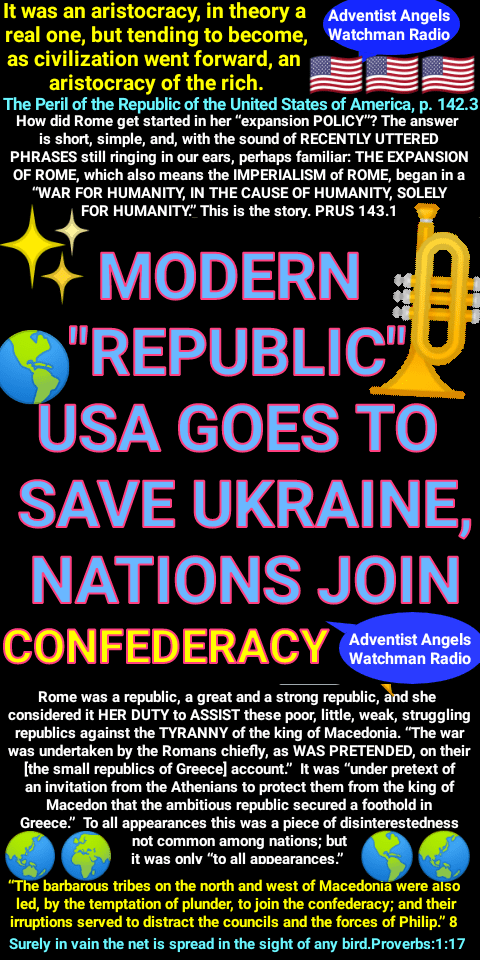
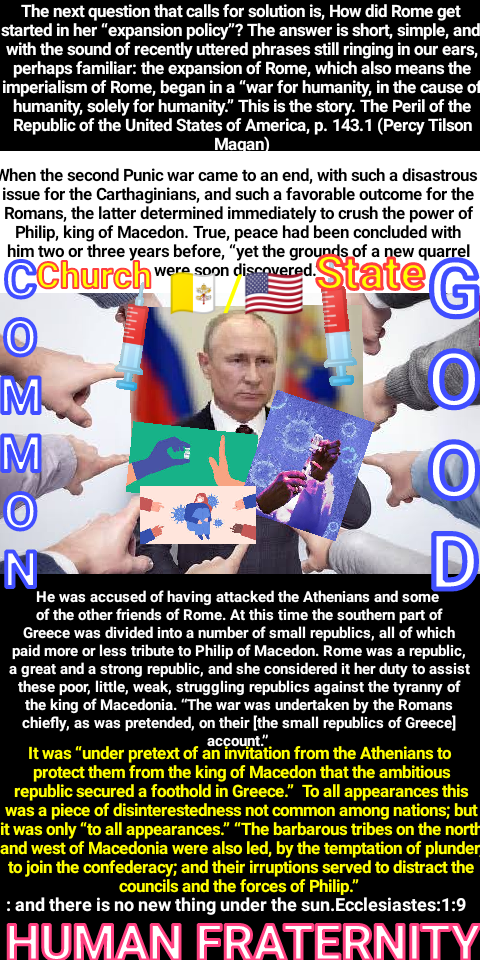
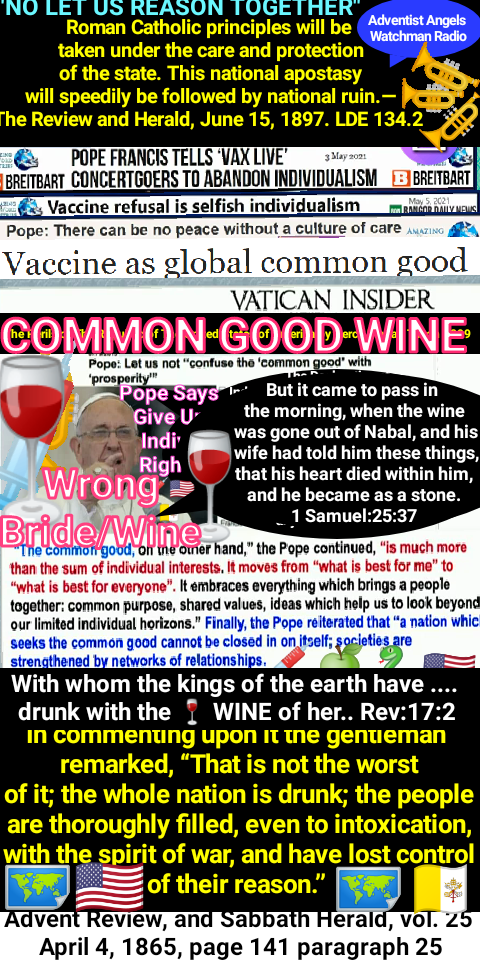
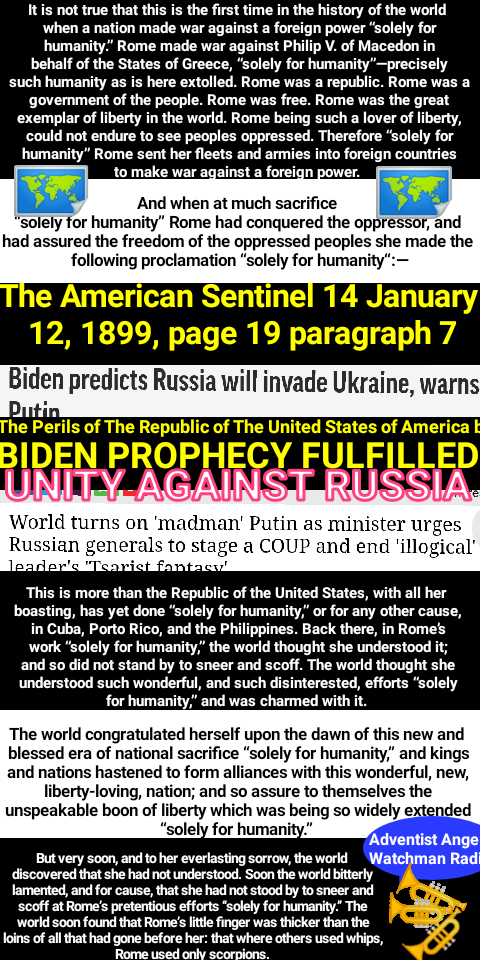
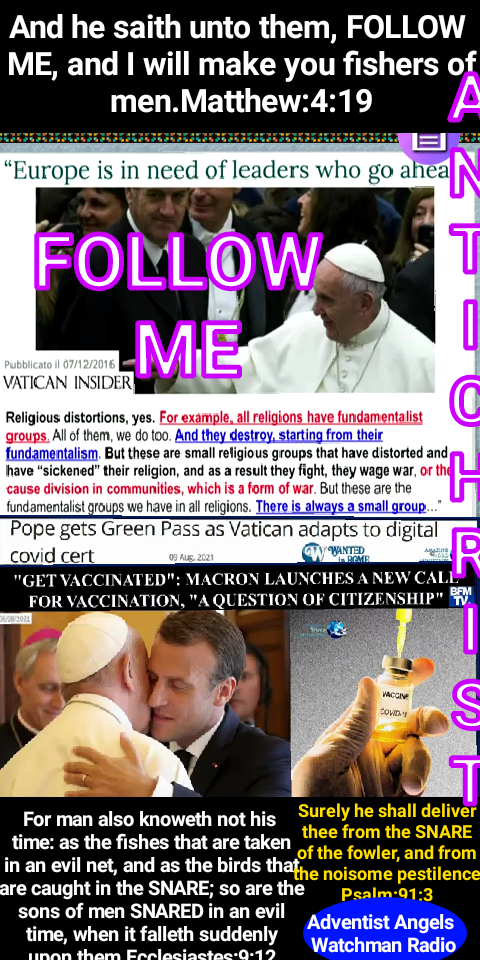
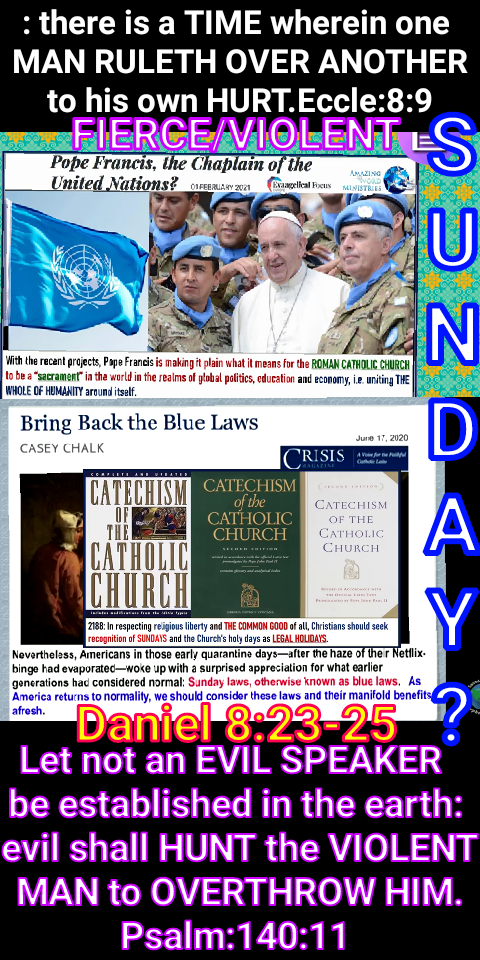


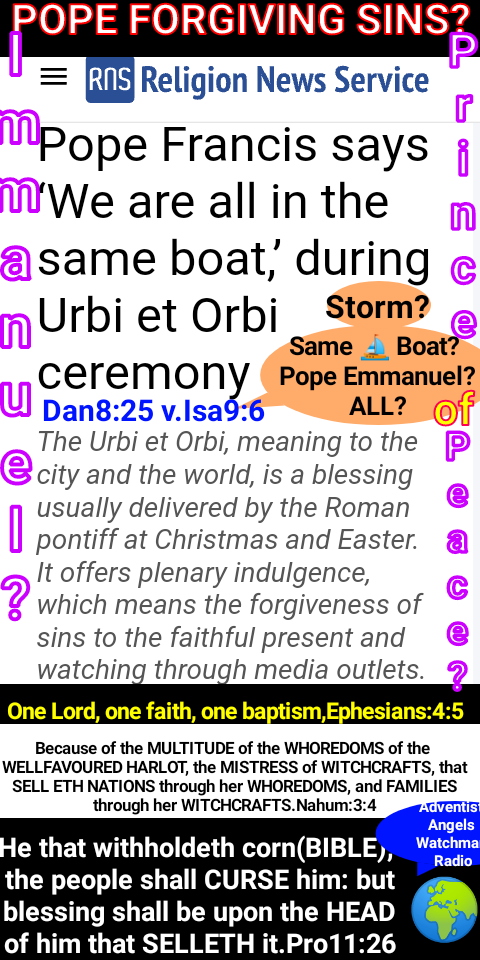
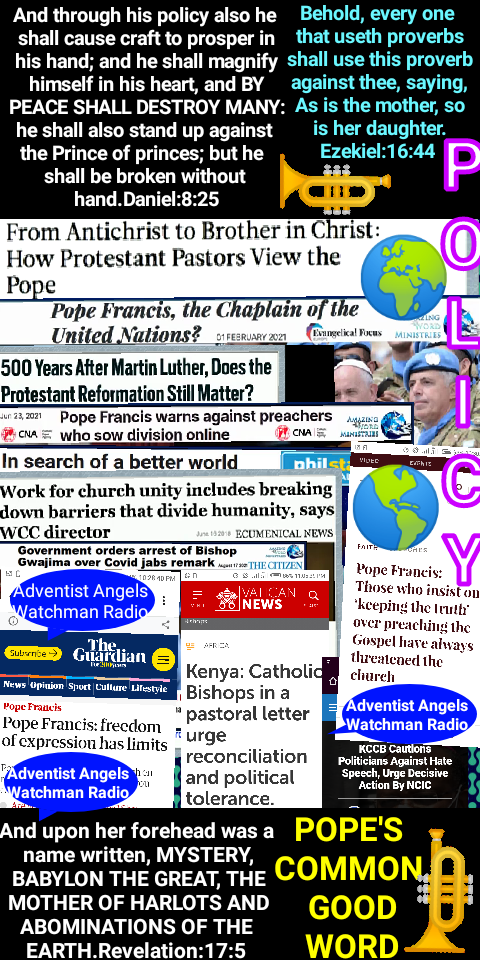
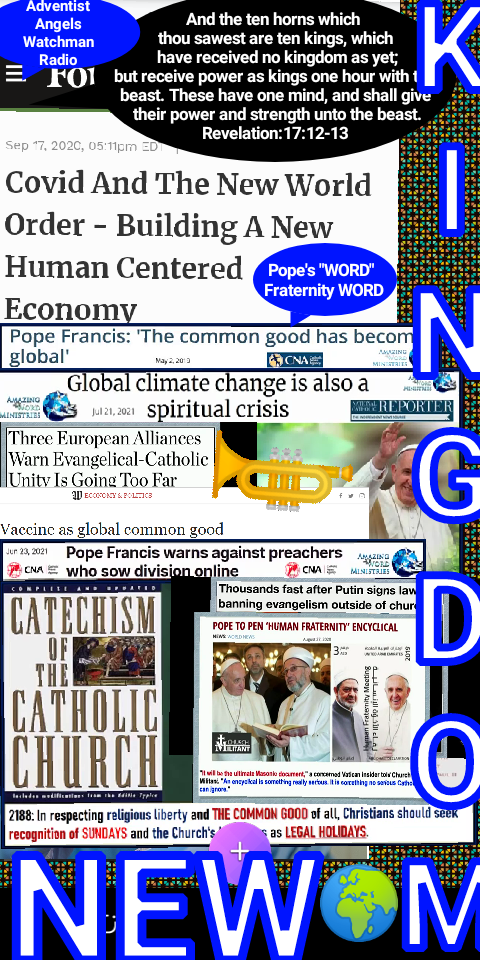
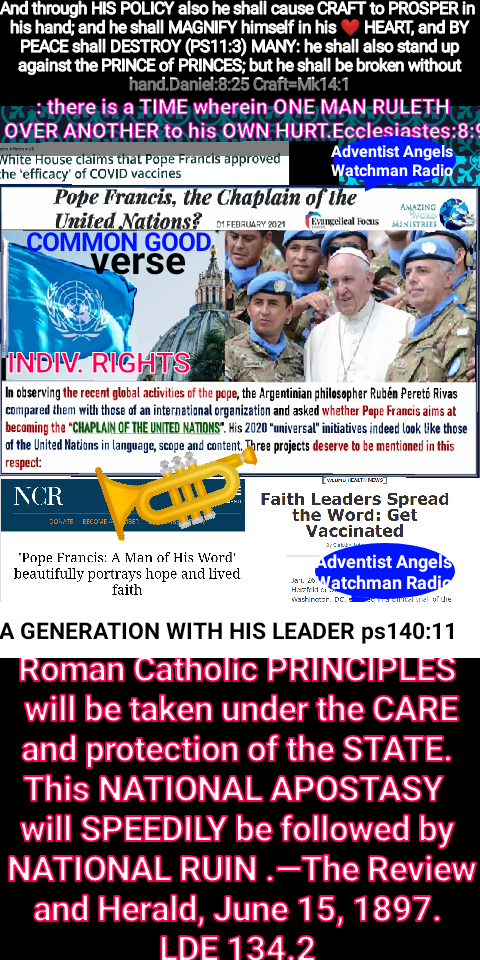
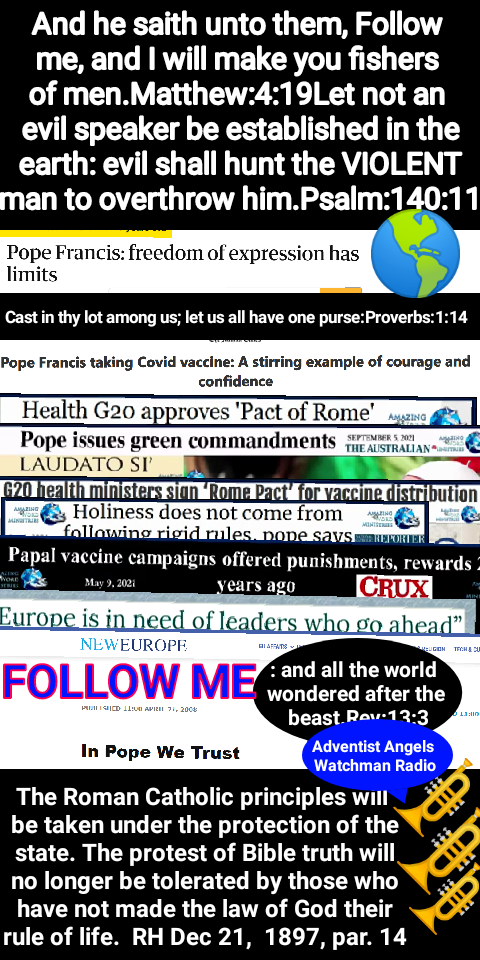

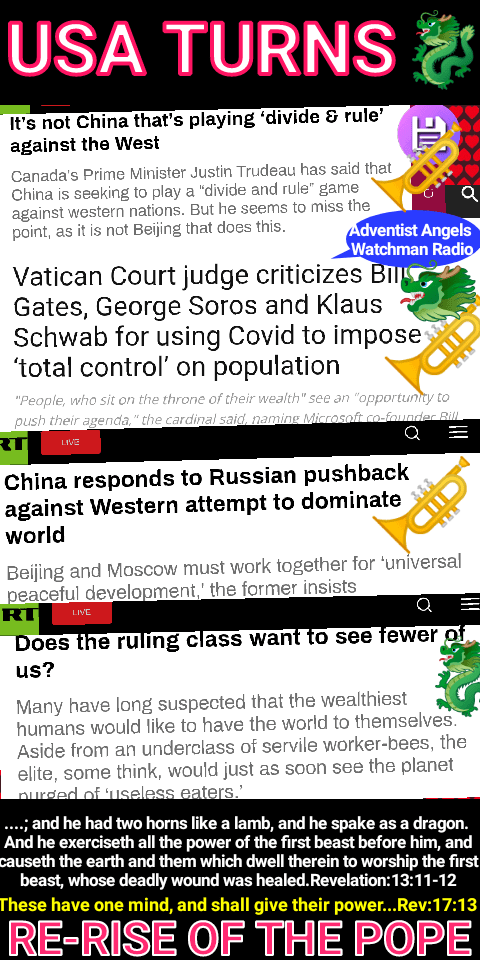
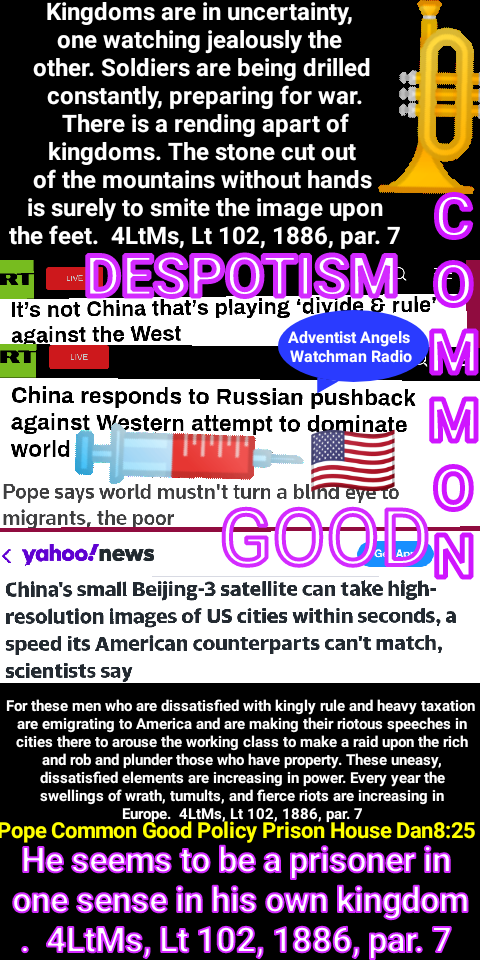
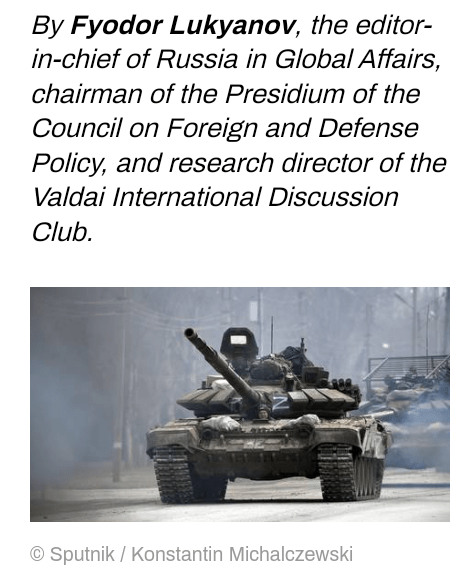
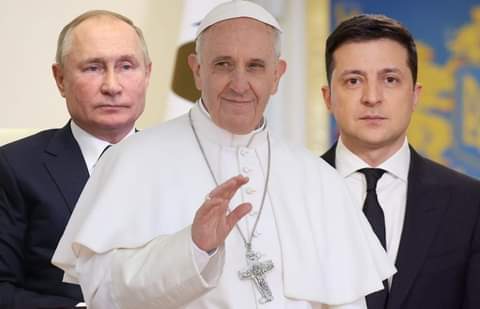
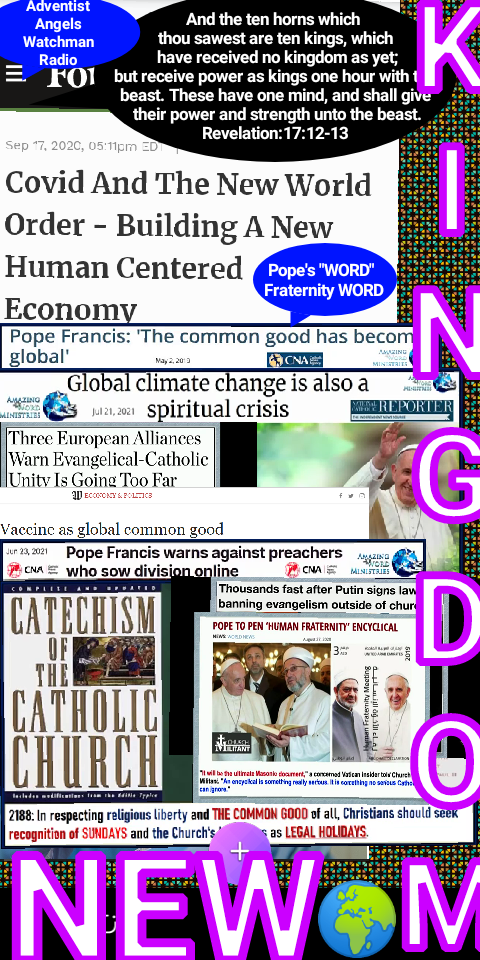



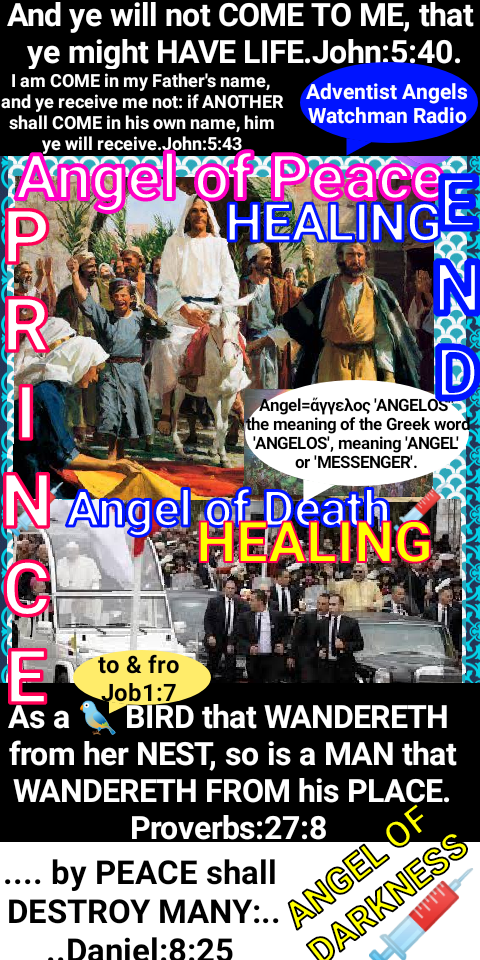
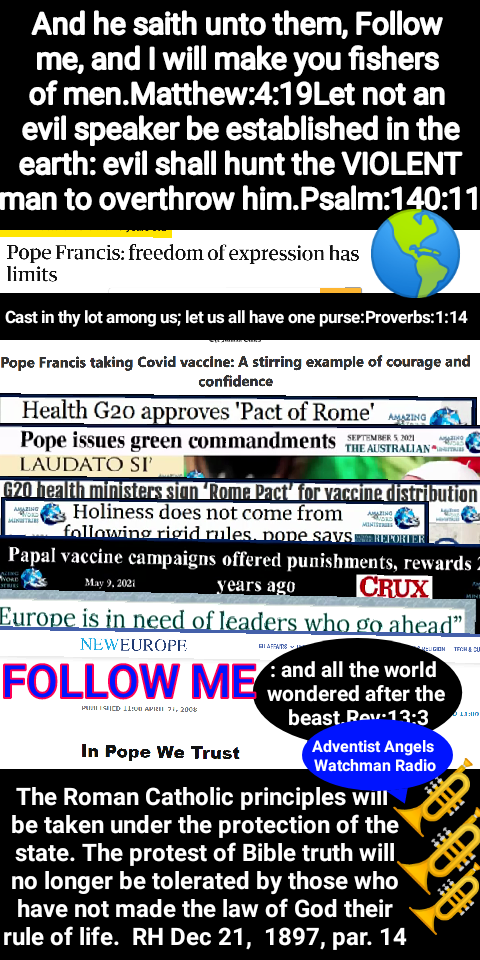

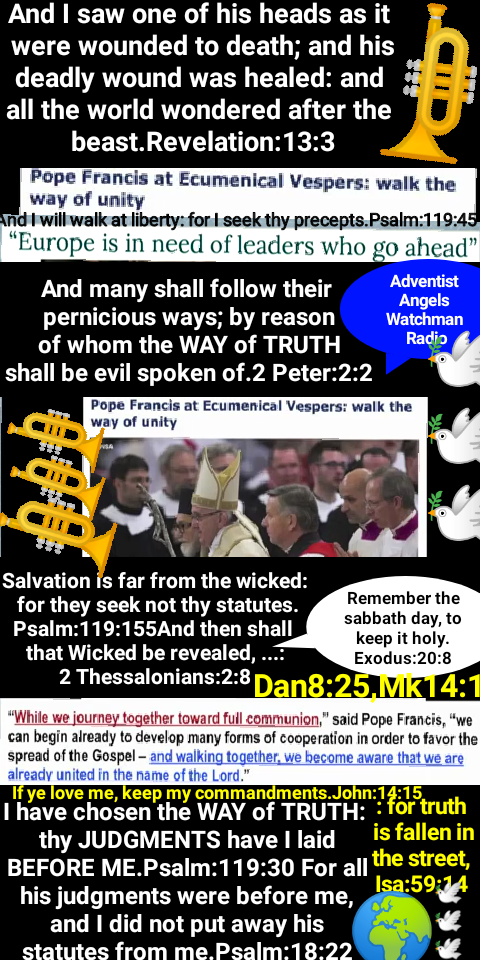

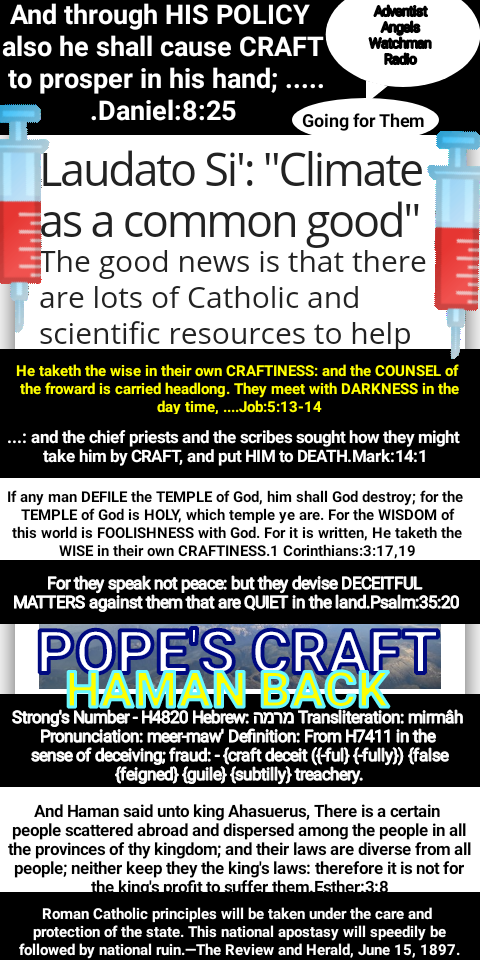
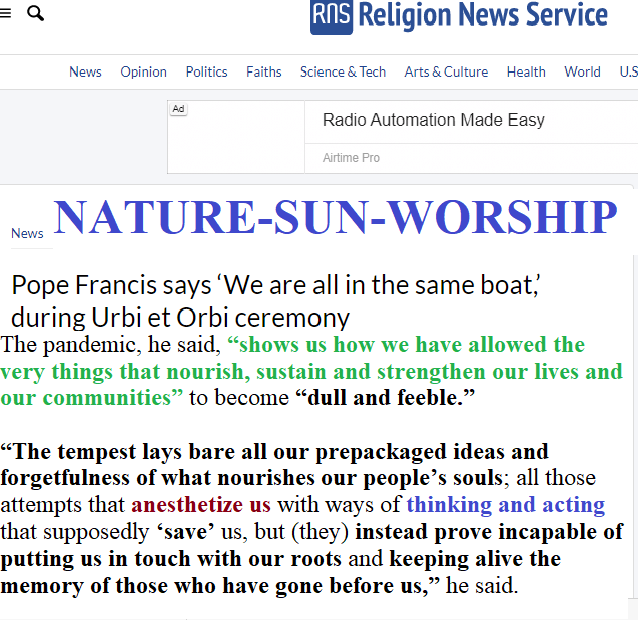
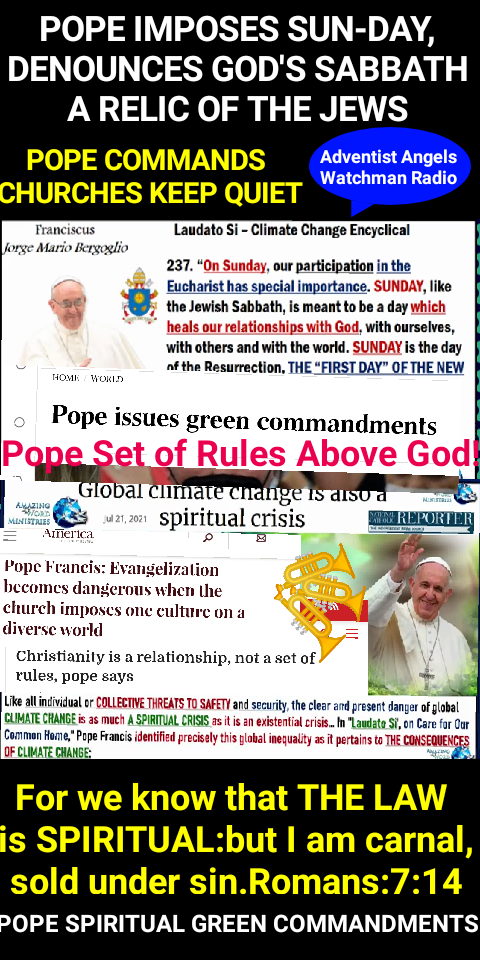
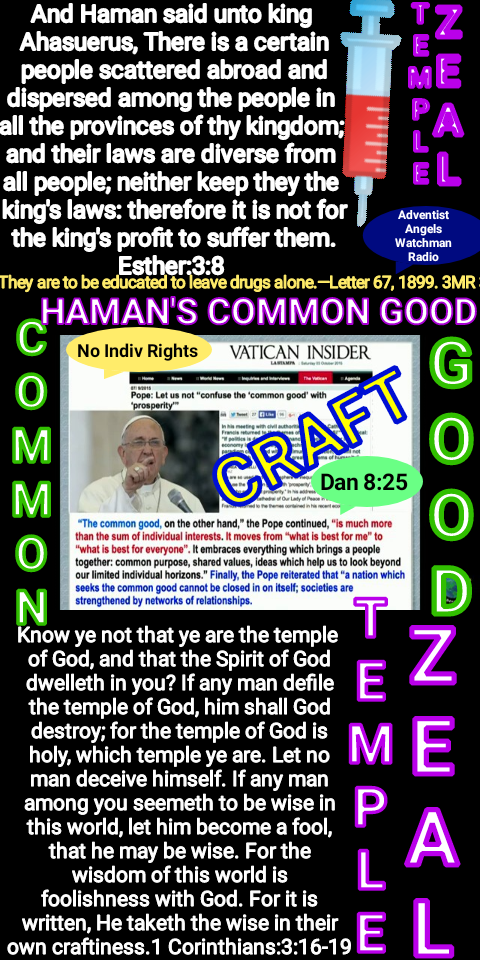
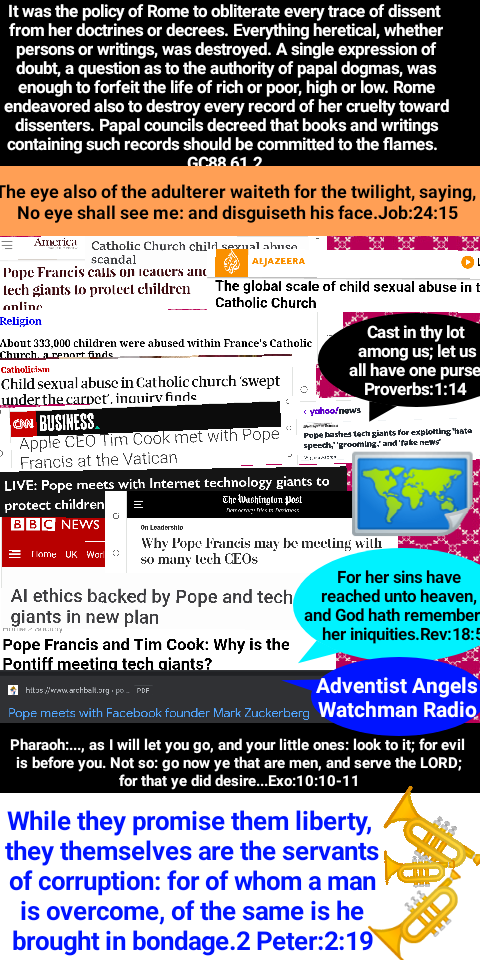
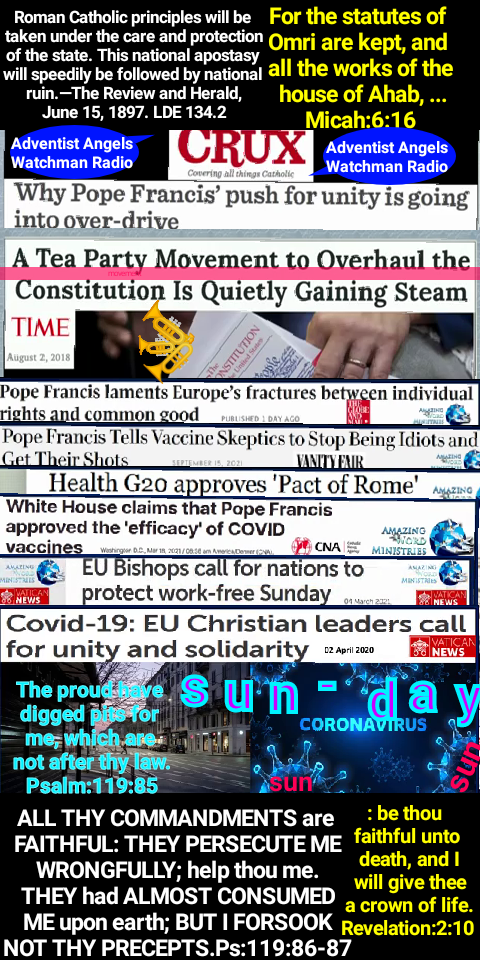
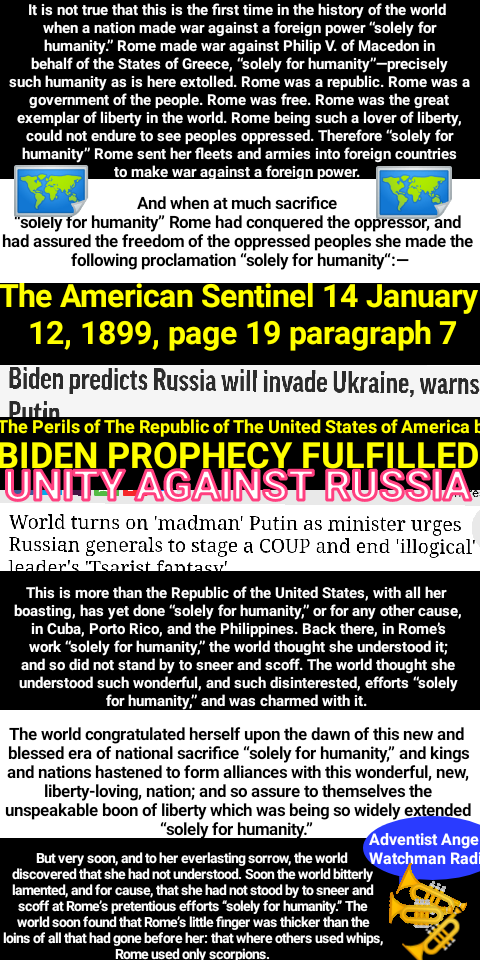
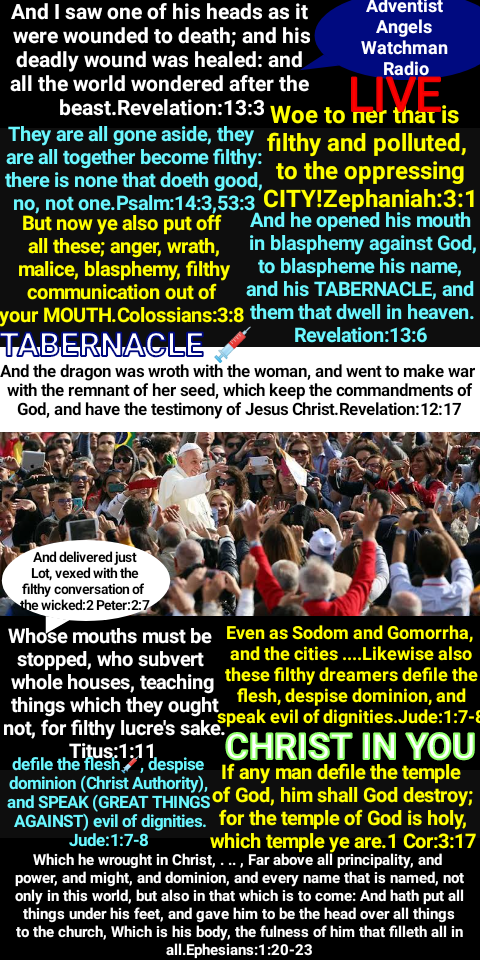


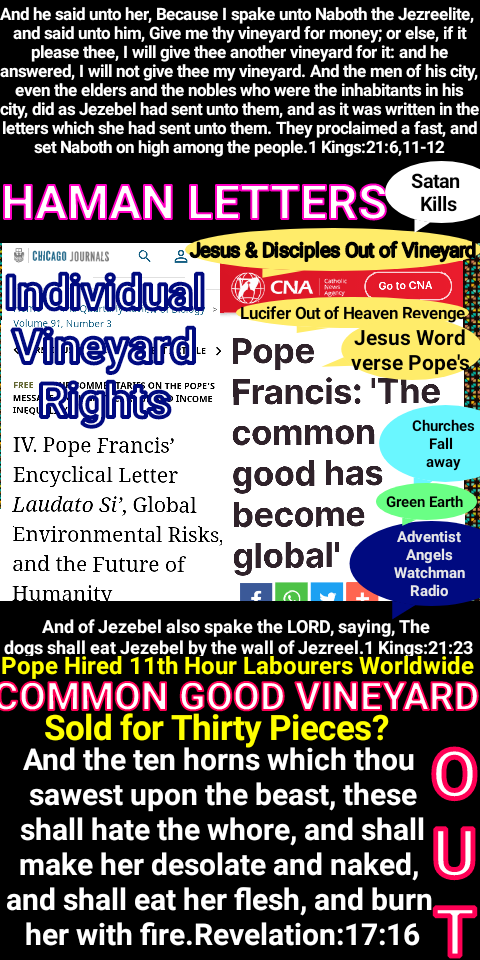
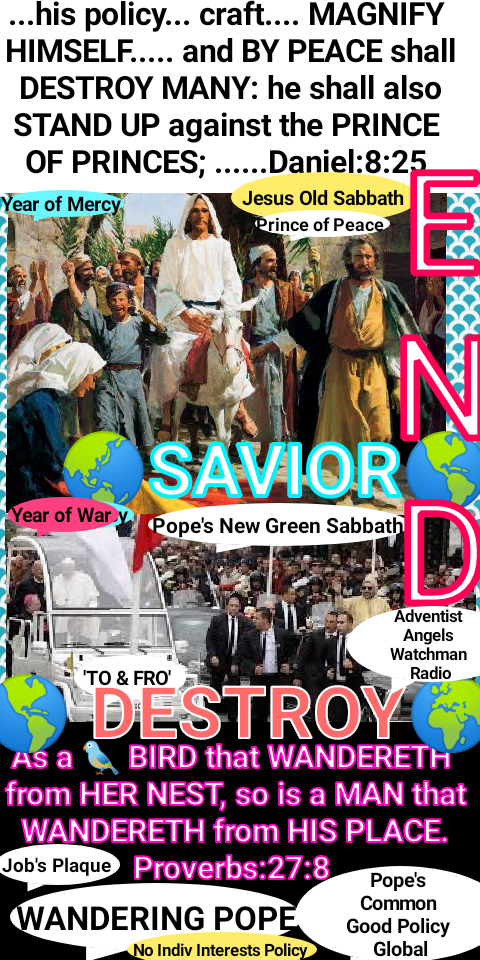
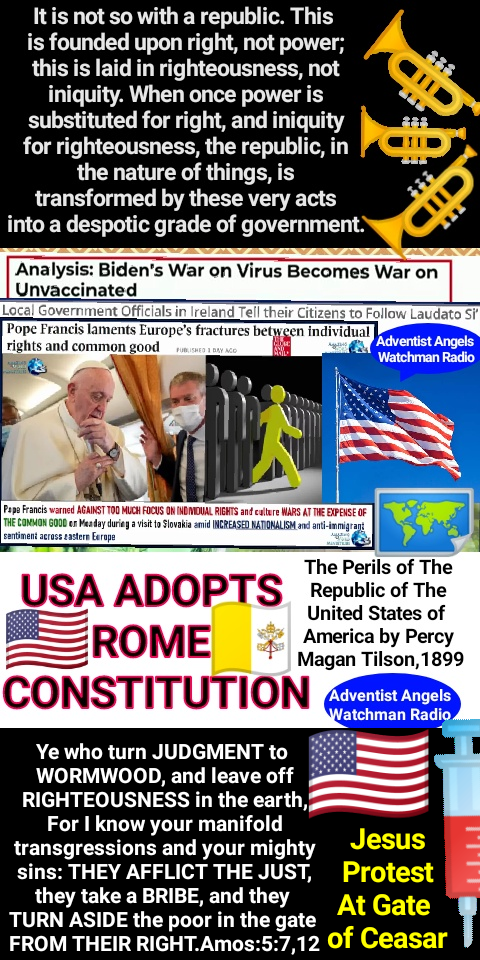


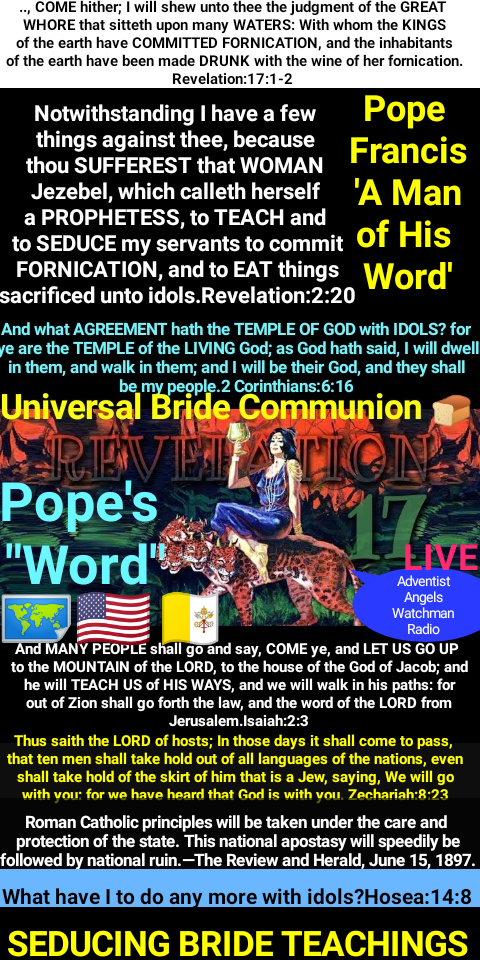
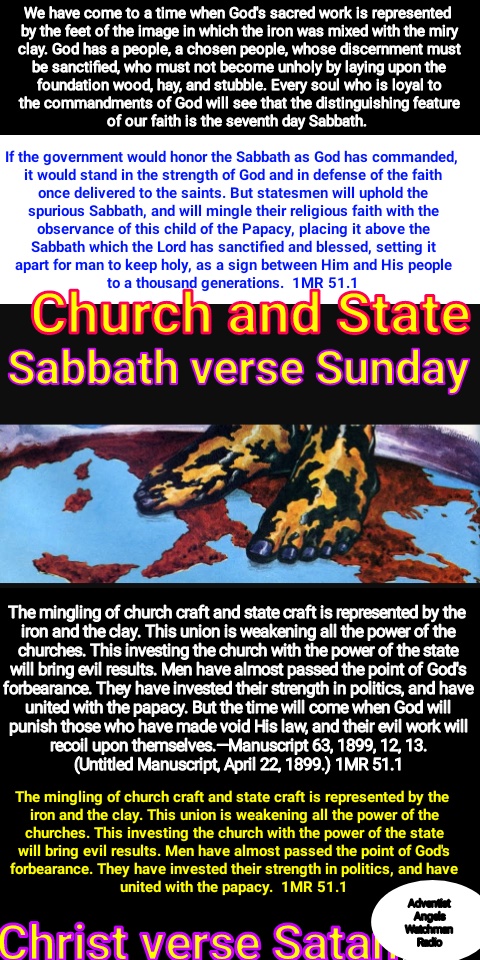

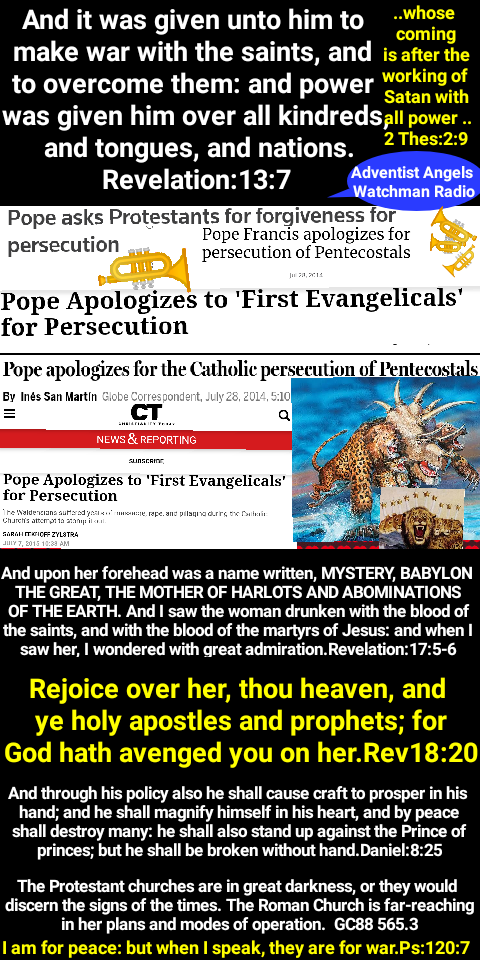

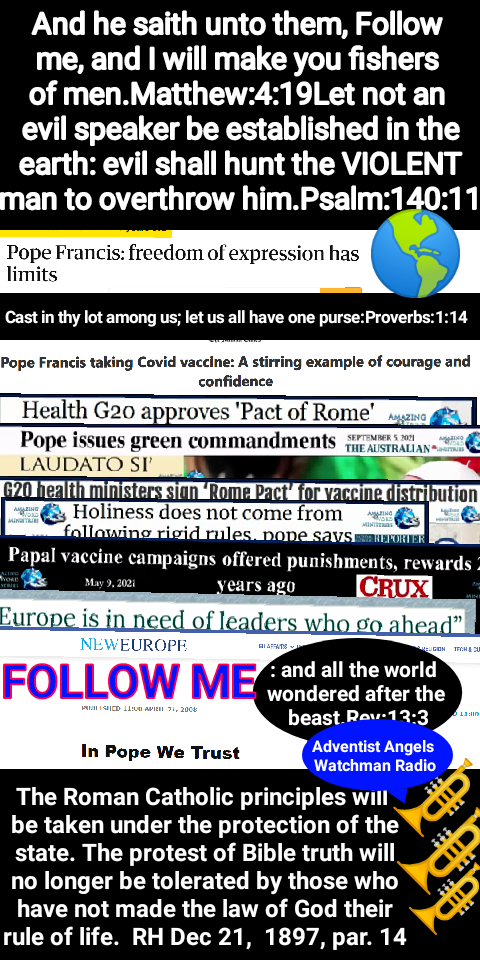
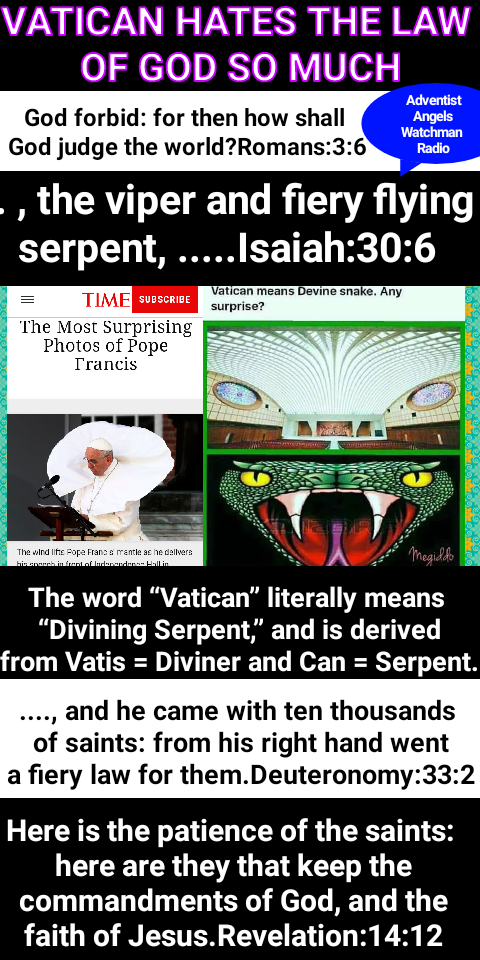
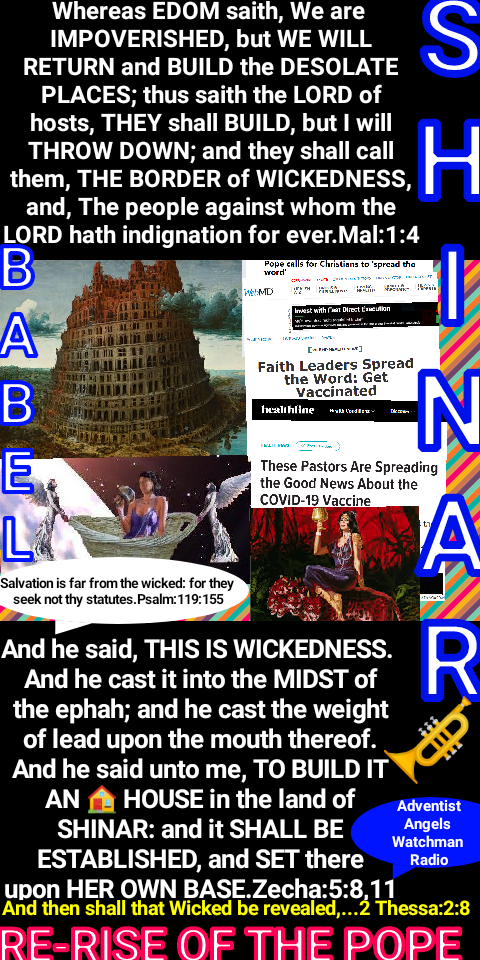
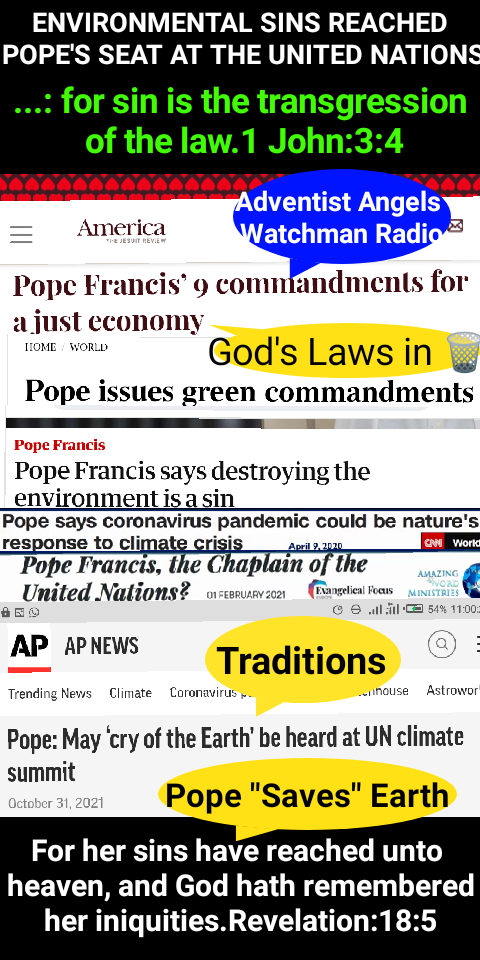
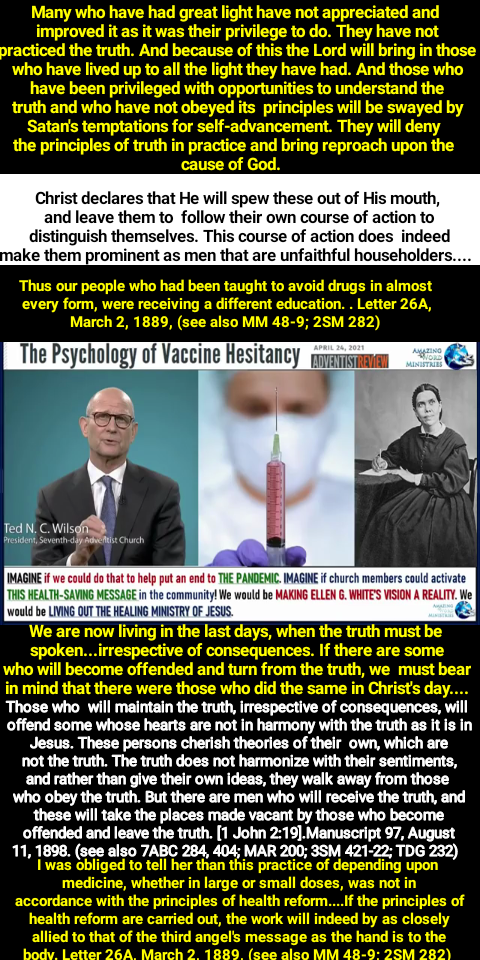
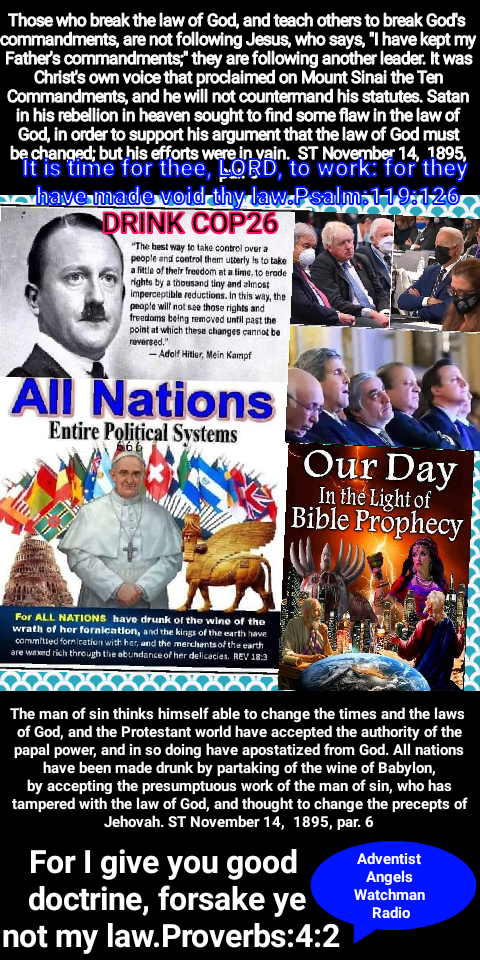
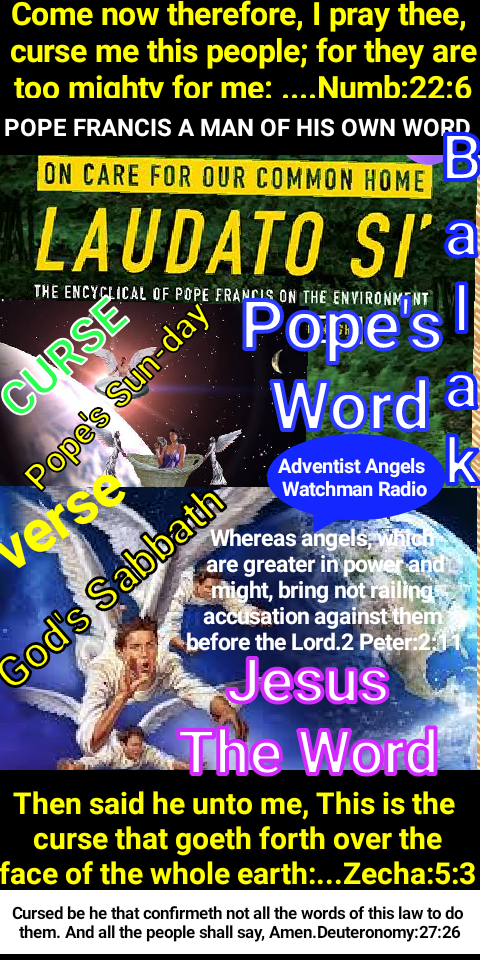


 Adventist Angels Watchman Radio