

The thing that hath been, it is that which shall be; and that which is done is that which shall be done: and there is no new thing under the sun.Ecclesiastes 1 : 9
April 26, 2025
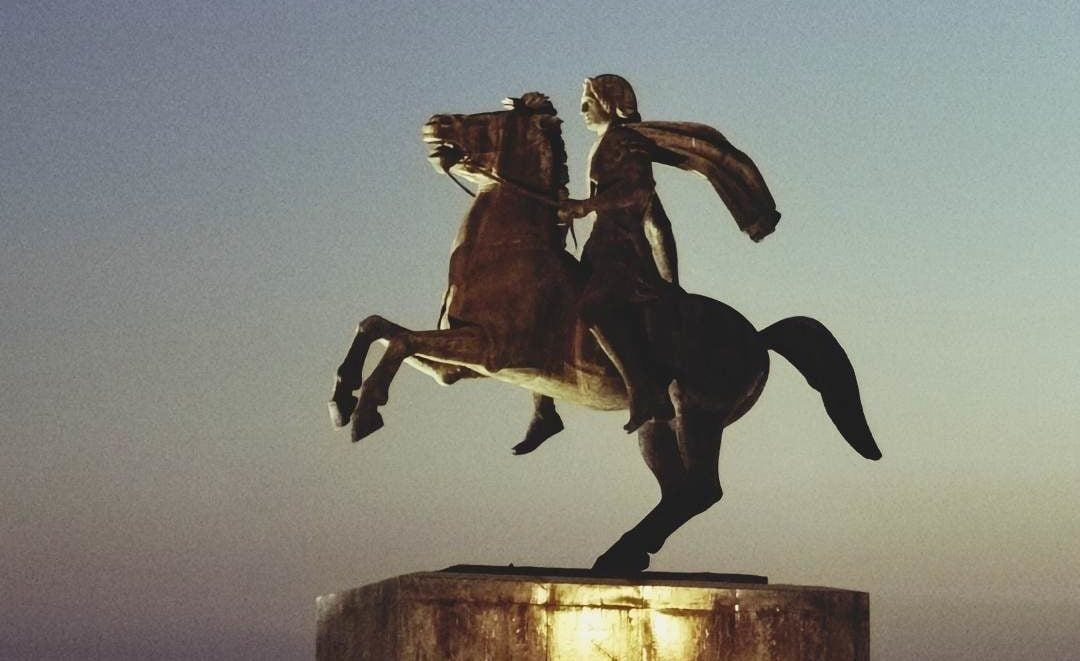
Arrian, the most famous biographer of Alexander the Great, was a soldier, statesman, philosopher, and author. Credit Alexander Gale / Greek Reporter
Over 2,300 years have passed since the death of Alexander the Great, but he remains one of the most famous historical figures of all time. The conqueror’s fame might have dimmed, however, were it not for the biographers who committed his exploits to the written word.
Arrian (Greek: Arrianos) is considered by many historians to be the most reliable source on the life of Alexander. This is despite the fact that he was writing in the second century AD, roughly four centuries after Alexander’s death.
Many falter and fall because of the indulgence of a perverse temper. Alexander and Caesar found it much easier to subdue a kingdom than to rule their own spirits. After conquering nations, the world’s so-called great men fell, one of them through the indulgence of appetite, a victim of intemperance, the other through presumption and mad ambition. 4T 348.1
Although Arrian’s name has been overshadowed by the subject of his most famous biography, the life of this ancient Greek writer was also quite extraordinary. Arrian befriended emperors and philosophers, rode to war in Asia Minor, and held offices in Rome, Athens, and Cappadocia.
And the king appointed them a daily provision of the king's meat, and of the wine which he drank: so nourishing them three years, that at the end thereof they might stand before the king.Daniel 1 : 5, Belshazzar the king made a great feast to a thousand of his lords, and drank wine before the thousand.Daniel 5 : 1, And there followed another angel, saying, Babylon is fallen, is fallen, that great city, because she made all nations drink of the wine of the wrath of her fornication.Revelation 14 : 8
Prophecies are being fulfilled, and stormy times are before us. Old controversies which have apparently been hushed for a long time will be revived, and new controversies will spring up; new and old will commingle, and this will take place right early. The angels are holding the four winds, that they shall not blow, until the specified work of warning is given to the world; but the storm is gathering, the clouds are loading, ready to burst upon the world, and to many it will be as a thief in the night. SpTA01b 38.1
Youth and education of Arrian
Arrian was born between 85 and 90 AD in Nicomedia, an ancient Greek city in the Anatolian region of Bythynia in what was then a part of the Roman Empire. His parents were Greeks but also held Roman citizenship.

We are standing on the threshold of great and solemn events. Many of the prophecies are about to be fulfilled in quick succession. Every element of power is about to be set to work. Past history will be repeated; old controversies will arouse to new life, and peril will beset God’s people on every side. Intensity is taking hold of the human family. It is permeating everything upon the earth….
Study Revelation in connection with Daniel, for history will be repeated…. We, with all our religious advantages, ought to know far more today than we do know. TM 116.2 – TM 116.3
The family had probably enjoyed Roman citizenship for several generations and adopted the Roman surname, “Flavius”. The family must have been important in the region since Arrian was granted the priesthood of Demeter and Kore as a young man. These two deities were the most important in Bythynia.

Sometime during his youth, Arrian traveled to Nicopolis, a city in Epirus on the western coast of Greece, to study philosophy under the tutelage of the Stoic philosopher Epictetus.
Most of what we now know of Epictetus’ philosophy is thanks to Arrian. He wrote the Discourses of Epictetus and Enchiridion of Epictetus based on the lecture notes he took during his time as a pupil in Nicopolis.
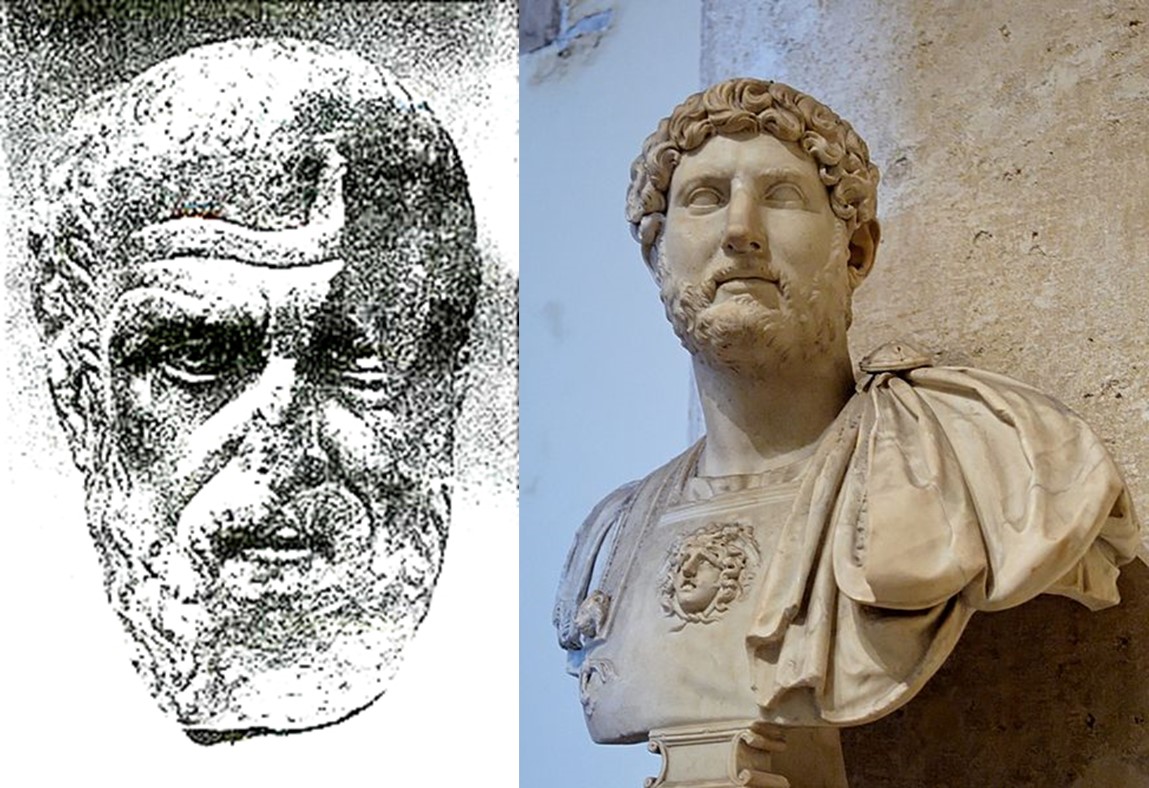
Whilst in Nicopolis, Arrian met the future Roman emperor Hadrian, and the pair would go on to become lifelong friends. No doubt this helped immensely with the former’s military and political career.Arrian (left) and emperor Hadrian (right). Credit: WikiSysop / CC BY 2.5 / Capitoline Museums / Public Domain / Wikimedia Commons
Political and military career
Sometime after his studies, probably around 107 AD, Arrian probably served as an officer in the Roman legions. This was prompted by a sense of duty and a desire to advance his political career, which was typically dependent on some prior military service in the first centuries of the Roman Empire.


He may have served for a time as a cavalry officer in Noricum, in what is modern-day Bavaria. This theory is based on his extensive knowledge of the region. His military career must have been more extensive, however, since he was later given command of two legions. Therefore, it is possible that he fought in Dacia under emperor Trajan. He may also have fought against the Parthians between 115 and 117 AD.
When his friend Hadrian became emperor in 117 AD, Arrian was probably made a praetor (a judicial officer) in the 120s, and then very likely became a proconsul (governor) of Andalusia around 125 AD.
Although the picture of Arrian’s early career is largely speculative, historians are certain that he was appointed consul in Rome in 129 or 130 AD. He served alongside another consul named Severus. His duties in Rome would have kept him very active because the emperor was in Egypt and Greece at the time.
Governor of Cappadocia
After his consulship, Arrian was appointed governor of Cappadocia. It is due to this position that historians are sure of Arrian’s extensive military experience despite the lack of direct evidence. Arrian’s extensive writings on military matters also hint at his in-depth knowledge.

Cappadocia was on the frontier of the Roman Empire and under constant threat from attack. Thus, the governorship of the region also came with the added responsibility of commanding two legions. A military novice would not have been appointed to govern this region.
Fighting Aliens /Deniers/Fundamentalists by Gospel Nonviolent Laudato Si and Fratelli Tutti : he wrote and published Order of Battle Against the Alans, a military treatise that gave other Roman commanders advice on fighting the nomadic tribes.

And when ye shall see Jerusalem compassed with armies, then know that the desolation thereof is nigh.Luke 21 : 20

Arrian’s time as governor was eventful. In 134 AD, the Alans – a nomadic tribe from the steppes of what is today Kazakhstan – invaded the region. Arrian took two legions, the XV Apollinaris and XII Fulminata, and defeated the Alans in battle. After the battle, he wrote and published Order of Battle Against the Alans, a military treatise that gave other Roman commanders advice on fighting the nomadic tribes.
I have given them thy word; and the world hath hated them, because they are not of the world, even as I am not of the world.John 17 : 14
[1] In the third year of the reign of Jehoiakim king of Judah came Nebuchadnezzar king of Babylon unto Jerusalem, and besieged it. [3] And the king spake unto Ashpenaz the master of his eunuchs, that he should bring certain of the children of Israel, and of the king's seed, and of the princes; [4] Children in whom was no blemish, but well favoured, and skilful in all wisdom, and cunning in knowledge, and understanding science, and such as had ability in them to stand in the king's palace, and whom they might teach the learning and the tongue of the Chaldeans. Daniel 1 : 1, 3-4
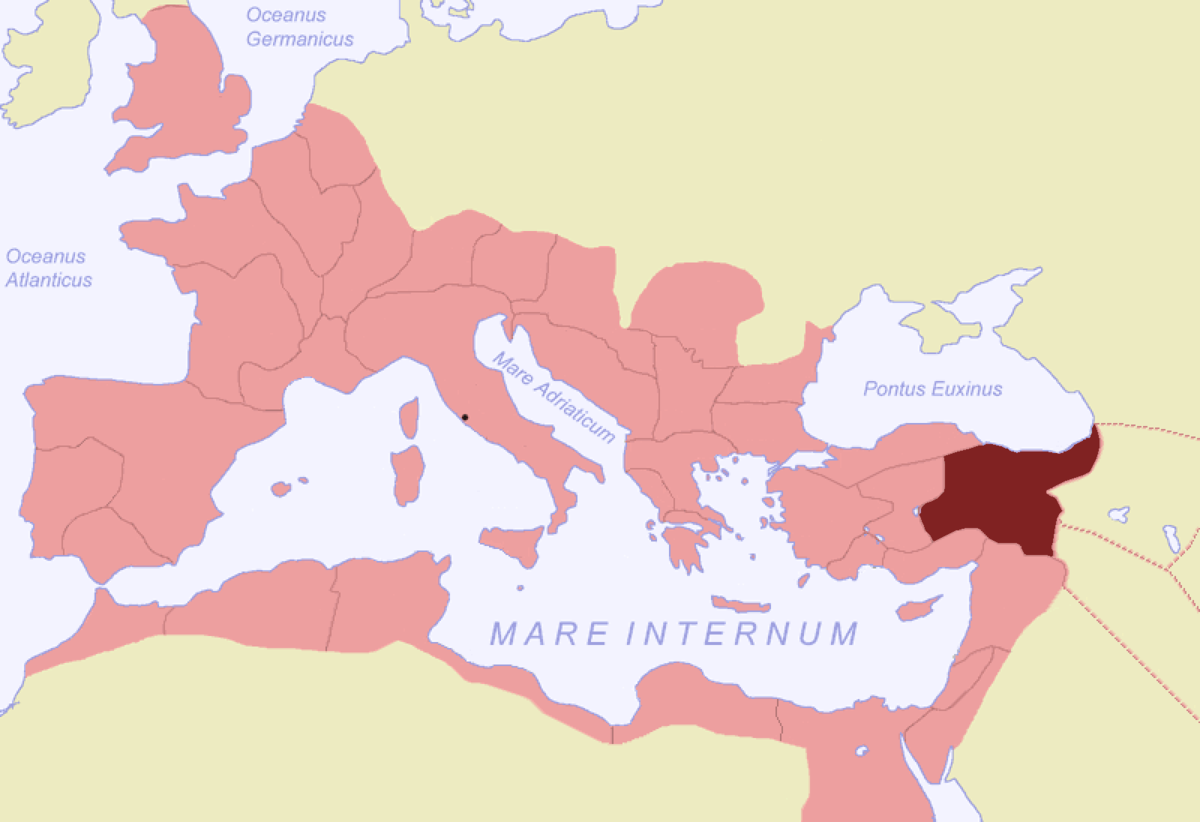
In 137 AD, Arrian left Cappadocia and settled as an honorary citizen of Athens where he also held political office. He died sometime around the year 160 AD.Map of the Roman province of Cappadocia in the second century AD. Credit: Public Domain / Wikimedia Commons
Arrian and the biography of Alexander the Great
Arrian is mostly remembered for the Anabasis of Alexander, which documented the life and campaigns of Alexander the Great.
Since he was writing hundreds of years after the death of Alexander, Arrian drew most of his accounts of Alexander’s life from Aristobulus and Ptolemy. In his mind, these were the best sources because one had served alongside Alexander, and the other ruled over a Hellenistic successor state after his death. He also drew on other sources like Nearchus, a naval officer who served the Macedonian king.


Arrian is highly regarded by modern historians because he named most of his sources and speculates as to their validity within the text. In this way, Arrian possessed a sort of precursor to the academic rigor expected of modern historians.
See all the latest news from Greece and the world at Greekreporter.com. Contact our newsroom to report an update or send your story, photos and videos. Follow GR on Google News and subscribe here to our daily email!

 Adventist Angels Watchman Radio