


In an appeal to the emperor and nobility of Germany in behalf of the reformation of Christianity, Luther wrote concerning the pope: “It is a horrible thing to behold the man who styles himself Christ’s vicegerent, displaying a magnificence that no emperor can equal. Is this being like the poor Jesus, or the humble Peter? He is, say they, the lord of the world! But Christ, whose vicar he boasts of being, has said, ‘My kingdom is not of this world.’ Can the dominions of a vicar extend beyond those of his superior?”—D’Aubigne, b. 6, ch. 3.
He wrote thus of the universities: “I am much afraid that the universities will prove to be the great gates of hell, unless they diligently labor in explaining the Holy Scriptures, and engraving them in the hearts of youth. I advise no one to place his child where the Scriptures do not reign paramount. Every institution in which men are not unceasingly occupied with the word of God must become corrupt.”— Ibid., b. 6, ch. 3. GC 140.4 – GC 140.5
Satan well knew that the Holy Scriptures would enable men to discern his deceptions and withstand his power. It was by the word that even the Saviour of the world had resisted his attacks. At every assault, Christ presented the shield of eternal truth, saying, “It is written.” To every suggestion of the adversary, He opposed the wisdom and power of the word. In order for Satan to maintain his sway over men, and establish the authority of the papal usurper, he must keep them in ignorance of the Scriptures. The Bible would exalt God and place finite men in their true position; therefore its sacred truths must be concealed and suppressed. This logic was adopted by the Roman Church. For hundreds of years the circulation of the Bible was prohibited. The people were forbidden to read it or to have it in their houses, and unprincipled priests and prelates interpreted its teachings to sustain their pretensions. Thus the pope came to be almost universally acknowledged as the vicegerent of God on earth, endowed with authority over church and state. GC 51.3
The archdeceiver had not completed his work. He was resolved to gather the Christian world under his banner and to exercise his power through his vicegerent, the proud pontiff who claimed to be the representative of Christ. Through half-converted pagans, ambitious prelates, and world-loving churchmen he accomplished his purpose. Vast councils were held from time to time, in which the dignitaries of the church were convened from all the world. In nearly every council the Sabbath which God had instituted was pressed down a little lower, while the Sunday was correspondingly exalted. Thus the pagan festival came finally to be honored as a divine institution, while the Bible Sabbath was pronounced a relic of Judaism, and its observers were declared to be accursed. GC 53.2
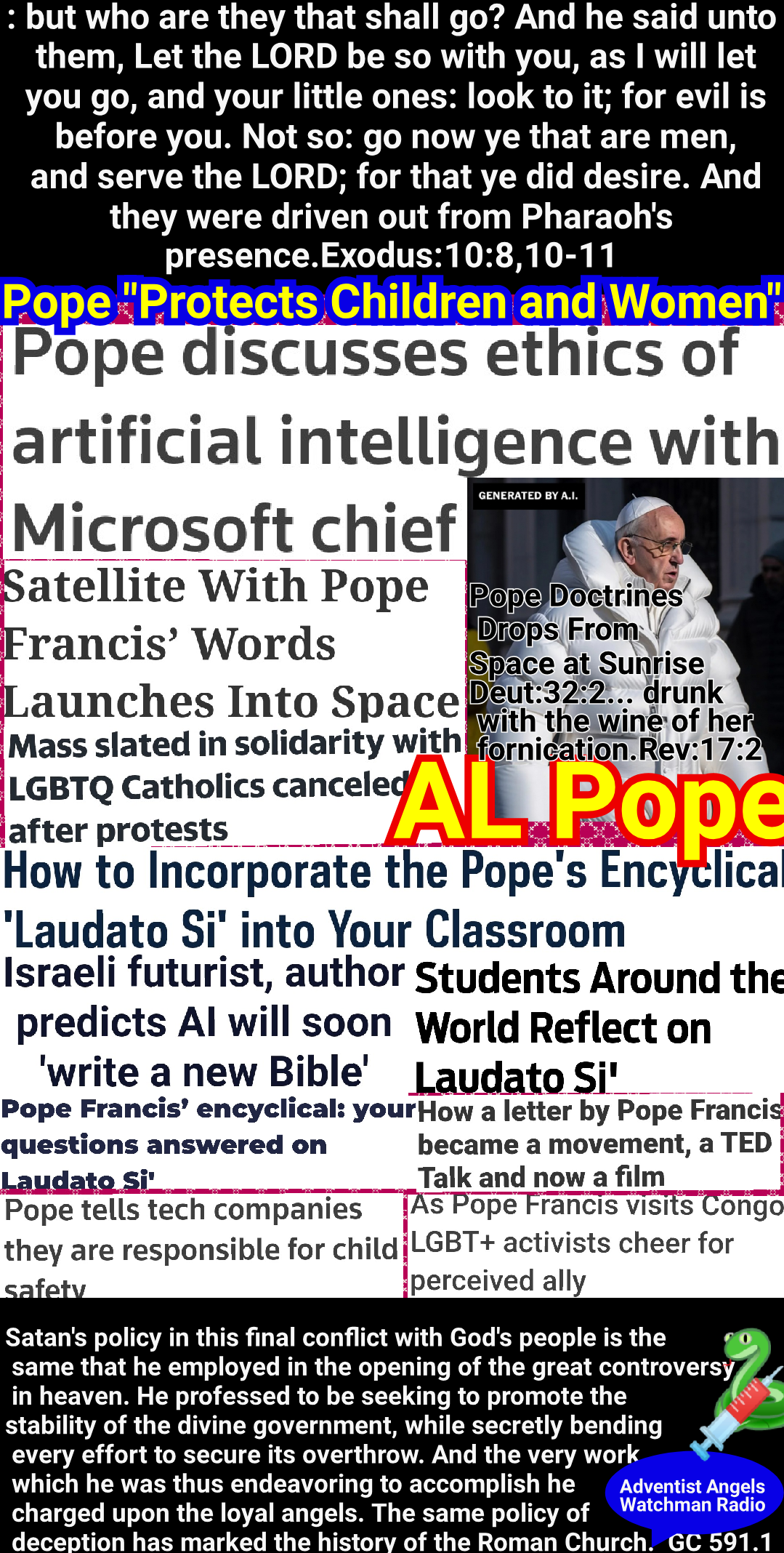
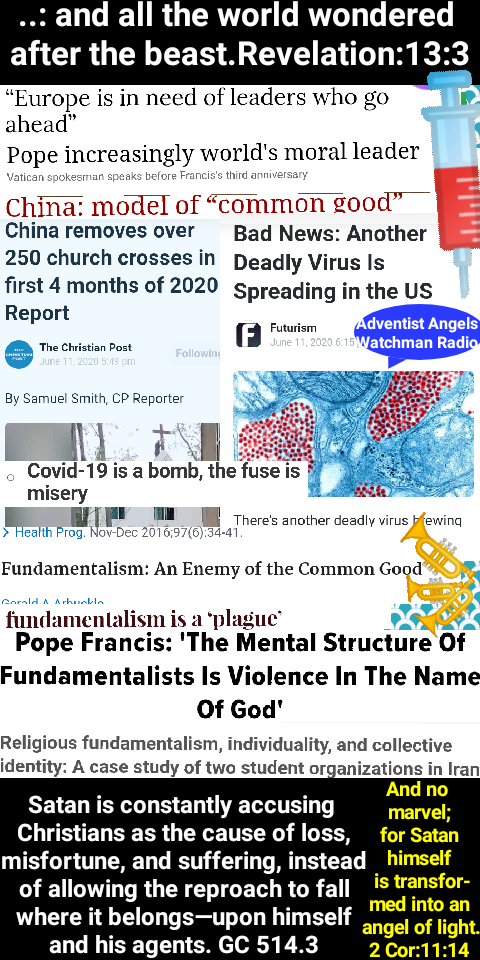
Satan’s policy in this final conflict with God’s people is the same that he employed in the opening of the great controversy in heaven. He professed to be seeking to promote the stability of the divine government, while secretly bending every effort to secure its overthrow. And the very work which he was thus endeavoring to accomplish he charged upon the loyal angels. The same policy of deception has marked the history of the Roman Church. It has professed to act as the vicegerent of Heaven, while seeking to exalt itself above God and to change His law. Under the rule of Rome, those who suffered death for their fidelity to the gospel were denounced as evildoers; they were declared to be in league with Satan; and every possible means was employed to cover them with reproach, to cause them to appear in the eyes of the people and even to themselves as the vilest of criminals. So it will be now. While Satan seeks to destroy those who honor God’s law, he will cause them to be accused as lawbreakers, as men who are dishonoring God and bringing judgments upon the world. GC 591.1















 Adventist Angels Watchman Radio