

The Crisis of Globalization Jezebel Golden Cup Doctrines of the common good

EN

Audio Presented by
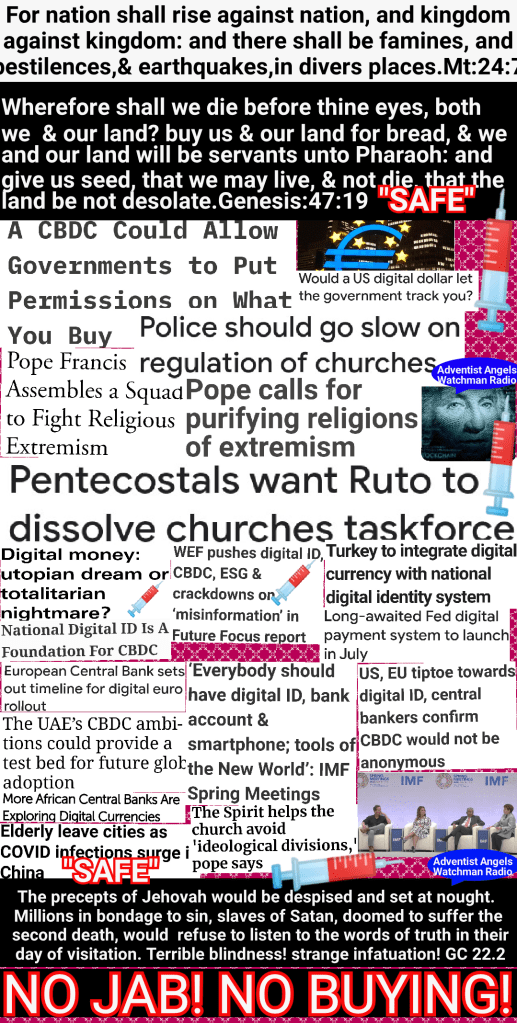
A CBDC linked with digital identity could allow governments & corporations to put permissions on what you can buy with your own money, including when & where you can spend it: perspective
The European Central Bank (ECB) puts out a call to digital identity experts to participate in a workstream that will contribute to its digital euro rulebook for the proposed Central Bank Digital Currency (CBDC).

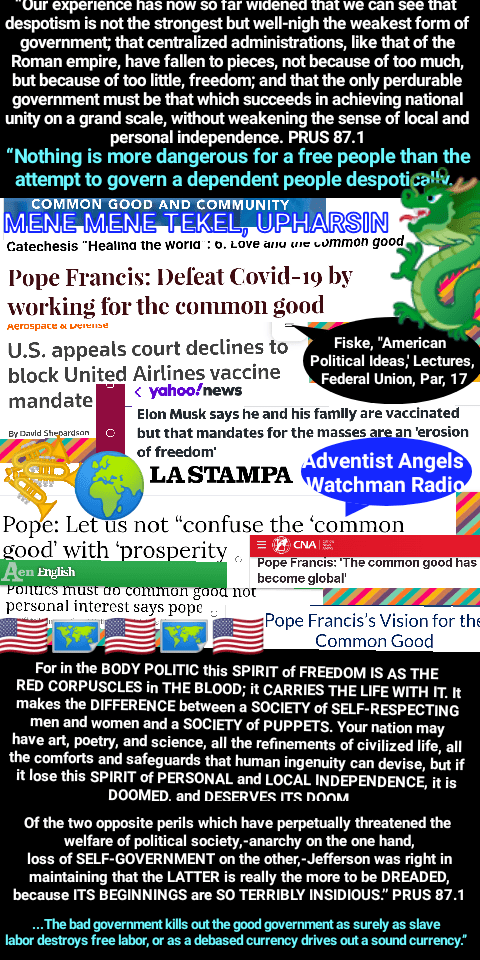





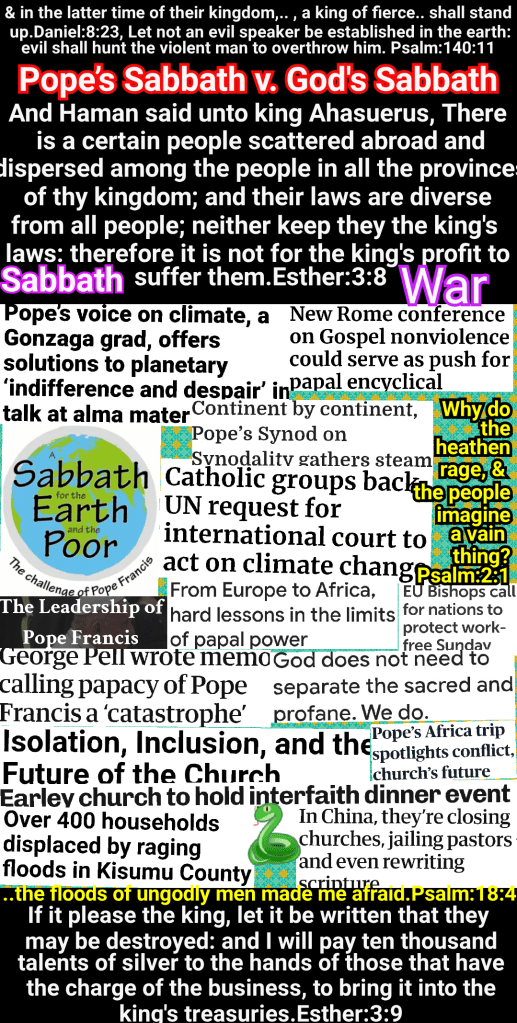
Participants in the ECB’s workstream “are expected to be leading experts in strong customer authentication (SCA) and identification, including digital identity initiatives, preferably with experience in related regulatory technical standards on SCA and in implementing customer identity and access management solutions.”
THE BREAKER OF THE LAWS TABERNACLE INVASION, THE MERCHANTS OF THE BEAST (MOB)
Testimonies for the Church 5 by Ellen G White
The breaker is come up before them: they have broken up, and have passed through the gate, and are gone out by it: and their king shall pass before them, and the LORD on the head of them.
Micah:2:13
But the spirit of antichrist is prevailing to such an extent as never before. Well may we exclaim: “Help, Lord; for the godly man ceaseth; for the faithful fail from among the children of men.” I know that many think far too favorably of the present time. These ease-loving souls will be engulfed in the general ruin. Yet we do not despair. We have been inclined to think that where there are no faithful ministers there can be no true Christians, but this is not the case. God has promised that where the shepherds are not true He will take charge of the flock Himself. God has never made the flock wholly dependent upon human instrumentalities. But the days of purification of the church are hastening on apace. God will have a people pure and true. In the mighty sifting soon to take place we shall be better able to measure the strength of Israel. The signs reveal that the time is near when the Lord will manifest that His fan is in His hand, and He will thoroughly purge His floor.
The days are fast approaching when there will be great perplexity and confusion. Satan, clothed in angel robes, will deceive, if possible, the very elect. There will be gods many and lords many. Every wind of doctrine will be blowing. Those who have rendered supreme homage to “science falsely so called” will not be the leaders then. Those who have trusted to intellect, genius, or talent will not then stand at the head of rank and file. They did not keep pace with the light. Those who have proved themselves unfaithful will not then be entrusted with the flock. In the last solemn work few great men will be engaged. They are self-sufficient, independent of God, and He cannot use them. The Lord has faithful servants, who in the shaking, testing time will be disclosed to view. There are precious ones now hidden who have not bowed the knee to Baal. They have not had the light which has been shining in a concentrated blaze upon you. But it may be under a rough and uninviting exterior the pure brightness of a genuine Christian character will be revealed. In the day time we look toward heaven but do not see the stars. They are there, fixed in the firmament, but the eye cannot distinguish them. In the night we behold their genuine luster.
The time is not far distant when the test will come to every soul. The mark of the beast will be urged upon us. Those who have step by step yielded to worldly demands and conformed to worldly customs will not find it a hard matter to yield to the powers that be, rather than subject themselves to derision, insult, threatened imprisonment, and death. The contest is between the commandments of God and the commandments of men. In this time the gold will be separated from the dross in the church. True godliness will be clearly distinguished from the appearance and tinsel of it. Many a star that we have admired for its brilliancy will then go out in darkness. Chaff like a cloud will be borne away on the wind, even from places where we see only floors of rich wheat. All who assume the ornaments of the sanctuary, but are not clothed with Christ’s righteousness, will appear in the shame of their own nakedness. 5T 79.4 – 5T 81.1
Potential candidates are required to respond to the following:
- Provide a proposal for the best possible user experience for the digital euro with regard to identification and authentication in the use cases it covers.
- What existing standards/regulations do you think the digital euro should refer to and/or build on for (i) identification and (ii) authentication?
- Do you think that some of these standards/regulations would need to be adapted to accommodate the digital euro? If so, to what extent? (Please distinguish between identification/onboarding and authentication in your answer.)
- How do you envisage a potential link between the digital euro identification and authentication mechanisms and potential upcoming digital identity initiatives?
According to the ECB, the main objective of the workstream “is to suggest identification and authentication requirements for the digital euro” while the workstream itself “will contribute to the ‘Functional and operational model’ section of the digital euro rulebook.”
The ECB’s investigation phase into the digital euro began in October, 2021 and is set to conclude in October, 2023 when the central bank “will decide whether to start the process of actually developing it.”
Source: European Central Bank

LAUDATO SI handbook to assist central banks and governments
The International Monetary Fund (IMF) is also in the process of creating a CBDC handbook to assist central banks and governments throughout the world in their CBDC rollouts.

Published publicly on April 10, the “IMF Approach to Central Bank Digital Currency Capacity Development” report outlines the IMF’s multi-year strategy for aiding CBDC rollouts, including the development of a living “CBDC Handbook” for monetary authorities to follow.
Chapter 11 “will consider the tradeoff between data use and privacy protection,” including “what data are generated by CBDC transactions and which institutions might have access to it.”
This data will inextricably be linked to a user’s digital identity.
“This digital identity,” according to the World Economic Forum (WEF), “determines what products, services and information we can access – or, conversely, what is closed off to us.”
Source: World Economic Forum

According to the Bank for International Settlements (BIS) Annual Economic Report 2021:
“Identification at some level is hence central in the design of CBDCs. This calls for a CBDC that is account-based and ultimately tied to a digital identity.”
Additionally, “The most promising way of providing central bank money in the digital age is an account-based CBDC built on digital ID with official sector involvement.”
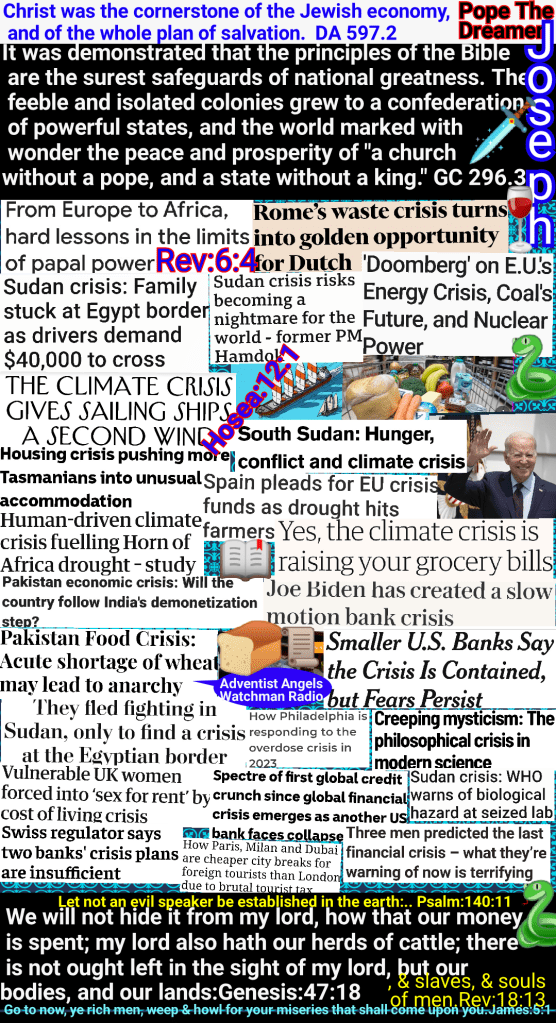
Speaking at the BIS Innovation Summit in March, 2023, ECB president Christine Lagarde said that a digital euro would not be as anonymous or as private as cash.
“Is it [digital euro] going to be as private as cash? No,” she said.
“A digital currency will never be as anonymous and as protecting of privacy in many respects as cash, which is why cash will always be around […]A digital currency is an alternative, is another means of payment and will not provide exactly the same level of privacy and anonymity as cash, but will be pretty close in terms of complete neutrality in relation to the data.”

Lagarde also told her fellow panelists that central banks would not be in charge of programming a digital currency, but that commercial banks certainly would.
“For us [central banks], the issuance of a digital currency that would be central bank money would not be programmable — would not be associated with any particular limitation, whether it’s in time, in type of use — that to me would be a voucher. It wouldn’t be a digital currency,” said Lagarde.
“Those who can associate the use of digital currency with programmability would be the intermediaries — would be the commercial banks.”
Barking at Putin’s Door, Barking at My Door
CDBCs run the risk of having every transaction recorded while being fully programmable, which means financial institutions and their customers could have total control over where, when, and how your money is spent.

Bank of Russia deputy governor Alexey Zabotkin gave a real world example of what CBDC programmability could look like when he spoke at the annual cybersecurity training exercise Cyber Polygon back in 2021.
There, Zabotkin explained:
“This [digital ruble] will permit better traceability of payments and money flow, and also explore the possibility of setting conditions on permitted terms of use of a given unit of currency.
“Just imagine that you are able to give your kids some money in digital rubles and then restrict their use for purchase of junk food, for example.
“That would be a useful functionality for a customer, and of course you can come up with hundreds of other similar use cases.”
Jezebel Communion Procession_ a high-level roundtable

Speaking at a high-level roundtable on CBDC in Washington, DC in October 2022, IMF deputy managing director and former People’s Bank of China (PBoC) deputy governor Bo Li said of CBDC programmability:
“CBDC can allow government agencies and private sector players to program — to create smart contracts — to allow targeted policy functions. For example, welfare payment; for example, consumption coupons; for example, food stamps.”
“By programming CBDC, those [sic] money can be precisely targeted for what kind of people can own and what kind of use this money can be utilized,” he added.
Last month, India’s digital ID architect Nandan Nilekani told the IMF that everybody should have a digital ID, a bank account, and a smartphone as they were the “tools of the New World” for digital public infrastructure.
The Crisis of Globalization and the common good
“If you think, ‘what are the tools of the New World?‘ — Everybody should have a digital ID; everybody should have a bank account; everybody should have a smartphone,” said Nilekani.

“Then, anything can be done. Everything else is built on that.”
India, too, is launching a CBDC pilot program that is exploring different use cases, such as setting expiry dates.
According to the Reserve Bank of India, “CBDCs have the possibility of programming the money by tying the end use.”
When it comes to retail transactions, CBDC “tokens may have an expiry date, by which they would need to be spent, thus ensuring consumption.”
Ultimately, a CBDC linked with digital identity could allow governments and corporations to put permissions on what you can buy with your own money, including expiry dates on when you can spend it.

The ECB claims that it will not make a decision on whether or not it will actually go through with developing the CBDC until October of this year.
After all the time, energy, and resources invested in exploring the digital euro, do you really believe the European Central Bank would just walk away and abandon it?

This article was originally published by Tim Hinchliffe on The Sociable.
by The Sociable @thesociable.The Sociable is a technology news publication that picks apart how technology transforms society and vice versa.
Hackernoon hq – po box 2206, edwards, colorado 81632, usa

‘Everybody should have digital ID, bank account & smartphone; tools of the New World’: IMF Spring Meetings



India’s digital ID architect tells an IMF panel that everybody should have a digital ID, a bank account, and a smartphone as they are the “tools of the New World” for digital public infrastructure.
Speaking on a panel about Digital Public Infrastructure (DPI) during the International Monetary Fund’s (IMF) Spring Meetings on April 14, Infosys co-founder and ex-chair of the Unique Identification Authority of India (UIDAI), Nandan Nilekani, said that in order for nations to build out their DPI, they will need three things.
“If you think, ‘what are the tools of the New World?‘ — Everybody should have a digital ID; everybody should have a bank account; everybody should have a smartphone,” said Nilekani.
“Then, anything can be done. Everything else is built on that.”

Moderator and CNN International anchor Julia Chatterley concurred with Nilekani, saying:
“The three basic things: a smartphone, a bank account, and a digital ID — that’s where every nation has to begin.”
“Everybody should have a digital ID; everybody should have a bank account; everybody should have a smartphone” — Nandan Nilekani, IMF Spring Meetings, 2023
A digital identity encompasses just about everything that makes you unique in the digital realm, including your behavior.
Good Friday consolidation of all personal intimate data

It is a system that can consolidate all of your most personal intimate data, such as which websites you visit, your online purchases, health records, and what you post on social media.
Digital identity schemes can also be used by public and private entities to determine what products, services, and information are available to you, and they can certainly be used by those same entities to deny you that access.

According to a World Economic Forum (WEF) digital identity insight report from 2018, “This digital identity determines what products, services and information we can access – or, conversely, what is closed off to us.” Source: World Economic Forum
Digital identity is also key to Central Bank Digital Currency (CBDC) rollouts.
According to the Bank for International Settlements (BIS) Annual Economic Report 2021, “Identification at some level is hence central in the design of CBDCs. This calls for a CBDC that is account-based and ultimately tied to a digital identity.”
Additionally, “The most promising way of providing central bank money in the digital age is an account-based CBDC built on digital ID with official sector involvement.”
This means that CBDCs, by design, do not allow for anonymous transactions as they require a digital ID to operate.https://d-25528175213152757137.ampproject.net/2305252018001/frame.html
In addition to the absence of complete transactional anonymity, programmability is a key feature that separates physical cash from CBDC.
Speaking at a high-level roundtable on CBDC in Washington, DC in October 2022, IMF deputy managing director and former People’s Bank of China (PBoC) deputy governor Bo Li said:
“CBDC can allow government agencies and private sector players to program — to create smart contracts — to allow targeted policy functions. For example, welfare payment; for example, consumption coupons; for example, food stamps,” said Li.
“By programming CBDC, those [sic] money can be precisely targeted for what kind of people can own and what kind of use this money can be utilized,” he added.
Ultimately, a CBDC linked with digital ID could allow governments and corporations to put permissions on what you can buy with your own money, including expiration dates on when you can spend it.
Bank of Russia deputy governor Alexey Zabotkin gave real world example of what CBDC programmability could look like when he spoke at the annual cybersecurity training exercise Cyber Polygon back in 2021.
There, Zabotkin explained:
“This [digital ruble] will permit better traceability of payments and money flow, and also explore the possibility of setting conditions on permitted terms of use of a given unit of currency.
“Just imagine that you are able to give your kids some money in digital rubles and then restrict their use for purchase of junk food, for example.
“That would be a useful functionality for a customer, and of course you can come up with hundreds of other similar use cases.”
“In the coming years, starting with financial services, and later on in other areas, individuals will be able to use their own data to get a loan, to get better financial services, to get better healthcare, to get better jobs” — Nandan Nilekani, G20 Development Working Group, 2022
Last year, Nilekani — the man credited with building India’s vast Aadhaar digital ID scheme — told the Group of Twenty (G20) Development Working Group that it should look at different ways of harnessing data on social and economic activities to advance the UN’s Agenda 2030 sustainable development goals.
Old is Gold
“Today we live in a society which is increasingly digitized, and every aspect of our life has digital technology in it,” said Nilekani in December 2022.

“We find that this is generating vast amounts of data about our social and economic activities, and we should look at different ways to harness this data for development goals,” he added.
The godfather of India’s digital ID scheme would go on to say that “In the coming years, starting with financial services, and later on in other areas, individuals will be able to use their own data to get a loan, to get better financial services, to get better healthcare, to get better jobs.”
In addition to spearheading India’s digital ID scheme during his tenure as chair of the UIDAI from 2009-2014 and being a co-founder of tech giant Infosys, Nilekani has held high-level positions at Reuters, the World Economic Forum, and the World Bank Group’s Identification for Development (ID4D) Initiative.
PUBLISHED BY
TAGS:cbdccentral bank digital currencydigital idDigital Identitygovernment
IARPA’s HAYSTAC program looks to model, predict people’s movements with AI, IoT & smart city sensors
The US Intelligence Advanced Research Projects Activity (IARPA) is looking “to develop systems capable of…
3 days ago


 Adventist Angels Watchman Radio